E11-2 Compute standard materials costs
Hank Itzek manufactures and sells homemade wine, and he wants to develop a standard cost
per gallon. The following are required for production of a 50-gallon batch.
3,000 ounces of grape concentrate at $0.06 per ounce
54 pounds of granulated sugar at $0.30 per pound
60 lemons at $0.60 each
50 yeast tablets at $0.25 each
50 nutrient tablets at $0.20 each
2,600 ounces of water at $0.005 per ounce
Hank estimates that 4% of the grape concentrate is wasted, 10% of the sugar is lost, and 25%
of the lemons cannot be used.
Instructions
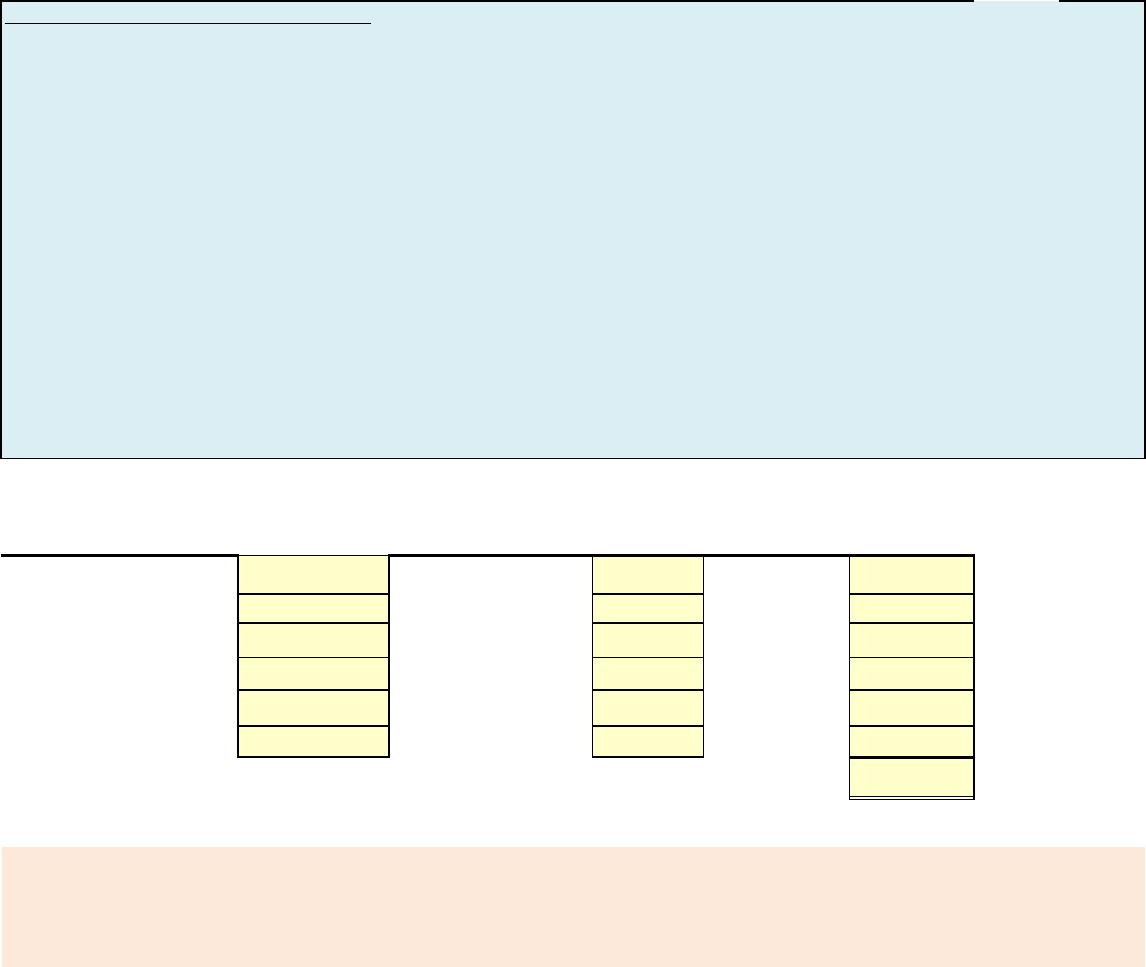
Compute the standard cost of the ingredients for one gallon of wine. (Carry computations to
two decimal places.)
NOTE: Enter a number in cells requesting a value; enter either a number or a formula in cells with a “?” .
Amount per Standard Standard Standard Standard Cost
gallon Waste Usage Price per Gallon
Grape concentrate Value oz. 4% ?$0.06 ?
Sugar Value lb. 10% ?0.30 ?
Lemons Value lemons 25% ?0.60 ?
Yeast Value tablet 0% ?0.25 ?
Nutrient Value tablet 0% ?0.20 ?
Water Value oz. 0% ?0.005 ?
Standard cost for one gallon of wine
After you have completed the requirements of E11-2, consider this additional question.
1. Assume the standard waste for grape concentrate, sugar and lemons changed to 5%, 8% and 20% respectively.
How will these changes impact the standard cost of one gallon of wine?
Ingredient
E11-2 Solution
Amount per Standard Standard Standard Standard Cost
gallon Waste Usage Price per Gallon
Grape concentrate 60 oz. 4% 62.5 $0.06 $3.75
Sugar (54 ÷ 50) 1.08 lb. 10% 1.2 0.30 0.36
Ingredient
E11-2 Solution to additional question
1. Assume the standard waste for grape concentrate, sugar and lemons changed to 5%, 8% and 20% respectively.
How will these changes impact the standard cost of one gallon of wine?
Amount per
Standard
Standard Standard Standard Cost
gallon Waste Usage Price per Gallon
Grape concentrate 60 oz. 5% 63.16 $0.06 $3.79
Sugar (54 ÷ 50) 1.08 lb. 8% 1.17 0.30 0.35
Ingredient
E11-5 Compute materials price and quantity variance
The standard cost of Product B manufactured by Pharrell Company includes three units of direct materials at
$5.00 per unit. During June, 29,000 units of direct materials are purchased at a cost of $4.70 per unit, and
29,000 units of direct materials are used to produce 9,400 units of Product B.
Instructions
(a) Compute the total materials variance and the price and quantity variances.
(b) Repeat (a), assuming the purchase price is $5.15 and the quantity purchased and used is 28,000 units
NOTE: Enter a number in cells requesting a value; enter either a number or a formula in cells with a “?” .
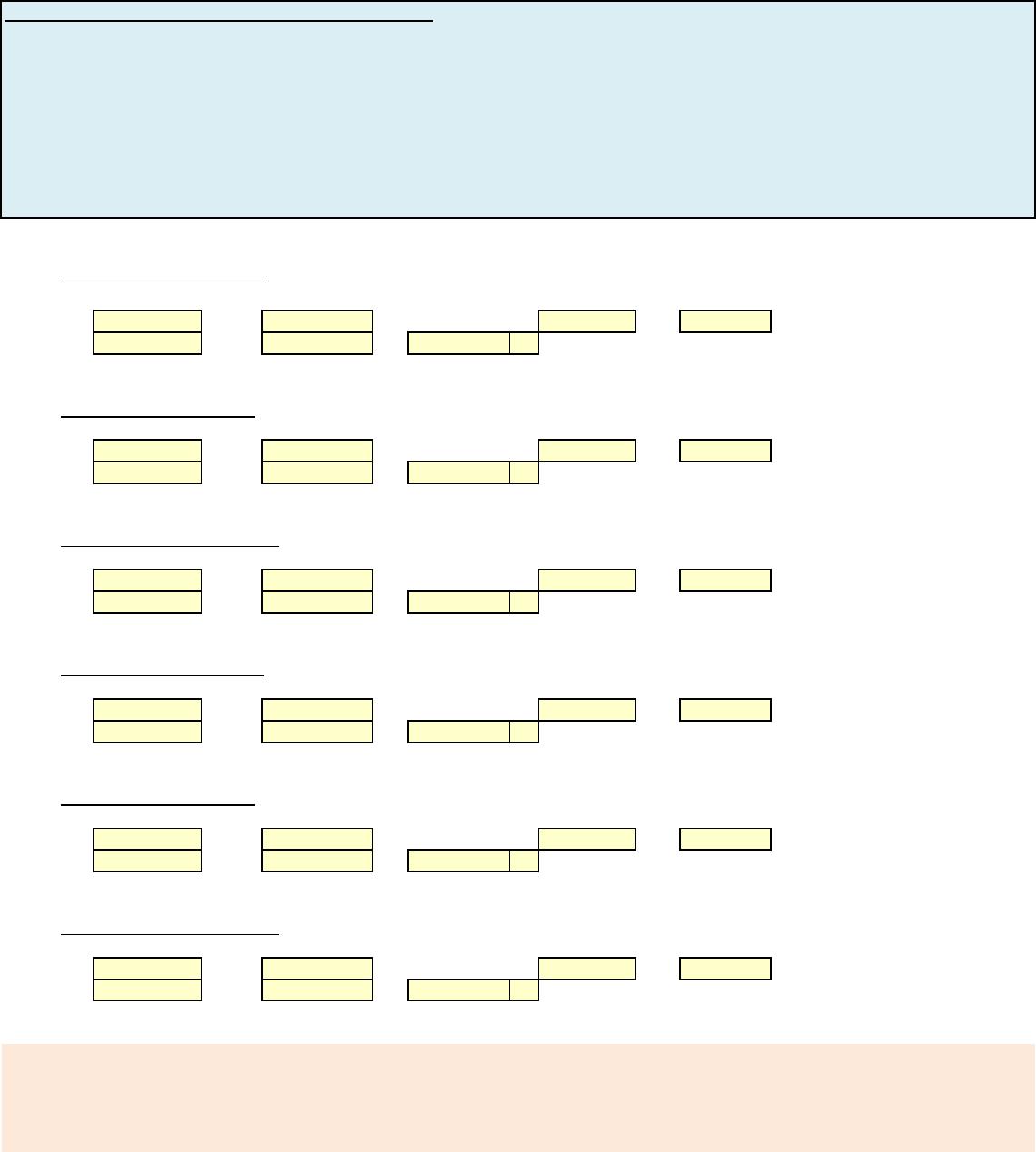
(a) Total Materials Variance:
(AQ XAP ) minus ( SQ XSP )
( Value X Value ) minus ( Value X Value )
= ? minus ? = Value
Materials price variance:
(AQ XAP ) minus ( AQ XSP )
( Value X Value ) minus ( Value X Value )
= ? minus ? = Value
Materials quantity variance:
(AQ XSP ) minus ( SQ XSP )
( Value X Value ) minus ( Value X Value )
= ? minus ? = Value
(b) Total Materials Variance:
(AQ XAP ) minus ( SQ XSP )
( Value X Value ) minus ( Value X Value )
= ? minus ? = Value
Materials price variance:
(AQ XAP ) minus ( AQ XSP )
( Value X Value ) minus ( Value X Value )
= ? minus ? = Value
Materials quantity variance:
(AQ XSP ) minus ( SQ XSP )
( Value X Value ) minus ( Value X Value )
= ? minus ? = Value
After you have completed the requirements of E11-5, consider this additional question.
1. Assume in part (a) that the purchase price of direct materials changed to $4.80 and the quantity purchased
and used also changed to 30,000 units. Recalculate total materials variance and price and quantity variances.
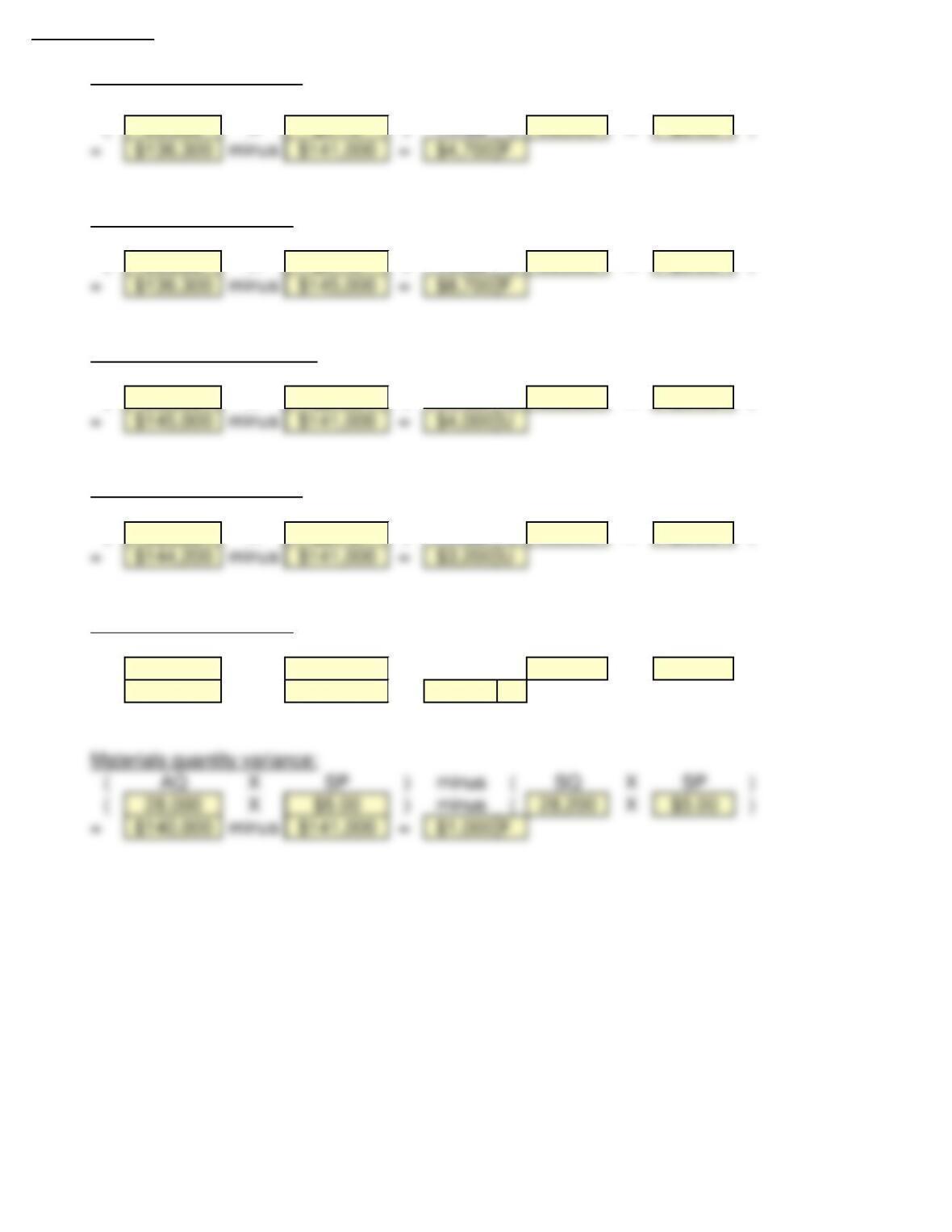
E11-5 Solution
(a) Total Materials Variance:
(AQ XAP ) minus ( SQ XSP )
( 29,000 X $4.70 ) minus ( 28,200 X $5.00 )
Materials price variance:
(AQ XAP ) minus ( AQ XSP )
( 29,000 X $4.70 ) minus ( 29,000 X $5.00 )
Materials quantity variance:
(AQ XSP ) minus ( SQ XSP )
( 29,000 X $5.00 ) minus ( 28,200 X $5.00 )
(b) Total Materials Variance:
(AQ XAP ) minus ( SQ XSP )
( 28,000 X $5.15 ) minus ( 28,200 X $5.00 )
Materials price variance:
(AQ XAP ) minus ( AQ XSP )
( 28,000 X $5.15 ) minus ( 28,000 X $5.00 )
= $144,200 minus $140,000 = $4,200 U
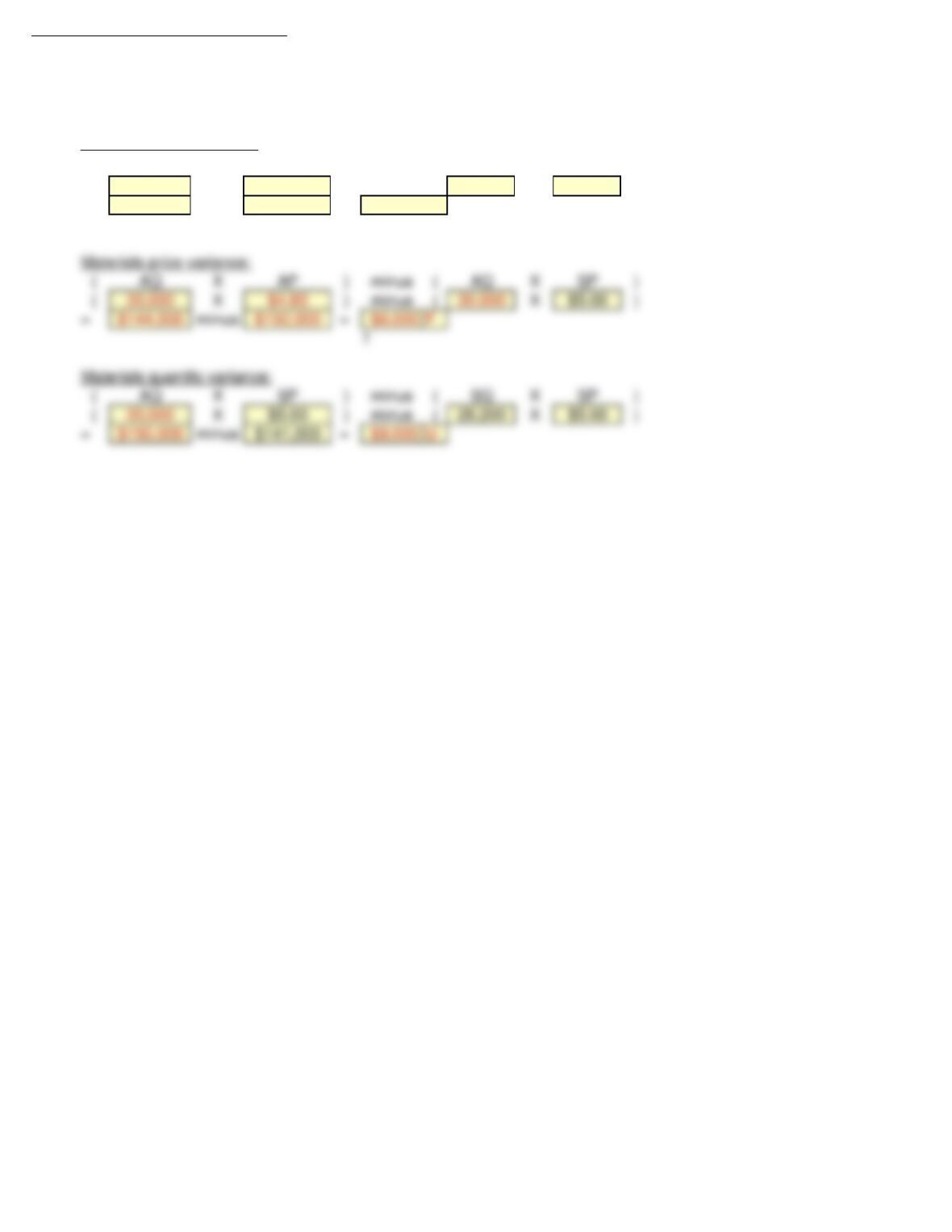
E11-5 Solution to additional question
1. Assume in part (a) that the purchase price of direct materials changed to $4.80 and the quantity purchased
and used also changed to 30,000 units. Recalculate total materials variance and price and quantity variances.
(a) Total Materials Variance:
(AQ XAP ) minus ( SQ XSP )
(30,000 X$4.80 ) minus ( 28,200 X $5.00 )
=$144,000 minus $141,000 = $3,000 U
E11-7 Compute materials and labor variances
Levine Inc. which produces a single product, has prepared the following standard cost sheet
for one unit of the product.
Direct materials (8 pounds at $2.50 per pound) $20
Direct labor (3 hours at $12 per hour) $36
During the month of April, the company manufactures 230 units and incurs the following
actual costs.
Direct materials purchased and used (1,900 pounds)
$5,035
Direct labor (700 hours) $8,120
Instructions
Compute the total, price, and quantity variances for materials and labor.
NOTE: Enter a number in cells requesting a value; enter either a number or a formula in cells with a “?” .
(a) Total Materials Variance:
(AQ XAP ) minus ( SQ XSP) )
( Value X Value ) minus ( Value X Value )
= ? minus ? =
Materials price variance:
(AQ XAP ) minus ( AQ XSP )
( Value X Value ) minus ( Value X Value )
= ? minus ? =
Materials quantity variance:
(AQ XSP ) minus ( SQ XSP )
( Value X Value ) minus ( Value X Value )
= ? minus ? =
(b) Total Labor Variance:
(AH XAR ) minus ( SH XSR )
( Value X Value ) minus ( Value X Value )
= ? minus ? =
Labor Price variance:
(AH XAR ) minus ( AH XSR )
( Value X Value ) minus ( Value X Value )
= ? minus ? =
Labor quantity variance:
(AH XSR ) minus ( SH XSR )
( Value X Value ) minus ( Value X Value )
= ? minus ? =
After you have completed the requirements of E11-7, consider this additional question.
1. Assume that the actual quantity and price paid for direct material and labor changed to the following:
Direct materials purchased and used (2,000 pounds)
Direct labor (720 hours)
Recalculate total variance, price and quantity variances for both direct materials and labor.
Value
Value
Value
Value
Value
Value
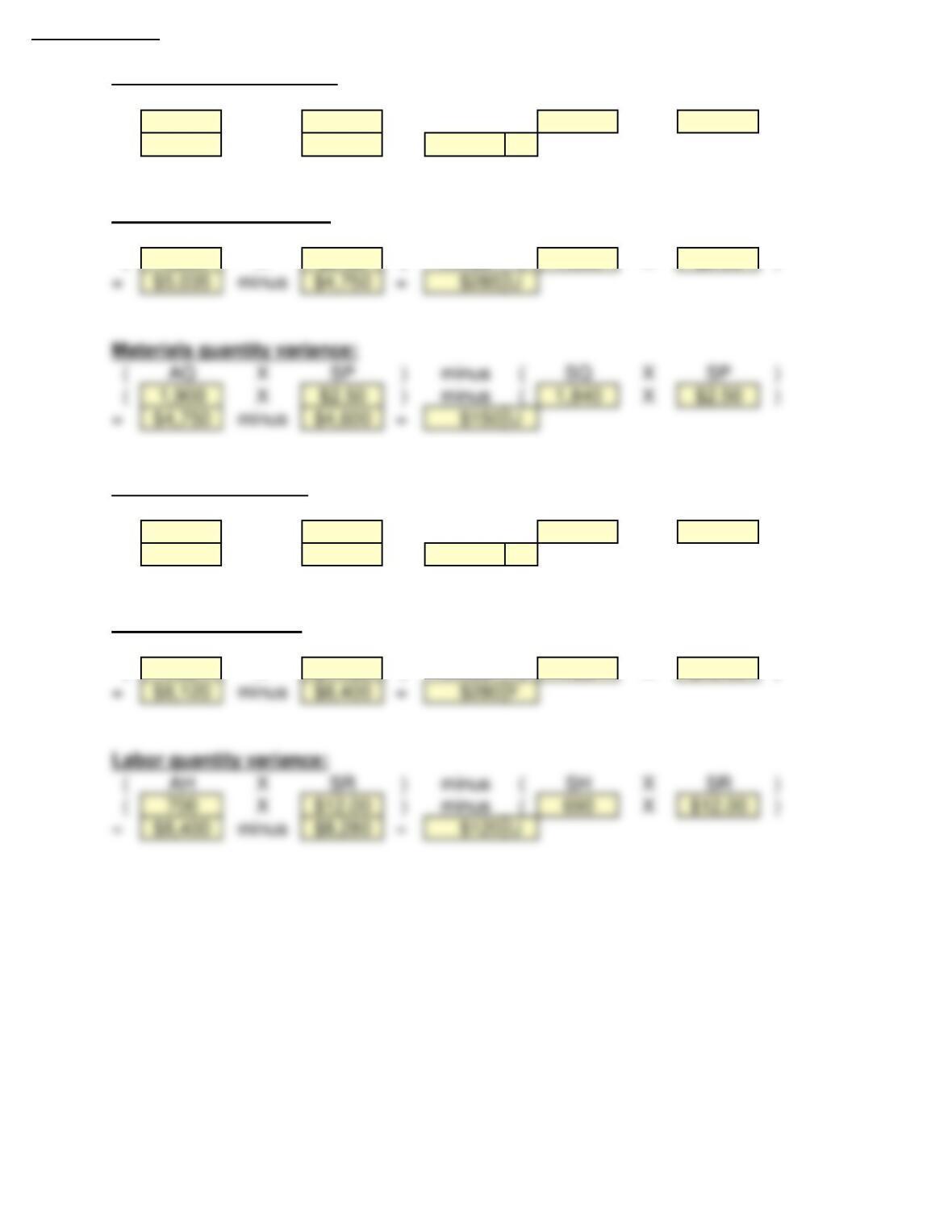
E11-7 Solution
(a) Total Materials Variance:
(AQ XAP ) minus ( SQ XSP) )
( 1,900 X $2.65 ) minus ( 1,840 X $2.50 )
=$5,035 minus $4,600 = $435 U
Materials price variance:
(AQ XAP ) minus ( AQ XSP )
( 1,900 X $2.65 ) minus ( 1,900 X $2.50 )
(b) Total Labor Variance:
(AH XAR ) minus ( SH XSR )
(700 X $11.60 ) minus ( 690 X $12.00 )
= $8,120 minus $8,280 = $160 F
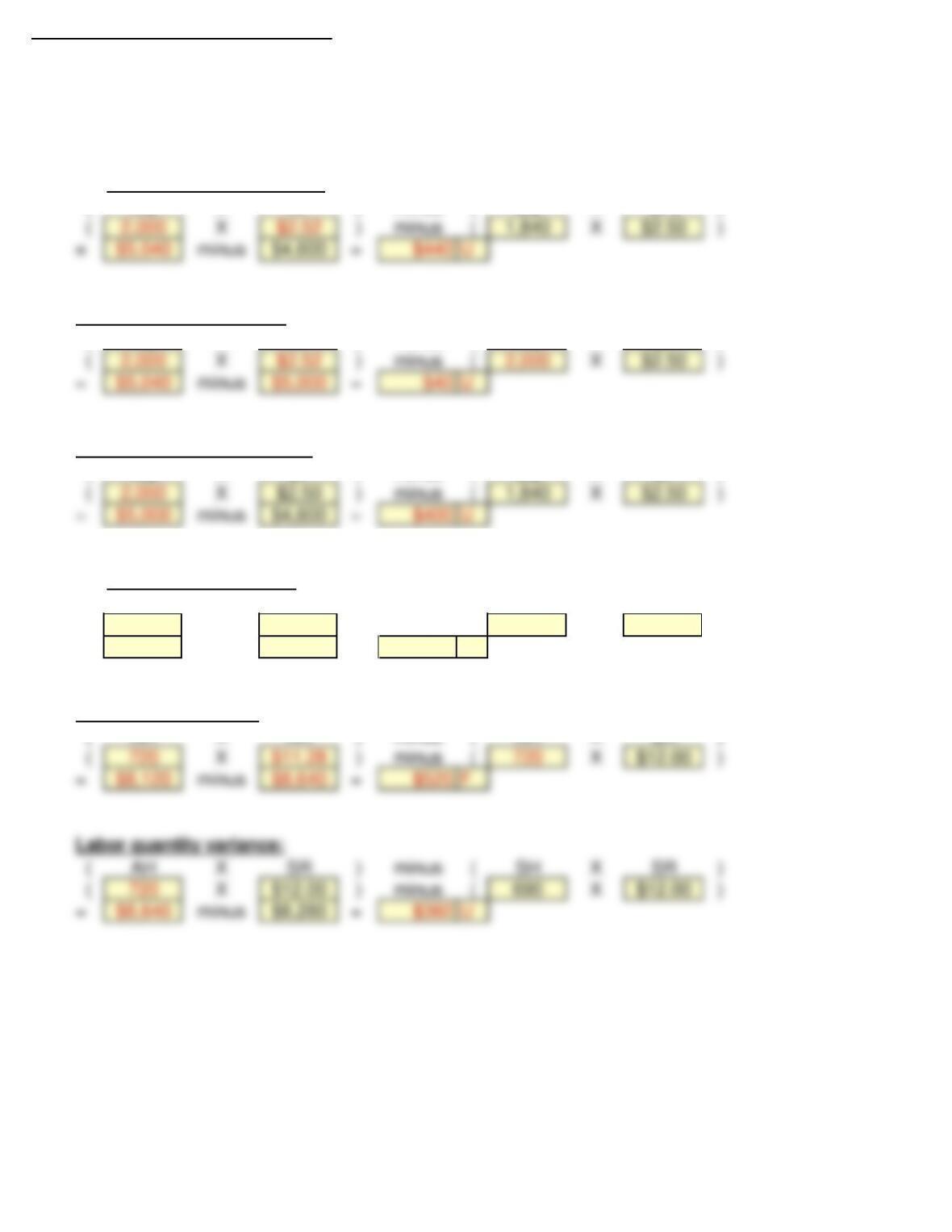
Labor Price variance:
(AH XAR ) minus ( AH XSR )
(700 X $11.60 ) minus ( 700 X $12.00 )
E11-7 Solution to additional question
1. Assume that the actual quantity and price paid for direct material and labor changed to the following:
Direct materials purchased and used (2,000 pounds)
Direct labor (720 hours)
Recalculate total variance, price and quantity variances for both direct materials and labor.
(a) Total Materials Variance:
(AQ XAP ) minus ( SQ XSP) )
Materials price variance:
(AQ XAP ) minus ( AQ XSP )
Materials quantity variance:
(AQ XSP ) minus ( SQ XSP )
(b) Total Labor Variance:
(AH XAR ) minus ( SH XSR )
(720 X$11.28 ) minus ( 690 X$12.00 )
=$8,120 minus $8,280 = $160 F
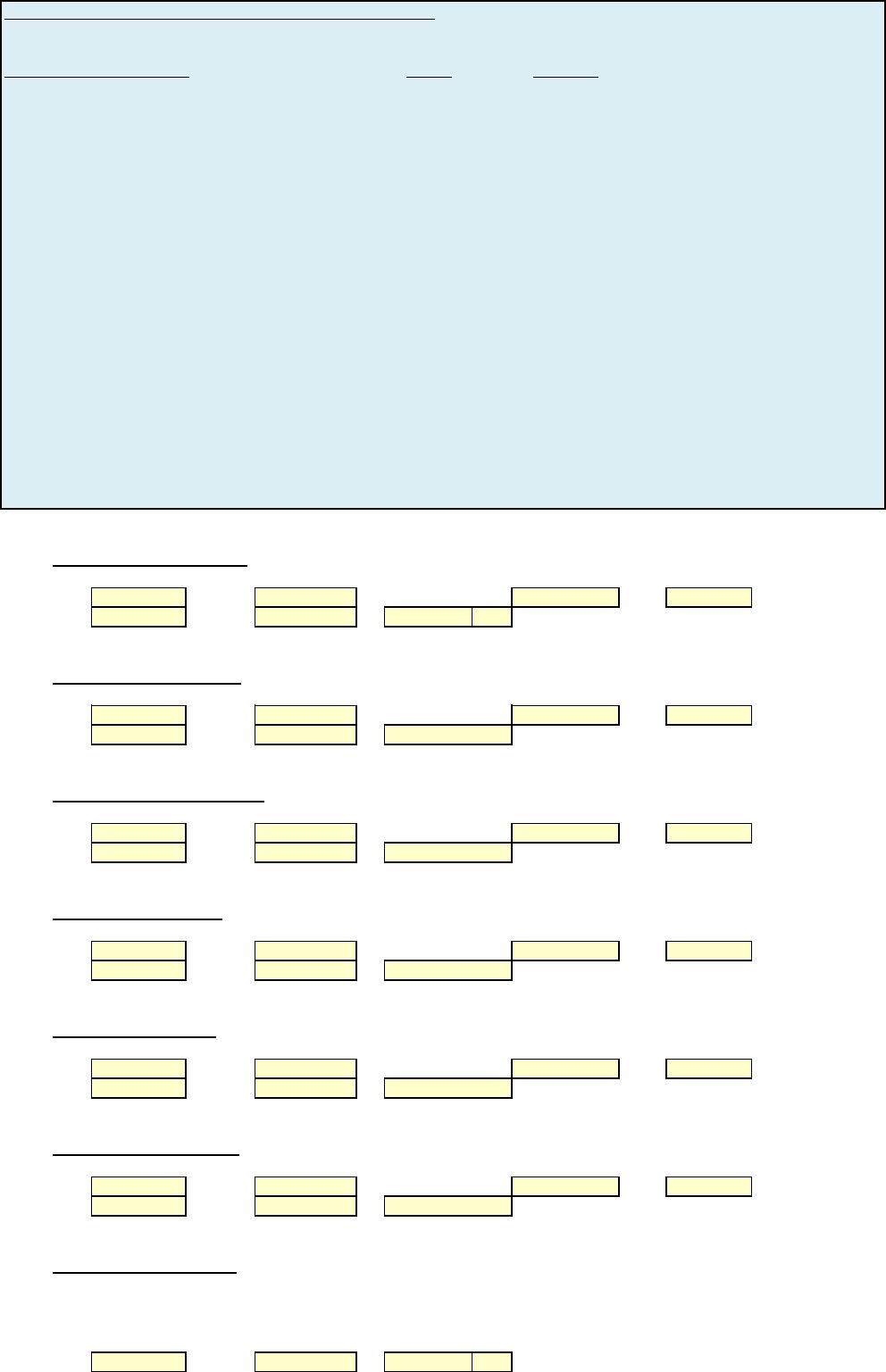
Labor Price variance:
P11-2A Compute variances, and prepare income statement
Ayala Corporation accumulates the following data relative to jobs started and finished during the month of June 2017.
Actual Standard
Raw materials unit cost $2.25 $2.10
Raw materials units used
10,600 10,000
Direct labor payroll $120,960 $120,000
Direct labor hours worked 14,400 15,000
Manufacturing overhead incurred $189,500
Manufacturing overhead applied $189,000
Machine hours expected to be used at normal capacity 42,500
Budgeted fixed overhead for June $55,250
Variable overhead rate per machine hour $3.00
Fixed overhead rate per machine hour $1.30
Overhead is applied on the basis of standard machine hours. Three hours of machine time are
required for each direct labor hour. The jobs were sold for $400,000. Selling and administrative
expenses were $40,000. Assume that the amount of raw materials purchased equaled the amount
used.
Instructions
(a) Compute all of the variances for (1) direct materials and (2) direct labor.
(b) Compute the total overhead variance.
(c) Prepare an income statement for management. (Ignore income taxes.)
NOTE: Enter a number in cells requesting a value; enter either a number or a formula in cells with a “?” .
(a)(1)
Total Materials Variance:
(AQ XAP ) minus ( SQ XSP) )
( Value X Value ) minus ( Value X Value )
= ? minus ? = Value
Materials price variance:
(AQ XAP ) minus ( AQ XSP )
( Value X Value ) minus ( Value X Value )
= ? minus ? =
Materials quantity variance:
(AQ XSP ) minus ( SQ XSP )
( Value X Value ) minus ( Value X Value )
= ? minus ? =
(a)(2)
Total Labor Variance:
(AH XAR ) minus ( SH XSR )
( Value X Value ) minus ( Value X Value )
= ? minus ? =
Labor Price variance:
(AH XAR ) minus ( AH XSR )
( Value X Value ) minus ( Value X Value )
= ? minus ? =
Labor quantity variance:
(AH XSR ) minus ( SH XSR )
( Value X Value ) minus ( Value X Value )
= ? minus ? =
(b) Total Overhead Variance:
= Actual minus Overhead
Overhead Applied
= Value minus Value = Value
Value
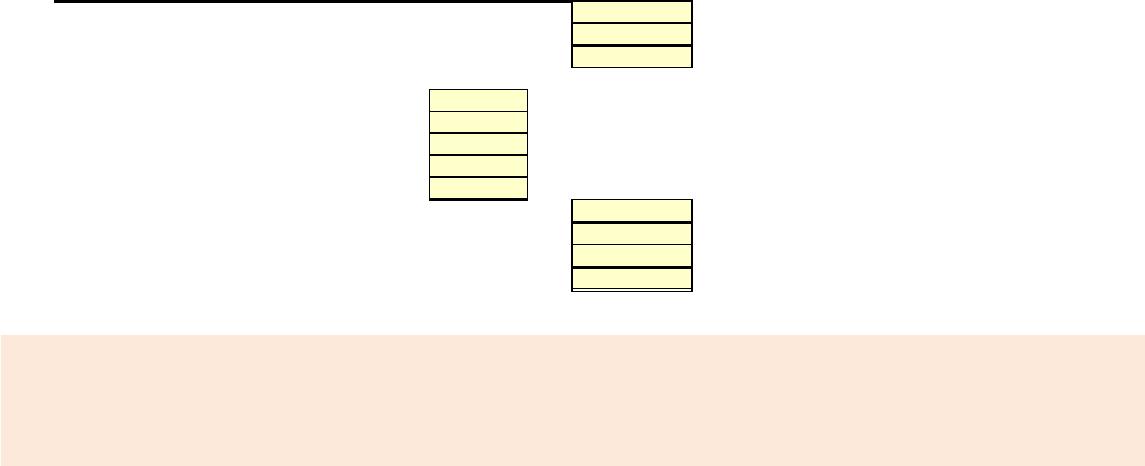
Cost and Production Data
Value
Value
Value
Value
(c )
Sales revenue Value
Cost of goods sold (at standard) ?
Gross profit (at standard) ?
Variances
Material price Value
Materials quantity Value
Labor price Value
Labor quantity Value
Overhead Value
Total variance – favorable ?
Gross profit (actual) ?
Selling and administrative expenses Value
Net income ?
After you have completed the requirements of P11-2A, consider this additional questions.
1. Assume that the actual price for raw materials changed to $2.30 and actual quantity of raw materials used changed to 11,000 units.
Recompute total materials variance and price and quantity variances for materials.
2. Show the impact of the changes above on the income statement.
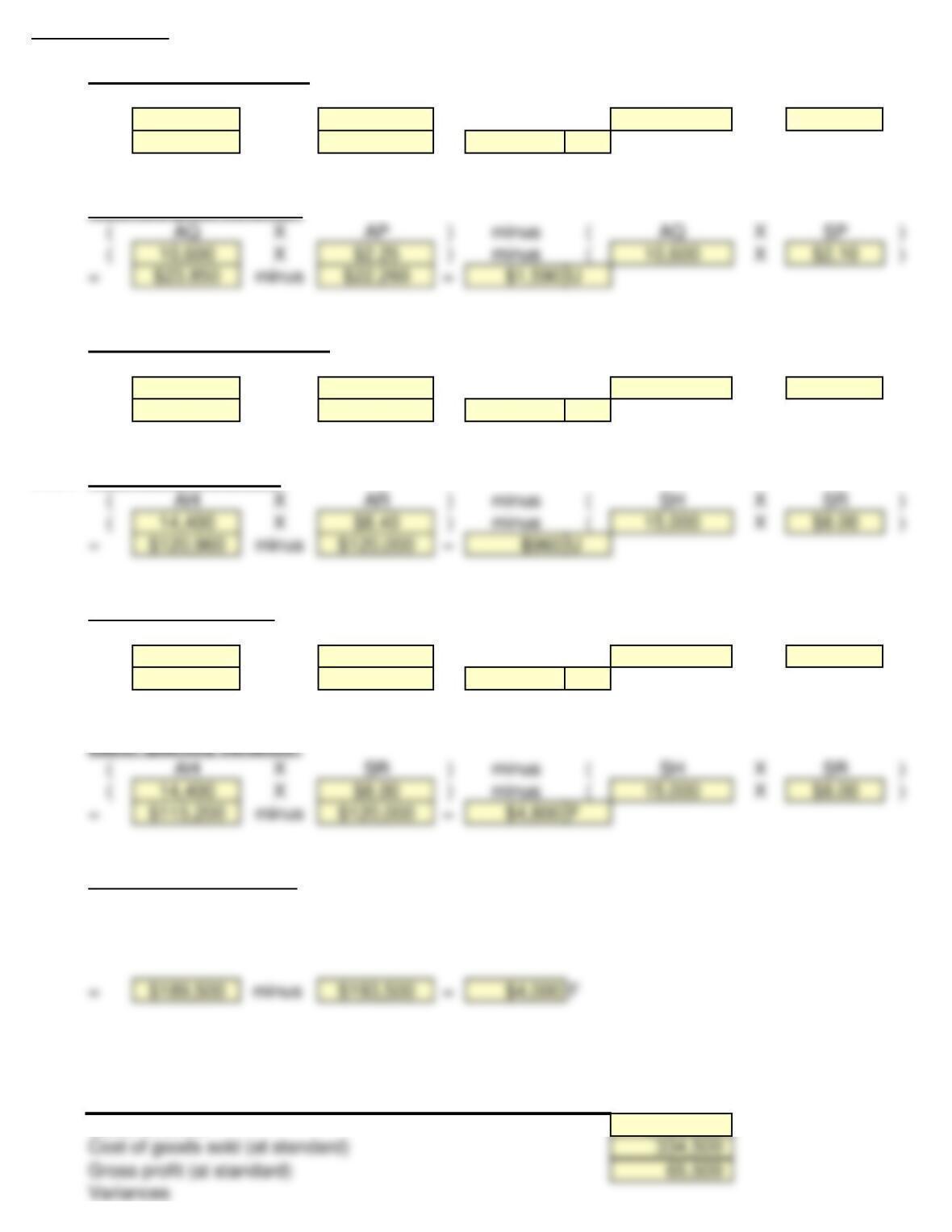
AYALA CORPORATION
Income Statement
For the Month Ended June 30, 2017
P11-2A Solution
(a)(1) Total Materials Variance:
(AQ XAP ) minus ( SQ XSP) )
( 10,600 X $2.25 ) minus ( 10,000 X $2.10 )
= $23,850 minus $21,000 = $2,850 U
Materials price variance:
Materials quantity variance:
(AQ XSP ) minus ( SQ XSP )
( 10,600 X $2.10 ) minus ( 10,000 X $2.10 )
= $22,260 minus $21,000 = $1,260 U
(a)(2) Total Labor Variance:
Labor Price variance:
(AH XAR ) minus ( AH XSR )
( 14,400 X $8.40 ) minus ( 14,400 X $8.00 )
= $120,960 minus $115,200 = $5,760 U
Labor quantity variance:
(b) Total Overhead Variance:
= Actual minus Overhead
Overhead Applied
(c )
Sales revenue $400,000
AYALA CORPORATION
Income Statement
For the Month Ended June 30, 2017
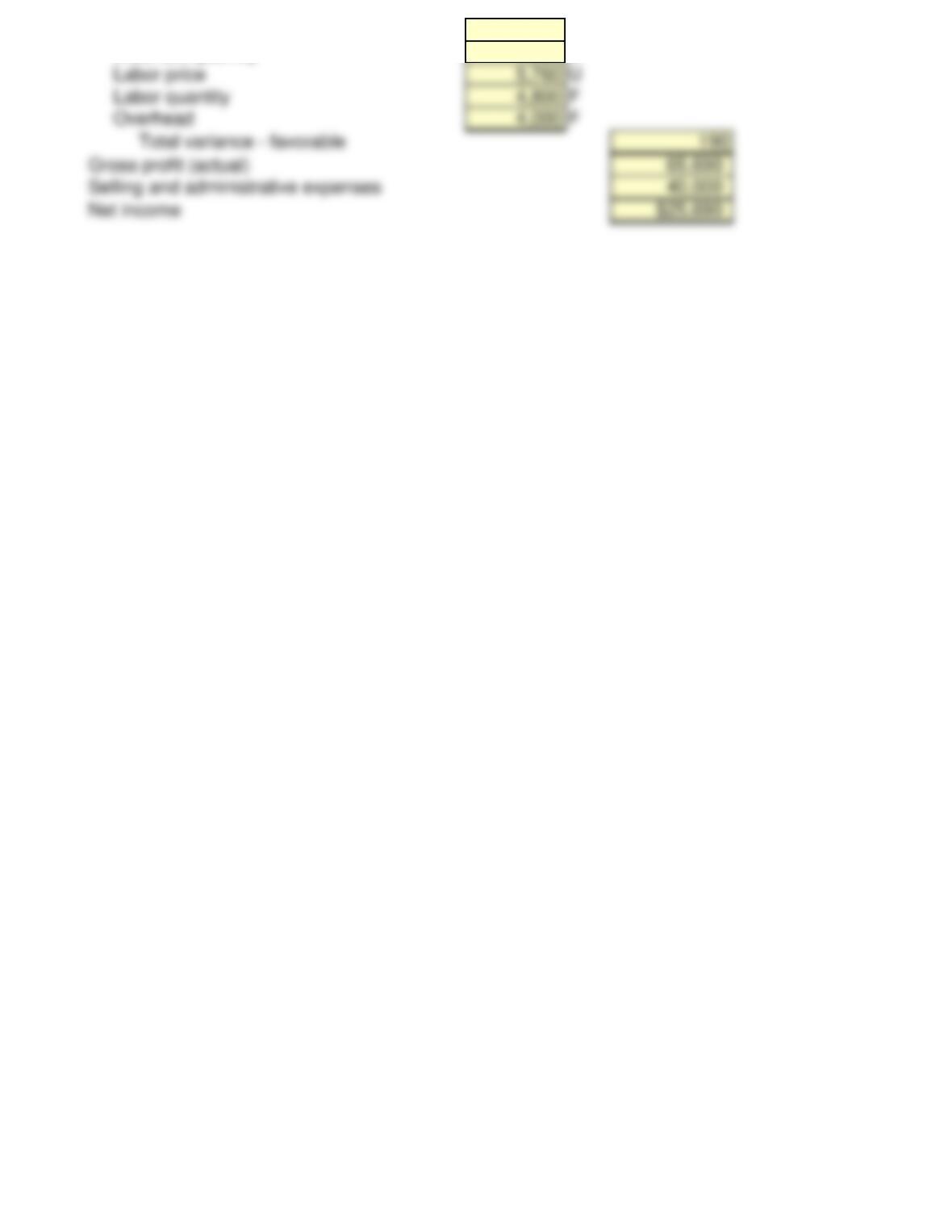
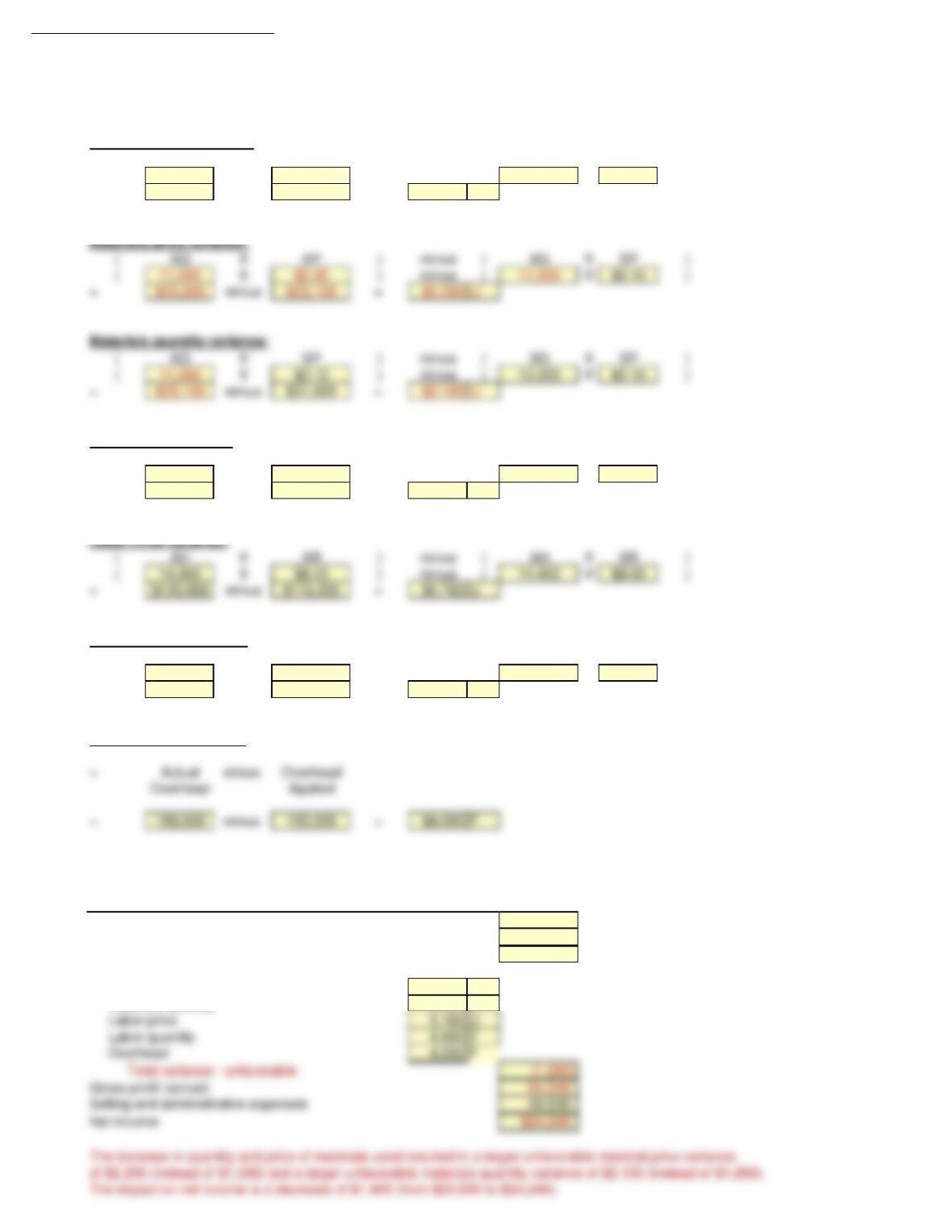
Material price $1,590 U
Materials quantity 1,260 U
P11-2A Solution to additional questions
1. Assume that the actual price for raw materials changed to $2.30 and actual quantity of raw materials used changed to 11,000 units.
Recompute total materials variance and price and quantity variances for materials.
2. Show the impact of the changes above on the income statement.
(a)(1) Total Materials Variance:
(AQ XAP ) minus ( SQ XSP) )
(11,000 X$2.30 ) minus ( 10,000 X $2.10 )
=$25,300 minus $21,000 = $4,300 U
(a)(2) Total Labor Variance:
(AH XAR ) minus ( SH XSR )
( 14,400 X $8.40 ) minus ( 15,000 X $8.00 )
= $120,960 minus $120,000 = $960 U
Labor quantity variance:
(AH XSR ) minus ( SH XSR )
( 14,400 X $8.00 ) minus ( 15,000 X $8.00 )
= $115,200 minus $120,000 = $4,800 F
(b) Total Overhead Variance:
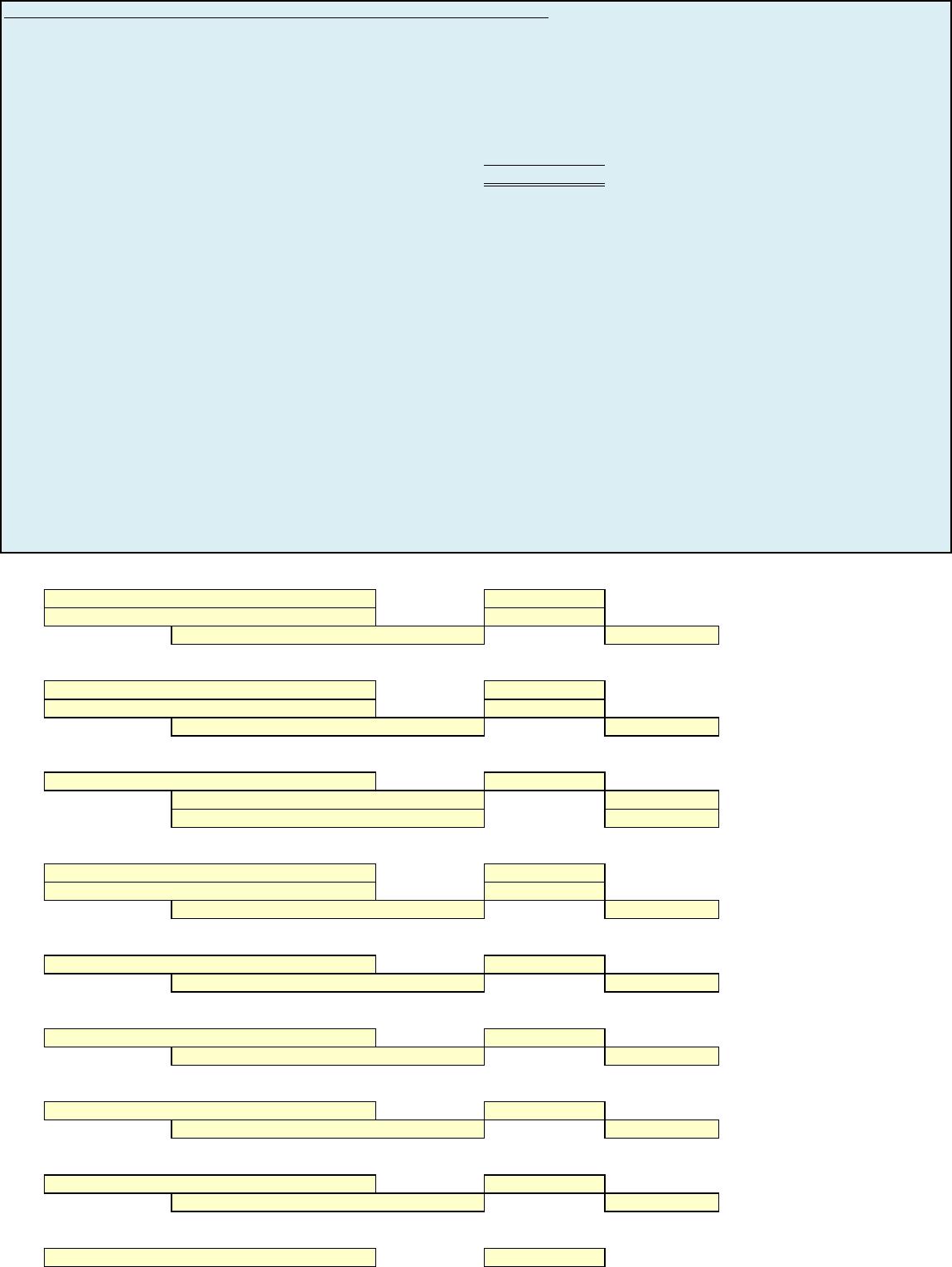
(c )
Sales revenue $400,000
Cost of goods sold (at standard) 334,500
Gross profit (at standard) 65,500
Variances
Material price $2,200 U
Materials quantity 2,100 U
AYALA CORPORATION
Income Statement
For the Month Ended June 30, 2017
P11-6A Journalize and post standard cost entries, and prepare income statement
Jorgensen Corporation uses standard costs with its job order cost accounting system.
In January, an order (Job No. 12) for 1,900 units of Product B was received. The standard
cost of one unit of Product B is as follows.
Direct materials 3 pounds at $1.00 per pound $3.00
Direct labor 1 hour at $8.00 per hour 8.00
Overhead 2 hours (variable $4.00 per machine hour;
fixed $2.25 per machine hour)
12.50
Standard cost per unit $23.50
Normal capacity for the month was 4,200 machine hours. During January, the following
transactions applicable to Job No. 12 occurred.
1. Purchased 6,200 pounds of raw materials on account at $1.05 per pound.
2. Requisitioned 6,200 pounds of raw materials for Job No. 12.
3. Incurred 2,000 hours of direct labor at a rate of $7.80 per hour.
4. Worked 2,000 hours of direct labor on Job No.12.
5. Incurred manufacturing overhead on account $25,000.
6. Applied overhead to Job No. 12 on basis of standard machine hour allowed.
7. Completed Job No. 12.
8. Billed customer for Job No. 12 at a selling price of $65,000.
Instructions
(a) Journalize the transactions.
(b) Post to the job order cost accounts.
(c ) Prepare the entry to recognize the total overhead variance.
(d) Prepare the January 2017 income statement for management. Assume selling and
administrative expenses were $2,000.
NOTE: Enter a number in cells requesting a value; enter either a number or a formula in cells with a “?” .
(a)(1) Value
Value Value
(a)(2) Value
Value Value
(a)(3) Value Value
Value
(a)(4) Value
Value Value
(a)(5) Value Value
(a)(6) Value Value
(a)(7) Value Value
(a)(8) Value Value
Value
Account
Account
Account
Account
Account
Account
Account
Account
Account
Account
Account
Account
Account
Account
Account
Account
Account
Account
Account
Account
Account
Value
(b) Value Value Value Value Value
Value
Value
Value Value Value Value Value
Value Value Value Value
Value
(c ) Value Value
(d)
Sales revenue Value
Cost of goods sold (at standard) Value
Gross profit (at standard) ?
Variances
Material price Value
Materials quantity Value
Labor price Value
Labor quantity Value
Overhead Value
Total variance – unfavorable ?
Gross profit (actual) ?
Selling and administrative expenses Value
Net income ?
After you have completed the requirements of P11-6A, consider this additional question.
1. Assume that the standard costs changed as follows:
Direct materials 3 pounds at $1.10 per pound $3.30
Direct labor 1 hour at $10.00 per hour 10.00
Overhead 2 hours (variable $4.00 per machine hour;
fixed $2.25 per machine hour)
12.50
Standard cost per unit $25.80
Revise journals entries to reflect these changes and show posting to job order T-accounts.
Account
For the Month Ended January 31, 2017
Work in Process Inventory
Factory Labor
Materials Quantity Variance
Finished Goods Inventory
Manufacturing Overhead
Labor Price Variance
Cost of Goods Sold
Raw Materials Inventory
Materials Price Variance
Labor Quantity Variance
Account
Account
JORGENSEN CORPORATION
Income Statement
Work in Process Inventory
Finished Goods Inventory (1,900 x $23.50)
Accounts Receivable
Sales Revenue
Cost of Goods Sold
Finished Goods Inventory
P11-6 Solution
(a)(1) 6,200
310 6,510
(a)(4) 15,200
800 16,000
(a)(5) 25,000 25,000
(a)(6) 23,750 23,750
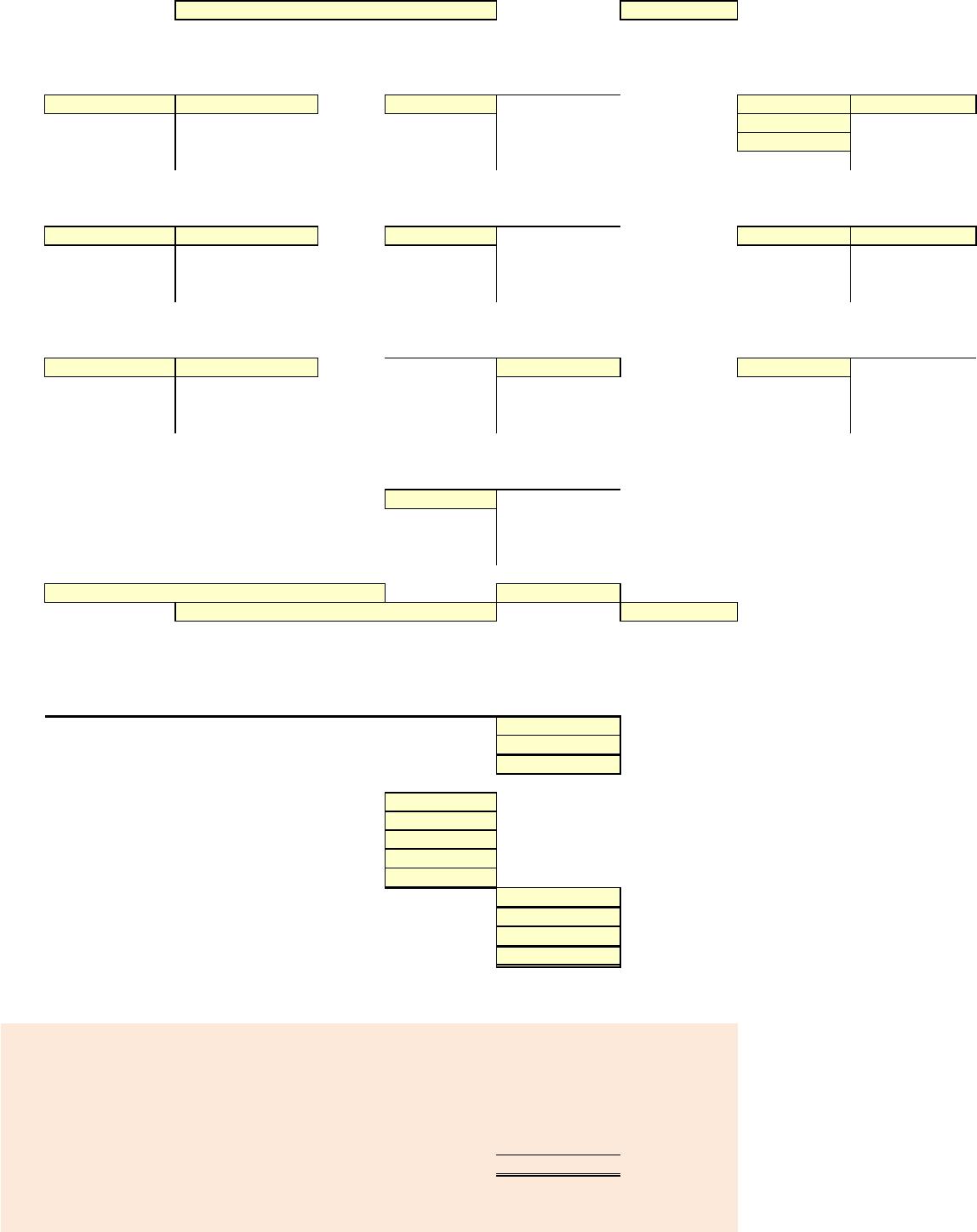
(b) (1) 6,200 (2) 6,200 (1) 310 (2) 5,700 (7) 44,650
(4) 15,200
(6) 23,750
(3) 16,000 (4) 16,000 (2) 500 (7) 44,650 (8) 44,650
(5) 25,000 (6) 23,750 (3) 400 (8) 44,650
(4) 800
Raw Materials Inventory (6,200 x $1.00)
Materials Price Variance[6,200 x ($1.05 – $1.00)]
Accounts Payable (6,200 x $1.05)
Work in Process Inventory (1,900 x $8.00)
Labor Quantity Variance [(2,000 – 1,900) x $8]
Factory Labor
Manufacturing Overhead
Accounts Payable
Work in Process Inventory [(1,900 x2) x ($4.00 +$2.25)]
Manufacturing Overhead
Raw Materials Inventory
Materials Price Variance
Work in Process Inventory
Factory Labor
Materials Quantity Variance
Finished Goods Inventory
Manufacturing Overhead
Labor Price Variance
Cost of Goods Sold
Labor Quantity Variance
Raw Materials Inventory
Work in Process Inventory (1,900 x 3 x $1)
Materials Quantity Variance ([(6,200-5,700) x $1.00]
Factory Labor (2,000 x $8)
Labor Price Variance [2,000 x ($8.00 – $7.80)]
Factory Wages Payable (2,000 x $7.80)
(c ) 1,250 1,250
(d)
Sales revenue $65,000
Cost of goods sold (at standard) (1,900 x $23.50) 44,650
Gross profit (at standard) $20,350
Variances
Material price $310 U
For the Month Ended January 31, 2017
Overhead Variance ($25,000 – $23,750)
Manufacturing Overhead
JORGENSEN CORPORATION
Income Statement
Accounts Receivable
Sales Revenue
Work in Process Inventory
Work in Process Inventory [(1,900 x2) x ($4.00 +$2.25)]
Manufacturing Overhead
Finished Goods Inventory (1,900 x $25.80)
P11-6 Solution to additional question
1. Assume that the standard costs changed as follows:
Direct materials 3 pounds at $1.10 per pound $3.30
Direct labor 1 hour at $10.00 per hour 10.00
Overhead 2 hours (variable $4.00 per machine hour;
fixed $2.25 per machine hour) 12.50
Standard cost per unit $25.80
Revise journals entries to reflect these changes and show posting to job order T-accounts.
(a)(1) 6,820 310
6,510
(a)(4) 19,000
1,000 20,000
(a)(5) 25,000 25,000
49,020 49,020
(b) (1) 6,820 (2) 6,820 (1) 310 (2) 6,270 (7) 49,020
(4) 19,000
(6) 23,750
Work in Process Inventory
Cost of Goods Sold
Finished Goods Inventory
Raw Materials Inventory
Materials Price Variance
Work in Process Inventory (1,900 x $10.00)
Labor Quantity Variance [(2,000 – 1,900) x $10]
Factory Labor
Manufacturing Overhead
Accounts Payable
Raw Materials Inventory (6,200 x $1.10)
Materials Price Variance[6,200 x ($1.05 – $1.10)]
Accounts Payable (6,200 x $1.05)
Factory Labor (2,000 x $10)
Labor Price Variance [2,000 x ($10.00 – $7.80)]
Factory Wages Payable (2,000 x $7.80)
Raw Materials Inventory
Work in Process Inventory (1,900 x 3 x $1.10)
Materials Quantity Variance ([(6,200-5,700) x $1.10]
(5) 25,000 (6) 23,750 (3) 4,400 (8) 49,020
(d)
Sales revenue $65,000
Cost of goods sold (at standard) (1,900 x $25.80) 49,020
Gross profit (at standard) $15,980
For the Month Ended January 31, 2017
Manufacturing Overhead
Labor Price Variance
Cost of Goods Sold
JORGENSEN CORPORATION
Income Statement
CD11 Current Designs
The executive team at Current Designs has gathered to evaluate the company‘s operations for the last month.
One of the topics on the agenda is the special order from Huegel Hollow, which was presented in CD2. Recall that
Current Designs had a special order to produce a batch of 20 kayaks for a client, and you were asked to determine
the cost of the order and the cost per kayak.
Mike Cichanowski asked the others if the special order caused any particular problems in the production process.
Dave Thill, the production manager, made the following comments: “Since we wanted to complete this order quickly
and make a good first impression on this new customer, we had some of our most experienced type I workers run the
rotomold oven and do the trimming. They were very efficient and were able to determine that part of the manufacturing
process even more quickly than the regular crew. However, the finishing on these kayaks required a different technique
than what we usually use, so our type II workers took a little longer than usual for that part of the process.”
Deb Welch, who is in charge of the purchasing function, said, “We had to pay a little more for the polyethylene
powder for this order because the customer wanted a color that we don‘t usually stock. We also ordered a little extra
since we wanted to make sure that we had enough to allow us to calibrate the equipment. The calibration was a little
tricky, and we used all of the powder that we had purchased. Since the number of kayaks in the order was fairly small,
we were able to use some rope and other parts that were left over from last year’s production in the finishing kits.
We’ve seen a price increase for these components in the last year, so using the parts that we already had in inventory
cut our costs for the finishing kits.”
Instructions
(a) Based on the comments above, predict whether each of the following variances will be favorable or unfavorable.
If you don’t have enough information to make a prediction, use “NEI” to indicate “Not Enough Information.”
(1) Quantity variance for polyethylene powder.
(2) Price variance for polyethylene powder.
(3) Quantity variance for finishing kits.
(4) Price variance for finishing kits
(5) Quantity variance for type I workers.
(6) Price variance for type I workers.
(7) Quantity variance for type II workers.
(8) Price variance for type II workers.
(b) Diane Buswell examined some of the accounting records and reported that Current Designs purchased 1,200 pounds
of powder for this order at a total cost of $2,040. Twenty (20) finishing kits were assembled at a total cost of $3,240.
The payroll records showed that the type I employees worked 38 hours on this project at a total cost of $570. The
type II finishing employees worked 65 hours at a total cost of $796.25. A total of 20 kayaks were produced for this
order.
The standards that had been developed for this model of kayak were used in CD2 and are reproduced here. For
each kayak:
54 pounds of polyethylene powder at $1.50 per pound
1 finishing kit (rope, seat, hardware, etc.) at $170
2 hours of type I labor from people who run the oven and trim the plastic at a standard wage rate of $15 per hour
3 hours of type II labor from people who attach the hatches and seat and other hardware at a standard wage rate
of $12 per hour
Calculate the eight variances that are listed in part (a) of this problem.
NOTE: Enter a number in cells requesting a value; enter either a number or a formula in cells with a “?” .
(a) Based on the comments above, predict whether each of the following variances will be favorable or unfavorable.
If you don’t have enough information to make a prediction, use “NEI” to indicate “Not Enough Information.”
(1) Quantity variance for polyethylene powder. Response
(2) Price variance for polyethylene powder. Response
(3) Quantity variance for finishing kits. Response
(4) Price variance for finishing kits Response
(5) Quantity variance for type I workers. Response
(6) Price variance for type I workers. Response
(7) Quantity variance for type II workers. Response
(8) Price variance for type II workers. Response
(b) Calculate the eight variances that are listed in part (a) of this problem.
(1) Quantity variance for polyethylene powder.
= (AQ X SP) – (SQ X SP)
= Value – Value
= ? – ?
= ?
(2) Price variance for polyethylene powder.
= (AQ X AP) – (AQ X SP)
= Value – Value
= ? – ?
= ?
(3) Quantity variance for finishing kits.
= (AQ X SP) – (SQ X SP)
= Value – Value
= ? – ?
= ?
(4) Price variance for finishing kits
= (AQ X AP) – (AQ X SP)
= Value – Value
= ? – ?
= ?
(5) Quantity variance for type I workers.
= (AH X SR) – (SH X SR)
= Value – Value
= ? – ?
= ?
(6) Price variance for type I workers.
= (AH X AR) – (AH X SR)
= Value – Value
= ? – ?
= ?
(7) Quantity variance for type II workers.
= (AH X SR) – (SH X SR)
= Value – Value
= ? – ?
= ?
(8) Price variance for type II workers. (Round to 2 decimal points)
= (AH X AR) – (AH X SR)
= Value – Value
= ? – ?
= ?
After you have completed the requirements of CD11, consider this additional question.
1. Assume the standard price for polyethylene powder and type I labor changed to $1.60 and
$16 respectively. Revise variance calculations to reflect these changes.
CD11 Solution
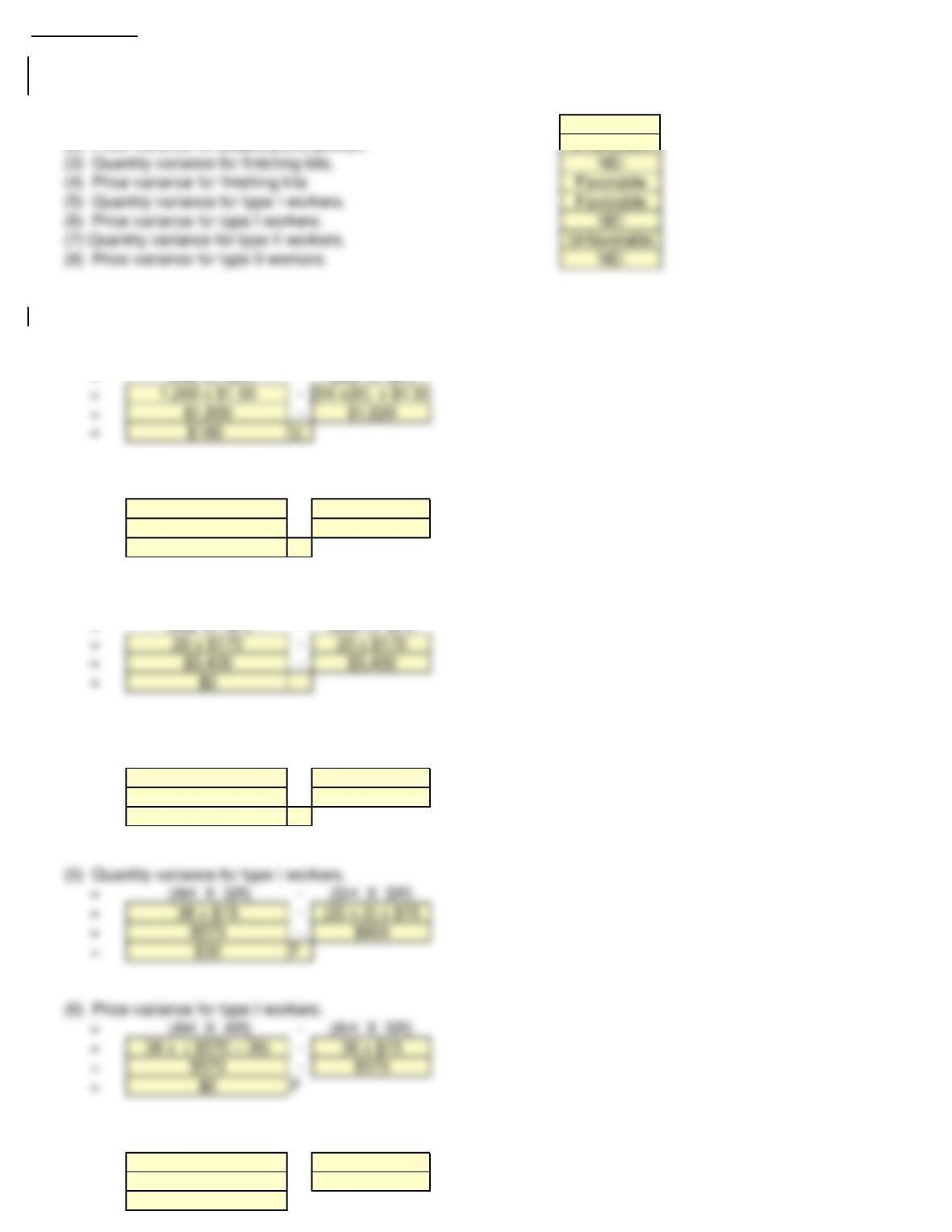
(a) Based on the comments above, predict whether each of the following variances will be favorable or unfavorable.
If you don’t have enough information to make a prediction, use “NEI” to indicate “Not Enough Information.”
(1) Quantity variance for polyethylene powder. Unfavorable
(2) Price variance for polyethylene powder. Unfavorable
(b) Calculate the eight variances that are listed in part (a) of this problem.
(1) Quantity variance for polyethylene powder.
= (AQ X SP) – (SQ X SP)
(2) Price variance for polyethylene powder.
= (AQ X AP) – (AQ X SP)
=
1,200 x ($2,040 ÷1200)
– 1,200 x $1.50
= $2,040 – $1,800
=$240 U
(3) Quantity variance for finishing kits.
(4) Price variance for finishing kits
= (AQ X AP) – (AQ X SP)
= 20 x ($3,240 ÷20) – 20 x $170
= $3,240 – $3,400
=$160 F
(7) Quantity variance for type II workers.
= (AH X SR) – (SH X SR)
= 65 x $12 – (20 x 3) x $12
=$780 –$720
=$60 U

(8) Price variance for type II workers. (Round to 2 decimal points)
= (AH X AR) – (AH X SR)
= 65 x ($796.25 ÷ 65) – 65 x $12
CD11 Solution to additional question
1. Assume the standard price for polyethylene powder and type I labor changed to $1.60 and
$16 respectively. Revise variance calculations to reflect these changes.
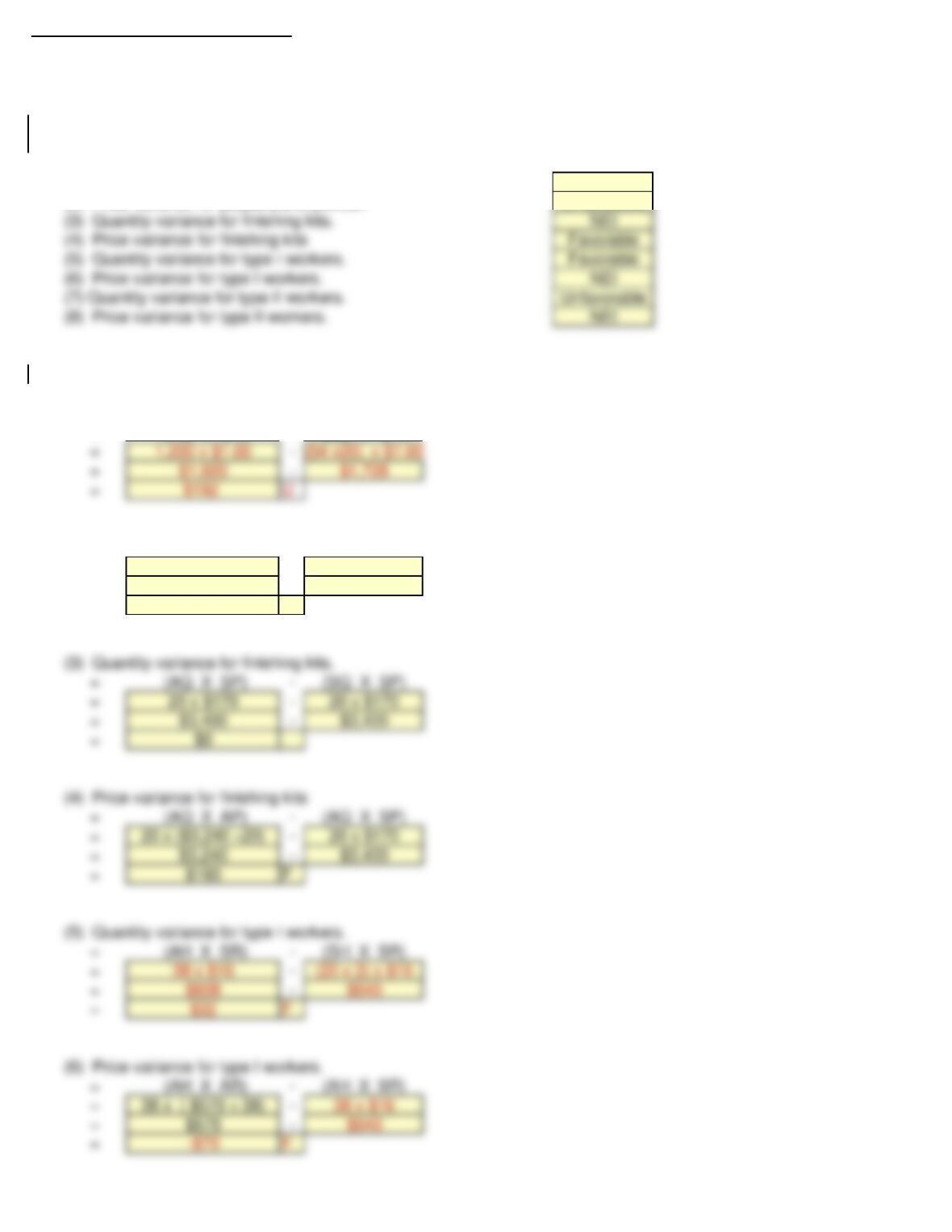
(a) Based on the comments above, predict whether each of the following variances will be favorable or unfavorable.
If you don’t have enough information to make a prediction, use “NEI” to indicate “Not Enough Information.”
(1) Quantity variance for polyethylene powder. Unfavorable
(2) Price variance for polyethylene powder. Unfavorable
(b) Calculate the eight variances that are listed in part (a) of this problem.
(1) Quantity variance for polyethylene powder.
= (AQ X SP) – (SQ X SP)
(2) Price variance for polyethylene powder.
= (AQ X AP) – (AQ X SP)
=
1,200 x ($2,040 ÷1200)
–1,200 x $1.60
= $2,040 – $1,920
=$120 U
(7) Quantity variance for type II workers.
= (AH X SR) – (SH X SR)
= 65 x $12 – (20 x 3) x $12
=$780 –$720
=$60 U