11–1
Chapter 11
Service Department and Joint Cost Allocation
Learning Objectives
1. Explain why service costs are allocated.
2. Allocate service department costs using the direct method.
3. Allocate service department costs using the step method.
4. Allocate service department costs using the reciprocal method.
5. Use the reciprocal method for outsourcing decisions.
6. Explain why joint costs are allocated.
7. Allocate joint costs using the net realizable value method.
8. Allocate joint costs using the physical quantities method.
9. Explain how cost data are used in the sell-or-process-further decision.
10. Account for by-products.
11. (Appendix) Use spreadsheets to solve reciprocal cost allocation problems.
Formatted: Normal1, Centered, Border: Top: (No border),
Tab stops: Not at 1″
Formatted: Font: 8 pt
Chapter Overview
I. SERVICE DEPARTMENT COST ALLOCATION
II. METHODS OF ALLOCATING SERVICE DEPARTMENT COSTS
• Allocation Bases
• Direct Method
• Comparison of Direct, Step, and Reciprocal Methods
• The Reciprocal Method and Decision Making
III. ALLOCATION OF JOINT COSTS
• Joint Costing Defined
• Reasons for Allocating Joint Costs
V. DECIDING WHETHER TO SELL GOODS NOW OR PROCESS THEM FURTHER
VI. DECIDING WHAT TO DO WITH BY-PRODUCTS
VII. APPENDIX: CALCULATION OF THE RECIPROCAL METHOD USING
COMPUTER SPREADSHEETS
11–3
Formatted: Font: 8 pt
Chapter Outline
LO 11-1 Explain why service costs are allocated.
SERVICE DEPARTMENT COST ALLOCATION
• The cost allocation process has other roles, two of which are explored in this chapter.
o In our discussion of two-stage cost allocation, we took the first-stage allocation process
as given and concentrated on allocating the cost pools in the second stage.
• Service departments provide services to other departments in the organization.
o Examples of service departments and what they do:
▪ Personnel, accounting, and purchasing departments provide services to production
departments.
• User departments use the functions of service departments. For example, the production
department uses the services provided by the information systems and human resources
departments.
o User departments could be other service departments or production or marketing
departments that produce or market the organization’s products.
• Our focus in this chapter is on allocating the costs of service departments to production
departments.
11–4
11–5
• As shown in Exhibit 11.1, most user departments make use of all service departments.
Depending on the situation, the service departments also provide service to each other.
METHODS OF ALLOCATING SERVICE DEPARTMENT COSTS
• Three methods to allocate service department overhead costs are:
o Direct method
o Step method
o Reciprocal method
• Service department costs are allocated for two purposes:
• Allocation Bases
▪ An important decision in cost allocation is to choose which allocation base to use.
The usual criteria (cause and effect, reasonableness, and fairness) are still important
here.
LO 11-2 Allocate service department costs using the direct method.
11–6
Formatted: Normal1, Centered, Border: Top: (No border),
Tab stops: Not at 1″
o The direct method is a cost allocation method that charges costs of service departments
to user departments without making allocations between or among service departments.
▪ The direct method allocates costs directly to the final users of a service, ignoring
intermediate users.
o Allocate Information Systems Department Costs
o Allocate Administration Department Costs
▪ Exhibit 11.5 shows the flow of costs in T-accounts and the allocations to be
recognized for the departments when the direct method is used.
See Demonstration Problem 1
o Limitations of the Direct Method
• Some people have criticized the direct method because it ignores services
provided by one service department to another.
• If one purpose of cost allocation is to encourage cross-departmental monitoring,
the direct method falls short because it ignores the costs that service departments
themselves incur when they use other service departments.
This criticism has led some companies to use other methods of service
department cost allocation, which is described next.
11–8
Formatted: Normal1, Centered, Border: Top: (No border),
Tab stops: Not at 1″
Formatted: Font: 8 pt
LO 11-3 Allocate service department costs using the step method.
• Step Method
o The step method is the method of service department cost allocation that allocates some
service department costs to other service departments.
▪ The step method recognizes that some services are provided by one service
department to others.
▪ Allocate Service Department Costs
• A service department that provides services to, and receives services from,
another service department has only one of these two relationships recognized.
Exhibit 11.6 shows the computation of the step method.
See Demonstration Problem 2
o Limitations of the Step Method
▪ The step method does not recognize reciprocal services.
11–9
Formatted: Normal1, Centered, Border: Top: (No border),
Tab stops: Not at 1″
11–10
Formatted: Normal1, Centered, Border: Top: (No border),
Tab stops: Not at 1″
LO 11-4 Allocate service department costs using the reciprocal method.
• Reciprocal Method
o The reciprocal method is the method to allocate service department costs that recognizes
all services provided by any service department, including services provided to other
service departments.
▪ The reciprocal method is identical to the actual process by which services are
exchanged among departments within organizations.
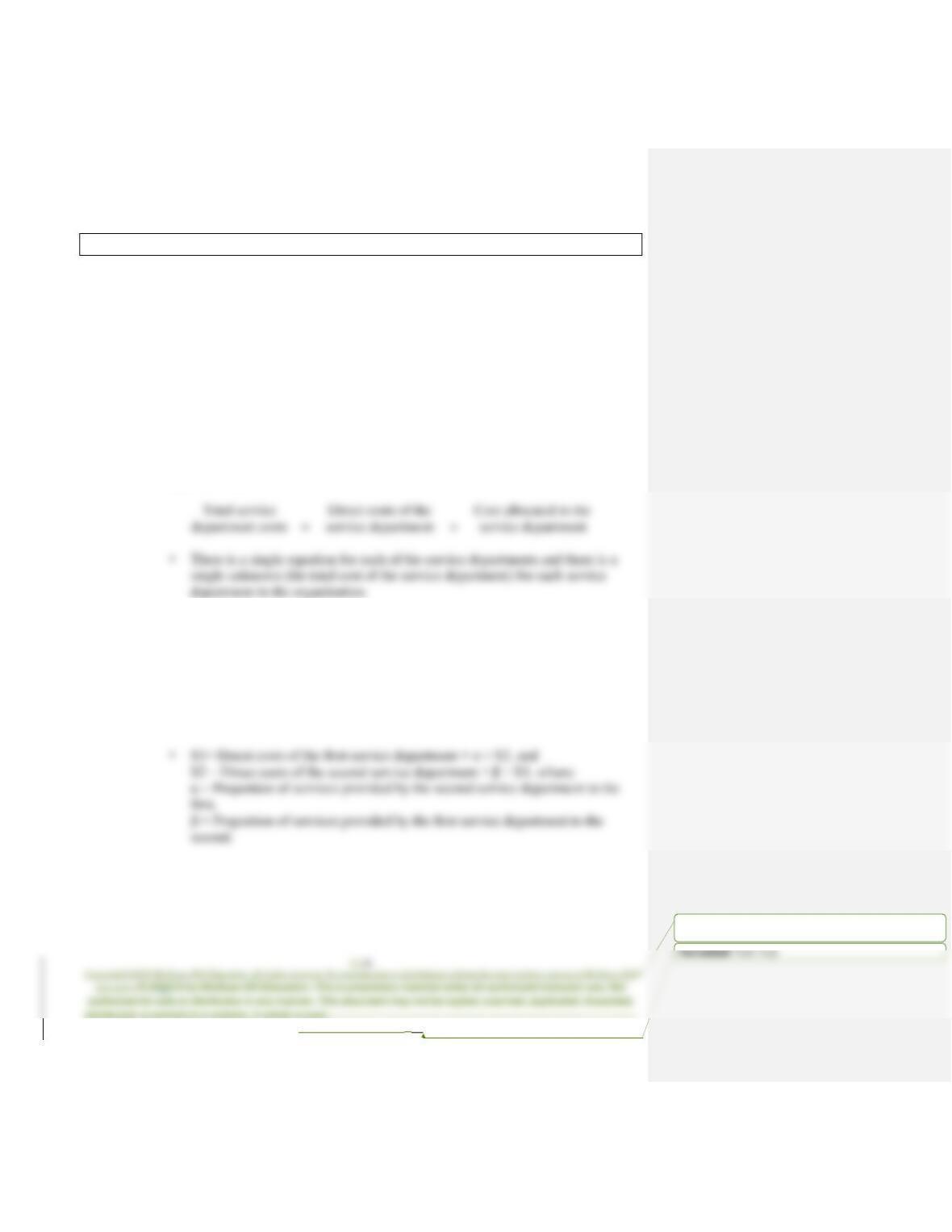
▪ Allocating Service Department Costs
• With the reciprocal method, the costs of each service department are written in
equation form:
The system of equations is solved simultaneously using matrix algebra. (For
this reason, the reciprocal method is also called the simultaneous solution
method.)
• In the case with two service departments, define the unknowns S1 and S2 to be
the total service department costs for the two service departments. Then the
simultaneous equations can be set up as:
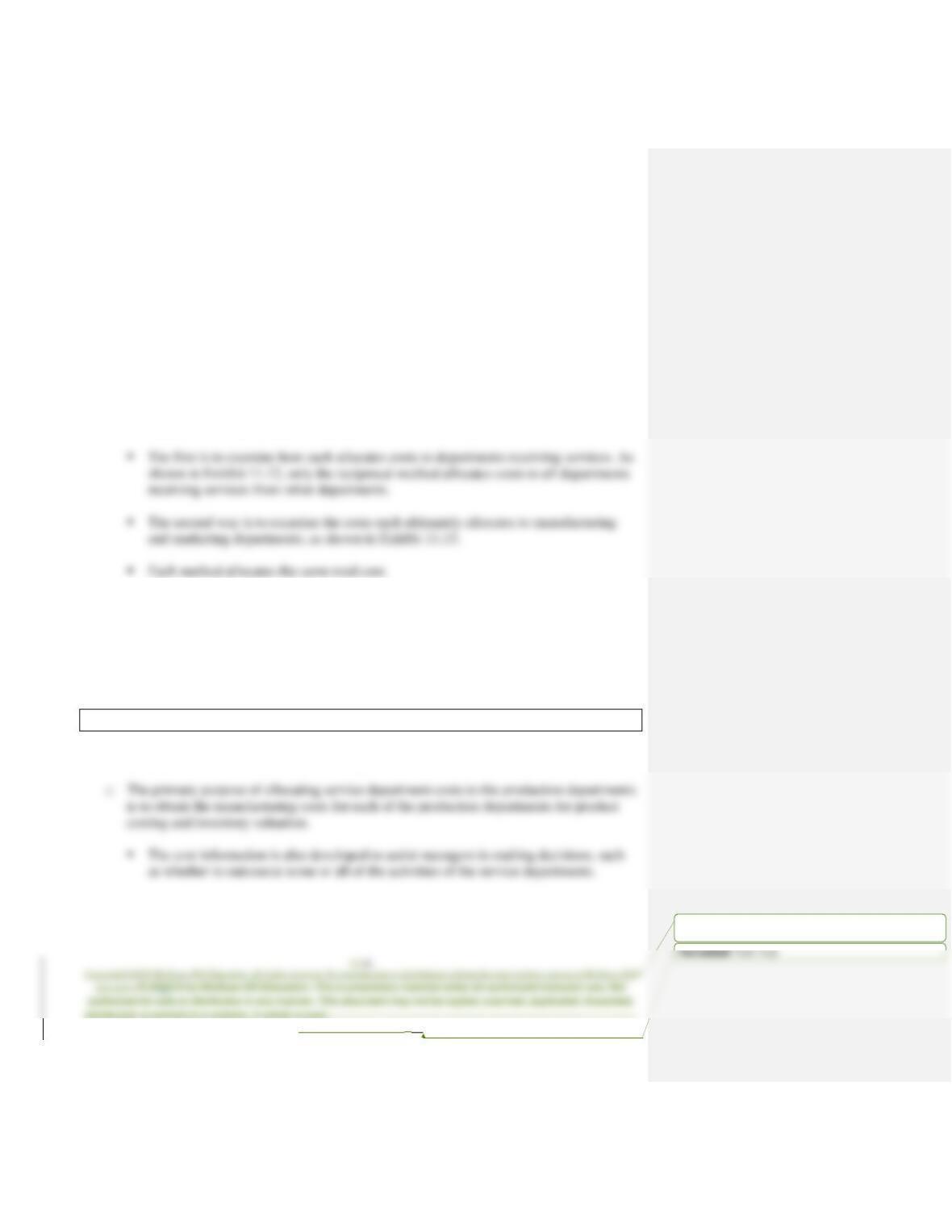
Exhibit 11.9 shows the computation of the reciprocal method
Exhibit 11.10 is the cost flow diagram for the reciprocal method.
The flow of costs through the accounts is shown in Exhibit 11.11.
11–11
11–12
Formatted: Normal1, Centered, Border: Top: (No border),
Tab stops: Not at 1″
▪ The reciprocal method accounts for cost flows in both directions among service
departments that provide services to each other.
▪ Both the step method and the direct method could understate the cost of running
service departments because these methods omit costs of certain services consumed
by one service department that were provided by other service departments.
See Demonstration Problem 3
• Comparison of Direct, Step, and Reciprocal Methods
o The three service department allocation methods can be compared in two ways.
o The direct method results sometimes are closer to the reciprocal method results than the
results using the step method.
o All three allocation methods are arbitrary. If one production department stops using the
service of a service department, the costs saved by the firm are unlikely to be equal to the
costs allocated by any of the methods.
LO 11-5 Use the reciprocal method for outsourcing decisions.
• The Reciprocal Method and Decision Making
11–13
▪ The cost savings will depend on how much an outside vendor will charge and how
much cost in the service departments can be eliminated if outsourced.
▪ Because the reciprocal method explicitly recognizes the use of one service
department by another, it provides an estimate of what one department costs when
reciprocal service costs are included.
See Demonstration Problem 4
LO 11-6 Explain why joint costs are allocated.
ALLOCATION OF JOINT COSTS
• Joint cost is a cost of a manufacturing process with two or more different outputs. Joint
products are such outputs from a common input and common production process.
o The problem is whether and how to allocate the joint cost of the input to the joint
products.
• Joint Costing Defined
o Exhibit 11.14 shows a diagram of joint cost flows.
11–14
Joint cost
11–15
Tab stops: Not at 1″
• Reasons for Allocating Joint Costs
o Cost allocations are often used to determine departmental or division costs for measuring
executive performance.
▪ Any cost allocation method contains an element of arbitrariness and must be clearly
stated before being implemented.
LO 11-7 Allocate joint costs using the net realizable value method.
JOINT COST ALLOCATION METHODS
• The two major methods of allocating joint costs are the:
o Net realizable value method.
o Physical quantities method.
• Net Realizable Value Method
o The net realizable value method allocates joint costs based on the proportional net
realizable value of the joint products at the split-off point.
▪ The net realizable value is the estimated sales value of each product at the split-off
point.
11–16
11–17
Formatted: Normal1, Centered, Border: Top: (No border),
Tab stops: Not at 1″
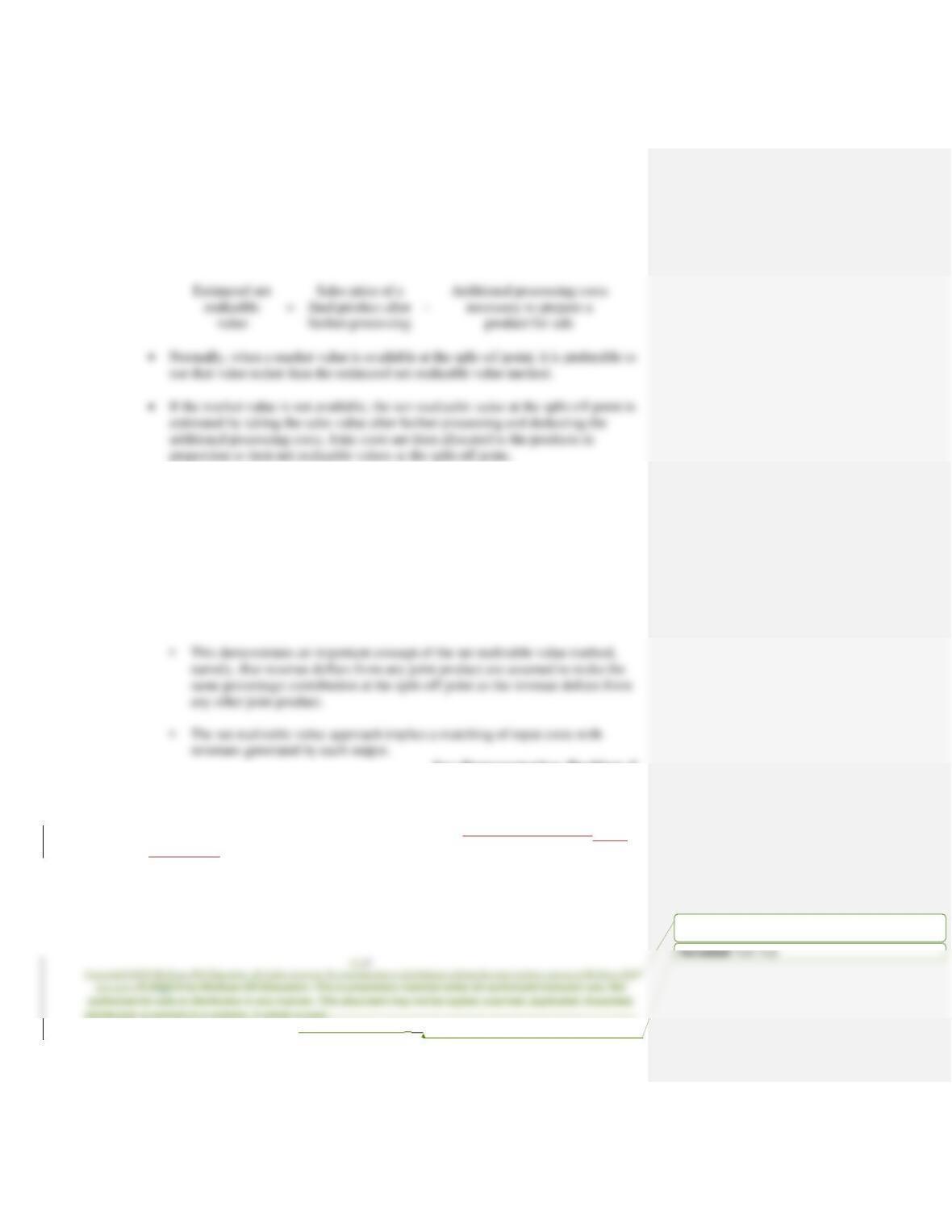
The estimated net realizable value is the sales price of a final product minus
additional processing costs necessary to prepare a product for sale.
• The terms “net realizable value” and “estimated net realizable value” are used to
emphasize that we are attempting to determine the value of the products at the
split-off point.
The difference is that in the former case (net realizable value), we can sell the
product at the split-off point, so we do not have to estimate a value.
• See Exhibit 11.15 for a condensed statement of gross margins at the split-off point.
Note that the gross margin as a percentage of sales is the same for both products.
See Demonstration Problem 5
o Estimation of Net Realizable Value
▪ See Exhibit 11.16 for a diagram of the process used by Carlyle Coal CompanyGreen
Valley Mills.
▪ See Exhibit 11.17 for the allocation of the joint cost to the two products using the
estimated net realizable value method.
See Demonstration Problem 6
Formatted: Normal1, Centered, Border: Top: (No border),
Tab stops: Not at 1″
Formatted: Font: 8 pt
LO 11-8 Allocate joint costs using the physical quantities method.
• Physical Quantities Method
o The physical quantities method allocates joint costs based on measurement of the
volume, weight, or other physical measure of the joint products at the split-off point.
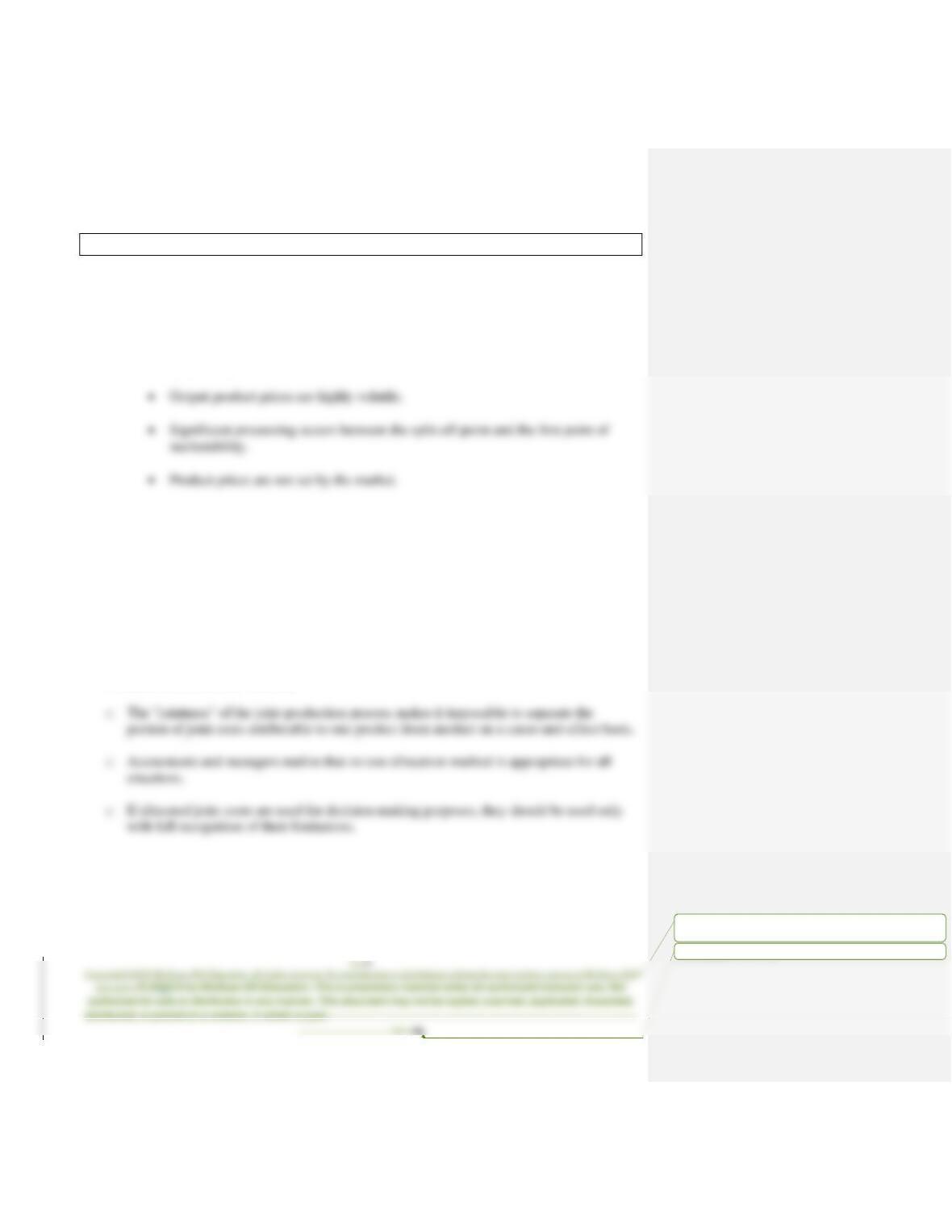
▪ The physical quantities method is used when:
▪ Using the physical quantities method, joint costs are assigned to products based on a
physical measure.
• This could be volume, weight, or any other common measure of physical
characteristics.
▪ See Exhibit 11.18 for the allocation of joint costs using the physical quantities method.
See Demonstration Problem 7
• Evaluation of Joint Cost Methods
11–20
Formatted: Normal1, Centered, Border: Top: (No border),
Tab stops: Not at 1″
LO 11-9 Explain how cost data are used in the sell-or-process-further.
DECIDING WHETHER TO SELL GOODS NOW OR PROCESS THEM FURTHER
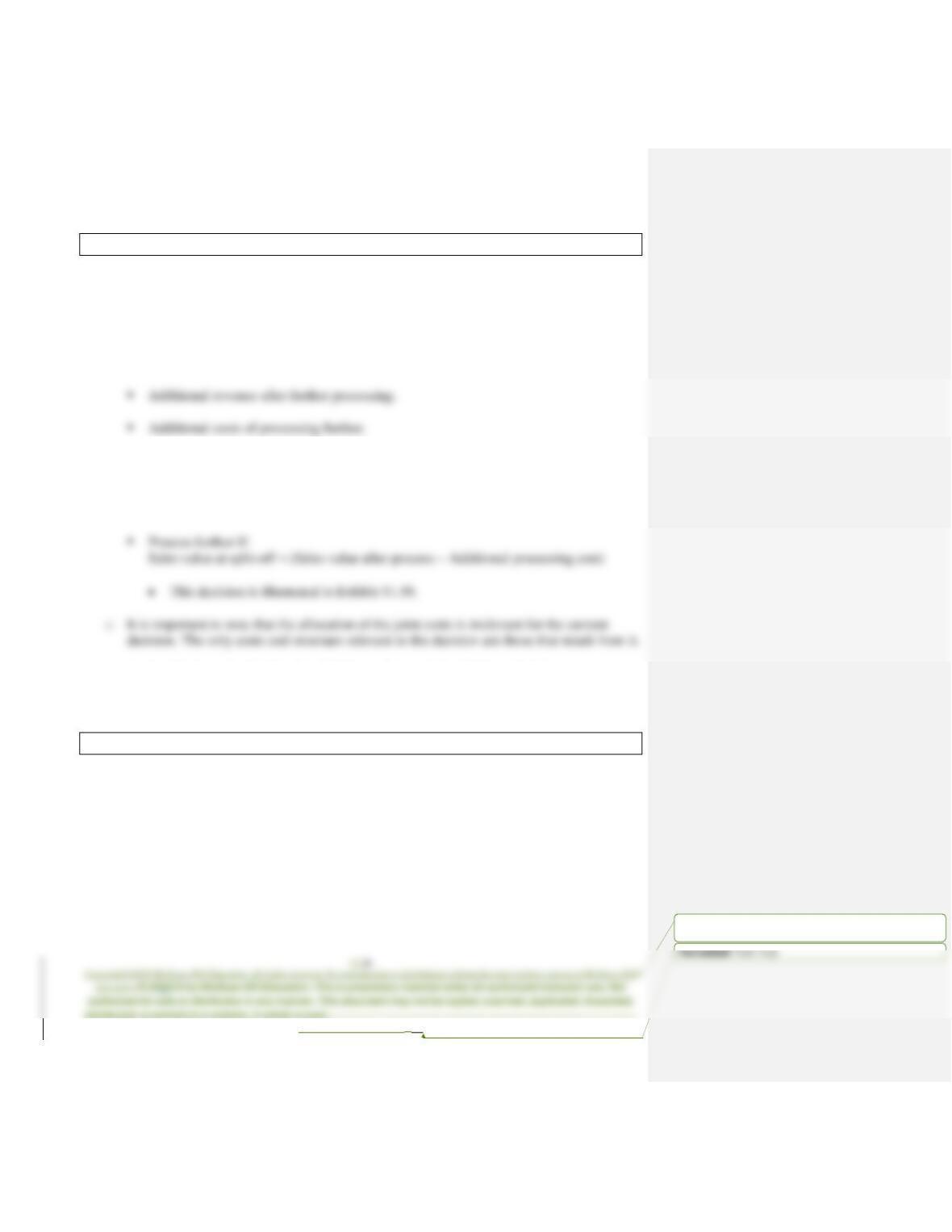
• Managers must decide whether it is more profitable to sell the output at an intermediate stage
or to process it further.
o The relevant data to be considered are the:
o The decision rules about whether to process further are as follows.
▪ Sell at split-off point if:
Sales value at split-off > (Sales value after process – Additional processing cost)
▪ See Business Application box “Different Demands for Different Parts”
See Demonstration Problem 8
LO 11–10 Account for by-products.
DECIDING WHAT TO DO WITH BY-PRODUCTS
• By-products are outputs from a joint production process that are relatively minor in quantity
and/or value when compared to the main products.
o By-product accounting attempts to reflect the economic relationship between the by-
products and the main products with a minimum of recordkeeping for inventory valuation
purposes.