EXERCISE 11-15
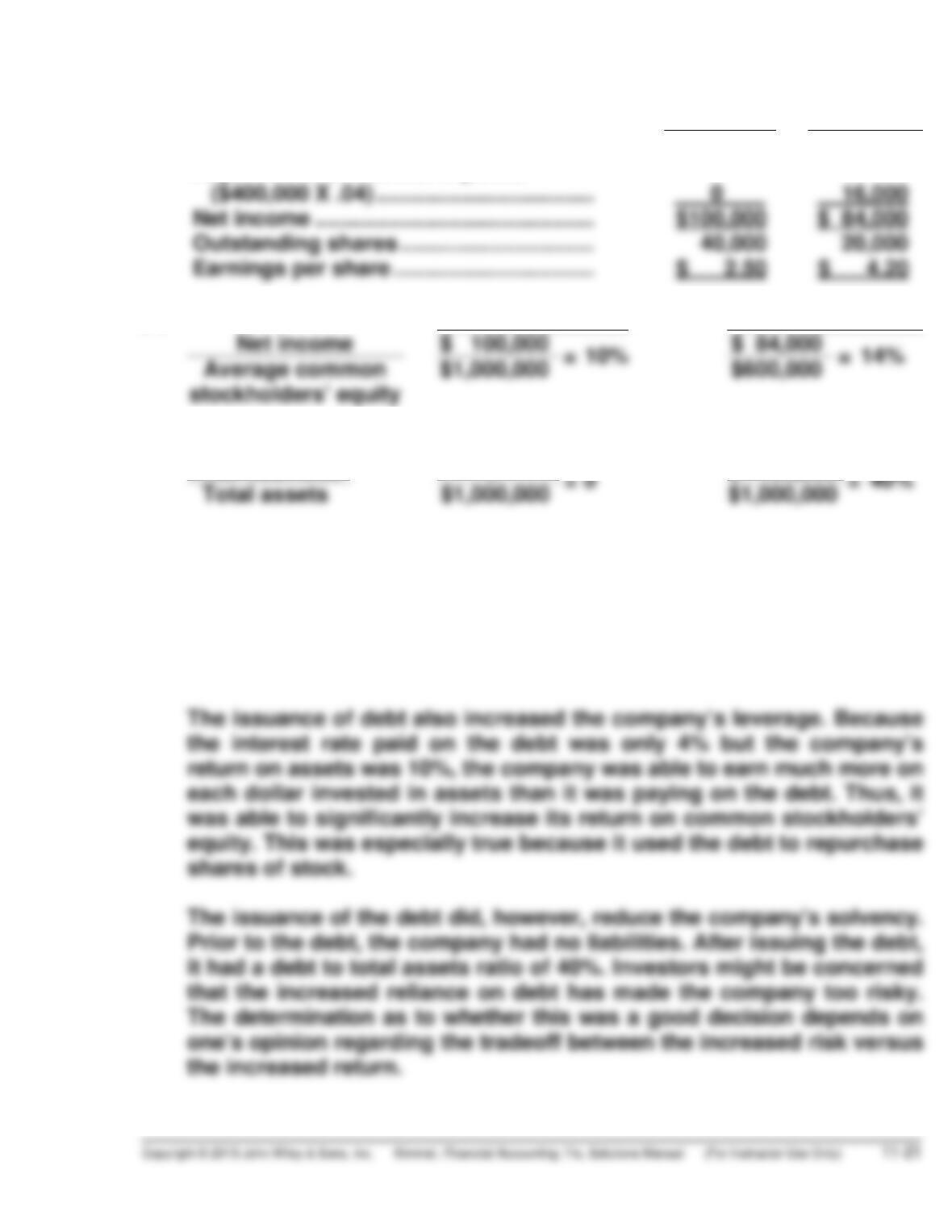
(a) 2013 2014
Pre-debt net income …………………………. $100,000 $100,000
Adjustment for interest expense
(b) 2013 2014
(c)
Total liabilities 0 =0 $
400,000 =40%
(d) The issuance of debt reduced the company’s net income because of
the interest cost that was incurred. However, the debt significantly
increased the company’s earnings per share because it was used to
acquire treasury stock. This reduced the number of outstanding shares,
thus increasing earnings per share.
*EXERCISE 11-16
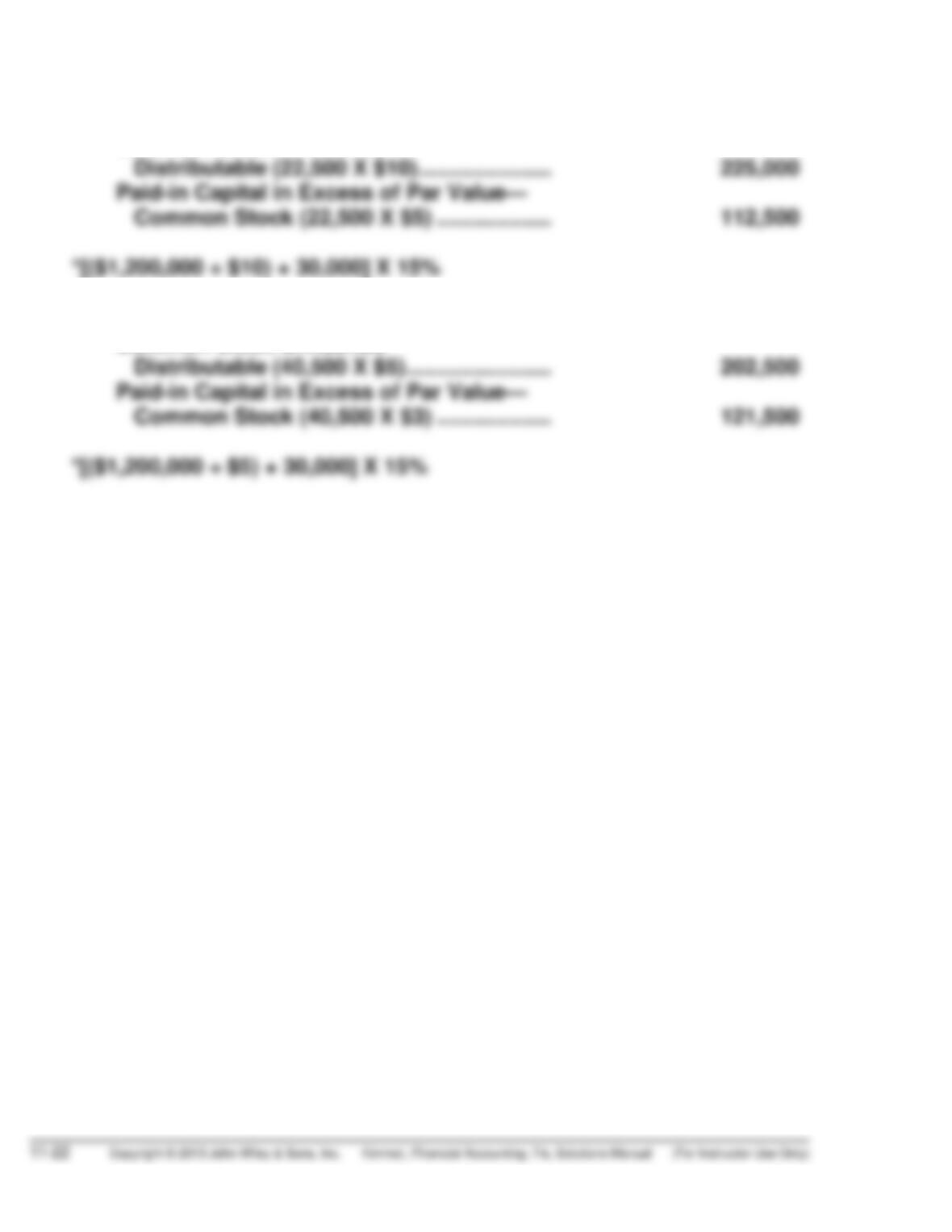
(a) Stock Dividends (22,500* X $15) ……………………. 337,500
Common Stock Dividends
(b) Stock Dividends (40,500* X $8) ……………………… 324,000
Common Stock Dividends
SOLUTIONS TO PROBLEMS
PROBLEM 11-1A
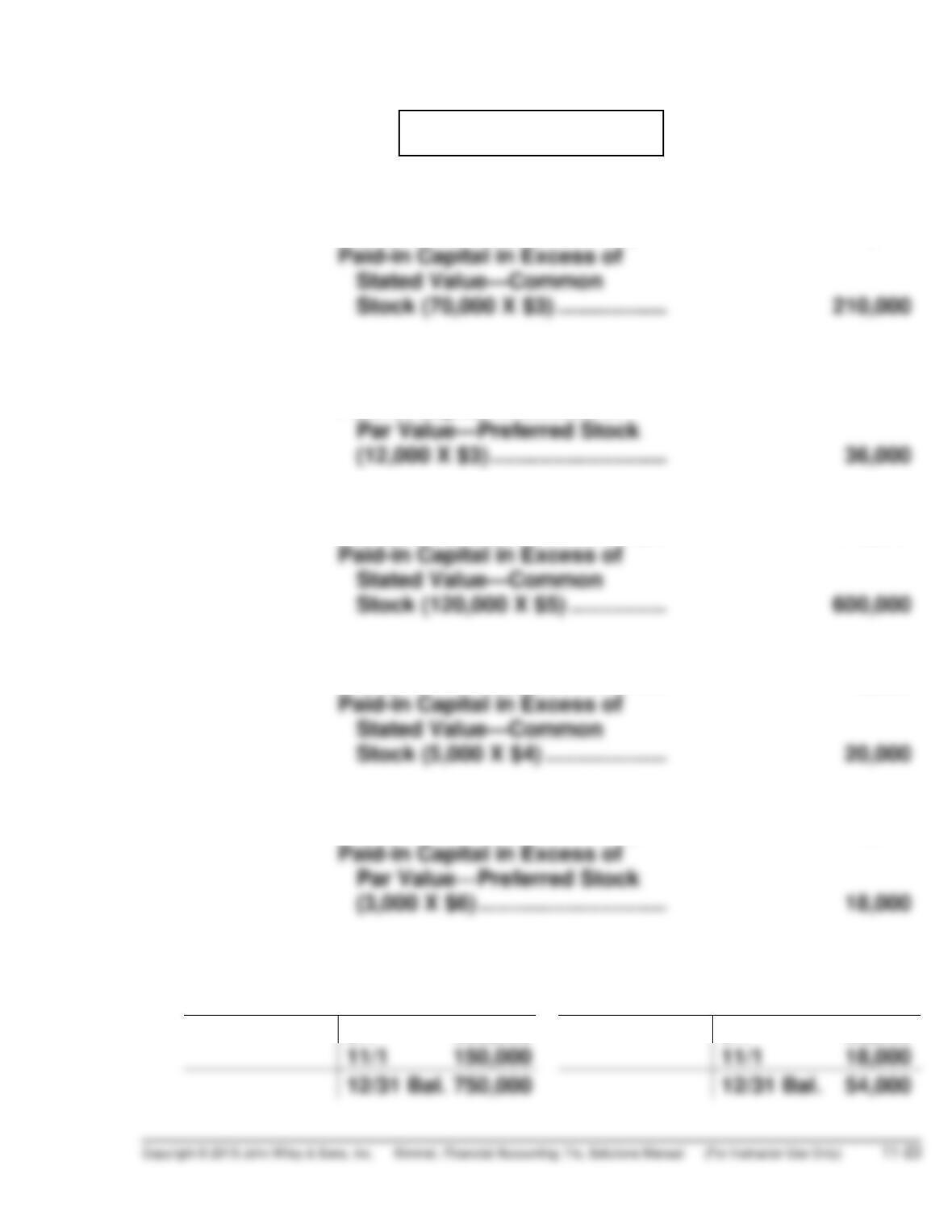
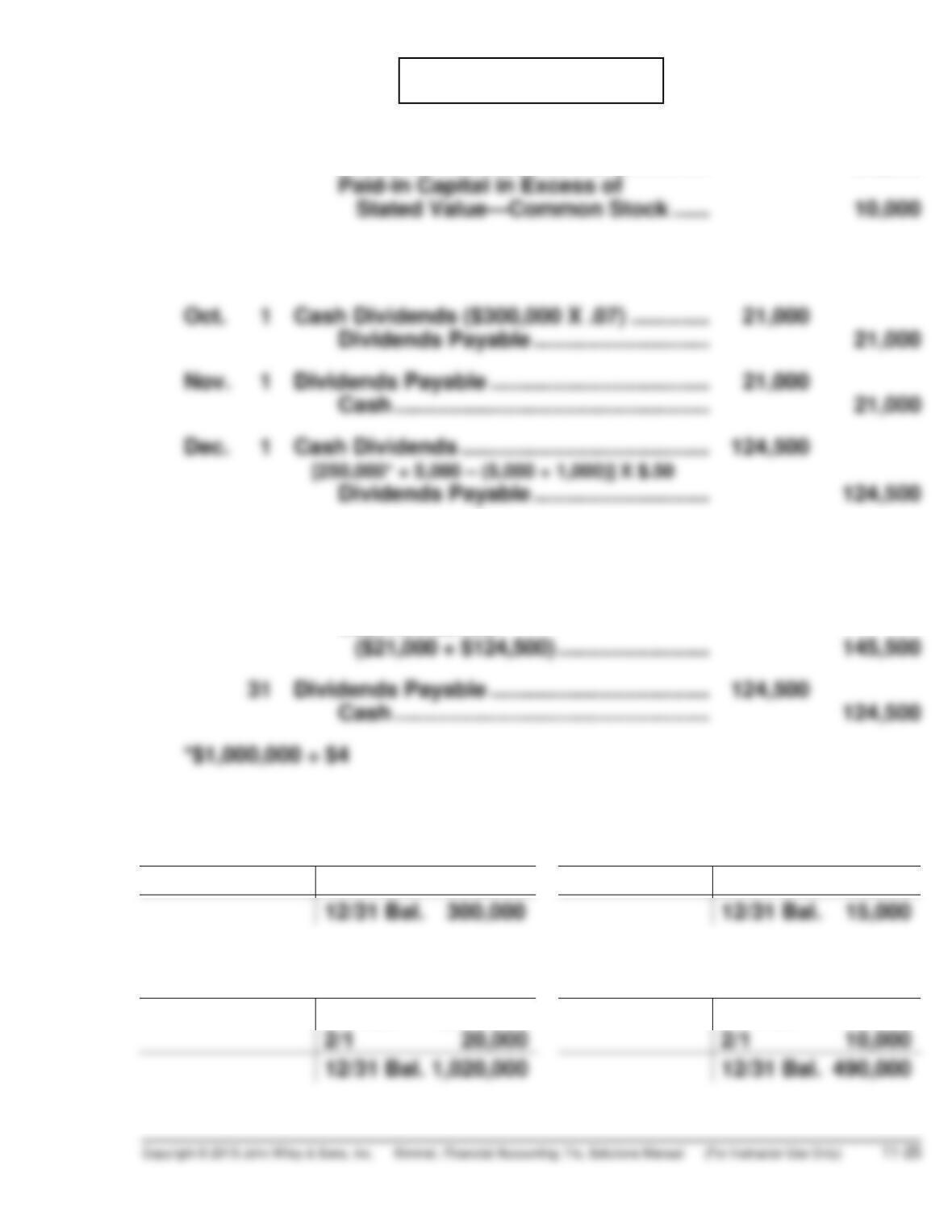
(a) Jan. 10 Cash (70,000 X $4) ……………………….. 280,000
Common Stock (70,000 X $1) ….. 70,000
Mar. 1 Cash (12,000 X $53) ……………………… 636,000
Preferred Stock (12,000 X $50) ….. 600,000
Paid-in Capital in Excess of
May 1 Cash (120,000 X $6) ……………………… 720,000
Common Stock (120,000 X $1) … 120,000
Sept. 1 Cash (5,000 X $5) …………………………. 25,000
Common Stock (5,000 X $1) ……. 5,000
Nov. 1 Cash (3,000 X $56) ……………………….. 168,000
Preferred Stock (3,000 X $50) …. 150,000
(b)
Preferred Stock
Paid-in Capital in Excess of
Par Value—Preferred Stock
3/1 600,000 3/1 36,000
PROBLEM 11-1A (Continued)
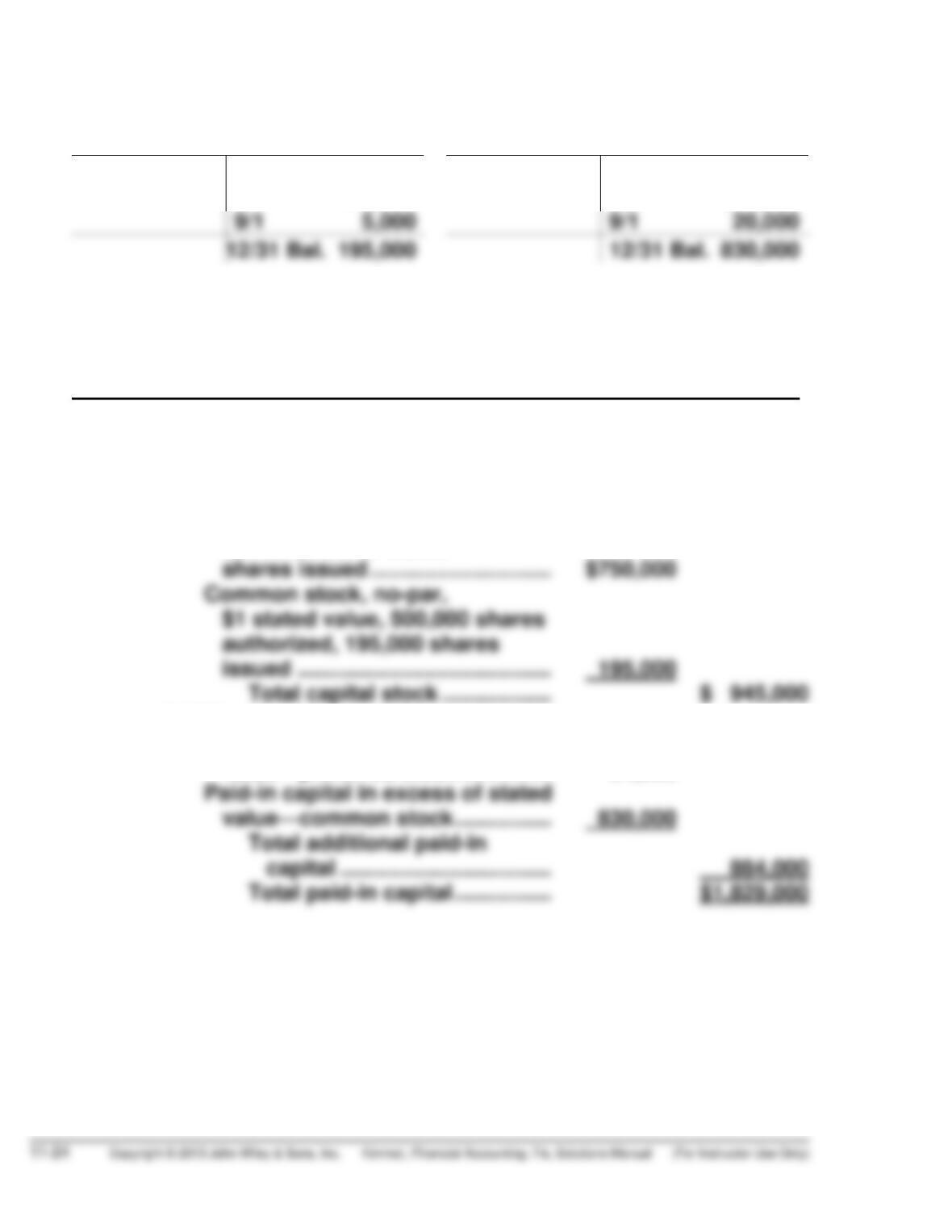
Common Stock
Paid-in Capital in Excess of
Stated Value—Common Stock
1/10 70,000 1/10 210,000
5/1 120,000 5/1 600,000
(c) TIDWELL CORPORATION
Partial Balance Sheet
December 31, 2014
Stockholders’ equity
Paid-in capital
Capital stock
6% Preferred stock, $50 par
value, 20,000 shares
authorized and 15,000
Additional paid-in capital
Paid-in capital in excess of par
value—preferred stock …………… 54,000
PROBLEM 11-2A
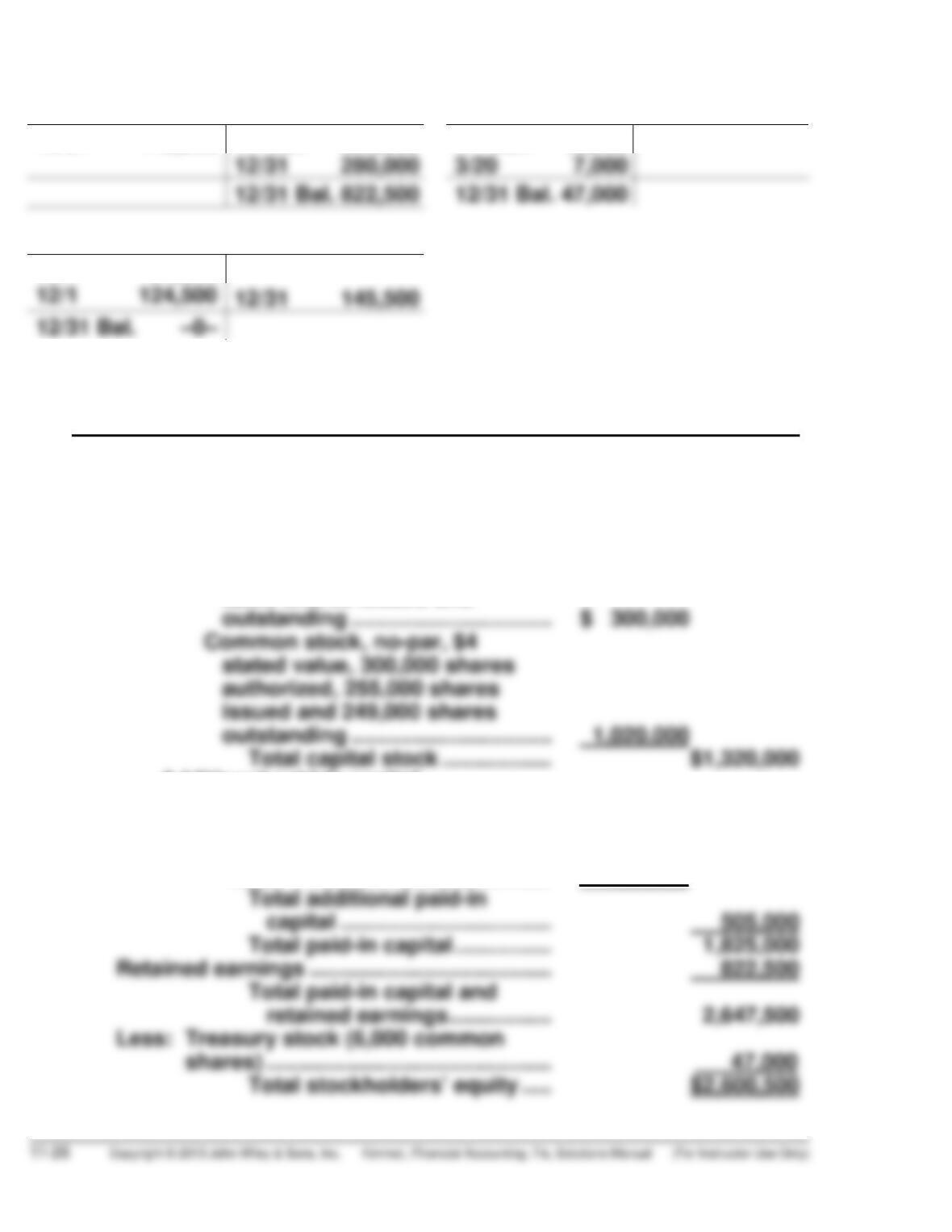
(a) Feb. 1 Cash ………………………………………………….. 30,000
Common Stock (5,000 X $4) ………….. 20,000
Mar. 20 Treasury Stock (1,000 X $7) …………………. 7,000
Cash ……………………………………………. 7,000
Dec. 31 Income Summary ……………………………….. 280,000
Retained Earnings ……………………….. 280,000
31 Retained Earnings ……………………………… 145,500
Cash Dividends
(b)
Preferred Stock
Paid-in Capital in Excess of
Par Value—Preferred Stock
1/1 Bal. 300,000 1/1 Bal. 15,000
Common Stock
Paid-in Capital in Excess of
Stated Value—Common Stock
1/1 Bal. 1,000,000 1/1 Bal. 480,000
PROBLEM 11-2A (Continued)
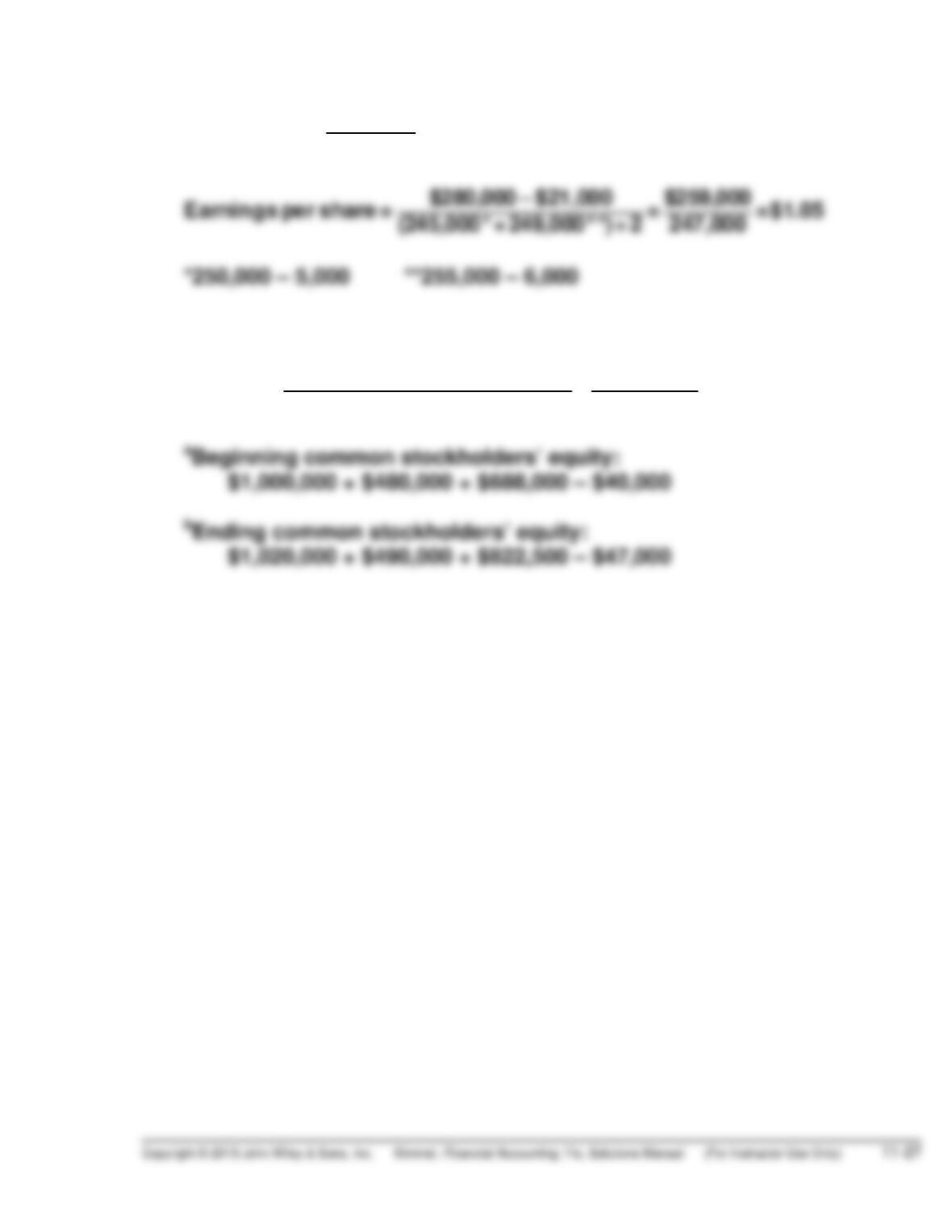
Retained Earnings Treasury Stock
12/31 145,500 1/1 Bal. 688,000 1/1 Bal. 40,000
Cash Dividends
10/1 21,000
(c) MILEY CORPORATION
Partial Balance Sheet
December 31, 2014
Stockholders’ equity
Paid-in capital
Capital stock
7% Preferred stock, $100
par value, noncumulative,
5,000 shares authorized,
3,000 shares issued and
Additional paid-in capital
Paid-in capital in excess of par
value—preferred stock ………….. 15,000
Paid-in capital in excess of stated
value—common stock …………… 490,000
PROBLEM 11-2A (Continued)
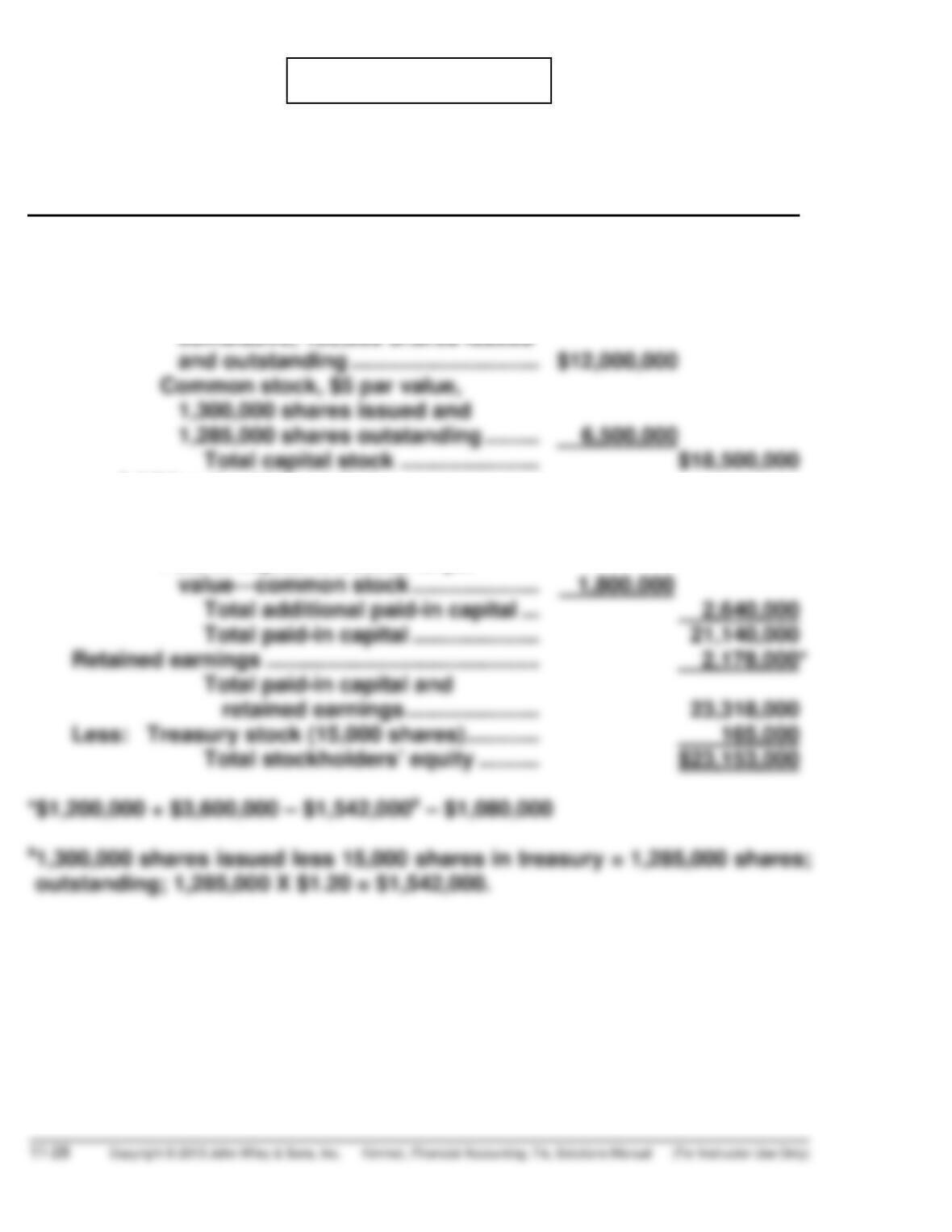
(d) Payout ratio = $124,500
$280,000 =44.5%
Return on common stockholders’ equity =
$280,000 – $21,000
($2,128,000a+$2,285,500b)÷2 =$259,000
$2,206,750 =11.7%
PROBLEM 11-3A
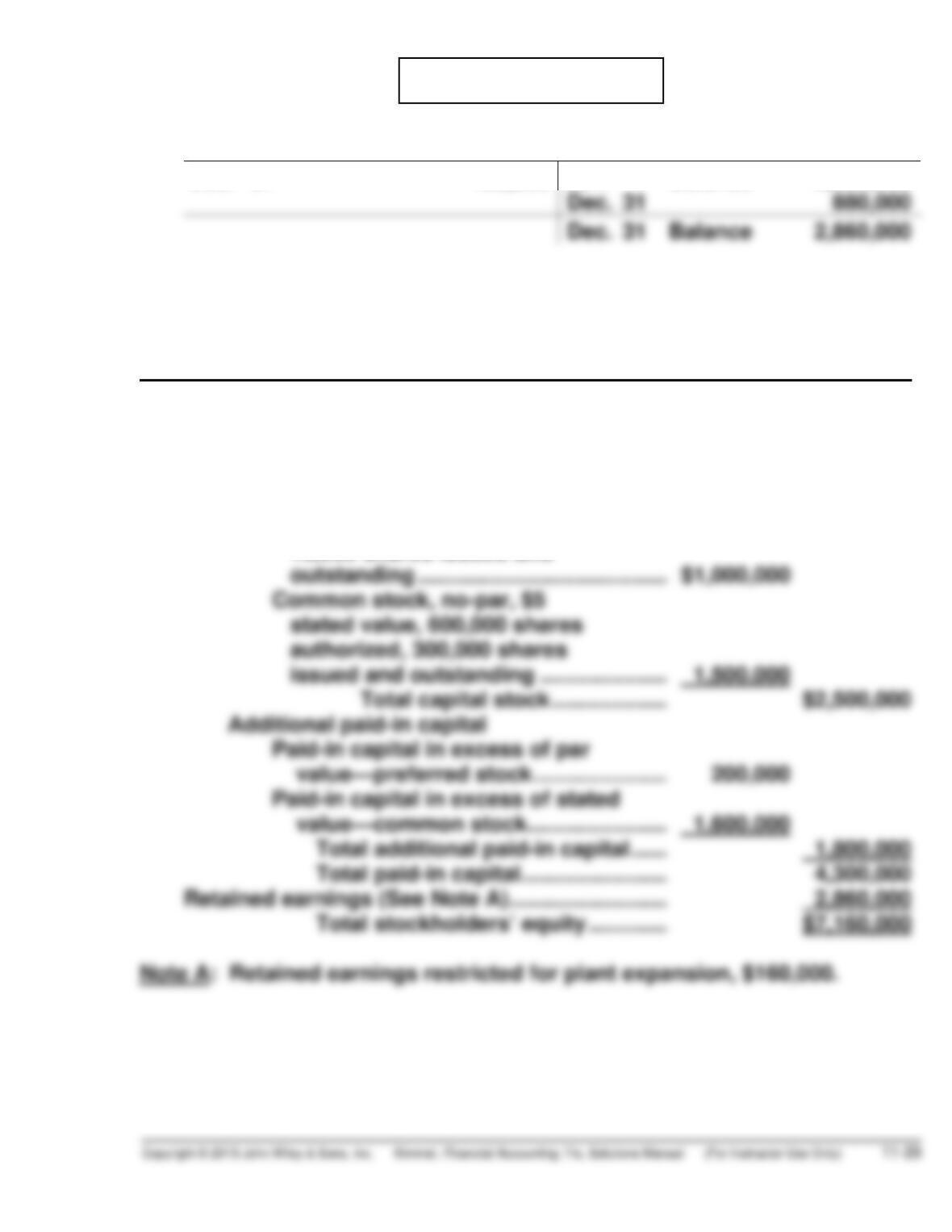
PAXSON COMPANY
Partial Balance Sheet
December 31, 2014
Stockholders’ equity
Paid-in capital
Capital stock
9% Preferred stock, $100 par value,
Additional paid-in capital
Paid-in capital in excess of par
value—preferred stock ……………….. 840,000
Paid-in capital in excess of par
PROBLEM 11-4A
(a) Retained Earnings
Dec. 31 400,000 Jan. 1 Balance 2,380,000
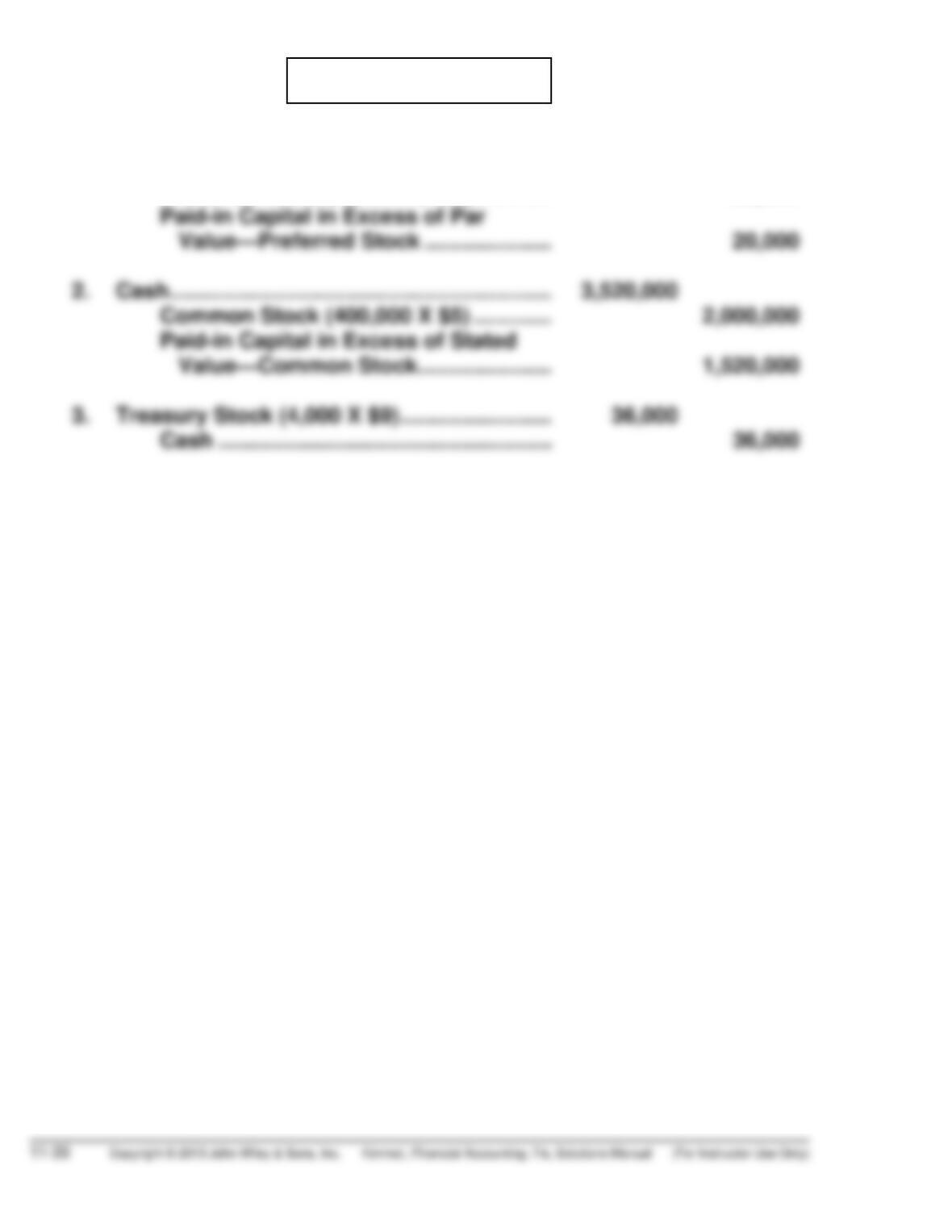
(b) WADE CORPORATION
Partial Balance Sheet
December 31, 2014
Stockholders’ equity
Paid-in capital
Capital stock
8% Preferred stock, $100 par
value, noncumulative,
20,000 shares authorized,
10,000 shares issued and
PROBLEM 11-5A
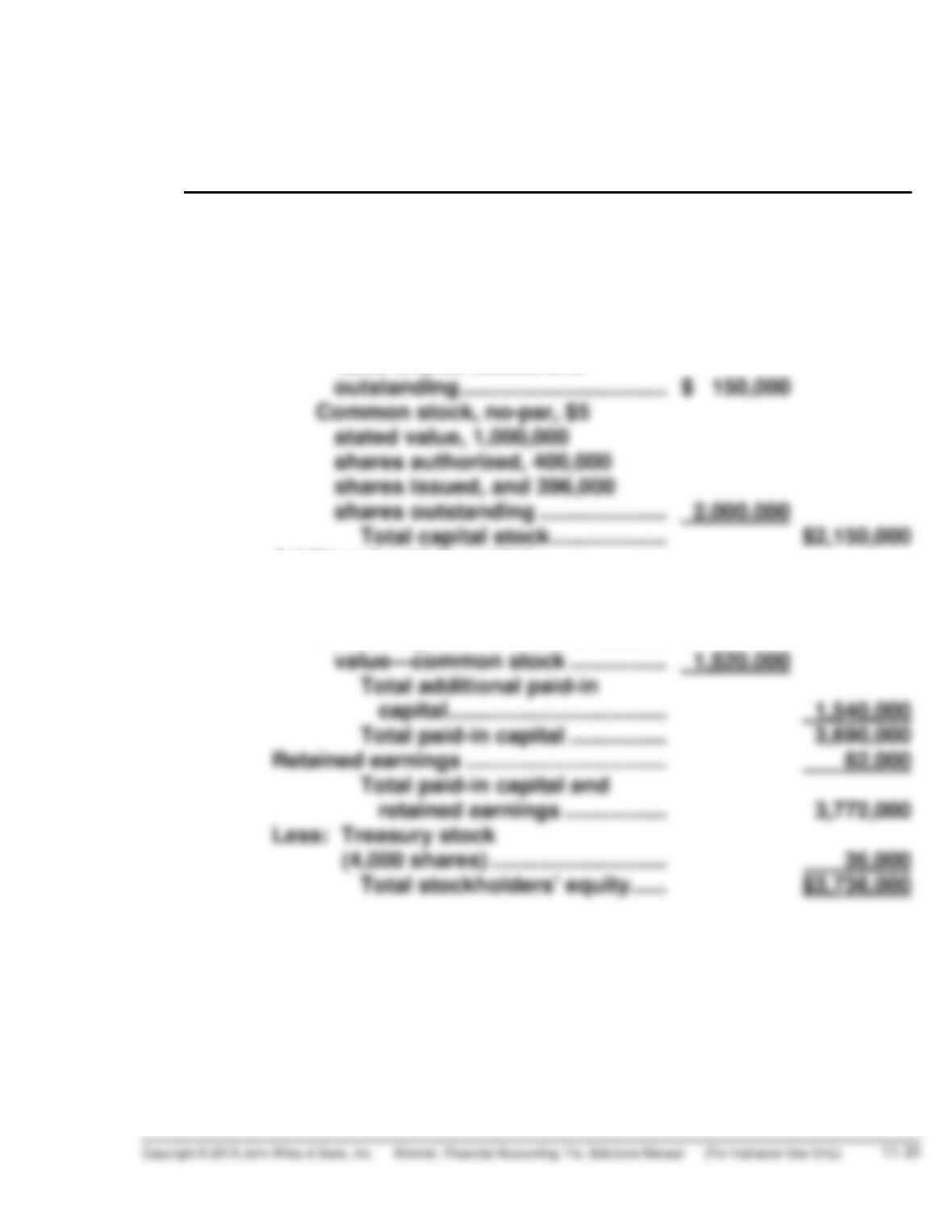
(a) 1. Cash ……………………………………………………… 170,000
Preferred Stock (1,500 X $100) …………. 150,000
PROBLEM 11-5A (Continued)
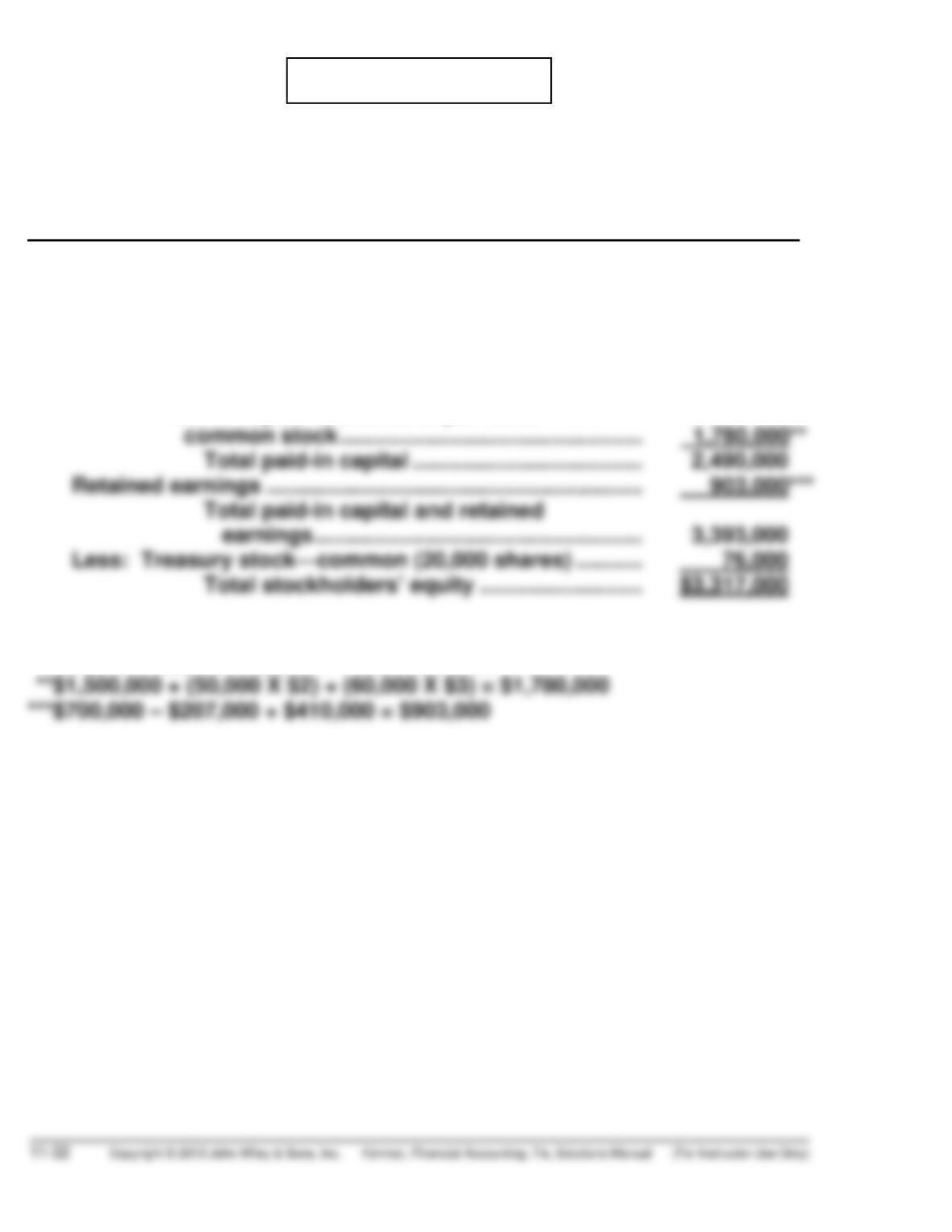
(b) PRINGLE CORPORATION
Partial Balance Sheet
December 31, 2014
Stockholders’ equity
Paid-in capital
Capital stock
7% Preferred stock, $100
par value, noncumulative,
20,000 shares authorized,
1,500 shares issued and
Additional paid-in capital
Paid-in capital in excess of par
value—preferred stock …………… 20,000
Paid-in capital in excess of stated
PROBLEM 11-6A
KESSLER INC.
Partial Balance Sheet
December 31, 2014
Stockholders’ equity
Paid-in capital
Common stock, $1 par value, 2,000,000 shares
authorized, 710,000* shares issued, and
690,000 shares outstanding ……………………………… $ 710,000
Additional paid-in capital
Paid-in capital in excess of par value—
***600,000 + 50,000 + 60,000 = 710,000 shares
PROBLEM 11-7A
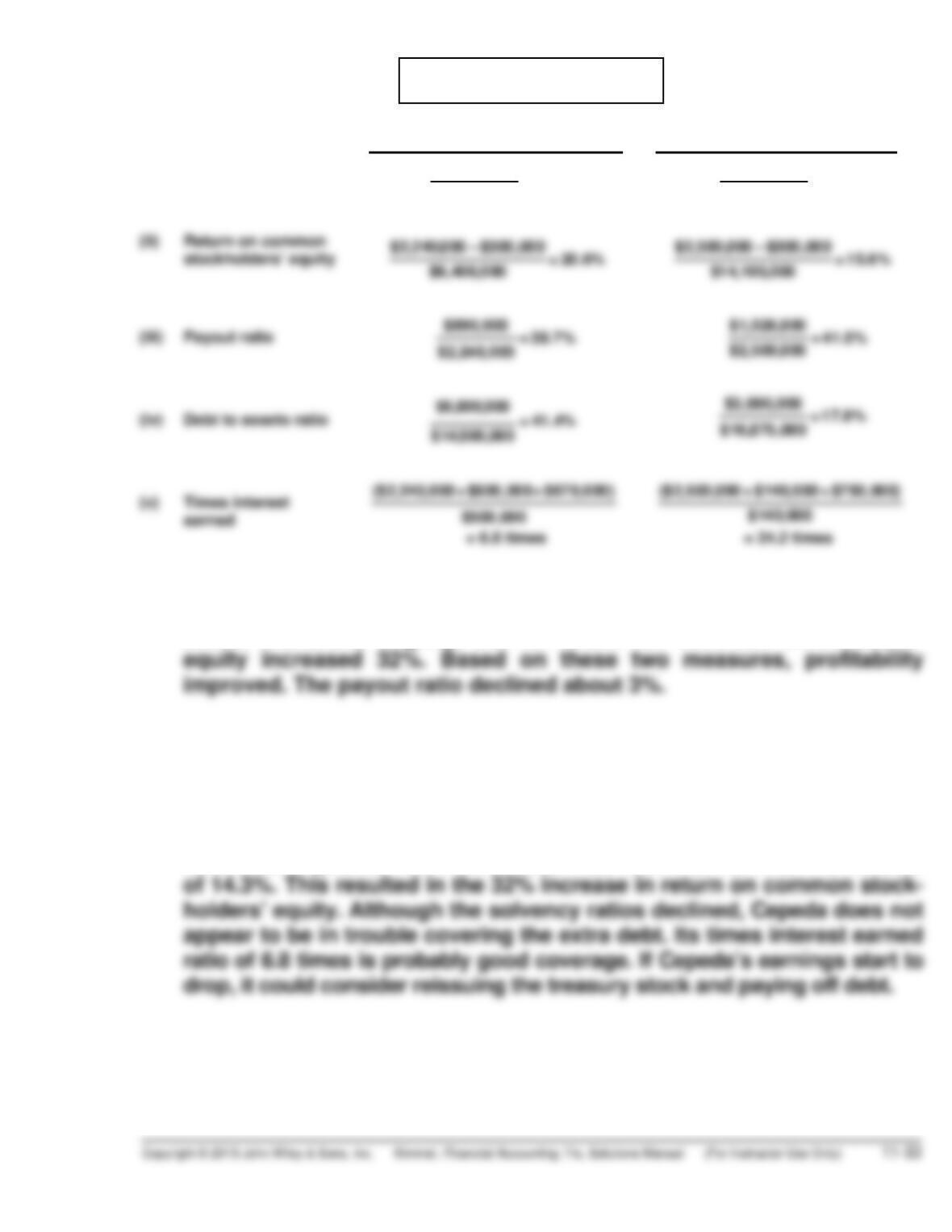
(a) 2014 2013
(i) Return on assets
$2,240,000
$15,687,500 =14.3% $2,500,000
$17,763,000 =14.1%
(b) Cepeda’s net income declined from $2,500,000 to $2,240,000. Its return on
assets increased slightly, but its return on common stockholders’
(c) Cepeda’s debt to assets ratio increased from 17.8% to 41.4% and its
times interest earned decreased from 24.2 to 6.8 times. These changes
indicate that Cepeda is less solvent in 2014 than 2013.
(d) It appears that the decision to issue debt to purchase common stock
was wise. Cepeda’s 10% interest rate was less than its return on assets
*PROBLEM 11-8A
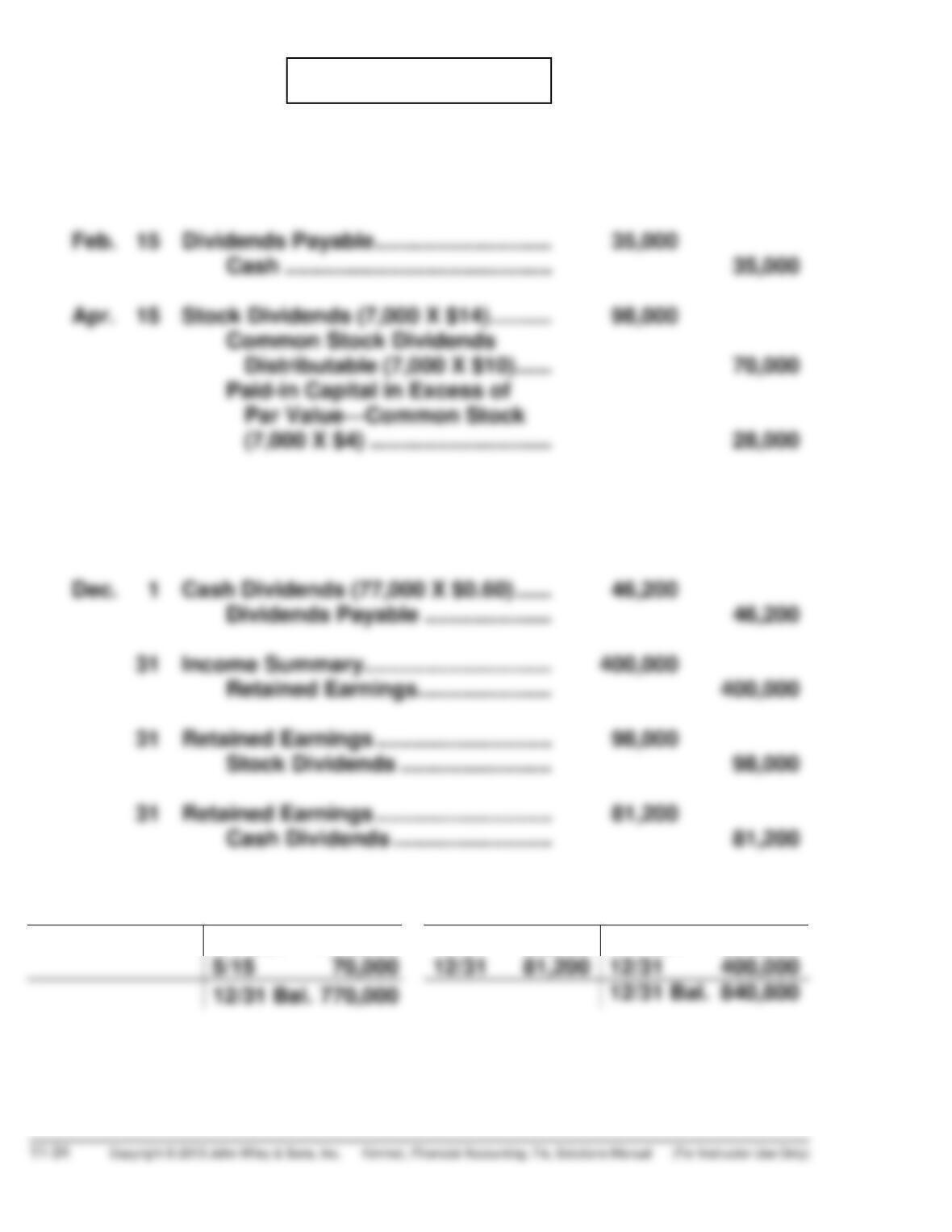
(a) Jan. 15 Cash Dividends (70,000 X $0.50) …… 35,000
Dividends Payable ………………… 35,000
May 15 Common Stock Dividends
Distributable ……………………………… 70,000
Common Stock (7,000 X $10) …. 70,000
(b)
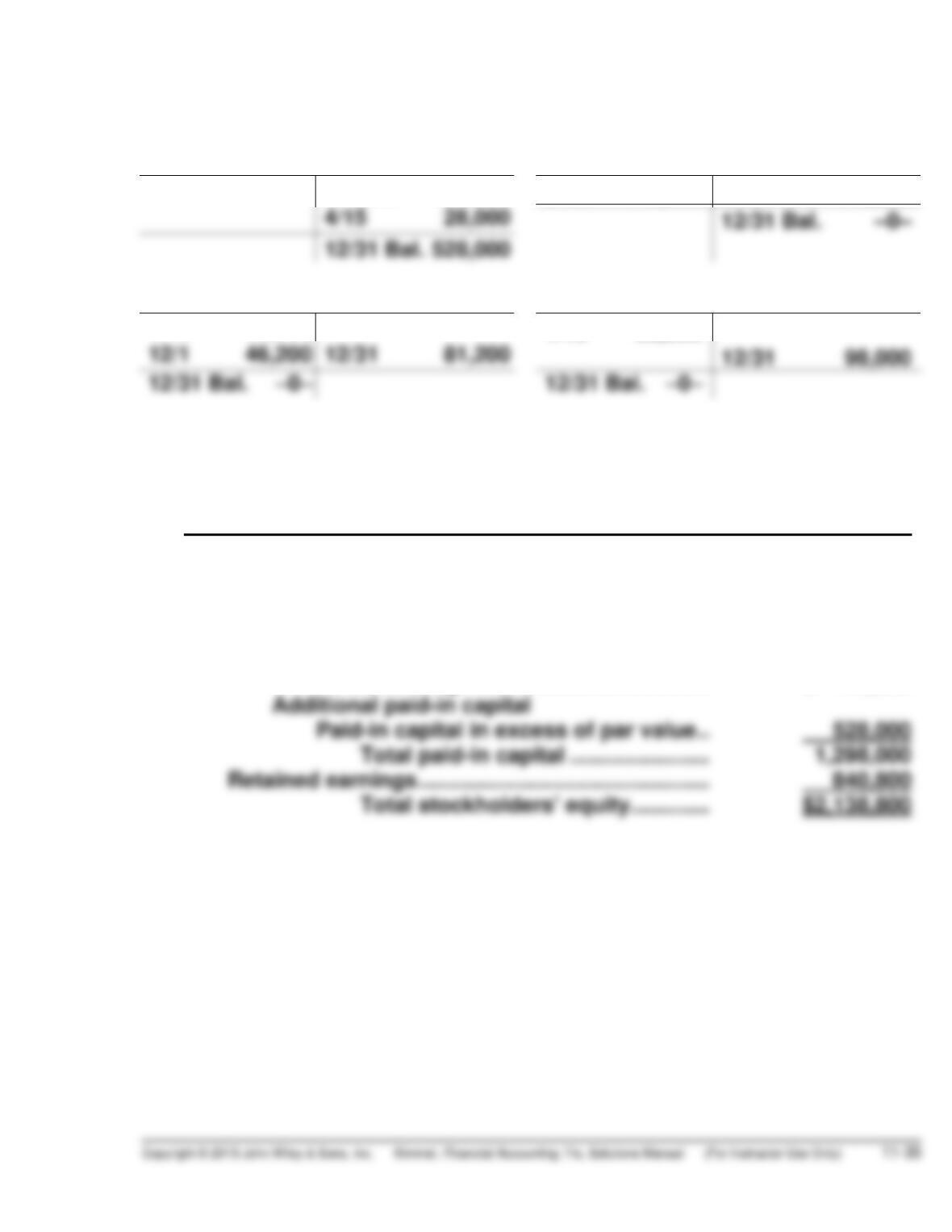
Common Stock Retained Earnings
1/1 Bal. 700,000 12/31 98,000 1/1 Bal. 620,000
*PROBLEM 11-8A (Continued)
Paid-in Capital
in Excess of Par Value
Common Stock
Dividends Distributable
1/1 Bal. 500,000 5/15 70,000 4/15 70,000
Cash Dividends Stock Dividends
1/15 35,000
4/15 98,000
(c) EVERETT CORPORATION
Partial Balance Sheet
December 31, 2014
Stockholders’ equity
Paid-in capital
Capital stock
Common stock, $10 par value,
77,000 shares issued and
outstanding ………………………………….. $ 770,000
*PROBLEM 11-8A (Continued)
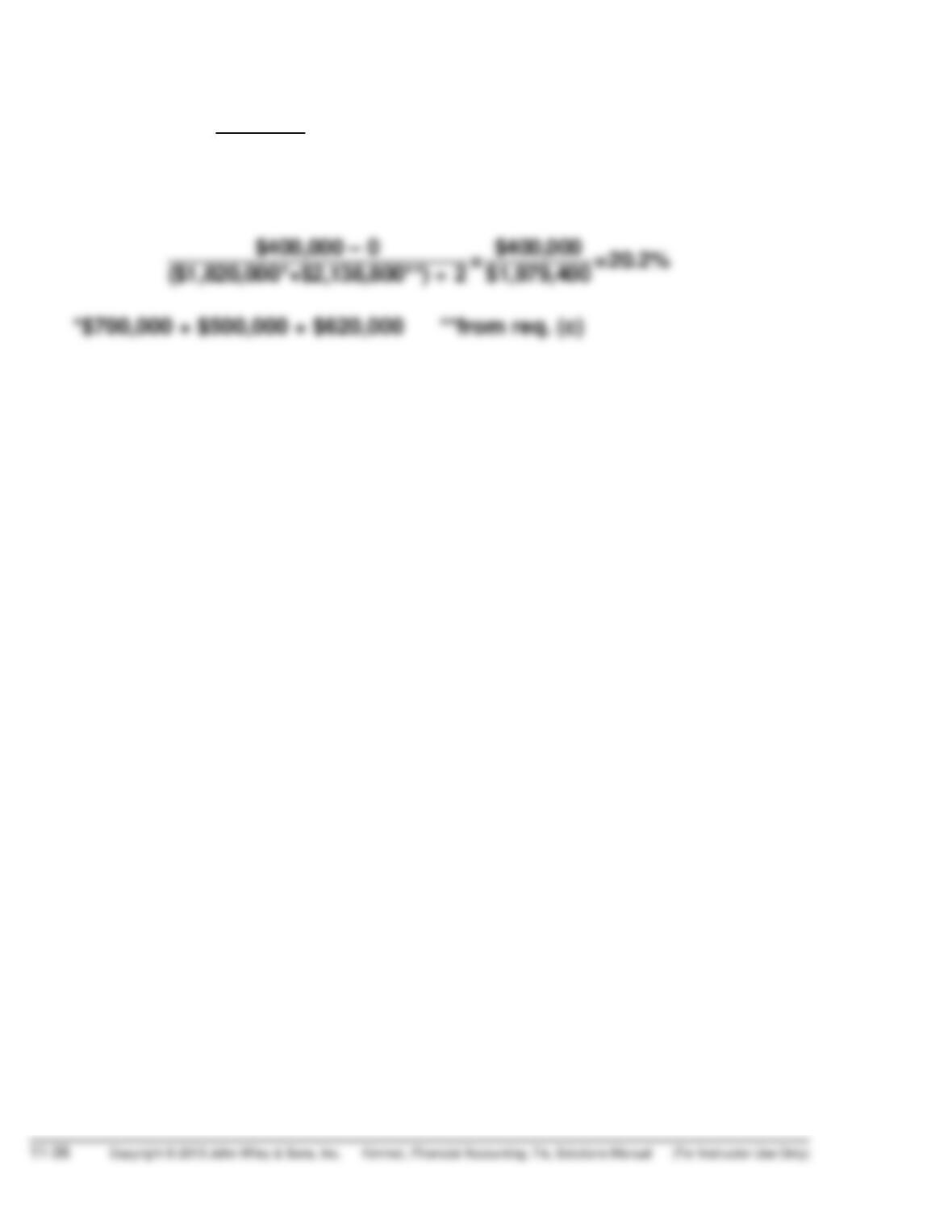
(d) Payout ratio = $81,200
$400,000 =20.3%
Return on common stockholders’ equity =
PROBLEM 11-1B
(a) Jan. 10 Cash (40,000 X $3.60) …………………… 144,000
Common Stock (40,000 X $1) ….. 40,000
Mar. 1 Cash (5,000 X $102) ……………………… 510,000
Preferred Stock (5,000 X $100) ….. 500,000
May 1 Cash (90,000 X $4) ……………………….. 360,000
Common Stock (90,000 X $1) ….. 90,000
Sept. 1 Cash (10,000 X $4.40) …………………… 44,000
Common Stock (10,000 X $1) ….. 10,000
Nov. 1 Cash (4,000 X $103) ……………………… 412,000
Preferred Stock (4,000 X $100) …. 400,000
(b)
Preferred Stock
Paid-in Capital in Excess of
Par Value—Preferred Stock
3/1 500,000 3/1 10,000
PROBLEM 11-1B (Continued)
Common Stock
Paid-in Capital in Excess of
Stated Value—Common Stock
1/10 40,000 1/10 104,000
(c) BENNIS CORPORATION
Partial Balance Sheet
December 31, 2014
Stockholders’ equity
Paid-in capital
Capital stock
8% Preferred stock, $100 par
value, 10,000 shares
authorized, 9,000 shares
issued …………………………………… $900,000
Common stock, no-par, $1
stated value, 500,000 shares
authorized, 140,000 shares
PROBLEM 11-2B
(a) Feb. 1 Cash ……………………………………………. 160,000
Common Stock (20,000 X $1) ….. 20,000
Nov. 10 Treasury Stock …………………………….. 16,000
Cash ……………………………………… 16,000
Nov. 15 Cash Dividends ($200,000 X .09) …… 18,000
Dividends Payable …………………. 18,000
Dec. 15 Dividends Payable ……………………….. 18,000
Cash ……………………………………… 18,000
Dec. 31 Income Summary …………………………. 408,000
Retained Earnings …………………. 408,000
(b) Preferred Stock
Paid-in Capital in Excess of
Par Value—Preferred Stock
1/1 Bal. 200,000 1/1 Bal. 16,000
PROBLEM 11-2B (Continued)
Retained Earnings Treasury Stock
—
Common
12/31 320,400 1/1 Bal. 1,716,000 1/1 Bal. 20,000
Cash Dividends
11/15 18,000
–
–
(c) WARDEN CORPORATION
Partial Balance Sheet
December 31, 2014
Stockholders’ equity
Paid-in capital
Capital stock
9% Preferred stock, $50
par value, cumulative,
10,000 shares authorized,
Total additional paid-in
capital …………………………….. 1,556,000
Total paid-in capital ……………. 2,776,000