CHAPTER 11 Current Liabilities and Payroll
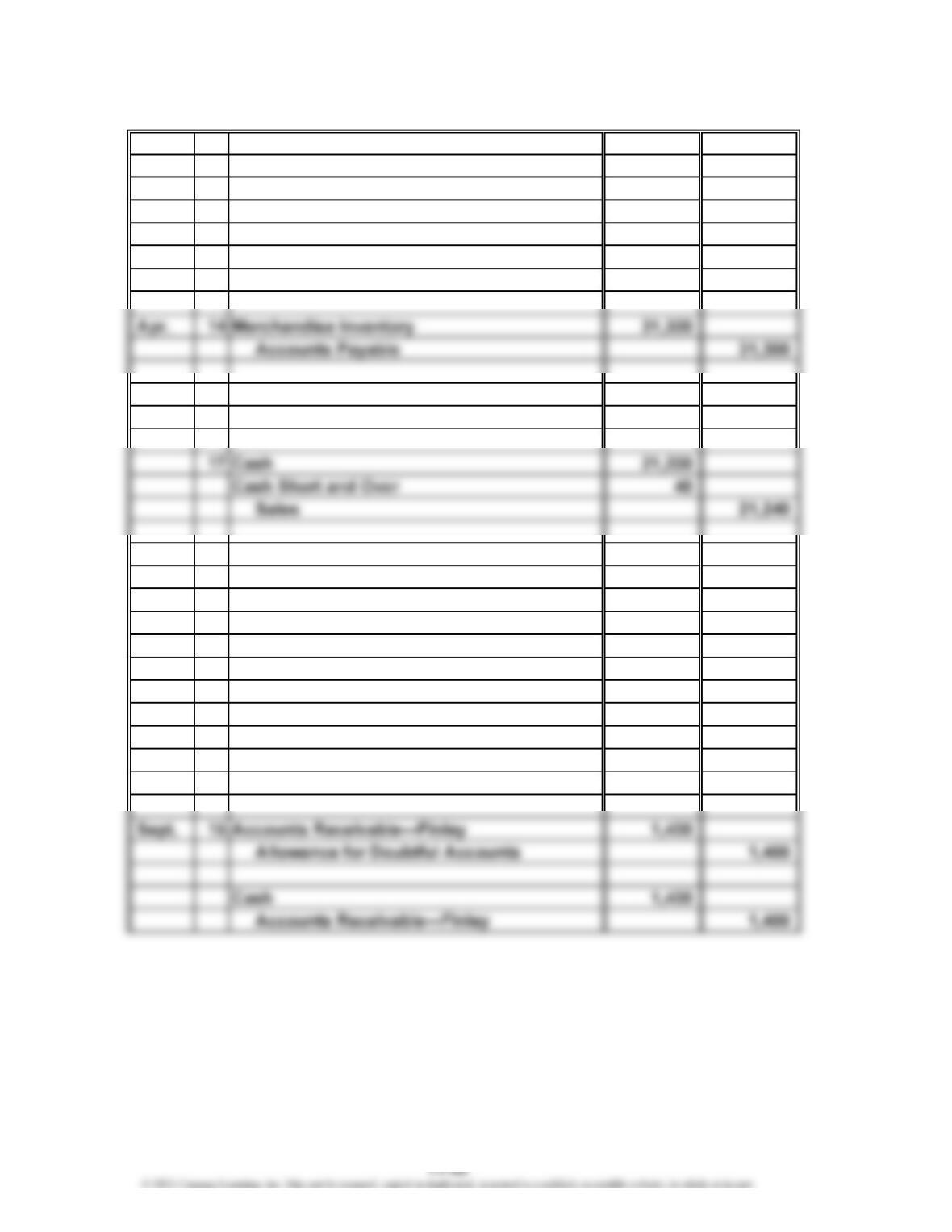
1. Jan. 3 Petty Cash 4,500
Cash 4,500
Feb. 26 Office Supplies 1,680
Miscellaneous Selling Expense 570
Miscellaneous Administrative Expense 880
Cash 3,130
May 13 Accounts Payable 31,300
Cash 31,300
June 2 Notes Receivable 180,000
Accounts Receivable—Ryanair 180,000
Aug. 1 Cash 182,400
Notes Receivable 180,000
Interest Revenue 2,400
($180,000 × 8% × 60 ÷ 360).
24 Cash 7,600
Allowance for Doubtful Accounts 1,400
Accounts Receivable—Finley 9,000
COMPREHENSIVE PROBLEM 3
CHAPTER 11 Current Liabilities and Payroll
Comp. Prob. 3 (Continued)
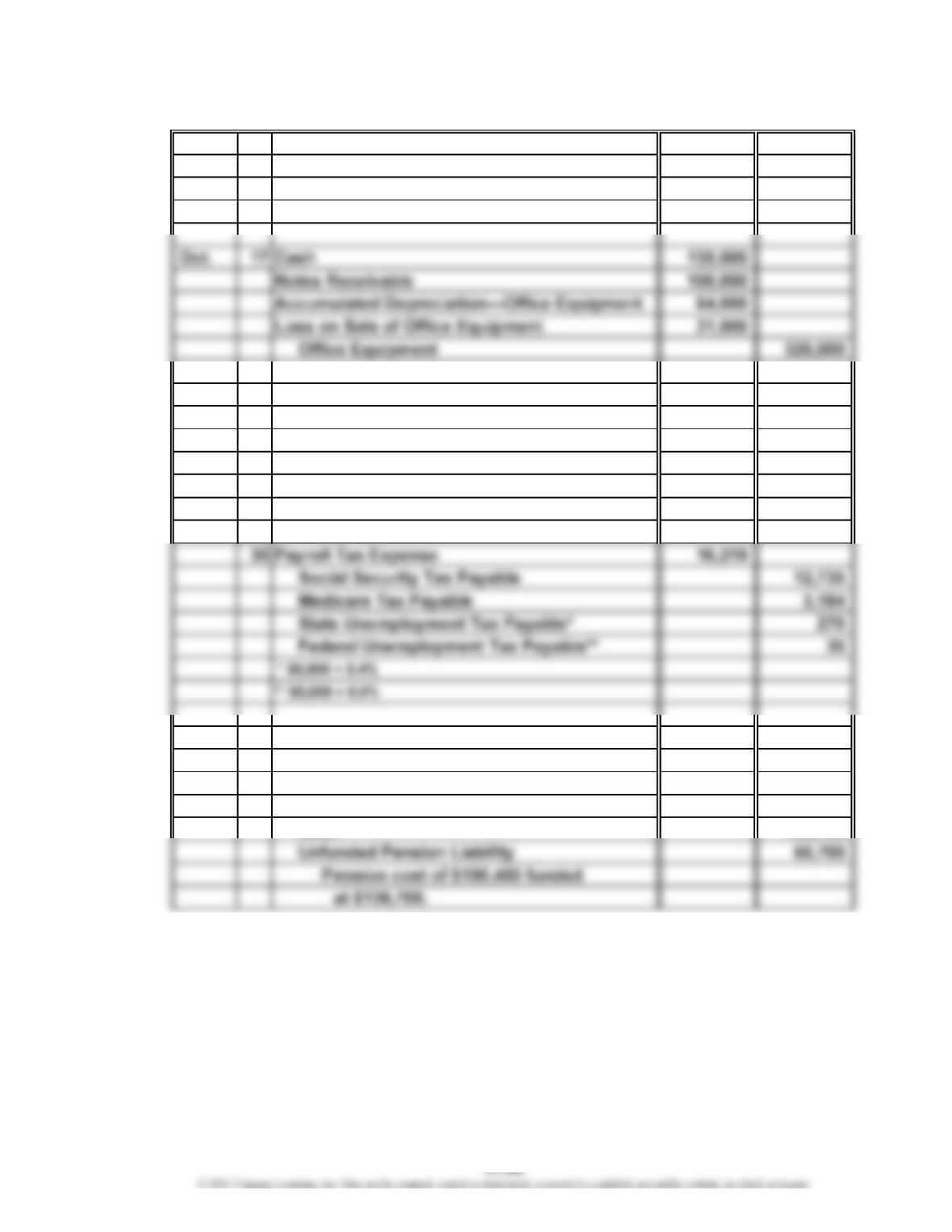
Sept. 15 Land 654,925
Interest Expense 15,075
Notes Payable 670,000
($670,000 × 90 ÷ 360 × 9%).
Nov. 30 Sales Salaries Expense 135,000
Office Salaries Expense 77,250
Employees Federal Income Tax Payable 39,266
Social Security Tax Payable 12,735
Medicare Tax Payable 3,184
Salaries Payable 157,065
Dec. 14 Notes Payable 670,000
Cash 670,000
31 Pension Expense 190,400
CHAPTER 11 Current Liabilities and Payroll
Comp. Prob. 3 (Continued)
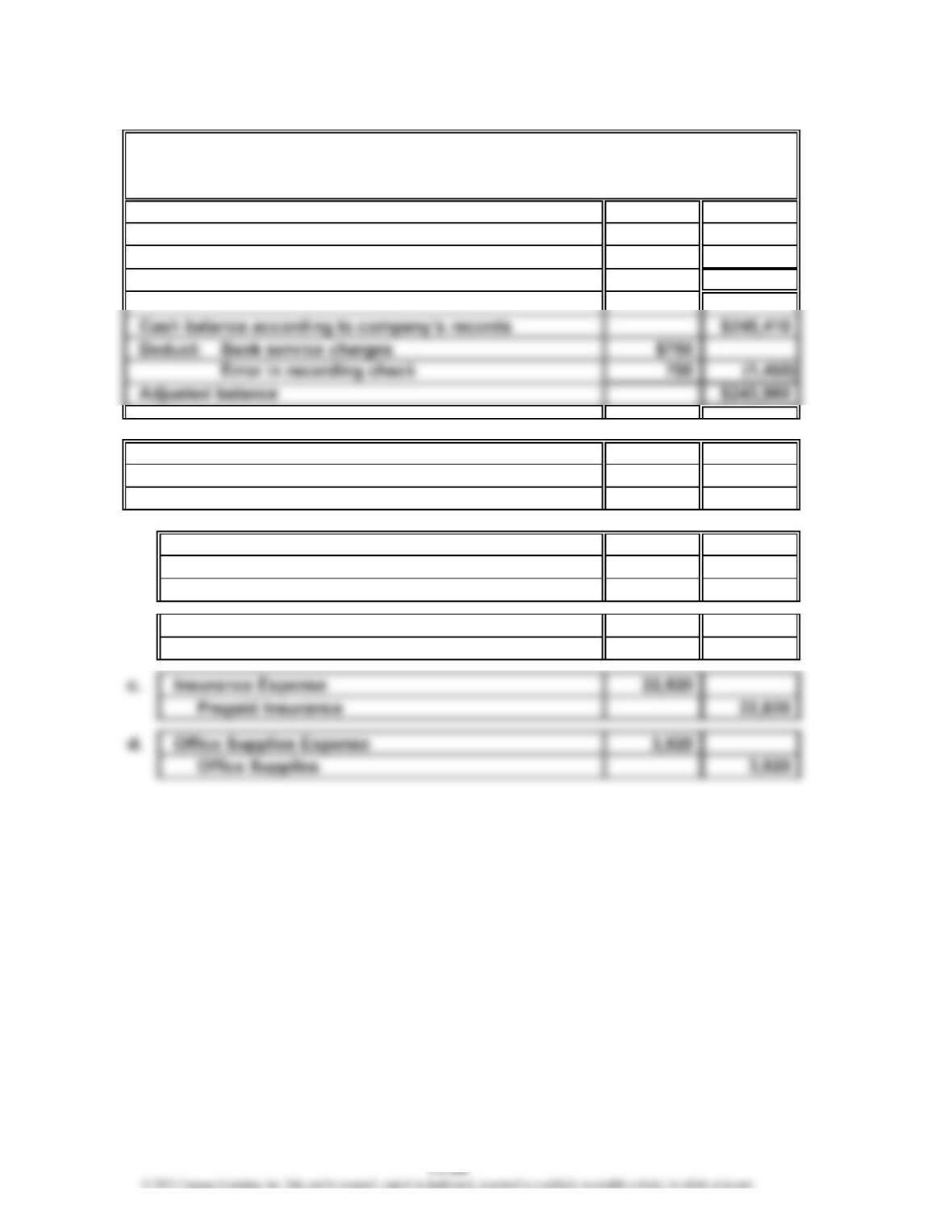
2.
Cash balance according to bank statement $283,000
Add deposit in transit, not recorded by bank 29,500
Deduct outstanding checks (68,540)
Adjusted balance $243,960
3. Miscellaneous Expense 750
Accounts Payable 700
Cash 1,450
4. a. Bad Debt Expense 18,000
Allowance for Doubtful Accounts 18,000
($16,000 + $2,000).
b. Cost of Merchandise Sold 3,300
Merchandise Inventory 3,300
Kornett Company
Bank Reconciliation
December 31, 20Y8
CHAPTER 11 Current Liabilities and Payroll
Comp. Prob. 3 (Continued)
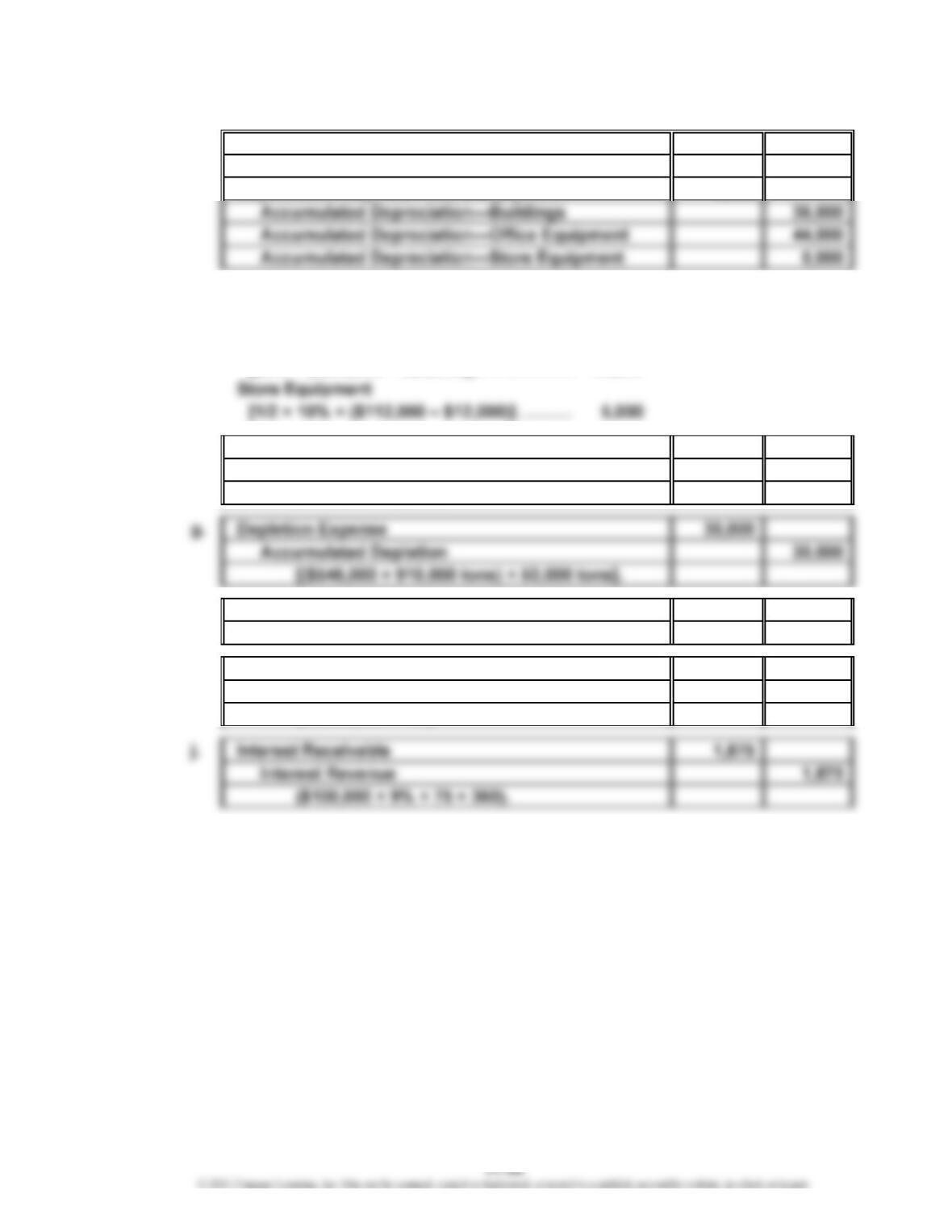
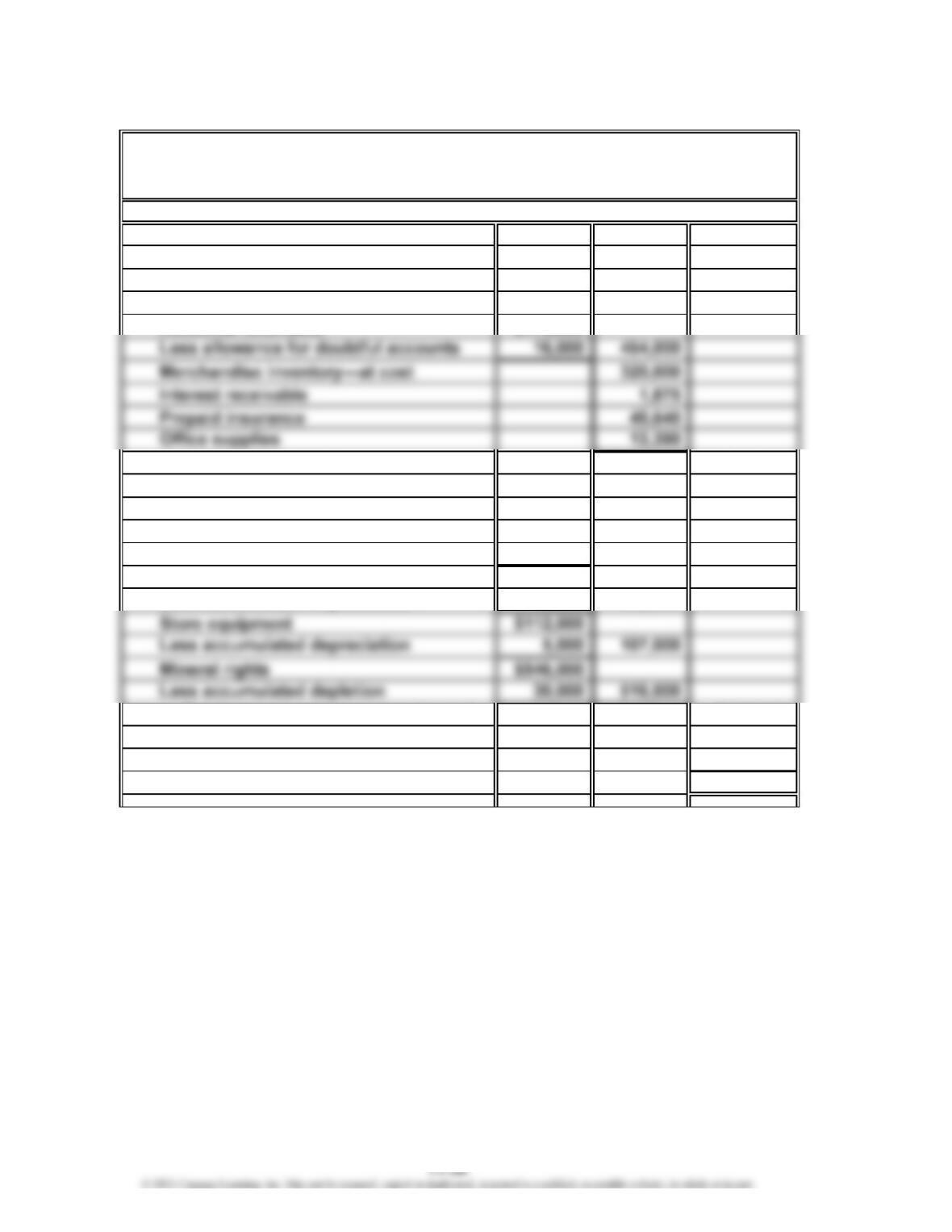
e. Depreciation Expense—Buildings 36,000
Depreciation Expense—Office Equipment 44,000
Depreciation Expense—Store Equipment 5,000
Computations:
Buildings ($900,000 × 4%)…………………
…
$36,000
Office Equipment
[20% × ($246,000 – $26,000)]……………… 44,000
f. Amortization Expense—Patents 6,000
Patents 6,000
($48,000 ÷ 8 years).
h. Vacation Pay Expense 10,500
Vacation Pay Payable 10,500
i. Product Warranty Expense 76,000
Product Warranty Payable 76,000
($1,900,000 × 4%).
CHAPTER 11 Current Liabilities and Payroll
Comp. Prob. 3 (Continued)
5.
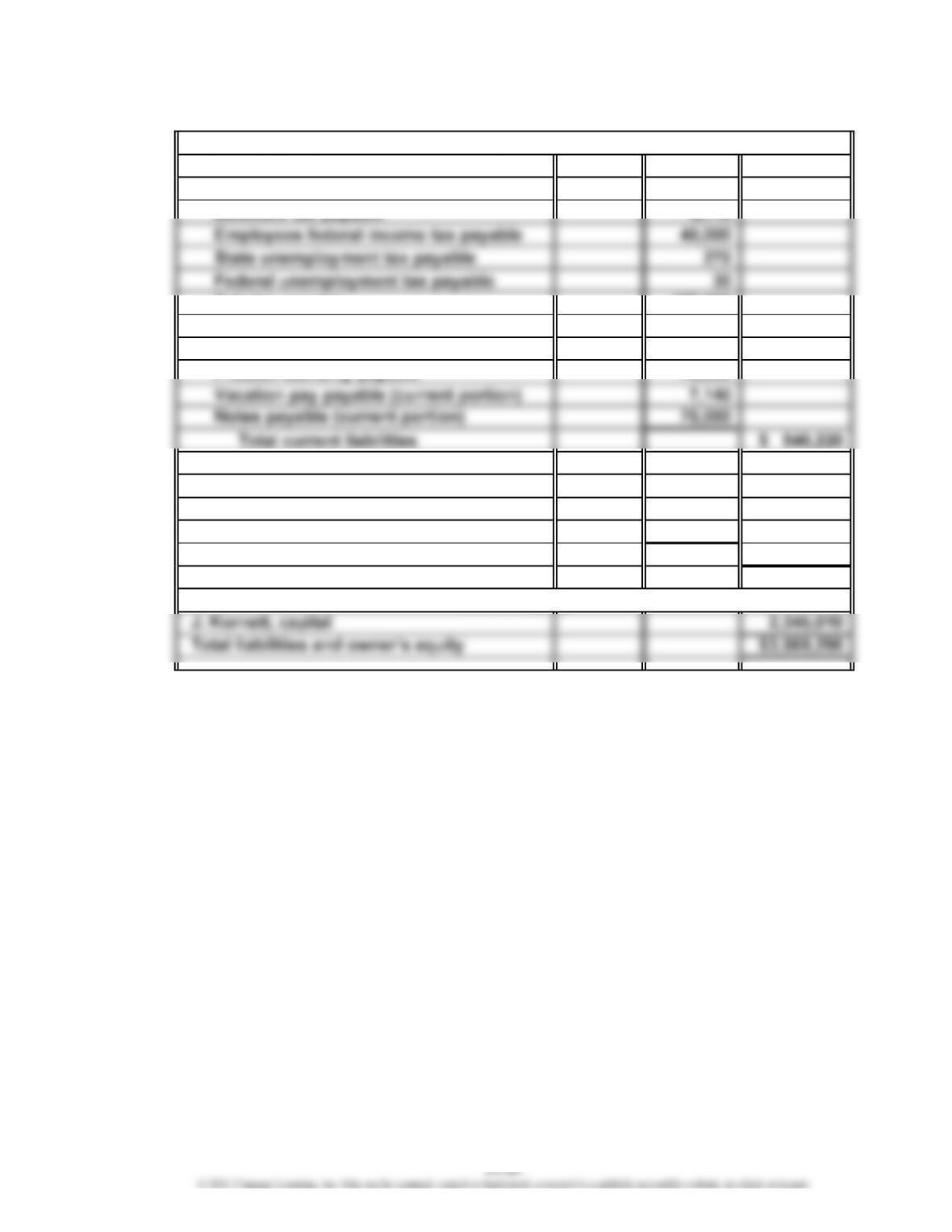
Current assets:
Petty cash $ 4,500
Cash 243,960
Notes receivable 100,000
Total current assets $1,183,365
Property, plant, and equipment:
Land $654,925
Buildings $900,000
Less accumulated depreciation 36,000 864,000
Office equipment $246,000
Less accumulated depreciation 44,000 202,000
Total property, plant, and equipment 2,343,925
Intangible assets:
Patents 42,000
Total assets $3,569,290
Kornett Company
Balance Sheet
December 31, 20Y8
Assets
CHAPTER 11 Current Liabilities and Payroll
Comp. Prob. 3 (Concluded)
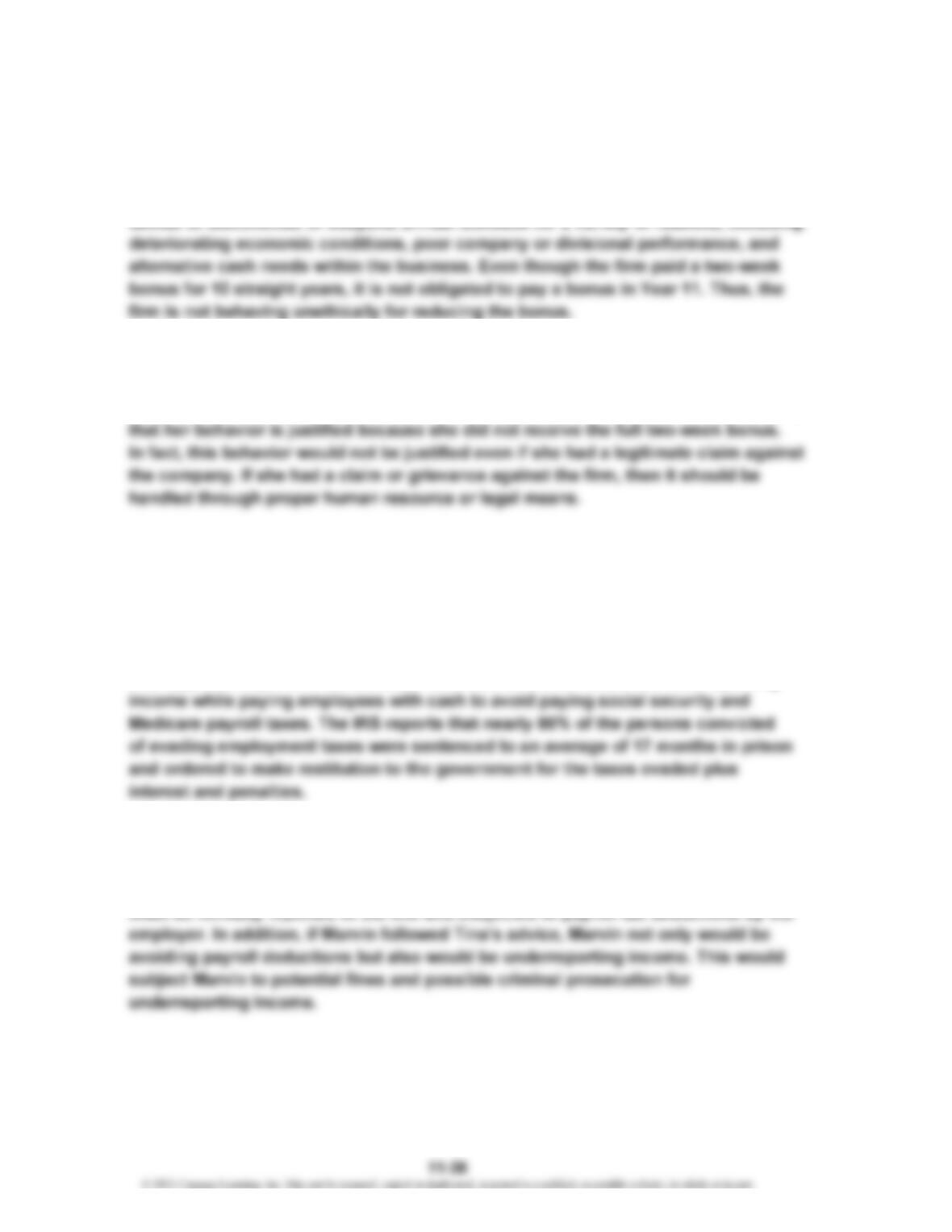
Current liabilities:
Social security tax payable $ 25,470
Salaries payable 157,000
Accounts payable 131,600
Interest payable 28,000
Long-term liabilities:
Vacation pay payable $ 3,360
Unfunded pension liability 50,700
Notes payable 630,000
Total long-term liabilities 684,060
Total liabilities $1,224,280
Liabilities
Owner’s Equity
CHAPTER 11 Current Liabilities and Payroll
CP 11-1
1. Cannally and Kennedy is not obligated to pay a bonus to its employees under any
circumstances. The decision to pay a bonus is discretionary. Companies frequently
2. Tonya Latirno, on the other hand, is behaving unethically. Believing that she is being
cheated, Tonya is attempting to replace the bonus by working overtime that is not
required. This behavior is fraudulent if the overtime is unnecessary, even though
Tonya is present on the job during the overtime hours. Tonya is incorrect in thinking
CP 11-2
1. The so-called “underground economy” hides transactions from IRS scrutiny by
conducting business with cash (not check or credit card, which leaves an audit
trail). The intent in many such transactions is to evade income tax illegally. However,
just because a transaction is in cash does not exempt it from taxation. Tina Song
also appears to perform construction services on a cash basis to evade reporting
2. Marvin should respond that he would rather receive a payroll check as a normal
employee does. As an employee, receiving cash rather than a payroll check
subverts the U.S. tax system. That is, such cash payments do not include
deductions for payroll taxes, as required by law. That is why, for example, cash tips
CASES & PROJECTS
CHAPTER 11 Current Liabilities and Payroll
CP 11-3
A sample solution based on Nike Inc.’s Form 10-K for the fiscal year ended May 31, 2018,
follows:
1. $6,040 million. The company’s current liabilities include accounts payable, notes
payable, current portion of long-term debt, accrued liabilities, and income taxes
payable.
2. The company’s current liabilities have increased by $566 million, from $5,474 million
to $6,040 million.
CP 11-4
The purpose of this activity is to familiarize students with retrieving and using IRS forms.
Students should be able to find the three required forms without much difficulty.
Encourage students to retrieve the forms from the IRS website because this is a useful
forms on the web require a PDF reader.
The W-2 form is the Annual Wage and Tax Statement transmitted by the employer to the
IRS. The IRS uses this information to reconcile the taxpayer’s reported income and
withholding taxes with the taxpayer’s tax return. Copies of the W-2 are provided for the
employee’s own records and for submission with state and federal tax returns.
CP 11-5
Memo
To: U. D. Mach III
From: A+ Student
Re: Financial Reporting of Series 3 Shock Absorber Lawsuit
The customer lawsuit filed against WBM Motorworks arising from cracks in Series 3
motorcycle front shock absorbers creates a potential liability for the company. The way
in which this potential liability is reported on the financial statements depends on two
factors: what the likelihood is of losing the lawsuit and whether the amount of the loss
Based on the information that exists at this time, it appears that a loss should be
recorded on the income statement and a liability should be recorded on the balance
sheet. The discovery of a manufacturing defect and the associated recall significantly
increases the likelihood that the company will lose the lawsuit if it is taken to trial.
While a direct link has not been made between the manufacturing defect and the shock
An alternative argument could be made that the uncertainty surrounding the connection
between the manufacturing defect and the cracked shock absorber is too uncertain to
classify the likelihood of losing the lawsuit as probable. Rather, the likelihood of losing
the lawsuit would be classified as reasonably possible. In this case, the lawsuit would be
disclosed in the notes to the financial statements, but no loss or liability would be
reported on the financial statements.
CHAPTER 11 Current Liabilities and Payroll
CP 11-6
Sumana’s interpretation of the pension issue is correct. The employee earns the pension
during the working years. The pension is part of the employee’s compensation that is
deferred until retirement. Thus, Felton should record an expense equal to the amount of
pension benefit earned by the employee for the period. This gives rise to the rather
complex issue of estimating the amount of the pension expense. Francie indicates that
CP 11-7
This activity does not require students to research the contingency notes for Philip
Morris International Inc. (PMI). The contingency disclosure is extensive and complicated.
Rather, the student should identify PMI’s main business and from this information
determine the likely cause of the contingency disclosures.
1. PMI is a holding company for a number of businesses. Thus, PMI’s primary business
is in the manufacture and distribution of tobacco products.