CHAPTER 11
SOLUTIONS TO PROBLEMS—SET C
PROBLEM 11-1C
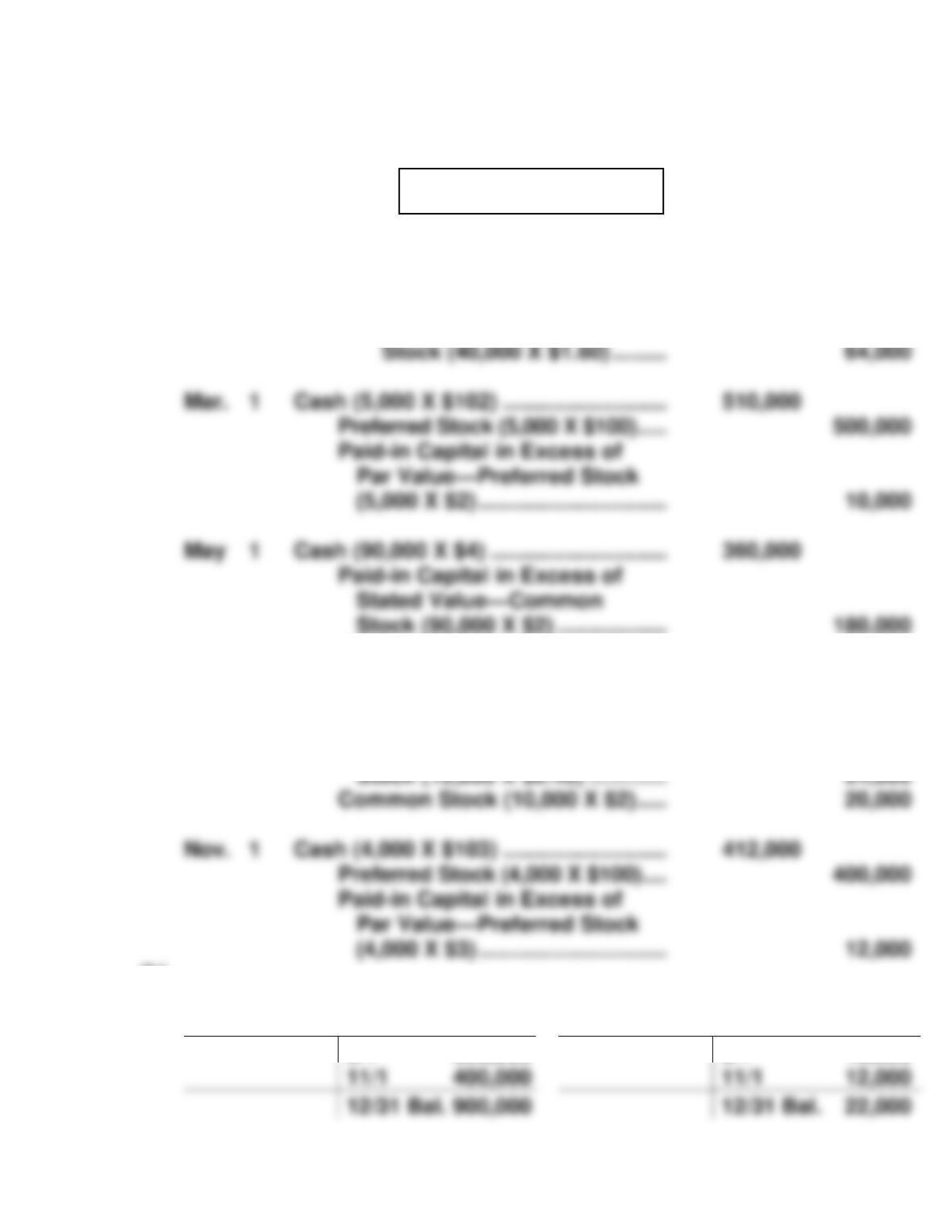
(a) Jan. 10 Cash (40,000 X $3.60) …………………… 144,000
Common Stock (40,000 X $2) ….. 80,000
Paid-in Capital in Excess of
Stated Value-Common
Common Stock (90,000 X $2) ….. 180,000
Sept. 1 Cash (10,000 X $4.40) …………………… 44,000
Paid-in Capital in Excess of
Stated Value—Common
(b)
Preferred Stock
Paid-in Capital in Excess of
Par Value—Preferred Stock
3/1 500,000
3/1 10,000
11/1 400,000
11/1 12,000
12/31 Bal. 900,000
12/31 Bal. 22,000
PROBLEM 11-1C (Continued)
Common Stock
Paid-in Capital in Excess of
Stated Value—Common Stock
1/10 80,000
1/10 64,000
5/1 180,000
5/1 180,000
(c) HENNES CORPORATION
Partial Balance Sheet
December 31, 2017
Stockholders’ equity
Paid-in capital
Capital stock
8% Preferred stock, $100 par
value, 10,000 shares
authorized, 9,000 shares
issued …………………………………… $900,000
Common stock, no-par, $2
stated value, 500,000 shares
authorized, 140,000 shares
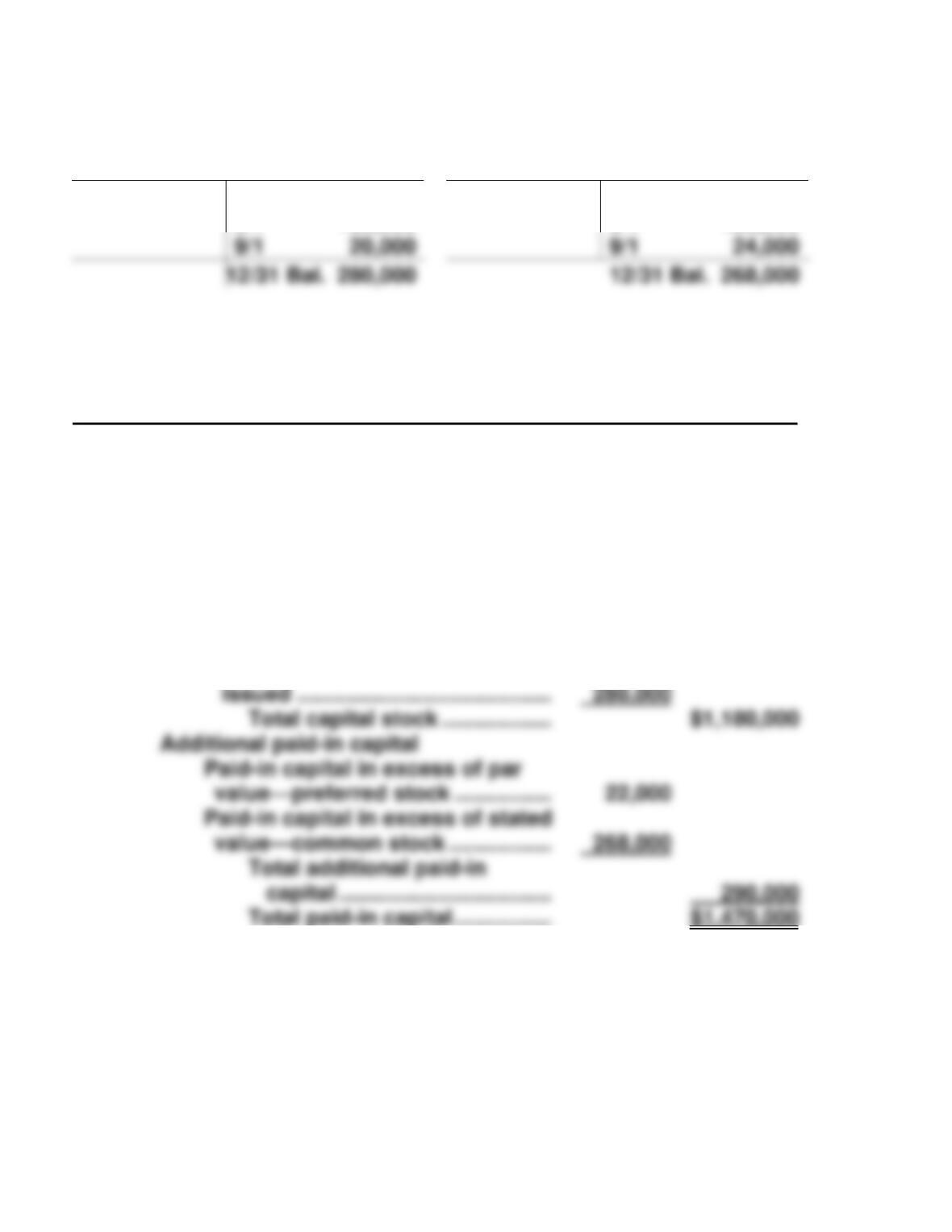
9/1 20,000
9/1 24,000
12/31 Bal. 268,000
PROBLEM 11-2C
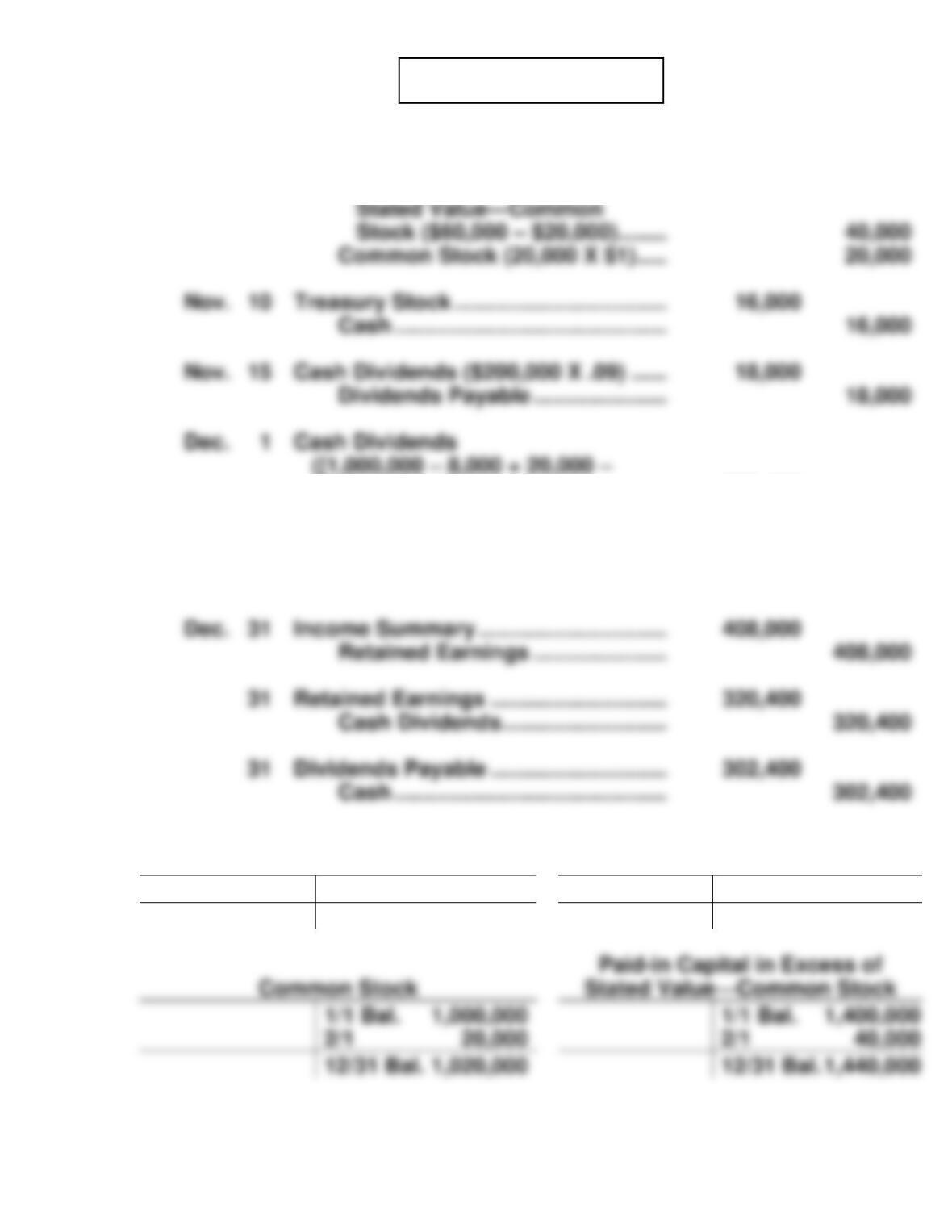
(a) Feb. 1 Cash …………………………..……………….. 60,000
Paid-in Capital in Excess of
4,000) X $0.30] …………………………... 302,400
Dividends Payable …………………. 302,400
Dec. 15 Dividends Payable ……………………….. 18,000
Cash ……………………………………… 18,000
(b) Preferred Stock
Paid-in Capital in Excess of
Par Value—Preferred Stock
1/1 Bal. 200,000
1/1 Bal. 16,000
12/31 Bal. 200,000
12/31 Bal. 16,000
Paid-in Capital in Excess of
2/1 20,000
2/1 40,000
12/31 Bal. 1,020,000
12/31 Bal. 1,440,000
PROBLEM 11-2C (Continued)
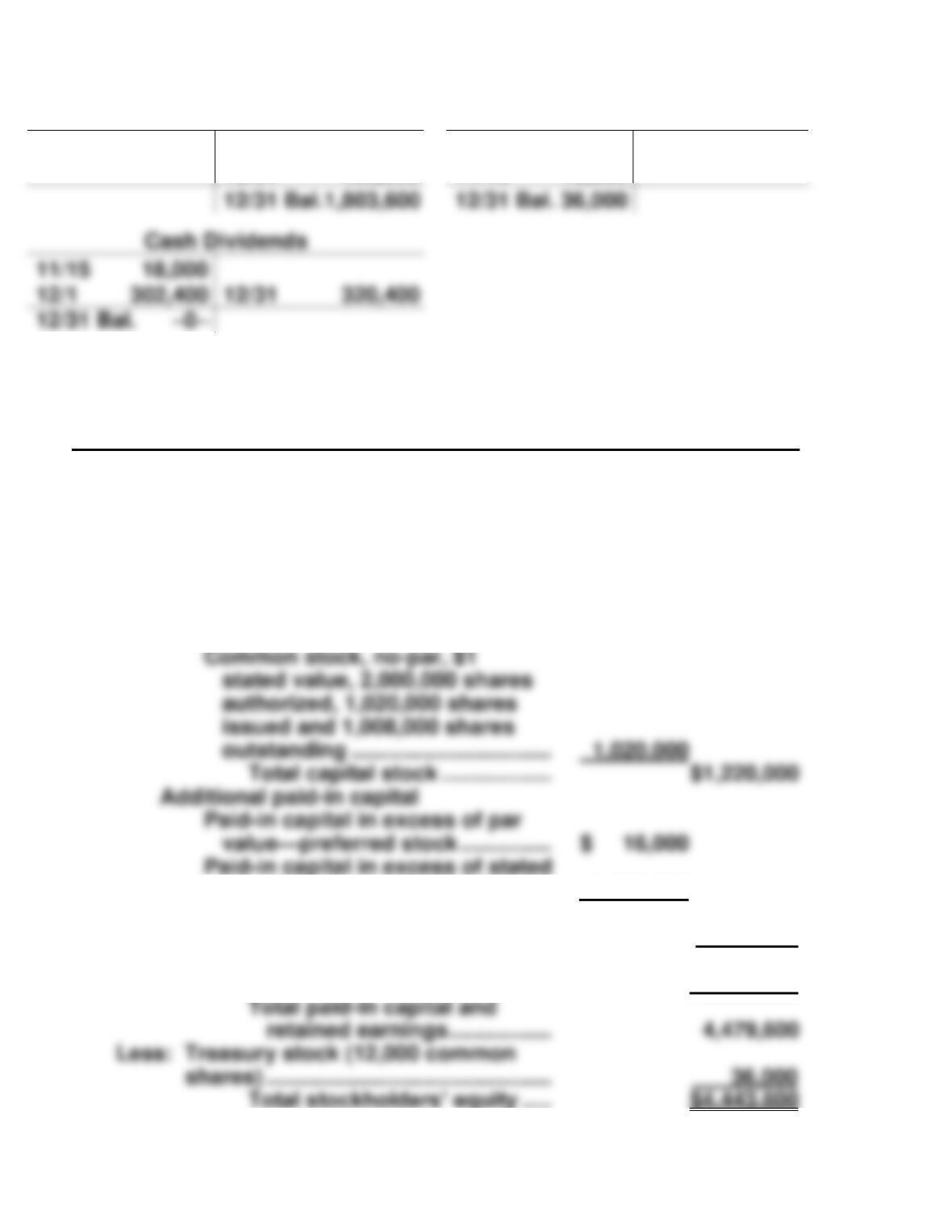
Retained Earnings
Treasury Stock
12/31 320,400
1/1 Bal. 1,716,000
1/1 Bal. 20,000
12/31 408,000
11/10 16,000
(c) NARDIN CORPORATION
Partial Balance Sheet
December 31, 2017
Stockholders’ equity
Paid-in capital
Capital stock
9% Preferred stock, $50
par value, cumulative,
10,000 shares authorized,
4,000 shares issued and
outstanding …………………………... $ 200,000
value—common stock ……………. 1,440,000
Total additional paid-in
capital …………………………….. 1,456,000
Total paid-in capital ……………. 2,676,000
Retained earnings …………………………………. 1,803,600
12/31 Bal.1,803,600
12/31 Bal. 36,000
11/15 18,000
12/1 302,400
12/31 320,400
12/31 Bal. –0–
PROBLEM 11-2C (Continued)
(d)
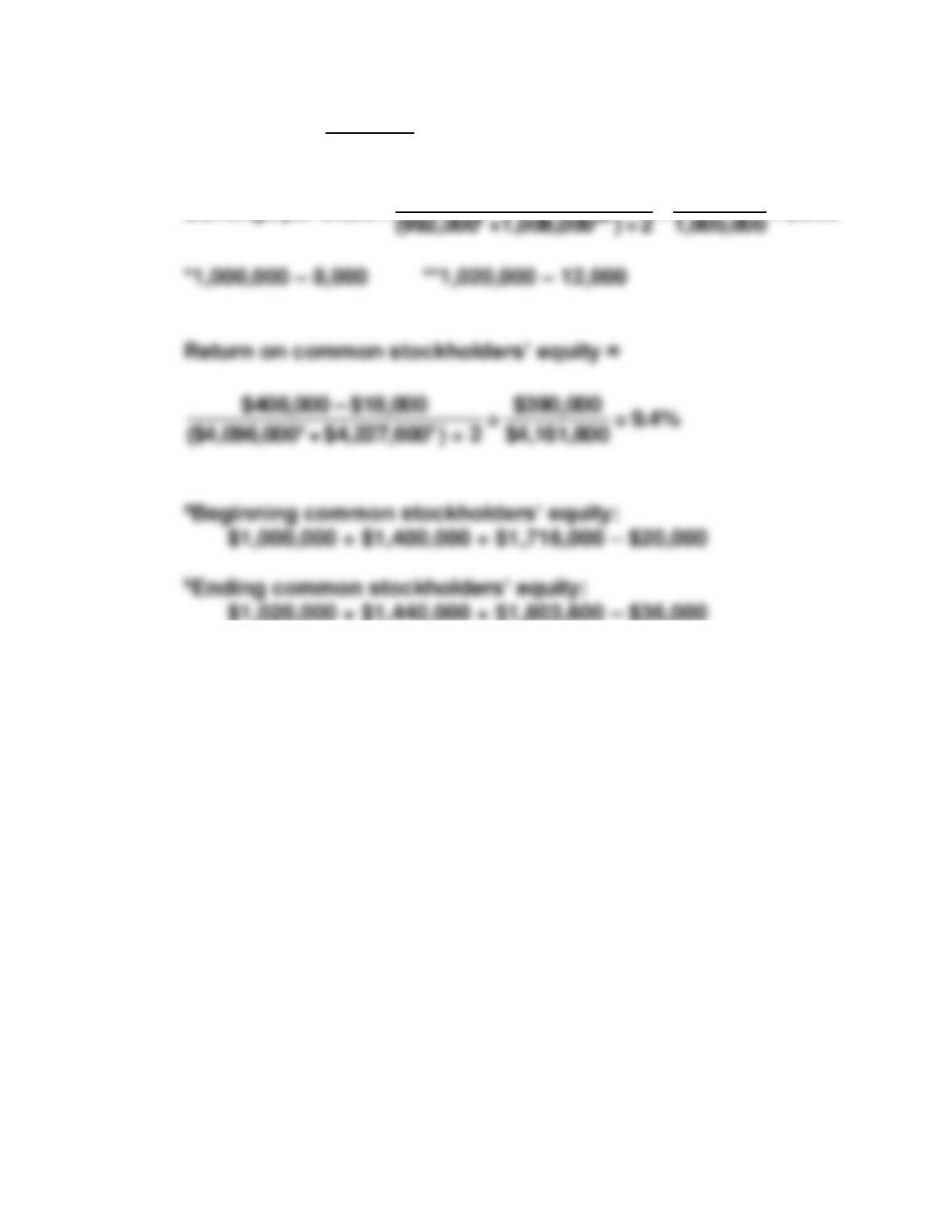
Payout ratio= $302,400
$408,000=74.1%
Earnings per share= $408,000–$18,000
PROBLEM 11-3C
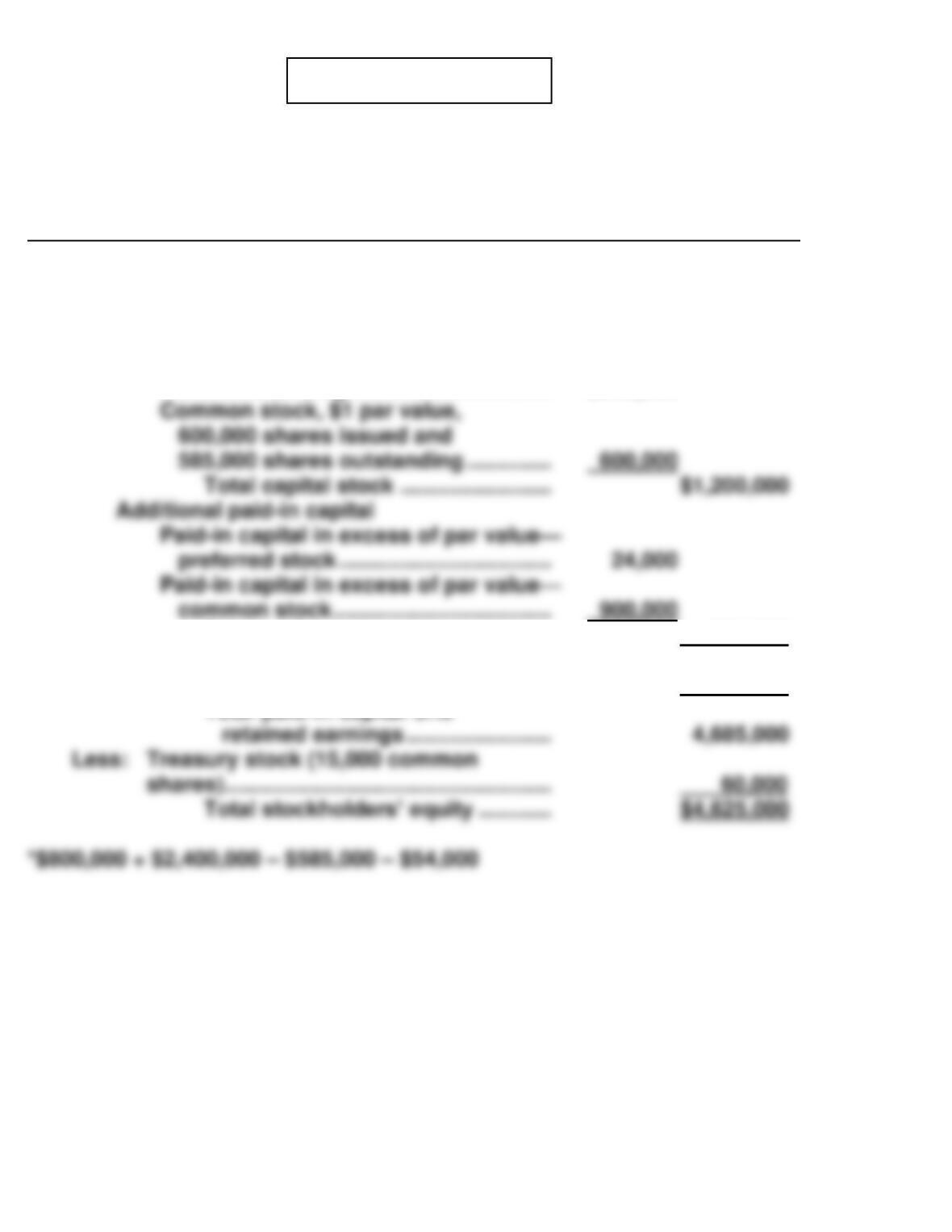
BRYANT COMPANY
Partial Balance Sheet
December 31, 2017
Stockholders’ equity
Paid-in capital
Capital stock
9% Preferred stock, $50 par value,
cumulative, 12,000 shares issued
and outstanding …………………………... $600,000
Total additional paid-in capital ….. 924,000
Total paid-in capital ………………….. 2,124,000
Retained earnings ……………………………………….. 2,561,000*
Total paid-in capital and
PROBLEM 11-4C
(a)
Retained Earnings
Dec. 31 380,000
Jan. 1 Balance 660,000
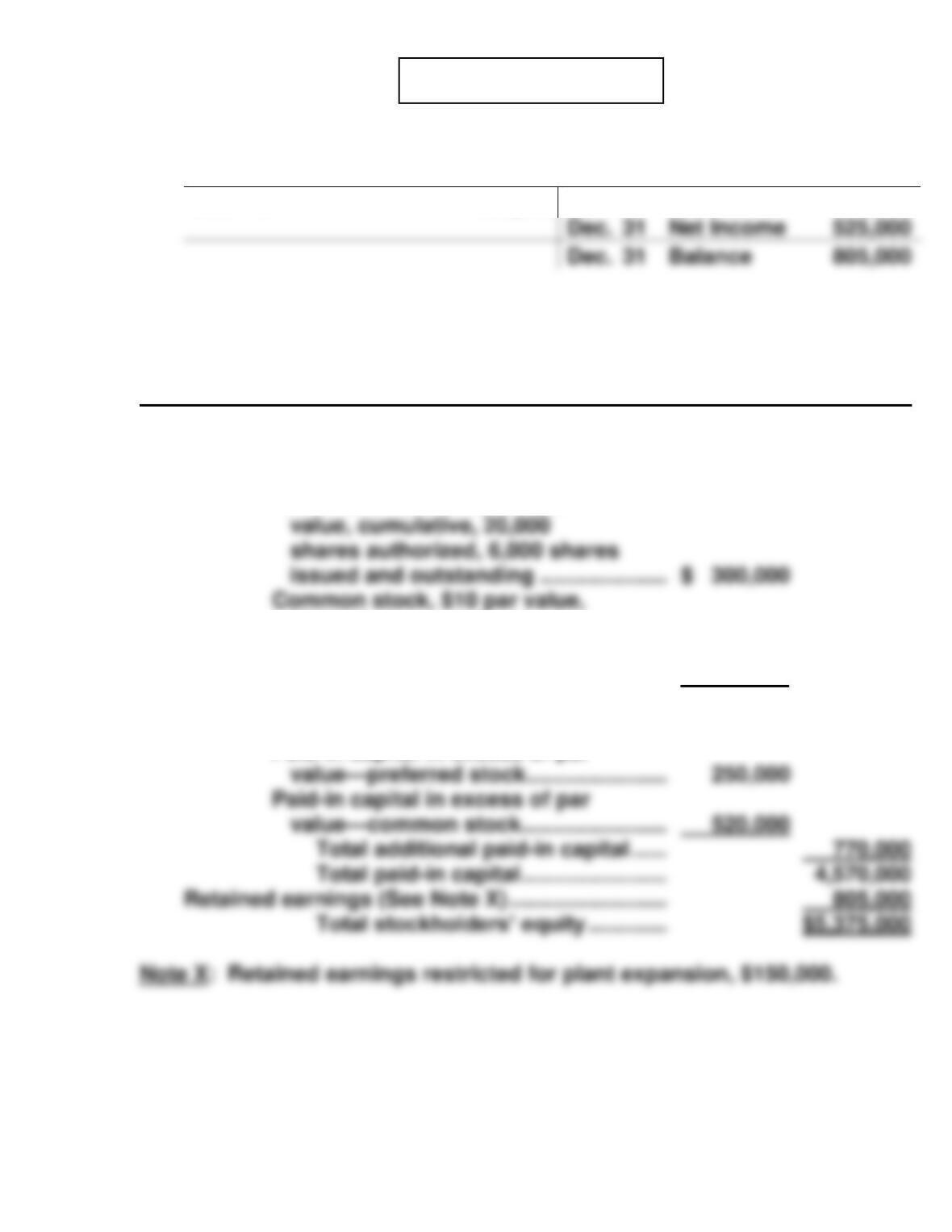
(b) FLICKA CORPORATION
Partial Balance Sheet
December 31, 2017
Stockholders’ equity
Paid-in capital
Capital stock
10% Preferred stock, $50 par
500,000 shares authorized,
350,000 shares issued and
outstanding ………………………………….. 3,500,000
Total capital stock ………………. $3,800,000
Additional paid-in capital
Paid-in capital in excess of par
Dec. 31 Net Income 525,000
PROBLEM 11-5C
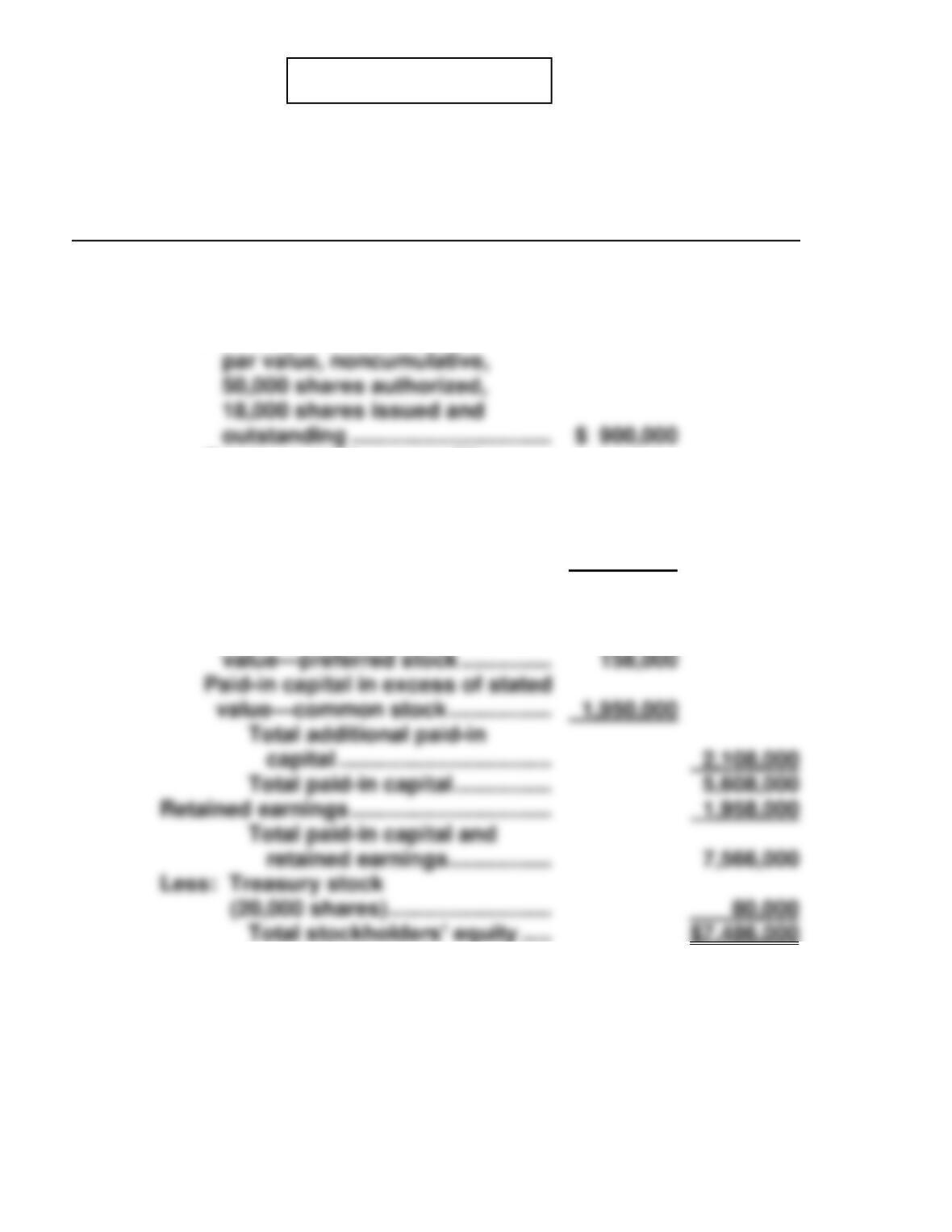
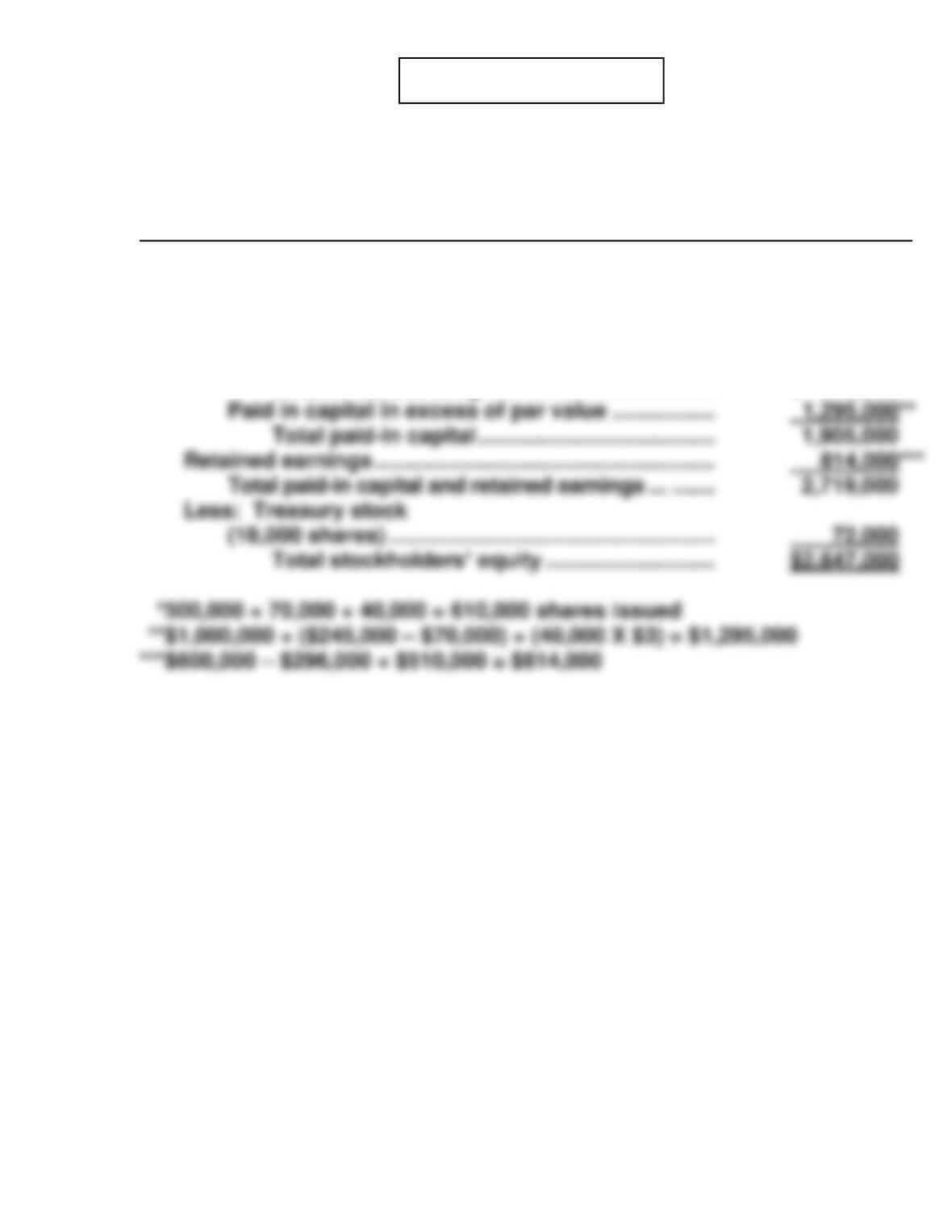
CHARLOTTE CORPORATION
Partial Balance Sheet
December 31, 2017
Stockholders’ equity
Paid-in capital
Capital stock
8% Preferred stock, $50
Common stock, no-par, $2
stated value, 1,800,000 shares
authorized, 1,300,000 shares
issued, and 1,280,000 shares
outstanding …………………………... 2,600,000
Total capital stock ……………… $3,500,000
Additional paid-in capital
Paid-in capital in excess of par
PROBLEM 11-6C
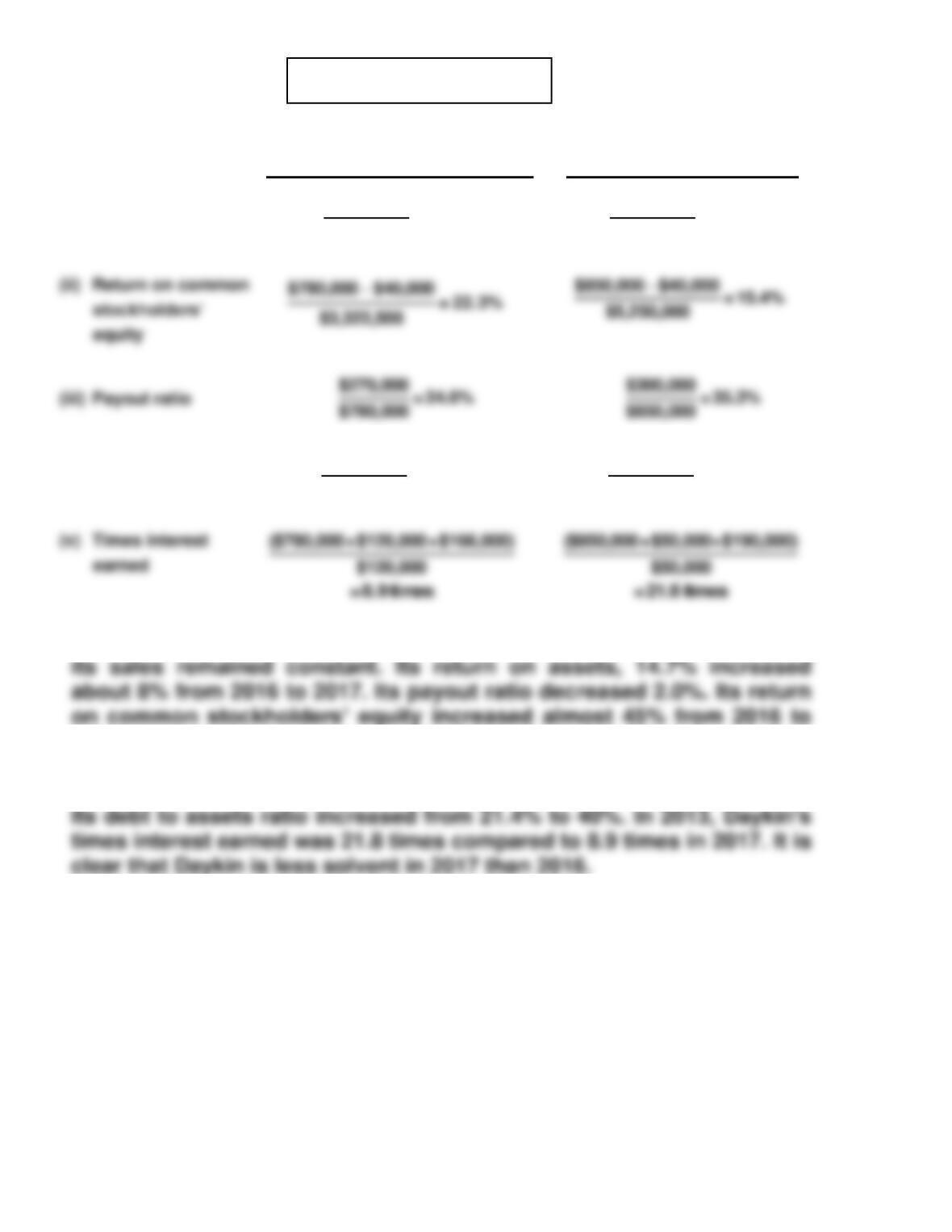
GABRIEL INC.
Partial Balance Sheet
December 31, 2017
Stockholders’ equity
Paid-in capital
Common stock, $1 par value,
1,000,000 shares authorized,
610,000* shares issued, and
592,000 outstanding ……………………………….. $ 610,000
PROBLEM 11-7C
2017 2016
(a)
(i) Return on assets
ratio
$780,000
$5,312,500 = 14.7%
$850,000
$6,230,000 =13.6%
(iv) Debt to assets ratio
$2,000,000
$5,000,000 =40%
$1,200,000
$5,610,000 =21.4%
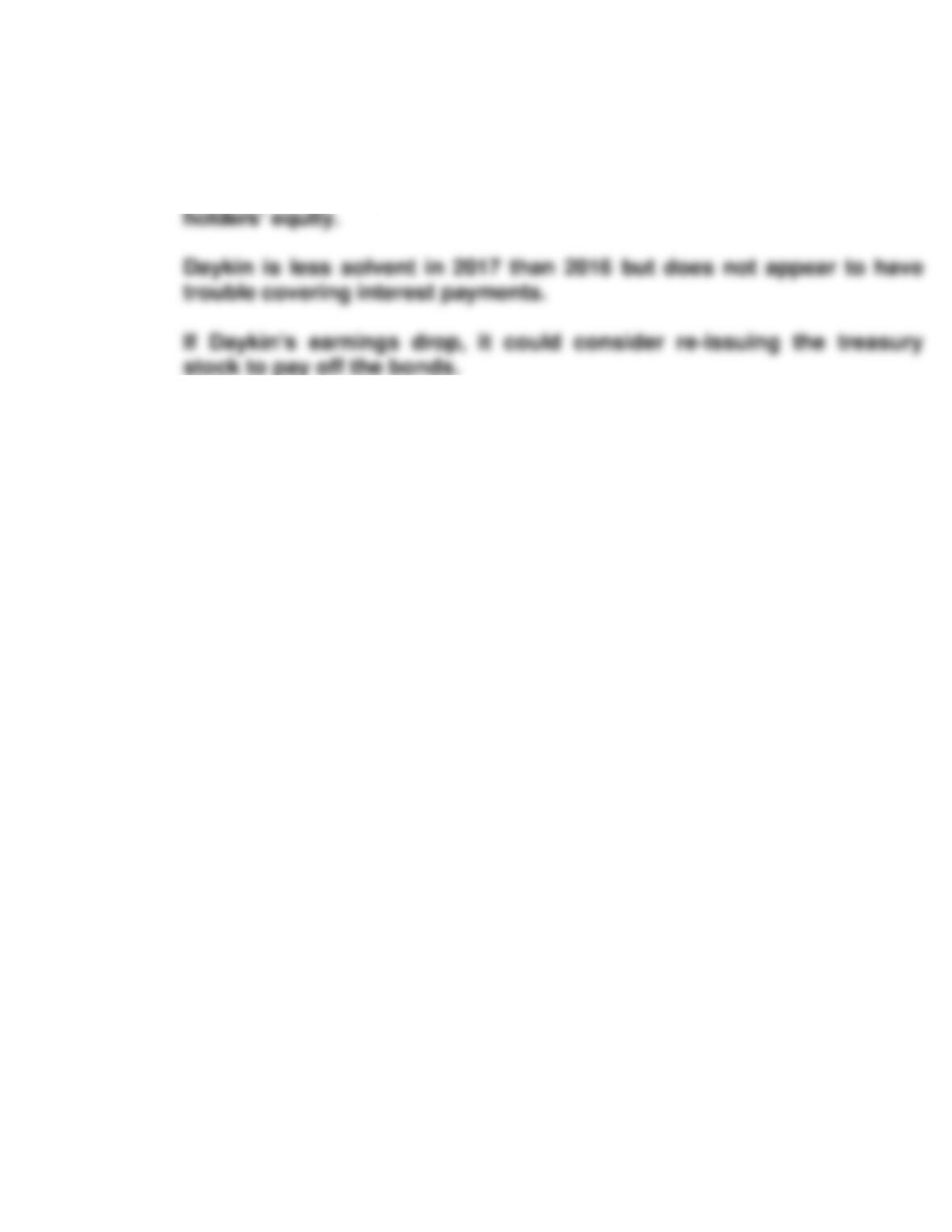
(b) Daykin Company’s net income decreased $70,000 in 2017 even though
2017. An increase of this size indicates improved profitability.
(c) Daykin Company acquired more debt in 2017 and became less solvent.
PROBLEM 11-7C (Continued)
(d) It appears that the decision to issue bonds and purchase treasury stock
was a wise choice. The bonds require payment of 8% interest which is
less than Daykin’s 14.7% return on assets. This positive difference
resulted in the significant improvement in return on common stock–
*PROBLEM 11-8C
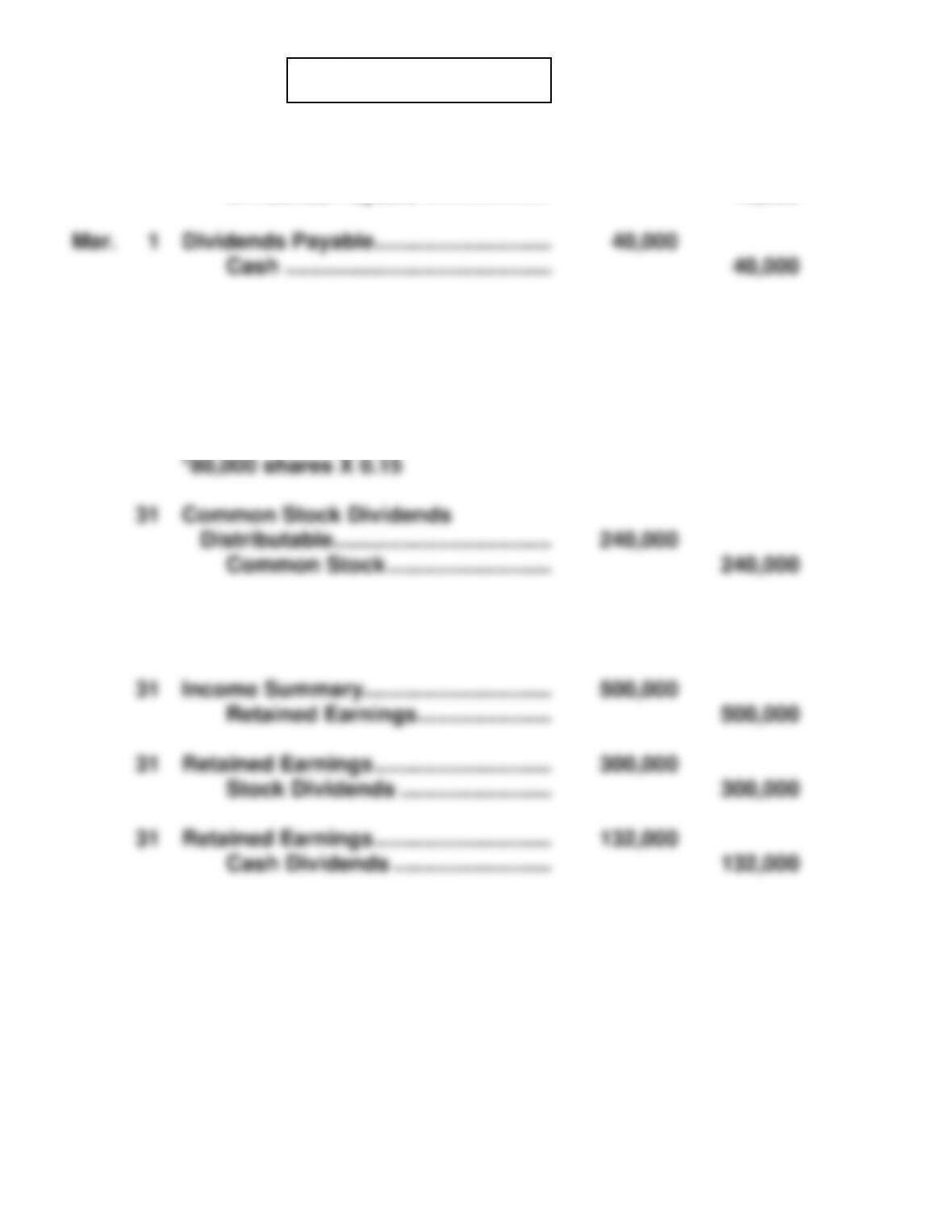
(a) Feb. 1 Cash Dividends (80,000 X $0.50) …… 40,000
Dividends Payable ………………… 40,000
July 1 Stock Dividends (12,000* X $25) …… 300,000
Common Stock Dividends
Distributable (12,000 X $20)…. 240,000
Paid-in Capital in Excess of
Par Value (12,000 X $5) ……….. 60,000
Dec. 1 Cash Dividends (92,000 X $1) ……….. 92,000
Dividends Payable ………………… 92,000
*PROBLEM 11-8C (Continued)
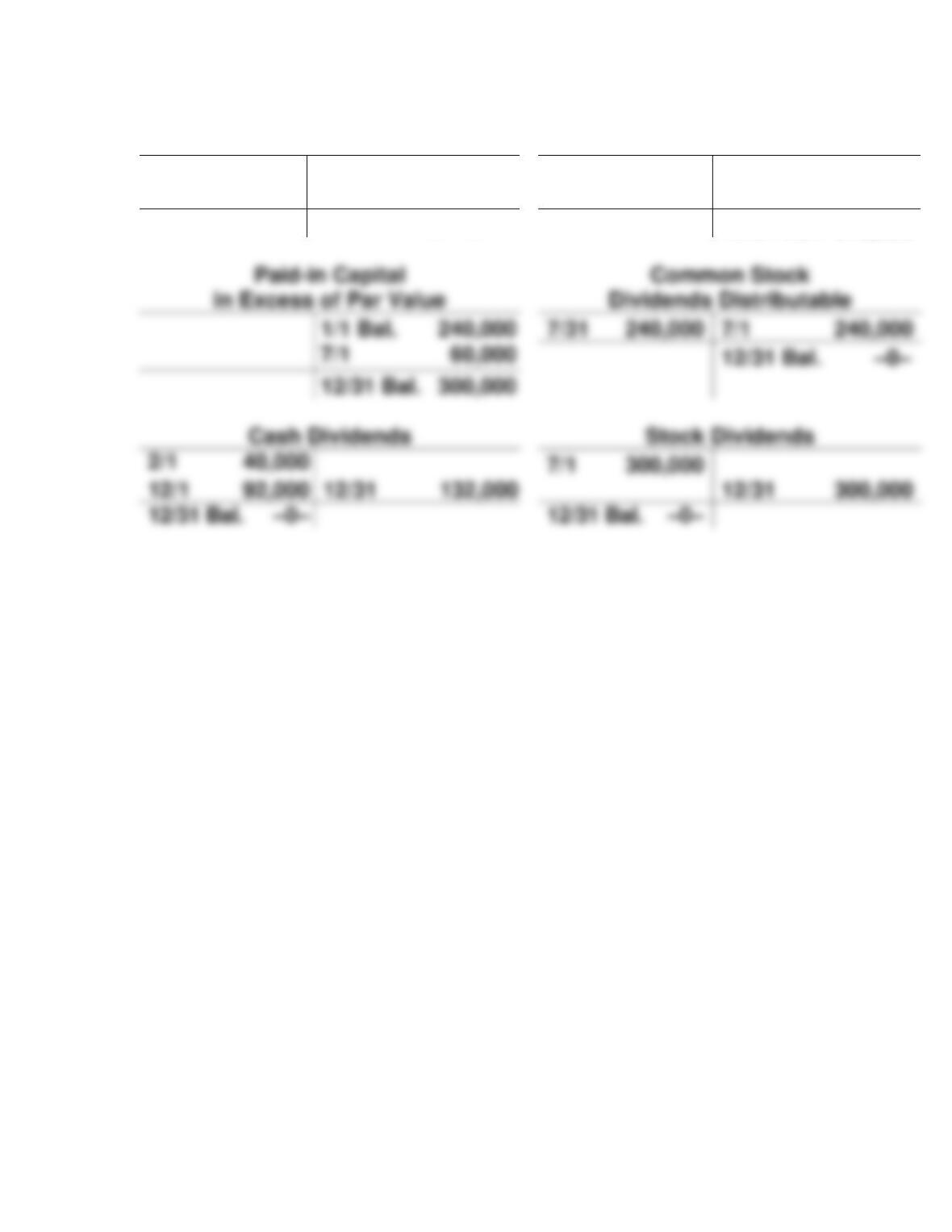
(b)
Common Stock
Retained Earnings
1/1 Bal. 1,600,000
12/31 300,000
1/1 Bal. 750,000
7/31 240,000
12/31 132,000
12/31 500,000
12/31 Bal. 1,840,000
12/31 Bal. 818,000
7/31 240,000
7/1 240,000
12/31 Bal. –0–
7/1 300,000
12/1 92,000
12/31 132,000
12/31 300,000
12/31 Bal. –0–
12/31 Bal. –0–
*PROBLEM 11-8C (Continued)
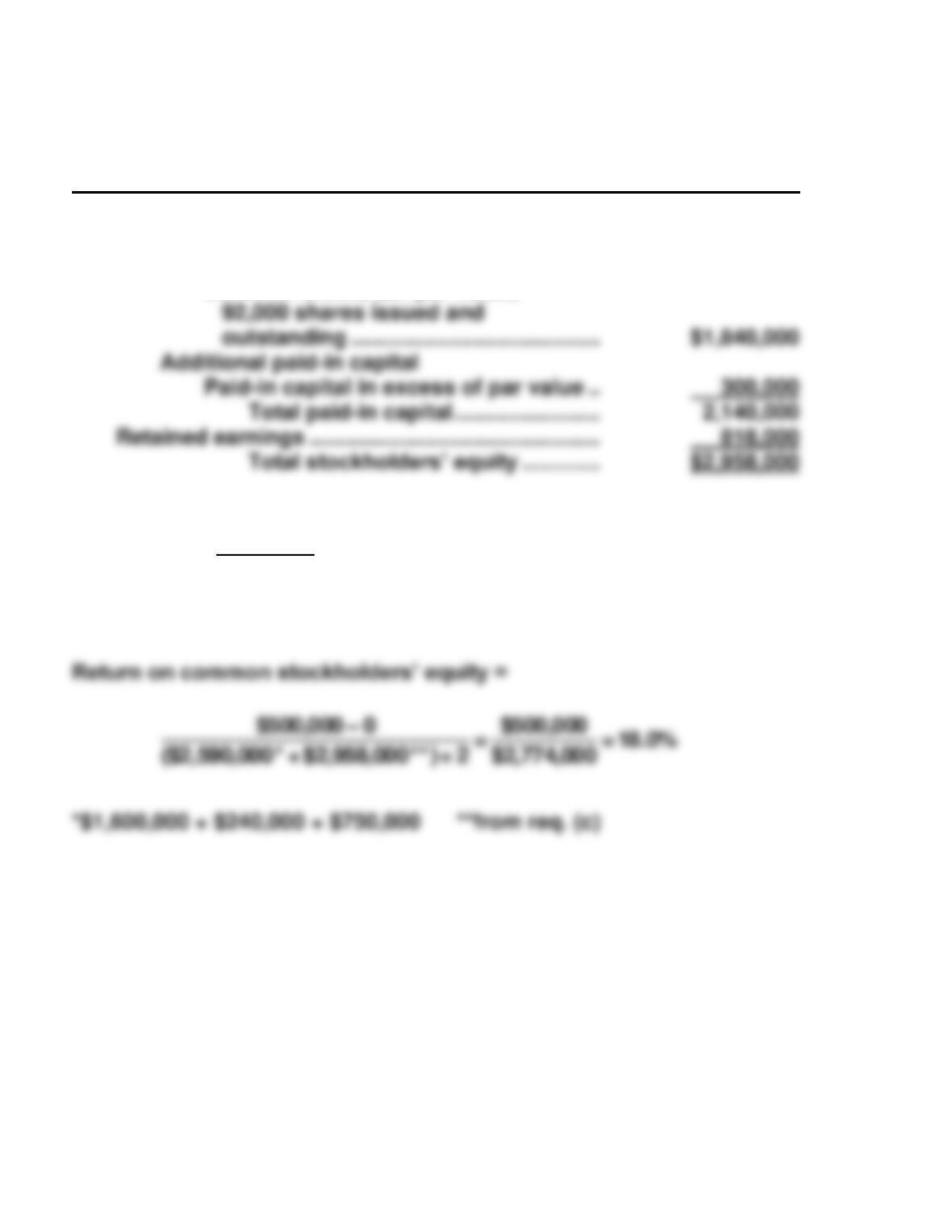
(c) JASON CORPORATION
Partial Balance Sheet
December 31, 2017
Stockholders’ equity
Paid-in capital
Capital stock
Common stock, $20 par value,
(d)
Payout ratio = $132,000a
$500,000 = 26.4%
a($40,000 + $92,000)