Wild and Shaw, Financial & Managerial Accounting, 8e Solutions Manual: Chapter 11
Chapter 11
Corporate Reporting and Analysis
QUESTIONS
1. Organization expenses (costs) are incurred in creating a corporation. Examples include:
legal fees, promoter fees, accountant fees, costs of printing stock certificates, and fees
paid to obtain a state charter.
2. Organization expenses (costs) are reported as expenses when incurred—as part of
operating expenses—because the amount and timing of their future benefit is difficult to
determine. (Instructor note: Prior to SOP 98-5, organization costs were classified as part
of intangible assets and then allocated to amortization expense.)
3. The board of directors of a corporation is responsible for overseeing the corporation’s
activities. The directors are elected by the corporation’s stockholders.
4. Authorized shares represent the maximum number of shares that a corporation’s charter
allows it to sell. Outstanding shares are the number of issued shares that are held by
stockholders. The number of authorized shares usually exceeds the number of issued
shares, often by a large amount.
9. Cash dividends debited against paid-in capital accounts are called liquidating dividends
because they represent a return of amounts originally invested in the corporation by the
stockholders. (They are a return of, not a return on, capital contributions.)
10. Declaring a stock dividend has no effect on assets, liabilities, or total equity. Also, the
subsequent distribution of the stock dividend has no effect on these items. Instead, the
stock dividend simply increases the number of shares outstanding and results in a
transfer of equity from retained earnings to paid-in capital.
11. A stock dividend results in a distribution of additional shares to stockholders and the
capitalization of retained earnings. A stock split calls in the old shares and replaces
them with a different number of new shares with a new par value. Also, no entry is made
to any of the equity accounts with a stock split. In spite of these technical differences,
there is no practical difference in most cases between a stock split and a large stock
dividend.
12. A treasury stock purchase reduces total assets and total equity by equal amounts.
13. With a simple capital structure, earnings per share is calculated by first subtracting any
declared and cumulative preferred dividends from net income, and then dividing the
difference by the weighted-average number of shares of outstanding common stock.
The resulting figure is called the basic earnings per share.
QUICK STUDIES
Quick Study 11-1 (10 minutes)
True statements: 3, 4, 5 and 7
Quick Study 11-2 (5 minutes)
a.
Cash ………………………………………………………………..
375,000
Common Stock, $5 Par Value ……………………….
375,000
Issued par value stock for cash. (75,000 x $5)
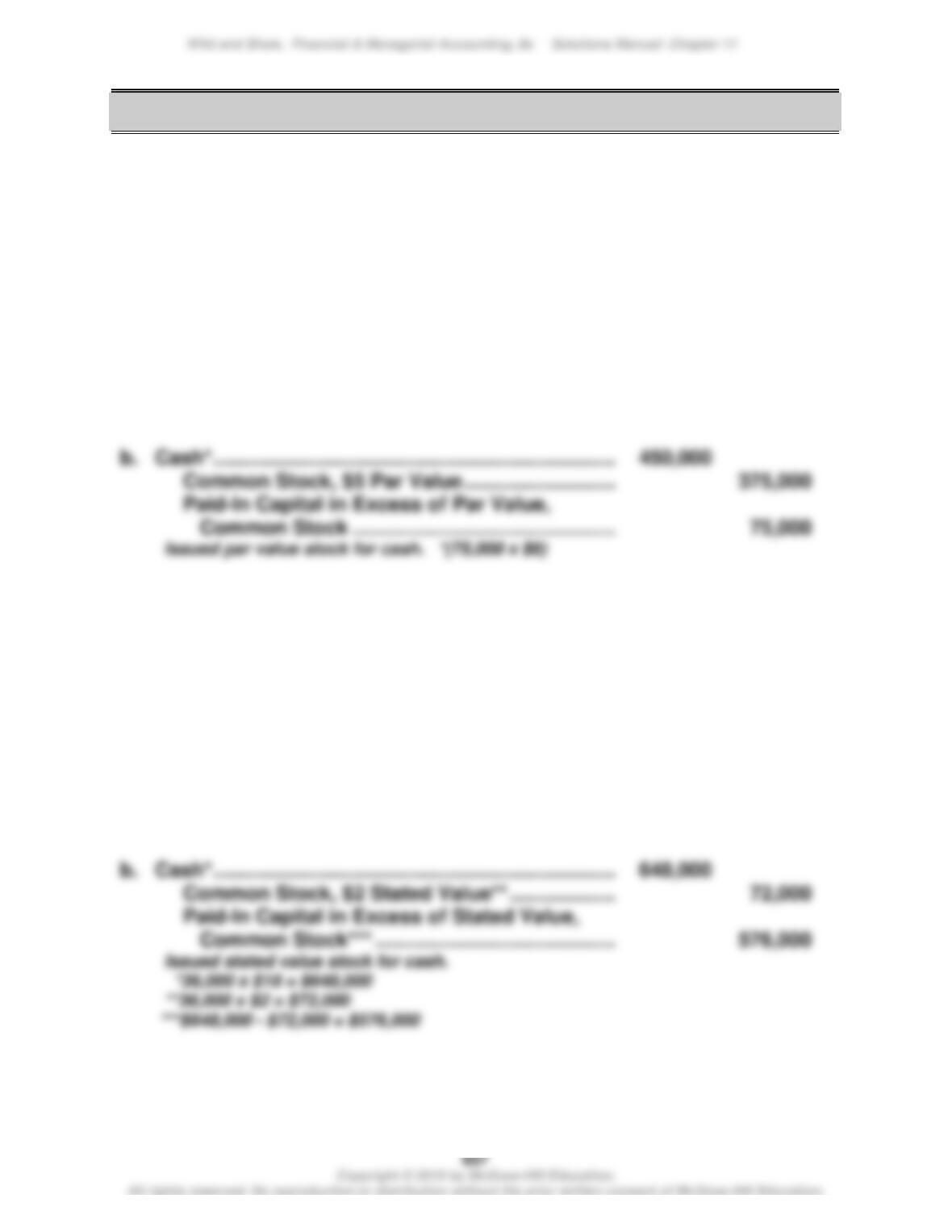
Cash* ……………………………………………………………….
450,000
Common Stock, $5 Par Value ……………………….
375,000
Paid-In Capital in Excess of Par Value,
Common Stock …………………………………………
75,000
Issued par value stock for cash. *(75,000 x $6)
Quick Study 11-3 (5 minutes)
a.
Cash* ……………………………………………………………….
648,000
Common Stock, $2 Par Value** …………………….
72,000
Paid-In Capital in Excess of Par Value,
Common Stock*** ……………………………………..
576,000
Issued par value stock for cash.
*36,000 x $18 = $648,000
**36,000 x $2 = $72,000
***$648,000 – $72,000 = $576,000
Cash* ……………………………………………………………….
648,000
Common Stock, $2 Stated Value** ………………..
72,000
Quick Study 11-4 (5 minutes)
a.
Cash …………………………………………………………………………
1,827,000
Common Stock, No-Par Value …………………………..
1,827,000
Issued no-par value stock for cash. (63,000 x $29)
1,827,000
Common Stock, No-Par Value …………………………..
1,827,000
Issued no-par value stock for land.
Quick Study 11-5 (15 minutes)
(a) Mar. 1
Cash ………………………………………………………………..
297,500
Common Stock, $4 Par Value ……………………….
170,000
Paid-In Capital in Excess of Par Value,
Common Stock …………………………………………
127,500
Issued par value stock for cash.
(b) Apr. 1
Cash ………………………………………………………………..
70,000
Common Stock, No-Par Value ………………………
70,000
Issued no-par value stock for cash.
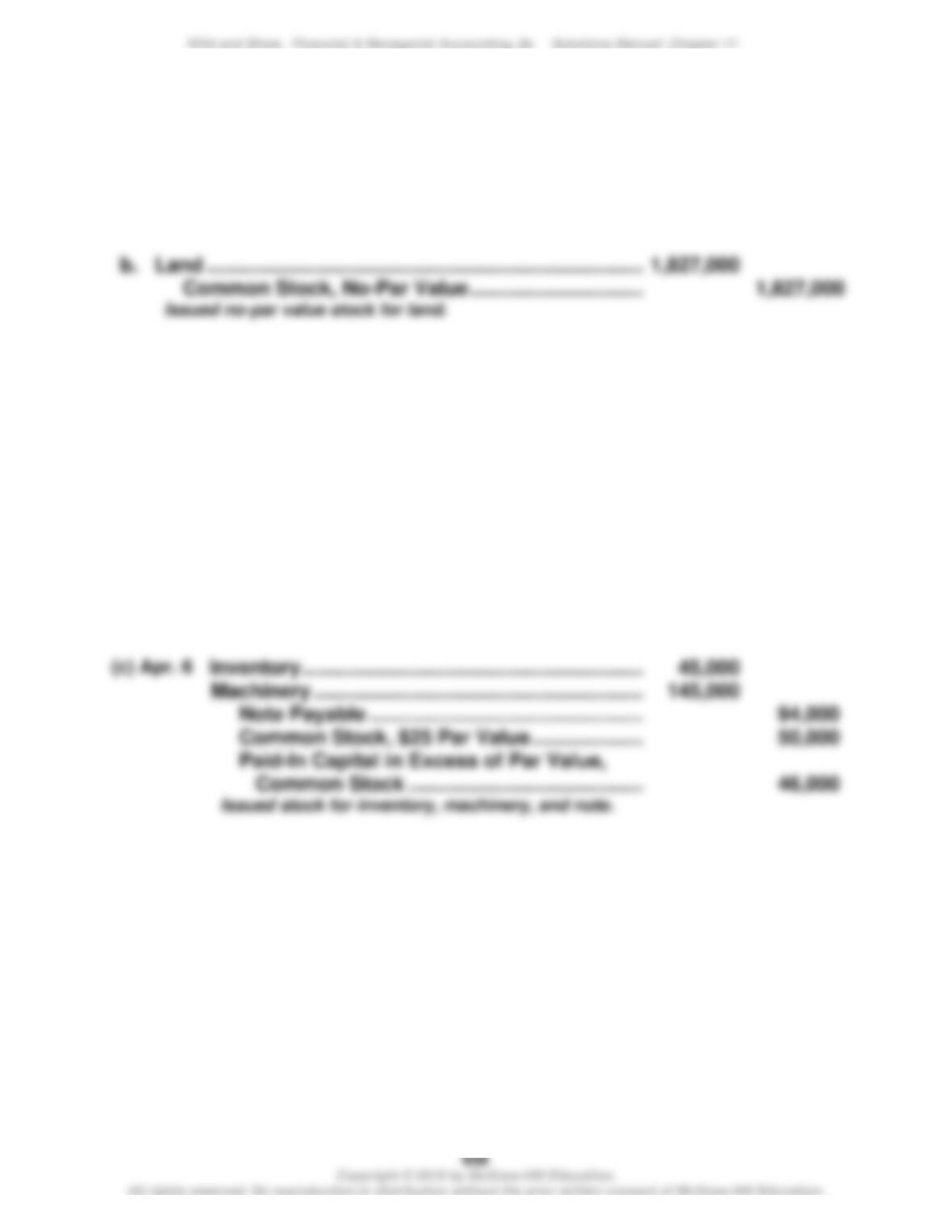
(c) Apr. 6
45,000
Machinery ……………………………………………………….
145,000
Note Payable ……………………………………………….
94,000
Common Stock, $25 Par Value ……………………..
50,000
Quick Study 11-6 (10 minutes)
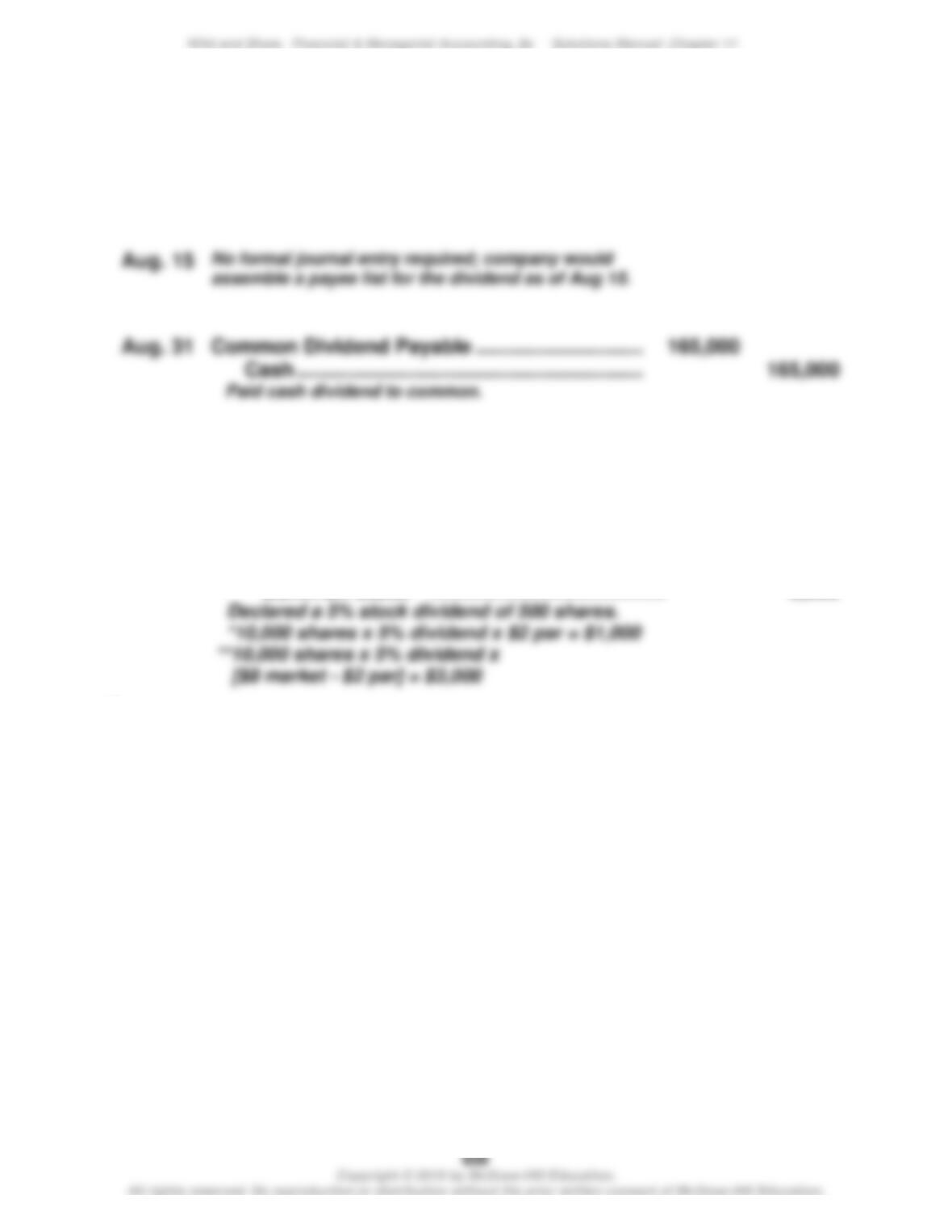
July 15
Retained Earnings …………………………………………………
165,000
Common Dividend Payable …………………………..
165,000
Declared cash dividend on common.
assemble a payee list for the dividend as of Aug 15.
Common Dividend Payable …………………………..
165,000
Cash ……………………………………………………….
165,000
Quick Study 11-7 (15 minutes)
a.
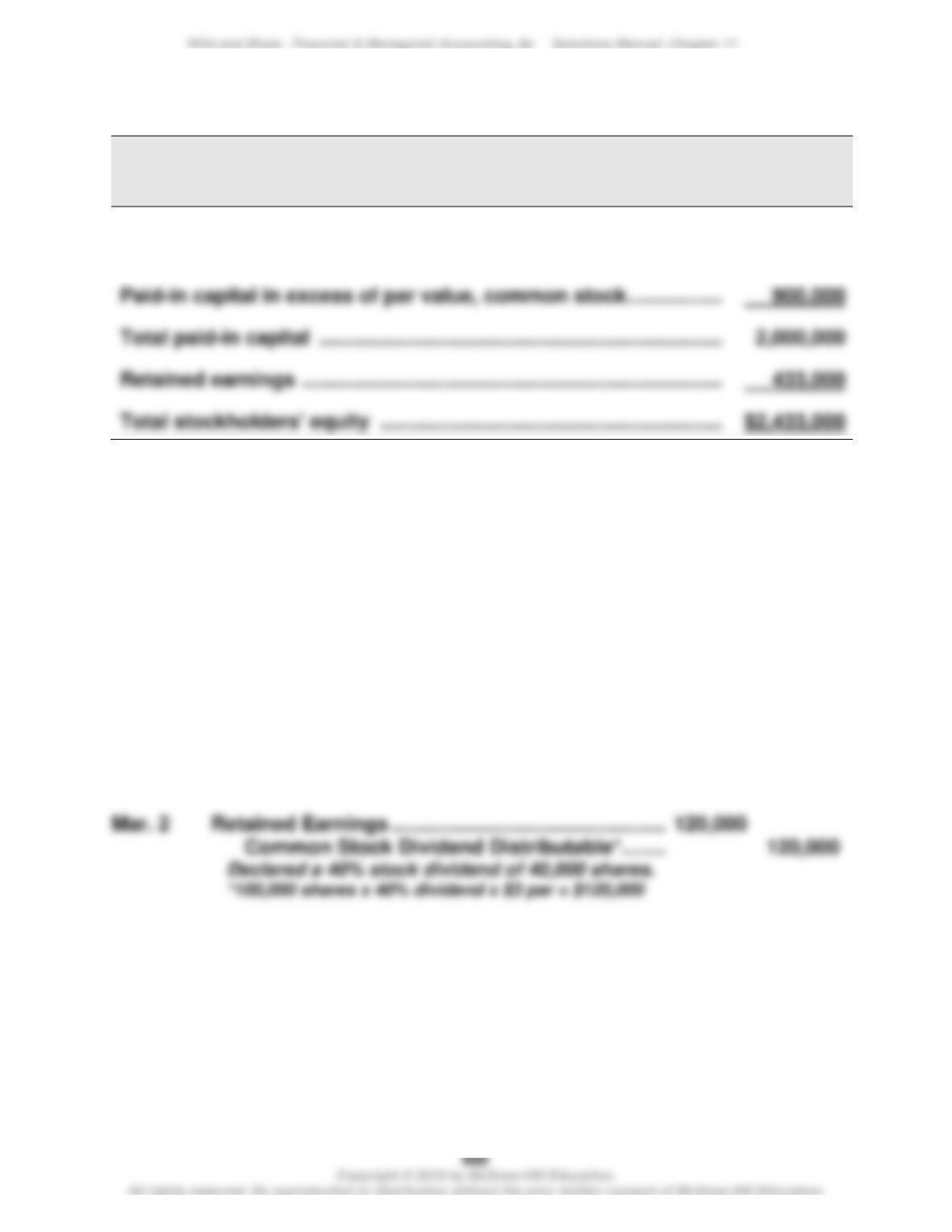
July 1
Retained Earnings ……………………………………………
4,000
Common Stock Dividend Distributable* ……….
1,000
Paid-In Capital in Excess of Par Value,
Common Stock** ……………………………………..
3,000
b.
July 20
Common Stock Dividend Distributable ……………..
1,000
Common Stock, $2 Par Value ………………………
1,000
Issued common stock for cash.
Quick Study 11-8 (10 minutes)
Jun Co.
Stockholders’ Equity
April 2 (after stock dividend)
Common stock⎯$5 par value, 375,000 shares
authorized, 220,000 shares issued and outstanding …………….
$1,100,000
Supporting work
Apr. 2
Retained Earnings …………………………………………………
400,000
Common Stock* ……………………………………………….
100,000
Paid-In Capital in Excess of Par Value,
Common Stock** ……………………………………………
300,000
Record declaration and distribution
of a 10% common stock dividend.
* 200,000 shares x 10% x $5 par value = $100,000
**200,000 shares x 10% x ($20 market value –
$5 par value) = $300,000
Quick Study 11-9 (10 minutes)
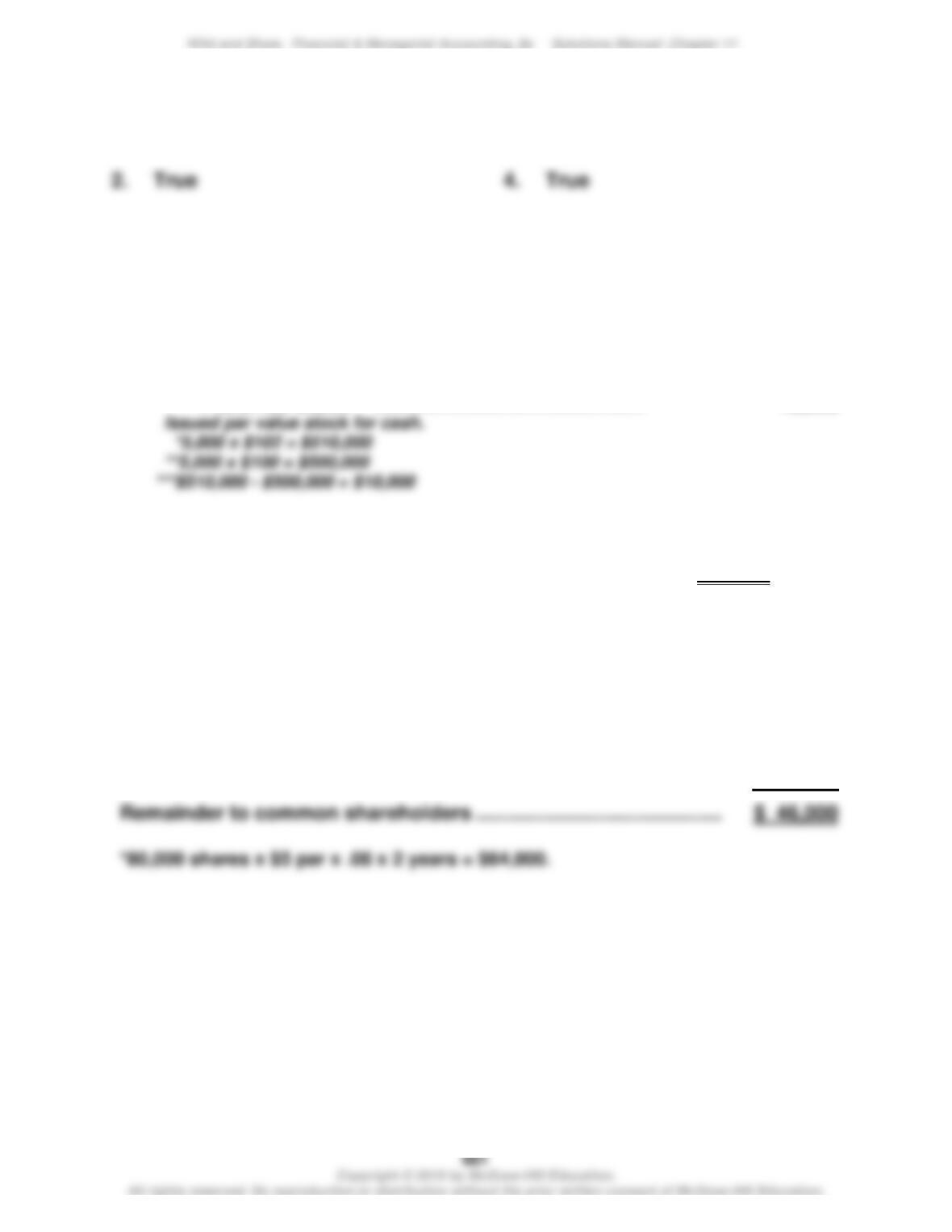
Retained Earnings ……………………………………………
Quick Study 11–10 (10 minutes)
1. True 3. False
Quick Study 11–11 (5 minutes)
1.
Cash* ………………………………………………………………………..
510,000
Preferred Stock, $100 Par Value** ………………………….
500,000
Paid-In Capital in Excess of Par Value,
Preferred Stock*** ………………………………………………
10,000
2. Preferred dividend =
$100 par value/share x 7% x 5,000 shares = $35,000
Quick Study 11-12 (10 minutes)
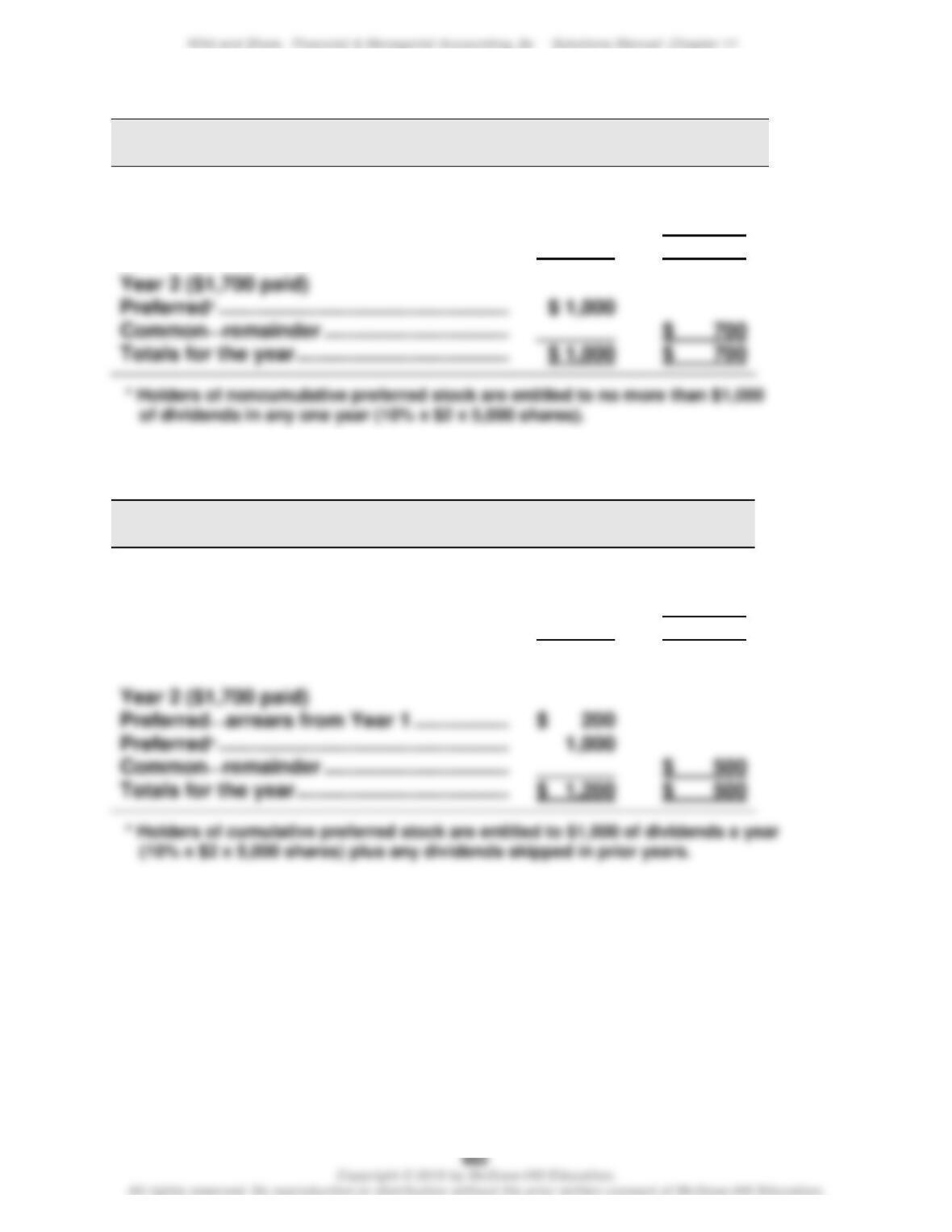
Total cash dividend …………………………………………………………………
$110,000
To preferred shareholders ……………………………………………………….
64,000*
Quick Study 11–13 (30 minutes)
Noncumulative
Preferred
Common
Year 1 ($800 paid)
Preferred* ………………………………………………
$ 800
Common⎯remainder ……………………………..
_______
$ 0
Totals for the year ………………………………….
$ 800
$ 0
Year 2 ($1,700 paid)
Preferred* ………………………………………………
Common⎯remainder ……………………………..
_______
$ 700
Quick Study 11–14 (20 minutes)
Cumulative
Preferred
Common
Year 1 ($800 paid)
Preferred* ………………………………………………
$ 800
Common⎯remainder ……………………………..
_______
$ 0
Totals for the year ………………………………….
$ 800
$ 0
($200 in preferred stock dividends in arrears [$1,000-$800].)
Year 2 ($1,700 paid)
Preferred⎯arrears from Year 1 ……………….
$ 200
Preferred* ………………………………………………
Common⎯remainder ……………………………..
_______
$ 500
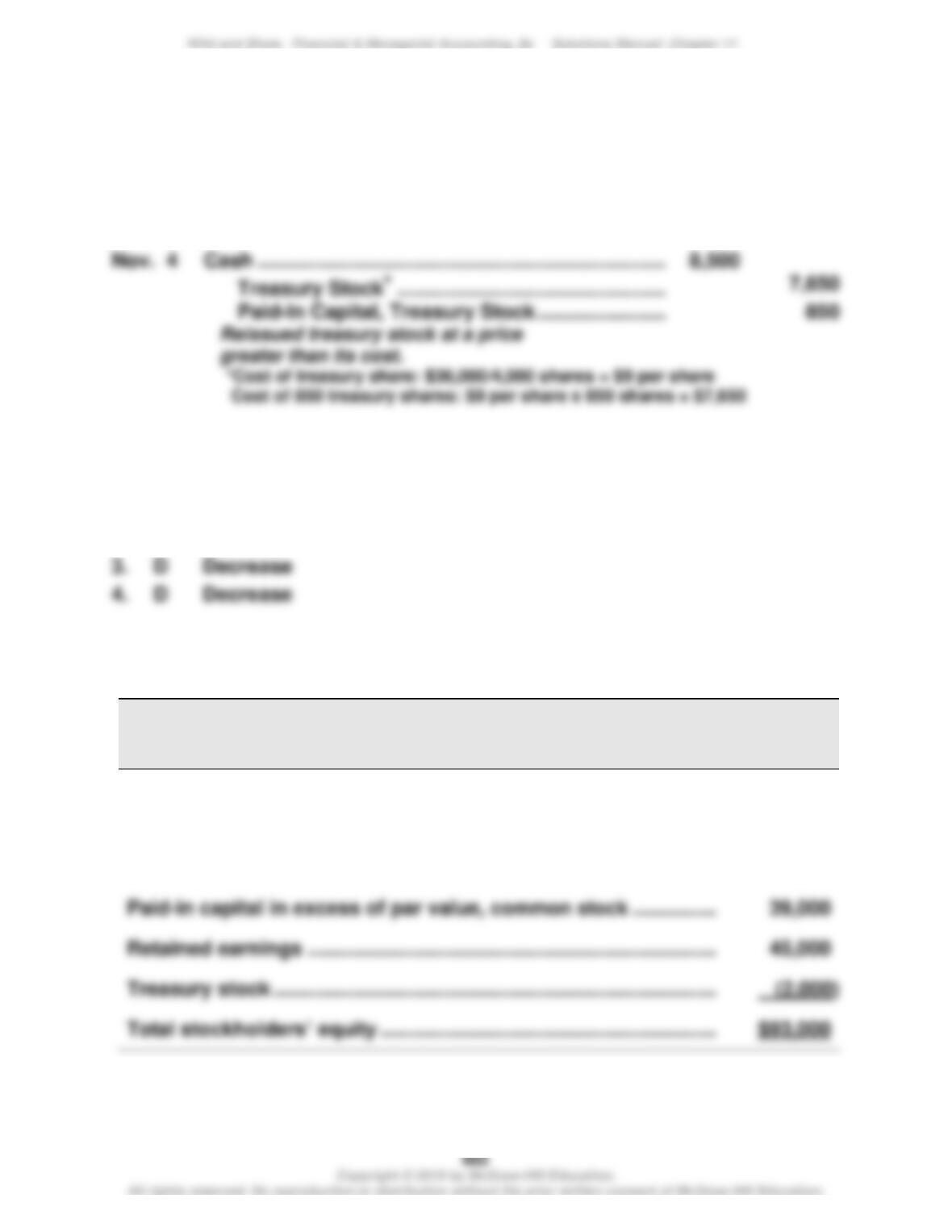
Quick Study 11-15 (10 minutes)
May 3
Treasury Stock (4,000 shares) …………………………..
36,000
Cash ………………………………………………………………..
36,000
Purchased treasury stock
($36,000 / 4,000 shares = $9 per share cost).
Paid-In Capital, Treasury Stock …………………………
Reissued treasury stock at a price
Quick Study 11-16 (10 minutes)
1. NE No Effect
2. I Increase
Quick Study 11-17 (15 minutes)
WESTWORLD INC.
Stockholders’ Equity Section of Balance Sheet
December 31
Preferred stock ……………………………………………………………………
$ 7,000
Paid-in capital in excess of par value, preferred stock……………
3,000
Common stock …………………………………………………………………….
1,000
Paid-in capital in excess of par value, common stock ……………
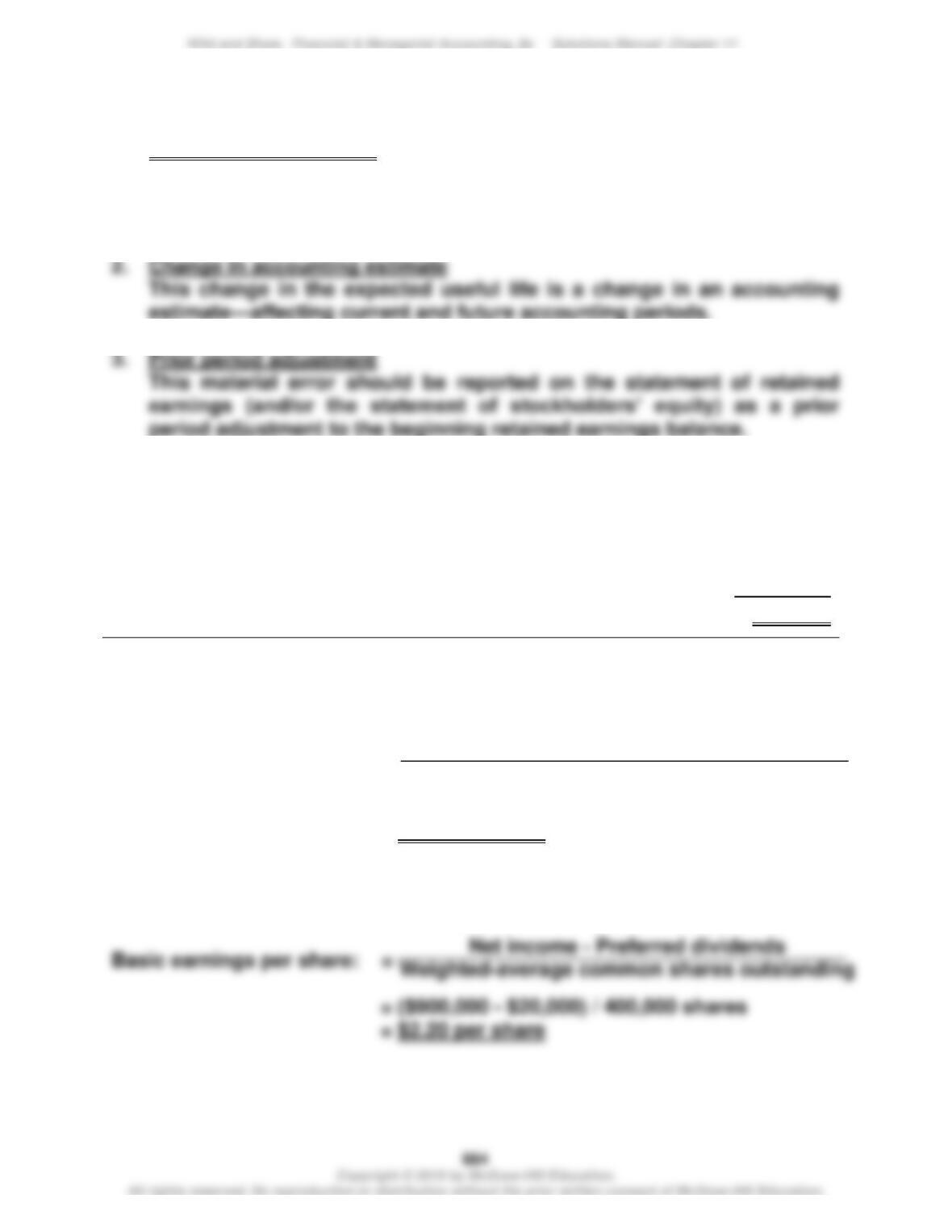
Quick Study 11-18 (10 minutes)
1. Prior period adjustment
This material error should be reported on the statement of retained
earnings (and/or the statement of stockholders’ equity) as a prior
period adjustment to the beginning retained earnings balance.
Quick Study 11-19 (10 minutes)
Beginning retained earnings …………………………………………………
$ 20,000
Net income …………………………………………………………………………..
30,000
Cash dividends …………………………………………………………………….
(17,000)
Ending retained earnings ……………………………………………………..
$ 33,000
Quick Study 11–20 (10 minutes)
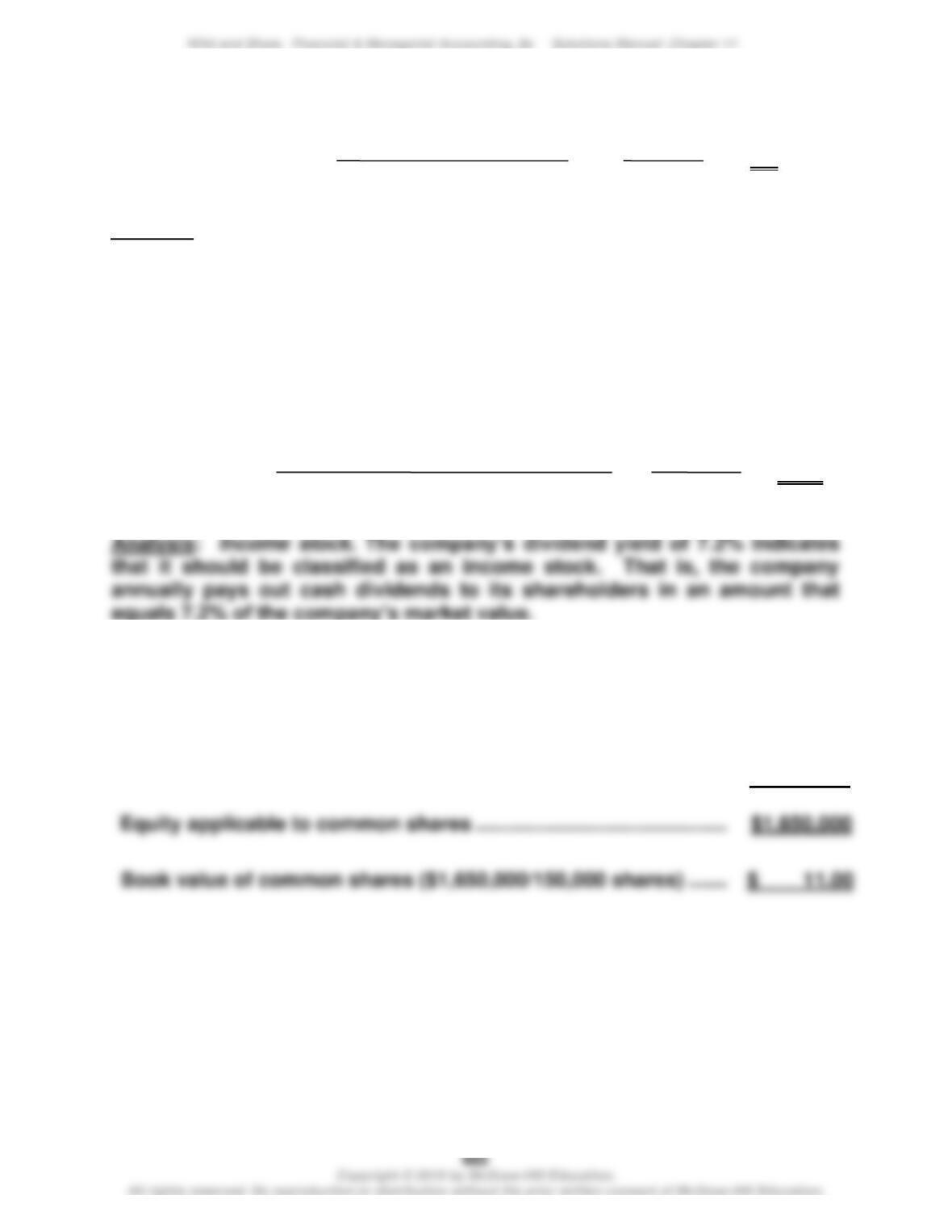
Basic earnings per share: =
= ($770,000 – $0) / 280,000 shares
= $2.75 per share
Quick Study 11–21 (10 minutes)
Net income – Preferred dividends
Weighted-average common shares outstanding
Net income – Preferred dividends
Weighted-average common shares outstanding
Quick Study 11–22 (10 minutes)
Price-earnings ratio = = = 5.2
Analysis: Competitor. The stock with a PE of 5.2 is lower than its
competitor’s PE of 9.5. This means the market has a higher expectation of
future performance for the competitor. (Instructor note: This is a good
point at which to emphasize that PE is based on expectations—
expectations can prove to be higher or lower than actual results.)
Quick Study 11–23 (10 minutes)
Dividend yield = = = 7.2%
Quick Study 11–24 (10 minutes)
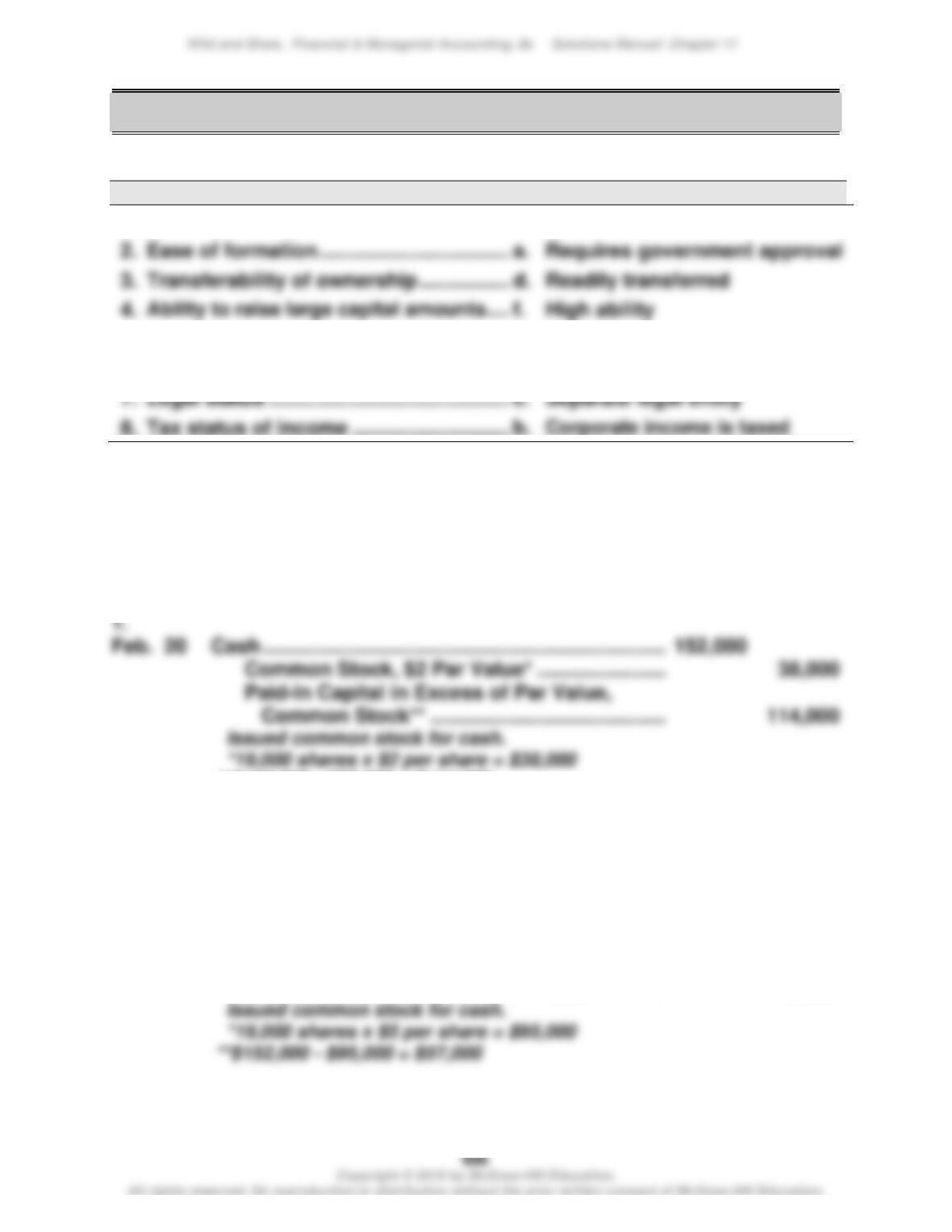
Total stockholders’ equity ……………………………………………………….
$1,850,000
Less equity attributable to preferred shares ………………………………
200,000
$1,650,000
Market value per share
Earnings per share
$20.54
$3.95
$2.34
$32.50
Annual cash dividends per share
Market value per share
EXERCISES
Exercise 11-1 (15 minutes)
Characteristic
Corporations
1.
Owner authority and control ………………….
e. One vote per share
2.
a. Requires government approval
3.
Transferability of ownership ………………….
d. Readily transferred
4.
5.
Duration of life ………………………………………
g. Unlimited
6.
Owner liability ……………………………………….
h. Limited
7.
c. Separate legal entity
Exercise 11-2 (15 minutes)
Violations: 1, 3, and 4
Exercise 11-3 (15 minutes)
Feb. 20
Cash ………………………………………………………………..
152,000
Common Stock, $2 Par Value* …………………….
38,000
Common Stock** ……………………………………..
114,000
**$152,000 – $38,000 = $114,000
2.
Feb. 20
Cash ………………………………………………………………..
152,000
Common Stock, No-Par Value ……………………..
152,000
Issued common stock for cash.
3.
Feb. 20
Cash ………………………………………………………………..
152,000
Common Stock, $5 Stated Value* ………………..
95,000
Paid-In Capital in Excess of Stated Value,
Common Stock** ……………………………………..
57,000
**$152,000 – $95,000 = $57,000
Exercise 11-4 (15 minutes)
1.
Cash ……………………………………………………………………….
35,000
Common Stock, $5 Par Value* …………………………….
20,000
Paid-In Capital in Excess of Par Value,
Common Stock** ……………………………………………..
15,000
Issued common stock for cash.
*4,000 shares x $5 per share = $20,000
**$35,000 – $20,000 = $15,000
2.
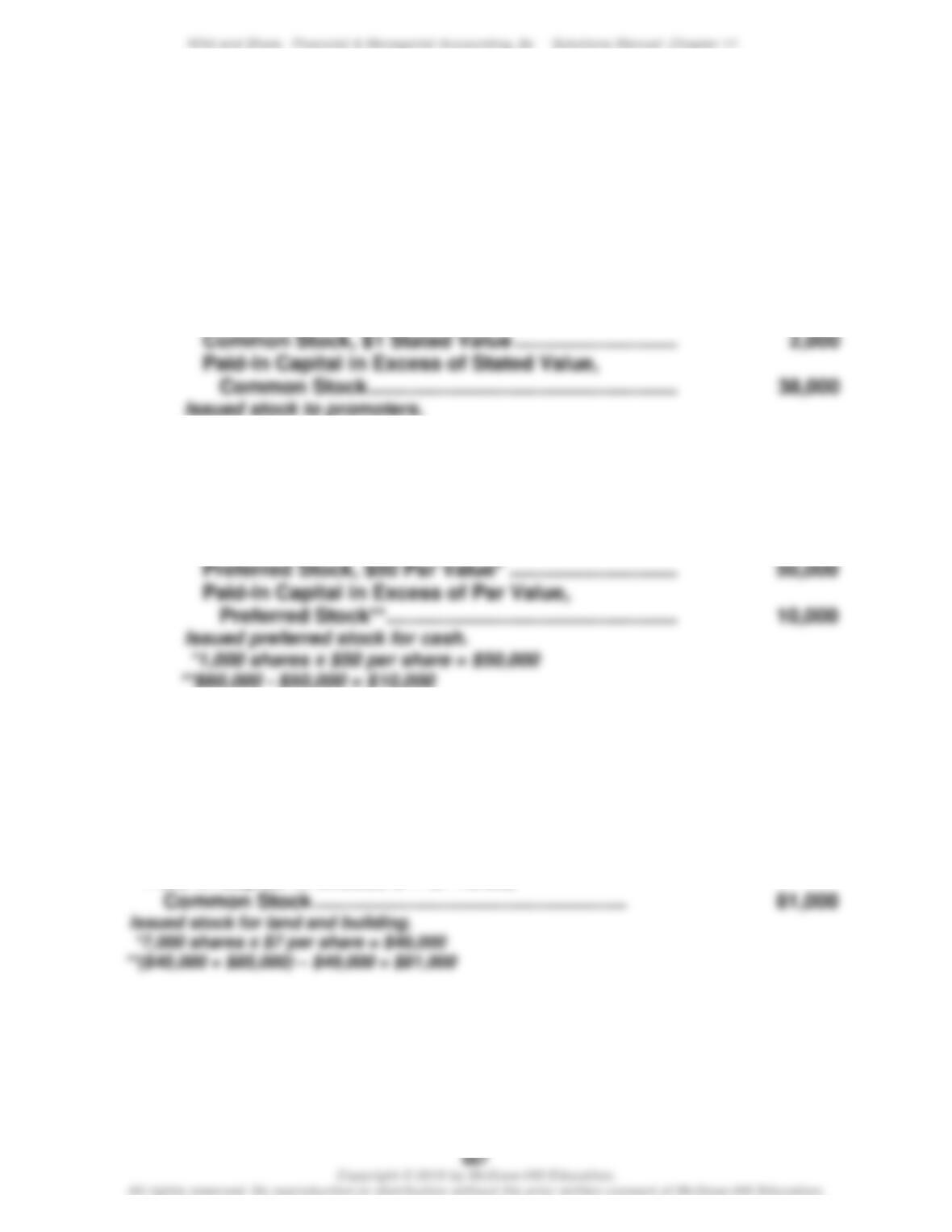
Organization Expenses ……………………………………………
40,000
Common Stock, $1 Stated Value …………………………
Common Stock ………………………………………………..
38,000
Issued stock to promoters.
3.
Organization Expenses ……………………………………………
40,000
Common Stock, No-Par Value …………………………….
40,000
Issued stock to promoters.
4.
Cash ………………………………………………………………………..
60,000
Preferred Stock, $50 Par Value* …………………………..
50,000
Preferred Stock**………………………………………………
10,000
Exercise 11-5 (15 minutes)
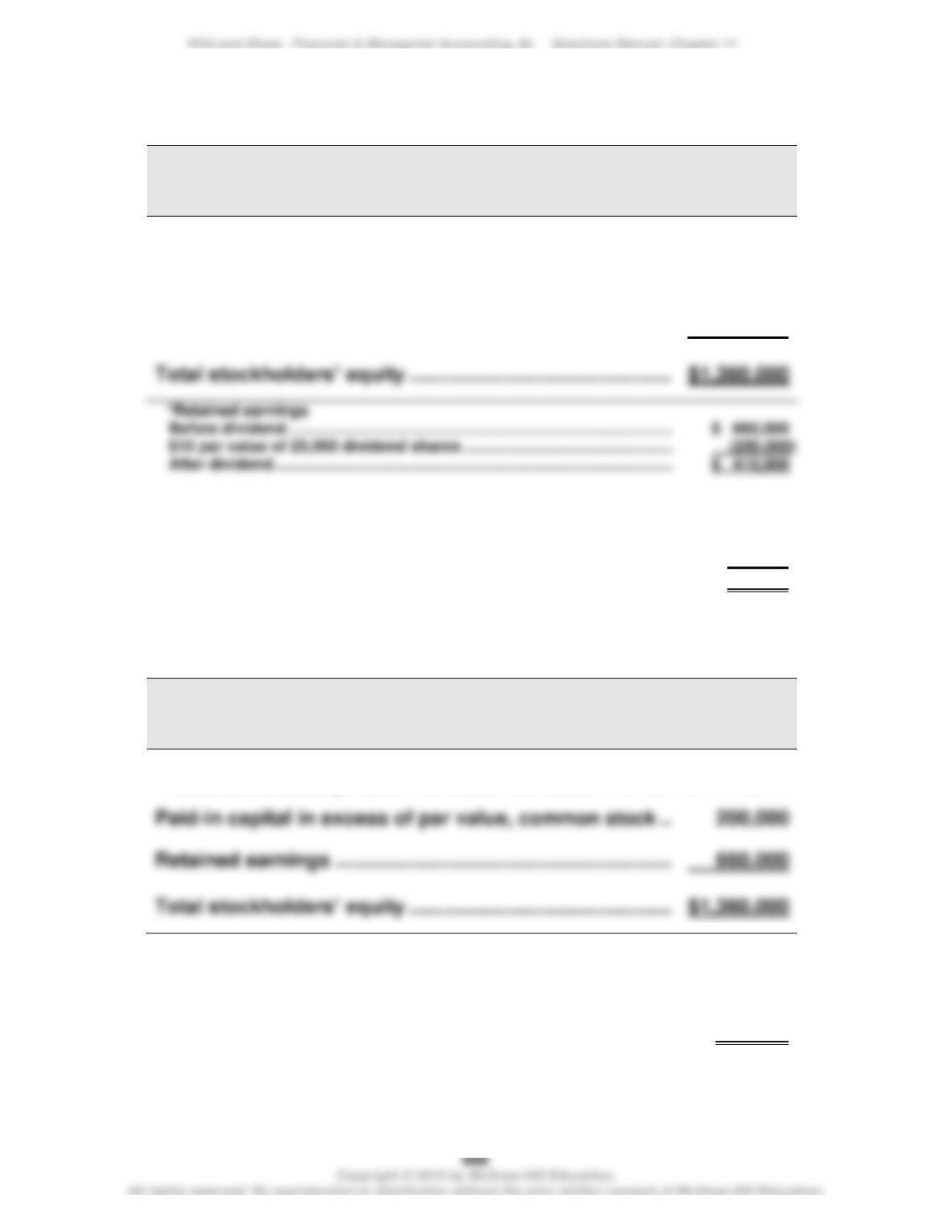
Land ……………………………………………………………………….
45,000
Building ………………………………………………………………….
85,000
Common Stock, $7 Par Value* …………………………....
49,000
Paid-In Capital in Excess of Par Value,
Exercise 11-6 (20 minutes)
1.
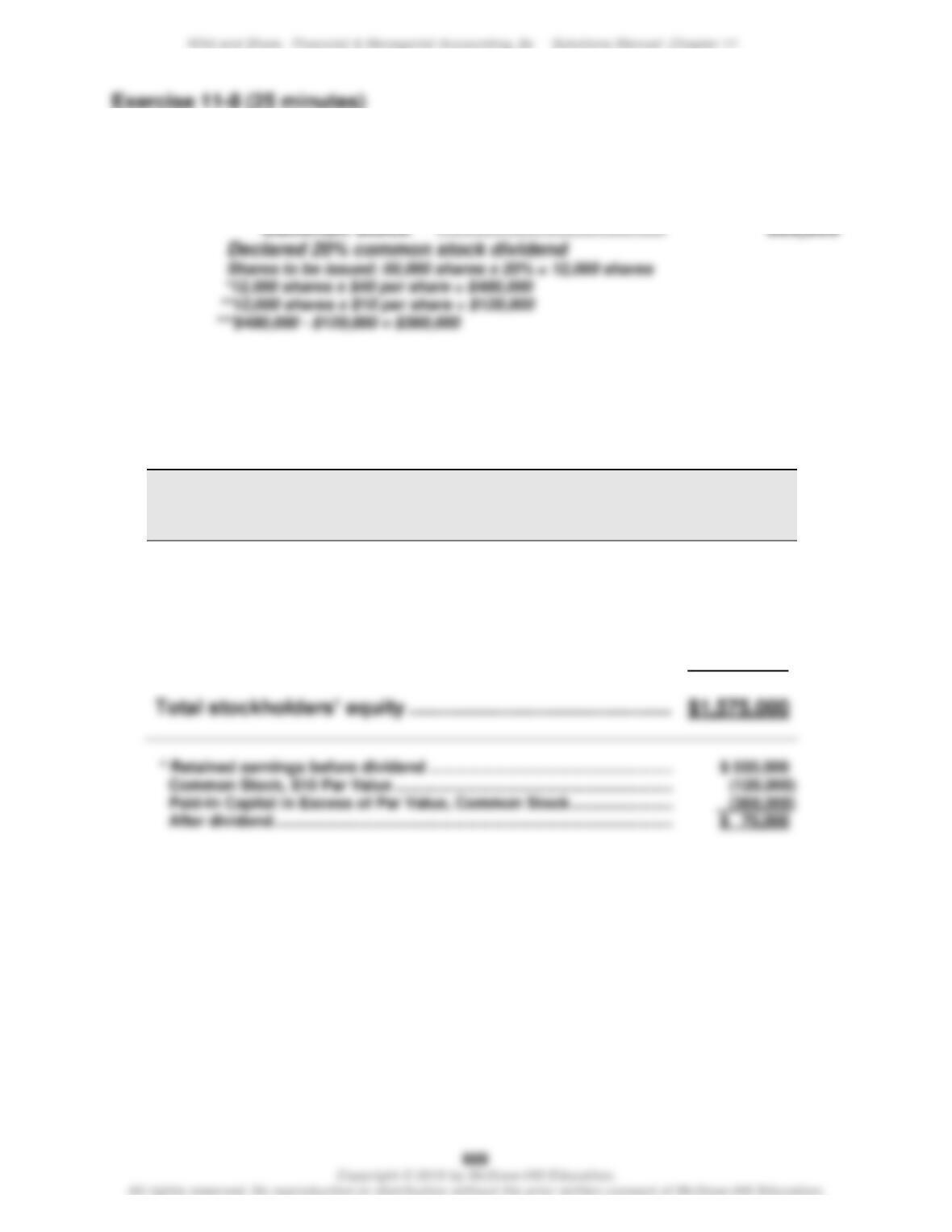
SHARPER CORPORATION
Stockholders’ Equity Section of the Balance Sheet
June 30
Common stock⎯$10 par value, 75,000 shares issued and
outstanding ………………………………………………………………………
$ 750,000
Paid-in capital in excess of par value, common stock …
200,000
Retained earnings* ……………………………………………………
410,000
2. Number of outstanding shares
Outstanding shares before the dividend ………………………..
50,000
Dividend shares (50,000 x 50%) ………………………………………….
25,000
Outstanding shares after the dividend …………………………..
75,000
Exercise 11-7 (15 minutes)
1.
SHARPER CORPORATION
Stockholders’ Equity Section of the Balance Sheet
June 30
Common stock⎯$3.33 (rounded) par value, 150,000 shares
issued and outstanding ……………………………………………………….
$ 500,000
Paid-in capital in excess of par value, common stock …
2. Number of outstanding shares
Outstanding shares before the split…………………………..
50,000
x 3–for-1 stock split
Outstanding shares after the split (50,000 x 3) …………………
150,000
1.
Feb. 5
Retained Earnings* ………………………………………………..
480,000
Common Stock Dividend Distributable** …………..
120,000
Paid-In Capital in Excess of Par Value,
Feb. 28
Common Stock Dividend Distributable …………………..
120,000
Common Stock, $10 Par Value ………………………….
120,000
Distributed common stock dividend.
2.
TVX COMPANY
Stockholders’ Equity Section of the Balance Sheet
February 28
Common stock⎯$10 par value, 150,000 shares authorized,
72,000 shares issued and outstanding ……………………………………….
$ 720,000
Paid-in capital in excess of par value, common stock …
785,000
Retained earnings* ……………………………………………………
70,000
Exercise 11-9 (10 minutes)
1.
A
2.
D
3.
C
4.
B
Exercise 11–10 (30 minutes)
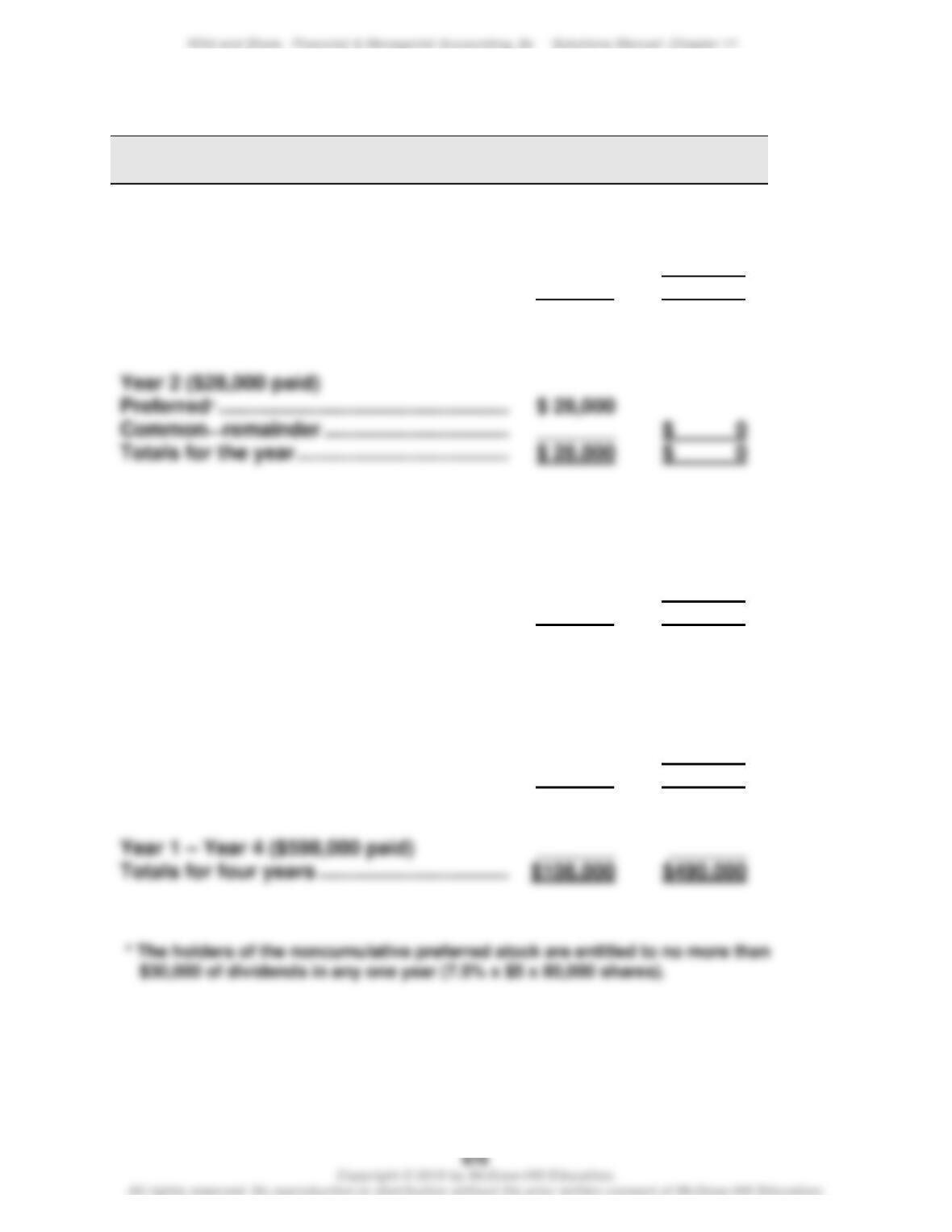
Non-Cumulative
Preferred
Common
Year 1 ($20,000 paid)
Preferred* ………………………………………………
$ 20,000
Common⎯remainder ……………………………..
_______
$ 0
Totals for the year ………………………………….
$ 20,000
$ 0
Preferred* ………………………………………………
$ 28,000
Common⎯remainder ……………………………..
_______
$ 0
Totals for the year ………………………………….
$ 28,000
$ 0
Year 3 ($200,000 paid)
Preferred* ………………………………………………
$ 30,000
Common⎯remainder ……………………………..
_______
$170,000
Totals for the year ………………………………….
$ 30,000
$170,000
Year 4 ($350,000 paid)
Preferred* ………………………………………………
$ 30,000
Common⎯remainder ……………………………..
_______
$320,000
Totals for the year ………………………………….
$ 30,000
$320,000
_______
Exercise 11–11 (25 minutes)
Cumulative
Preferred
Common
Year 1 ($20,000 paid)
Preferred* ………………………………………………
$ 20,000
Common⎯remainder ……………………………..
_______
$ 0
Totals for the year ………………………………….
$ 20,000
$ 0
(Note: $10,000 in preferred stock dividends in arrears.)
Preferred⎯arrears from Year 1 ……………….
$ 10,000
Preferred* ………………………………………………
18,000
Common⎯remainder ……………………………..
_______
$ 0
Totals for the year ………………………………….
$ 28,000
$ 0
Year 3 ($200,000 paid)
Preferred⎯arrears from Year 2 ……………….
$ 12,000
Preferred* ………………………………………………
30,000
Common⎯remainder ……………………………..
_______
$158,000
Totals for the year ………………………………….
$ 42,000
$158,000
(Note: $0 in preferred stock dividends in arrears.)
Year 4 ($350,000 paid)
Preferred* ………………………………………………
$ 30,000
Common⎯remainder ……………………………..
_______
$320,000
Totals for the year ………………………………….
$ 30,000
$320,000
(Note: $0 in preferred stock dividends in arrears.)
_______
Exercise 11-12 (25 minutes)
1. (a)
Oct. 11
Treasury Stock (5,000 x $25) …………………………..
125,000
Cash ………………………………………………………………..
125,000
Purchased treasury stock.
(b)
Nov. 1
Cash (1,000 x $31) …………………………………………………
31,000
Treasury Stock (1,000 x $25) …………………………..
25,000
Paid-In Capital, Treasury Stock …………………………
6,000
Reissued treasury stock at a price exceeding cost.
Cash (4,000 x $20) …………………………………………………
80,000
Retained Earnings …………………………………………………
14,000
Treasury Stock (4,000 x $25) …………………………..
100,000
Reissued treasury stock at a price less than cost.
2. Revised equity section appears as follows
Common stock⎯$10 par value; 72,000 shares authorized
and issued; 5,000 shares in treasury ……………………………………
$ 720,000
Paid-in capital in excess of par value, Common stock ……………..
216,000
Retained earnings, $125,000 restricted by treasury stock ………..
864,000
Less cost of treasury stock …………………………………………………….
(125,000)
Total stockholders’ equity ………………………………………………………
$1,675,000
Explanation of Changes:
(i) The common stock account description line will change. After the treasury stock
purchase, it should read:
Common stock⎯$10 par value; 72,000 shares authorized and issued;
5,000 shares in treasury …………………………………………………………………………….
$720,000
The dollar balance of this account does not change with a treasury stock purchase.
Exercise 11-13 (20 minutes)
DRACO CORPORATION
Stockholders’ Equity Section of the Balance Sheet
December 31
Preferred stock⎯$10 par value; 3,000 shares authorized;
1,000 shares issued and outstanding…………………………………..
$ 10,000
Paid-in capital in excess of par value, preferred stock …………….
13,000
Common stock⎯$2 par value, 20,000 shares
authorized, 4,000 shares issued; 200 shares in treasury ………
8,000
Paid-in capital in excess of par value, common stock ……………..
64,000
Exercise 11-14 (10 minutes)
Retained earnings, Dec. 31, 2018, as previously reported ………
$ 60,000
Prior period adjustment ………………………………………………………..
12,000
Retained earnings, Dec. 31, 2018, as adjusted ……………………….
72,000
Net income …………………………………………………………………………..
Exercise 11-15 (15 minutes)
Amos Company
Statement of Retained Earnings
For Year Ended December 31, 2019
Retained earnings, Dec. 31, 2018, as previously reported ………
$1,375,000
Prior period adjustment
Depreciation expense not recorded (net of tax benefit) ……….
($55,500)
Retained earnings, Dec. 31, 2018, as adjusted ……………………….
1,319,500
Plus net income ……………………………………………………………………
126,000
Less dividends …………………………………………………………………….
Exercise 11-16 (25 minutes)
1. Net income ………………………………………………………………………….
$2,700,000
Less preferred dividends ……………………………………………………
(388,020)
Net income available to common stockholders …………………..
$2,311,980
2. Net income available to common stockholders …………………..