Chapter 11 – Flexible Budgeting and Analysis of Overhead Costs
CHAPTER 11
Flexible Budgeting and Analysis of Overhead
Costs
ANSWERS TO REVIEW QUESTIONS
11-2 The advantage of a flexible budget is that it is responsive to changes in the activity
11-3 Flexible overhead budgets are based on an input activity measure, such as process
time, in order to provide a meaningful measure of production activity. An output
11-4 A columnar flexible budget has several columns listing the budgeted levels of cost at
different levels of activity. Each column is based on a different activity level. A
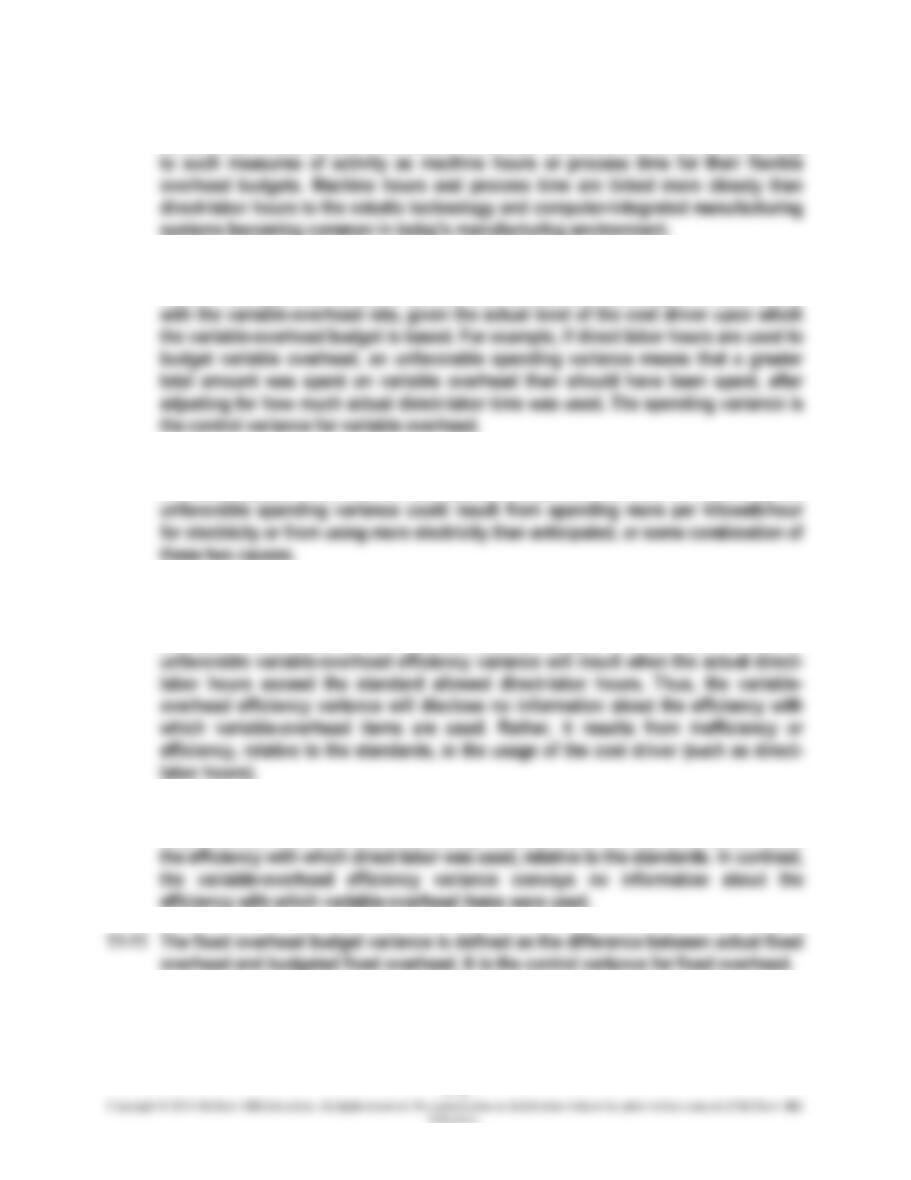
11-5 Production overhead is added to Work-in-Process Inventory under standard costing
as shown in the following T-accounts:
Work-in-Process Inventory
Production Overhead
X *
X *
*The amount of X is the following:
allowed standard
nedpredetermi
Chapter 11 – Flexible Budgeting and Analysis of Overhead Costs
11-6 Advances in manufacturing technology have resulted in a shift from variable toward
fixed costs. In addition, as automation increases, more and more firms are switching
11-7 The interpretation of the variable-overhead spending variance is that a different total
amount was spent on variable overhead than should have been spent in accordance
11-8 An unfavorable variable-overhead spending variance does not necessarily imply that
the company paid more than the anticipated rate per kilowatt-hour for electricity. An
11-9 The interpretation of the variable-overhead efficiency variance is related to the
efficiency in using the activity upon which variable overhead is budgeted. For
example, if the basis for the variable-overhead budget is direct-labor hours, an
11–10 The interpretations of the direct-labor and variable-overhead efficiency variances are
very different. The direct-labor efficiency variance does convey information about
Chapter 11 – Flexible Budgeting and Analysis of Overhead Costs
11–12 The fixed-overhead volume variance is the difference between budgeted fixed
overhead and applied fixed overhead. The best interpretation for this variance is a
means of reconciling two disparate purposes of the standard-costing system: the
11–13 A common but misleading interpretation of the fixed-overhead volume variance is
that it is a measure of the cost of underutilizing or overutilizing production capacity.
For example, when budgeted fixed overhead exceeds applied fixed overhead, the
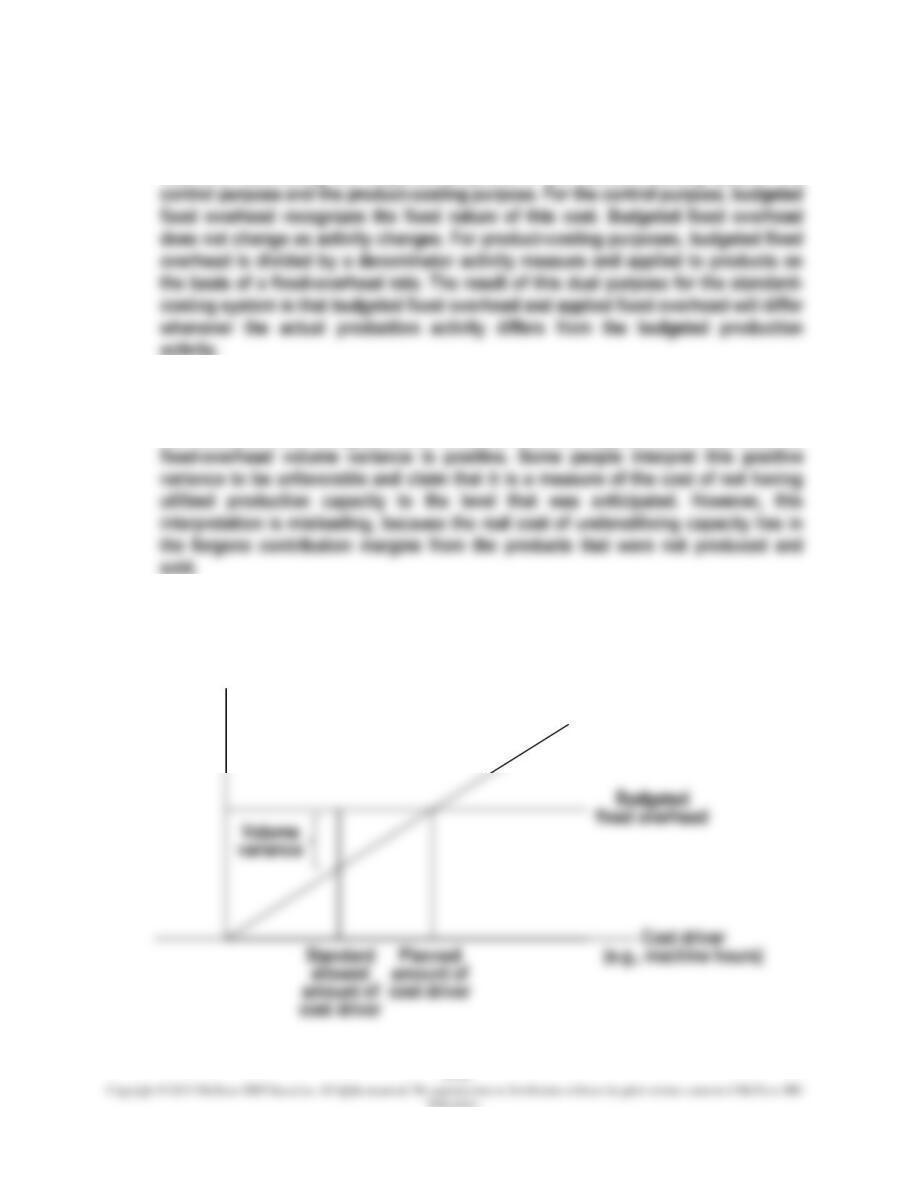
11–14 The following graph depicts budgeted and applied fixed overhead and displays an
unfavorable (positive) volume variance.
Fixed overhead
Applied fixed
overhead
11–15 All kinds of organizations use flexible budgets, including manufacturing firms, retail
11–16 The conceptual problem in applying fixed production overhead as a product cost is
that this procedure treats fixed overhead as though it were a variable cost. Fixed
overhead is applied as a product cost by multiplying the fixed overhead rate by the
11–17 The control purpose of a standard-costing system is to provide benchmarks against
which to compare actual costs. Then management by exception is used to follow up
11–18 Fixed-overhead costs sometimes are called capacity-producing costs because they
are the costs incurred in order to generate a place and environment in which
Chapter 11 – Flexible Budgeting and Analysis of Overhead Costs
11–19 The following graph depicts budgeted and applied variable overhead. Budgeted and
applied variable overhead are represented by the same line because variable
overhead is a variable cost. Both budgeted and applied variable overhead increase
11–20 Plausible activity bases for a variety of organizations to use in flexible budgeting are
as follows:
11–21 Conventional flexible budgets typically are based on a single cost driver, such as
direct-labor hours or machine hours. Costs are categorized as variable or fixed. The
Chapter 11 – Flexible Budgeting and Analysis of Overhead Costs
SOLUTIONS TO EXERCISES
EXERCISE 11-22 (20 MINUTES)
1.
Calculation of overhead variances:
a.
Variable-overhead spending variance
=
actual variable overhead – (AQ
SVR)
=
$607,500 – (60,750 machine hrs $9.00)
=
$60,750 U
b.
Variable-overhead efficiency variance
=
$60,750 U
c.
Fixed-overhead budget variance
=
actual fixed overhead – budgeted fixed overhead
=
$3,000 U
d.
Fixed-overhead volume variance
=
budgeted fixed overhead – applied fixed overhead
=
$18,000 U**
†Applied fixed overhead
=
(MH) hours machine
allowed standard
rate overhead
fixed nedpredetermi
=
$162,000
** Some accountants would designate a positive volume variance as “unfavorable.”
EXERCISE 11-23 (15 MINUTES)
Variable-overhead spending variance
=
=
$210,000 U
Variable-overhead efficiency variance
=
$60,000 F
*SQ = 56,000 units 5 direct-labor hours per unit
Fixed-overhead budget variance
=
actual fixed overhead – budgeted fixed overhead
=
$225,000 U
Fixed-overhead volume variance
=
budgeted fixed overhead – applied fixed overhead
=
$360,000 U†
Chapter 11 – Flexible Budgeting and Analysis of Overhead Costs
EXERCISE 11-24 (10 MINUTES)
1.
Product
Std Direct
Labor Hrs/Unit
Number
of Units
Total Std Direct
Labor Hours
Field …………………………………………..
4
300
1,200
Professional ……………………………….
6
400
2,400
The total standard allowed direct-labor hours in May is 3,600 hours.
2.
variable-overhead costs would be expected.
Basing the flexible budget on the number of binoculars produced would not be
meaningful. Production of 700 binoculars could mean 100 field models and 600
Chapter 11 – Flexible Budgeting and Analysis of Overhead Costs
EXERCISE 11-25 (20 MINUTES)
1.
Variable-overhead spending variance
=
actual variable overhead – (AQ
SVR)
=
$60,000 U
2.
Variable-overhead efficiency variance
=
SVR(AQ – SQ)
=
$180,000 U
3.
Fixed-overhead budget variance
=
actual fixed overhead – budgeted fixed overhead
=
$9,000 F
4.
Fixed-overhead volume variance
=
budgeted fixed overhead – applied fixed overhead
=
$60,000 U**
†Applied fixed overhead
=
hours labordirect
allowed standard
rate overhead
fixed nedpredetermi
=
$240,000
** Some accountants would designate a positive volume variance as “unfavorable.”
EXERCISE 11-26 (40 MINUTES)
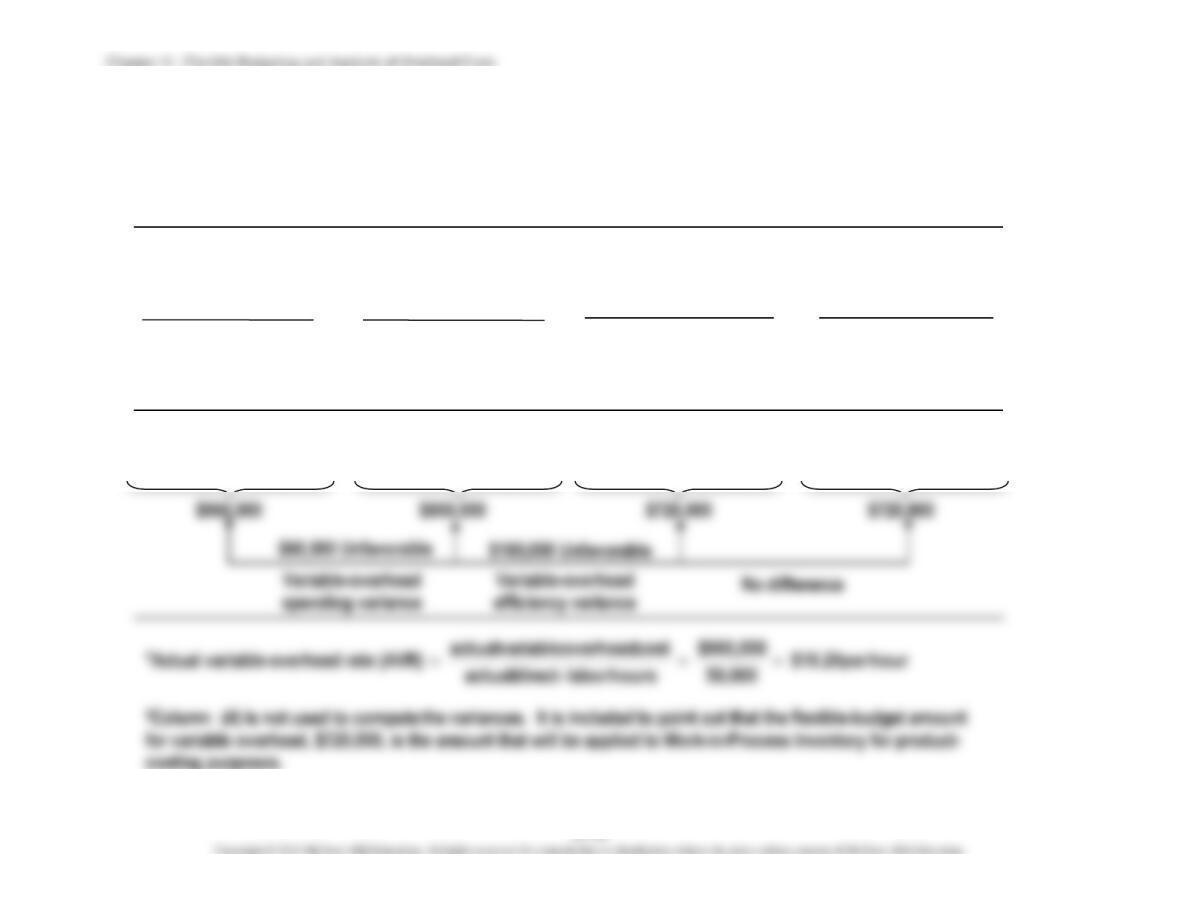
1.
Variable overhead variances:
VARIABLE-OVERHEAD SPENDING AND EFFICIENCY VARIANCES
(Hours = Direct-Labor Hours)
Actual
Hours
(AQ)
Actual
Rate
(AVR)
Actual
Hours
(AQ)
Standard
Rate
(SVR)
Standard
Rate
(SVR)
Standard
Rate
(SVR)
Standard
Allowed
Hours
(SQ)
Standard
Allowed
Hours
(SQ)
50,000
hours
50,000
hours
40,000
hours
40,000
hours
$19.20
per
hour*
$18.00
per
hour
$18.00
per
hour
$18.00
per
hour
x
x
x
x
x
x
x
x
FLEXIBLE BUDGET:
VARIABLE OVERHEAD
ACTUAL VARIABLE
OVERHEAD
VARIABLE OVERHEAD
APPLIED TO
WORK-IN-PROCESS
(1)
(2)
(3)
(4)†
PROJECTED VARIABLE
OVERHEAD
EXERCISE 11-26 (CONTINUED)
2.
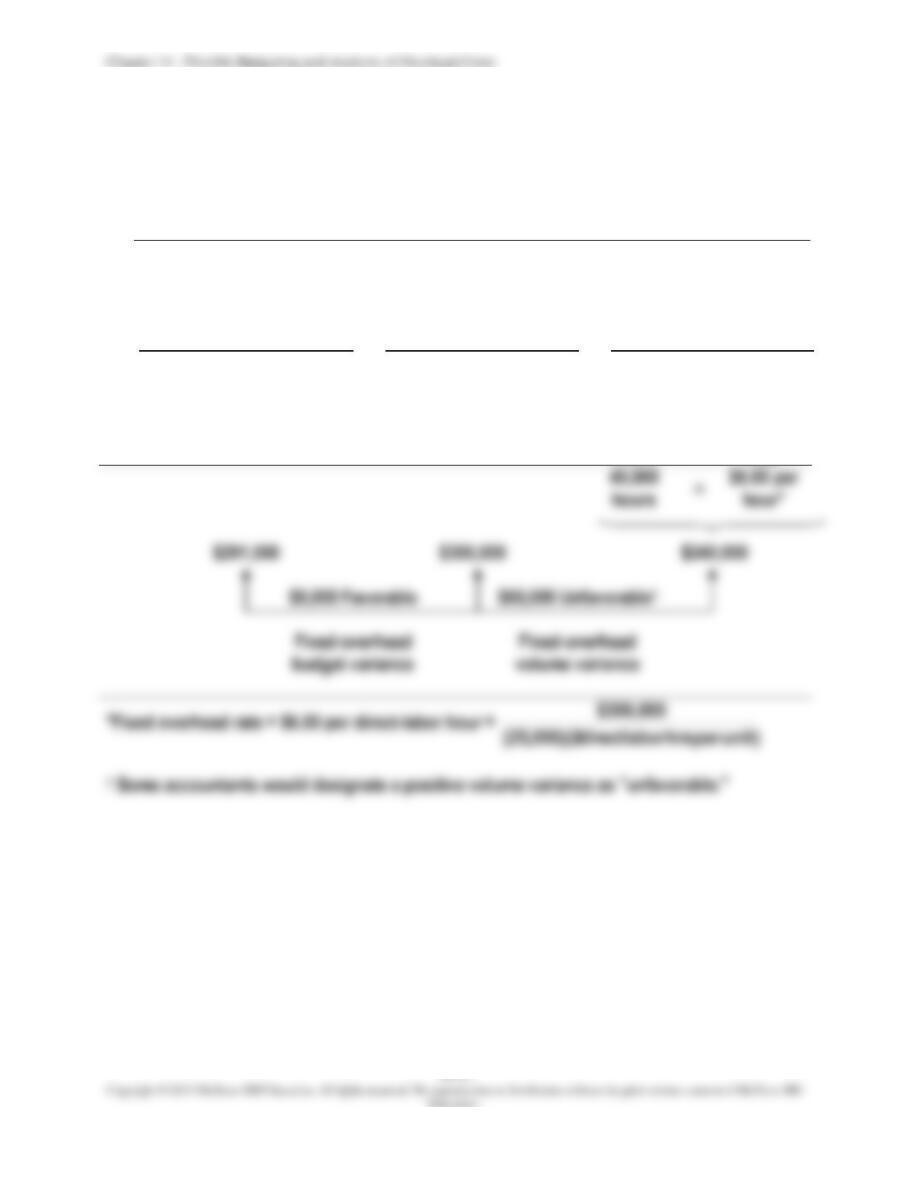
Fixed-overhead variances:
FIXED-OVERHEAD BUDGET AND VOLUME VARIANCES
(Hours = Direct-Labor Hours)
(1)
ACTUAL
FIXED
OVERHEAD
(2)
BUDGETED
FIXED
OVERHEAD
(3)
FIXED OVERHEAD
APPLIED TO
WORK IN PROCESS
Standard
Standard
Fixed-
Allowed
Overhead
Hours
Rate
$60,000 Unfavorable†
EXERCISE 11-27 (35 MINUTES)
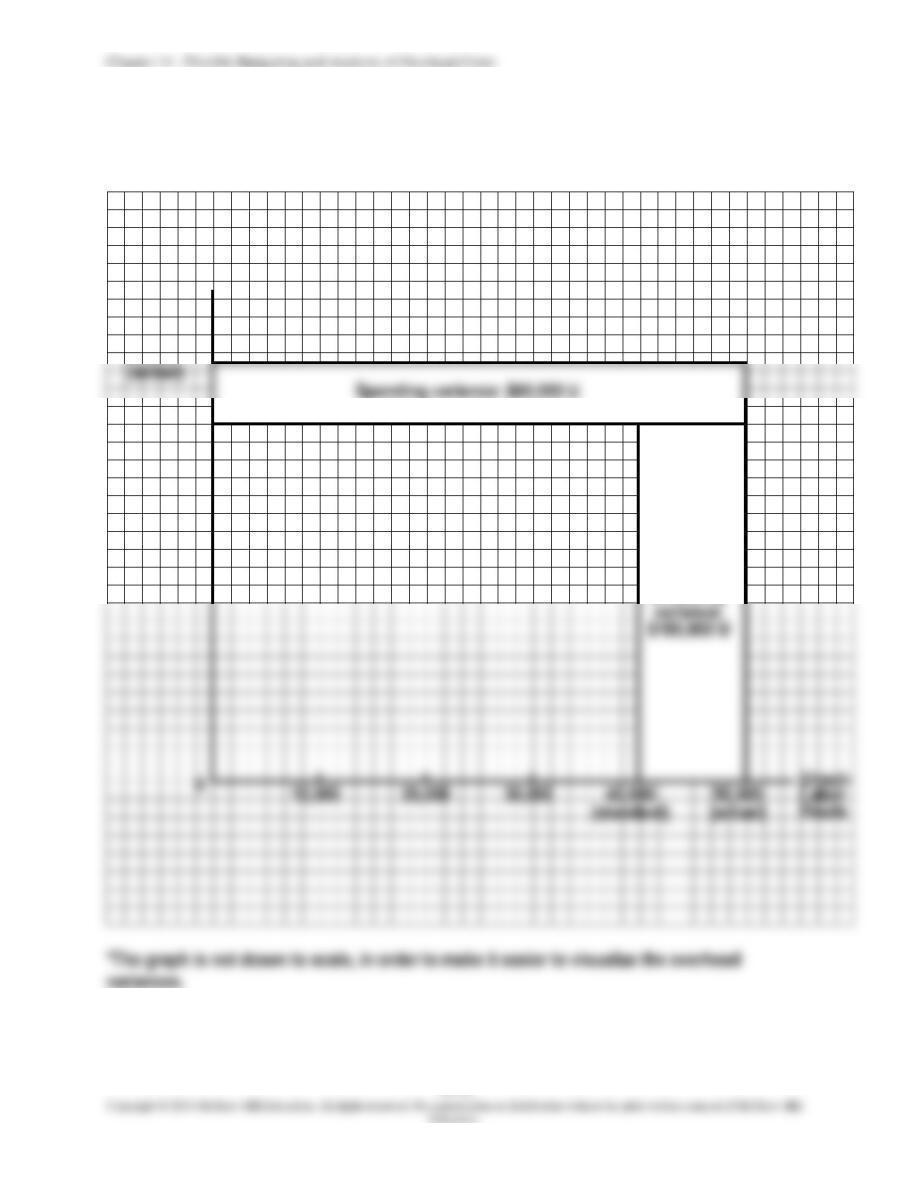
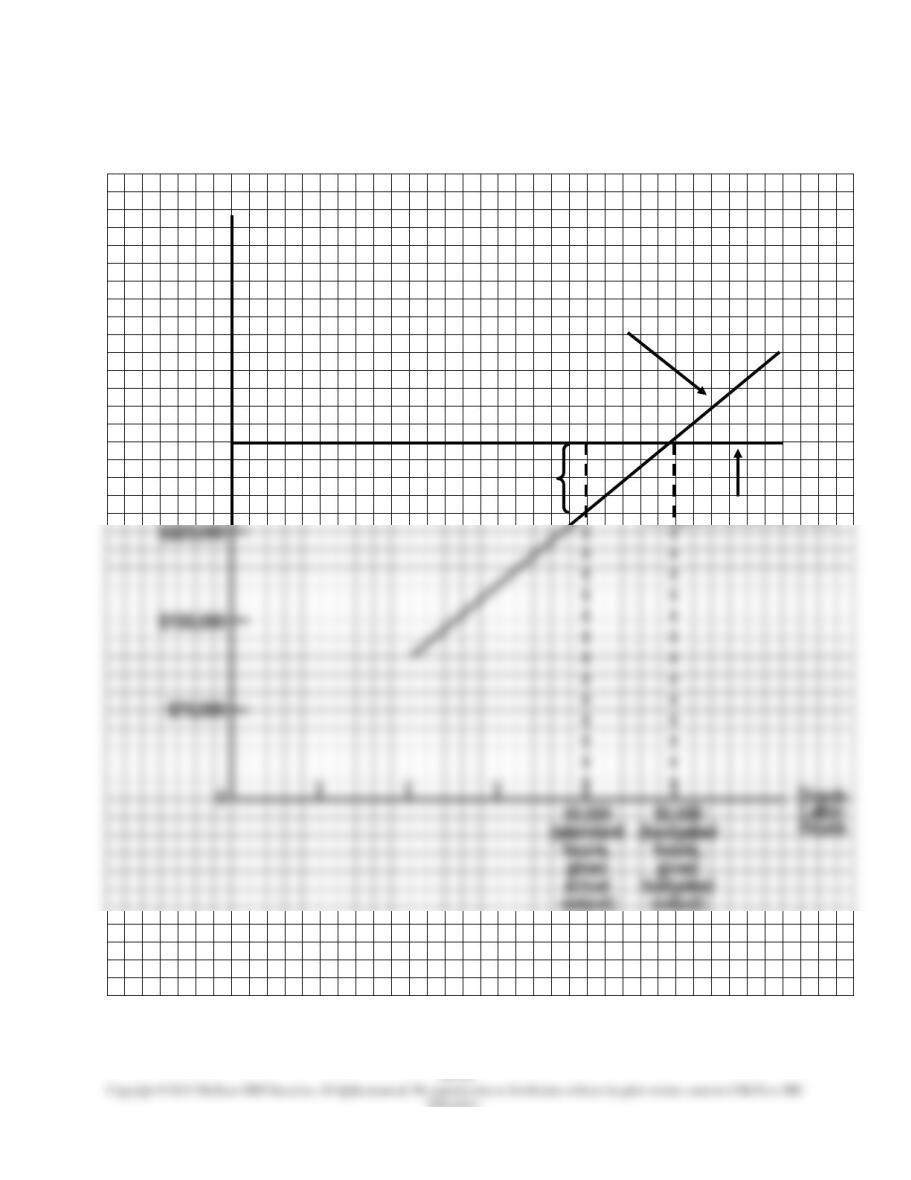
(a) Graphical analysis of variable-overhead variances*:
Rate
(actual)
Spending variance: $60,000 U
$19.20
$18.00
(standard)
Efficiency
Chapter 11 – Flexible Budgeting and Analysis of Overhead Costs
EXERCISE 11-27 (CONTINUED)
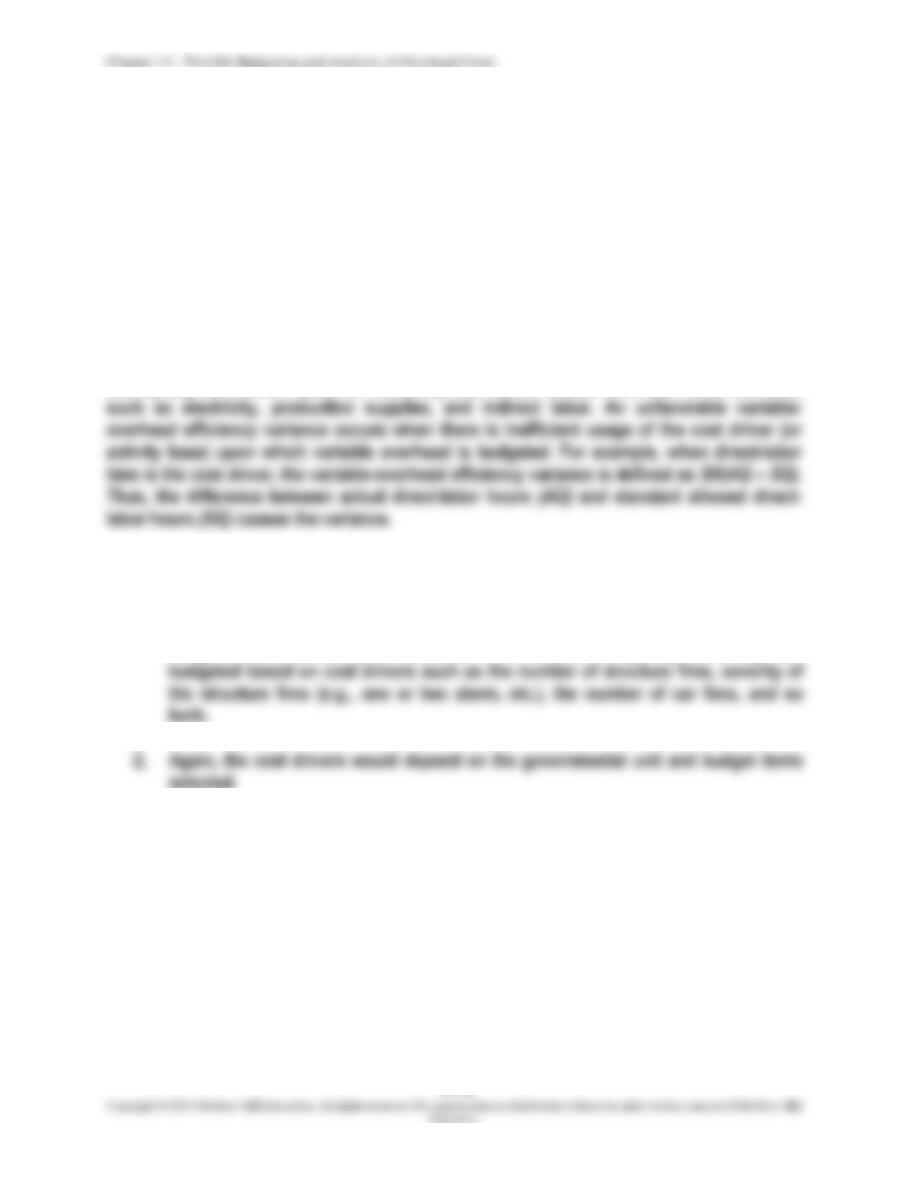
(b) Graphical analysis of budgeted versus applied fixed overhead:
$225,000
$150,000
Fixed overhead
Applied fixed overhead:
$6.00 per hour
Volume variance: $60,000
Budgeted fixed overhead
$300,000
EXERCISE 11-28 (15 MINUTES)
Memorandum
Date:
Today
To:
I. Makit, Production Supervisor
From:
I. M. Student, Controller
Subject:
Variable-overhead efficiency variance
The variable-overhead efficiency variance has a misleading name. This variance does not
convey any information about the efficiency with which variable overhead items are used,
EXERCISE 11-29 (30 MINUTES)
1. Answers will vary widely, depending on the governmental unit selected and the
budget items selected by the student. For example, fire fighting costs might be
Chapter 11 – Flexible Budgeting and Analysis of Overhead Costs
EXERCISE 11-30 (10 MINUTES)
1.
Flexible budgeted amounts, using activity-based flexible budget:
a.
Indirect material: $33,000 ($18,000 + $3,000 + $3,000 + $9,000)
Total overhead cost: $64,800 ($45,000 + $7,800 + $2,400 + $3,000 + $6,600)
2.
Variance for setup cost:
a.
Using the conventional flexible budget: $500 U (actual cost minus flexible budget
Using the activity-based flexible budget: $1,000 F (actual cost minus flexible
EXERCISE 11-31 (45 MINUTES)
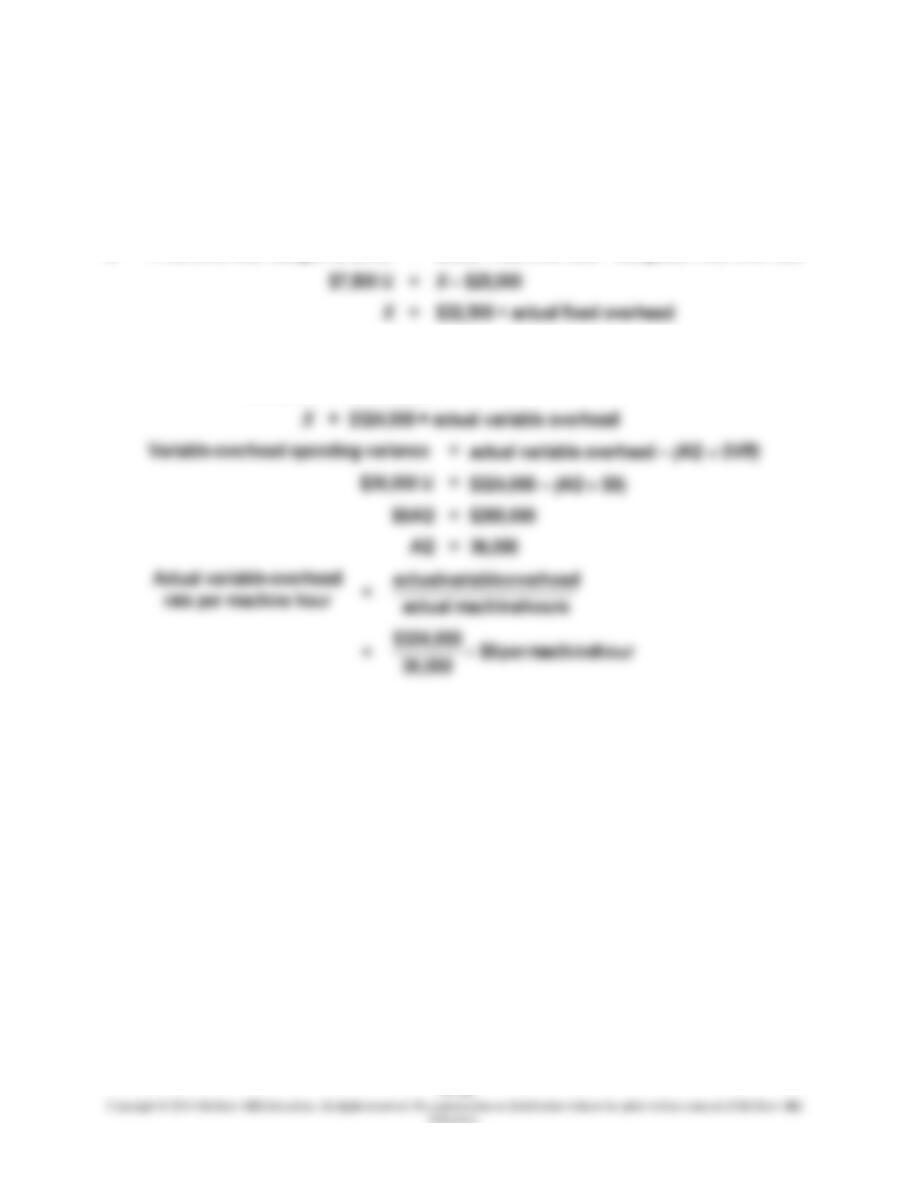
Budgeted fixed overhead ……………………………………………………………………………..
$ 25,000
Actual fixed overhead ………………………………………………………………………………….
$ 32,500a
Budgeted production in units ……………………………………………………….
12,500
Actual production in units ……………………………………………………….
12,000c
Standard machine hours per unit of output …………………………………………………..
4 hours
Standard variable-overhead rate per machine hour …………………………..
$8.00
Actual variable-overhead rate per machine hour …………………………..
$9.00b
Actual machine hours per unit of output ……………………………………………………….
3d
Variable-overhead spending variance ……………………………………………………….
$ 36,000 U
Variable-overhead efficiency variance ……………………………………………………….
$ 96,000 F
Fixed-overhead budget variance ……………………………………………………….
$ 7,500 U
Fixed-overhead volume variance ……………………………………………………….
$ 1,000g U*
Total actual overhead …………………………………………………………………………………..
Total budgeted overhead (flexible budget) …………………………………………………….
$409,000e
Total budgeted overhead (static budget) ……………………………………………………….
Total applied overhead …………………………………………………………………………………
Chapter 11 – Flexible Budgeting and Analysis of Overhead Costs
*Some accountants would designate a positive fixed-overhead volume variance as unfavorable.
EXERCISE 11-31 (CONTINUED)
Explanatory Notes:
a.
Fixed-overhead budget variance
=
actual fixed overhead – budgeted fixed overhead
=
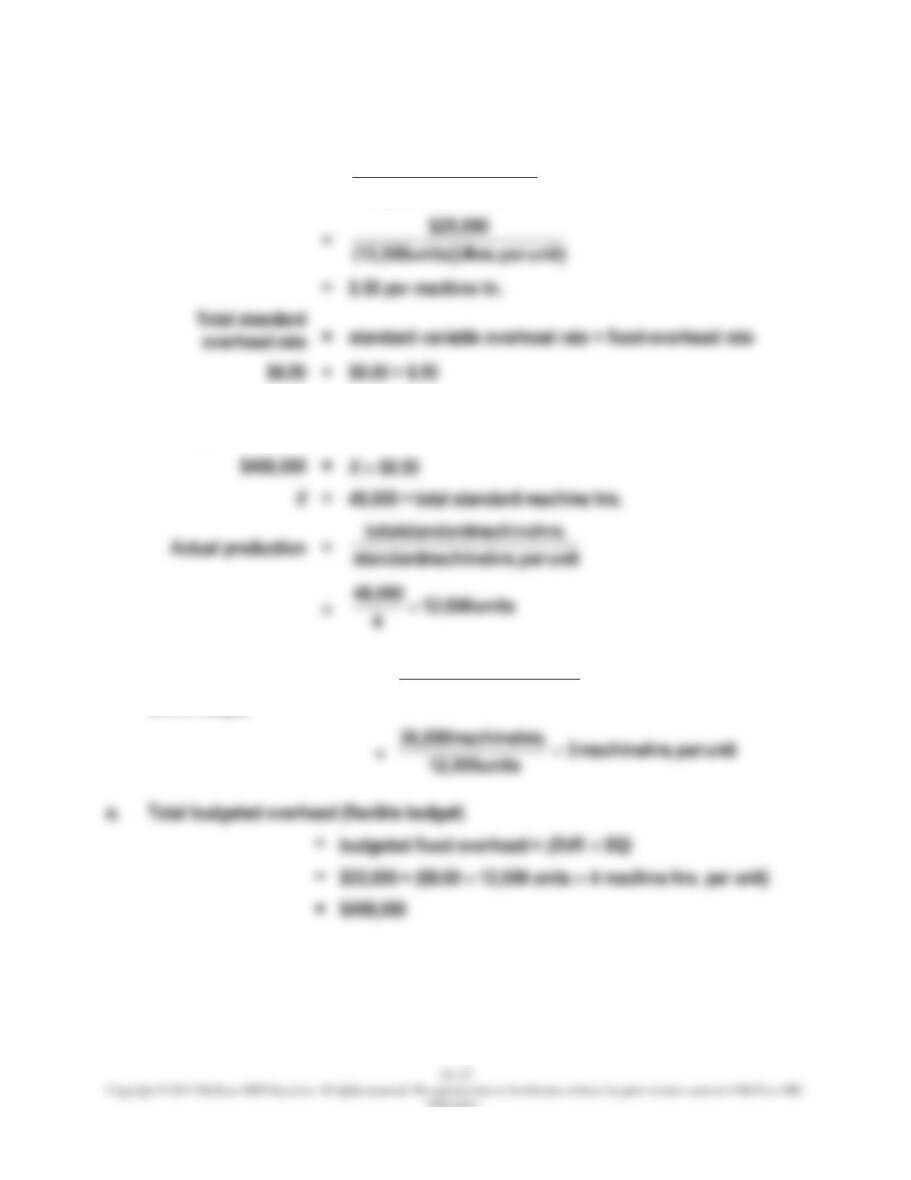
$32,500 = actual fixed overhead
b.
Total actual overhead
=
actual variable overhead + actual fixed overhead
$356,500
=
X + $32,500
=
$324,000 = actual variable overhead
Chapter 11 – Flexible Budgeting and Analysis of Overhead Costs
EXERCISE 11-31 (CONTINUED)
c.
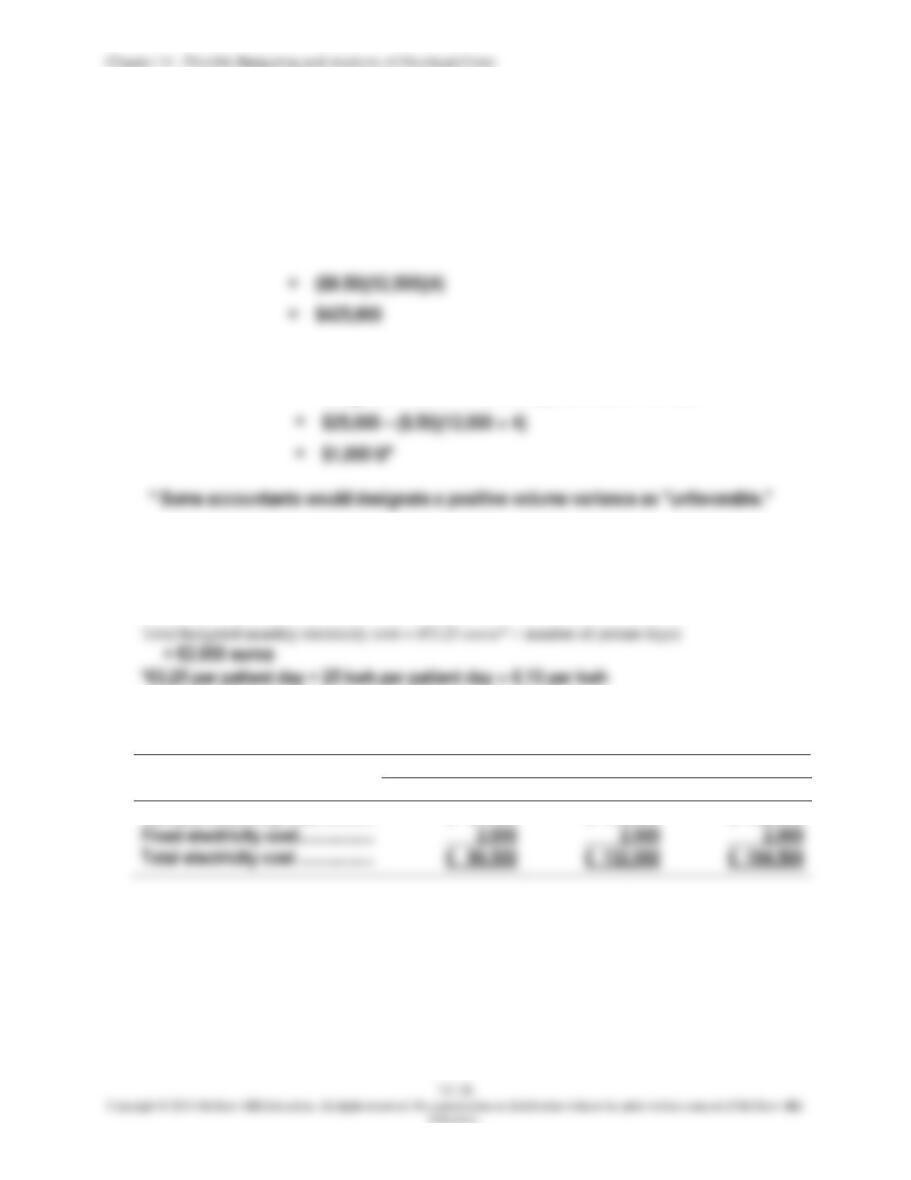
Fixed-overhead rate
=
hours machine budgeted
overhead fixed budgeted
=
Total applied
overhead
=
total std machine hours total std overhead rate
d.
Actual machine hrs. per
unit of output
=
production actual
hrs. machine actual total
=
EXERCISE 11-31 (CONTINUED)
f.
Total budgeted overhead (static budget)
=
unit per
hrs. machine standard
production
budgeted
rate overhead
standard total
=
($8.50)(12,500)(4)
=
$425,000
g.
Fixed overhead volume variance
=
budgeted fixed overhead – applied fixed overhead
=
$1,000 U*
EXERCISE 11-32 (15 MINUTES)
1.
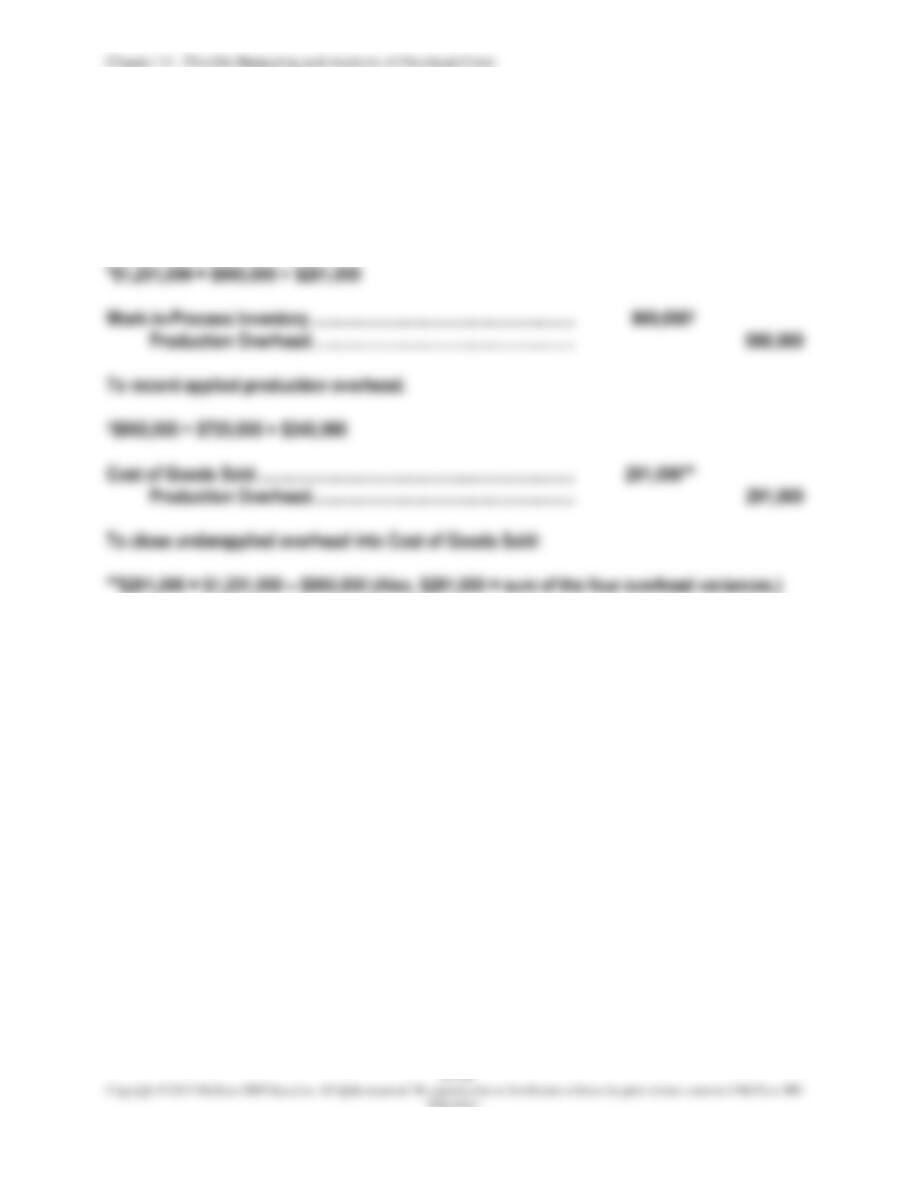
Formula flexible budget:
2.
Columnar flexible budget:
Patient Days
30,000
40,000
50,000
Variable electricity cost …………
€ 97,500
€ 130,000
€ 162,500
Fixed electricity cost ……………..
EXERCISE 11-33 (15 MINUTES)
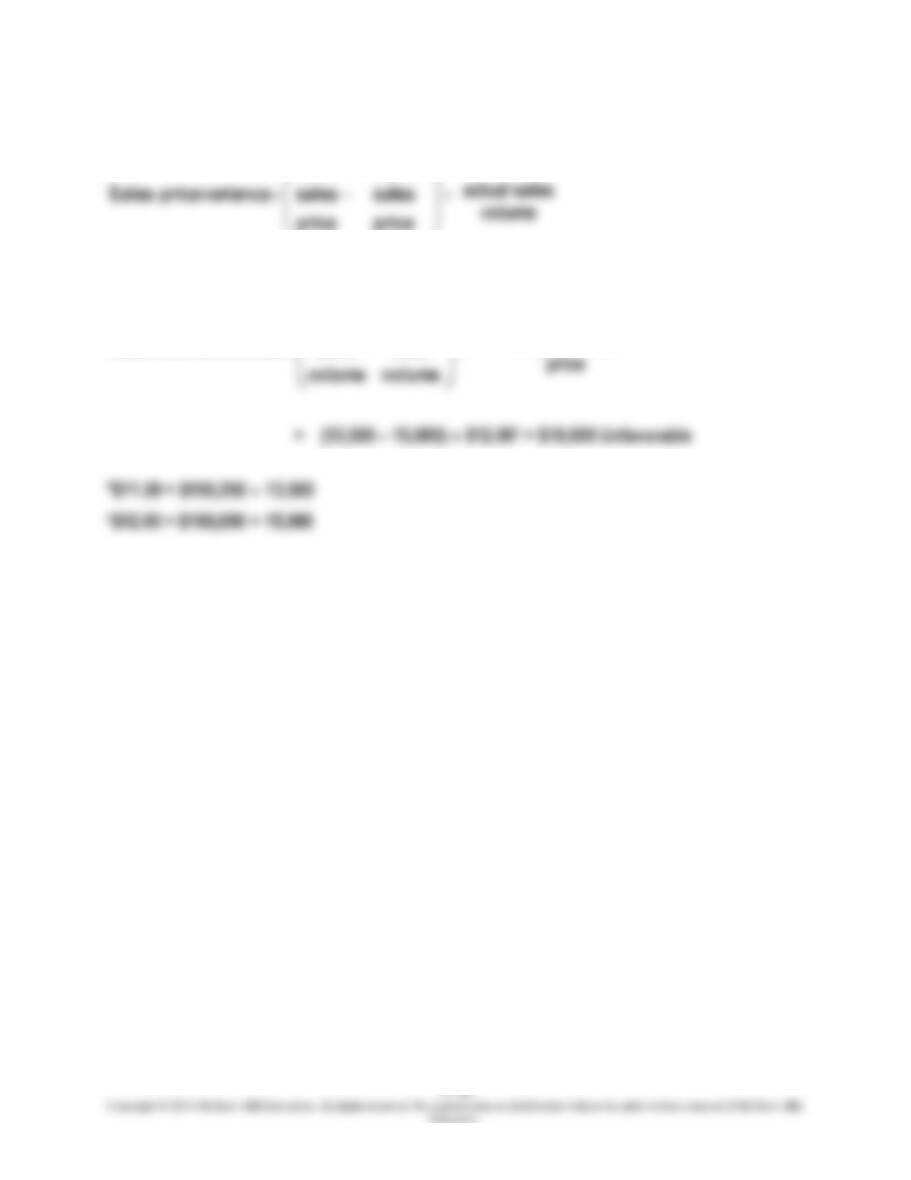
Production Overhead …………………………………………………………..
1,251,000*
Various Accounts ………………………………………………………..
1,251,000
To record actual overhead costs.
Production Overhead …………………………………………………..
To record applied production overhead.
Cost of Goods Sold ……………………………………………………………..
Production Overhead …………………………………………………..
To close underapplied overhead into Cost of Goods Sold:
**$291,000 = $1,251,000 – $960,000 (Also, $291,000 = sum of the four overhead variances.)
Chapter 11 – Flexible Budgeting and Analysis of Overhead Costs
EXERCISE 11-34 (10 MINUTES)
budgeted
actual
($11.50* – $12.00†) 13,500 = $6,750 Unfavorable
−
=
sales
budgeted
sales
actual
variancevolume–Sales
budgeted sales