Chapter 11 – Reporting and Interpreting Stockholders’ Equity
11–17
HANDOUT 11 – 1
AUTHORIZED, ISSUED, AND OUTSTANDING SHARES
Consider an evening reception at which drink tickets were sold. Typically, the host will have a roll of
authorized tickets and will issue individual tickets as people buy them. These drink tickets will be held by
Chapter 11 – Reporting and Interpreting Stockholders’ Equity
11–18
HANDOUT 11 – 1 SOLUTION
AUTHORIZED, ISSUED, AND OUTSTANDING SHARES
Consider an evening reception at which drink tickets were sold. Typically, the host will have a roll of
authorized tickets and will issue individual tickets as people buy them. These drink tickets will be held by
the people until they are exchanged with the bartender for drinks. The returned drink ticket will then be
Chapter 11 – Reporting and Interpreting Stockholders’ Equity
11–19
HANDOUT 11 – 2
STOCK TRANSACTIONS
Prepare the journal entries required to record the following transactions and then post them to the related
T-accounts:
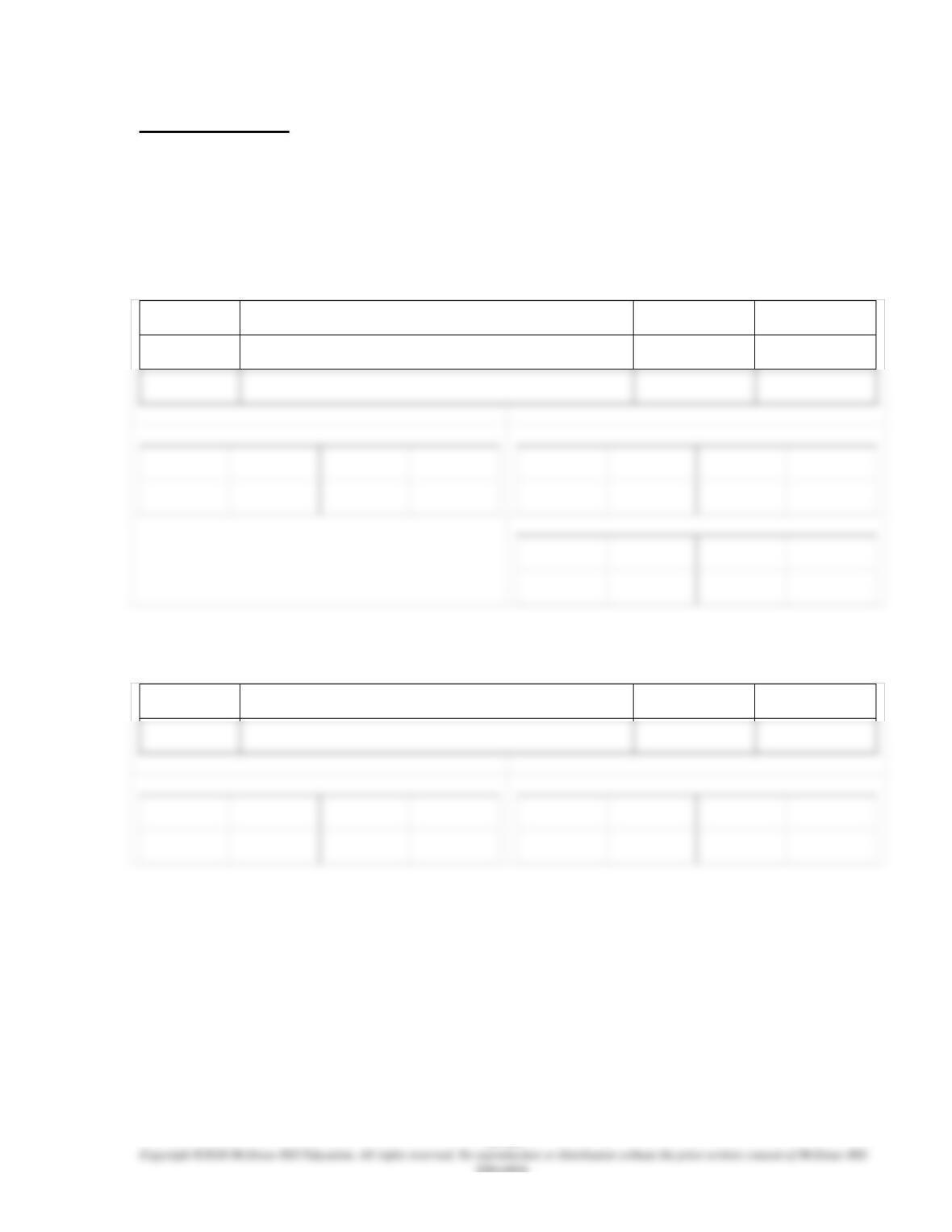
Strait Corp. sold 10,000 shares of $1 par value stock for $25 per share on May 1, Year 1.
On December 1, Year 1, Strait Corp. repurchased 1,000 shares of its stock on the market when it was
trading for $16 per share.
Chapter 11 – Reporting and Interpreting Stockholders’ Equity
11–20
HANDOUT 11 – 2, continued
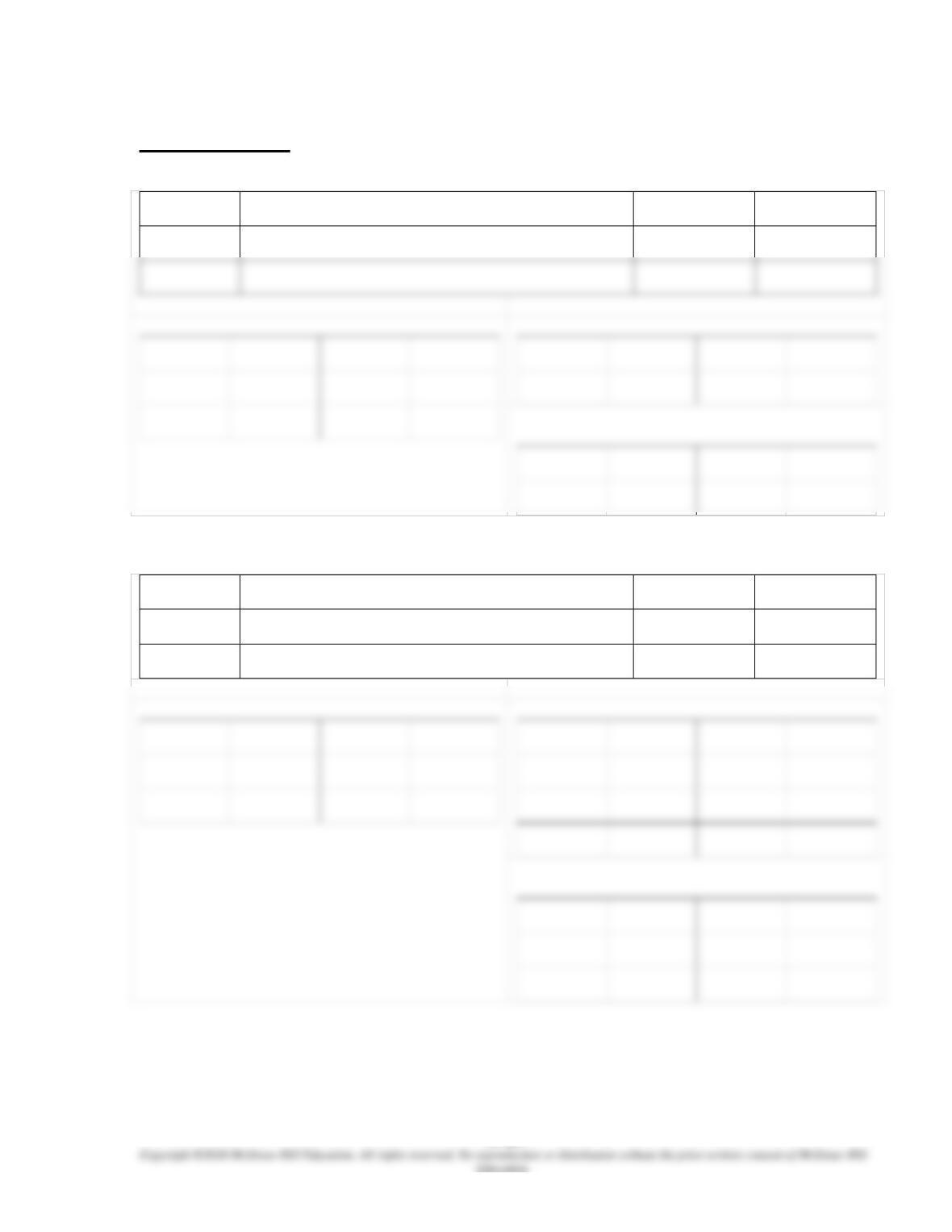
On December 15, Year 1, Strait Corp. sold 500 of the treasury shares for $30 each.
On December 30, Year 1, Strait Corp. sold 500 of the treasury shares for $15 each.
Chapter 11 – Reporting and Interpreting Stockholders’ Equity
11–21
HANDOUT 11 – 2 SOLUTION
STOCK TRANSACTIONS
Prepare the journal entries required to record the following transactions and then post them to the related
T-accounts:
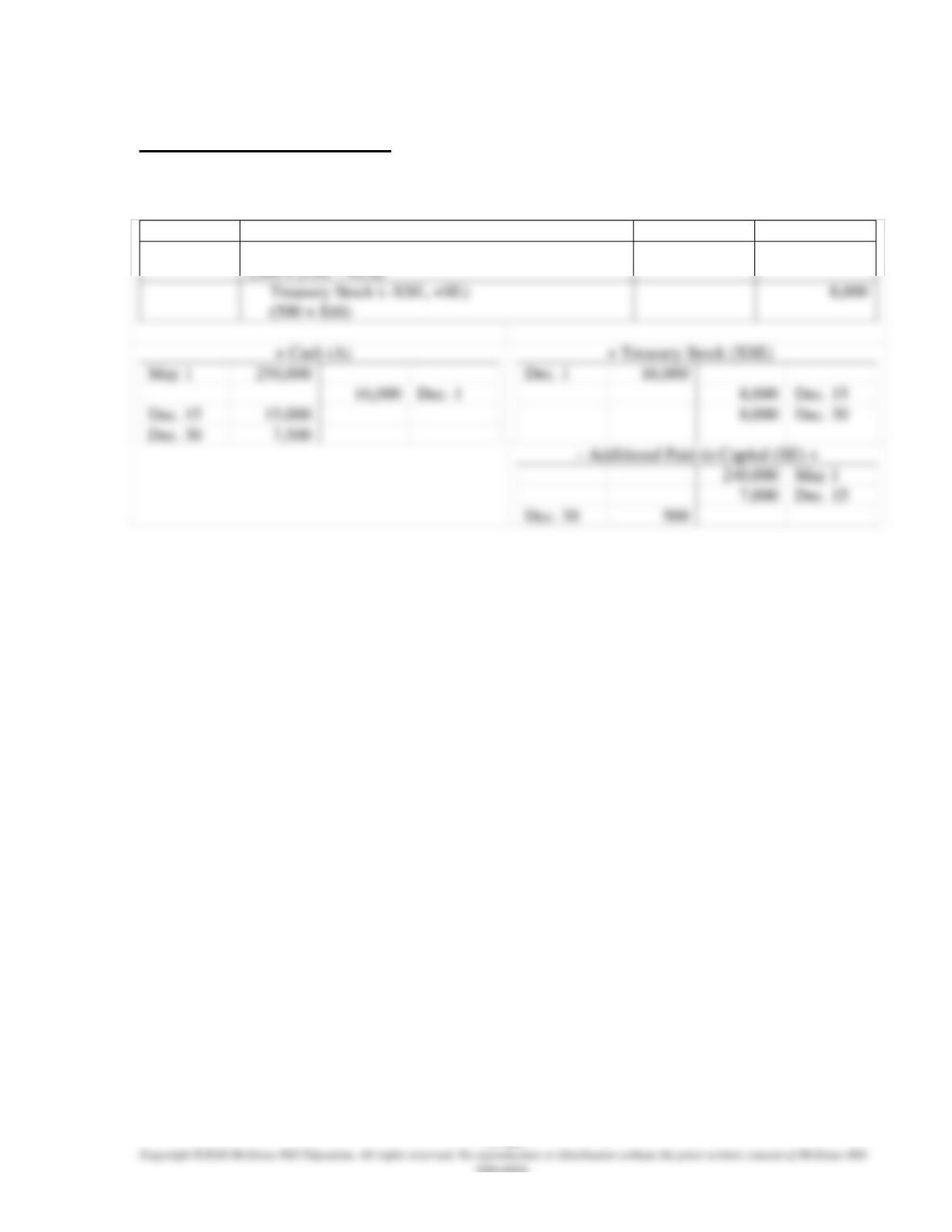
Strait Corp. sold 10,000 shares of $1 par value stock for $25 per share on May 1, Year 1.
May 1
Cash (+A) (10,000 × $25)
250,000
Common Stock (+SE) (10,000 × $1)
10,000
Additional Paid-in Capital (+SE)
May 1
May 1
May 1
On December 1, Year 1, Strait Corp. repurchased 1,000 shares of its stock on the market when it was
trading for $16 per share.
Dec. 1
Treasury Stock (+XSE, –SE) (1,000 × $16)
16,000
Cash (–A)
16,000
May 1
Dec. 1
Dec. 1
On December 15, Year 1, Strait Corp. sold 500 of the treasury shares for $30 each.
Dec. 15
Cash (+A) (500 × $30)
15,000
Treasury Stock (–XSE, +SE)
(500 × $16)
8,000
Additional Paid-in Capital (+SE)
(500 × [$30 – $16])
7,000
May 1
Dec. 1
Dec. 15
Dec. 1
Dec. 15
May 1
Dec. 15
Chapter 11 – Reporting and Interpreting Stockholders’ Equity
11–22
HANDOUT 11 – 2 SOLUTION, continued
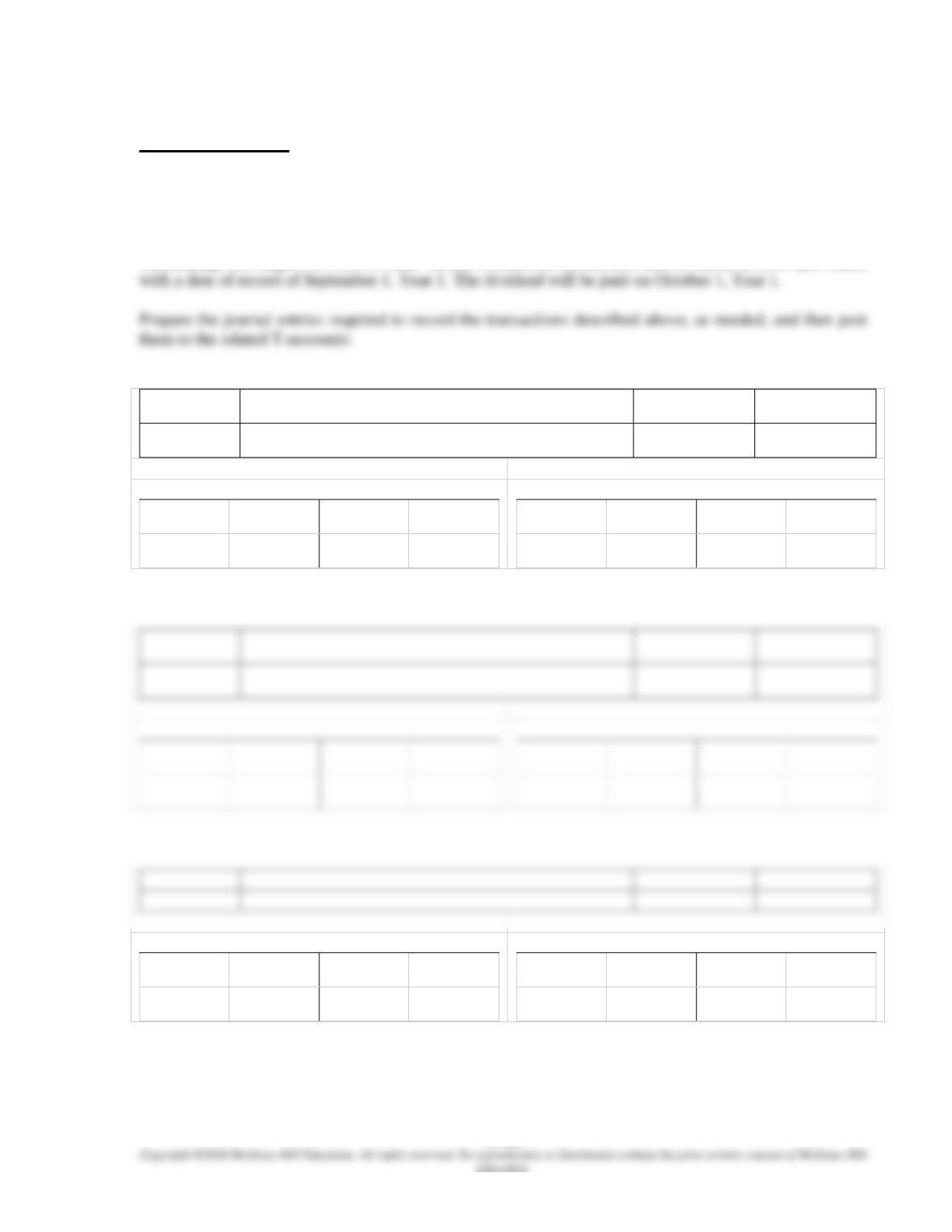
On December 30, Year 1, Strait Corp. sold 500 of the treasury shares for $15 each.
Dec. 30
Cash (+A) (500 × $15)
7,500
(500 × [$16 – $15])
Treasury Stock (–XSE, +SE)
(500 × $16)
Dec. 15
Dec. 30
Dec. 15
Additional Paid-in Capital (–SE)
500
Chapter 11 – Reporting and Interpreting Stockholders’ Equity
11–23
HANDOUT 11 – 3
CASH DIVIDENDS
Jones Corp. has 200,000 shares of stock authorized, 120,000 shares issued, and 100,000 shares
outstanding. On August 1, Year 1, Jones’ Board of Directors declared a cash dividend of $0.50 per share,
Chapter 11 – Reporting and Interpreting Stockholders’ Equity
11–24
HANDOUT 11 – 3 SOLUTION
CASH DIVIDENDS
Jones Corp. has 200,000 shares of stock authorized, 120,000 shares issued, and 100,000 shares
outstanding. On August 1, Year 1, Jones’ Board of Directors declared a cash dividend of $0.50 per share,
with a date of record of September 1, Year 1. The dividend will be paid on October 1, Year 1.
Prepare the journal entries required to record the transactions described above, as needed, and then post
them to the related T-accounts:
Aug. 1
(100,000 × $0.50)
Dividends Payable (+L)
May 1
Dividends Declared (+D, –SE)
50,000
Sept. 1
No Entry
Dividends Payable (–L)
Cash (–A)
50,000
May 1
Oct. 1
Chapter 11 – Reporting and Interpreting Stockholders’ Equity
11–25
HANDOUT 11 – 4
STOCK DIVIDENDS AND STOCK SPLITS
Jennings Corp. has 1,000,000 shares of $1 par value stock authorized, 200,000 shares issued, and 150,000
shares outstanding. On June 1, Year 1, Jennings’ Board of Directors declared a 10% stock dividend at a
time that the stock carried a market value of $30.
Prepare the journal entry required to record the transaction described above and then post it to the related
T-accounts:
Jennings Corp. announced a 100% stock dividend on June 1, Year 2.
Prepare the journal entry required to record the transaction described above and then post it to the related
T-accounts:
Chapter 11 – Reporting and Interpreting Stockholders’ Equity
11–26
HANDOUT 11 – 4, continued
Compute the number of shares outstanding after the June 1, Year 2 stock dividend.
Chapter 11 – Reporting and Interpreting Stockholders’ Equity
11–27
HANDOUT 11 – 4 SOLUTION
STOCK DIVIDENDS AND STOCK SPLITS
Jennings Corp. has 1,000,000 shares of $1 par value stock authorized, 200,000 shares issued, and 150,000
shares outstanding. On June 1, Year 1, Jennings’ Board of Directors declared a 10% stock dividend at a
time that the stock carried a market value of $30.
Prepare the journal entry required to record the transaction described above and then post it to the related
T-accounts:
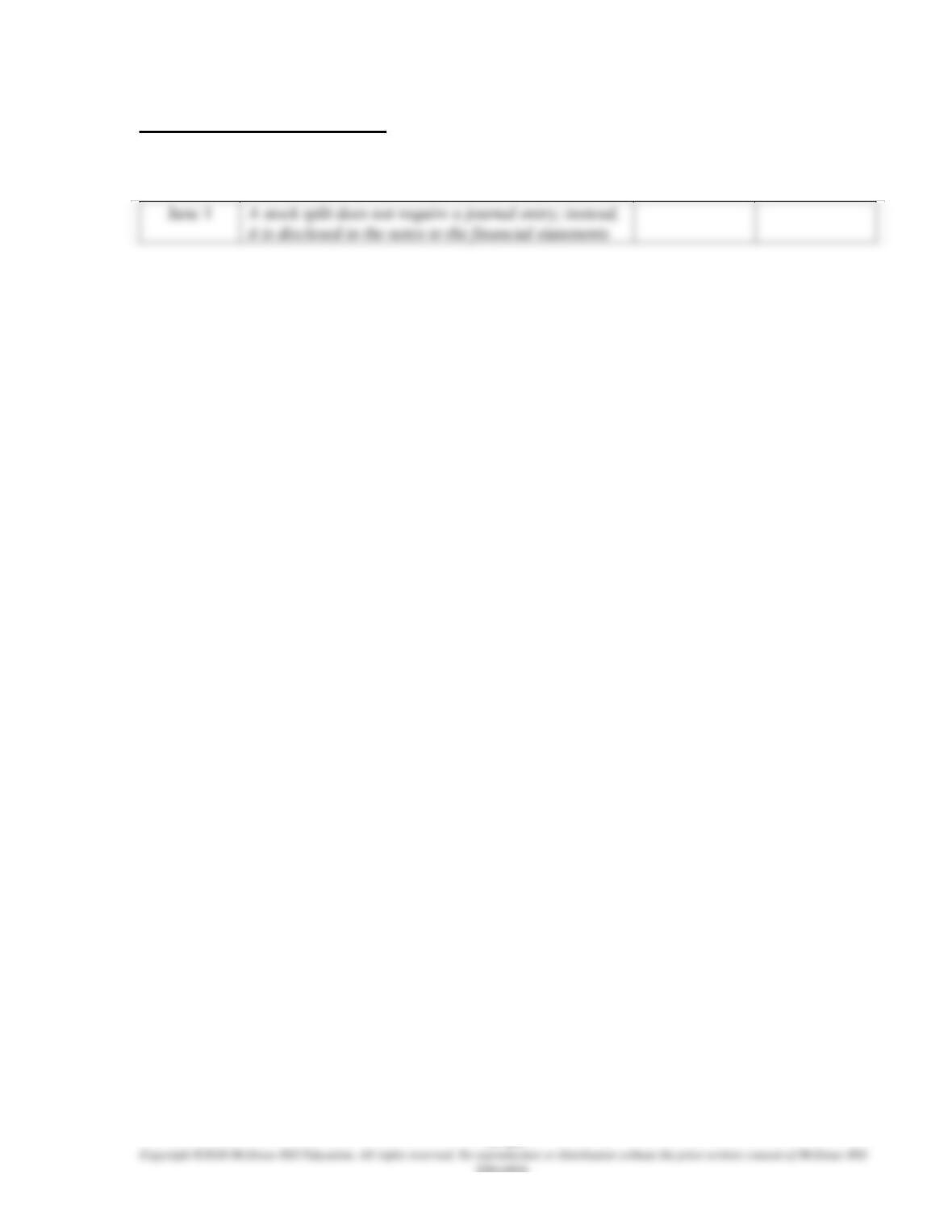
June. 1
Common Stock (+SE)
Additional Paid-in Capital (+SE)
Retained Earnings (–SE)
450,000
– Retained Earnings (SE) +
June 1,
Year 1
450,000
435,000
June 1,
– Common Stock (SE) +
15,000
June 1,
Year 1
Prepare the journal entry required to record the transaction described above and then post it to the related
T-accounts:
June 1
Retained Earnings (–SE)
(165,000 × $1)
165,000
June 1,
Year 1
450,000
June 1,
Year 2
165,000
15,000
June 1,
Year 1
165,000
June 1,
Year 1
Chapter 11 – Reporting and Interpreting Stockholders’ Equity
11–28
HANDOUT 11 –4 SOLUTION, continued
Jennings Corp. announced a 2 for 1 stock split on June 1, Year 3.

Chapter 11 – Reporting and Interpreting Stockholders’ Equity
11–29
HANDOUT 11 – 5
STOCK SPLITS AND STOCK DIVIDENDS
A company’s board of directors must choose between a large 100 percent stock dividend and a 2-for-1
stock split.
What should be considered in making this decision?
Chapter 11 – Reporting and Interpreting Stockholders’ Equity
11–30
HANDOUT 11 – 5 SOLUTION
STOCK SPLITS AND STOCK DIVIDENDS
A company’s board of directors must choose between a large 100 percent stock dividend and a 2-for-1
stock split.
What should be considered in making this decision?
Whether a company distributes additional shares of stock by declaring a stock dividend or by initiating
a stock split is often determined by state law. Otherwise, the decision may be closely related to how
stock dividends and splits are accounted for in the financial statements.
a. A stock dividend causes a reduction in Retained Earnings; a stock split does not cause a reduction
Chapter 11 – Reporting and Interpreting Stockholders’ Equity
11–31
HANDOUT 11 – 6
PREFERRED DIVIDENDS
On January 1, Year 1, Garden State issued 10,000 shares of $10 par preferred stock for $19 per share.
Prepare the journal entry required to record this transaction and post it to the appropriate T-accounts:
January 1
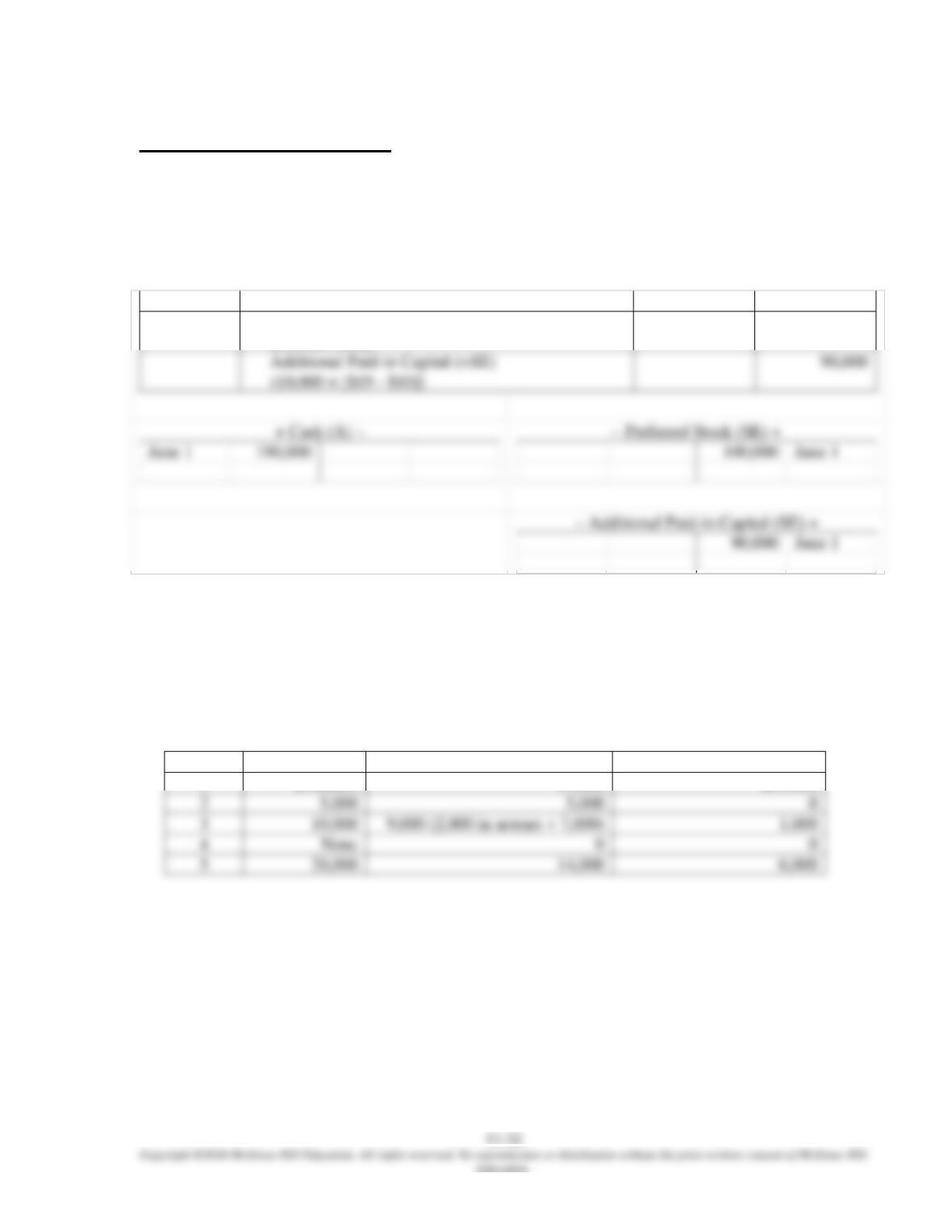
Complete the following table to explain how dividends would be allocated between preferred and
common stockholders:
Year
Total Dividend
To Preferred Stockholders
To Common Stockholders
1
$100,000
2
5,000
Chapter 11 – Reporting and Interpreting Stockholders’ Equity
HANDOUT 11 – 6 SOLUTION
PREFERRED DIVIDENDS
On January 1, Year 1, Garden State issued 10,000 shares of $10 par preferred stock for $19 per share.
Prepare the journal entry required to record this transaction and post it to the appropriate T-accounts:
January 1
Cash (+A) (10,000 × $19)
190,000
Preferred Stock (+SE)
(10,000 × $10)
100,000
90,000
The stock pays a cumulative annual dividend of 7% of par value. What is the total amount of the annual
dividends that would be paid, if declared, to preferred stockholders?
100,000 × 7% = $7,000 to preferred
Complete the following table to explain how dividends would be allocated between preferred and
common stockholders.
Year
Total Dividend
To Preferred Stockholders
To Common Stockholders
1
$100,000
$7,000
$93,000
3
5
14,000