Chapter 10 – Reporting and Interpreting Bond Securities
10–14
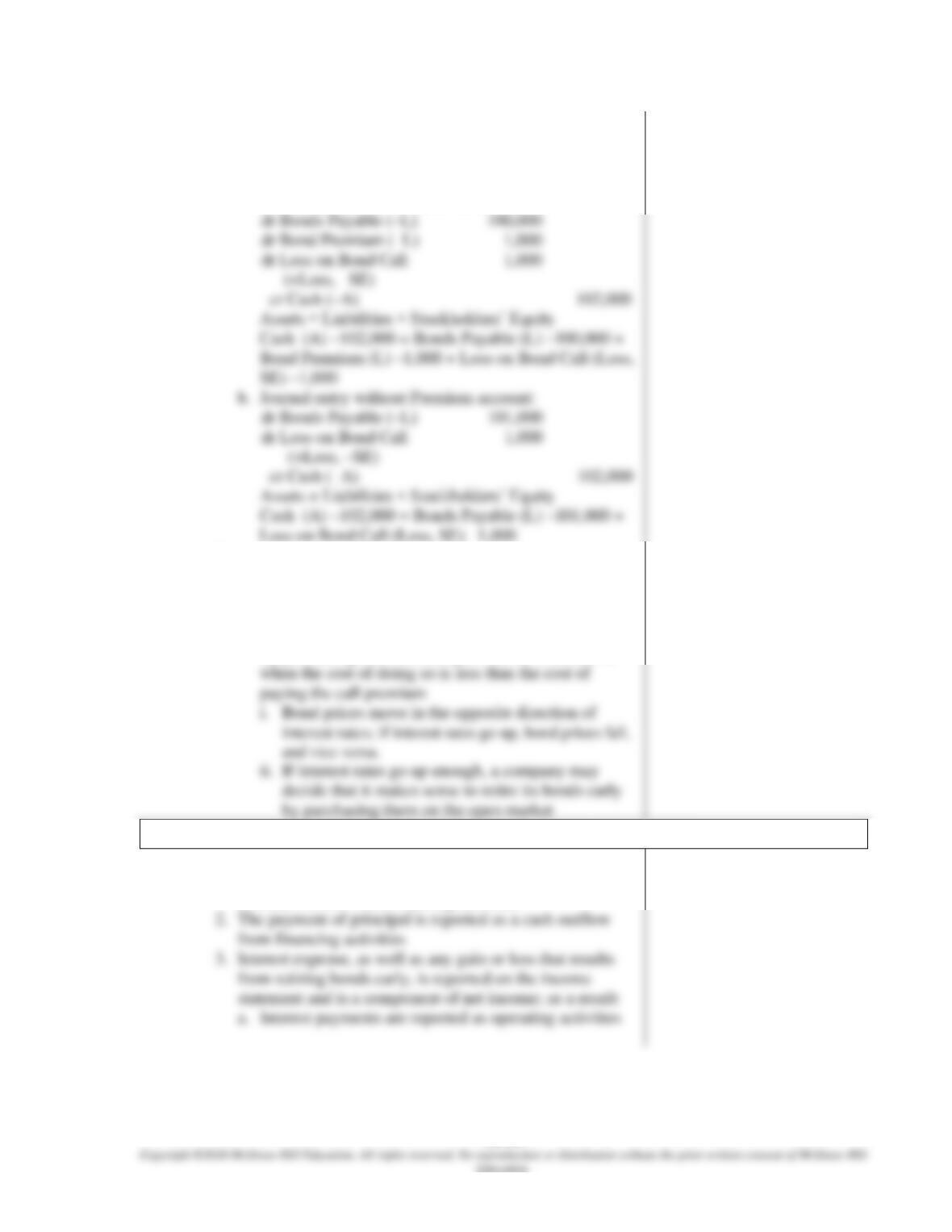
2. Several years ago, Amazon issued callable bonds with a
face value of $100,000; when the book value was
$101,000, Amazon called the bonds at 102% of face
value
a. Journal entry with Premium account:
dr Bonds Payable (–L)
dr Loss on Bond Call
cr Cash (–A)
SE) –1,000
(+Loss, –SE)
3. A company may elect to retire bonds early by purchasing
them on the open market
a. This approach is necessary when the bonds do not
have a call feature
b. Even when the bonds have a call feature, retiring them
by purchasing them on the open market is attractive
LO 8 – Explain how bond securities are reported on the statement of cash flows.
B. Focus on Cash Flows: Bonds Payable
1. The cash received from the issuance of bonds is reported
as a cash inflow from financing activities
2. The payment of principal is reported as a cash outflow
from financing activities
statement and is a component of net income; as a result:
a. Interest payments are reported as operating activities
Chapter 10 – Reporting and Interpreting Bond Securities
10–15
V. Chapter Supplement: Accounting for Bonds without a Discount Account or Premium Account
This following section of the Supplement is the same as the related section in Chapter 10 except that
4. Reporting Interest Expense on Bonds Issued at a Discount
Using Effective-Interest Amortization (without Discount
Account)
a. Three steps:
i. Compute interest expense:
b. First interest payment on Amazon bonds is on 6/30/19:
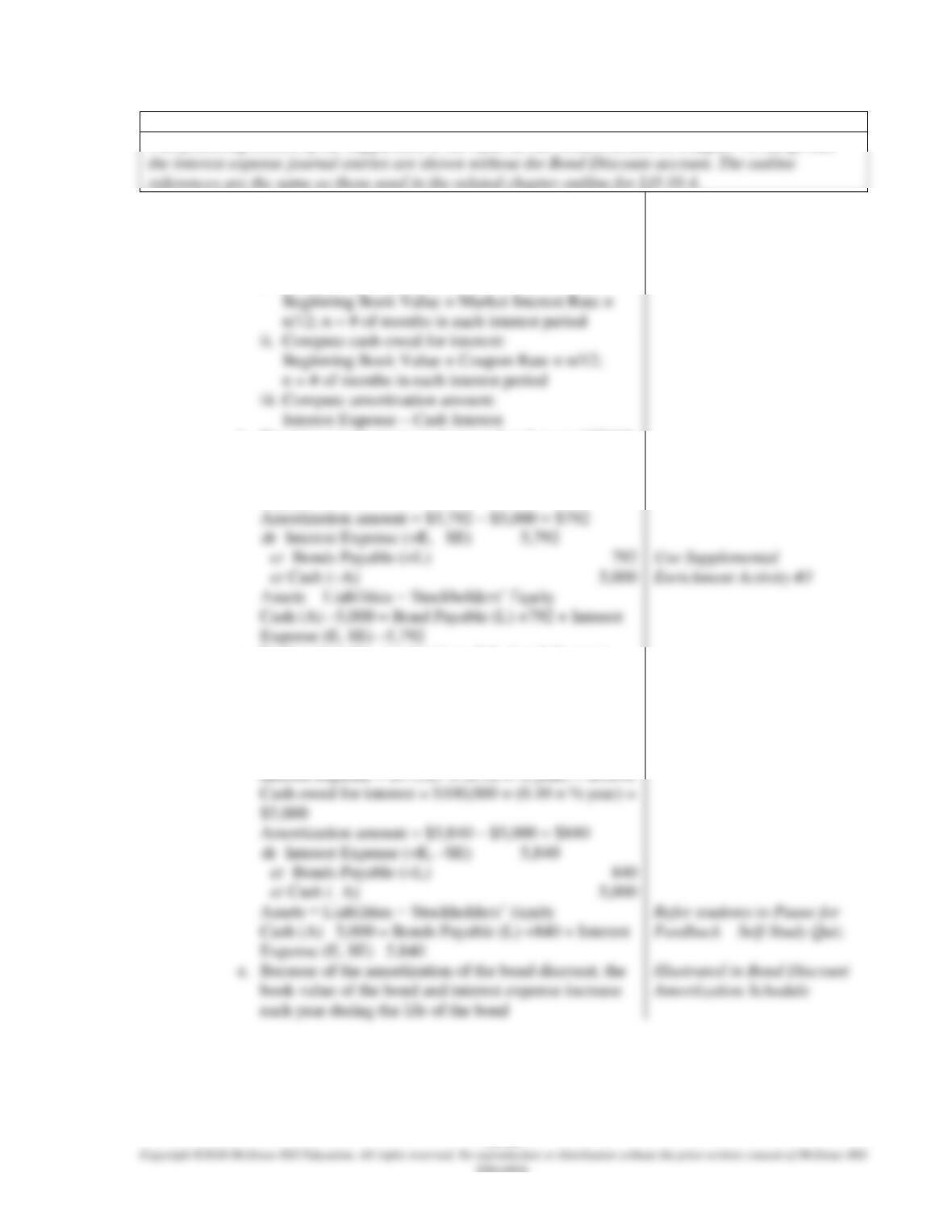
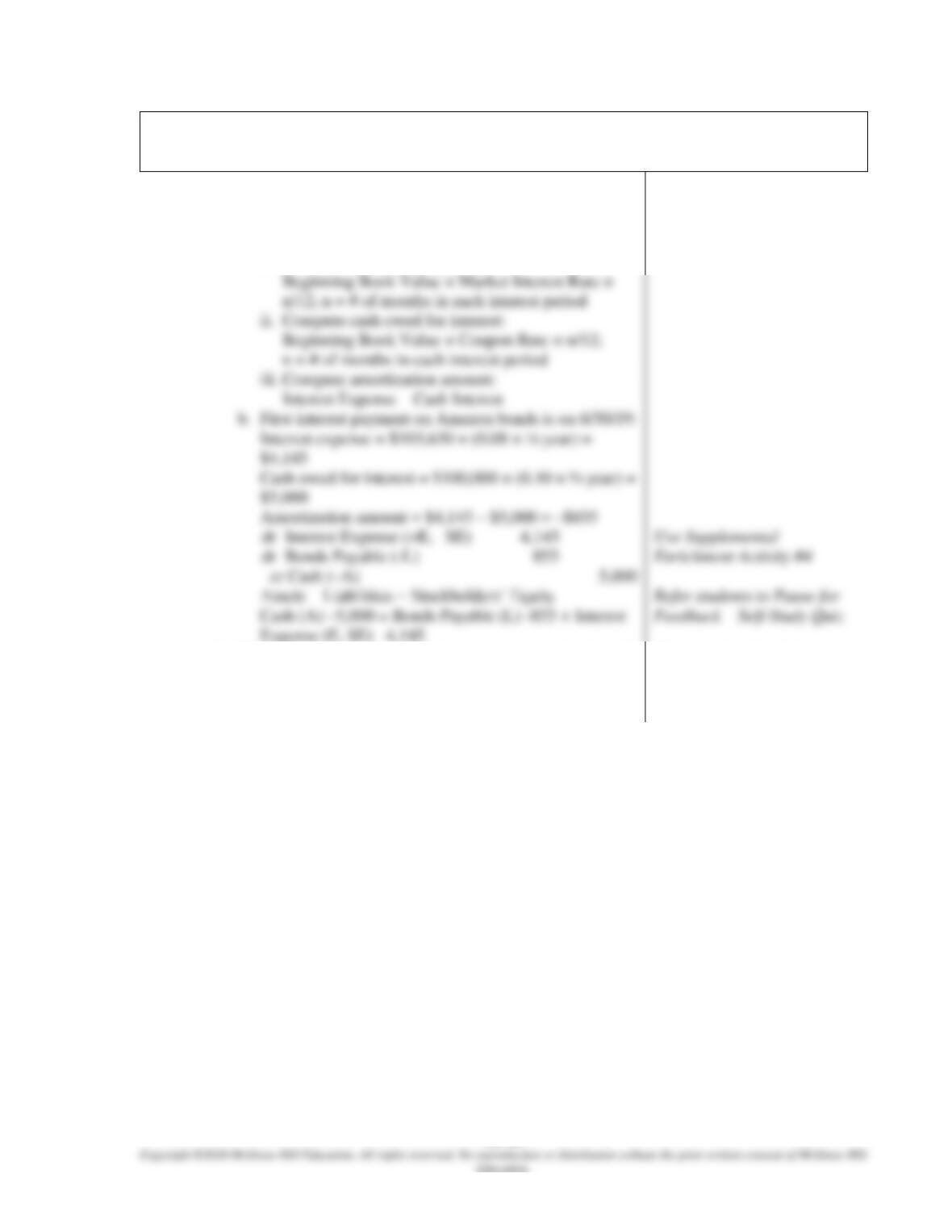
Interest expense = $96,535 × (0.12 × ½ year) = $5,792
Cash owed for interest = $100,000 × (0.10 × ½ year) =
$5,000
c. Each period, the amortization of the bond discount
increases the bond’s book value, bringing it closer to
the $100,000 that is due at maturity
Refer students to Pause for
e. Because of the amortization of the bond discount, the
Illustrated in Bond Discount
d. Second interest payment on Amazon bonds is on
12/31/19:
Beginning book value = $96,535 + $792= $97,327
Chapter 10 – Reporting and Interpreting Bond Securities
10–16
This following section of the Supplement is the same as the related section in Chapter 10 except that
the interest expense journal entries are shown without the Bond Premium account. The outline
references are the same as those used in the related chapter outline for LO 10-5.
4. Reporting Interest Expense on Bonds Issued at a
Premium Using Effective-Interest Amortization (without
Premium Account)
a. Three steps:
Use Supplemental
i. Compute interest expense:
5. The difference between effective-interest amortization of
a bond discount and a bond premium is that the
amortization of a discount increases the book value of the
liability and the amortization of a premium decreases it
Illustrated in Bond Premium
Amortization Schedule
Refer students to Guided
Help 10-2
Chapter 10 – Reporting and Interpreting Bond Securities
10–17
Supplemental Enrichment Activities
Note: These activities would be suitable for individual or group activities.
1. Handout 10-1
Use Handout 10-1 for an in-class activity to review the issuance of bonds at a discount using
2. Handout 10-2
Use Handout 10-2 for an in-class activity to review the issuance of bonds at a premium using
3. Handout 10-3
Use Handout 10-3 for an in-class activity to review the issuance of bonds at a discount using
4. Handout 10-4
Use Handout 10-4 for an in-class activity to review the issuance of bonds at a premium using
Chapter 10 – Reporting and Interpreting Bond Securities
10–18
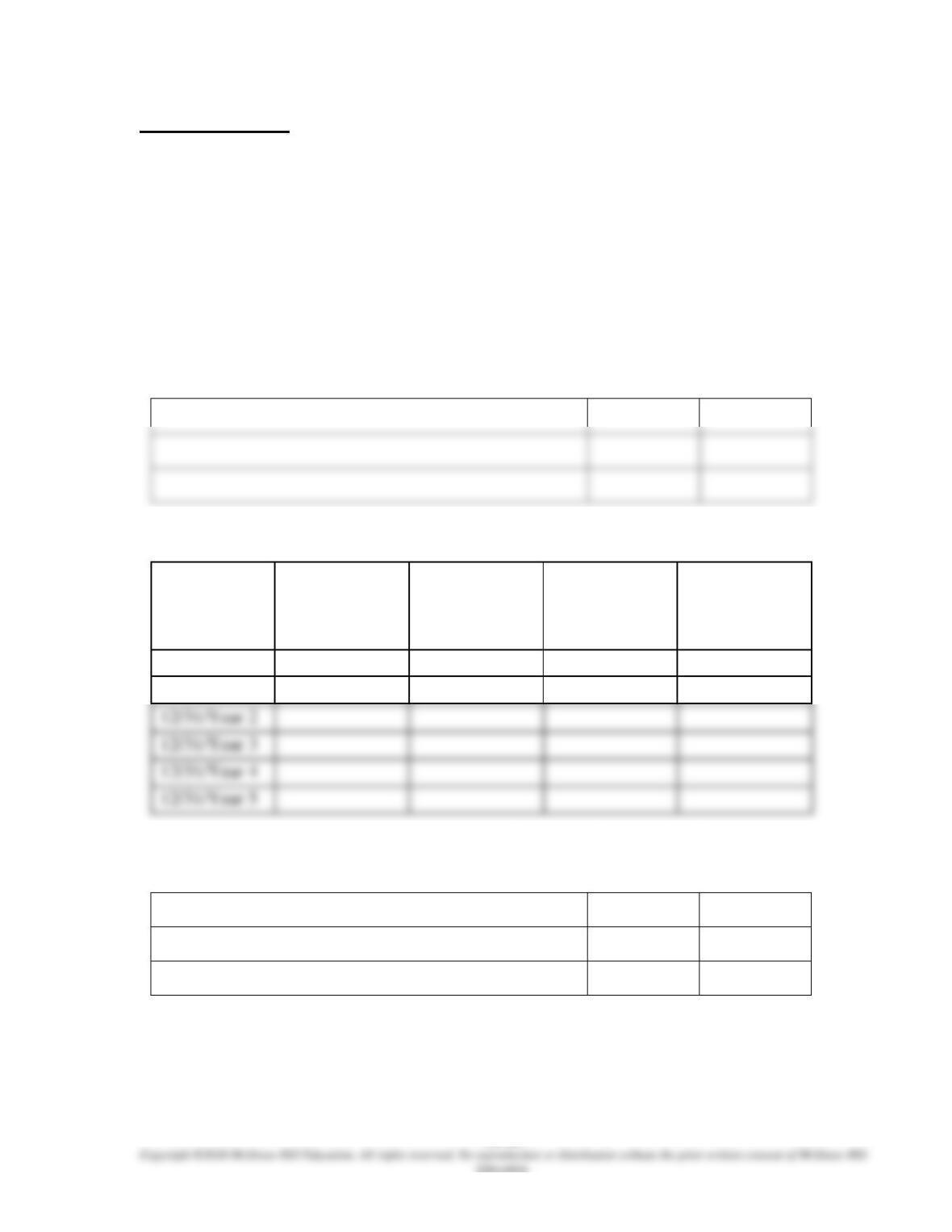
HANDOUT 10 – 1
ISSUING BONDS
On January 1, Year 1, $800,000, 5-year, bonds with a contract rate of 8% payable annually were issued
for cash of $684,627 when the market rate of interest was 12%.
Were these bonds issued at a discount or at a premium? Why?
Prepare the journal entry to record the issuance (sale) of the bonds (assuming the company uses Discount
and Premium accounts):
Complete the following interest schedule (assuming effective-interest amortization):
Date
Cash Owed for
Interest
Interest
Expense
Amortization
of Bond
Discount (or
Premium)
Bonds Payable
Book Value
1/1/Year 1
None
None
None
12/31/Year 1
12/31/Year 2
Prepare the journal entry to record the first payment of interest on December 31, Year 1 (assuming the
company uses Discount and Premium accounts):
Chapter 10 – Reporting and Interpreting Bond Securities
10–19
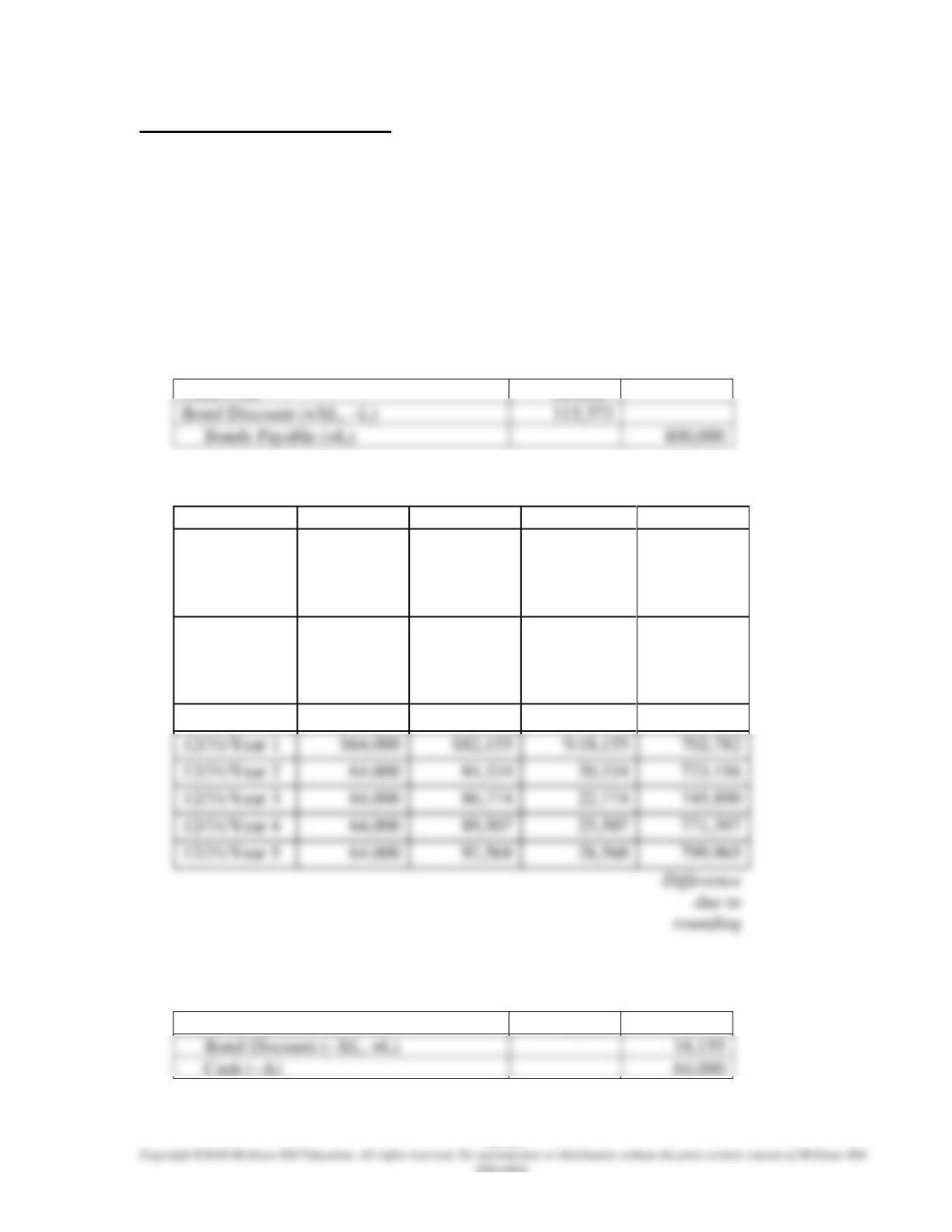
HANDOUT 10 – 1 SOLUTION
ISSUING BONDS
On January 1, Year 1, $800,000, 5-year, bonds with a contract rate of 8% payable annually were issued
for cash of $684,627 when the market rate of interest was 12%.
Were these bonds issued at a discount or at a premium? Why?
The bonds were issued at a discount since the stated rate is lower than the market rate.
Prepare the journal entry to record the issuance (sale) of the bonds (assuming the company uses Discount
and Premium accounts):
Cash (+A)
684,627
Bond Discount (+XL, –L)
115,373
Bonds Payable (+L)
800,000
Complete the following interest schedule (assuming effective-interest amortization):
Date
(a)
(b)
(c)
(d)
Cash Owed
for Interest
Interest
Expense
Amortization
of Bond
Discount
Bonds
Payable
Book
Value*
$800,000 ×
(8%)
Beginning
of Period
Book Value
× (12%)
(b) – (a)
Beginning
book value
+ (c)
1/1/Year 1
None
None
None
$684,627
12/31/Year 4
12/31/Year 5
Prepare the journal entry to record the first payment of interest on December 31, Year 1 (assuming the
company uses Discount and Premium accounts):
Interest Expense (+E, –SE)
82,155
Bond Discount (–XL, +L)
18,155
Chapter 10 – Reporting and Interpreting Bond Securities
10–20
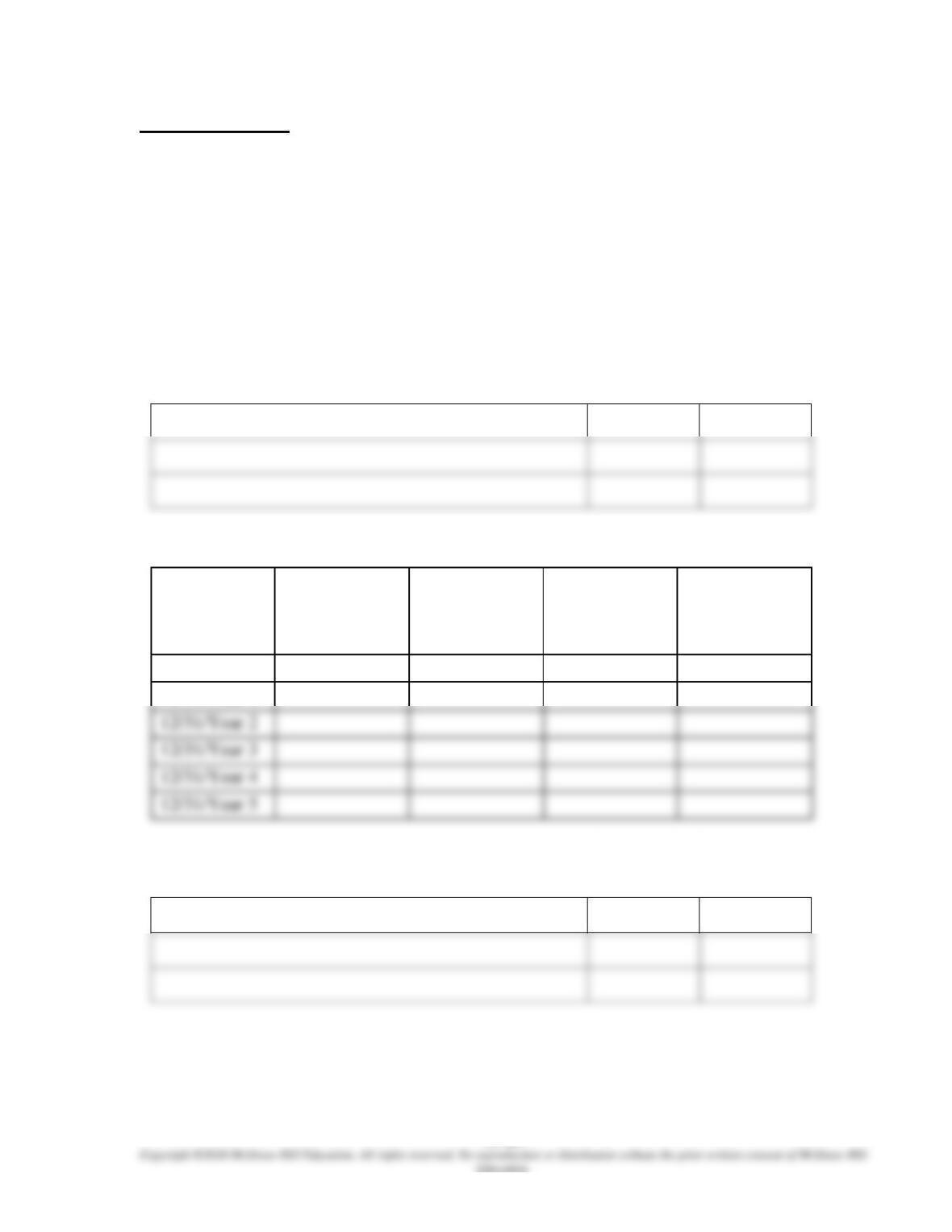
HANDOUT 10 – 2
ISSUING BONDS
On January 1, Year 1, $1,200,000, 5-year, bonds with a stated rate of 10% payable annually were issued
for cash of $1,295,844 when the market rate of interest was 8%.
Were these bonds issued at a discount or at a premium? Why?
Prepare the journal entry to record the issuance (sale) of the bonds (assuming the company uses Discount
and Premium accounts):
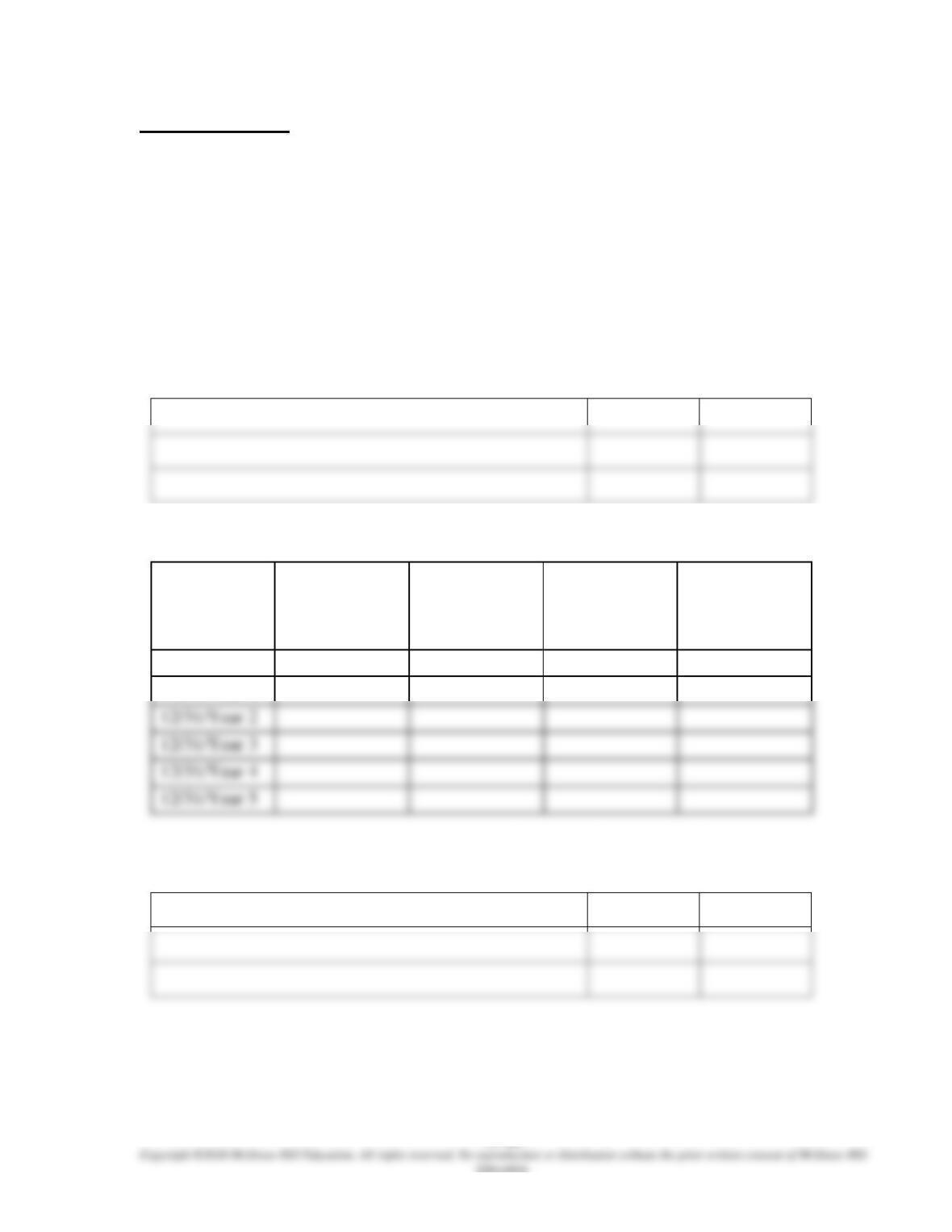
Complete the following interest schedule (assuming effective-interest amortization):
Date
Cash Owed for
Interest
Interest
Expense
Amortization
of Bond
Discount (or
Premium)
Bonds Payable
Book Value
1/1/Year 1
None
None
None
12/31/Year 1
12/31/Year 5
Prepare the journal entry to record the first payment of interest on December 31, Year 1 (assuming the
company uses Discount and Premium accounts):
Chapter 10 – Reporting and Interpreting Bond Securities
10–21
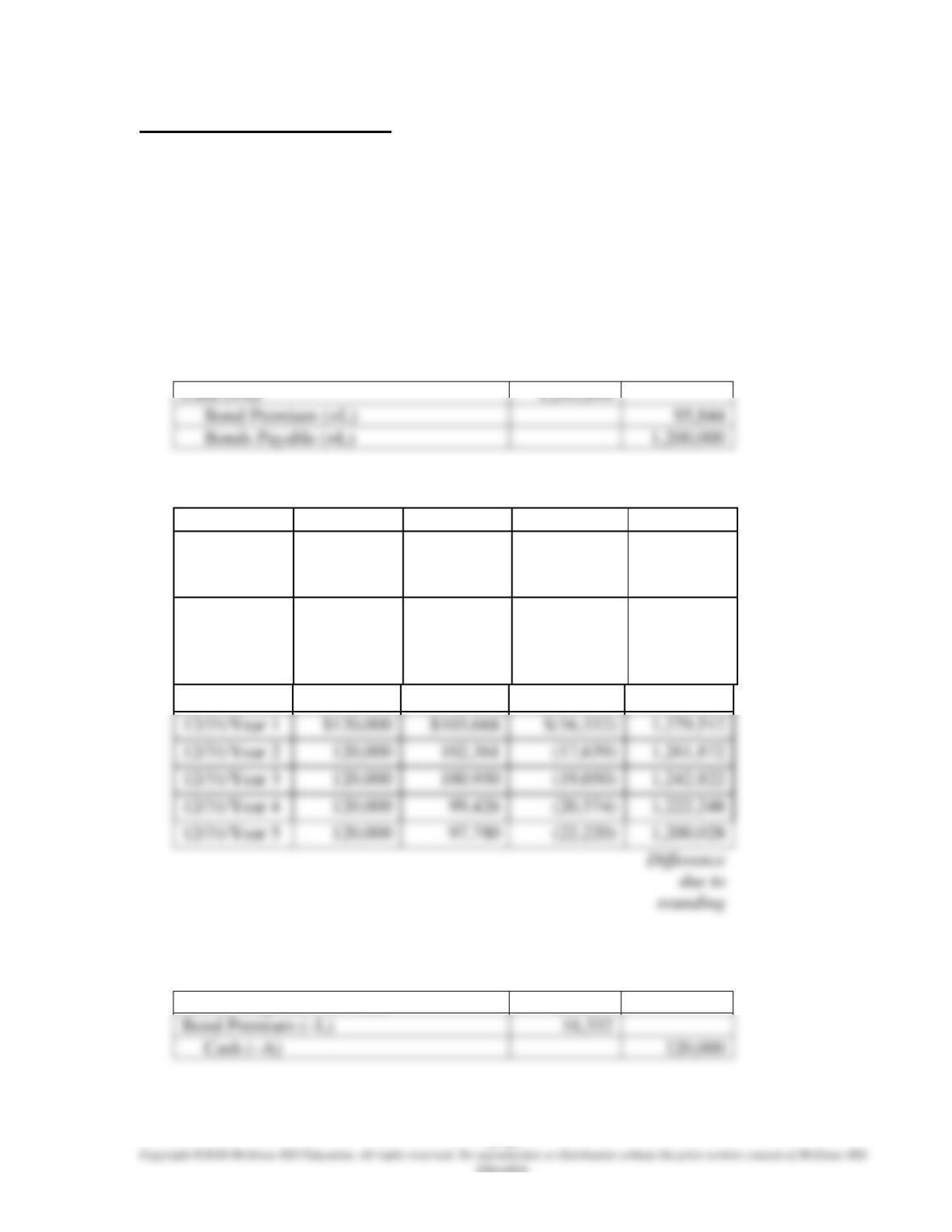
HANDOUT 10 – 2 SOLUTION
ISSUING BONDS
On January 1, Year 1, $1,200,000, 5-year, bonds with a stated rate of 10% payable annually were issued
for cash of $1,295,844 when the market rate of interest was 8%.
Were these bonds issued at a discount or at a premium? Why?
The bonds were issued at a premium since the stated rate is higher than the market rate.
Prepare the journal entry to record the issuance (sale) of the bonds (assuming the company uses Discount
and Premium accounts):
Cash (+A)
Bond Premium (+L)
Bonds Payable (+L)
Complete the following interest schedule (assuming effective-interest amortization):
Date
(a)
(b)
(c)
(d)
Cash Owed
for Interest
Interest
Expense
Amortization
of Bond
Premium
Bonds
Payable
Book Value
$1,200,000
× (10%)
Beginning
of Period
Book Value
× (8% )
(b) – (a)
Beginning
book value
+ (c)
1/1/Year 1
None
None
None
$1,295,844
12/31/Year 1
12/31/Year 2
12/31/Year 3
12/31/Year 4
12/31/Year 5
Prepare the journal entry to record the first payment of interest on December 31, Year 1 (assuming the
company uses Discount and Premium accounts):
Interest Expense (+E, –SE)
103,668
Bond Premium (–L)
Cash (–A)
120,000
Chapter 10 – Reporting and Interpreting Bond Securities
10–22
HANDOUT 10 – 3
ISSUING BONDS
On January 1, Year 1, $800,000, 5-year, bonds with a contract rate of 8% payable annually were issued
for cash of $684,627 when the market rate of interest was 12%.
Were these bonds issued at a discount or at a premium? Why?
Prepare the journal entry to record the issuance (sale) of the bonds (assuming the company does not use
Discount and Premium accounts):
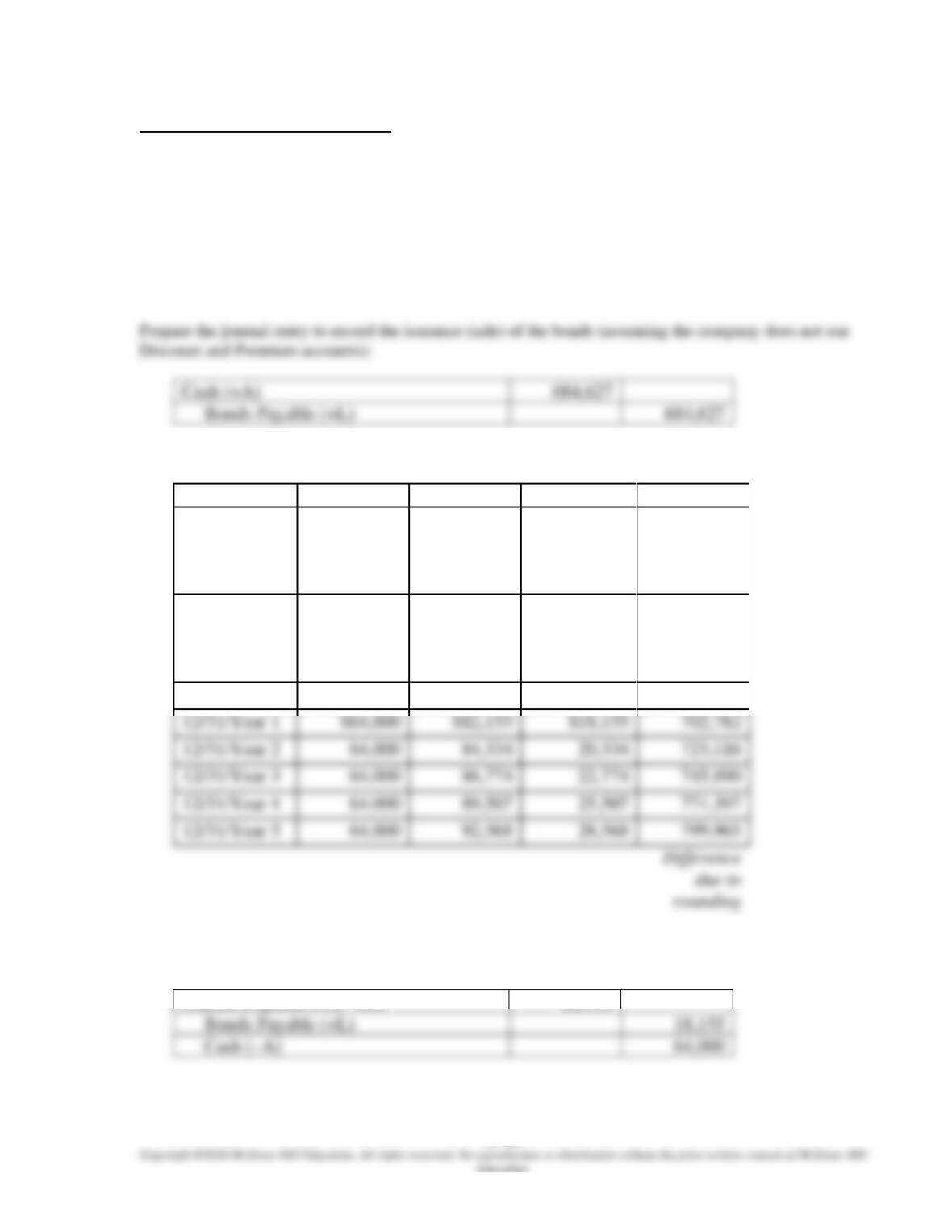
Complete the following interest schedule (assuming effective-interest amortization):
Date
Cash Owed for
Interest
Interest
Expense
Amortization
of Bond
Discount (or
Premium)
Bonds Payable
Book Value
1/1/Year 1
None
None
None
12/31/Year 1
12/31/Year 2
Prepare the journal entry to record the first payment of interest on December 31, Year 1 (assuming the
company does not use Discount and Premium accounts):
Chapter 10 – Reporting and Interpreting Bond Securities
10–23
HANDOUT 10 – 3 SOLUTION
ISSUING BONDS
On January 1, Year 1, $800,000, 5-year, bonds with a contract rate of 8% payable annually were issued
for cash of $684,627 when the market rate of interest was 12%.
Were these bonds issued at a discount or at a premium? Why?
The bonds were issued at a discount since the stated rate is lower than the market rate.
Cash (+A)
684,627
Bonds Payable (+L)
684,627
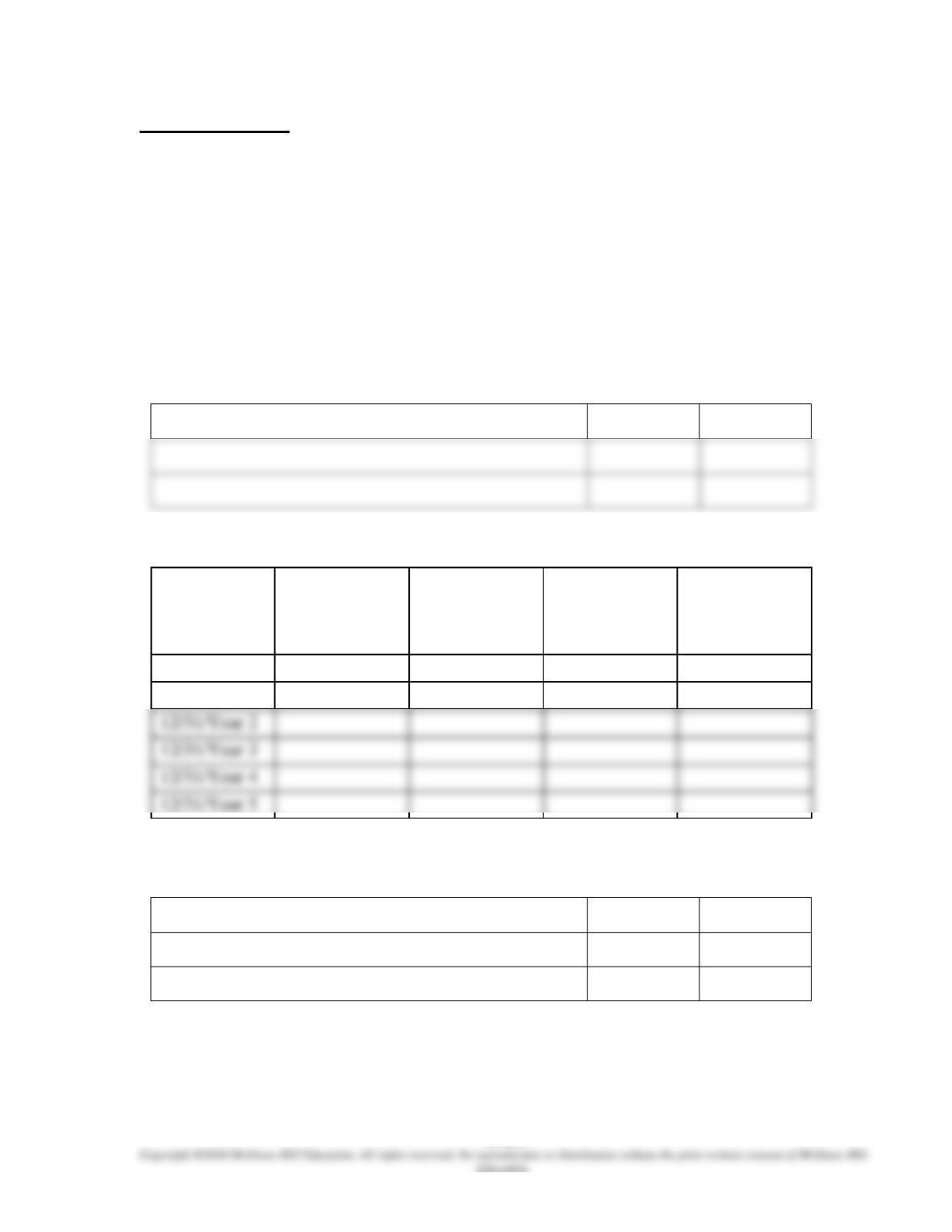
Complete the following interest schedule (assuming effective-interest amortization):
Date
(a)
(b)
(c)
(d)
Cash Owed
for Interest
Interest
Expense
Amortization
of Bond
Discount
Bonds
Payable
Book
Value*
$800,000 ×
(8%)
Beginning
of Period
Book Value
× (12%)
(b) – (a)
Beginning
book value
+ (c)
1/1/Year 1
None
None
None
$684,627
12/31/Year 3
12/31/Year 4
12/31/Year 5
Prepare the journal entry to record the first payment of interest on December 31, Year 1 (assuming the
company does not use Discount and Premium accounts):
Interest Expense (+E, –SE)
82,155
Bonds Payable (+L)
18,155
Cash (–A)
64,000
Chapter 10 – Reporting and Interpreting Bond Securities
10–24
HANDOUT 10 – 4
ISSUING BONDS
On January 1, Year 1, $1,200,000, 5-year, bonds with a stated rate of 10% payable annually were issued
for cash of $1,295,844 when the market rate of interest was 8%.
Were these bonds issued at a discount or at a premium? Why?
Prepare the journal entry to record the issuance (sale) of the bonds (assuming the company does not use
Discount and Premium accounts):
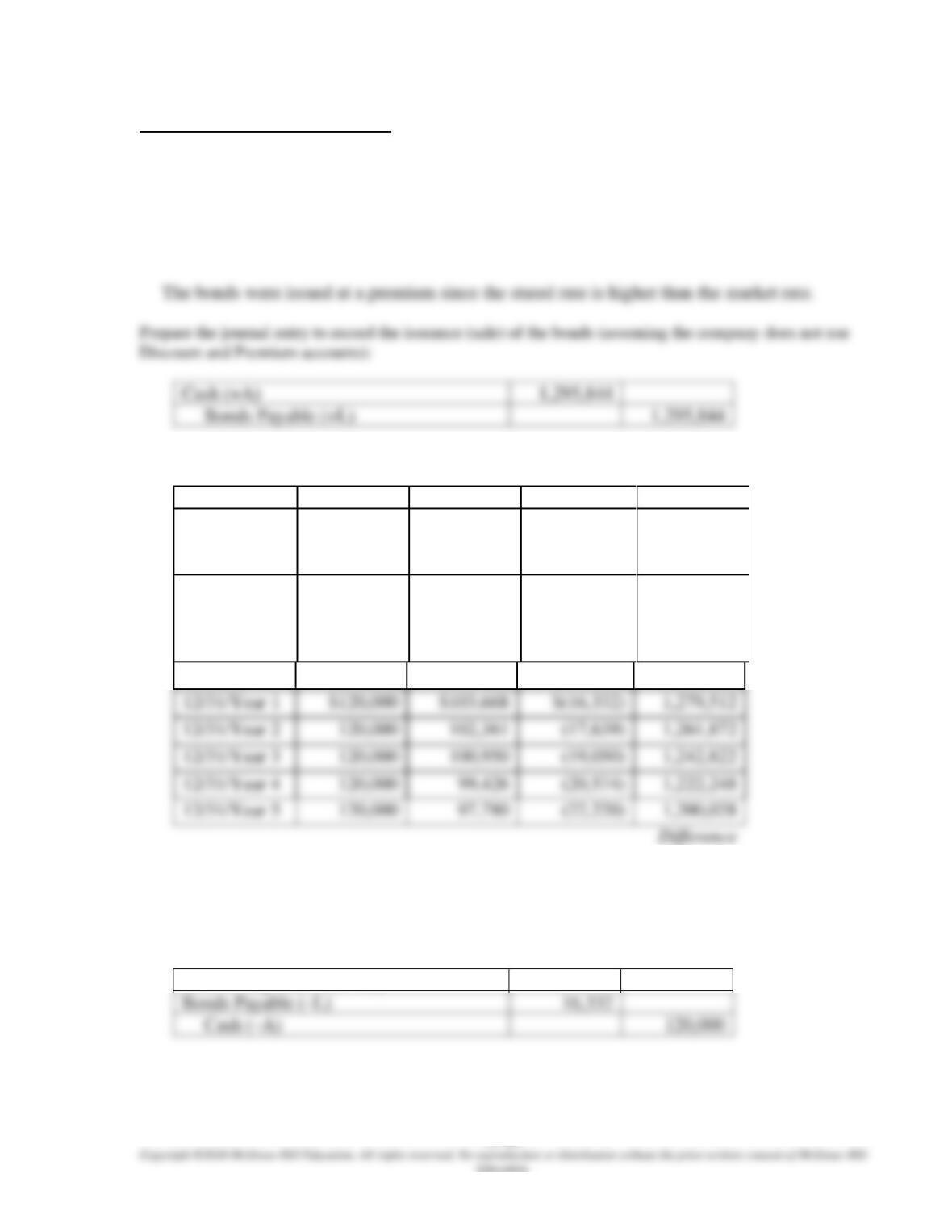
Complete the following interest schedule (assuming effective-interest amortization):
Date
Cash Owed for
Interest
Interest
Expense
Amortization
of Bond
Discount (or
Premium)
Bonds Payable
Book Value
1/1/Year 1
None
None
None
12/31/Year 1
12/31/Year 5
Prepare the journal entry to record the first payment of interest on December 31, Year 1 (assuming the
company does not use Discount and Premium accounts):
Chapter 10 – Reporting and Interpreting Bond Securities
10–25
HANDOUT 10 – 4 SOLUTION
ISSUING BONDS
On January 1, Year 1, $1,200,000, 5-year, bonds with a stated rate of 10% payable annually were issued
for cash of $1,295,844 when the market rate of interest was 8%.
Were these bonds issued at a discount or at a premium? Why?
Cash (+A)
Bonds Payable (+L)
Complete the following interest schedule (assuming effective-interest amortization):
Date
(a)
(b)
(c)
(d)
Cash Owed
for Interest
Interest
Expense
Amortization
of Bond
Premium
Bonds
Payable
Book Value
$1,200,000
× (10%)
Beginning
of Period
Book Value
× (8%)
(b) – (a)
Beginning
book value
+ (c)
1/1/Year 1
None
None
None
$1,295,844
12/31/Year 4
12/31/Year 5
due to
rounding
Prepare the journal entry to record the first payment of interest on December 31, Year 1 (assuming the
company does not use Discount and Premium accounts):
Interest Expense (+E, –SE)
103,668
Bonds Payable (–L)
Cash (–A)
120,000