PROBLEM 10.8 (Continued)
3.
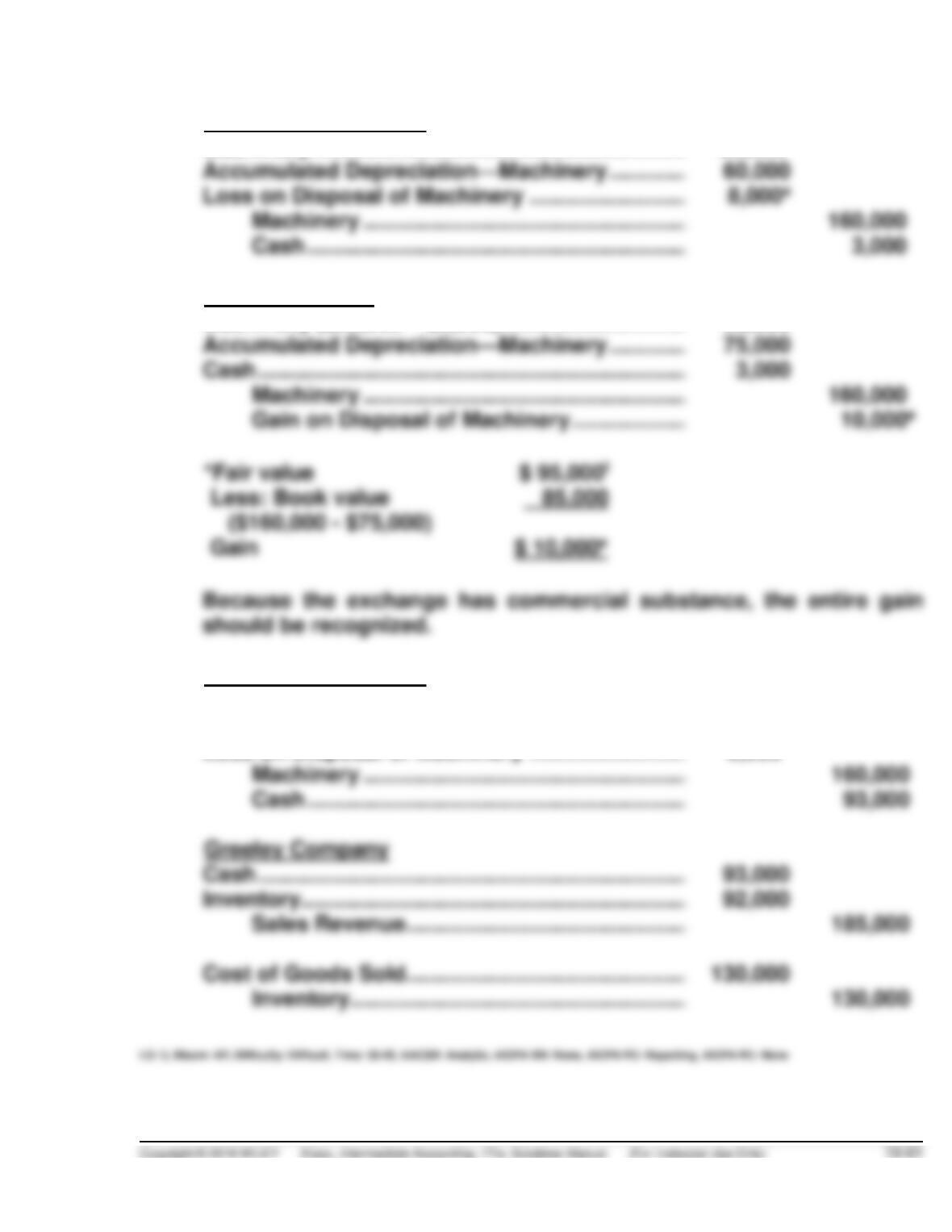
Holyfield Corporation
Machinery ………………………………………………………
95,000f
Accumulated Depreciation—Machinery ……………
60,000
Loss on Disposal of Machinery ……………………….
Machinery …………………………..…………………..
Cash ……………………………………………………….
Liston Company
Machinery ($95,000f – $3,000) …………………………..
92,000
Accumulated Depreciation—Machinery ……………
Machinery …………………………..…………………..
*Fair value
4.
Holyfield Corporation
Machinery ………………………………………………………
185,000
Accumulated Depreciation—Machinery ……………
60,000
Loss on Disposal of Machinery ……………………….
8,000a
Machinery …………………………..…………………..
Cash ……………………………………………………….
Greeley Company
Cash ………………………………………………………………
93,000
Inventory ……………………………………………………….
92,000
Sales Revenue …………………………………………
Cost of Goods Sold …………………………………………
Inventory …………………………..…………………….
PROBLEM 10.9
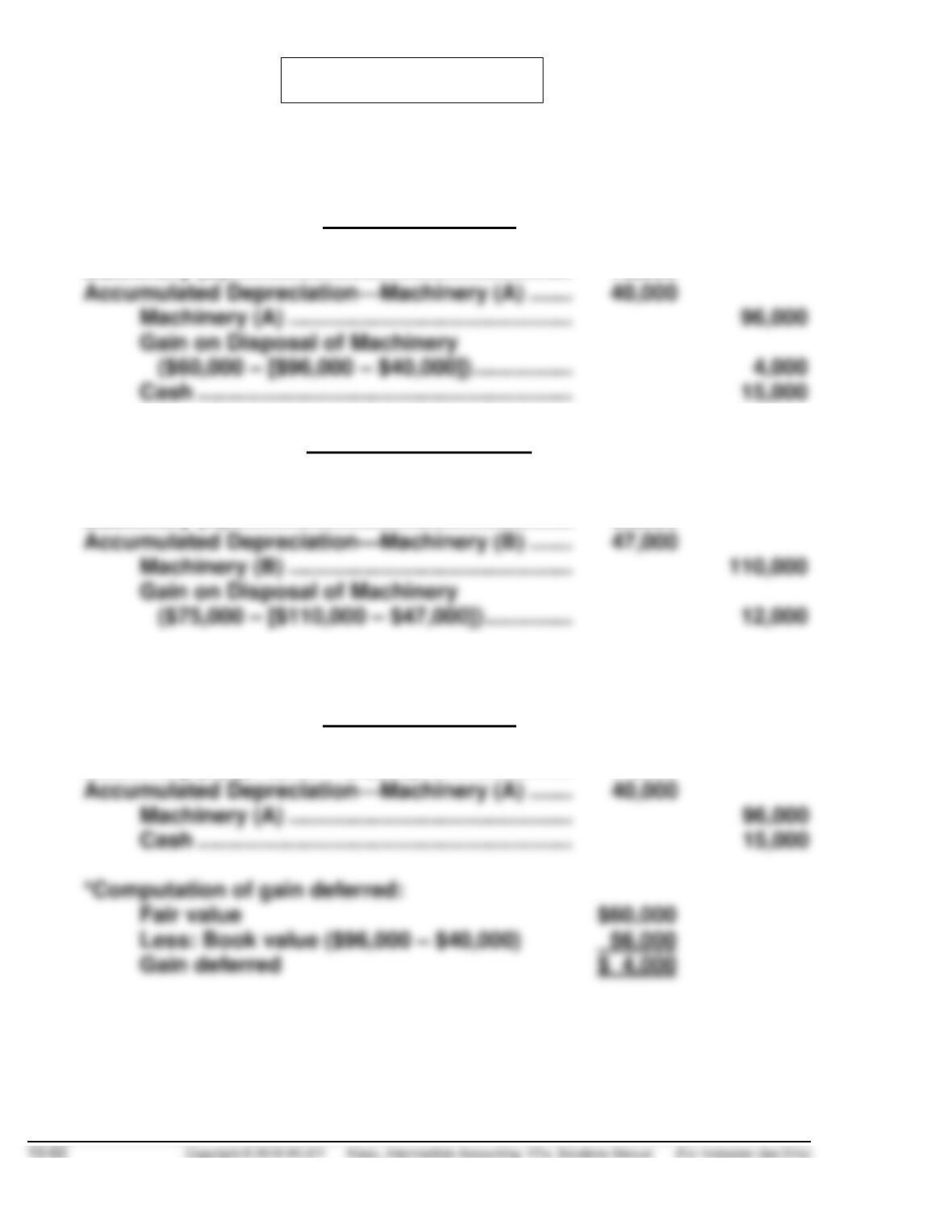
(a) Exchange has commercial substance:
Hyde, Inc.’s Books
Machinery (B)…………………………………………………..
75,000
Accumulated Depreciation—Machinery (A) ……….
40,000
Machinery (A) ………………………………………….
Gain on Disposal of Machinery
($60,000 – [$96,000 – $40,000]) ……………….
Cash ……………………………………………………….
Wiggins, Inc.’s Books
Cash ……………………………………………………………….
15,000
Machinery (A)…………………………………………………..
60,000
Accumulated Depreciation—Machinery (B) ……….
Machinery (B) ………………………………………….
Gain on Disposal of Machinery
($75,000 – [$110,000 – $47,000]) ……………..
(b) Exchange lacks commercial substance:
Hyde, Inc.’s Books
Machinery (B) ($75,000 – $4,000) ……………………….
71,000*
Accumulated Depreciation—Machinery (A) ……….
40,000
Machinery (A) ………………………………………….
Cash ……………………………………………………….
*Computation of gain deferred:
Fair value
Less: Book value ($96,000 – $40,000)
PROBLEM 10.9 (Continued)
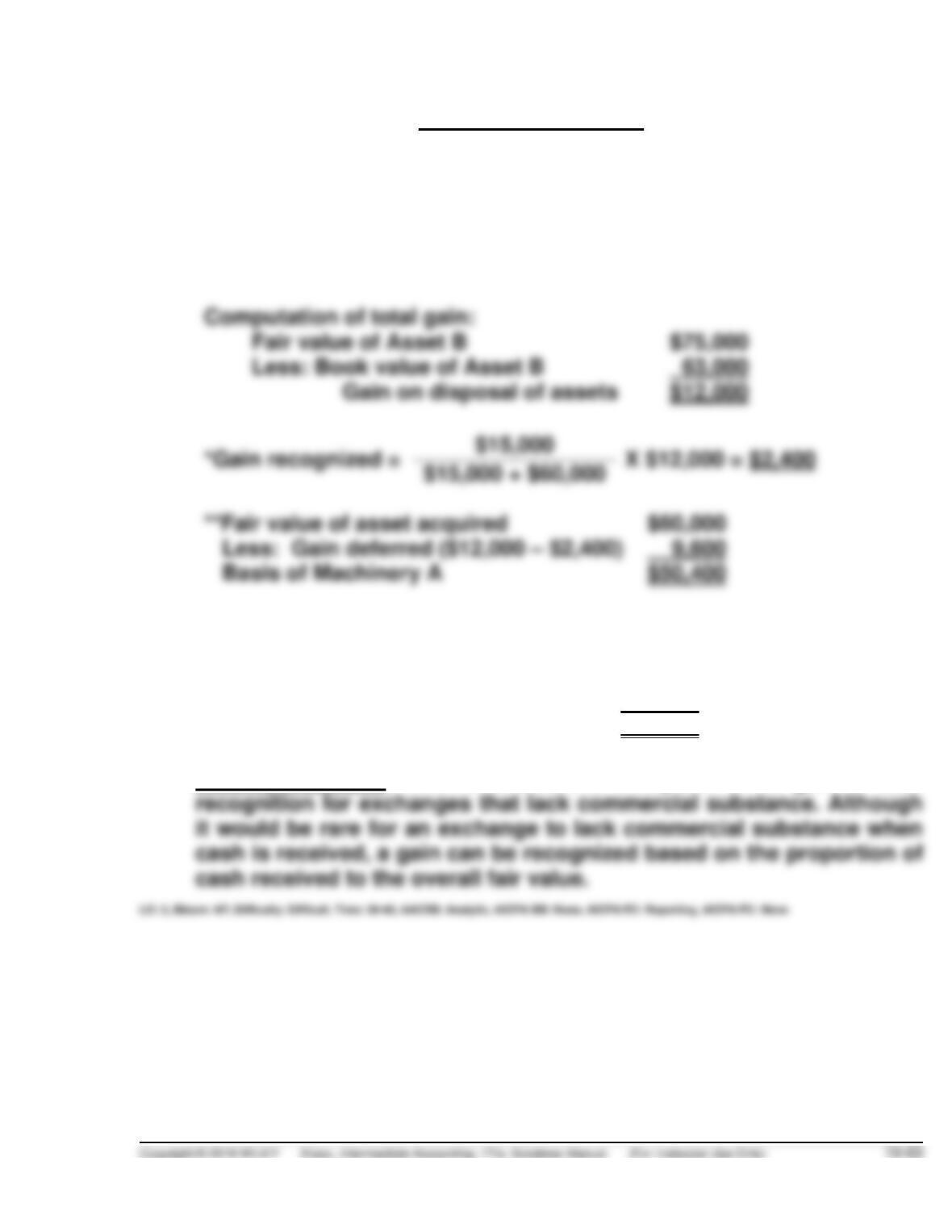
Wiggins, Inc.’s Books
Cash ………………………………………………………………
15,000
Machinery (A) …………………………..…………………….
50,400**
Accumulated Depreciation—Machinery (B) ………
47,000
Machinery (B) …………………………..……………..
110,000
Gain on Disposal of Machinery …………………
2,400*
Computation of total gain:
Fair value of Asset B
Less: Book value of Asset B
Gain on disposal of assets
**Fair value of asset acquired
Basis of Machinery A
OR
Book value of Machinery B
$63,000
Less: Portion of book value sold
12,600
$50,400
Note to instructor: This illustrates the exception to no gain or loss
PROBLEM 10.10
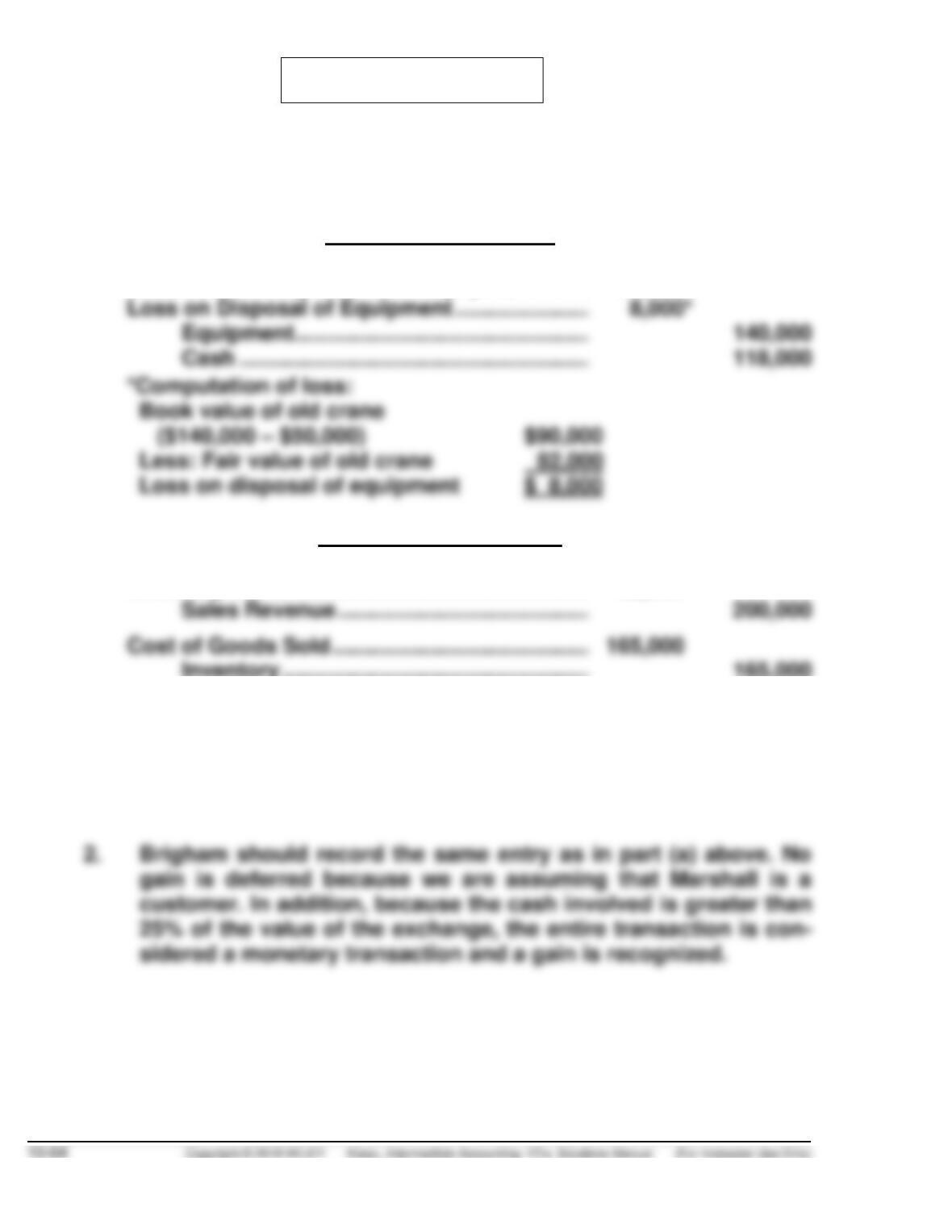
(a) Has Commercial Substance
Marshall Construction
1.
Equipment ($82,000 + $118,000) ………………….
200,000
Accumulated Depreciation—Equipment ……..
50,000
Loss on Disposal of Equipment ………………….
Equipment …………………………………………
Cash …………………………………………………
Brigham Manufacturing
2.
Cash …………………………..…………………………….
118,000
Inventory …………………………………………………..
82,000
Sales Revenue …………………………………..
Cost of Goods Sold ……………………………………
165,000
Inventory …………………………………………..
165,000
(b) Lacks Commercial Substance
1. Marshall Construction should record the same entry as in part (a)
above, since the exchange resulted in a loss.
PROBLEM 10.10 (Continued)
(c) Has Commercial Substance
Marshall Construction
1.
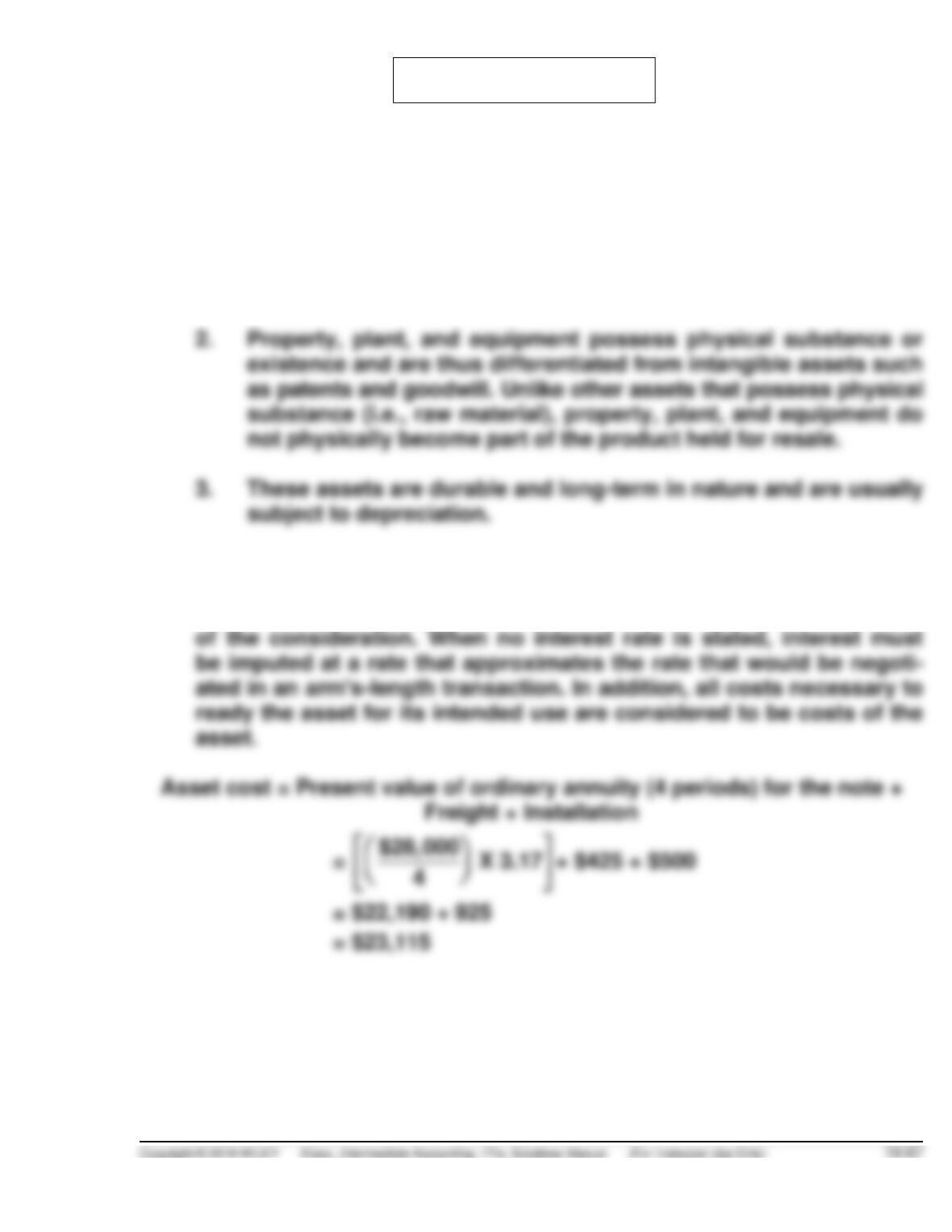
Equipment ($98,000 + $102,000)………………….
200,000
Accumulated Depreciation—Equipment ……..
50,000
Equipment…………………………………………
Cash …………………………………………………
102,000
Gain on Disposal of Equipment ………….
Brigham Manufacturing
2.
Cash ………………………………………………………..
102,000
Inventory ………………………………………………….
98,000
Sales Revenue ………………………………….
200,000
Cost of Goods Sold …………………………………..
165,000
Inventory ………………………………………….
165,000
(d)
Marshall Construction
1.
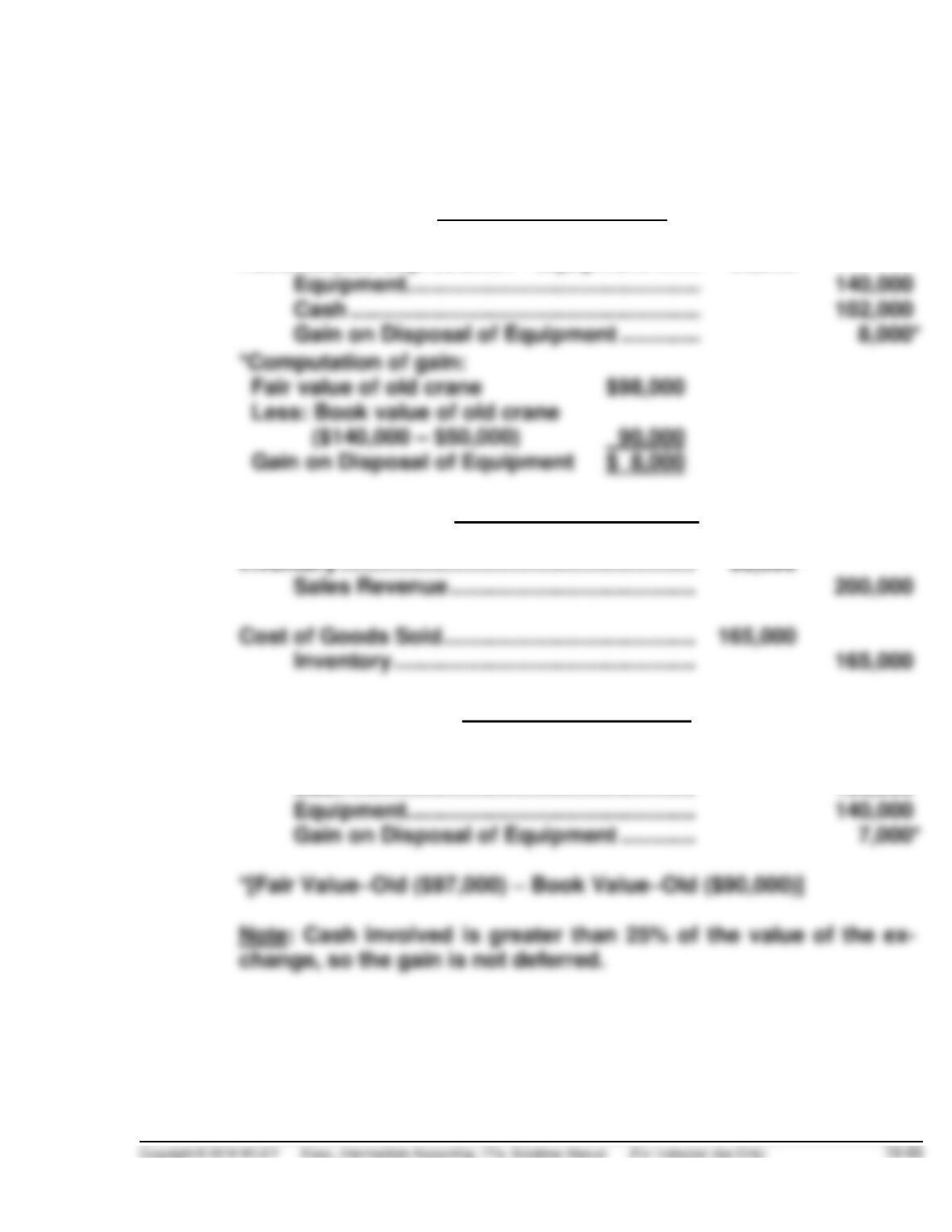
Equipment ……………………………………………….
200,000
Accumulated Depreciation—Equipment …….
50,000
Cash ………………………………………………..
103,000
Equipment………………………………………..
140,000
Gain on Disposal of Equipment …………
*[Fair Value–Old ($97,000) – Book Value–Old ($90,000)]
change, so the gain is not deferred.
PROBLEM 10.10 (Continued)
Brigham Manufacturing
2.
Cash …………………………..…………………………..
103,000
Inventory ………………………………………………….
97,000
Sales Revenue ………………………………….
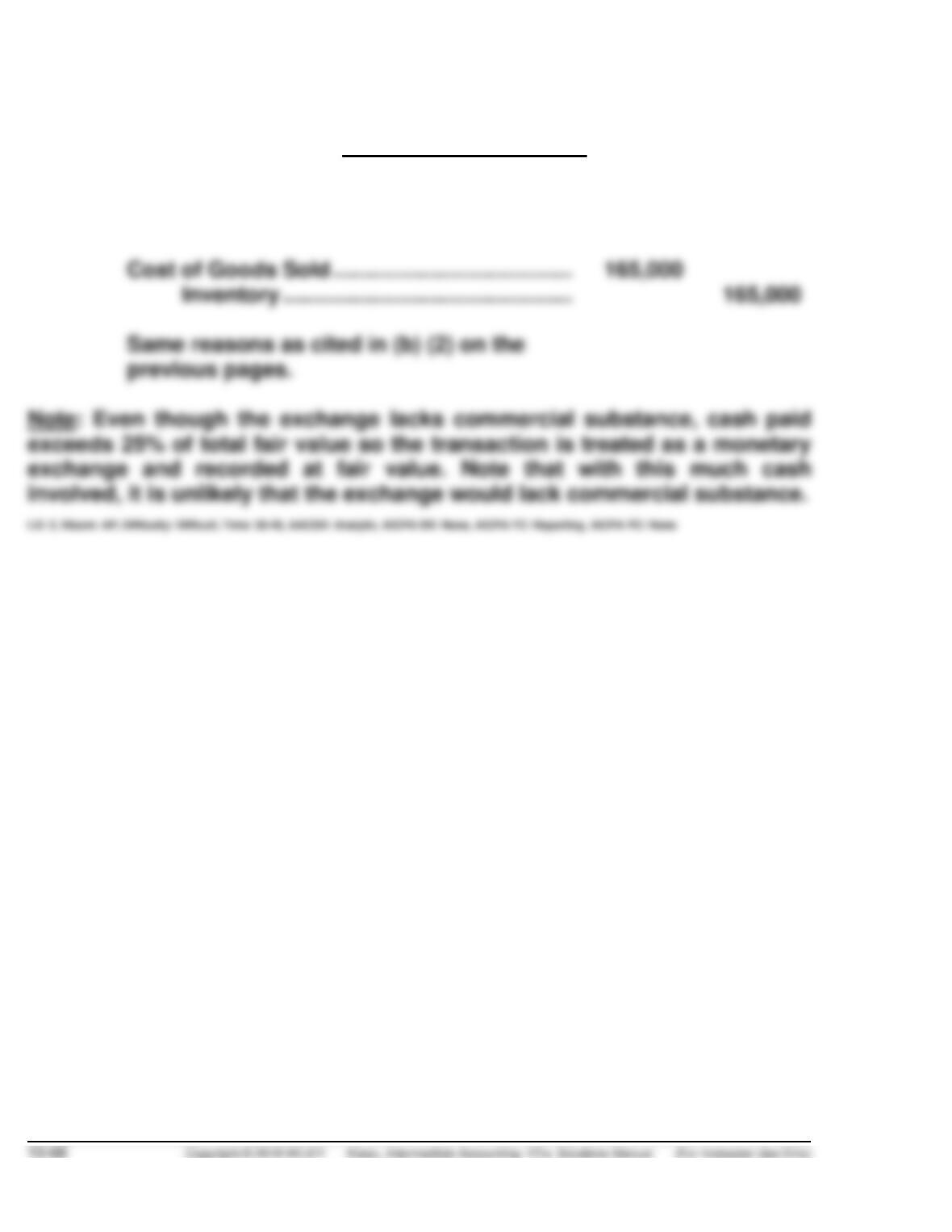
200,000
Cost of Goods Sold …………………………………..
Inventory ………………………………………….
165,000
PROBLEM 10.11
(a) The major characteristics of plant assets, such as land, buildings, and
equipment, which differentiate them from other types of assets are
presented below.
1. Plant assets are acquired for use in the regular operations of the
enterprise and are not for resale.
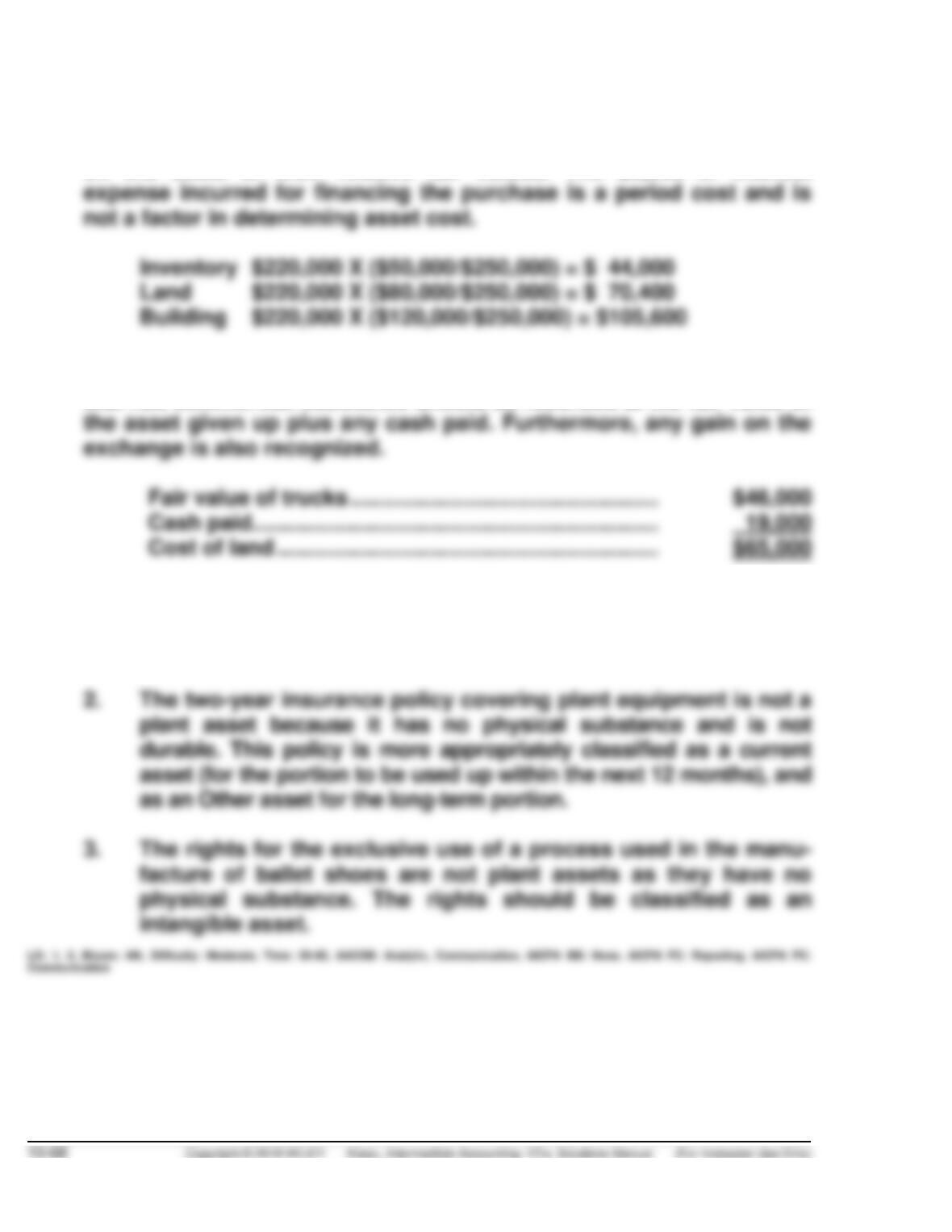
(b) Transaction 1. To properly reflect cost, assets purchased on deferred
payment contracts should be accounted for at the present value of the
consideration exchanged between the contracting parties at the date
PROBLEM 10.11 (Continued)
Transaction 2. The lump-sum purchase of a group of assets should be
accounted for by allocating the total cost among the various assets
on the basis of their relative fair values. The $8,000 of interest
Transaction 3. The cost of a nonmonetary asset acquired in an exchange
that has commercial substance should be recorded at the fair value of
(c) 1. A building purchased for speculative purposes is not a plant
asset as it is not being used in normal operations. The building
is more appropriately classified as an investment.
TIME AND PURPOSE OF CONCEPTS FOR ANALYSIS
CA 10.1 (Time 20–25 minutes)
Purpose—to provide the student with a problem to decide which expenditures related to purchasing
CA 10.2 (Time 20–25 minutes)
Purpose—to provide the student with a situation involving the proper allocation of costs to self–
CA 10.3 (Time 30–40 minutes)
Purpose—to provide the student with a situation to determine capitalization of interest and to explain in
CA 10.4 (Time 30–40 minutes)
CA 10.5 (Time 20–25 minutes)
Purpose—to provide the student with an understanding of the proper accounting treatment involving
CA 10.6 (Time 20–25 minutes)
Purpose—to provide the student with a case involving allocation of costs between land and buildings,
SOLUTIONS TO CONCEPTS FOR ANALYSIS
CA 10.1
(a) Expenditures should be capitalized when they benefit future periods. The cost to acquire the land
should be capitalized and classified as land, a nondepreciable asset. Since tearing down the small
factory is readying the land for its intended use, its cost is part of the cost of the land and should
(b) A gain should be recognized on the sale of the land and building because income is realized
whenever the earning process has been completed and a sale has taken place.
CA 10.2
(a) Materials and direct labor used in the construction of the equipment definitely should be charged to
the equipment account. It should be emphasized that no gain on self-construction should be
recorded because such an approach violates the historical cost principle. The controversy centers
on the assignment of indirect costs, called overhead or burden, consisting of power, heat, light,
insurance, property taxes on factory buildings, etc. The suggested approaches are discussed below.
(b) 1. Many believe that only the variable overhead costs that increase as a result of the construction
2. Proponents of alternative (2) argue that such assets should be given the same treatment as
inventory items and that all costs should be allocated thereto just as if saleable goods were
CA 10.2 (Continued)
(c) It could be argued that because costs of development are usually higher on the first few units, the
CA 10.3
To: Jane Esplanade, President
From: Good Student, Manager of Accounting
Date: January 15, 2020
Subject: Capitalization of avoidable interest on the warehouse
construction project
I am writing in response to your questions about the capitalized interest costs for
the warehouse construction project. This brief explanation of my calculations
should facilitate your understanding of these costs.
On the surface, this standard seems simple. Actual interest incurred during the
construction period equals all interest which accrued on any debt outstanding
during that period. Avoidable interest equals the amount of interest which would
not have been incurred if the construction project had not been undertaken. The
amount of interest capitalized is the smaller of the two.