
56 Section 2 Chapter and Lecture Notes
Chapter 10 Strategic Planning and Trans-Generational
Entrepreneurship
Learning Objectives
1. To explain the importance of strategic planning to family-business continuity.
2. To discuss the reasons why in the absence of growth, zero-sum dynamics take hold in
the family-controlled company.
3. To discuss several sources of value creation and their unique relevance to family
Chapter 10 Essence
The primary objective of strategic planning is to discover a way to create value for
value. In the family-owned business, there is another important objective: creating the
Section 2 Chapter and Lecture Notes 57
regeneration that is often imperative if the business is going to continue to be competitive
in the hands of the next generation of family members.
members.
Strategic planning increases ow
competitive environment and promotes much-needed communication among
shareholders. With its natural bias toward growth, strategic planning is a great antidote to
the challenges of the late maturity and decline stages that many family businesses find
themselves in as they confront succession.
The seven primary sources of value for family businesses that result in a unique
business model for each family business are financial resources, physical assets, the
product, brand equity/reputation, organization capabilities, customer-supplier integration,
and the family-business relationship.
Discussion Questions
1. What unique advantage does strategic planning offer the family-owned
business?
competitive environment and promotes much-needed communication among
58 Section 2 Chapter and Lecture Notes
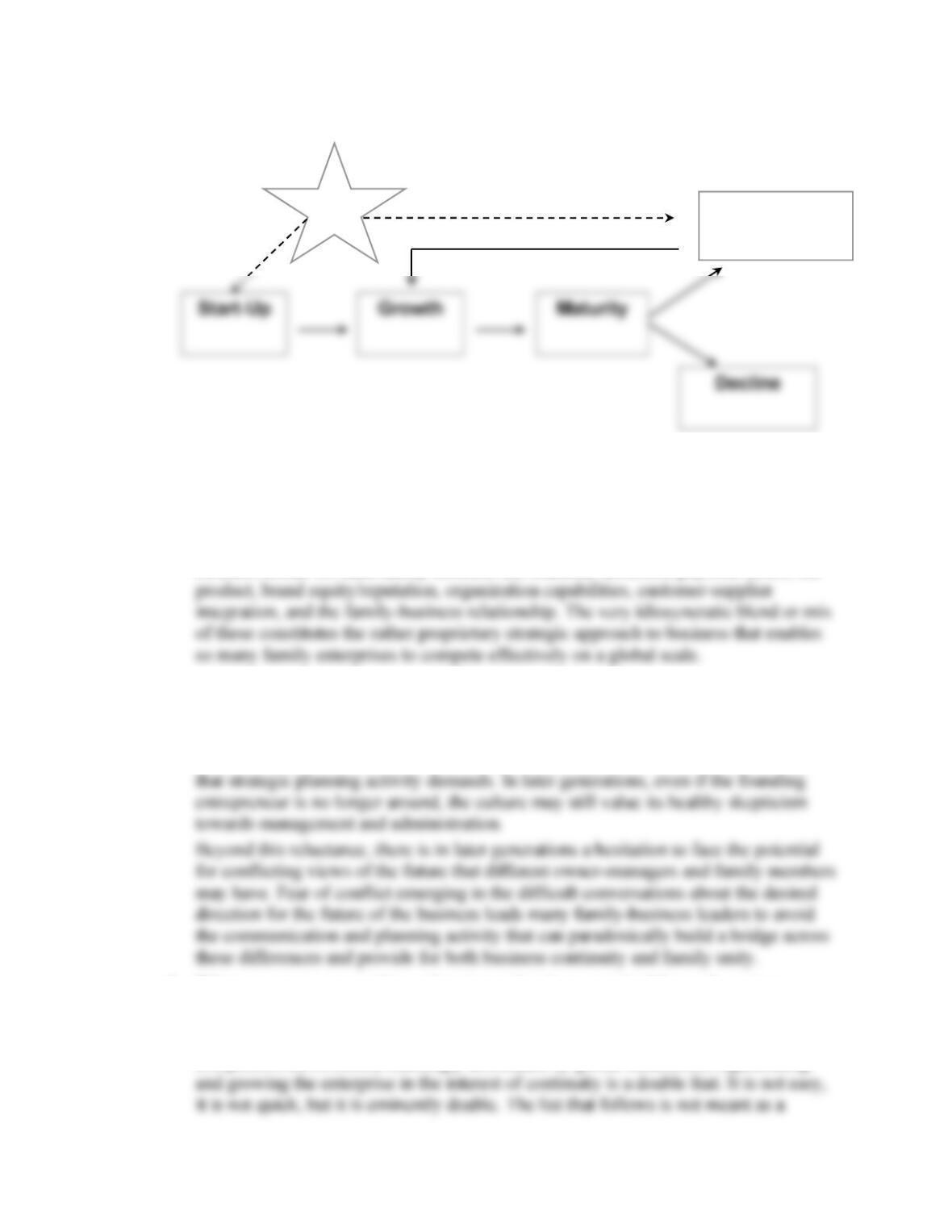
2. Why is a mature family-owned business, one often facing the prospect of
succession, so vulnerable to decline and failure?
From a strategic perspective, family-owned enterprises are most susceptible to
accelerated decline and failure precisely because of their own reliance on the
individual entrepreneur or next-generation CEO. The hero, who founded and led the
young business to accelerated growth, displays a natural disdain for organizational
Section 2 Chapter and Lecture Notes 59
3. What are the primary sources of value creation available for family businesses to
develop their very own business model or establish their sources of competitive
advantage?
The seven primary sources of value for family businesses that result in a unique
business model for each family business are financial resources, physical assets, the
4. Why is strategic thinking and strategic planning so often avoided in family–
owned companies?
An entrepreneurial culture built on moving towards opportunities with great agility is
often not receptive to the more administrative, perhaps even bureaucratic, orientation
5. What are some competitive advantages that have resulted from the unique
blending of sources of value in many family businesses?
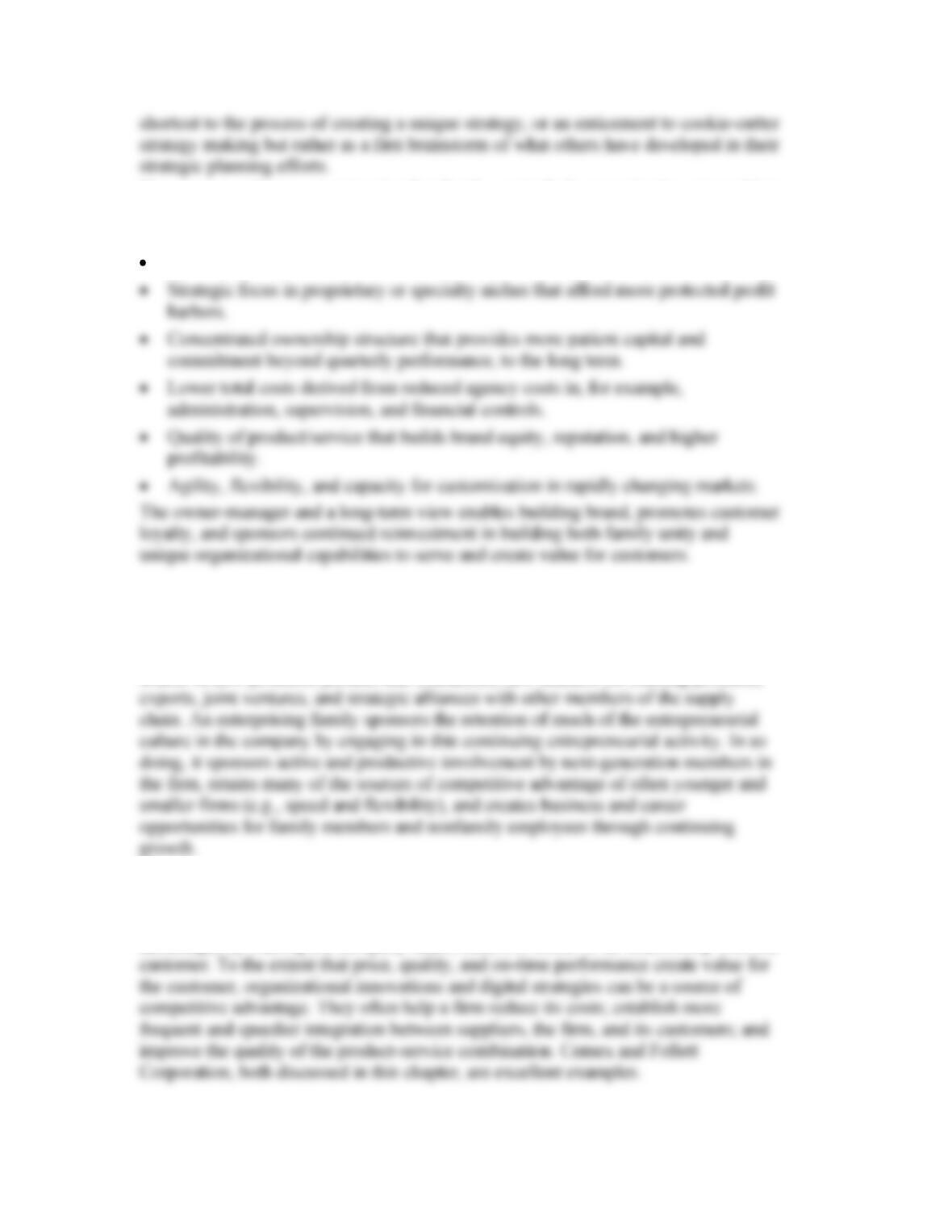
However fragile family-controlled companies may appear in a fast-changing
competitive environment seemingly dominated by global behemoths, regenerating
Vision
Regeneration
60 Section 2 Chapter and Lecture Notes
Here are several core competencies that family-controlled companies have turned into
value creators for their customers and therefore competitive advantages for their
firms:
Speed to market and nimbleness in customer and competitor response.
6. What is the definition of interpreneurship and what resource does it
represent to the family-owned or family-controlled company?
Interpreneurship means intergenerational entrepreneurial activity. It is usually the
source of new products, product line extensions, new markets for existing products,
7. How can organizational innovation and digital strategies give the firm
competitive advantages?
Organizational innovation and digital strategies can give the firm competitive
advantages by making the company faster, better, or closer in its relationship with the

Section 2 Chapter and Lecture Notes 61
8. How can growth resulting from interpreneurship and competitive advantage
help the next-generation leader create a platform for positive-sum dynamics in
the family and therefore enhance the prospects of continuity?
Growth creates new business and career opportunities for both family and nonfamily
managers. By creating these opportunities, the organizational culture is enhanced and
Relevant Case Resources
The Ferré Media Group cases provide excellent inquiries into the strategic planning
dilemmas and efforts by family-
Manual for additional information on these cases.