10–18
Learning Objective 11- Compare the accounting procedures for liabilities under GAAP
and IFRS.
A Look at IFRS—IFRS and GAAP have similar definitions of liabilities. IFRSs
related to reporting and recognition of liabilities are found in IAS 1 (revised)
(“Presentation of Financial Statements”) and IAS 37 (“Provisions, Contingent
Liabilities, and Contingent Assets”). The general recording procedures for
payroll are similar although differences occur depending on the types of
benefits that are provided in different countries.
KEY POINTS
• The basic definition of a liability under GAAP and IFRS is very similar. In a more
technical way, liabilities are defined by the IASB as a present obligation of the entity
arising from past events, the settlement of which is expected to result in an outflow
from the entity of resources embodying economic benefits. Liabilities may be legally
enforceable via a contract or law but need not be; that is, they can arise due to
normal business practices or customs.
• Similar to GAAP, items are normally reported in order of liquidity. Companies
sometimes show liabilities before assets. Also, they will sometimes show non–
current (long-term) liabilities before current liabilities.
• Under both GAAP and IFRS, preferred stock that is required to be redeemed at a
specific point in time in the future must be reported as debt, rather than being
presented as either equity or in a “mezzanine” area between debt and equity.
10–19
• The IFRS leasing standard is IAS 17. Both Boards share the same objective of
recording leases by lessees and lessors according to their economic substance—that
is, according to the definitions of assets and liabilities. However, GAAP for leases is
• Under GAAP, some contingent liabilities are recorded in the financial statements,
others are disclosed, and in some cases no disclosure is required. Unlike GAAP,
IFRS reserves the use of the term contingent liability to refer only to possible
obligations that are not recognized in the financial statements but may be disclosed
if certain criteria are met. Contingent liabilities are defined in IAS 37 as being:
• A possible obligation that arises from past events and whose existence will be
LOOKING TO THE FUTURE
The FASB and IASB are currently involved in two projects, each of which has implications for
the accounting for liabilities. One project is investigating approaches to differentiate between
debt and equity instruments. The other project, the elements phase of the conceptual
framework project, will evaluate the definitions of the fundamental building blocks of
10–20
Chapter 10 Review
✓ Explain to someone who knows very little about accounting what a current liability is and
illustrate by identifying major types of current liabilities.
✓ Describe the accounting for an interest-bearing note at its inception, at year-end, and at
maturity.
✓ How do you account for unearned revenues?
✓ Why are bonds issued? What are the different types of bonds a corporation or
governmental agency can issue?
✓ Describe the entries for the issuance of bonds issued at a discount.

10–21
Vocabulary Quiz Name _____________________ Date _____________
Chapter 10
1. A legal document that indicates the name of the issuer, the face value
of the bonds, and such other data as the contractual interest rate and
maturity date of the bonds.
2. The difference between the selling price and face value of bond when
a bond is sold for more than its face value.
3. Rate used to determine the amount of interest the borrower pays and
the investor receives.
4. A measure of a company’s solvency, calculated by dividing income
before interest expense and taxes by interest expense.
5. Events with uncertain outcomes, such as a potential liability that may
become an actual liability sometime in the future.
6. A method amortizing the same amount of bond discount or bond
premium to each interest period.
7. The difference between the face value of a bond and its selling price
when a bond is sold for less than its face value.
8. Bonds issued against the general credit of the borrower.
9. A long-term note secured by a document called a mortgage that
pledges title to specific units of property as security for the loan.
10. Rate established when bonds are issued that remains constant in
each interest period.
10–22
Solutions to Vocabulary Quiz
Chapter 10
1. Bond certificate

10–23
Multiple Choice Quiz Name _____________________ Date ____________
Chapter 10
1. Liabilities are
a. creditors’ claims on total assets.
b. existing debts and obligations.
c. obligations that must be settled or paid at some time in the future by the transfer
of assets or services.
d. all of these answer choices are correct.
2. Notes payable provide the lender
a. written documentation of the obligation.
b. interest income.
c. both written documentation and interest income.
d. none of these answer choices are correct.
3. Assume the tax rate in your state is 8%. Your cash register does not have a key for
sales tax. However, the total amount of cash received for sales and sales tax during the
month of June was $27,000. Sales for the month of June totaled
a. $24,840.
b. $25,000.
c. $27,000.
d. none of these answer choices are correct.
4. All of the following would have unearned revenue except
a. the publisher of the Rolling Stone magazine.
b. Delta Airlines.
c. the local Slurp and Burp.
d. the United States Postal Service.
5. When the market rate of interest is greater than the contractual rate of interest
a. bonds will be issued at a premium.
b. the financial strength of the issuer is exceptional.
c. bonds will be issued at a discount.
d. the financial strength of the issuer is suspect.
6. The cash inflows during the year that resulted from the principal portion of debt
transactions is provided in the
a. Financing activities section of the cash flow statement.
b. Operating activities section of the cash flow statement.
c. Investing activities section of the cash flow statement.
d. both a and b.
7. The times interest earned ratio uses income before interest expense and taxes because
a. interest and taxes are important components in all ratio analysis.
b. paying interest and taxes does not affect a company’s solvency.
c. the ratio is easier to compute without these items.
d. this number best represents the amount available to pay interest.

10–24
8. A bond issued at a premium
a. is issued by a corporation with an excellent credit rating.
b. has a stated rate of interest that exceeds the market rate.
c. sell at a price in excess of the face amount of the bond.
d. both has a stated rate of interest that exceeds the market rate and sell at a price
in excess of the face amount of the bond.
9. Discount on Bonds Payable
a. is a contra liability.
b. is an expense.
c. is deducted from bonds payable on the balance sheet.
d. both is a contra liability and is deducted from bonds payable on the balance
sheet.
10. Contingencies must be accrued as liabilities if
a. the company can determine a reasonable estimate of the debt.
b. the amount is over $10,000.
c. it is probable the company will suffer a loss.
d. both the company can determine a reasonable estimate of the debt and it is
probable the company will suffer a loss.

10–25
Solutions to Multiple Choice Quiz
Chapter 10
1. d

10–26
Exercise 1 – World Wide Web Research and Market Terminology Activity
Chapter 10
There are a number of creative ways to borrow money when financing a business. In order to
speak the language of financiers, you need to have a good understanding of the terms used in
the banking and investment industry. Go to http://www.nyse.com, scroll down and click on For
Individual Investors, then Learning Center, and Financial Glossary. Find the definitions to
the following terms:
1. Bond
2. Corporate Bond
3. Coupon
4. Face value
5. Fixed Income
6. Issuer
7. Principal
8. Secondary market
9. Yield
10. Zero coupon bond
10–27
Exercise 2 – Bond Basics and Communications Activity
Chapter 10
Your friend is considering investing approximately $5,000 in bonds issued by her local school
district. She knows you are an accounting major and has come to you for advice. She provides
you with the following information about the bonds:
The bonds are secured.
The bonds are “callable.”
The bonds are 8%, 20-year bonds.
The bonds are available at 103.
She has never invested in bonds and does not understand bond terminology. She is confused
about why she will have to pay more than $5,000 for her initial investment in the bonds. What
will you tell your friend to help her understand the basics of investing in bonds? Will you advise
your friend to invest in the bonds? Why or why not?
Solution:

10–28
Exercise 3 – World Wide Web Research and Bond Basics Activity
Chapter 10
Tutorials useful to accounting students are available on the Internet for a variety of financial
and accounting areas. Go to http://free.investopedia.com/university/, Under Investing, click on
Definitions . Find the definitions to the following terms:
1. Callable Bond
2. Convertible Bond
3. Debenture
4. Income Bond
5. Municipal Bond
6. Registered Bond
7. Eurobond
8. Euroyen Bond
9. Serial Bond
10. Senior Issue
10–29
Exercise 4 – Note Payable Activity
Chapter 10
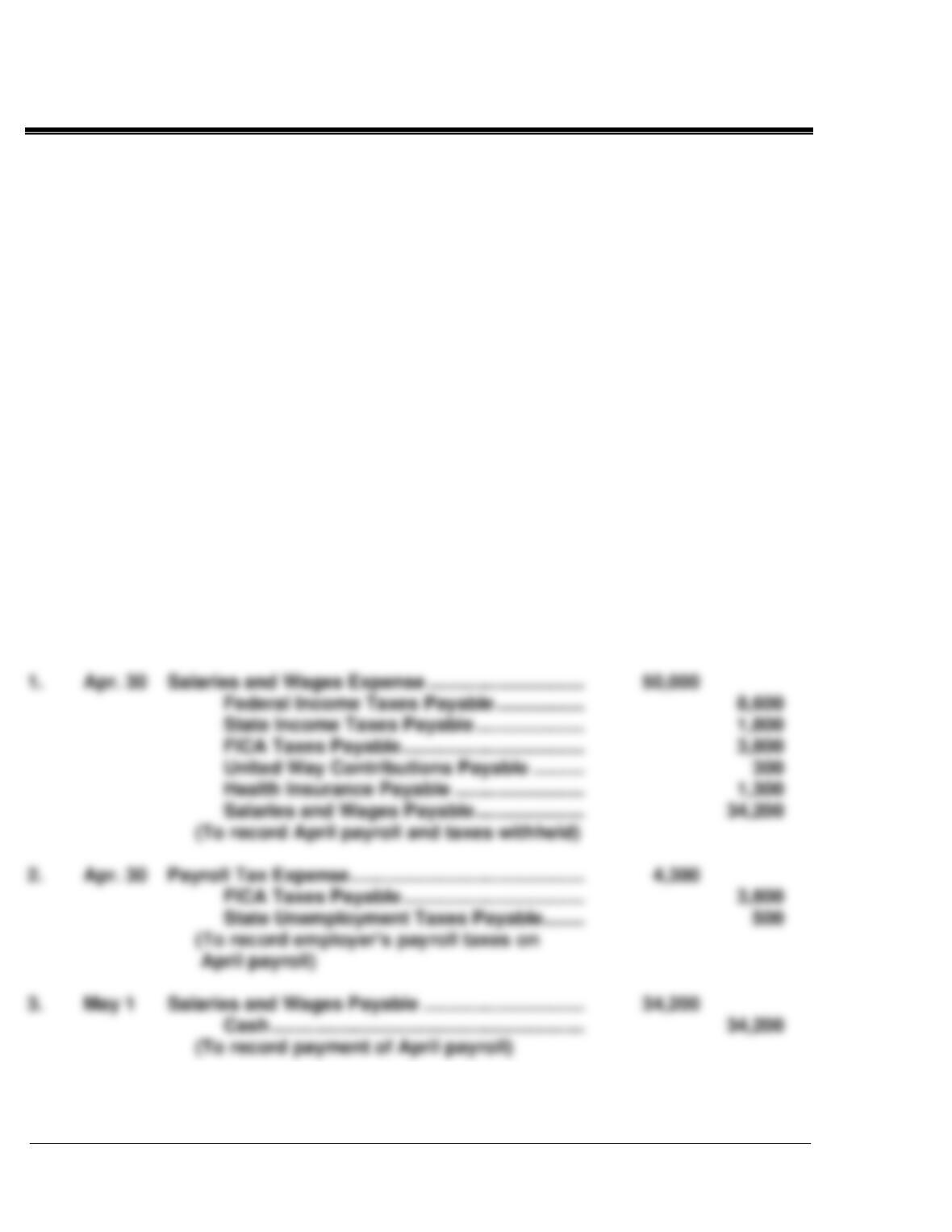
Pat’s Quilting Shop borrowed $10,000 on January 1, 2014, from the local bank to expand its
building. The funds were borrowed by signing a $10,000, 12%, one-year note payable.
1. Prepare the entry to record the receipt of the funds on January 1, 2014.
2. Prepare the entry to accrue the interest on June 30, 2014.
3. Show the balance sheet presentation for the note and accrued interest at June 30.
Solutions:
1. Jan 1 Cash ………………………………………………………….. 10,000
10–30
Exercise 5 – Payroll Entries Activity
Chapter 10
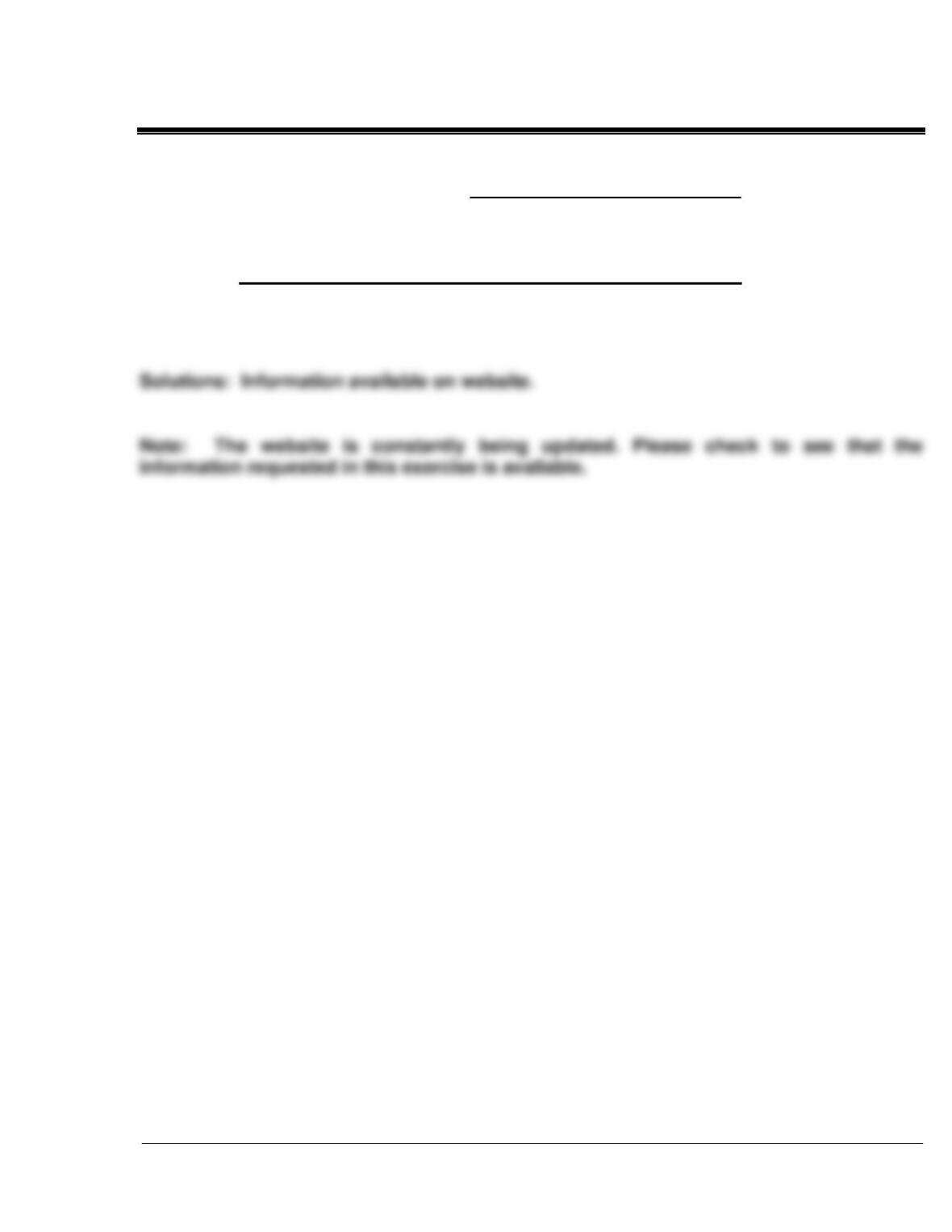
During the month of April, Marble Company’s employees earned wages of $50,000. The
following amounts were withheld from employees’ wages:
Federal income taxes $8,600
State income taxes 1,800
Social Security taxes (FICA and Medicare) 3,800
United Way contributions 300
Health insurance 1,300
In addition, Marble incurred $500 for state unemployment tax.
1. Prepare the April 30 journal entry assuming that the wages earned will be paid on May
1.
2. Prepare the entry on April 30 to record Marble’s payroll tax expense.
3. Prepare the entry to record the payment on May 1.
Solutions:
10–31
Exercise 6 – World Wide Web Research and Bonds Activity
Chapter 10
Mention securities in a crowded room and someone will start talking about bonds. To find
information on investing in bonds, go to http://www.investinginbonds.com.
Click on Bond Basics – learn more.
Summarize Key Bond Investment Considerations – part 1 and part 2.

10–32
Exercise 7 – World Wide Web Research and Liabilities Activity
Chapter 10
Go to Microsoft’s homepage – http://www.microsoft.com/. Click on Investor Relations and
Annual Report.
Locate the financial statements and the notes to the financial statements.
1. What contingent liabilities does Microsoft have?
2. Are these contingencies shown in the financial statements or are they disclosed only in
the notes to the financial statements?
3. Summarize the types of operating and capital leases that Microsoft has.
10–33
Exercise 8 – Unearned Revenue Activity
Chapter 10
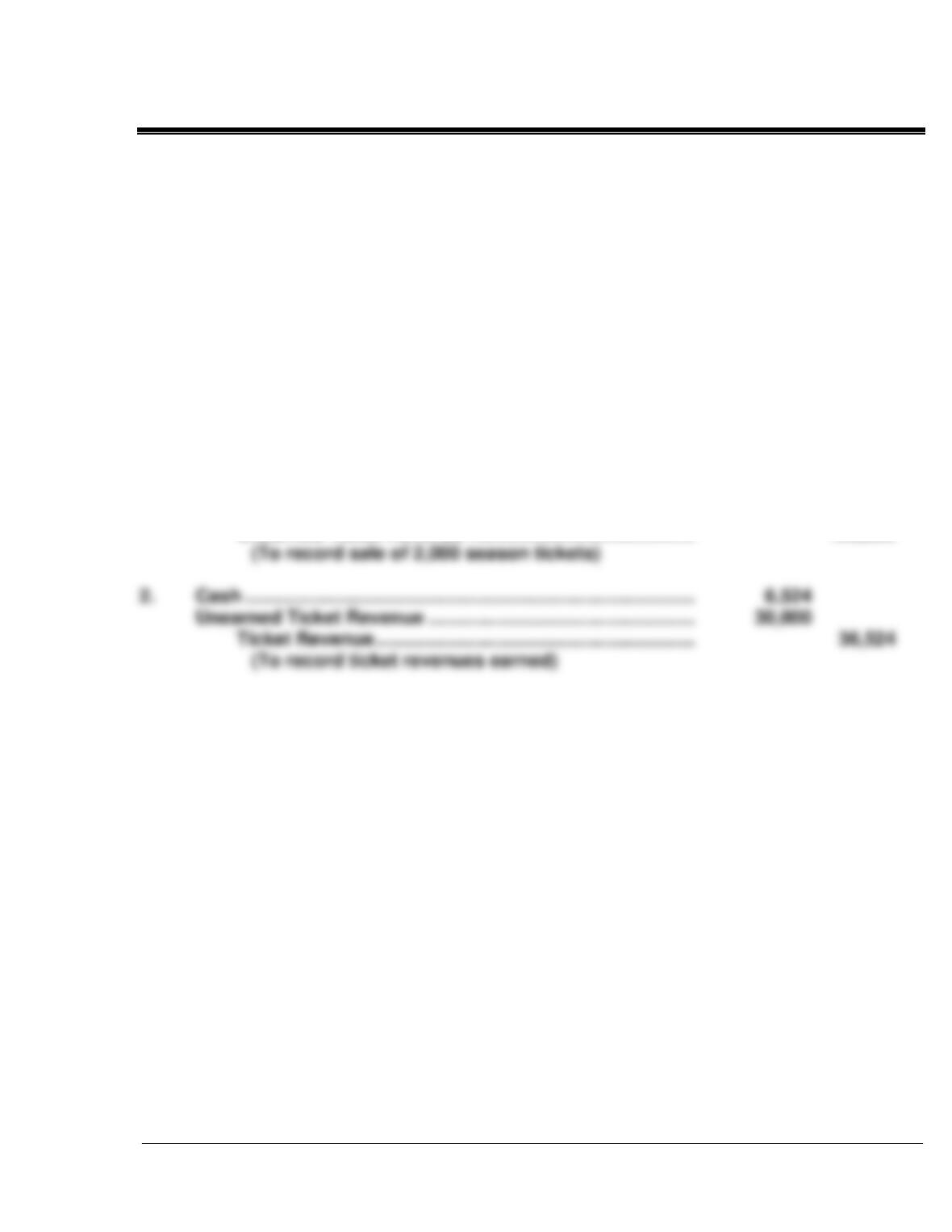
Local University’s baseball program sells 2,000 season tickets at $75 each for its 15-game
home schedule. Regular tickets are $7 per game for adults. Students of the University and
children under 18 get in free. During February Local played three home games. Ticket sales at
the gate totaled $6,524.
1. Prepare the entry to record the sale of season tickets.
2. Record the entry to record the revenue earned in February.
Solutions:
1. Cash ………………………………………………………………………….. 150,000
Unearned Ticket Revenue ……………………………………. 150,000