*PROBLEM 10-7A
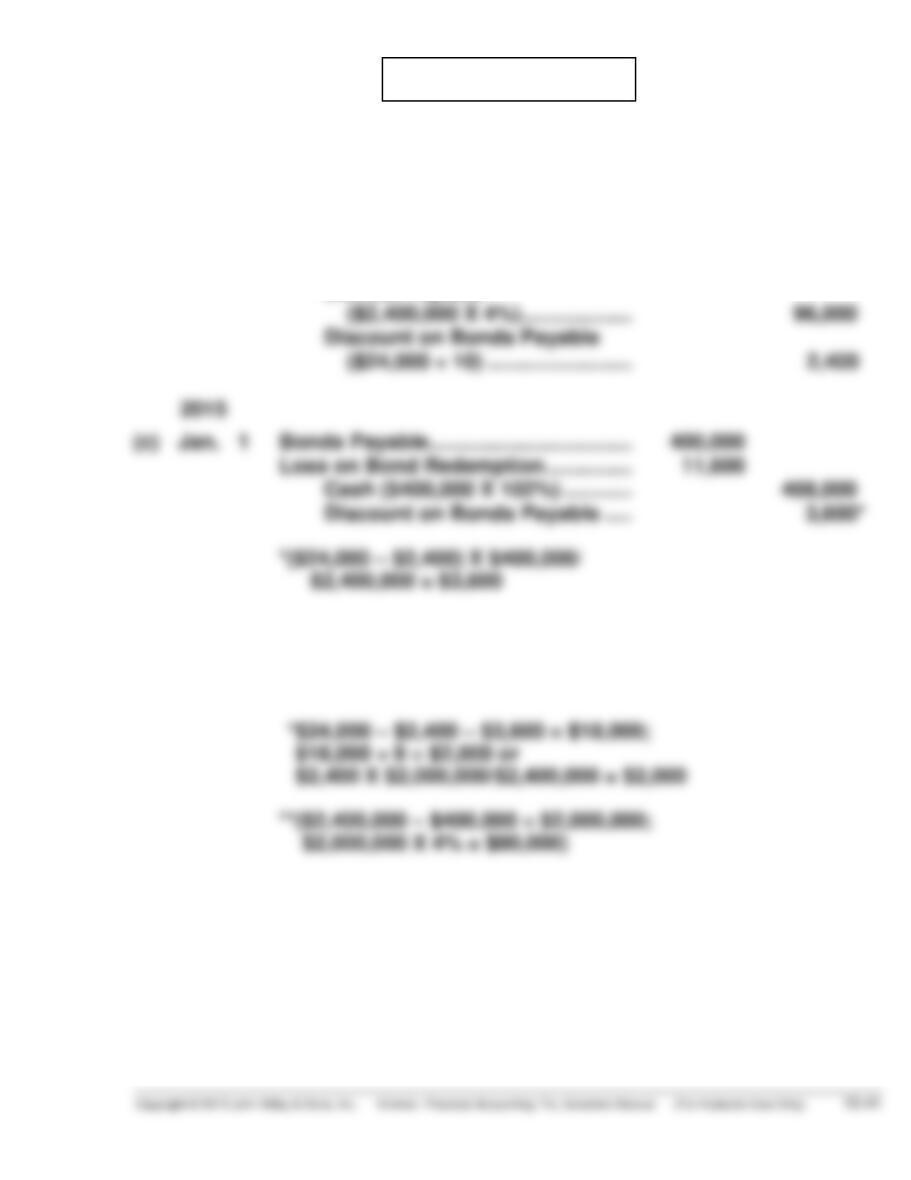
2014
(a) Jan. 1 Interest Payable …………………………… 96,000
Cash …………………………………….. 96,000
(b) Dec. 31 Interest Expense ………………………….. 98,400
Interest Payable
(d) Dec. 31 Interest Expense ………………………….. 82,000
Interest Payable ……………………. 80,000**
Discount on Bonds Payable ….. 2,000**
*PROBLEM 10-8A
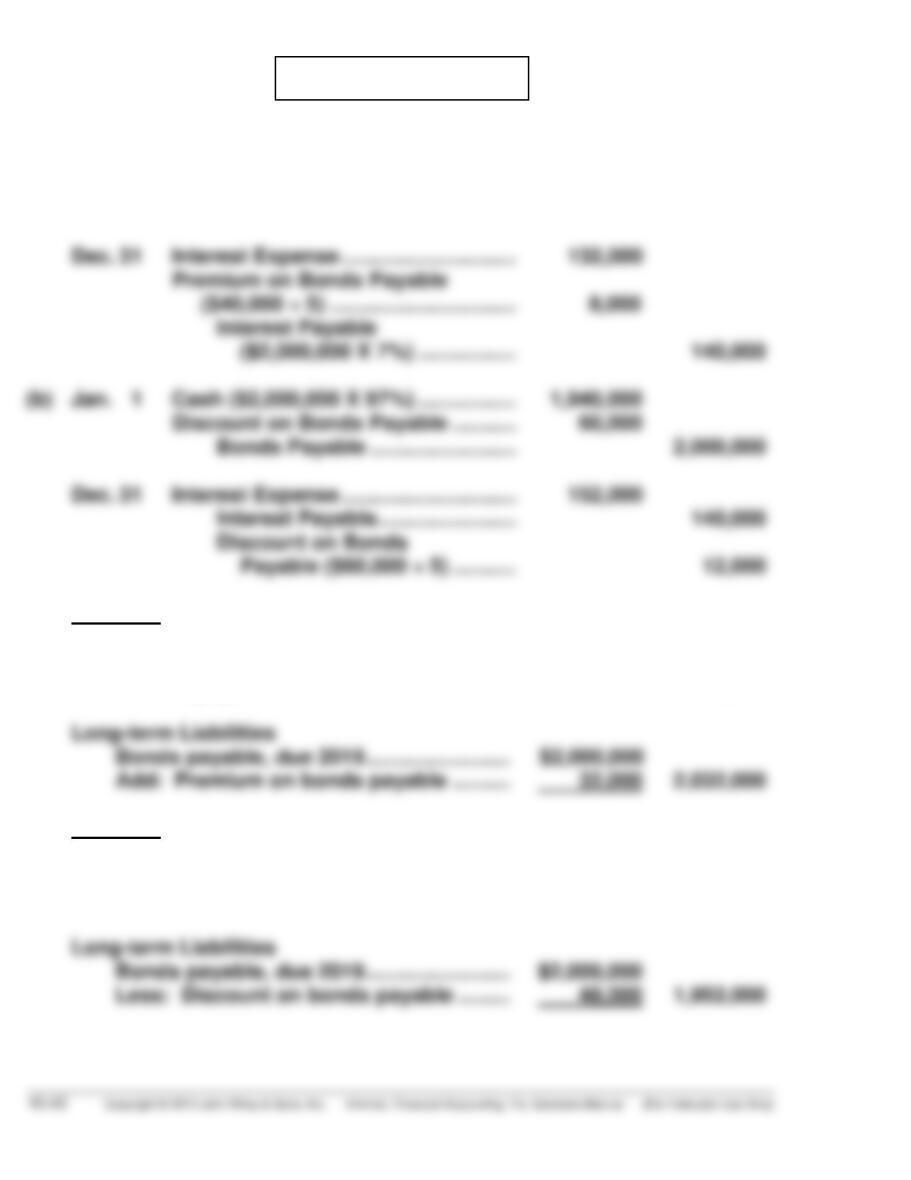
(a) Jan. 1 Cash ($2,000,000 X 102%) …………… 2,040,000
Bonds Payable ……………………. 2,000,000
Premium on Bonds Payable …. 40,000
(c) Premium
Current Liabilities
Interest payable …………………………………. $ 140,000
Discount
Current Liabilities
Interest payable …………………………………. $ 140,000
*PROBLEM 10-9A
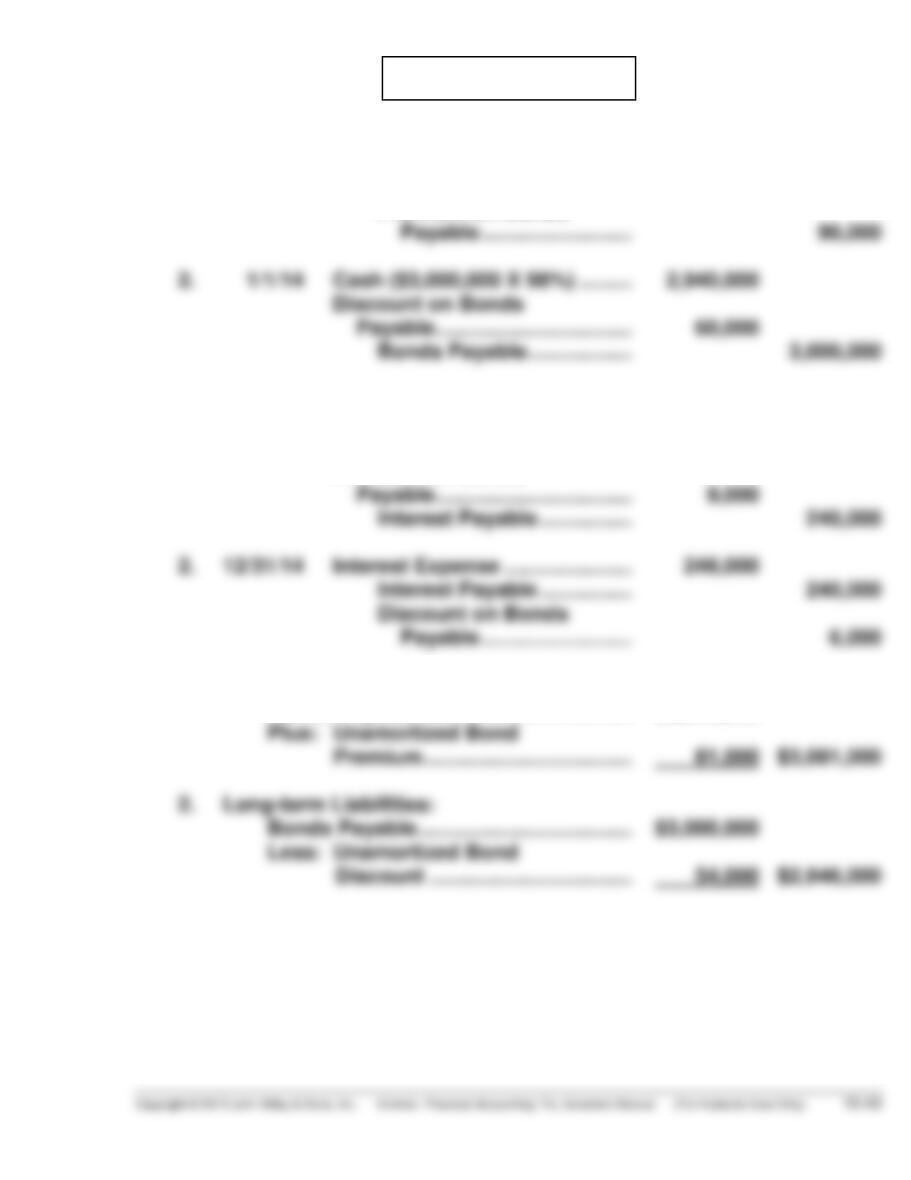
(a) 1. 1/1/14 Cash ($3,000,000 X 103%) ……. 3,090,000
Bonds Payable ……………… 3,000,000
Premium on Bonds
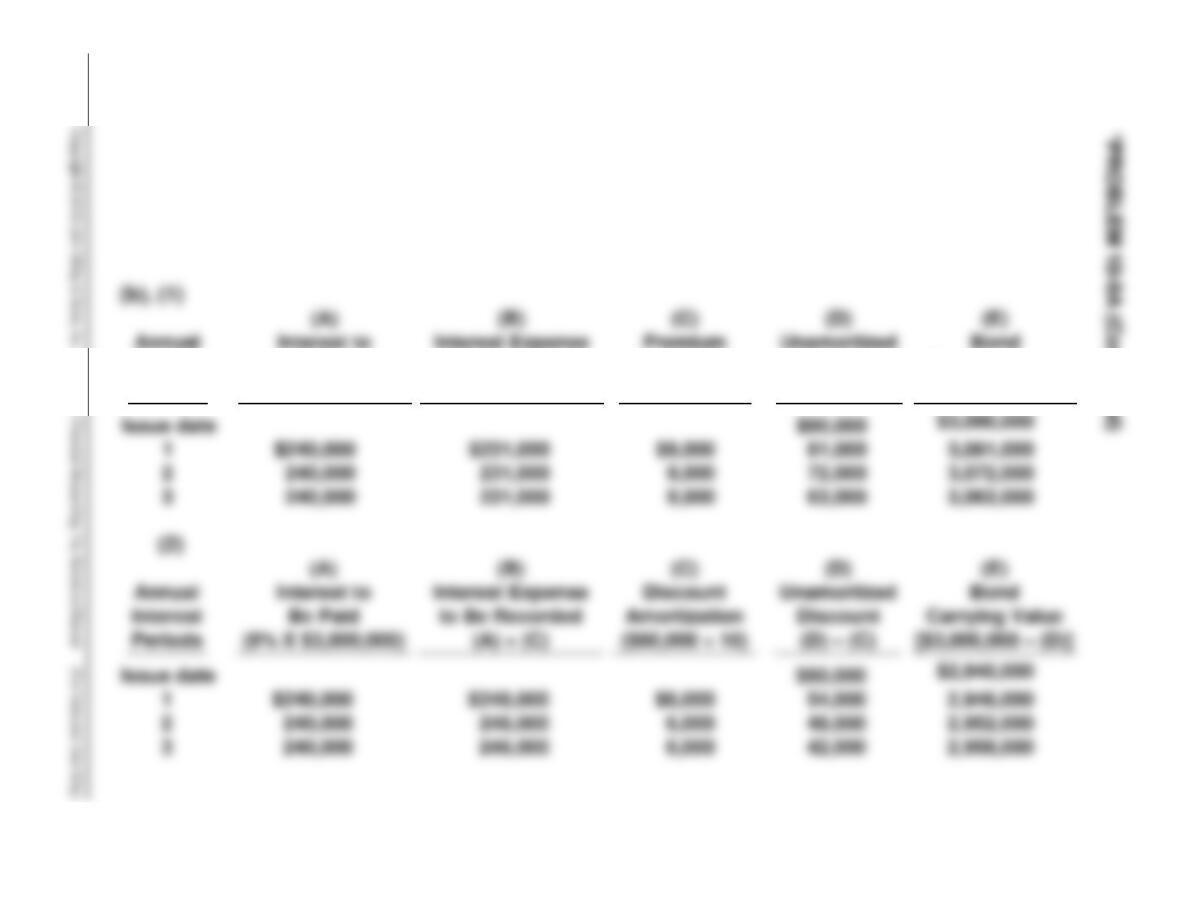
(b) See amortization tables on following page.
(c) 1. 12/31/14 Interest Expense …………………. 231,000
Premium on Bonds
(d) 1. Long-term Liabilities:
Bonds Payable ………………………………. $3,000,000
10-44 Copyright © 2013 John Wiley & Sons, Inc. Kimmel, Financial Accounting, 7/e, Solutions Manual (For Instructor Use Only)
Annual
Interest
Periods
Interest to
Be Paid
(8% X $3,000,000)
Interest Expense
to Be Recorded
(A) – (C)
Premium
Amortization
($90,000 ÷ 10)
Unamortized
Premium
(D) – (C)
Bond
Carrying Value
[$3,000,000 + (D)]
*PROBLEM 10-10A
2014
(a) Jan. 1 Cash ………………………………………….. 1,667,518
(b) LOCK CORP.
Bond Discount Amortization
Effective-Interest Method—Annual Interest Payments
5% Bonds Issued at 6%
Annual
Interest
Periods
(A)
Interest
to Be
Paid
(B)
Interest
Expense
to Be
Recorded
(C)
Discount
Amor-
tization
(B) – (A)
(D)
Unamor-
tized
Discount
(D) – (C)
(E)
Bond
Carrying
Value
($1,800,000 – D)
Issue date
$132,482
$1,667,518
(c) Dec. 31 Interest Expense
($1,667,518 X 6%) …………………………… 100,051
Interest Payable
2015
(d) Jan. 1 Interest Payable …………………………………. 90,000
*PROBLEM 10-11A
2014
(a) 1. Jan. 1 Cash …………………………………….. 2,147,202
Bonds Payable ………………. 2,000,000
2. Dec. 31 Interest Expense
($2,147,202 X 6%) ………………. 128,832
2015
3. Jan. 1 Interest Payable ……………………. 140,000
Cash ……………………………… 140,000
(b) Bonds payable …………………………………………….. 2,000,000
(c) 1. Total bond interest expense—2015, $128,162.
2. The effective-interest method will result in more interest expense
*PROBLEM 10-12A
(a)
Quarterly
Interest Period
(A)
Cash
Payment
(B)
Interest
Expense
(D) X 2%
(C)
Reduction
of Principal
(A) – (B)
(D)
Principal
Balance
(D) – (C)
Issue Date
1
$30,259
$6,400
$23,859
$320,000
296,141
(b) Dec. 31 Mortgage Payable …………………………… 23,859
Long-term liabilities
*PROBLEM 10-13A
(a)
Period
Cash
Payment
(A)
Interest
Expense
(B) = (D) X 7%
Principal
Reduction
(C) = (A) – (B)
Balance
(D) = (D) – (C)
July 1, 2013 $150,000
June 30, 2014 $ 36,584 $10,500 $ 26,084 123,916
June 30, 2015 36,584 8,674 27,910 96,006
(b) July 1/13 Cash …………………………………………… 150,000
Notes Payable ………………………… 150,000
(c) 2015
Current liabilities
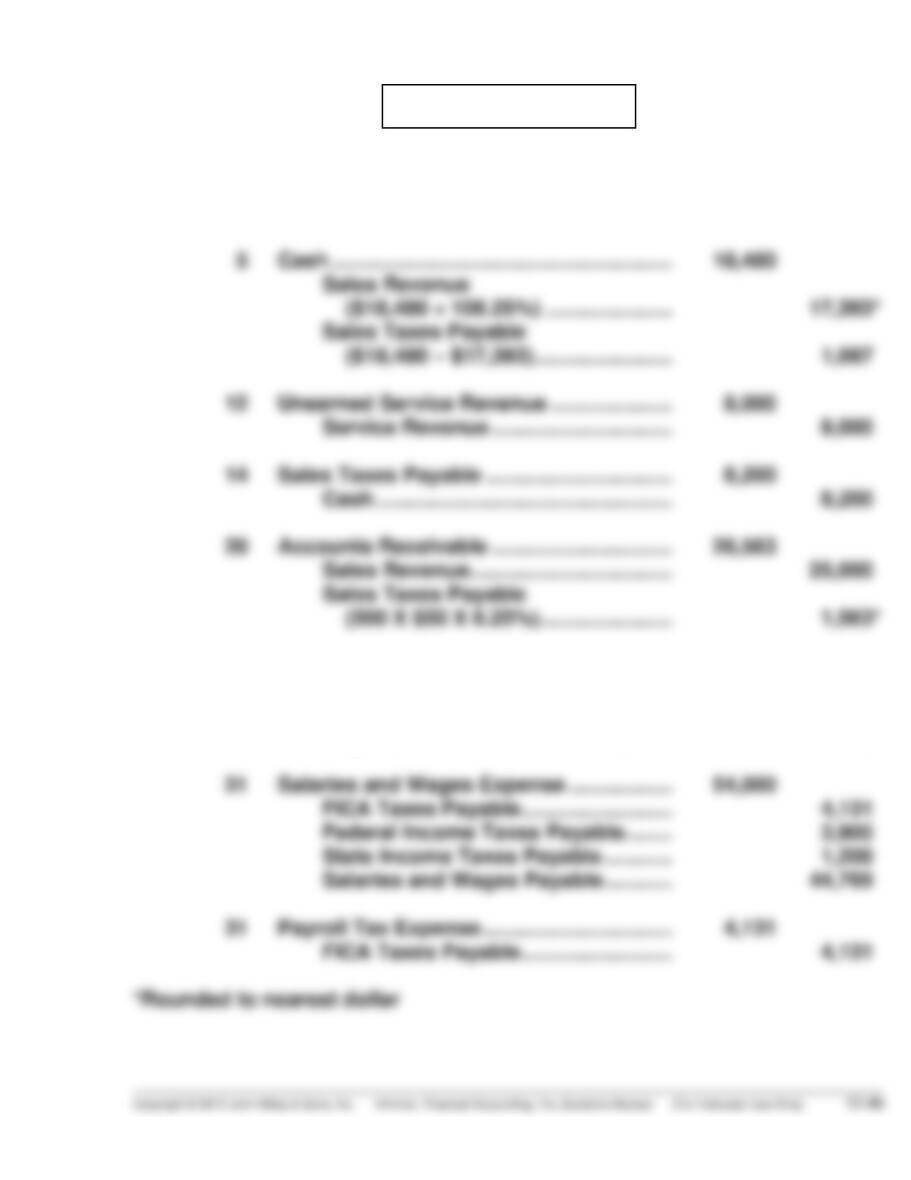
PROBLEM 10-1B
(a) Jan. 1 Cash ………………………………………………….. 18,000
Notes Payable …………………………….. 18,000
(b) Jan. 31 Interest Expense ………………………………… 120
Interest Payable
($18,000 X 8% X 1/12 = $120) ……. 120
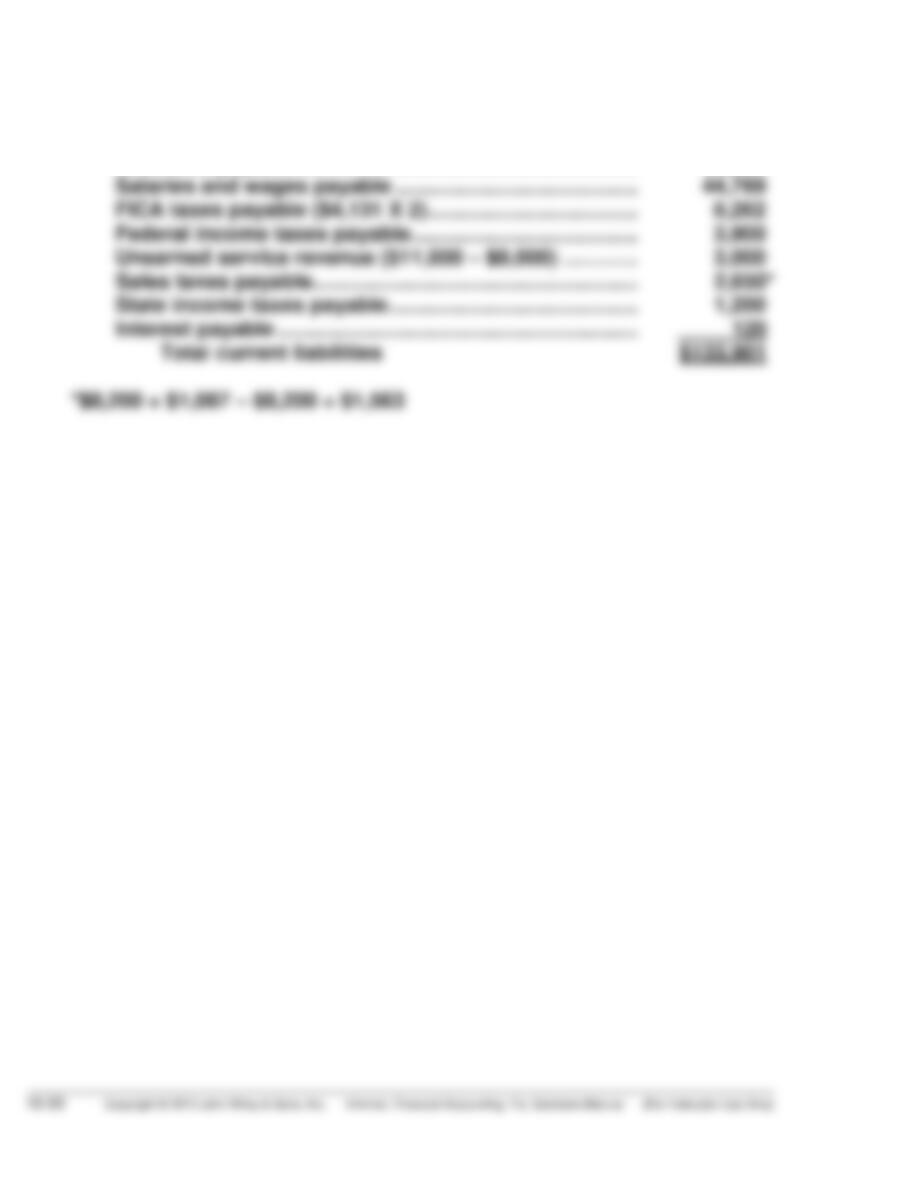
PROBLEM 10-1B (Continued)
(c) Current liabilities
Notes payable ……………………………………………………….. $ 18,000
Accounts payable ………………………………………………….. 52,000
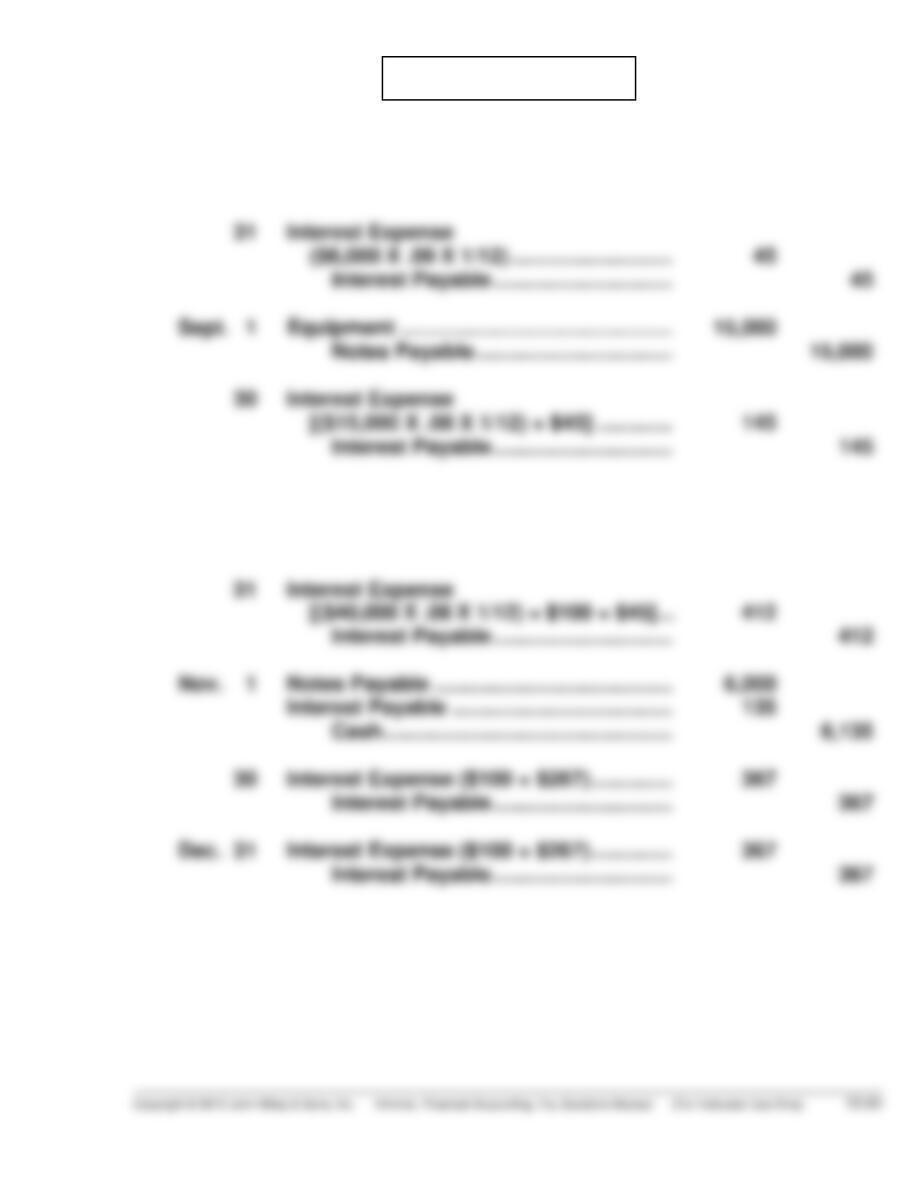
PROBLEM 10-2B
(a) Aug. 1 Inventory or Purchases …………………….. 6,000
Notes Payable ……………………………. 6,000
Oct. 1 Buildings ………………………………………….. 50,000
Notes Payable ……………………………. 40,000
Cash ………………………………………….. 10,000
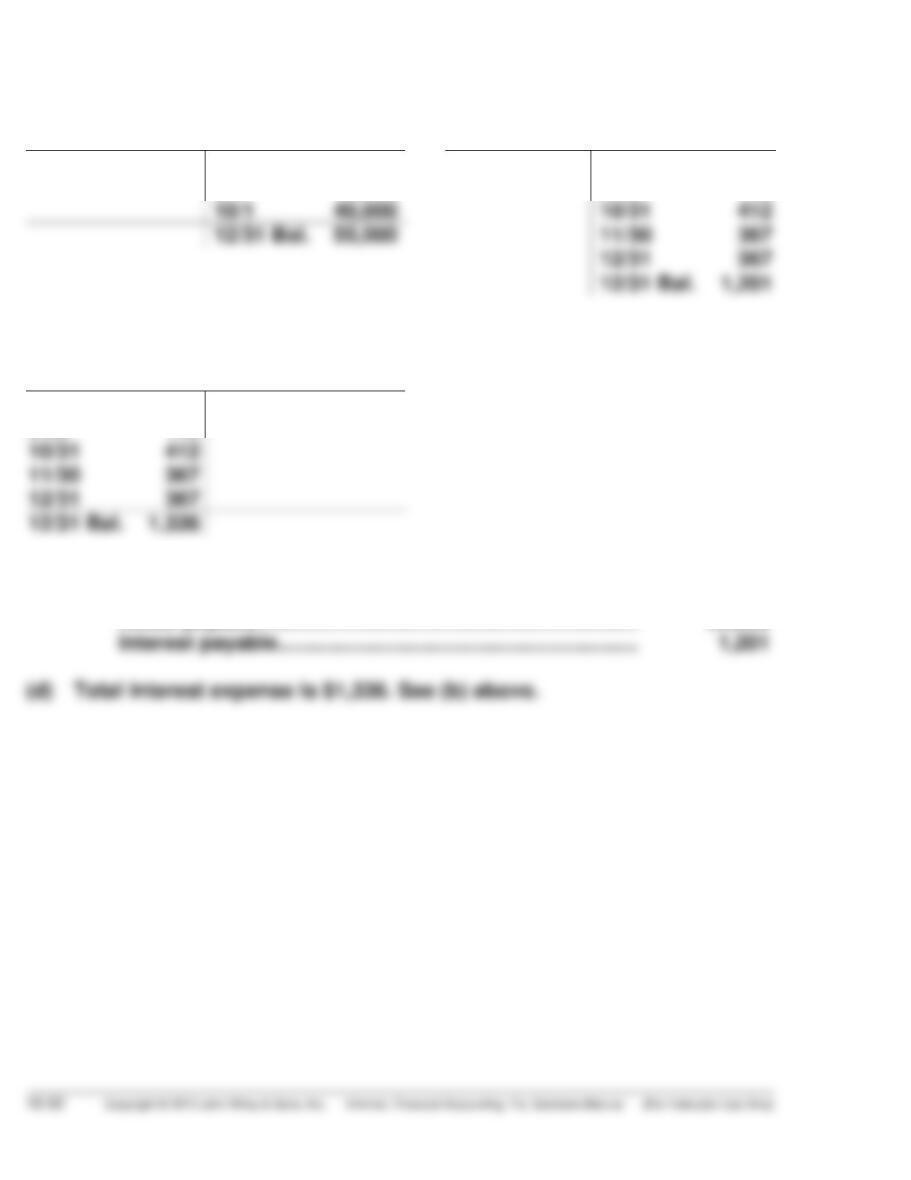
PROBLEM 10-2B (Continued)
(b)
Notes Payable Interest Payable
11/1 6,000 8/1 6,000 11/1 135 8/31 45
9/1 15,000 9/30 145
Interest Expense
8/31 45
9/30 145
(c) Current liabilities
Notes payable ……………………………………………………….. 55,000
PROBLEM 10-3B
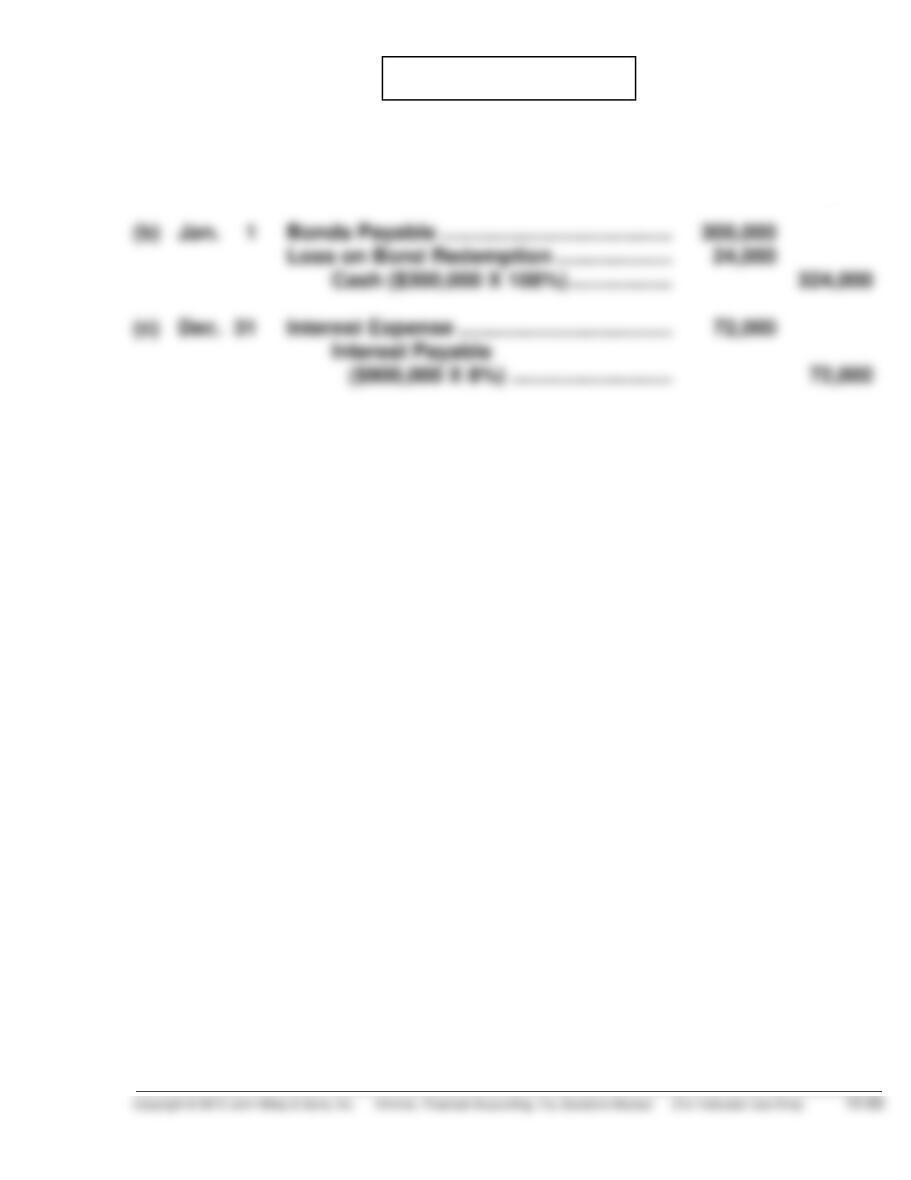
(a) Jan. 1 Interest Payable ……………………………….. 96,000
Cash ………………………………………….. 96,000
PROBLEM 10-4B
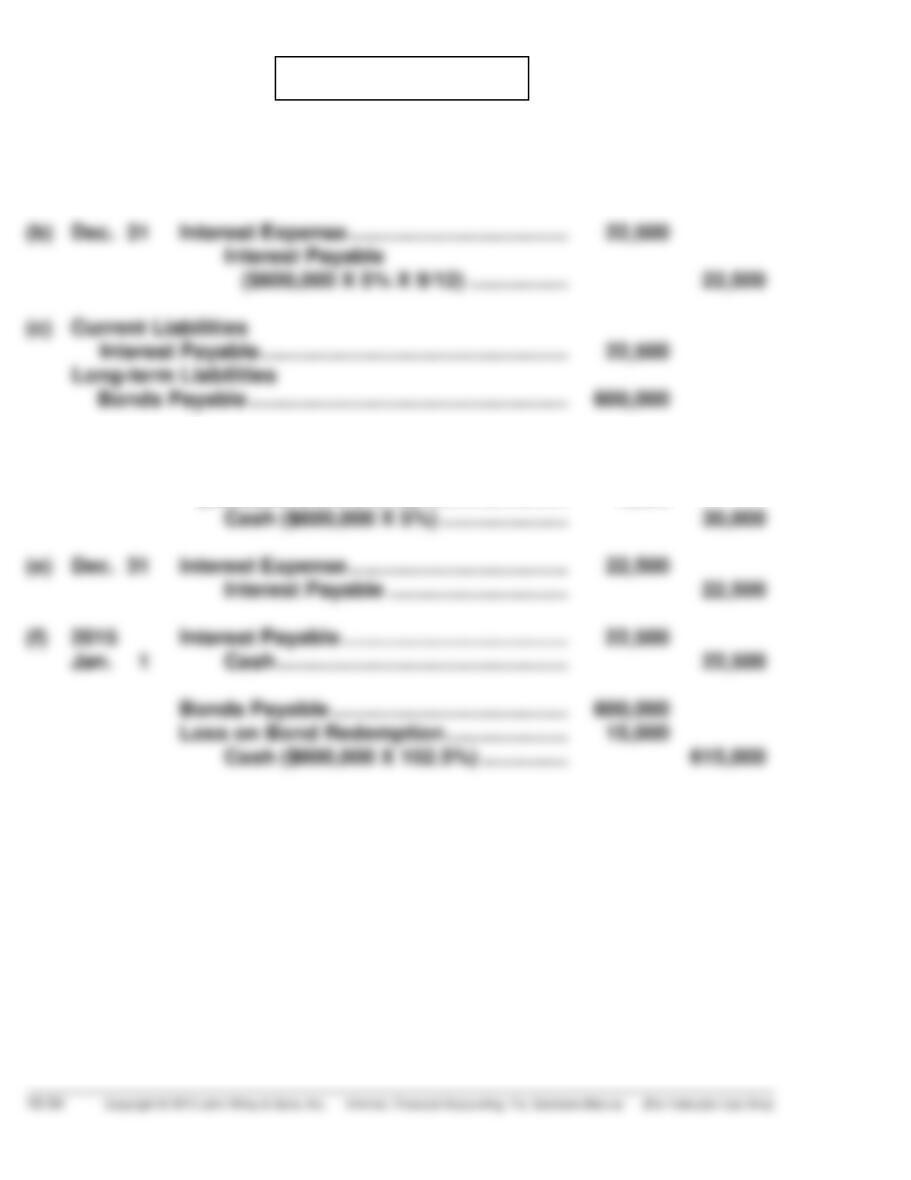
(a) 2013 Cash …………………………………………………. 600,000
April 1 Bonds Payable …………………………… 600,000
(d) 2014 Interest Payable ………………………………… 22,500
April 1 Interest Expense
($600,000 X 5% X 3/12) ……………………. 7,500
PROBLEM 10-5B
(a) 2014
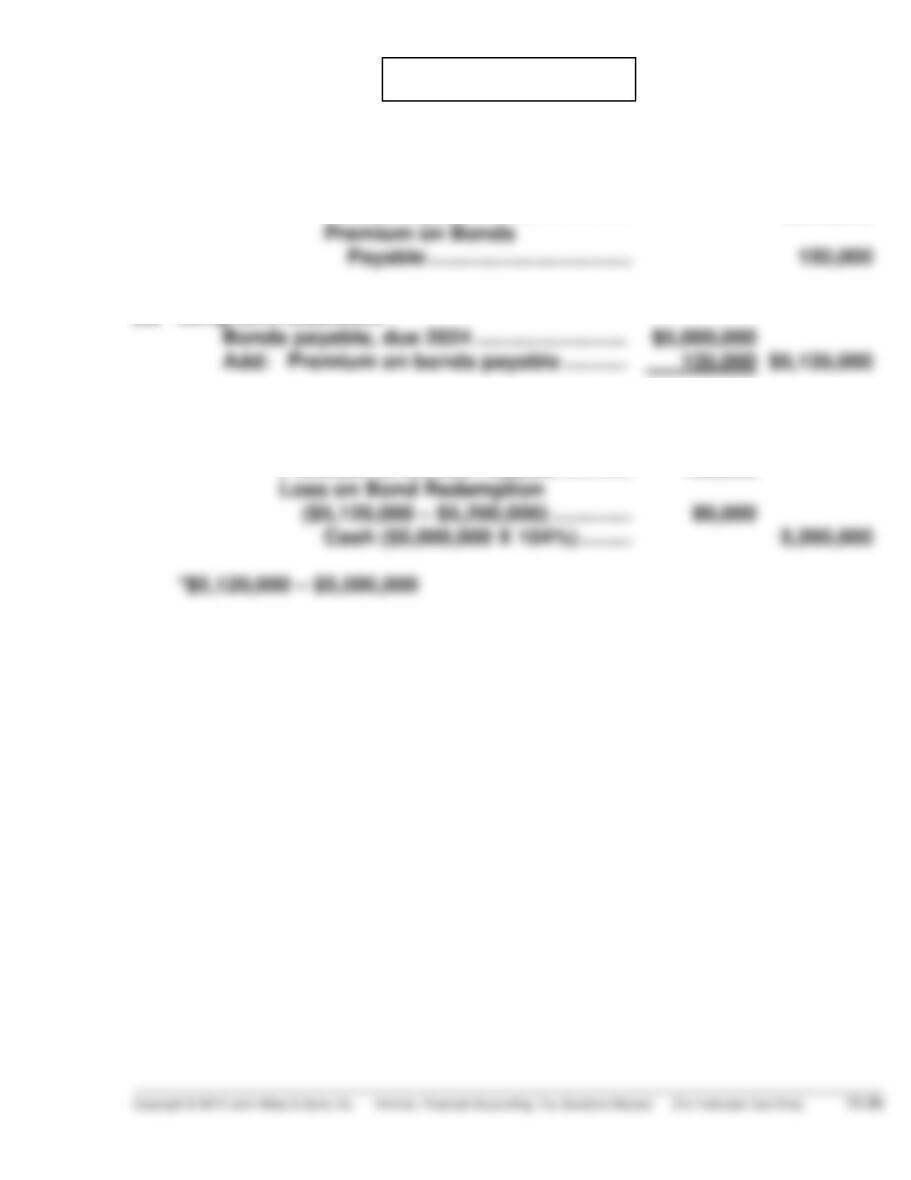
Jan. 1 Cash ($5,000,000 X 103%) …………….. 5,150,000
Bonds Payable ……………………… 5,000,000
(b) Long-term Liabilities
(c) 2015
Jan. 1 Bonds Payable …………………………….. 5,000,000
Premium on Bonds Payable …………. 120,000*
PROBLEM 10-6B
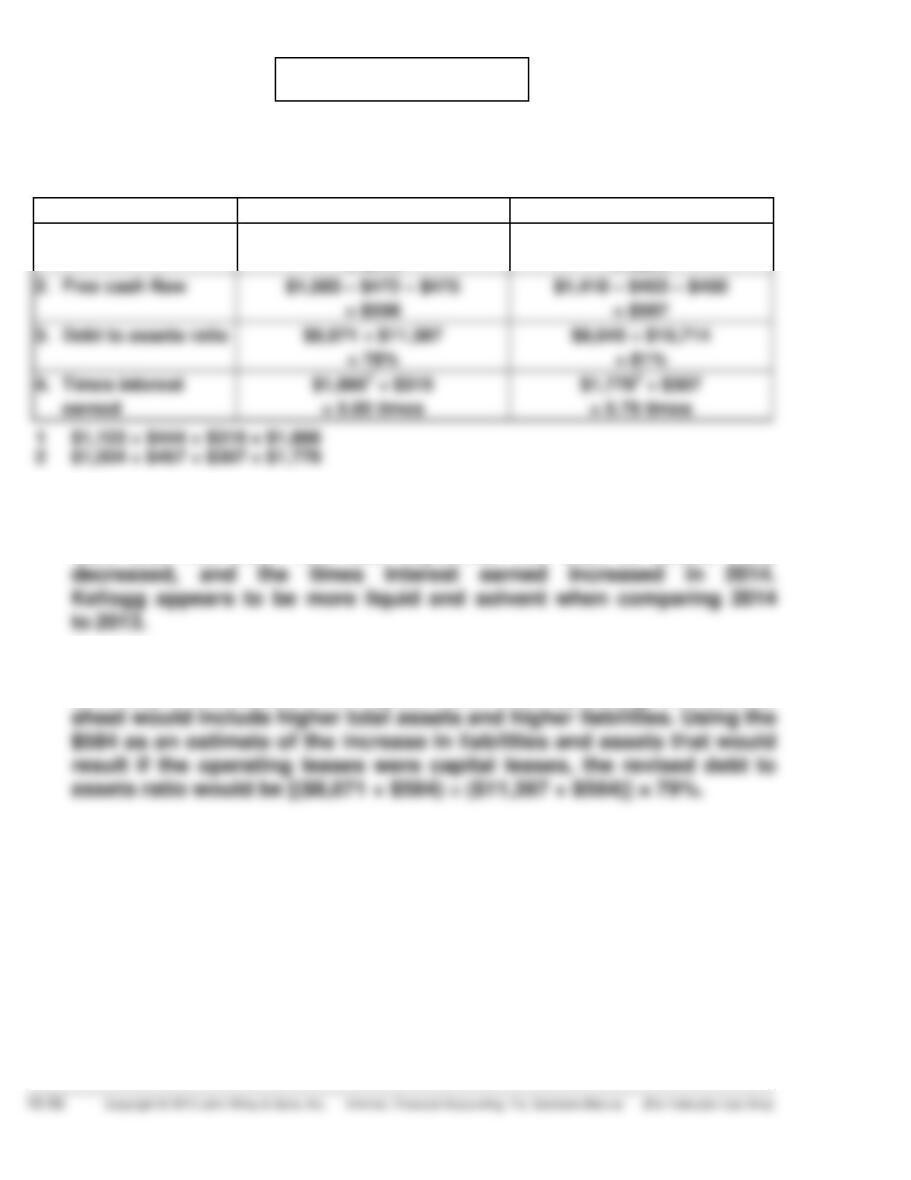
(a)
2014 2013
1. Current ratio $2,717 ÷ $4,044
= .67:1
$2,427 ÷ $4,020
= .60:1
(b) The company’s liquidity position as measured through the current
ratio and free cash flow has improved. The debt to assets ratio
(c) Kellogg’s use of operating leases (vs. capital leases) would reduce its
solvency. If the leases were capital rather than operating, the balance
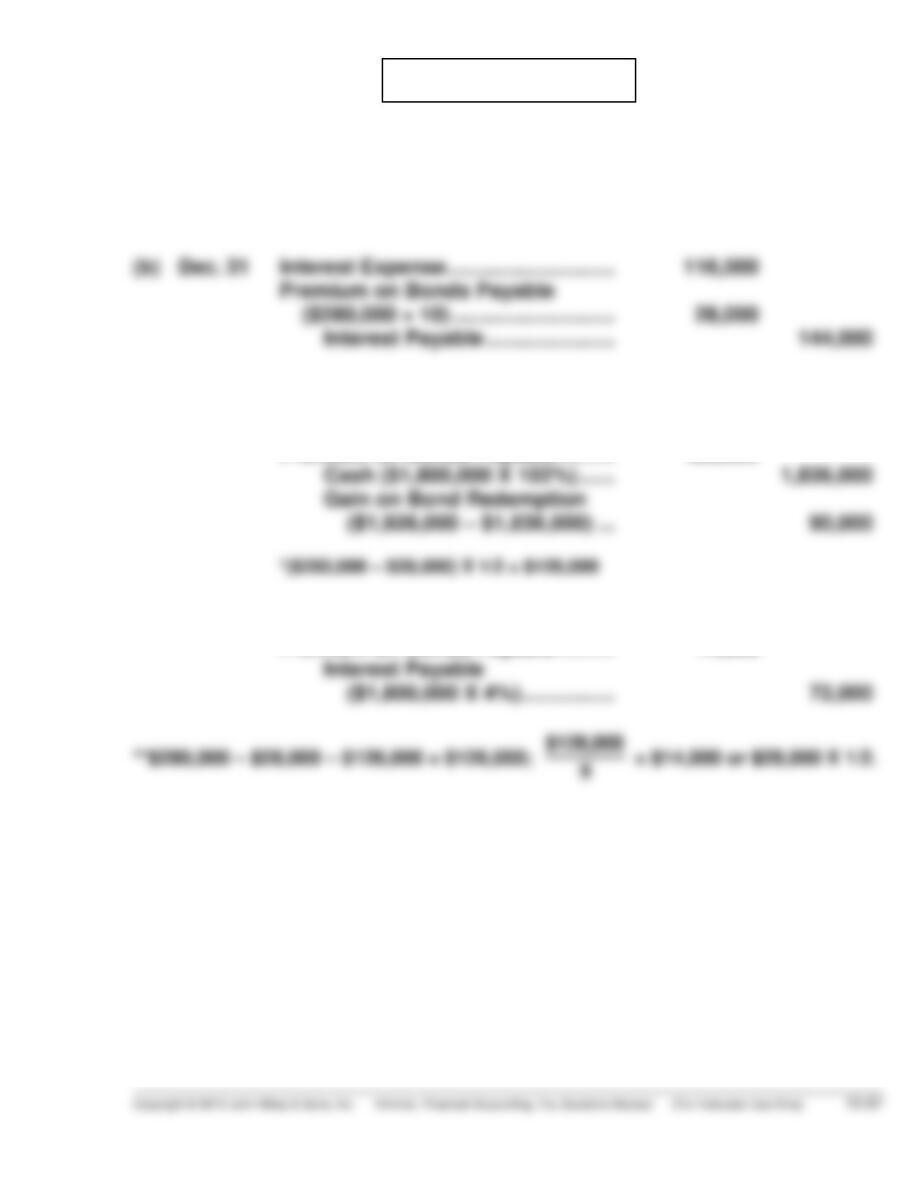
*PROBLEM 10-7B
2014
(a) Jan. 1 Interest Payable ………………………… 144,000
Cash ………………………………….. 144,000
2015
(c) Jan. 1 Bonds Payable ………………………….. 1,800,000
Premium on Bonds Payable ………. 126,000*
(d) Dec. 31 Interest Expense ……………………….. 58,000
Premium on Bonds Payable ………. 14,000**
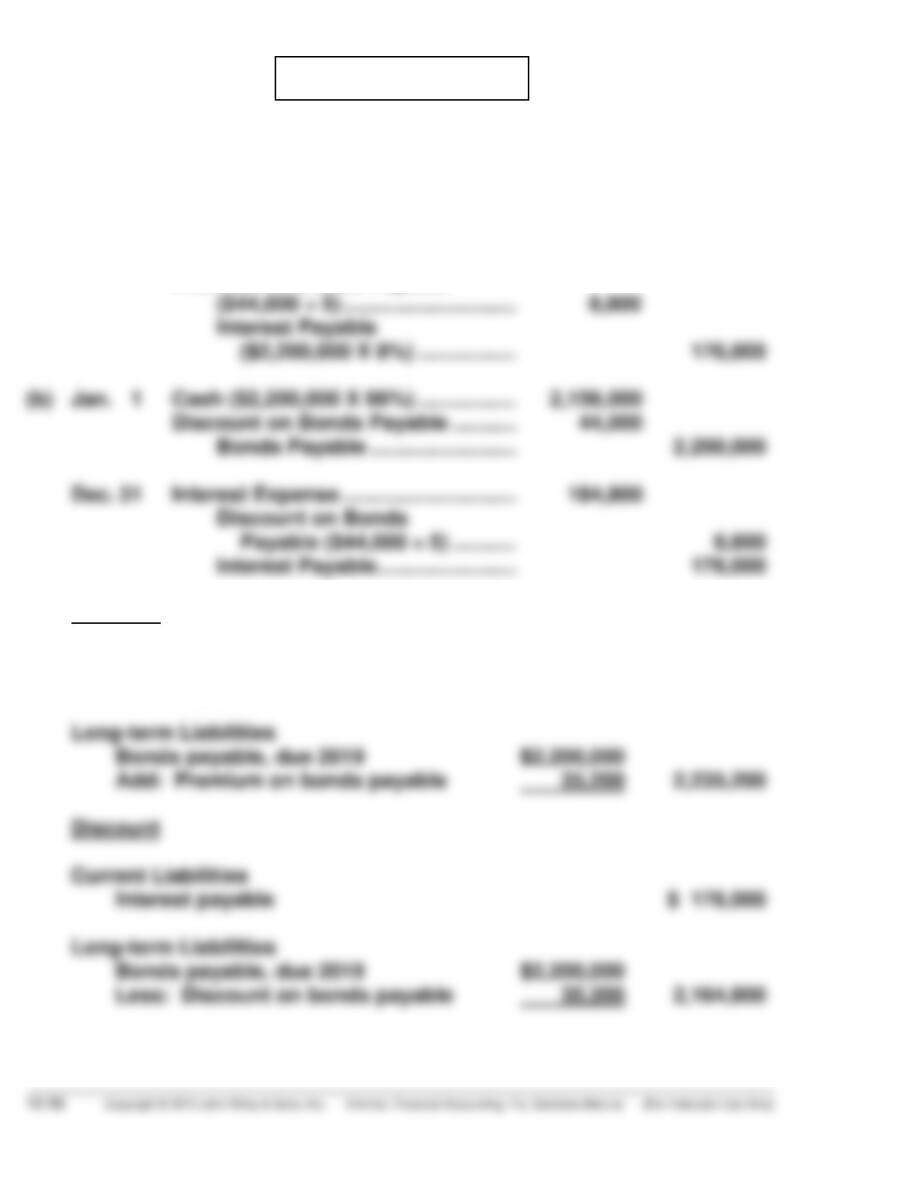
*PROBLEM 10-8B
(a) Jan. 1 Cash ($2,200,000 X 102%) …………… 2,244,000
Premium on Bonds Payable …. 44,000
Bonds Payable ……………………. 2,200,000
Dec. 31 Interest Expense ………………………… 167,200
Premium on Bonds Payable
(c) Premium
Current Liabilities
Interest payable $ 176,000
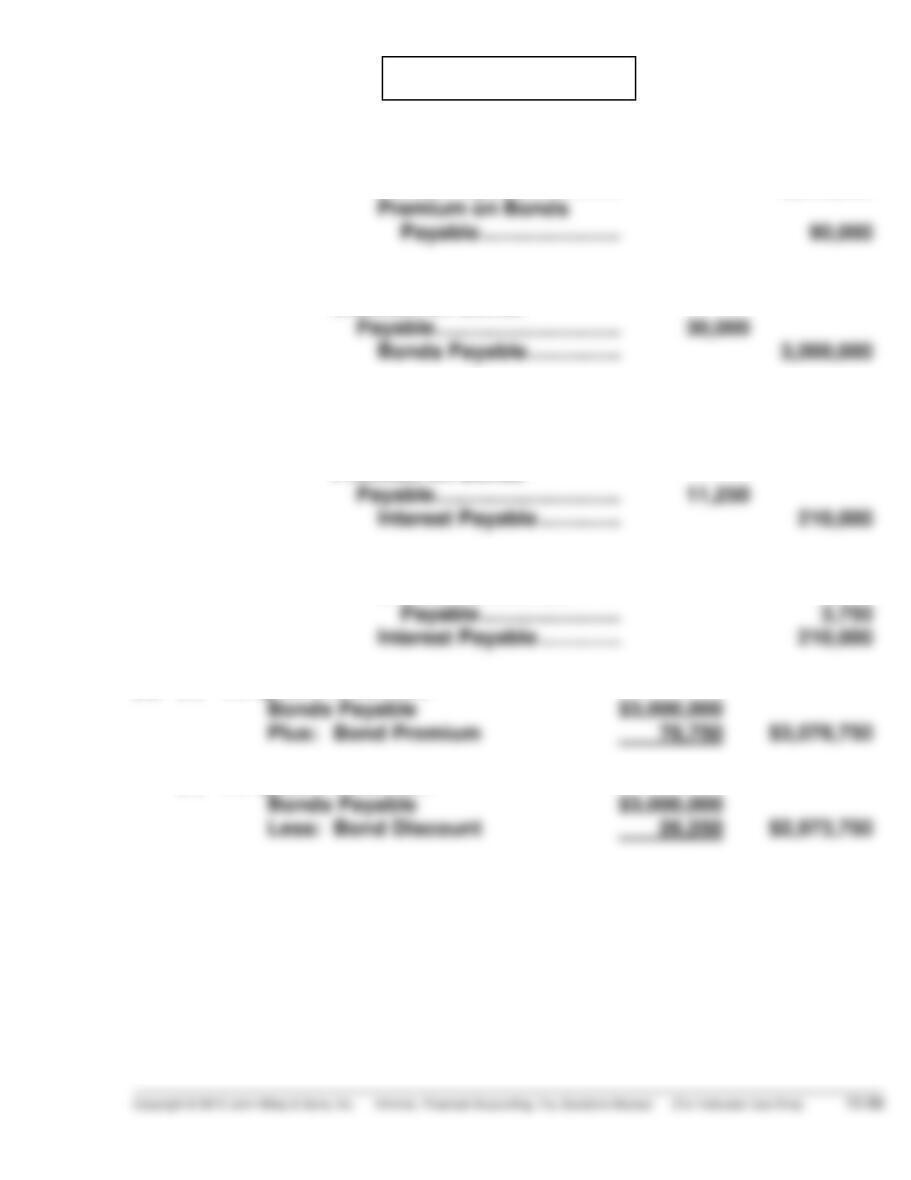
*PROBLEM 10-9B
(a) (1) 1/1/14 Cash ($3,000,000 X 103%) ….. 3,090,000
Bonds Payable ……………. 3,000,000
(2) 1/1/14 Cash ($3,000,000 X 99%) ……. 2,970,000
Discount on Bonds
(b) See amortization tables on following page.
(c) (1) 12/31/14 Interest Expense ……………….. 198,750
Premium on Bonds
(2) 12/31/14 Interest Expense ……………….. 213,750
Discount on Bonds
(d) (1) Long-term Liabilities:
(2) Long-term Liabilities:
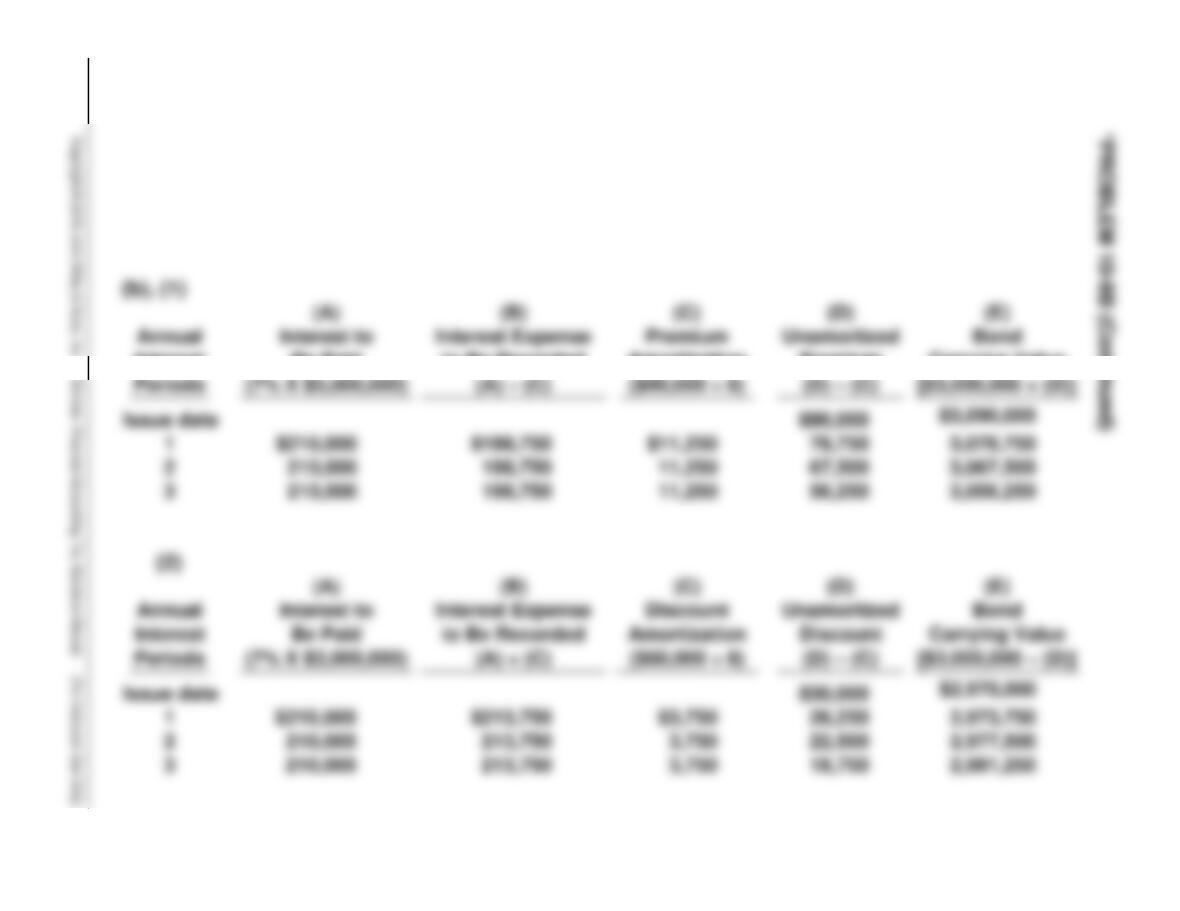
Interest
Be Paid
to Be Recorded
Amortization
Premium
Carrying Value
10-60 Copyright © 2013 John Wiley & Sons, Inc. Kimmel, Financial Accounting, 7/e, Solutions Manual (For Instructor Use Only)