10–41
PROBLEM 10-46 (50 MINUTES)
1.
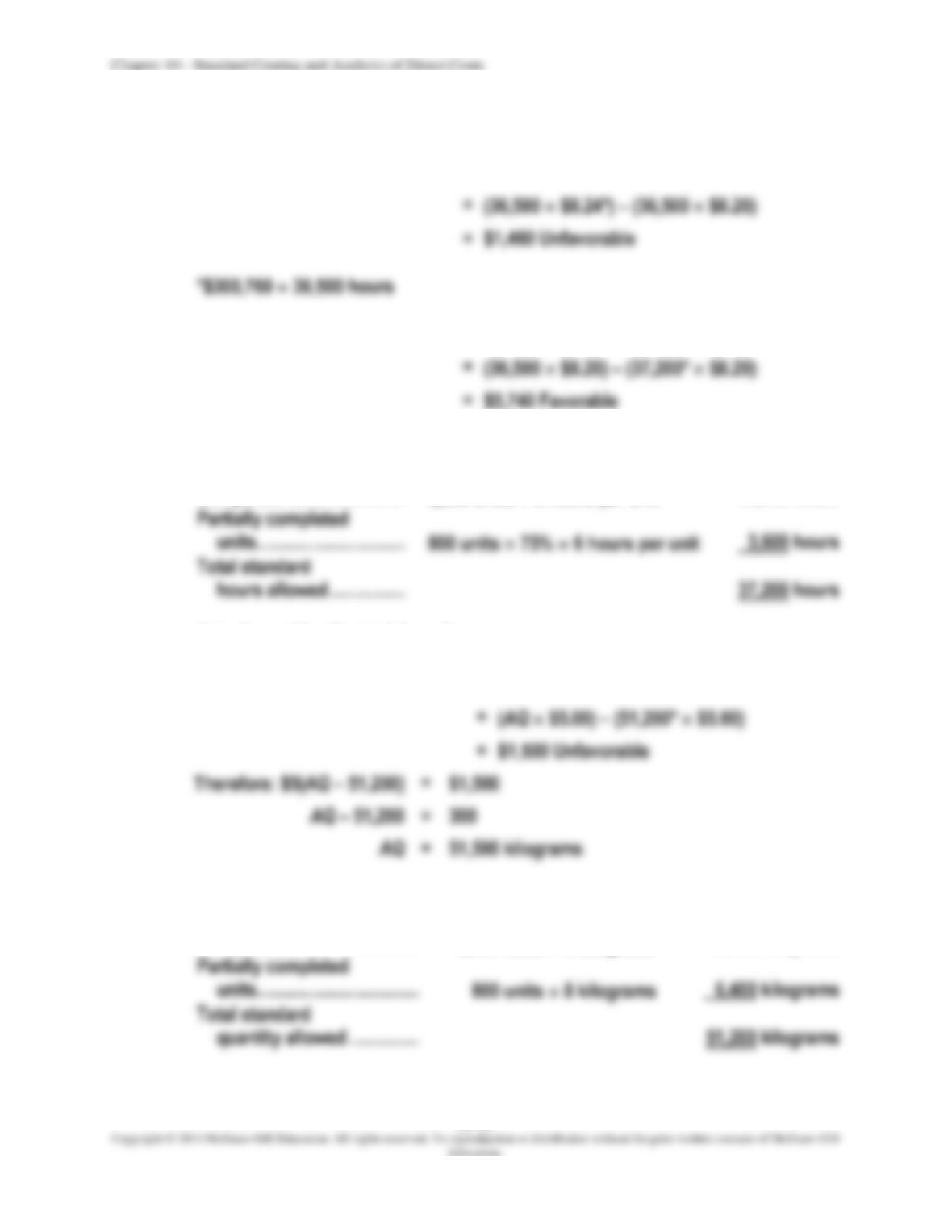
a.
Direct-labor rate variance
=
(AH
AR) – (AH
SR)
=
$1,460 Unfavorable
*$300,760 36,500 hours
b.
Direct-labor efficiency variance
=
(AH
SR) – (SH
SR)
=
$5,740 Favorable
*Standard allowed direct-labor hours:
Completed units …………….
5,600 units 6 hours per unit
33,600 hours
hours allowed …………….
c.
Actual quantity of material used:
Direct-material quantity variance
=
(AQ
SP) – (SQ SP)
=
51,500 kilograms
*Standard quantity of material allowed:
Completed units ……………….
5,600 units 8 kilograms
44,800 kilograms
quantity allowed ……………
10–42
PROBLEM 10-46 (CONTINUED)
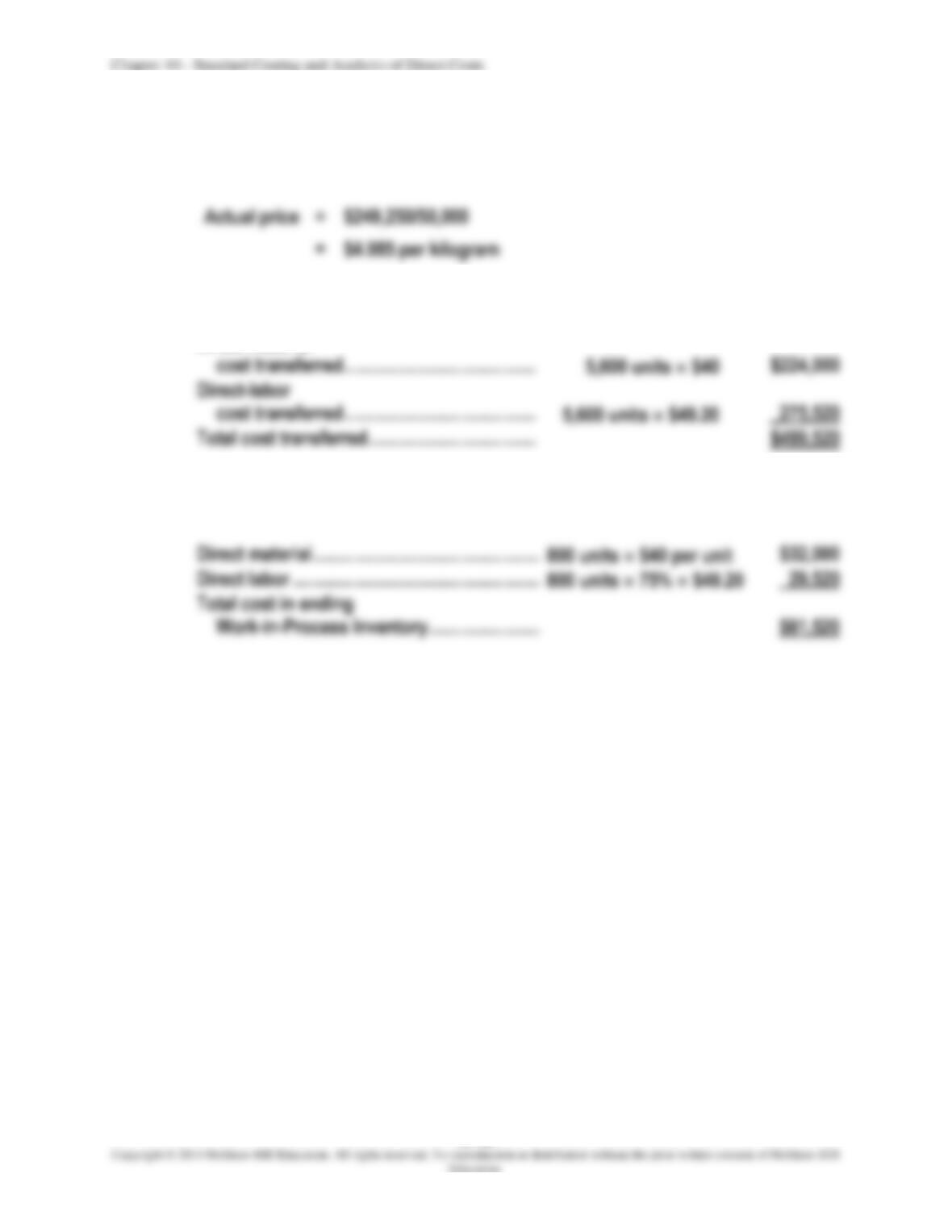
d.
=
$249,250/50,000
=
$4.985 per kilogram
Actual price paid per kilogram of direct material:
e.
Direct-material and direct-labor cost transferred to finished goods:
Direct-labor
Total cost transferred ………………………………
Direct-material
f.
Direct-material and direct-labor cost in September 30 balance of Work–in-Process
Inventory:
Chapter 10 – Standard Costing and Analysis of Direct Costs
10–43
PROBLEM 10-46 (CONTINUED)
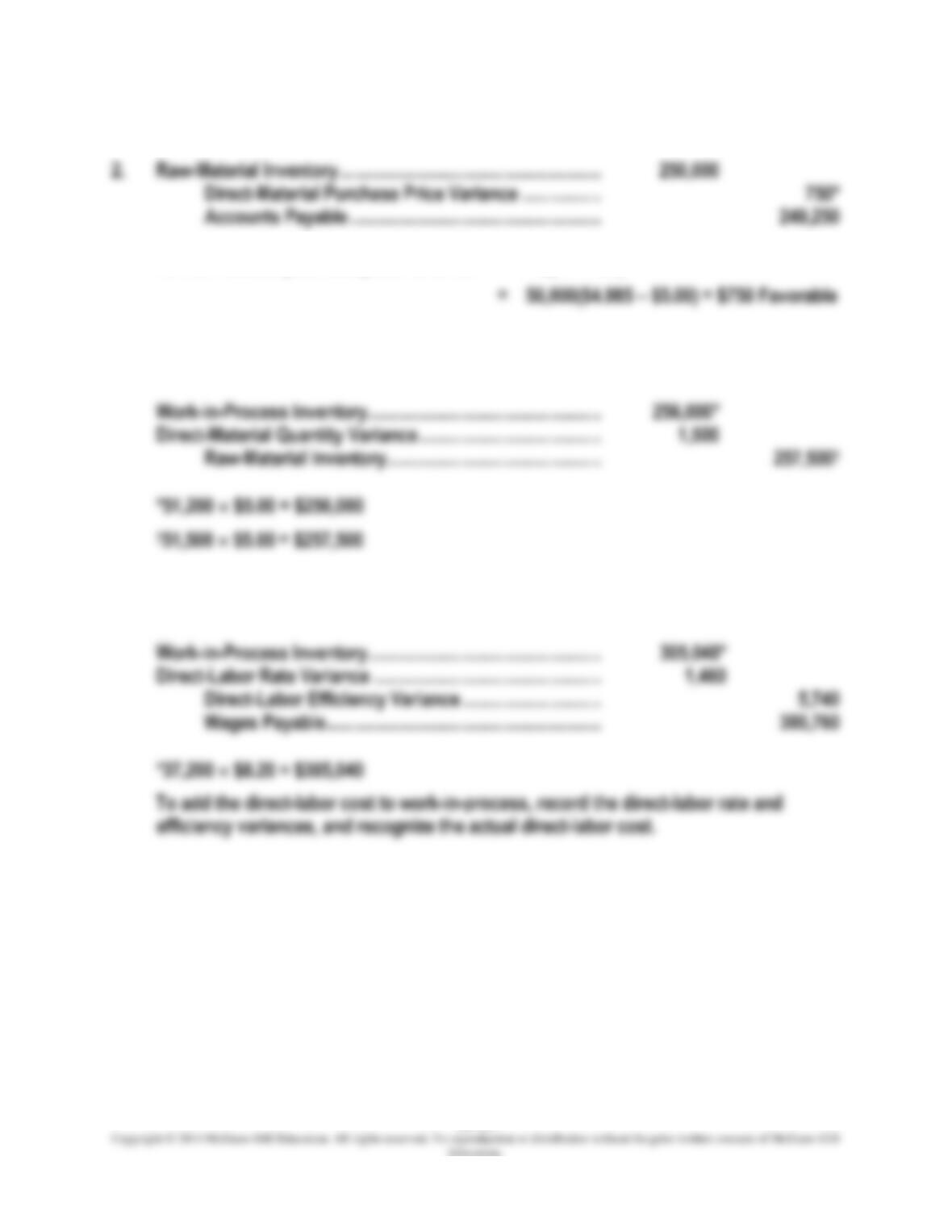
Raw-Material Inventory ………………………………………………..
Direct-Material Purchase Price Variance ……………..
Accounts Payable ………………………………………………
*Direct-material purchase price variance
=
PQ(AP – SP)
=
50,000($4.985 – $5.00) = $750 Favorable
To record the purchase of raw material and the direct-material purchase price
variance.
Direct-Material Quantity Variance …………………………………
Raw-Material Inventory ……………………………………….
To add the direct-material cost to work in process and record the direct-material
quantity variance.
Direct-Labor Rate Variance ………………………………………….
Direct-Labor Efficiency Variance …………………………
Wages Payable …………………………………………………..
To add the direct-labor cost to work-in-process, record the direct-labor rate and
efficiency variances, and recognize the actual direct-labor cost.
Chapter 10 – Standard Costing and Analysis of Direct Costs
10–44
PROBLEM 10-47 (60 MINUTES)
1.
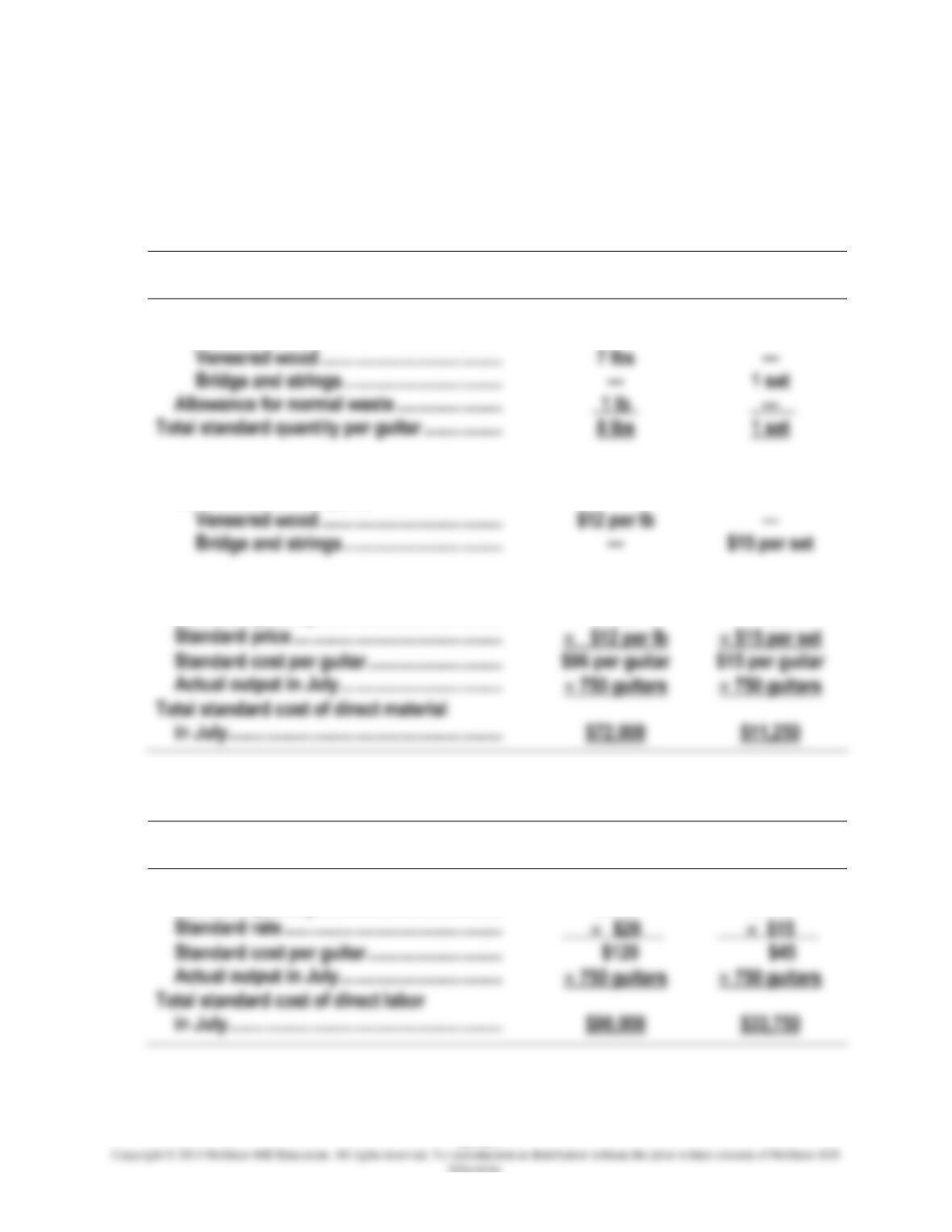
Standard cost schedule:
DIRECT MATERIAL
Construction
Department
Finishing
Department
Standard quantity
Direct material and parts in finished product:
Veneered wood …………………………………
7 lbs
Bridge and strings …………………………….
1 set
Allowance for normal waste …………………..
Total standard quantity per guitar ……………..
8 lbs
1 set
Standard price:
Direct material and parts:
Veneered wood …………………………………
Bridge and strings …………………………….
Standard direct-material cost:
Standard quantity ………………………………….
8 lbs
1 set
Standard cost per guitar ………………………..
Total standard cost of direct material
DIRECT LABOR
Construction
Department
Finishing
Department
Standard direct-labor cost:
Standard quantity ………………………………….
6 hrs
3 hrs
Standard cost per guitar ………………………..
Chapter 10 – Standard Costing and Analysis of Direct Costs
10–45
PROBLEM 10-47 (CONTINUED)
2.
(a)
Construction Department:
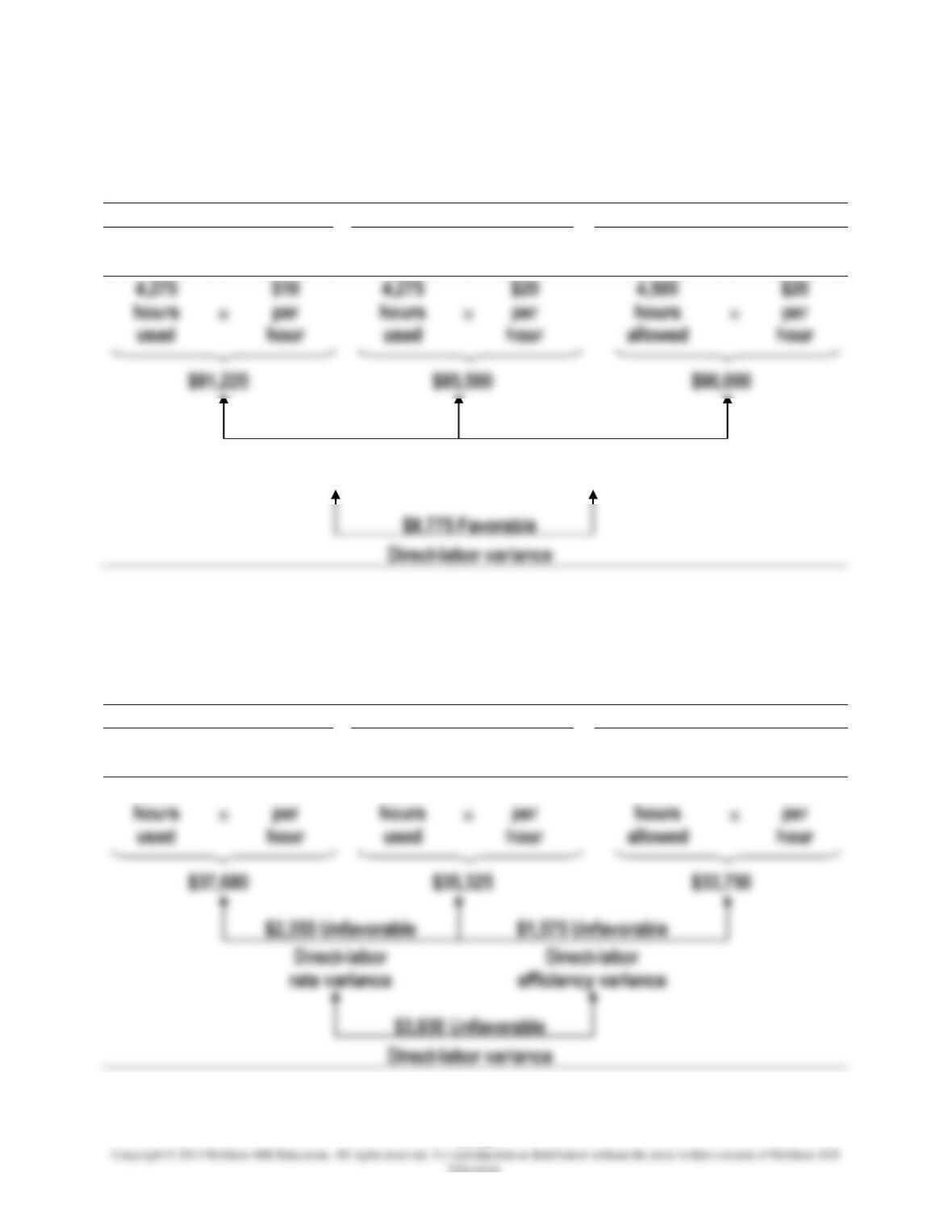
DIRECT-MATERIAL PRICE AND QUANTITY VARIANCES
ACTUAL MATERIAL COST
PROJ. MATERIAL COST
STANDARD MATERIAL COST
Actual
Quantity
Actual
Price
Actual
Quantity
Standard
Price
Standard
Quantity
Standard
Price
6,750
$12.50
6,750
$12.00
6,000
$12.00
$84,375
$81,000
$72,000
DIRECT-MATERIAL PURCHASE PRICE VARIANCE
ACTUAL MATERIAL COST
PROJ. MATERIAL COST
Actual
Quantity
Actual
Price
Actual
Quantity
Standard
Price
$12.50
$12.00
$112,500
Chapter 10 – Standard Costing and Analysis of Direct Costs
10–46
PROBLEM 10-47 (CONTINUED)
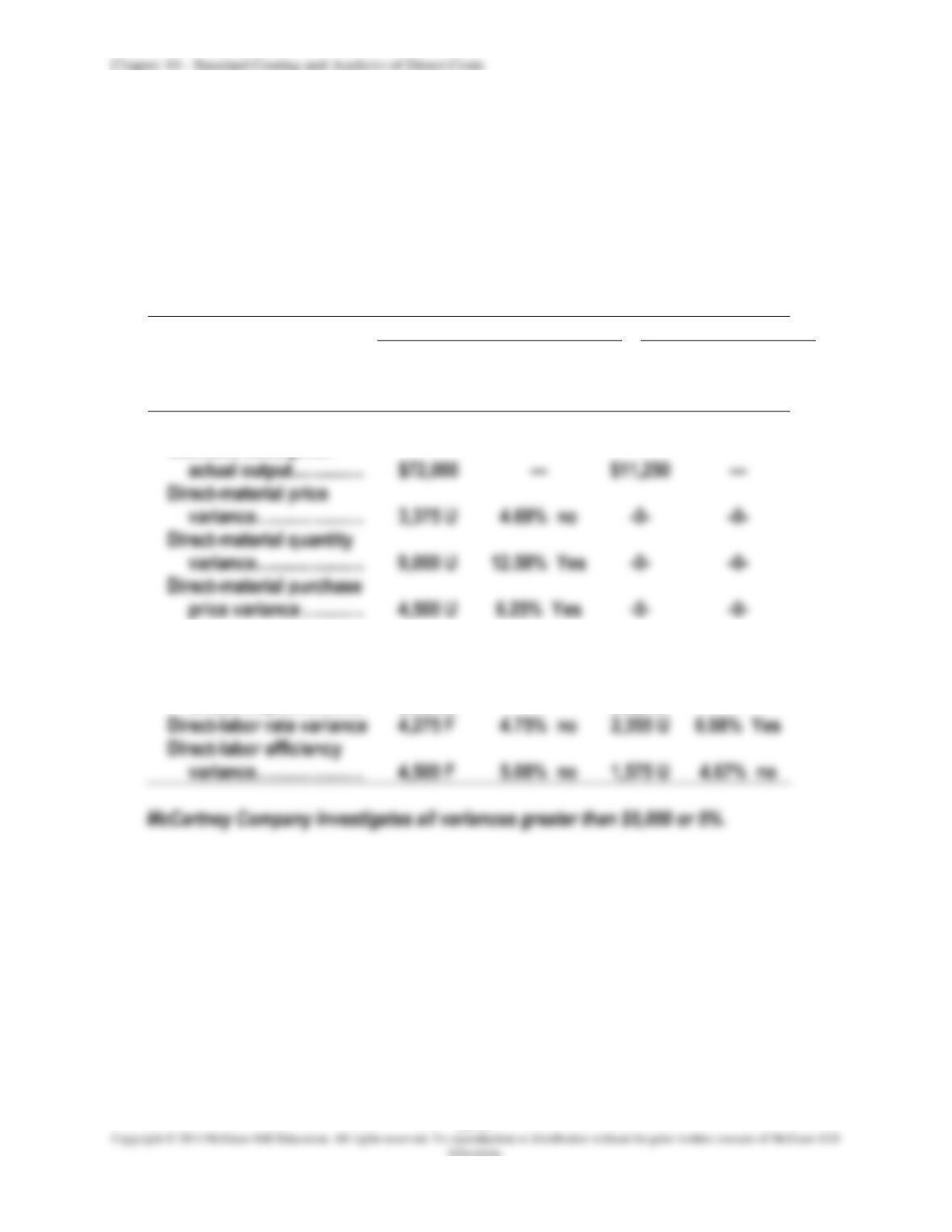
DIRECT-LABOR RATE AND EFFICIENCY VARIANCES
ACTUAL LABOR COST
PROJ. LABOR COST
STANDARD LABOR COST
Actual
Hours
Actual
Rate
Actual
Hours
Standard
Rate
Standard
Hours
Standard
Rate
4,275
$19
4,275
$20
4,500
$20
$4,275 Favorable
$4,500 Favorable
Direct-labor
rate variance
Direct-labor
efficiency variance
(b)
Finishing Department:
DIRECT-LABOR RATE AND EFFICIENCY VARIANCES
ACTUAL LABOR COST
PROJ. LABOR COST
STANDARD LABOR COST
Actual
Hours
Actual
Rate
Actual
Hours
Standard
Rate
Standard
Hours
Standard
Rate
2,355
$16
2,355
$15
2,250
$15
10–47
PROBLEM 10-47 (CONTINUED)
3.
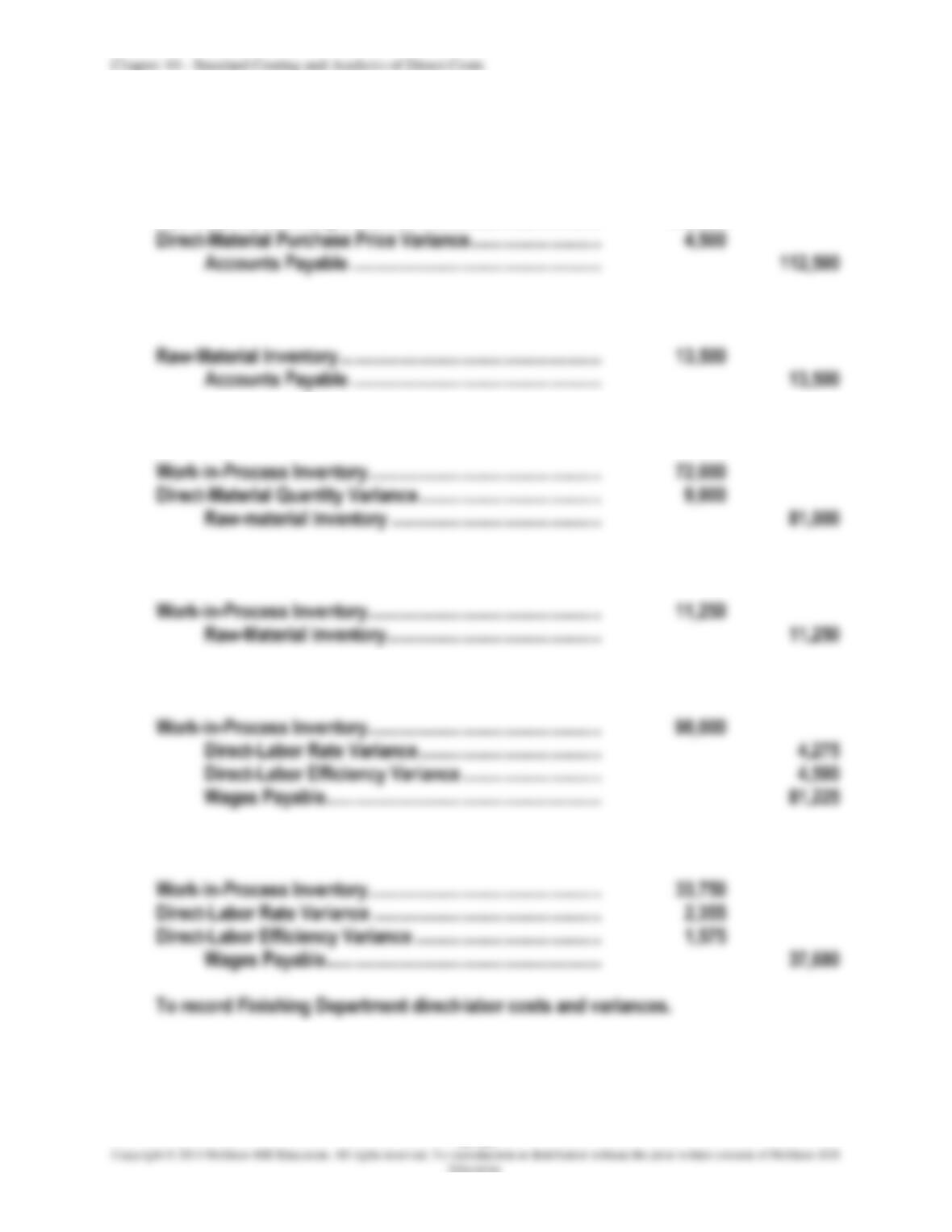
Cost variance report:
MCCARTNEY COMPANY
COST VARIANCE REPORT
FOR THE MONTH OF JULY
Construction Dept
Finishing Dept
Amount
% of
Standard
Cost
Amount
% of
Standard
Cost
Direct material:
actual output ……………
$72,000
—
$11,250
—
Direct-material price
Standard cost, given
Direct labor:
Standard cost, given
actual output ……………
$90,000
—
$33,750
—
Direct-labor rate variance
4,275 F
Direct-labor efficiency
10–48
PROBLEM 10-48 (45 MINUTES)
1.
Journal entries:
Raw-Material Inventory ………………………………………………..
108,000
Direct-Material Purchase Price Variance ……………………….
Accounts Payable ………………………………………………
To record purchase of veneered wood.
Raw-Material Inventory ………………………………………………..
Accounts Payable ………………………………………………
To record purchase of bridges and strings.
Direct-Material Quantity Variance …………………………………
Raw-material Inventory ………………………………………
To record usage of veneered wood.
Raw-Material Inventory ……………………………………….
To record usage of bridges and strings.
Direct-Labor Rate Variance …………………………..…….
Direct-Labor Efficiency Variance …………………………
Wages Payable …………………………………………………..
To record Construction Department direct-labor costs and variances.
Direct-Labor Rate Variance ………………………………………….
Direct-Labor Efficiency Variance ………………………………….
Wages Payable …………………………………………………..
To record Finishing Department direct-labor costs and variances.
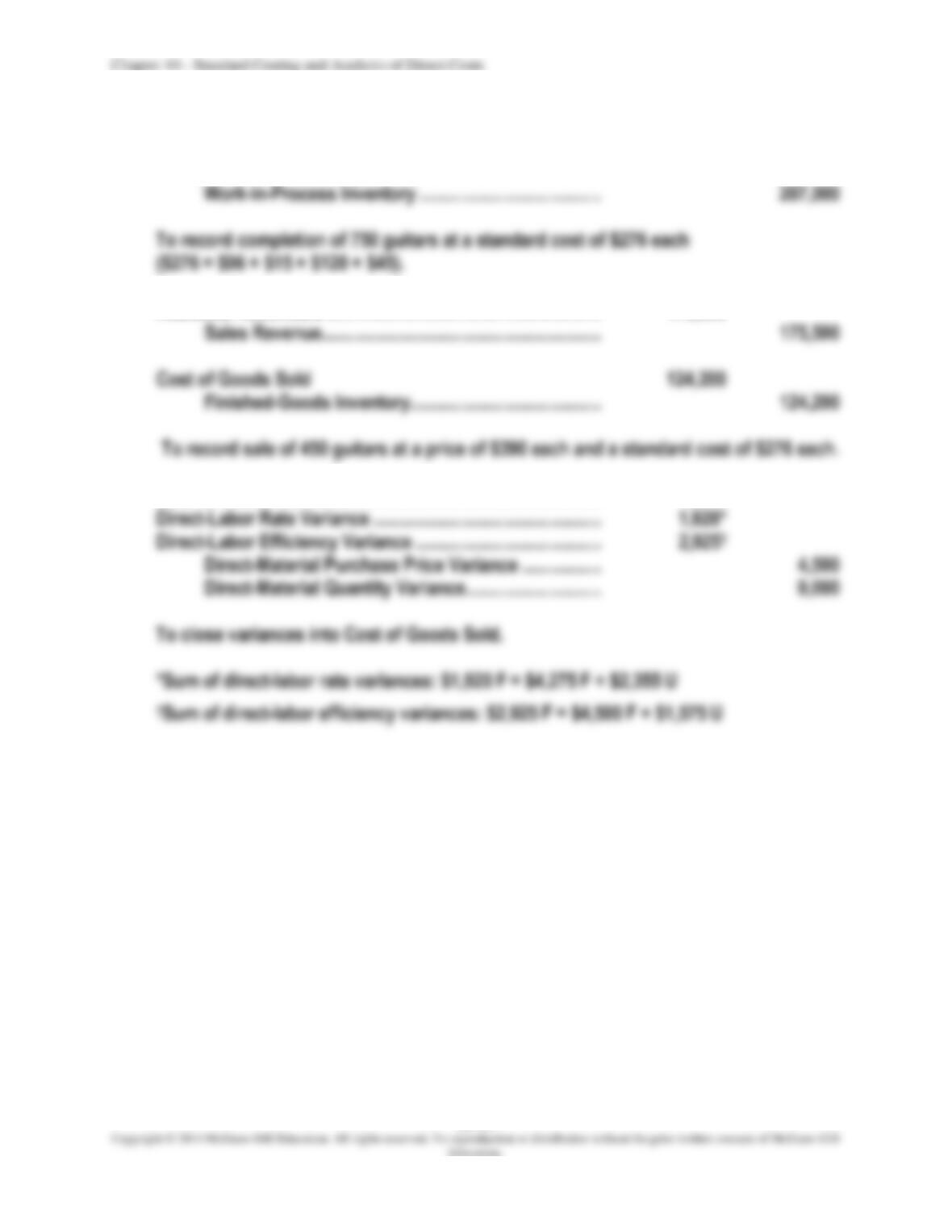
10–49
PROBLEM 10-48 (CONTINUED)
Finished-Goods Inventory …………………………..……………….
207,000
Work-in-Process Inventory …………………………………
To record completion of 750 guitars at a standard cost of $276 each
($276 = $96 + $15 + $120 + $45).
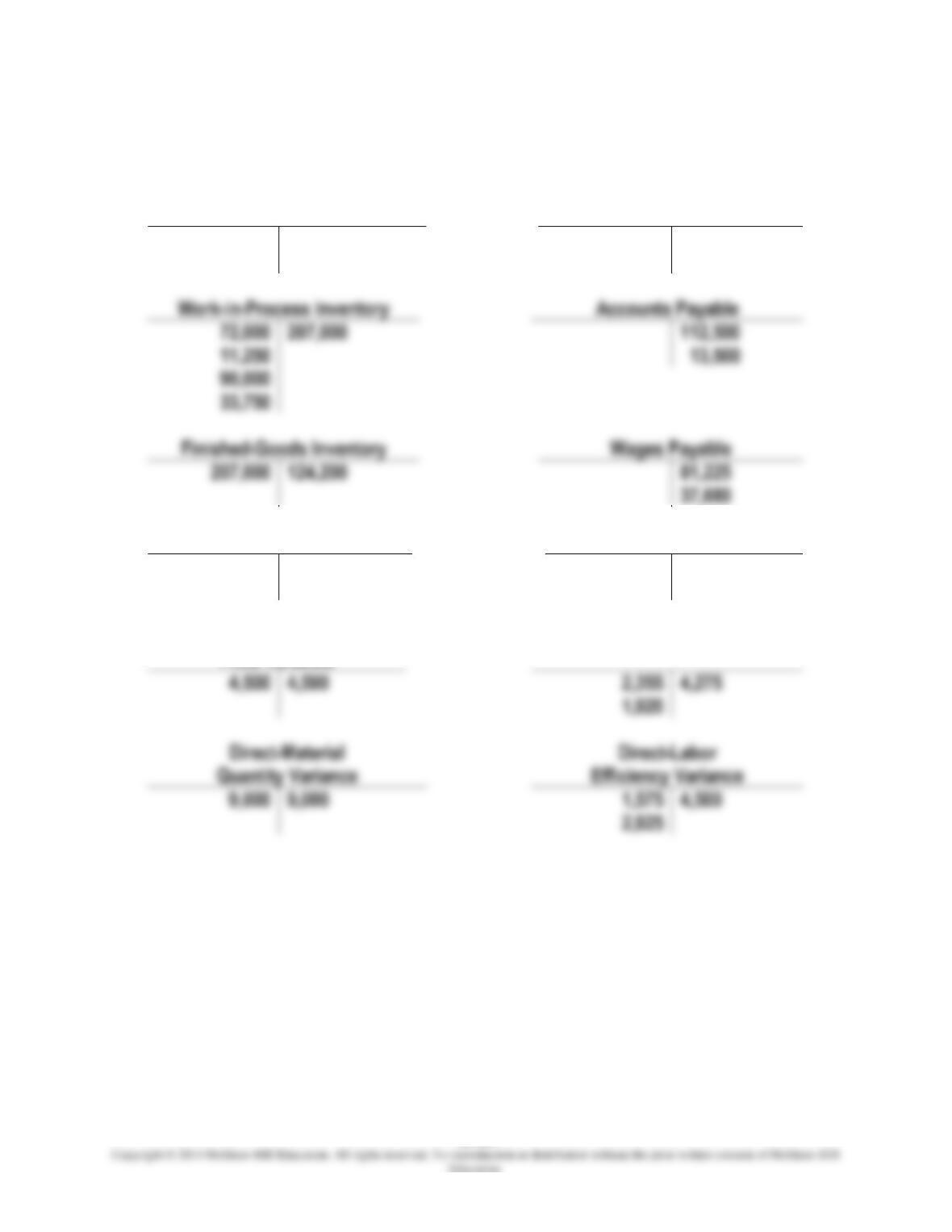
Accounts Receivable …………………………………………………..
175,500
Sales Revenue……………………………………………………
Cost of Goods Sold
124,200
Finished-Goods Inventory …………………………………..
Cost of Goods Sold ……………………………………………………..
8,655
Direct-Labor Rate Variance ………………………………………….
Direct-Labor Efficiency Variance ………………………………….
Direct-Material Purchase Price Variance ……………..
Direct-Material Quantity Variance ………………………..
To close variances into Cost of Goods Sold.
Chapter 10 – Standard Costing and Analysis of Direct Costs
10–50
PROBLEM 10-48 (CONTINUED)
2.
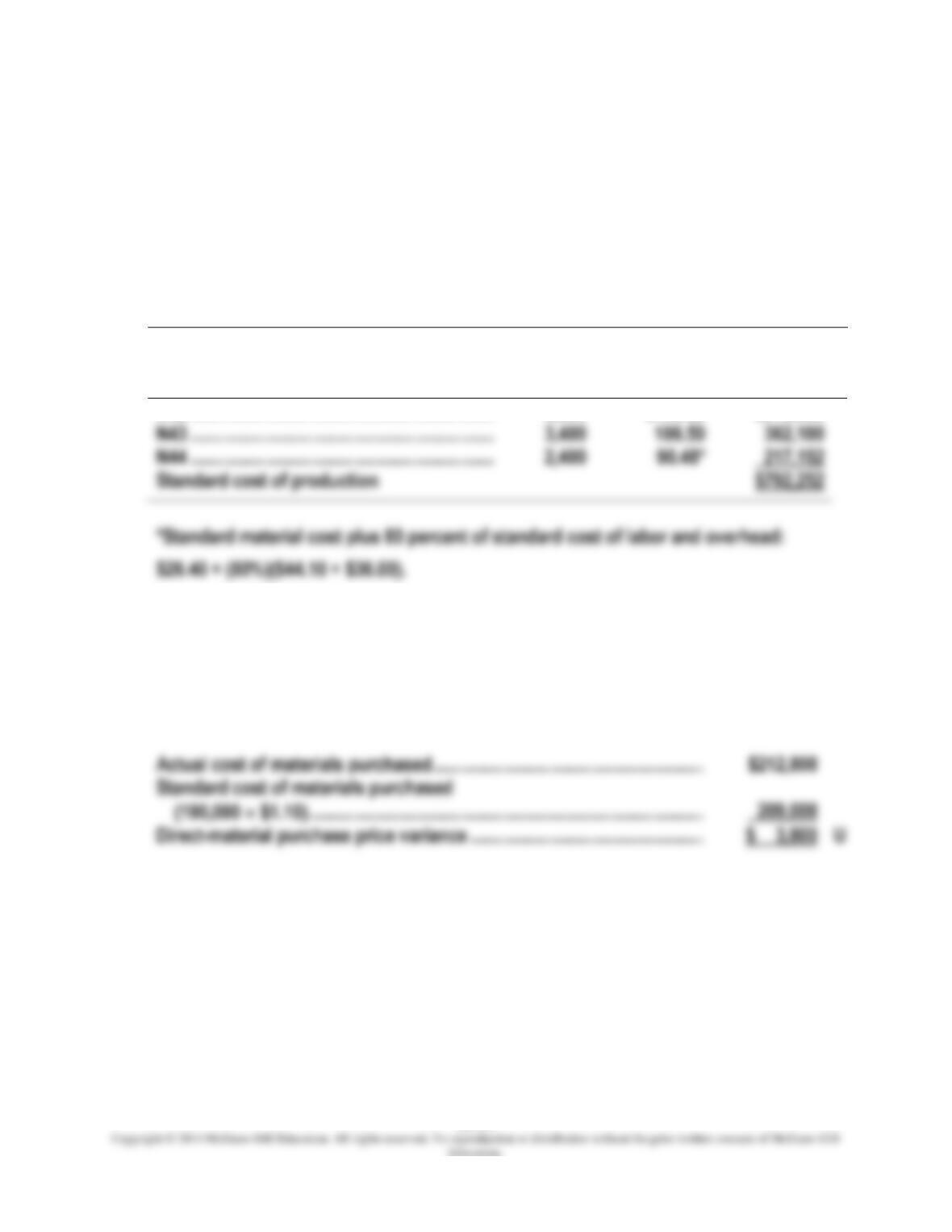
Posting of journal entries:
Raw-Material Inventory
Accounts Receivable
108,000
81,000
175,500
13,500
11,250
72,000
207,000
112,500
11,250
90,000
33,750
Wages Payable
207,000
124,200
81,225
37,680
Cost of Goods Sold
Sales Revenue
124,200
175,500
8,655
Direct-Material Purchase
Price Variance
Direct-Labor Rate Variance
4,500
4,500
4,275
9,000
4,500
Chapter 10 – Standard Costing and Analysis of Direct Costs
10–51
SOLUTIONS TO CASES
CASE 10-49 (60 MINUTES)
1.
Standard cost of lots N42, N43, and N44:
METRO FASHIONS, INC.
STANDARD COST OF PRODUCTION
FOR NOVEMBER
Lot
Quantity
(boxes)
Standard
Cost per
Box
Total
Standard
Cost
N42 ………………………………………………………..
2,000
$106.50
$213,000
N43 ………………………………………………………..
3,400
N44 ………………………………………………………..
2,400
$26.40 + (80%)($44.10 + $36.00).
2.
Variances (U denotes unfavorable; F denotes favorable):
a.
METRO FASHIONS, INC.
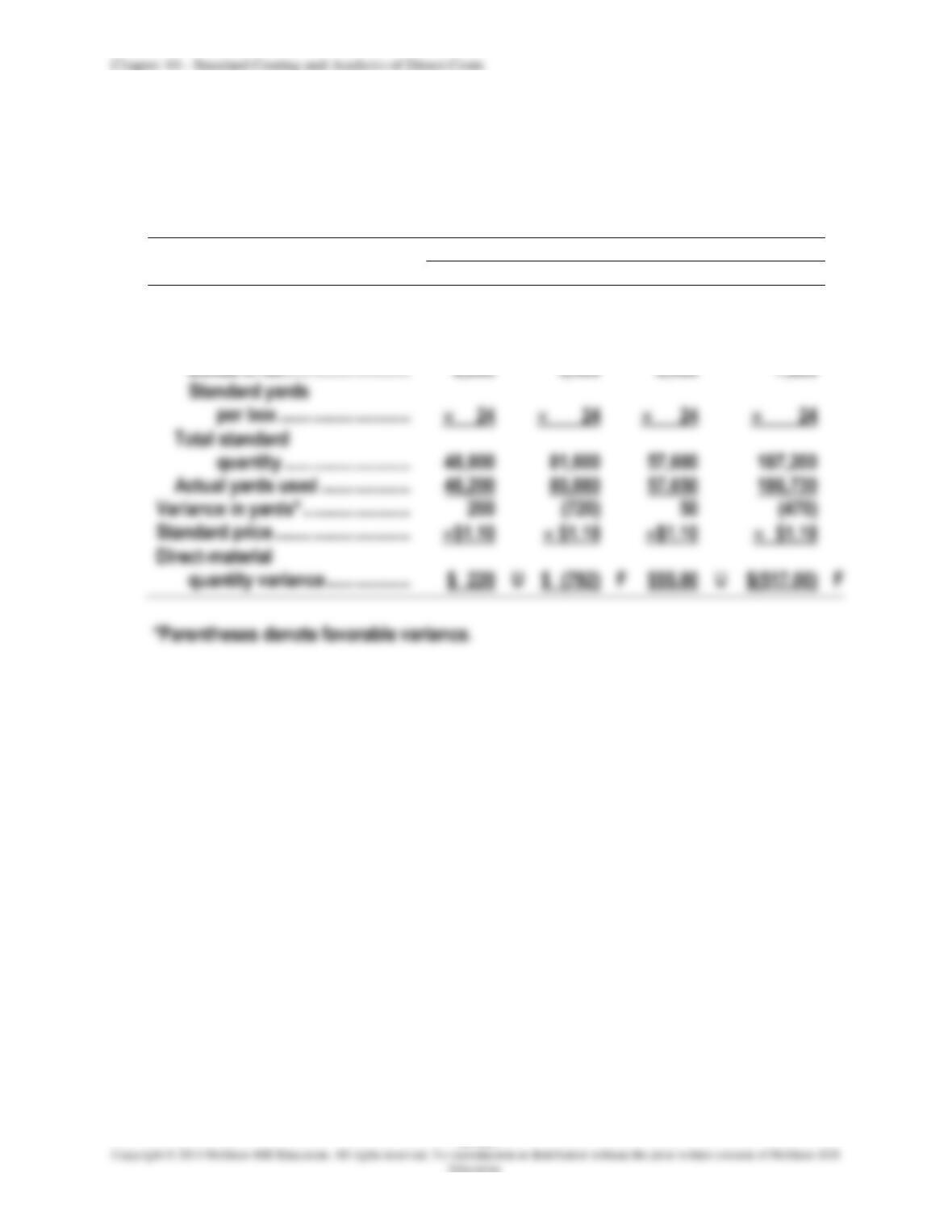
DIRECT-MATERIAL PURCHASE PRICE VARIANCE
FOR NOVEMBER
Actual cost of materials purchased ………………………………………………….
Direct-material purchase price variance …………………………………………..
10–52
CASE 10-49 (CONTINUED)
b.
METRO FASHIONS, INC.
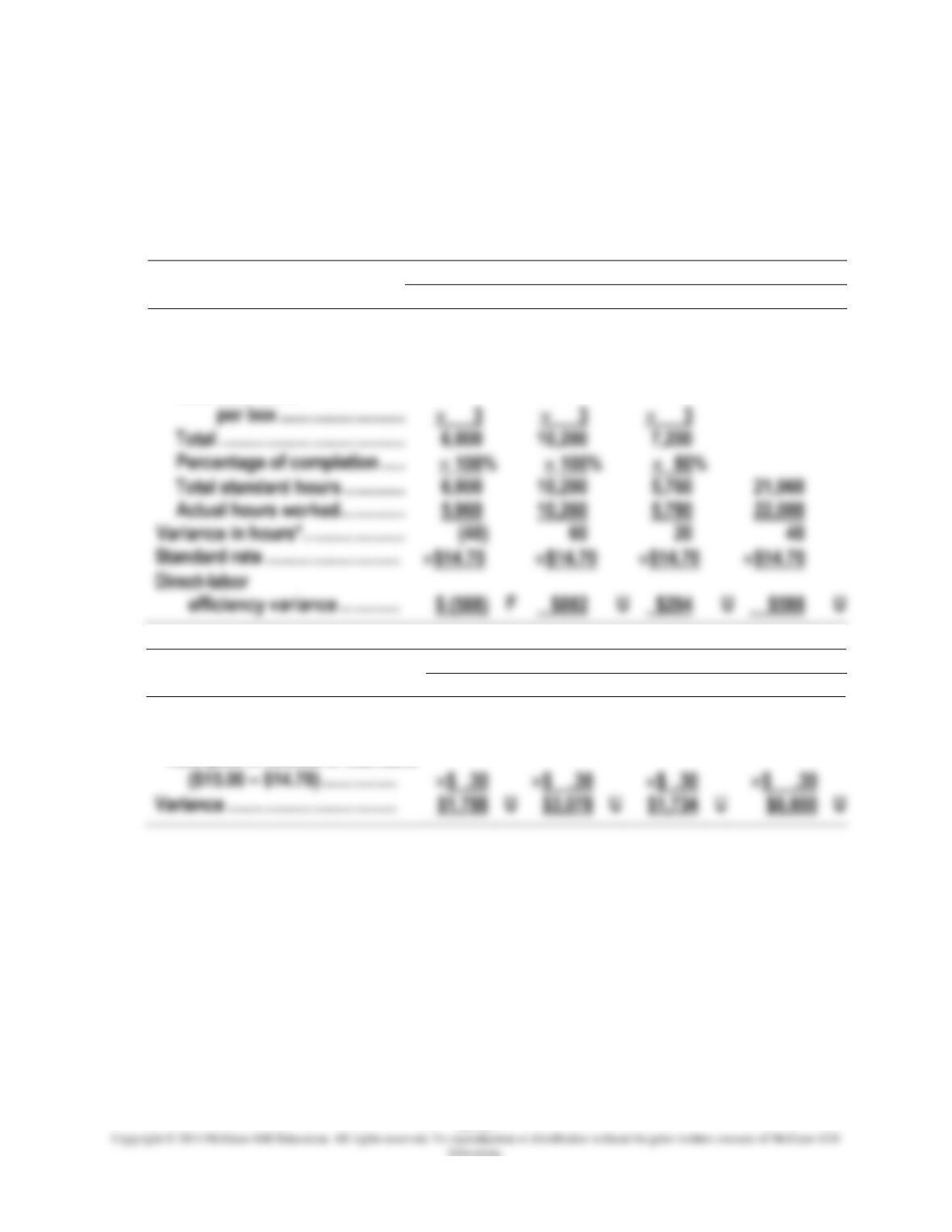
DIRECT-MATERIAL QUANTITY VARIANCES
FOR NOVEMBER
Lot no.
N42
N43
N44
Total
Direct-material quantity
variance:
Standard yards:
Boxes in lot ………………………
3,400
Total standard
quantity ………………………
Actual yards used ……………….
Variance in yards* …………………..
(720)
Chapter 10 – Standard Costing and Analysis of Direct Costs
10–53
CASE 10-49 (CONTINUED)
c. and d.
METRO FASHIONS, INC.
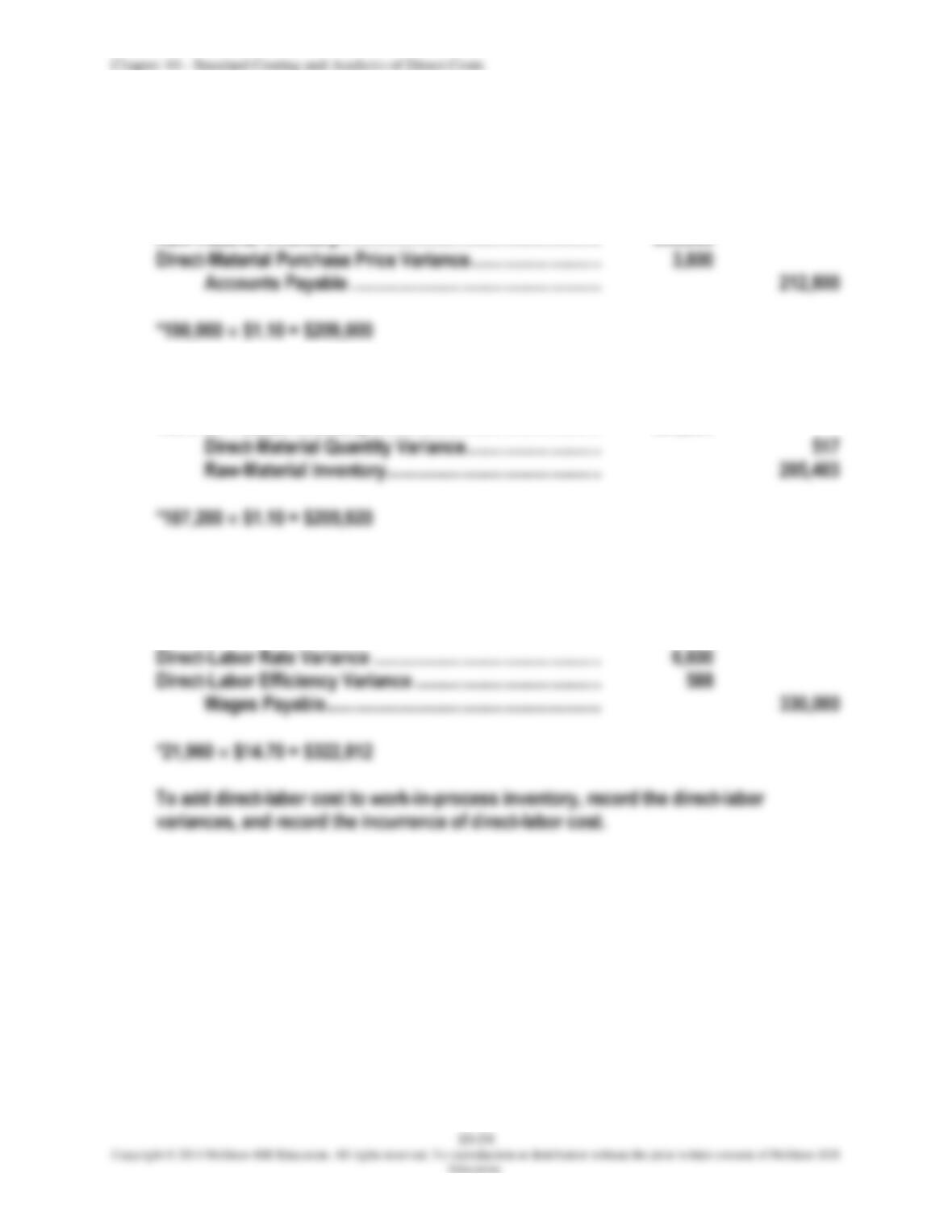
DIRECT-LABOR VARIANCES
FOR NOVEMBER
Lot no.
N42
N43
N44
Total
Direct-labor efficiency variance:
Standard hours:
Boxes in lot ……………………….
2,000
3,400
2,400
Total ………………………………….
6,000
10,200
7,200
Total standard hours ………….
6,000
10,200
5,760
21,960
Actual hours worked …………..
5,960
10,260
5,780
22,000
Variance in hours* ………………….
Standard hours
Lot no.
N42
N43
N44
Total
Direct-labor rate variance:
Actual hours worked ………….
5,960
10,260
5,780
22,000
Rate paid in excess of standard
CASE 10-49 (CONTINUED)
3.
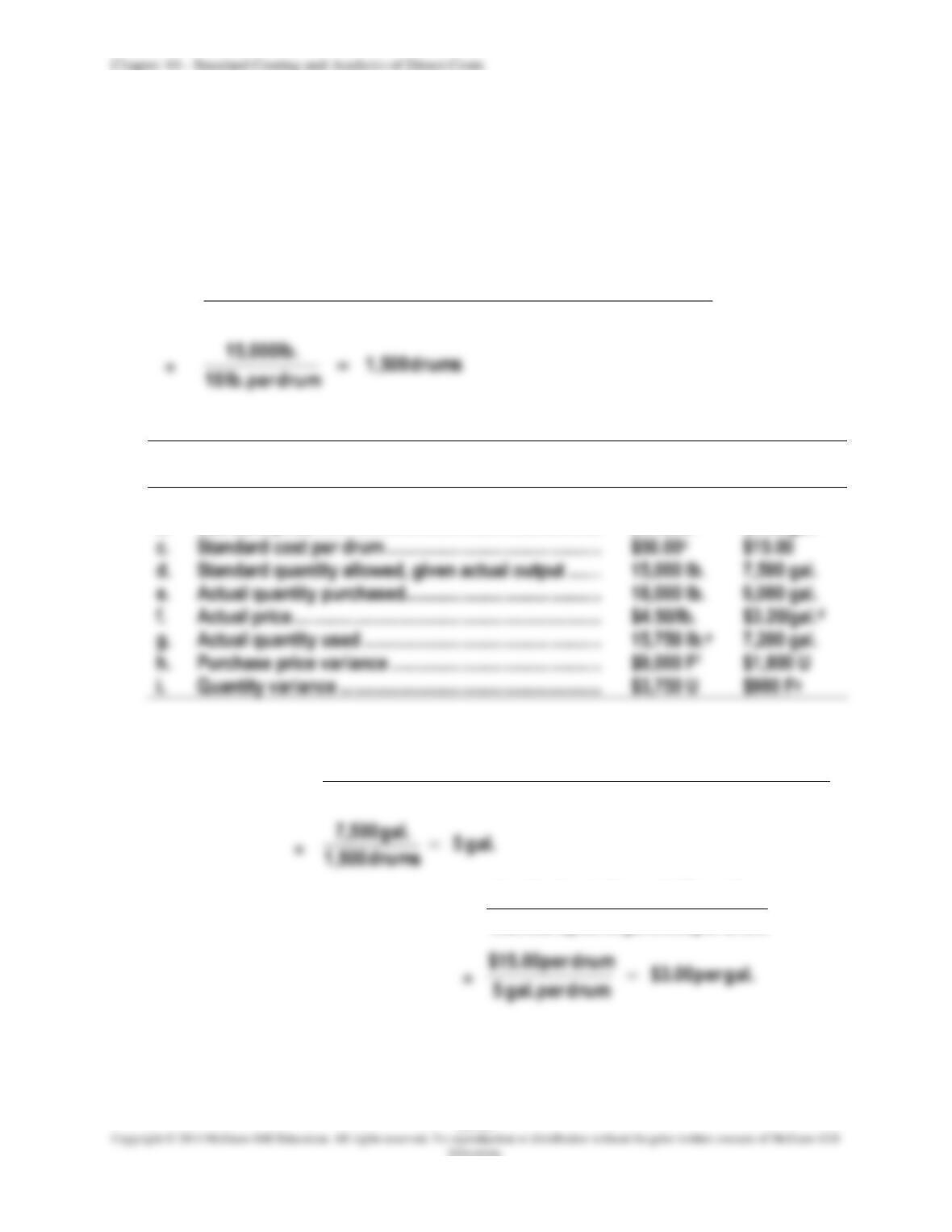
Journal entries:
Raw-material Inventory ………………………………………………..
209,000*
Direct-Material Purchase Price Variance ……………………….
Accounts Payable ………………………………………………
To record the purchase of raw material.
Work-in-Process Inventory …………………………………………..
205,920*
Direct-Material Quantity Variance ………………………..
Raw-Material Inventory ……………………………………….
To add direct-material cost to work-in-process inventory and record the direct-material
quantity variance.
Work-in-Process Inventory …………………………………………..
322,812*
Direct-Labor Rate Variance ………………………………………….
Direct-Labor Efficiency Variance ………………………………….
Wages Payable …………………………………………………..
10–55
CASE 10-50 (75 MINUTES)
The completed list is shown below. Begin by filling in the facts you know. The reasoning
used to reduce the remaining data is explained after the list of answers.
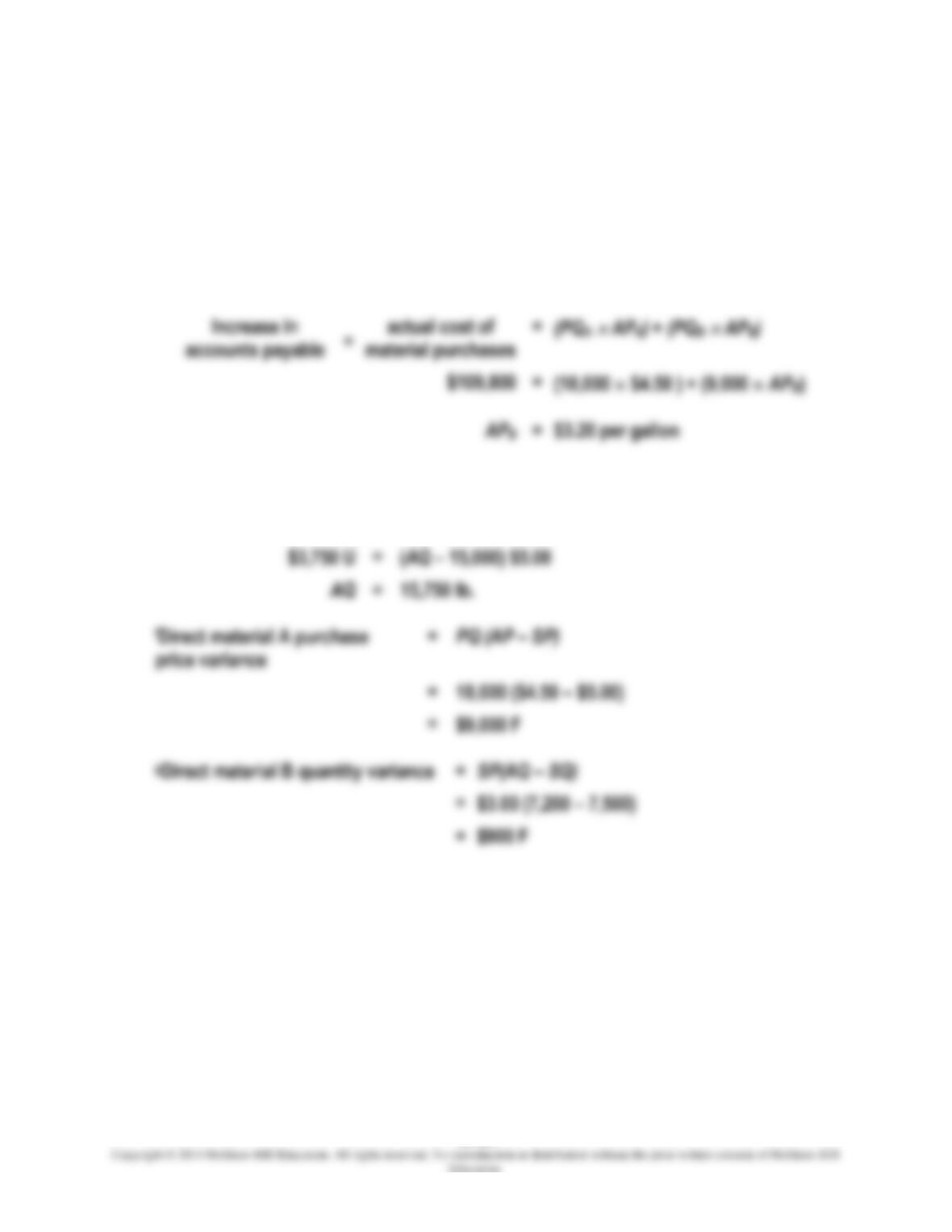
1.
Actual output (in drums)
=
drum per Amaterialdirect of quanity standard
output actual given allowed, Amaterialdirect of quantity standard
2.
Direct material
A
B
a.
Standard quantity per drum ………………………………….
10 lb.
5 gal.a
b.
Standard price …………………………………………………….
$5.00/lb.
$3.00/gal.b
c.
Standard cost per drum ……………………………………….
$50.00c
$15.00
d.
Standard quantity allowed, given actual output …….
15,000 lb.
7,500 gal.
e.
Actual quantity purchased ……………………………………
18,000 lb.
9,000 gal.
Actual price …………………………………………………………
$4.50/lb.
$3.20/gal.d
h.
Purchase price variance ………………………………………
$9,000 Ff
$1,800 U
Quantity variance ………………………………………………..
$3,750 U
$900 Fg
aStandard quantity of direct material B per drum
=
output actual
output actual given allowed, B materialdirect of quantity standard
bStandard price of direct material B
=
drum per allowed quantity standard
drum per B material ofcost standard
=
Chapter 10 – Standard Costing and Analysis of Direct Costs
10–56
CASE 10-50 (CONTINUED)
cStandard cost of direct material A per drum = 10 lbs. $5.00 per lb. = $50.00.
dThe reasoning for the actual price of direct material B is as follows, where the
subscripts denote materials A and B:
=
$3.20 per gallon
eThis conclusion comes from the following formula for the quantity variance:
Quantity variance (A)
=
SP(AQ – SQ)
=
15,750 lb.
=
$9,000 F
=
$900 F
Chapter 10 – Standard Costing and Analysis of Direct Costs
10–57
CASE 10-50 (CONTINUED)
3.
Direct labor:
I
(mixers)
II
(packers)
a.
Standard hours per drum ……………………………………..
2 hr.a
4 hr.
b.
Standard rate per hour …………………………………………
$15.00
$12.00b
c.
Standard cost per drum ………………………………………..
$30.00
$48.00
d.
Standard quantity allowed, given actual output ……..
3,000 hr.c
6,000 hr.d
e.
Actual rate per hour ……………………………………………..
$15.30i
$11.90
Actual hours ………………………………………………………..
3,000 hrh
6,150 hr.e
g.
Rate variance ……………………………………………………….
$900 U
$615 Ff
h.
Efficiency variance……………………………………………….
-0-g
$1,800 U
aStandard hours of direct labor type I per drum
=
hour per rate standard
drum per I labordirect ofcost standard
=
bDirect labor type II, standard rate per hour
=
drum per hours standard
drum per II typelabordirect ofcost standard
=
cDirect labor type I, standard quantity allowed, given actual output
=
3,000 hr.
dDirect labor type II, standard quantity allowed given actual output
=
6,000 hr.
Chapter 10 – Standard Costing and Analysis of Direct Costs
10–58
CASE 10-50 (CONTINUED)
eDirect labor type II, actual hours = 6,150 hr. Use the formula for the direct-labor
efficiency variance, as follows:
Direct-labor (II) efficiency variance
=
SR (AH – SH)
=
$12.00 (AH – 6,000)
gDirect labor type I, efficiency variance = zero.
iDirect labor type I, actual rate per hour = $15.30. Use the formula for the direct-labor
=
3,000 (AR – $15.00)
Chapter 10 – Standard Costing and Analysis of Direct Costs
10–59
CASE 10-50 (CONTINUED)
Now fill in the remaining variances in the following tabulation:
Direct-material variances:
A:
Purchase price variance …………………………………………………………..
$9,000
F
A:
Quantity variance …………………………………………………………………….
U
B:
Purchase price variance …………………………………………………………..
U
B:
Quantity variance …………………………………………………………………….
F
Direct-labor variances:
Rate variance …………………………………………………………………………..
U
Efficiency variance …………………………………………………………………..
Rate variance …………………………………………………………………………..
F
Efficiency variance …………………………………………………………………..
U
Total (favorable variance because of credit to cost of Goods Sold) ……..
$2,265
F
Chapter 10 – Standard Costing and Analysis of Direct Costs
10–60
FOCUS ON ETHICS (See page 431 in the text.)
Was sacrificing quality to cut standards ethical in this situation?
Smith did not act ethically when he ordered wood of an inferior quality as he knew that
his actions would harm customers (through provision of inferior products) and the
company (both through product replacement costs and through damage to its