FINANCIAL ACCOUNTING – Eleventh Edition Solutions Manual
S10-1
(5-10 min.)
Solution:
Corporation’s advantages:
· Continuous life
· Transferability of ownership
What are the advantages that a corporation has over a proprietorship and a
partnership? What are the disadvantages of a corporation? Describe the authority
structure of a corporation. Who holds ultimate power?
Chapter 10: Stockholders’ Equity Page 1 of 98
· Limited liability of the stockholders
· Ease of raising capital
Corporation’s disadvantages:
· Double taxation of distributed profits
· Government regulation
· Separation of ownership and management
FINANCIAL ACCOUNTING – Eleventh Edition Solutions Manual
S10-2
(5-10 min.)
Solution:
1. Who are the real owners of a corporation?
2. What privileges do preferred stockholders have over common stockholders?
3. Which class of stockholders reaps greater benefits from a highly profitable
corporation? Explain your answer.
1. The common stockholders are the real owners of a corporation.
Chapter 10: Stockholders’ Equity Page 2 of 98

FINANCIAL ACCOUNTING – Eleventh Edition Solutions Manual
S10-3
(5-10 min.)
Solution:
Would a change in the par value of the company’s stock affect Mitchell
Corporation’s total paid-in capital? Give the reason for your answer.
The $11,488,500 was paid-in capital in excess of par – common. It was not a profit
and therefore had no effect on net income.
Chapter 10: Stockholders’ Equity Page 3 of 98
FINANCIAL ACCOUNTING – Eleventh Edition Solutions Manual
S10-4
(10 min.)
Solution:
Martin Legal Services:
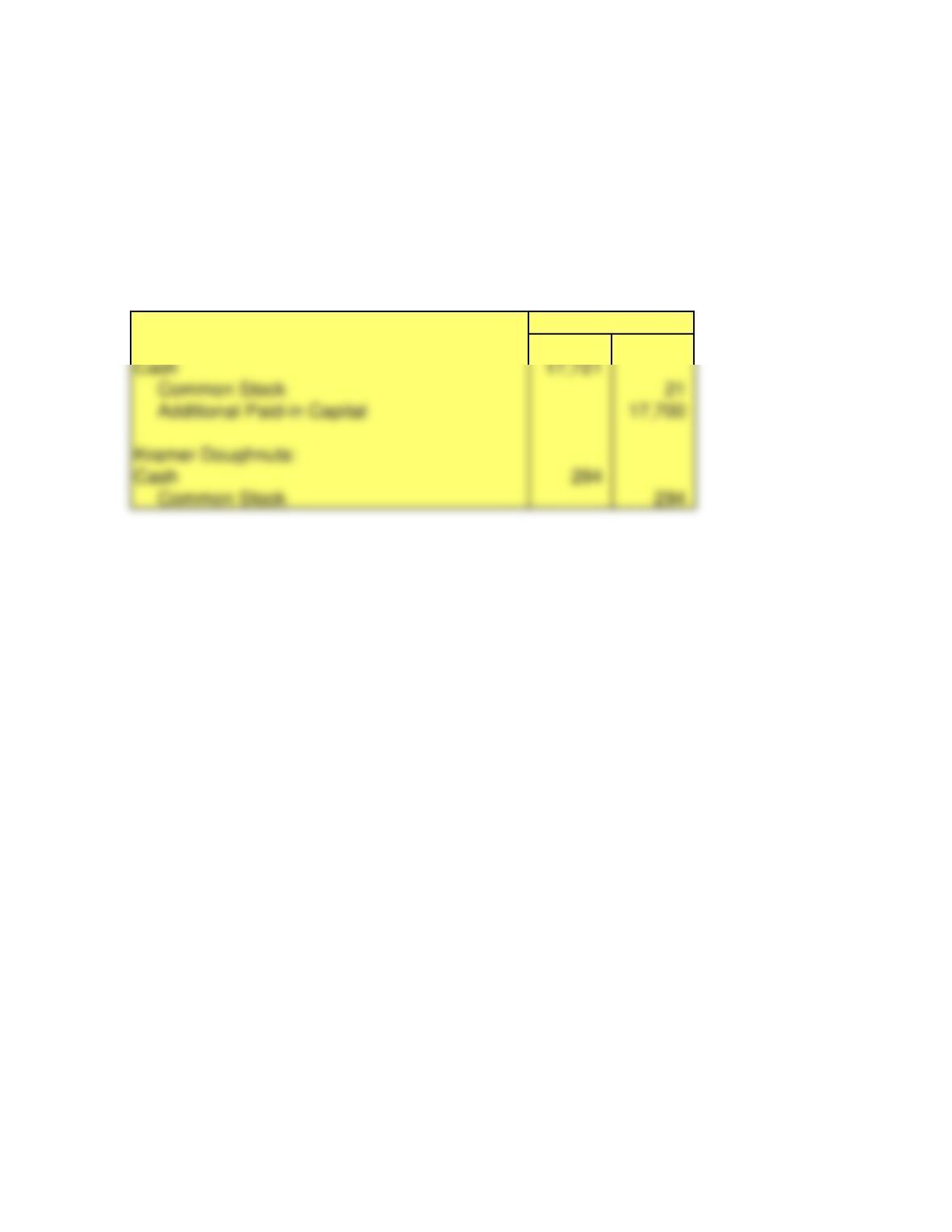
Assume each company issued its stock in a single transaction. Journalize each
company’s issuance of its stock, using its actual account titles. Explanations are not
required.
Millions
Chapter 10: Stockholders’ Equity Page 4 of 98
Cash 17,721
Kramer Doughnuts:
Cash 294

FINANCIAL ACCOUNTING – Eleventh Edition Solutions Manual
S10-5
(5-10 min.)
Solution:
DATE DEBIT CREDIT
Cash 1,350,000
Common Stock (100,000 × $0.01) 1,000
Record the stock-issuance transactions for Roland Corporation.
Journal
ACCOUNT TITLES AND EXPLANATION
Chapter 10: Stockholders’ Equity Page 5 of 98
Paid-in Capital in Excess of Par — Common 1,349,000
Issued stock.
Legal Expense (2,000 × $13.70) 27,400
Common Stock (2,000 × $0.01) 20
Issued stock for services.
FINANCIAL ACCOUNTING – Eleventh Edition Solutions Manual
S10-6
(10 min.)
Solution:
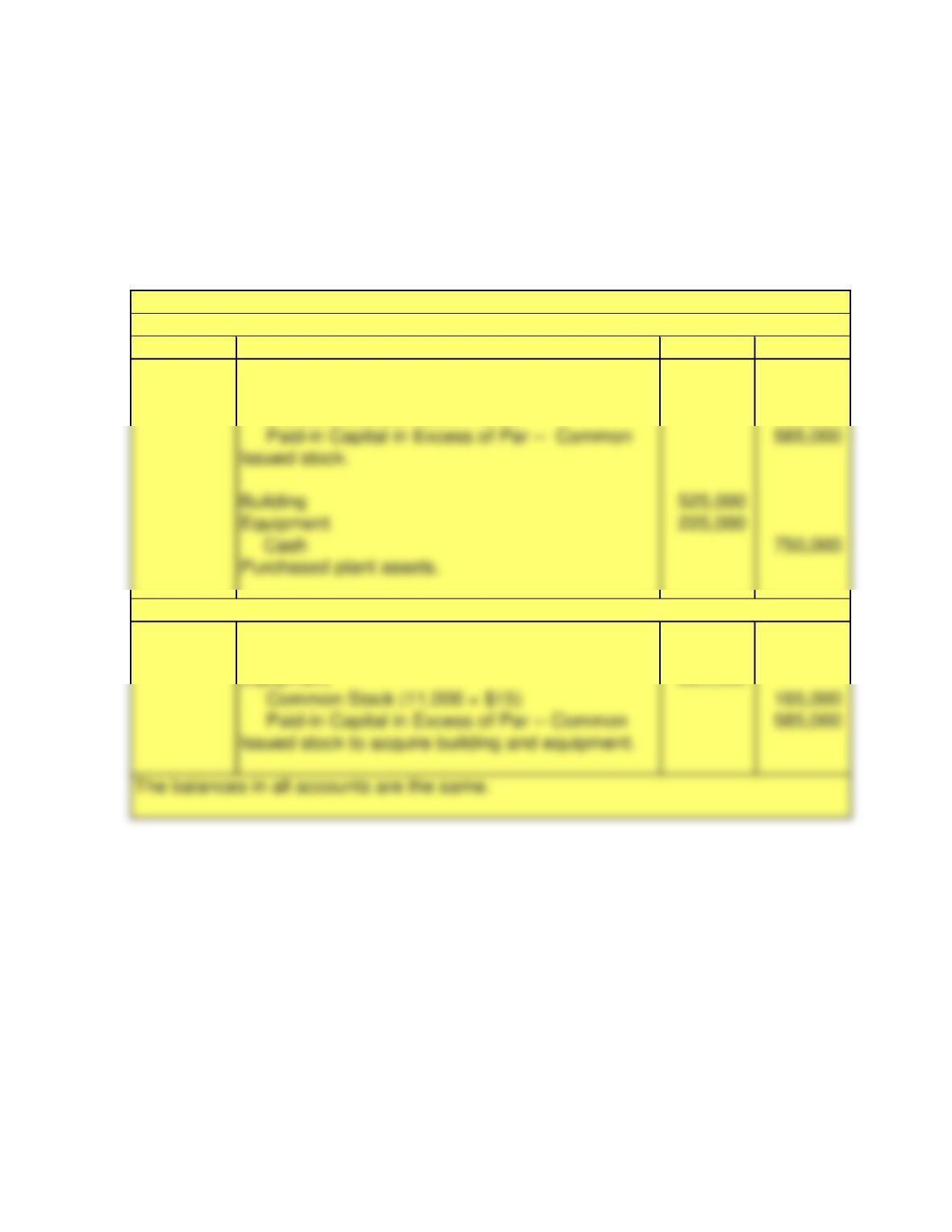
Case A — Issue stock and buy the assets in separate transactions:
DATE DEBIT CREDIT
Cash 750,000
Common Stock (11,000 × $15) 165,000
Case B — Issue stock to acquire the assets:
Building 525,000
Equipment 225,000
Common Stock (11,000 × $15) 165,000
Paid-in Capital in Excess of Par — Common 585,000
Issued stock to acquire building and equipment.
Compare the balances in all the accounts after making both sets of entries. Are the
account balances similar or different?
ACCOUNT TITLES AND EXPLANATION
Journal
Chapter 10: Stockholders’ Equity Page 6 of 98
Paid-in Capital in Excess of Par — Common 585,000
Issued stock.
Building 525,000
Equipment 225,000
Cash 750,000
Purchased plant assets.

FINANCIAL ACCOUNTING – Eleventh Edition Solutions Manual
S10-7
(5-10 min.)
Solution:
Thousands
Stockholders’ equity:
Prepare the stockholders’ equity section of Hillcrest’s balance sheet. Net income has
already been closed to Retained Earnings.
Common stock, $.01 par, 900 thousand shares
Chapter 10: Stockholders’ Equity Page 7 of 98
FINANCIAL ACCOUNTING – Eleventh Edition Solutions Manual
S10-8
(10 min.)
Solution:
a. Total revenues 1,370$
Total expenses 959
Net income 411$
Using only year-end figures rather than averages, compute the following for Hillcrest
Employment Services:
a. Net income
b. Total liabilities
c. Total assets (use the accounting equation)
d. Net profit margin ratio
e. Asset turnover
f. Leverage ratio
g. Return on equity
What additional information do you need before you can use this data to make
decisions?
Amounts In Thousands
Chapter 10: Stockholders’ Equity Page 8 of 98
b. Accounts payable 510$
FINANCIAL ACCOUNTING – Eleventh Edition Solutions Manual
e. 1,370$ 0.35
3,915$
=
=
Asset
turnover
Total revenues
Total assets
Chapter 10: Stockholders’ Equity Page 9 of 98
=
=
=
=
FINANCIAL ACCOUNTING – Eleventh Edition Solutions Manual
S10-9
(5 min.)
Solution:
DATE DEBIT CREDIT
Jan. 10 Treasury Stock 21
Cash 21
ACCOUNT TITLES AND EXPLANATION
Record the purchase and resale of Jenson Corporation’s treasury stock. Overall, how
much did stockholders’ equity increase or decrease as a result of the two treasury-stock
transactions?
Journal
Millions
Chapter 10: Stockholders’ Equity Page 10 of 98
July 3 Cash 12
Paid-in Capital from Treasury Stock Transactions 8
FINANCIAL ACCOUNTING – Eleventh Edition Solutions Manual
S10-10
(15-20 min.)
Requirements
Solution:
Req. 1
MEMORANDUM
TO: Lucinda Lowery Exports, Inc., Board of Directors
FROM:
Req. 2
1. Suppose you are a significant stockholder of Lucinda Lowery Exports, Inc. Write a
memorandum to explain to the board how the purchase of treasury stock would make it
difficult for the Alberton group to take over Lowery. Include in your memo a discussion
of the effect that purchasing treasury stock would have on stock outstanding and on the
size of the corporation.
2. Suppose Lowery management is successful in fighting off the takeover bid and later
sells the treasury stock at prices greater than the purchase price. Explain what effect
these sales will have on assets, stockholders’ equity, and net income.
Student Name
Sales of treasury stock at prices above the purchase price increase company assets
because of the greater amount of assets coming in from the sale than went out to buy
the stock. Treasury stock transactions do not affect liabilities, so the sale of treasury
Chapter 10: Stockholders’ Equity Page 11 of 98
RE:

FINANCIAL ACCOUNTING – Eleventh Edition Solutions Manual
S10-11
(10 min.)
Solution:
ACCOUNT TITLES AND EXPLANATION DEBIT CREDIT
Feb
5 Retained Earnings
(1,200,000 × $.24) 288,000
Record the declaration of the dividend and the payment of the dividend. Include the
proper dates with each journal entry.
Journal
DATE
2016
Chapter 10: Stockholders’ Equity Page 12 of 98
Declared a cash dividend.
Mar.
Paid the cash dividend.
FINANCIAL ACCOUNTING – Eleventh Edition Solutions Manual
S10-12
(10 min.)
Solution:
ACCOUNT TITLES AND EXPLANATION DEBIT CREDIT
Dec.
15 Retained Earnings
($150,000 × .02) + (50,000 × $.45) 25,500
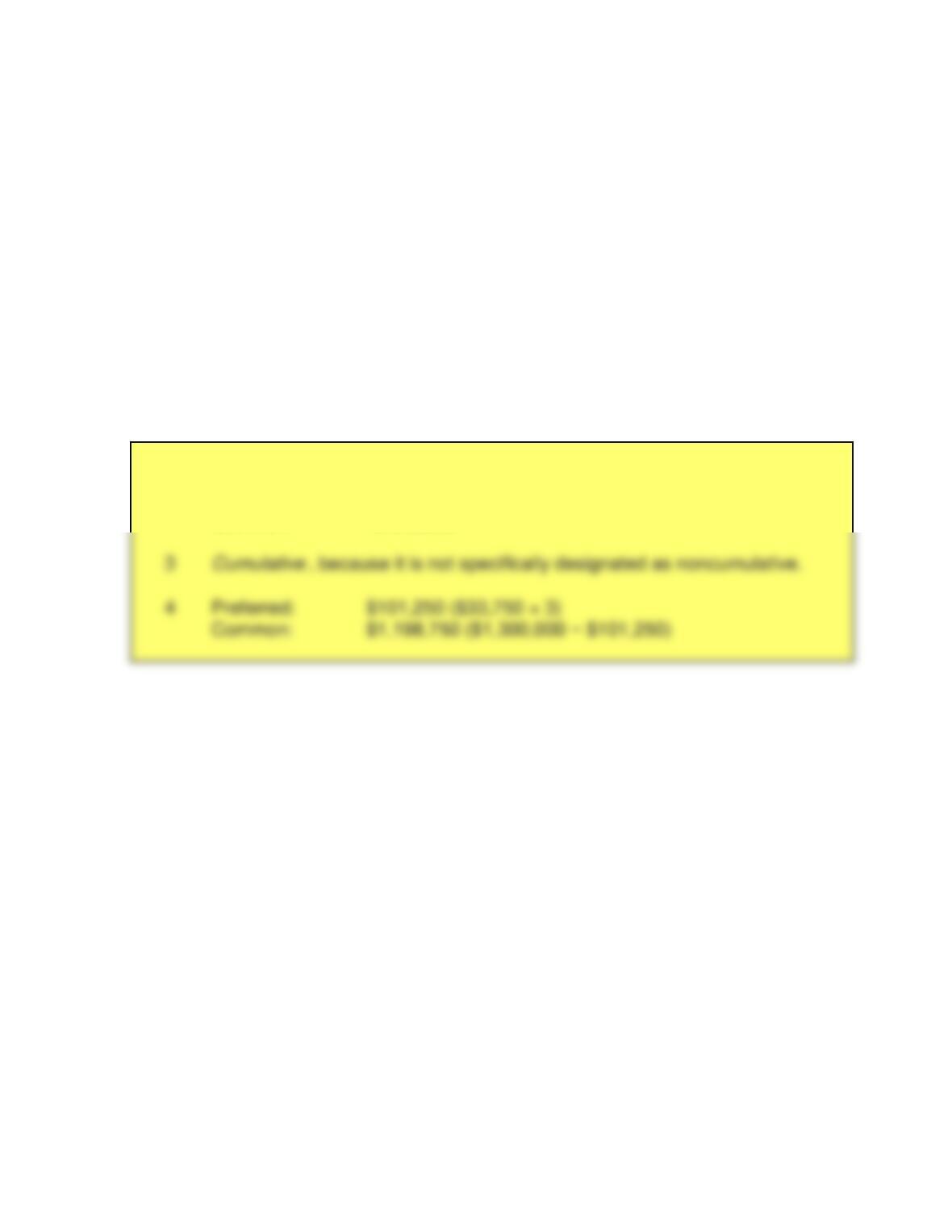
Journalize the following for Greenwood Corporation:
a. Declaring the cash dividends on December 15, 2016
b. Paying the cash dividends on January 4, 2017
Did Retained Earnings increase or decrease during 2016? By how much?
Journal
2016
DATE
Chapter 10: Stockholders’ Equity Page 13 of 98
Declared a cash dividend.
Paid the cash dividend.
2017
FINANCIAL ACCOUNTING – Eleventh Edition Solutions Manual
S10-13
(5-10 min.)
Solution:
1 $33,750 (25,000 shares × $1.35 per share)
2 Preferred: $ 33,750
Common: $ 366,250
Answer these questions about Baxter’s cash dividends.
1. How much in dividends must Baxter declare each year before the common
stockholders receive any cash dividends for the year?
2. Suppose Baxter, Inc., declares cash dividends of $400,000 for 2016. How much of
the dividends goes to preferred? How much goes to common?
3. Is Baxter’s preferred stock cumulative or noncumulative? How can you tell?
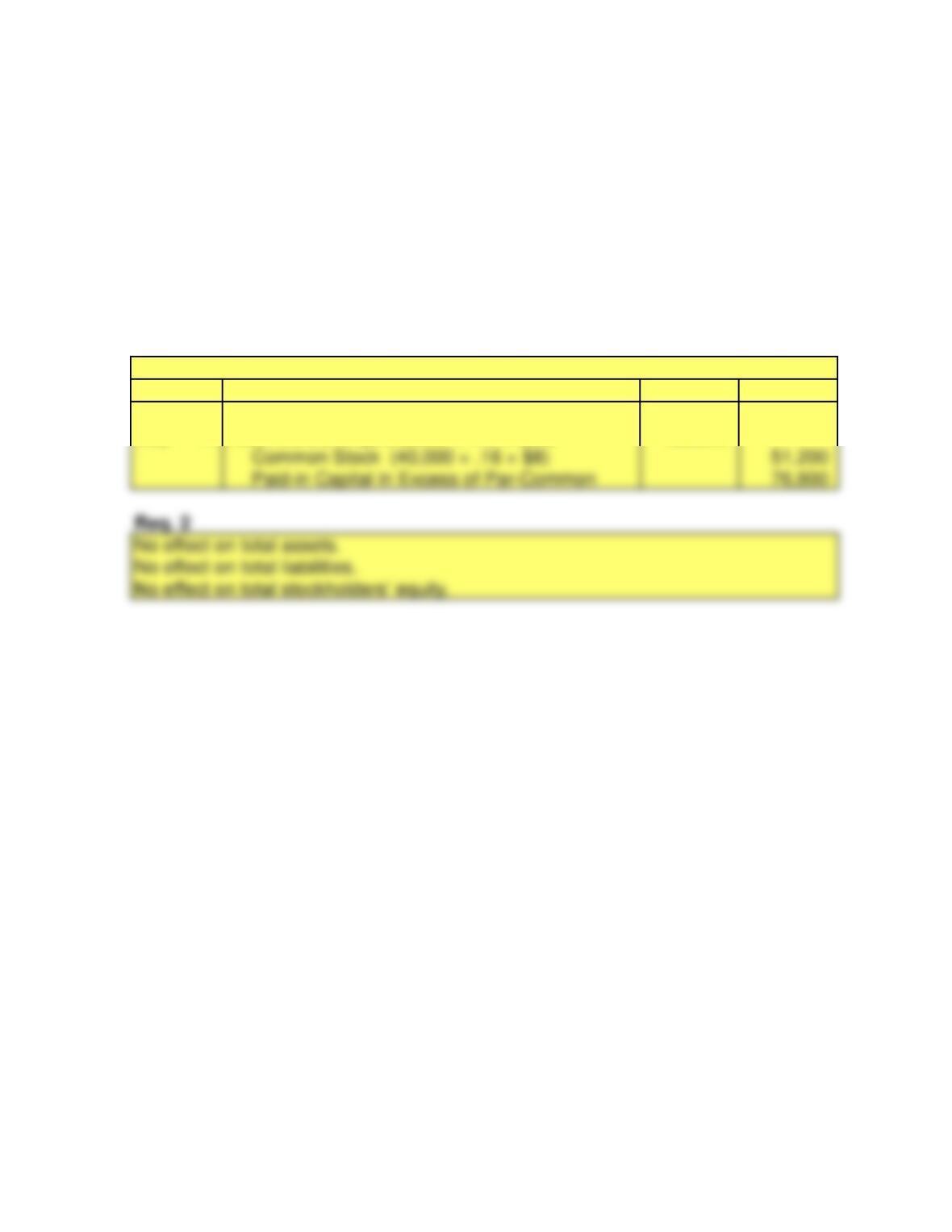
4. Baxter, Inc., passed the preferred dividend in 2015 and 2016. Then in 2017, Baxter
declares cash dividends of $1,300,000. How much of the dividends goes to preferred?
How much goes to common?
Chapter 10: Stockholders’ Equity Page 14 of 98
4 Preferred: $101,250 ($33,750 × 3)
FINANCIAL ACCOUNTING – Eleventh Edition Solutions Manual
S10-14
(5-10 min.)
Solution:
Req. 1
ACCOUNT TITLES AND EXPLANATION DEBIT CREDIT
May 11 Retained Earnings (40,000 × .16 × $20) 128,000
1. Journalize Downtown’s declaration and distribution of the stock dividend on May
11. An explanation is not required.
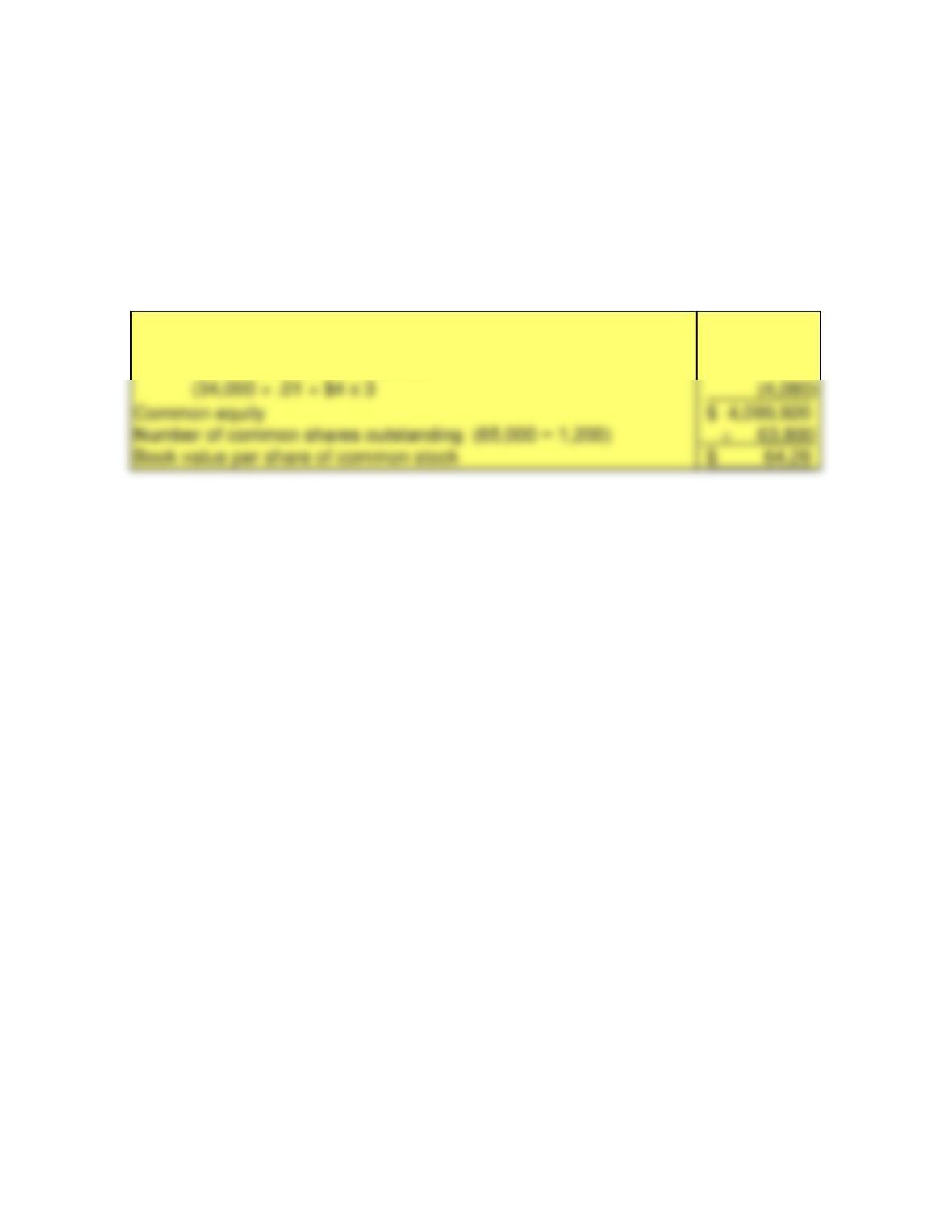
2. What was the overall effect of the stock dividend on Downtown’s total assets? On
total liabilities? On total stockholders’ equity?
Journal
DATE
Chapter 10: Stockholders’ Equity Page 15 of 98
Req. 2
FINANCIAL ACCOUNTING – Eleventh Edition Solutions Manual
S10-15
(10 min.)
Solution:
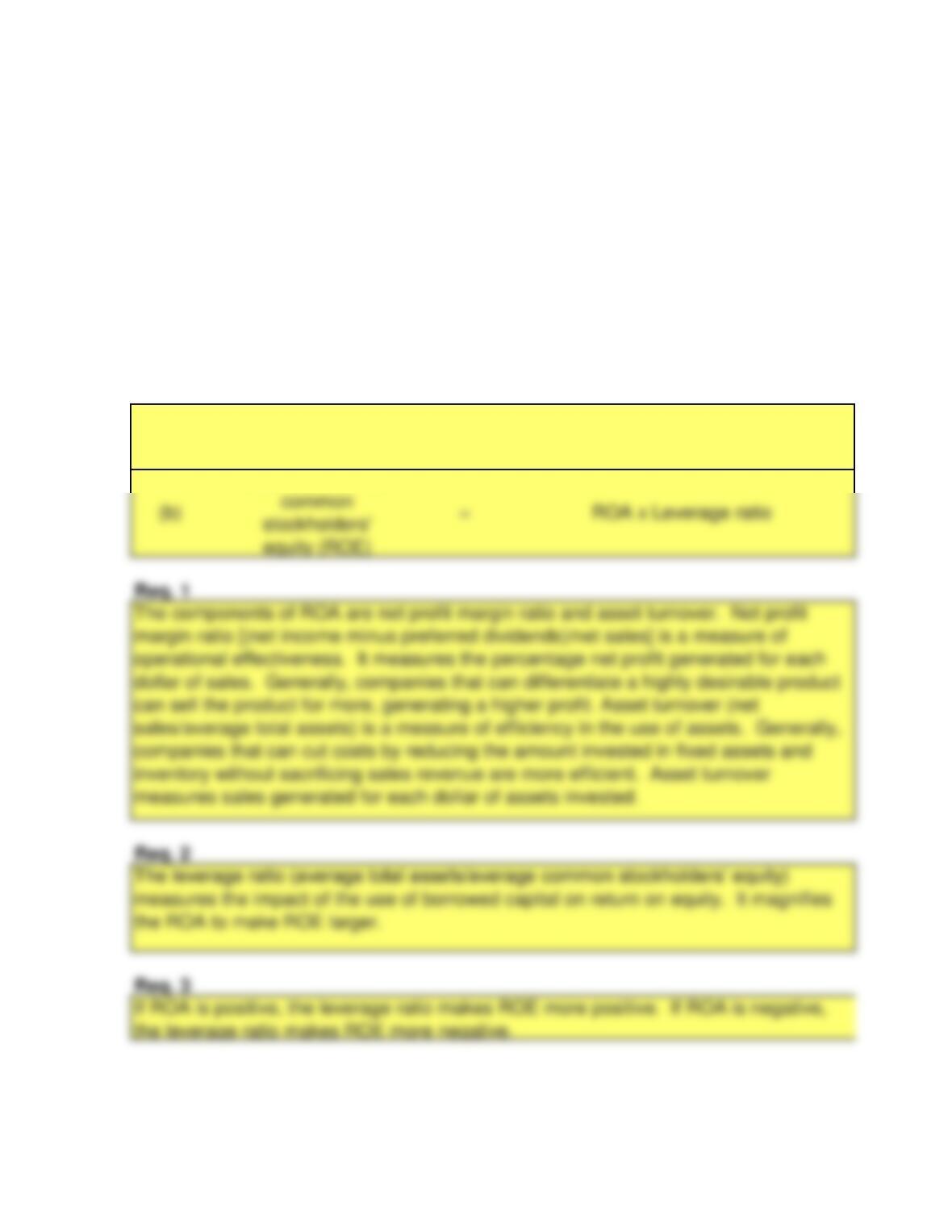
Total stockholders’ equity 4,240,000$
Less: Preferred stock (136,000)
Preferred dividends in arrears
Compute the book value per share of the company’s common stock.
Chapter 10: Stockholders’ Equity Page 16 of 98
Common equity 4,099,920$
Number of common shares outstanding (65,000 − 1,200) ÷ 63,800
FINANCIAL ACCOUNTING – Eleventh Edition Solutions Manual
S10-16
(5-10 min.)
Solution:
(a)
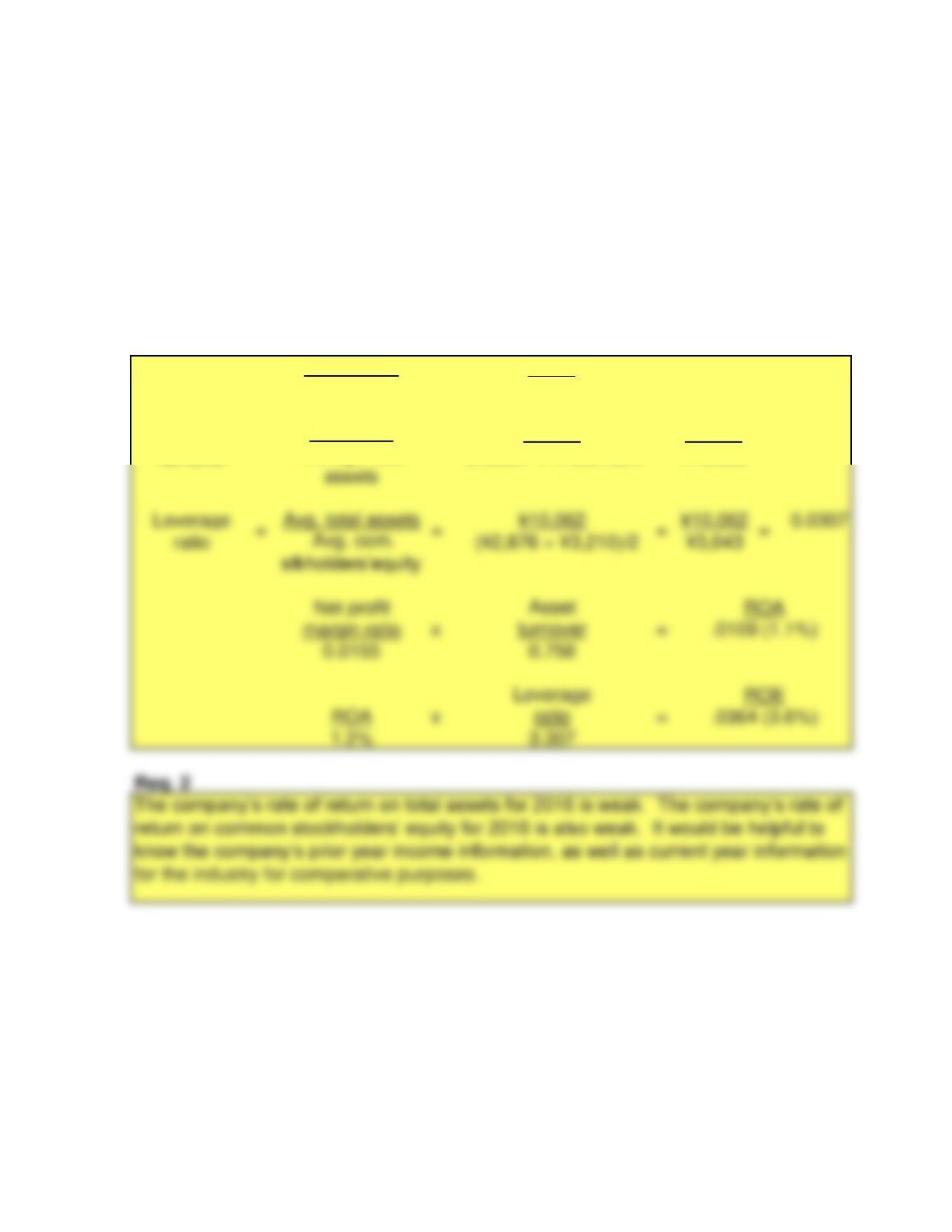
Give the DuPont model formula for computing (a) rate of return on total assets (ROA)
and (b) rate of return on common stockholders’ equity (ROE). Then answer these
questions about the rate-of-return computations.
1. Explain the meaning of the component driver ratios in the computation of ROA.
2. What impact does the leverage ratio have on ROA?
3. Under what circumstances will ROE be higher than ROA? Under what
circumstances would ROE be lower than ROA?
Rate of return on
=
Rate of return on total
assets (ROA)
Net profit margin ratio x Asset turnover
Chapter 10: Stockholders’ Equity Page 17 of 98
FINANCIAL ACCOUNTING – Eleventh Edition Solutions Manual
S10-17
(10-15 min.)
Solution:
Req. 1
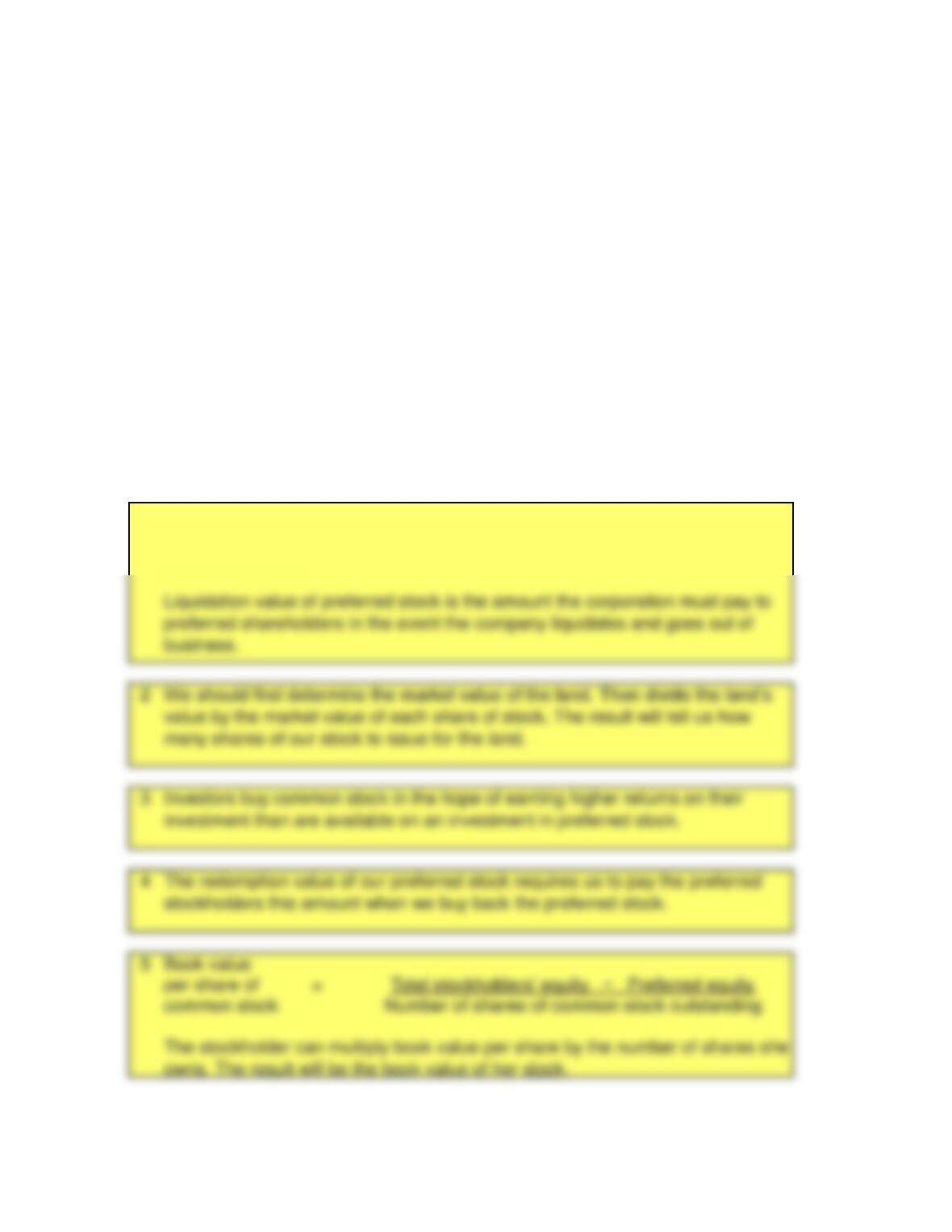
Net income ¥110
Revenues ¥7,629
Revenues ¥7,629 ¥7,629 0.758
¥10,062
Average total
=
(¥9,507 + ¥10,616)/2
=
=
Asset
turnover
=
Use the DuPont model to compute Nestor’s return on assets and return on common
equity for 2016. Evaluate the rates of return as strong or weak. What additional
information would be helpful in making this decision? (¥ is the symbol for the
Japanese yen.)
Net profit
margin ratio
=
=
=
0.0144
Chapter 10: Stockholders’ Equity Page 18 of 98
Req. 2
=
=
=
=
FINANCIAL ACCOUNTING – Eleventh Edition Solutions Manual
S10-18
(20-30 min.)
Solution:
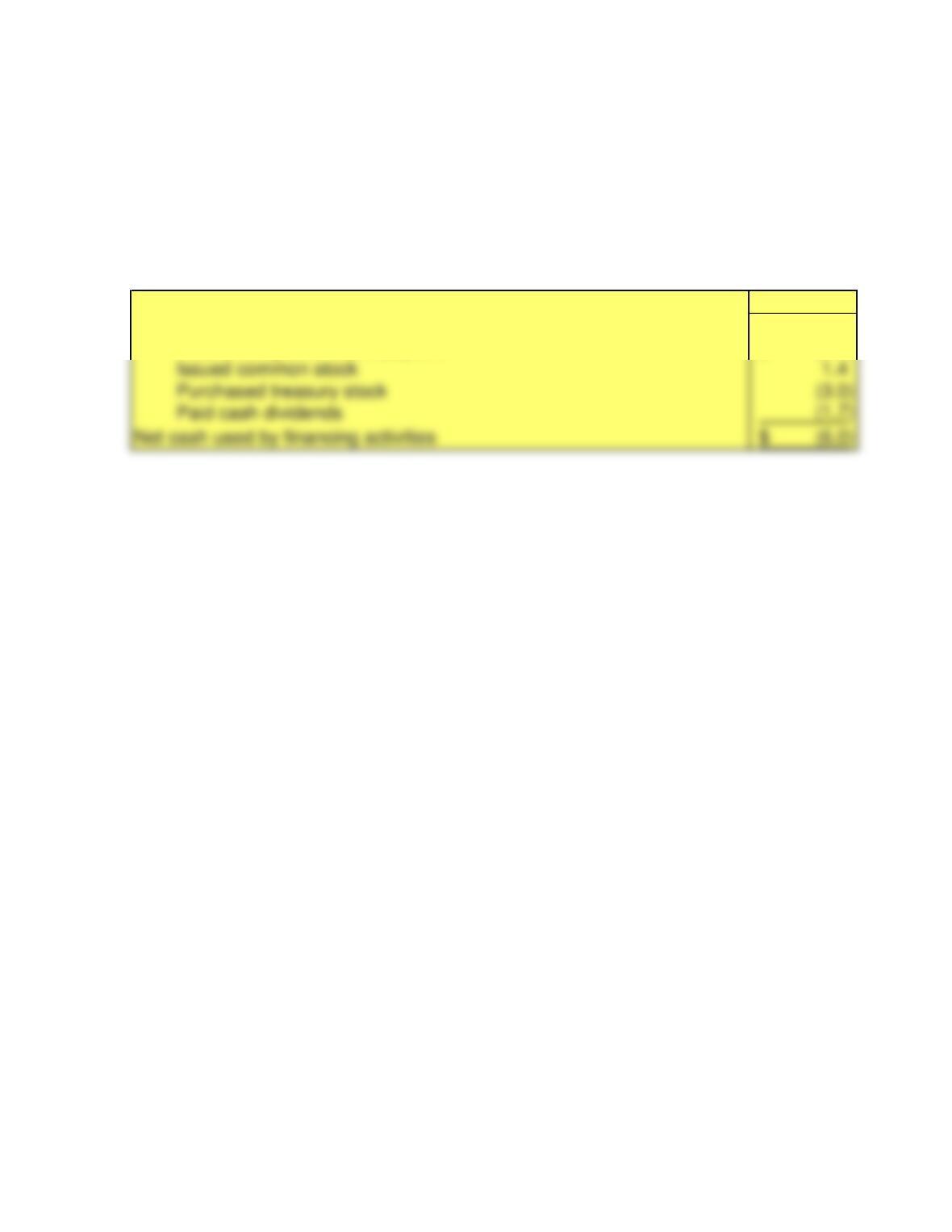
Redemption value of preferred stock is the price the corporation agrees to pay
to retire its redeemable preferred stock; that price was set when the preferred
stock was issued.
1. What is the difference between the redemption value and the liquidation value of
preferred stock?
2. Suzanne Gibson, a Wallace shareholder, proposes to transfer some land she
owns to the company in exchange for shares of the company stock. What value
should Wallace Corporation
use to determine the number of shares of our stock to issue for the land?
3. Preferred shares generally are preferred with respect to dividends and in the
event of our liquidation. Why would investors buy our common stock when
preferred stock is available?
4. What does the redemption value of our preferred stock require us to do?
5. One of our stockholders owns 200 shares of Wallace stock and someone has
offered to buy his shares for the company’s book value. Our stockholder asks us
the formula for computing the book value of his stock.
1
Chapter 10: Stockholders’ Equity Page 19 of 98
FINANCIAL ACCOUNTING – Eleventh Edition Solutions Manual
S10-19
(5-10 min.)
Solution:
Billions
Cash flows from financing activities:
Paid off long-term notes payable (2.7)$
Report Advantage’s cash flows from financing activities on the statement of cash flows
for 2016.
Chapter 10: Stockholders’ Equity Page 20 of 98
Issued common stock 1.4
Purchased treasury stock (3.0)