*PROBLEM 10-10B
2014
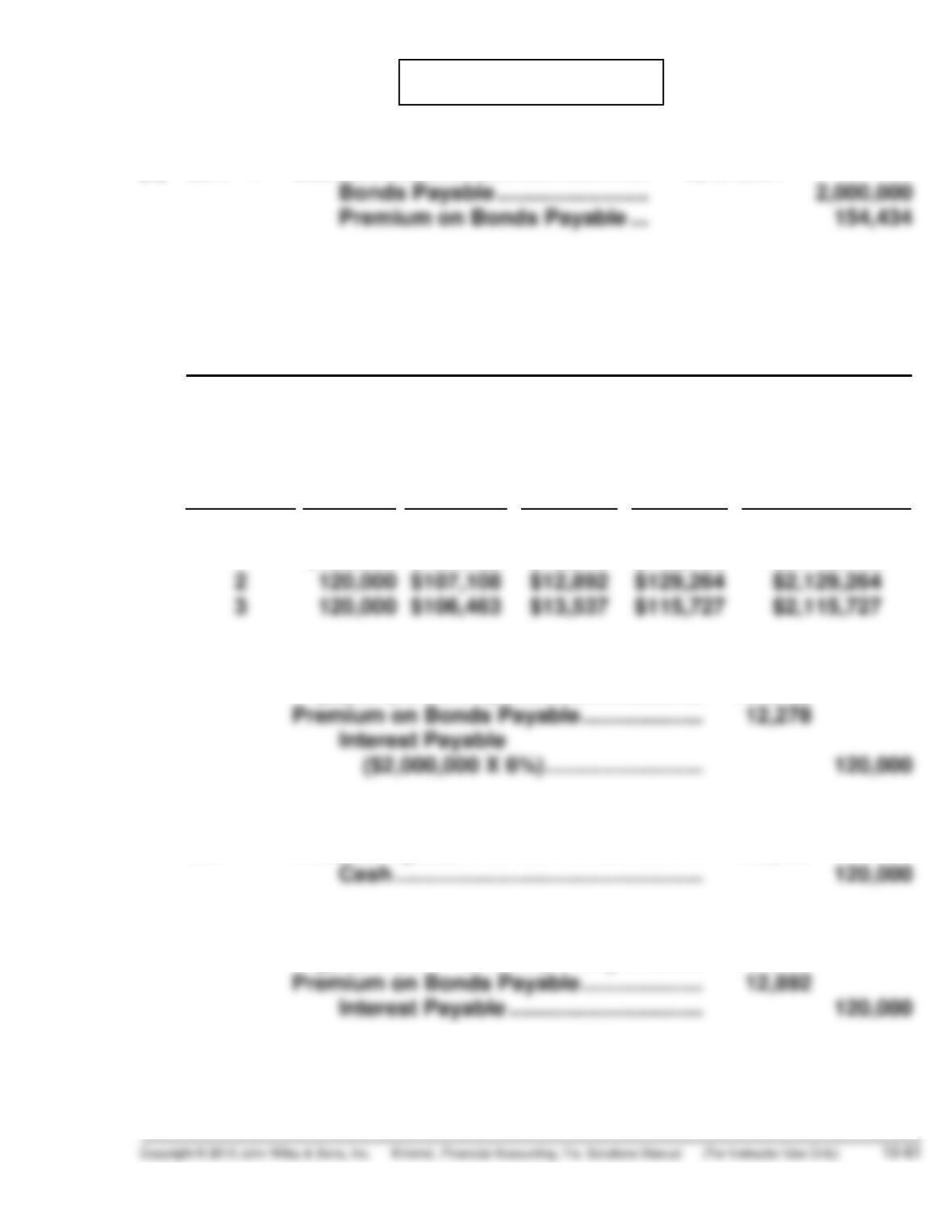
(a) Jan. 1 Cash ………………………………………….. 2,154,434
(b) IMELDA CORPORATION
Bond Premium Amortization
Effective-Interest Method—Annual Interest Payments
6% Bonds Issued at 5%
Annual
Interest
Periods
(A)
Interest
to Be
Paid
(B)
Interest
Expense
(C)
Premium
Amor-
tization
(A) – (B)
(D)
Unamor-
tized
Premium
(D) – (C)
(E)
Bond
Carrying
Value
($2,000,000 + D)
Issue date
1
$120,000
$107,722
$12,278
$154,434
$142,156
$2,154,434
$2,142,156
(c) Dec. 31 Interest Expense
($2,154,434 X 5%) …………………………… 107,722
(d) 2015
Jan. 1 Interest Payable …………………………………. 120,000
(e) Dec. 31 Interest Expense
[($2,154,434 – $12,278) X 5%] ………….. 107,108
*PROBLEM 10-11B
2014
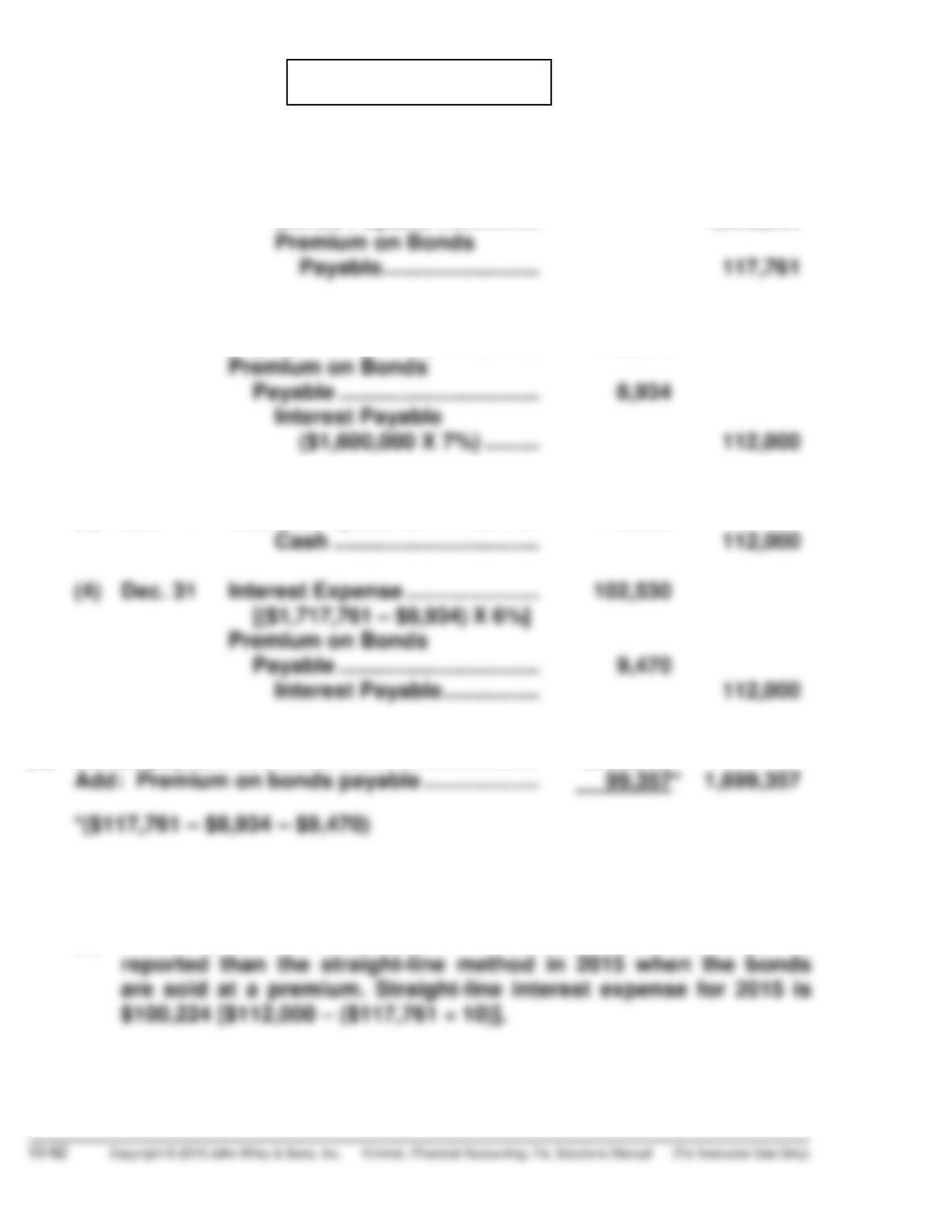
(a) (1) Jan. 1 Cash …………………………………… 1,717,761
Bonds Payable …………….. 1,600,000
(2) Dec. 31 Interest Expense
($1,717,761 X 6%) …………….. 103,066
2015
(3) Jan. 1 Interest Payable ………………….. 112,000
(b) Bonds payable …………………………………………… 1,600,000
(c) (1) Total bond interest expense—2015, $102,530.
(2) The effective-interest method will result in more interest expense
*PROBLEM 10-12B
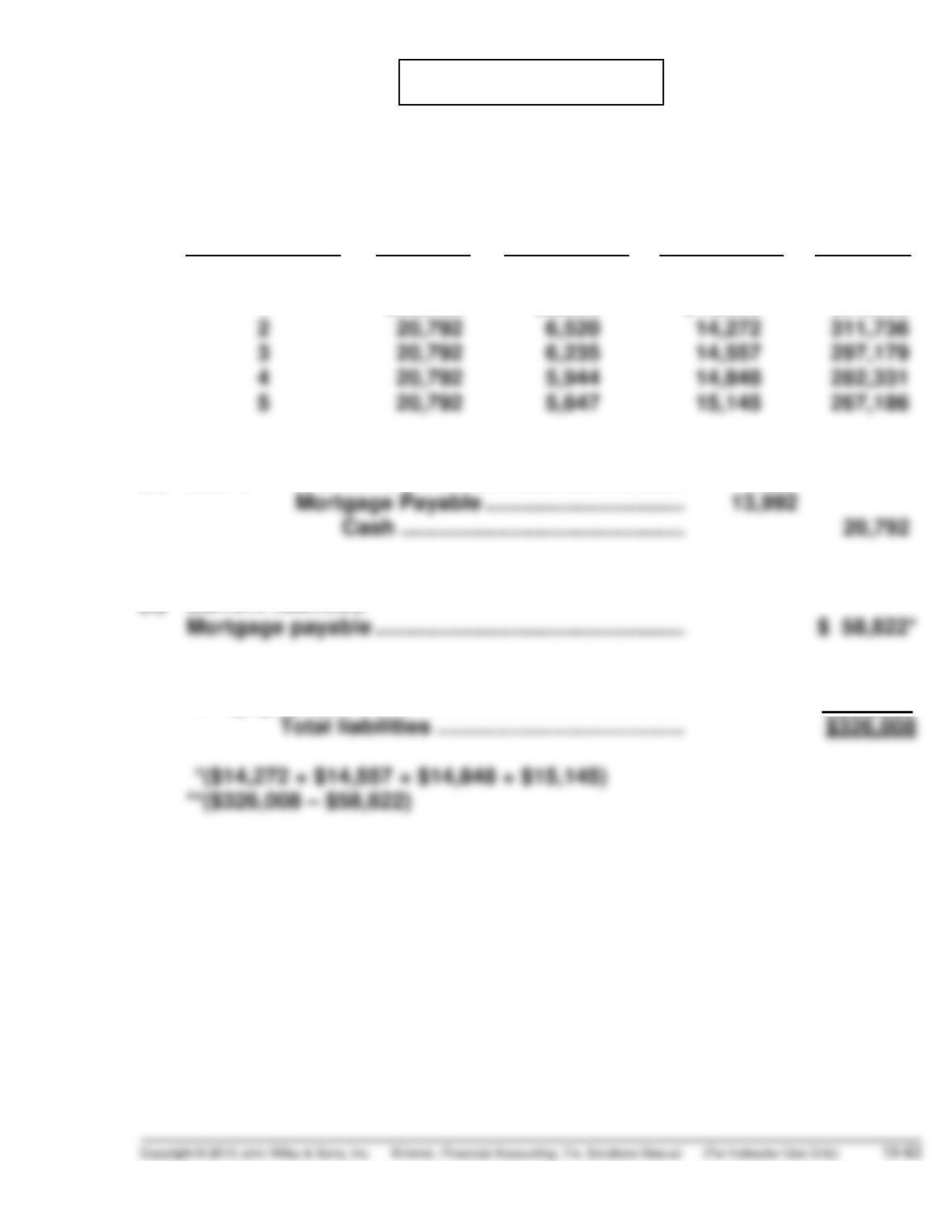
(a)
Quarterly
Interest Period
(A)
Cash
Payment
(B)
Interest
Expense
(D) X 2%
(C)
Reduction
of Principal
(A) – (B)
(D)
Principal
Balance
(D) – (C)
Issue Date
1
$20,792
$6,800
$13,992
$340,000
326,008
(b) Dec. 31 Interest Expense …………………………….. 6,800
(c) Current liabilities
Long-term liabilities
Mortgage payable …………………………………………… 267,186**
*PROBLEM 10-13B
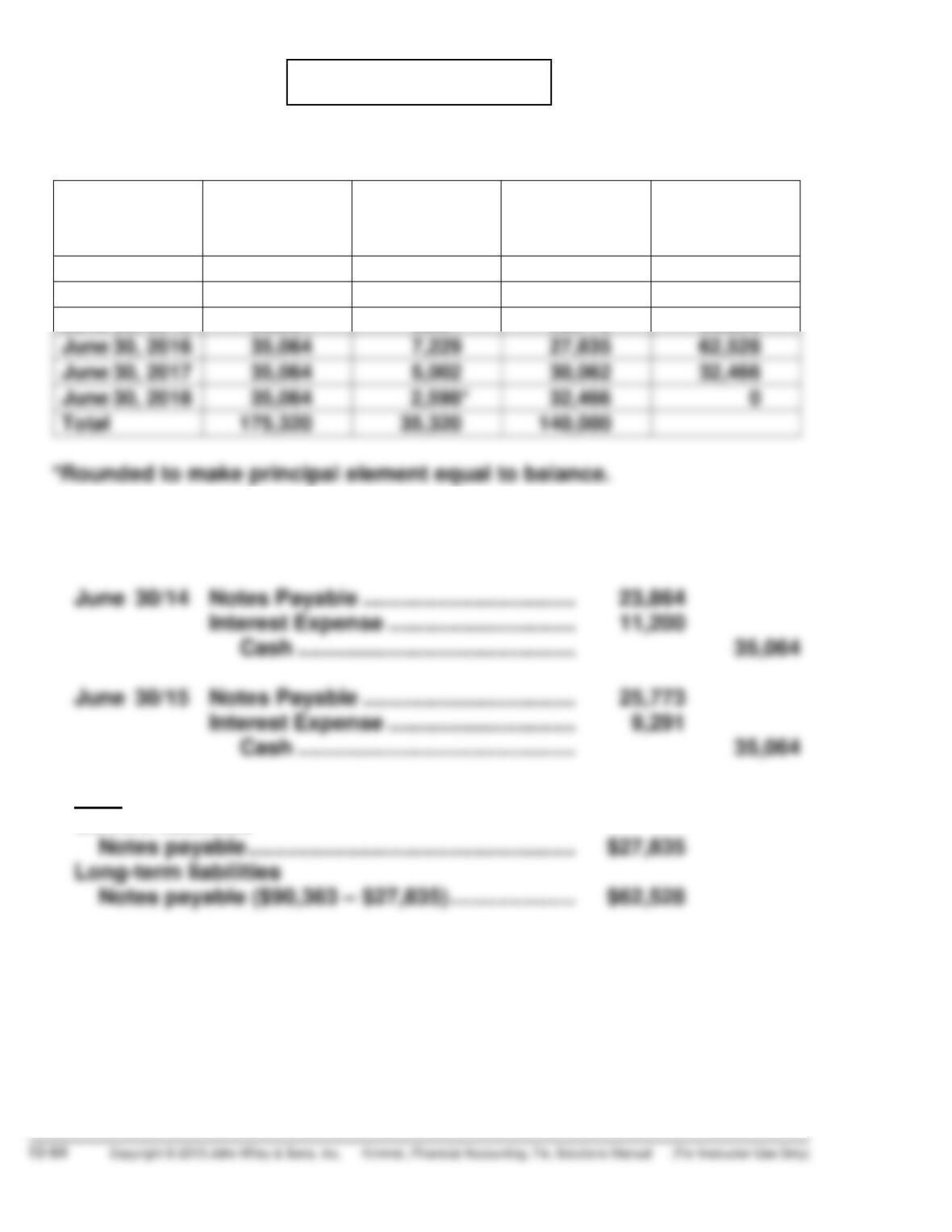
(a)
Period
Cash
Payment
(A)
Interest
Expense
(B) = (D) X 8%
Principal
Reduction
(C) = (A) – (B)
Balance
(D) = (D) – (C)
July 1, 2013 $140,000
June 30, 2014 $35,064 $11,200 $ 23,864 116,136
June 30, 2015 35,064 9,291 25,773 90,363
(b) July 1/13 Cash …………………………………………… 140,000
Notes Payable ………………………… 140,000
(c) 2015
Current liabilities
COMPREHENSIVE PROBLEM SOLUTION
(a) 1. Interest Payable ……………………………………….
Cash …………………………………………………
2,500
2,500
2. Inventory …………………………………………………
Accounts Payable ……………………………..
241,100
241,100
7. Prepaid Insurance ……………………………………
Cash …………………………………………………
10,200
10,200
8. Sales Taxes Payable ………………………………..
Cash …………………………………………………
17,000
17,000
COMPREHENSIVE PROBLEM SOLUTION (Continued)
11. Cash (90,000 X 103%) ……………………………….
Bonds Payable …………………………………..
Premium on Bonds Payable ……………….
92,700
90,000
2,700
(b) TREVOR CORPORATION
Trial Balance
12/31/2014
Account Debit Credit
Cash ……………………………………………………. $227,800
Inventory …………………………………………….. 6,850
Prepaid Insurance ……………………………….. 5,950
COMPREHENSIVE PROBLEM SOLUTION (Continued)
(a) and (b) Optional T accounts
Cash
Bal. 30,000
508,800
2,500
230,000
Inventory
Bal. 30,750
241,100
265,000
Equipment
Bal. 38,000
Accumulated
Interest Payable
2,500 Bal. 2,500
Bal. 0
Bonds Payable
50,000 Bal. 50,000
Common Stock
Bal. 25,000
Retained Earnings
COMPREHENSIVE PROBLEM SOLUTION (Continued)
(a) and (b) (Continued)
Cost of Goods Sold
265,000
Depreciation Expense
Other Operating Expenses
91,000
Interest Expense
2,500
2,500
Bal. 5,000
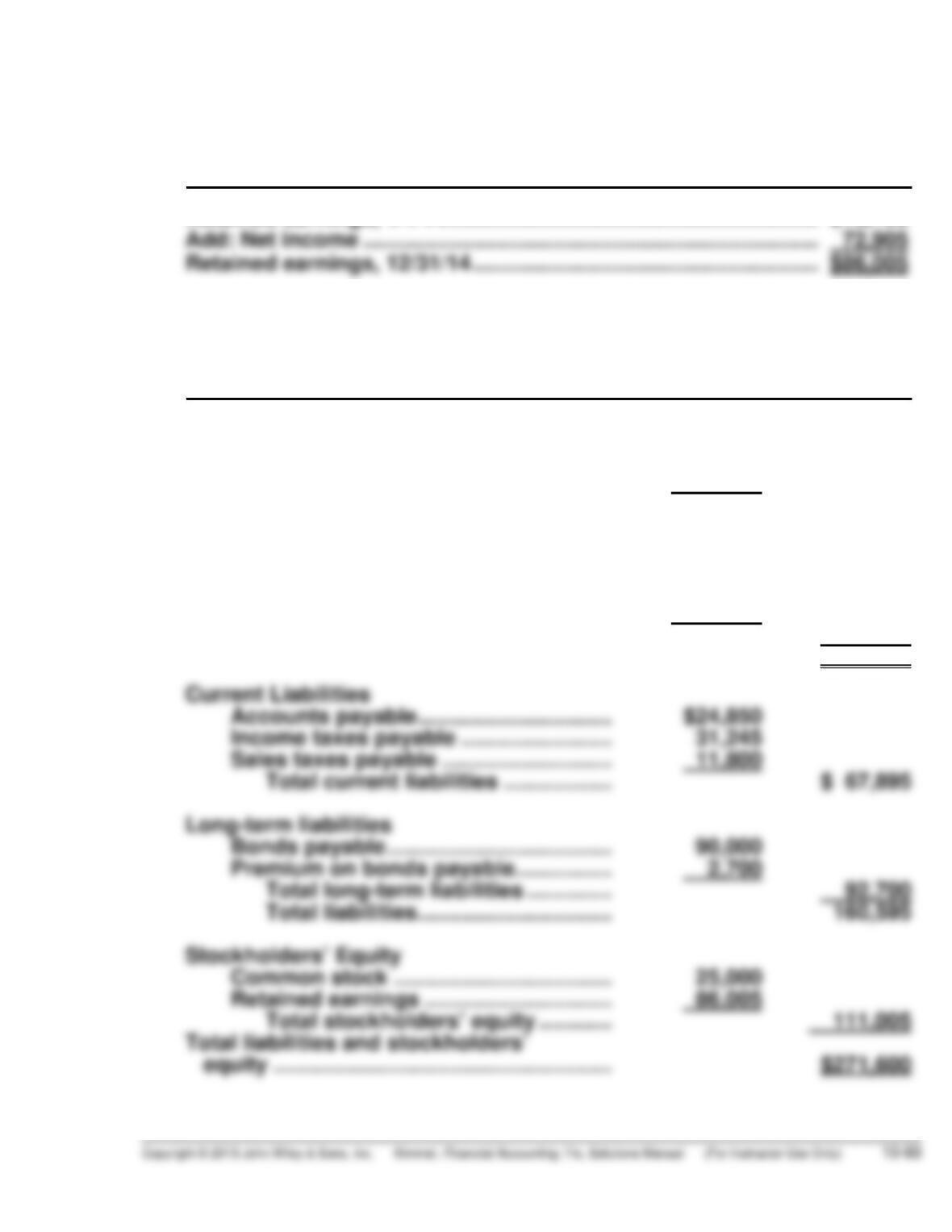
(c) TREVOR CORPORATION
Income Statement
For the Year Ending 12/31/14
Sales revenue ……………………………………… $480,000
Cost of goods sold ………………………………. 265,000
Gross profit …………………………………………. 215,000
Operating expenses
Insurance expense ……………………….. $9,850
COMPREHENSIVE PROBLEM SOLUTION (Continued)
TREVOR CORPORATION
Retained Earnings Statement
For the Year Ending 12/31/14
Retained earnings, 1/1/14……………………………………………………. $13,100
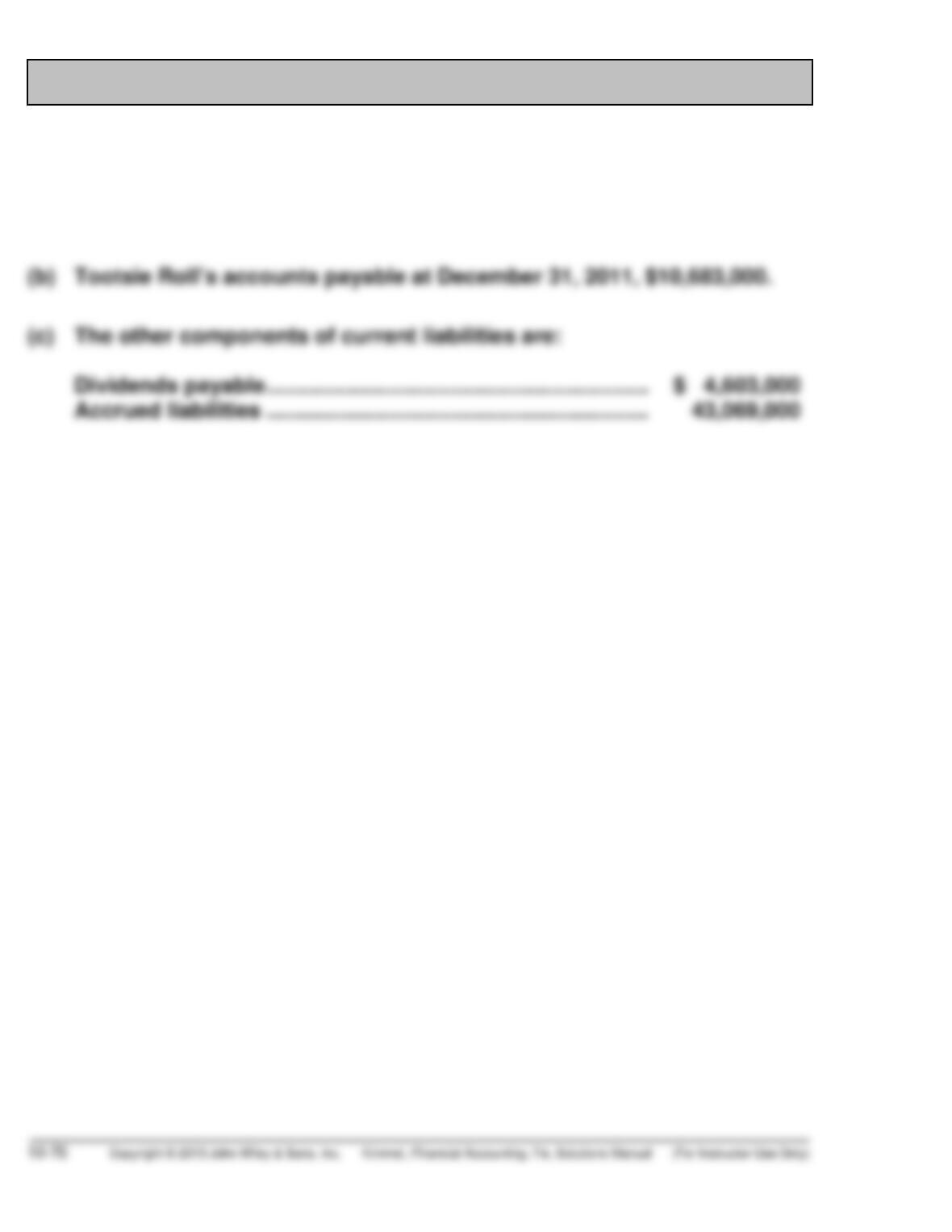
TREVOR CORPORATION
Balance Sheet
12/31/2014
Current Assets
Cash ……………………………………………… $227,800
Inventor
y
………………………………………. 6,850
Prepaid insurance …………………………. 5,950
Total current assets………………….. $240,600
Propert
y
, Plant, and Equipment
Equipment …………………………………….. 38,000
Accumulated depreciation
—
equipment ………………………………….. 7,000
Total plant assets …………………….. 31,000
Total assets $271,600
BYP 10-1 FINANCIAL REPORTING PROBLEM
(a) Total current liabilities at December 31, 2011, $58,355,000. Tootsie
Roll’s total current liabilities decreased by $150,000 ($58,505,000 –
$58,355,000) relative to the prior year.
BYP 10-2 COMPARATIVE ANALYSIS PROBLEM
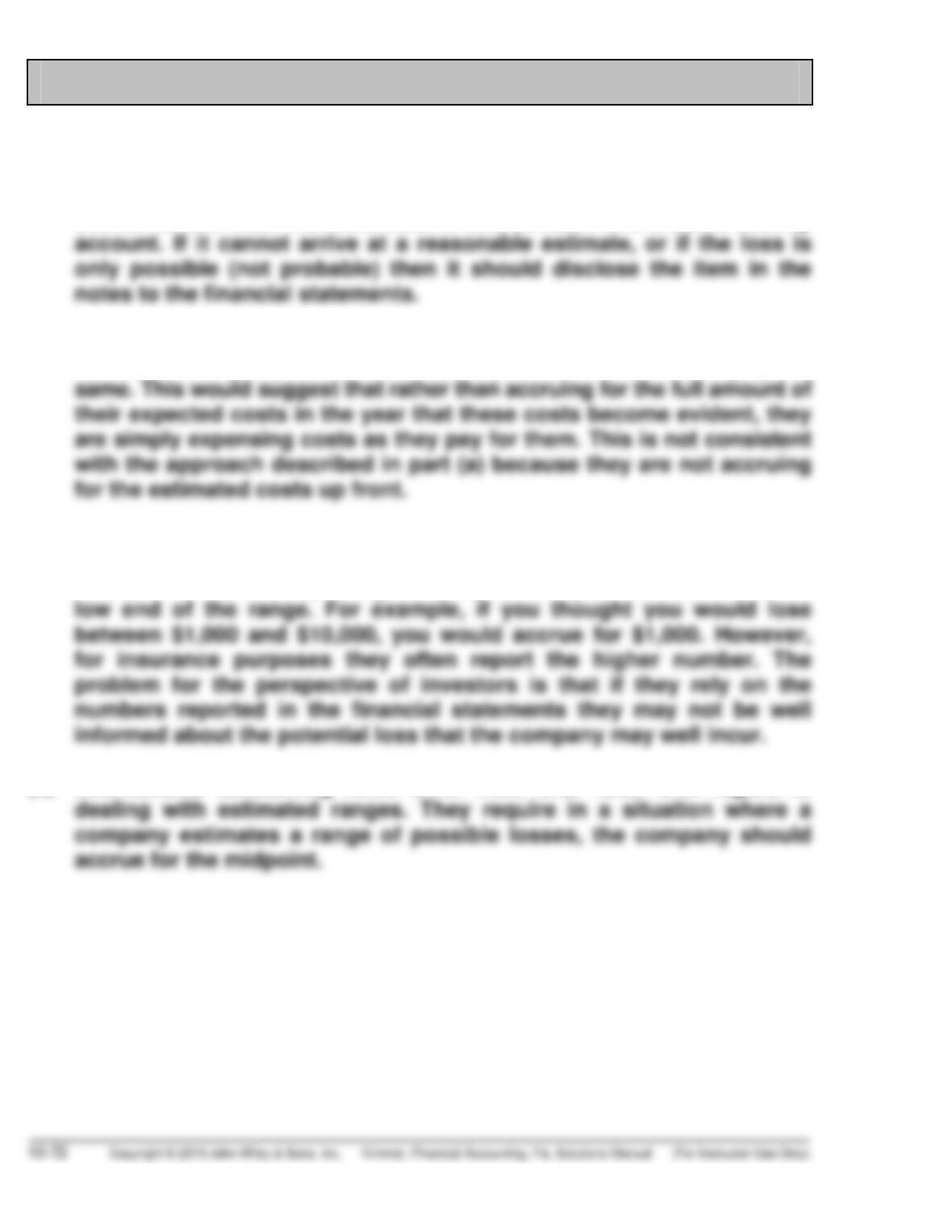
(a) Hershey Tootsie Roll
(1) Current ratio $2,046,558
$1,173,775 = 1.74:1 $212,201
$58,355 = 3.64:1
(b) Hershey Tootsie Roll
(1) Debt to assets $3,539,551
** = 22.4%
The higher the percentage of debt to assets, the greater the risk that a
company may be unable to meet its maturing obligations. Tootsie Roll’s
BYP 10-3 RESEARCH CASE
(a) If a company can determine a reasonable estimate of the expected loss
and if it is probable it will lose the suit, then the company should
accrue for the loss. It should debit a loss account and credit a liability
(b) The article suggests that many of these companies are paying out
amounts each year, but that their liability account remains roughly the
(c) The articles suggests that if a company cannot come up with a reason-
able estimate of costs, but instead can only estimate a range of possible
costs, then financial reporting rules say that they should accrue for the
(d) International accounting rules differ from U.S. rules with regard to
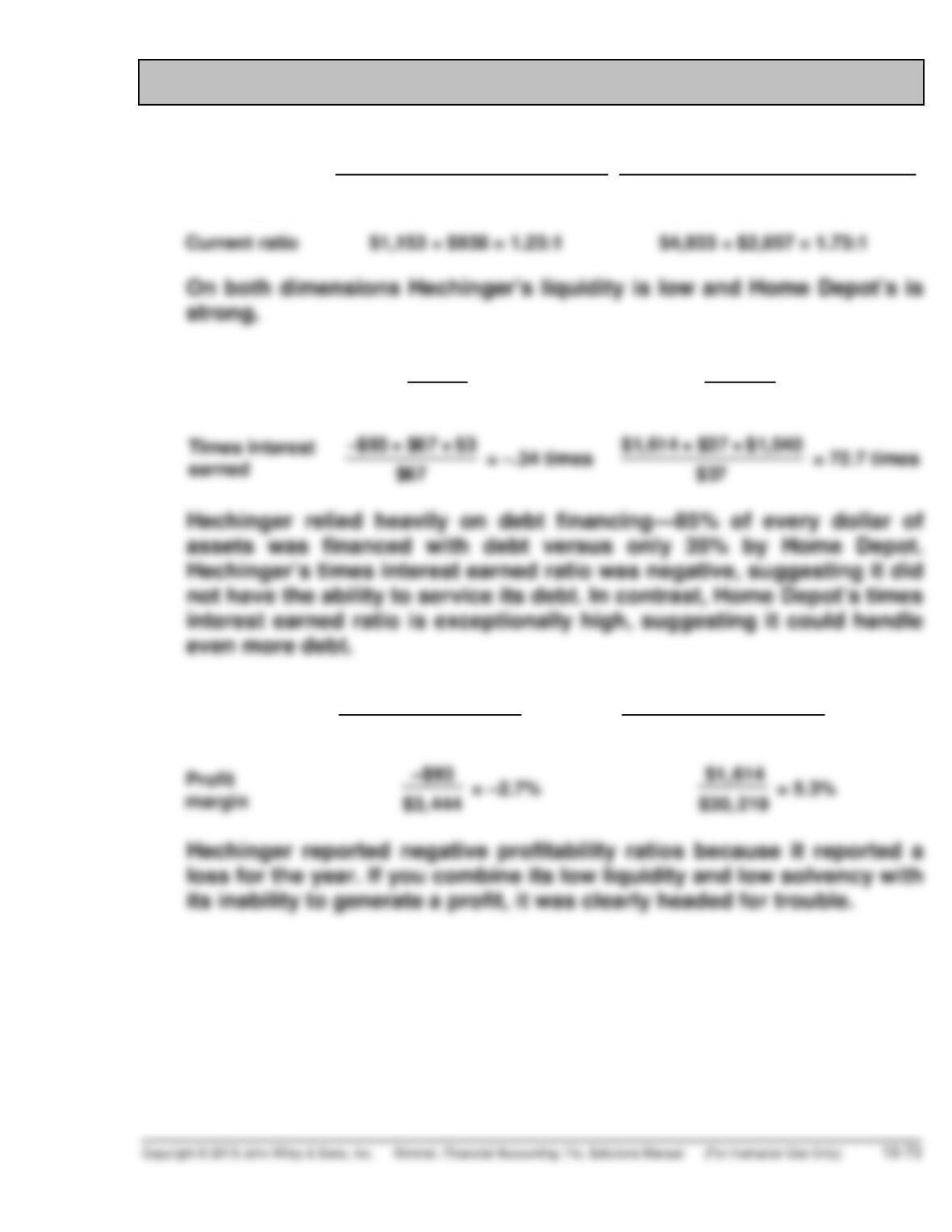
BYP 10-4 INTERPRETING FINANCIAL STATEMENTS
(
a
)
Hechin
g
er Home Depot
Working capital $1,153 – $938 = $215 $4,933 – $2,857 = $2,076
(b) Debt to assets
ratio
$1,339
$1,577 = 85% $4,716
$13, 465 = 35%
(c) Return on
assets
–
$93
($1,577 + $1,668) ÷2 = –5.7% $1,614
($13, 465 + $11, 229) ÷2 = 13.1%
BYP 10-4 (Continued)
(d) Original Restated
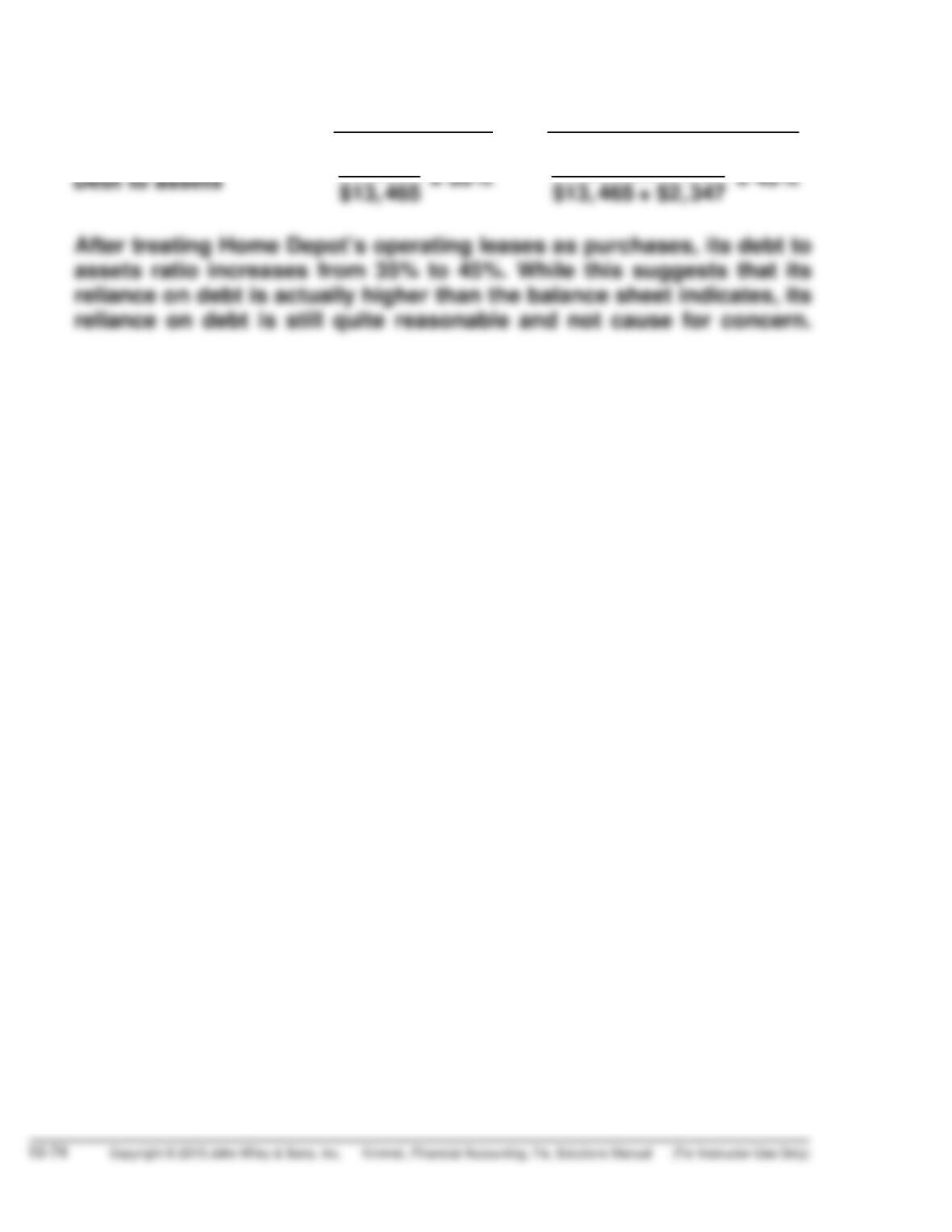
Debt to assets $4,716
BYP 10-5 INTERPRETING FINANCIAL STATEMENTS
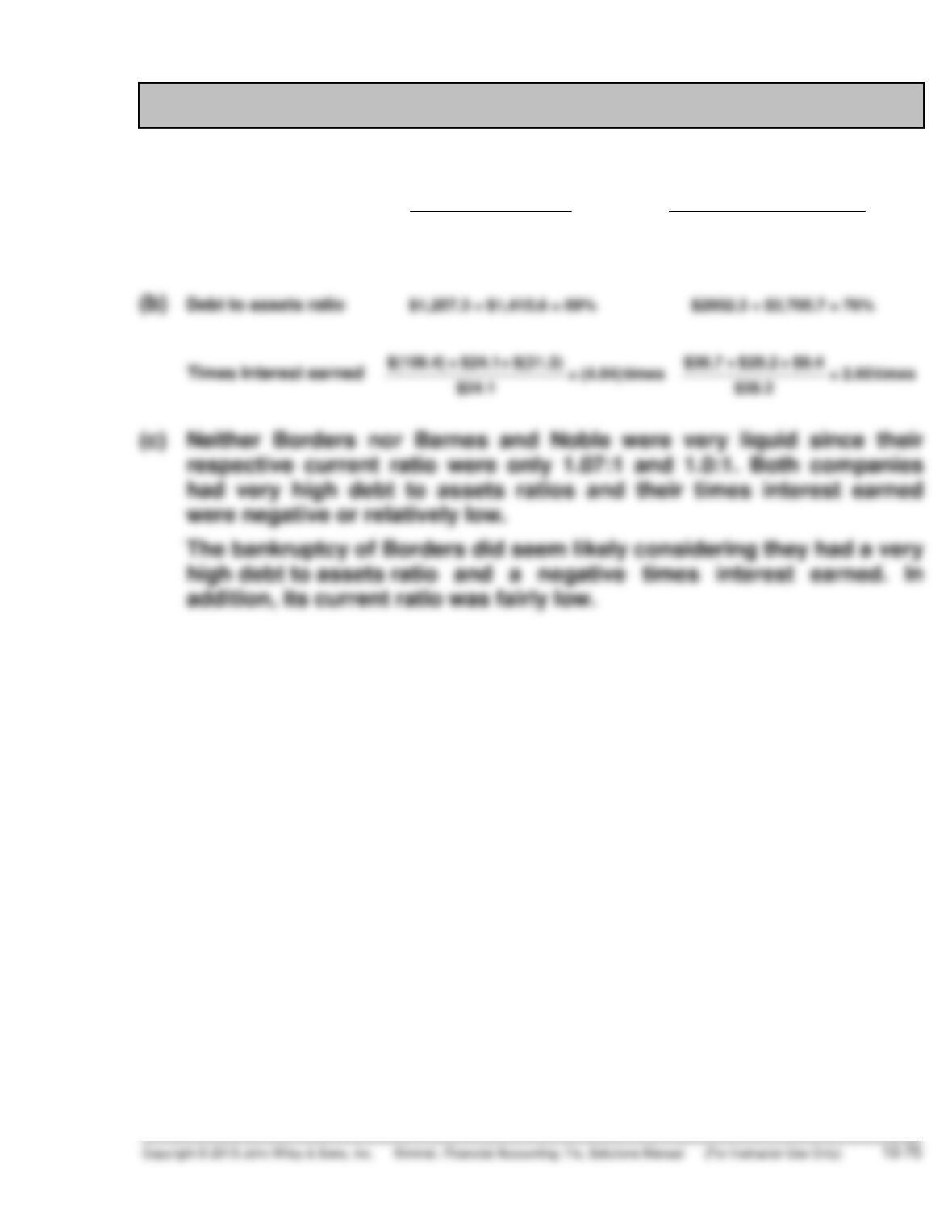
Borders Barnes and Noble
(a) Current ratio $978.7 ÷ $918.1= 1.07 : 1 $1, 719.5 ÷ $1, 724.4 = 1.00 : 1