
Chapter 10
Stockholders’ Equity
Ethics Check
(5-10 min.) EC 10-1
a. Integrity
b. Objectivity and independence
c. Due care
d. Objectivity and independence
Short Exercises
(5–10 min.) S 10-1
Corporation’s advantages:
• Continuous life
• Transferability of ownership
• Limited liability of the stockholders
• Ease of raising capital
Corporation’s disadvantages:
Student responses may vary.
(5-10 min.) S 10-2
1. The common stockholders are the real owners of a corporation.
2. Preferred stockholders have priority over common stockholders in (1)
receipt of dividends and (2) receipt of assets if the corporation
liquidates.
(5-10 min.) S 10-3
The $11,488,500 was paid-in capital in excess of par – common. It was
not a profit and therefore had no effect on net income.
(5 min.) S 10-4
Millions
Martin Legal Services:
Cash …………………………………………………………..
17,721
Common Stock ……………………………………….
21
Additional Paid-in Capital ………………………..
17,700
Kramer Doughnuts:
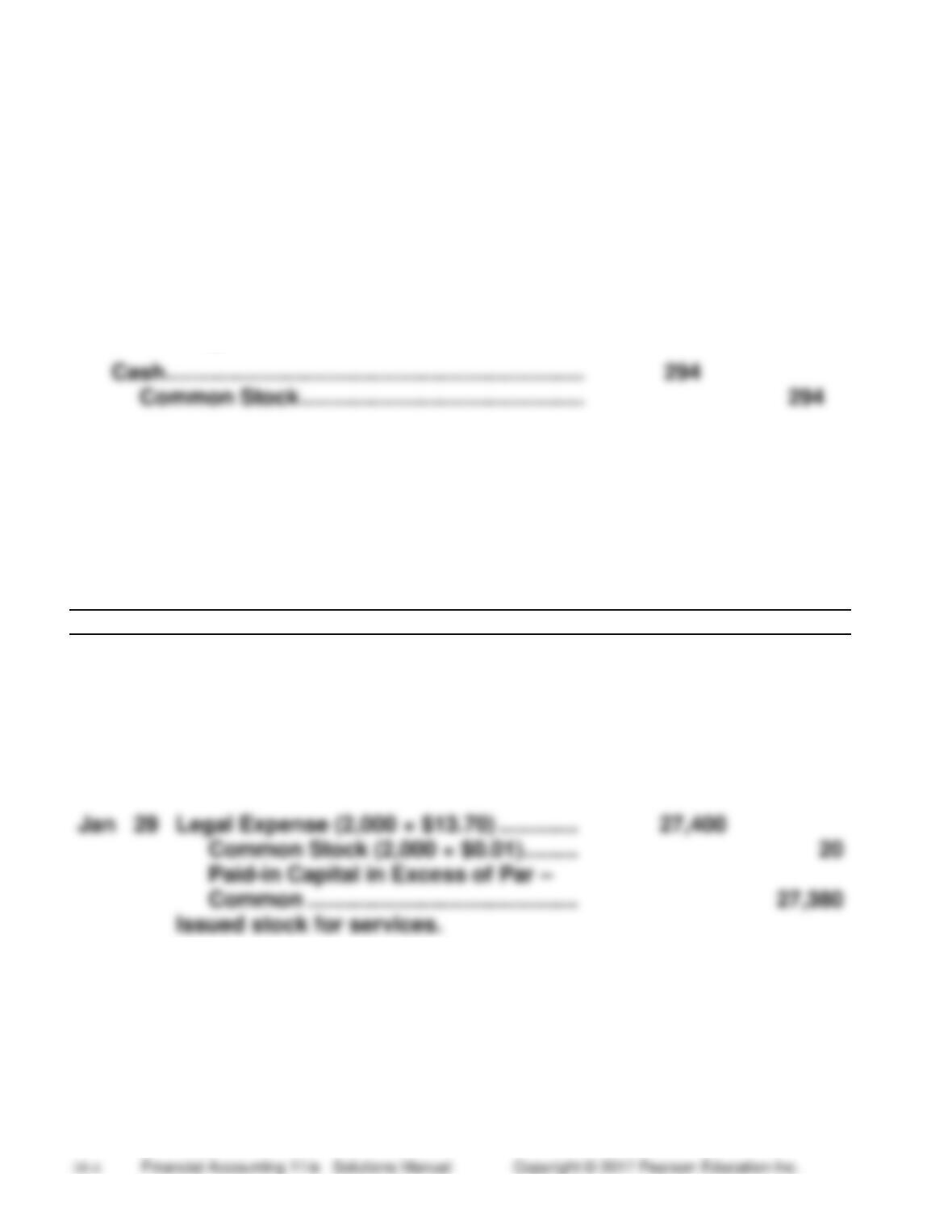
Cash …………………………………………………………..
Common Stock ……………………………………….
(5–10 min.) S 10-5
Journal
DATE
ACCOUNT TITLES AND EXPLANATION
DEBIT
CREDIT
Jan
14
Cash ………………………………………………..
1,350,000
Common Stock (100,000 × $0.01) …..
1,000
Paid-in Capital in Excess of Par –
Common ……………………………………..
1,349,000
Issued stock.
Jan
29
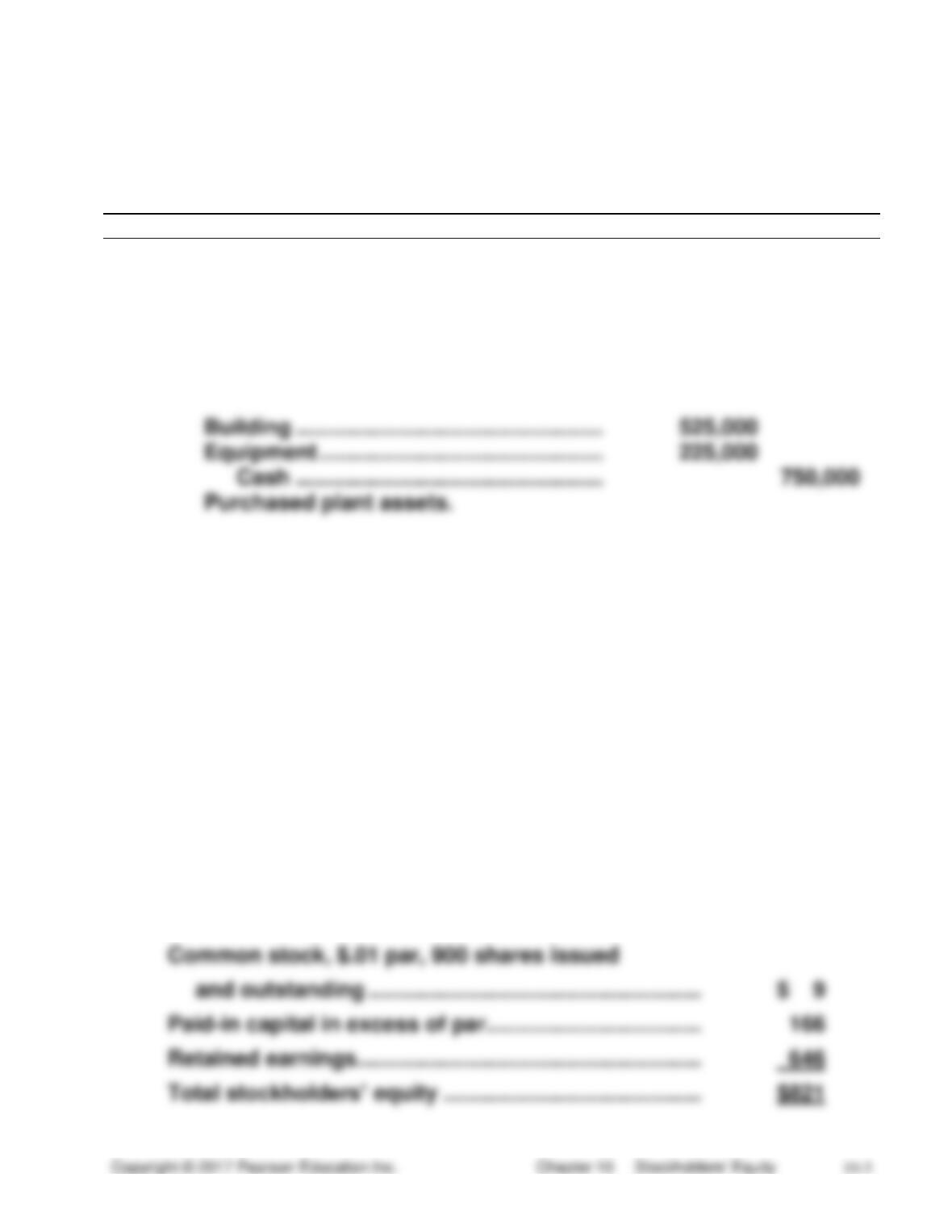
Legal Expense (2,000 × $13.70) ………….
Common Stock (2,000 × $0.01) ………
Issued stock for services.
(5–10 min.) S 10-6
Case A — Issue stock and buy the assets in separate transactions:
Journal
DATE
ACCOUNT TITLES AND EXPLANATION
DEBIT
CREDIT
Cash ………………………………………………..
750,000
Common Stock (11,000 × $15) ………
165,000
Paid-in Capital in Excess of Par –
Common ……………………………………..
585,000
Issued stock.
Building …………………………………………..
525,000
Equipment ……………………………………….
225,000
Cash …………………………………………..
750,000
Purchased plant assets.
Case B — Issue stock to acquire the assets:
Building …………………………………………..
525,000
Equipment ……………………………………….
225,000
Common Stock (11,000 × $15) ………
165,000
Paid-in Capital in Excess of Par –
Common ……………………………………..
585,000
Issued stock to acquire building and equipment.
The balances in all accounts are the same.
(5-10 min.) S 10-7
Thousands
Stockholders’ equity:
Amounts In Thousands
a.
Total revenues …………………………………………………………
$1,370
Total expenses ………………………………………………………..
959
Net income ………………………………………………………………
$ 411
b.
Accounts payable …………………………………………………….
$ 510
Notes payable (short-term) ……………………………………….
110
Other current liabilities …………………………………………….
2,452
Long-term debt ………………………………………………………..
Total liabilities …………………………………………………………
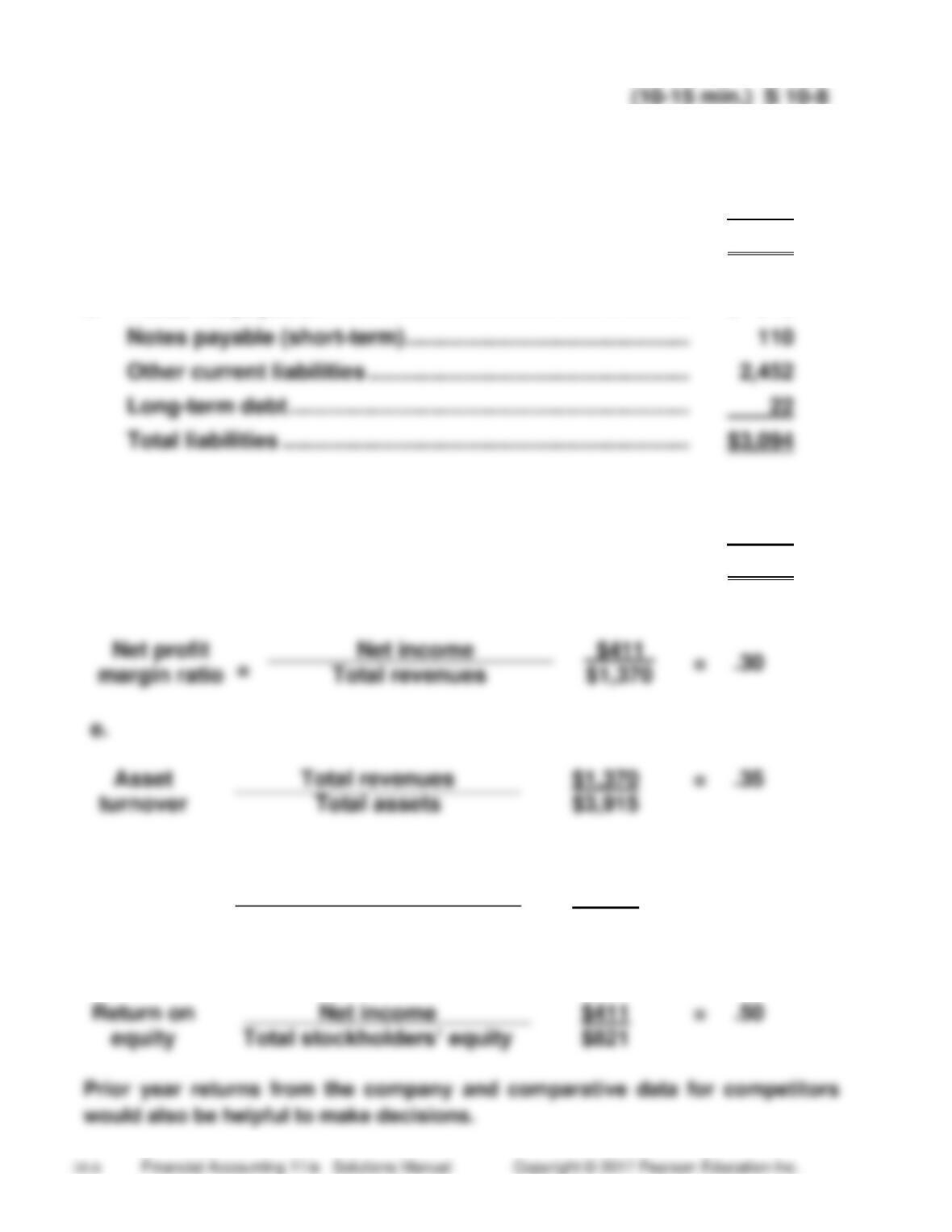
$3,094
c.
Total liabilities (from Req. b) …………………………………….
$3,094
Total stockholders’ equity (from S 10-7) ……………………
821
Total assets …………………………………………………………….
$3,915
d.
f.
Leverage
ratio
Total assets
Total stockholders’ equity
$3,915
$821
=
4.77
g.
$821
(5 min.) S 10-9
Journal
DATE
ACCOUNT TITLES AND EXPLANATION
DEBIT
CREDIT
Millions
Jan.
10
Treasury Stock……………………………………
21
Cash ……………………………………………..
21
Treasury Stock ………………………………
Paid-in Capital from Treasury Stock
Transactions ……………………………..
8
(15-20 min.) S 10-10
Req. 1
MEMORANDUM
TO: Lucinda Lowery Exports, Inc., Board of Directors
FROM: Student Name
RE: How the purchase of treasury stock will make it more difficult
for outsiders to take over the company
Purchasing treasury stock decreases the amount of stock outstanding. If
Lucinda Lowery Exports holds a sufficient quantity of company stock in
the treasury, outsiders, such as the Alberton investor group, may not be
able to acquire a controlling interest (50+ percent) of the outstanding
Req. 2
Sales of treasury stock at prices above the purchase price increase
company assets because of the greater amount of assets coming in
from the sale than went out to buy the stock. Treasury stock
transactions do not affect liabilities, so the sale of treasury stock also
increases stockholders’ equity. These sales of treasury stock will not
(10 min.) S 10-11
Journal
DATE
ACCOUNT TITLES AND EXPLANATION
DEBIT
CREDIT
2016
Feb.
5
Retained Earnings
(1,200,000 × $.24) ……………………………….
288,000
Dividends Payable ………………………..
288,000
Declared a cash dividend.
Mar.
18
Dividends Payable ……………………………..
288,000
Cash …………………………………………….
Paid the cash dividend.
(10 min.) S 10-12
Journal
DATE
ACCOUNT TITLES AND EXPLANATION
DEBIT
CREDIT
2016
Dec.
15
Retained Earnings
($150,000 × .02) + (50,000 × $.45) …………
25,500
Dividends Payable ………………………..
25,500
Declared a cash dividend.
2017
Jan.
Dividends Payable ……………………………..
25,500
Cash …………………………………………….
25,500
Paid the cash dividend.
(5-10 min.) S 10-13
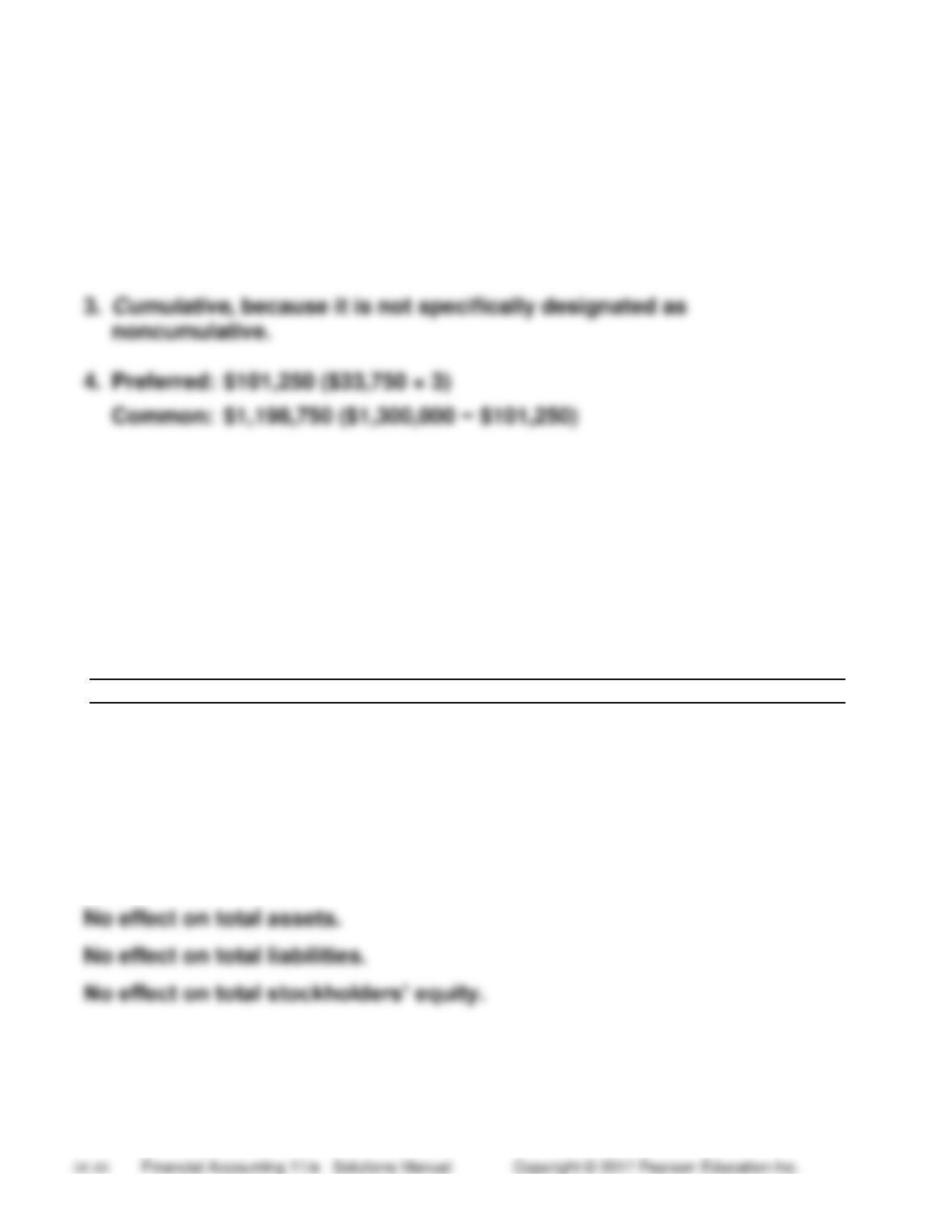
1. $33,750 (25,000 shares × $1.35 per share)
2. Preferred: $33,750
Common: $366,250
(5-10 min.) S 10-14
Req. 1
Journal
DATE
ACCOUNT TITLES AND EXPLANATION
DEBIT
CREDIT
May
11
Retained Earnings (40,000 × .16 × $20) ………..
128,000
Common Stock (40,000 × .16 × $8) …………..
51,200
Paid-in Capital in Excess of Par-Common …
76,800
Req. 2
(10 min.) S 10-15
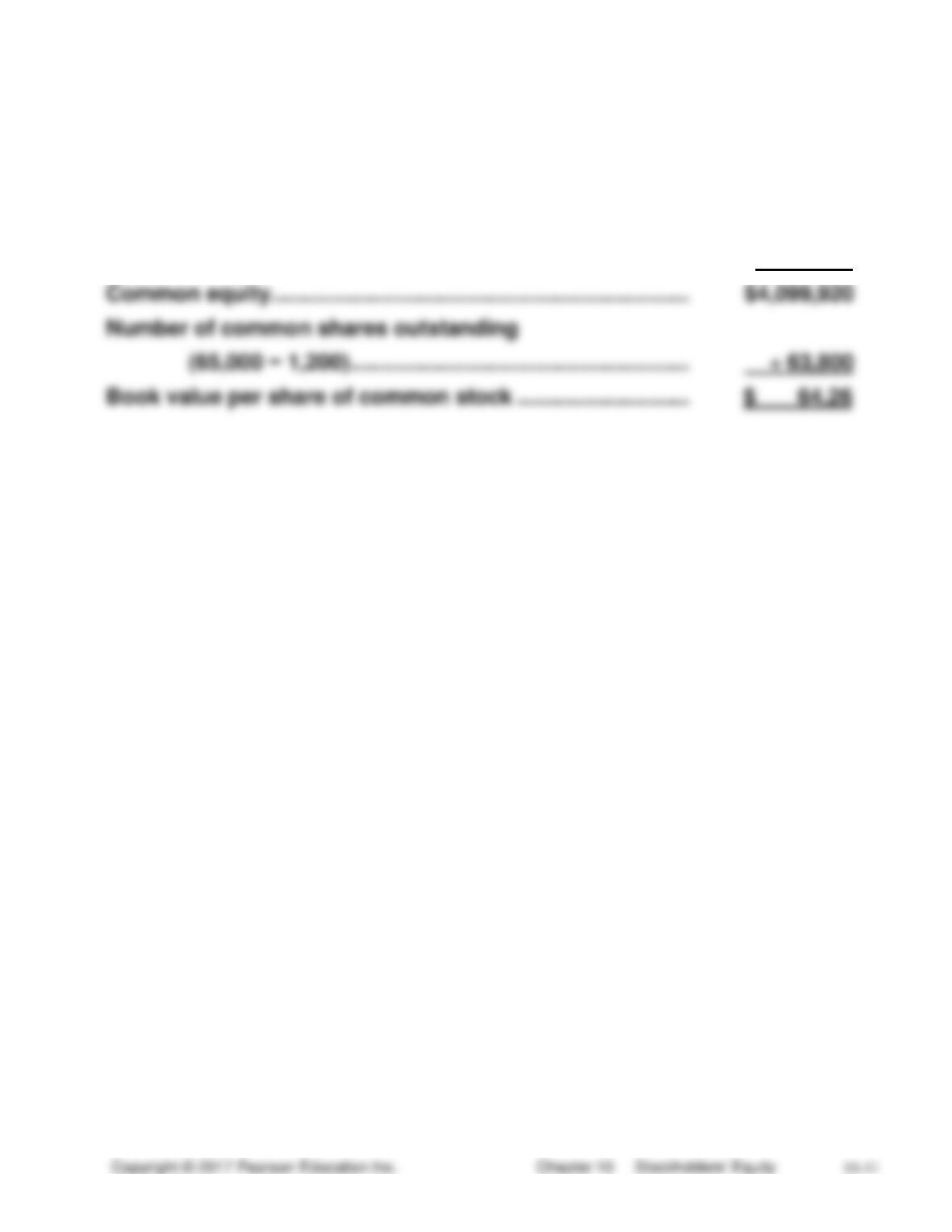
Total stockholders’ equity …………………………………………..
$4,240,000
Less: Preferred stock ……………………………………………….
(136,000)
Preferred dividends in arrears
(34,000 × .01 × $4 x 3) ………………………………….
(4,080)
Common equity…………………………………………………………..
Number of common shares outstanding
Book value per share of common stock ……………………….
(5-10 min.) S 10-16
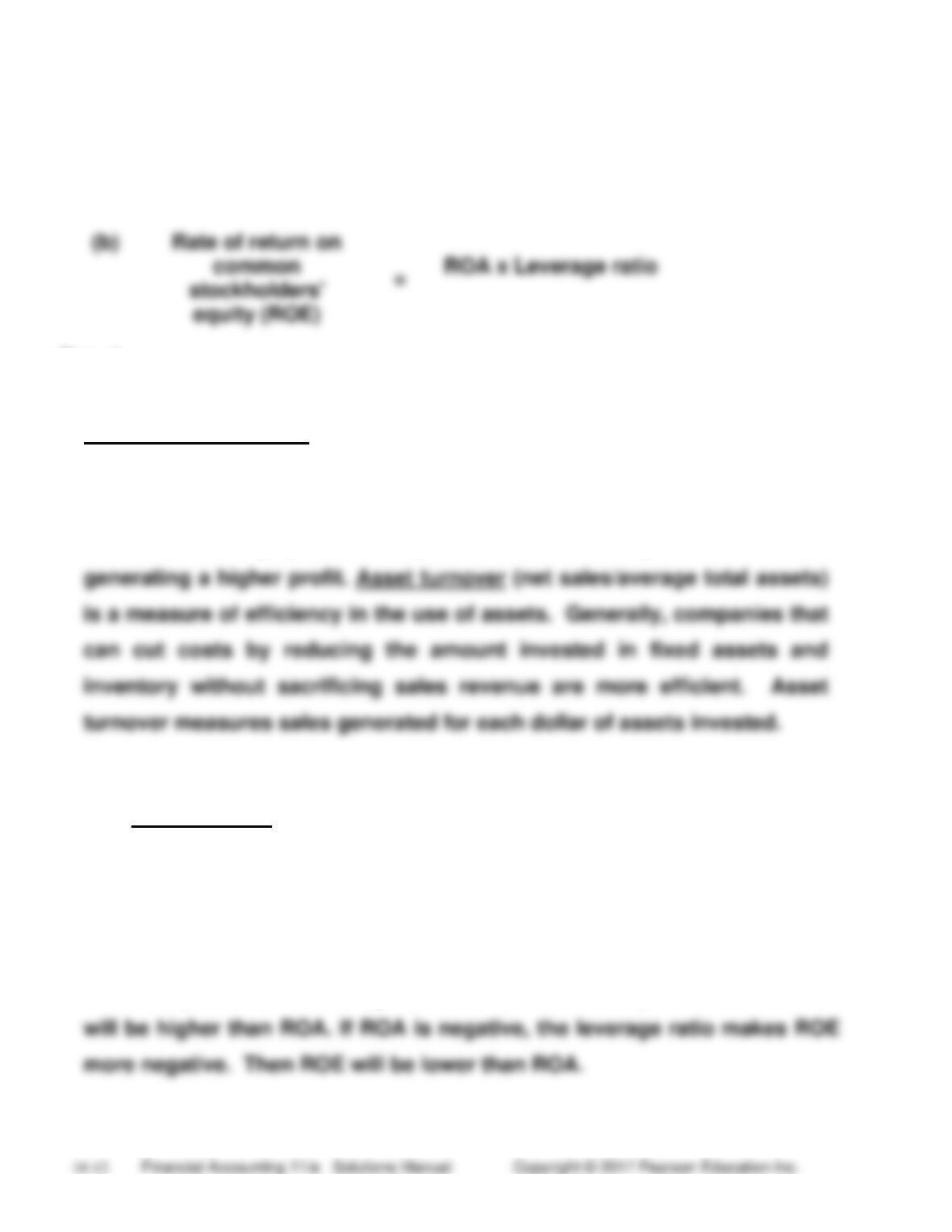
(a)
Rate of return on
total assets (ROA)
=
Net profit margin ratio x Asset turnover
(b)
ROA x Leverage ratio
Req. 1
The components of ROA are net profit margin ratio and asset turnover.
Net profit margin ratio [(net income minus preferred dividends)/net sales]
is a measure of operational effectiveness. It measures the percentage net
profit generated for each dollar of sales. Generally, companies that can
differentiate a highly desirable product can sell the product for more,
Req. 2
The leverage ratio (average total assets/average common stockholders’
equity) measures the impact of the use of borrowed capital on return on
equity. It magnifies the ROA to make ROE larger.
Req. 3
If ROA is positive, the leverage ratio makes ROE more positive. Then ROE
(10-15 min.) S 10-17
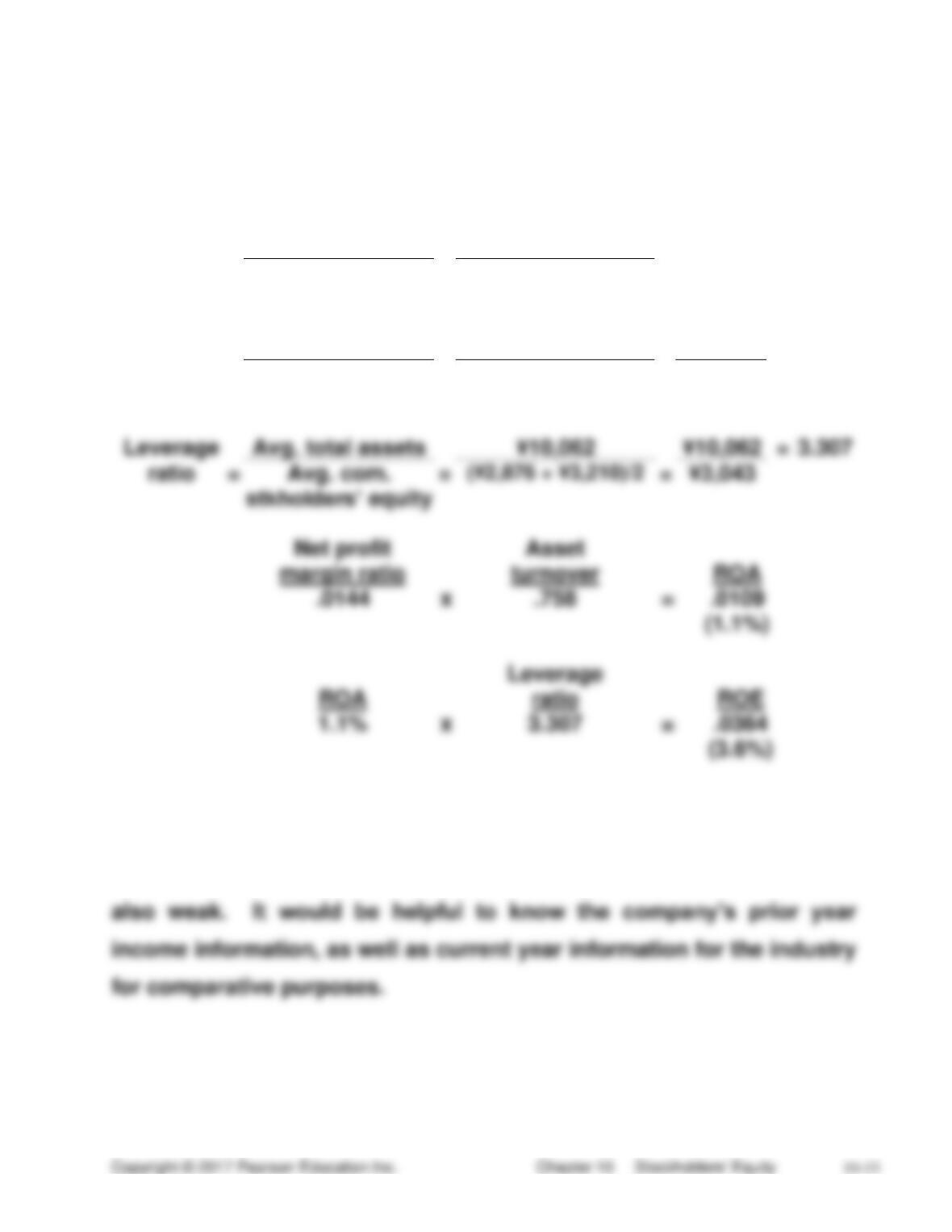
Net
profit
=
Net income
=
¥110
=
.0144
margin
Revenues
¥7,629
ratio
Asset
Revenues
=
¥7,629
¥7,629
=
.758
turnover
=
Average total
(¥9,507 + ¥10,616)/2
=
¥10,062
assets
Avg. total assets
¥10,062
margin ratio
ROA
x
=
Leverage
x
=
The company’s rate of return on total assets for 2016 is weak. The
company’s rate of return on common stockholders’ equity for 2016 is
(20-30 min.) S 10-18
1. Redemption value of preferred stock is the price the corporation
agrees to pay to retire its redeemable preferred stock; that price was
set when the preferred stock was issued.
2. We should first determine the market value of the land. Then divide
the land’s value by the market value of each share of stock. The result
will tell us how many shares of our stock to issue for the land.
3. Investors buy common stock in the hope of earning higher returns on
their investment than are available on an investment in preferred
stock.
5.
Book value
per share of
=
Total stockholders’ equity − Preferred equity
common stock
Number of shares of common stock outstanding
(5-10 min.) S 10-19
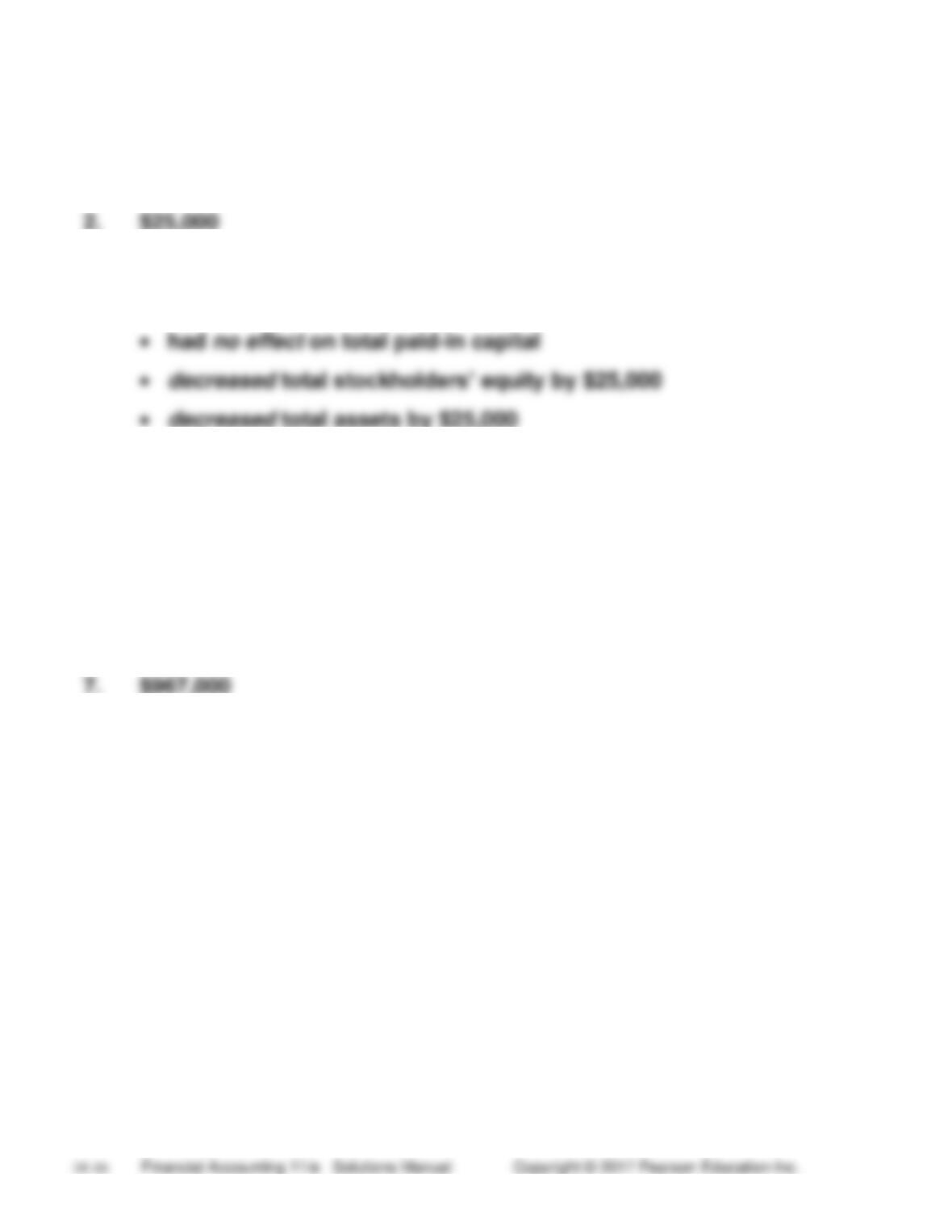
Billions
Cash flows from financing activities:
Paid off long-term notes payable ………………………………..
$(2.7)
Issued common stock ……………………………………………….
1.4
Purchased treasury stock ………………………………………….
Paid cash dividends…………………………………………………..
Net cash used by financing activities ……………………………..
$(6.0)
(10 min.) S 10-20
1. $708,000 ($128,000 + $580,000)
3. The dividend:
• decreased retained earnings by $25,000
4. Cost of treasury stock purchased = $15,000
5. Cost of treasury stock sold = $6,000
Proceeds from sale of treasury stock = $13,000 ($7,000 + $6,000)
6. $120,000
(10 min.) S 10-21
1. $658,000 ($128,000 + $530,000)
2. The stock dividend:
• decreased retained earnings by $46,000
3. Cost of treasury stock purchased = $7,000
Cost of treasury stock sold = $3,000
Proceeds from sale of treasury stock = $11,000 ($8,000 + $3,000)
4. Comprehensive income is $96,500 ($84,500 + $9,000 + $3,000).
Addition to Accumulated Other Comprehensive Income is $12,000.
Exercises
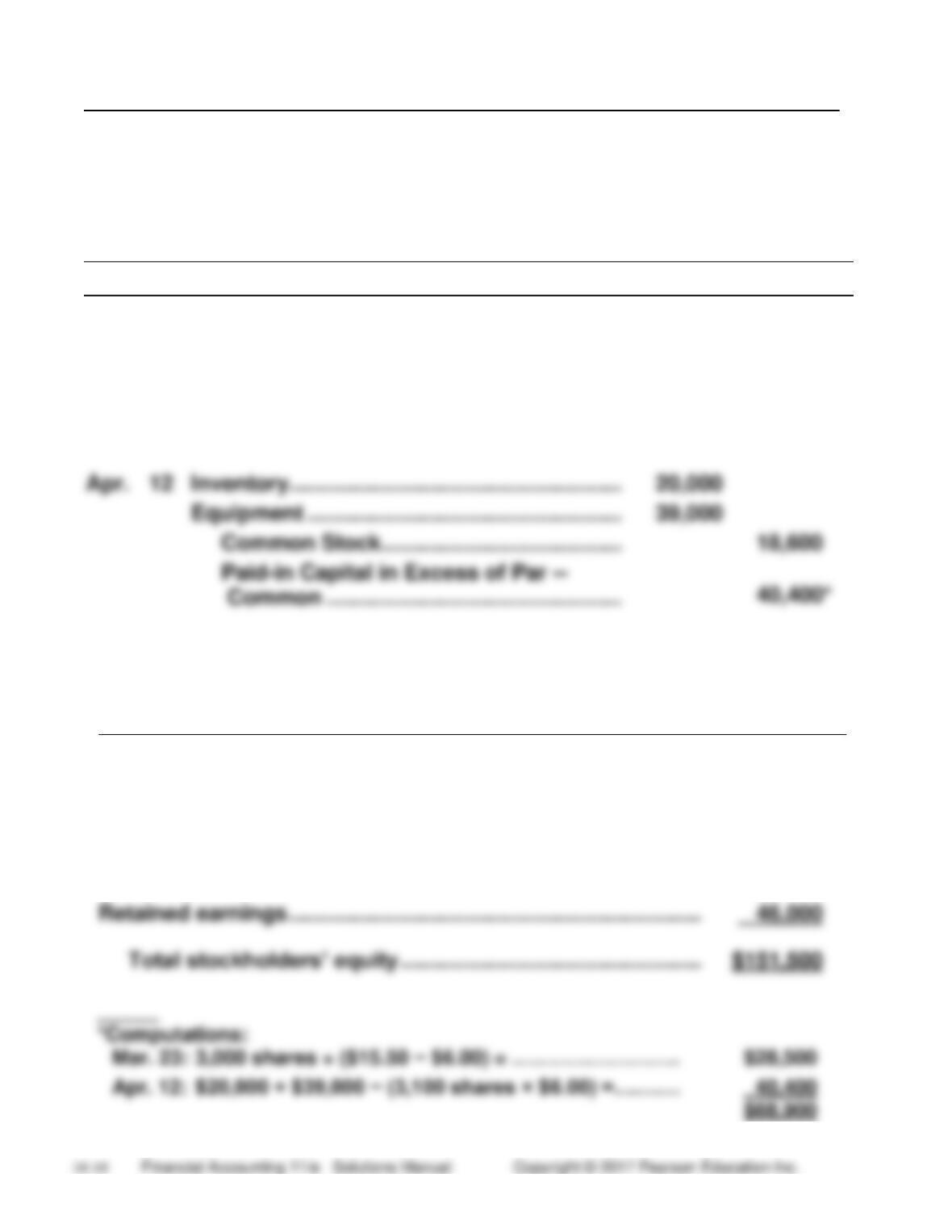
(10-15 min.) E 10-22A
Req. 1
Journal
DATE
ACCOUNT TITLES AND EXPLANATION
DEBIT
CREDIT
Mar.
23
Cash …………………………………………………….
46,500
Common Stock …………………………………
18,000
Paid-in Capital in Excess of Par –
Common ………………………………………..
28,500*
Apr.
12
Inventory ………………………………………………
Equipment ……………………………………………
Common Stock …………………………………
18,600
Req. 2
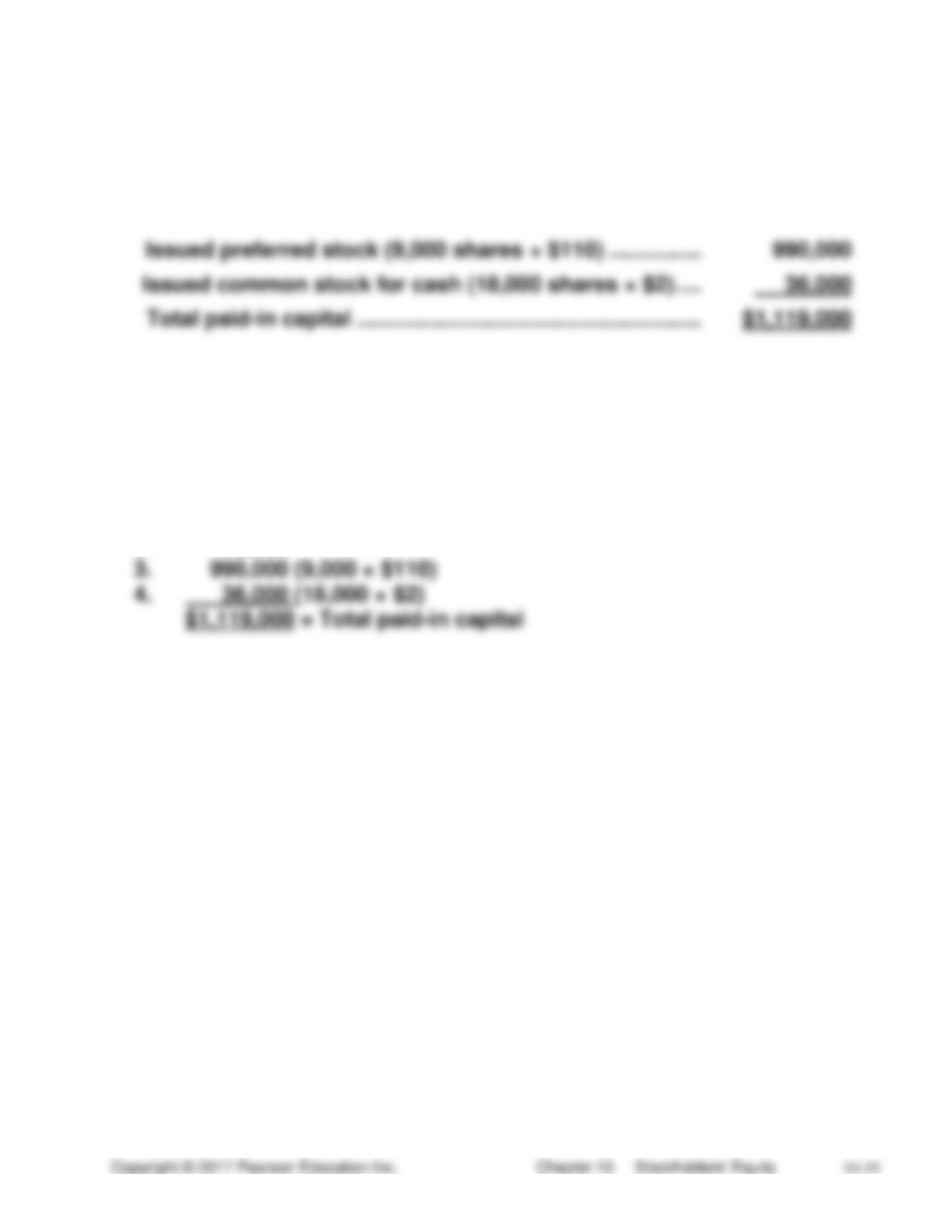
Stockholders’ Equity
Common stock, $6.00 par, 13,000 shares authorized,
6,100 shares issued and outstanding ………………………..
$ 36,600
Paid-in capital in excess of par – common ………………………
68,900*
Retained earnings ………………………………………………………….
(10 min.) E 10-23A
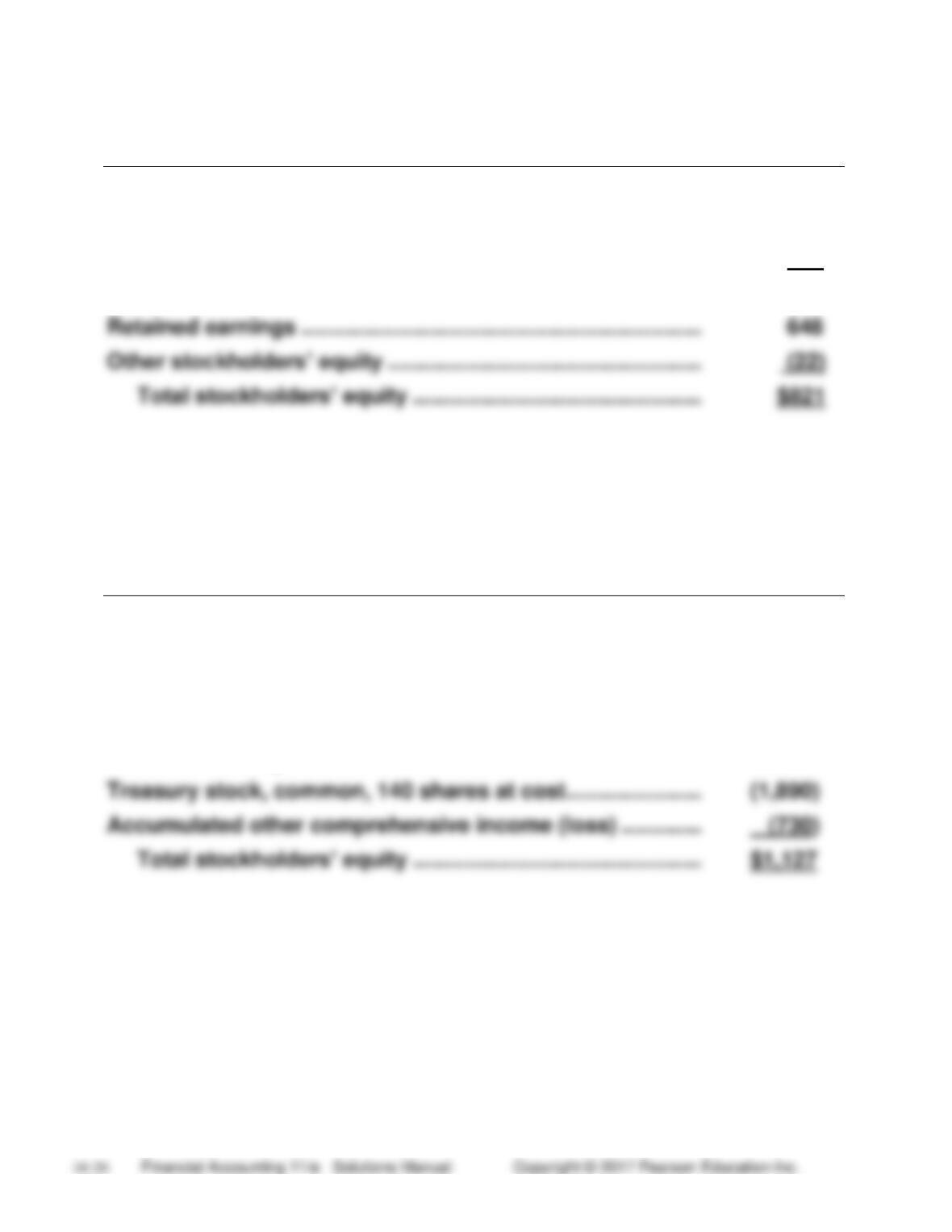
Paid-in capital consists of:
Issued common stock for legal services …………………..
$ 15,000
Issued common stock for patent ……………………………..
78,000
Unused data:
Net income
Dividends declared
Alternative short-cut solution:
1.
$ 15,000
2.
78,000
3.
4.
36,000 (18,000 × $2)
$1,119,000 = Total paid-in capital
(10-15 min.) E 10-24A
Stockholders’ Equity (Thousands)
Common stock, $0.01 par, 300 shares issued …………………
$ 3
Paid-in capital in excess of par ……………………………………..
192
Total paid-in capital ………………………………………………………
195
Retained earnings ………………………………………………………..
648
(22)
(10-15 min.) E 10-25A
Req. 1
Stockholders’ Equity (Thousands)
Common stock, $2.50 par, 800 shares authorized,
250 shares issued and 110 shares outstanding ………….
$ 625
Paid-in capital in excess of par ……………………………………..
900
Retained earnings ………………………………………………………..
2,222
Treasury stock, common, 140 shares at cost ………………….
(1,890)
Accumulated other comprehensive income (loss) ………….
(730)
Req. 2
Alistair Software paid a higher price to acquire treasury stock than the
price Alistair received when it issued its stock. This explains why
Treasury Stock has a greater balance than the sum of Common Stock
plus Paid-in Capital in Excess of Par.