chapter
10
Fixed Assets and
Intangible Assets
______________________________________________
OPENING COMMENTS
Chapter 10 addresses fixed assets, intangible assets, natural resources, and the accounting issues related to
these assets.
After studying the chapter, your students should be able to:
2. Compute depreciation, using the following methods: straight-line method, units-of-production
method, and double-declining-balance method.
4. Compute depletion and journalize the entry for depletion.
6. Describe how depreciation expense is reported in an income statement and prepare a balance sheet
that includes fixed assets and intangible assets.
7. Describe and illustrate the fixed asset turnover ratio to assess the efficiency of a company’s use of its
fixed assets.
164 Chapter 10 Fixed Assets and Intangible Assets
STUDENT FAQS
• Why is three to six months a reasonable time to get an asset such as used delivery truck up and
running?
• When an extraordinary repair is made to an asset, why do you debit accumulated depreciation?
Wouldn’t it be easier to simply debit the asset account? After all, the value to the asset has just
increased due to the repair.
• Which method of depreciation is always best to use?
• Why do accountants have to classify items as capital or revenue expenditures?
• Is it true that the higher the depreciation, the lower the net income? If that is the case, why would we
not want the lowest depreciation method so we can show the highest net income?
• Why do we have various methods of depreciation? Isn’t that encouraging misleading results?
• Do you have to use the depreciation method that best matches the use of the asset? For example,
would all trucks be required to be depreciated under the units of production method?
• Why is it important to use the gain and loss accounts when recording disposals of assets? Why can’t
we credit revenue or debit expense on sales of assets?
• Why do you update the depreciation before you remove the asset?
• Why does it matter if we identify the exchanged assets as similar or dissimilar?
• Does it really matter if you classify an item as capital or revenue expenditure? You still spent the
same amount of money to acquire or repair the asset.
• Isn’t not recording the gain on an exchange of similar assets misleading? Looks like you are
“playing” with the numbers to me.
• How can you depreciate an asset that is going up in value? There is no cost to using it, since it can be
sold for more than cost when you are through with it.
• Why does the double-declining-balance method use book value instead of depreciable cost?
• Why does the depreciation method required for taxes differ from the methods required for financial
reporting? Isn’t this like “keeping two sets of books”?
• What happens if we continue to use the asset after it is fully depreciated or when we reach the salvage
value?
• Why do you treat exchanges of similar and dissimilar assets differently? Aren’t they all exchanges?
Chapter 10 Fixed Assets and Intangible Assets 165
OBJECTIVE 1
Define, classify, and account for the cost of fixed assets.
KEY TERMS
Capital Expenditures Operating Lease
Capital Lease Revenue Expenditures
Fixed Assets
SUGGESTED APPROACH
Review the definition of fixed assets. Ask students to give examples of fixed assets, listing them on the
board as they are called out.
LECTURE AID — Defining Fixed Assets
Fixed assets are long-term (or relatively permanent) assets that can be used in a business. Emphasize that
the word “used” is essential in this definition. As long as the asset is capable of being used, it is
considered a fixed asset. Therefore, equipment held as back-up in case regular equipment breaks or there
is abnormally high volume is a fixed asset. If an asset is being held for sale or future use, but it is not
capable of being used in its current condition (such as undeveloped land), it should be classified as an
investment, not a fixed asset.
The costs of acquiring fixed assets can be summarized by the following general rule:
GENERAL RULE: The cost of acquiring a fixed asset includes all costs necessary to get the asset to its
place of use and ready for use.
Exhibit 3 in the text lists examples of costs to be included in the total cost capitalized when recording a
fixed asset. After referring your students to this exhibit, use Transparency Masters (TMs) 10-1 through
10-4 to review specific cost examples with your class.
LECTURE AID — Nature of Depreciation
The nature of depreciation was explained in Chapter 3. However, a considerable amount of material has
been covered since that explanation. You will probably want to explain the nature of depreciation again to
ensure that the class is focused on the correct concept before beginning depreciation calculations. In this
review, emphasize once again that accounting is concerned only with allocating the cost of an asset to the
period in which it is used. Accountants do not attempt to track the market value of an asset.
(As an aside, I once heard the following story concerning a history professor: During his first term as a
teacher, he spent two class periods in one of his courses discussing the contributions of Martin Luther. At
166 Chapter 10 Fixed Assets and Intangible Assets
the end of the second class, a group of students asked him when they were going to cover the “I Have a
Dream” speech. It dawned on the professor that the whole time he was discussing Martin Luther, his
students were picturing the twentieth-century African American civil rights leader Martin Luther King, Jr.
You don’t want to allocate a class period to depreciation calculations only to find that your students think
they are learning how to determine the decrease in market value of an asset.)
Use the following story (TM 10-5) to reinforce the concept of depreciation, which was introduced in
Chapter 3:
Assume you have just accepted a job that requires you to do a lot of driving. Because your current car is
on its “last leg,” you have decided to purchase an automobile. You estimate that you will drive 20,000
miles each year. Since you don’t like to deal with major car repairs, you will trade in the car when it
reaches 60,000 miles. You have found two cars that you are considering. One is a new car, and you can
purchase it for $18,000. The other is a late-model used car. The used car has 20,000 miles on it, but it is in
excellent condition. The price of this used car is $11,000.
Using the criteria outlined, what would be your depreciation cost per year for each car?
Depreciation is required because physical deterioration and/or obsolescence causes all fixed assets, with
the exception of land, to lose their usefulness. Therefore, we must show that a portion of these assets is
“used up” each year. This is similar to showing that a portion of a company’s supplies may be used up by
the end of an accounting period. These concepts can be illustrated as follows:
Supplies
Recorded as an asset Transferred to an
when purchased. expense account as used.
Supplies Supplies Expense
Fixed assets
Example: Machinery
Recorded as an asset Transferred to an
when purchased. expense account as used.
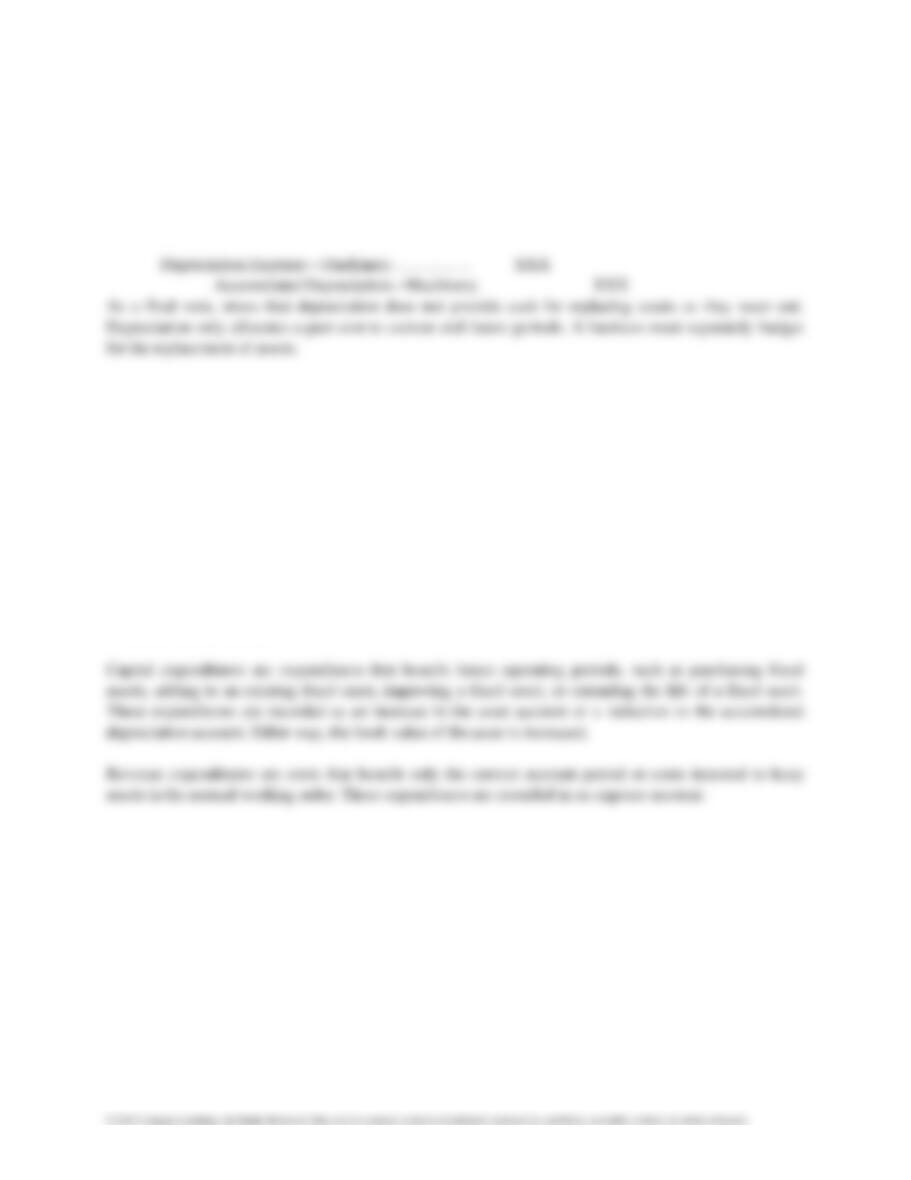
Machinery Depreciation Expense
Chapter 10 Fixed Assets and Intangible Assets 167
REMINDER: The adjusting entry to reduce supplies credits the supplies account, reducing it directly for
the amount of supplies that are physically gone. Since depreciation is only an estimate of the usefulness of
a long-term asset that has expired, the Asset account is not reduced directly. Rather, a contra-account
called Accumulated Depreciation is used to reduce the asset.
For example, the adjusting entry to record depreciation on a piece of machinery would be:
INTERNET ACTIVITY — Fixed Assets
Instruct your students to search the Web using “fixed assets” as their search criteria. This search will
bring up many Web sites promoting fixed asset software packages. Ask your students to pick a software
package and describe its capabilities. Sage Software has several fixed asset packages. Information can be
found at http://www.sagesoftware.com/.
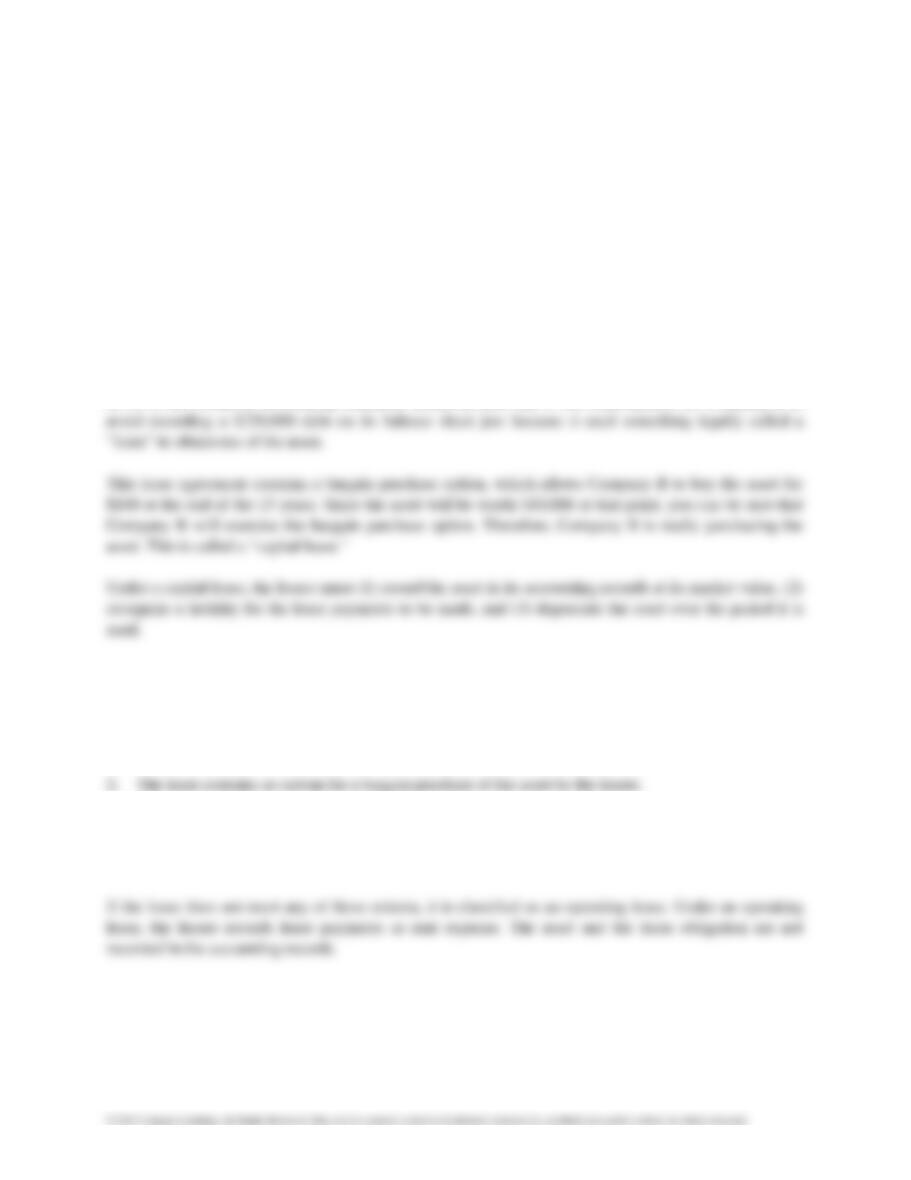
LECTURE AID — Capital and Revenue Expenditures
Review the definitions of capital and revenue expenditures and their accounting treatment by using TMs
10-10 and 10-11. Next, give your students an opportunity to apply these definitions in practice through a
Group Learning Activity.
GROUP LEARNING ACTIVITY — Capital and Revenue Expenditures
TM 10-11 lists several expenditures related to fixed assets. Ask your students to classify each as a capital
or a revenue expenditure. Also instruct them to name the specific account that would be debited to record
each expenditure. TM 10-12 presents the solution.
168 Chapter 10 Fixed Assets and Intangible Assets
LECTURE AID — Capital Leases
Use the following scenario (TM 10-13) to introduce capital leases:
Company A: Purchases a $250,000 asset that has an estimated 15-year life, after which time it will have a
$10,000 salvage value. The asset is purchased on credit. Therefore, Company A records a $250,000 asset
and a $250,000 liability.
Company B: Leases the same $250,000 asset for 15 years. At the end of the 15 years, the company has
the right to purchase the asset for $100. Since Company B does not own the asset, it does not record the
asset on its accounting records. In addition, it does not recognize any liability related to the lease.
Is this a fair accounting treatment?
In 1976, the Financial Accounting Standards Board decided that it was unacceptable for Company B to
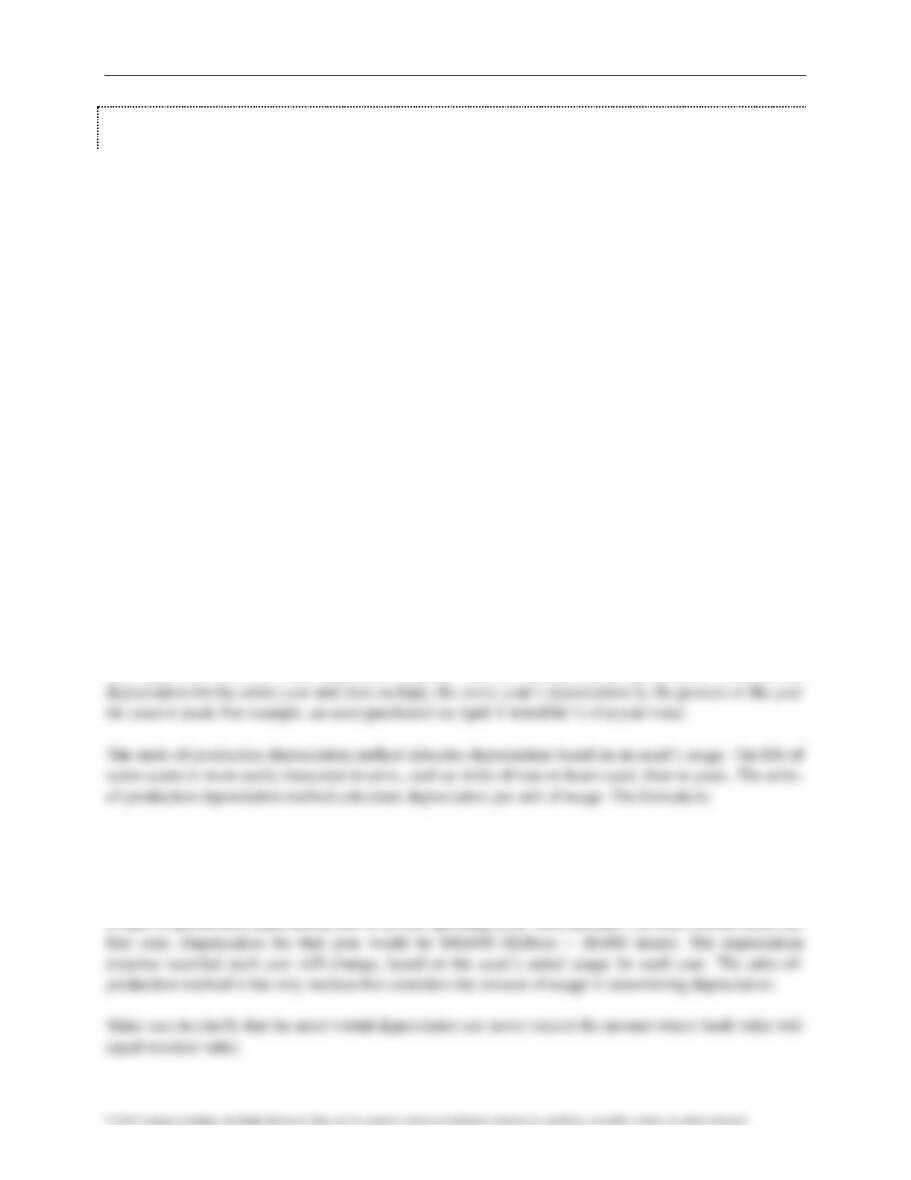
The criteria to determine if a lease is a capital lease are not presented in the text; this is more an
intermediate accounting concern. However, in case your students ask, a lease is classified as a capital
lease if it meets one of these four criteria:
1. The lease transfers ownership of the asset to the lessee at the end of the lease term.
3. The lease term covers 75 percent or more of the economic life of the asset.
4. The lease requires rental payments that compensate the leaser for 90 percent or more of the fair
market value of the asset.
Chapter 10 Fixed Assets and Intangible Assets 169
OBJECTIVE 2
Compute depreciation, using the following methods: straight-line method, units-of-
production method, and double-declining-balance method.
KEY TERMS
Accelerated Depreciation Method Residual Value
Book Value Straight-Line Method
Depreciation Units-of-Production Method
Double-Declining-Balance Method
SUGGESTED APPROACH
The three factors used in determining depreciation are a fixed asset’s (1) initial cost, (2) useful life, and
(3) residual value. Review the formulas for each depreciation method, and give your students an
opportunity to apply these formulas using a Group Learning Activity.
LECTURE AID — Straight-Line and Units-of-Production Methods
The straight-line depreciation method allocates the cost of an asset evenly over the number of years it is
used. The formula to calculate the depreciation expense recorded each year is as follows:
(Cost – Residual Value)/Number of Years of Useful Life
Remind students that under the straight-line method, the depreciation expense recognized is the same
each year. Point out that assets purchased mid-year receive a partial year’s depreciation. Calculate the
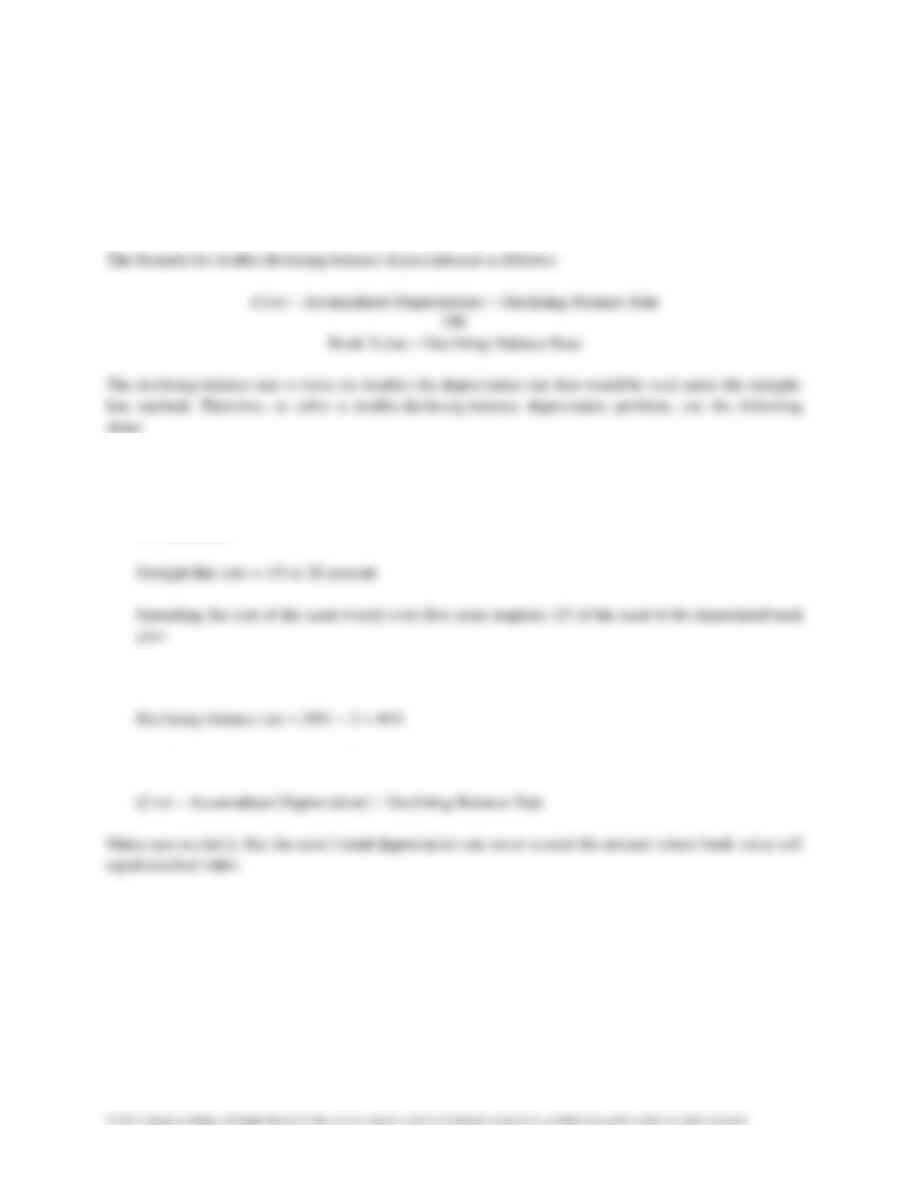
(Cost – Residual Value)/Estimated Life in Units of Usage
Once a depreciation rate per unit is established, the yearly depreciation expense is calculated by
multiplying this rate by the number of units consumed in a year. For example, assume that a machine had
170 Chapter 10 Fixed Assets and Intangible Assets
GROUP LEARNING ACTIVITY — Straight-Line and Units-of–Production
Depreciation
TM 10-6 presents a depreciation exercise for small groups. The solution is provided on TM 10-7.
LECTURE AID — Double-Declining-Balance Method
1. Calculate the rate that would be used under straight-line depreciation.
Example: A $10,000 machine will be used for five years. At that time, the machine’s salvage value
will be $2,000.
2. Double the straight-line rate to get the declining-balance rate.
3. Use the formula to calculate declining-balance depreciation.
GROUP LEARNING ACTIVITY — Declining-Balance Depreciation
Using TM 10-8, ask your students to calculate depreciation under the declining-balance method.
TM 10-9 contains the solution to this problem. When reviewing the solution, be sure to point out the
depreciation calculation for the last year of the asset’s life under the declining-balance method. In the last
year, simply take whatever depreciation is needed to reduce the book value of the asset to residual value.
Chapter 10 Fixed Assets and Intangible Assets 171
LECTURE AID — Comparing Depreciation Methods
Point out that the declining-balance method is called an accelerated depreciation method since the
depreciation expense is highest in the first year of the asset’s life and gradually declines.
The benefits of accelerated depreciation are:
1. Decreasing depreciation charges are matched against increasing repair and maintenance charges.
2. Higher depreciation charges drive net income down in the early years of an asset’s life. As a result,
accelerated depreciation methods are favored for tax purposes.
LECTURE AID — Tax Depreciation
Stress that assets are depreciated for tax purposes using methods prescribed by the Internal Revenue
Service (IRS). Therefore, a company may be recording different depreciation for tax and financial
LECTURE AID — Miscellaneous
In addition to the information above, you may want to stress the following points.
1. Revision of Depreciation—If estimates of a fixed asset’s residual value or useful life change, this
3. Depreciation on Low-Cost Assets—Assets that have a low cost (e.g., a wastepaper basket, small hand
172 Chapter 10 Fixed Assets and Intangible Assets
OBJECTIVE 3
Journalize entries for the disposal of fixed assets.
SUGGESTED APPROACH
Whenever a business disposes of a fixed asset—however a business disposes of a fixed asset—both the
asset and its accumulated depreciation must be removed from the accounting records. Remind students
that depreciation must be brought up to date before recording the disposal of an asset. Use the following
notes and Demonstration Problems to illustrate the discard, sale, and exchange of fixed assets.
LECTURE AID — Discarding Fixed Assets
To record a discarded fixed asset:
1. Remove the asset and its accumulated depreciation from the accounting records.
2. If the asset is not fully depreciated, record a loss equal to the book value of the asset.
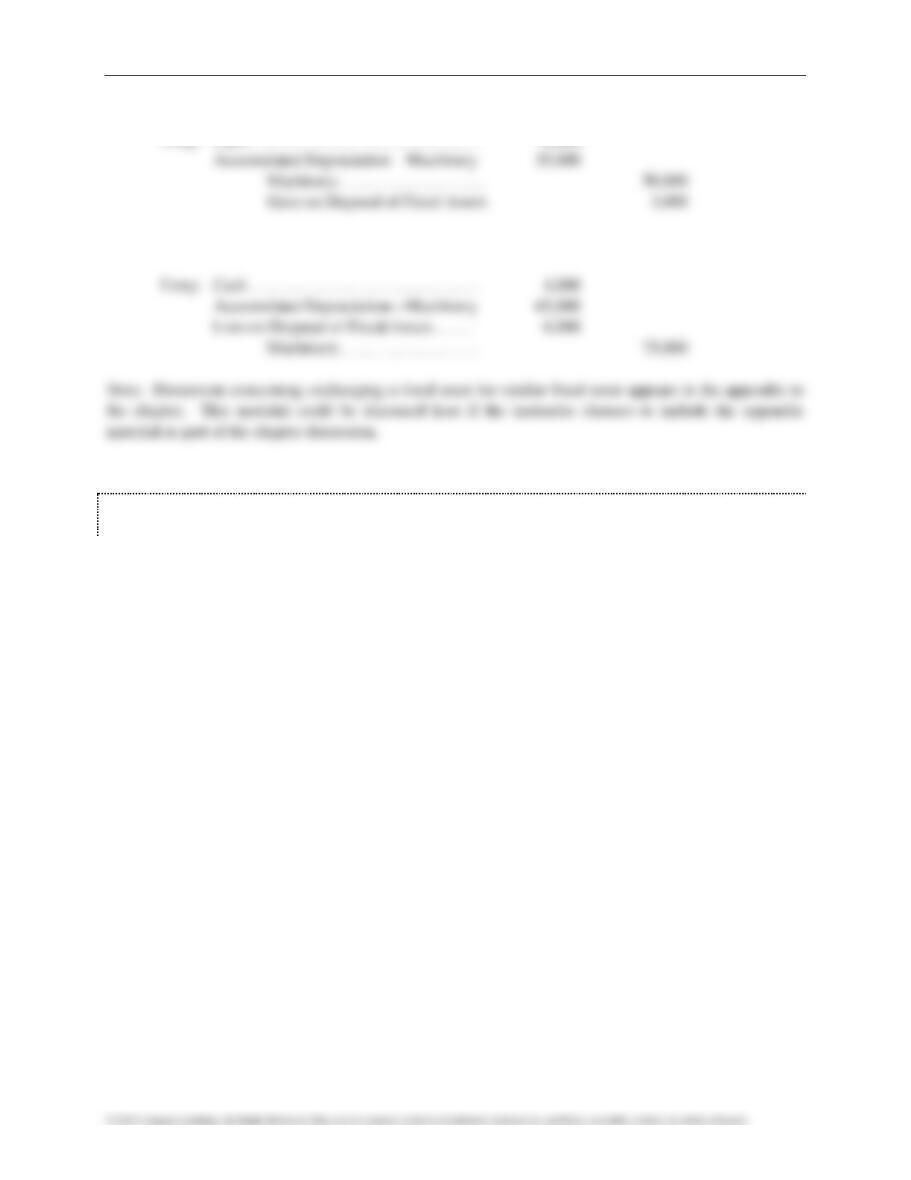
Ask your students to record in their notes the discard of the following two assets. After a few minutes,
review the correct answers.
LECTURE AID — Selling Fixed Assets
To record the sale of a fixed asset:
1. Remove the asset and its accumulated depreciation from the accounting records.
Ask students to record the sale of the following two assets. Then review the correct answers.
Machine #1: Original cost, $50,000; accumulated depreciation, $35,000; sold for $18,000
Chapter 10 Fixed Assets and Intangible Assets 173
Entry: Cash……………………………………. 18,000
Machine #2: Original cost, $75,000; accumulated depreciation, $65,000; sold for $4,000
OBJECTIVE 4
Compute depletion and journalize the entry for depletion.
KEY TERM
Depletion
SUGGESTED APPROACH
Mining companies purchase rights to mineral deposits or natural resources like timber. These rights are
recorded in an asset account when they are purchased. As the metal ore or minerals are mined, they must
be removed from the asset account and shown as an expense. This process is called depletion. It works
like the contra asset account Accumulated Depreciation to reduce the overall value of the associated asset
while keeping the original cost of the asset on the books. Depletion is always computed using a units-of-
production method. Use the Demonstration Problem to show how depletion is calculated and journalized.
Depletion rate = cost of resources/estimated total units of resources
DEMONSTRATION PROBLEM — Depletion
A company purchased the rights to a mineral deposit for $500,000. Engineers estimate that the deposit
contains 2 million tons of ore. During the first year of mining operations, 450,000 tons of ore were
removed. What depletion expense would be recorded that first year?
$500,000/2 million tons = $0.25/ton
450,000 tons $0.25/ton = $112,500
174 Chapter 10 Fixed Assets and Intangible Assets
Journal Entry: Depletion Expense…………… 112,500
Accumulated Depletion…… 112,500
OBJECTIVE 5
Describe the accounting for intangible assets, such as patents, copyrights, and goodwill.
KEY TERMS
Amortization Intangible Assets
SUGGESTED APPROACH
Intangible assets are long-term assets that have no physical substance but benefit operations. Emphasize
that in most cases, intangible assets involve legal rights. For example, a copyright is the legal right to
publish and sell printed material.
Begin your coverage by reviewing the major categories of intangibles (patents, copyrights and
trademarks, goodwill) using TM 10-14. TM 10-15 summarizes the ongoing accounting treatment for
intangibles. Emphasize the value of intangibles through the real-world case example that follows.
Patents and goodwill are two intangibles that merit additional coverage of methods for determining cost.
Use the Lecture Aid below to explain the differences in costs capitalized for a purchased and an internally
LECTURE AID — Patents
If a patent is purchased, the full purchase price is recorded in the Patent account. In most cases, the
purchase price of the patent would reimburse the seller for research costs in developing the product
patented, as well as for the legal costs of filing and defending the patent.
If a patent is developed internally, only the legal costs to file and defend the patent may be recorded in the
Patent account. All research and development costs to discover and perfect the product or technology
must be recorded as expenses as they are incurred. Research and development costs are expensed because
a company can never be sure whether or not its projects will lead to marketable products. Once a product
Chapter 10 Fixed Assets and Intangible Assets 175
is determined to be marketable, it would be difficult to go back and trace all the costs that went into the
product—especially since it may have taken several years to develop the product.
As a result, patents that are developed internally will be carried at a substantially lower value than patents
that are purchased.
LECTURE AID — Goodwill
Let’s say that you wanted to open a restaurant that specializes in pizza. You price ovens, refrigerators,
tables, chairs, cash registers—all the items you need to open your restaurant. You discover that the
needed equipment will cost $75,000. You also hear that the owner of a local pizzeria wants to sell his
business. This business has all of the equipment you had priced for your own store. Although this
equipment is used, it is in good working order. The business is in a location equivalent to the one you
OBJECTIVE 6
Describe how depreciation expense is reported in an income statement and prepare a
balance sheet that includes fixed assets and intangible assets.
SUGGESTED APPROACH
Review the following information regarding income statement and balance sheet disclosures:
Income Statement—must show amount of depreciation and amortization expense, either on the statement
or in a footnote. It also must disclose the method used to calculate depreciation.
Balance Sheet—must show the balance of each major class of fixed assets, along with the accumulated
depreciation (either by class or in total). Mineral rights and ore deposits (less accumulated depletion) are
shown as part of the fixed asset section. Other intangible assets are listed in their own section, net of
amortization taken to date, immediately following the fixed assets.
176 Chapter 10 Fixed Assets and Intangible Assets
GROUP LEARNING ACTIVITY — Income Statement and Balance Sheet
Using TM 10-17, ask your students to prepare the assets section of a balance sheet for Georgia
Electronics Co. The solution is presented in TM 10-18.
OBJECTIVE 7
Describe and illustrate the fixed asset turnover ratio to assess the efficiency of a company’s
use of its fixed assets.
KEY TERMS
Fixed Asset Turnover Ratio
SUGGESTED APPROACH
After reviewing the computation of this ratio, use TM 10-19 to begin a discussion of which factors could
cause a company’s ratio from year to year to change or remain the same.
Possible explanation: The higher the ratio, the more efficiently a company is using fixed assets. The ratio
is affected two possible ways: 1) fluctuation in net income and 2) changes to average book value of fixed
assets. If fixed assets remain relatively unchanged, increases to net income will affect the ratio positively
and decreases will affect it negatively. Changes in book value can take place through the natural
depreciation process. If a company is not investing in new fixed assets, the average book value will
decrease as fixed assets are depreciated and the ratio will improve if net income remains constant.
Companies investing in fixed assets could show a decline in the ratio as the average book value will
increase based on this new investment.
Also, remind students that smaller ratios are associated with companies that require large fixed asset
investments, such as restaurants or airlines, while larger ratios are associated with companies that are
more labor-intensive, thus requiring smaller fixed asset investments, such as firms in the service industry.
Chapter 10 Fixed Assets and Intangible Assets 177
APPENDIX — EXCHANGING SIMILAR FIXED
ASSETS
KEY TERMS
Boot
Trade-in Allowance
SUGGESTED APPROACH
Please note that in presenting the journal entries for the exchange of similar assets, the value placed on the
new assets received in a gain situation is called a “plug” number. If that overly simplistic approach is
offensive, the text presents two methods for calculating the amount to be capitalized on pages 470-471.
LECTURE AID — Exchanging Similar Fixed Assets
To record the exchange of a fixed asset for a similar fixed asset:
2. Record any cash paid.
3. If there is a loss or gain on the exchange, it can be recorded for financial reporting purposes.
Most exchanges of fixed assets are trade-in arrangements, where an old asset plus some cash are
exchanged for a new asset. To determine whether there is a gain or a loss on the trade, you must compare
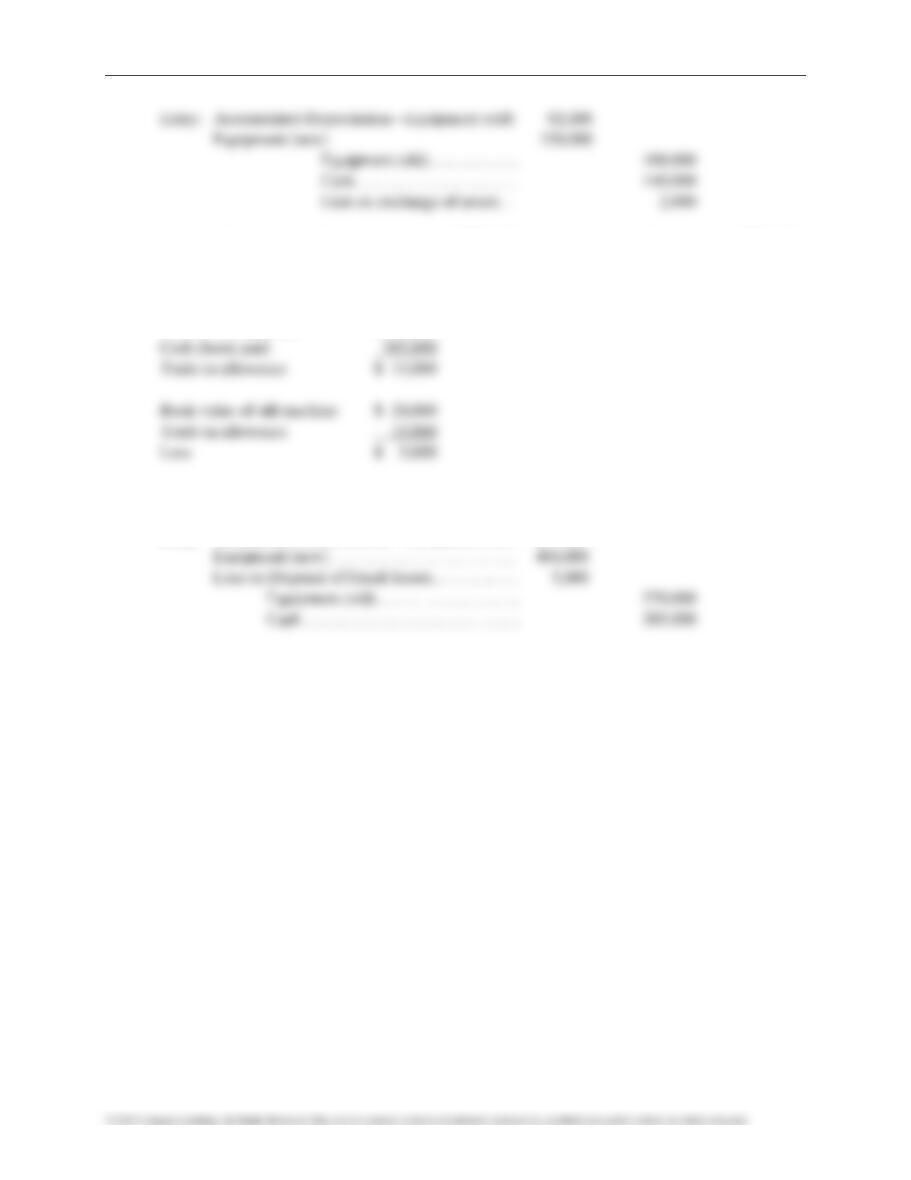
DEMONSTRATION PROBLEM — Exchanging Similar Fixed Assets
A piece of equipment with an original cost of $100,000 and accumulated depreciation of $92,000 is
traded in on a new machine with a cost of $150,000. The seller has agreed to take $140,000 cash plus the
old equipment in exchange for the new machine. Record this transaction.
178 Chapter 10 Fixed Assets and Intangible Assets
A second piece of equipment with an original cost of $270,000 and accumulated depreciation of $250,000
is traded in on a new machine with a cost of $400,000. The seller has agreed to take $385,000 cash plus
the old equipment in exchange for the new machine. Record the following transaction:
Cost of new machine $400,000
Entry: Accumulated Depreciation—Equipment (old) 250,000
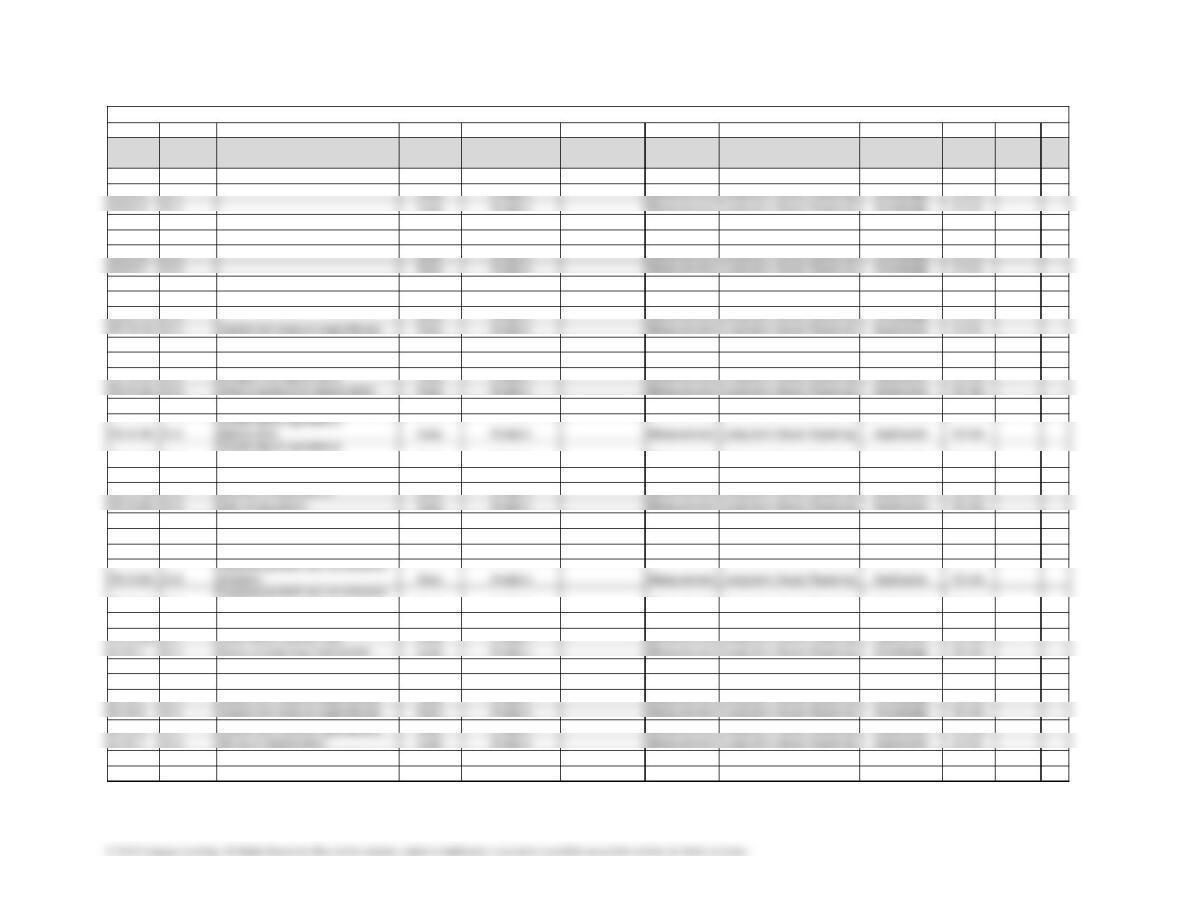
DIFFICULTY BUSPROG AICPA AICPA ACBSP BLOOM’S TIME
Problem
Learning
Objective
Description Primary Broad Business Functional Primary
Spread-
sheet
GL
DQ10-1 10-1 Easy Analytic Measurement Long-term Asset Reporting Knowledge 5 min.
DQ10-2 10-1 Easy Analytic Measurement Long-term Asset Reporting Knowledge 5 min.
DQ10-3 10-1 Easy Analytic Measurement Long-term Asset Reporting Knowledge 5 min.
DQ10-4 10-1 Easy Analytic Measurement Long-term Asset Reporting Knowledge 5 min.
DQ10-5 10-1 Easy Analytic Measurement Long-term Asset Reporting Knowledge 5 min.
DQ10-6 10-2 Easy Analytic Measurement Long-term Asset Reporting Knowledge 5 min.
DQ10-7 10-2 Easy Analytic Measurement Long-term Asset Reporting Knowledge 5 min.
DQ10-8 10-2 Easy Analytic Measurement Long-term Asset Reporting Knowledge 5 min.
DQ10-9 10-2 Easy Analytic Measurement Long-term Asset Reporting Knowledge 5 min.
DQ10-10 10-5 Easy Analytic Measurement Long-term Asset Reporting Knowledge 5 min.
PE10-1A 10-1 Capital and revenue expenditures Easy Analytic Measurement Long-term Asset Reporting Application 5 min.
PE10-1B 10-1 Capital and revenue expenditures Easy Analytic Measurement Long-term Asset Reporting Application 5 min.
PE10-2A 10-2 Straight-line depreciation Easy Analytic Measurement Long-term Asset Reporting Application 10 min.
PE10-2B 10-2 Straight-line depreciation Easy Analytic Measurement Long-term Asset Reporting Application 10 min.
PE10-3A 10-2 Units-of-production depreciation Easy Analytic Measurement Long-term Asset Reporting Application 10 min.
PE10-3B 10-2 Units-of-production depreciation Easy Analytic Measurement Long-term Asset Reporting Application 10 min.
PE10-4A 10-2
depreciation
Easy Analytic Measurement Long-term Asset Reporting Application 10 min.
PE10-4B 10-2
depreciation
Easy Analytic Measurement Long-term Asset Reporting Application 10 min.
PE10-5A 10-2 Revision of depreciation Easy Analytic Measurement Long-term Asset Reporting Application 10 min.
PE10-5B 10-2 Revision of depreciation Easy Analytic Measurement Long-term Asset Reporting Application 10 min.
PE10-6A 10-3 Sale of equipment Easy Analytic Measurement Long-term Asset Reporting Application 10 min.
PE10-6B 10-3 Sale of equipment Easy Analytic Measurement Long-term Asset Reporting Application 10 min.
PE10-7A 10-4 Depletion Easy Analytic Measurement Long-term Asset Reporting Application 10 min.
PE10-7B 10-4 Depletion Easy Analytic Measurement Long-term Asset Reporting Application 10 min.
PE10-8A 10-5
of patent
Easy Analytic Measurement Long-term Asset Reporting Application 10 min.
PE10-8B 10-5
of patent
Easy Analytic Measurement Long-term Asset Reporting Application 10 min.
PE10-9A 10-7 Fixed asset turnover ratio Easy Analytic Measurement Long-term Asset Reporting Application 10 min.
PE10-9B 10-7 Fixed asset turnover ratio Easy Analytic Measurement Long-term Asset Reporting Application 10 min.
Ex10-1 10-1 Costs of acquiring fixed assets Easy Analytic Measurement Long-term Asset Reporting Knowledge 10 min.
Ex10-2 10-1 Determine cost of land Easy Analytic Measurement Long-term Asset Reporting Knowledge 5 min.
Ex10-3 10-1 Determine cost of land Easy Analytic Measurement Long-term Asset Reporting Application 5 min.
Ex10-5 10-1 Capital and revenue expenditures Easy Analytic Measurement Long-term Asset Reporting Knowledge 10 min.
Ex10-6 10-1 Capital and revenue expenditures Easy Analytic Measurement Long-term Asset Reporting Application 15 min.
Ex10-8 10-2 Straight-line depreciation rates Easy Analytic Measurement Long-term Asset Reporting Application 10 min.
Ex10-9 10-2 Straight-line depreciation Easy Analytic Measurement Long-term Asset Reporting Application 5 min.
HOMEWORK CHART WITH LEARNING OUTCOMES TAGGING
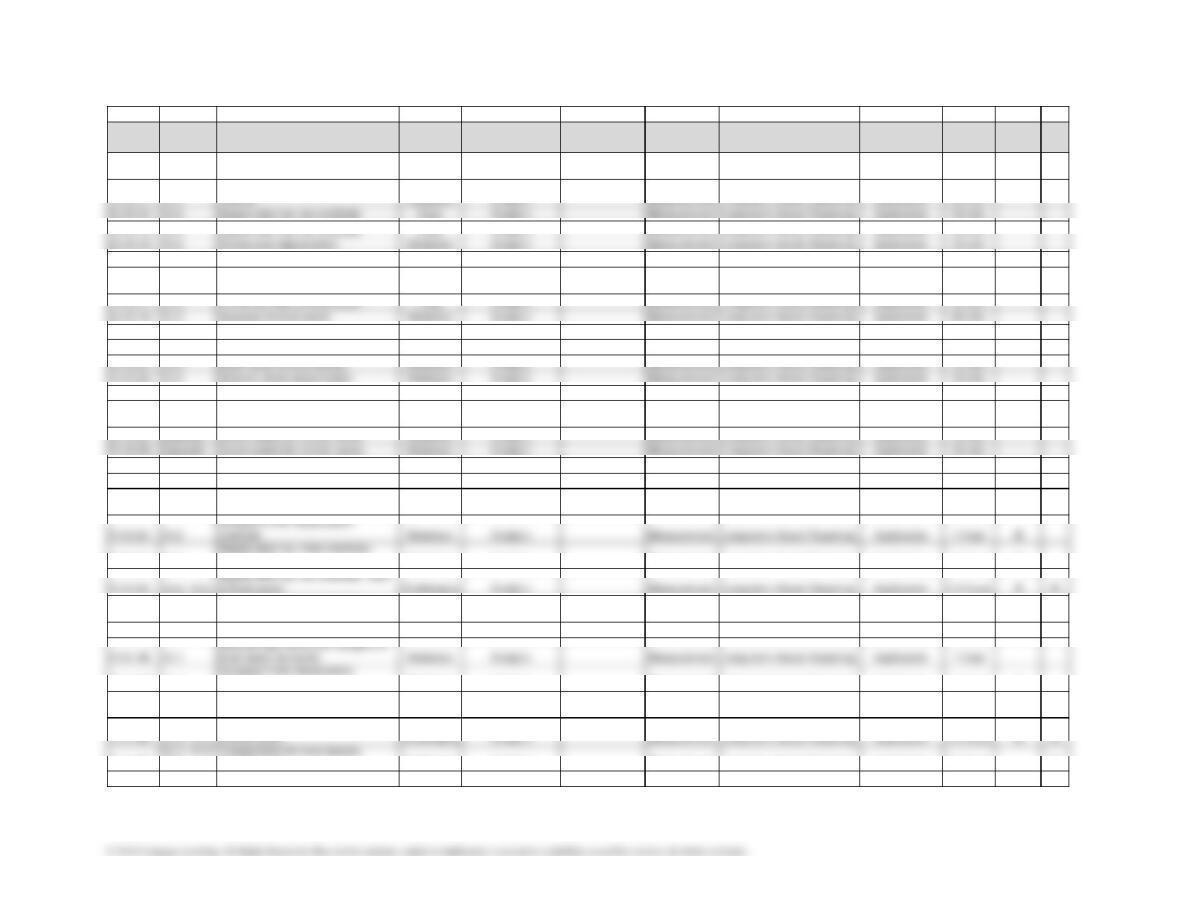
DIFFICULTY BUSPROG AICPA AICPA ACBSP BLOOM’S TIME
Problem
Learning
Objective
Description Primary Broad Business Functional Primary
Spread-
sheet
GL
Ex10-10 10-2
Depreciation by units-of–production
method
Easy Analytic Measurement Long-term Asset Reporting Application 5 min.
Ex10-11 10-2
method
Moderate Analytic Measurement Long-term Asset Reporting Application 20 min.
Ex10-12 10-2 Depreciation by two methods Easy Analytic Measurement Long-term Asset Reporting Application 10 min.
Depreciation by units-of–production
Ex10-13 10-2 Depreciation by two methods Easy Analytic Measurement Long-term Asset Reporting Application 10 min.
Ex10-14 10-2 Partial-year depreciation Moderate Analytic Measurement Long-term Asset Reporting Application 10 min.
Ex10-15 10-2 Revision of depreciation Moderate Analytic Measurement Long-term Asset Reporting Application 15 min.
Ex10-16 10-1, 10-2
Capital expenditure and depreciation
Easy Analytic Measurement Long-term Asset Reporting Application 10 min.
Ex10-17 10-3 Entries for sale of fixed asset Easy Analytic Measurement Long-term Asset Reporting Application 10 min.
Ex10-19 10-4 Depletion entries Easy Analytic Measurement Long-term Asset Reporting Application 10 min.
Ex10-20 10-5 Amortization entries Easy Analytic Measurement Long-term Asset Reporting Application 10 min.
Ex10-22 10-6 Balance sheet presentation Moderate Analytic Measurement Long-term Asset Reporting Application 10 min.
Ex10-23 10-7 Fixed asset turnover ratio Easy Analytic Measurement Long-term Asset Reporting Application 10 min.
Ex10-24 10-7 Sum-of-the-years-digits depreciation Easy Analytic Measurement Long-term Asset Reporting Application 10 min
Ex10-25 Appendix Asset traded for similar asset Moderate Analytic Measurement Long-term Asset Reporting Application 10 min.
Ex10-27 Appendix Entries for trade of fixed asset Moderate Analytic Measurement Long-term Asset Reporting Application 10 min.
Ex10-28 Appendix Entries for trade of fixed asset Moderate Analytic Measurement Long-term Asset Reporting Application 10 min.
Pr10-1A 10-1
Allocate payments and receipts to
fixed asset accounts
Moderate Analytic Measurement Long-term Asset Reporting Application 1 hour
Pr10-2A 10-2
Compare three depreciation
methods
Moderate Analytic Measurement Long-term Asset Reporting Application 1 hour X
Depreciation by three methods;
Pr10-3A 10-2
partial years
Moderate Analytic Measurement Long-term Asset Reporting Application 1 hour X
Depreciation by two methods; sale
Pr10-5A
10-1, 10-2,
10-3
Transactions for fixed assets,
including sale
Challenging Analytic Measurement Long-term Asset Reporting Application 1.5 hours X
Pr10-6A 10-4, 10-5 Amortization and depletion entries Moderate Analytic Measurement Long-term Asset Reporting Application 45 min.
Allocate payments and receipts to
Compare three depreciation
Pr10-2B 10-2
methods
Moderate Analytic Measurement Long-term Asset Reporting Application 1 hour X
Pr10-3B 10-2
Depreciation by three methods;
partial years
Moderate Analytic Measurement Long-term Asset Reporting Application 1 hour X
Pr10-4B 10-2, 10-3
of fixed asset
Challenging Analytic Measurement Long-term Asset Reporting Application 1.5 hours X X
10-1, 10-2,
Transactions for fixed assets,
Depreciation by two methods; sale
Pr10-5B
10-3
including sale
Challenging Analytic Measurement Long-term Asset Reporting Application 1.5 hours X
Pr10-6B 10-4, 10-5 Amortization and depletion entries Moderate Analytic Measurement Long-term Asset Reporting Application 45 min.
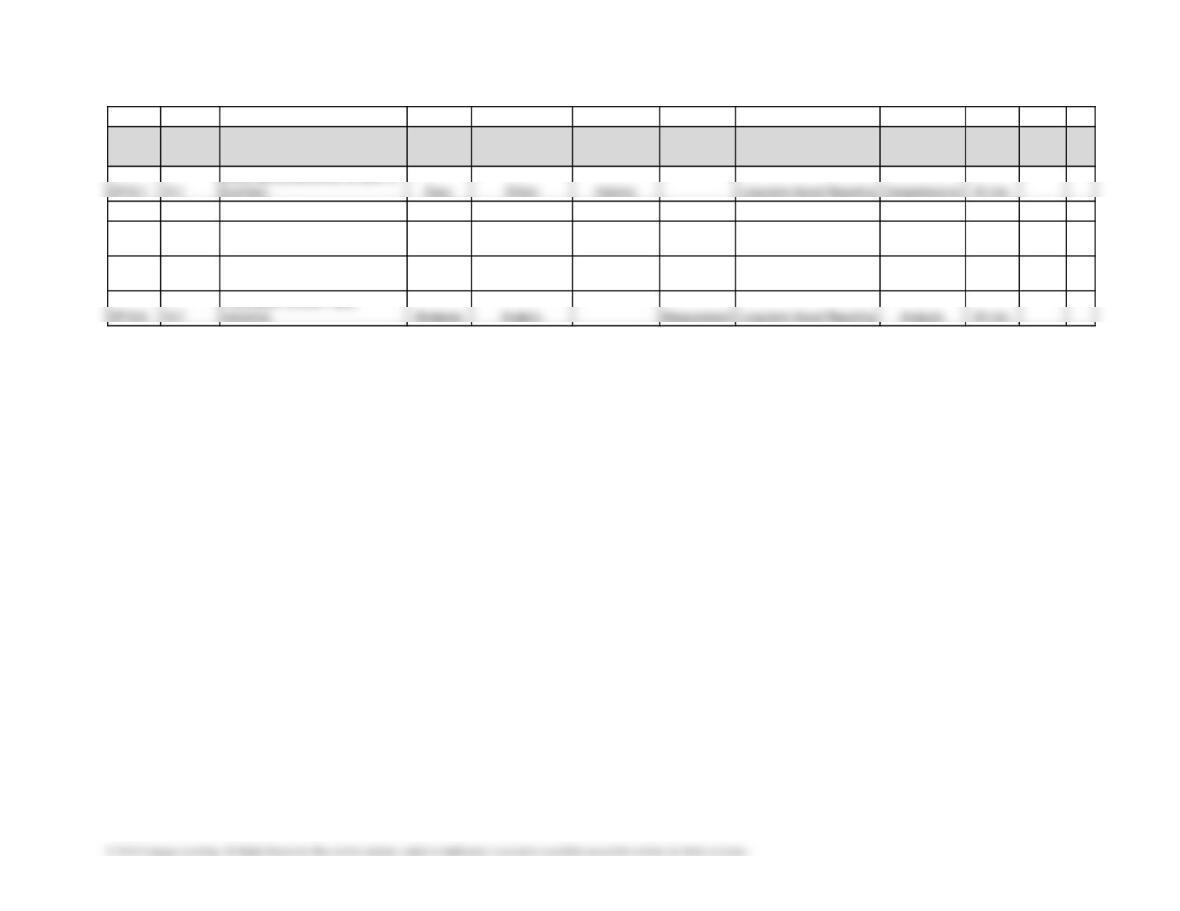
DIFFICULTY BUSPROG AICPA AICPA ACBSP BLOOM‘S TIME
Problem
Learning
Objective
Description Primary Broad Business Functional Primary
Spread-
sheet
GL
CP10-1 10-1
business
Ethics and professional conduct in
CP10-2 10-2 Financial vs. tax depreciation Easy Analytic Measurement Long-term Asset Reporting Analysis 10 min.
CP10-3 10-2
Effect of depreciation on net
income Moderate Analytic Measurement Long-term Asset Reporting Analysis 20 min.
CP10-4 10-5
Applying for patents, copyrights and
trademarks
Moderate Reflective Thinking Critical Thinking Long-term Asset Reporting Knowledge 1 hour
Fixed asset turnover: three