10-72
10-42 (40–50 min.) Purchasing Department cost drivers, activity-based costing, simple
regression analysis.
Designer Wear operates a chain of 10 retail department stores. Each department store makes its
own purchasing decisions. Barry Lee, assistant to the president of Designer Wear, is interested in
better understanding the drivers of purchasing department costs. For many years, Designer Wear
has allocated purchasing department costs to products on the basis of the dollar value of
merchandise purchased. A $100 item is allocated 10 times as many overhead costs associated
with the purchasing department as a $10 item.
Lee recently attended a seminar titled “Cost Drivers in the Retail Industry.” In a presentation
at the seminar, Couture Fabrics, a leading competitor that has implemented activity-based
costing, reported number of purchase orders and number of suppliers to be the two most
important cost drivers of purchasing department costs. The dollar value of merchandise
purchased in each purchase order was not found to be a significant cost driver. Lee interviewed
several members of the purchasing department at the Designer Wear store in Miami. They
believed that Couture Fabrics’ conclusions also applied to their purchasing department.
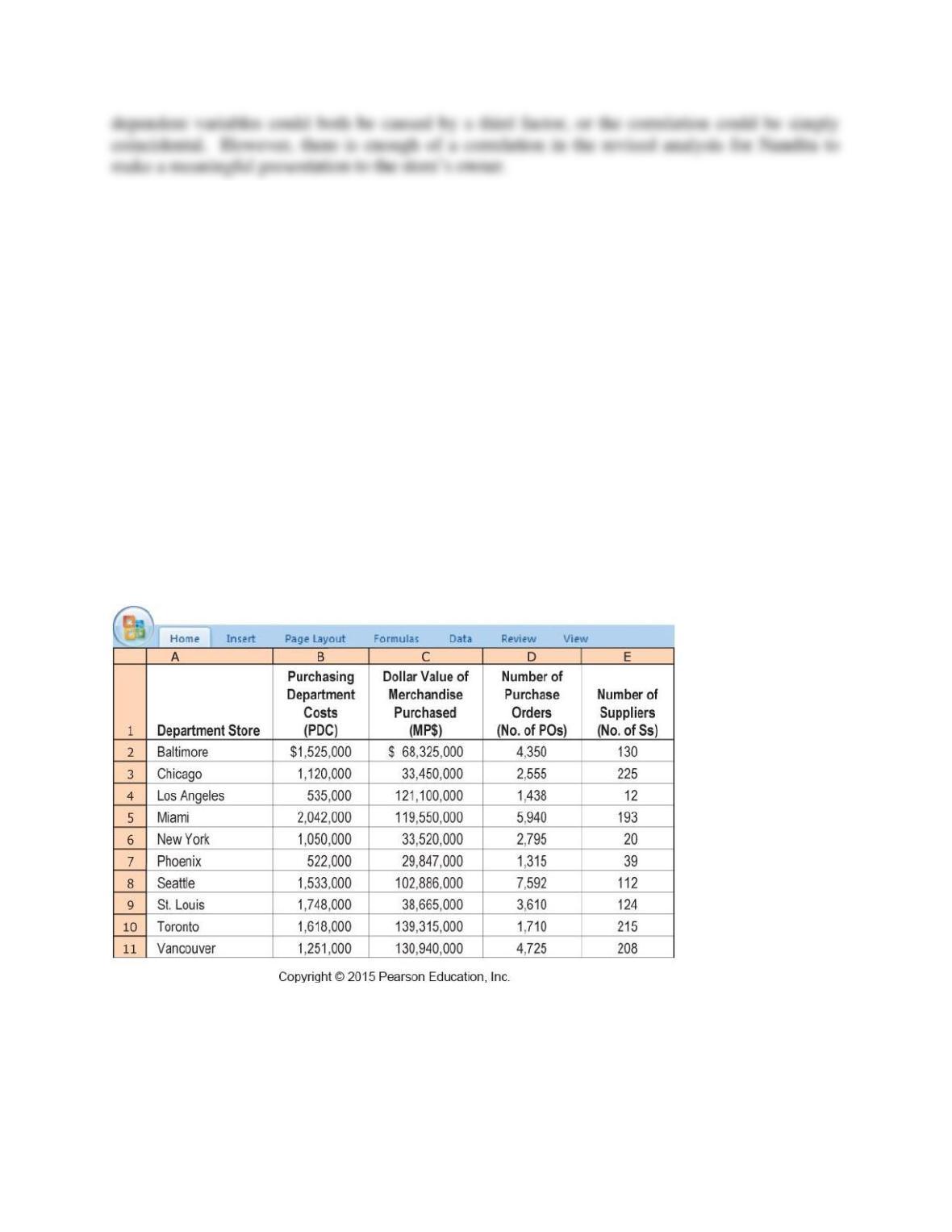
Lee collects the following data for the most recent year for Designer Wear’s 10 retail
department stores:
Lee decides to use simple regression analysis to examine whether one or more of three variables
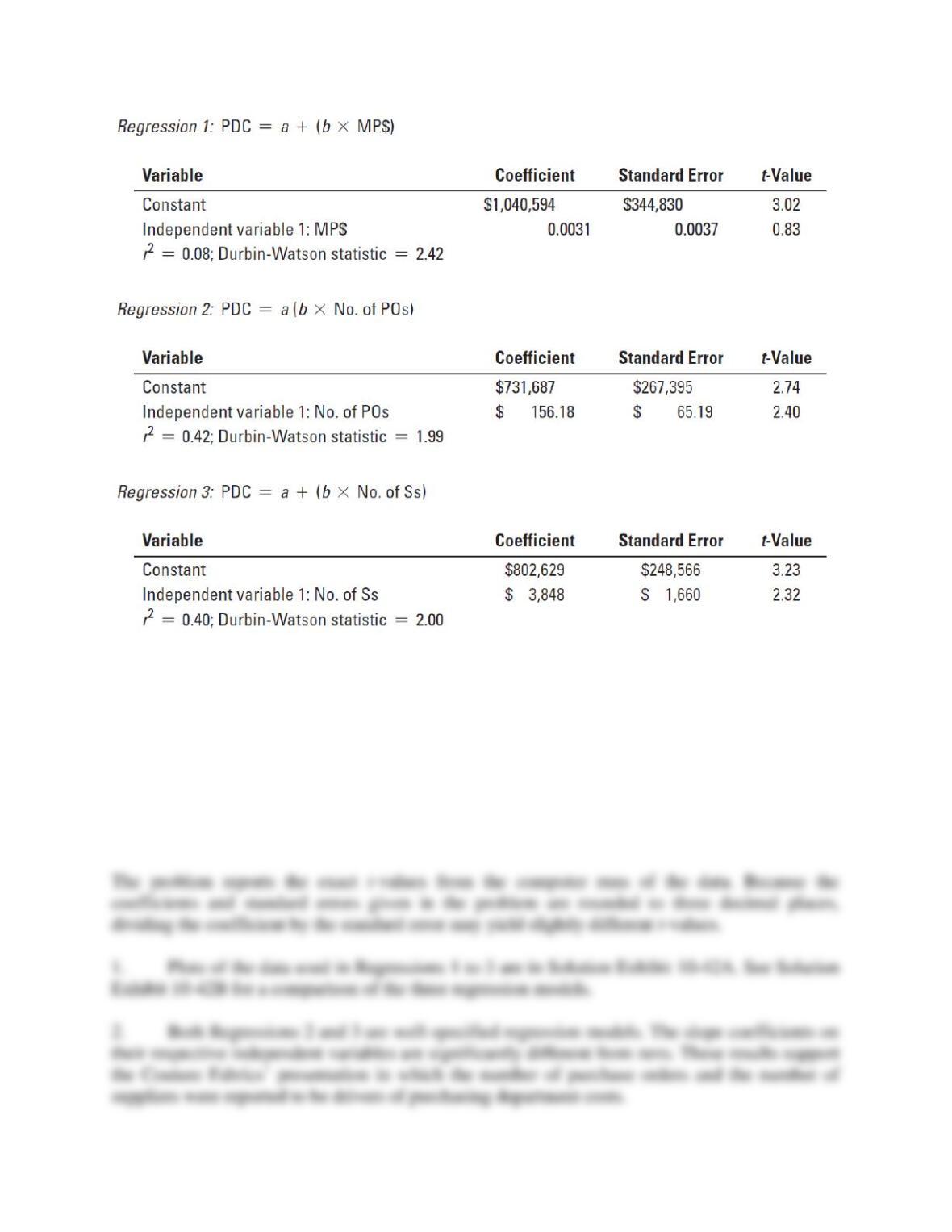
(the last three columns in the table) are cost drivers of purchasing department costs. Summary
results for these regressions are as follows:
10-73
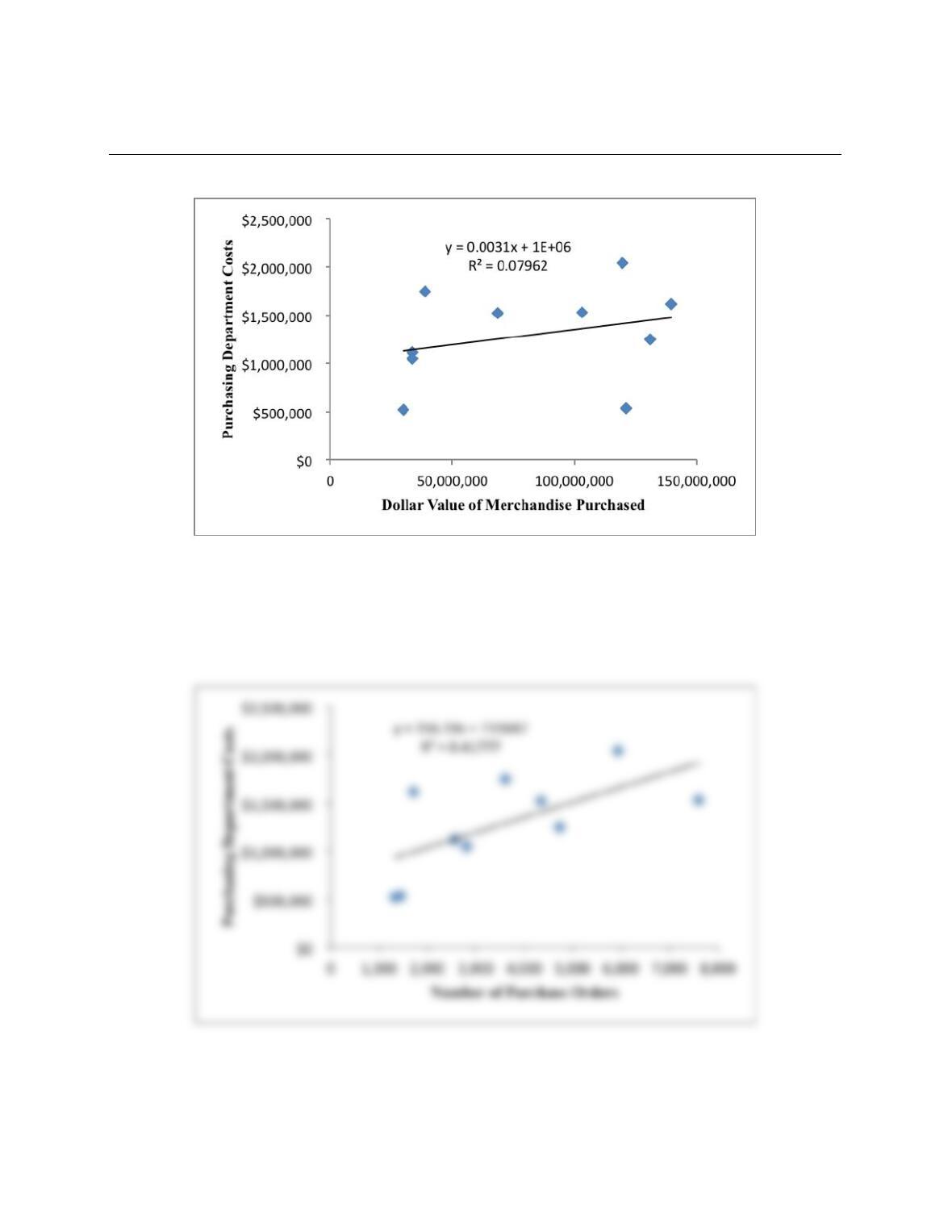
1. Compare and evaluate the three simple regression models estimated by Lee. Graph each one.
Also, use the format employed in Exhibit 10-18 (page 404) to evaluate the information.
2. Do the regression results support the Couture Fabrics’ presentation about the purchasing
department’s cost drivers? Which of these cost drivers would you recommend in designing
an ABC system?
3. How might Lee gain additional evidence on drivers of purchasing department costs at each of
Designer Wear’s stores?
SOLUTION
10-74
10-75
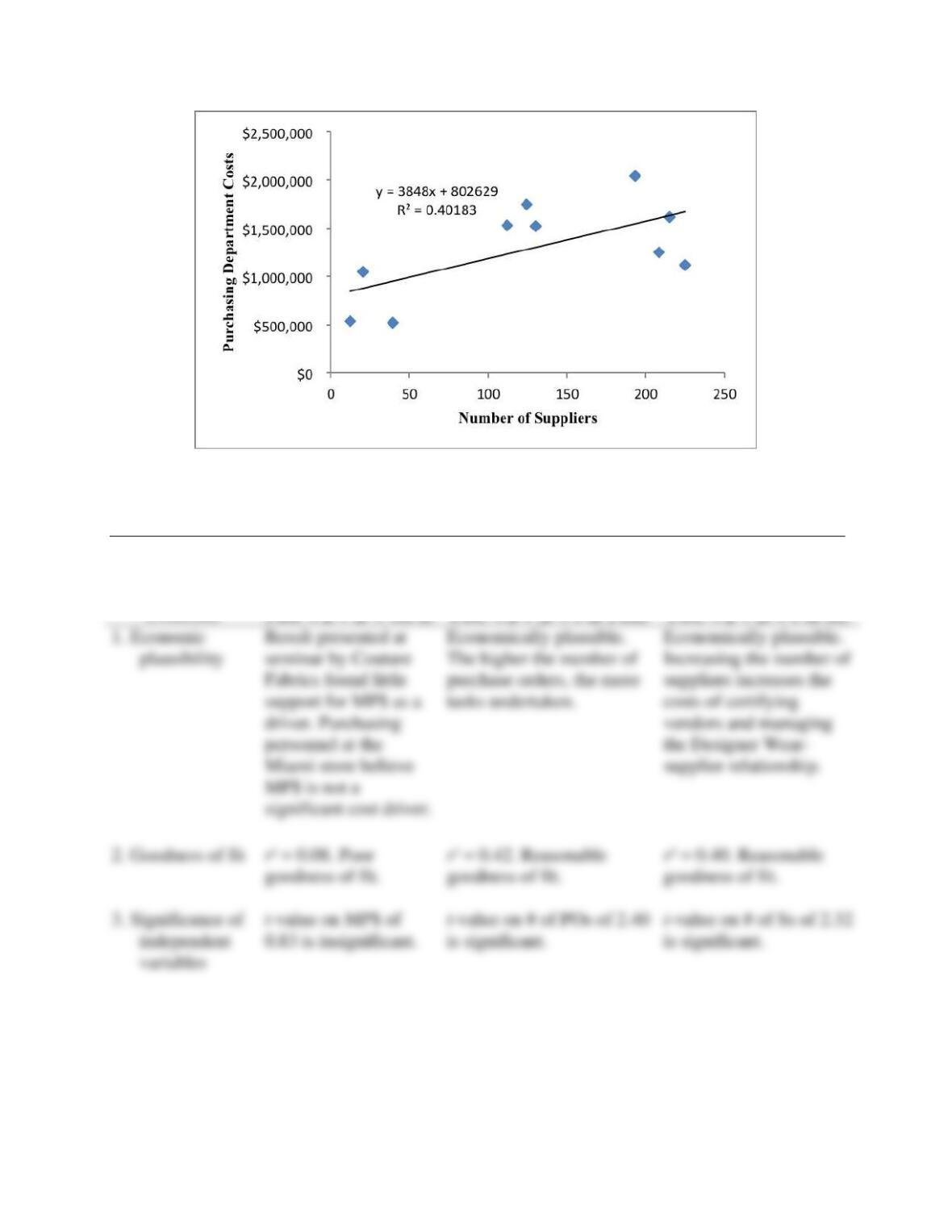
SOLUTION EXHIBIT 10-42A
Regression Lines of Various Cost Drivers for Purchasing Dept. Costs for Designer Wear
10-76
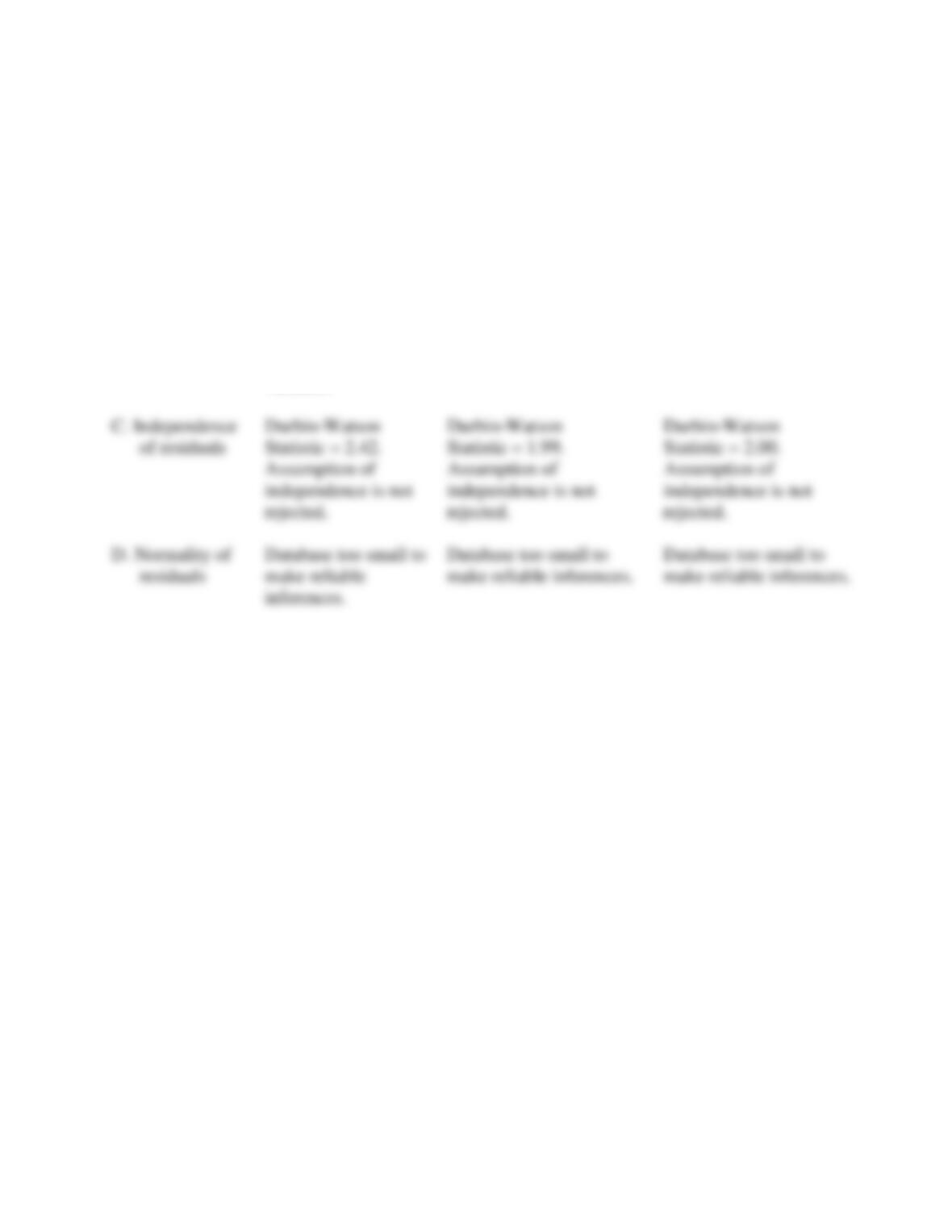
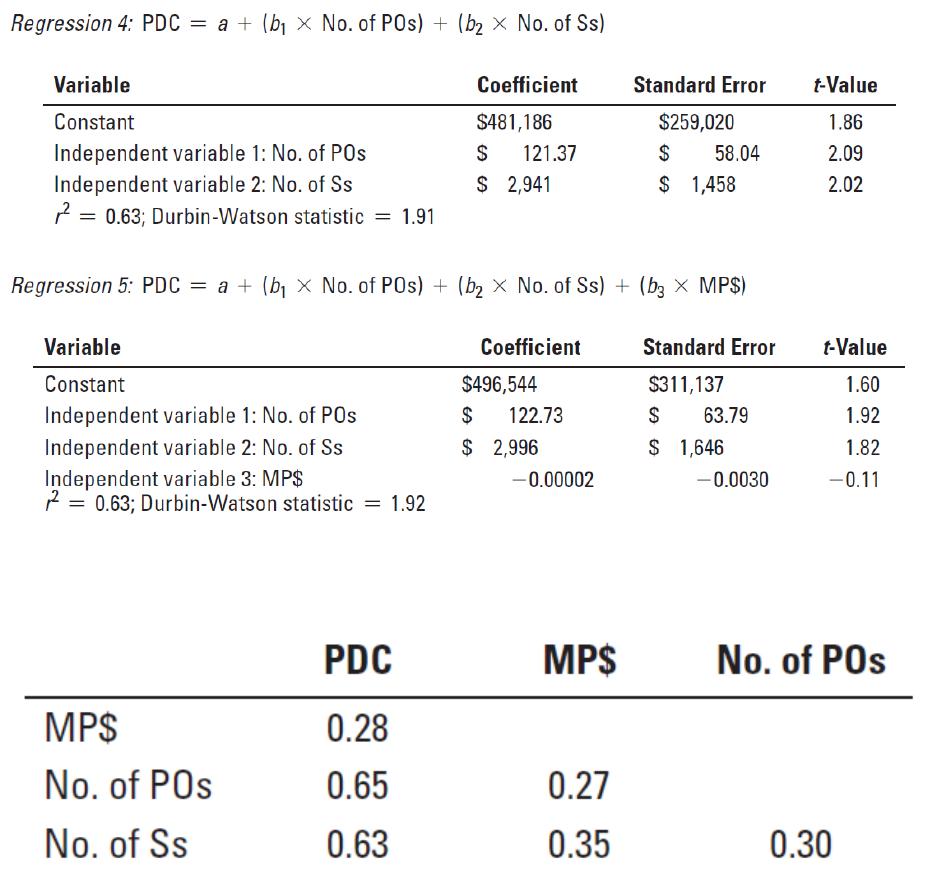
SOLUTION EXHIBIT 10-42B
Comparison of Alternative Cost Functions for Purchasing Department
Costs Estimated with Simple Regression for Designer Wear
Criterion
Regression 1
PDC = a + (b MP$)
Regression 2
PDC = a + (b # of POs)
Regression 3
PDC = a + (b # of Ss)
10-77
Criterion
Regression 1
PDC = a + (b MP$)
Regression 2
PDC = a + (b # of POs)
Regression 3
PDC = a + (b # of Ss)
4. Specification
analysis
A. Linearity
within the
relevant range
Appears questionable
but no strong evidence
against linearity.
Appears reasonable.
Appears reasonable.
B. Constant
variance of
residuals
Appears questionable,
but no strong evidence
against constant
variance.
Appears reasonable.
Appears reasonable.
C. Independence
of residuals
Durbin-Watson
Statistic = 2.42.
Assumption of
independence is not
rejected.
Durbin-Watson
Statistic = 1.99.
Assumption of
independence is not
rejected.
Durbin-Watson
Statistic = 2.00.
Assumption of
independence is not
rejected.
D. Normality of
residuals
Database too small to
make reliable
inferences.
Database too small to
make reliable inferences.
Database too small to
make reliable inferences.
10-78
10-43 (30–40 min.) Purchasing Department cost drivers, multiple regression analysis
(continuation of 10-42).
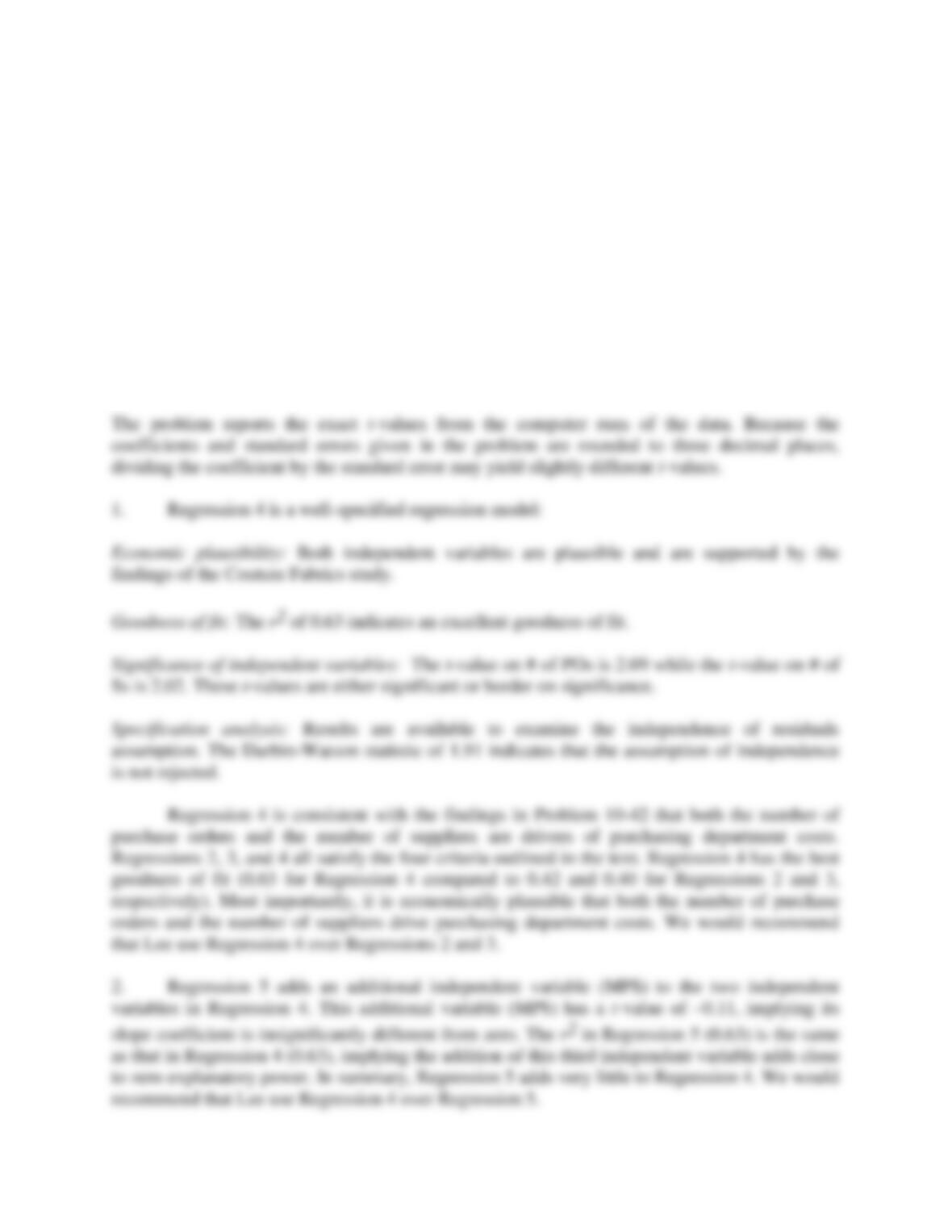
Barry Lee decides that the simple regression analysis used in Problem 10-42 could be extended
to a multiple regression analysis. He finds the following results for two multiple regression
analyses:
The coefficients of correlation between combinations of pairs of the variables are as follows:
Required:
1. Evaluate regression 4 using the criteria of economic plausibility, goodness of fit, significance
of independent variables, and specification analysis. Compare regression 4 with regressions 2
and 3 in Problem 10-42. Which one of these models would you recommend that Lee use?
Why?
10-79
2. Compare regression 5 with regression 4. Which one of these models would you recommend
that Lee use? Why?
3. Lee estimates the following data for the Baltimore store for next year: dollar value of
merchandise purchased, $77,000,000; number of purchase orders, 4,200; number of
suppliers, 120. How much should Lee budget for purchasing department costs for the
Baltimore store for next year?
4. What difficulties do not arise in simple regression analysis that may arise in multiple
regression analysis? Is there evidence of such difficulties in either of the multiple regressions
presented in this problem? Explain.
5. Give two examples of decisions in which the regression results reported here (and in Problem
10-42) could be informative.
SOLUTION
10-80

10-81