a.
×=
b.
c.
d.
15,468
8,532
1.
Periodic Payment × Factor (Table 2 in Appendix B: 9%, 12 periods) = Present
Value of Lease
$171,8647.161
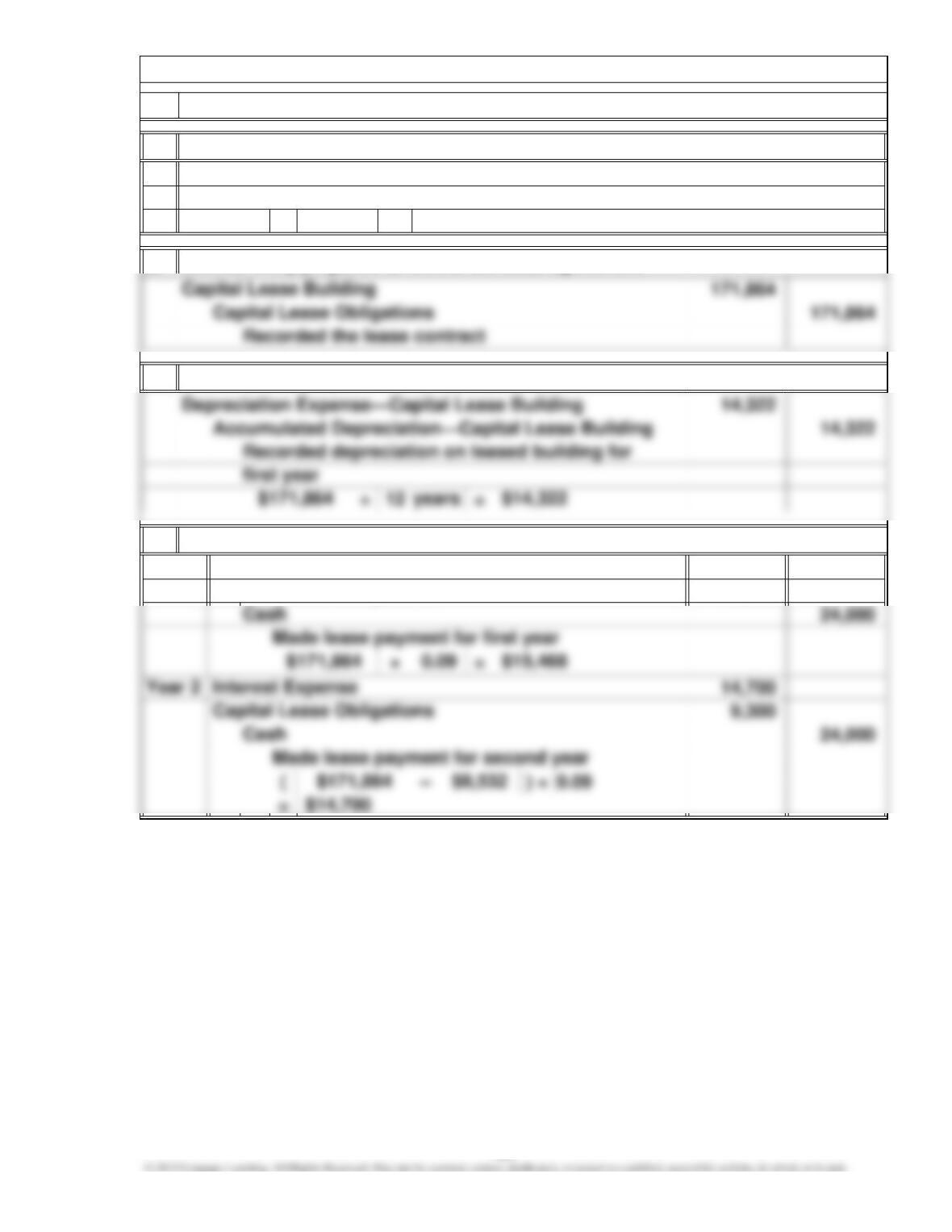
Journal entry prepared to record depreciation for the first year
Capital Lease Obligations
Chapter 10, P 1.
Lease option examined
Present value calculated
$24,000
Journal entry prepared to record the lease agreement
Journal entries prepared to record lease payments
Year 1
Interest Expense
487
a.
Reduction
in Debt
b.
160,000
160,000
Mortgage Payable
Building
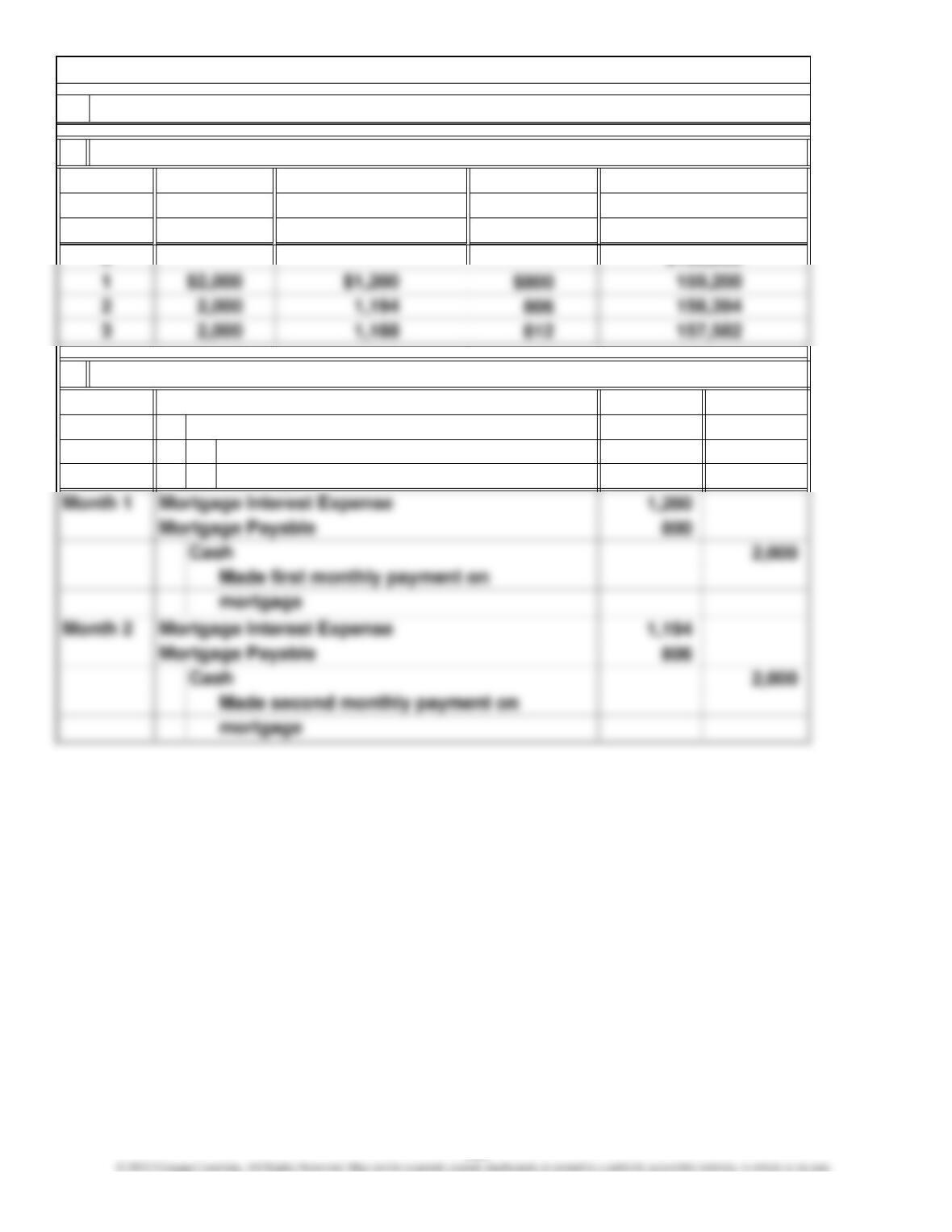
Purchased building by signing a
Journal entries prepared
Chapter 10, P 1. (Continued)
Interest for 1
Monthly payment schedule prepared
2.
$160,000
0
Month at 0.75% on
Unpaid Balance
Monthly
Payment
mortgage
Purchase option examined
Month
Unpaid Balance
at End of Period
488
3. Options discussed
options result in an increase in assets and in liabilities.
Chapter 10, P 1. (Continued)
Based on the calculation, it appears that the purchase is best because the cost of
$160,000 is less than the net present value of the lease, which is $171,864. Both
1.
2.
3.
10.
11.
12.
o
i
h
l
n
Chapter 10, P 2.
p
1. Bond terminology identified
A decrease in the market interest rate will increase the price of the bond, therefore
issuing it at a premium. The amount of cash received will exceed face value. The in-
2. User Insight: Effect of market interest rates
490
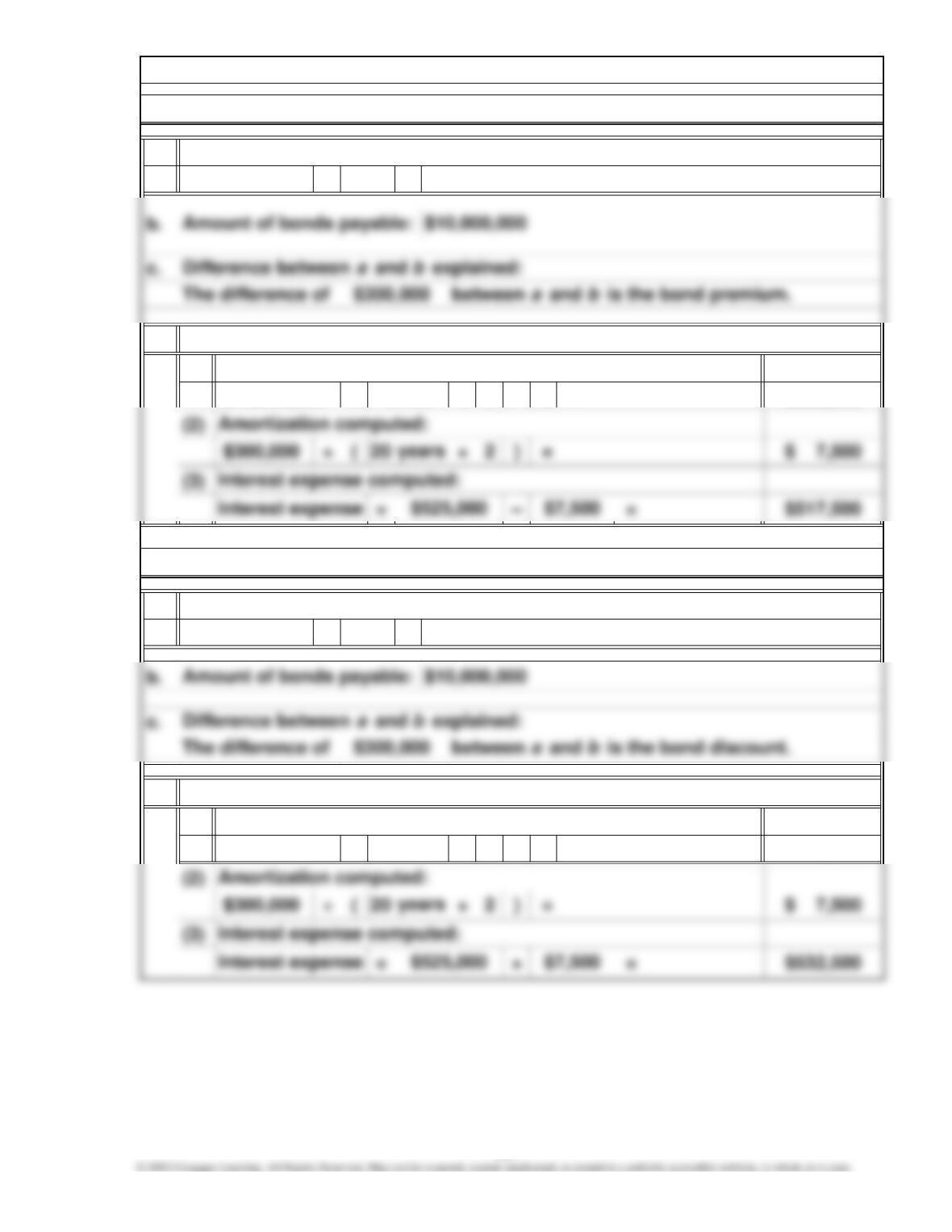
a.
×=
d.
(1)
× × 6 / 12 $525,000
a.
×=
d.
(1)
× × 6 / 12 $525,000
Calculation of cash received:
Cash paid in interest:
0.105
Interest components
1.03 $10,300,000
$10,000,000
0.105
Chapter 10, P 3.
$10,000,000
$10,000,000
Calculation of cash received:
1. Bonds issued at 103 on June 1, 2011
$10,000,000
2. Bonds issued at 97 on June 1, 2011
=
Cash paid in interest:
=
Interest components
0.97 $9,700,000
491
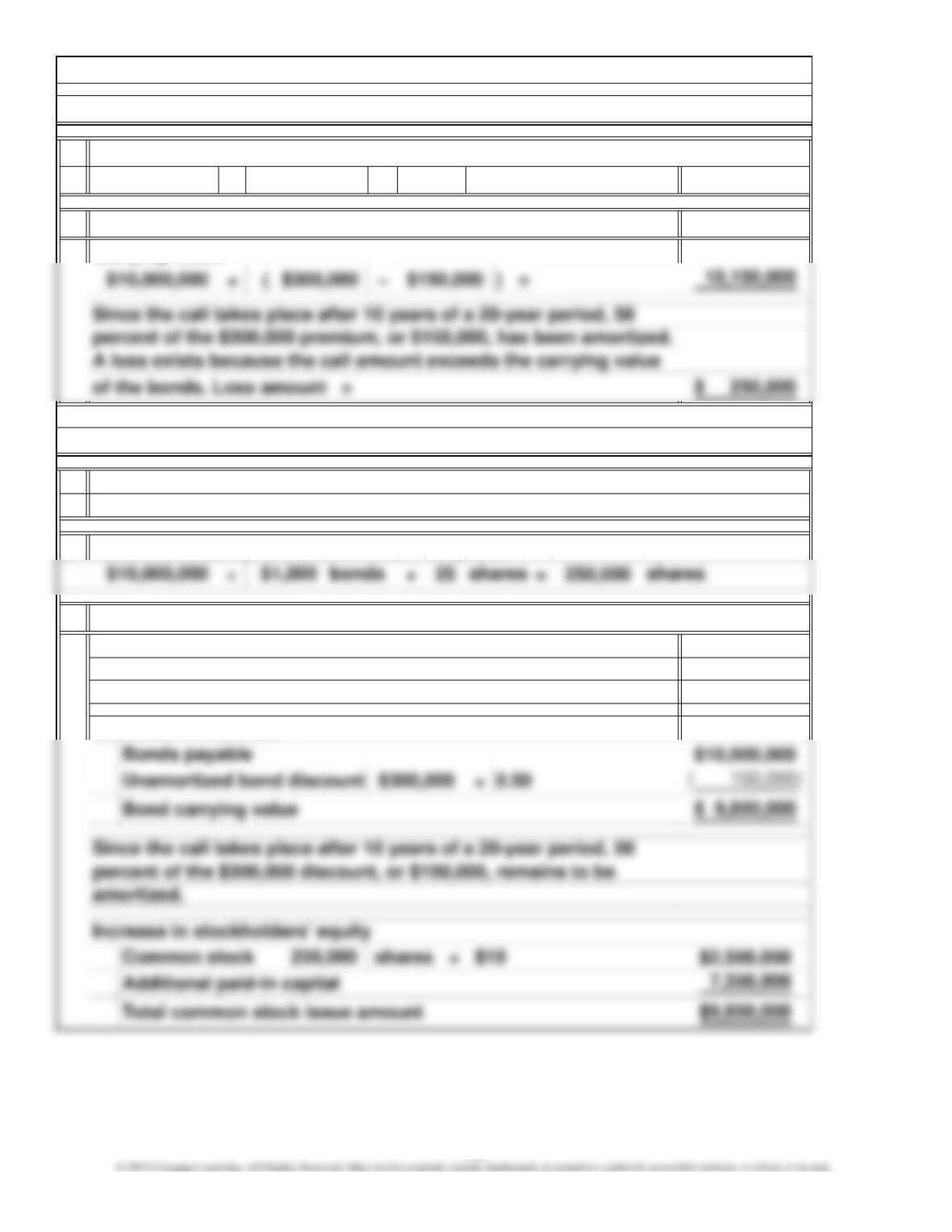
a.
= × $10,400,000
b.
a.
b.
c.
Bonds payable and its accompanying unamortized discount will
capital will be increased in stockholders’ equity.
be reduced in the liabilities. Common stock and additional paid-in
No gain or loss occurs in a bond conversion because the issued stock is re-
Gain or loss calculated:
Numbers of shares of common stock computed:
Effects of liabilities and stockholders’ equity shown:
4. Bonds converted to common stock 10 years later
Cash to retire bonds:
1.04
Carrying value:
Chapter 10, P 3. (Continued)
Call amount $10,000,000 =
3. Bonds called and retired 10 years later
corded at the carrying value of the bonds that are converted.
Decrease in liabilities
492
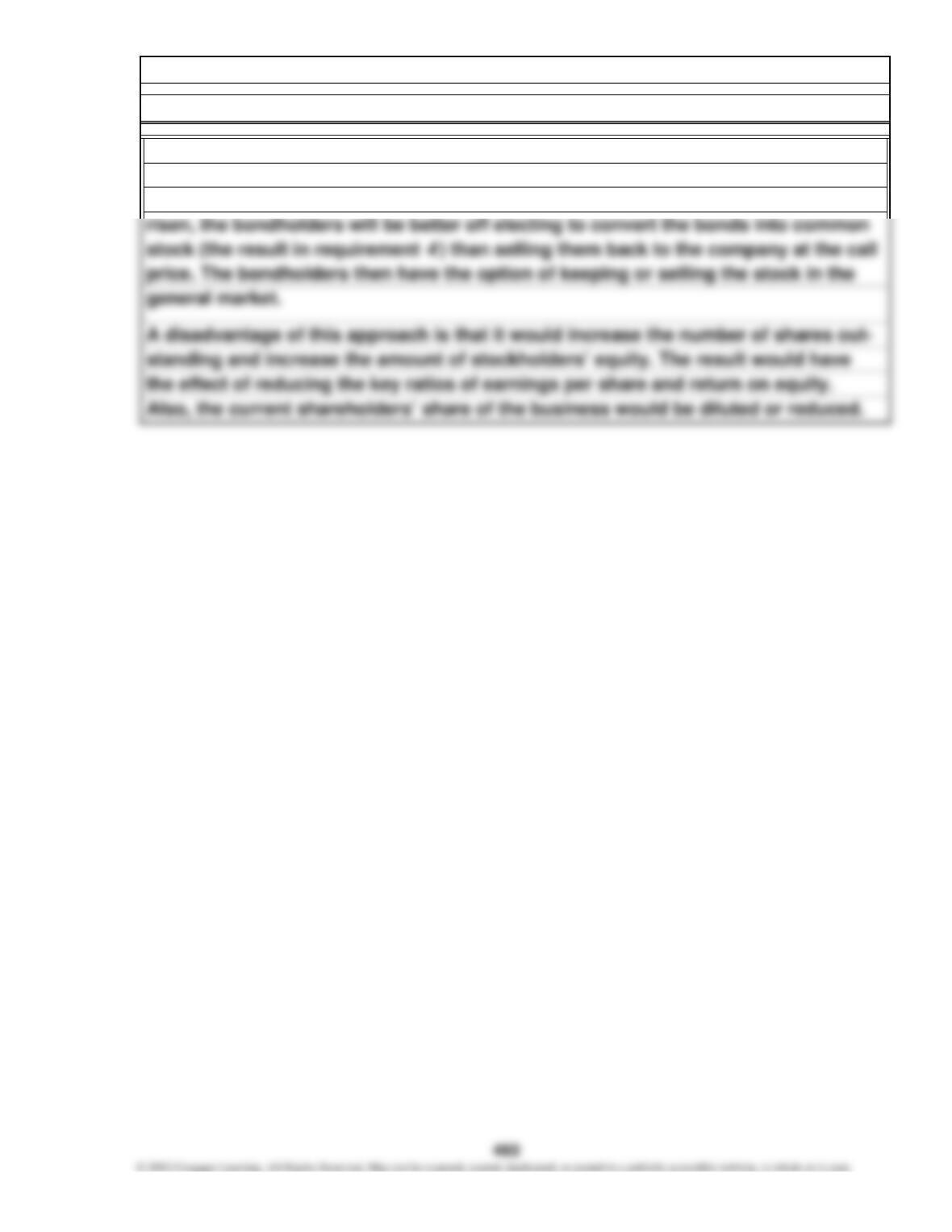
rather than accepting the call price. Since the price of the company’s stock has
The company can improve its debt to equity ratio without using cash by calling the
bonds, thereby inducing the bondholders to convert their bonds in common stock
5. User Insight: Strategy of calling bonds when stock price has risen
Chapter 10, P 3. (Continued)
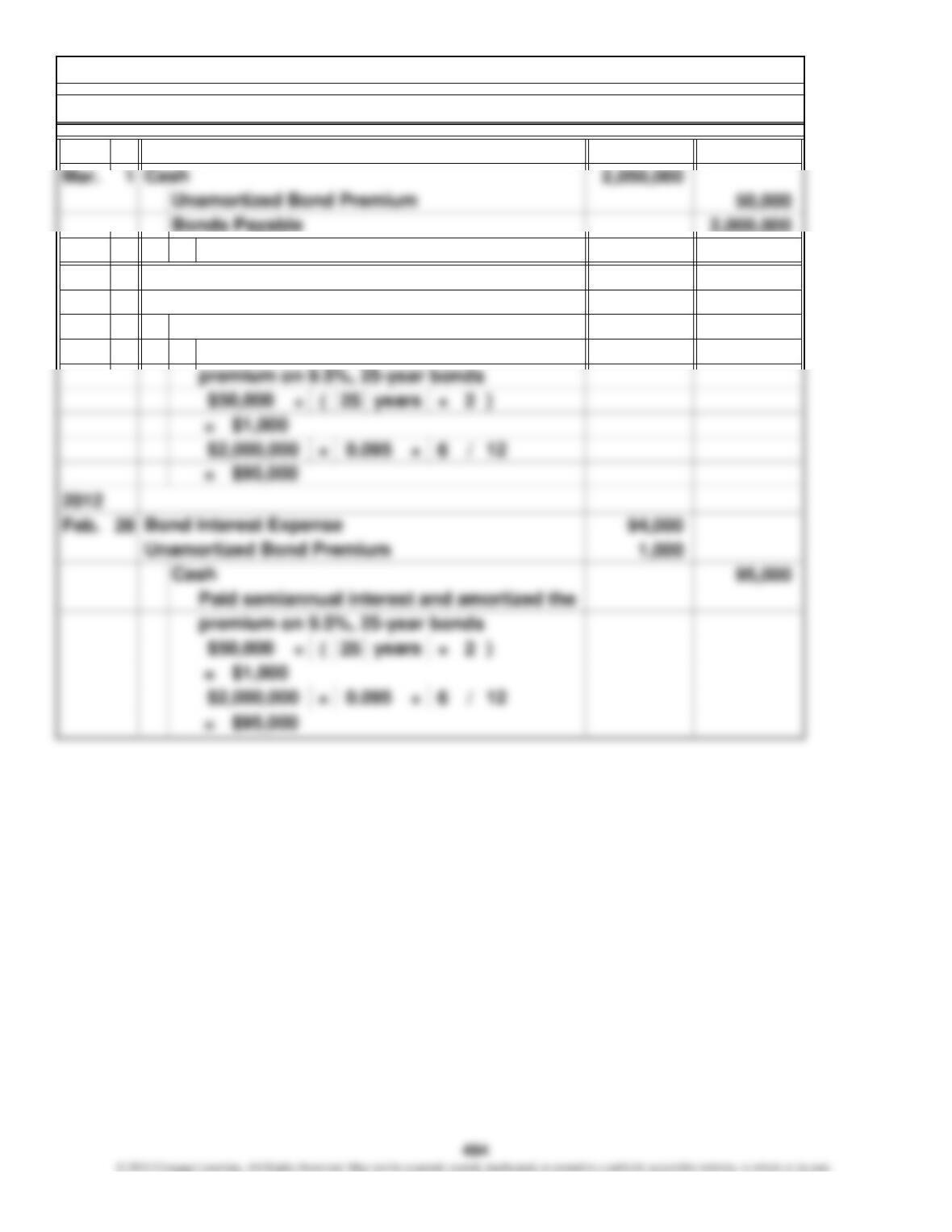
2011
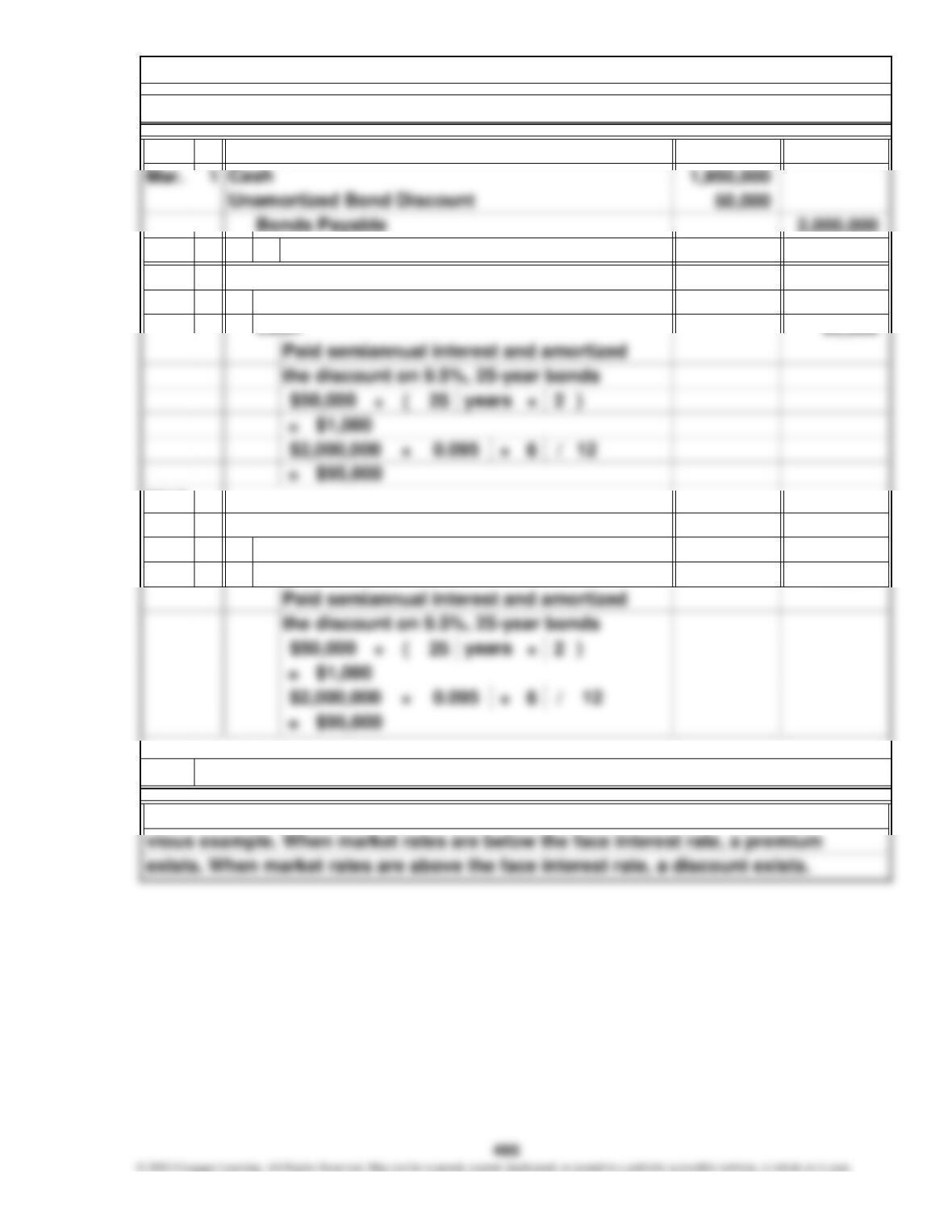
Aug. 31 94,000
1,000
95,000
Sold 9.5%, 25-year bonds at 102.5
Cash
Bond Interest Expense
Unamortized Bond Premium
Paid semiannual interest and amortized the
Chapter 10, P 4.
1. Journal entries prepared for bonds issued at more than face value
2011
Aug. 31 96,000
1,000
2012
Feb. 28 96,000
1,000
95,000
Chapter 10, P 4. (Continued)
Bond Interest Expense
Unamortized Bond Discount
Sold 9.5%, 25-year bonds at 97.5
Bond Interest Expense
Unamortized Bond Discount
Cash
3.
Market interest rates play a role in creating the premium and discount in the pre-
2. Journal entries prepared for bonds issued at less than face value
User Insight: Role of market interest rates
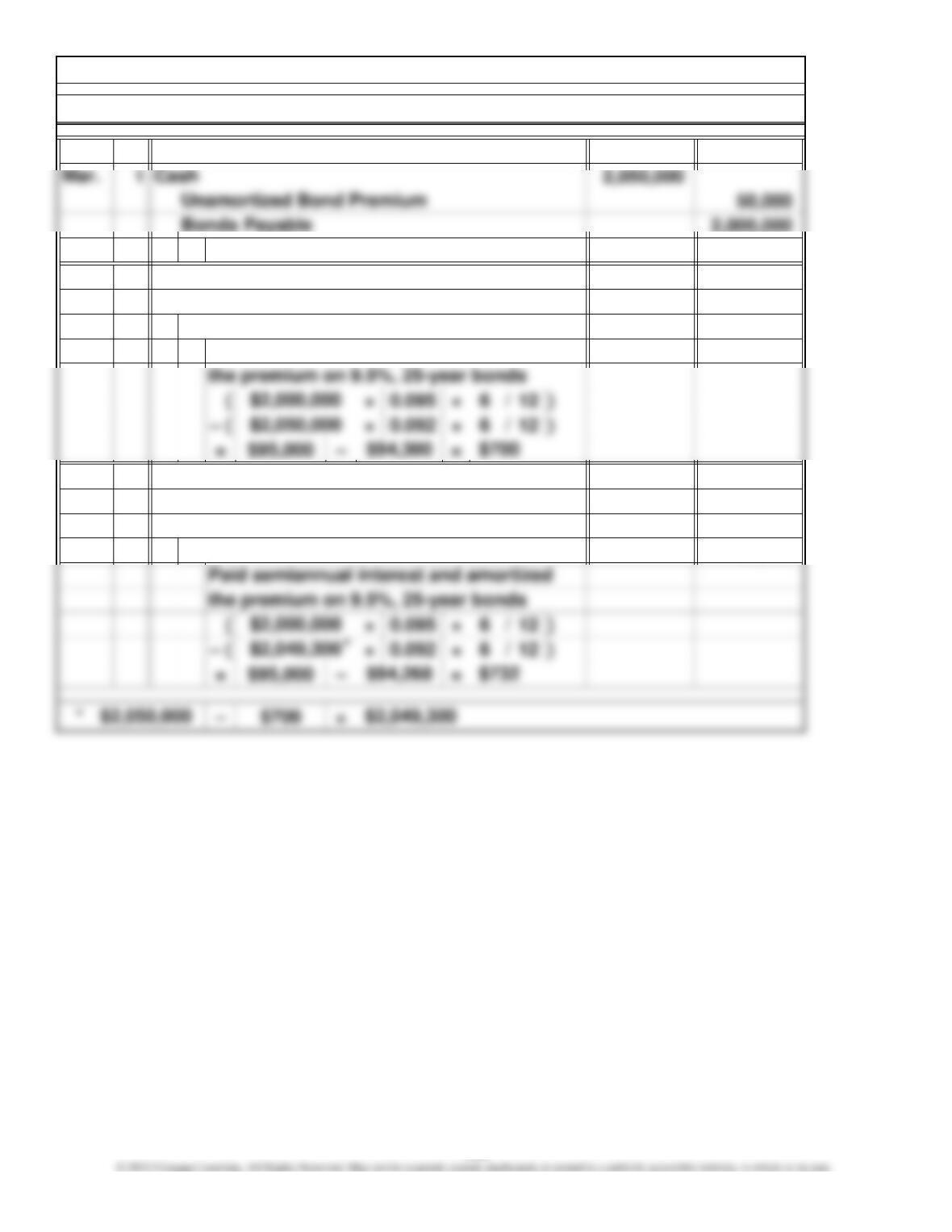
31 94,300
700
95,000
28 94,268
732
95,000
Cash
Feb. Bond Interest Expense
Unamortized Bond Premium
2012
Cash
Paid semiannual interest and amortized
Aug. Bond Interest Expense
Unamortized Bond Premium
Sold 9.5%, 25-year bonds at 102.5
1. Journal entries prepared for bonds issued at more than face value
Chapter 10, P 5.
2011
496
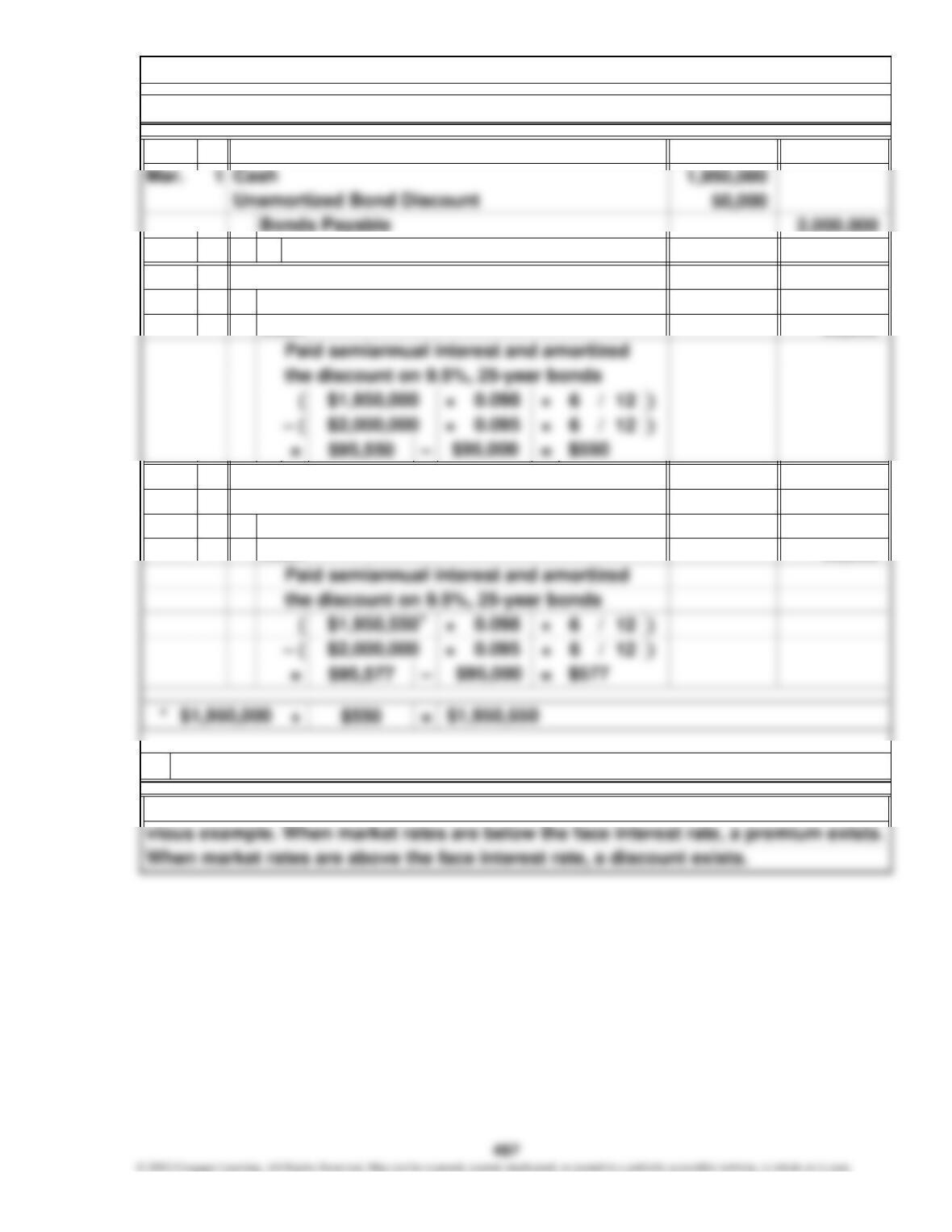
31 95,550
550
95,000
28 95,577
577
95,000
Market interest rates play a role in creating the premium and discount in the pre-
3. User Insight: Role of market interest rates
Cash
Feb. Bond Interest Expense
Unamortized Bond Discount
2012
Cash
Aug. Bond Interest Expense
Unamortized Bond Discount
Sold 9.5%, 25-year bonds at 97.5
2. Journal entries prepared for bonds issued at less than face value
Chapter 10, P 5. (Continued)
2011
a.
×=
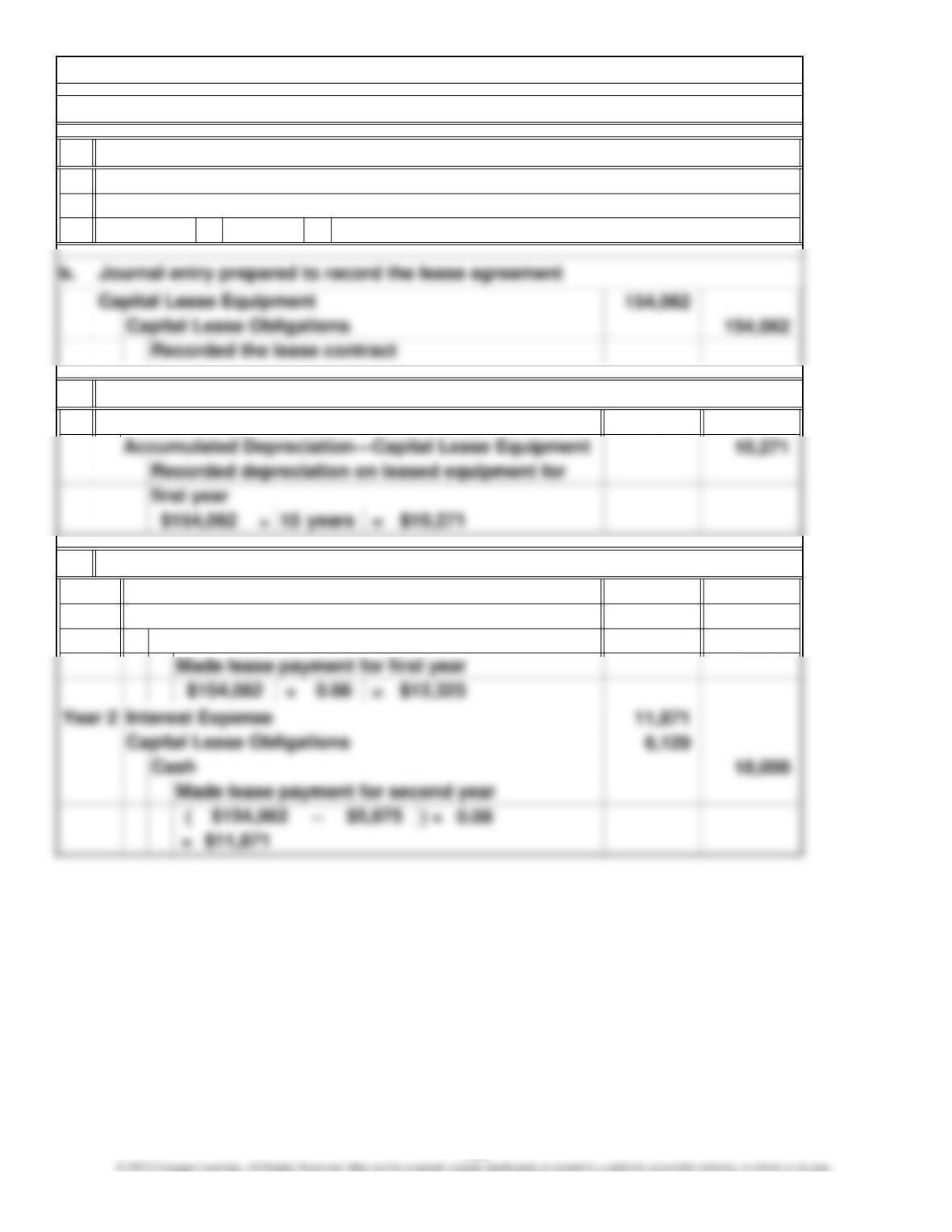
10,271
12,325
5,675
18,000
Y
$154,0628.559
Y
ear 1
Chapter 10, P 6.
Present value calculated
Cash
Capital Lease Obligations
Interest Expense
c. Journal entry prepared to record depreciation for the first year
Depreciation Expense—Capital Lease Equipment
d. Journal entries prepared to record lease payments
Value of Lease
$18,000
1. Lease option examined
Periodic Payment × Factor (Table 2 in Appendix B: 8%, 15 periods) = Present
498
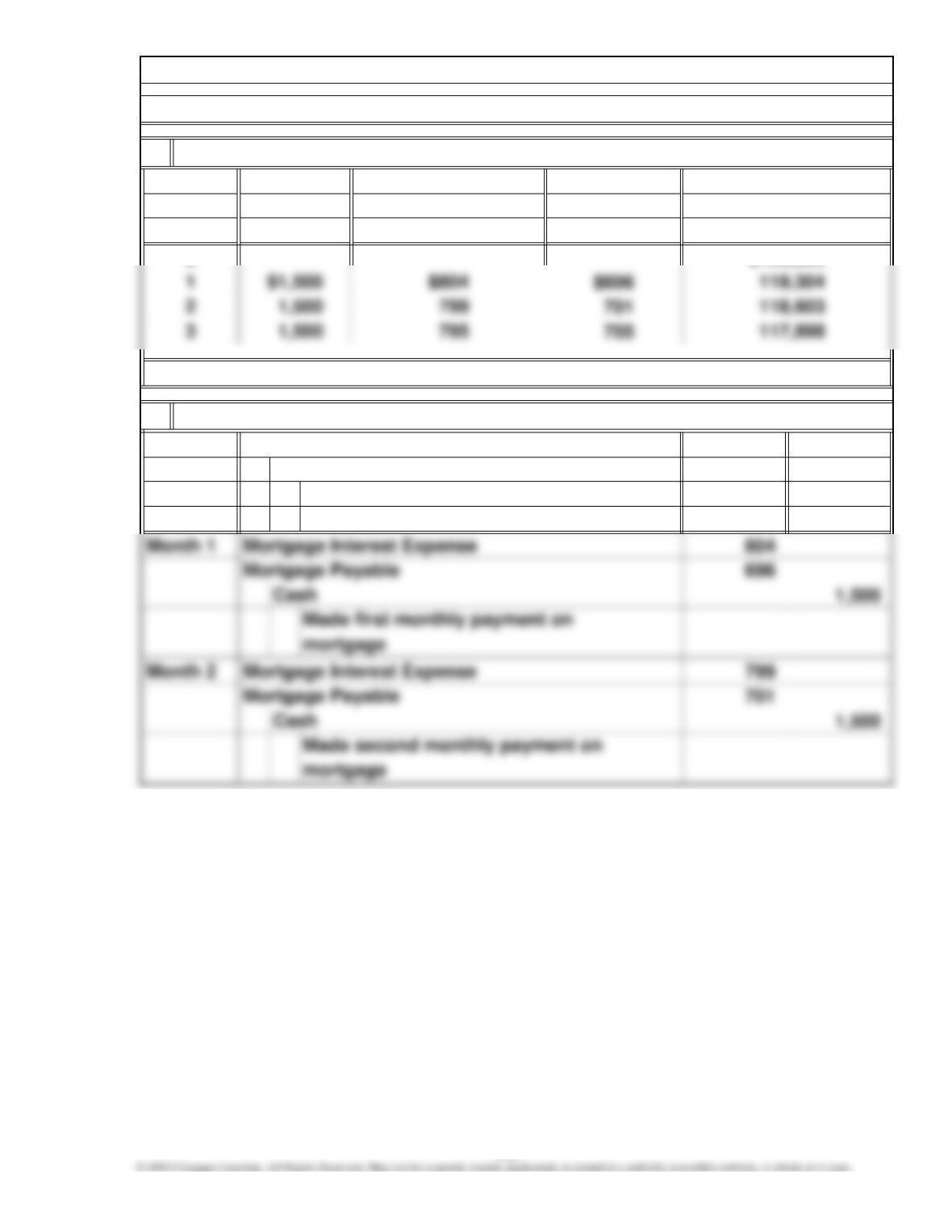
Reduction
in Debt
120,000
120,000
Month at 0.67% on Unpaid Balance
mortgage
Unpaid Balance
Payment
Monthly
Chapter 10, P 6. (Continued)
a. Monthly payment schedule prepared
Interest for 1
*Rounded
Mortgage Payable
Purchased building by signing a
Warehouse Building
0
at End of Period
$120,000
Journal entries prepared
b.
Month
2. Purchase option examined
499
3. Options discussed
Chapter 10, P 6. (Continued)
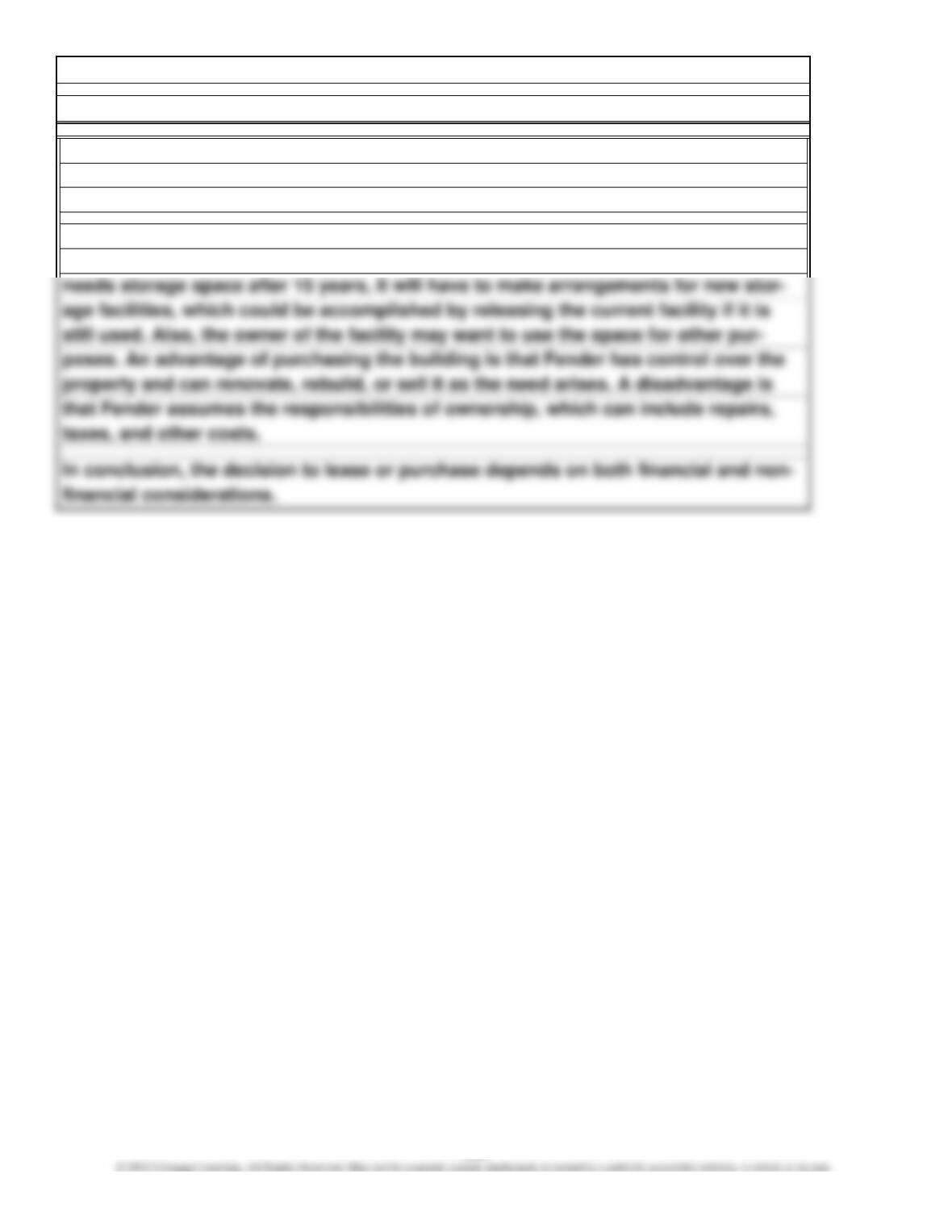
Based on the calculation, it appears that the purchase is best because the cost of
$120,000 is less than the net present value of the lease, which is $154,062. Both op-
tions result in an increase in assets and in liabilities.
An advantage of the lease is that it has a limited term and the company has no more
responsibility after completing the lease. A disadvantage is that if the company still
500
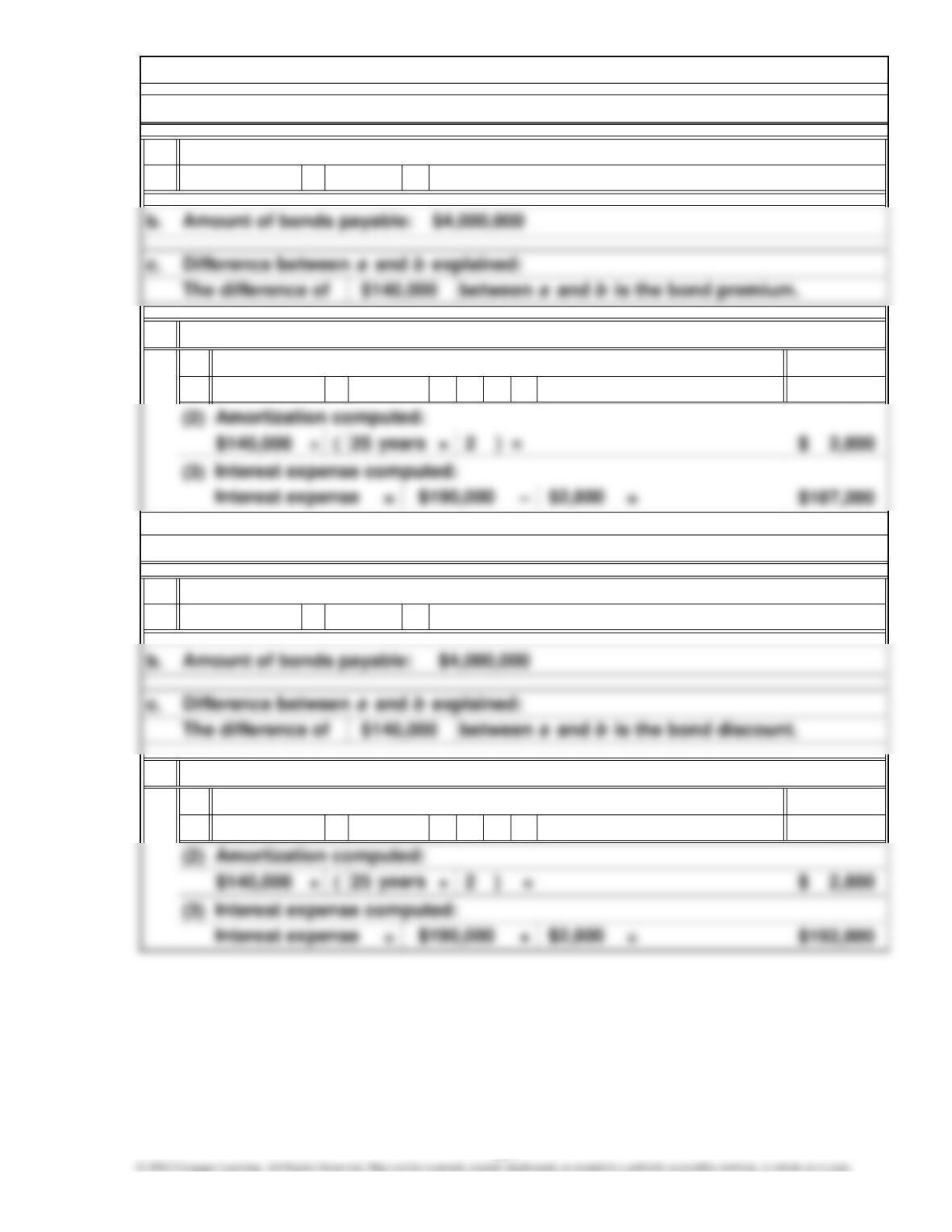
a.
×=
d.
(1)
× × 6 / 12 $190,000
a.
×=
d.
(1)
× × 6 / 12 $190,000
Calculation of cash received:
$4,000,000
$4,000,000 0.095
Cash paid in interest:
Interest components
Calculation of cash received:
Cash paid in interest:
Interest components
1. Bonds issued at 103.5 on May 1, 2011
Chapter 10, P 7.
$4,000,000 1.035
$4,140,000
=0.095
0.965 $3,860,000
2. Bonds issued at 96.5 on May 1, 2011
=
$4,000,000
501
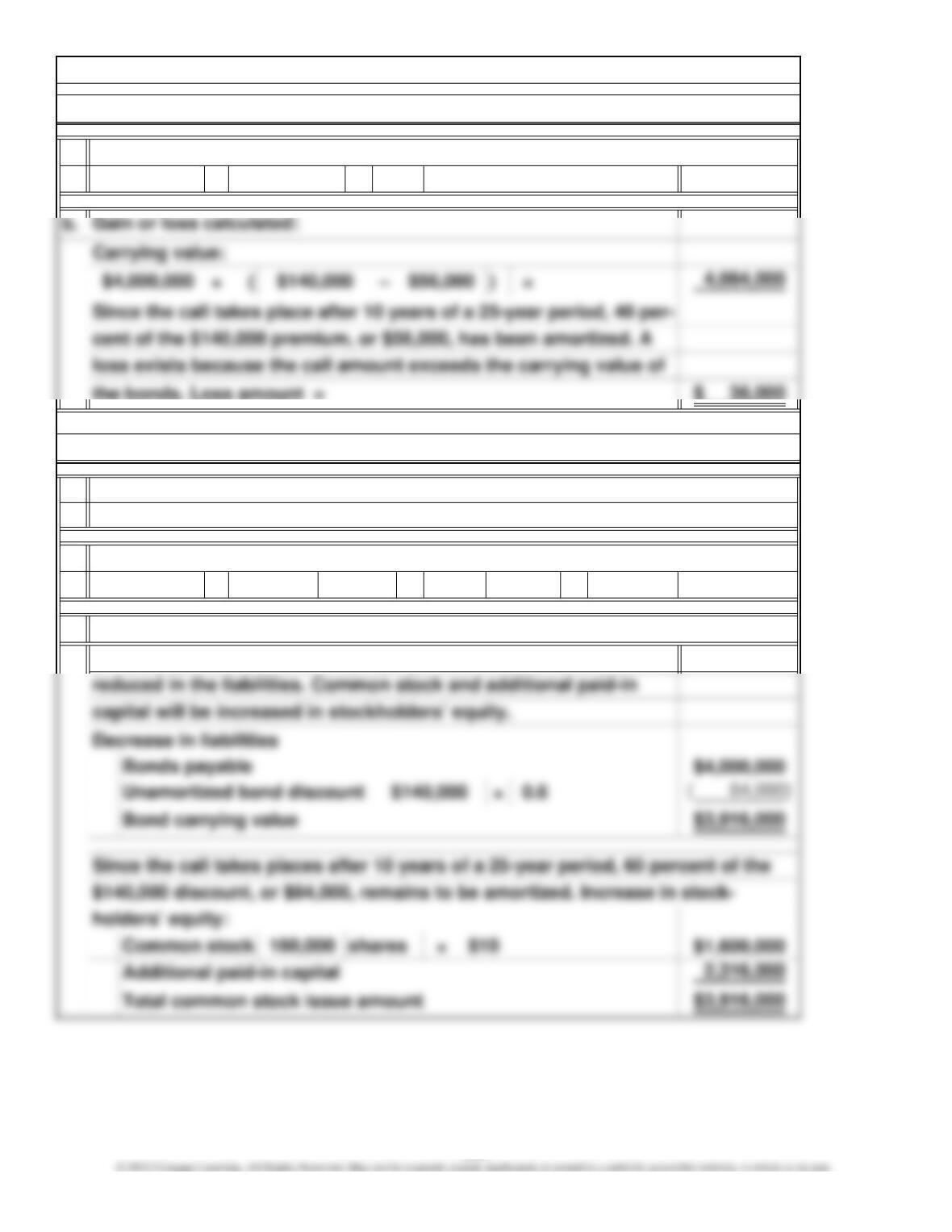
a.
= × $4,120,000
a.
b.
÷ × = 160,000
c.
shares
Numbers of shares of common stock computed:
Bonds payable and its accompanying unamortized discount will be
$4,000,000
Chapter 10, P 7. (Continued)
Call amount
4. Bonds converted to common stock 10 years later
1.03 =
Cash to retire bonds:
3. Bonds called and retired 10 years later
corded at the carrying value of the bonds that are converted.
$4,000,000 $1,000 bonds 40
No gain or loss occurs in a bond conversion because the issued stock is re-
shares
Effects of liabilities and stockholders’ equity shown:
502