Wild & Shaw, Financial and Managerial Accounting 9e Solutions Manual: Chapter 1
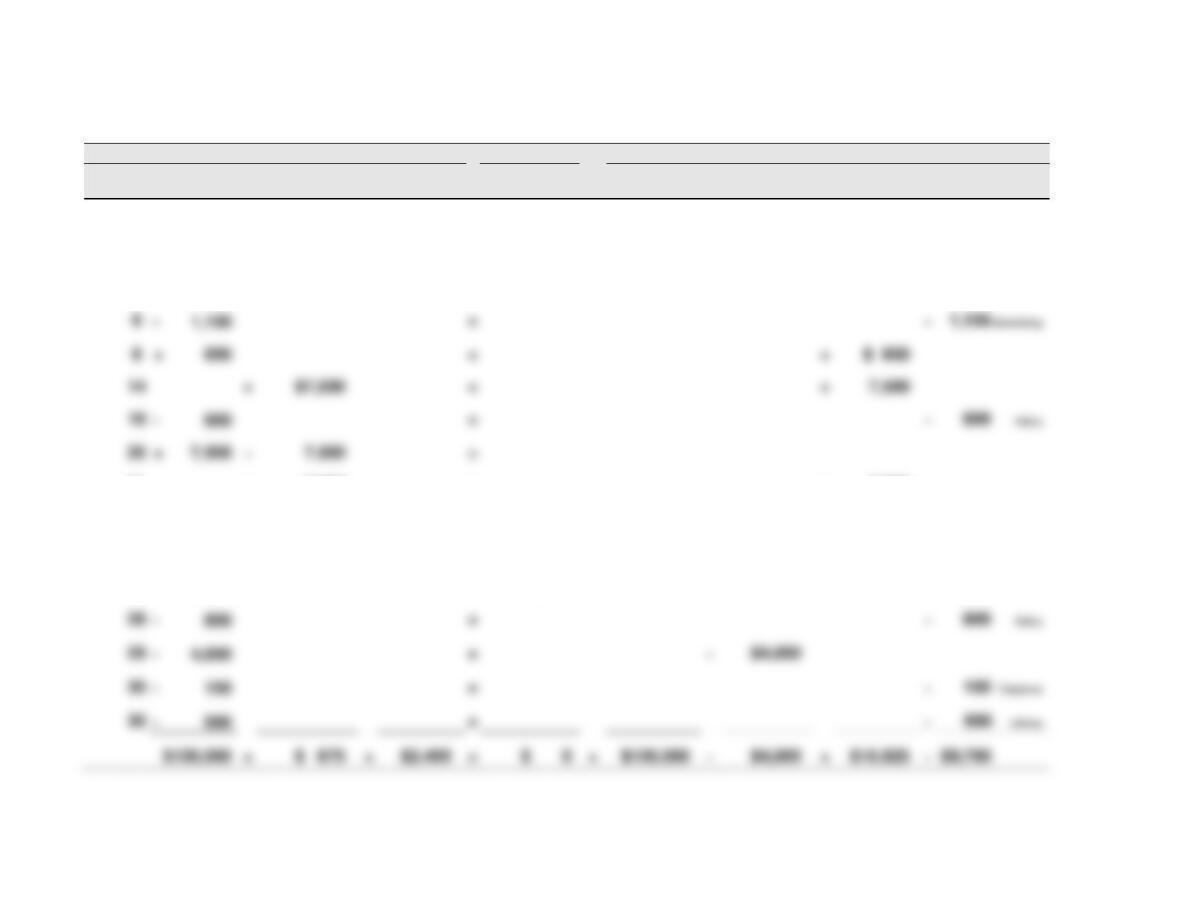
Problem 1-7B (60 minutes) Part 1
Assets
=
Liabilities
+
Equity
Date
Cash
+
Accounts
Receivable
+
Equipment
=
Accounts
Payable
+
Common
Stock
–
Dividends
+
Revenues
–
Expenses
June
1
+$130,000
=
+
$130,000
2
– 6,000
=
–
$6,000 Rent
4
+
$2,400
=
+ $2,400
6
– 1,150
=
–
8
+ 850
=
+
+
=
+
16
– 800
=
–
20
+ 7,500
–
7,500
=
21
+
7,900
=
+
7,900
24
+
675
=
+
675
25
+ 7,900
–
7,900
=
26
– 2,400
=
– 2,400
28
– 800
=
–
29
– 4,000
=
30
– 150
=
–
30
– 890
=
–
Wild & Shaw, Financial and Managerial Accounting 9e Solutions Manual: Chapter 1
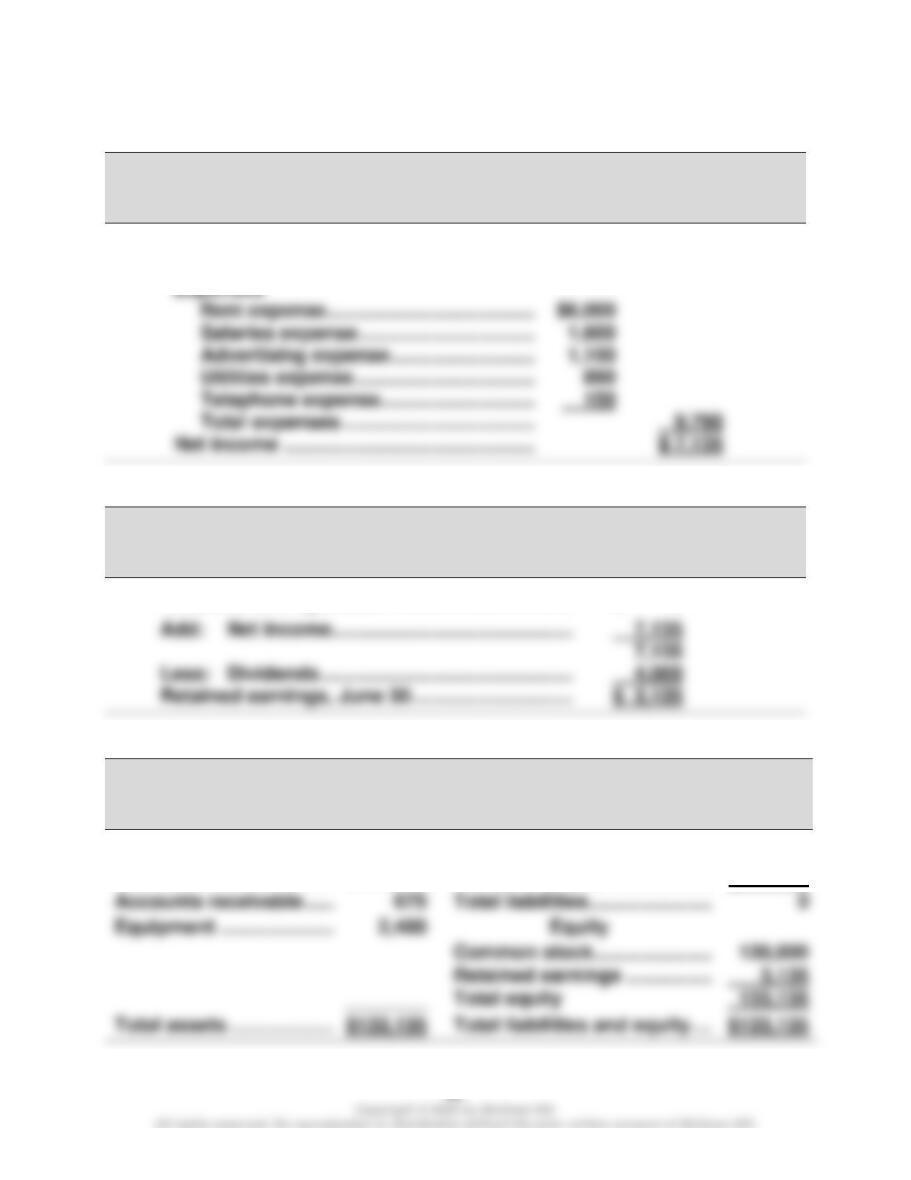
Problem 1-7B (Continued)
Part 2
Niko’s Maintenance Co.
Income Statement
For Month Ended June 30
Revenues
Maintenance services revenue ………. $16,925
Niko’s Maintenance Co.
Statement of Retained Earnings
For Month Ended June 30
Retained earnings, June 1 ………………………….. $ 0
Niko’s Maintenance Co.
Balance Sheet
June 30
Assets
Liabilities
Cash …………………………..
$130,060
Accounts payable ……………..
$ 0
Common stock ………………….
Wild & Shaw, Financial and Managerial Accounting 9e Solutions Manual: Chapter 1
Problem 1-7B (Concluded)
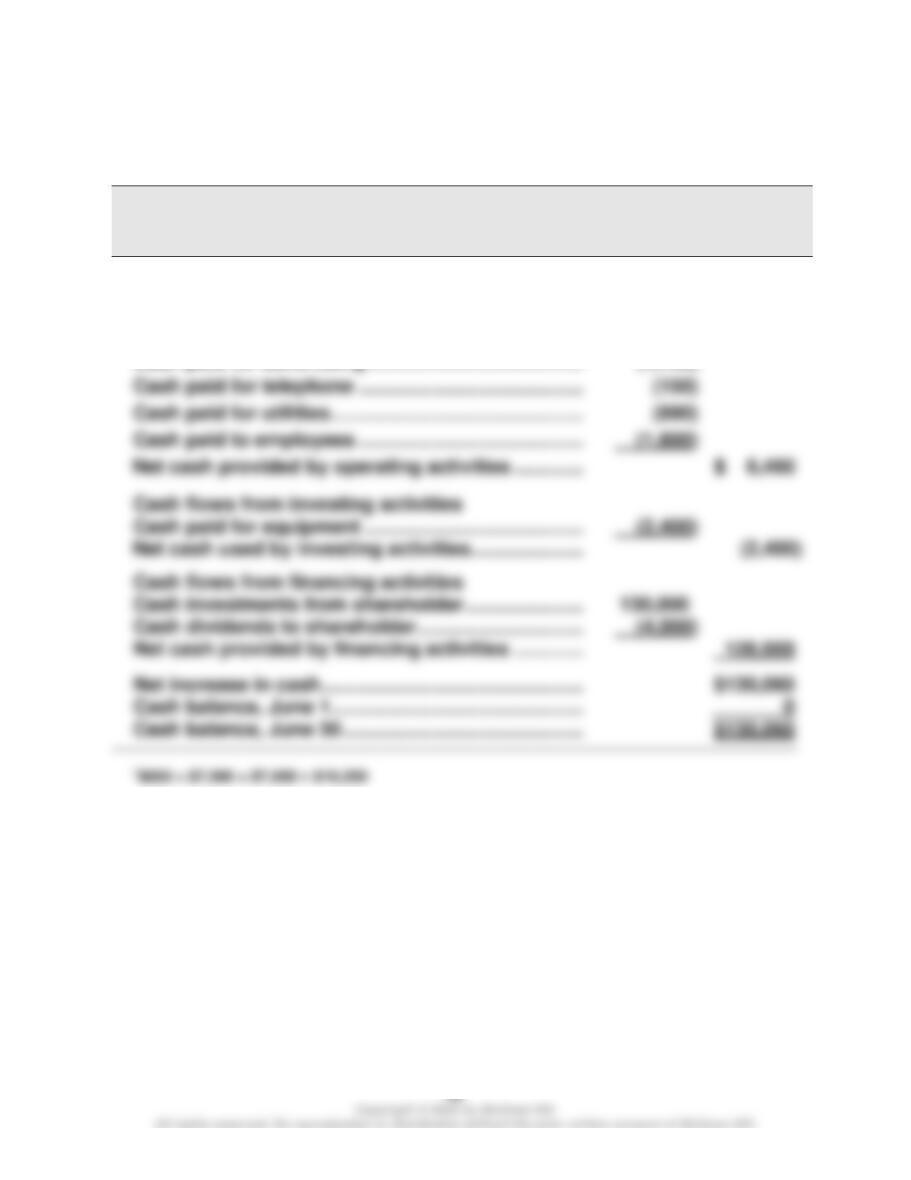
Part 3
Niko’s Maintenance Co.
Statement of Cash Flows
For Month Ended June 30
Cash flows from operating activities
Cash received from customers1 ………………………..
$ 16,250
Cash paid for rent ……………………………………………..
(6,000)
Cash paid for advertising ………………………………….
(1,150)
Cash paid for telephone ……………………………………
Cash paid for utilities ………………………………………..
Cash paid to employees ……………………………………
Net cash provided by operating activities ………….
Net cash provided by financing activities ………….
Wild & Shaw, Financial and Managerial Accounting 9e Solutions Manual: Chapter 1
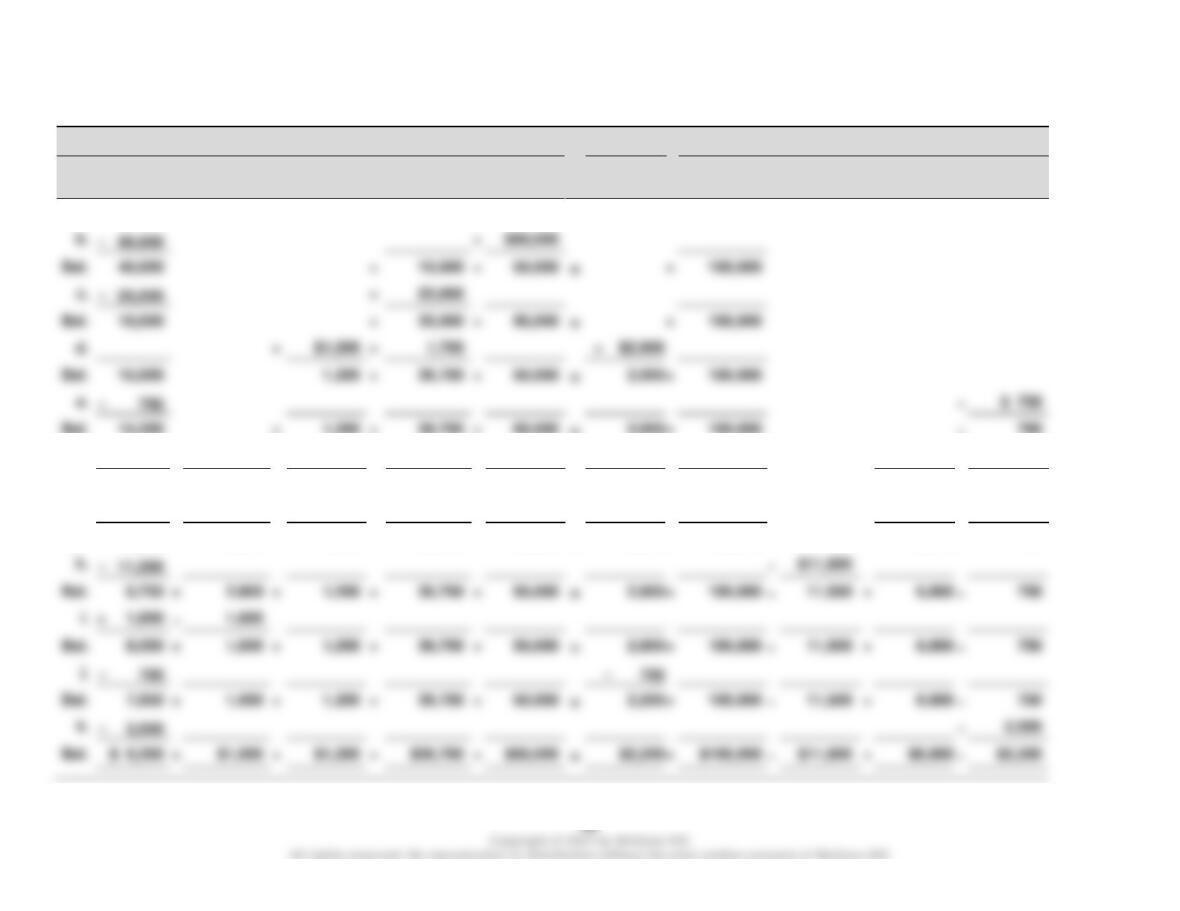
Problem 1-8B (60 minutes) Part 1
Assets
=
Liabilities
+
Equity
Cash
+
Accounts
Receivable
+
Supplies
+
Equipment
+
Building
=
Accounts
Payable
+
Common
Stock
–
Dividends
+
Revenues
–
Expenses
a.
+ $90,000
+
$10,000
+
$100,000
+
Bal.
+
10,000
+
=
+
+
25,000
Bal.
+
35,000
+
=
+
d.
+
+
1,700
Bal.
15,000
1,200
+
36,700
+
50,000
=
2,900
+
100,000
e.
$ 750
Bal.
14,250
+
1,200
+
36,700
+
50,000
=
2,900
+
100,000
–
750
f.
+
$2,800
+
$2,800
Bal.
14,250
+
2,800
+
1,200
+
36,700
+
50,000
=
2,900
+
100,000
+
2,800
–
750
g.
+ 4,000
+
4,000
Bal.
18,250
+
2,800
+
1,200
+
36,700
+
50,000
=
2,900
+
100,000
+
6,800
–
750
h.
Bal.
+
+
+
36,700
+
2,900
+
+
6,800
+ 1,800
–
1,800
Bal.
+
+
+
36,700
+
2,900
+
+
6,800
Bal.
+
+
+
36,700
+
2,200
+
+
6,800
–
2,500

Wild & Shaw, Financial and Managerial Accounting 9e Solutions Manual: Chapter 1
Problem 1-8B (Concluded)
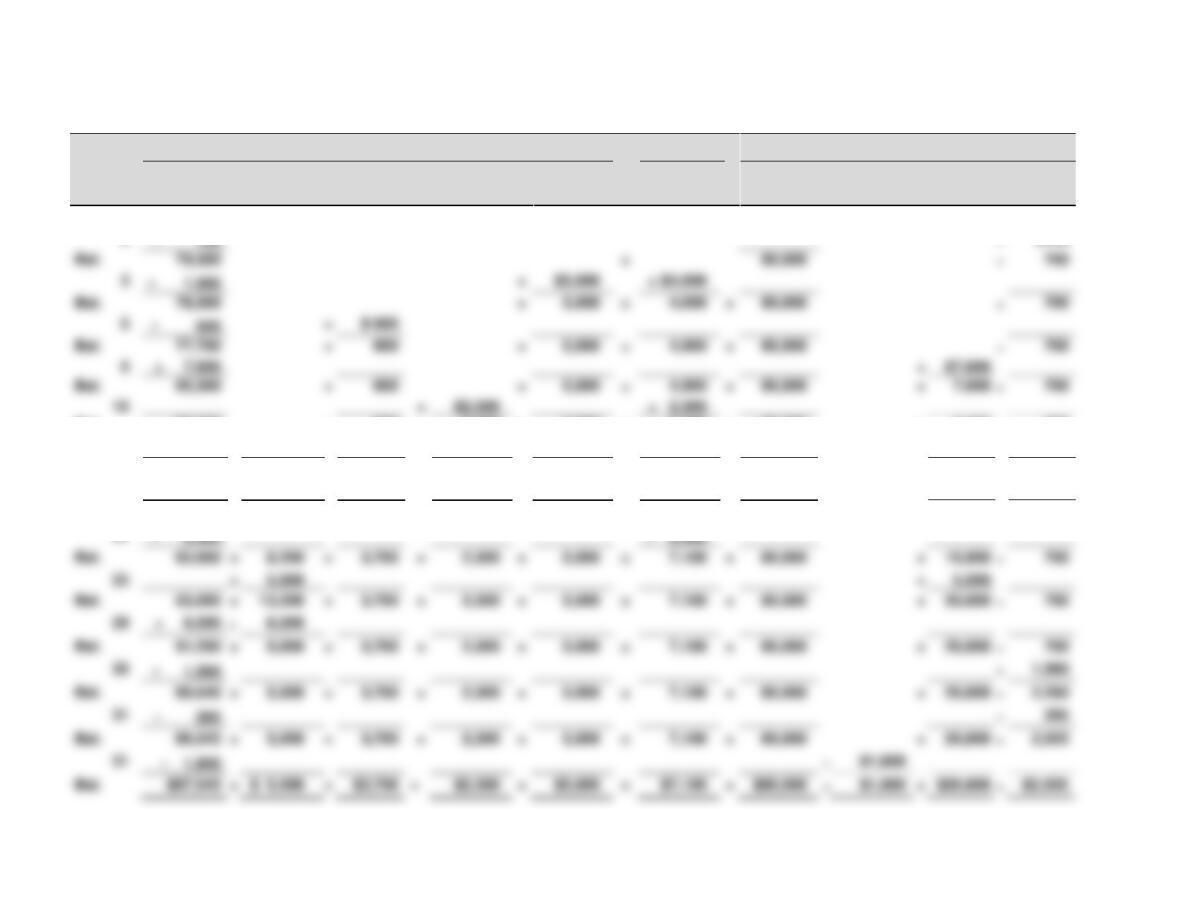
Part 2
Wild & Shaw, Financial and Managerial Accounting 9e Solutions Manual: Chapter 1
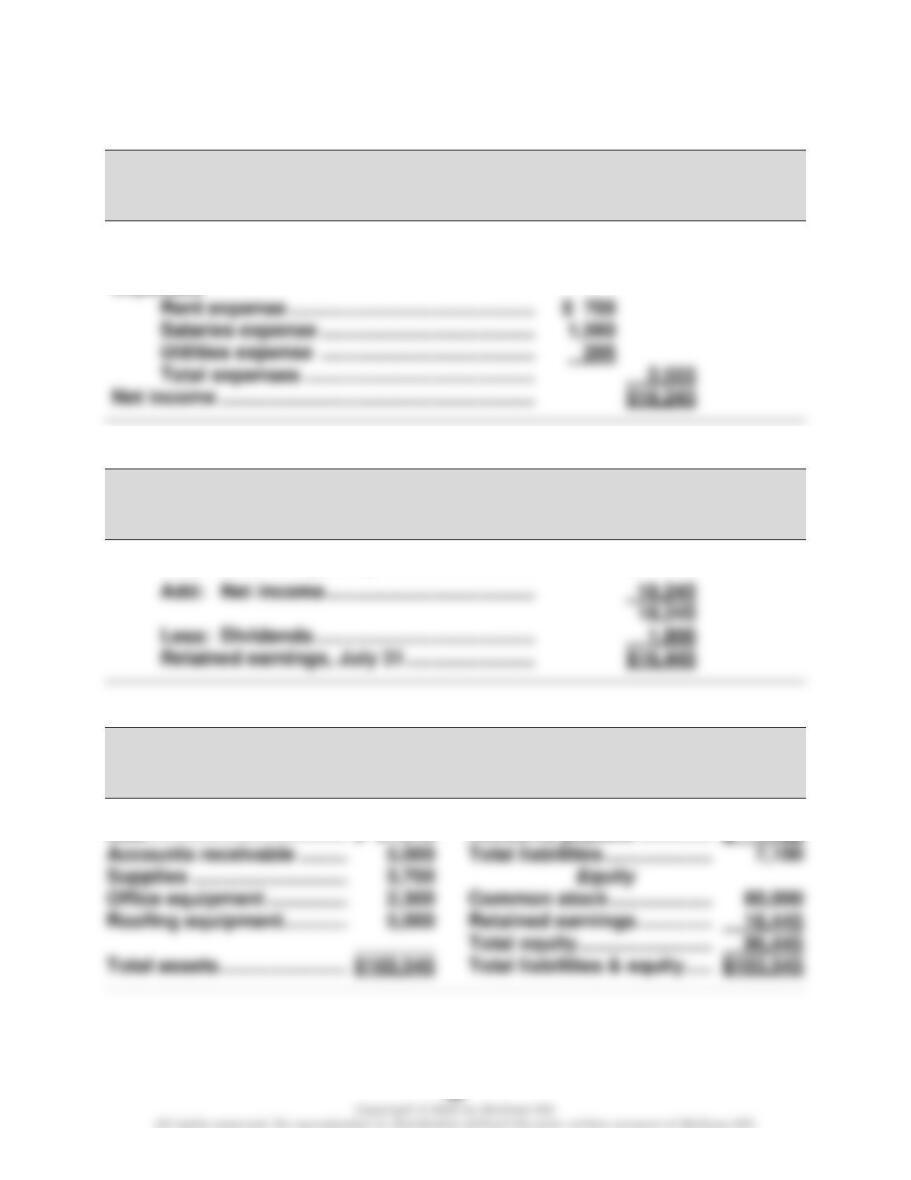
Problem 1-9B (60 minutes) Part 1
Assets
=
Liabilities
+
Equity
Date
Cash
+
Accounts
Receivable
+
Supplies
+
Office
Equipment
+
Roofing
Equipment
=
Accounts
Payable
+
Common
Stock
–
Dividends
+
Revenues
–
Expenses
July
1
+ $80,000
=
+
$80,000
2
–
–
Bal.
78,300
+
=
4,000
+
80,000
–
700
–
+
–
10
+ 2,300
$700
Bal.
85,300
+
600
+
2,300
+
5,000
=
6,300
+
80,000
+
7,600
–
700
15
+
$8,200
+
8,200
Bal.
85,300
+
8,200
+
600
+
2,300
+
5,000
=
6,300
+
80,000
+
15,800
–
700
17
+
3,100
+ 3,100
Bal.
85,300
+
8,200
+
3,700
+
2,300
+
5,000
=
9,400
+
80,000
+
15,800
–
700
23
Bal.
83,000
+
8,200
+
3,700
+
2,300
+
5,000
=
7,100
+
80,000
+
15,800
–
700
25
+
5,000
+
5,000
Bal.
83,000
+
+
3,700
+
2,300
+
5,000
=
7,100
+
80,000
+
20,800
–
700
28
+ 8,200
8,200
Bal.
91,200
+
5,000
+
3,700
+
2,300
+
5,000
=
7,100
+
80,000
+
20,800
–
700
30
–
1,560
Bal.
89,640
+
5,000
+
3,700
+
2,300
+
5,000
=
7,100
+
80,000
+
20,800
–
2,260
31
–
295
Bal.
89,345
+
5,000
+
3,700
+
2,300
+
5,000
=
7,100
+
80,000
+
20,800
–
2,555
31
Bal.
$87,545
+
$ 5,000
+
+
$2,300
+
$5,000
=
$7,100
+
$80,000
+
$20,800
–
$2,555
Wild & Shaw, Financial and Managerial Accounting 9e Solutions Manual: Chapter 1
Problem 1-9B (Continued)
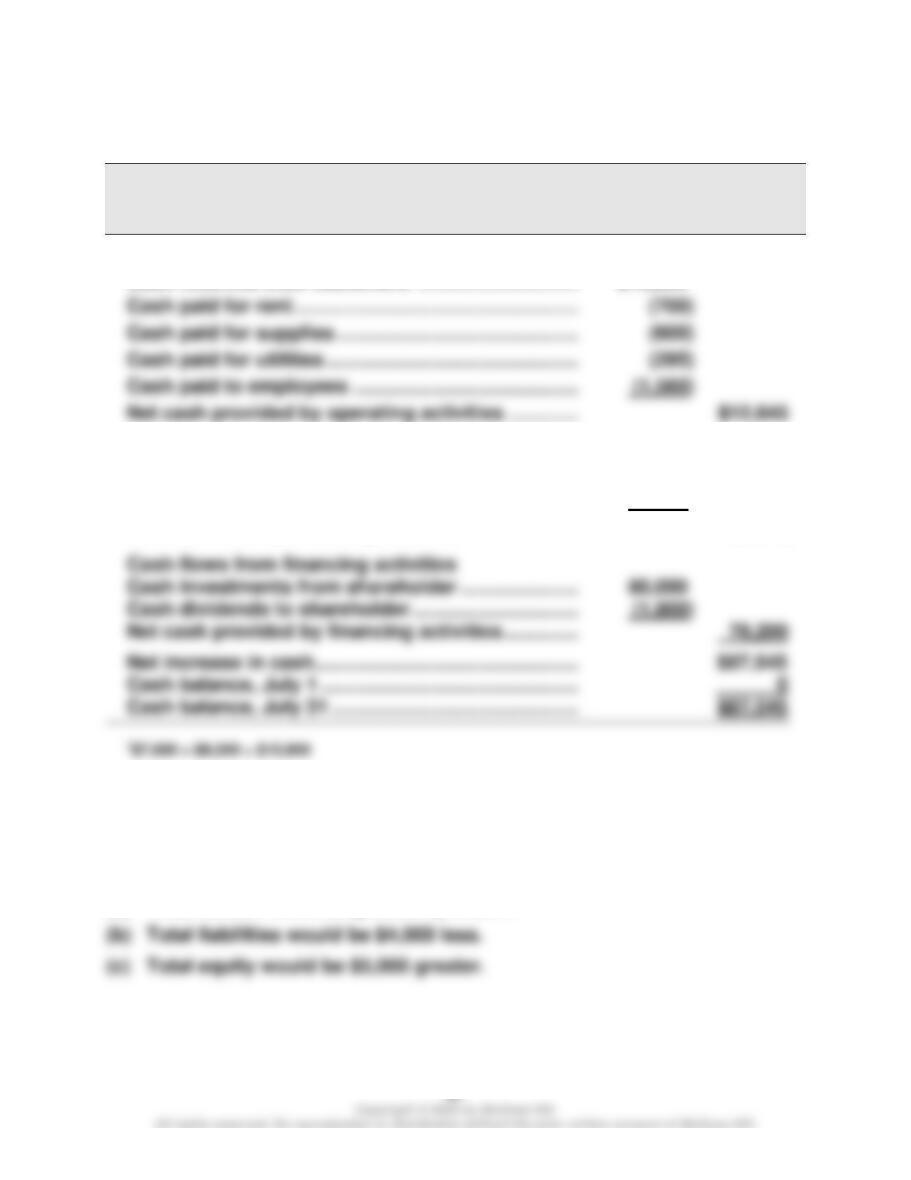
Part 2
Rivera Roofing Company
Income Statement
For Month Ended July 31
Revenues
Roofing services revenue ……………………. $20,800
Expenses
Rivera Roofing Company
Statement of Retained Earnings
For Month Ended July 31
Retained earnings, July 1 …………………….. $ 0
Rivera Roofing Company
Balance Sheet
July 31
Assets Liabilities
Cash ……………………………… $ 87,545 Accounts payable ………….. $ 7,100
Wild & Shaw, Financial and Managerial Accounting 9e Solutions Manual: Chapter 1
Problem 1-9B (Concluded)
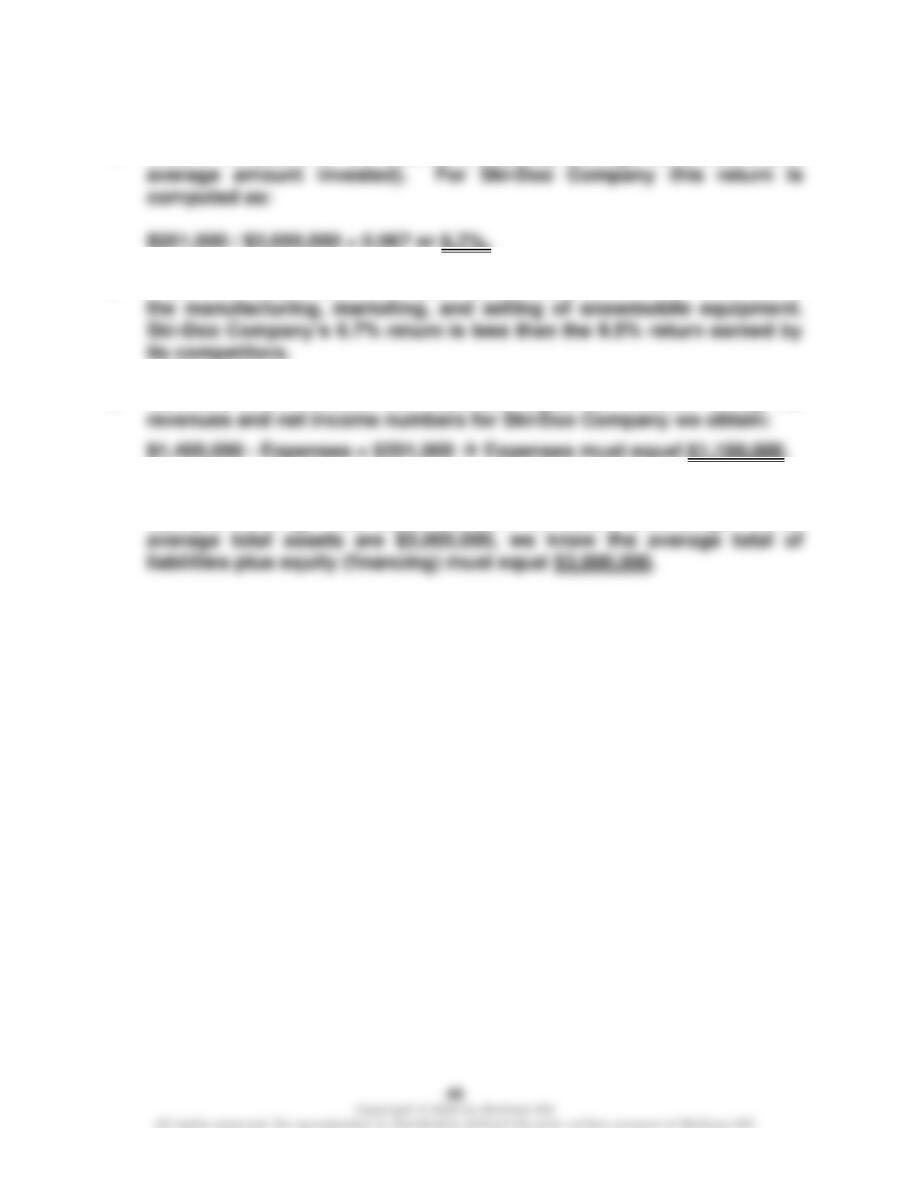
Part 3
Rivera Roofing Company
Statement of Cash Flows
For Month Ended July 31
Cash flows from operating activities
Cash received from customers1 …………………………
$15,800
Cash paid for rent ……………………………………………..
Cash paid for supplies ………………………………………
Cash paid for utilities ………………………………………..
Cash paid to employees ……………………………………
Net cash provided by operating activities ………….
Cash flows from investing activities
Cash paid for roofing equipment ……………………….
(1,000)
Cash paid for office equipment ………………………….
(2,300)
Net cash used by investing activities …………………
(3,300)
Cash flows from financing activities
Cash investments from shareholder ………………….
Cash dividends to shareholder ………………………….
Net increase in cash ………………………………………….
Cash balance, July 31 ……………………………………….
$87,545
Part 4
If the $5,000 purchase on July 3 had been acquired through an additional
owner investment of cash, then:
(a) Total assets would be greater by $1,000.
Wild & Shaw, Financial and Managerial Accounting 9e Solutions Manual: Chapter 1
Problem 1-10B (15 minutes)
1. Return on assets is net income divided by average total assets (the
2. Return on assets does not seem satisfactory for the risk involved in
3. We know that revenues less expenses equal net income. Taking the
4. We know from the accounting equation that the total of liabilities plus
equity (financing) must equal the total for assets (investing). Since
Wild & Shaw, Financial and Managerial Accounting 9e Solutions Manual: Chapter 1
Problem 1-11B (15 minutes)
1. Return on assets equals net income divided by average total assets.
2. On strictly the amount of sales to consumers, AT&T’s sales of
$126,723 are greater than Verizon’s sales of $110,875.
3. Success in returning net income from the amount invested is revealed
4. The reported figures suggest Verizon is more successful in generating
income based on assets. Based on this information alone, we would be
better advised to invest in Verizon than AT&T.
Nevertheless, we would look for additional information in financial
statements and other sources for further guidance. For example, if

Wild & Shaw, Financial and Managerial Accounting 9e Solutions Manual: Chapter 1
Serial Problem — SP 1 (30 minutes) Business Solutions
Assets
=
Liabilities
+
Equity
Date
Cash
+
Accounts
Receivable
+
Computer
Supplies
+
Computer
System
+
Office
Equipment
=
Accounts
Payable
+
Common
Stock
–
Dividends
+
Revenues
–
Expenses
Oct.
1
+$45,000
$20,000
+
$8,000
+
$73,000
3
+
$1,420
+ $1,420
6
+
+
$ 4,800
Bal.
+
4,800
+
1,420
+
20,000
+
8,000
=
1,420
+
73,000
+
Bal.
43,580
+
4,800
+
1,420
+
20,000
+
8,000
=
0
+
73,000
+
12
+
1,400
+
1,400
Bal.
+
6,200
+
1,420
+
20,000
+
8,000
=
+
73,000
+
6,200
15
+ 4,800
–
4,800
Bal.
48,380
+
1,400
+
1,420
+
20,000
+
8,000
=
0
+
73,000
+
6,200
17
– 805
–
$ 805
Bal.
47,575
+
1,400
+
1,420
+
20,000
+
8,000
=
0
+
73,000
+
6,200
–
805
20
– 1,728
–
1,728
Bal.
45,847
+
1,400
+
1,420
+
20,000
+
8,000
=
0
+
73,000
+
6,200
–
2,533
1,400
Bal.
47,247
+
+
1,420
+
20,000
+
8,000
=
0
+
73,000
+
6,200
–
2,533
28
+
5,208
+
5,208
Bal.
47,247
+
5,208
+
1,420
+
20,000
+
8,000
=
0
+
73,000
+
–
2,533
31
–
Bal.
46,372
+
5,208
+
1,420
+
20,000
+
8,000
=
0
+
73,000
+
–
3,408
31
– 3,600
–
$3,600
Wild & Shaw, Financial and Managerial Accounting 9e Solutions Manual: Chapter 1
Company Analysis — AA 1-1
$ millions
1. $338,516 ($ millions)
2. 15.7%
Explanation: Return on assets is net income divided by the average total
assets invested. For Apple this return is:
$55,256 / [($338,516 + $365,725)/2] = 0.157 or 15.7%.
Wild & Shaw, Financial and Managerial Accounting 9e Solutions Manual: Chapter 1
Comparative Analysis — AA 1-2
$ millions
Apple
Google
1. Total Assets =
Liabilities + Equity
$338,516
$275,909
4. (a) Better
Explanation: Apple’s return is good given the moderate risk Apple
confronts and vis-à-vis the 10% return of its competitors.
5. Apple
Wild & Shaw, Financial and Managerial Accounting 9e Solutions Manual: Chapter 1
Extended Analysis — AA 1-3 (20 minutes)
1. (a) 6.3%
Explanation: Return on assets is net income divided by the average total
2. Unfavorable
Explanation: Samsung’s return on assets decreased in the current year
versus the prior year.
3. (a) Worse
Explanation: Samsung’s return on assets of is worse than Apple’s
return on assets. Apple’s return on assets is computed: $ 55,256 / $
Wild & Shaw, Financial and Managerial Accounting 9e Solutions Manual: Chapter 1
DISCUSSION QUESTIONS
1. The purpose of accounting is to provide decision makers with relevant and reliable
2. Technology reduces the time, effort, and cost of recordkeeping. There is still a
demand for people who can design accounting systems, supervise their operation,
3. External users and their uses of accounting information include: (a) lenders, to
measure the risk and return of loans; (b) shareholders, to assess whether to buy,
4. Business owners and managers use accounting information to help answer
questions such as: What resources does an organization own? What debts are
owed? How much income is earned? Are expenses reasonable for the level of
sales? Are customers’ accounts being promptly collected?
5. Service businesses include: Standard and Poor’s, Dun & Bradstreet, Merrill Lynch,
6. The internal role of accounting is to serve the organization’s internal operating
7. Accounting professionals offer many services including auditing, management
advice, tax planning, business valuation, and money management.
8. Marketing managers are likely interested in information such as sales volume,
advertising costs, promotion costs, salaries of sales personnel, and sales
commissions.
This will help prevent others from doubting the quality of the auditor’s report.
Wild & Shaw, Financial and Managerial Accounting 9e Solutions Manual: Chapter 1
12. In addition to preparing tax returns, tax accountants help companies and individuals
plan future transactions to minimize the amount of tax to be paid. They are also
13. The objectivity concept means that financial statement information is supported by
independent, unbiased evidence other than someone’s opinion or imagination.
15. The revenue recognition principle provides guidance for managers and auditors so
they know when to recognize revenue. If revenue is recognized too early, the
16. Business organizations can be organized as a sole proprietorship, partnership,
corporation, or LLC. These forms have implications for legal entity and liability,
business life, taxation, and number of owners as follows.
Proprietorship
Partnership
Corporation
LLC
Business entity
yes
yes
yes
yes
Business Taxed
yes
17. (a) Assets are resources owned or controlled by a company that are expected to
yield future benefits. (b) Liabilities are creditors’ claims on assets that reflect
18. Equity is increased by investments (stock issuances) from the owner and by net
income (which is the excess of revenues over expenses). It is decreased by
dividends and by a net loss (which is the excess of expenses over revenues).
19. Accounting principles consist of (a) general and (b) specific principles. General
principles are the basic assumptions, concepts, and guidelines for preparing
financial statements. They stem from long-used accounting practices. Specific
Wild & Shaw, Financial and Managerial Accounting 9e Solutions Manual: Chapter 1
20. Revenue (or sales) is the amount received from selling products and services.
21. Net income (also called income, profit, or earnings) equals revenues minus
22. The four basic financial statements are: income statement, statement of retained
earnings, balance sheet, and statement of cash flows.
23. An income statement reports a company’s revenues and expenses along with the
resulting net income or loss over a period of time.
24. Rent expense, utilities expense, administrative expenses, advertising and promotion
25. The statement of retained earnings explains the changes in retained earnings from
net income or loss, and from any owner contributions (stock issuances) and
dividends over a period of time.
28. Return on assets, also called return on investment, is a profitability measure that is
useful in evaluating management, analyzing and forecasting profits, and planning
activities. It is computed as net income divided by the average total assets. For
Wild & Shaw, Financial and Managerial Accounting 9e Solutions Manual: Chapter 1
Ethics Challenge — BTN 1-1
1. There are several parties affected. They include the users of financial
2. A major factor in the value of an auditor’s report is the auditor’s
independence. If an auditor accepted a fee that increases when the client’s
3. Thorne should not accept this fee arrangement. To avoid compromising
the auditor’s independence, Thorne should reject it. (Further, the AICPA
4. Ethical considerations guiding this decision include the potential harm to
Communicating in Practice — BTN 1-2
1. Deciding whether Apple is a good loan risk can be difficult because the
planned expansion is risky if customer demand does not meet
expectations. As a loan officer in this situation you would want information
2. How the company is organized is important to a loan officer. If it is a
standard partnership (which it was, and not a LLC), the personal assets of
the owners are available to repay the loan. In this case, a loan officer will
want information about the owners’ financial condition. If it is a
Wild & Shaw, Financial and Managerial Accounting 9e Solutions Manual: Chapter 1
Teamwork in Action — BTN 1-3
Suggestions for forming support/learning teams are in the Instructor’s
Entrepreneurial Decision — BTN 1-4
1. (a) AccountApp’s total amount of liabilities and equity consists of the
bank loan and the owner investments. Specifically:
2. Return on assets = $80,250 / $750,000 = 0.107 = 10.7%