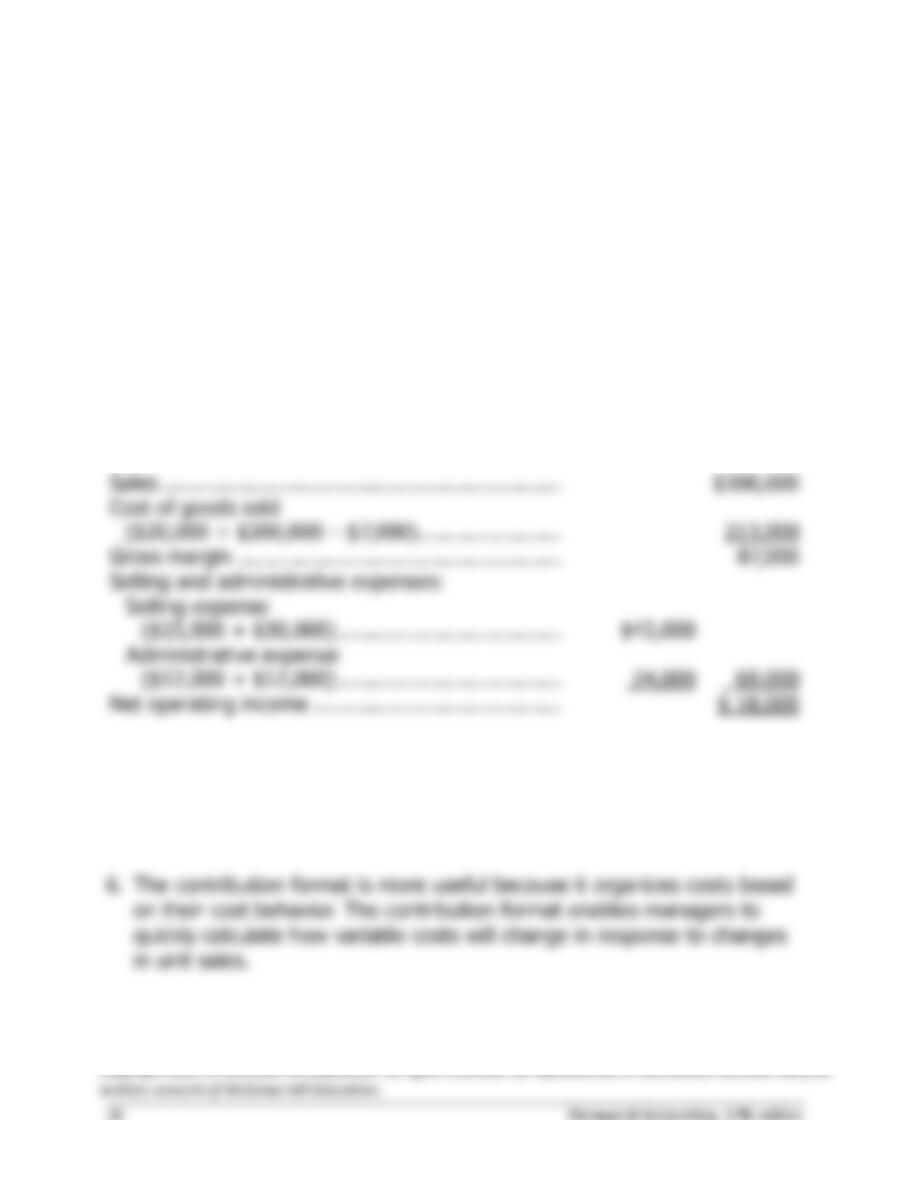
Problem 1-19 (continued)
The fixed selling expense shown above ($30,000) is computed as follows:
Contribution margin (a) ………………………
$60,000
Net operating income (b) …………………….
$18,000
Total fixed costs (a) ‒ (b) …………………….
$42,000
Total fixed costs (a) …………………………...
$42,000
Fixed administrative expense (b) …………..
$12,000
Fixed selling expense (a) ‒ (b) ……………..
$30,000
2. Traditional income statement
Todrick Company
Traditional Income Statement
Sales ……………………………………………………….
Gross margin …………………………………………….
Selling and administrative expenses:
Net operating income …………………………..……..
3. The selling price per unit is $300,000 ÷ 1,000 units sold = $300.
4. The variable cost per unit is $240,000 ÷ 1,000 units sold = $240.
5. The contribution margin per unit is $300 ‒ $240 = $60.
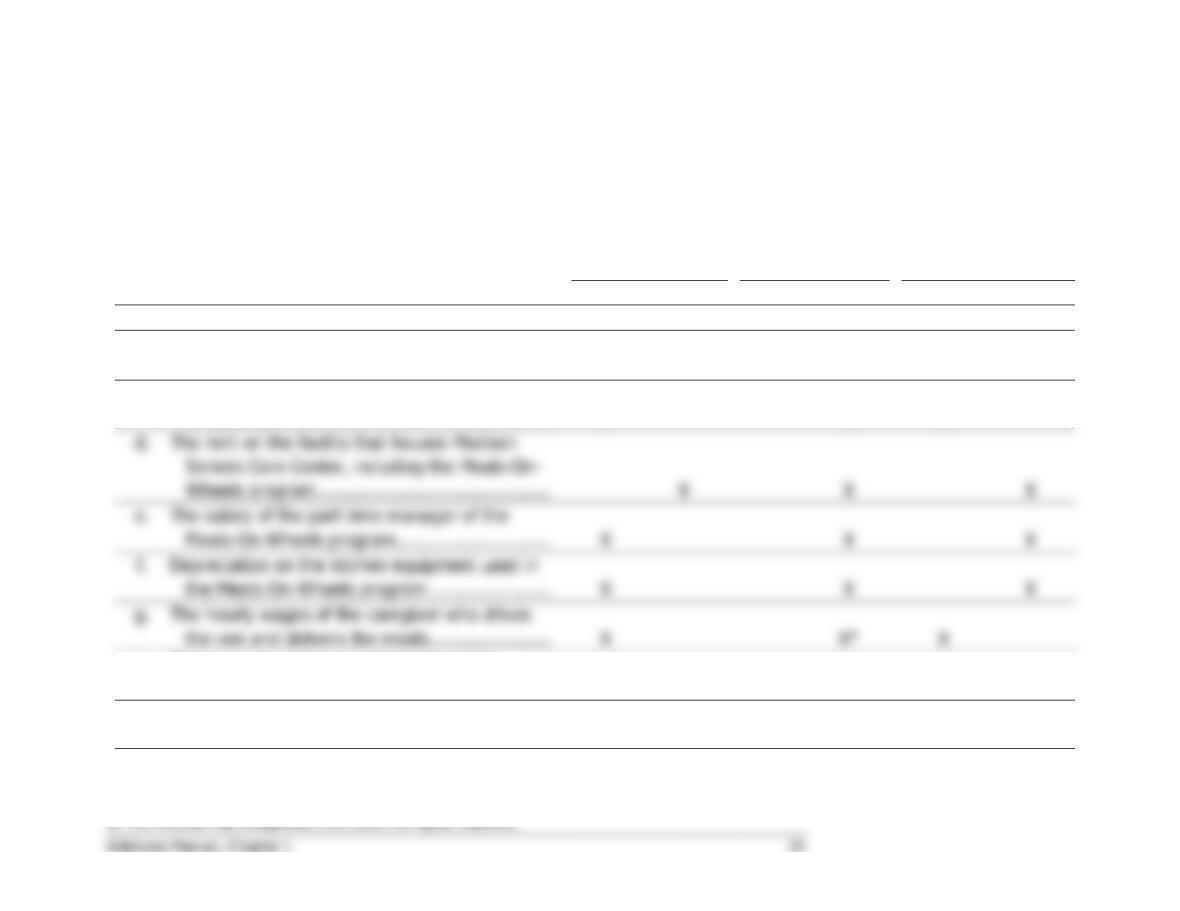
Problem 1-20 (20 minutes)
Direct or Indirect
Cost of the Meals-
On-Wheels
Program
Direct or Indirect
Cost of Particular
Seniors Served
by the Meals-On–
Wheels Program
Variable or Fixed
with Respect to the
Number of Seniors
Served by the
Meals-On-Wheels
Program
Item
Description
Direct
Indirect
Direct
Indirect
Variable
Fixed
a.
The cost of leasing the Meals-On-Wheels van ….
X
X
X
b.
The cost of incidental supplies such as salt,
pepper, napkins, and so on ……………………….
X
X*
X
c.
The cost of gasoline consumed by the Meals-On-
Wheels van ……………………………………………
X
X
X
Wheels program ……………………………………..
X
X
X
The salary of the part-time manager of the
X
X
X
Depreciation on the kitchen equipment used in
X
X
X
The hourly wages of the caregiver who drives
the van and delivers the meals …………………..
X
X
h.
The costs of complying with health safety
regulations in the kitchen ………………………….
X
X
X
i.
The costs of mailing letters soliciting donations
to the Meals-On-Wheels program ……………….
X
X
X
*These costs could be direct costs of serving particular seniors.
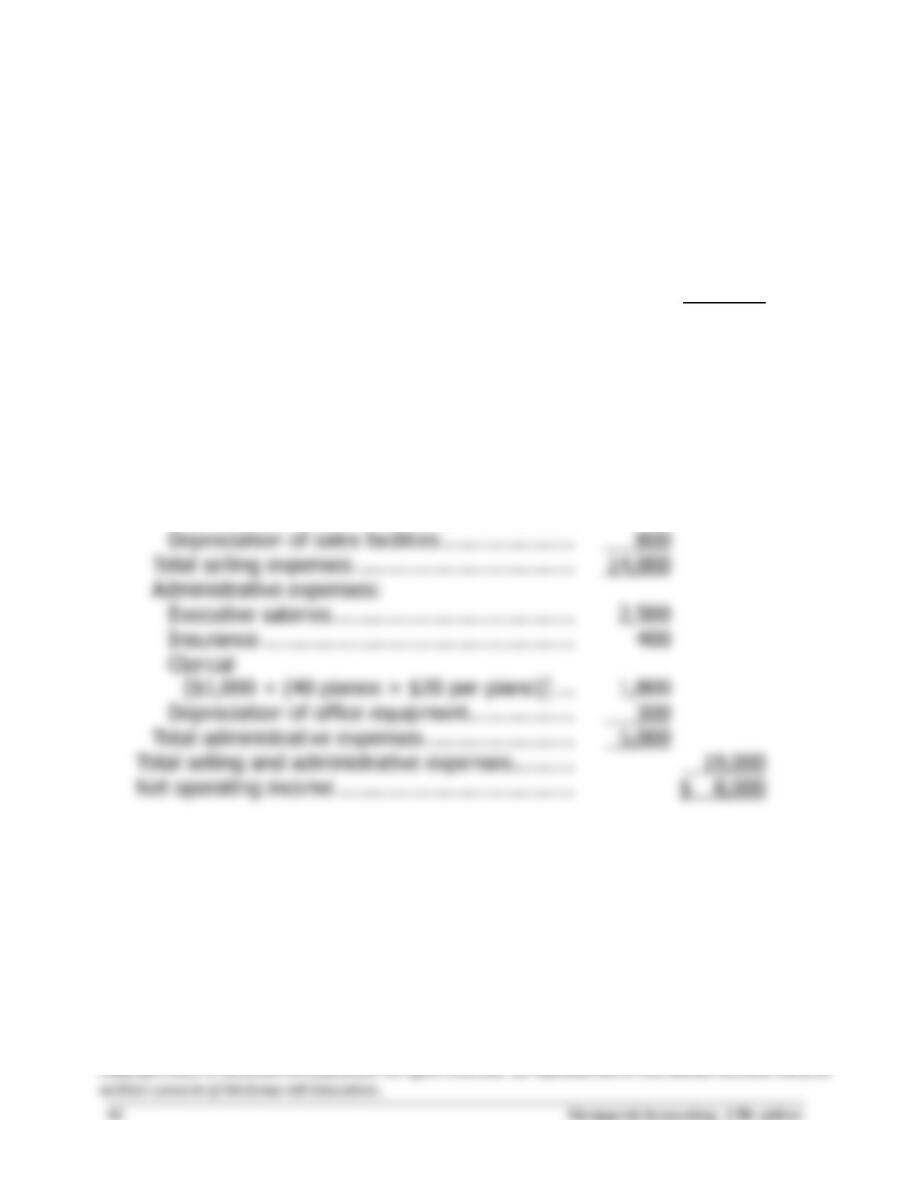
Problem 1-21 (45 minutes)
1.
Marwick’s Pianos, Inc.
Traditional Income Statement
For the Month of August
Sales (40 pianos × $3,125 per piano) ……………
$125,000
Cost of goods sold
(40 pianos × $2,450 per piano) …………………
98,000
Gross margin …………………………………………..
27,000
Selling and administrative expenses:
Selling expenses:
Advertising …………………………………………
$ 700
Sales salaries and commissions
[$950 + (8% × $125,000)] ………………….
10,950
Delivery of pianos
(40 pianos × $30 per piano) ………………..
1,200
Utilities ………………………………………………
350
Depreciation of sales facilities …………………
800
Total selling expenses ……………………………..
Administrative expenses:
Insurance …………………………………………..
400
Clerical
300
Total administrative expenses ……………………
Total selling and administrative expenses ……….
19,000
Net operating income ………………………………..
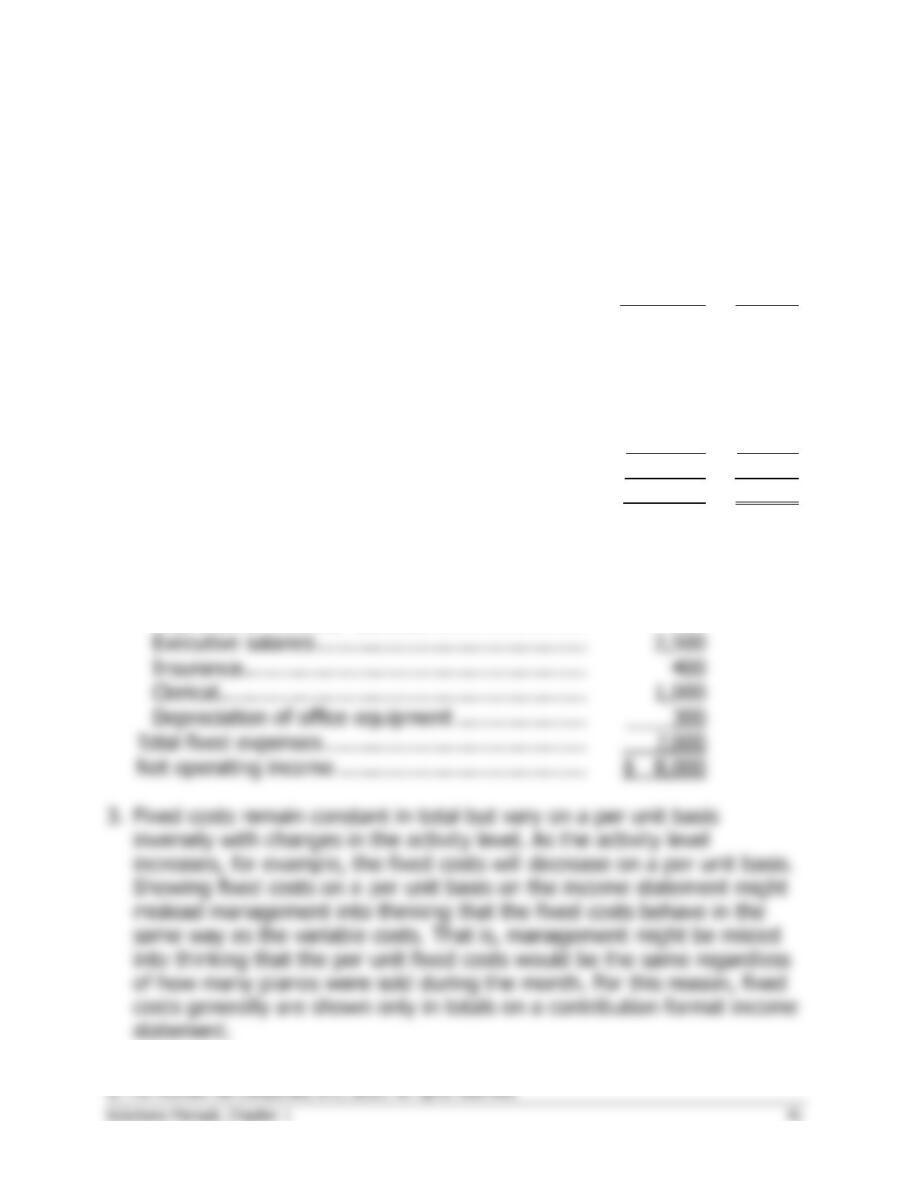
Problem 1-21 (continued)
2.
Marwick’s Pianos, Inc.
Contribution Format Income Statement
For the Month of August
Total
Per
Piano
Sales (40 pianos × $3,125 per piano) ……………..
$125,000
$3,125
Variable expenses:
Cost of goods sold
(40 pianos × $2,450 per piano) ………………..
98,000
2,450
Sales commissions (8% × $125,000) ……………
10,000
250
Delivery of pianos (40 pianos × $30 per piano)
1,200
30
Clerical (40 pianos × $20 per piano) …………….
800
20
Total variable expenses………………………………..
110,000
2,750
Contribution margin ……………………………………
15,000
$ 375
Fixed expenses:
Advertising ……………………………………………..
700
Sales salaries ………………………………………….
950
Utilities ………………………………………………….
350
Depreciation of sales facilities ……………………..
800
Executive salaries …………………………………….
Insurance ……………………………………………….
400
Clerical …………………………………………………..
1,000
Depreciation of office equipment …………………
300
Total fixed expenses ……………………………………
Net operating income ………………………………….
$ 8,000
Problem 1-22 (45 minutes)
1. The total manufacturing overhead cost is computed as follows:
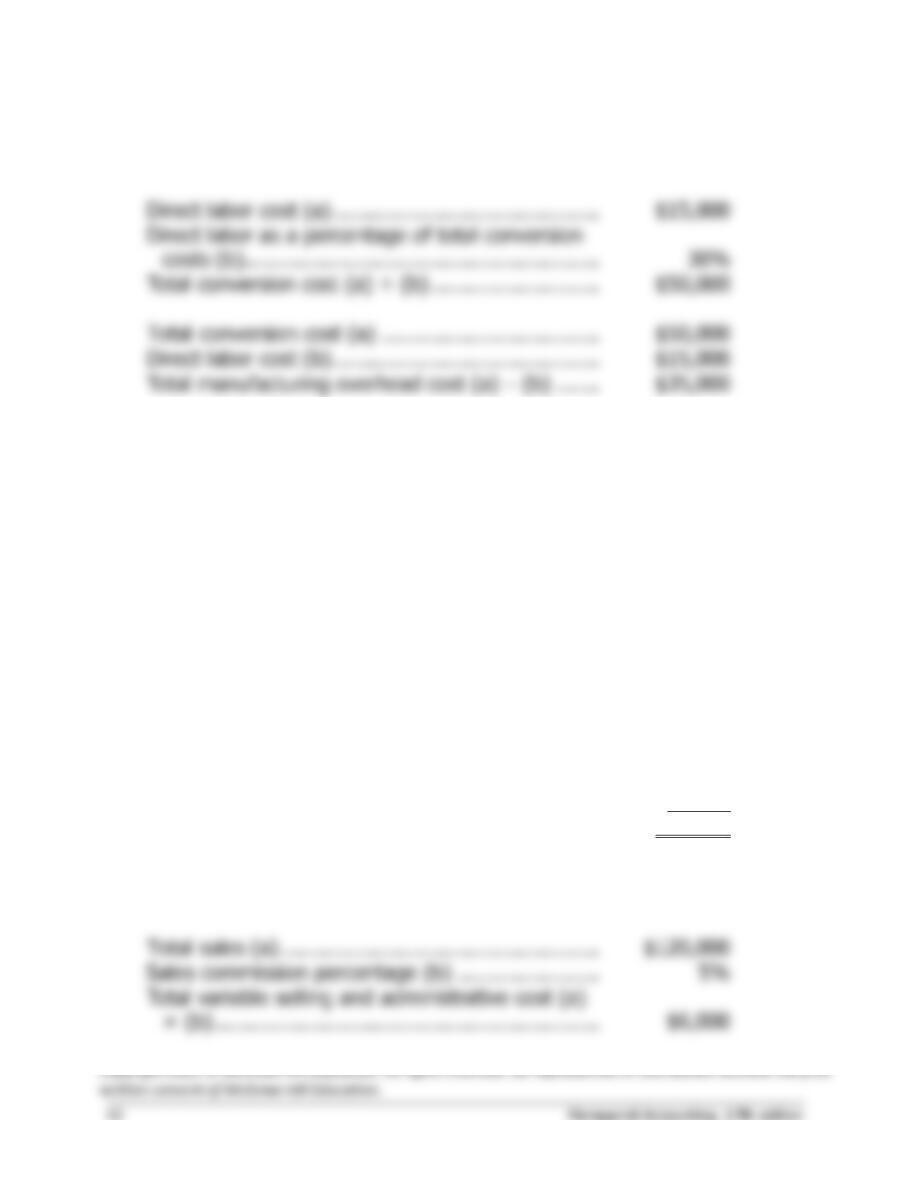
Direct labor cost (a) …………………………………….
Total conversion cost (a) ÷ (b) ………………………
$50,000
Total conversion cost (a) ……………………………..
Direct labor cost (b)…………………………………….
Total manufacturing overhead cost (a) ‒ (b) …….
$35,000
2. The total direct materials cost is computed as follows:
Direct labor cost (a) …………………………………….
$15,000
Direct labor as a percentage of total prime costs
(b) ………………………………………………………..
40%
Total prime cost (a) ÷ (b) …………………………….
$37,500
Total prime cost (a) …………………………………….
$37,500
Direct labor cost (b)…………………………………….
$15,000
Total direct materials cost (a) ‒ (b) …………………
$22,500
3. The total amount of manufacturing cost is computed as follows:
Direct materials cost …………………………..……….
$22,500
Direct labor cost …………………………………………
15,000
Manufacturing overhead cost ………………………..
35,000
Total manufacturing cost ………………………………
$72,500
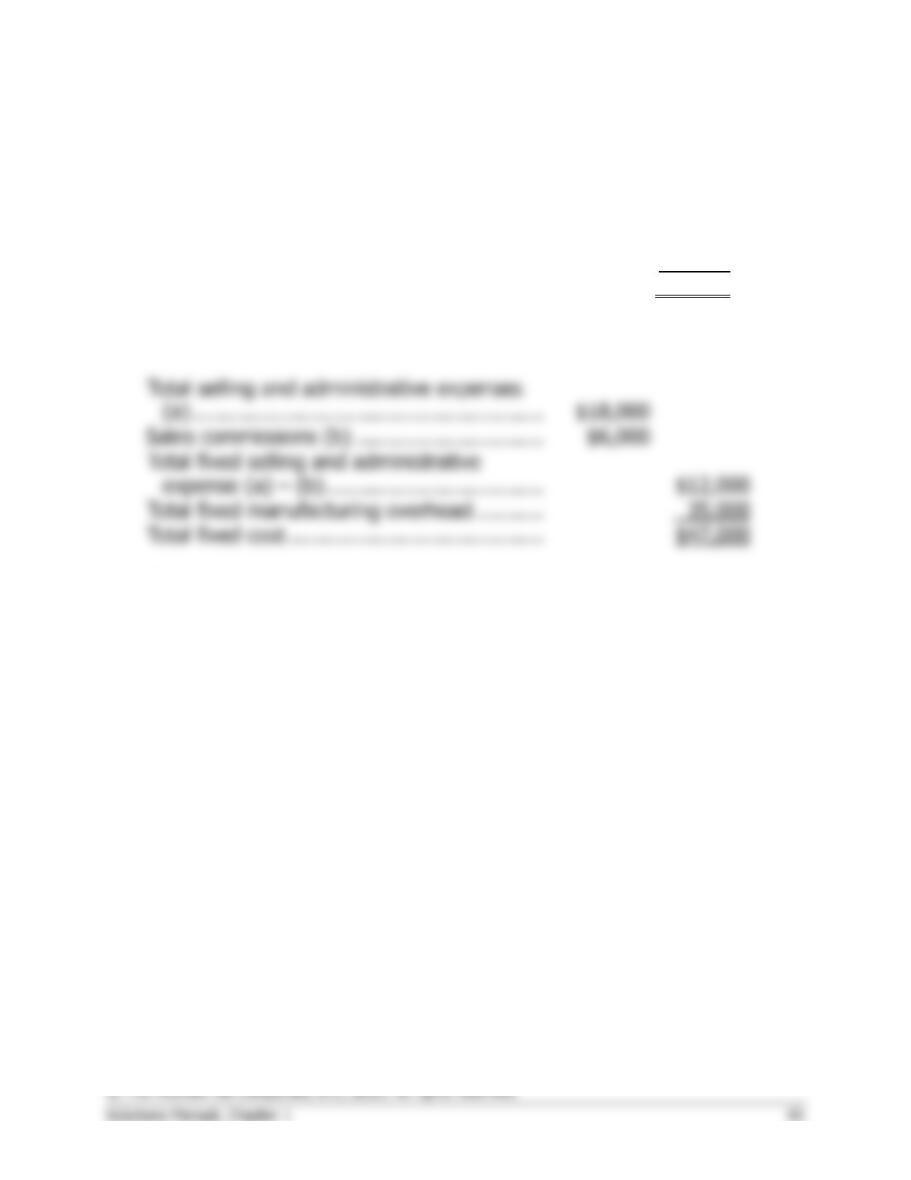
4. The total variable selling and administrative cost is computed as
follows:
Total sales (a) ……………………………………………
Sales commission percentage (b) …………………..
Problem 1-22 (continued)
5. The total variable cost is computed as follows:
Direct materials cost …………………………..……….
$22,500
Direct labor cost …………………………………………
15,000
Sales commissions ………………………………………
6,000
Total variable cost ………………………………………
$43,500
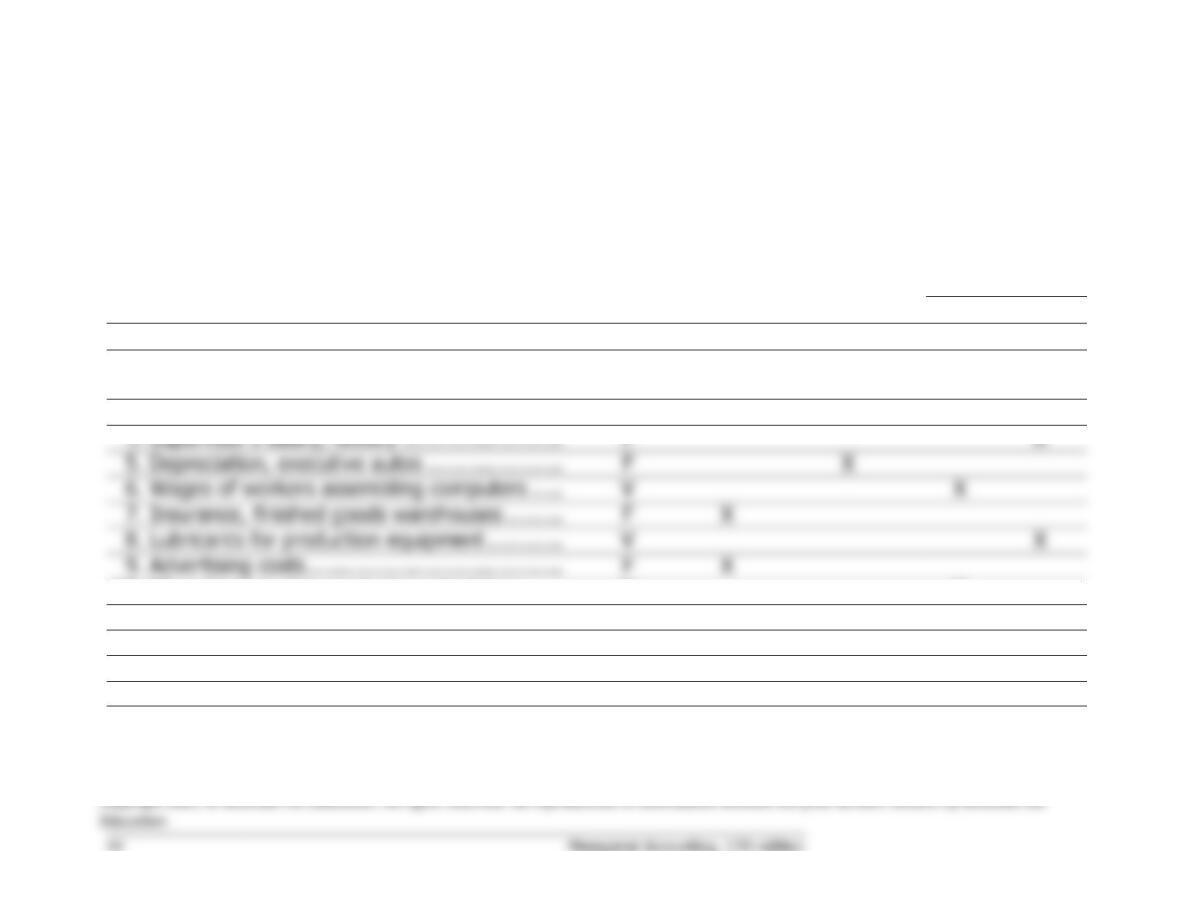
6. The total fixed cost is computed as follows:
Sales commissions (b) …………………………
Total fixed manufacturing overhead ………..
Total fixed cost …………………………………..
7. The total contribution margin is calculated as follows:
Sales (a) …………………………………………………..
$120,000
Variable costs (b) ……………………………………….
$43,500
Contribution margin (a) ‒ (b) ………………………..
$76,500
Problem 1-23 (30 minutes)
Note to the Instructor: There may be some exceptions to the answers below. The purpose of this
problem is to get the student to start
thinking
about cost behavior and cost purposes; try to avoid
lengthy discussions about how a particular cost is classified.
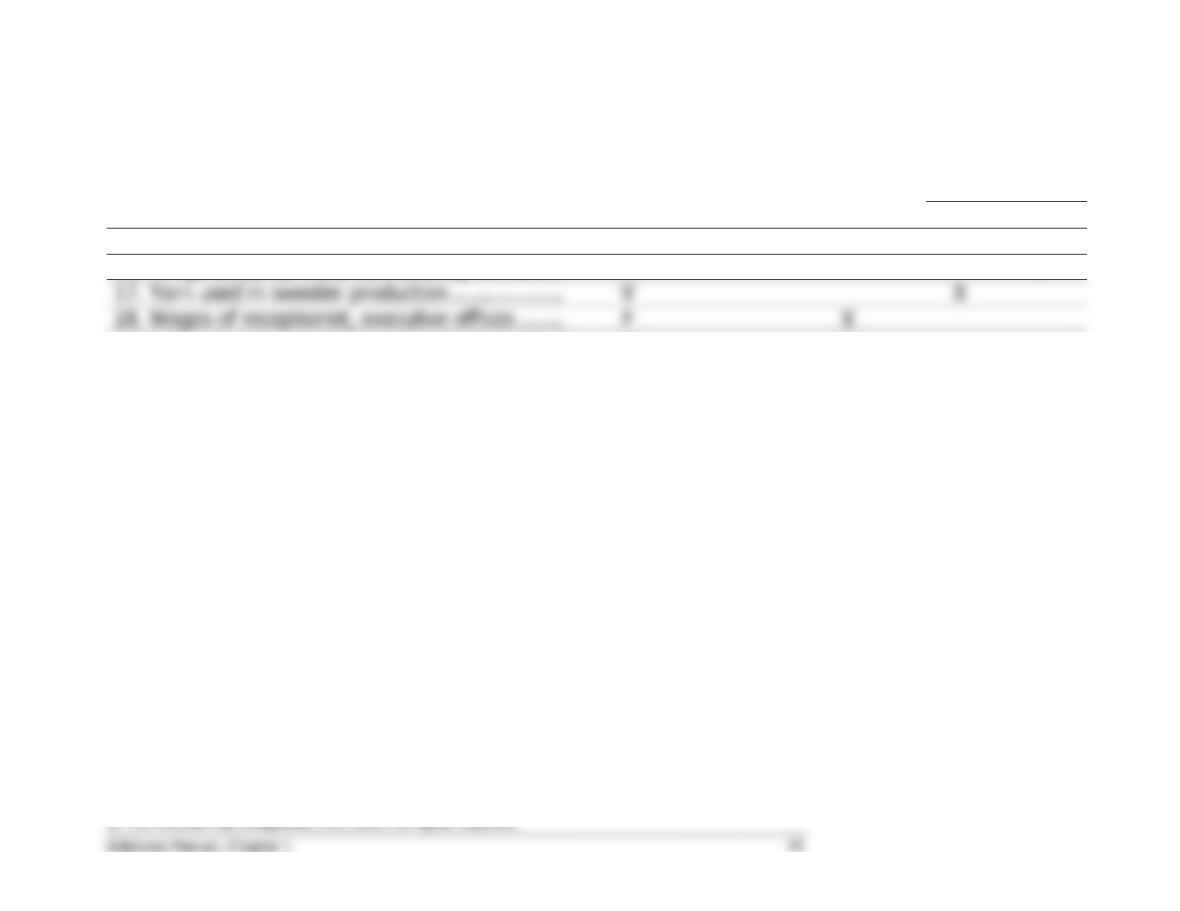
Variable or
Selling
Administrative
Manufacturing
(Product) Cost
Cost Item
Fixed
Cost
Cost
Direct
Indirect
1.
Property taxes, factory …………………………..
F
X
2.
Boxes used for packaging detergent
produced by the company …………………….
V
X
3.
Salespersons’ commissions ……………………..
V
X
F
X
Depreciation, executive autos ………………….
F
X
6.
Wages of workers assembling computers …..
V
Insurance, finished goods warehouses ………
F
X
Lubricants for production equipment …………
V
X
9.
Advertising costs …………………………………..
F
X
10.
Microchips used in producing calculators ……
V
X
11.
Shipping costs on merchandise sold ………….
V
X
12.
Magazine subscriptions, factory lunchroom …
F
X
13.
Thread in a garment factory ……………………
V
X
14.
Executive life insurance ………………………….
F
X
Problem 1-23 (continued)
Variable or
Selling
Administrative
Manufacturing
(Product) Cost
Cost Item
Fixed
Cost
Cost
Direct
Indirect
15.
Ink used in textbook production ……………….
V
X
16.
Fringe benefits, materials handling workers ..
V
X
17.
Yarn used in sweater production ………………
V
18.
Wages of receptionist, executive offices …….
Problem 1-24 (30 minutes)
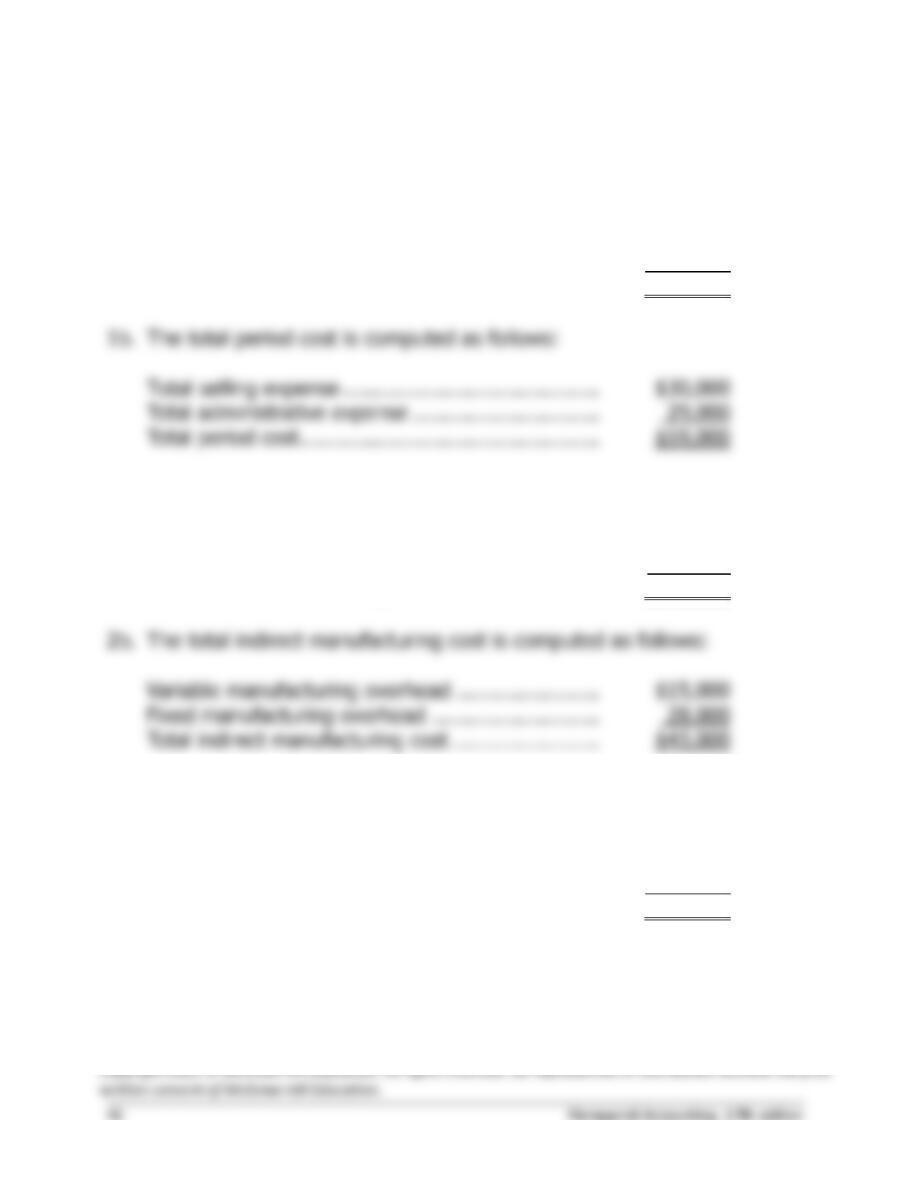
1a. The total product cost is computed as follows:
Direct materials ………………………………………….
$ 69,000
Direct labor ……………………………………………….
35,000
Total manufacturing overhead ……………………….
43,000
Total product cost ……………………………………….
$147,000
Total selling expense …………………………………..
Total administrative expense …………………………
Total period cost …………………………………………
2a. The total direct manufacturing cost is computed as follows:
Direct materials ………………………………………….
$ 69,000
Direct labor ……………………………………………….
35,000
Total direct manufacturing cost ……………………..
$104,000
Variable manufacturing overhead …………………..
Fixed manufacturing overhead ………………………
Total indirect manufacturing cost ……………………
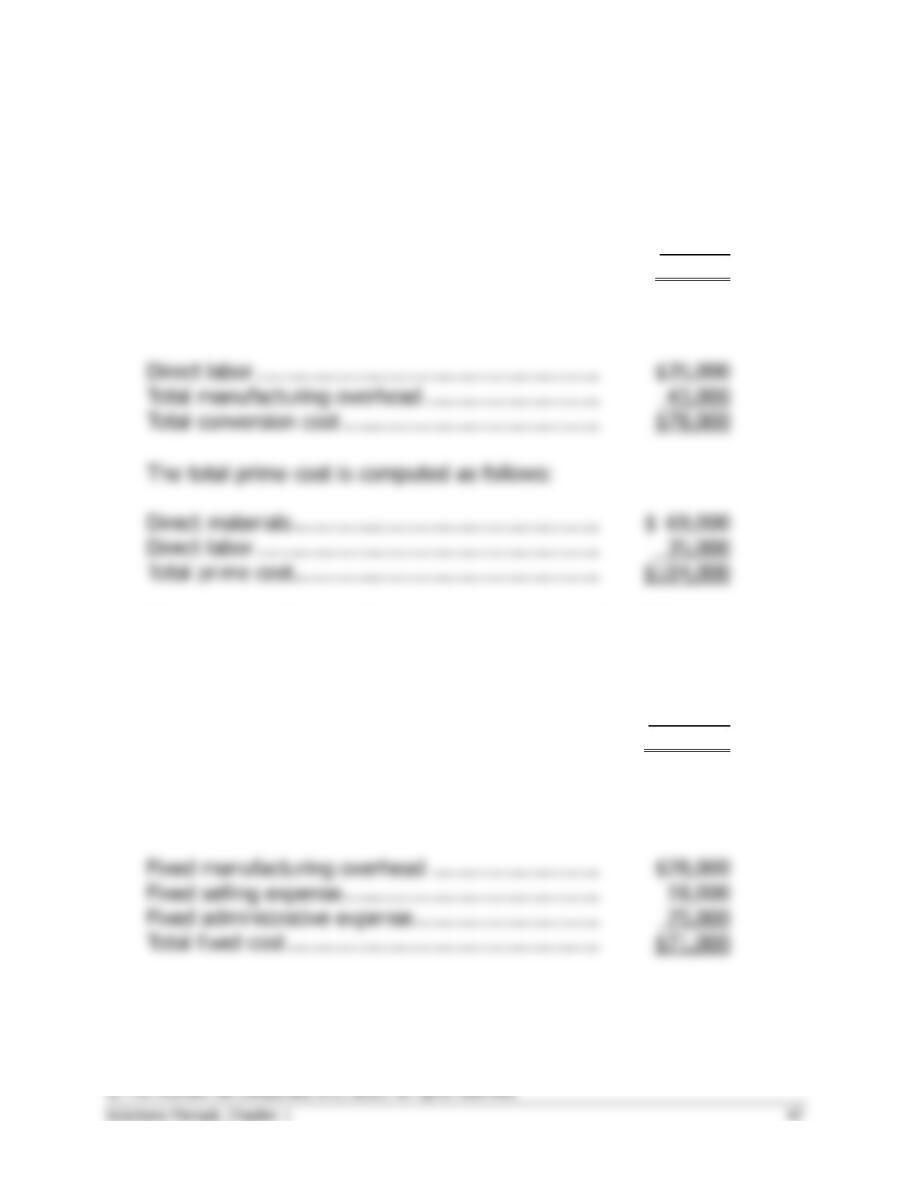
3a. The total manufacturing cost is computed as follows:
Direct materials ………………………………………….
$ 69,000
Direct labor ……………………………………………….
35,000
Total manufacturing overhead ……………………….
43,000
Total manufacturing cost ………………………………
$147,000
Problem 1-24 (continued)
3b. The total nonmanufacturing cost is computed as follows:
Total selling expense …………………………………..
$30,000
Total administrative expense …………………………
29,000
Total nonmanufacturing cost …………………………
$59,000
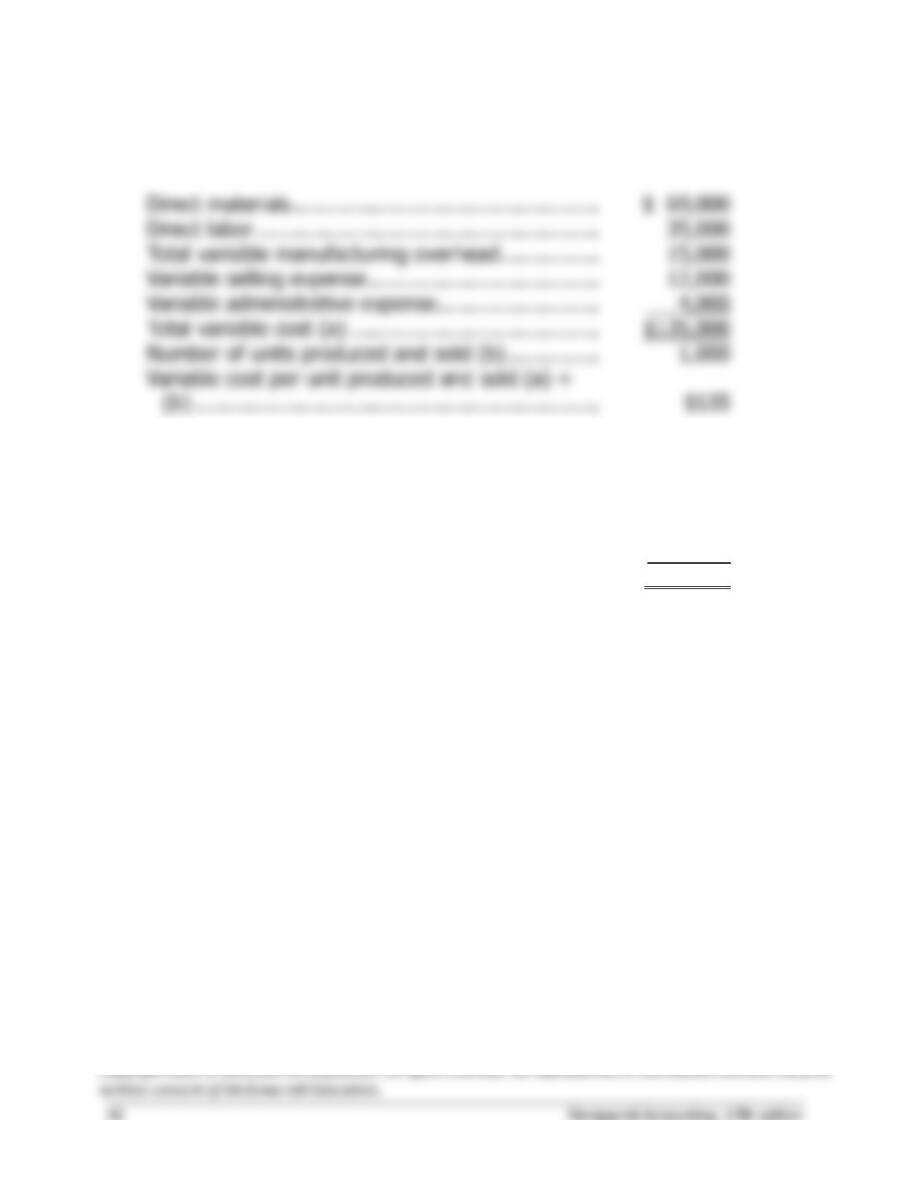
3c. The total conversion cost is computed as follows:
Direct labor ……………………………………………….
Total manufacturing overhead ……………………….
Total conversion cost …………………………………..
$78,000
Direct materials ………………………………………….
Direct labor ……………………………………………….
Total prime cost ………………………………………….
4a. The total variable manufacturing cost is computed as follows:
Direct materials ………………………………………….
$ 69,000
Direct labor ……………………………………………….
35,000
Variable manufacturing overhead …………………..
15,000
Total variable manufacturing cost …………………..
$119,000
4b. The total amount of fixed cost for the company as a whole is
computed as follows:
Fixed manufacturing overhead ………………………
$28,000
Fixed selling expense …………………………..………
18,000
Fixed administrative expense…………………………
Total fixed cost …………………………………………..
$71,000
Problem 1-24 (continued)
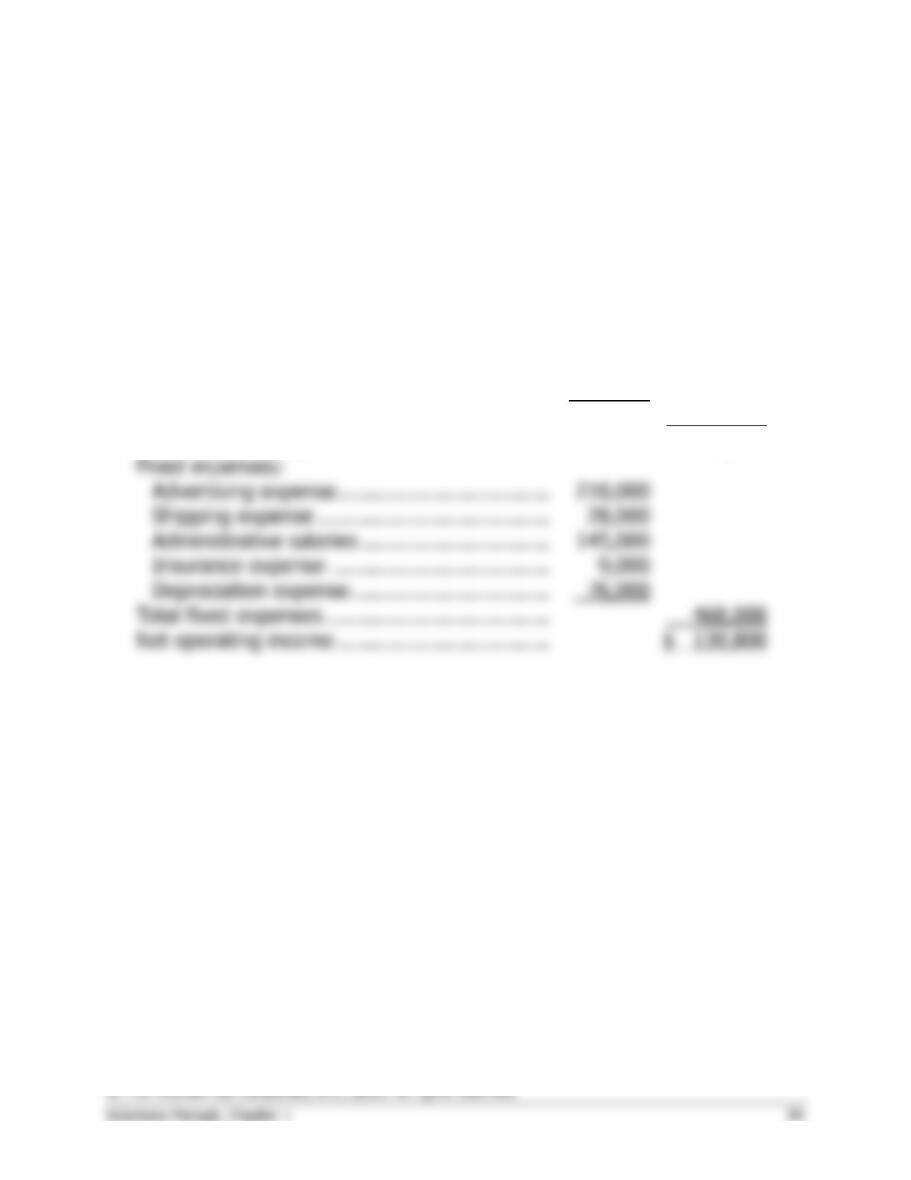
4c. The variable cost per unit produced and sold is computed as follows:
Direct materials ………………………………………….
Direct labor ……………………………………………….
Total variable manufacturing overhead …………….
15,000
Variable selling expense ……………………………….
Variable administrative expense ……………………..
Total variable cost (a) ………………………………….
$135,000
Number of units produced and sold (b) ……………
5a. The incremental manufacturing cost is computed as follows:
Direct materials ………………………………………….
$ 69,000
Direct labor ……………………………………………….
35,000
Variable manufacturing overhead …………………..
15,000
Total incremental cost (a) …………………………….
$119,000
Number of units produced and sold (b) ……………
1,000
Incremental cost per unit produced (a) ÷ (b) ……
$119
Problem 1-25 (30 minutes)
1.
Milden Company
Contribution Format Income Statement
For the Next Quarter
Sales (12,000 units × $100 per unit) …………
$1,200,000
Variable expenses:
Cost of goods sold
(12,000 units × $35 unit) …………………..
$420,000
Sales commission (6% × $1,200,000) ……..
72,000
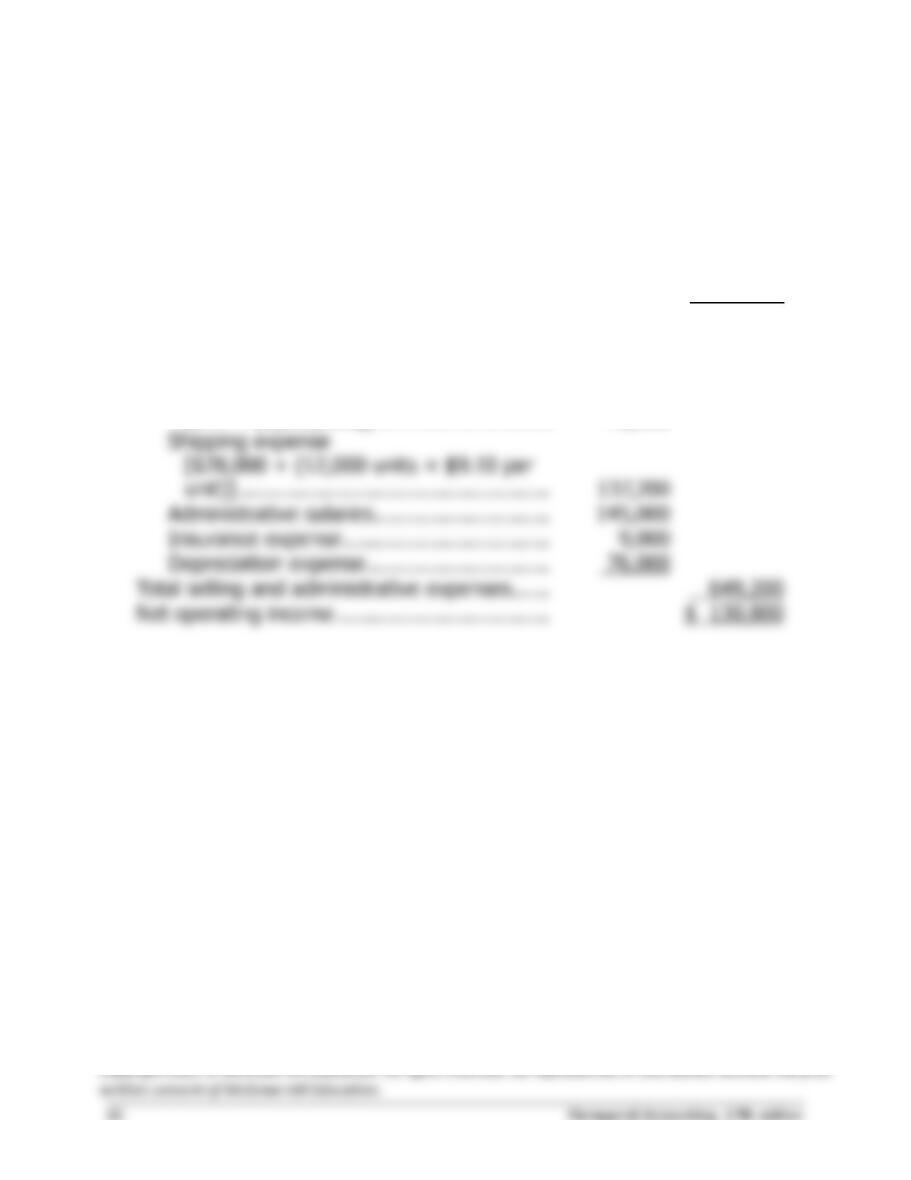
Shipping expense
(12,000 units × $9.10 per unit) …………..
109,200
Total variable expenses…………………………..
601,200
Contribution margin ………………………………
598,800
Fixed expenses:
Depreciation expense …………………………..
Net operating income …………………………….
Problem 1-25 (continued)
2.
Milden Company
Traditional Format Income Statement
For the Next Quarter
Sales (12,000 units × $100 per unit) …………
$1,200,000
Cost of goods sold
(12,000 units × $35 per unit) ………………..
420,000
Gross margin ……………………………………….
780,000
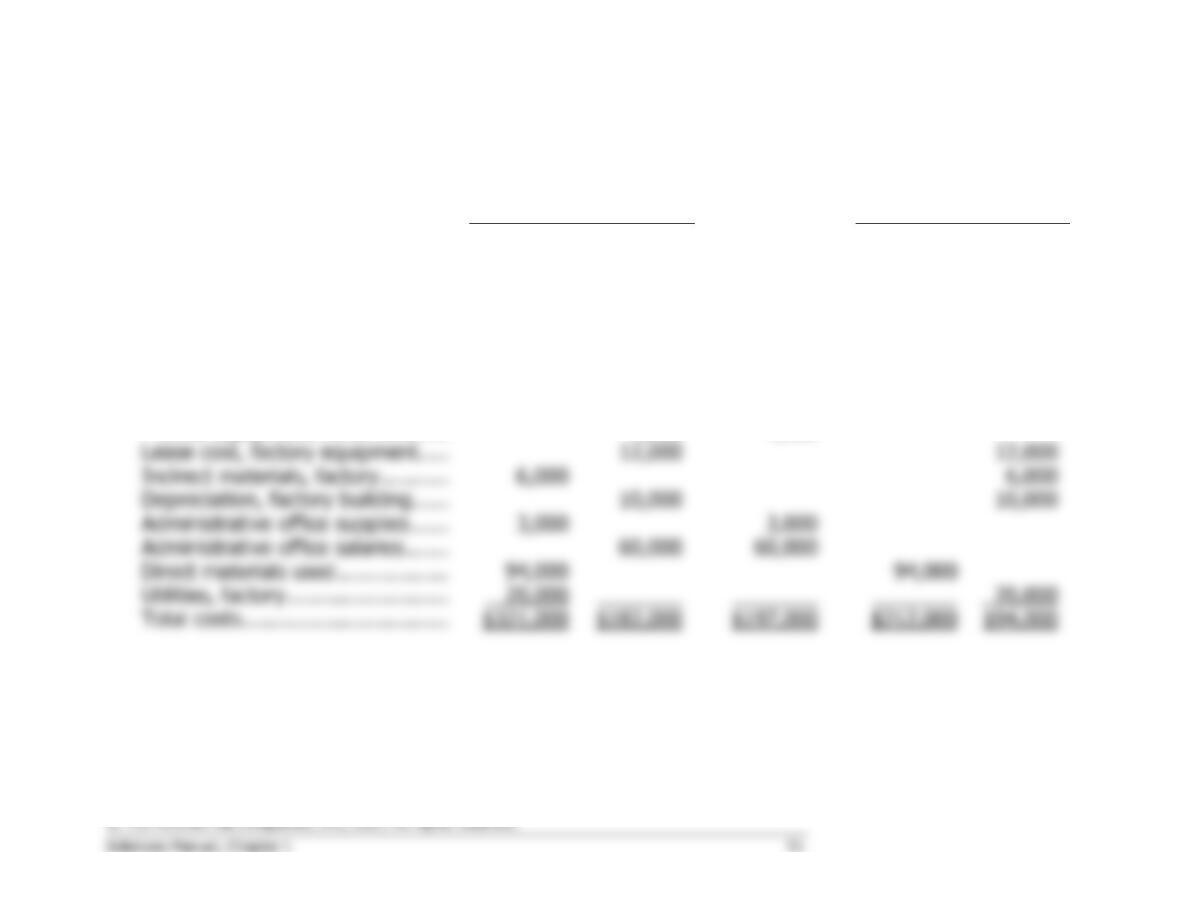
Selling and administrative expenses:
Advertising ………………………………………
$210,000
Sales commissions
(6% × $1,200,000)] ………………………..
72,000
Insurance expense …………………………...
Depreciation expense ………………………..
Total selling and administrative expenses ……
649,200
Case 1-26 (45 minutes)
1.
Cost Behavior
Selling or
Administrative
Product Cost
Cost Item
Variable
Fixed
Cost
Direct
Indirect
Direct labor …………………………..
$118,000
$118,000
Advertising…………………………...
$50,000
$50,000
Factory supervision ………………..
40,000
$40,000
Property taxes, factory building …
3,500
3,500
Sales commissions ………………….
80,000
80,000
Insurance, factory ………………….
2,500
2,500
Depreciation, administrative
office equipment ………………….
4,000
4,000
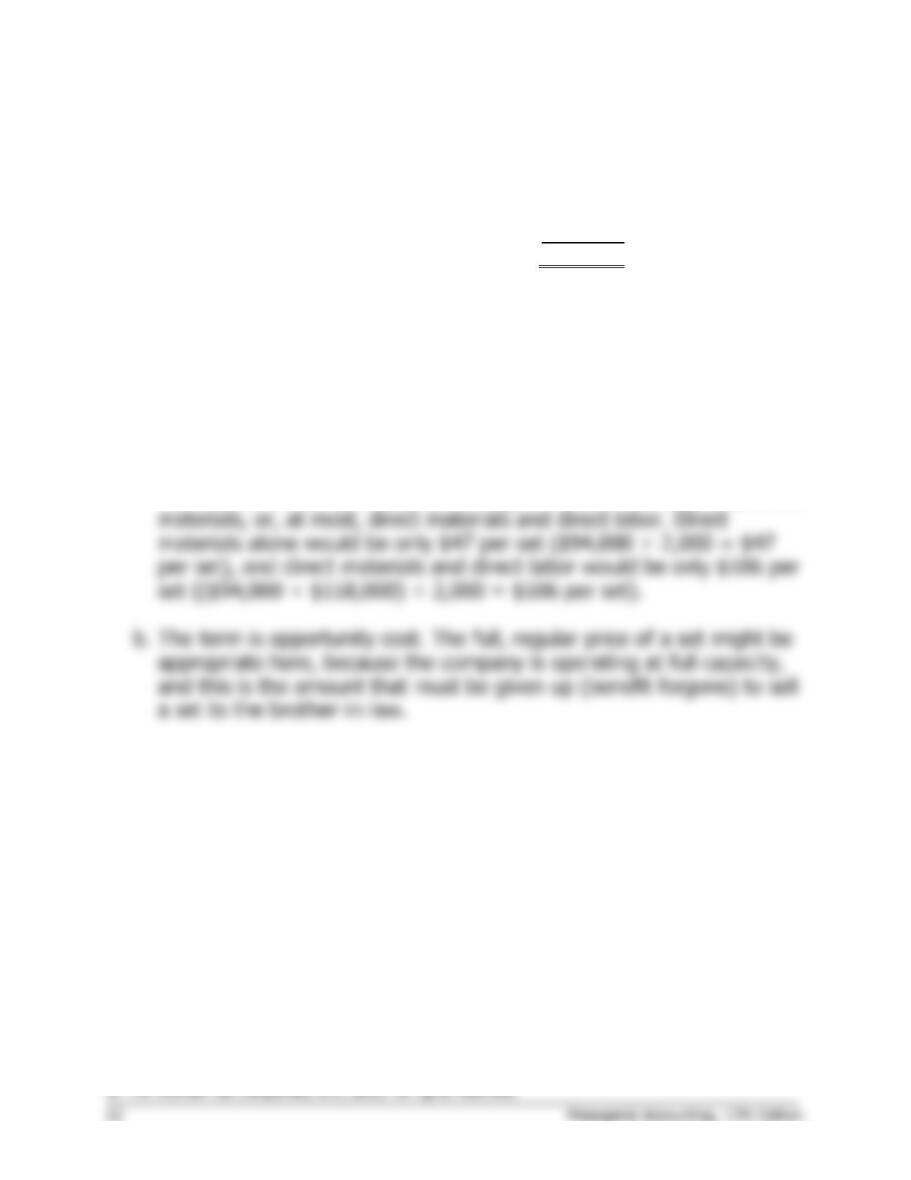
Lease cost, factory equipment …..
12,000
Indirect materials, factory ………..
6,000
Depreciation, factory building ……
Administrative office supplies ……
Administrative office salaries …….
60,000
Direct materials used ………………
94,000
Utilities, factory ……………………..
Total costs …………………………...
$321,000
$182,000
$212,000
Case 1-26 (continued)
2. The average product cost for one patio set would be:
Direct ………………………………………….
$212,000
Indirect ……………………………………….
94,000
Total …………………………………………..
$306,000
$306,000 ÷ 2,000 sets = $153 per set
3. The average product cost per set would increase if the production
drops. This is because the fixed costs would be spread over fewer units,
causing the average cost per unit to rise.
4. a. Yes, the president may expect a minimum price of $153, which is the
average cost to manufacture one set. He might expect a price even
higher than this to cover a portion of the administrative costs as well.
The brother-in-law probably is thinking of cost as including only direct
Case 1-27 (30 minutes)
1. A cost that is classified as a period cost will be recognized on the income
statement as an expense in the current period. A cost that is classified
as a product cost will be recognized on the income statement as an
2. The discussion below is divided into two parts—Gallant’s actions to
postpone expenditures and the actions to reclassify period costs as
product costs.
Gallant’s decision to reclassify period costs is not ethical—assuming that
there is no intention of disclosing in the financial reports this
reclassification. Such a reclassification would be a violation of the
principle of consistency in financial reporting and is a clear attempt to
mislead readers of the financial reports. Although some may argue that
the overall effect of Gallant’s action will be a “wash”—that is, profits
gained in this period will simply be taken from the next period—the
trend of earnings will be affected. Hopefully, the auditors would discover
forceful auditors have been in enforcing tight accounting standards.