
12 Chapter 1 Introduction to Accounting and Business
A discussion of the “six different categories of accounts” (Assets, Liabilities, Capital, Drawing, Revenue,
and Expenses) may be beneficial at this time. Letting the students know that Capital and Revenue
increase Owner’s Equity and Drawing and Expenses decrease Owner’s Equity can help students
understand the impact that transactions have on the accounting equation.
It may be beneficial to write the accounting equation on the board and then re-write the equation as
GROUP LEARNING ACTIVITY — Recording Business Transactions
Rather than working through all of the transactions in TM 1-13 for your students, consider working only
the first few. Divide the class into small groups (two to three students) and ask them to complete the
exercise in five to ten minutes. TM 1-14 provides the solution. Give your students the opportunity to
check their work and ask questions after they have completed their assignment.
OBJECTIVE 5
Describe the financial statements of a proprietorship and explain how they interrelate.
KEY TERMS
Account Form Matching Concept
Balance Sheet Net Income (or Net Profit)
Earnings Net Loss
Financial Statements Statement of Cash Flows
Income Statement Statement of Owner’s Equity
SUGGESTED APPROACH
This objective introduces the four financial statements of a proprietorship (in order of preparation: Income
Statement, Statement of Owner’s Equity, Balance Sheet, and Statement of Cash Flows) and explains how
they interrelate.
This objective also introduces the concept of “matching.” It is helpful to emphasize that matching is one
of the most important concepts in accounting. If revenues and expenses are not properly matched, then the
amount reported for net income is incorrect, making every statement thereafter incorrect.
1. The date portion of the heading varies among the financial statements. The Income Statement,
3. The ending capital balance from the Statement of Owner’s Equity is the amount shown as “Capital”
on the balance sheet. As a result, the balance sheet “balances.”
Next, ask your students to build on the transactions recorded for Jim’s Lawn Care in the following Group
Learning Activity.
After covering the income statement, statement of owner’s equity, and balance sheet, you may want to
describe the statement of cash flows. Coverage of the cash flow statement also may be completely
omitted at this point. TM 1-17 describes the purpose and categories of the statement of cash flows.
GROUP LEARNING ACTIVITY — Preparing Financial Statements
Use Jim’s Lawn Care transactions solution (TM 1-14) to display on the overhead projector; divide the
class into small groups. Ask students to use the balances from your problem to prepare financial
statements for the month. TM 1-15 can be used to provide a template for the students to follow. TM 1-16
shows the completed income statement, statement of owner’s equity, and balance sheet for Jim’s Lawn
Care.
Handout 1 can be distributed here for the first time or re-assigned after a discussion about financial
statements to see how students will perform with a little accounting knowledge on their side.
Handout 1-1 is a group exercise that has proven to be an excellent attention getter to assist students in
creating financial statements and understanding the importance of consistent application of GAAP. The
exercise gives students information about the operations of an upholstery shop for a period of one year.

14 Chapter 1 Introduction to Accounting and Business
The groups typically will provide a wide range of answers. This will allow you to emphasize that there
must be standards for recording business transactions and rules on how to determine profit if that
information is going to be useful to decision makers.
OBJECTIVE 6
Describe and illustrate the use of the ratio of liabilities to owner’s equity in evaluating a
company’s financial condition.
KEY TERMS
Ratio of Liabilities to Owner’s (Stockholders’) Equity
SUGGESTED APPROACH
This objective introduces the ratio of liabilities to owner’s equity. Explain that the ability of a business to
meet its financial obligations is a measure of the strength or weakness of its financial condition.
Remind students that the rights of creditors to a business’s assets come before the rights of the owners or
stockholders.
This also provides an additional opportunity to express to the students how important the information
contained in the financial statements is to stakeholders of the business. Stakeholders rely on accurate and
complete financial information to make decisions relating to the business. The data needed to calculate
TM 1-19 shows the equation in words followed by the figures for Jim’s Lawn Care from its Balance
Sheet used in Objective 5.
To help students understand this concept, ask them to compute their personal ratio and examine how it
would change under a variety of different circumstances (such as taking out a student loan on the one
hand or winning the lottery on the other).
Use the results to help them learn that the lower the ratio, the better able a business is to withstand poor
business conditions and pay its obligations to creditors.

Handout 1-1
CLASSIC UPHOLSTERY SHOP
Tyler Smith had worked in an upholstery shop for 10 years. Last year, Tyler’s wages were $20,000.
Lately, Tyler had been unhappy with the shop’s owner. Convinced that he could run an upholstery shop
that did better work at a lower cost, Tyler decided to go into business for himself and opened CLASSIC
UPHOLSTERY SHOP.
To get the business going, Tyler decided to invest heavily in advertising. He spent $6,000 on advertising
aimed at consumers and another $2,000 on advertising aimed at getting work from interior decorators and
interior design stores. Tyler also purchased industrial sewing machines costing $4,000 and other tools and
equipment costing $3,000. He estimated that the sewing machines can be used for about five years before
maintenance costs will be too high and the machines will need to be replaced. The other tools and
equipment are not as durable and will have to be replaced in three years.
At the end of the first year of business, Tyler had received $80,000 in cash from customers for upholstery
work. Tyler was owed another $2,500 from customers who are not required to pay cash but are billed
every 30 days.
A review of Tyler’s checkbook shows he paid the following expenses (in addition to those mentioned
previously) during the first year of business:
Upholstery fabric $40,000
Other supplies 10,000
Tyler keeps some stock of upholstery fabric in popular colors on hand for customers who do not want to
wait for special-order fabric to arrive. At the end of the year, about $14,000 of the fabric purchased during
the year was in his store stock. In addition, $2,300 in supplies had not been used.
HOW MUCH PROFIT DID TYLER MAKE IN HIS FIRST YEAR OF BUSINESS? DO YOU THINK
IT WAS A GOOD IDEA TO OPEN THE UPHOLSTERY SHOP, OR WOULD TYLER BE BETTER
OFF WITH HIS OLD JOB?
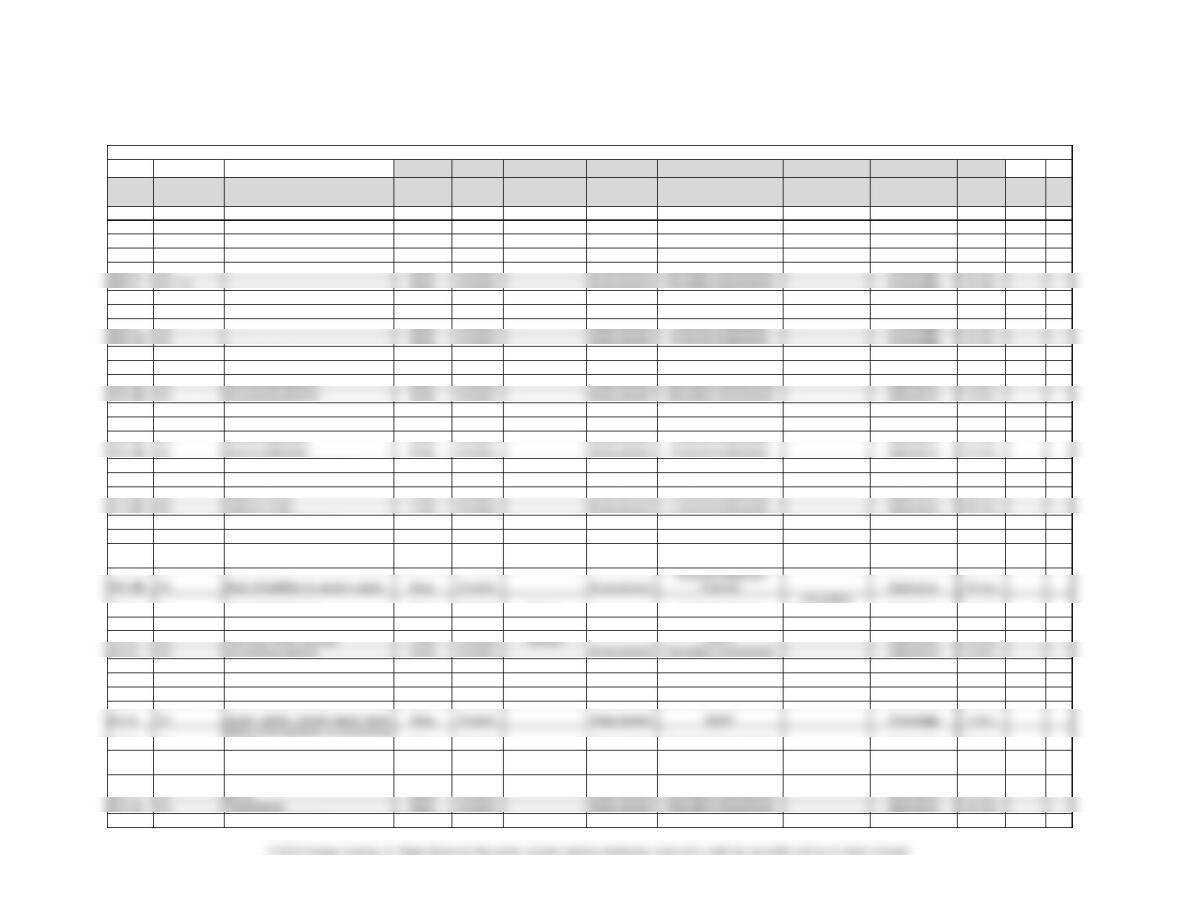
DIFFICULTY BUSPROG AICPA AICPA ACBSP ACBSP BLOOM’S TIME
Number
Learning
Objective
Description Primary Broad Business Functional Primary Secondary
Spread-
sheet
GL
DQ1-1 1-1 Easy Analytic Industry Purpose Knowledge 5 min.
DQ1-2 1-1 Easy Analytic Industry Purpose Knowledge 5 min.
DQ1-3 1-1 Easy Analytic Industry Purpose Knowledge 5 min.
DQ1-4 1-2 Easy Analytic Measurement Recording Transactions Knowledge 5 min.
DQ1-5 1-2 Easy Analytic Measurement Recording Transactions Knowledge 5 min.
DQ1-6 1-2, 1-3 Easy Analytic Measurement Recording Transactions Knowledge 5 min.
DQ1-7 1-3 Easy Analytic Measurement GAAP Knowledge 5 min.
DQ1-8 1-5 Easy Analytic Measurement Financial Statements Knowledge 5 min.
DQ1-9 1-5 Easy Analytic Measurement Financial Statements Knowledge 5 min.
DQ1-10 1-5 Easy Analytic Measurement Financial Statements Knowledge 5 min.
PE1-1A 1-2 Cost concept Easy Analytic Measurement GAAP Application 5 min.
PE1-1B 1-2 Cost concept Easy Analytic Measurement GAAP Application 5 min.
PE1-2A 1-3 Accounting equation Easy Analytic Measurement Recording Transactions Application 5 min.
PE1-2B 1-3 Accounting equation Easy Analytic Measurement Recording Transactions Application 5 min.
PE1-3A 1-4 Transactions Easy Analytic Measurement Recording Transactions Application 10 min.
PE1-3B 1-4 Transactions Easy Analytic Measurement Recording Transactions Application 10 min.
PE1-4A 1-5 Income statement Easy Analytic Measurement Financial Statements Application 10 min.
PE1-4B 1-5 Income statement Easy Analytic Measurement Financial Statements Application 10 min.
PE1-5A 1-5 Statement of owner’s equity Easy Analytic Measurement Financial Statements Application 5 min.
PE1-5B 1-5 Statement of owner’s equity Easy Analytic Measurement Financial Statements Application 5 min.
PE1-6A 1-5 Balance sheet Easy Analytic Measurement Financial Statements Application 10 min.
PE1-6B 1-5 Balance sheet Easy Analytic Measurement Financial Statements Application 10 min.
PE1-7A 1-5 Statement of cash flows Easy Analytic Measurement Statement of Cash Flows Application 10 min.
PE1-7B 1-5 Statement of cash flows Easy Analytic Measurement Statement of Cash Flows Application 10 min.
PE1-8A 1-6 Ratio of liabilities to owner’s equity Easy Analytic Measurement
Financial Statement
Analysis
Application 10 min.
PE1-8B 1-6 Ratio of liabilities to owner’s equity Easy Analytic Measurement
Application 10 min.
Ex1-1 1-1 Types of businesses Easy Analytic Industry Business Forms
Transactions
Application 5 min.
Ex1-2 1-1 Professional ethics Easy Ethics Industry Purpose Application 5 min.
Ex1-3 1-2 Business entity concept Easy Analytic Industry GAAP Application 10 min.
Ex1-4 1-3 Accounting equation Easy Analytic Measurement Recording Transactions Application 5 min.
Ex1-5 1-3 Accounting equation Easy Analytic Measurement Recording Transactions Application 5 min.
Ex1-6 1-3 Accounting equation Easy Analytic Measurement Recording Transactions Application 5 min.
Ex1-7 1-3, 1-4 Accounting equation Moderate Analytic Measurement Recording Transactions Application 10 min.
Ex1-8 1-3 Asset, liability, owner‘s equity items Easy Analytic Measurement GAAP Knowledge 5 min.
Ex1-9 1-4
equation
Easy Analytic Measurement Recording Transactions Application 5 min.
Ex1-10 1-4
Effect of transactions on accounting
equation
Easy Analytic Measurement Recording Transactions Application 5 min.
Effect of transactions on owner’s
Ex1-13 1-4 Nature of transactions Moderate Analytic Measurement Recording Transactions Application 15 min.
HOMEWORK CHART WITH LEARNING OUTCOMES TAGGING
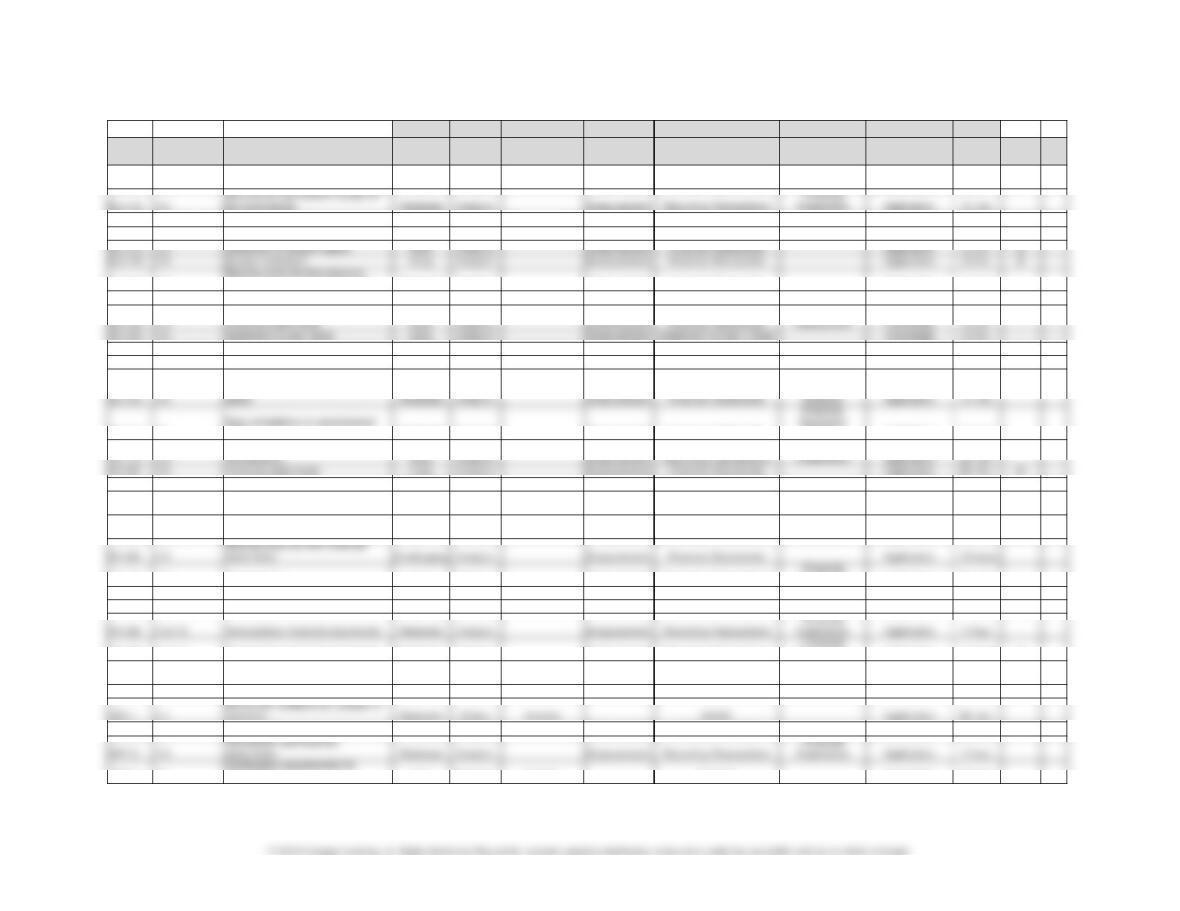
DIFFICULTY BUSPROG AICPA AICPA ACBSP ACBSP BLOOM’S TIME
Number
Learning
Objective
Description Primary Broad Business Functional Primary Secondary
Spread-
sheet
GL
Ex1-14 1-5 Net income and owner‘s withdrawals Easy Analytic Measurement Financial Statements Comprehension 5 min.
Ex1-15 1-5
Moderate Analytic Measurement Recording Transactions
Statements
Application 10 min.
Ex1-16 1-5 Balance sheet items Easy Analytic Measurement Financial Statements Knowledge 5 min.
Ex1-17 1-5 Income statement items Easy Analytic Measurement Financial Statements Knowledge 5 min.
Ex1-18 1-5 Statement of owner‘s equity Easy Analytic Measurement Financial Statements Application 5 min. X
Ex1-19 1-5 Income statement Easy Analytic Measurement Financial Statements Application 5 min. X
Ex1-20 1-5
sheet and income statement data
Moderate Analytic Measurement Financial Statements Application 10 min.
Ex1-21 1-5 Balance sheet, net income Moderate Analytic Measurement Financial Statements Application 15 min. X
Ex1-23 1-5 Statement of cash flows Easy Analytic Measurement Statement of Cash Flows Knowledge 5 min.
Recording
Ex1-24 1-5 Statement of cash flows Easy Analytic Measurement Statement of Cash Flows Application 10 min.
Ex1-25 1-5 Financial statements Moderate Analytic Measurement Financial Statements Knowledge 10 min.
Application 10 min.
Ratio of liabilities to stockholders’
Financial
Statement
Ex1-27 1-6
equity
Moderate Analytic Measurement Financial Statements
Analysis
Application 10 min.
Pr1-1A 1-4 Transactions Easy Analytic Measurement Recording Transactions
Statements
Application 30 min.
Pr1-2A 1-5 Financial statements Easy Analytic Measurement Financial Statements Application 30 min. X
Financial
Pr1-3A 1-5 Financial statements Moderate Analytic Measurement Financial Statements Application 45 min. x
Pr1-4A 1-4, 1-5 Transactions; financial statements Moderate Analytic Measurement Recording Transactions
Financial
Statements
Application 1 hour
Pr1-5A 1-4, 1-5 Transactions; financial statements Moderate Analytic Measurement Recording Transactions
Financial
Statements
Application 1.5 hours X
Pr1-6A 1-5
Missing amounts from financial
Challenging Analytic Measurement Financial Statements Application 1.5 hours
Pr1-1B 1-4 Transactions Easy Analytic Measurement Recording Transactions
Statements
Application 30 min.
Pr1-2B 1-5 Financial statements Easy Analytic Measurement Financial Statements Application 30 min. X
Pr1-3B 1-5 Financial statements Moderate Analytic Measurement Financial Statements Application 45 min. x
Financial
Pr1-5B 1-4,1-5 Transactions; financial statements Moderate Analytic Measurement Recording Transactions
Statements
Application 1.5 hours X
Pr1-6B 1-5
Missing amounts from financial
statements
Challenging Analytic Measurement Financial Statements Application 1.5 hours
MD-1 Continuing Problem
Moderate Ethics Industry GAAP Application 30 min.
CP1-2 1-4 Net income Easy Analytic Measurement Cash vs. Accrual Analysis 10 min.
Application 1 hour
CP1-4 1-1
accountants
Easy Analytic Industry Purpose Knowledge 15 min.
DIFFICULTY BUSPROG AICPA AICPA ACBSP ACBSP BLOOM’S TIME
Number
Learning
Objective
Description Primary Broad Business Functional Primary Secondary
Spread-
sheet
GL
CP1-5 1-5 Cash flows Easy Analytic Measurement Statement of Cash Flows Knowledge 5 min.