CASE 1.8
CRAZY EDDIE, INC.
Synopsis
Eddie Antar opened his first retail consumer electronics store in 1969 near Coney Island in New
York City. By 1987, Antar’s firm, Crazy Eddie, Inc., was a public company with annual sales
exceeding $350 million. The rapid growth of the company’s revenues and profits after it went public
in 1984 caused Crazy Eddie’s stock to be labeled as a “can’t miss” investment by prominent Wall
Street financial analysts. Unfortunately, the rags-to-riches story of Eddie Antar unraveled in the late
1980s following a hostile takeover of Crazy Eddie, Inc. After assuming control of the company, the
56
Case 1.8 Crazy Eddie, Inc.
57
Crazy Eddie, Inc.—Key Facts
1. Most of Crazy Eddie’s top executives were relatives or close friends of Eddie Antar who lacked
the appropriate qualifications for their positions.
2. The consumer electronics industry realized a dramatic increase in sales from 1981 through 1984,
3. In 1984, Eddie Antar took Crazy Eddie public to raise capital needed to finance his company’s
aggressive expansion program.
5. Antar ordered his subordinates to inflate inventory and understate accounts payable after the
6. Several of Crazy Eddie’s top accounting officials cooperated with Antar’s fraudulent schemes.
8. Following a 1987 hostile takeover of Crazy Eddie, the new owners discovered that the
company’s inventory was grossly overstated.
10. Crazy Eddie’s auditors allegedly failed to adequately consider several “red flags,” including
pervasive internal control weaknesses, dominance of the company by one individual, the volatility of
the consumer electronics industry, and unusual relationships among key account balances.
Case 1.8 Crazy Eddie, Inc.
58
Instructional Objectives
1. To illustrate the lengths to which client management will sometimes go to misrepresent a
company’s operating results and financial position.
3. To demonstrate the need for auditors to employ analytical procedures during the planning phase
of an audit to identify high-risk account balances.
Suggestions for Use
This case could be integrated with classroom coverage of analytical procedures. Crazy Eddie’s
auditors were criticized by third parties for failing to investigate red flags in the company’s financial
statements that resulted from Antar’s fraudulent schemes. The first case question requires students
Case 1.8 Crazy Eddie, Inc.
59
Suggested Solutions to Case Questions
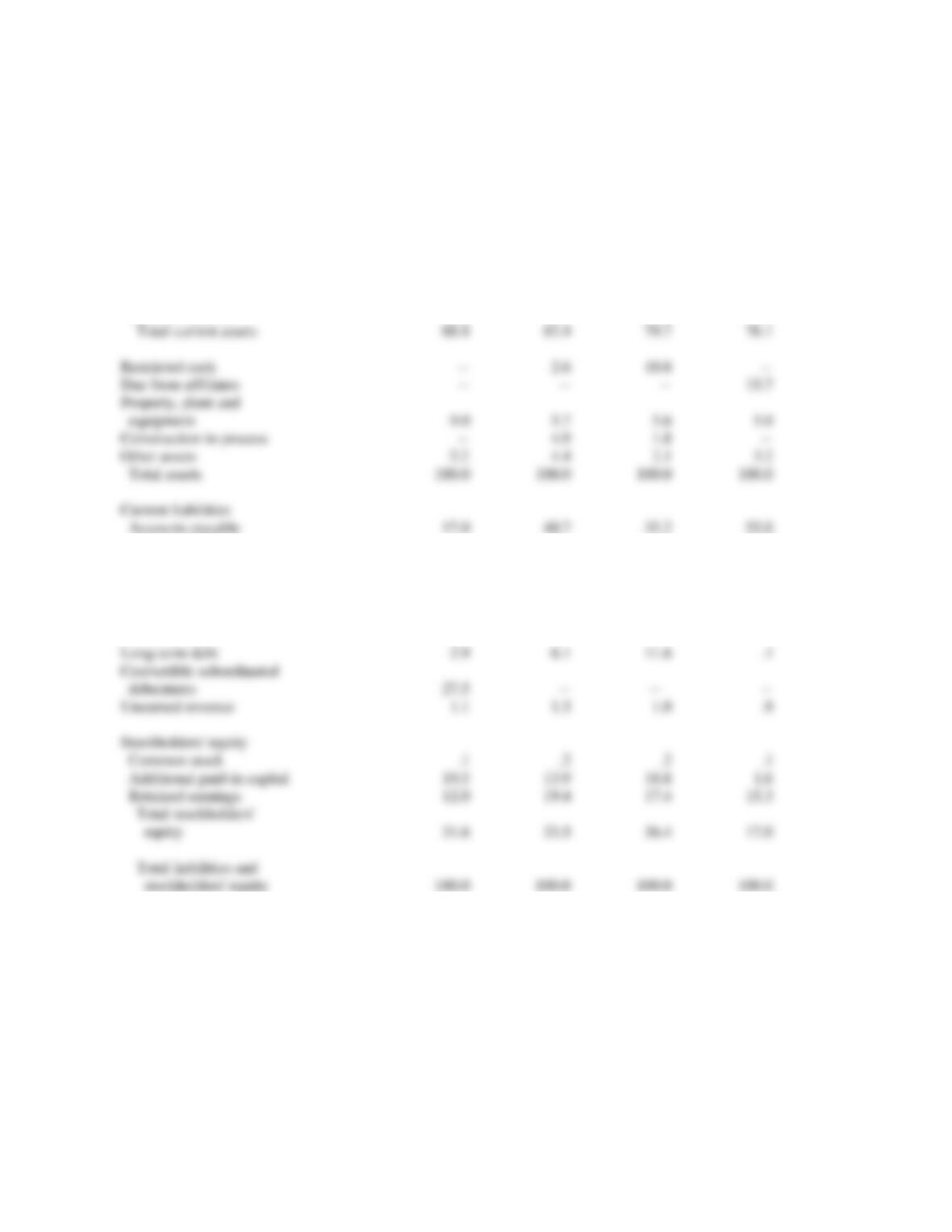
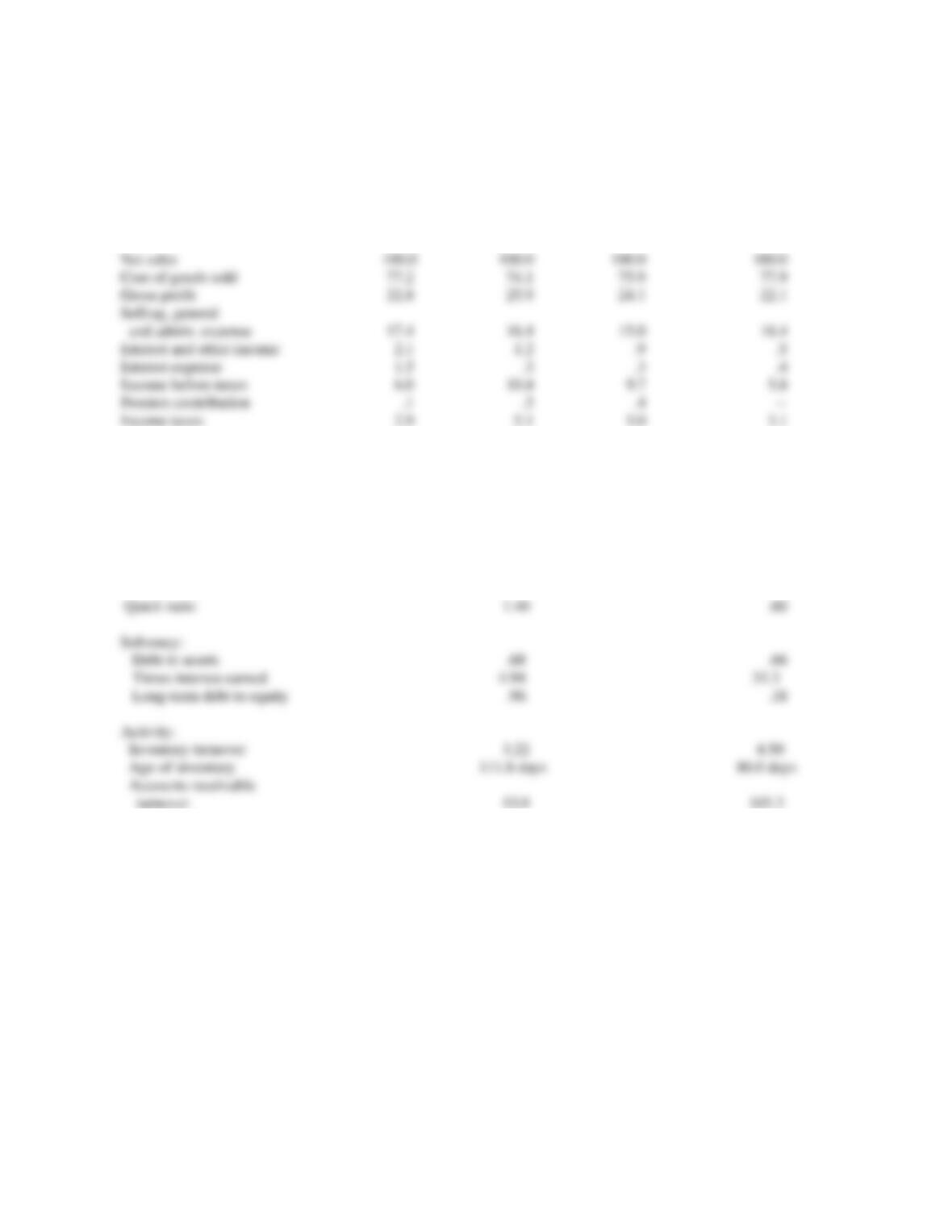
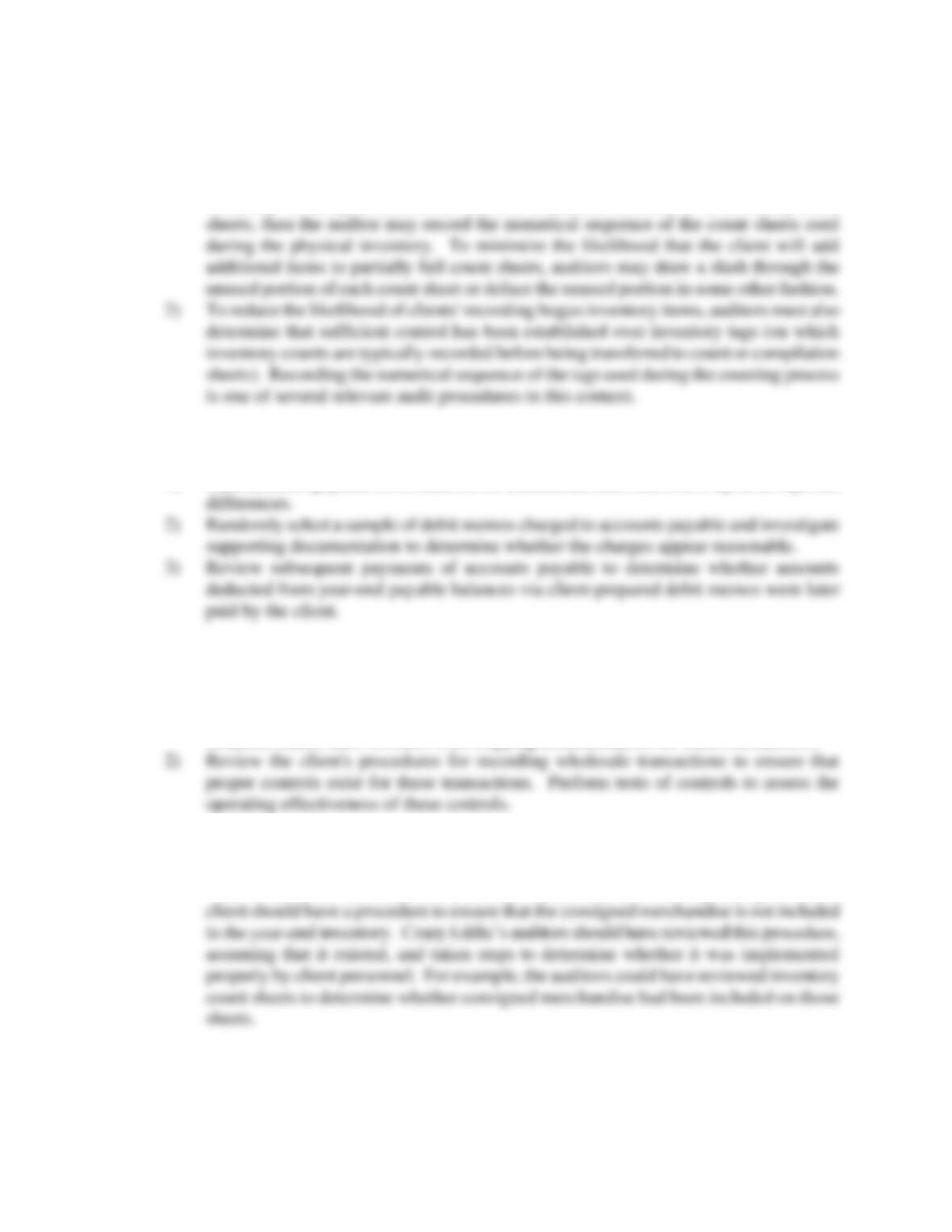
1. On the following pages are common-sized balance sheets and income statements for Crazy
Eddie’s for the period 1984-1987. Additionally, key financial ratios for the company’s 1986 and
1987 fiscal years are presented.
Clearly, Crazy Eddie’s inventory account should have been, and almost certainly was, a focal
point of attention during the company’s 1984-1987 audits. Inventory is nearly always the key asset
Another high-risk account for a retailer is typically accounts receivable. Notice that Crazy
Eddie’s accounts receivable turnover also slowed considerably during 1987, resulting in the age of
receivables nearly doubling.
Two other accounts that Crazy Eddie’s auditors likely identified as being high-risk accounts were
accounts payable and accrued expenses. Generally, auditors expect that changes in inventory and
the Crazy Eddie audits during this time frame likely posed a higher than normal level of overall audit
risk.
Case 1.8 Crazy Eddie, Inc.
60
Common-sized balance sheets for Crazy Eddie, 1984-1987:
Current assets
Cash
Short-term investments
Receivables
Merchandise inventories
Prepaid expenses
Notes payable
Short-term debt
Unearned revenue
Accrued expenses
Total current liabilities
March 1,
1987
3.2
41.4
3.6
37.0
3.6
—
16.8
1.2
1.9
36.9
March 2,
1986
10.4
21.1
1.8
47.2
1.9
—
1.8
2.9
13.5
58.9
March 3,
1985
34.0
—
4.2
40.5
1.0
—
.7
1.8
13.3
51.0
May 31,
1984
3.8
—
7.1
63.8
1.4
8.0
.3
2.1
16.6
82.0
Case 1.8 Crazy Eddie, Inc.
61
Common-sized income statements for Crazy Eddie, 1984-1987:
Net income
Interest expense
Income before taxes
1.5
6.0
.3
10.4
.3
9.7
.4
5.8
Year Ended
March 1,
1987
3.0
Year Ended
March 2,
1986
5.0
Nine Months
Ended March 3,
1985
4.3
Year Ended
May 31,
1984
2.7
Financial Ratios for Crazy Eddie:
Liquidity:
Current ratio
Debt to assets
Times interest earned
.68
4.94
.66
33.3
Age of accounts
receivable
Profitability:
Gross margin
Profit margin on sales
Return on total assets
Return on equity
1987
2.41
6.7 days
22.8%
3.0%
5.4%
15.6%
1986
1.40
3.4 days
25.9%
5.0%
11.1%
39.8%
Case 1.8 Crazy Eddie, Inc.
62
2. a. Falsification of inventory count sheets:
1) Copy all inventory count or compilation sheets following completion of the physical
inventory. If this procedure is not feasible because of the number of inventory count
b. Recording of bogus debit memos for accounts payable:
1) Mail accounts payable confirmations on selected accounts and follow up on all reported
c. Recording transshipping transactions as retail sales:
1) Review the documentation for large volume retail sales transactions, particularly those
recorded near year-end, to determine that the sales are valid and properly recorded. For
instance, match sales invoices with shipping documentation for these transactions.
d. Inclusion of consigned merchandise in year-end inventory:
When a client has merchandise in its retail outlets that is owned by third parties, the
Case 1.8 Crazy Eddie, Inc.
63
3. The overall health of a client’s industry has important implications for the financial health of that
company. Likewise, the changes that an industry is undergoing have implications for the future of
each company within that industry. For these reasons, auditors must be cognizant of, and explicitly
consider, industry-related factors in planning audits. AU-C Section 315.A18 of the AICPA
Professional Standards suggests that auditors should obtain an understanding of a client’s industry
4. Lowballing” refers to a method used by accounting firms to obtain audit clients, principally in a
competitive bidding process. When an audit firm lowballs, it offers to provide an independent audit
to a prospective client at an annual fee that is considerably below what other audit firms would
5. Different auditors would respond in different ways to this scenario. Probably the most common
response, and many would argue the most appropriate, would be to significantly expand the year-end
6. This is an important issue that the accounting profession has debated extensively in recent years.
Many critics of the profession have suggested that the integrity of an independent audit is
undermined when companies hire their former auditors. Why? Because a former auditor, at least
Case 1.8 Crazy Eddie, Inc.
64
theoretically, could help his or her new employer subvert the purpose of the independent audit.
Likewise, the quality of audit services in such situations may be adversely affected because of the