Name:
Section:
Score: 0%
Key Code:
1.
Maximum yearly total preferred dividend:
Total
Year Dividends Total
Per Share
Total
Per Share
128,000$
2.
Average annual dividend for preferred:
Average annual dividend for common:
Return on initial investment, preferred:
Return on initial investment, common:
Preferred Dividends
Common Dividends
Problem 8-5
Instructions
Answers are entered in the cells with gray backgrounds.
Cells with non-gray backgrounds are protected and cannot be edited.
A red asterisk (*) will appear in the column to the right of an incorrect answer.
2
Name:
Section:
Score:
Scoring:
1.
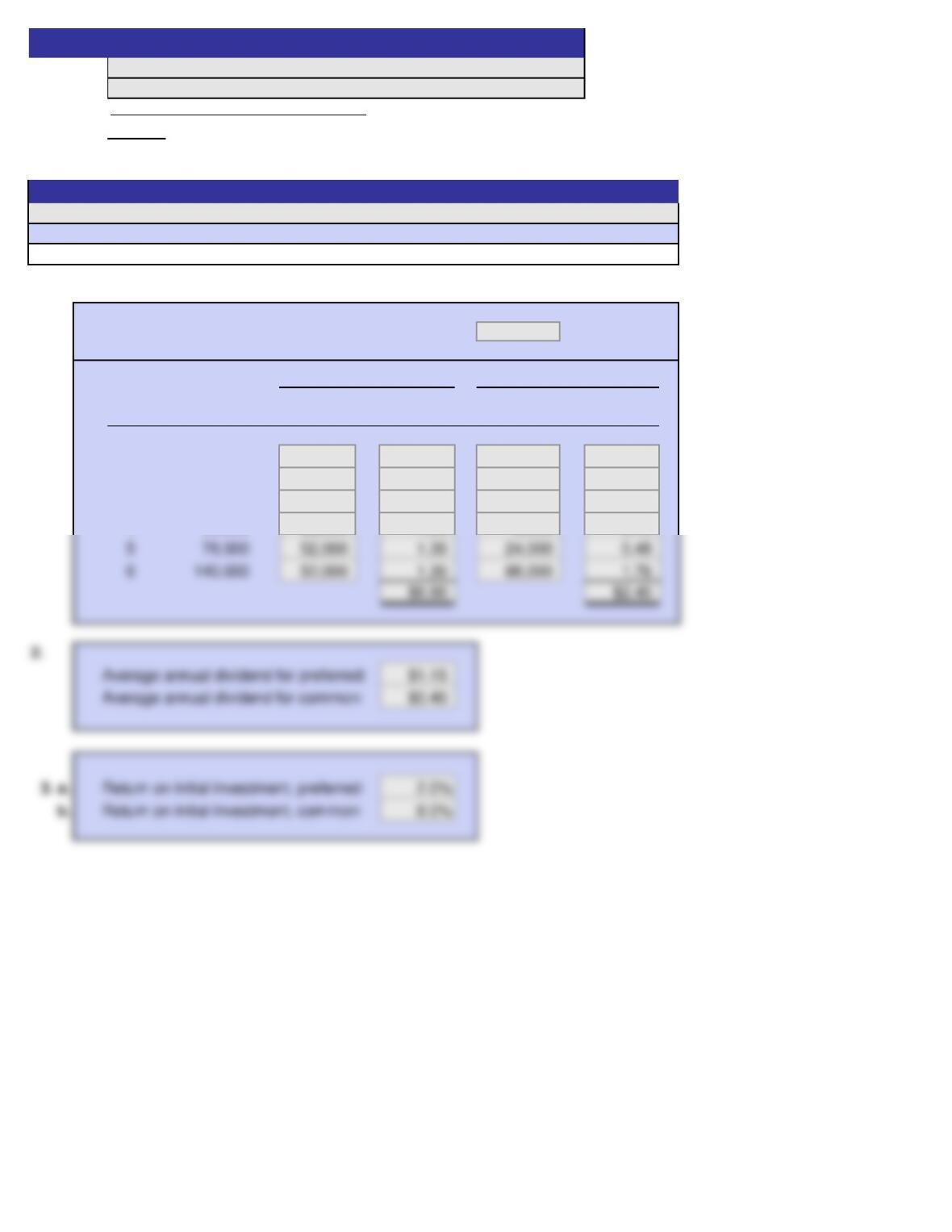
Maximum yearly total preferred dividend: 52,000$
Total
Year Dividends Total
Per Share
Total
Per Share
128,000$ 28,000$ $0.70 –$ $0.00
244,000 44,000 1.10 – 0.00
348,000 48,000 1.20 – 0.00
460,000 52,000 1.30 8,000 0.16
A red asterisk (*) will appear in the column to the right of an incorrect answer.
Problem 8-5
See student sheet for student’s score
ON
SOLUTION
Preferred Dividends
Common Dividends
Instructions
Answers are entered in the cells with gray backgrounds.
Cells with non-gray backgrounds are protected and cannot be edited.
Name:
Section:
Score: 0%
Key Code:
1. Plan 1 Plan 2 Plan 3
Earnings before interest and income tax
Deduct interest on bonds
2. Plan 1 Plan 2 Plan 3
Earnings before interest and income tax
Deduct interest on bonds
3. Plan 1:
Plan 2:
Plan 3:
2
Problem 8-6
Answers are entered in the cells with gray backgrounds.
Cells with non-gray backgrounds are protected and cannot be edited.
A red asterisk (*) will appear in the column to the right of an incorrect answer.
Instructions
Name:
Section:
Score:
Scoring:
1. Plan 1 Plan 2 Plan 3
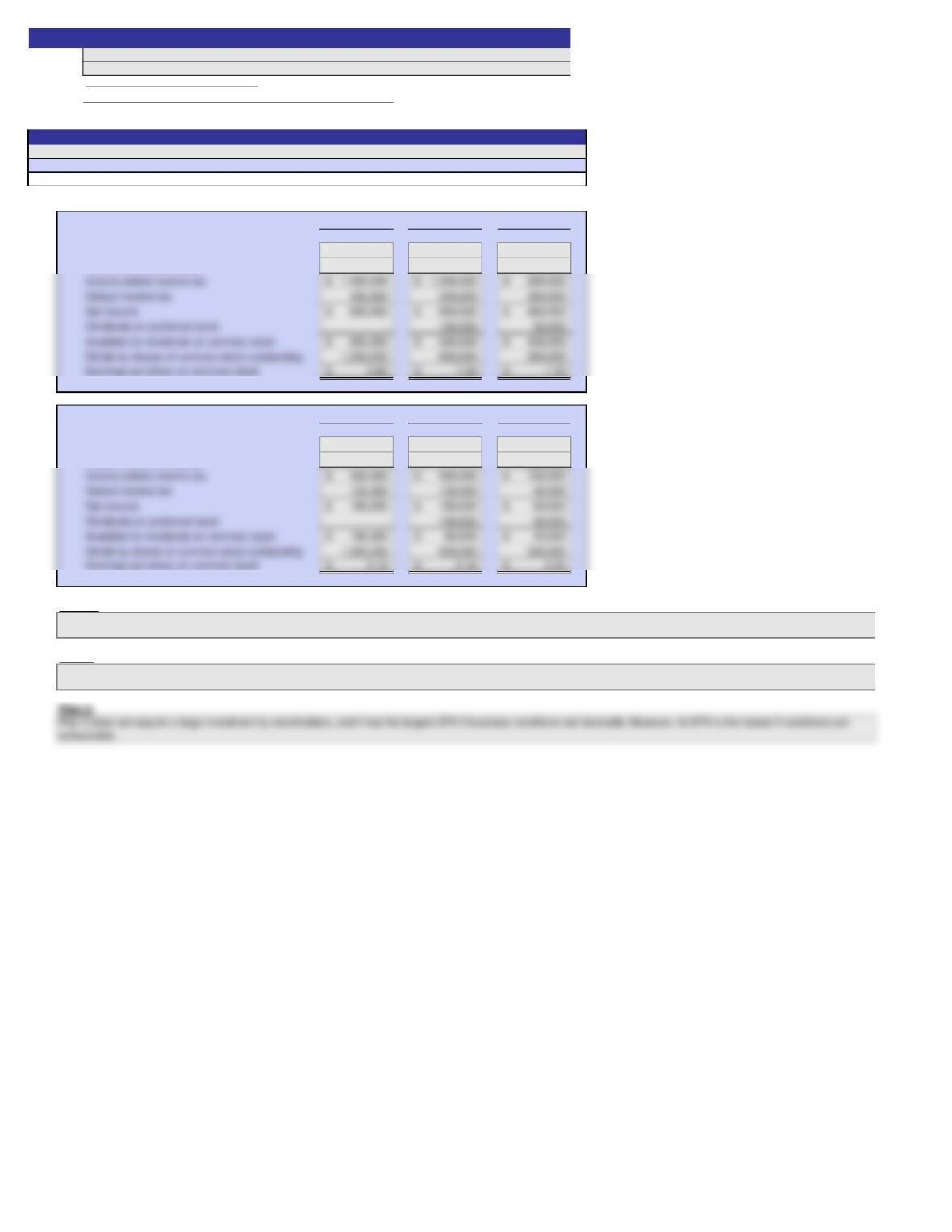
Earnings before interest and income tax 1,000,000$ 1,000,000$ 1,000,000$
Deduct interest on bonds – – 200,000
2. Plan 1 Plan 2 Plan 3
Earnings before interest and income tax 300,000$ 300,000$ 300,000$
Deduct interest on bonds – – 200,000
3. Plan 1:
Plan 2:
Plan 3:
Plan 3 does not require a large investment by stockholders, and it has the largest EPS if business conditions are favorable. However, its EPS is the lowest if conditions are
Problem 8-6
SOLUTION
Plan 1 does not require a periodic interest payment or a payment of preferred dividends, and it has the largest EPS if business conditions are poor. However, its EPS is the
lowest if conditions are favorable.
Instructions
Answers are entered in the cells with gray backgrounds.
Cells with non-gray backgrounds are protected and cannot be edited.
ON
A red asterisk (*) will appear in the column to the right of an incorrect answer.
See student sheet for student’s score
Plan 2 does not require a periodic interest payment, and does not require such a large investment by common stockholders. The EPS do not vary as much as the other plans
as business conditions change.