Appendix A – Reporting and Interpreting Investments in Other Corporations
expense
8. Dividends Declared
will receive $20,000 ($0.50 × 40,000 shares)
dr Dividends receivable (+A)
cr Investments (–A)
Dividends Receivable (A) +20,000 + Investments (A)
During fiscal year 2018, Green Light declared and paid a
cash dividend of $0.50 per share to stockholders; Disney
B. Reporting Investments Under the Equity Method
1. The Investments account is reported on the balance sheet
as a long-term asset
a. The investment account does not reflect either cost or
fair value; instead, the following occurs:
i. The investment account is increased by the cost of
shares that were purchased and the proportional
share of the affiliates’ net income
C. Focus on Cash Flows: Investments
1. The cash resulting from the sale or purchase is reflected in
the Investing Activities section
2. In the Operating Activities section, there are a number of
adjustments to net income:
a. Any gain (loss) on the sale is subtracted from (added
to) net income
b. Any unrealized holding gain (loss) on trading securities
income
Appendix A – Reporting and Interpreting Investments in Other Corporations
App A – 13
LO A-4 – Analyze and report investments in controlling interests.
V. Controlling Interests: Mergers and Acquisitions
A. Reasons for Acquiring Control of Another Corporation
acquires another at a different level in the channels of
distribution
at the same level in the channels of distribution
3. Synergy: The operations of two companies together may
be more profitable than the combined profitability of the
1. Vertical integration: In this type of acquisition, a company
B. Recording a Merger
1. Merger––occurs when one company purchases all of the
assets and liabilities of another and the acquired company
goes out of existence
2. Acquisition method––records assets and liabilities
acquired in a merger or acquisition at their fair value on
the transaction date
a. Only method allowed by U.S. GAAP and IFRS for
recording a merger or acquisition
acquired be recorded by the acquiring company on its
assets acquired)––for accounting purposes, the
excess of the purchase price of a business over the
fair value of the acquired company’s assets and
liabilities
the text
d. Assume that Green Light owned two assets
(equipment and a patent) and had one liability (a note
payable). Disney followed the two steps and produced
the following:
dr Equipment (+A)
dr Patents (+A)
dr Goodwill (+A)
Appendix A – Reporting and Interpreting Investments in Other Corporations
App A – 14
cr Cash (–A)
1,000,000
e. In summary, when performing a purchase price
Assets = Liabilities + Stockholders’ Equity
C. Reporting for the Combined Companies
1. After the merger, the acquiring company will treat the
acquired assets and liabilities in the same manner as if
they were acquired individually
a. For example, the company will depreciate amounts
2. When a company acquires another, and both companies
continue their separate legal existence, consolidated
financial statements must be presented
Refer students to Pause for
a. The parent company is the company that gains control
into one in a simple merger (as discussed above)
IV. Appendix Supplement: Held-to-Maturity Bonds Purchased at Other than Par Value: Amortized
Cost Method
A. Bond Purchases
amount (at a discount), or for more than the maturity
amount (at a premium)
1. On the date of purchase, a bond may be acquired at the
commissions, is debited to the Held-to-Maturity
Investments account
2. The total cost of the bond, including all incidental
3. On October 1, 2018, Disney paid $92,278 cash for an 8%,
5-year $100,000 bond that paid interest semiannually (on
3/31 and 9/30); bond’s yield was 10%
Appendix A – Reporting and Interpreting Investments in Other Corporations
App A – 15
dr Investments (+A)
cr Cash (−A)
B. Interest Earned
1. The discount that needs to be amortized over the life of
the investment; using the effective interest amortization
method:
2. Receipt of interest on March 31, 2019
dr Cash (+A)
4,000
dr Investments(+A)
3. The amount reported on the balance sheet at March 31,
4. If the bond investment must be sold before maturity, any
difference between market value on the date of sale and
net book value would be reported as a gain or loss on sale
Appendix A – Reporting and Interpreting Investments in Other Corporations
Supplemental Enrichment Activities
Note: These activities would be suitable for individual or group activities.
1. Handout A-1
Use Handout A-1 for an in-class activity to review the accounting for a passive investment in equity
2. Handout A-2
Use Handout A-2 for an in-class activity to review the accounting for trading securities. The solution
3. Handout A-3
Use Handout A-3 for an in-class activity to review the equity method. The solution follows the
Appendix A – Reporting and Interpreting Investments in Other Corporations
App A – 17
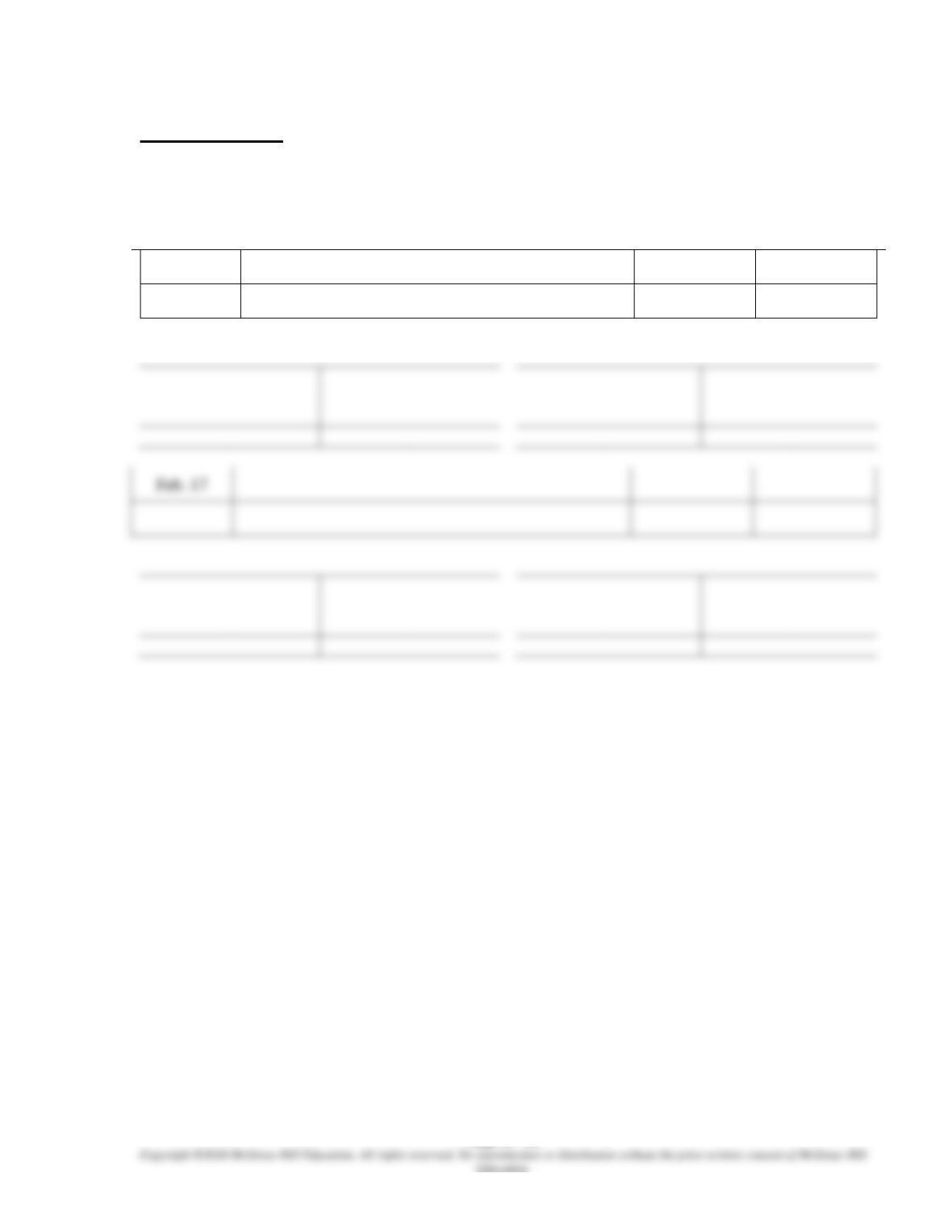
HANDOUT A – 1
BELLOWS CORP.
1. Bellows Corp. had $100,000 in its Cash account on January 1, Year 1. On June 15, Year 1, Bellows
Corp. acquired 100 shares of Sonny, Inc. for $75 per share. Assume that Bellows considers the stock
a passive investment. Prepare the journal entry required to record this transaction and, after entering
the beginning Cash account balance, post it to the appropriate T-accounts:
2. On September 15, Year 1, Bellows Corp. received dividends from Sonny of $2 per share. Prepare the
journal entry required to record this transaction and update the appropriate T-accounts:
Sept. 15
3. At December 31, Year 1, the value of the stock was $120 per share. Prepare the journal entry required
to record this transaction and update the appropriate T-accounts:
Computation of amount:
Dec. 31
Appendix A – Reporting and Interpreting Investments in Other Corporations
App A – 18
HANDOUT A – 1, continued
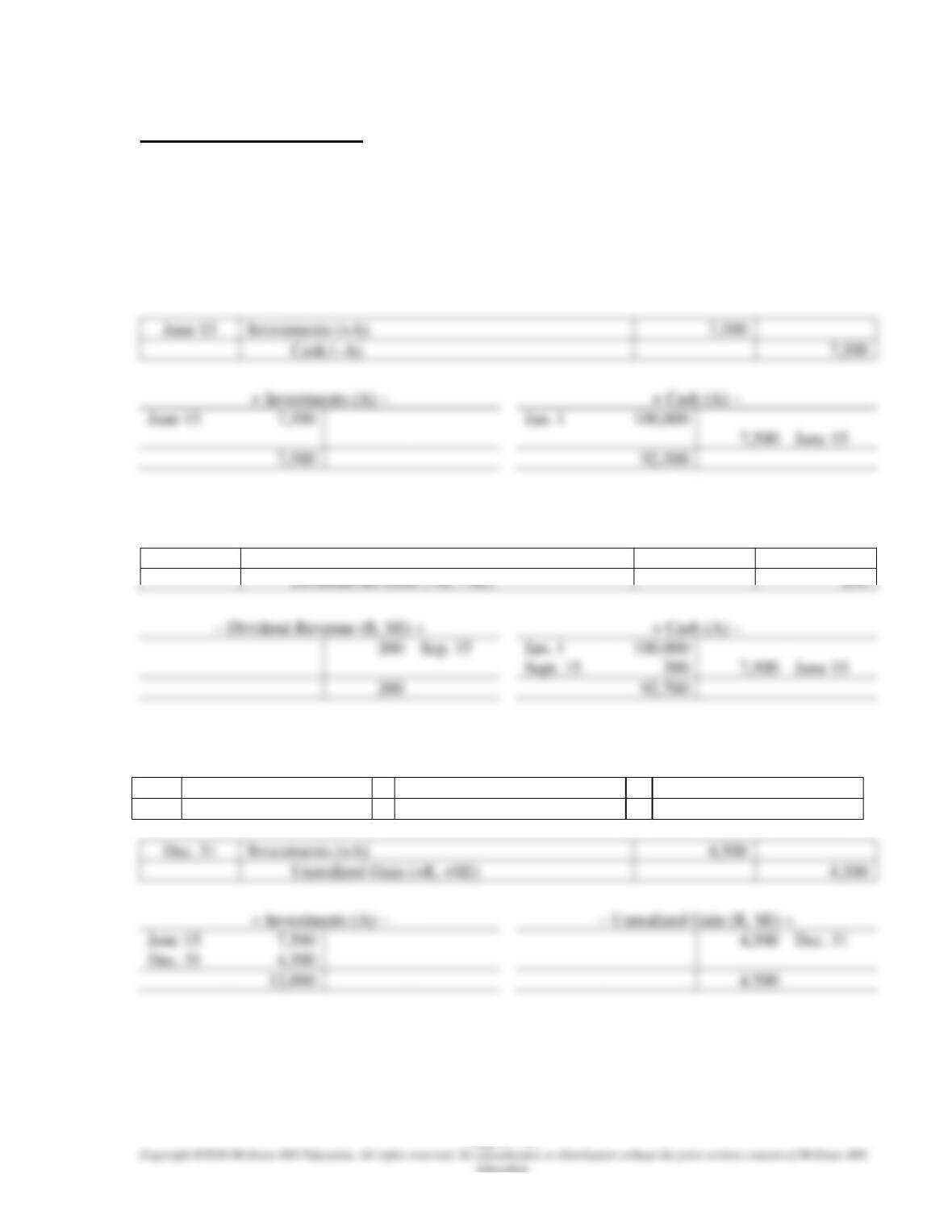
4. On February 17, Year 2, Bellows sold the stock for $115 per share. Prepare the journal entries
required to record this transaction and update the appropriate T-accounts:
Feb. 17
Feb. 17
Appendix A – Reporting and Interpreting Investments in Other Corporations
App A – 19
HANDOUT A – 1 Solution
BELLOWS CORP.
1. Bellows Corp. had $100,000 in its Cash account on January 1, Year 1. On June 15, Year 1, Bellows
Corp. acquired 100 shares of Sonny, Inc. for $75 per share. Assuming that Bellows considers the
stock a passive investment, prepare the journal entry required to record this transaction and post it to
the appropriate T-accounts:
Investments (+A)
Cash (–A)
June 15
Jan. 1
June 15
2. On September 15, Year 1, Bellows Corp. received dividends from Sonny of $2 per share. Prepare the
journal entry required to record this transaction and update the appropriate T-accounts:
Sept. 15
Cash (+A) (100 shares × $2 per share)
200
Dividend Revenue (+R, +SE)
200
Sep. 15
Jan. 1
Sept. 15
June 15
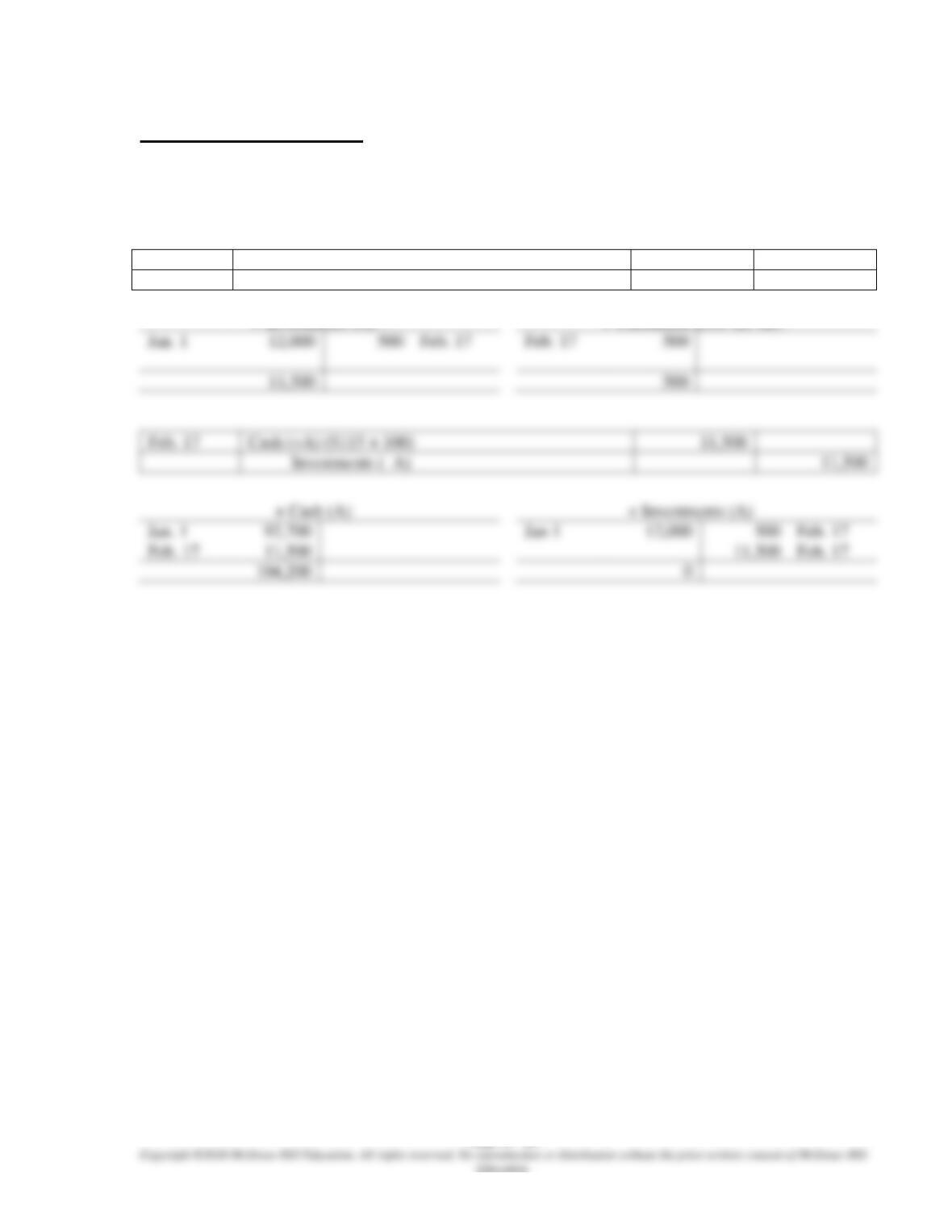
3. At December 31, Year 1, the value of the stock was $120 per share. Prepare the journal entry required
to record this transaction and update the appropriate T-accounts:
Year
Fair Value
–
Book Value before Adjustment
=
Amount for Adjusting Entry
1
$12,000 ($120 × 100)
–
7,500
=
4,500
Investments (+A)
Unrealized Gain (+R, +SE)
June 15
Dec. 31
Dec. 31
Appendix A – Reporting and Interpreting Investments in Other Corporations
App A – 20
HANDOUT A – 1 Solution, continued
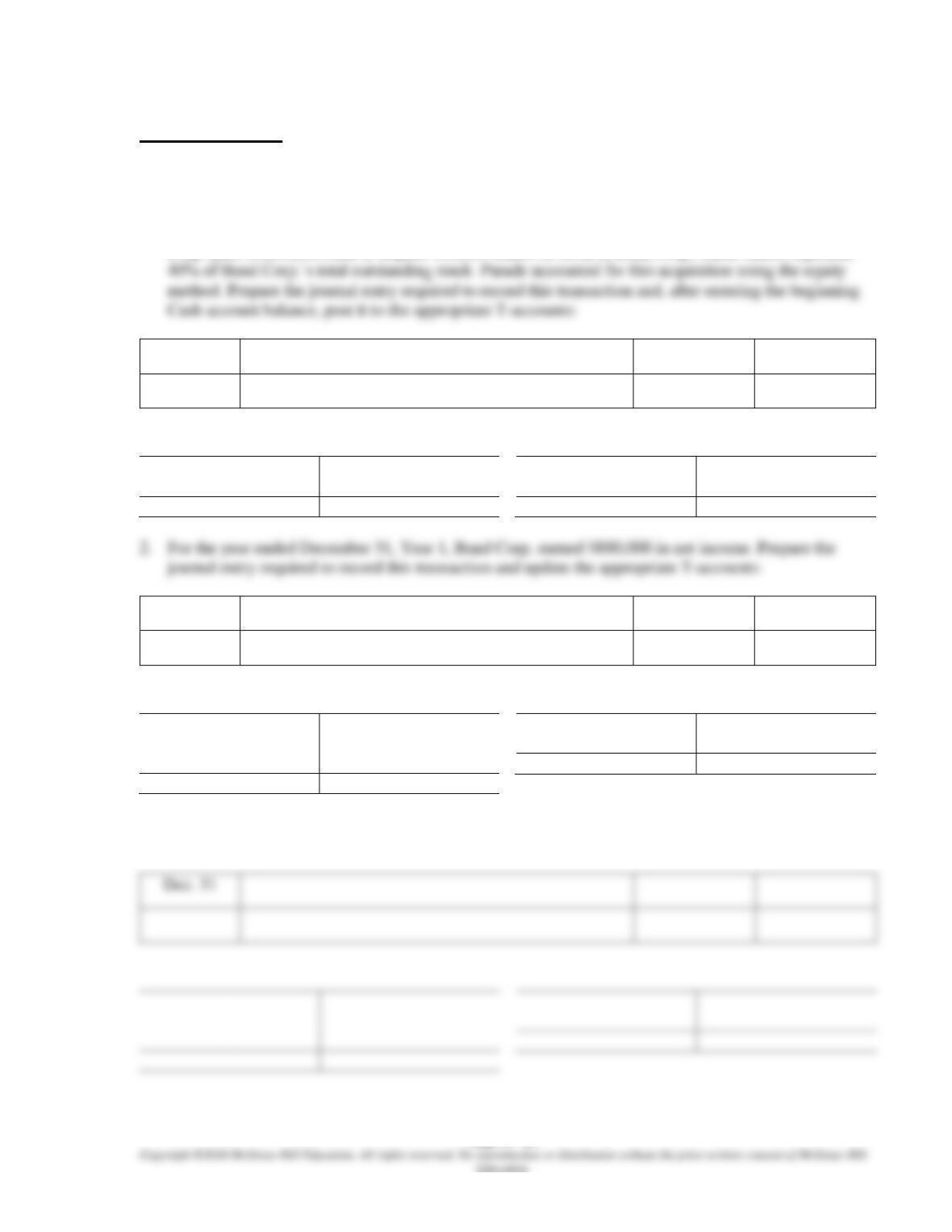
4. On February 17, Year 2, Bellows sold the stock for $115 per share. Prepare the journal entries
required to record this transaction and update the appropriate T-accounts:
Feb. 17
Unrealized Loss (+E, –SE)
500
Investments (–A)
500
+ Investments (A) –
Jan. 1
Feb. 17
Feb. 17
Cash (+A) ($115 × 100)
Investments (–A)
Jan. 1
Feb. 17
Jan 1
Feb. 17
Feb. 17
+ Unrealized Loss (E, SE) –
Appendix A – Reporting and Interpreting Investments in Other Corporations
App A – 21
HANDOUT A – 2
PARADE CORP.
1. Parade Corp. had $10,000,000 in its Cash account on January 1, Year 1. On January 2, Year 1, Parade
Corp. paid $5,000,000 cash to acquire 400,000 shares of stock in Band Corp. These shares represent
Jan. 2
Dec. 31
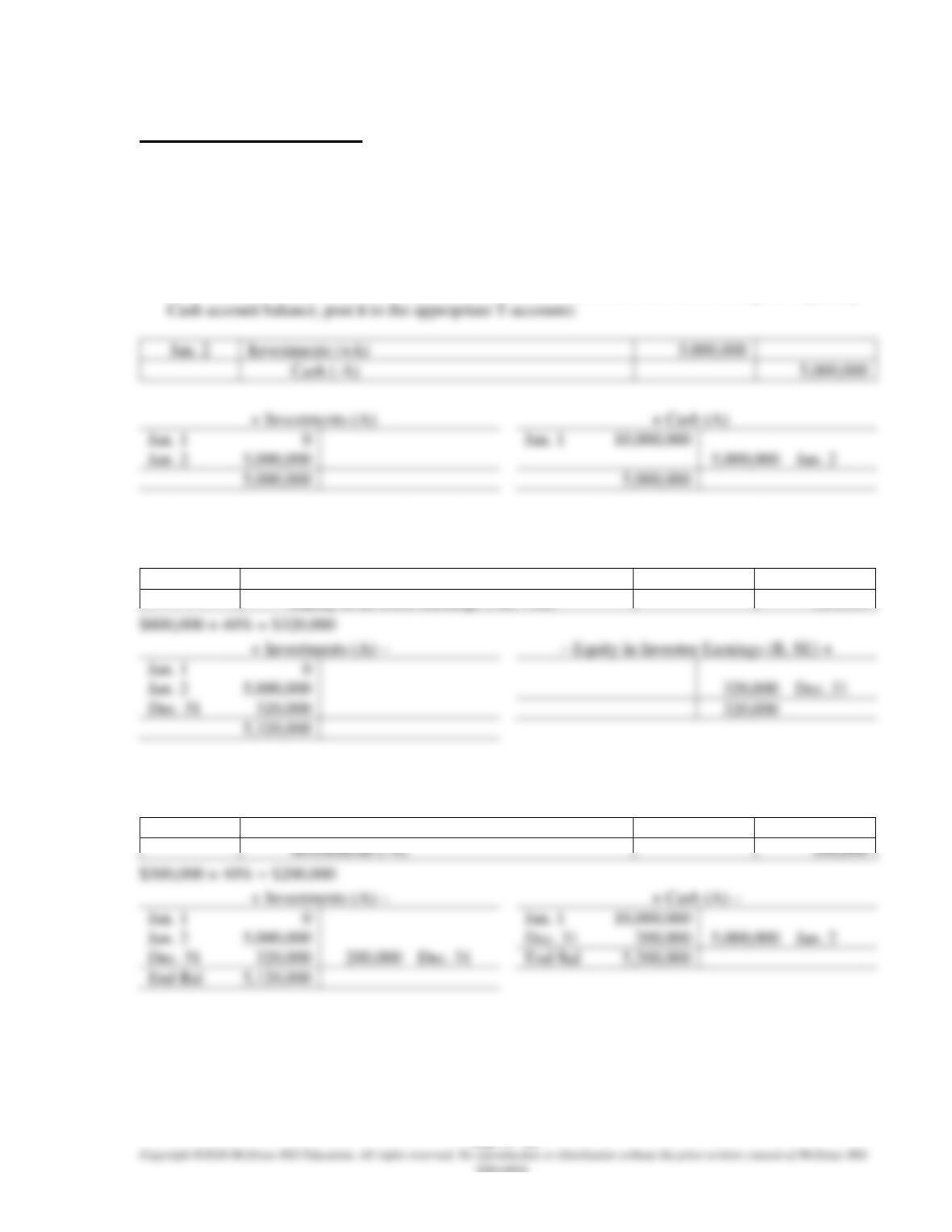
3. On December 31, Year 1, Band Corp. declared and paid $500,000 in dividends. Prepare the journal
entry required to record this transaction and update the appropriate T-accounts:
Appendix A – Reporting and Interpreting Investments in Other Corporations
App A – 22
HANDOUT A – 2 Solution
PARADE CORP.
1. Parade Corp. had $10,000,000 in its Cash account on January 1, Year 1. On January 2, Year 1, Parade
Corp. paid $5,000,000 cash to acquire 400,000 shares of stock in Band Corp. These shares represent
40% of Band Corp.’s total outstanding stock. Parade accounted for this acquisition using the equity
method. Prepare the journal entry required to record this transaction and, after entering the beginning
Investments (+A)
Cash (-A)
Jan. 1
Jan. 1
10,000,000
2. For the year ended December 31, Year 1, Band Corp. earned $800,000 in net income. Prepare the
journal entry required to record this transaction and update the appropriate T-accounts:
Dec. 31
Investments (+A)
320,000
Equity in Investee Earnings (+R, +SE)
320,000
Jan. 1
Dec. 31
3. On December 31, Year 1, Band Corp. declared and paid $500,000 in dividends. Prepare the journal
entry required to record this transaction and update the appropriate T-accounts:
Dec. 31
Cash (+A)
200,000
Jan. 2
End Bal
Dec. 31
Jan. 2