Financial Accounting, 10/e Appendix A-21
PA–4.
Req. 1
The fair value method must be used for both securities:
(1) For D-Light common stock, only 15% of the outstanding shares is owned (below
Req. 2
2020
2021
a.
Purchase of the investments:
Investments (+A) ………………………….
556,750
Cash (–A) ……………………………..
556,750
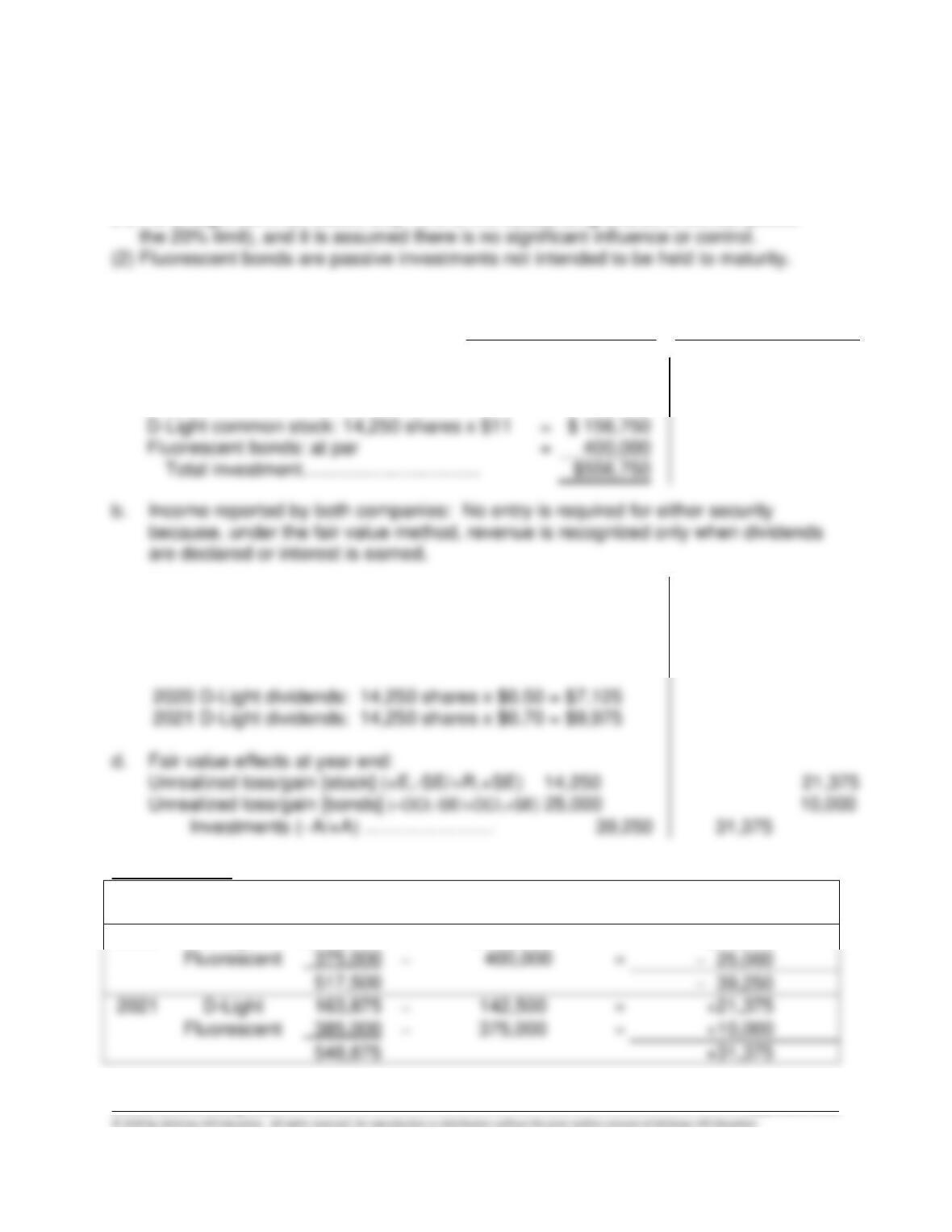
D-Light common stock: 14,250 shares x $11
Fluorescent bonds: at par
Total investment …………………………….
c. Dividends/interest received:
Cash (+A) ………………………………….
35,125
37,975
Dividend revenue (+R, +SE) ….
7,125
9,975
Interest revenue (+R, +SE)…….
28,000
28,000
Computations:
Year
Company
Fair
Value
−
Book Value before
Adjustment
=
Amount for
Adjusting Entry
2020
D-Light
$142,500
−
$156,750
=
−$14,250
− 39,250
2021
D-Light
−
=
PA–4. (continued)
Req. 3
a.
Balance Sheet (as a noncurrent asset):
2020
2021
Investments …………………………………………………………….
$517,500
$548,875
b.
Other Comprehensive Income:
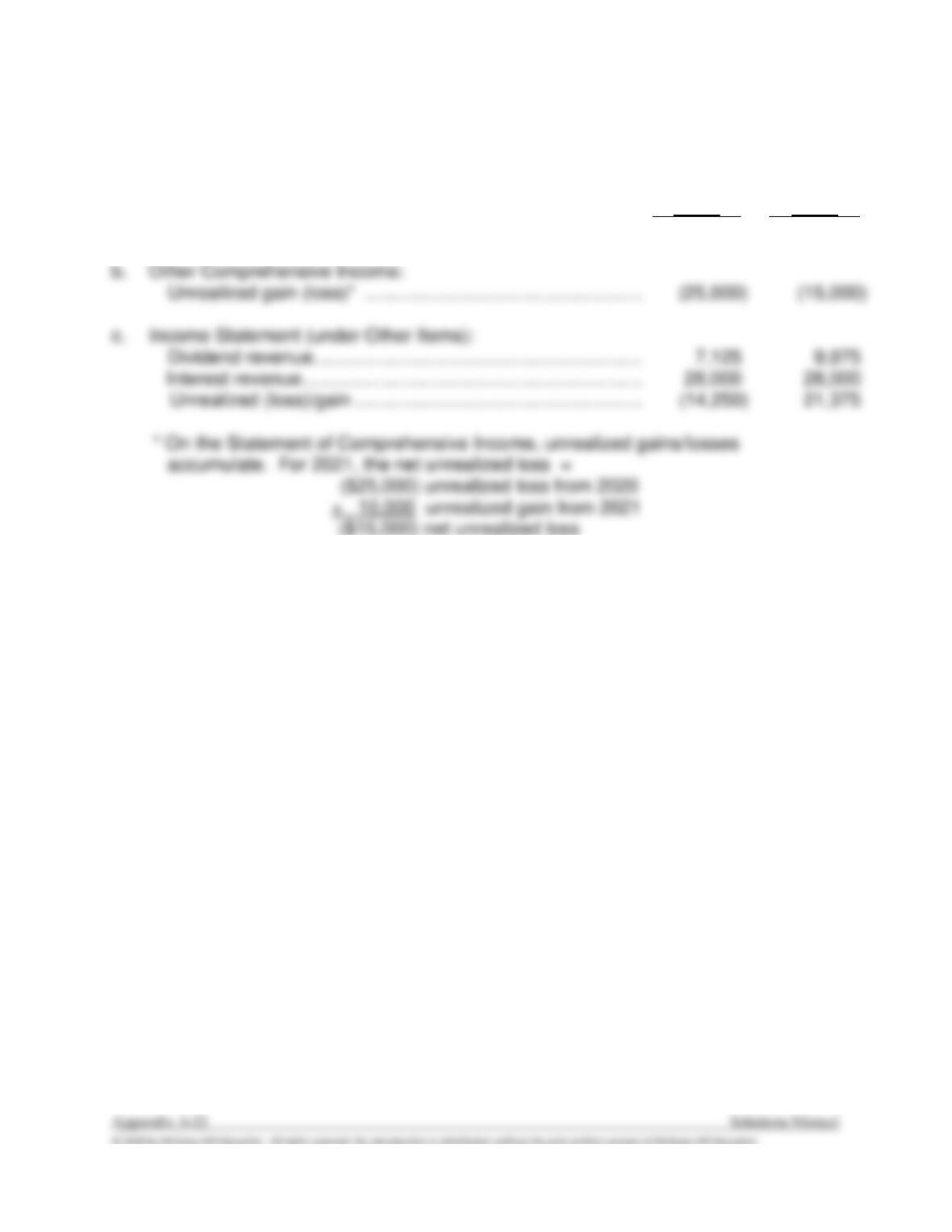
Unrealized gain (loss)* ……………………………………………..
)
)
c.
Income Statement (under Other Items):
Dividend revenue ………………………………………………………
Financial Accounting, 10/e Appendix A-23
PA–5.
Req. 1
Aug. 4, 2019
Investments (+A) ……………………………………………………….
180,000
Cash (–A) ……………………………………………………….
180,000
Dec. 31, 2019
Unrealized loss (+E, –SE) …………………………..
10,000
Investments (–A) …………………………………………………..
10,000
June 1, 2020
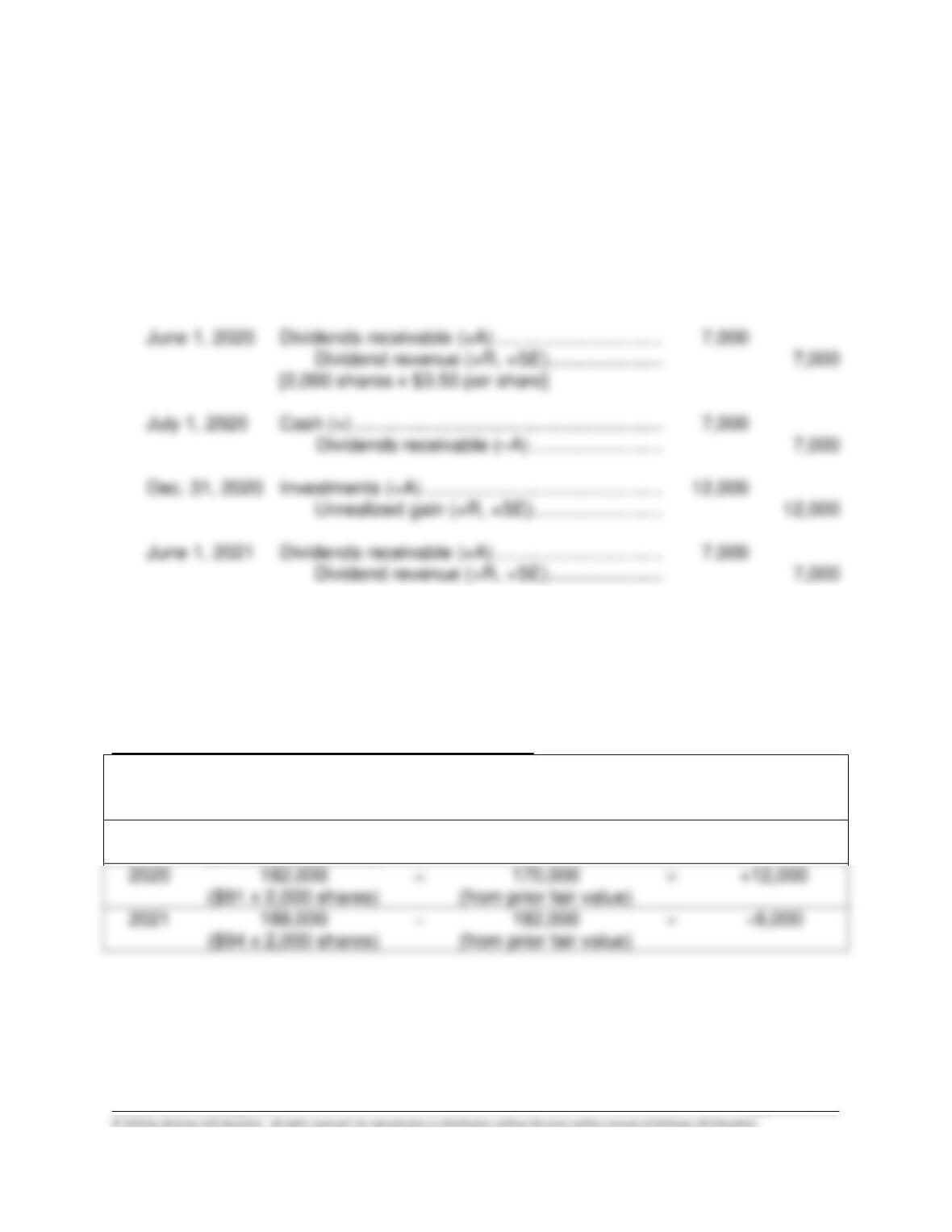
Dividends receivable (+A) …………………………..
7,000
Dividend revenue (+R, +SE) …………………………..
7,000
[2,000 shares x $3.50 per share]
July 1, 2020
Cash (+) ……………………………………………………….
7,000
Dividends receivable (–A) …………………………..
7,000
Dec. 31, 2020
Investments (+A) ……………………………………………………….
Unrealized gain (+R, +SE)…………………………..
12,000
June 1, 2021
Dividends receivable (+A) …………………………..
7,000
Dividend revenue (+R, +SE) …………………………..
7,000
July 1, 2021
Cash (+) ……………………………………………………….
7,000
Dividends receivable (–A) …………………………..
7,000
Dec. 31, 2021
Investments (+A) ……………………………………………………….
6,000
Unrealized gain (+R, +SE)…………………………..
6,000
Computations for Year-End Adjustments to Market:
Year
Fair Value
−
Book Value before
Adjustment
=
Amount for
Adjusting
Entry
2019
$170,000
($85 x 2,000 shares)
−
$180,000
=
−$10,000
($91 x 2,000 shares)
PA–5. (continued)
Req. 2
Aug. 4, 2019
Investments (+A) ……………………………………………………….
180,000
Cash (–A) ……………………………………………………….
180,000
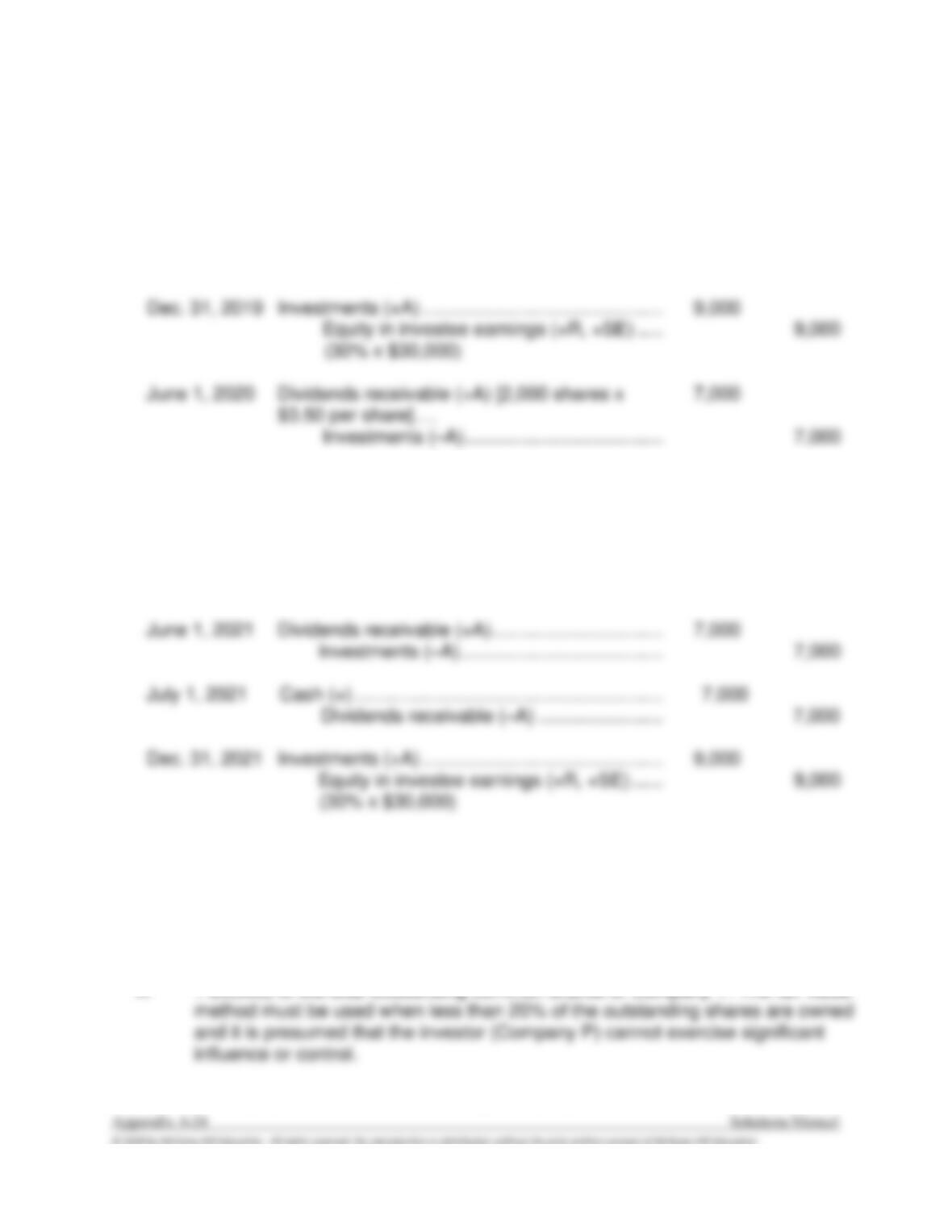
Dec. 31, 2019
Investments (+A) ……………………………………………………….
9,000
Equity in investee earnings (+R, +SE) …………………….
9,000
(30% x $30,000)
$3.50 per share]….
7,000
July 1, 2020
Cash (+) ……………………………………………………….
7,000
Dividends receivable (–A) …………………………..
7,000
Dec. 31, 2020
Investments (+A) ……………………………………………………….
9,000
Equity in investee earnings (+R, +SE) ……………………..
9,000
(30% x $30,000)
June 1, 2021
Dividends receivable (+A)……………………………………………..
7,000
July 1, 2021
Cash (+) ……………………………………………………….
7,000
Dividends receivable (–A) …………………………..
7,000
Dec. 31, 2021
Investments (+A) ……………………………………………………….
9,000
Equity in investee earnings (+R, +SE) ……………………..
9,000
(30% x $30,000)
PA–6.
Req. 1
CASE
A
influence or control.
The fair value method must be used by Company P because it owns 12% (3,000
÷ 25,000) of the total outstanding common shares of Company T. The fair value
CASE
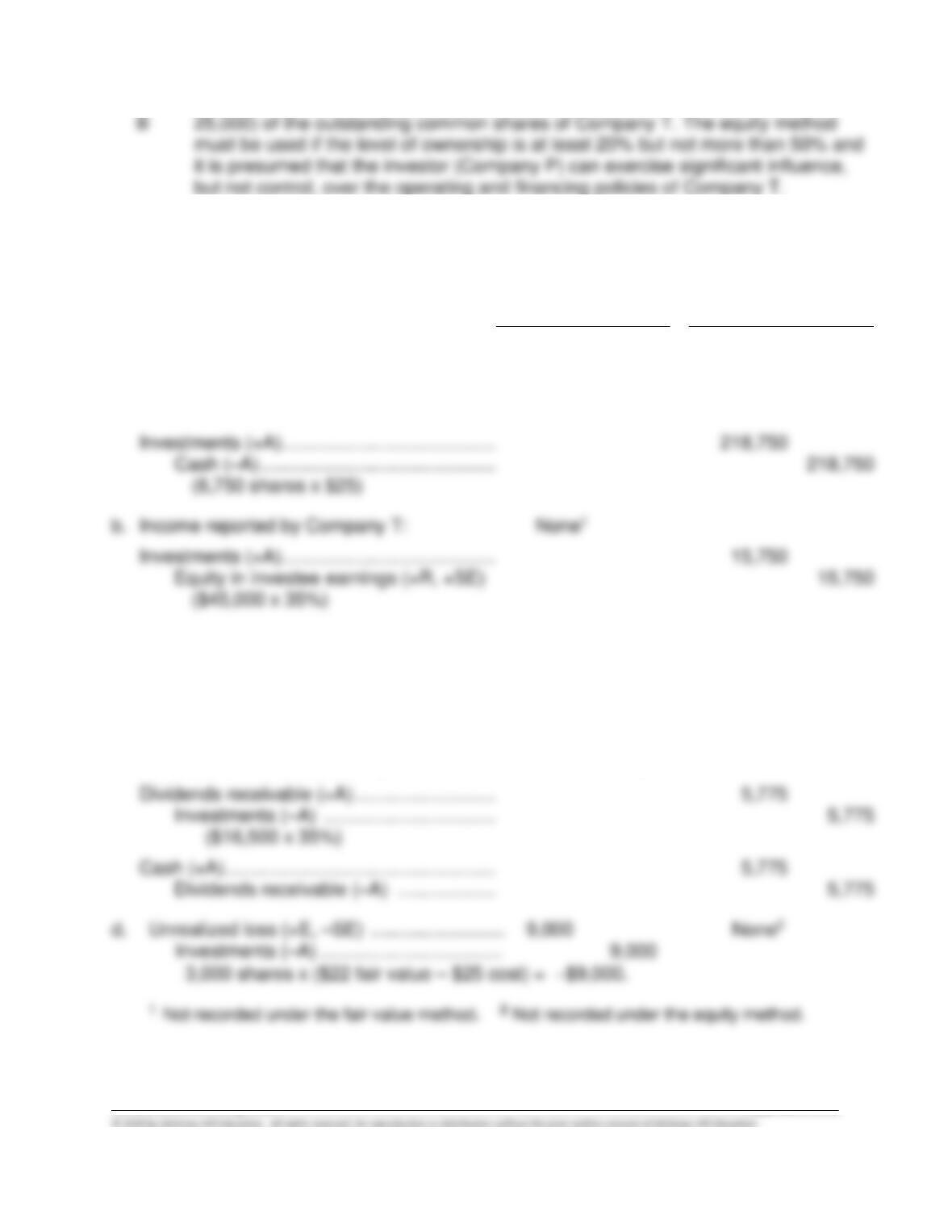
The equity method must be used by Company P because it owns 35% (8,750 ÷
Financial Accounting, 10/e Appendix A-25
but not control, over the operating and financing policies of Company T.
PA–6. (continued)
Req. 2
Case A-12%
Case B-35%
a.
January 1 purchase:
Investments (+A) …………………………………….
75,000
Cash (–A) ………………………………………..
75,000
(3,000 shares x $25)
Investments (+A) …………………………………….
Cash (–A) ………………………………………..
(8,750 shares x $25)
b.
Income reported by Company T:
Investments (+A) ……………………………………
Equity in investee earnings (+R, +SE)
($45,000 x 35%)
c.
Dividends declared and then paid by Co. T:
Dividends receivable (+A) ……………………….
1,980
Dividend revenue (+R, +SE) ……………….
1,980
•
($16,500 x 12%)
•
•
Cash (+A) ……………………………………………..
1,980
•
Dividends receivable (–A) …………………..
1,980
•
Dividends receivable (+A) ………………………..
Investments (–A) ……………………………..
Cash (+A) ………………………………………………
Dividends receivable (–A) …………………
d.
PA–6. (continued)
Req. 3
Case A-12%
Case B-35%
Balance Sheet (noncurrent assets):
Investments …………………………..………
$66,000
(1)
$228,725
(2)
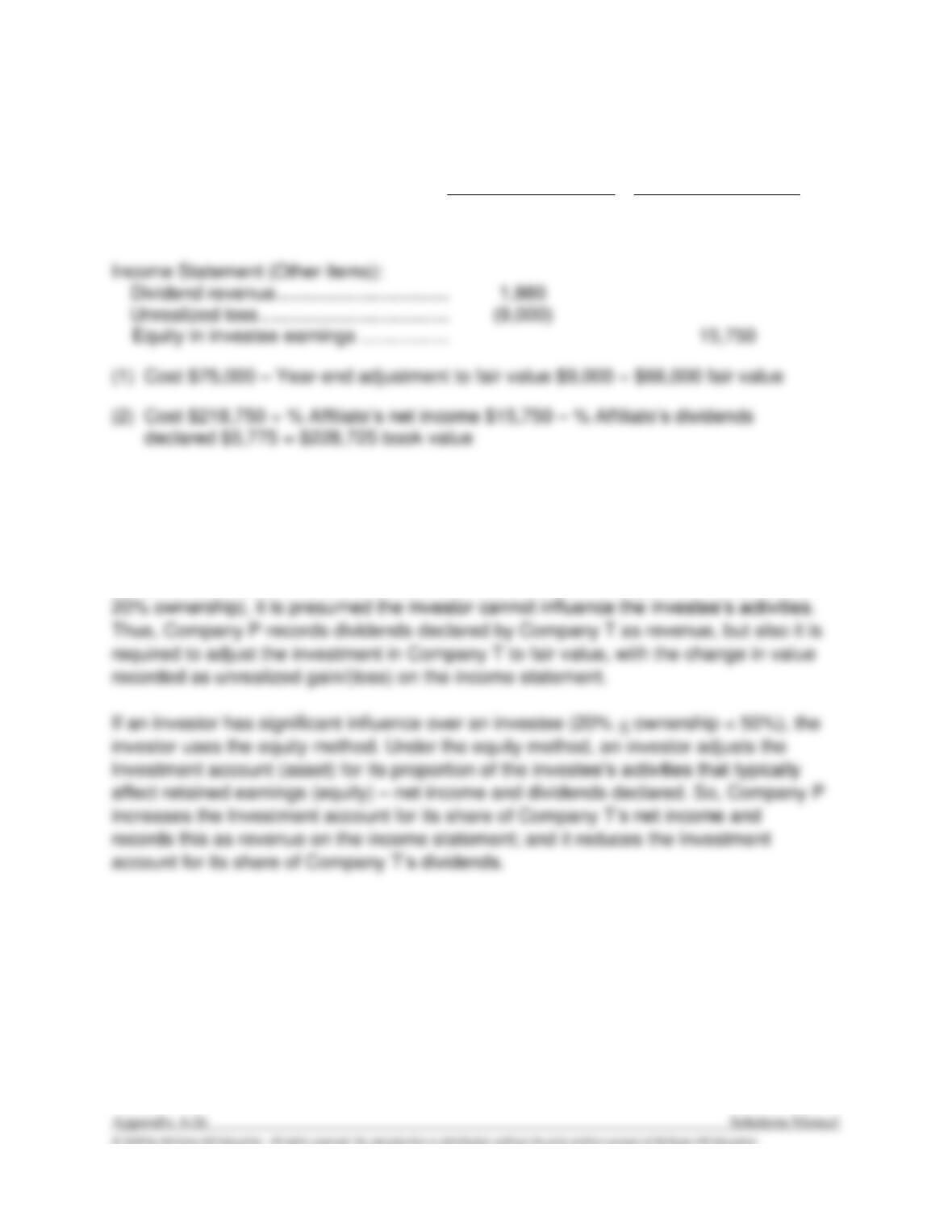
Income Statement (Other items):
Req. 4
Assets and revenues are different because the accounting treatment corresponds to
the amount of “control” an investor has over the investee. For a passive investment (<
Financial Accounting, 10/e Appendix A-27
PA–7.
Req. 1
owns 12.5% (15,000 ÷ 120,000) of the total shares of the outstanding common stock
of Surge.
CASE
The fair value method must be used when less than 20% of the outstanding stock is
CASE
B
The equity method must be used when at least 20% but not more than 50% of the
outstanding stock is owned and the investor can exercise significant influence, but
Req. 2
Case A-12.5%
Case B-40%
a.
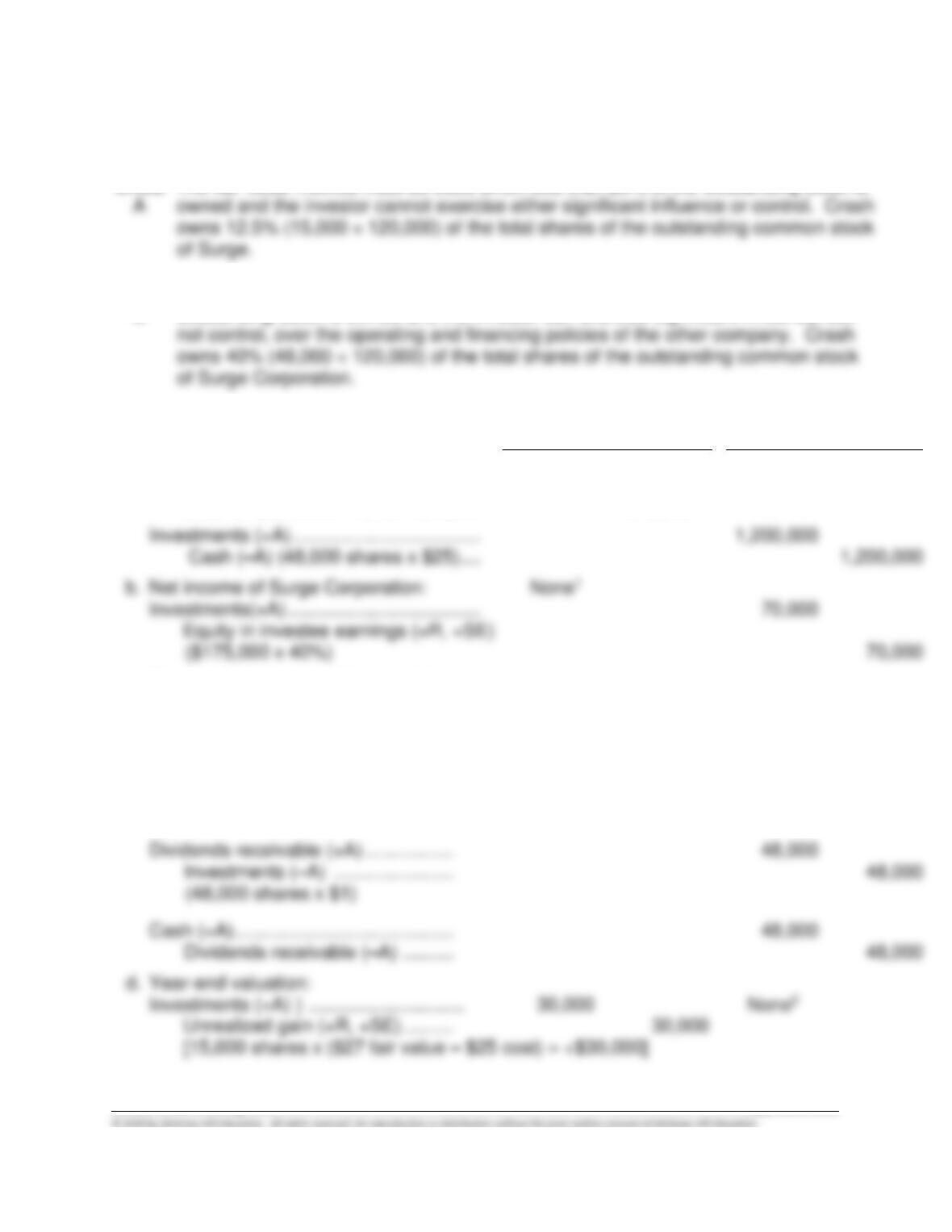
Jan. 10 purchase:
Investments (+A) ………………………………
375,000
Cash (–A) (15,000 shares x $25) ….
375,000
Investments (+A) ………………………………
Net income of Surge Corporation:
Investments(+A) ……………………………….
70,000
c.
Dividends declared and then paid by
Surge Corporation:
Dividends receivable (+A) ……………..
15,000
Dividend revenue (+R, +SE) …….
15,000
(15,000 shares x $1)
Cash (+A) ……………………………………
15,000
Dividends receivable (–A) ……….
15,000
Dividends receivable (+A) ……………..
48,000
Investments (–A) …………………..
Cash (+A) ……………………………………
48,000
Dividends receivable (–A) ……….
Year-end valuation:
Investments (+A) ) …………………………

Financial Accounting, 10/e Appendix A-29
PA–7. (continued)
Req. 3
Case A
Case B
a.
Balance Sheet (noncurrent assets):
Investments ……………………………………………………….
$405,000
(1)
$1,222,000
(2)
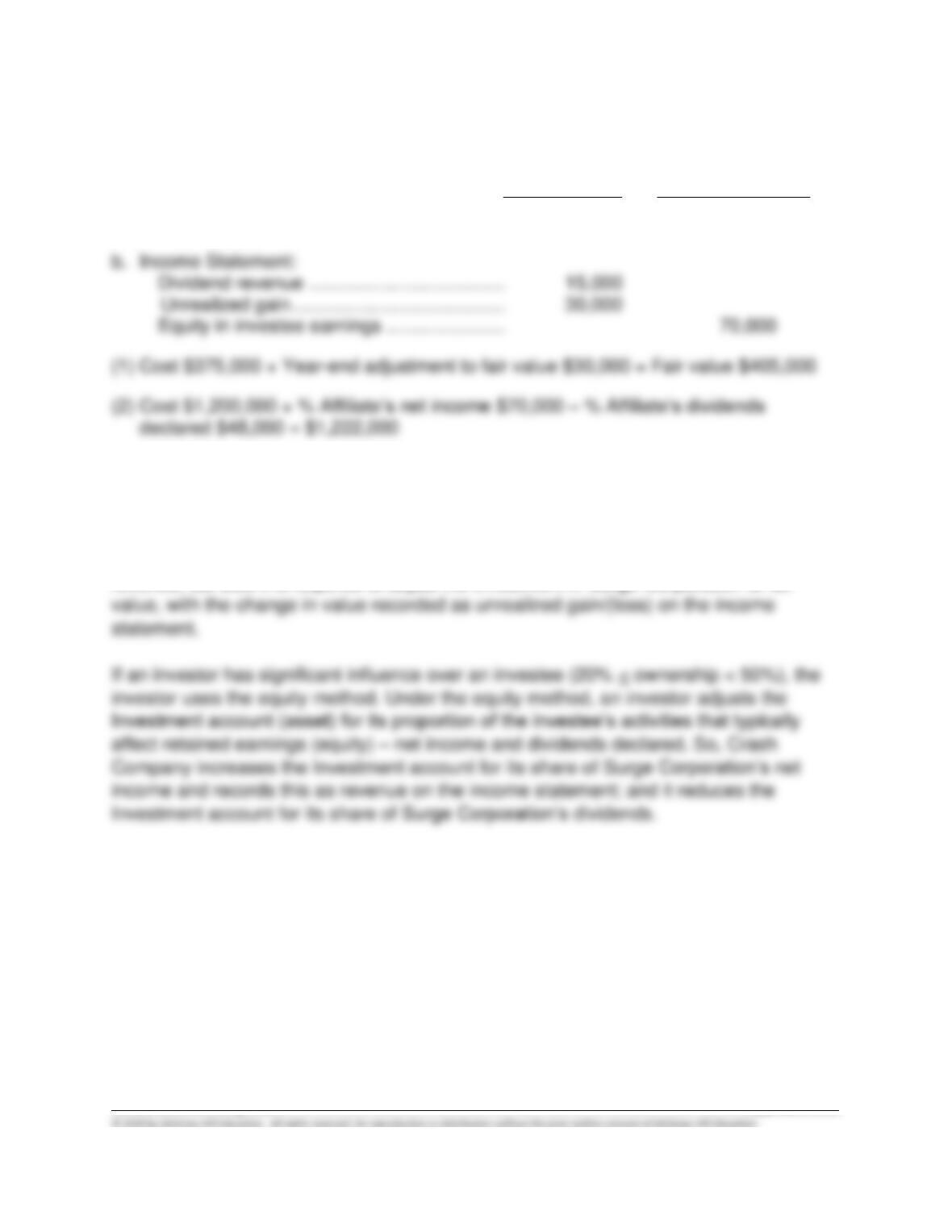
b.
Income Statement:
Equity in investee earnings …………………………..
Req. 4
Assets and revenues are different because the accounting treatment corresponds to
the amount of “control” an investor has over the investee. For a passive investment (<
20% ownership), it is presumed the investor cannot influence the investee’s activities.
Thus, Crash Company records dividends received from Surge Corporation as
revenue, but also it is required to adjust the investment in Surge Corporation to fair
PA–8.
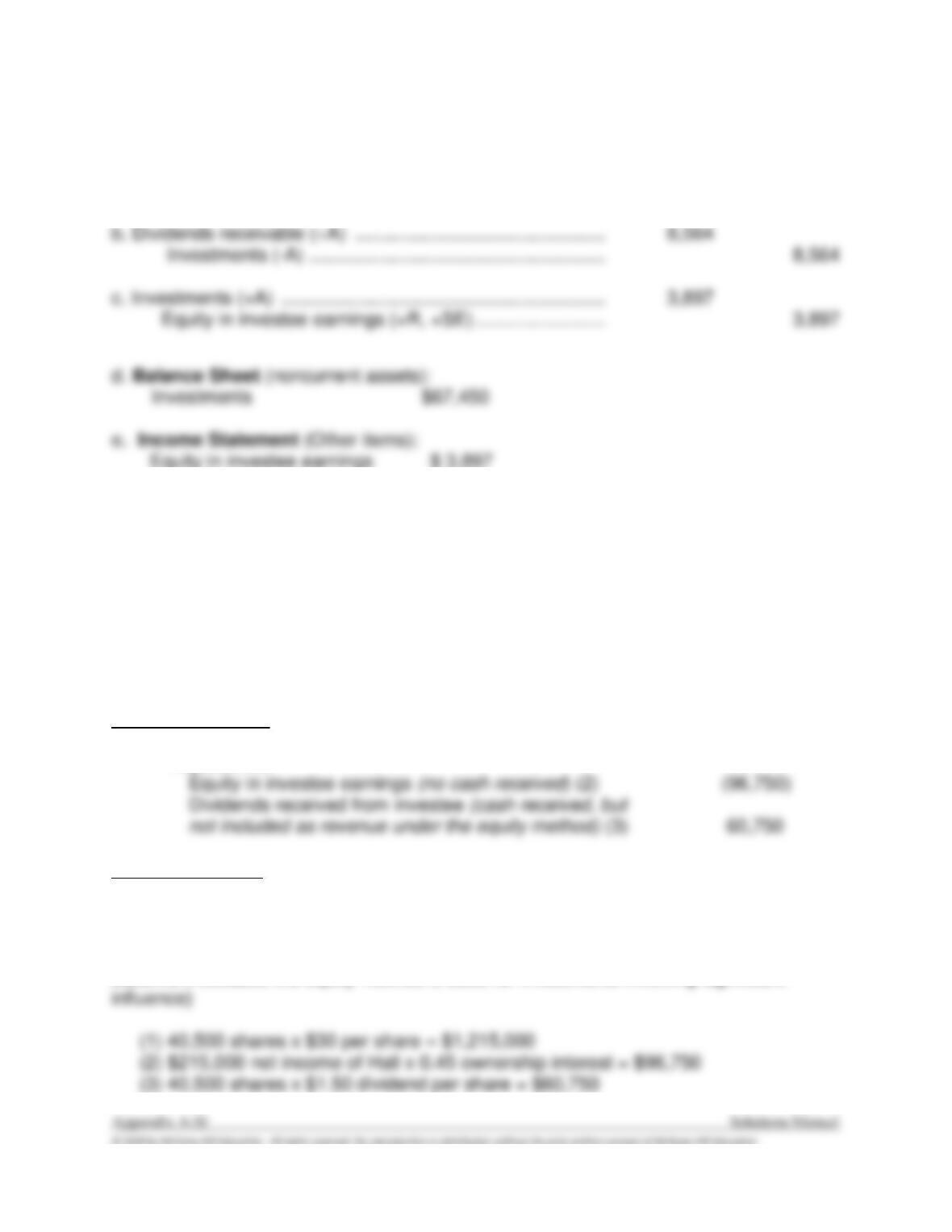
a. Investments (+A) ……………………………………………………..
15,685
Cash (–A) ………………………………………………………….
15,685
b. Dividends receivable (+A) …………………………………………
c. Investments (+A) ……………………………………………………..
PA–9.
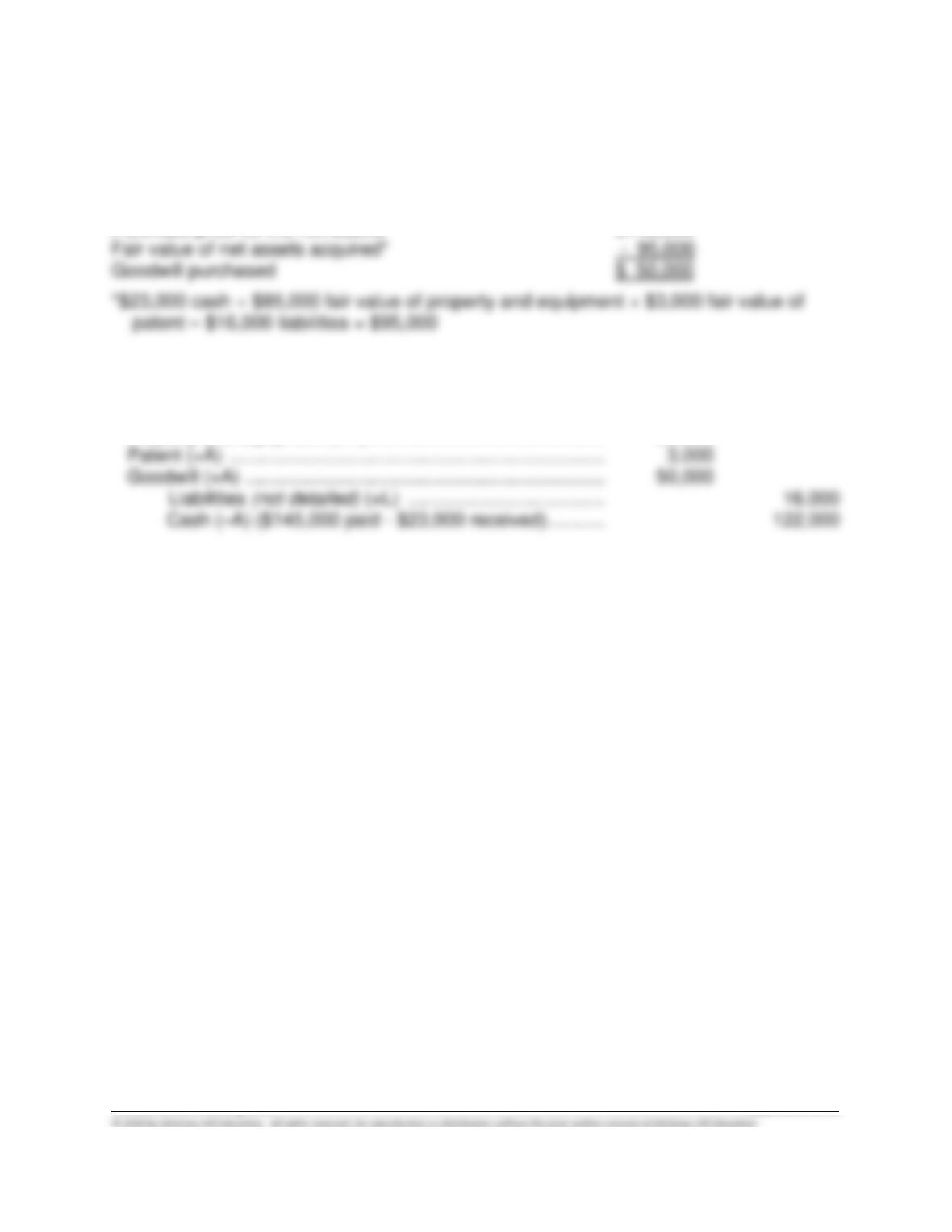
Since Bradford Company acquired 45% (40,500/90,000) of Hall’s outstanding
common stock, this investment is accounted for using the equity method.
Statement of Cash Flows:
Operating activities
Net Income $ xxx,xxx
Adjusted for:
Investing activities
Purchase of investments (1) (1,215,000)
(Note that the change in fair value does not have any effect on the cash flow
statement because the equity method is used for investments involving significant
Financial Accounting, 10/e Appendix A-31
PA–10.
Req. 1
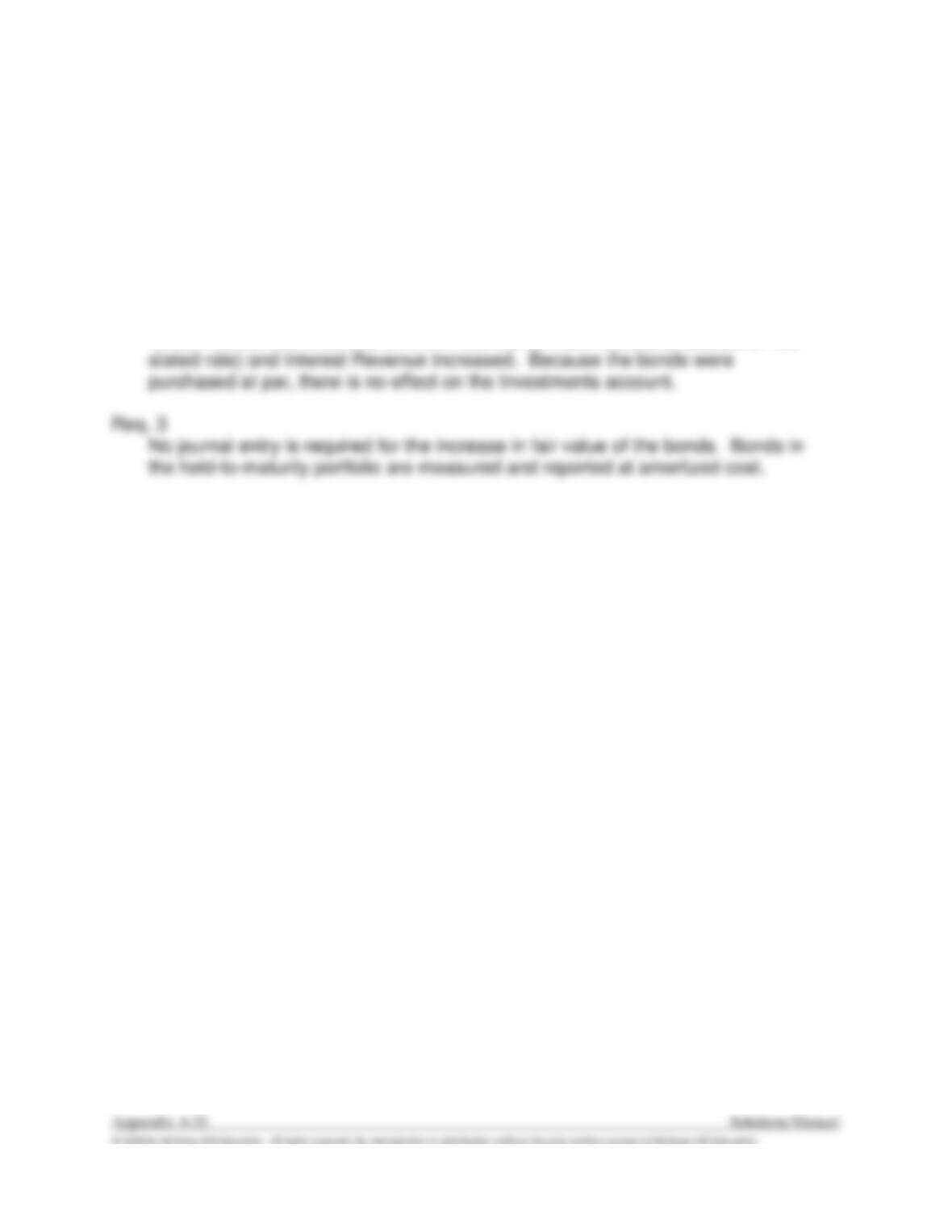
Purchase price for the net assets $145,000
Req. 2
Property and equipment (+A) ………………………………………
85,000
Patent (+A) ………………………………………………………………
Goodwill (+A) ……………………………………………………………
50,000
Liabilities (not detailed) (+L) ………………………………..
ALTERNATE PROBLEMS
APA–1.
Req. 1
When the bonds were purchased, the company increased Investments and
decreased Cash.
Req. 2
When interest was received on the investments, Cash increased (based on the
Financial Accounting, 10/e Appendix A-33
APA–2.
Req. 1
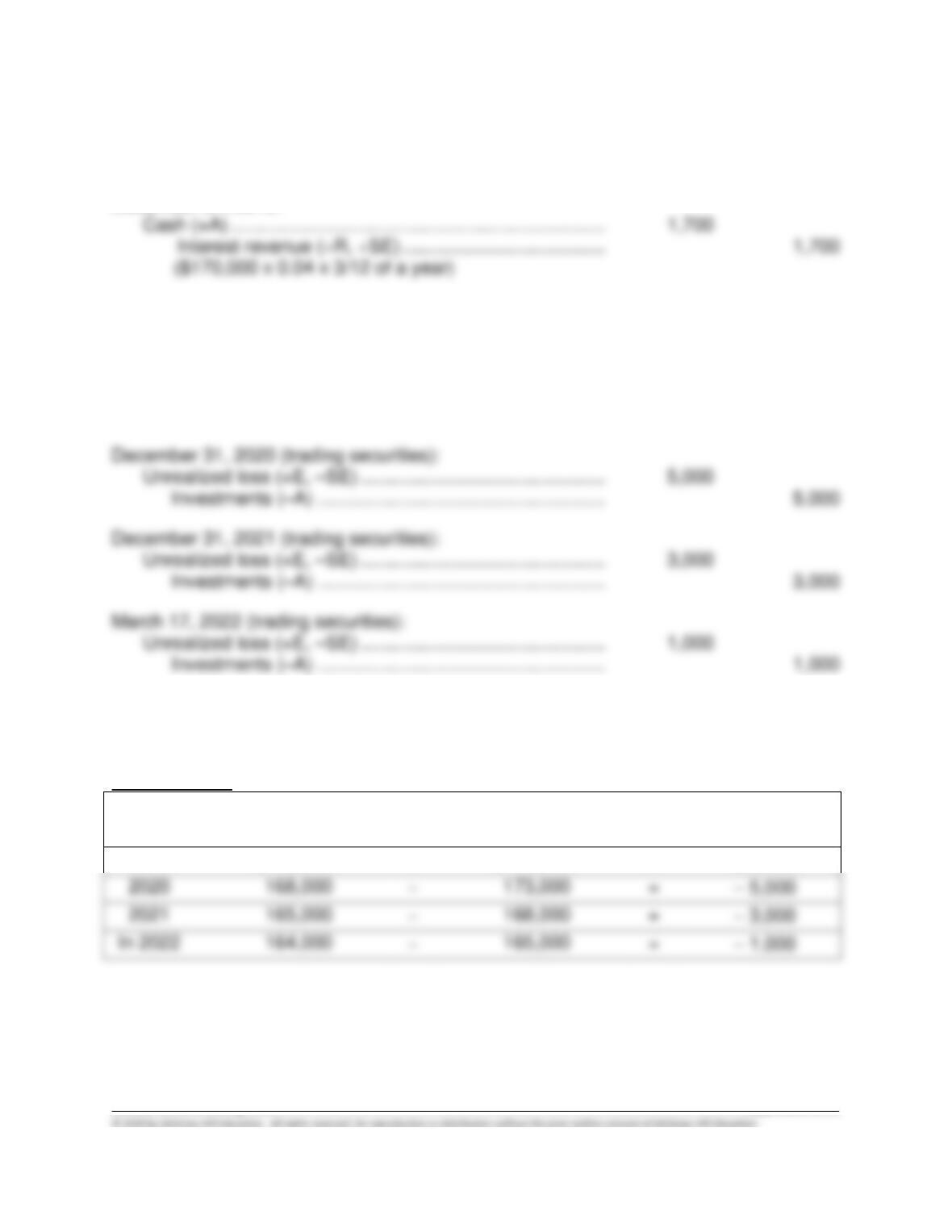
December 31, 2019:
Cash (+A) ……………………………………………………….……..
1,700
Interest revenue (+R, +SE) …………………………………
1,700
Req. 2
December 31, 2019 (trading securities):
Investments (+A). ……………………………………………………
3,000
Unrealized gain (+R, +SE) …………………………..……..
3,000
5,000
Investments (–A) . ………………………………………………
5,000
3,000
Investments (–A) . ………………………………………………
3,000
1,000
Investments (–A) . ………………………………………………
1,000
Cash (+A) ……………………………………………………………….
164,000
Investments (–A) . ………………………………………………
164,000
Computations:
Year
Fair Value
−
Book Value before
Adjustment
=
Amount for
Adjusting Entry
2019
$173,000
−
$170,000
=
+$3,000
2020
−
=
2021
−
=
−
=
APA–2. (continued)
Req. 3
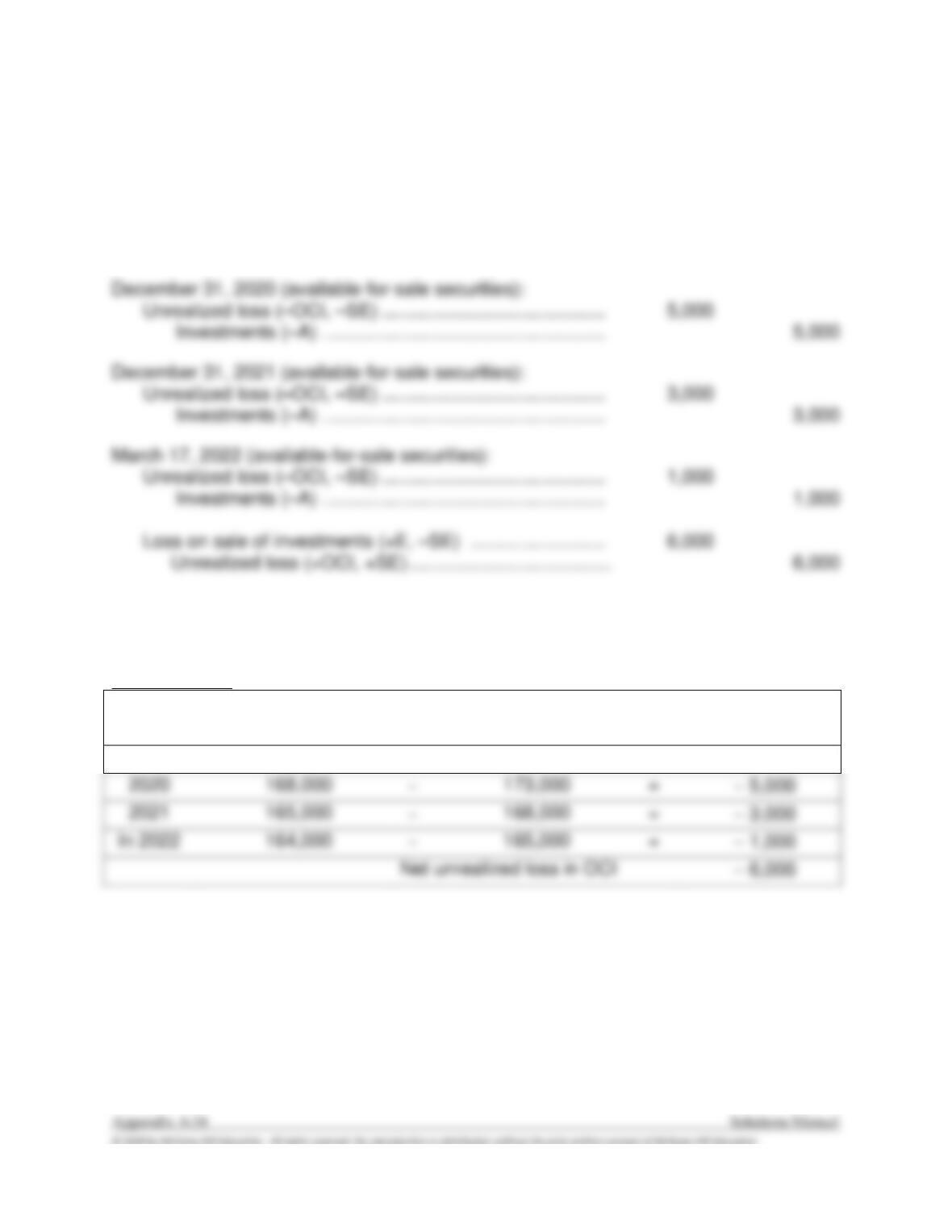
December 31, 2019 (available-for-sale securities):
Investments (+A). ……………………………………………………
3,000
Unrealized gain (+OCI, +SE) …………………………..….
3,000
5,000
Investments (–A) . ……………………………………………..
5,000
3,000
Investments (–A) . ……………………………………………..
3,000
1,000
Investments (–A) . ……………………………………………..
1,000
6,000
6,000
Cash (+A) ………………………………………………………………
164,000
Investments (–A). ……………………………………………….
164,000
Computations:
Year
Fair Value
−
Book Value before
Adjustment
=
Amount for
Adjusting Entry
2019
$173,000
−
$170,000
=
+$3,000
2020
−
=
2021
−
=
−
=