Financial Accounting, 9/e Appendix A-21
PA–4.
Req. 1
The fair value method must be used for both the D common stock and F bonds. The
fair value method must be used for D common stock because only 14.74% of it is
owned. If less than 20% of the outstanding stock is owned, it is assumed there can be
no exercise of significant influence or control; therefore, the fair value method must be
used. The fair value method is used for F bonds because they are passive
investments not intended to be held to maturity.
Req. 2
2016
2017
a.
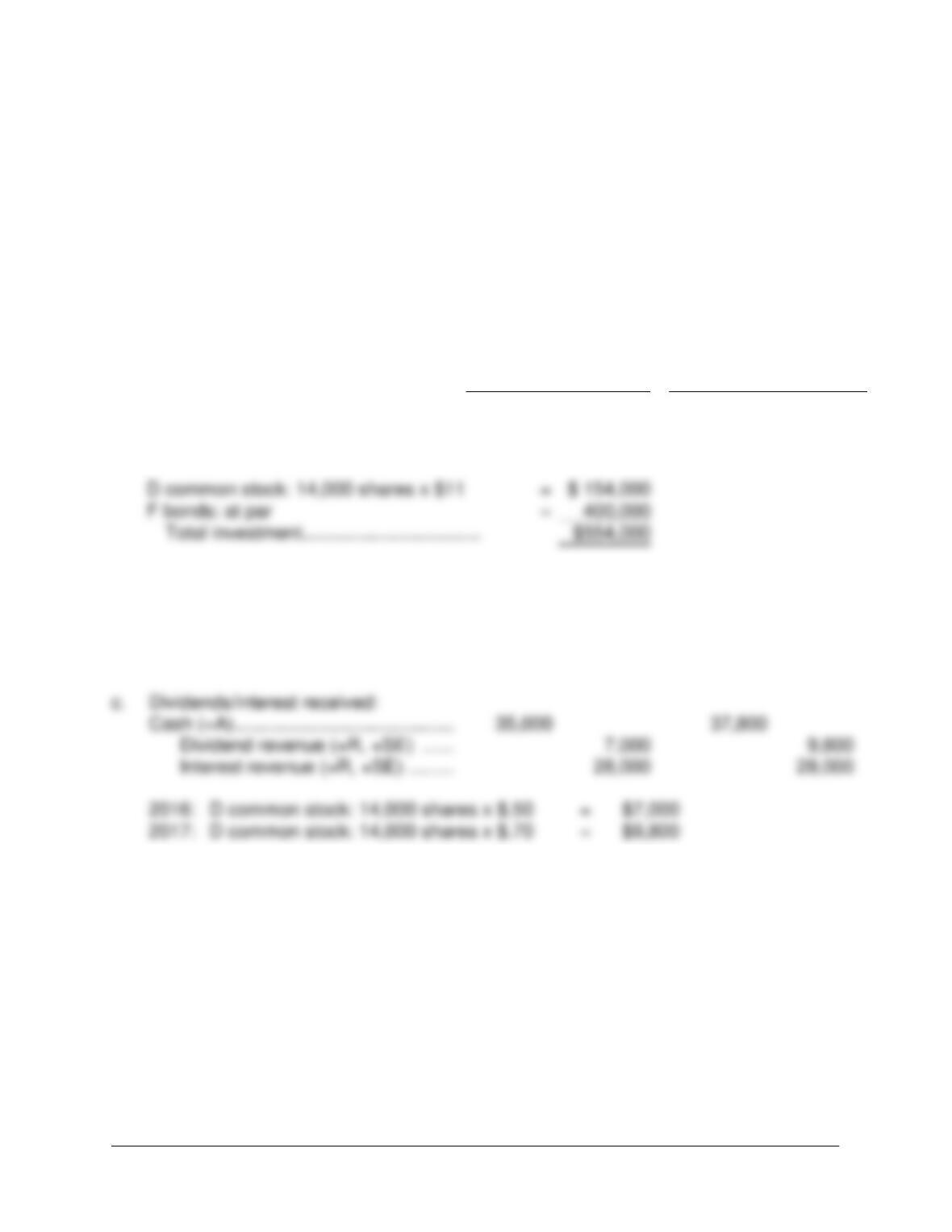
Acquisition of the investments:
Investments in AFS securities (+A) …
554,000
Cash (–A) ………………………………
554,000
b. Income reported by Corporations D & F:
No entry is required for either security because, under the fair value method,
revenue is recognized only when dividends are declared or interest is earned.
Cash (+A) ……………………………………
D common stock: 14,000 shares x $.50
2017:
D common stock: 14,000 shares x $.70
D common stock: 14,000 shares x $11
F bonds: at par
Total investment …………………………….
PE–4. (continued)
2016
2017
d.
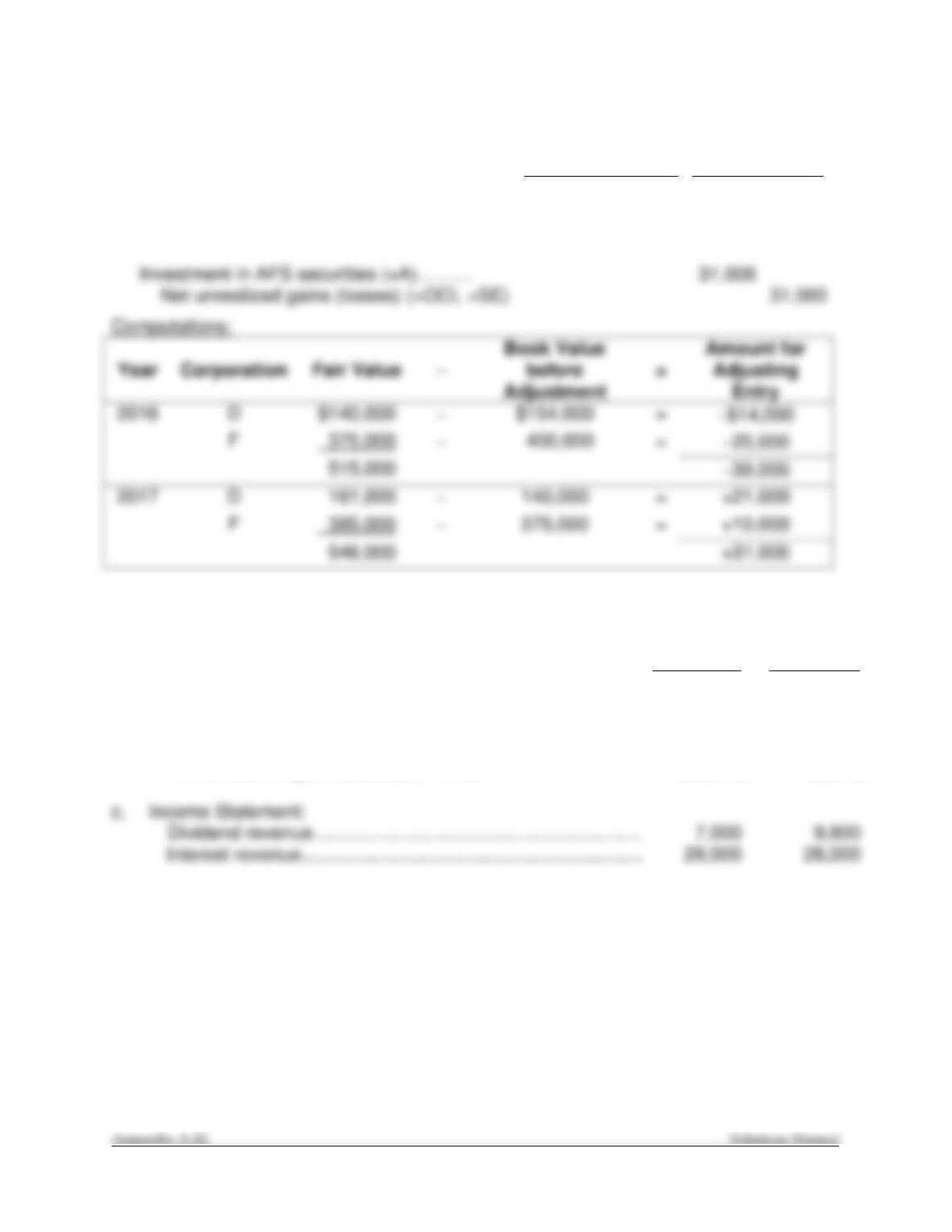
Fair value effects:
Net unrealized gains (losses) (–OCI, –SE)
39,000
Investment in AFS securities (–A)……
39,000
Investment in AFS securities (+A)………
Req. 3
a.
Balance Sheet:
2016
2017
Long-term Investments:
Investments in AFS securities (at fair value)………………….
$515,000
$546,000
b.
Stockholders’ Equity:
Net unrealized gains (losses) (in OCI) ………………………….
(39,000
)
(8,000
)
c.
Income Statement:
Dividend revenue ………………………………………………………
Financial Accounting, 9/e Appendix A-23
PA–5.
Req. 1
Aug. 4, 2015
Investments in TS (+A)………………………………………………….
180,000
Cash (–A) ……………………………………………………….
180,000
Dec. 31, 2015
Net unrealized gains (losses) (+Loss, –SE) ……………………..
10,000
Investments in TS (–A) ………………………………………………
10,000
June 1, 2017
Cash (+A) ……………………………………………………….
7,000
Dividend revenue (+R, +SE) …………………………..
7,000
Dec. 31, 2017
Investments in TS (+A)………………………………………………….
6,000
Net unrealized gains (losses) (+Gain, +SE) ………………….
6,000
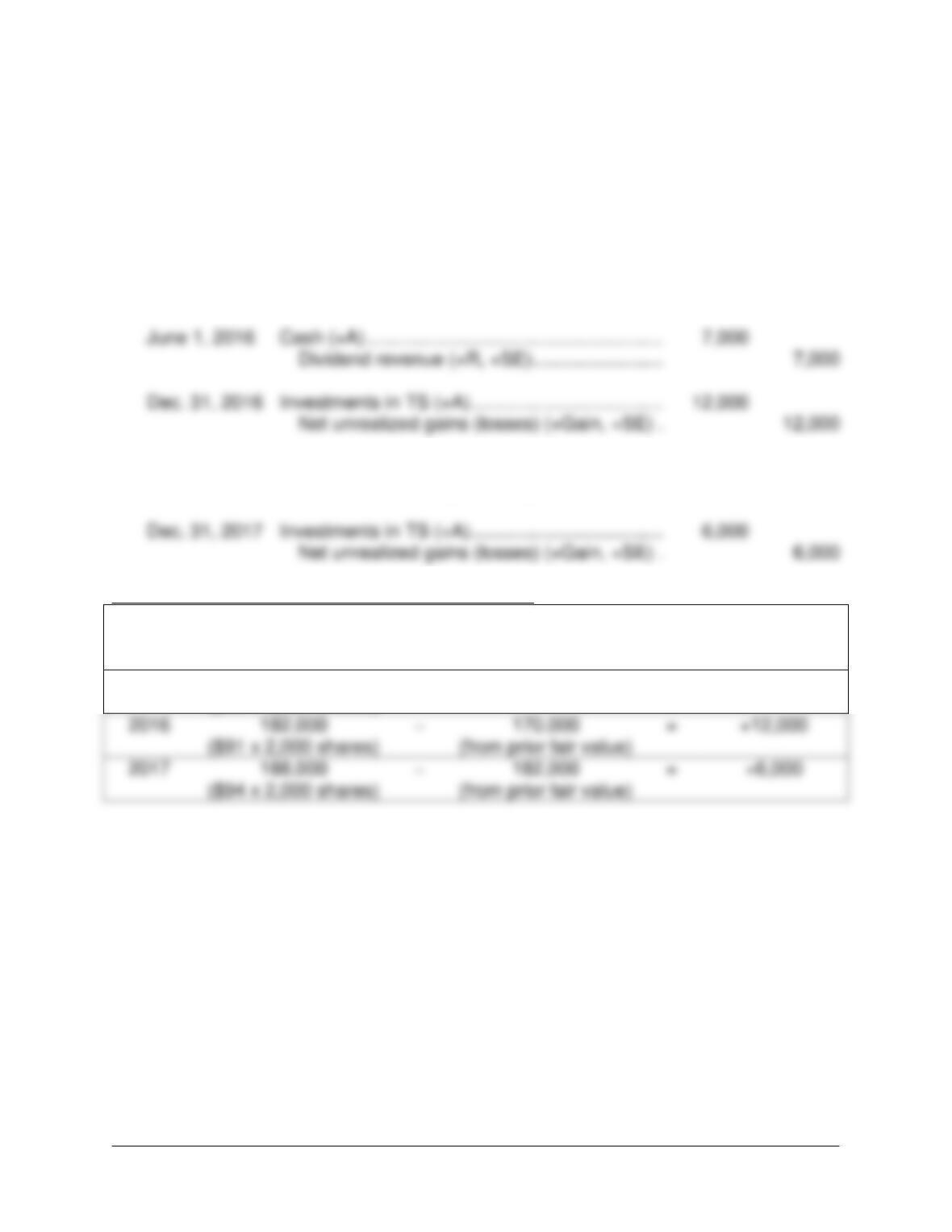
Computations for Year-End Adjustments to Market:
Year
Fair Value
−
Book Value before
Adjustment
=
Amount for
Adjusting
Entry
2015
$170,000
($85 x 2,000 shares)
−
$180,000
=
−$10,000
2016
($91 x 2,000 shares)
−
=
2017
($94 x 2,000 shares)
−
=
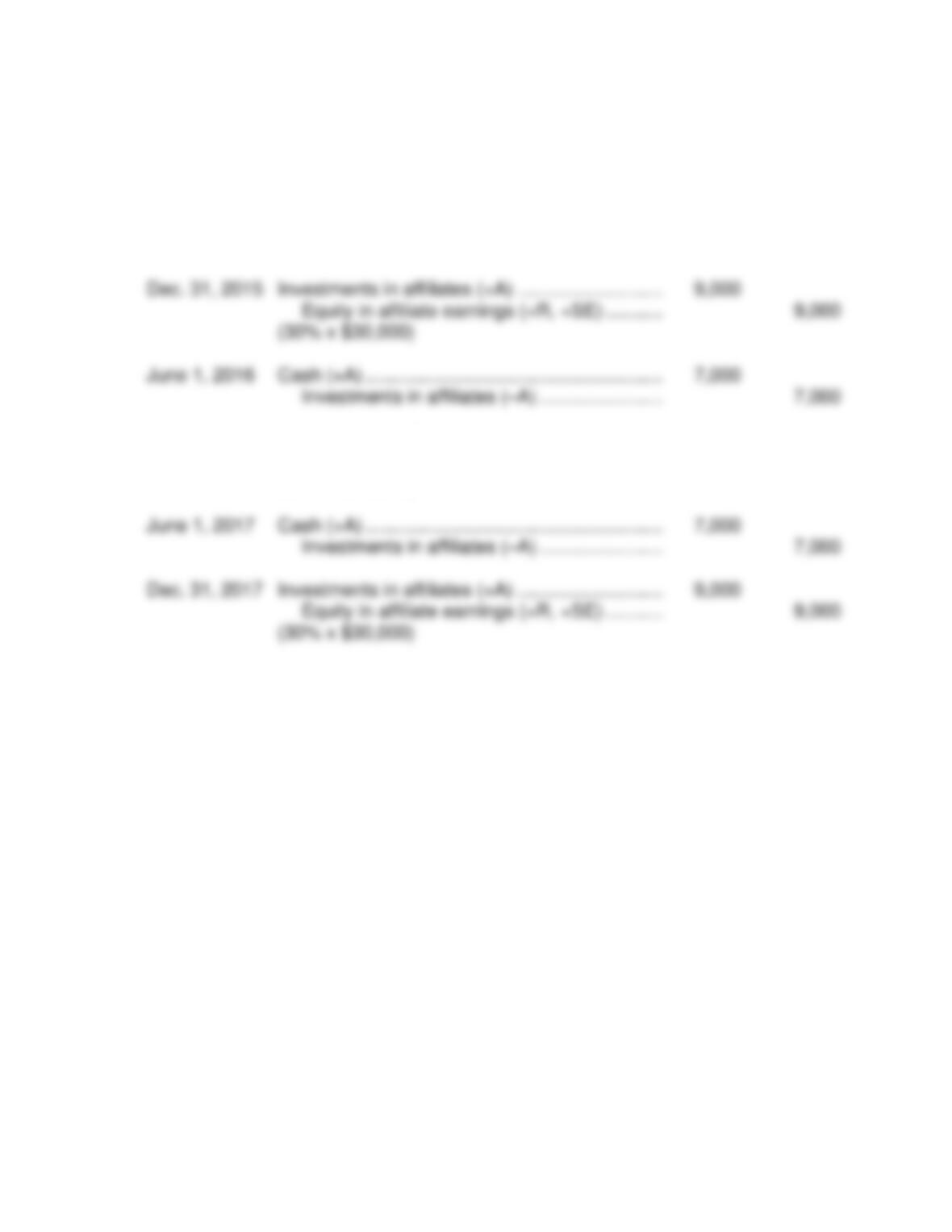
June 1, 2016
Cash (+A) ……………………………………………………….
7,000
Dividend revenue (+R, +SE) …………………………..
7,000
Dec. 31, 2016
Investments in TS (+A)………………………………………………….
Net unrealized gains (losses) (+Gain, +SE) ………………….
12,000
PA–5. (continued)
Req. 2
Aug. 4, 2015
Investments in AFS securities (+A) …………………………..
180,000
Cash (–A) ……………………………………………………….
180,000
Dec. 31, 2015
Net unrealized gains (losses) (–OCI, –SE) ………………………
10,000
Investments in AFS securities (–A) …………………………..
10,000
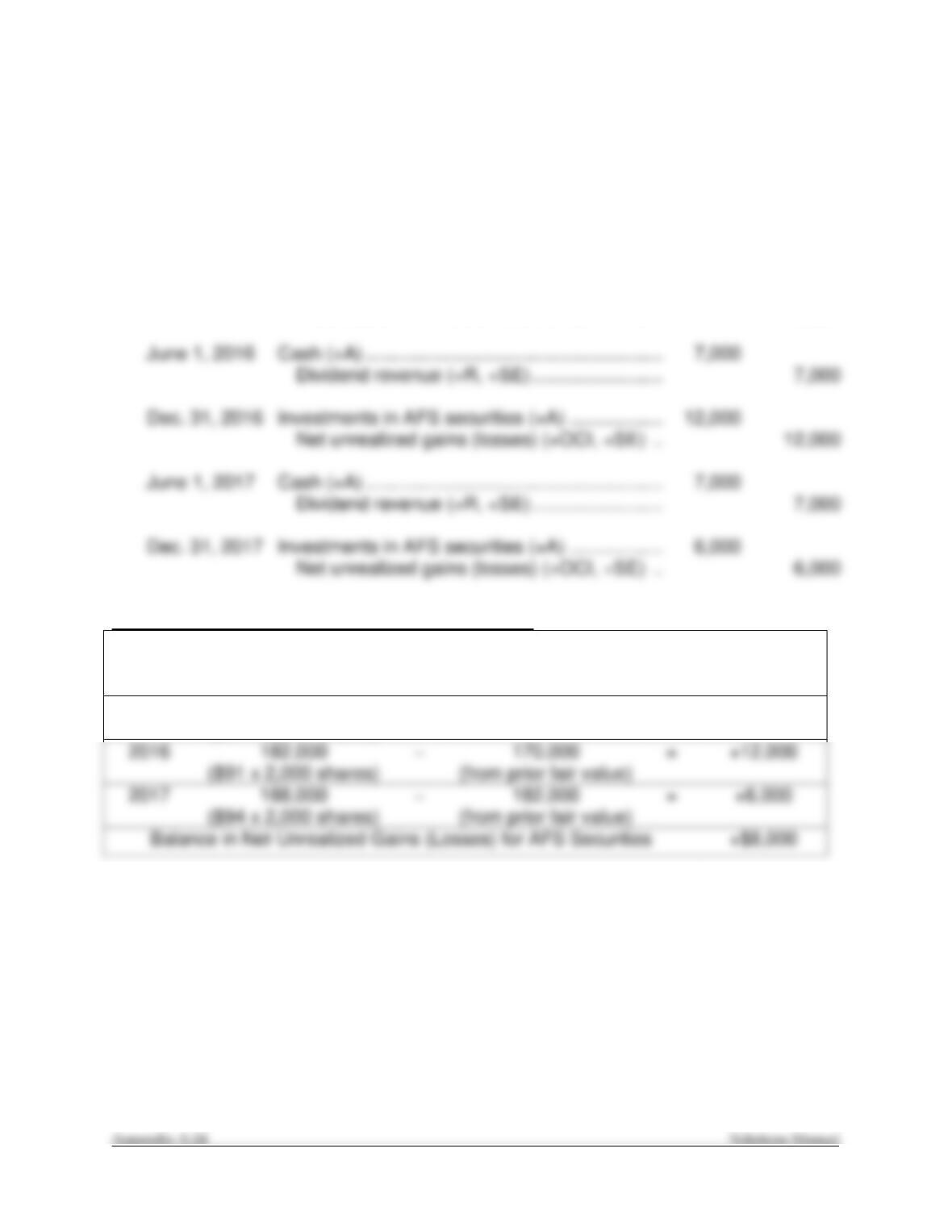
June 1, 2016
Cash (+A) ……………………………………………………….
Dec. 31, 2016
Investments in AFS securities (+A) …………………………..
12,000
June 1, 2017
Cash (+A) ……………………………………………………….
Dec. 31, 2017
Investments in AFS securities (+A) …………………………..
Computations for Year-End Adjustments to Market:
Year
Fair Value
−
Book Value before
Adjustment
=
Amount for
Adjusting
Entry
2015
$170,000
($85 x 2,000 shares)
−
$180,000
=
−$10,000
2016
($91 x 2,000 shares)
−
=
2017
($94 x 2,000 shares)
−
=
Financial Accounting, 9/e Appendix A-25
PA–5. (continued)
Req. 3
Aug. 4, 2015
Investments in affiliates (+A) …………………………..
180,000
Cash (–A) ……………………………………………………….
180,000
Dec. 31, 2016
Investments in affiliates (+A) …………………………..
9,000
Equity in affiliate earnings (+R, +SE) ………………………….
9,000
(30% x $30,000)
June 1, 2017
Cash (+A) ……………………………………………………….
7,000
7,000
Dec. 31, 2017
Investments in affiliates (+A) …………………………..
9,000
Equity in affiliate earnings (+R, +SE) ………………………….
9,000
(30% x $30,000)
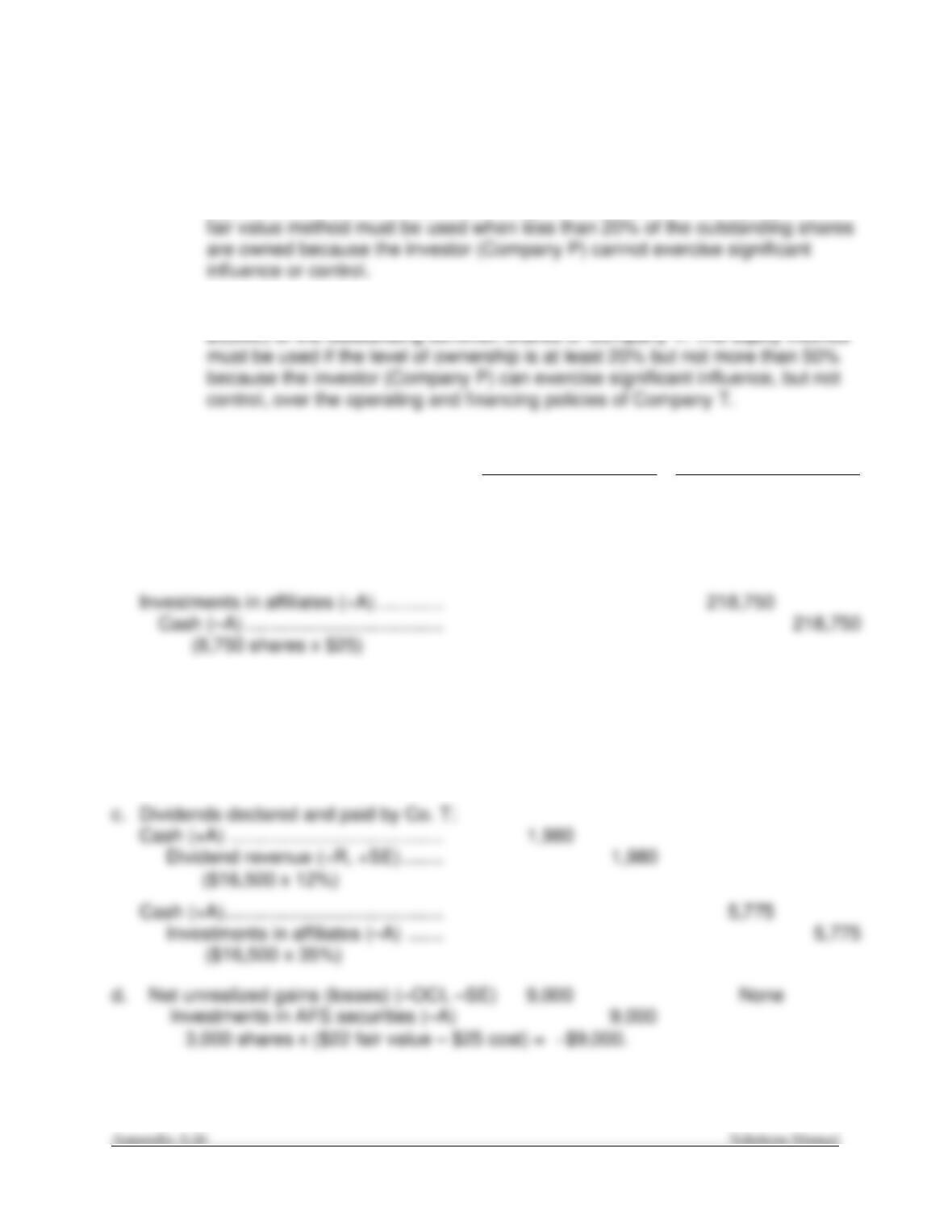
Dec. 31, 2015
Investments in affiliates (+A) …………………………..
9,000
Equity in affiliate earnings (+R, +SE) ………………………….
(30% x $30,000)
June 1, 2016
Cash (+A) ……………………………………………………….
7,000
PA–6.
Req. 1
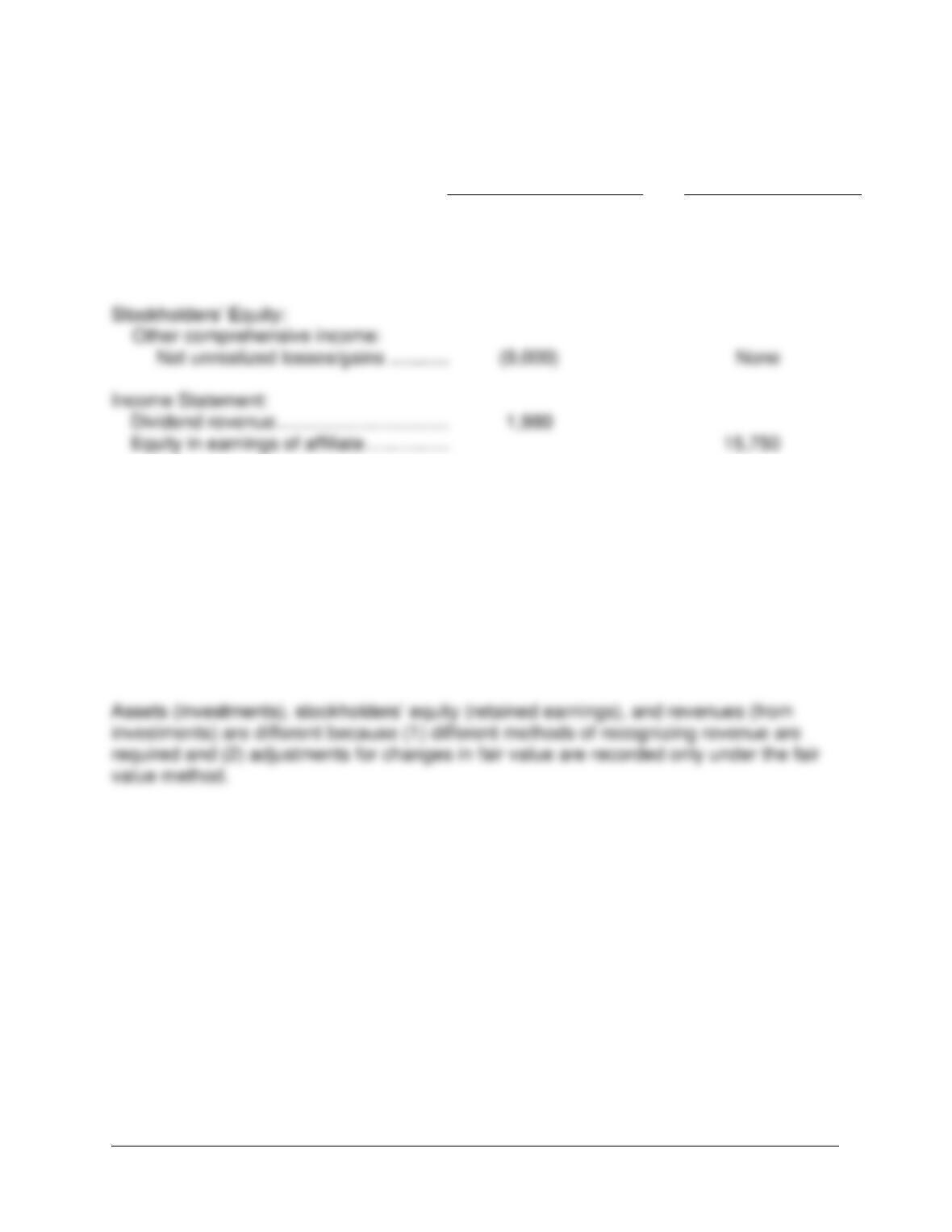
CASE A
influence or control.
The fair value method must be used by Company P because it owns 12%
(3,000 ÷ 25,000) of the total outstanding common shares of Company T. The
CASE B
The equity method must be used by Company P because it owns 35% (8,750 ÷
Req. 2
Case A-12%
Case B-35%
a.
January 1 purchase:
Investments in AFS securities (+A) …
75,000
Cash (–A) ………………………………..
75,000
(3,000 shares x $25)
Investments in affiliates (+A) ………….
Cash (–A) ………………………………..
b.
Income reported by Company T:
None
Investments in affiliates (+A) ………….
15,750
Equity in affiliate earnings (+R, +SE)
15,750
($45,000 x 35%)
c.
Dividends declared and paid by Co. T:
Cash (+A) …………………………………..
Cash (+A) ……………………………………
d.
None
Financial Accounting, 9/e Appendix A-27
PA–6. (continued)
Req. 3
Case A-12%
Case B-35%
Balance Sheet:
Investments:
Investments in AFS securities (1) ……..
$66,000
Investments in affiliates (2) ……………….
$228,725
(1) Cost $75,000 – Year-end adjustment to fair value $9,000 = $66,000 fair value
(reported on balance sheet)
(2) Cost $218,750 + % Affiliate’s net income $15,750 – % Affiliate’s dividends
declared $5,775 = $228,725 book value (reported on balance sheet)
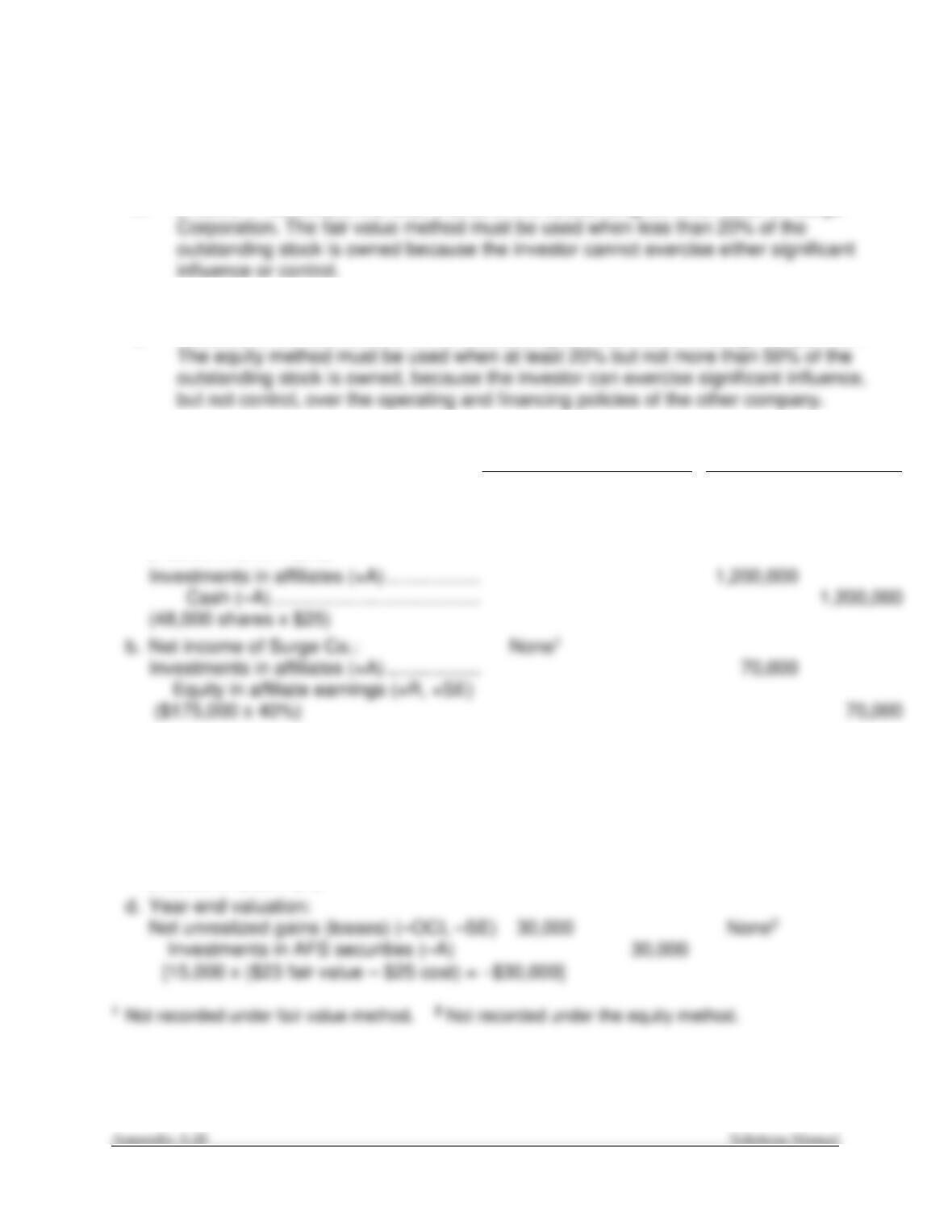
Req. 4
Net unrealized losses/gains …………
)
Income Statement:
PA–7.
Req. 1
CASE
A
influence or control.
The fair value method must be used by the company because it owns 12.5%
(15,000 ÷ 120,000) of the total shares of the outstanding common stock of Surge
CASE
B
The equity method must be used by the company because it owns 40% (48,000 ÷
120,000) of the total shares of the outstanding common stock of Surge Corporation.
Req. 2
Case A-12.5%
Case B-40%
a.
Jan. 10 purchase:
Investments in AFS securities (+A) ……..
375,000
Cash (–A) ………………………………….
375,000
(15,000 shares x $25)
Investments in affiliates (+A) ………………
Cash (–A) ………………………………….
Investments in affiliates (+A) ………………
70,000
70,000
c.
Dividends paid by Surge Corporation:
Cash (+A) ……………………………………
15,000
Dividend revenue (+R, +SE) ……….
15,000
(15,000 shares x $1)
Cash (+A) ……………………………………
48,000
Investments in affiliates (–A) ………
48,000
(48,000 shares x $1)
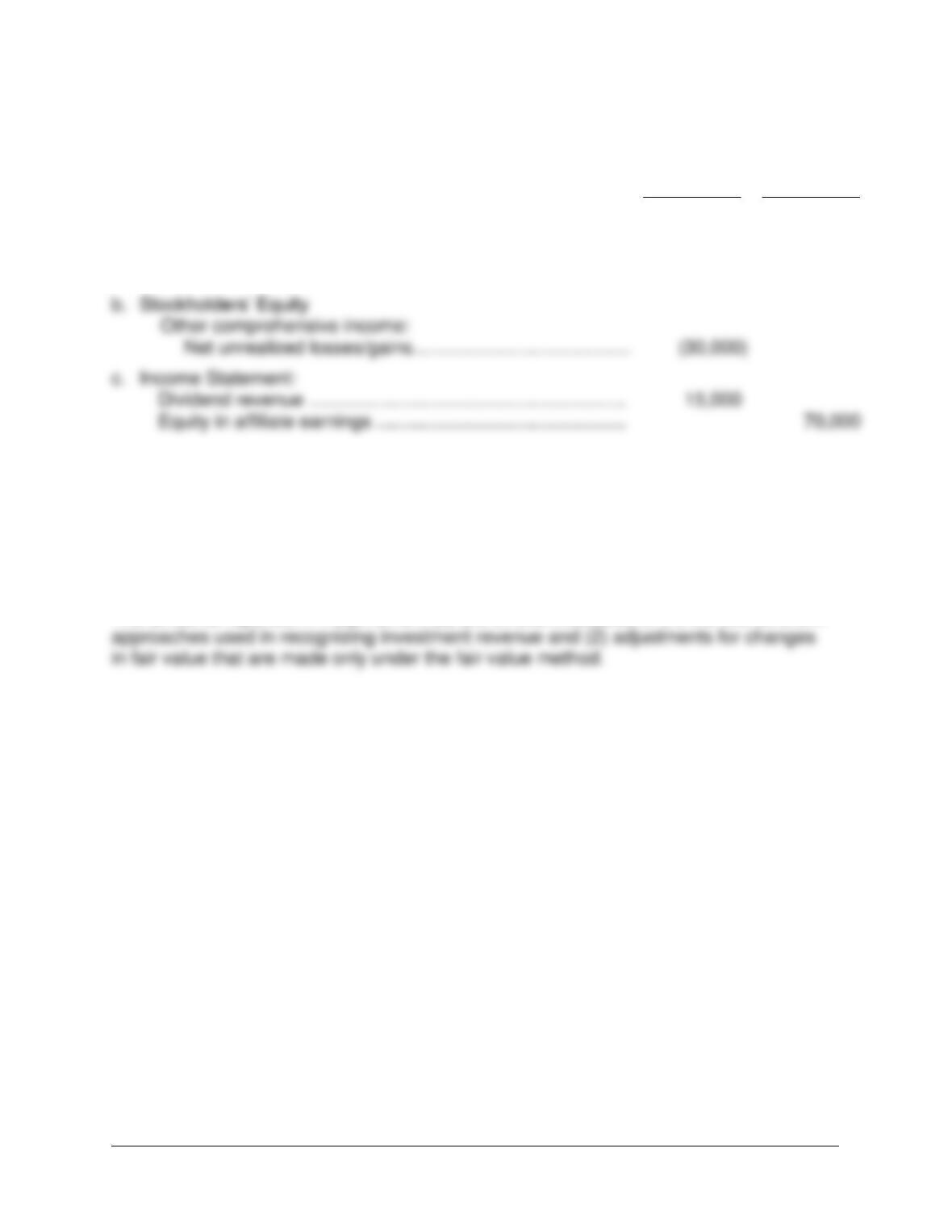
Net unrealized gains (losses) (–OCI, –SE)
Investments in AFS securities (–A)
Financial Accounting, 9/e Appendix A-29
PA–7. (continued)
Req. 3
Case A
Case B
a.
Balance Sheet:
Long-term Investments:
Investments in AFS securities, at fair value (1) ……………..
$345,000
Investments in affiliates (2) …………………………………………
$1,222,000
(1) Cost $375,000 – Year-end adjustment to fair value $30,000 = Fair value $345,000
reported on the balance sheet
(2) Cost $1,200,000 + % Affiliate’s net income $70,000 – % Affiliate’s dividends
declared $48,000 = $1,222,000 reported on the balance sheet
Req. 4
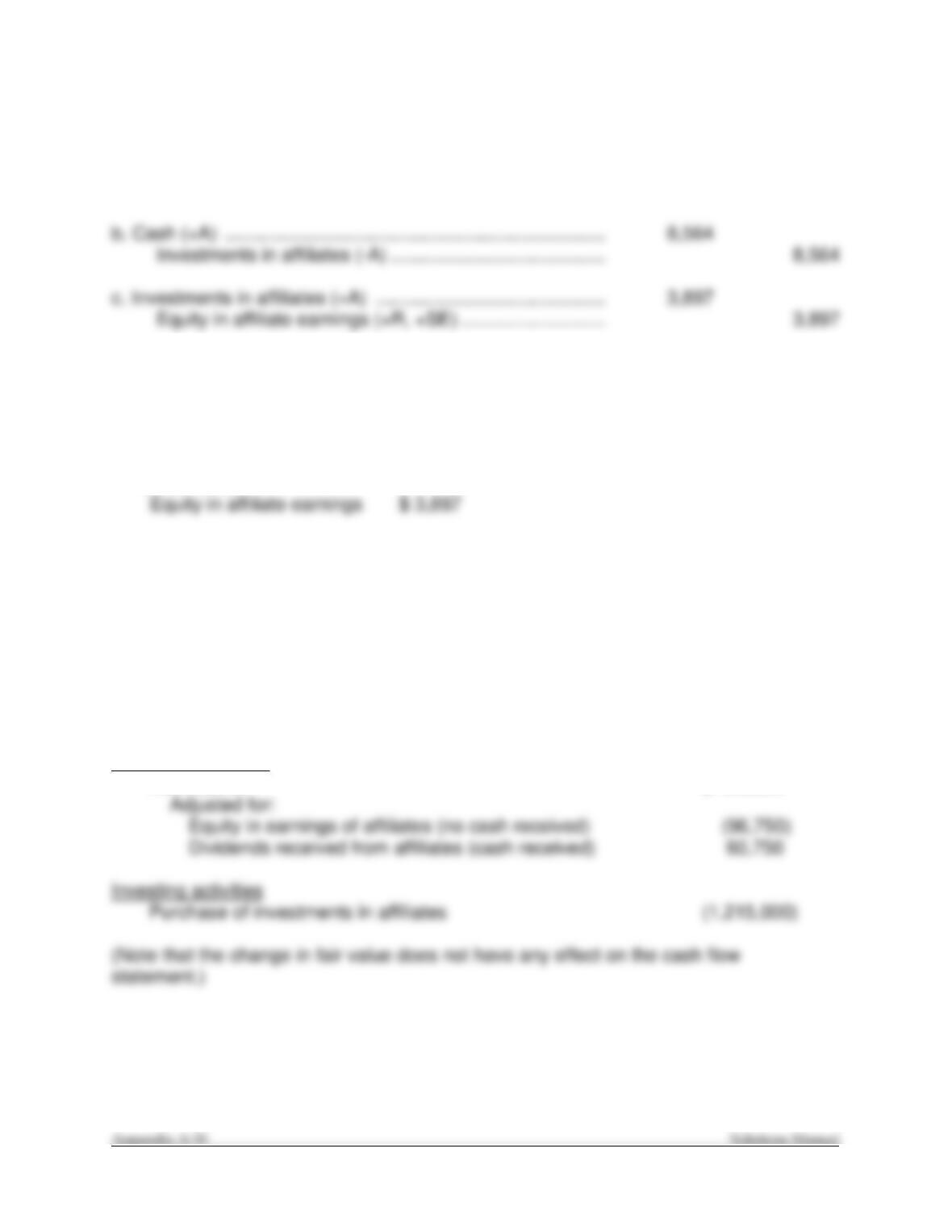
The amounts reported in Requirement (3) are different because of (1) the two different
b.
Net unrealized losses/gains ……………………………………
)
c.
Income Statement:
Equity in affiliate earnings …………………………………………
PA–8.
a. Investments in affiliates (+A) ……………………………………..
15,685
Cash (–A) ……………………………………………………………
15,685
b. Cash (+A) …………………………..…………………………………..
c. Investments in affiliates (+A) ……………………………………..
d. Balance Sheet
Assets:
Investments in affiliates $67,450
e. Income Statement
Other Items:
PA–9.
Since Bradford Company acquired 45% (40,500/90,000) of Hall’s outstanding
common stock, this investment is accounted for using the equity method.
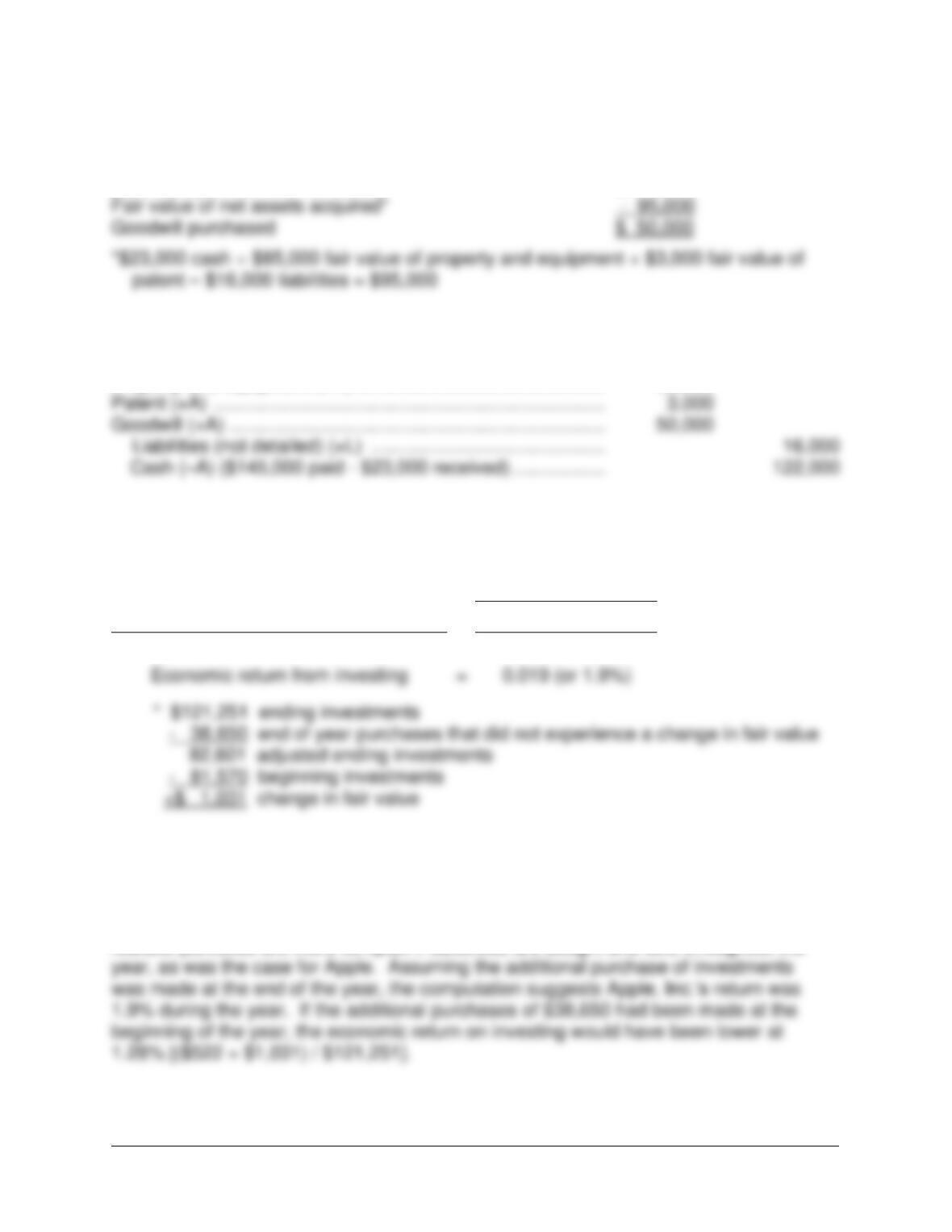
Statement of Cash Flows:
Operating activities
Net Income $ xxx,xxx
Financial Accounting, 9/e Appendix A-31
PA–10.
Req. 1
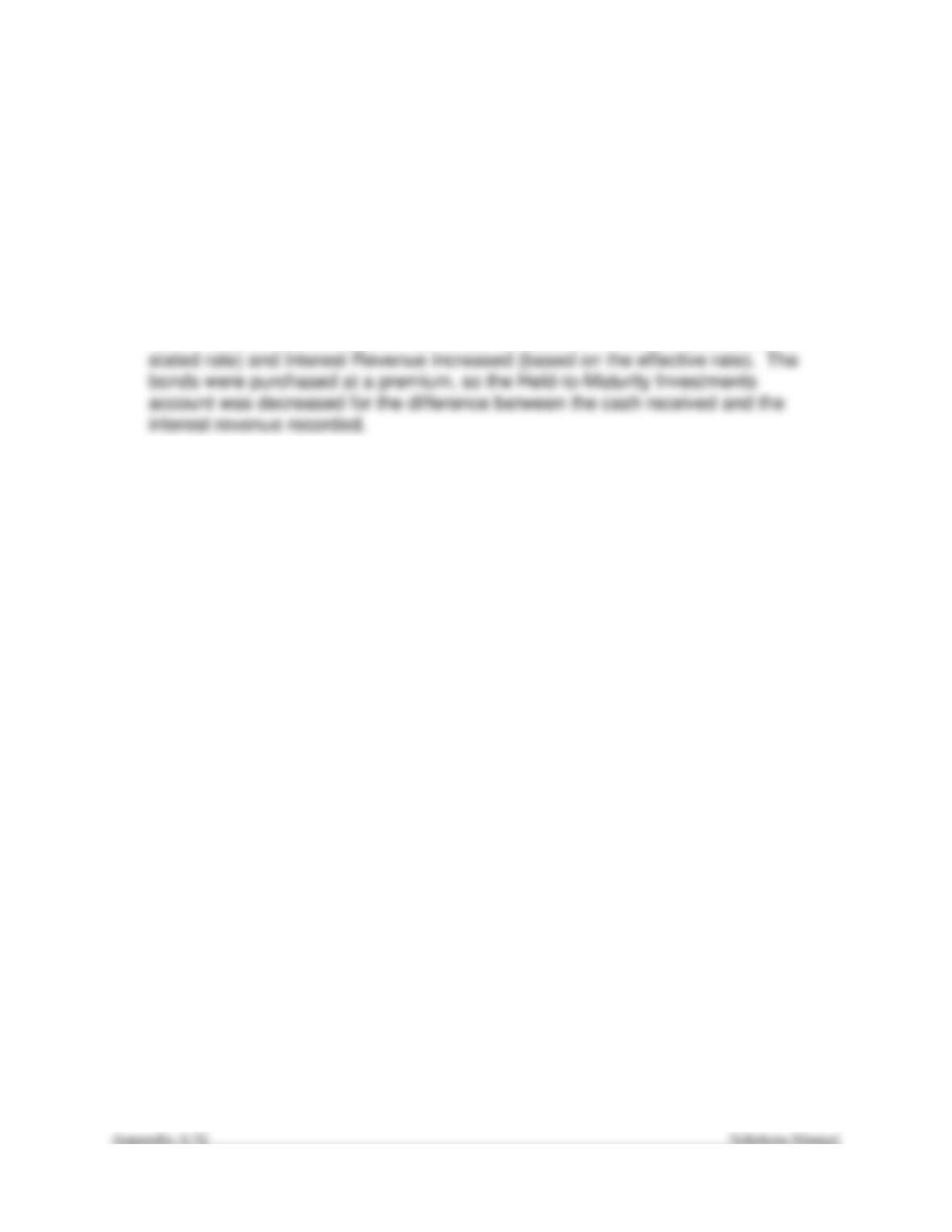
Purchase price for the net assets $145,000
Req. 2
Property and equipment (+A) …………………………………………
85,000
Patent (+A) …………………………………………………………………
Goodwill (+A) ………………………………………………………………
50,000
PA–11.
Req. 1
Current Year
Dividends + Change in Fair Value
$522 + $1,031*
Beginning Fair Value of Investments
$81,570
Req. 2
The economic return from investing measures the performance of a company’s
investment portfolio each year. However, as noted in the text, computations of
realistic portfolios are more complex if securities are bought and sold throughout the
ALTERNATE PROBLEMS
APA–1.
Req. 1
When the bonds were purchased, the company increased Held-to-Maturity
Investments and decreased Cash.
Req. 2
When interest was received on the investments, Cash increased (based on the
Req. 3
No journal entry is required. A decrease in the fair value of bonds in the held-to–
maturity portfolio is not recorded.