Output, Exchange Rates, and
Macroeconomic Policies in the
Short Run
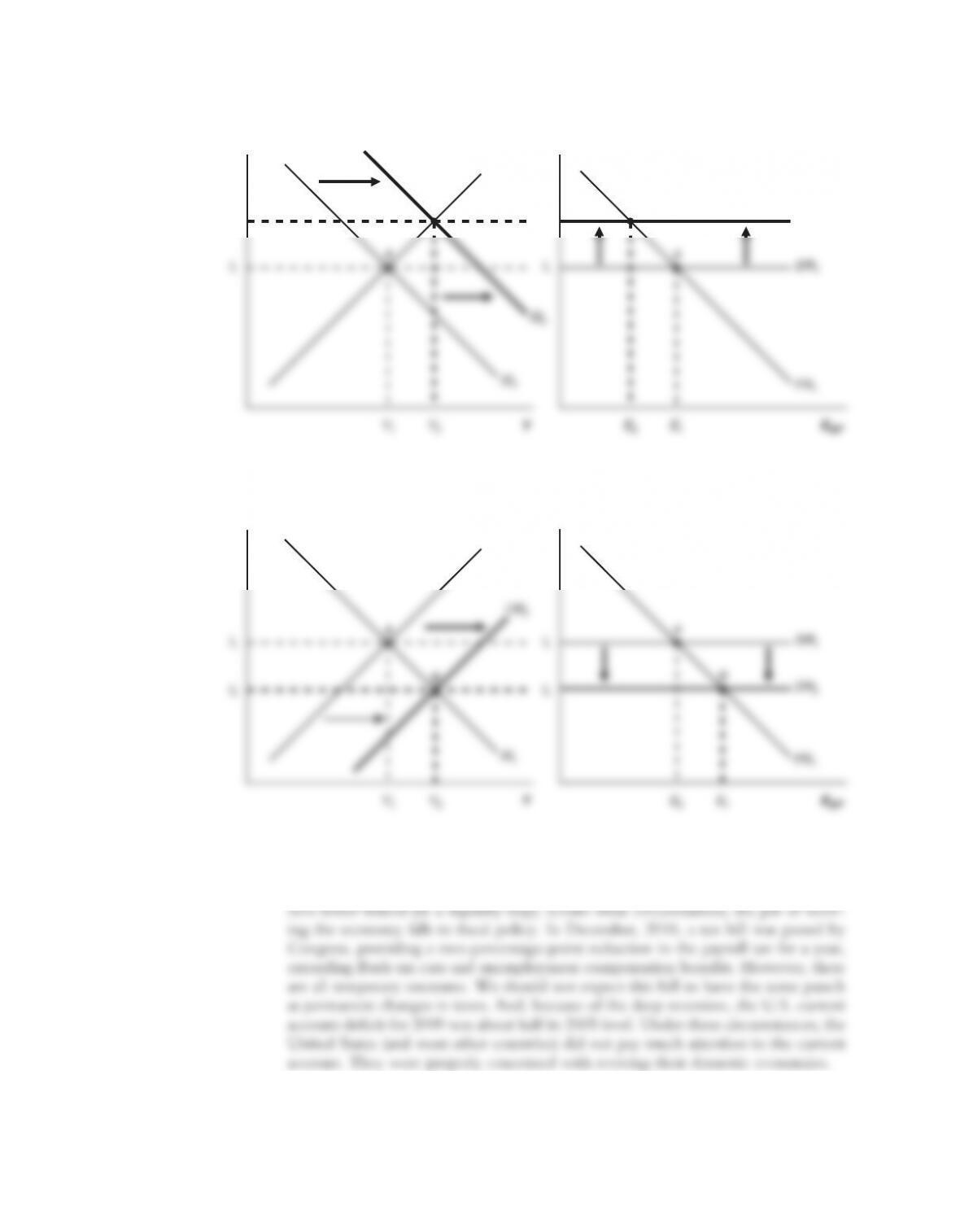
1. In 2001, President George W. Bush and Federal Reserve Chairman Alan Greenspan
were both concerned about a sluggish U.S. economy. They also were concerned about
the large U.S. current account deficit. To help stimulate the economy, President Bush
proposed a tax cut, whereas the Fed had been increasing U.S. money supply. Compare
the effects of these two policies in terms of their implications for the current account.
If policy makers are concerned about the current account deficit, discuss whether
stimulatory fiscal policy or monetary policy makes more sense in this case. Then, re–
consider similar issues for 2009–2010, when the economy was in a deep slump, the
Fed had taken interest rates to zero, and the Obama administration was arguing for
larger fiscal stimulus.
14
S-134 Solutions n Chapter 14 Output, Exchange Rates, and Macroeconomic Policies
i
Monetary expansion
Fiscal expansion
i2i2
LM1
IS1
IS2
A
B
ER
i
LM1
DR2
FR1
A
B
ER
The situation in 2009–2010 was very different. The Fed had exhausted its monetary
toolkit. Keeping their interest rate target at zero meant the economy was at the
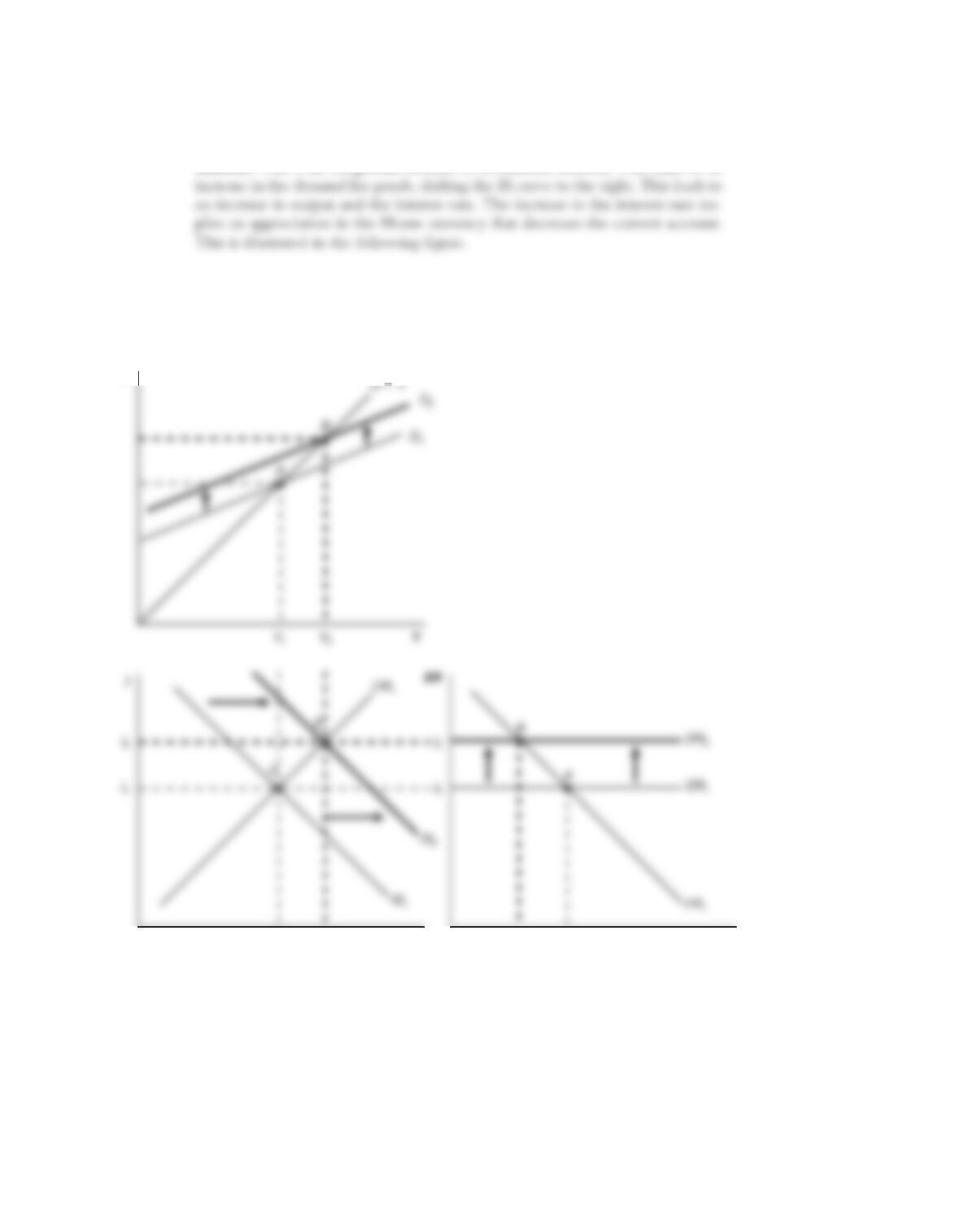
2. Suppose that American firms become more optimistic and decide to increase invest-
ment expenditure today in new factories and office space.
Solutions n Chapter 14 Output, Exchange Rates, and Macroeconomic Policies S-135
a. How will this increase in investment affect output, interest rates, and the current
account?
D
Exogenous increase in investment demand
D2
D Y
B
i1
i1
IS1
IS2
Y1Y2Y
FR1
DR1
A
E2E1EH/F
S-136 Solutions n Chapter 14 Output, Exchange Rates, and Macroeconomic Policies
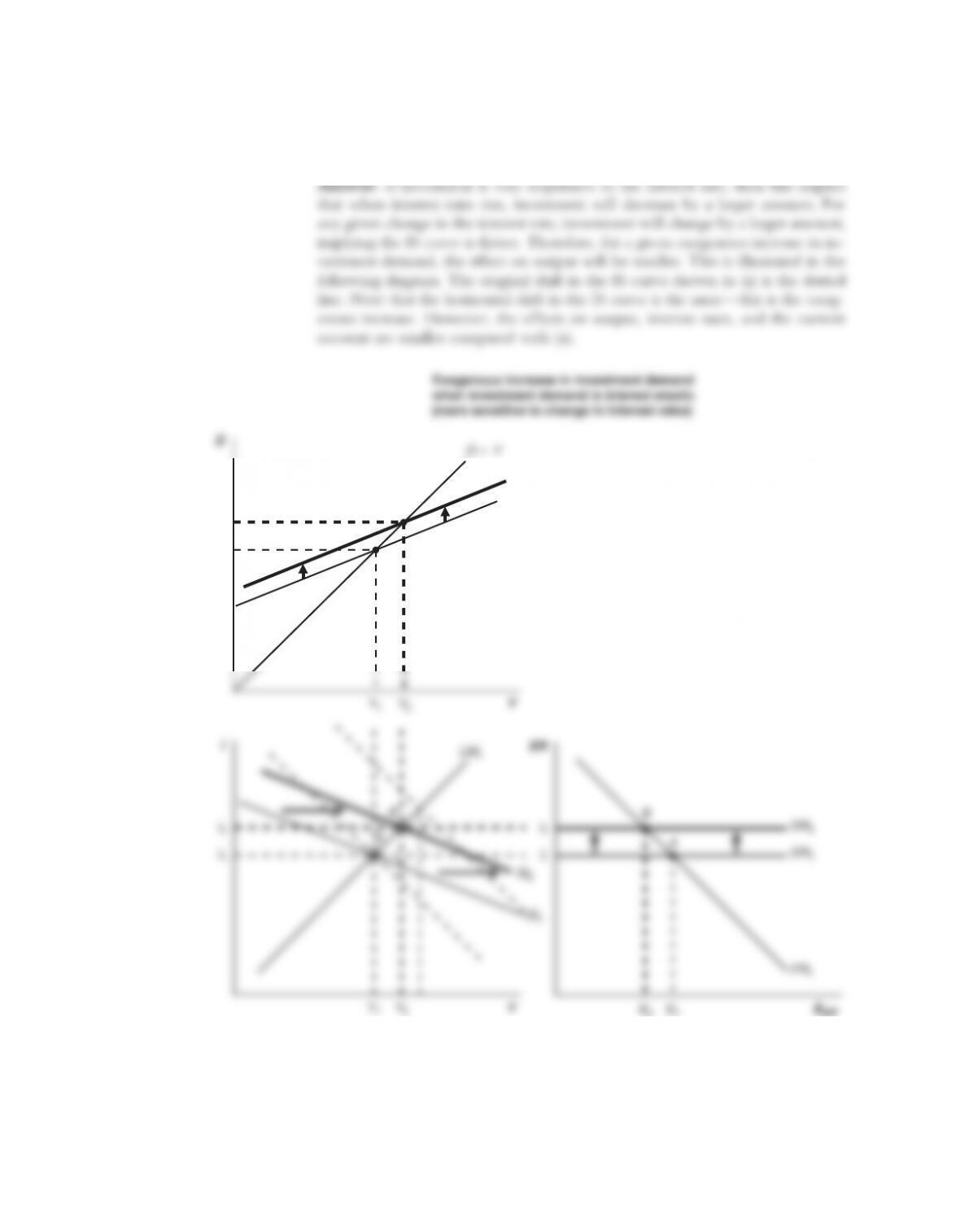
b. Now assume that domestic investment is very responsive to the interest rate so
that U.S. firms will cancel their new investment plans if the interest rate rises.
How will this affect the answer you gave previously?
FR1
DR1
A
E2E1EH/F
i1i1
IS1
IS2
A
Y1Y2Y
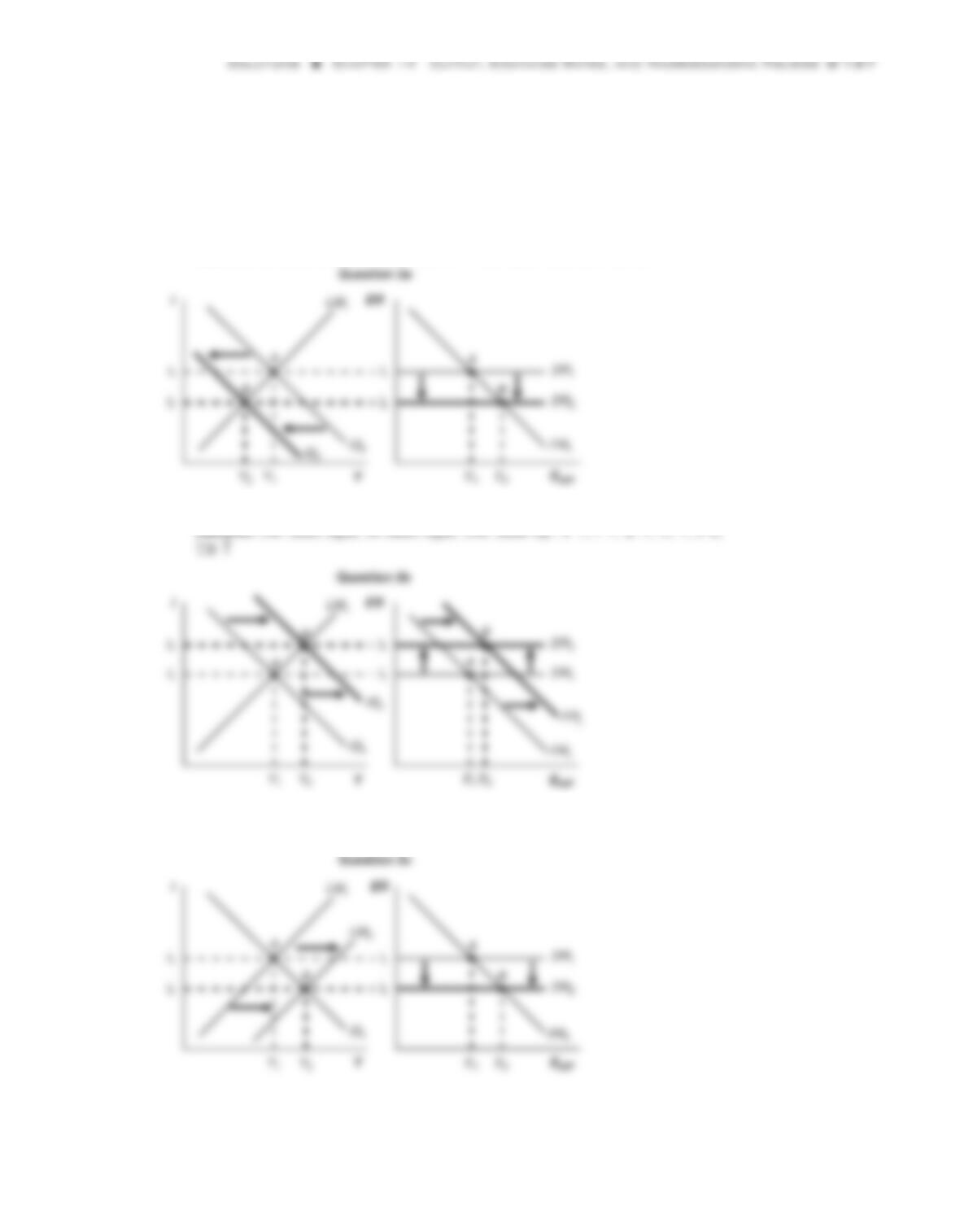
3. For each of the following situations, use the IS-LM-FX model to illustrate the effects
of the shock. For each case, state the effect of the shock on the following variables
(increase, decrease, no change, or ambiguous): Y, i, E, C, I, and TB. Assume the
government allows the exchange rate to float and makes no policy response.
See the following figures.
a. Foreign output decreases.
Answer: IS shifts left, DR shifts down: Y ↓, i ↓, E ↑, C ↓, I ↑, TB ↑
i
i1
i2
i1
i2
LM1
IS1
IS2
A
B
Y
2
Y
1
Y
ER
DR1
DR2
FR1
A
B
E
1
E
2
E
H/F
Question 3a
b. Investors expect a depreciation of the Home currency.
IS1
Y2
Y1Y
FR1
E1E2EH/F
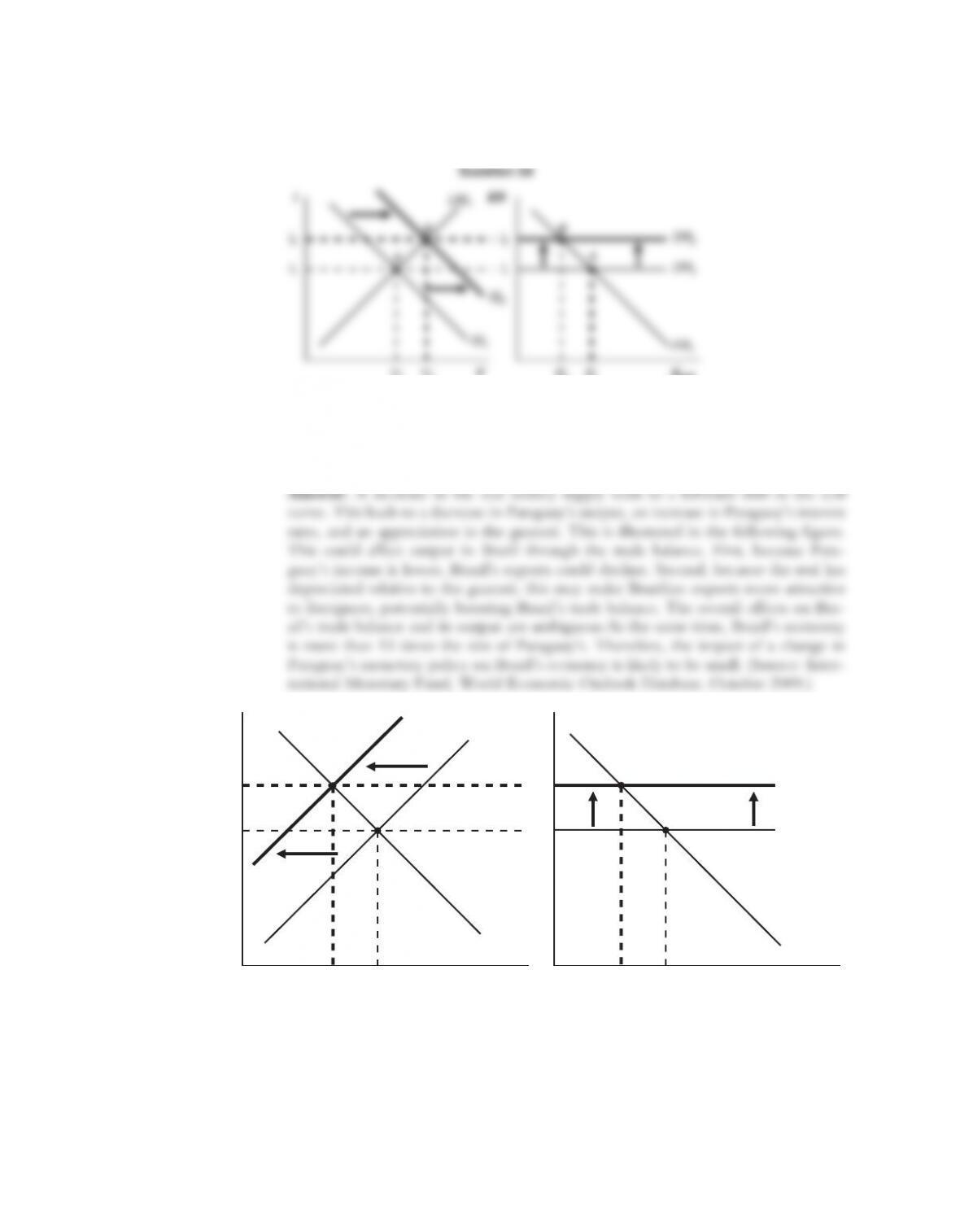
S-138 Solutions n Chapter 14 Output, Exchange Rates, and Macroeconomic Policies
d. Government spending increases.
Answer: IS shifts right, DR shifts up: Y ↑, i ↑, E ↓, C ↑, I ↓, TB ↓
Question 3d