9-1
CHAPTER 9
OPERATING ACTIVITIES
Solutions to Questions, Exercises, Problems, and Teaching Notes to Cases
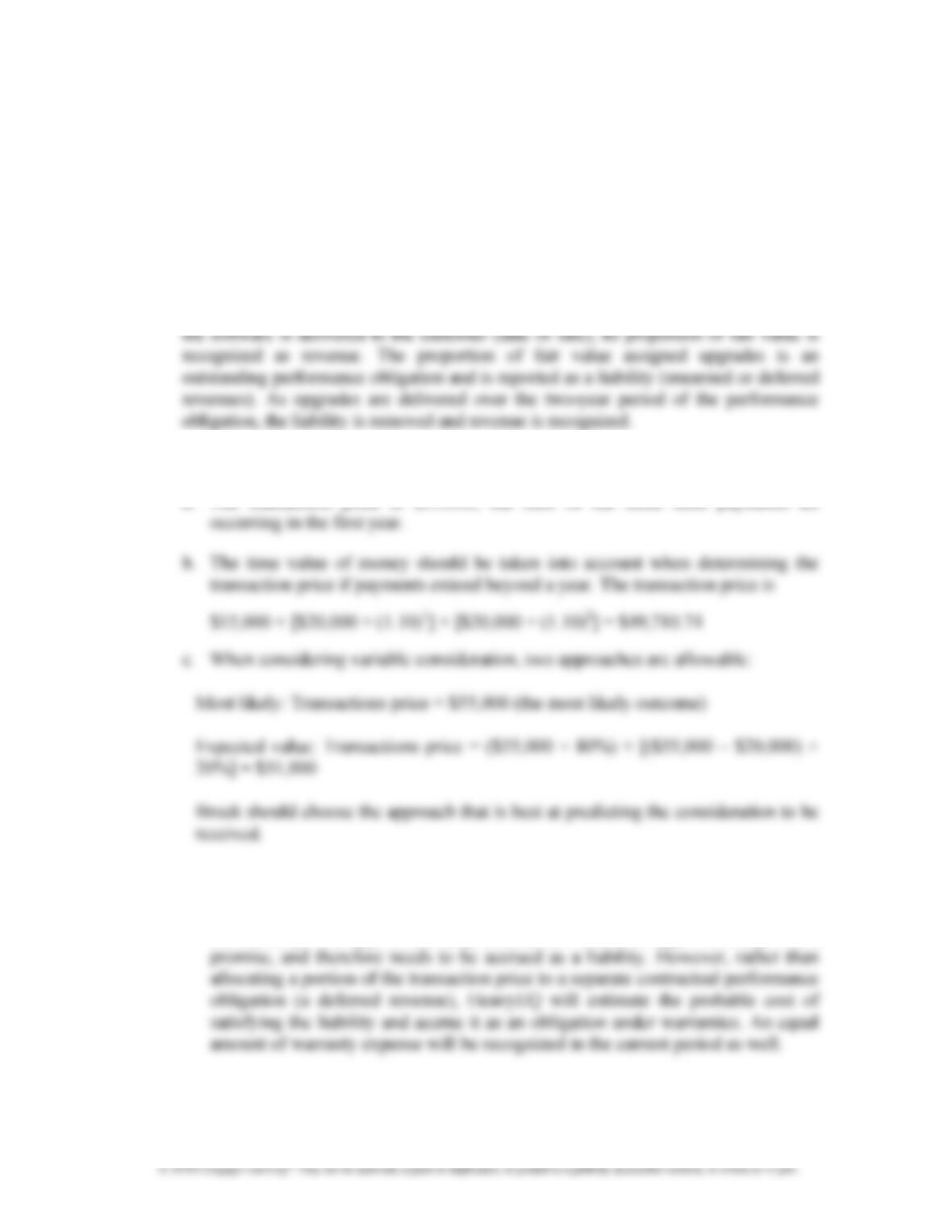
9.1 Delayed Revenue Recognition. The software firm allocates the bundle transaction
price to the multiple elements in the bundle based on their relative fair values. When
9.2 Measuring the Transaction Price.
a. The transaction price is $55,000, the sum of the three cash payments all
9.3 Allocating the Transaction Price.
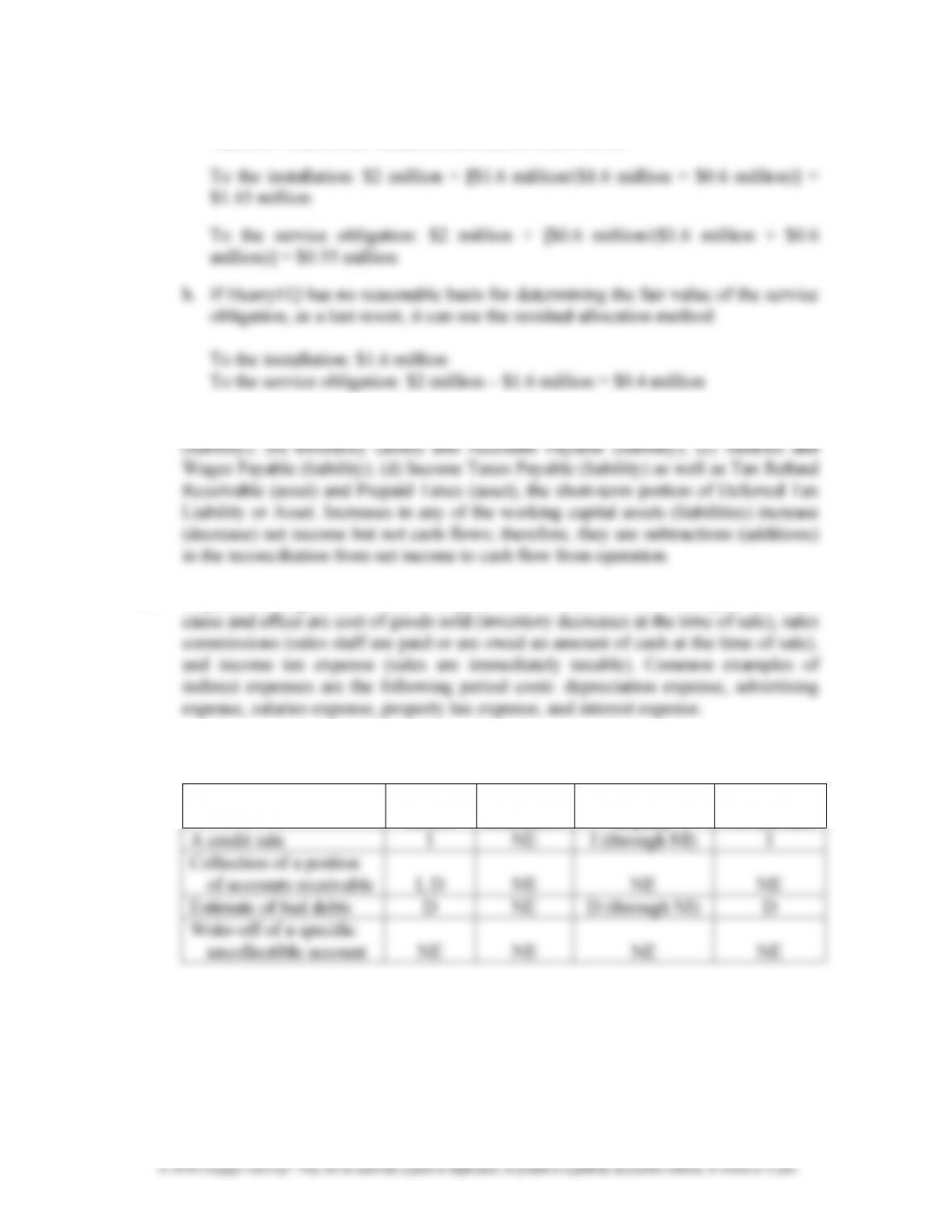
a. The transaction price should be allocated to the installation and service, but not
the warranty. This type of warranty is called an “assurance-type” warranty. It is a
Chapter 9
Operating Activities
9-2
Based on relative fair value, the allocation is as follows:
9.4 Working Capital. (a) Accounts Receivable (asset) and Unearned Revenues
9.5 Expense Recognition. Many examples exist. Three common examples of direct
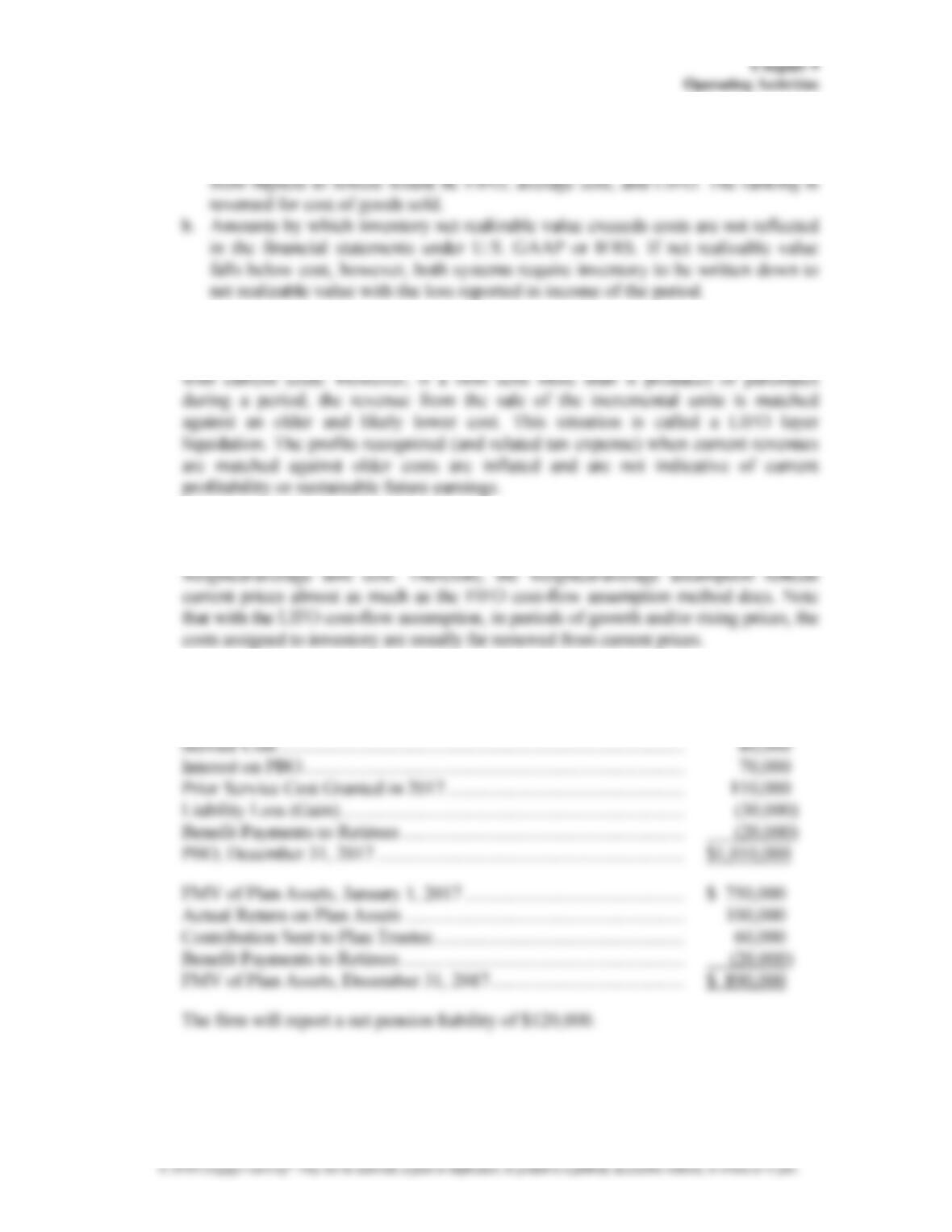
9.6 Accounts Receivable. I = increases; D = decreases; NE = no effect
Assets
Liabilities
Shareholders’
Equity
Net Income
9-3
9.7 Inventory Costing and Valuation.
a. In periods of rising prices, reported inventory costs and gross profits, ranked
9.8 LIFO Layer Liquidation. Under the LIFO method, firms assume that a unit sold
was the most recent purchased or produced, thus matching current sales revenues
9.9 Effect of Weighted-Average Cost-Flow Assumption on Inventory. When inventory
turns over rapidly, purchases during the current period receive a heavy weight in the
9.10 Reconcile PBO/FMV of Plan Assets.
PBO, January 1, 2017 ……………………………………………………………… $ 800,000
Chapter 9
Operating Activities
9-4
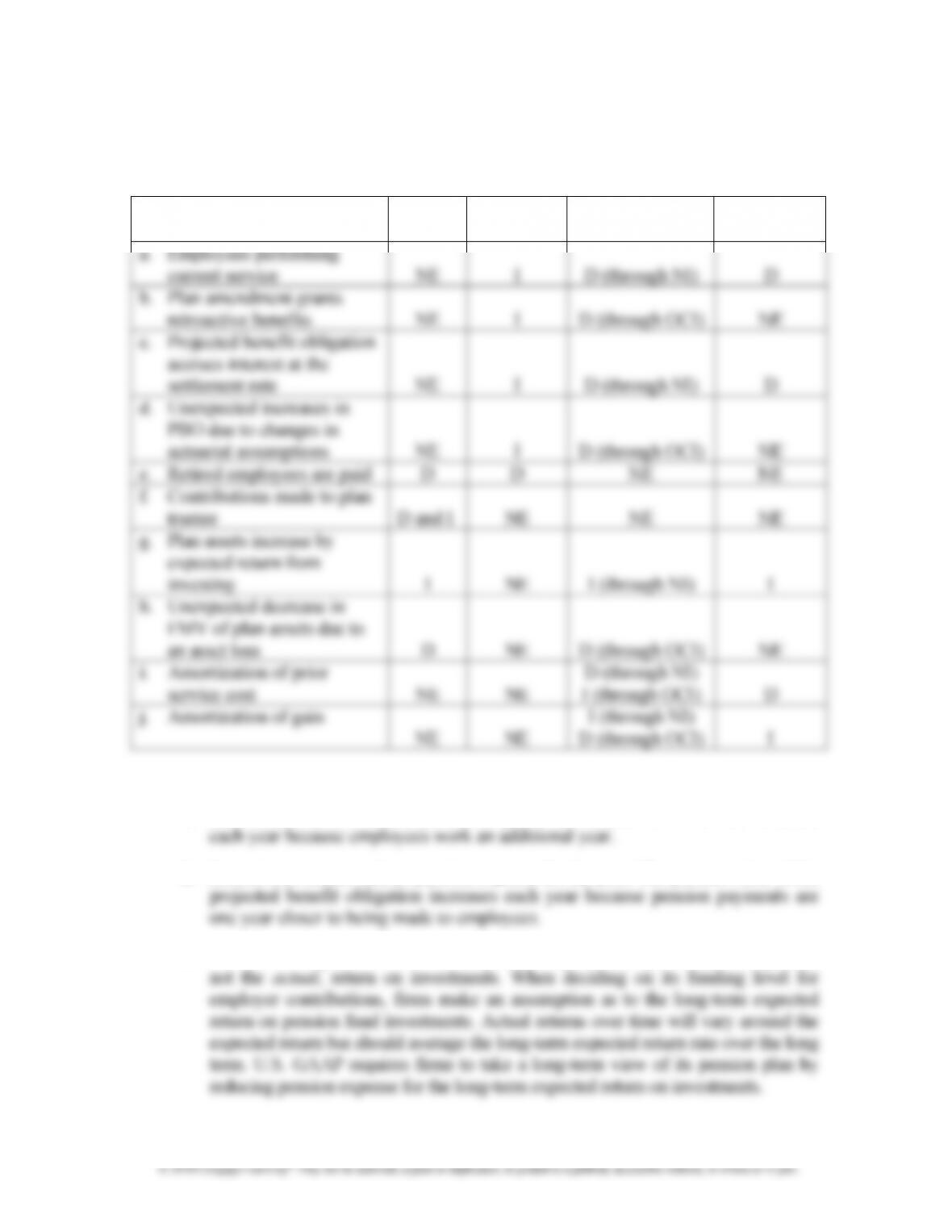
9.11 Financial Statement Effects of Pension Plan Events.
I = increases; D = decreases; NE = no effect
9.12 Components of Pension Expense.
a. Service cost cannot reduce pension expense for the year. Service cost increases
b. Interest cost cannot reduce pension expense for the year. The present value of the
c. U.S. GAAP requires firms to reduce pension expense each period by the expected,
Assets
Liabilities
Shareholders’
Equity
Net Income
Chapter 9
Operating Activities
9-5
d. Prior service cost results from a firm’s sweetening the benefit formula for
e. Actuarial gains and losses arise when actual returns on investments differ from
9.13 Postretirement Benefits Other Than Pensions. The firm would report a
9.14 Income Recognition for Various Types of Businesses.
a. Banks recognize interest revenue each period using the interest rate or interest
b. Three possible revenue recognition points for the commission revenue of a travel
c. Recognizing revenue at the time the baseball team sells season tickets is
inappropriate because it must provide substantial future services. A liability for
Chapter 9
Operating Activities
9-6
d. The issue here is whether the firm should recognize as revenue the increase in
the value of the whiskey as it ages or wait until sale to recognize the revenues
e. The amount and timing of revenue appear highly predictable in this case. Other
than overseeing the growing of the trees, future performance appears negligible.
f. Airlines recognize revenue each time they provide transportation services. They
9.15 Measuring Income for a Software Manufacturer.
a. DT’s policy for recognizing software license revenues can be complex. In many
cases, the problem relates to the fact that customer contracts combine products
Chapter 9
Operating Activities
9-7
© 2018 Cengage Learning®. May not be scanned, copied or duplicated, or posted to a publicly accessible website, in whole or in part.
the price to the various performance obligations based on their relative fair
values. Fifth, it recognizes revenue as performance occurs, beginning with the
revenue associated with the software license upon delivery.
b. DT states that all revenue generated from maintenance contracts promising a
c. DT recognizes educational consultancy services as the services are performed.
DT requires its employees to maintain detailed records as to the number of hours
d. There are many examples of estimates and judgments that DT must make for
determining revenues. This is particularly true for DT because the firm often
9.16 Measuring Income for a Consultancy Firm.
a. Sanders generates three types of contracts with customers: (1) fixed-price, fixed-
time contracts; (2) support and maintenance contracts; and (3) performance stan-
Chapter 9
Operating Activities
9-8
© 2018 Cengage Learning®. May not be scanned, copied or duplicated, or posted to a publicly accessible website, in whole or in part.
is assessing the effective life of the contract. Revenue from performance stan-
dards contracts is recognized based on achieving the performance standards spe-
cified in the contracts. The main difficulty in applying this method is the fact that
Sanders and its customer may disagree on whether the performance standard is
actually met, particularly if the contract does not provide precise benchmarks for
making this assessment.
b. Sanders appears to be following the five-step procedure. When reading a
c. Customer contracts that contain multiple deliverables add another layer of com-
plexity to revenue recognition because often it is difficult to distinguish what
amount of the total agreed-upon contract payments relates to which deliverables.
9.17 Measuring Income for a Long-Haul Transport Firm.
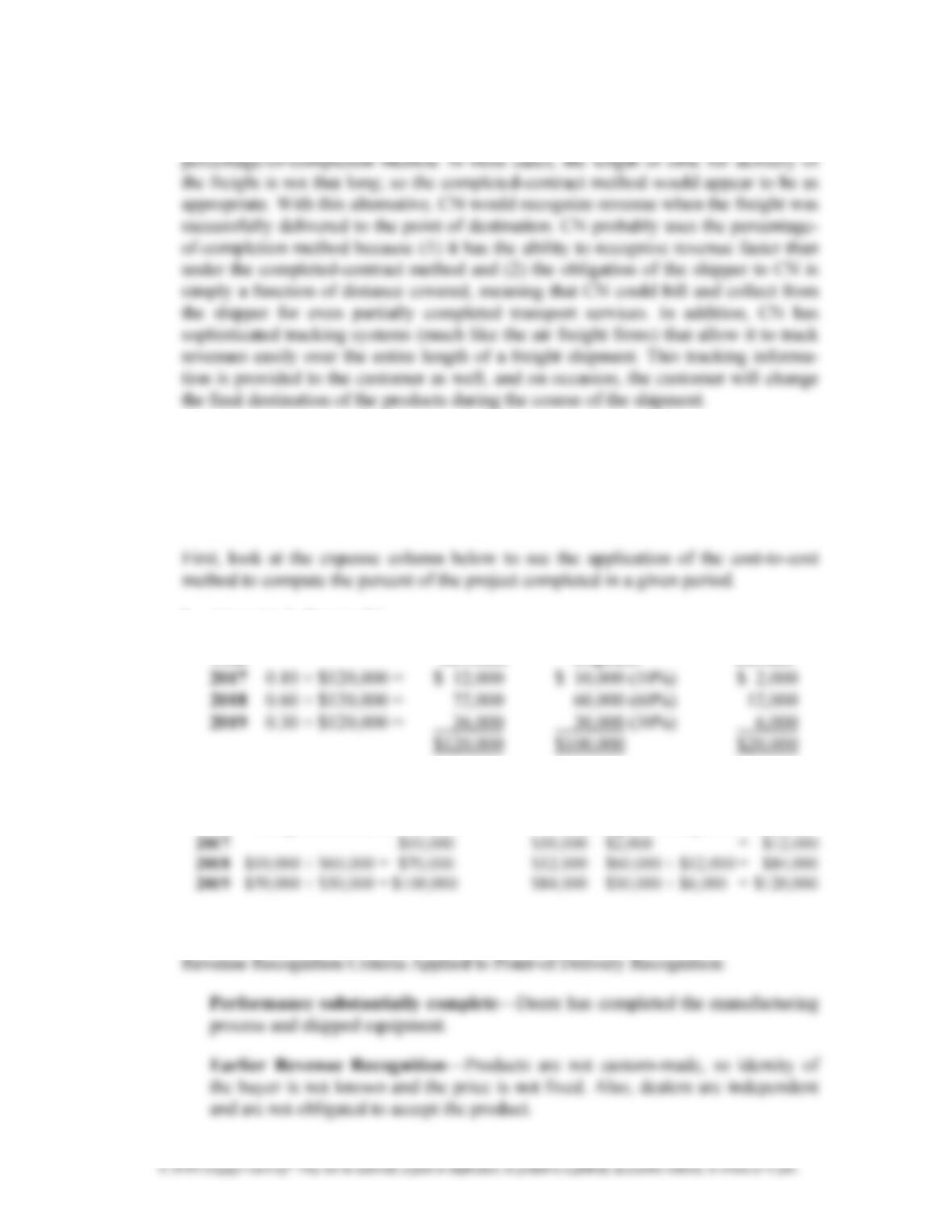
CN recognizes revenue for its freight transport services using the percentage-of-
completion method. Examples of freight customers of CN are the automobile manu-
Chapter 9
Operating Activities
9-9
Given this, it is somewhat surprising that CN recognizes revenue using the
9.18 Measuring Income from Long-Term Contracts.
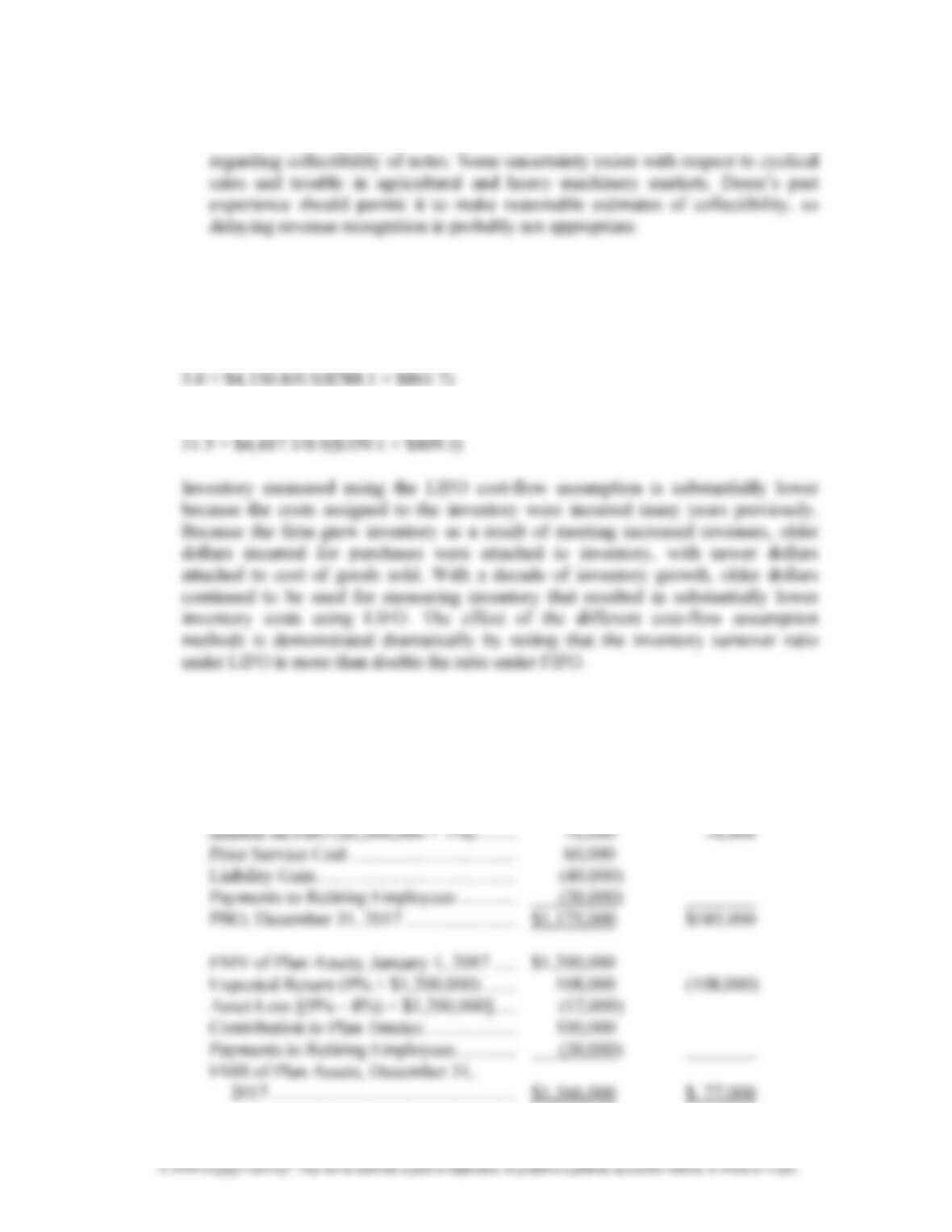
a. (amounts in millions)
2017 and 2018 No revenues and expenses for the observatory project
2019 $120 – $100 = $20
b. (amounts in thousands)
Year Revenue Expense Income
c. Construction in Process account balance:
Year Completed-Contract Method Percentage-of-Completion Method
9.19 Interpreting Financial Statement Disclosures Relating to Income Recognition.
Chapter 9
Operating Activities
9-10
Later Revenue Recognition—Later revenue recognition rests on the uncertainty
9.20 LIFO and FIFO Cost-Flow Assumption for Inventory. The inventory turnover
ratio for 2017 for the two cost-flow assumption methods is as follows:
FIFO
LIFO
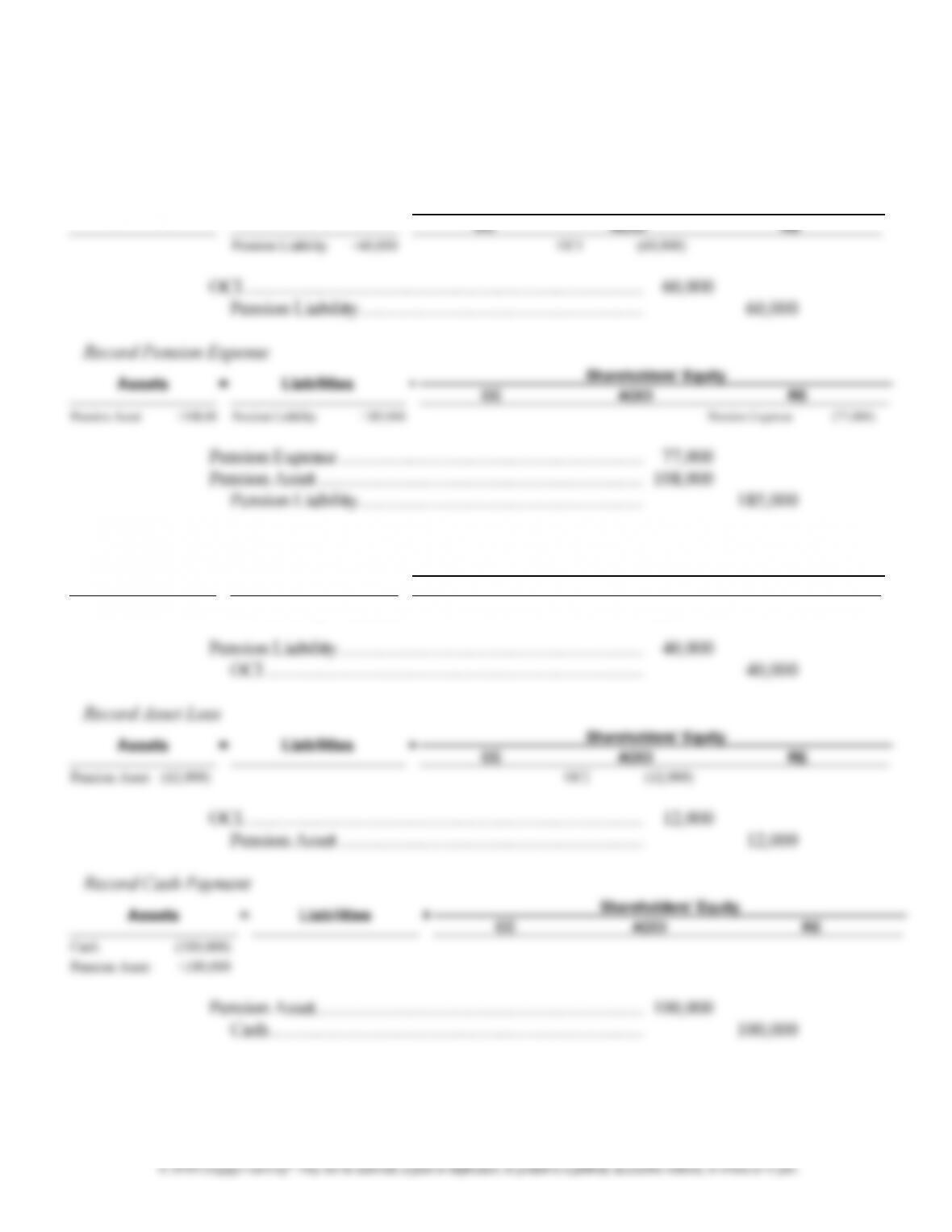
9.21 Reconcile PBO/FMV of Plan Assets; Compute Pension Expense.
a. b. Pension Expense
PBO, January 1, 2017 ………………………… $1,000,000
Service Cost ……………………………………… 115,000 $115,000
Chapter 9
Operating Activities
9-11
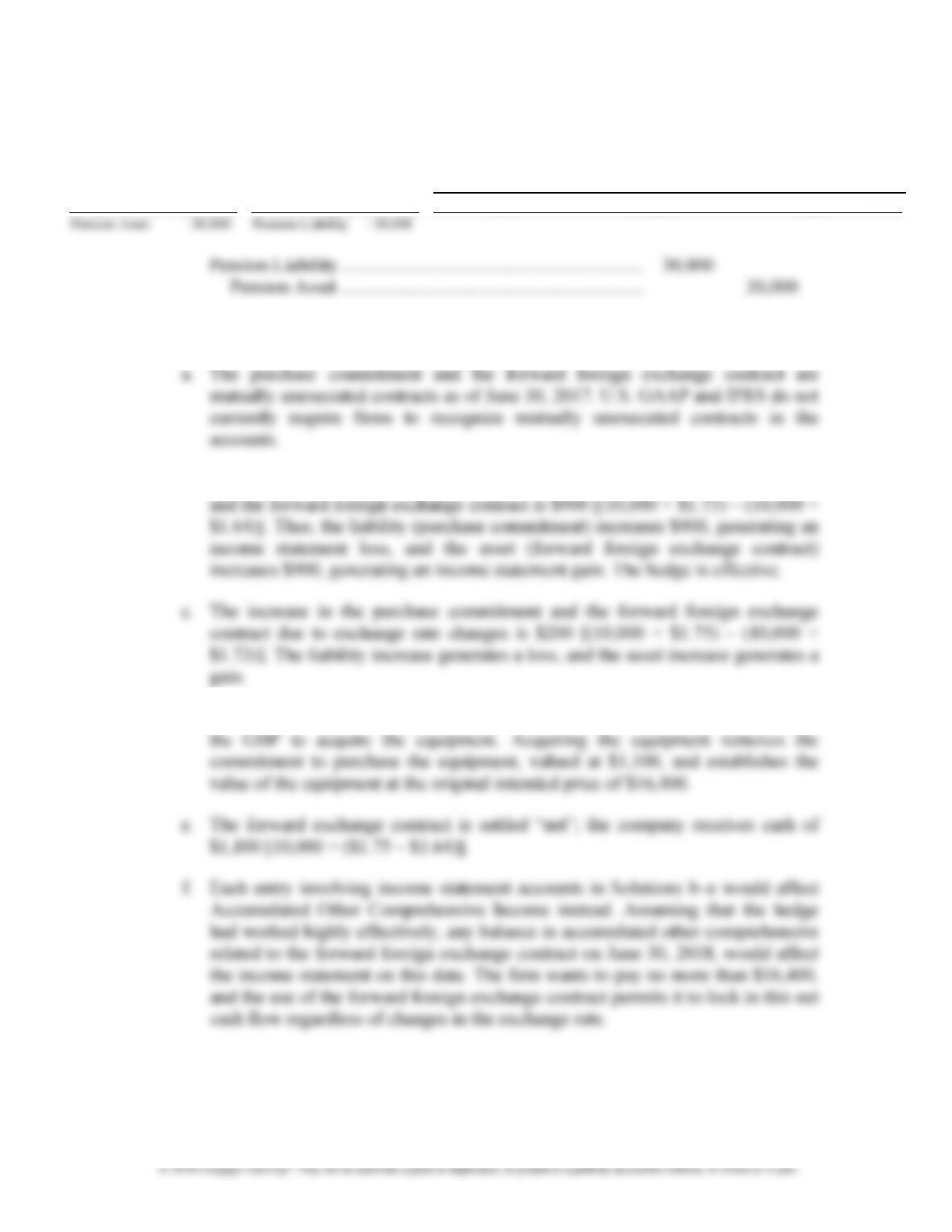
c. Financial Statement Effects of Pension Accounting
Record Plan Amendment
Assets = Liabilities +Shareholders’ Equity
Record Liability Gain
Assets = Liabilities + Shareholders’ Equity
CC AOCI RE
Pension Liability (40,000) OCI +40,000
Chapter 9
Operating Activities
9-12
Payments to Retiring Employees
Assets = Liabilities + Shareholders’ Equity
CC AOCI RE
9.22 Accounting for Forward Foreign Exchange Contract as a Fair Value Hedge.
b. The change in the value of the cash flows related to the purchase commitment
d. The June 30 equipment purchase requires $17,500 (10,000 × $1.75) to acquire
Chapter 9
Operating Activities
9-13
© 2018 Cengage Learning®. May not be scanned, copied or duplicated, or posted to a publicly accessible website, in whole or in part.
December 31, 2017 Revaluation
Assets = Liabilities + Shareholders’ Equity
CC AOCI RE
Assets = Liabilities + Shareholders’ Equity
CC AOCI RE
Receivable from