Chapter 3
Income Flows versus Cash Flows:
Understanding the Statement of Cash Flows
3-21
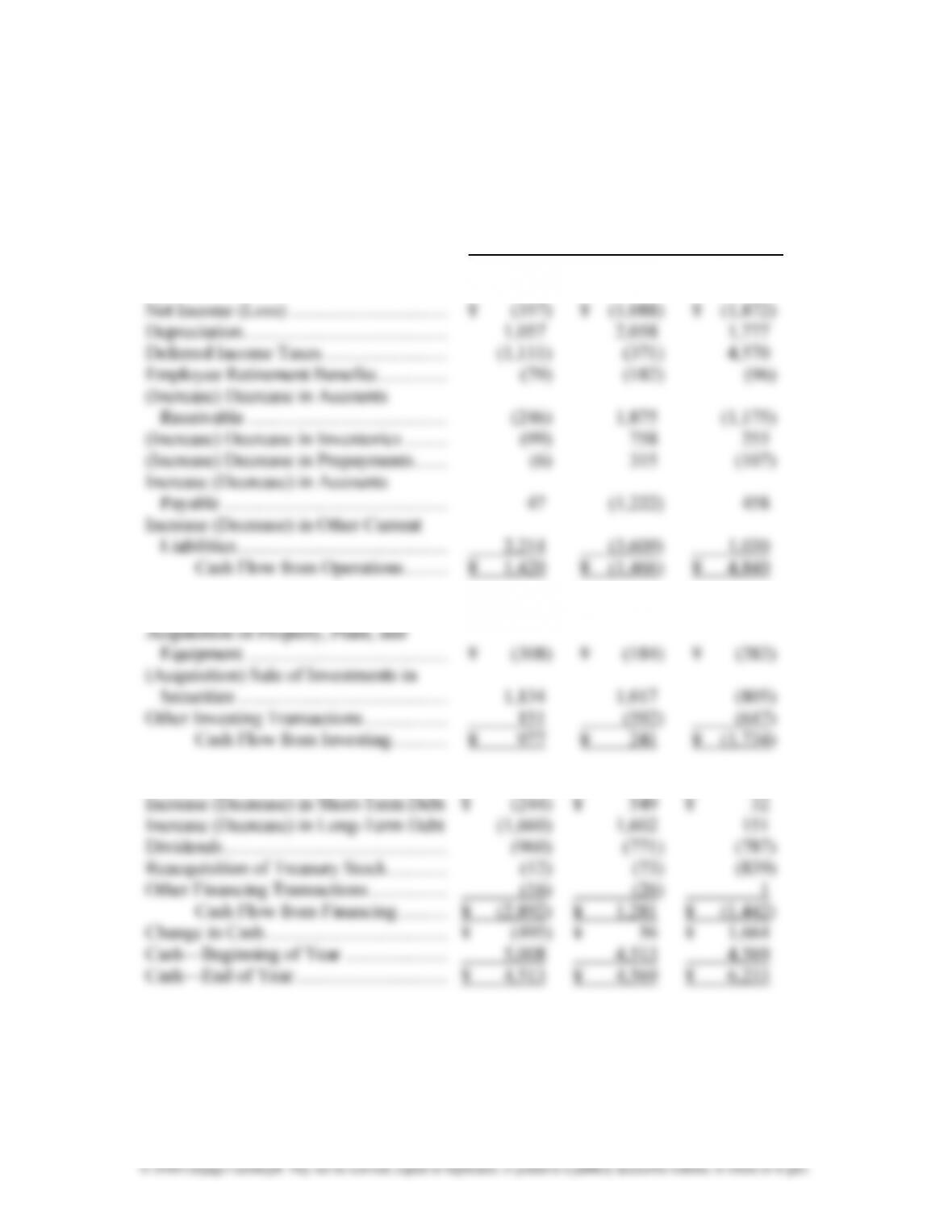
b. Nojiri Pharmaceuticals
Statement of Cash Flows
(amounts in millions)
(Problem 3.28)
Year Ended March 31:
Year 2 Year 3 Year 4
Operations
Investing
Financing
Chapter 3
Income Flows versus Cash Flows:
Understanding the Statement of Cash Flows
3-22
3.29 Preparing a Statement of Cash Flows from Balance Sheets and Income State-
ments.
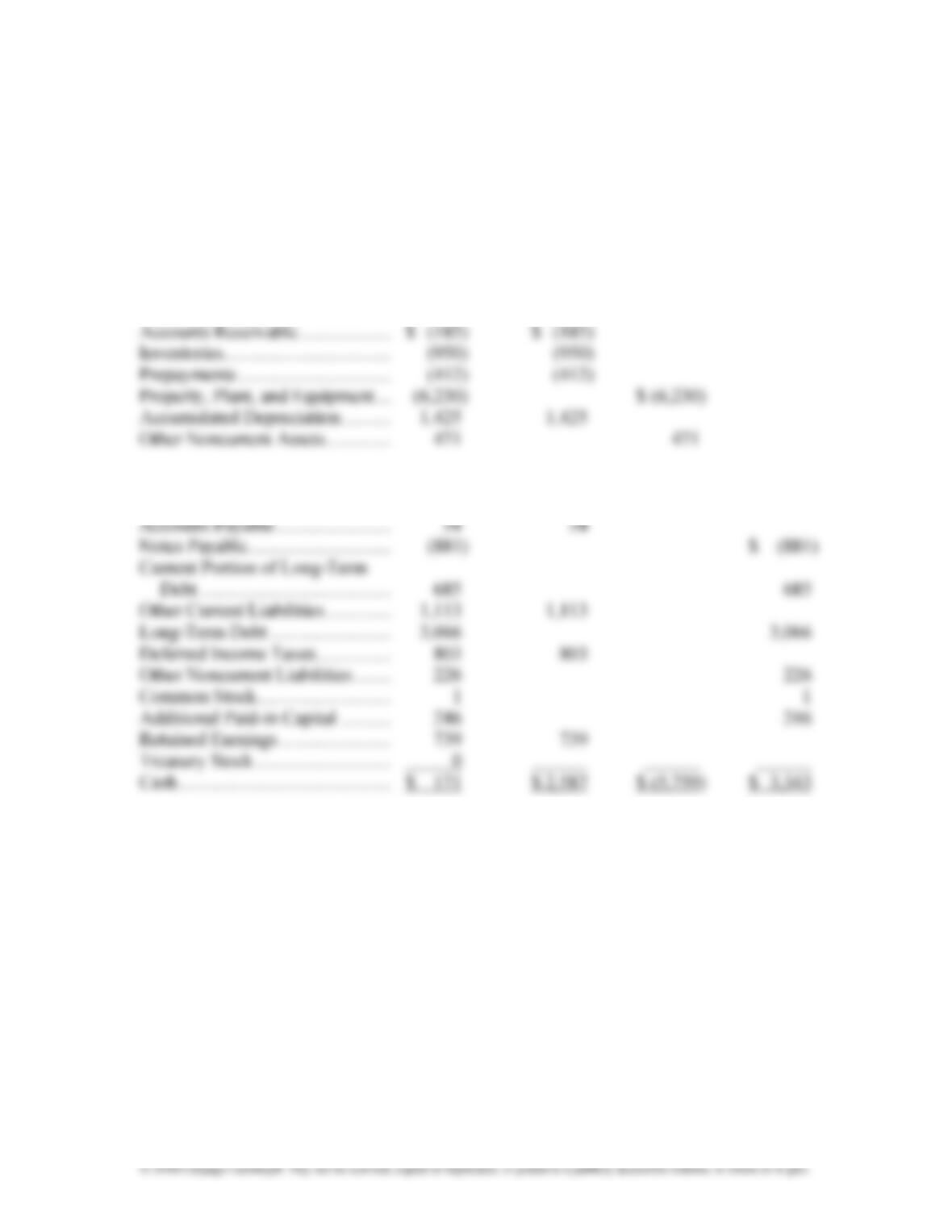
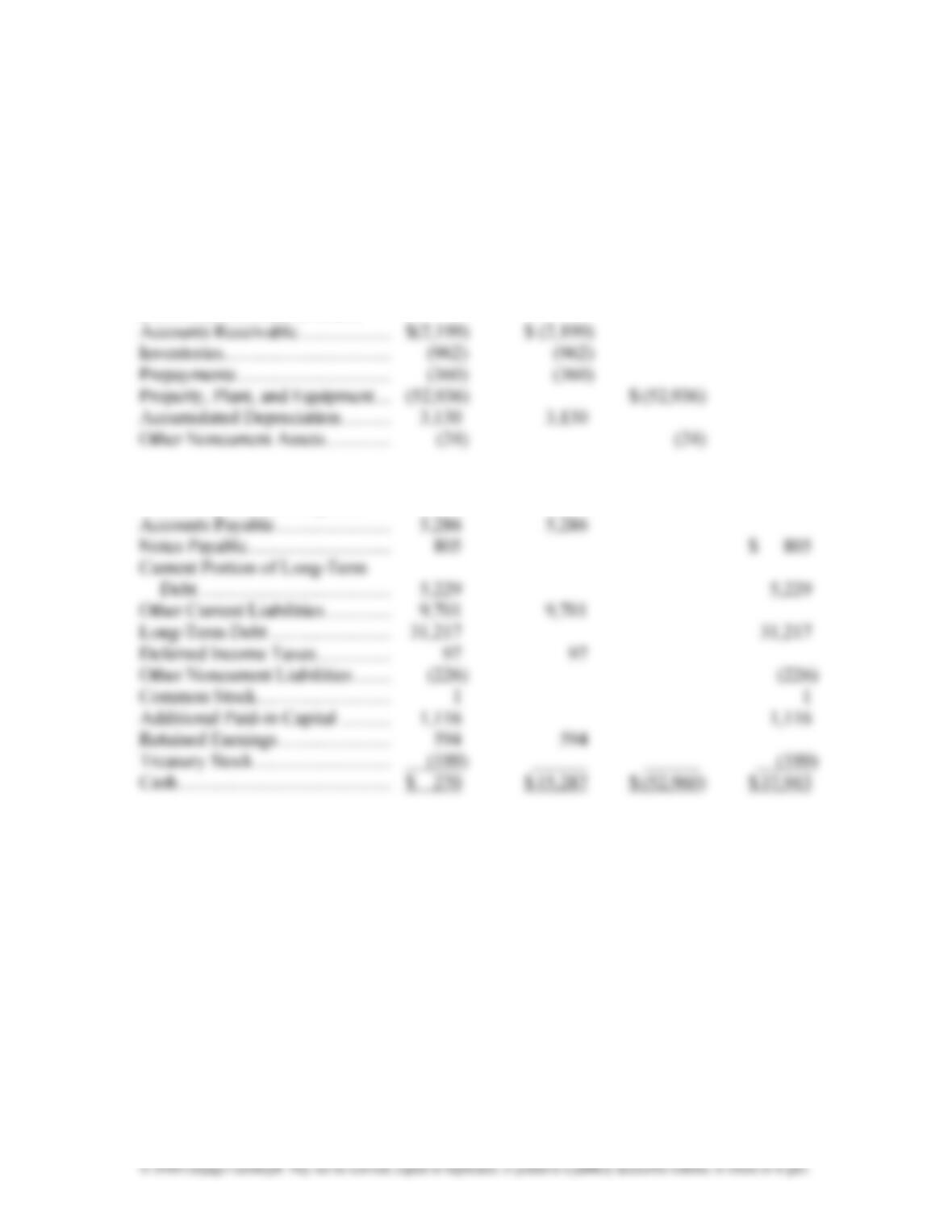
a. Worksheets for the preparation of statements of cash flows for Year 2, Year 3,
ations and additional long-term debt. The use of operating cash flows to finance
purchases of fixed assets is generally undesirable if it occurs, as it does in this
case, from stretching short-term suppliers.
Net income turns negative in Year 4 primarily because of a substantial in-
crease in depreciation expense from purchases of depreciable assets in the cur-
d. The cash flow problems of Flight Training Corporation can be traced to
Chapter 3
Income Flows versus Cash Flows:
Understanding the Statement of Cash Flows
3-23
Worksheet for Statement of Cash Flows for Flight Training Corporation
Year 2
(amounts in thousands)
(Problem 3.29)
Balance Sheet
Changes Operations Investing Financing
(Increase) Decrease in Assets
Increase (Decrease) in Liabilities
and Shareholders’ Equities
Chapter 3
Income Flows versus Cash Flows:
Understanding the Statement of Cash Flows
3-24
Worksheet for Statement of Cash Flows for Flight Training Corporation
Year 3
(amounts in thousands)
(Problem 3.29)
Balance Sheet
Changes Operations Investing Financing
(Increase) Decrease in Assets
Increase (Decrease) in Liabilities
and Shareholders’ Equities
Chapter 3
Income Flows versus Cash Flows:
Understanding the Statement of Cash Flows
3-25
Worksheet for Statement of Cash Flows for Flight Training Corporation
Year 4
(amounts in thousands)
(Problem 3.29)
Balance Sheet
Changes Operations Investing Financing
(Increase) Decrease in Assets
Increase (Decrease) in Liabilities
and Shareholders’ Equities
Chapter 3
Income Flows versus Cash Flows:
Understanding the Statement of Cash Flows
3-26
Flight Training Corporation
Statement of Cash Flows
(amounts in thousands)
(Problem 3.29)
Year Ended December 31:
Year 2 Year 3 Year 4
Operations
Investing
Financing
3-27
3.30 Preparing a Statement of Cash Flows from Balance Sheets and Income State-
ments.
a. Worksheets for the preparation of statements of cash flow for Year 8 and Year 9
b. Cash flow from operations was negative during Year 8, despite positive net in-
Chapter 3
Income Flows versus Cash Flows:
Understanding the Statement of Cash Flows
3-28
BTB, Inc.
Worksheet for Statement of Cash Flows
for Year 8
(amounts in thousands)
(Problem 3.30)
Balance Sheet
(Increase) Decrease in Changes Operations Investing Financing
Assets
Increase (Decrease) in Liabilities
and Shareholders’ Equities
Chapter 3
Income Flows versus Cash Flows:
Understanding the Statement of Cash Flows
3-29
BTB, Inc.
Worksheet for Statement of Cash Flows
for Year 9
(amounts in thousands)
(Problem 3.30)
Balance Sheet
Changes Operations Investing Financing
(Increase) Decrease in
Assets
Increase (Decrease) in Liabilities
and Shareholders’ Equity
Chapter 3
Income Flows versus Cash Flows:
Understanding the Statement of Cash Flows
3-30
Integrative Case 3.1: Walmart
a. Like most companies with fixed and/or intangible assets, Walmart recognizes peri-
b. The negative adjustment for inventories on the statement of cash flows reflects
cash outflows for inventory that do not correspond to cost of goods sold recog-
c. The amount of cash collected from customers during 2015 can best be estimated as
follows (in millions):
Chapter 3
Income Flows versus Cash Flows:
Understanding the Statement of Cash Flows
3-31
© 2018 Cengage Learning®. May not be scanned, copied or duplicated, or posted to a publicly accessible website, in whole or in part.
for Sam’s Club memberships. The decline is $15 million, which would revise our
estimate of $483,284 to $483,269.
d. Cash flow from operations substantially exceeds net income each year, largely
creditors, which Walmart is in a position to do given their size and scope.
e. Cash flow from operations was more than sufficient to finance acquisitions of
Chapter 3
Income Flows versus Cash Flows:
Understanding the Statement of Cash Flows
3-32
Case 3.2: Prime Contractors
I. Case Objectives
II. Responses to Case Questions.
a. The refuse business is fixed-asset-intensive, whereas the animal care business is
b. There are three principal explanations for the increased cash flow from opera-
tions coupled with decreased net income. First, the addback to net income for
Chapter 3
Income Flows versus Cash Flows:
Understanding the Statement of Cash Flows
3-33
c. There are three principal explanations for the decreased cash flow from opera-
business and the inclusion of gains on sales of fixed assets in earnings.
d. The largest temporary difference between income for financial reporting and
taxable income is likely the depreciation of fixed assets. Prime probably uses
e. Net income includes the gains on sales of fixed assets. U.S. GAAP requires
firms to classify the cash proceeds of sales of fixed assets as an investing activi-
Chapter 3
Income Flows versus Cash Flows:
Understanding the Statement of Cash Flows
3-34
f. As indicated in the response to Part a, Prime financed its acquisition of fixed as-
3-35
Case 3A: W. T. Grant Company (This problem is available online.)
I. Case Objectives
A. Demonstrate the importance of analyzing cash flow from operations in as-
sessing the impact of operations on liquidity.
II. Class Discussion
Begin by placing the following chart on the board:
Spend a few minutes discussing the two accounting changes and their general
impact on the financial statements. The purpose of this discussion is merely to fa-
Chapter 3
Income Flows versus Cash Flows:
Understanding the Statement of Cash Flows
3-36
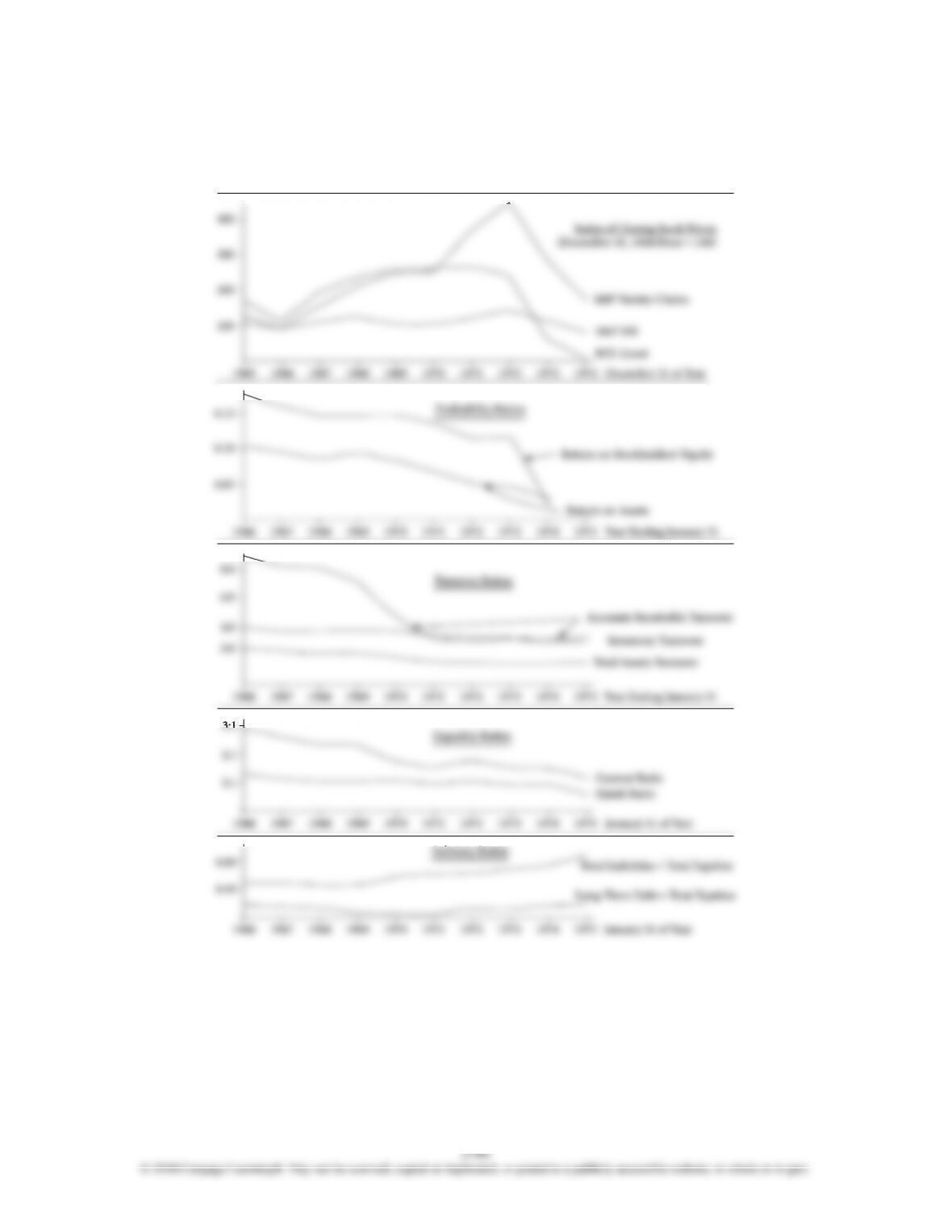
Then distribute Exhibit 3.A (see page 3-40) from this teaching note. Also place
this exhibit on an overhead transparency. Ask this question: When did the stock
lated issues that you should try to elicit from the discussion.
A. Credit Extension and Collection Policies—Grant operated with a decentra-
lized organizational philosophy. Each store manager had authority to extend
credit. There was no minimum on the amount that customers could charge.
the year ending January 31, 1970, as the time to switch? One hypothesis is
Chapter 3
Income Flows versus Cash Flows:
Understanding the Statement of Cash Flows
3-37
Exhibits 3.36 and 3.38 in the case suggests that Grant netted interest revenue
tomer installment receivables increased fivefold between 1966 and 1974, yet
the allowance for uncollectible accounts increased half that much. Students
B. Inventory Policies—Students generally bring up inventory policies as a sec-
ond major contributing factor to Grant’s collapse. They point out that the
move to furniture and major appliances was inappropriate given Grant’s im-
age as an urban discount store. They also point out that Grant had no experi-
and gross margin percentages for some clues. The inventory turnover was rel-
Chapter 3
Income Flows versus Cash Flows:
Understanding the Statement of Cash Flows
3-38
C. Store Expansion—The number of Grant stores grew rapidly during the late
D. Financing—Most of the long-term financing for the growth in number of
stores came from long-term leases. Firms were not required to capitalize these
leases until 1976. Grant had two long-term debt issues (1972 and 1974) and
At this point in the discussion, ask whether Grant’s major problems involved work-
ing capital or were more long-term in nature. It is clear that the problems were
working-capital-oriented, although the viability of Grant’s long-term marketing
Chapter 3
Income Flows versus Cash Flows:
Understanding the Statement of Cash Flows
3-39
If time permits, spend a few minutes discussing the rationale for each of these ac-
tions.
Additional References
James A. Largay III and Clyde P. Stickney, “Cash Flows, Ratio Analysis and the W.T.
Grant Company Bankruptcy,” Financial Analysts Journal (July–August 1980), pp. 51–
54.
“How Grant Lost $175 Million Last Year,” Business Week (February 24, 1975), pp. 74–
98–100.
“Investigating the Collapse of W.T. Grant,” Business Week (July 19, 1976), pp. 60–62.
Chapter 3
Income Flows versus Cash Flows:
Understanding the Statement of Cash Flows
Exhibit 3.A W.T. Grant Company Stock Prices and Selected Ratios
for the Fiscal Years Ending January 31, 1966 to 1975