Chapter 2
Asset and Liability Valuation
and Income Recognition
2-19
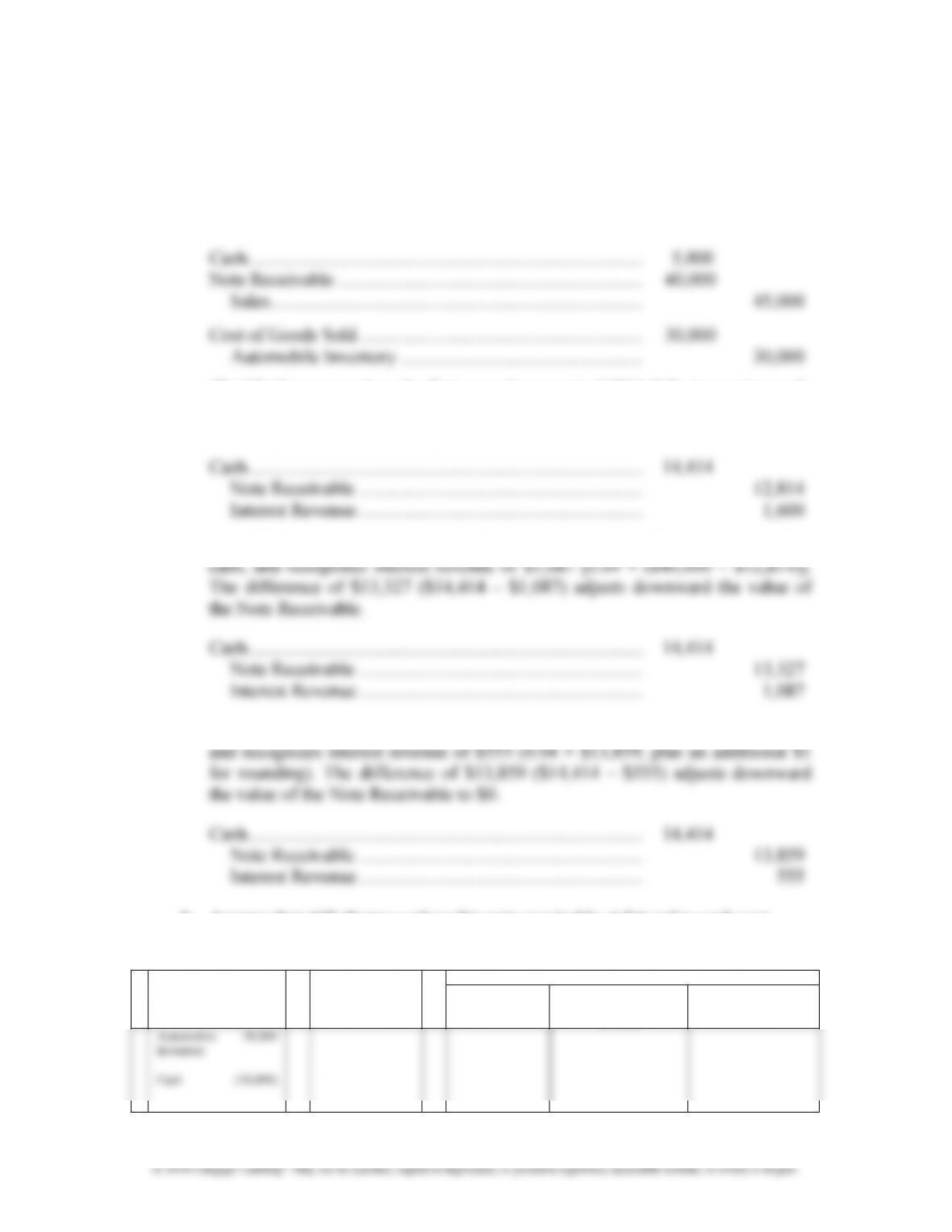
(2) The sale of the car triggers recognition of sales on the income statement of
$45,000 and recognition of two assets: cash of $5,000 and a receivable of
$40,000. In addition, Automobile Inventory would be reduced for the cost of the
automobile ($30,000) and Cost of Goods Sold in the same amount would be
recognized on the income statement.
(3) Alfa Romeo receives the first annual payment of ($14,414), increasing cash,
and recognizes interest revenue of $1,600 (0.04 × $40,000). The difference of
$12,814 ($14,414 – $1,600) adjusts downward the value of the Note Receivable.
(4) Alfa Romeo receives the second annual payment of ($14,414), increasing
(5) Alfa Romeo receives the final annual payment of ($14,414), increasing cash,
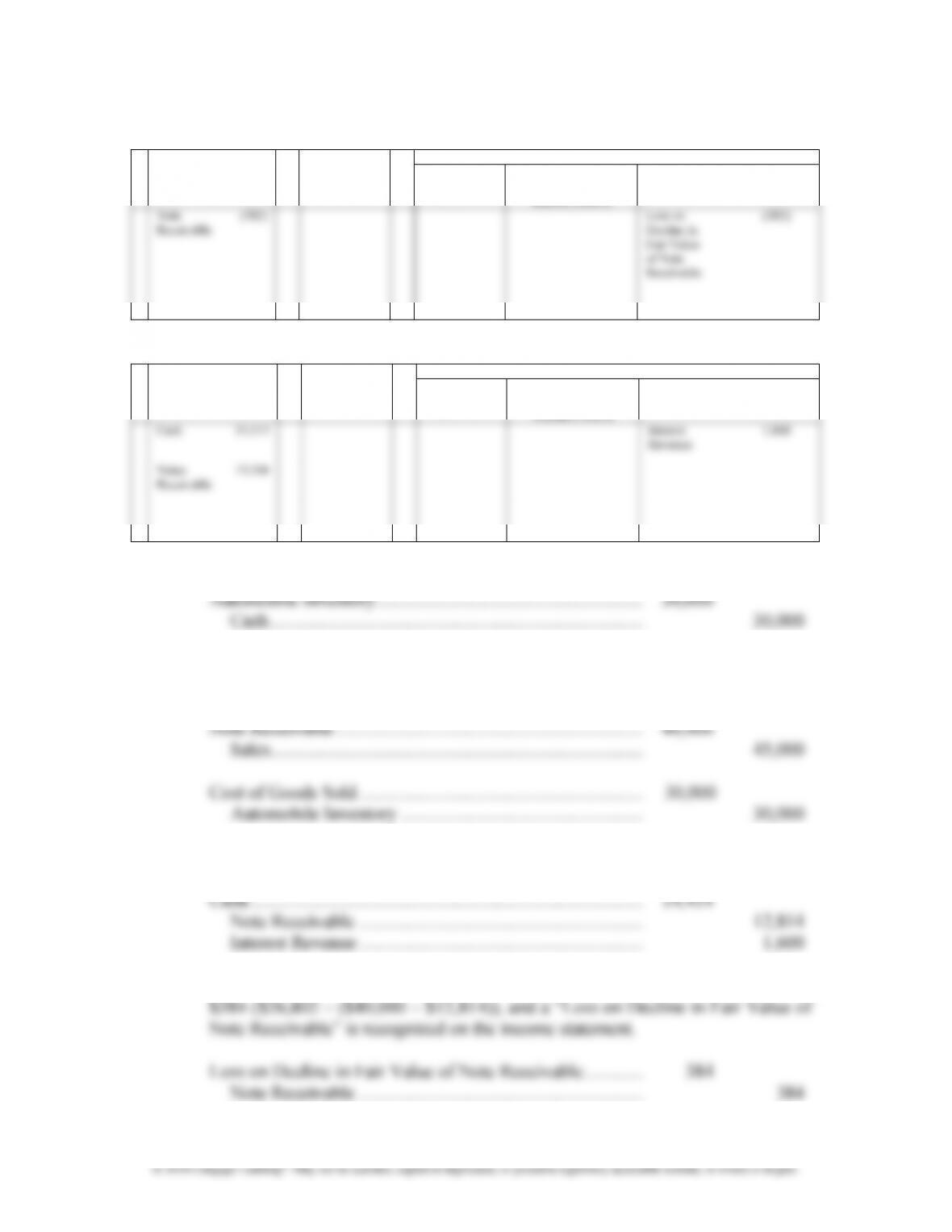
b. Assume that Alfa Romeo values this note receivable at fair value each year.
(1)
Assets = Liabilities +
Shareholders’ Equity
Contributed
Capital (CC)
Accumulated Other
Comprehensive Income
(AOCI)
Retained Earnings
(RE)

Chapter 2
Asset and Liability Valuation
and Income Recognition
2-20
(2)
Assets = Liabilities +
Shareholders’ Equity
Contributed
Capital (CC)
Accumulated Other
Comprehensive
Income (AOCI)
Retained Earnings (RE)
(3)
Assets = Liabilities +
Shareholders’ Equity
Contributed
Capital (CC)
Accumulated Other
Comprehensive
Retained Earnings (RE)
(4)
Assets = Liabilities +
Shareholders’ Equity
Contributed
Capital (CC)
Accumulated Other
Comprehensive
Income (AOCI)
Retained Earnings (RE)
(5)
Assets = Liabilities +
Shareholders’ Equity
Contributed
Capital (CC)
Accumulated Other
Comprehensive
Income (AOCI)
Retained Earnings (RE)
Chapter 2
Asset and Liability Valuation
and Income Recognition
2-21
(6)
Assets = Liabilities +
Shareholders’ Equity
Contributed
Capital (CC)
Accumulated Other
Comprehensive
Income (AOCI)
Retained Earnings (RE)
(7)
Assets = Liabilities +
Shareholders’ Equity
Contributed
Capital (CC)
Accumulated Other
Comprehensive
Income (AOCI)
Retained Earnings (RE)
(1) Same as (1) in Part a.
(2) Same as (2) in Part a.
Cash…………………………………………………………………………. 5,000
(3) Same as (3) in Part a.
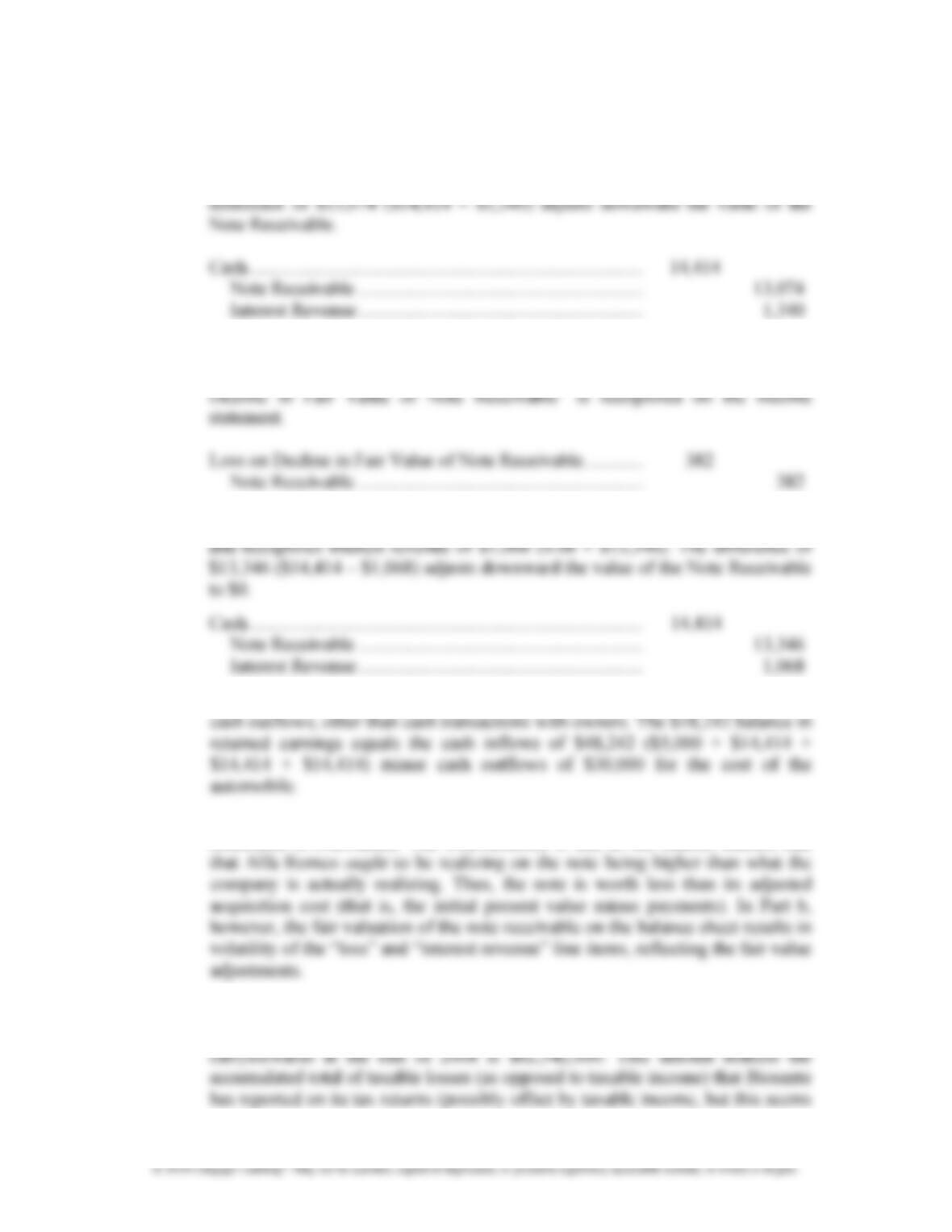
(4) The rise in interest rates reduces the fair value of the Note Receivable by
Chapter 2
Asset and Liability Valuation
and Income Recognition
2-22
(5) Alfa Romeo receives the second annual payment of ($14,414), increasing
cash, and recognizes interest revenue of $1,340 (0.05 × $26,802). The
(6) The second rise in interest rates reduces the fair value of the Note
Receivable by $382 [$13,346 – ($26,802 – $13,074)], and a second “Loss on
(7) Alfa Romeo receives the final annual payment of ($14,414), increasing cash,
c. Total expenses over sufficiently long time periods equal cash inflows minus
d. In Part a, the balance sheet suffers at the end of 2017 and 2018 because the note
receivable is overvalued. The overvaluation is due to the market interest rate
2.16 Deferred Tax Assets.
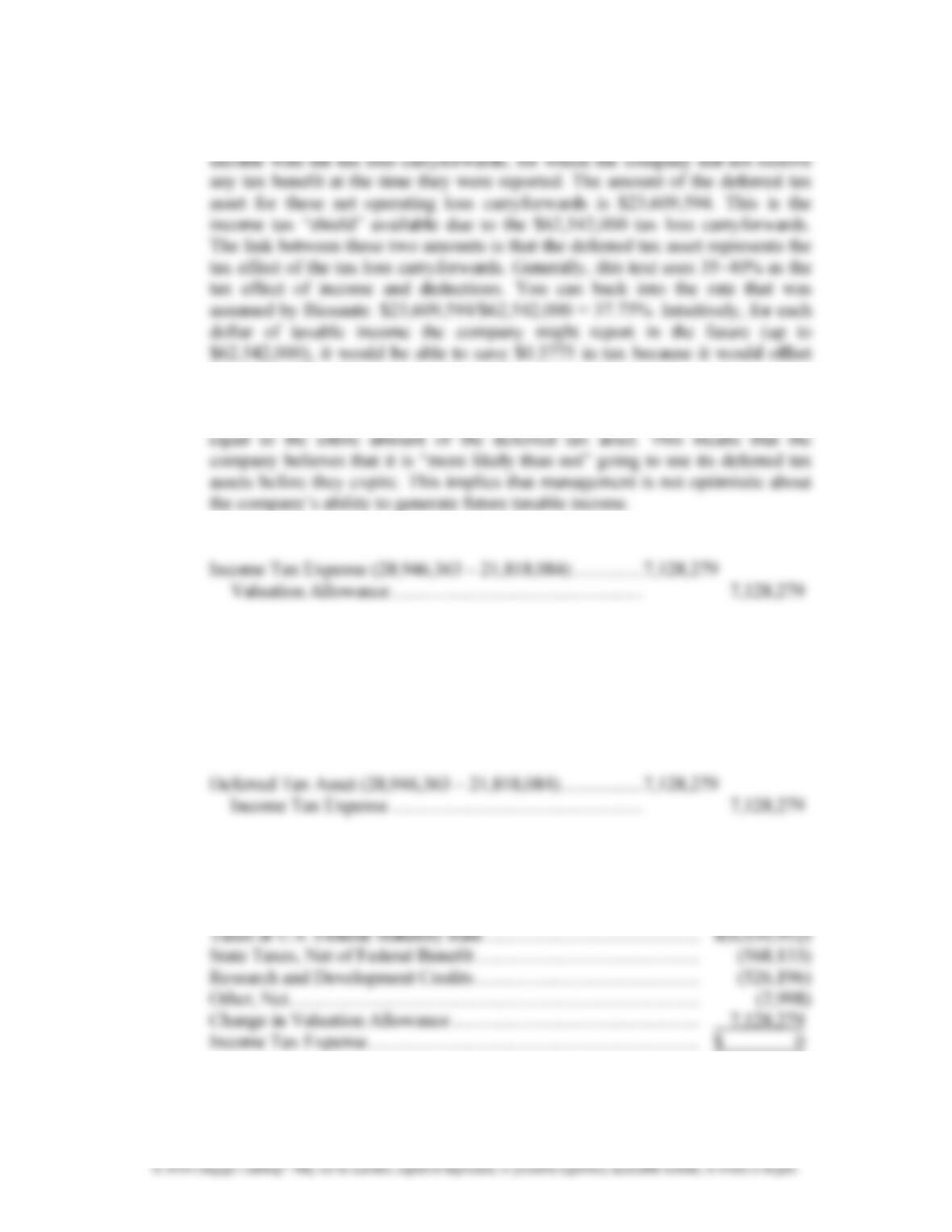
a. Biosante Pharmaceuticals discloses that the amount of the net operating loss
Chapter 2
Asset and Liability Valuation
and Income Recognition
2-23
unlikely). In future years, Biosante could offset up to $62,542,000 of taxable
that dollar of taxable income with a dollar of its tax loss carryforwards.
b. The company has recorded a valuation allowance for the deferred tax asset
c. The increase in the valuation allowance was achieved by the following entry:
The income tax expense entry decreased net income; the valuation allowance
entry decreased the deferred tax asset. However, note that the change in the
valuation allowance exactly equals the increase in the deferred tax assets. This
increase in deferred tax assets would have been achieved via a cumulative
adjustment to the financial statements for the individual deferred tax assets,
symbolically represented as follows:
As a result of the buildup of the deferred tax assets but the full reserve for this
buildup, there was no impact on net income for fiscal 2008. Indeed, the
company’s tax provision disclosed in the footnotes is as follows:
Chapter 2
Asset and Liability Valuation
and Income Recognition
2-24
2.17 Interpreting Income Tax Disclosures.
a. ABC’s income before income taxes for financial reporting exceeded taxable
b. Income before income taxes for financial reporting exceeded taxable income
c. The deferral of tax payments in 2013 and 2014 results in an addition to net
d. ABC recognizes insurance expense earlier for financial reporting than for tax
reporting, giving rise to a deferred tax asset for the future savings in income
e. ABC recognizes these costs as expenses earlier for financial reporting than for
f. The deferred tax asset related to the health care obligation indicates that ABC
has recognized more expenses cumulatively for financial reporting than for
its pension fund than it has recognized as expenses for financial reporting. The
Chapter 2
Asset and Liability Valuation
and Income Recognition
2-25
© 2018 Cengage Learning®. May not be scanned, copied or duplicated, or posted to a publicly accessible website, in whole or in part.
growing amounts over time suggest that ABC has consistently grown the
number of its employees or their retirement benefits each year.
g. The deferred tax asset related to uncollectible accounts indicates that ABC
recognizes losses for uncollectibles earlier for financial reporting than for tax
h. The deferred tax liability indicates that ABC recognizes depreciation earlier for
2.18 Interpreting Income Tax Disclosures.
a. In 2008, the deferred income tax provision is positive, whereas in 2007, it is
b. During 2008, the deferred tax liability increased from $110 million to $495
million. Because this increase was associated with a deferred income tax
c. The premiums collected from customers go immediately into taxable income,
d. The explanation for why the deferred tax effect of deferred costs shows up as a
Chapter 2
Asset and Liability Valuation
and Income Recognition
2-26
these amounts. However, when these amounts are subsequently reported as
e. Accelerated depreciation deductions, all else equal, reduce current taxable
income and taxes payable. However, because total tax depreciation and
f. Although the limited income tax footnote disclosures can provide only limited
2.19 Interpreting Income Tax Disclosures.
a. Nike’s income before income taxes (also referred to as book income) exceeded
b. Opposite 2007, the taxable income for 2008 was higher than income before
Chapter 2
Asset and Liability Valuation
and Income Recognition
2-27
© 2018 Cengage Learning®. May not be scanned, copied or duplicated, or posted to a publicly accessible website, in whole or in part.
million). In addition, during 2008, Nike switched from a net deferred tax liability
position to a net deferred tax asset position, consistent with the company paying
a substantial sum for taxes relative to amounts currently expensed.
c. The adjustment to net income to compute cash flow from operations will be a
d. Nike recognizes an estimated expense or revenue reduction earlier for financial
doubtful accounts estimates).
e. Nike recognizes deferred compensation expense earlier for financial reporting
f. The amount of the deferred tax asset for foreign loss carryforwards increased
g. Apparently, when Nike acquired Umbro, it was able to deduct a large number of
h. Nike recognizes foreign-source income earlier for financial reporting than for
i. Some of Nike’s foreign units operate at a net loss, giving rise to a deferred tax
liability.
Chapter 2
Asset and Liability Valuation
and Income Recognition
2-28
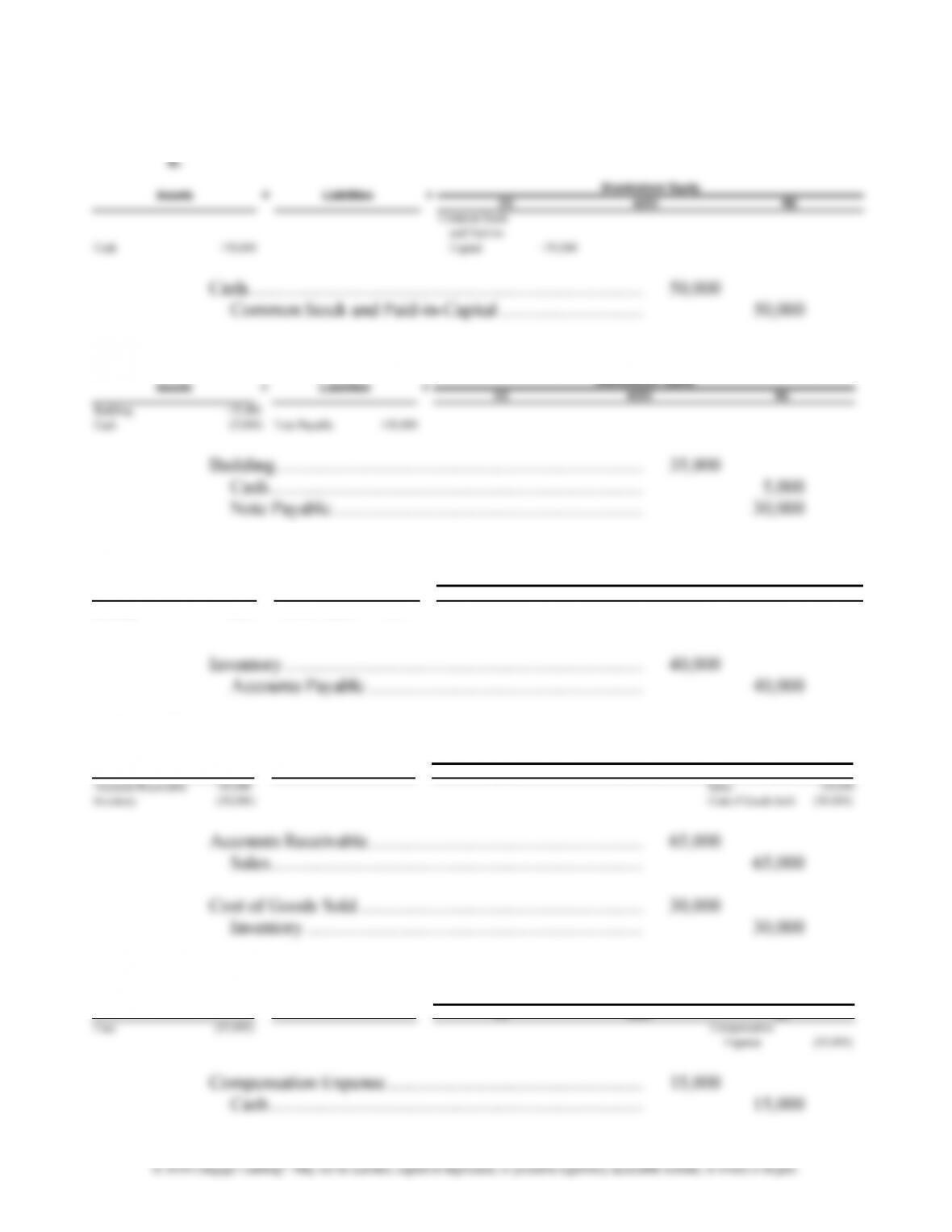
2.20 Analyzing Transactions.
b.
Shareholders’ Equity
c.
CC AOCI RE
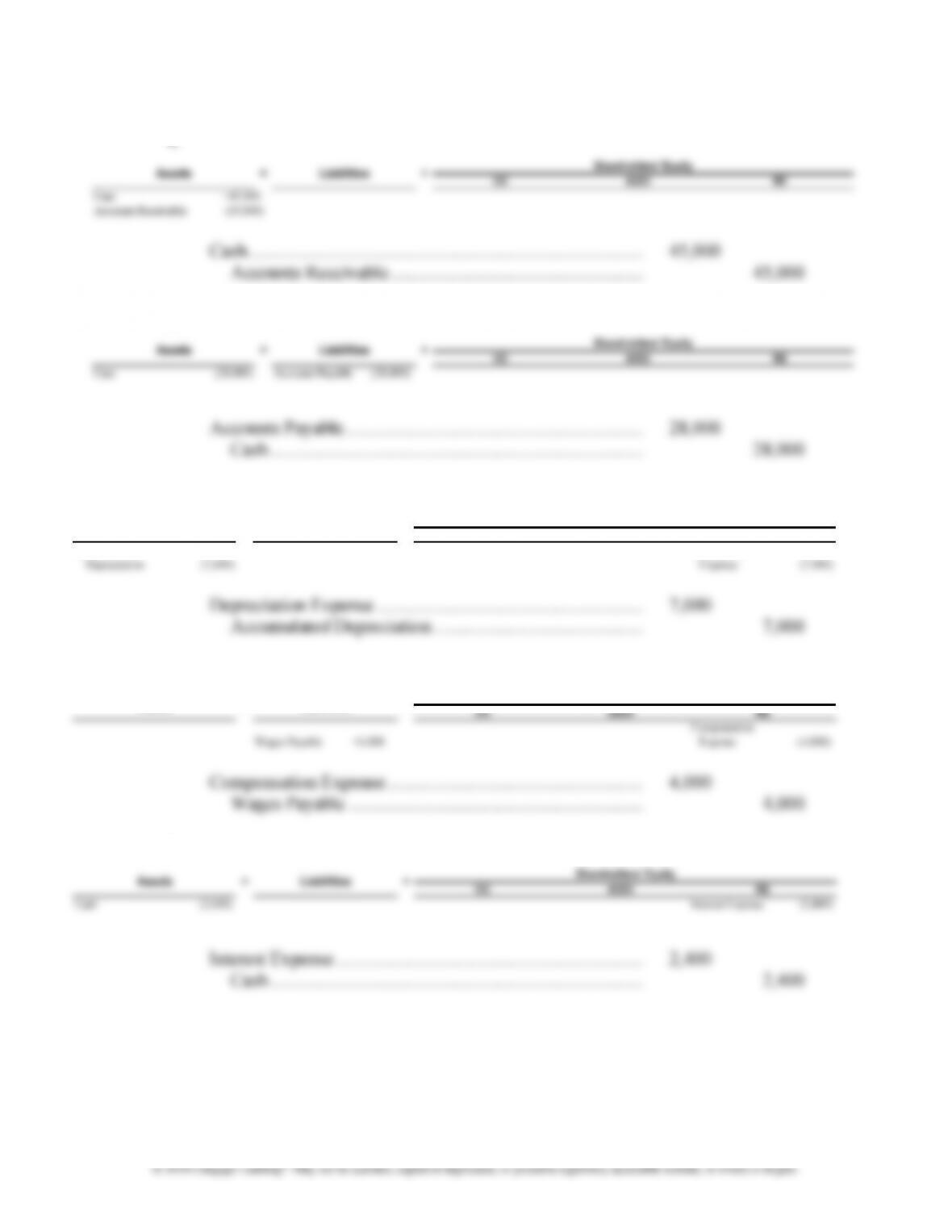
Inventory +40,000 Accounts Payable +40,000
Shareholders’ Equity
+LiabilitiesAssets =
d.
CC AOCI RE
Shareholders’ Equity
+LiabilitiesAssets =
e.
CC AOCI RE
Shareholders’ Equity
+LiabilitiesAssets =
Chapter 2
Asset and Liability Valuation
and Income Recognition
2-29
f.
Shareholders’ Equity
+LiabilitiesAssets =
g.
Shareholders’ Equity
+LiabilitiesAssets =
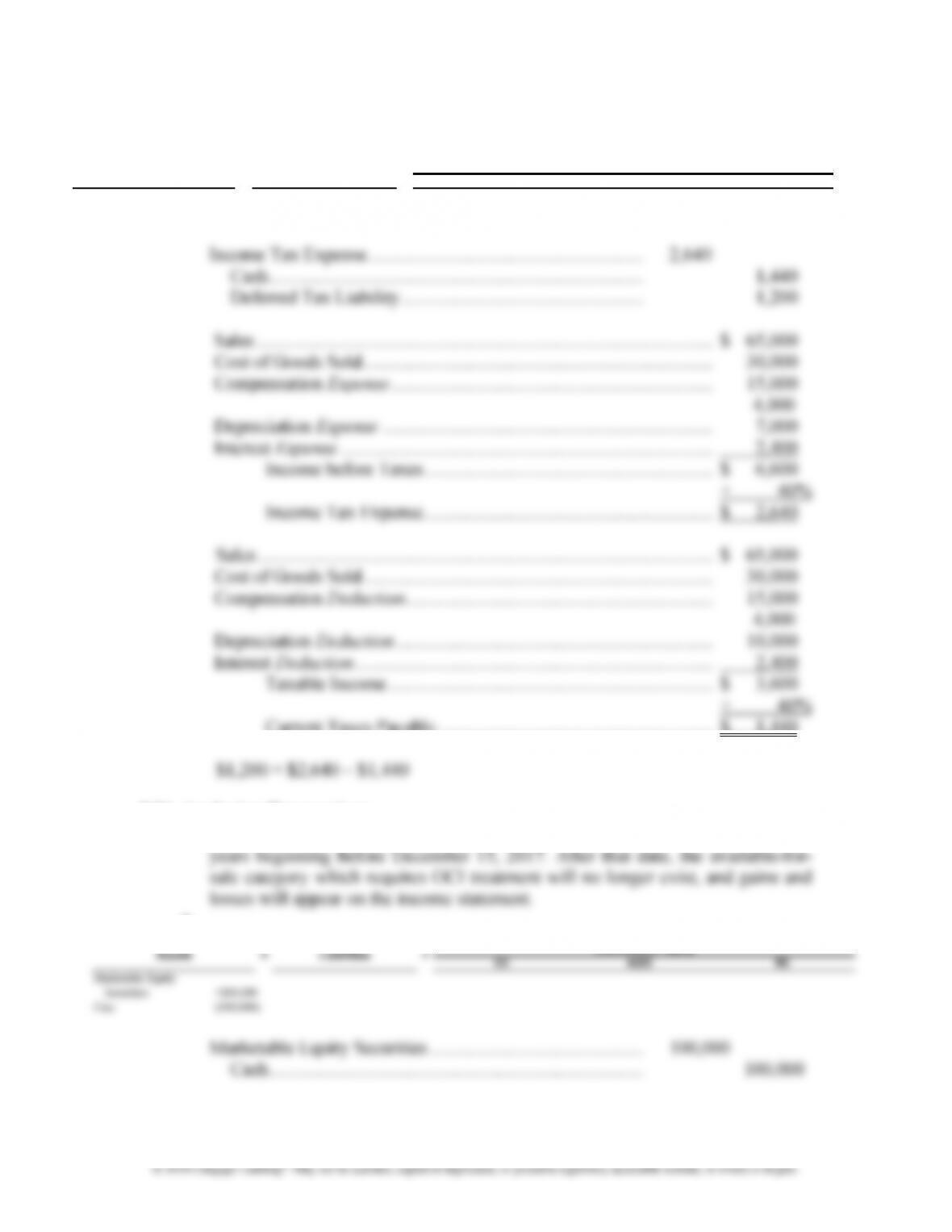
h.
CC AOCI RE
Accumulated Depreciation
Shareholders’ Equity
+LiabilitiesAssets =
i.
Shareholders’ Equity
+LiabilitiesAssets =
j.
Shareholders’ Equity
+LiabilitiesAssets =
Chapter 2
Asset and Liability Valuation
and Income Recognition
2-30
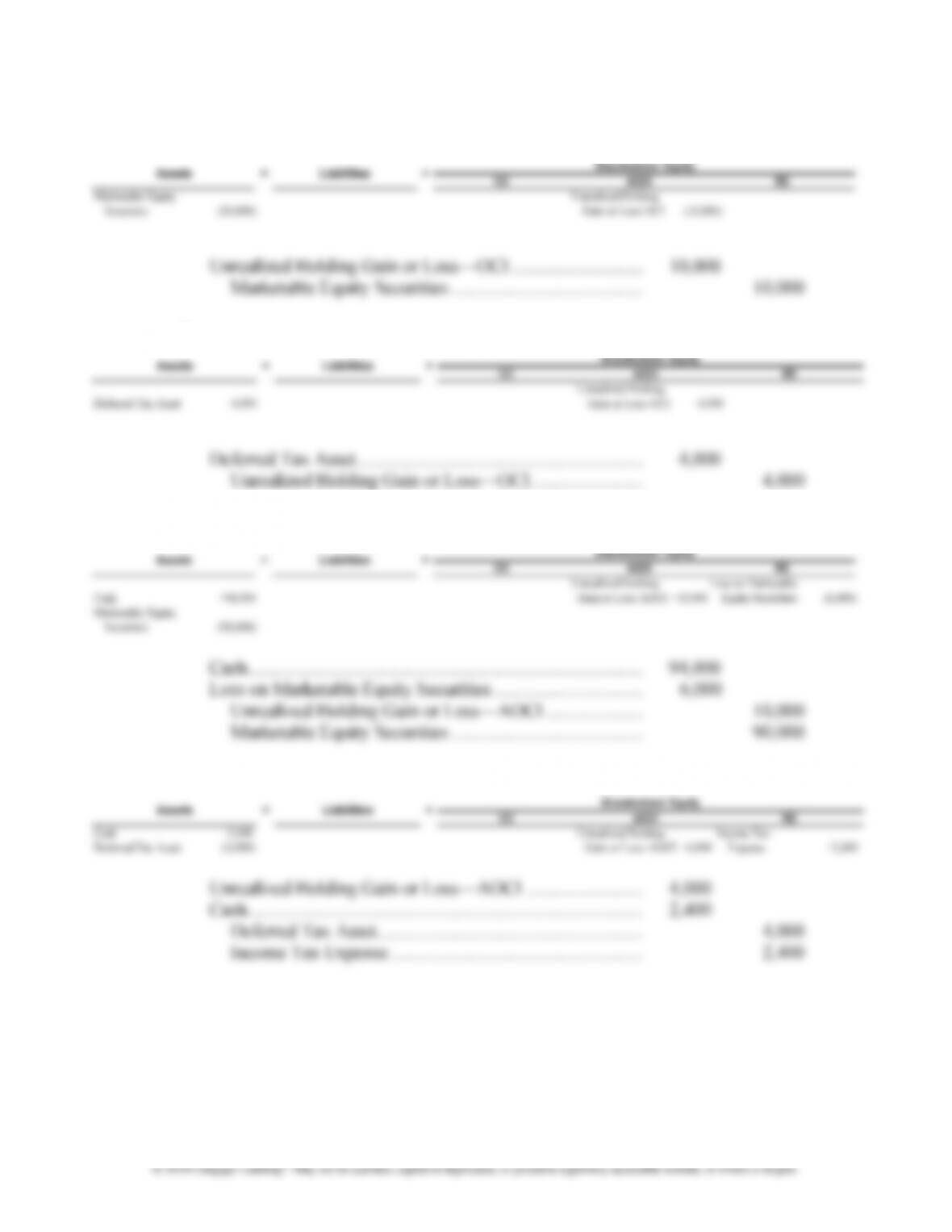
k.
CC AOCI RE
Deferred Tax Income Tax
Cash (1,440) Liability +1,200 Expense (2,640)
Shareholders’ Equity
+LiabilitiesAssets =
Current Taxes Payable ………………………………………………….. $ 1,440
2.21 Analyzing Transactions.
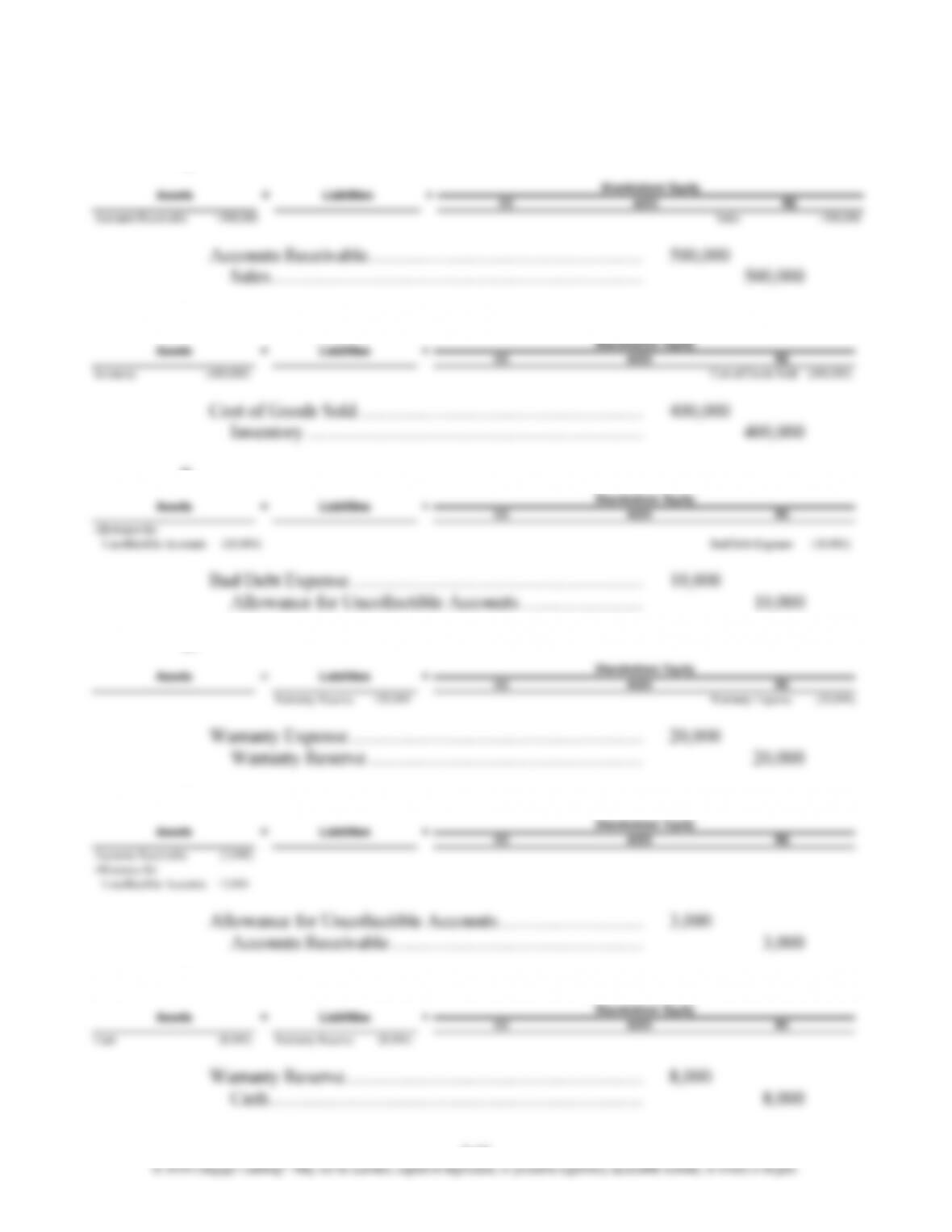
(1) The answer to this part is based on rules in effect for financial statements for
a.
Shareholders’ Equity
Chapter 2
Asset and Liability Valuation
and Income Recognition
2-31
b.
Shareholders’ Equity
+LiabilitiesAssets =
c.
Shareholders’ Equity
+LiabilitiesAssets =
d.
Shareholders’ Equity
+LiabilitiesAssets =
e.
Shareholders’ Equity
+LiabilitiesAssets =
Chapter 2
Asset and Liability Valuation
and Income Recognition
2-32
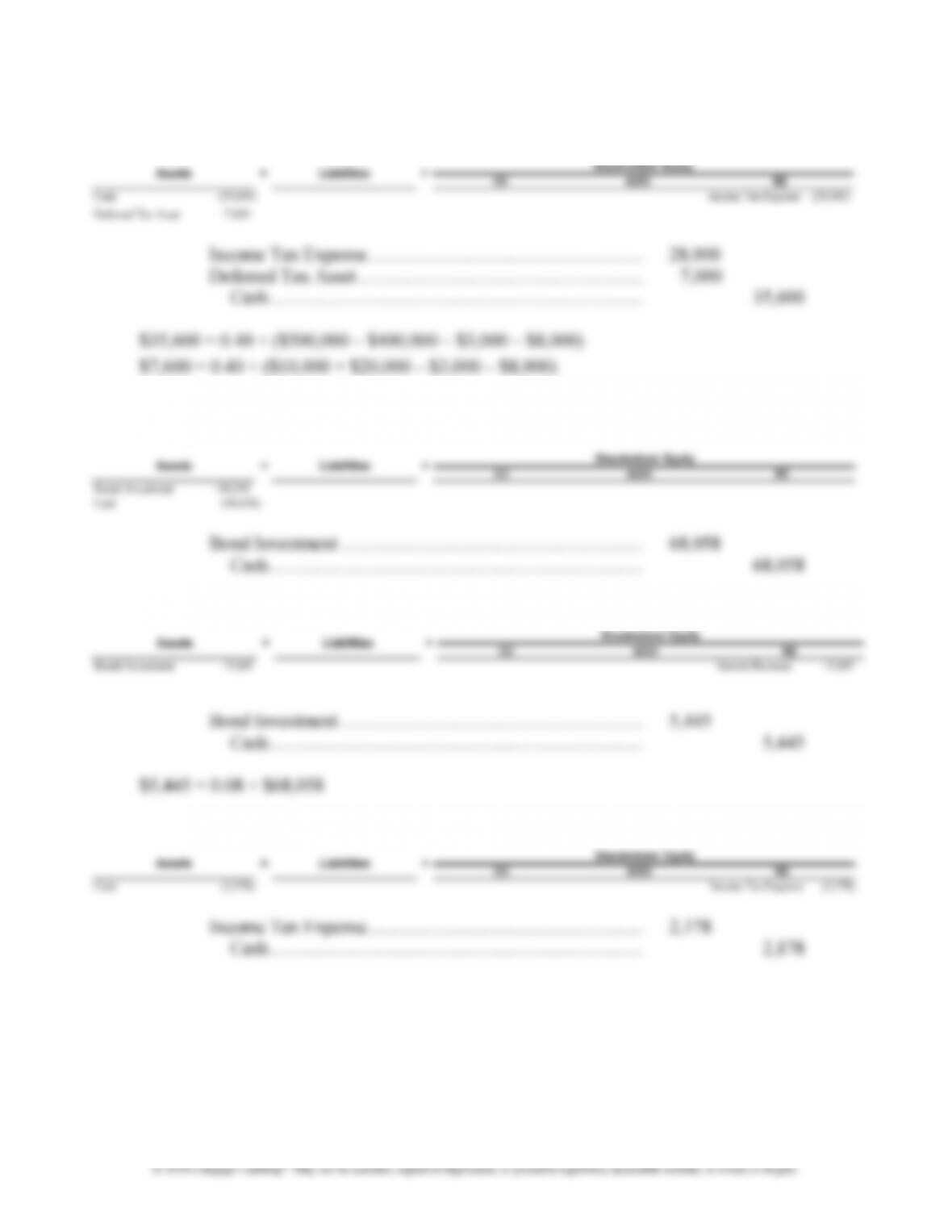
(2)
a.
Shareholders’ Equity
+LiabilitiesAssets =
b.
Shareholders’ Equity
+LiabilitiesAssets =
c.
Shareholders’ Equity
+LiabilitiesAssets =
d.
Shareholders’ Equity
+LiabilitiesAssets =
e.
Shareholders’ Equity
+LiabilitiesAssets =
f.
Shareholders’ Equity
+LiabilitiesAssets =
Chapter 2
Asset and Liability Valuation
and Income Recognition
2-33
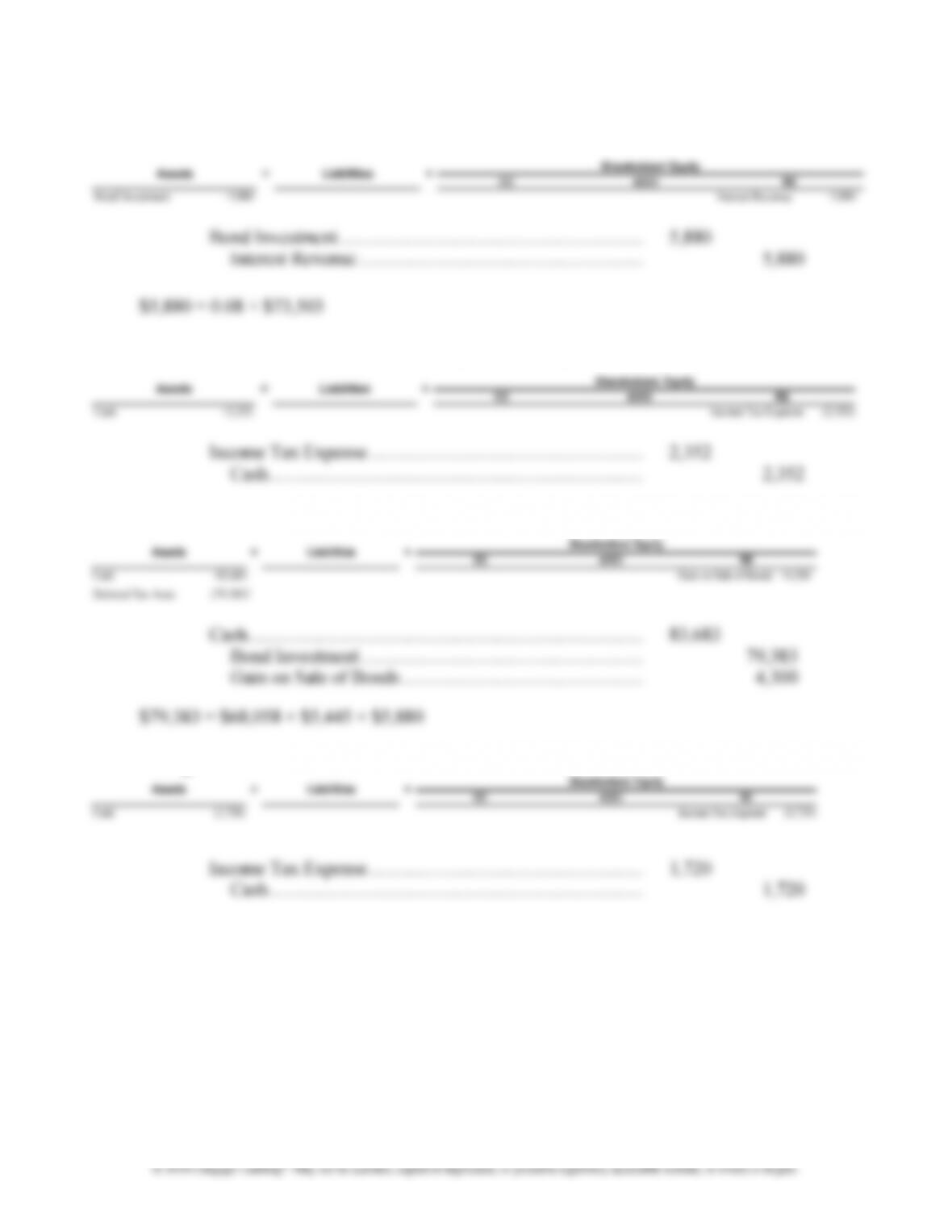
g.
Shareholders’ Equity
+LiabilitiesAssets =
(3)
a.
Shareholders’ Equity
+LiabilitiesAssets =
b.
Shareholders’ Equity
+LiabilitiesAssets =
c.
Shareholders’ Equity
+LiabilitiesAssets =
Chapter 2
Asset and Liability Valuation
and Income Recognition
2-34
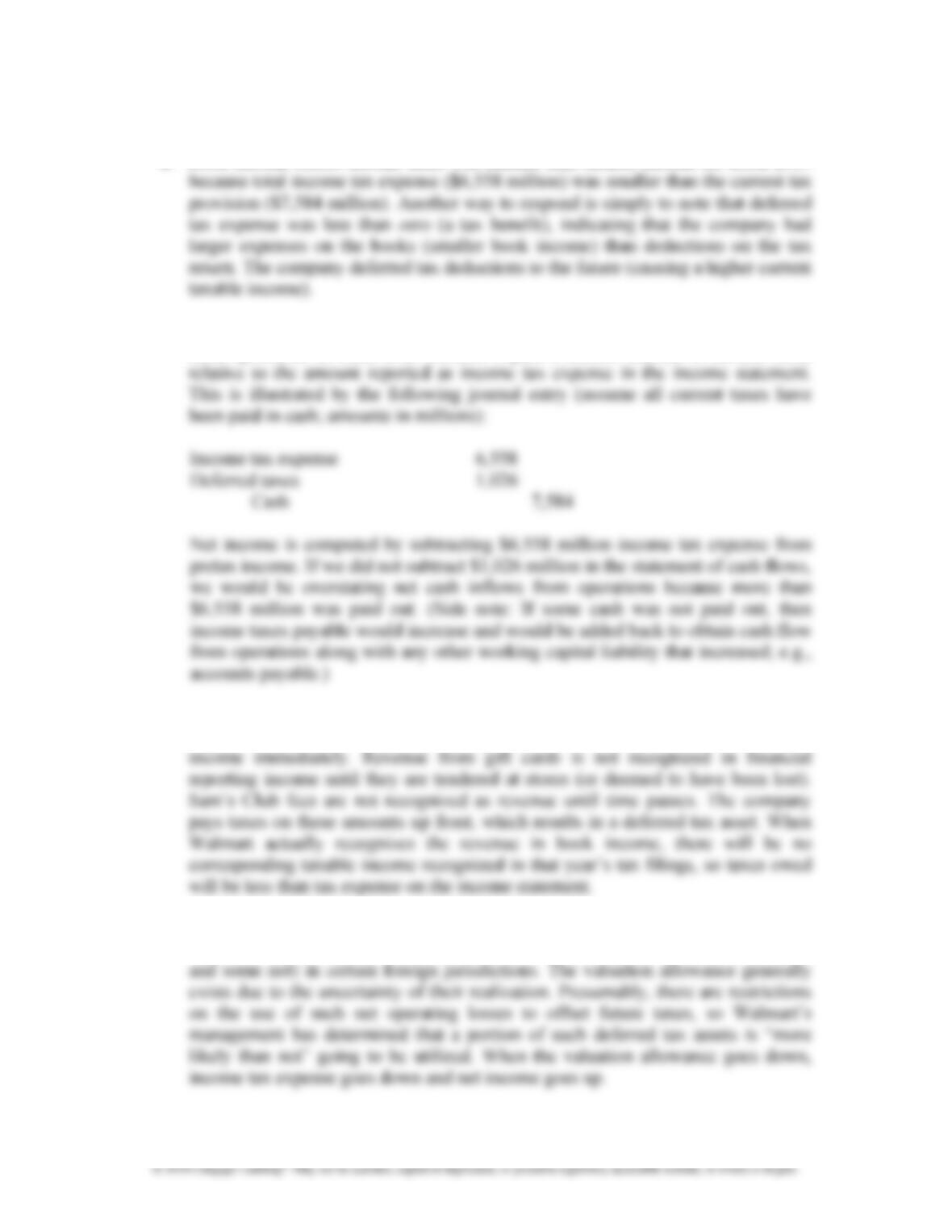
d.
Shareholders’ Equity
+LiabilitiesAssets =
e.
Shareholders’ Equity
+LiabilitiesAssets =
f.
Shareholders’ Equity
+LiabilitiesAssets =
g.
Shareholders’ Equity
+LiabilitiesAssets =
Chapter 2
Asset and Liability Valuation
and Income Recognition
2-35
Integrative Case 2.1: Walmart
a. Book income before income taxes was smaller than taxable income for fiscal 2015
b. Walmart will report a subtraction from net income when computing cash flow
from operations in fiscal 2015 because it paid a smaller amount of income taxes
c. When Walmart collects cash from customers who purchase gift cards and pay the
Sam’s Club membership fee, the company must report these amounts as taxable
d. The valuation allowance reduces deferred tax assets to their realizable amounts.
Walmart has deferred tax assets (some of them probably from loss carryforwards
Chapter 2
Asset and Liability Valuation
and Income Recognition
2-36
e. Depreciation recognized each year and cumulatively for tax reporting exceeded
depreciation recognized for financial reporting. Walmart likely has more