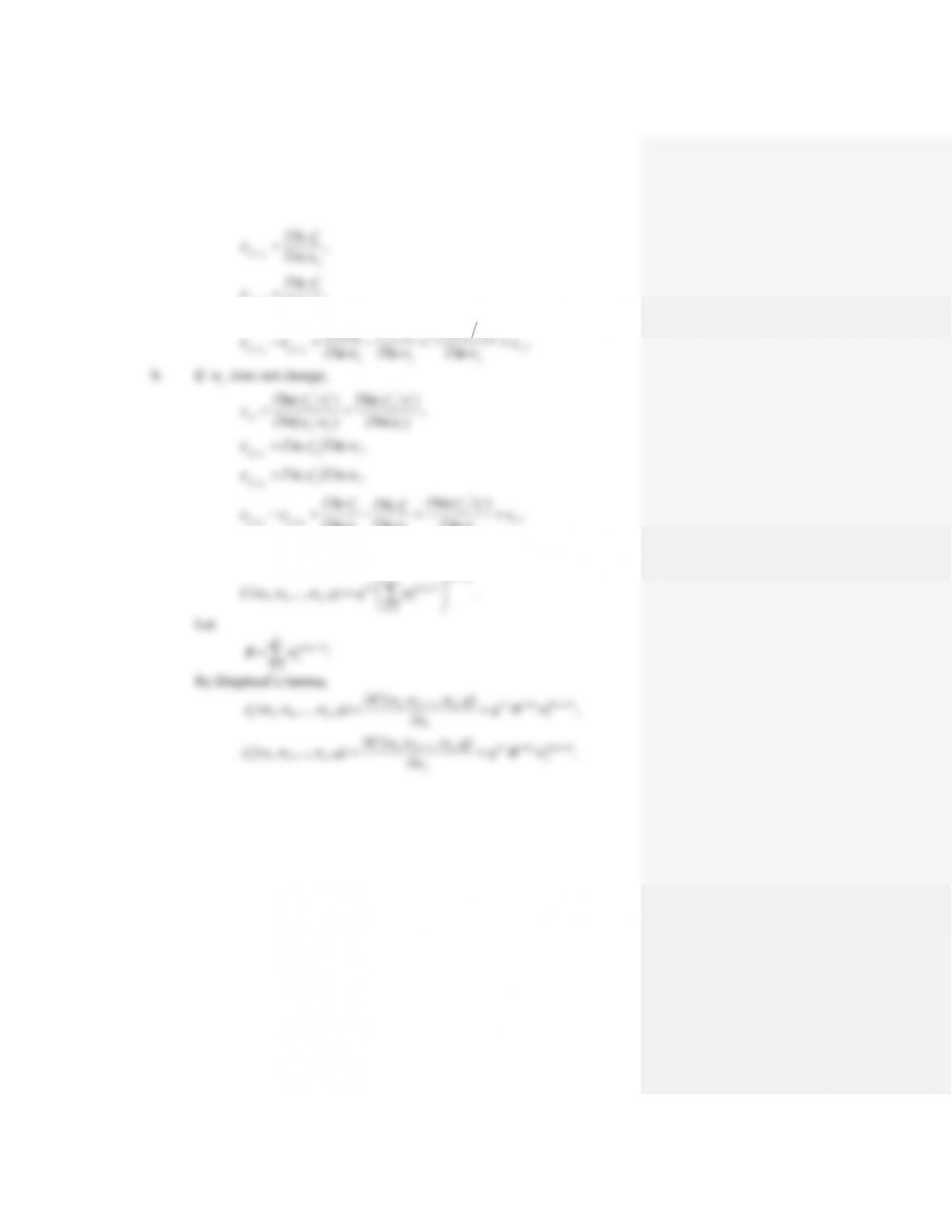
Taking the first-order conditions,
1
2
1
2
20,
25
20.
100
q
q
q
= =
q
=
L
L
Therefore,
12
4.qq
b. Since
12
4,qq
we have
15qq
and
24 5.qq
Therefore,
2
125 ,
125
2,
q
SC
q
c. In the long run, given constant returns to scale, location doesn’t really
matter because one can change
k
. The entrepreneur could split evenly or
produce all output in one location, etc.
2.C k l q
2.AC MC
Commented [CE1]: COMP: [GLOBAL] Please set Lagrangian
ℒ instead of the L in the equation.
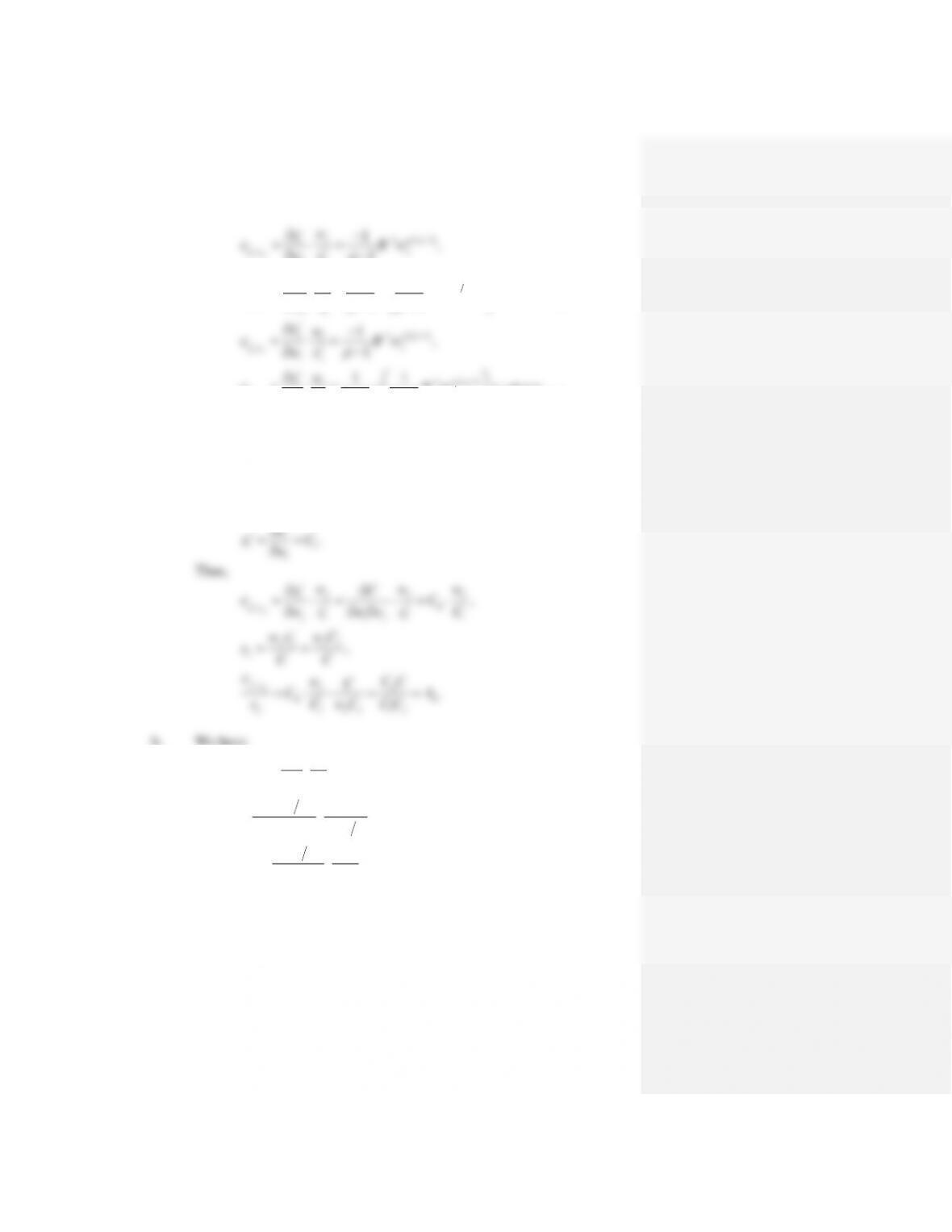
10.6 a. From Shephard’s lemma,
1
3
2
3
2,
3
1.
3
Cv
lq
ww
Cw
kq
vv
b. Eliminate the
/wv
from these equations:
23 1 3 2 3 1 3 2 3 1 3
3 2 3 .q = l k = Bl k
This is a Cobb–Douglas production function.
unless one sees the trick. Here the trick is to let
0.5 0.5
. B v w
With this notation,
2. C B q
Using Shephard’s lemma,
0.5 ,
C
v
0.5 .
C
l Bw q
w
b. From part (a),
0.5 ,
qv
kB
0.5 .
qw
lB
Thus,
1,
qq
kl
1 1 1.k l q
1 1 1
10.8 Support the draftsman. It is geometrically obvious that SAC cannot be at
minimum because it is tangent to AC at a point with a negative slope. The only
tangency occurs at minimum AC.
Analytical Problems
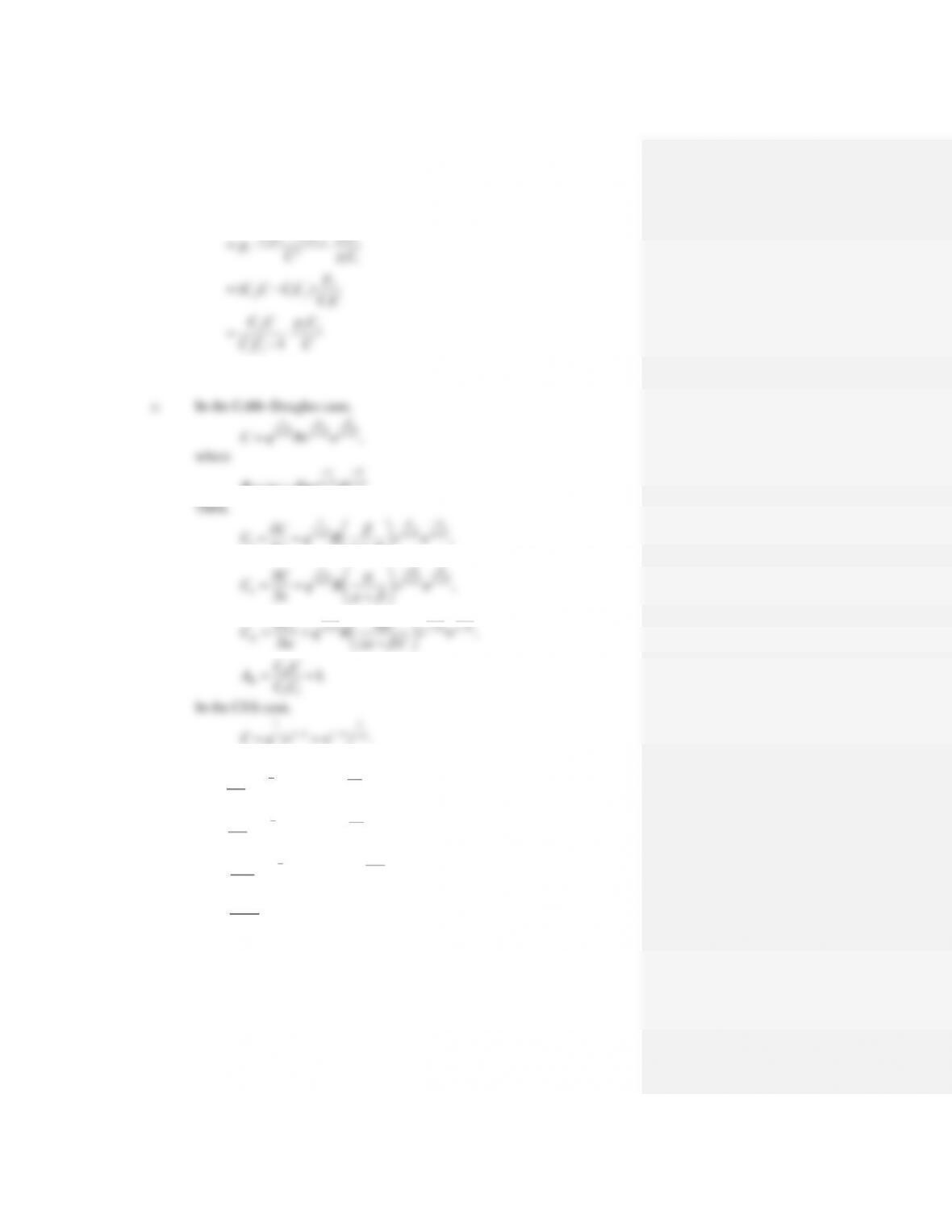
10.9 Generalizing the CES cost function
a.
1
1
11 1.
vw
Cq
contingent demand functions are homogeneous of degree 0 in those prices
cc
2
()
ji i j j
i
ii
j
ji i j
C C C C p C
pC p C
p
C C C C CC
( ) .B