Chapter 6
Fixed Income Securities: Characteristics and Valuation
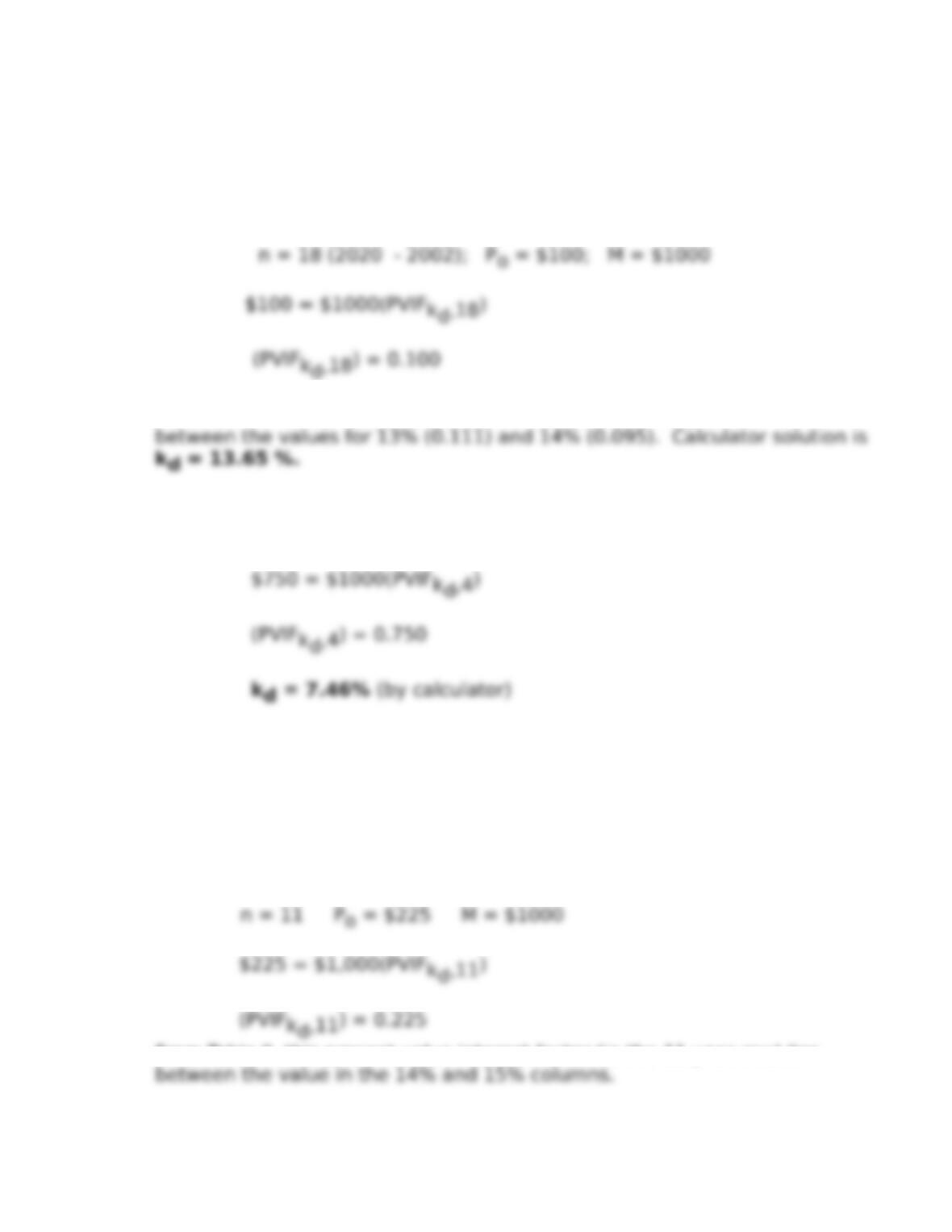
7. a. Po = M/(1 + kd)n
= M(PVIFkd,n)
From Table II, this present value interest factor in the 18-year row is
b. Po = $750; n = 4 (2020 – 2016)
c. Over the period from 2002 to 2016, the general level of interest
rates declined, causing bond prices to rise and yields to fall.
8. Po = M/(1 + kd)n
= M(PVIFkd,n)
From Table II, this present value interest factor (in the 11-year row) lies
6-
Chapter 6
Fixed Income Securities: Characteristics and Valuation
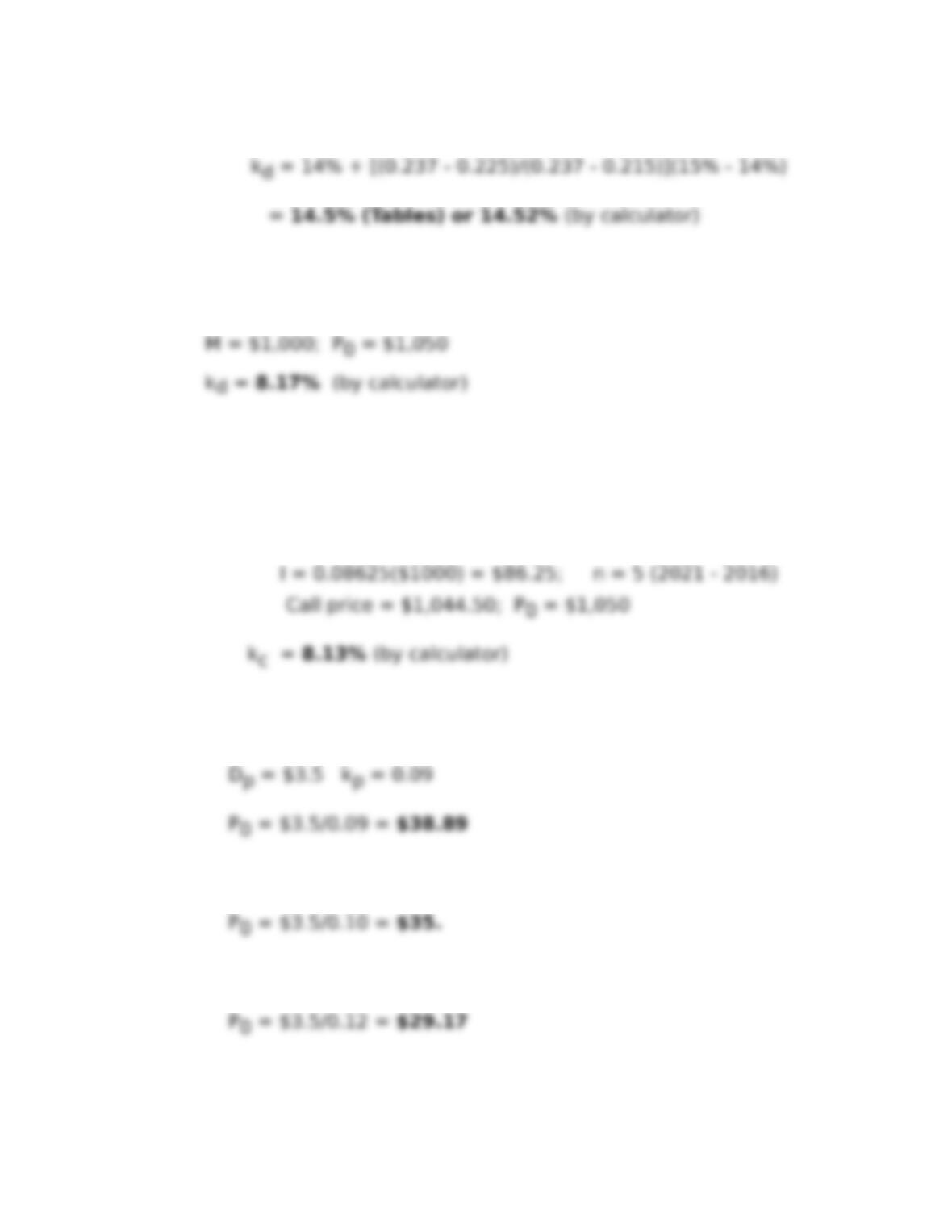
Interpolation yields:
9. a. kd = yield-to-maturity
I = 0.08625($1000) = $86.25; n = 30 (2046 – 2016)
An investor will purchase this bond if its promised yield to maturity equals
or exceeds the investor’s required rate of return.
b. kc = yield-to-call
10. a. P0 = Dp/kp
b. Dp = $3.5 kp = 0.10
c. Dp = $3.5 kp = 0.12
11. P0 = Dp/kp
6-
Chapter 6
Fixed Income Securities: Characteristics and Valuation
12. I = $81.25; n = 6 (2022 – 2016); P0 = $1,025;
13. a. YTM = 7.75%
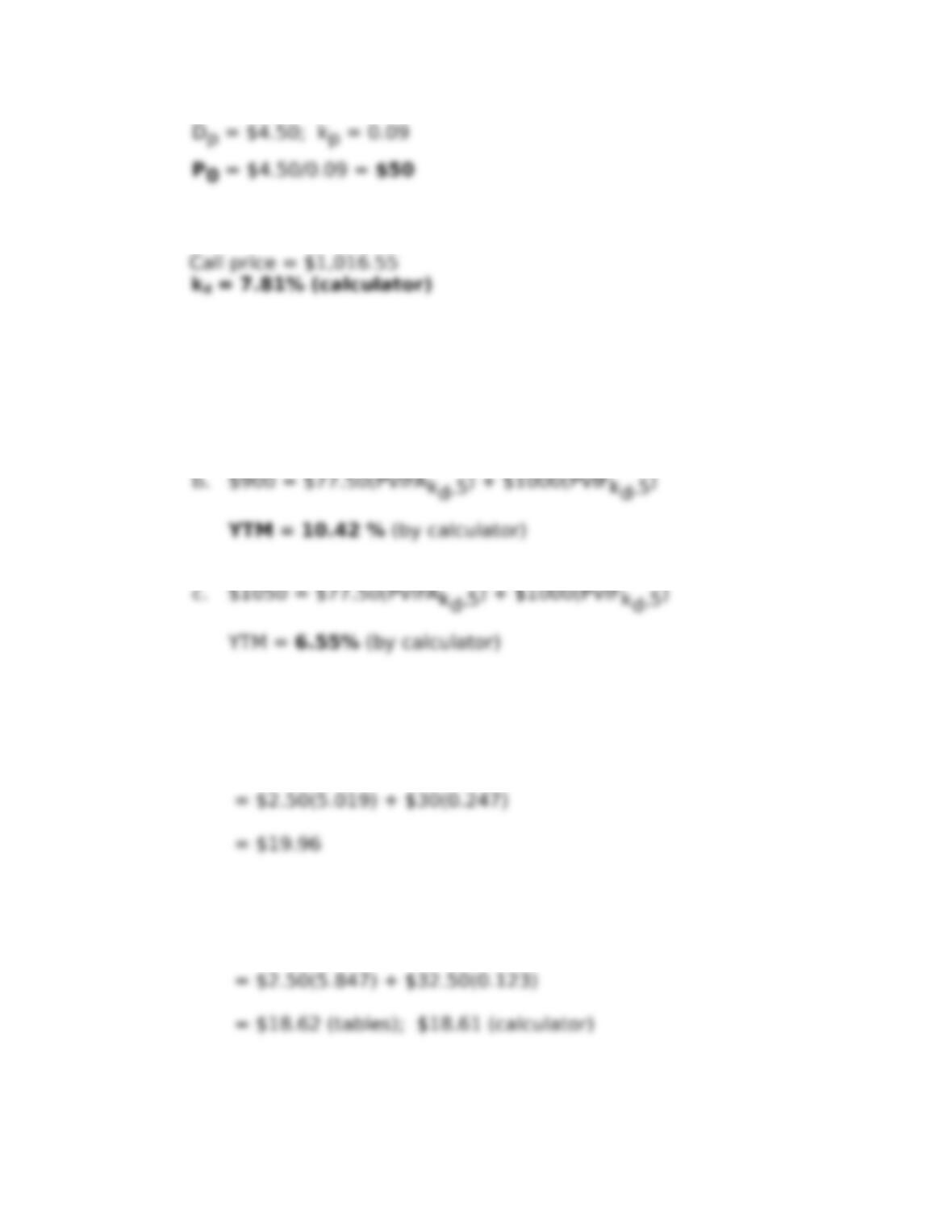
14. Value, assuming stock is redeemed in 10 years at $30 a share:
Po = $2.50(PVIFA0.15,10) + $30(PVIF0.15,10)
Value, assuming stock is called in 15 years at $32.50 a share:
Po = $2.50(PVIFA0.15,15) + $32.50(PVIF0.15,15)
Therefore, the current market value is $19.96, or approximately $20
per share, because knowledgeable investors will plan to exercise their
6-
Chapter 6
Fixed Income Securities: Characteristics and Valuation
redemption option.
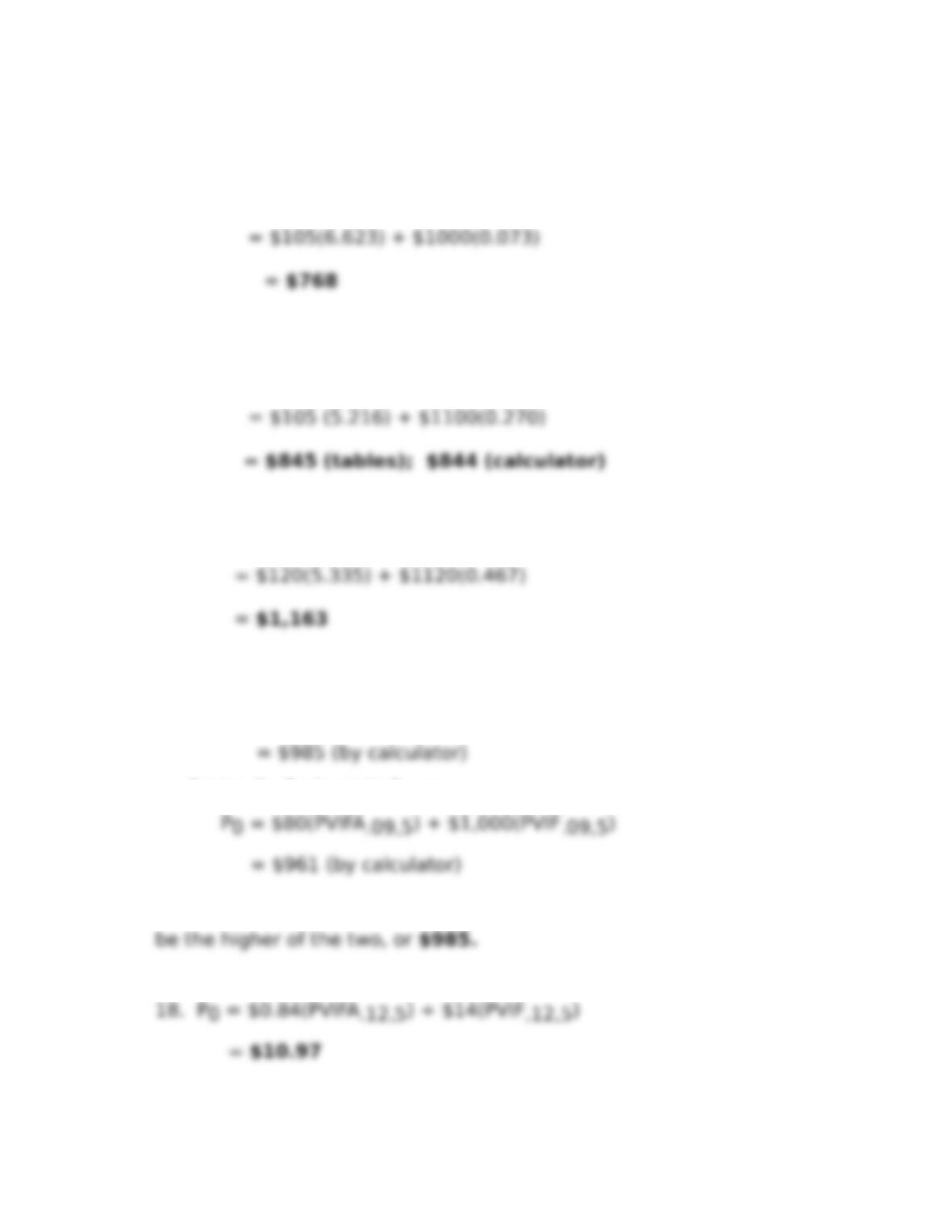
15. a. Po= $105(PVIFA0.14,20) + $1000(PVIF0.14,20)
b. Po = $105(PVIFA0.14, 10) + $1100(PVIF0.14, 10)
16. Po = $120(PVIFA0.10,8) + $1120(PVIF0.10,8)
17. Option 1: Hold to maturity
P0 = $80(PVIFA.082,12) + $1,000(PVIF.082,12)
Option 2: Redeem in 5 years
Since the option for early redemption is the bondholders’, the value must
6-
Chapter 6
Fixed Income Securities: Characteristics and Valuation
19. Maximum value:
20. a. Qualcom: 3.45%; 2025
a. Hewlett Packard bonds are subject to greater perceived
default risk than AT&T bonds.
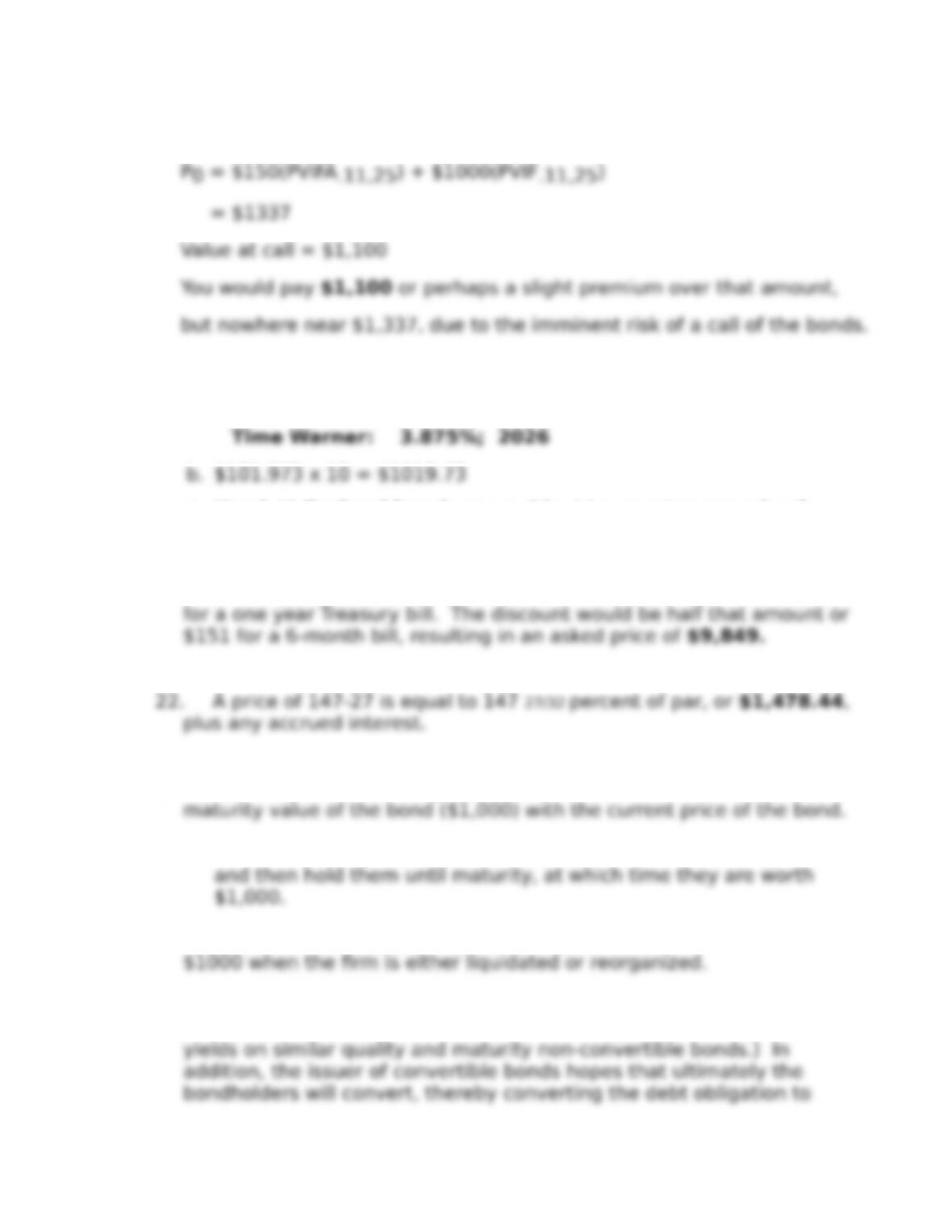
21. A 3.02 percent rate reAects a discount from maturity value of $302
b. Bondholders buy the bonds at a discount from their maturity value
24. Investors were speculating that the bonds will be worth more than
25. Convertible bonds are sold by a Crm that wishes to save on its
interest costs. (Yields on convertible bonds typically are lower than
6-
Chapter 6
Fixed Income Securities: Characteristics and Valuation
equity on the balance sheet.
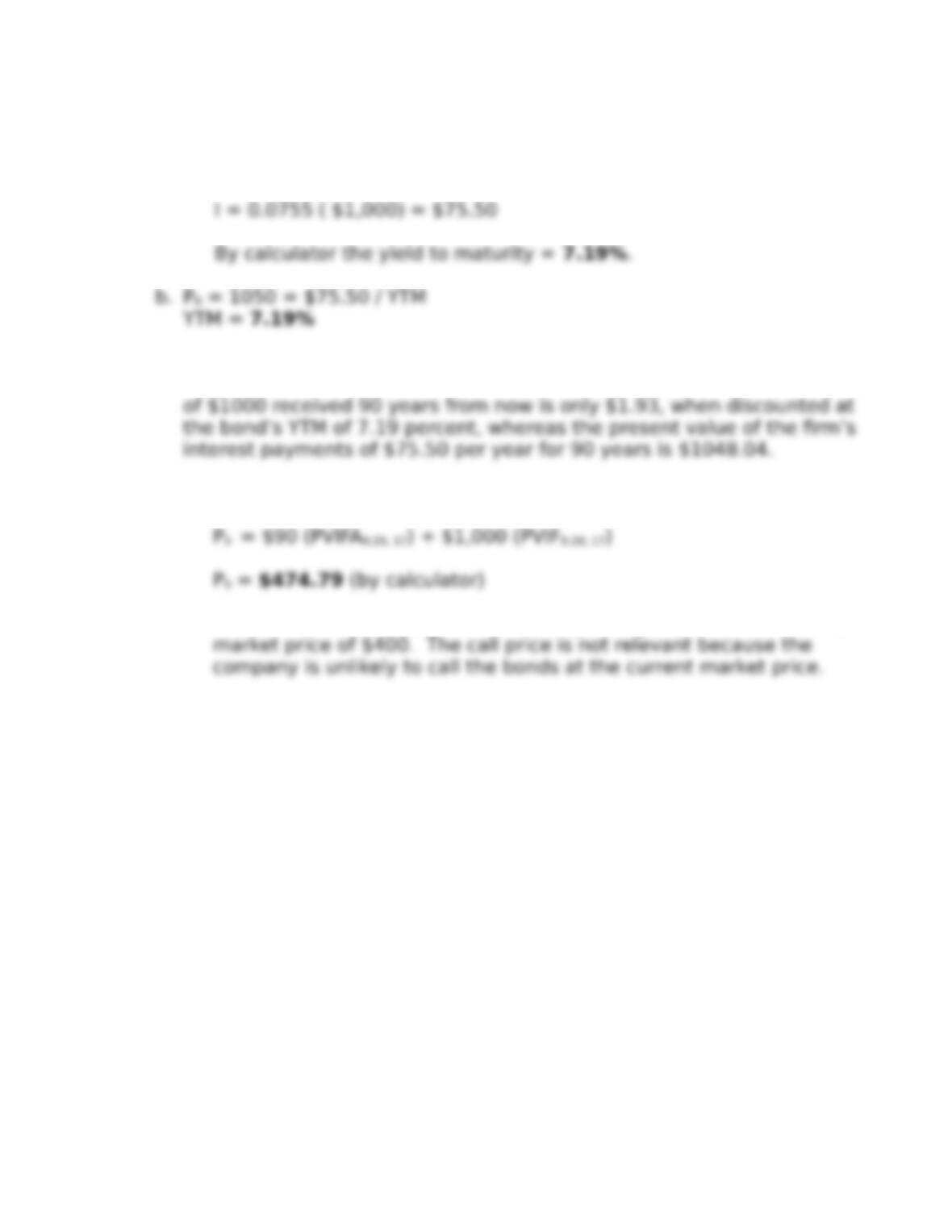
26. a. P0 = $1,050; M = $1,000; n = 90 (2093 – 2003)
c. The present value of the principal ($1,000) in 90 years is relatively small,
because of the eFects of time and discounting. In fact, the present value
27. Compute the value of the bond at a 20 percent required return:
Therefore invest because the value to you is greater than the current
6-