Chapter 3
Evaluation of Financial Performance
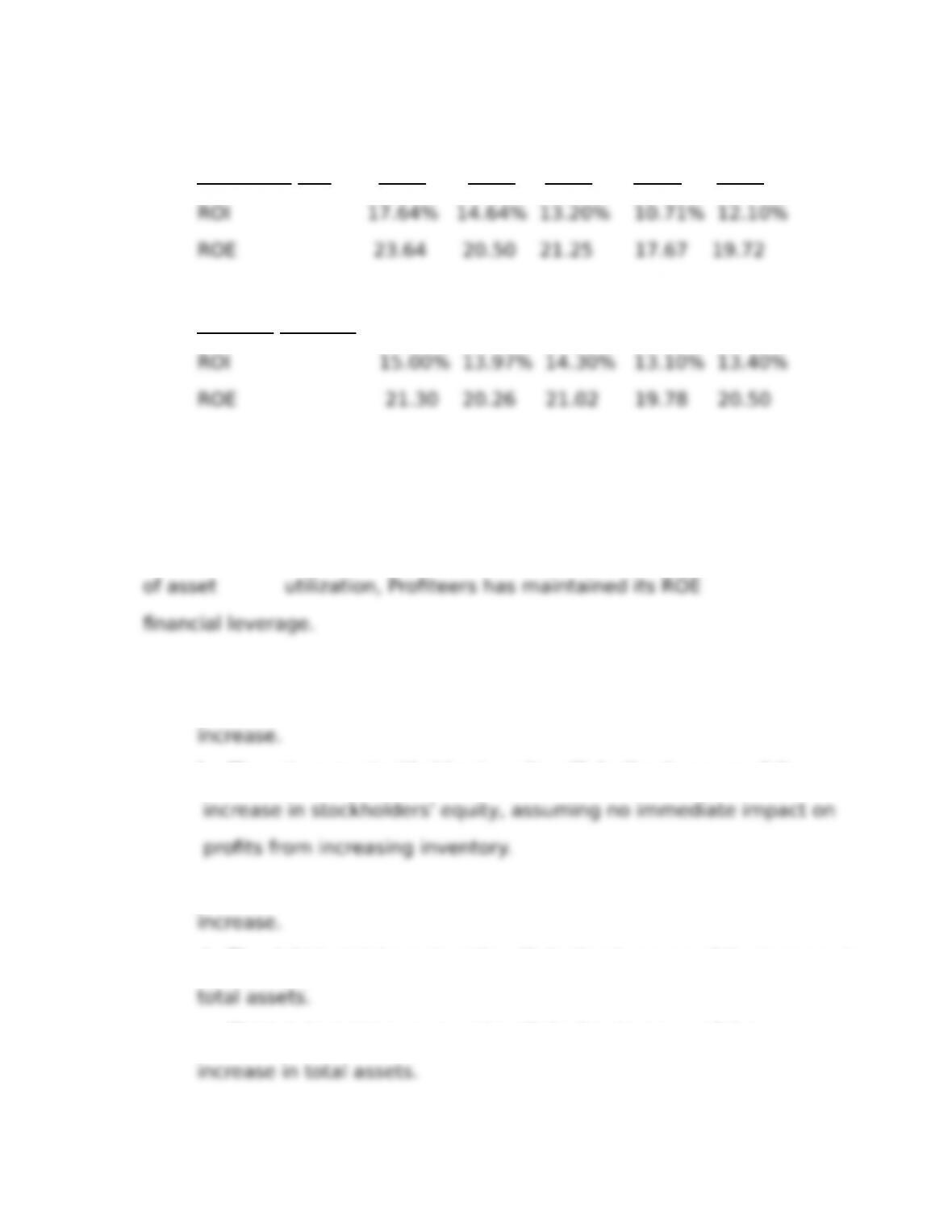
11. Profiteers, Inc. 2012 2013 2014 2015 2016
Industry Average
In the face of declining profit margins and less than average efficiency
12. a. The current ratio will increase because of the current asset
b. The return on stockholders’ equity will decline because of the
c. The quick ratio will increase because of the cash balance
d. The debt to total assets ratio will decline because of the increase in
e. The total asset turnover ratio will decline because of the
3-
Chapter 3
Evaluation of Financial Performance
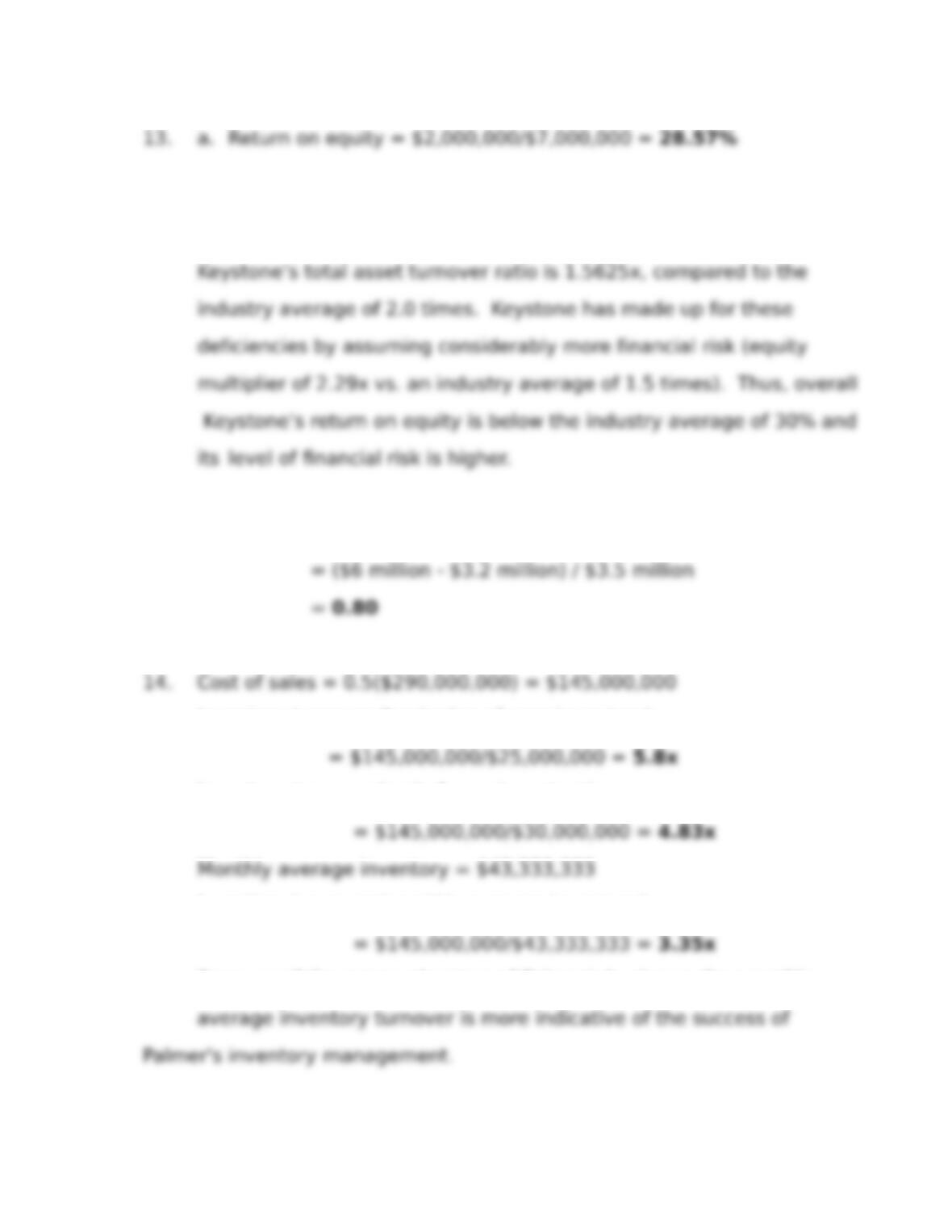
b. Keystone’s net profit margin (8%) is significantly below the industry
average of 10%. Sales for Keystone are $25,000,000 ($2 million/0.08).
c. Quick ratio = (Current assets – Inventories) / Current liabilities
Inventory turnover (beginning of year inventory)
Inventory turnover (end of year inventory)
Inventory turnover (monthly average inventory)
Because of the seasonal nature of Palmer’s business, the monthly
3-
Chapter 3
Evaluation of Financial Performance
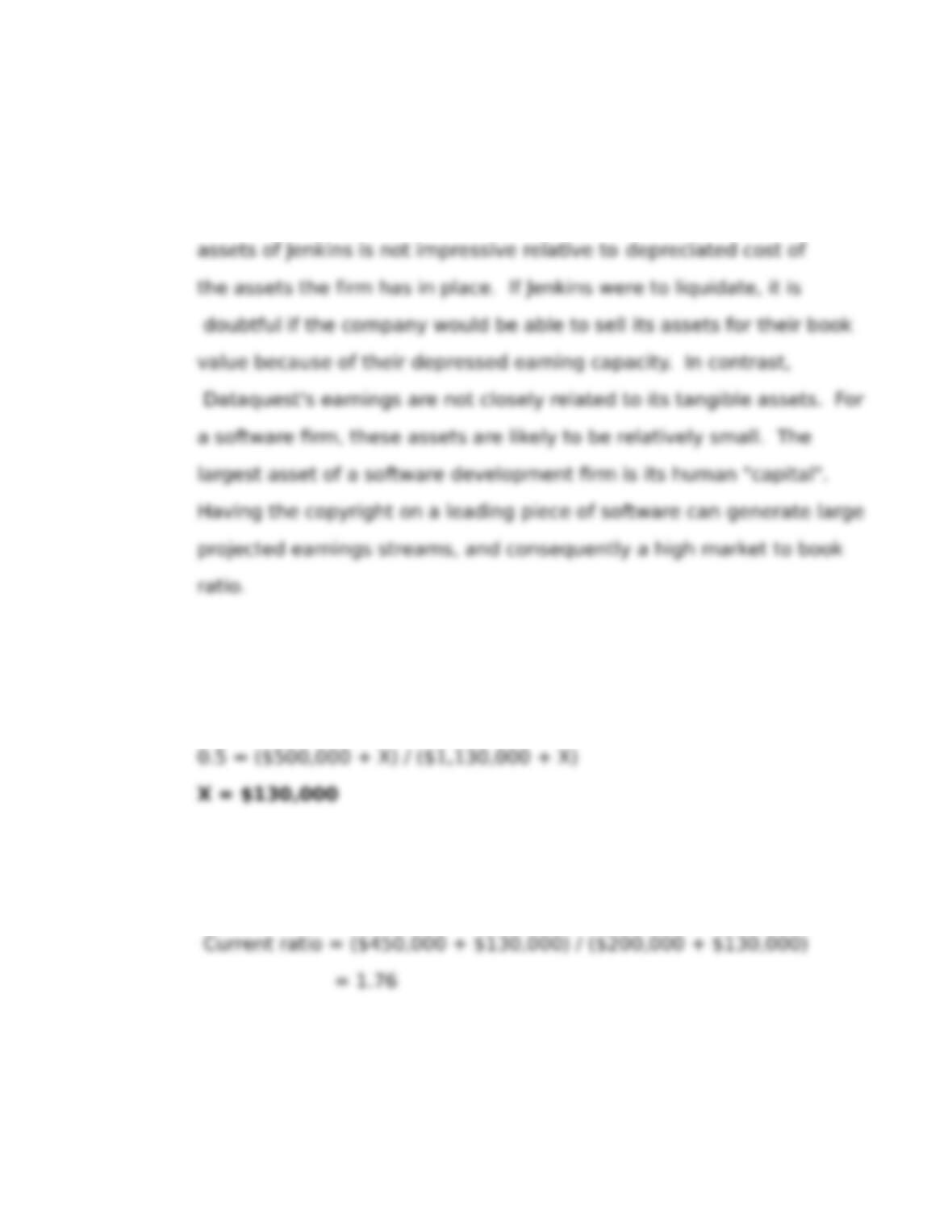
15. The stock of both firms likely is valued on the basis of the projected
earning capacity of the firm. Obviously, the earning capacity of the
16. HoEman’s present debt ratio is 44.25% ($500,000 / $1,130,000).
HoEman could borrow an additional $130,000 and still maintain its debt
ratio at 50%:
If HoEman borrows $130,000 on a short-term basis and invests this amount
in inventory and receivables, its current ratio remains above 1.5 times.
Therefore, HoEman can borrow up to $130,000 without violating the terms of
its borrowing agreement.
3-
Chapter 3
Evaluation of Financial Performance
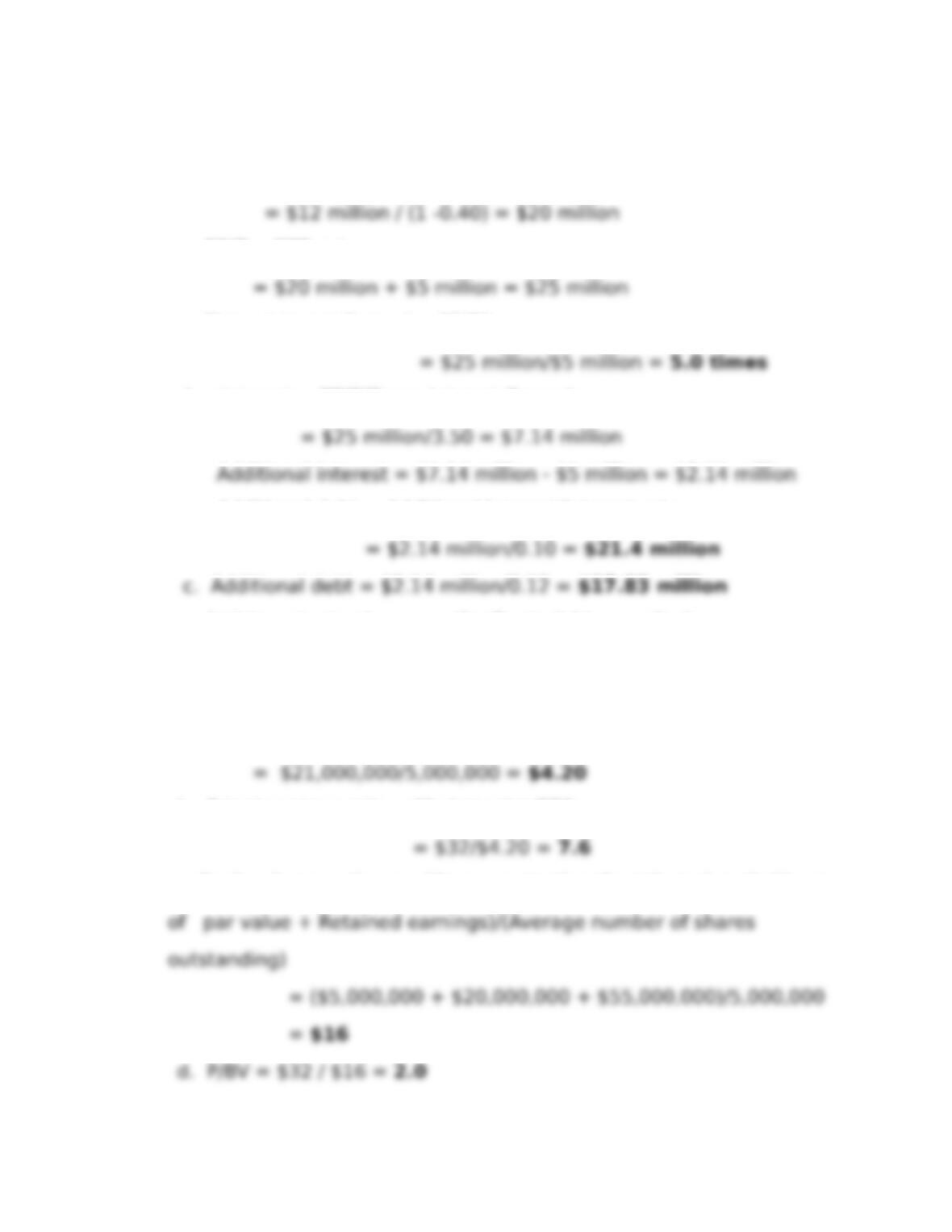
17. a. EAT = $12 million
EBT = EAT/(1 – T)
EBIT = EBT + I
Times Interest Earned = EBIT/I
b. Interest = EBIT/Times Interest Earned
Additional debt = Additional interest/Interest rate
As interest rates increase, the firm’s debt capacity (as
measured by the times interest earned ratio) decreases.
18. a. EPS = EAT / (Average number of shares outstanding)
b. Price/earnings ratio = Market price/EPS
c. Book value per share = (Common stock + Contributed capital in excess
3-
Chapter 3
Evaluation of Financial Performance
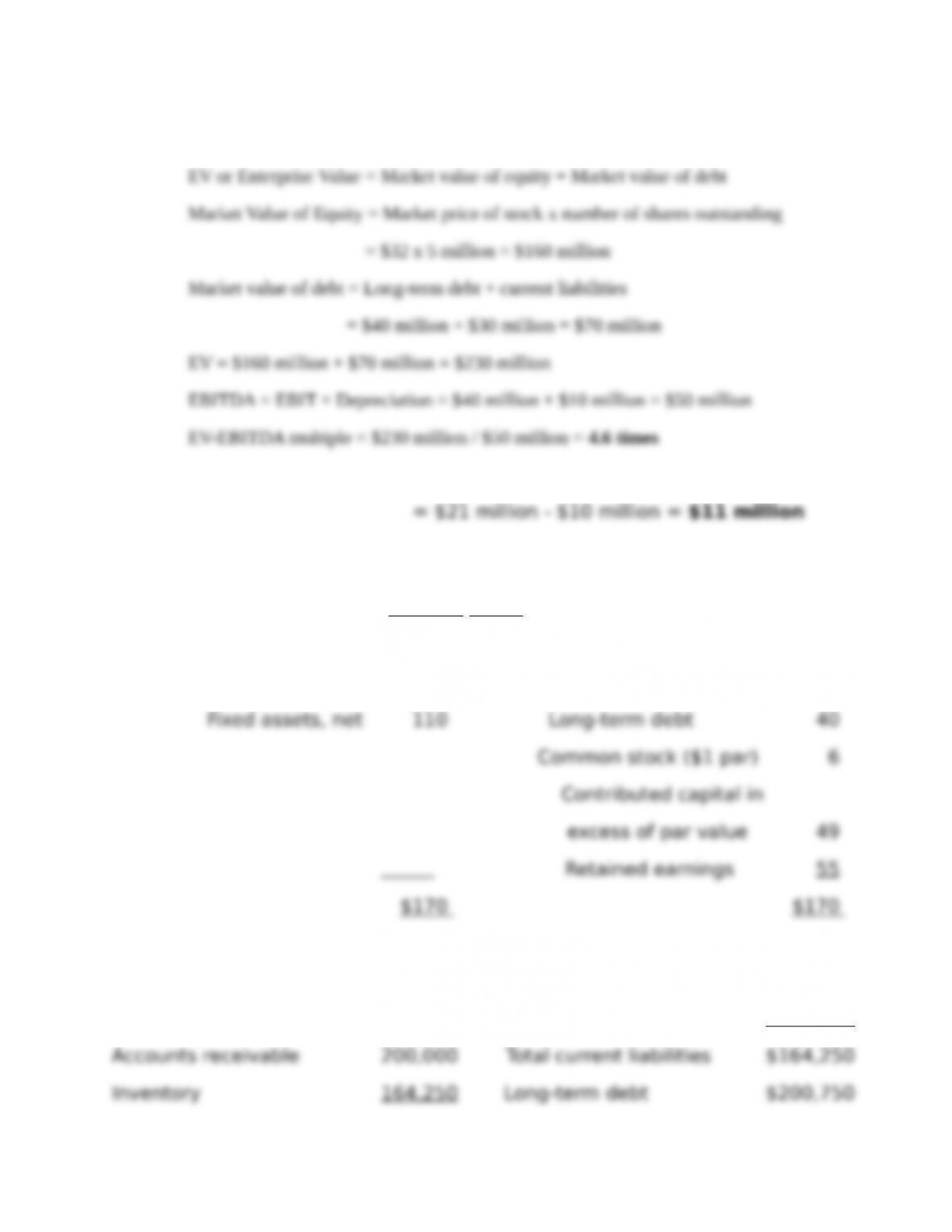
e. EV-EBITA multiple = EV/EBITA
f. Addition to retained earnings = net income – dividends
g. Balance Sheet
Current assets $ 60 Current liabilities $ 20
19.
Forecasted Balance Sheet
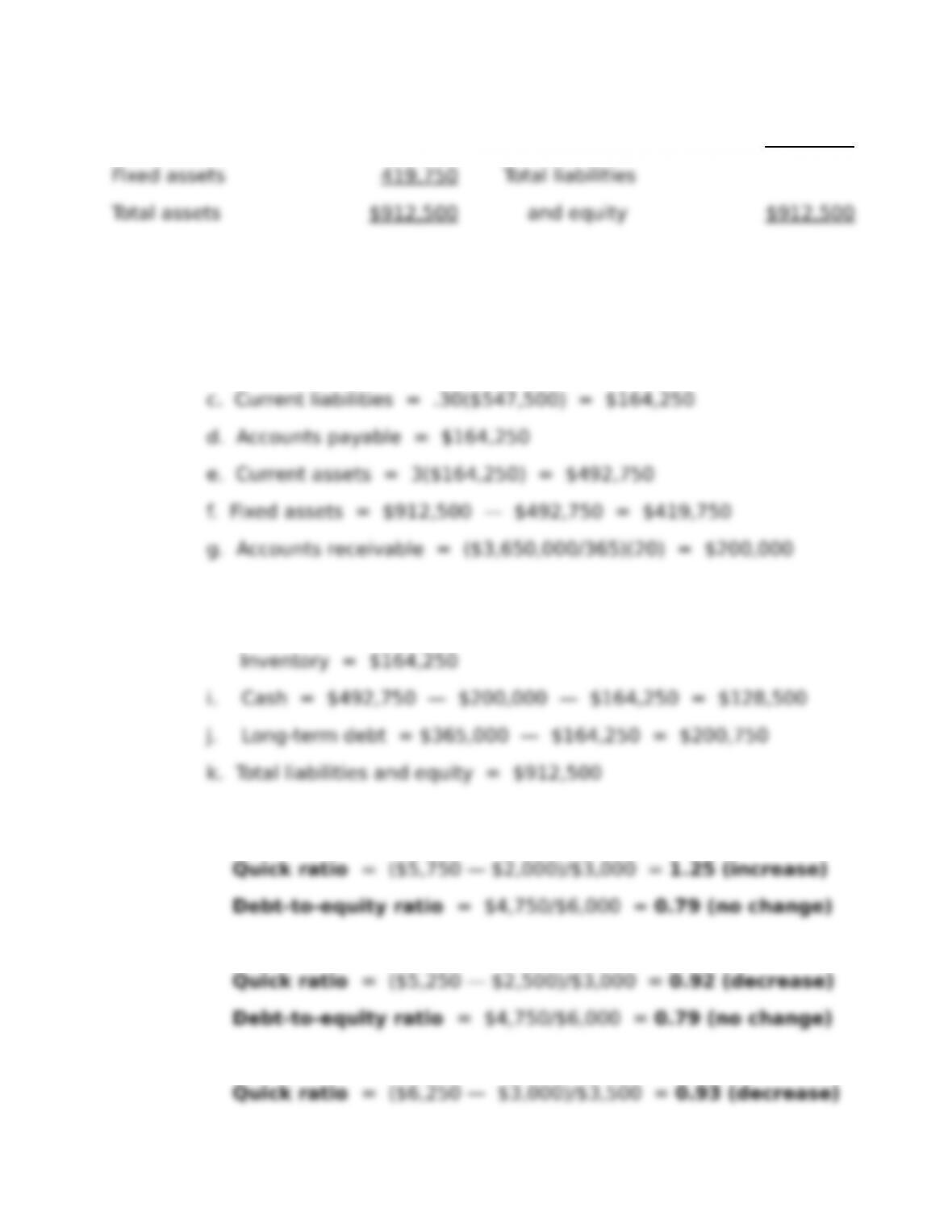
Cash $128,500 Accounts payable $164,250
3-
Chapter 3
Evaluation of Financial Performance
Total current assets $492,750 Stockholders’ equity $547,500
a. Total assets = $3,650,000/4 = $912,500
b. Total debt = .40($912,500) = $365,000
Stockholders’ equity = $912,500 — $365,000 = $547,500
h. ($492,750-Inventory)/$164,250 = 2
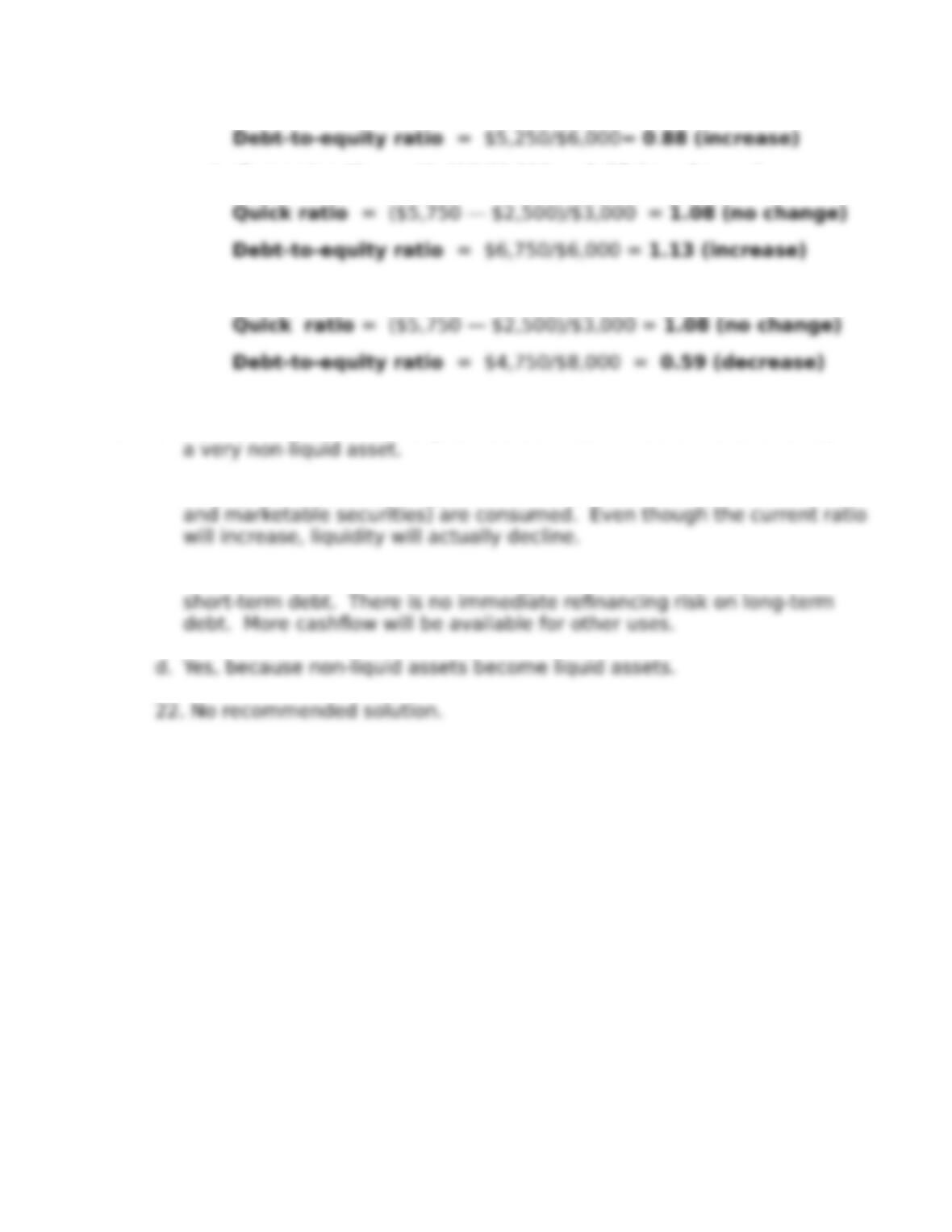
20. a. Current ratio = $5,750/$3,000 = 1.92 (no change)
b. Current ratio = $5,250/$3,000 = 1.75 (decrease)
c. Current ratio = $6,250/$3,500 = 1.79 (decrease)
3-
Chapter 3
Evaluation of Financial Performance
d. Current ratio = $5,750/$3,000 = 1.92 (no change)
e. Current ratio = $5,750/$3,000 = 1.92 (no change)
21. a. No improvement in liquidity, because the cash that is raised is tied up in
b. No improvement in liquidity, because the firm’s most liquid assets (cash
c. Yes, because the debt service on long-term debt is normally less than on
3-