Chapter 17
The Management of Cash and Marketable Securities
CHAPTER 17
THE MANAGEMENT OF
CASH AND MARKETABLE SECURITIES
ANSWERS TO QUESTIONS:
1. a. Demand deposits are the funds firms (or individuals) keep in their bank checking
b. Compensating balances are the minimum balances held by a firm in its checking
c. Disbursement float (or positive float) occurs when the firm writes checks and, because
d. Deposit float (or negative float) is an excess of the balances shown on the firm’s books
e. A lockbox is a post office box maintained by a bank to process customer payments for
f. A wire transfer is the sending of funds from one bank to another bank electronically
through the Federal Reserve or a private bank wire system. Wire transfers are
g. A depository transfer check is an unsigned, non-negotiable check used to move funds
h. A zero balance system is a centralized disbursement system in which all payments are
17-+
Chapter 17
The Management of Cash and Marketable Securities
i. A draft is an instrument, similar to a check, used for making payments. Unlike a check,
j. An automated clearinghouse (ACH) is a computer-based alternative to a paper check
2. The primary reasons a firm holds liquid asset balances are:
• transaction motive – to serve as a buffer between cash inflows and outflows
3. a. Excessive liquid asset balances subject the firm to opportunity holding costs, i.e., the
b. Inadequate liquid asset balances subject the firm to various shortage costs such as
4. Float is the difference between a checking account balance as shown on the bank’s books and
5. Tangible and intangible services that a bank provides a firm include:
• disbursement and payroll checking accounts
17-+
Chapter 17
The Management of Cash and Marketable Securities
• handling dividend payments
Banks are compensated for these services by charging firms explicit fees (e.g., interest on loans)
and/or by requiring the firm to maintain a compensating balance in its checking account.
6. Methods available to the firm to expedite the collection of cash include:
• use of decentralized collection centers and concentration banks
to reduce mailing and check clearing times
7. Techniques available to the firm to slow disbursements include
• scheduling and centralizing payments such as through the use of zero balance
systems
17-+
Chapter 17
The Management of Cash and Marketable Securities
8. The more collection centers used, the less time required to convert customers’ checks into
9. The firm should establish a lock box collection system if the earnings on the funds released by
10. The primary criteria used in selecting marketable securities for inclusion in the firm’s
portfolio are
• minimal default risk
11. Types of securities most suitable for inclusion in the firm’s portfolio:
• U.S. Treasury issues – virtually default free; large and active
• Other Federal Agency issues – low default risk; strong secondary market
• Municipal securities – while pretax yields on these securities are
• Negotiable certificates of deposit – higher yields due to higher
• Commercial paper – higher yields (due to higher default risk and
• Bankers’ acceptances – low default risk; secondary market exists
17-+
Chapter 17
The Management of Cash and Marketable Securities
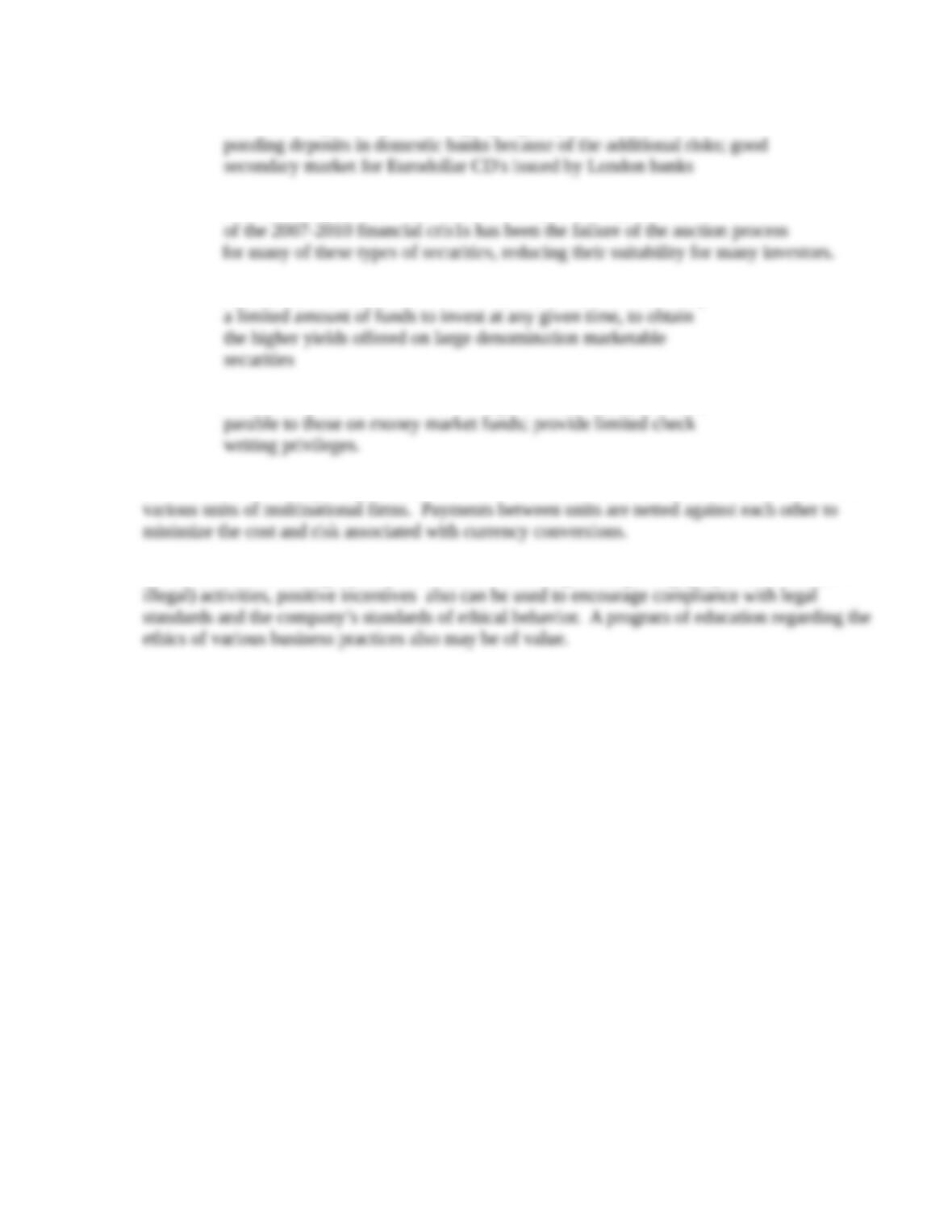
• Eurodollar deposits – provide slightly higher yields than corres-
• Auction rate securities – salable at auction periodically. One of the fallouts
• Money market mutual funds – allow smaller firms, that have only
• Bank money market accounts – savings accounts with yields com-
12. Multilateral netting is a procedure to minimize transfers and conversions of funds from the
13. In addition to having a policy of dismissal for managers caught engaging in unethical (and
17-+
Chapter 17
The Management of Cash and Marketable Securities
SOLUTIONS TO PROBLEMS:
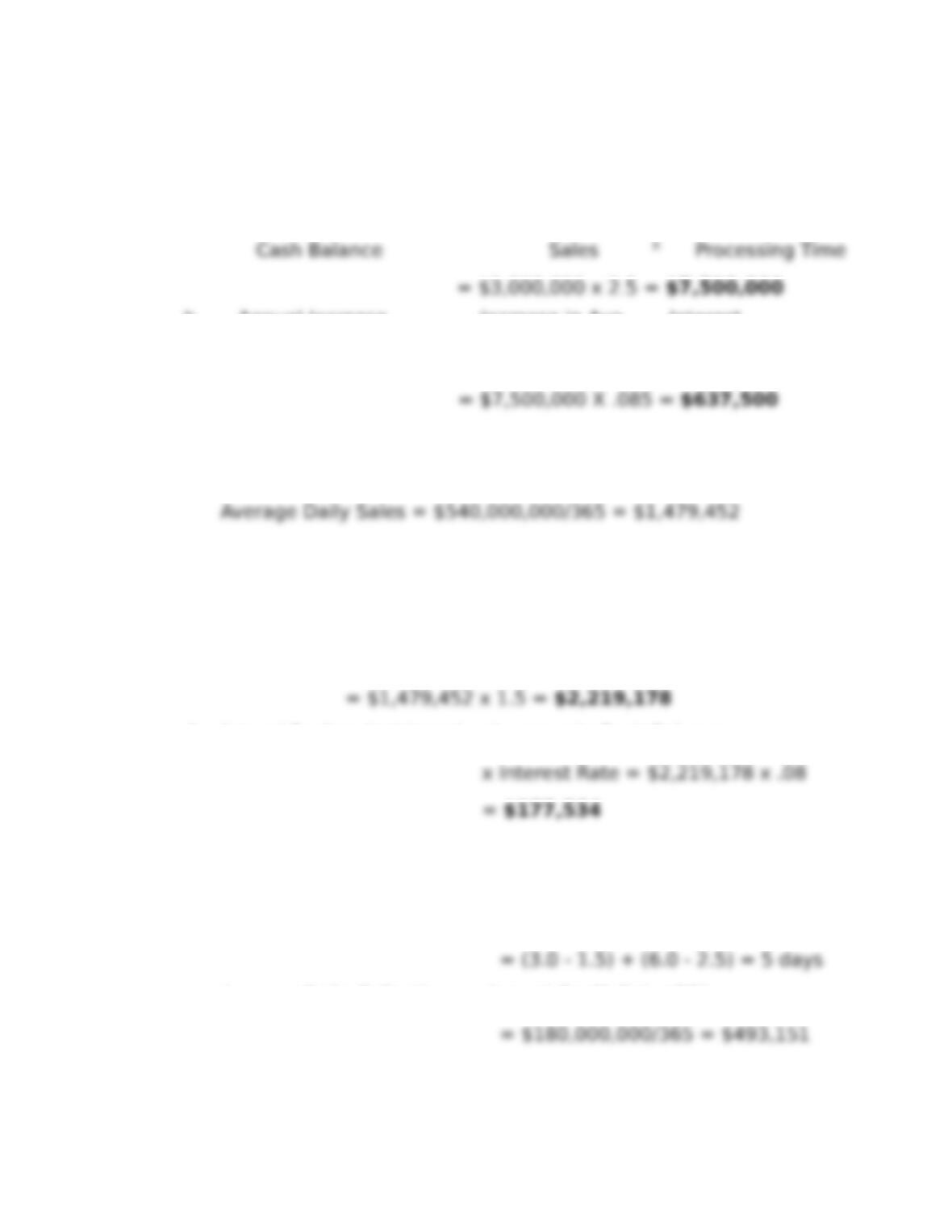
1. a. Increase in Avg. = Average Daily Decrease in Payment
b. Annual Increase = Increase in Avg. x Interest
in (Pre-tax) Earnings Cash Balance Rate
2. a. Annual Sales = $540,000,000
Increases in
Cash Balance = Average Daily Sales x Decrease in Payment
Processing Time
b. Annual Savings in Interest = Increase in Cash Balance
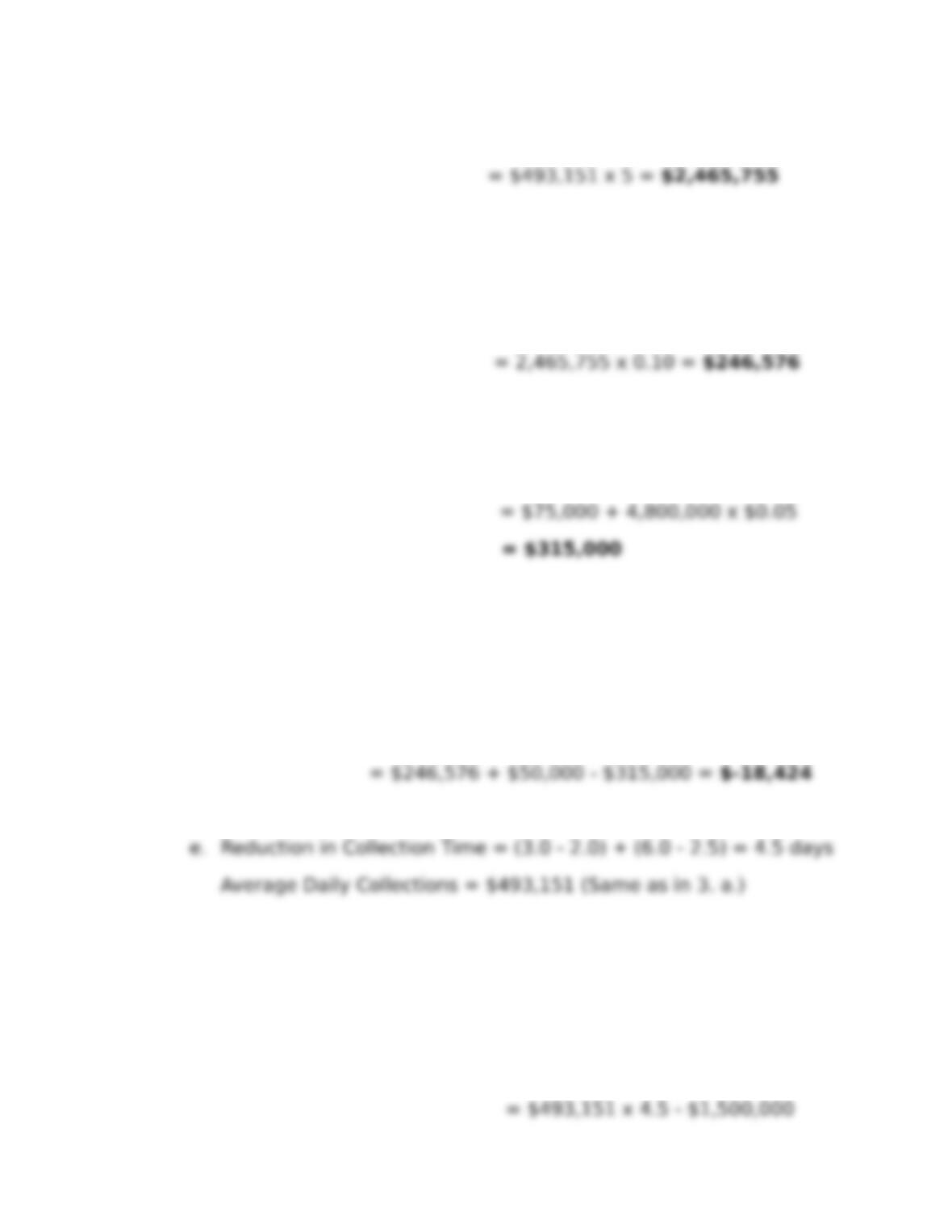
3. a. Reduction in Collection Time = Reduction in Mailing Time +
Reduction in Processing & Clearing Time
Average Daily Collections = Annual Credit Sales/365
Amount of Funds Released = Average Daily Collections x
17-+
Chapter 17
The Management of Cash and Marketable Securities
Reduction in Collection Time
b. Annual (Pre-tax) Earnings
on Released Funds = Amount of Funds Released x
Interest Rate
c. Annual Bank Processing Fee = Fixed Cost + Number of Payments
per Year x Variable Cost per Payment
d. Net (Pre-tax) Bene<ts = Annual (Pre-tax) Earnings on Released
Funds + Reduction in Firm’s Payment
Processing Costs – Annual Bank
Processing Fee
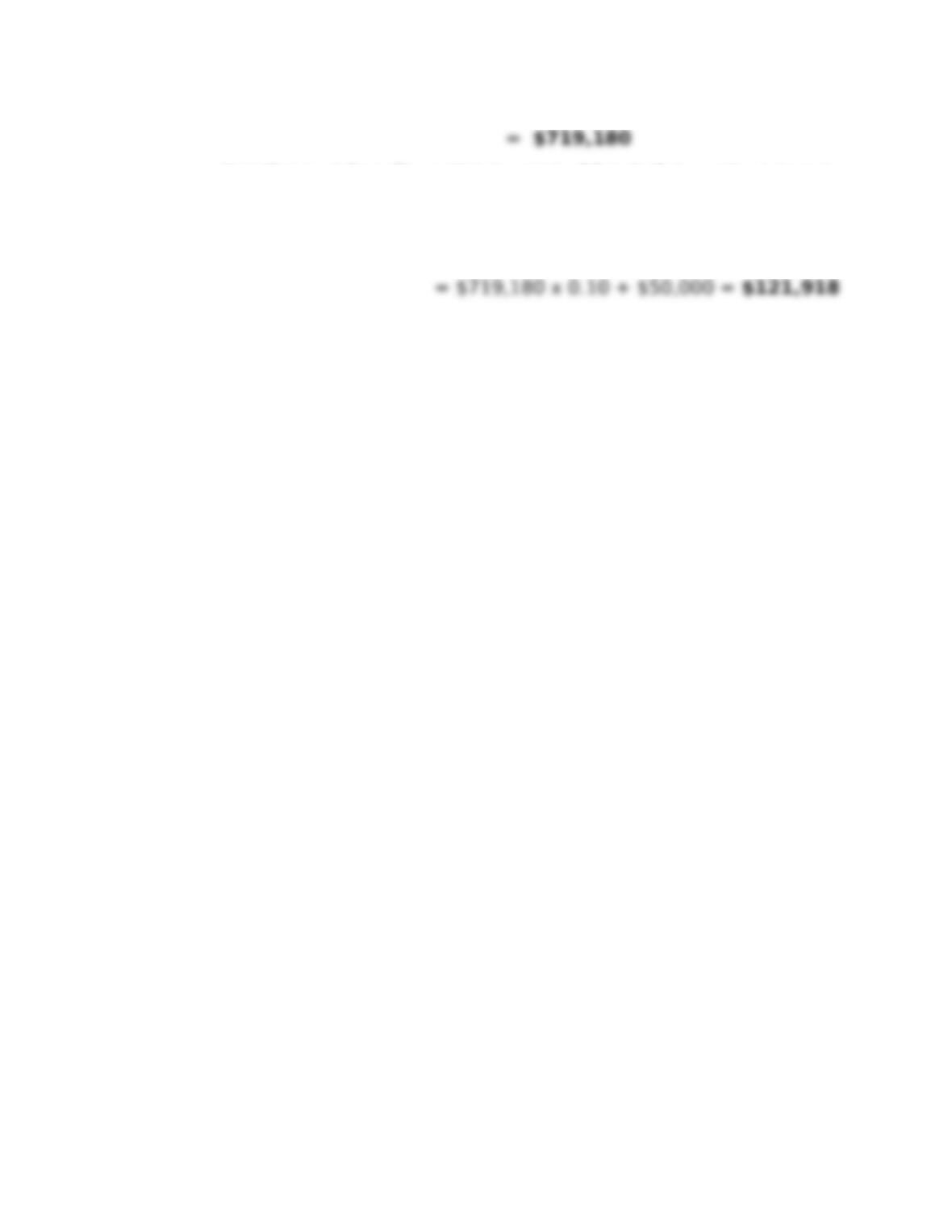
Net Amount of Funds Released = Average Daily Collections x
Reduction in Collection Time –
Bank Compensating Balance
Requirement
17-+
Chapter 17
The Management of Cash and Marketable Securities
Net (Pre-tax) Bene<ts = Net Amount of Funds Released x Interest
Rate + Reduction in Firm’s Payment
Processing Costs
f. The Salt Lake City bank’s lock-box proposal should be selected
because it provides the greater net bene<ts to the <rm.
17-+