Chapter 12
Cost of Capital
14. wd = 40%; wp = 10%; we = 50%
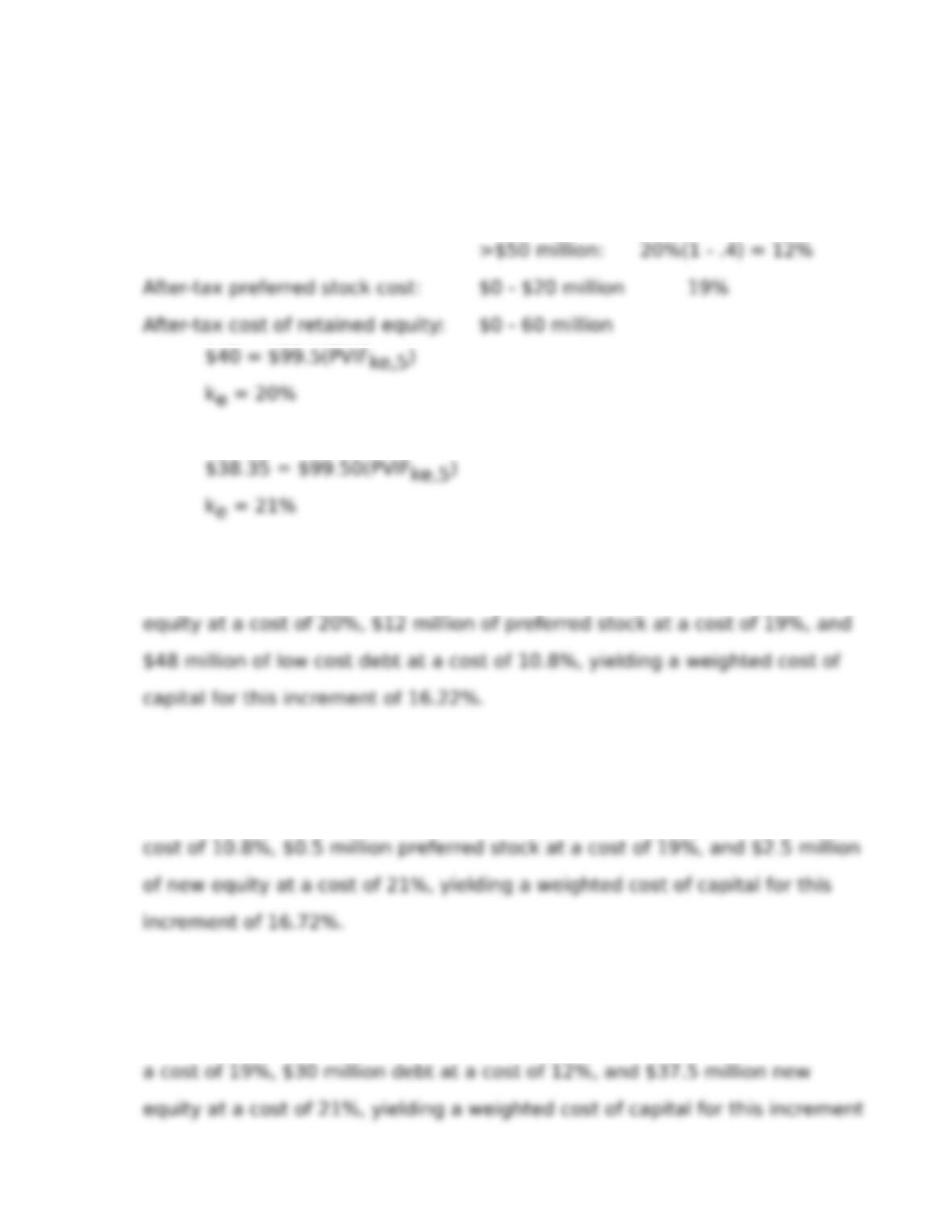
After-tax debt cost: $0-$50 million: 18%(1 – .4) = 10.8%
After-tax cost of new equity: > $60 million
Size of first increment:
$60 million internal equity/0.50 = $120 million ($60 million internal
Size of second increment:
$2 million low cost debt/0.4 = $5 million ($2 million low cost debt at a
Size of third increment:
$7.5 million preferred stock/0.1 = $75 million ($7.5 million preferred at
12-
Chapter 12
Cost of Capital
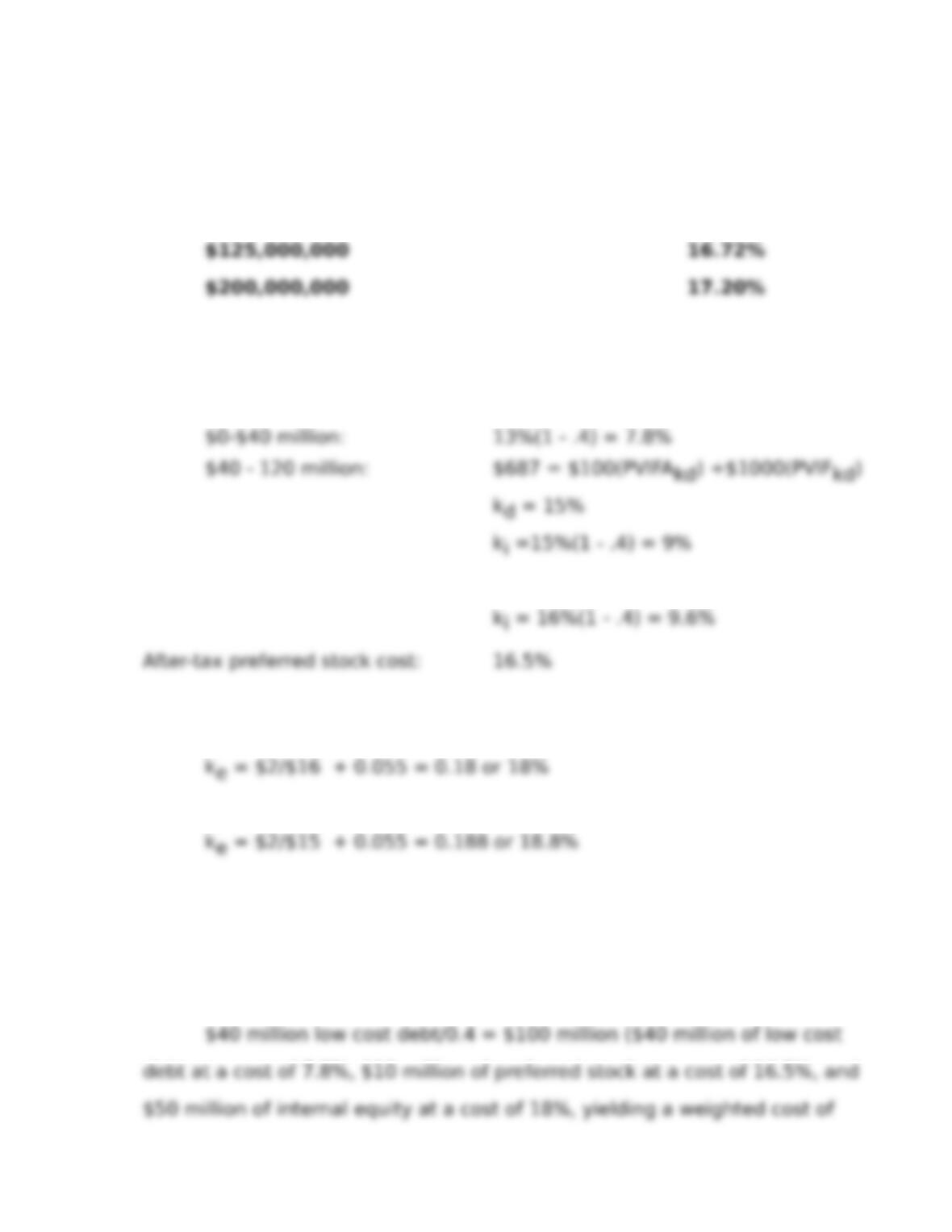
of 17.2%.
Break point Weighted marginal cost of capital
$120,000,000 16.22%
15. wd = 40%; wp = 10%; we = 50%
After-tax debt cost:
Additional debt: kd = 16%
After-tax cost of retained equity:
$0 – $100 million ($140 million less $40 million in dividends):
After-tax cost of new equity:
Size of first increment:
12-
Chapter 12
Cost of Capital
Size of second increment:
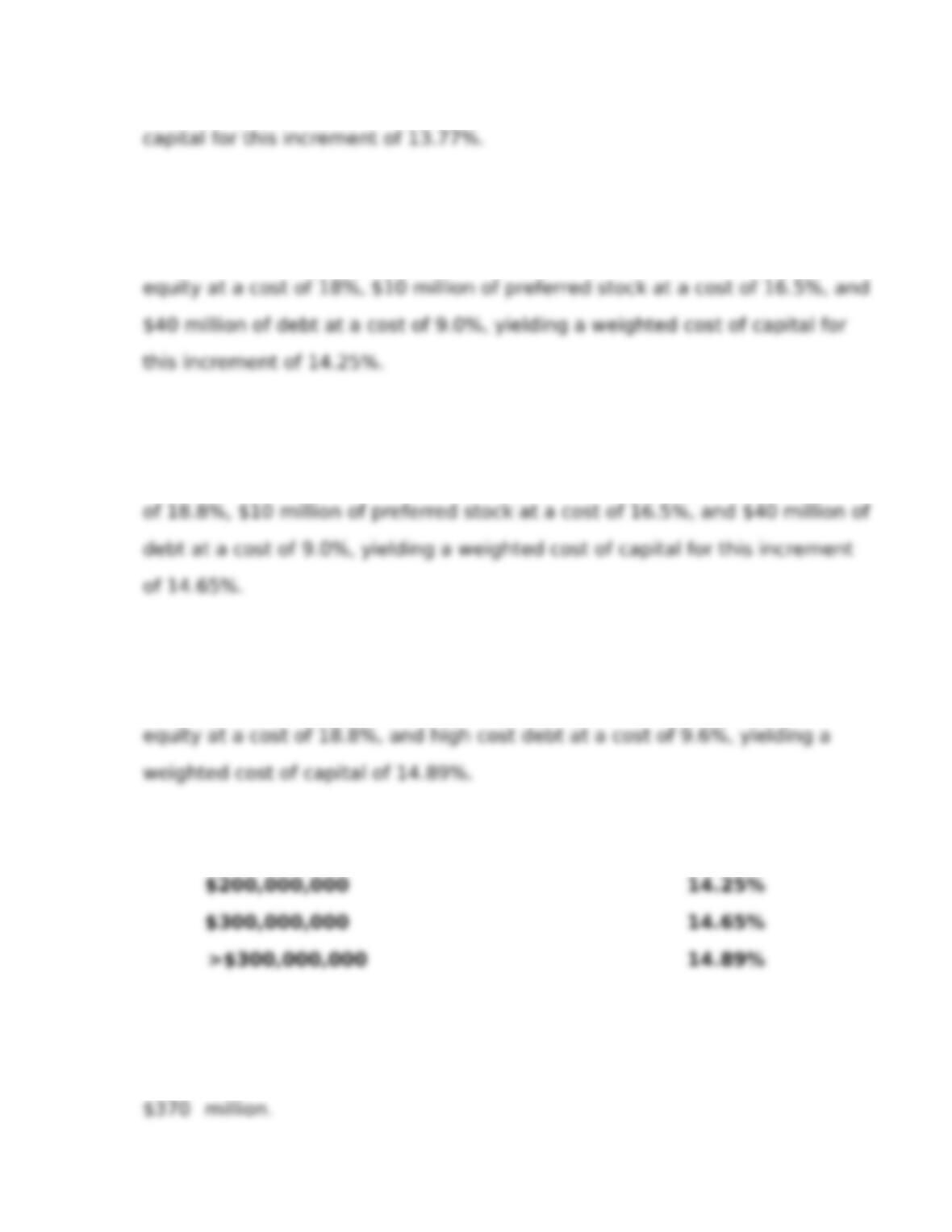
$50 million internal equity/0.50 = $100 million ($50 million of internal
Size of third increment:
$40 million debt/0.40 = $100 million ($50 million new equity at a cost
Additional funds
All additional funds come from preferred stock at a cost of 16.5%, new
Break point Weighted marginal cost of capital
$100,000,000 13.77%
b. The optimal capital budget consists of projects A, B, and C using
12-
Chapter 12
Cost of Capital
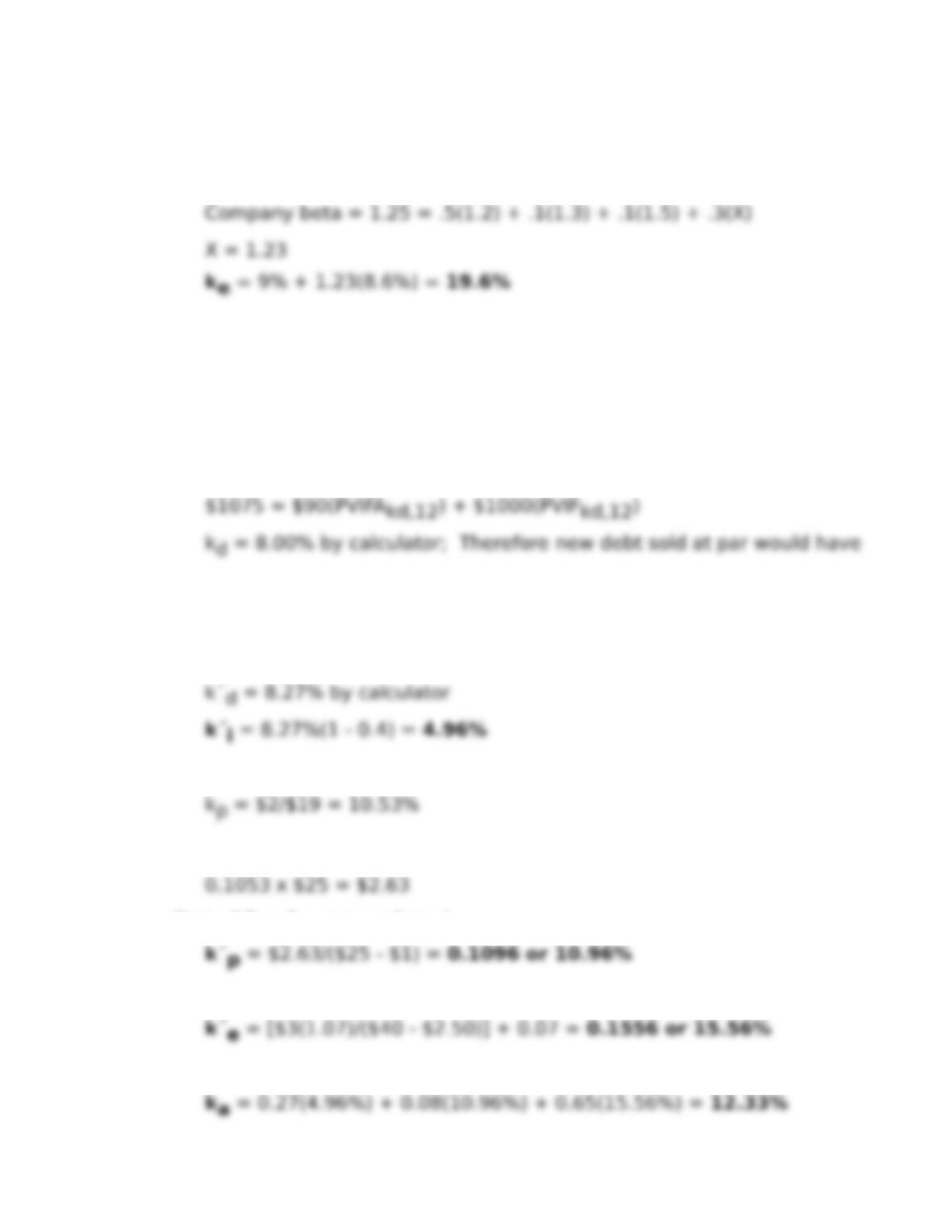
16. X = leveraged industrial products division beta
Note: There is no need to unlever and relever the industrial products
division beta because the same leverage (70/30) will be used to <nance
future projects as is currently being used.
17. Investor required return on existing debt:
to offer an 8% coupon rate.
Cost to <rm for new debt:
Net proceeds to <rm = $980 = $80(PVIFAkd,12) + $1000(PVIFkd,12)
Investor required return on existing preferred:
Dividend required on new preferred to sell at par:
Cost of <rm for new preferred:
Cost to <rm of new common equity:
Weighted cost of capital:
12-
Chapter 12
Cost of Capital
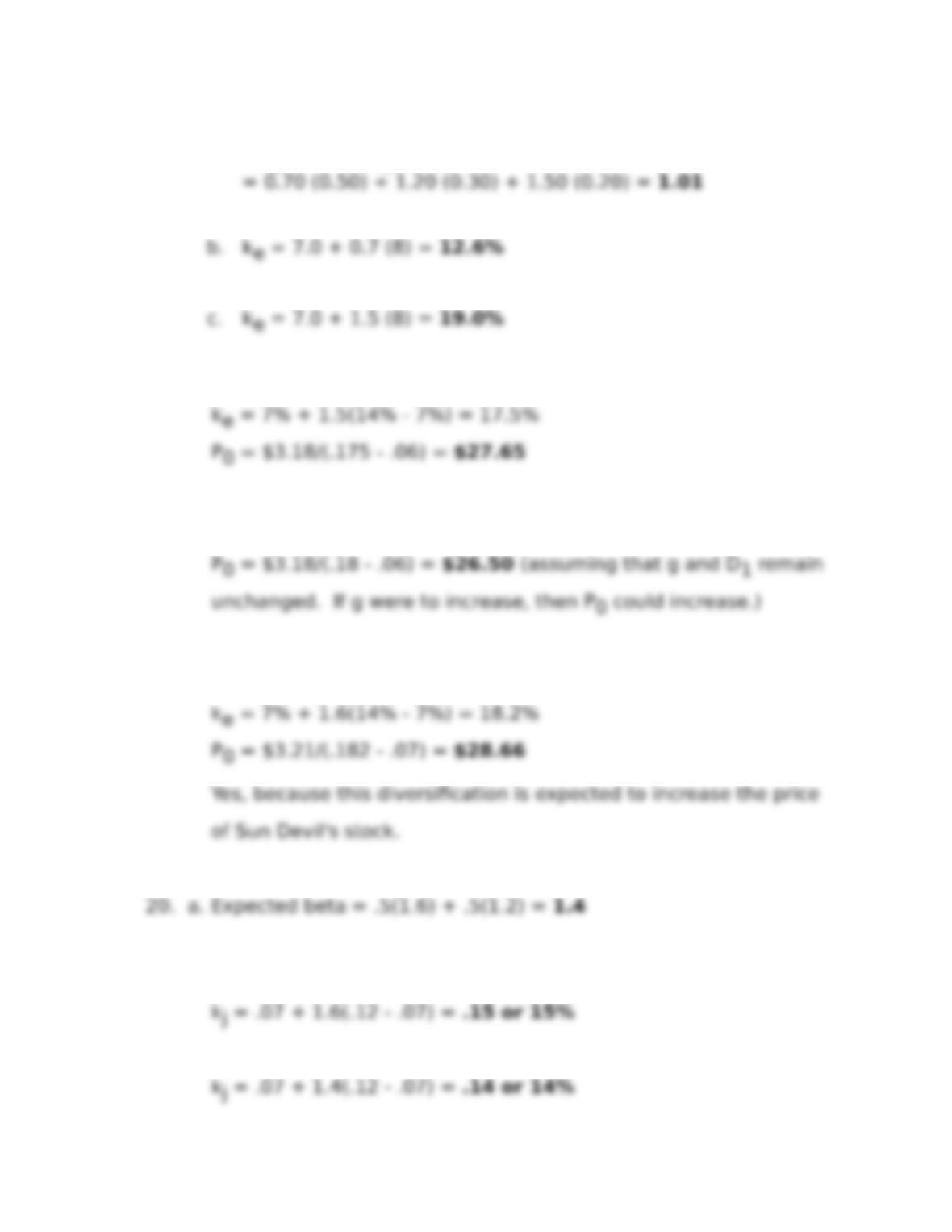
18. a. Weighted average beta
19. a. D1 = $3(1.06) = $3.18; g = 6%
b. ke = 6% + 1.5(14% – 6%) = 18%
c. g = 7%; D1 = $3(1.07) = $3.21
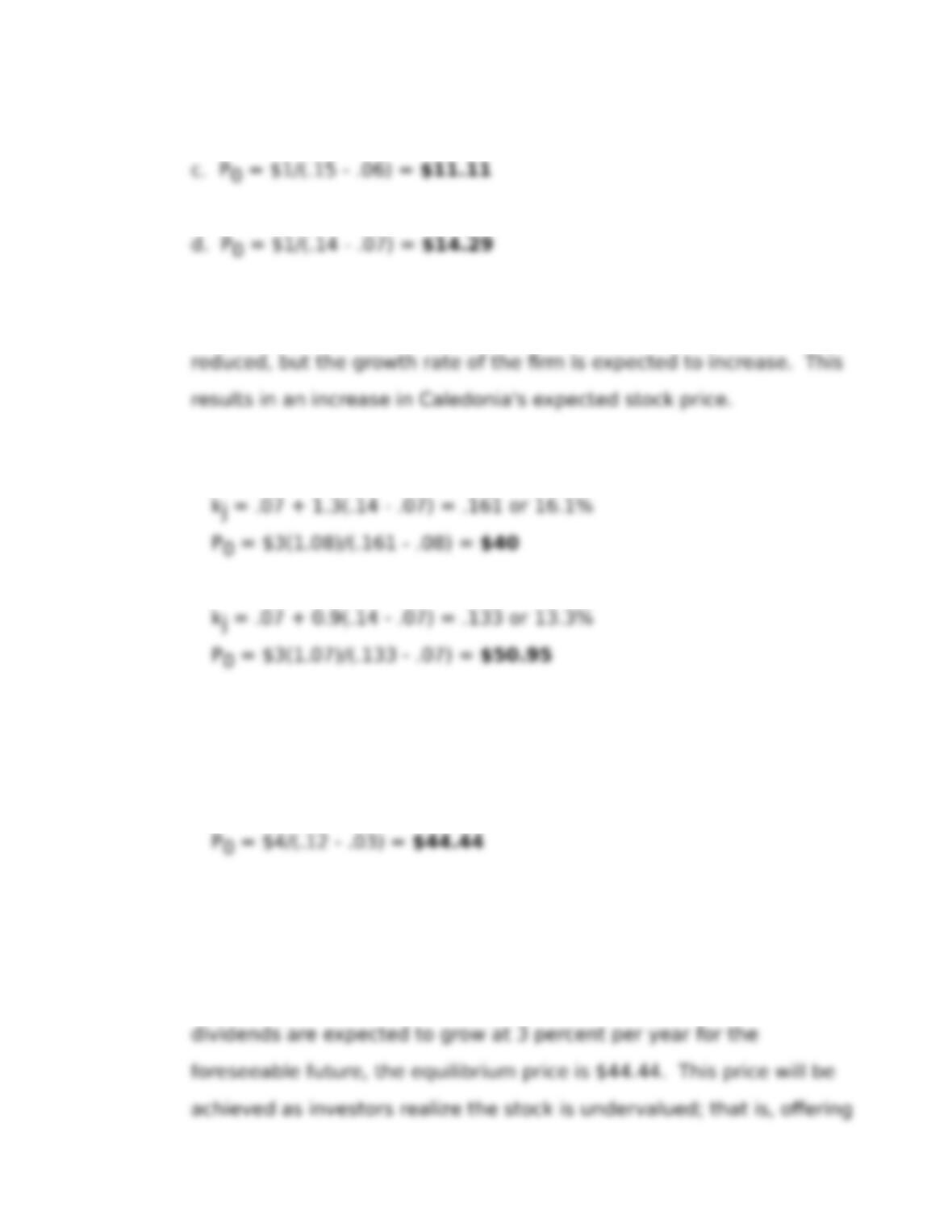
b. Required return before merger:
Required return after the merger:
12-
Chapter 12
Cost of Capital
e. The merger seems warranted. Not only is the risk of the <rm
21. Value of a share assuming no diversi<cation:
Value of a share assuming diversi<cation:
Since diversi<cation is expected to increase the price of Globe’s stock,
the diversi<cation plan appears warranted.
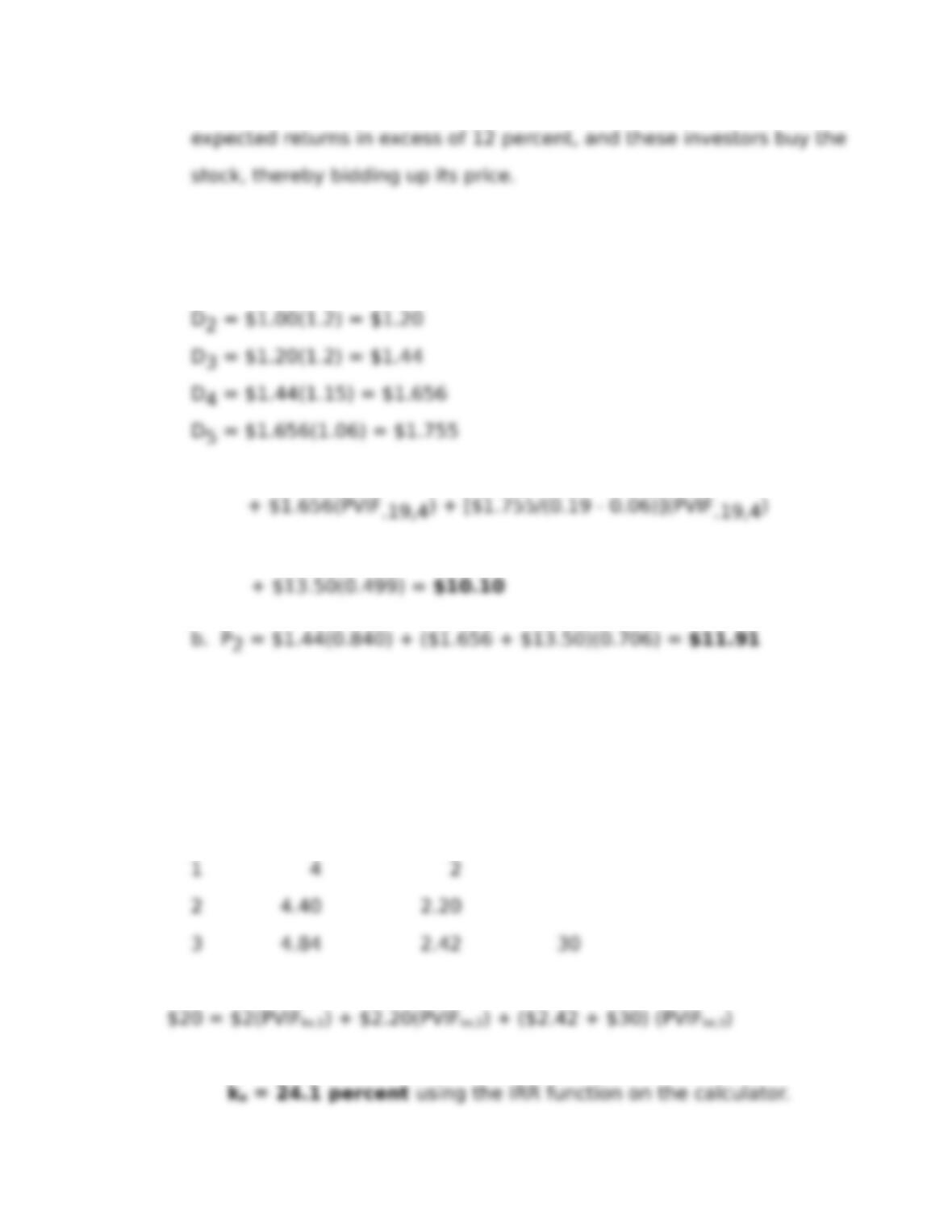
22. a. ke = .06 + 1.0(.12 – .06) = .12
At a price of $40, the stock seems to be undervalued.
b. If investors require a 12 percent return on this security and if
12-
Chapter 12
Cost of Capital
23. a. ke = 0.07 + 1.5(0.08) = 0.19
D1 = .4($2.5) = $1.00
P0 = $1.00(PVIF.19,1) + $1.20(PVIF.19,2) + $1.44(PVIF.19,3)
= $1.00(0.840) + $1.20(0.706) + $1.44(0.593) + $1.656(0.499)
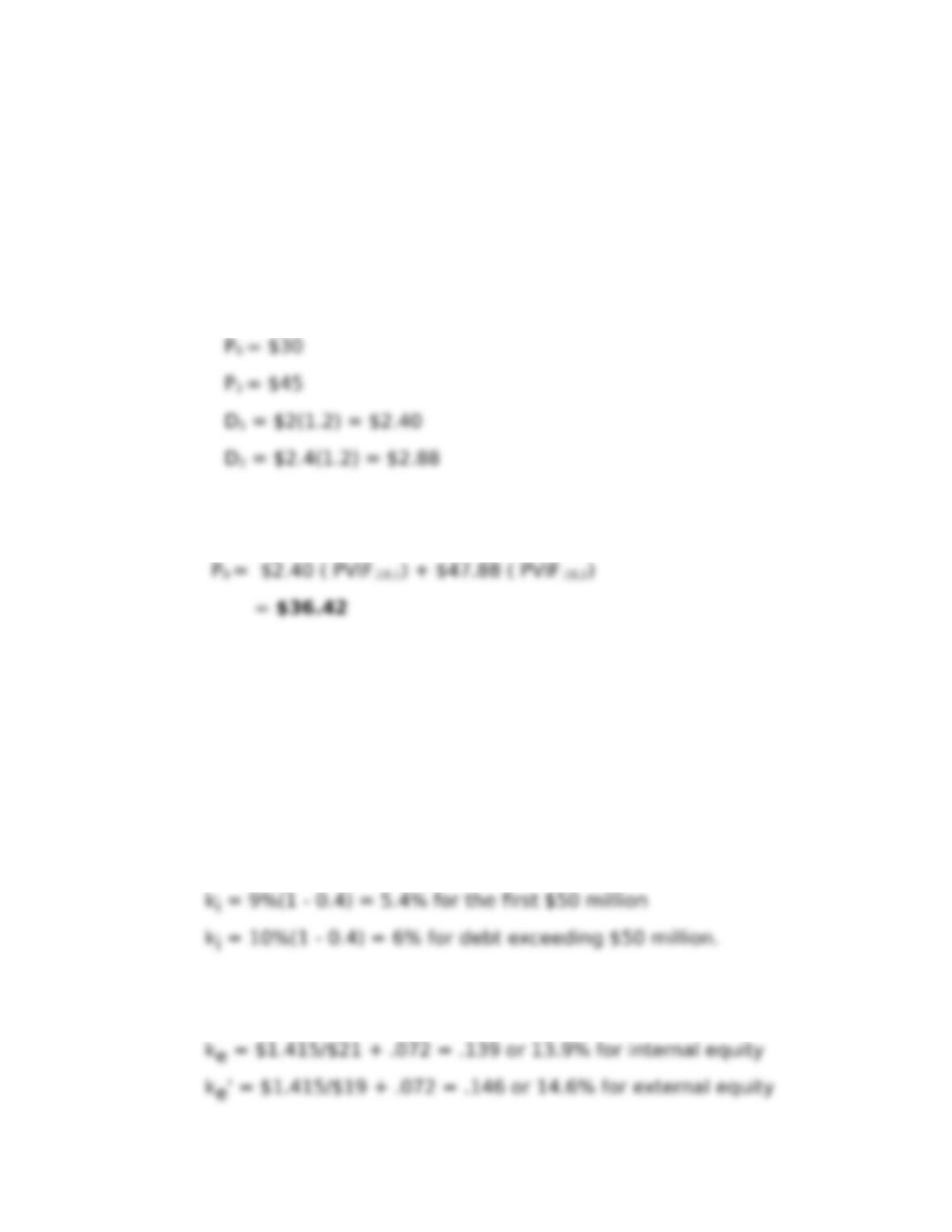
24.
Year Earnings Dividends Price
0 $2 $1 $20
12-
Chapter 12
Cost of Capital
25. No recommended solution
26. Required return / cost of capital:
ke = 4.5% + 1.5 ( 9%) = 18%
Compute the current value of the stock at ke = 18%:
Therefore, buy because the current “value” is greater than the current
price.
SOLUTION TO INTEGRATIVE CASE PROBLEM:
COST OF CAPITAL
1. Cost of debt:
Cost of equity: (g = 7.2% using the Rule of 72)
12-
Chapter 12
Cost of Capital
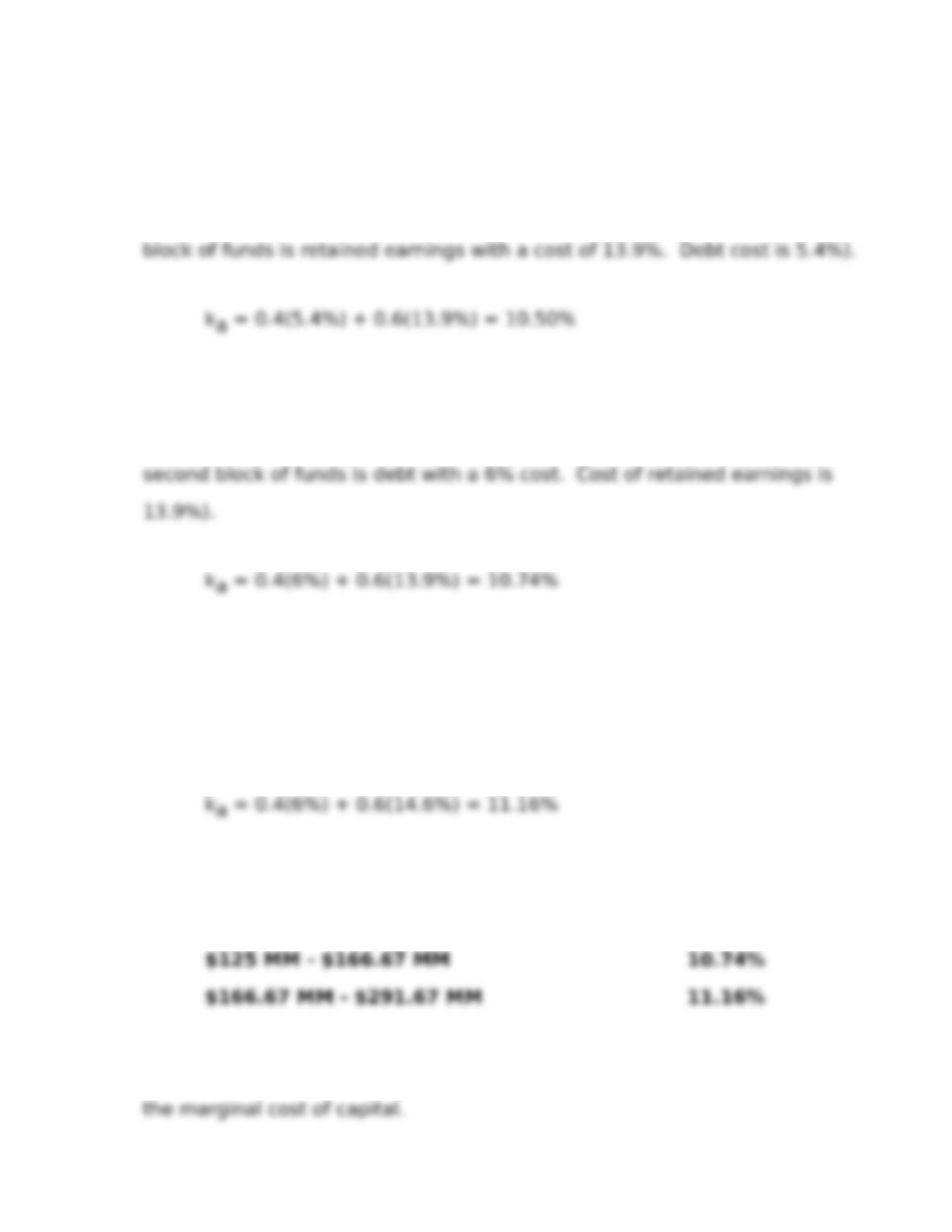
2. Size of first interval:
$50 million <rst mortgage bonds/0.40 = $125 million. (Balance of <rst
Size of second interval:
$25 million retained earnings/0.60 = $41.67 million. (Balance of
Size of third interval:
$75 million new common stock/0.60 = $125 million (Balance of third
block of funds is debt at a cost of 6%. Equity cost is 14.6%).
MCC curve:
$0 – $125 MM 10.50%
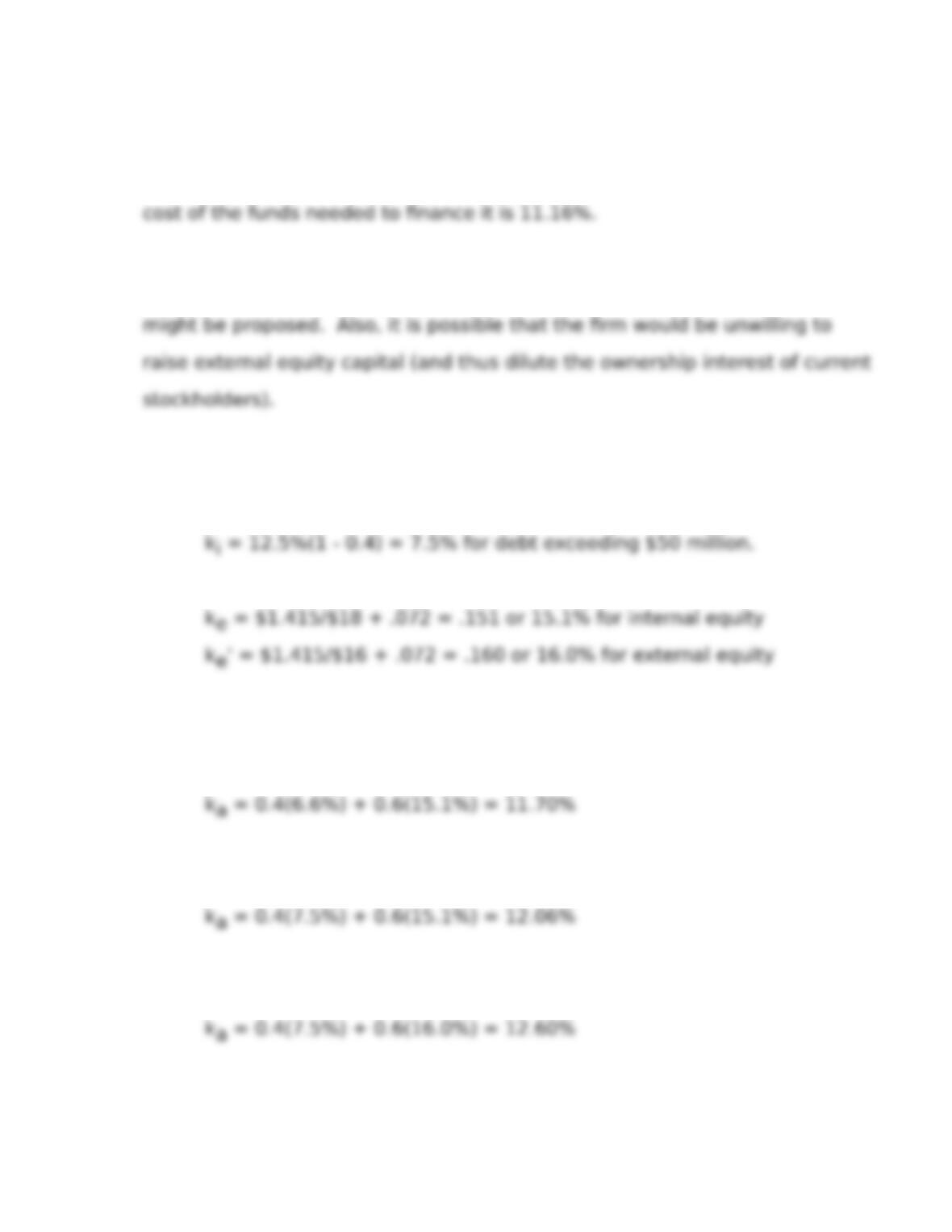
3. Projects A through F require $175 million and have returns in excess of
12-
Chapter 12
Cost of Capital
4. Project G should be rejected because it offers a 10% rate of return and the
5. If the projects di=ered substantially in risk, an alternative capital budget
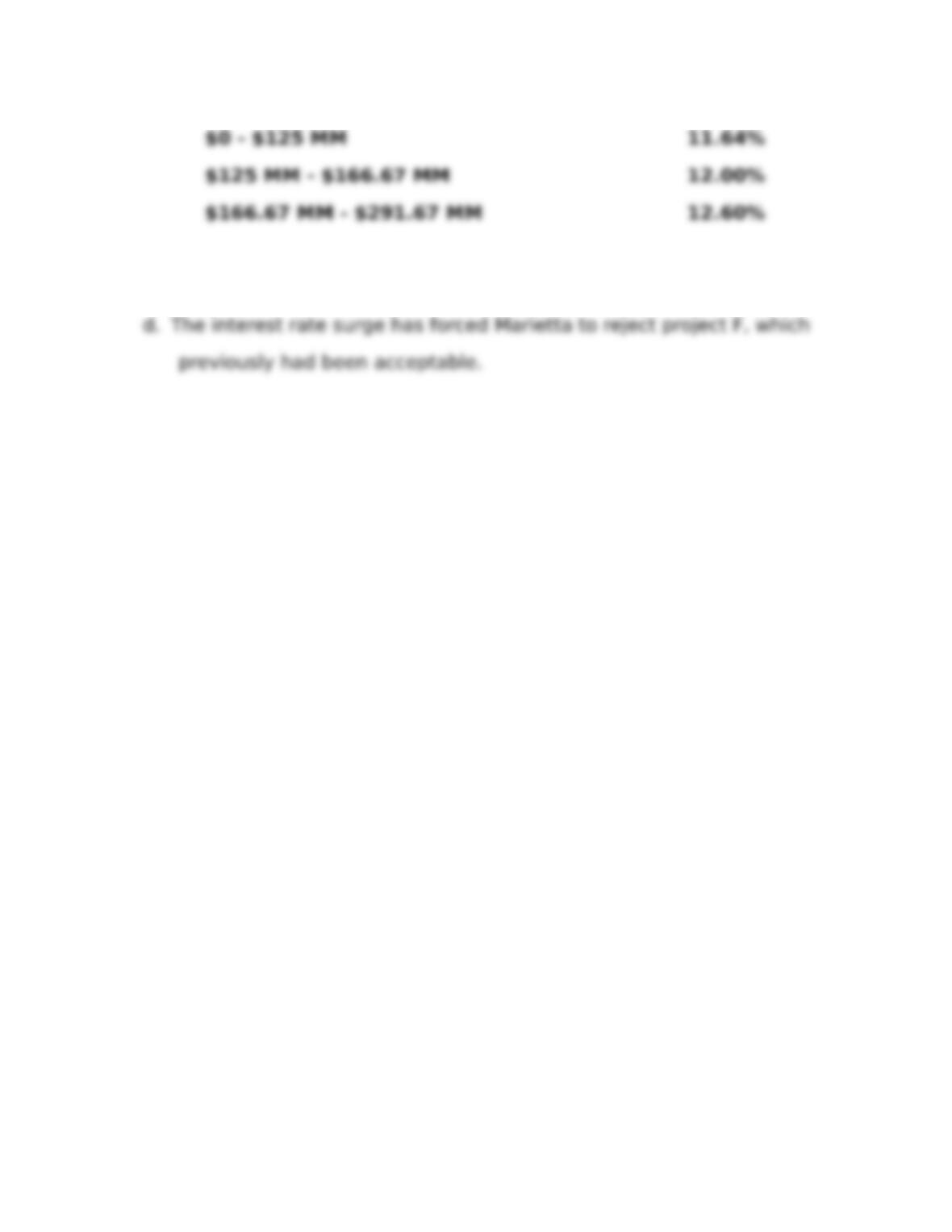
6. a. Cost of debt:
ki = 11%(1 – 0.4) = 6.6% for the <rst $50 million
Cost of equity: (g = 7.2% using the Rule of 72)
b. Cost of first interval:
Cost of second interval:
Cost of third interval:
MCC curve:
12-
Chapter 12
Cost of Capital
c. Choose projects A through E using a total of $135 million.
12-