Chapter 7: Types and Costs of Financial Capital
130
Financing Dollar Interest Cost of
Source Amount Rate Capital
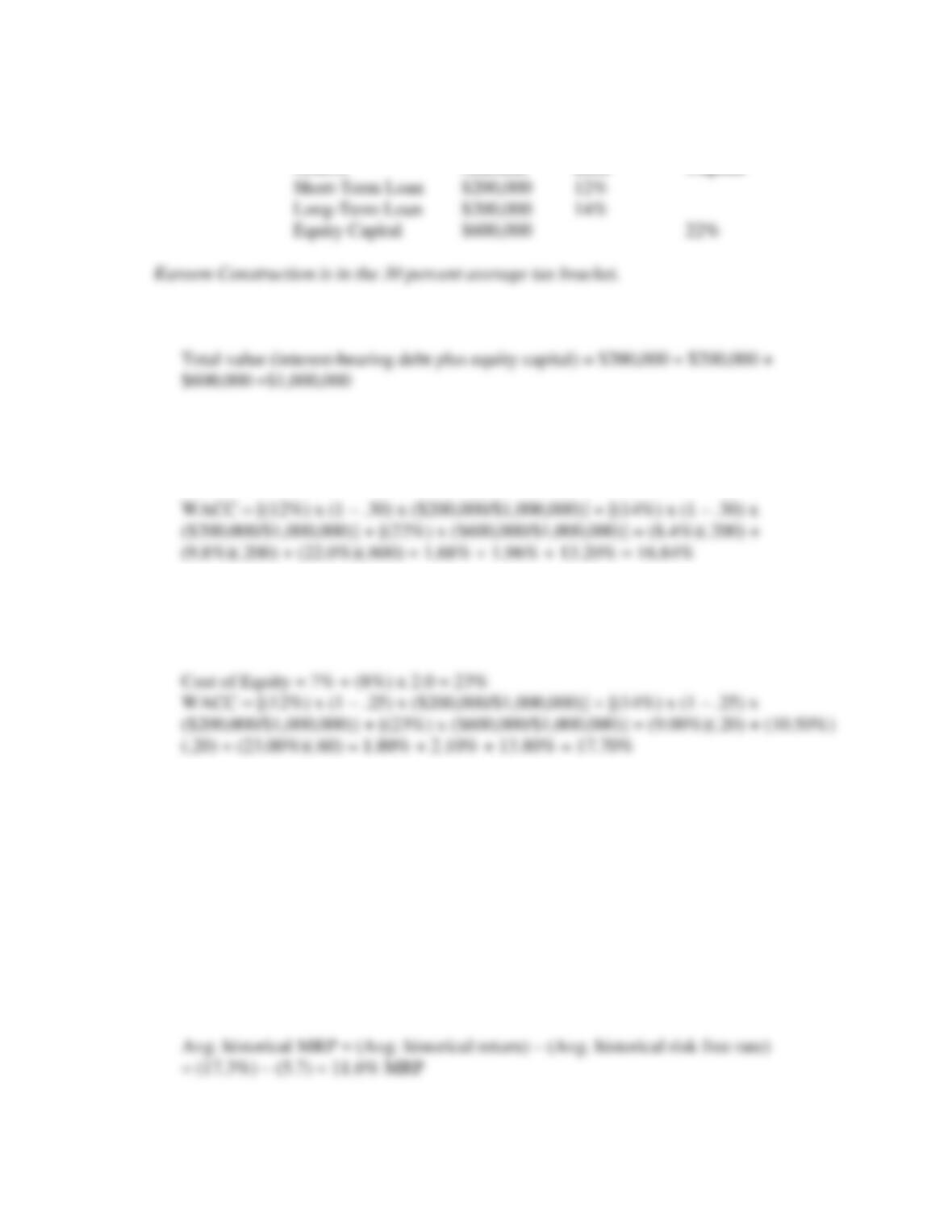
A. Calculate the after-tax (WACC) for Kareem.
WACC = (short-term debt rate) x (1– tax rate) x (short-term debt-to-value) + (long-
term debt rate) x (1– tax rate) x (long-term debt-to-value) + (equity rate) x (1– debt-to–
value)
B. Show how Kareem’s WACC would change if the tax rate drops to 25 percent and the
estimated cost of equity capital is based on a risk-free rate of 7 percent, a market risk
premium of 8 percent, and a systematic risk measure or beta of 2.0.
12. [CAPM Estimate of the Cost of Equity Capital] Voice River, Inc. has successfully moved
through its early life cycle stages and now is well into its rapid growth stage. However by
traditional standards this provider of media-on-demand is still considered to be a relatively
small venture. The interest rate on long-term U.S. government securities is currently 7
percent. Voice River’s management has observed that over the long-run the average
annual rate of return on small firm stocks has been 17.3 percent while the annual returns
on long-term U.S. government securities has averaged 5.7 percent. Management views
Voice River as being an average small company venture at its current life cycle stage.
A. Determine the historical average annual market risk premium for small firm common
stocks.
Chapter 7: Types and Costs of Financial Capital
131
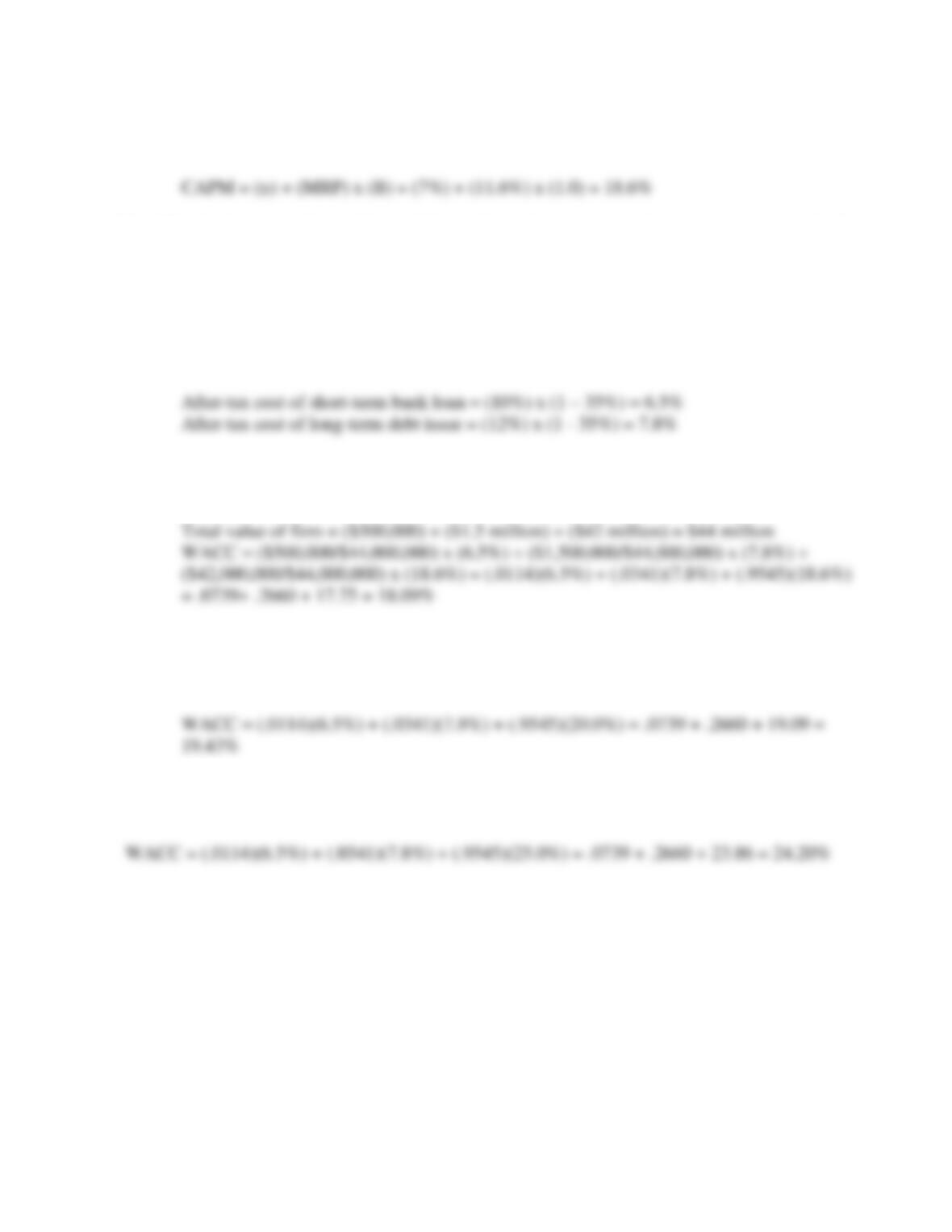
B. Use the capital asset pricing model (CAPM) to estimate the cost of common equity
capital for Voice River.
13. [Weighted Average Cost of Capital] Voice River, Inc. is interested in estimating its weighted
average cost of capital (WACC) now that it is in its rapid growth stage. Voice River has a
$500,000, 10 percent interest, short-term bank loan, a $1.5 million, 12 percent long-term
debt issue, and 42 million in common equity. The venture is in a 35 percent income tax
bracket.
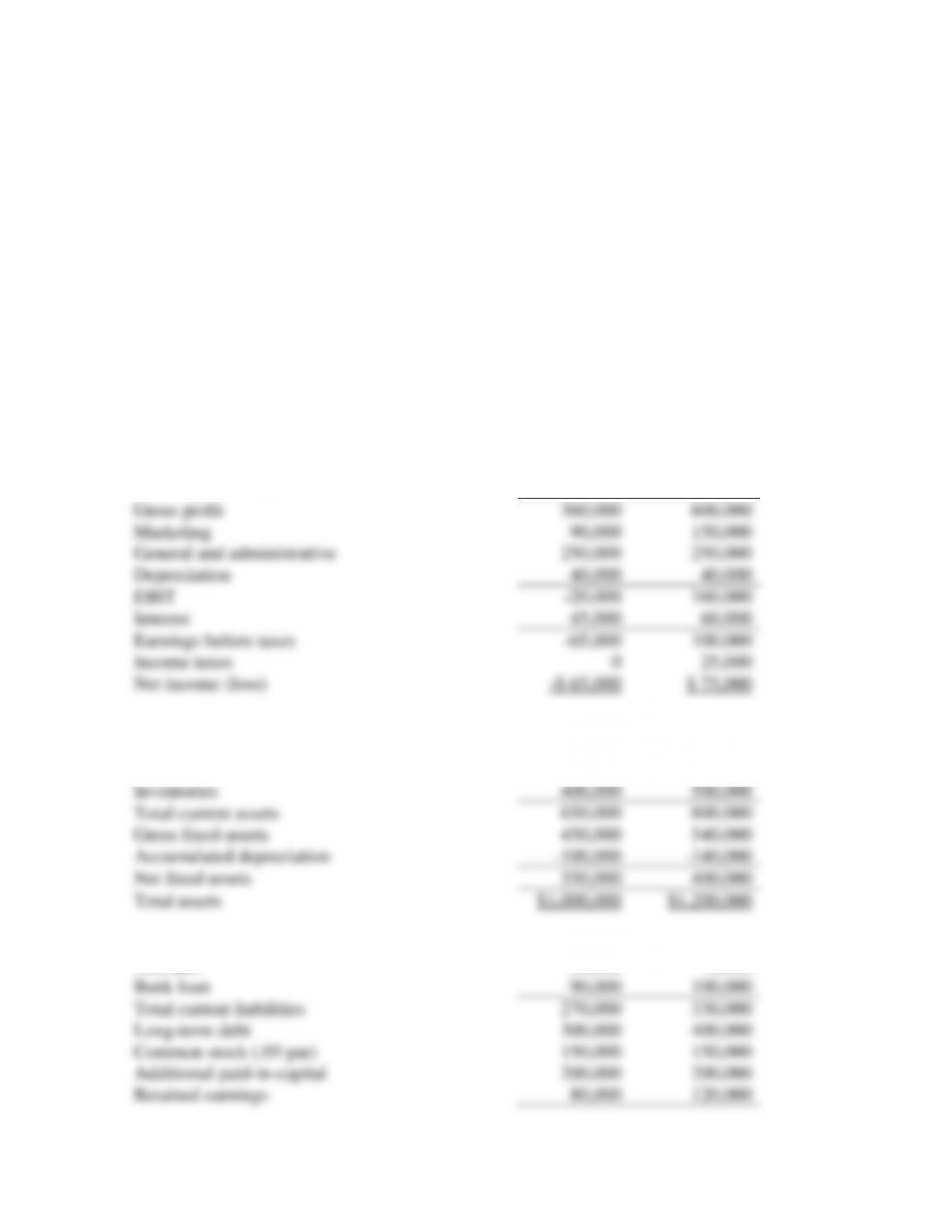
A. Determine the after-tax costs of the bank loan and the long-term debt issue.
B. Calculate the WACC for Voice River, Inc., using the cost of common equity capital
estimated in Problem 12.
14. Weighted Average Cost of Capital] Refer to Problem 13 for Voice River, Inc.
A. Estimate the WACC if the cost of common equity capital is 20 percent.
B. Estimate the WACC if the cost of common equity capital is at the representative target
rate of 25 percent for typical ventures in their late rapid-growth life cycle state.
MINI CASE: CASTILLO PRODUCTS COMPANY
The Castillo Products Company was started in 2014. The company manufactures components
for personal decision assistant (PDA) products and for other handheld electronic products. A
difficult operating year, 2015, was followed by a profitable 2016. The founders (Cindy and
Rob Castillo) are interested in estimating their cost of financial capital since they are expecting
to secure additional external financing to support planned growth.
Short-term bank loans are available at an 8 percent interest rate. Cindy and Rob believe that
the cost of obtaining long-term debt and equity capital will be somewhat higher. The real
Chapter 7: Types and Costs of Financial Capital
132
interest rate is estimated to be 2 percent and a long-run inflation premium is estimated at 3
percent. The interest rate on long-term government bonds is 7 percent. A default-risk
premium on long-term debt is estimated at 6 percent; plus Castillo Products is expecting to
have to pay a liquidity premium of 3 percent due to the illiquidity associated with its long-term
debt. The market risk premium on large-firm common stocks over the rate on long-term
government bonds is estimated to be 6 percent. Cindy and Rob expect that equity investors in
their venture will require an additional investment risk premium estimated at two times the
market risk premium on large-firm common stocks.
Following are income statements and balance sheets for the Castillo Products Company for
2015 and 2016.
Castillo Products Company
2015
2016
Net sales
$900,000
$1,500,000
Cost of goods sold
540,000
900,000
Gross profit
360,000
600,000
Marketing
90,000
150,000
General and administrative
250,000
250,000
Depreciation
40,000
40,000
EBIT
–20,000
160,000
Interest
45,000
60,000
Earnings before taxes
–65,000
100,000
Income taxes
0
25,000
Net income (loss)
–$ 65,000
$ 75,000
2015
2016
Cash
$ 50,000
$ 20,000
Accounts receivable
200,000
280,000
Inventories
400,000
500,000
Total current assets
650,000
800,000
Gross fixed assets
450,000
540,000
Accumulated depreciation
-100,000
-140,000
Net fixed assets
350,000
400,000
Total assets
$1,000,000
$1,200,000
Accounts payable
$ 130,000
$ 160,000
Accruals
50,000
70,000
Bank loan
90,000
100,000
Total current liabilities
270,000
330,000
Long-term debt
300,000
400,000
Common stock (.05 par)
150,000
150,000
Additional paid-in-capital
200,000
200,000
Retained earnings
80,000
120,000
Chapter 7: Types and Costs of Financial Capital
133
Total liabilities and equity
$1,000,000
$1,200,000
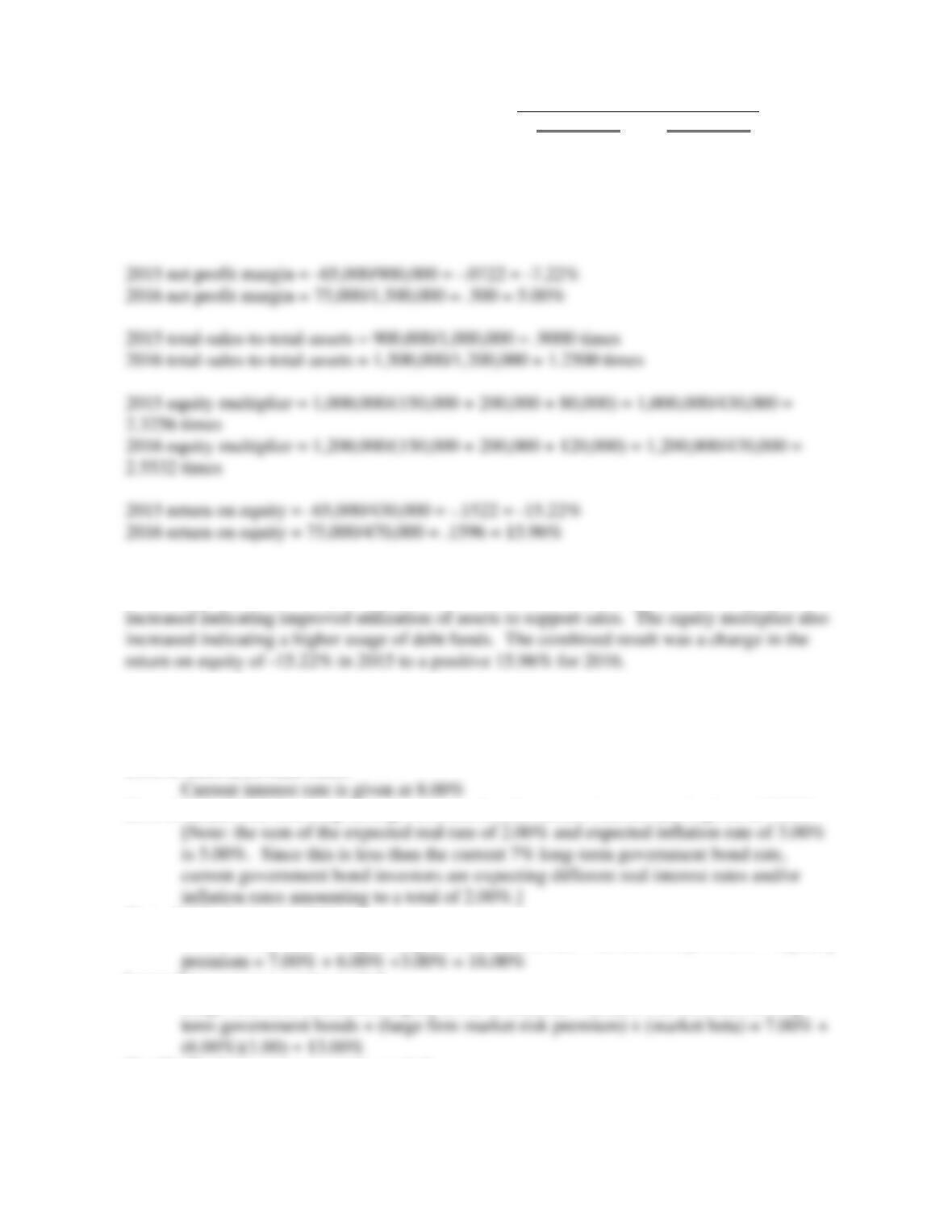
A. Calculate the: net profit margin; total-sales-to-total-assets ratio; the equity multiplier; and the
return on equity for both 2015 and 2016 for the Castillo Products Corporation. Describe what
happened in terms of financial performance between the two years.
Castillo Products improved from an operating loss in 2015 to profitability in 2016. The net
profit margin went from negative to positive. The asset turnover (total-sales-to-total-assets)
B. Estimate the cost of short-term bank loans, long-term debt, and common equity capital for the
Castillo Products Corporation.
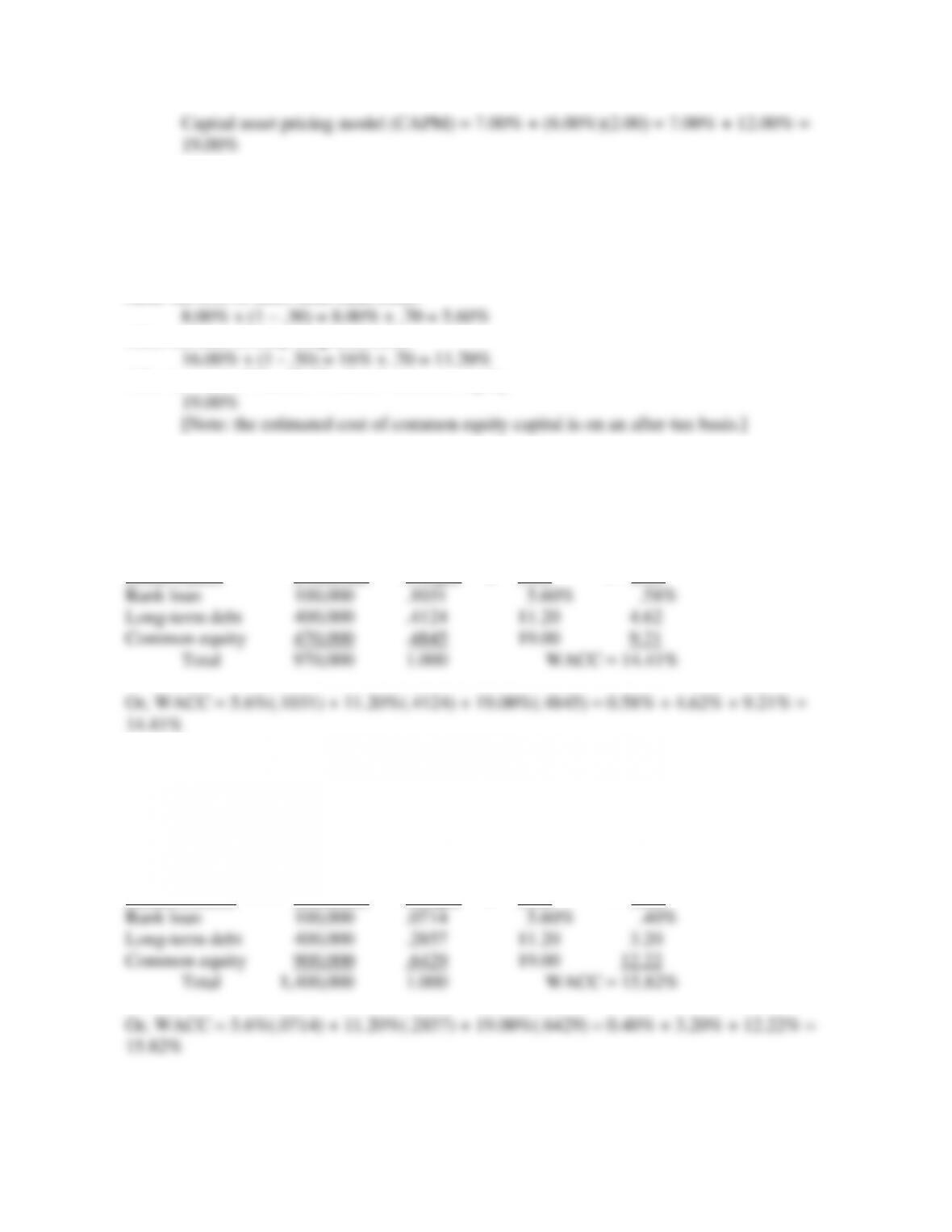
Cost of short-term bank loans:
Cost of default-risk free long-term government bonds: current interest rate is given at 7.00%
Cost of risky long-term debt:
Cost of risky debt = long-term government bond rate + default-risk premium + liquidity
Large-firm common equity capital:
Large firm cost of common equity (CAPM method) = default-risk free rate on long-
Castillo Products common equity capital:
Chapter 7: Types and Costs of Financial Capital
134
C. Although, Castillo Products paid a low effective tax rate in 2016, a 30 percent income tax rate
is considered more appropriate when looking to the future. Estimate the after-tax cost of
short-term bank loans, long-term debt, and the venture’s common equity.
Note: before-tax costs of debt funds were calculated in Part B.
After-tax cost of short-term bank loans:
After-tax cost of risky long-term debt:
After-tax cost of Castillo Products’ common equity:
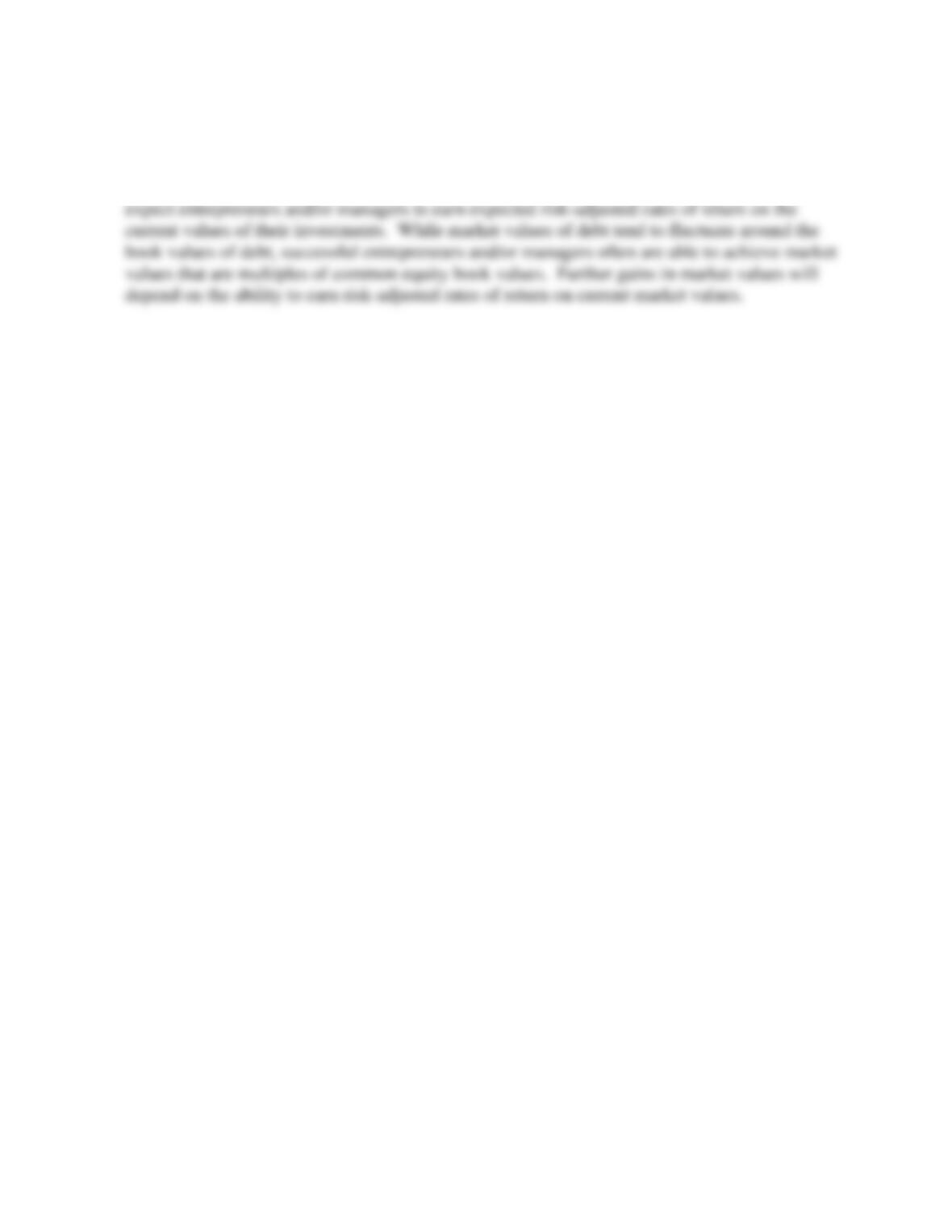
D. Estimate the weighted average cost of capital (WACC) for the Castillo Products Corporation
using the book values of interest-bearing debt and stockholders’ equity capital at the end of
2016.
Percent After-tax Component
Book Values $ Amount Weight x Cost = Cost
E. Cindy and Rob estimate that the market value of the common equity in the venture is $900,000
at the end of 2016. The market values of interest-bearing debt are judged to be the same as the
recorded book values at the end of 2016. Estimate the market value-based weighted average
cost of capital for Castillo Products.
Percent After-tax Component
Market Values $ Amount Weight x Cost = Cost
Chapter 7: Types and Costs of Financial Capital
135
F. Would you recommend to Cindy and Rob that they use the book value-based WACC estimate
or the market value-based WACC estimate for planning purposes? Why?
Cindy and Rob should use market value-based WACCs for planning purposes. Investors
MINI CASE: ALPHA ONE SOFTWARE CORPORATION
[Note: This Mine Case incorporates the calculation of a weighted average cost of capital
(WACC) to determine whether the Alpha One Software Corporation added economic value in
2016. The Appendix to Chapter 7 will need to be covered first in order to complete this Mini
Case.]
The Alpha One Software Corporation was organized to develop software products that would
provide Internet-based firms with information about their customers. As a result of initial
success, the venture’s premier product allows firms with subscriber bases to predict customer
profiles, retention, and satisfaction.
Arlene Io received an undergraduate degree in computer sciences and information
systems from a major northeastern university four years ago. The Omega Subscriber Software
Product was developed, test marketed with the help of two of her classmates; Alpha One
Software Corporation was up and running within one year. Venture capital was obtained to
start up operations; a second round of venture financing helped Alpha One to move through its
survival stage. Product success in the marketplace has allowed the venture to achieve such
rapid sales growth that it now is able to get bank loans and issue long-term debt.
The interest rate on the bank loan is 10 percent. For long-term debt, the real interest
rate is estimated to be 3 percent; the inflation premium is 4 percent; and Alpha One’s
default/liquidity risk premium over government bonds is estimated to be 7 percent. The cost of
common equity was estimated using the risk-free long-term government bond rate and a stock
investment risk premium of 13 percent.
Arlene Io has now reached the point of being able to consider whether Alpha One is
adding economic value in terms of its net operating profit after taxes (NOPAT) and its
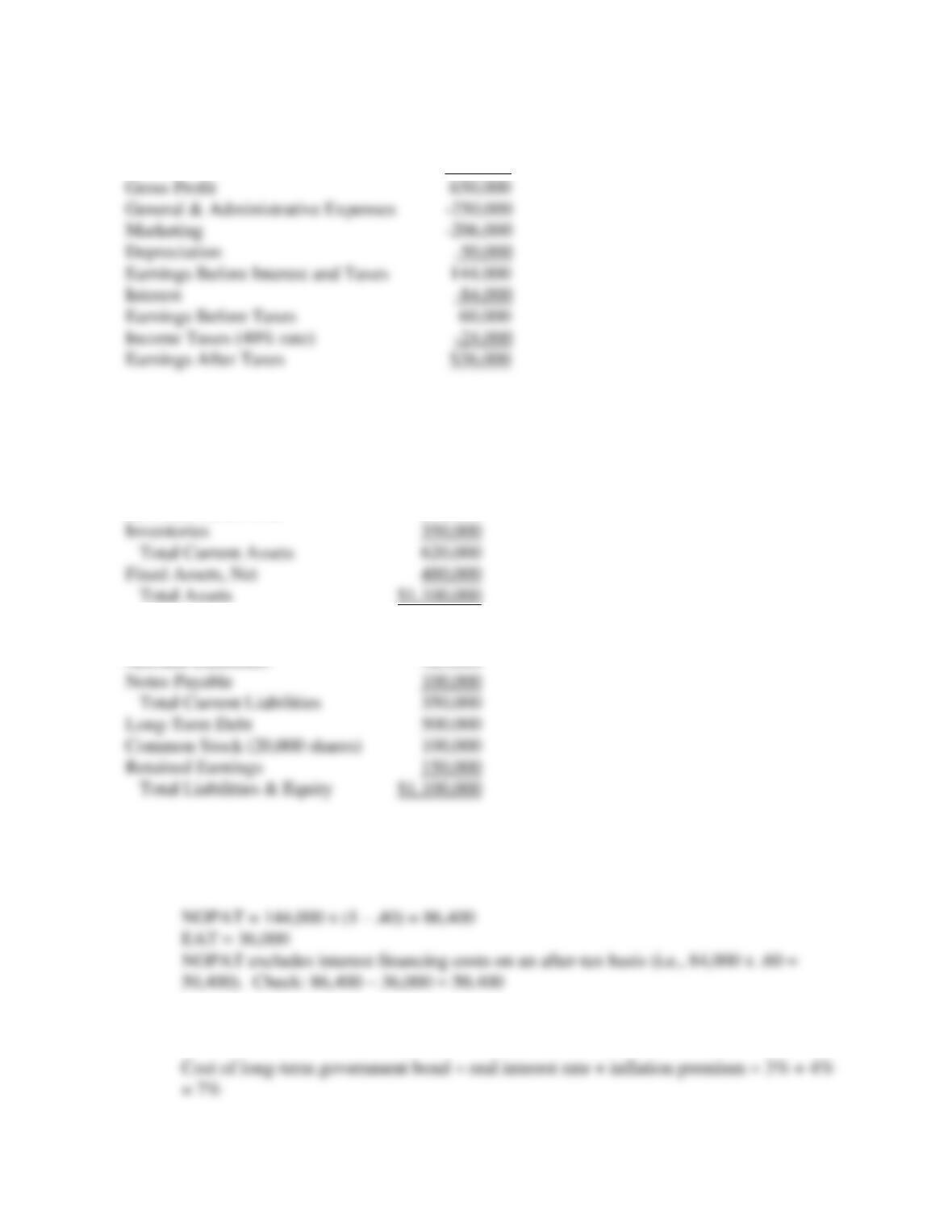
weighted average cost of capital (WACC). Following are the financial statements for 2016.
Alpha One Software Corporation
Chapter 7: Types and Costs of Financial Capital
136
Income Statement 2016
Net Sales
$1,500,000
Cost of Goods Sold
-850,000
Gross Profit
650,000
General & Administrative Expenses
-250,000
Marketing
-206,000
Depreciation
-50,000
Earnings Before Interest and Taxes
144,000
Interest
-84,000
Earnings Before Taxes
60,000
Income Taxes (40% rate)
-24,000
Earnings After Taxes
$36,000
Alpha One Software Corporation
Balance Sheet 2016
Cash
$20,000
Accounts Receivable
250,000
Inventories
350,000
Total Current Assets
620,000
Fixed Assets, Net
480,000
Total Assets
$1,100,000
Accounts Payable
125,000
Accrued Liabilities
125,000
Notes Payable
100,000
Total Current Liabilities
350,000
Long-Term Debt
500,000
Common Stock (20,000 shares)
100,000
Retained Earnings
150,000
Total Liabilities & Equity
$1,100,000
A. Calculate Alpha One’s net operating profit after taxes (NOPAT). Why does the NOPAT
differ from the earnings after taxes?
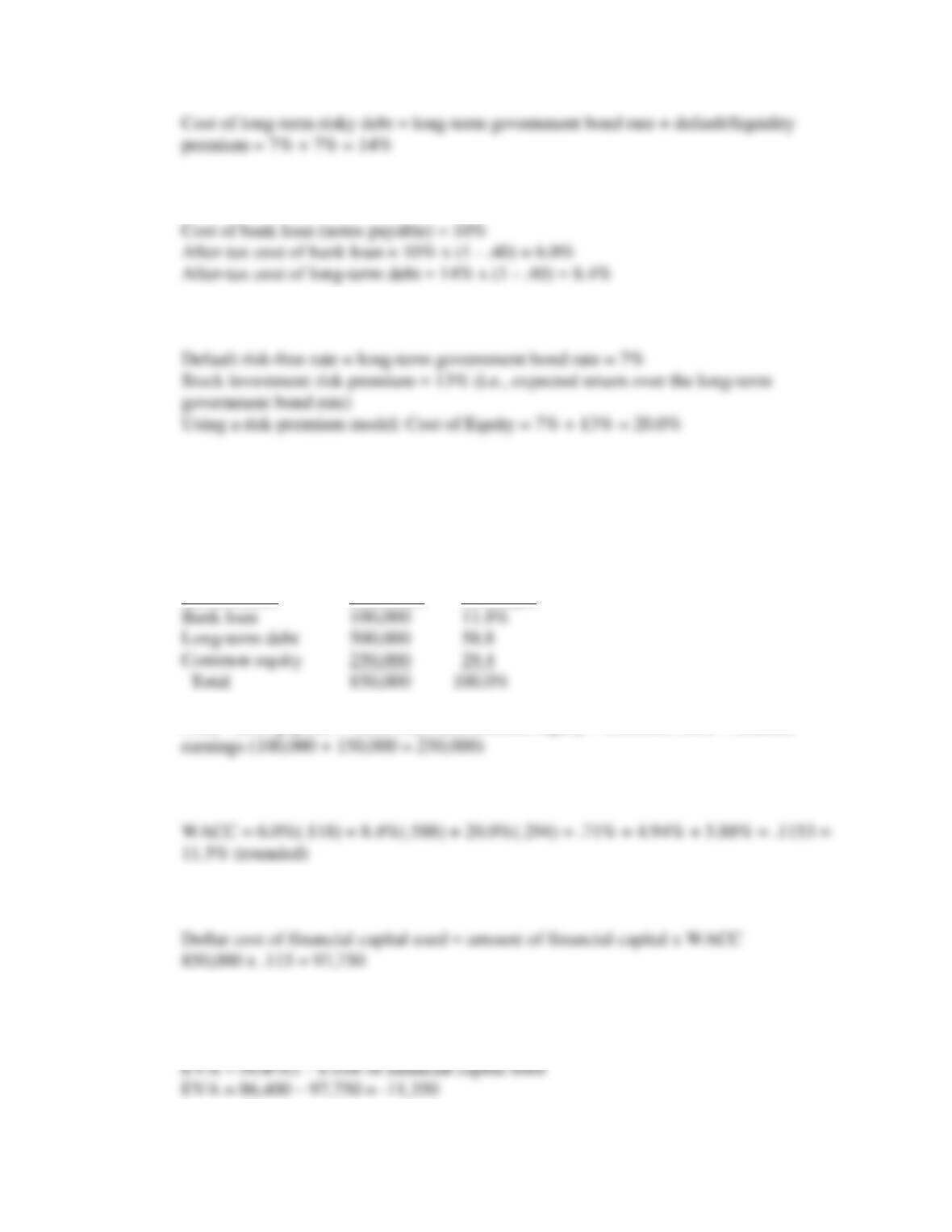
B. Estimate the effective before-tax cost of the long-term debt.
Chapter 7: Types and Costs of Financial Capital
137
C. Estimate the effective after-tax cost of the bank loan and the long-term debt.
D. Estimate the cost of common equity capital.
E. Determine the financial structure weights from Alpha One’s 2016 financial statements for
the two interest-bearing debt components and the common equity.
Note: the following WACC estimates are based on the use of book value-based weights
since no information is provided to estimate the market value of the venture’s equity.
Book Values $ Amount % Weight
Note: notes payable = bank loan; and common equity = common stock + retained
F. Calculate Alpha One’s weighted average cost of capital (WACC).
G. Determine the dollar cost of financial capital used.
H. Estimate Alpha One’s economic value added (EVA). Did Alpha One build or destroy
economic value in 2016?
Chapter 7: Types and Costs of Financial Capital
138
Economic value declined (was destroyed) in 2016.
APPENDIX A:
Using WACC to Complete the Calibration of EVA
[Note: We first introduced the EVA and NOPAT concepts in Chapter 4, Appendix A.]
EXERCISES/PROBLEMS
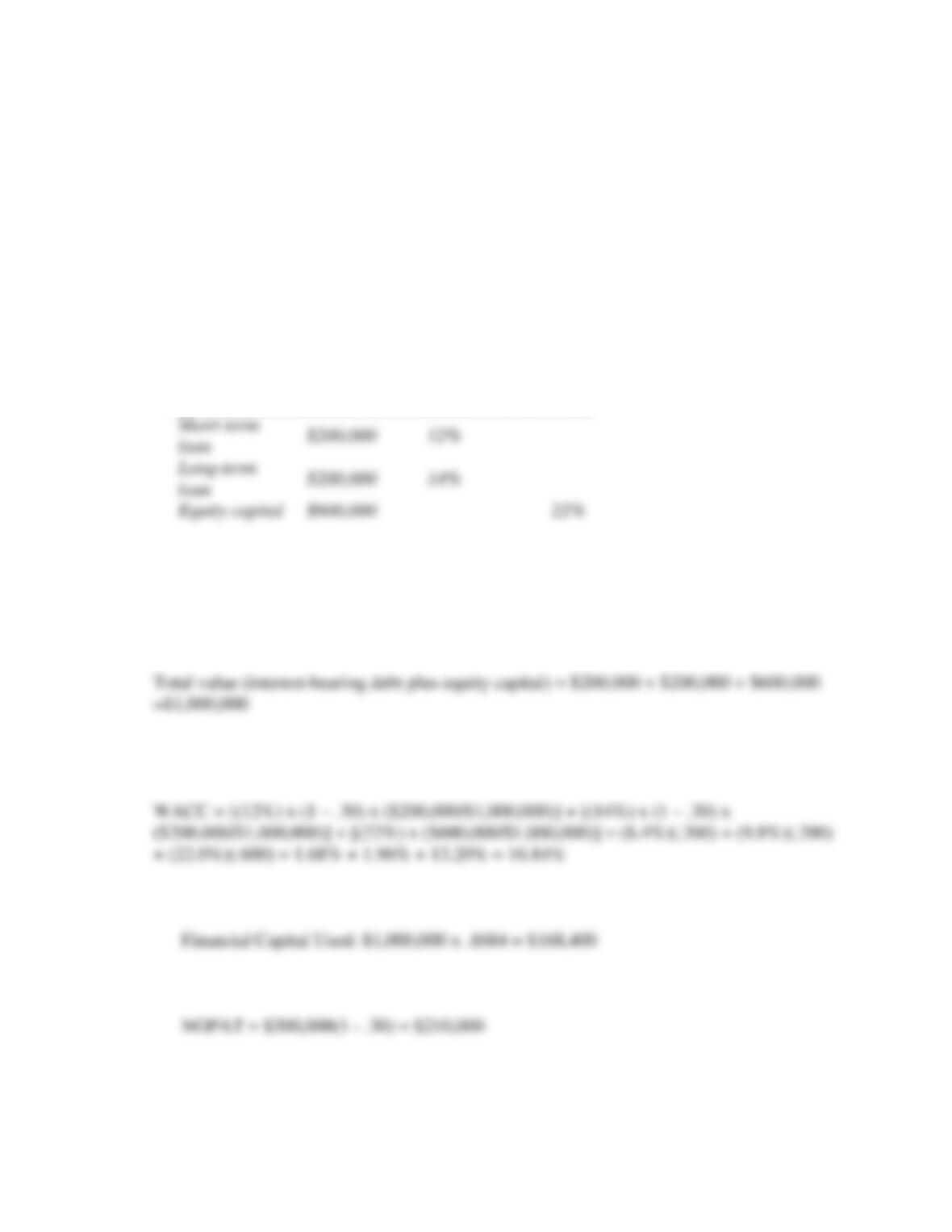
1. [Economic Value Added] Kareem Construction Company has the following amounts of
interest-bearing debt and common equity capital:
FINANCING
DOLLAR
INTEREST
COST OF
SOURCE
AMOUNT
RATE
CAPITAL
Short-term
loan
$200,000
12%
Long-term
loan
$200,000
14%
Equity capital
$600,000
22%
Kareem Construction is in the 30 percent average tax bracket.
A. Calculate the after-tax weighted average cost of capital (WACC) for Kareem.
[Note: This is the same answer as was provided in the end-of-chapter Problem 11, Part A.]
WACC = (short-term debt rate) x (1– tax rate) x (short-term debt-to-value) + (long-term
debt rate) x (1– tax rate) x (long-term debt-to-value) + (equity rate) x (1– debt-to-value)
B. Determine the after-tax dollar cost of financial capital used by Kareem.
C. Kareem’s EBIT was $300,000. Calculate Kareem’s NOPAT.
D. Calculate Kareem’s EVA. Did the venture build or destroy value?

Chapter 7: Types and Costs of Financial Capital
139