
Chapter 8
International Strategy

Studying this chapter should provide you with
the strategic management knowledge needed to:
1. Explain incentives that can influence firms to use an international strategy.
2. Identify three basic benefits firms achieve by successfully implementing an
international strategy.
3. Explore the determinants of national advantage as the basis for
international business-level strategies.
4. Describe the three international corporate-level strategies.
5. Discuss environmental trends affecting the choice of international
strategies, particularly international corporate-level strategies.
6. Explain the five modes firms use to enter international markets.
7. Discuss the two major risks of using international strategies.
8. Discuss the strategic competitiveness outcomes associated with
international strategies particularly with an international diversification
strategy.
9. Explain two important issues firms should have knowledge about when
using international strategies.
Learning Objectives
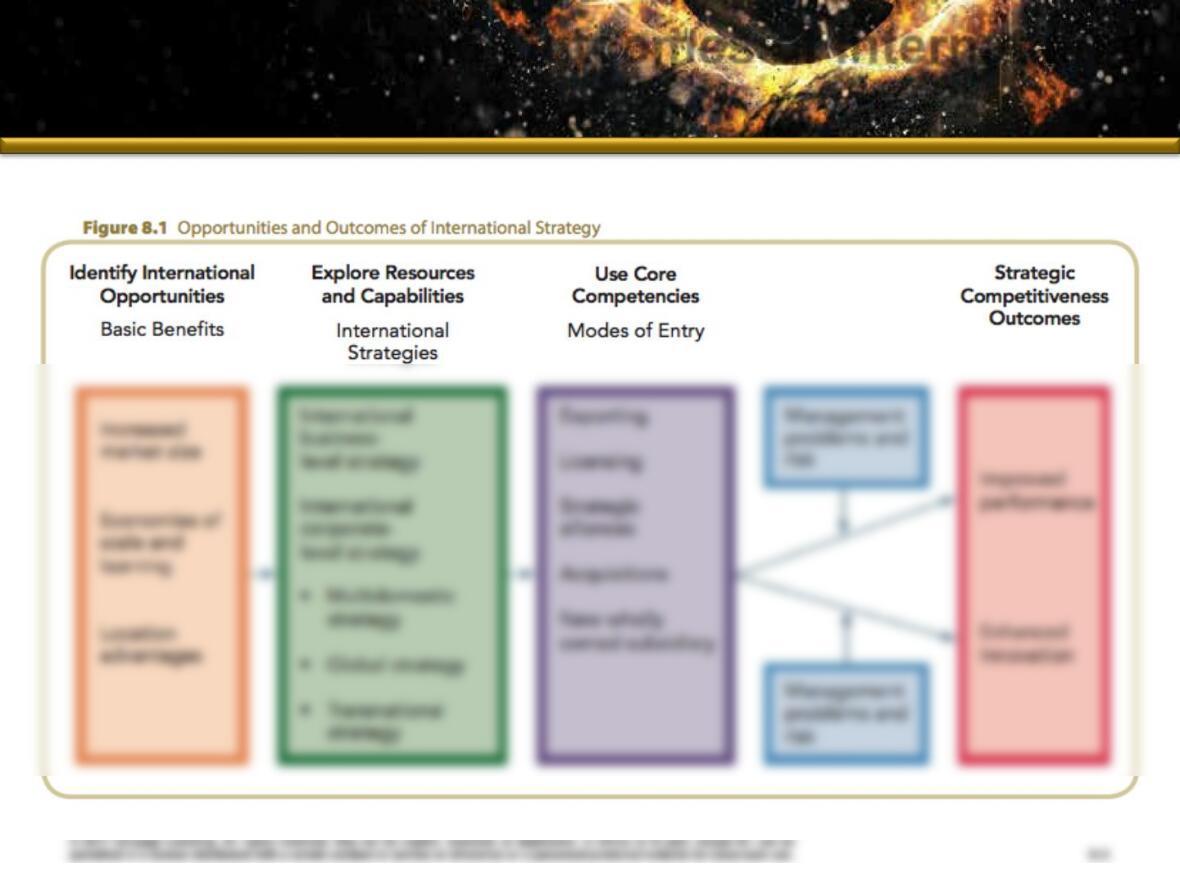
Opportunities and Outcomes of International
Strategy

Identifying International Opportunities
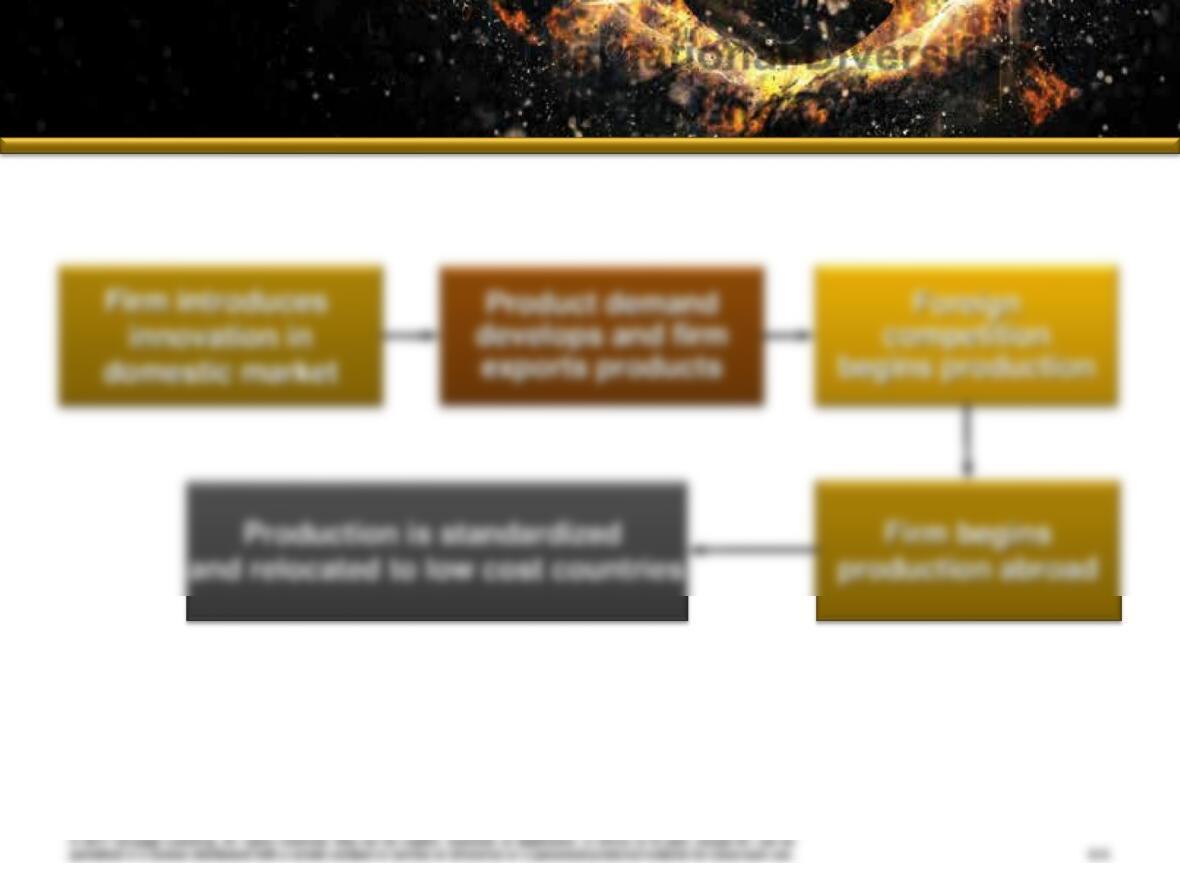
Classic Rationale for International Diversification:
Extend a Product’s Life Cycle
©2017 Cengage Learning. All rights reserved. May not be copied, scanned, or duplicated, in whole or in part, except for use as
permitted in a license distributed with a certain product or service or otherwise on a password-protected website for classroom use. 8–5
Production is standardized
and relocated to low cost countries
Product demand
develops and firm
exports products
Firm introduces
innovation in
domestic market
Foreign
competition
begins production
Firm begins
production abroad

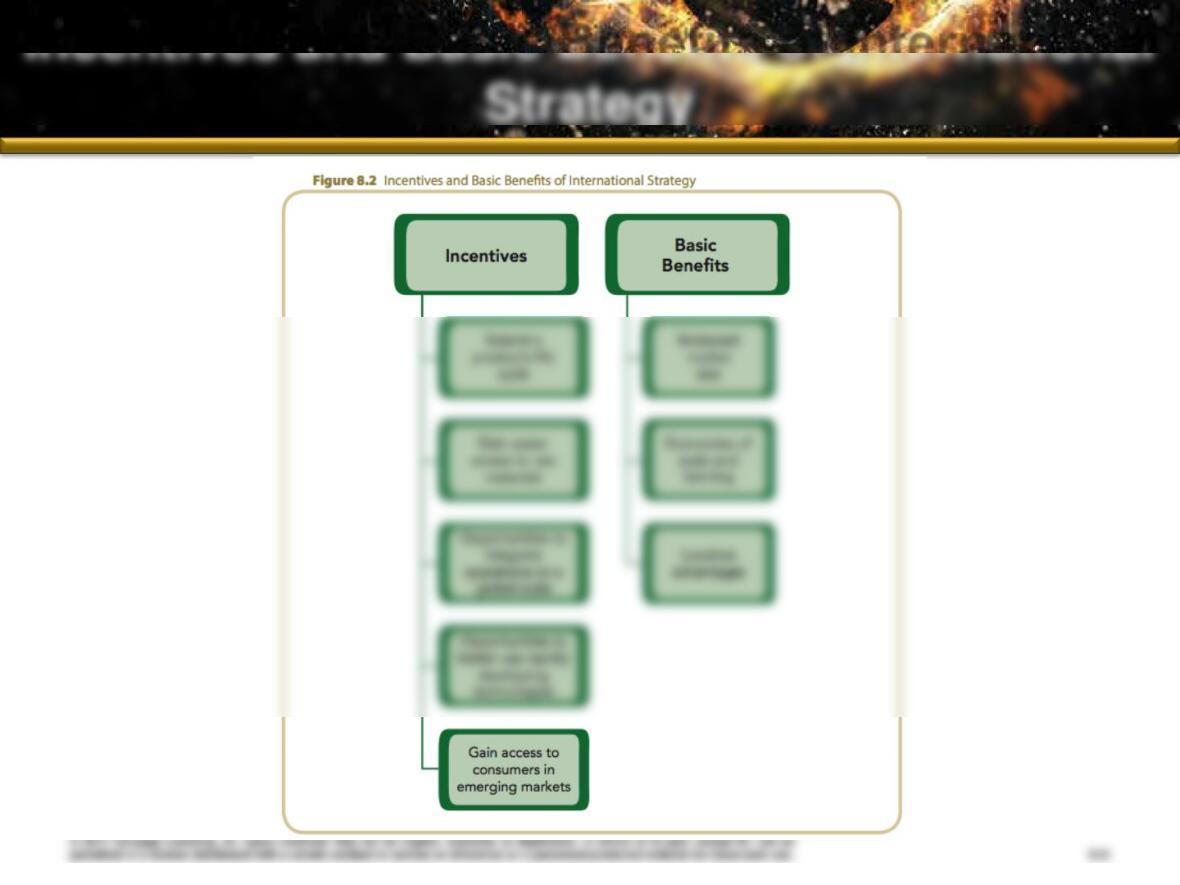
International Strategy Benefits
•Increased Market Size

International Strategy Benefits (cont’d)
•Location Advantages
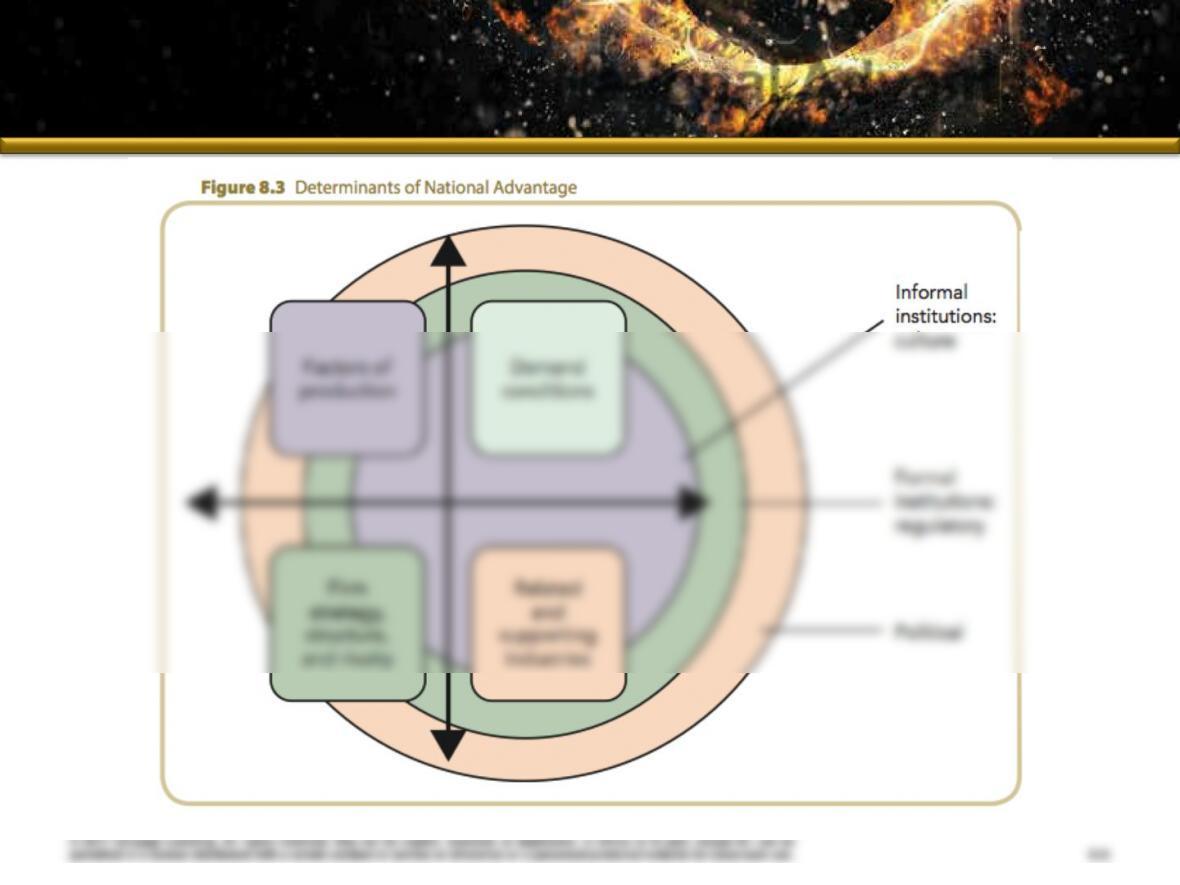
Determinants of National Advantage
©2017 Cengage Learning. All rights reserved. May not be copied, scanned, or duplicated, in whole or in part, except for use as

Determinants of National Advantage
•Factors of production
–The inputs necessary to compete in any industry.
•Labor
•Land

Determinants of National Advantage
(cont’d)
•Demand Conditions
– Characterized by the nature and size of buyers’ needs

•Related and Supporting Industries
Determinants of National Advantage
(cont’d)

Selecting an International
Corporate-Level Strategy

International Corporate-Level Strategy
•Focuses on the scope of operations
–Product diversification
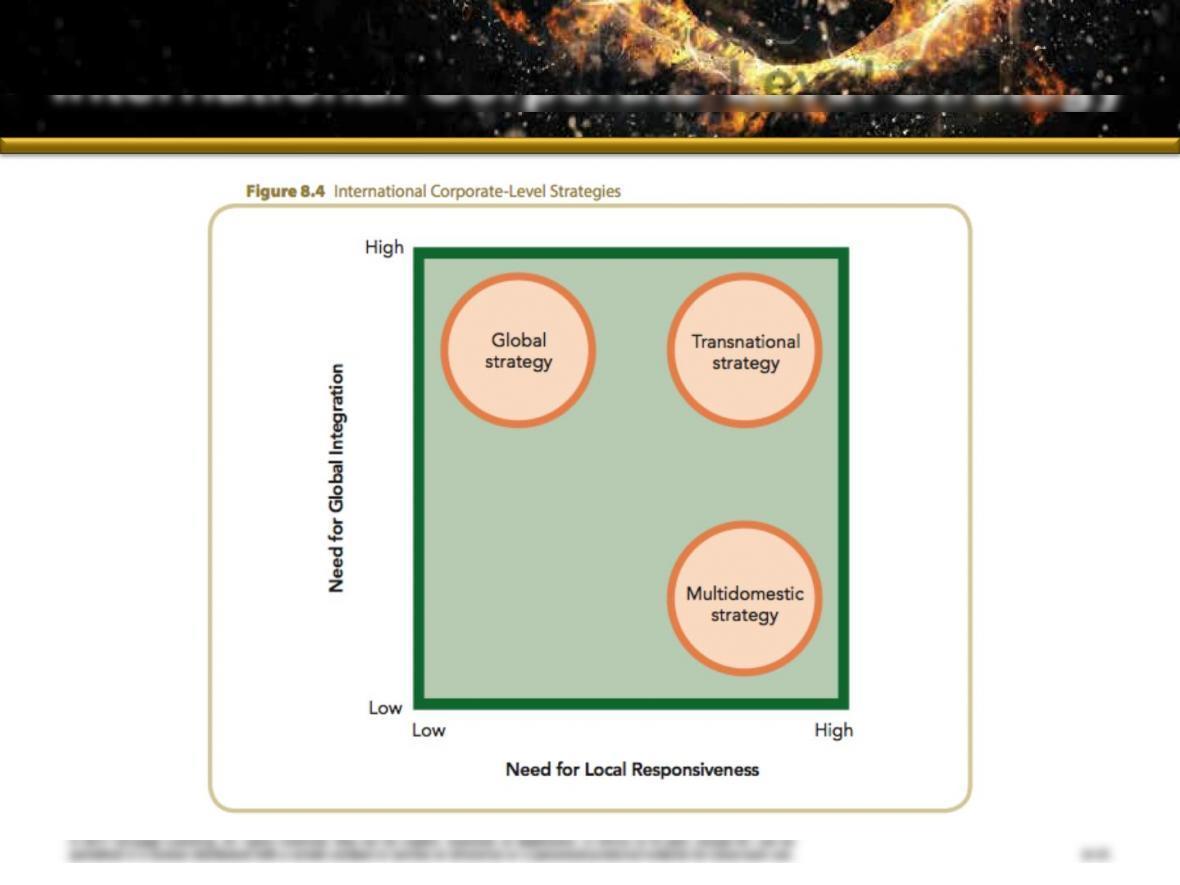

Multidomestic Strategy
•Strategy and operating decisions are decentralized to
strategic business units (SBU) in each country.
•Products and services are tailored to local markets.
©2017 Cengage Learning. All rights reserved. May not be copied, scanned, or duplicated, in whole or in part, except for use as
permitted in a license distributed with a certain product or service or otherwise on a password-protected website for classroom use. 8–16