
Chapter 7
Merger and Acquisition Strategies

Learning Objectives
Studying this chapter should provide you with
the strategic management knowledge needed to:
1. Explain the popularity of merger and acquisition strategies in firms
competing in the global economy.
2. Discuss reasons why firms use an acquisition strategy to achieve
strategic competitiveness.
3. Describe seven problems that work against achieving success when
using an acquisition strategy.
4. Name and describe the attributes of effective acquisitions.
5. Define the restructuring strategy and distinguish among its common
forms.
6. Explain the short- and long-term outcomes of the different types of
restructuring strategies.
Mergers, Acquisitions, and Takeovers:
What are the Differences?
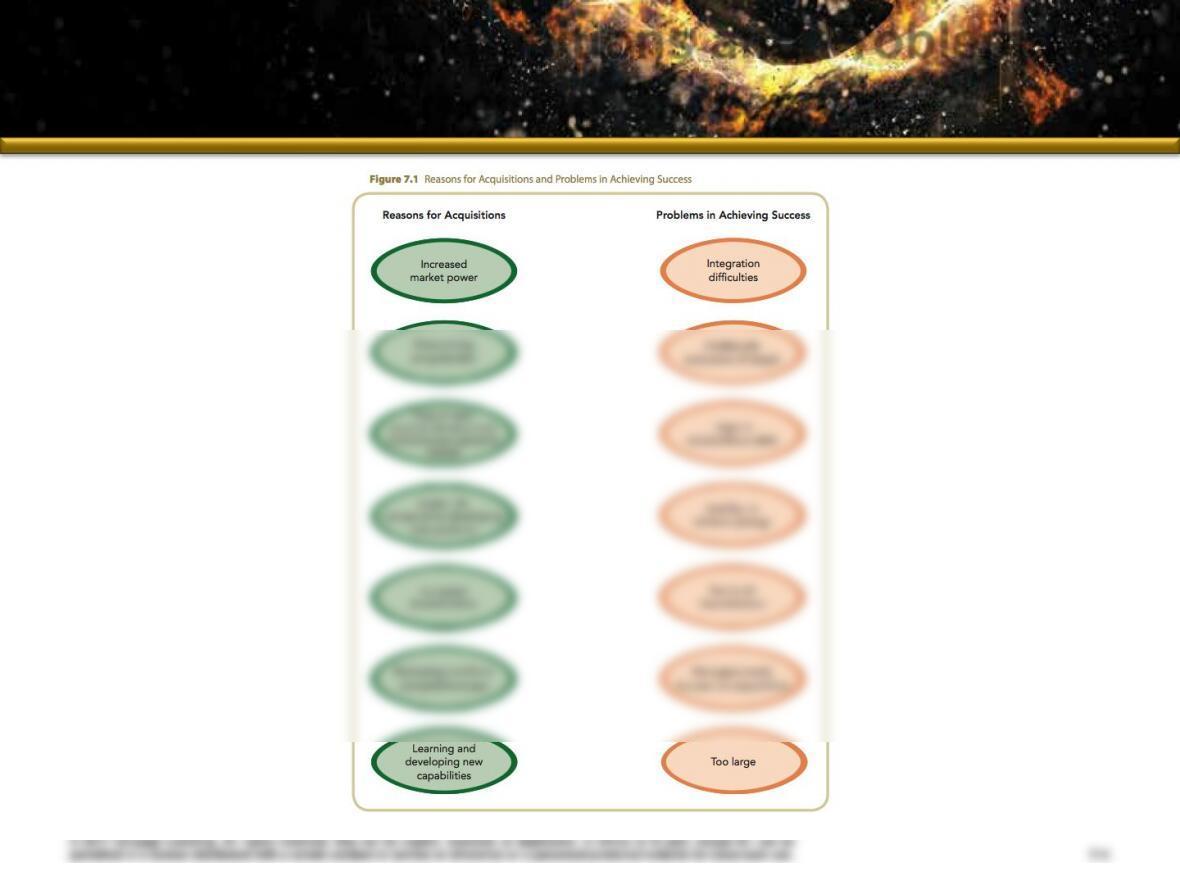
Reasons for Acquisitions and Problems in
Achieving Success
©2017 Cengage Learning. All rights reserved. May not be copied, scanned, or duplicated, in whole or in part, except for use as
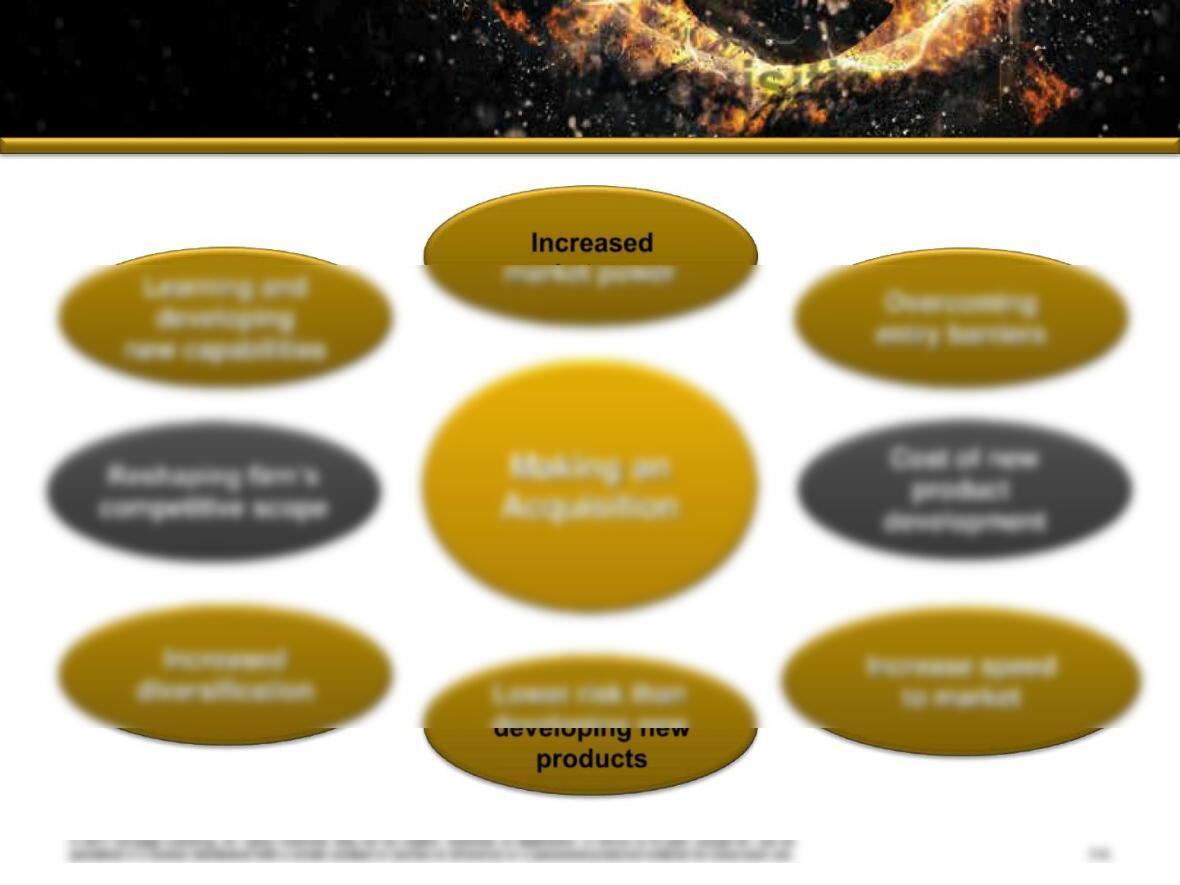
Reasons for Acquisitions
developing new
products
Increased

Acquisitions: Increased Market Power
•Factors increase market power when:

Acquisitions: Increased Market Power (cont’d)
•Market power is increased by:

Market Power Acquisitions
•Acquisition of a firm in the same
Horizontal
Market Power Acquisitions (cont’d)
Market Power Acquisitions (cont’d)
Horizontal
Acquisitions
•Acquisition of a firm in a highly
related industry

Overcoming Entry Barriers
•Entry Barriers
–Factors associated with the market or with the firms

Cost of New-Product Development
and Increased Speed to Market
•Internal development of new products is often
Lower Risk Compared
to Developing New Products
• An acquisition’s outcomes can be estimated

Increased Diversification
•Using acquisitions to diversify a firm is the
Reshaping the Firm’s
Competitive Scope
•An acquisition can:
Learning and Developing
New Capabilities
•An acquiring firm can gain capabilities that
the firm does not currently possess:

Problems in Achieving
Acquisition Success
©2017 Cengage Learning. All rights reserved. May not be copied, scanned, or duplicated, in whole or in part, except for use as
permitted in a license distributed with a certain product or service or otherwise on a password-protected website for classroom use. 7–17
acquisitions Extraordinary debt
Too much
diversification
Inability to
achieve synergy
Integration