
Chapter 5
Competitive Rivalry and Competitive Dynamics

Learning Objectives
Studying this chapter should provide you with the strategic
management knowledge needed to:
1. Define competitors, competitive rivalry, competitive behavior, and
competitive dynamics.
2. Describe market commonality and resource similarity as the building blocks
of a competitor analysis.
3. Explain awareness, motivation, and ability as drivers of competitive
behavior.
4. Discuss factors affecting the likelihood a competitor will take competitive
actions.
5. Describe factors affecting the likelihood a competitor will respond to actions
taken by its competitors.
6. Explain competitive dynamics in slow-cycle, in fast-cycle, and in standard-
cycle markets.

Definitions
•Competitors:

Definitions
•Competitive Behavior
–The set of competitive actions and competitive
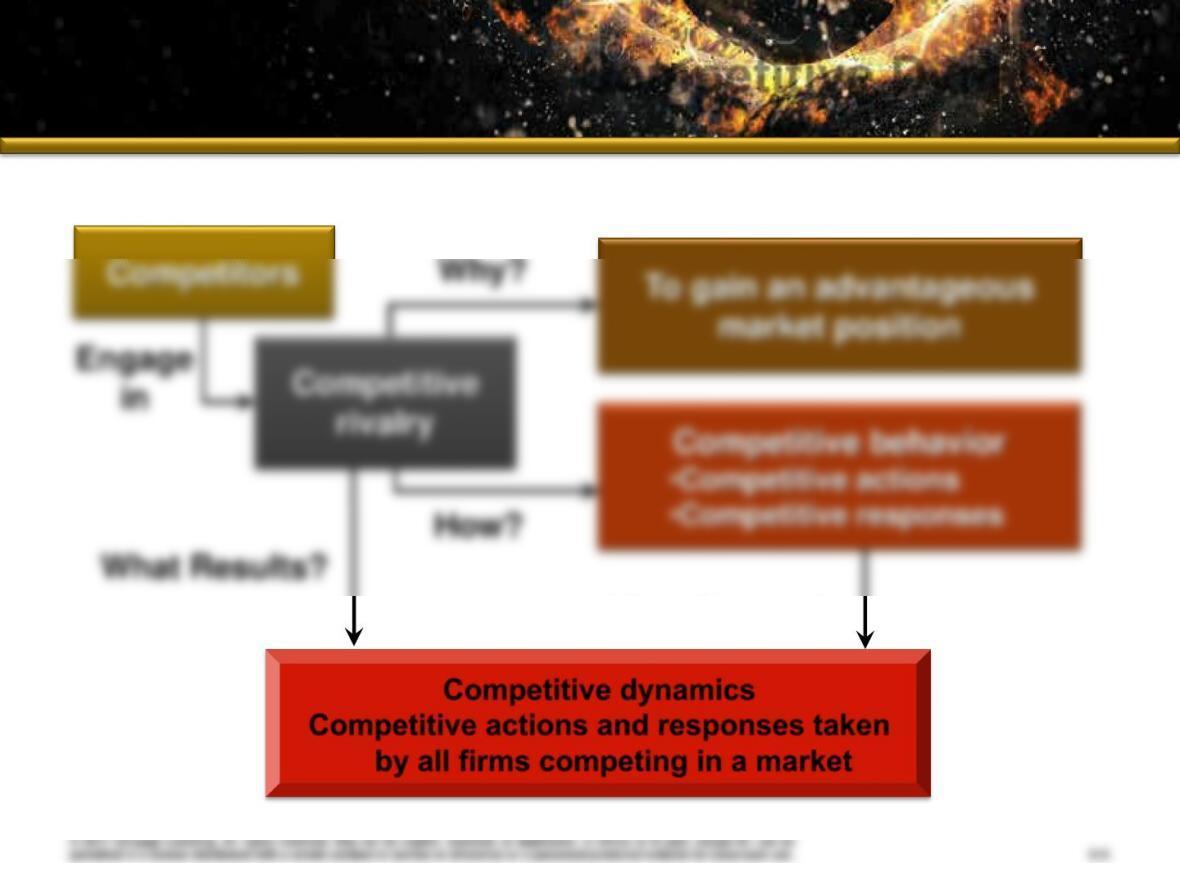
From Competition to Competitive Dynamics
©2017 Cengage Learning. All rights reserved. May not be copied, scanned, or duplicated, in whole or in part, except for use as
permitted in a license distributed with a certain product or service or otherwise on a password-protected website for classroom use. 5–5
Competitors To gain an advantageous
market position
Competitive dynamics
Competitive actions and responses taken
by all firms competing in a market
Why?
What Results?
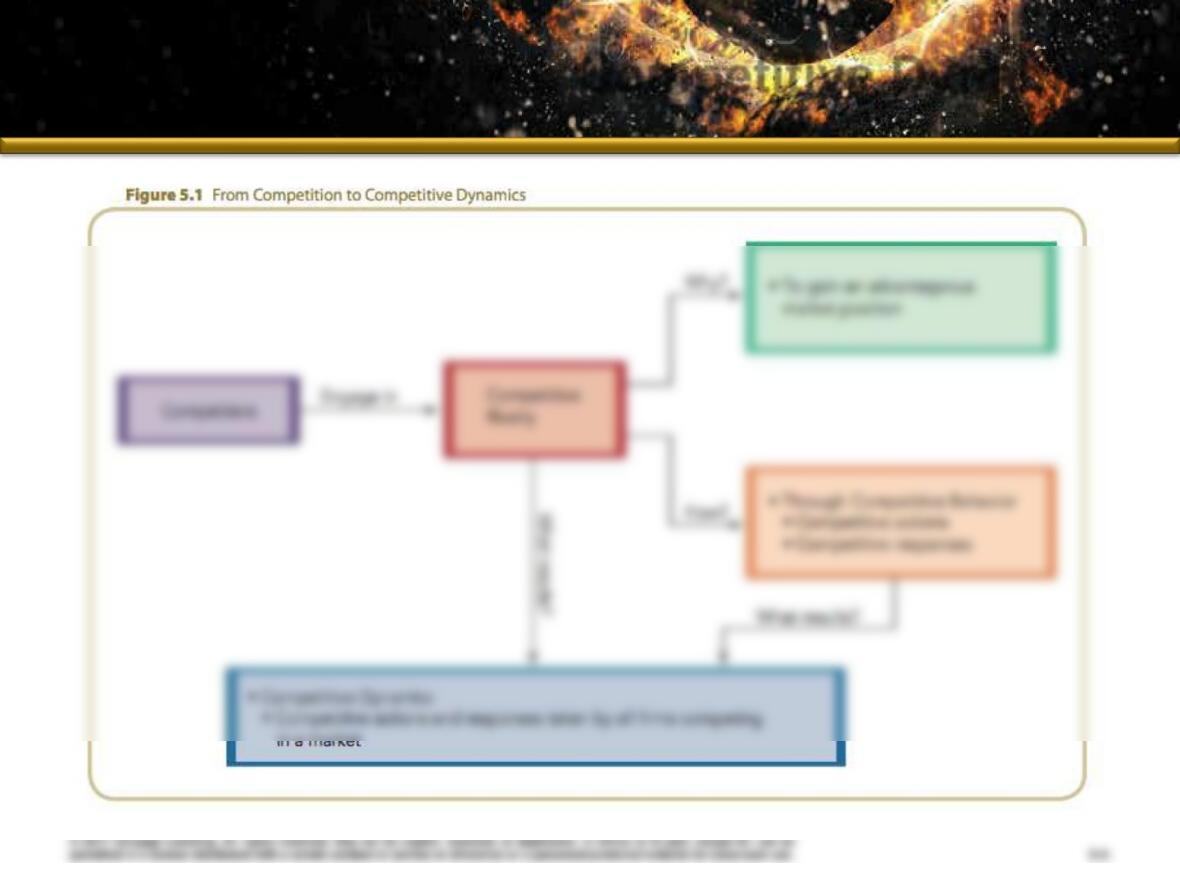
From Competition to Competitive Dynamics

Competitive Rivalry’s Effect on Strategy
•Success of a strategy is determined by:

A Model of Competitive Rivalry
•Firms are mutually interdependent when:
– a firm’s competitive actions have noticeable effects on
its competitors.
©2017 Cengage Learning. All rights reserved. May not be copied, scanned, or duplicated, in whole or in part, except for use as
permitted in a license distributed with a certain product or service or otherwise on a password-protected website for classroom use. 5–9
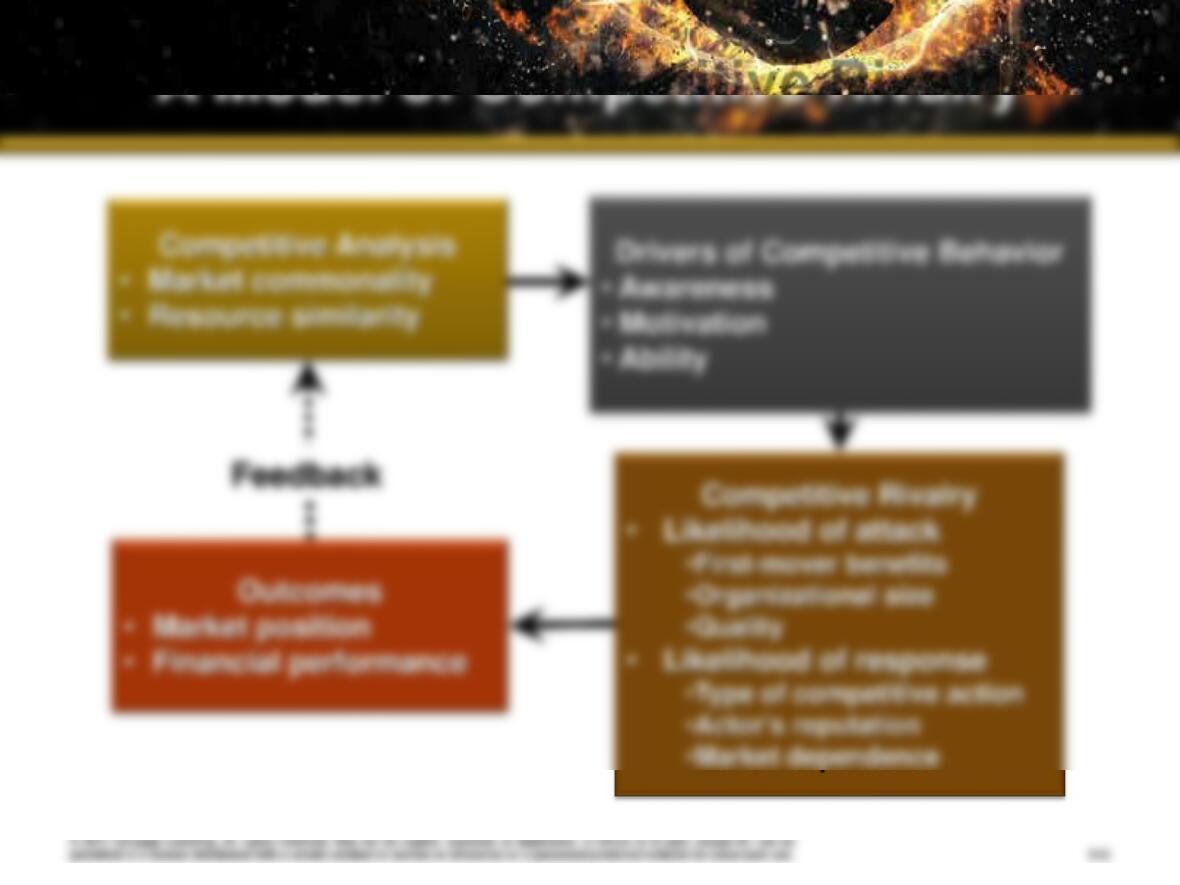
A Model of Competitive Rivalry
Competitive Analysis
•Market commonality
•Resource similarity
Competitive Rivalry
•Likelihood of attack
•First-mover benefits
•Organizational size
•Quality
•Likelihood of response
•Type of competitive action
•Actor’s reputation
•Market dependence
Outcomes
•Market position
•Financial performance
Feedback
Drivers of Competitive Behavior
•Awareness
•Motivation
•Ability
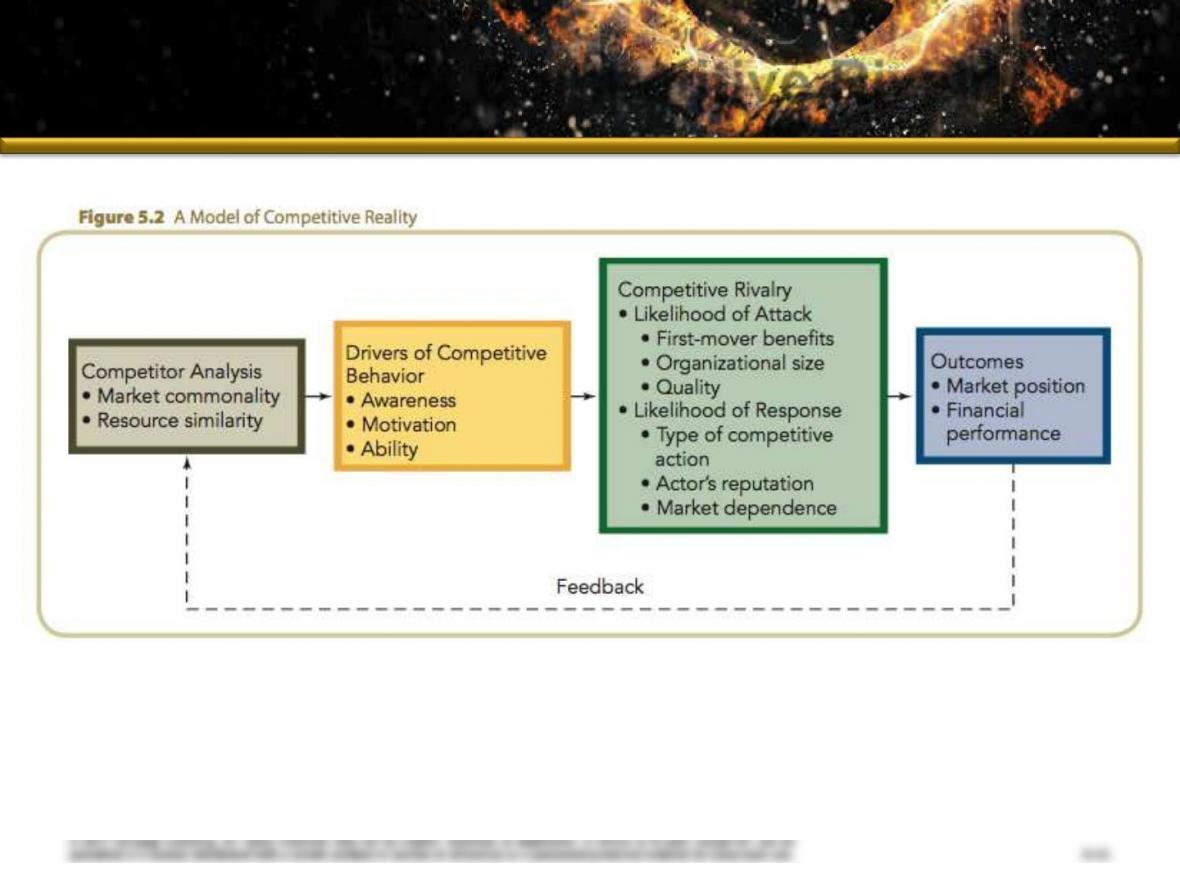
A Model of Competitive Rivalry

Competitor Analysis
•Competitor analysis is used to help a firm
understand its competitors.

Market Commonality
•Market commonality is concerned with the:
–number of markets with which a firm and a competitor
are jointly involved.
Resource Similarity
•Resource similarity is:
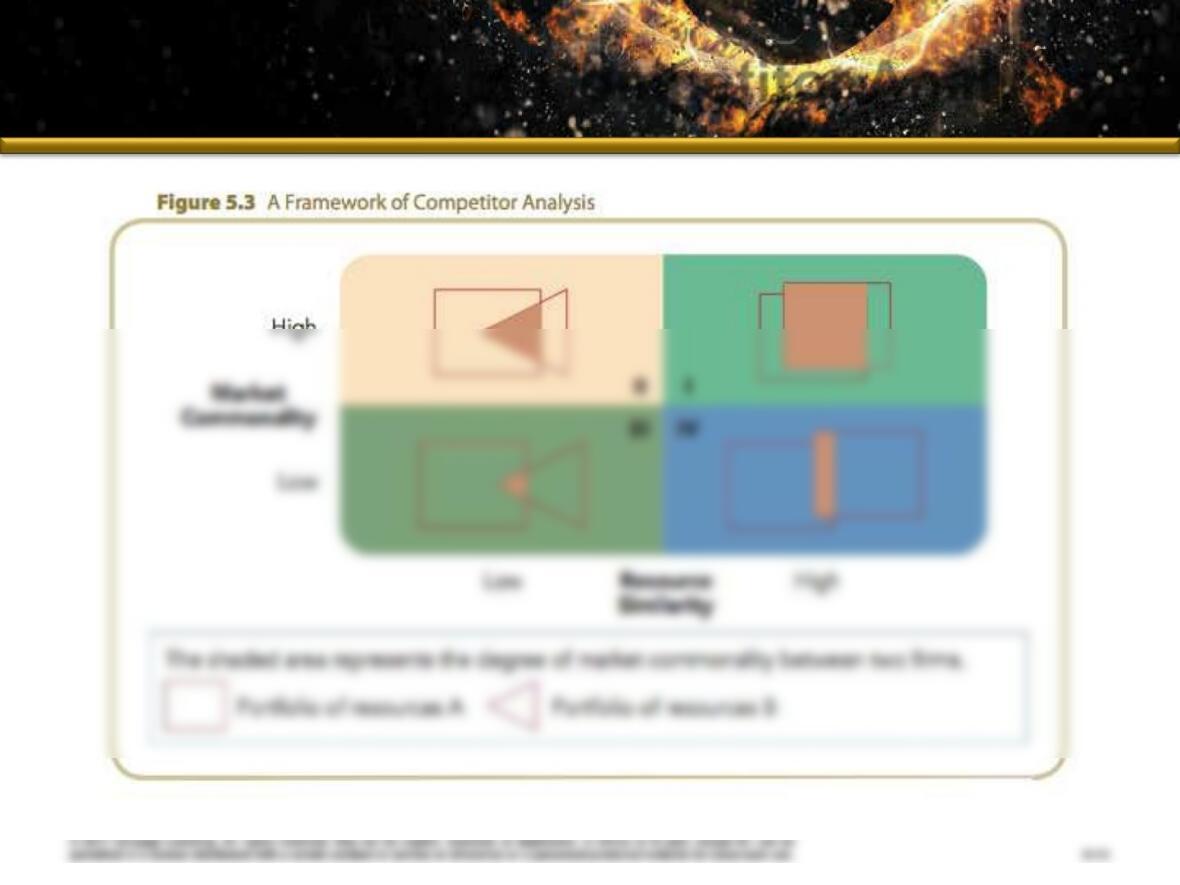
A Framework of Competitor Analysis
©2017 Cengage Learning. All rights reserved. May not be copied, scanned, or duplicated, in whole or in part, except for use as
Drivers of Competitive Behavior
–the extent to which competitors
recognize the degree of their
mutual interdependence that
results from:
•market commonality
•resource similarity
Drivers of Competitive Behavior (cont’d)
competitor’s attack
–relates to perceived gains
and losses
Awareness
Drivers of Competitive Behavior (cont’d)
the firm lacks the ability to:
–attack a competitor
– respond to the competitor’s
actions
Awareness
Drivers of Competitive Behavior (cont’d)
action in an effort to protect its
position in one or more
markets.
Awareness
Drivers of Competitive Behavior (cont’d)
Awareness

Competitive Rivalry
•Competitive Action