
Chapter 4
Business-Level Strategy

Studying this chapter should provide you with
the strategic management knowledge needed to:
Learning Objectives
1. Define business-level strategy.
2. Discuss the relationship between customers and
business-level strategies in terms of who, what, and how.
3. Explain the differences among business-level strategies.
4. Use the five forces of competition model to explain how
above-average returns can be earned through each
business-level strategy.
5. Describe the risks of using each of the business-level
strategies.
Business-Level Strategy (Defined)
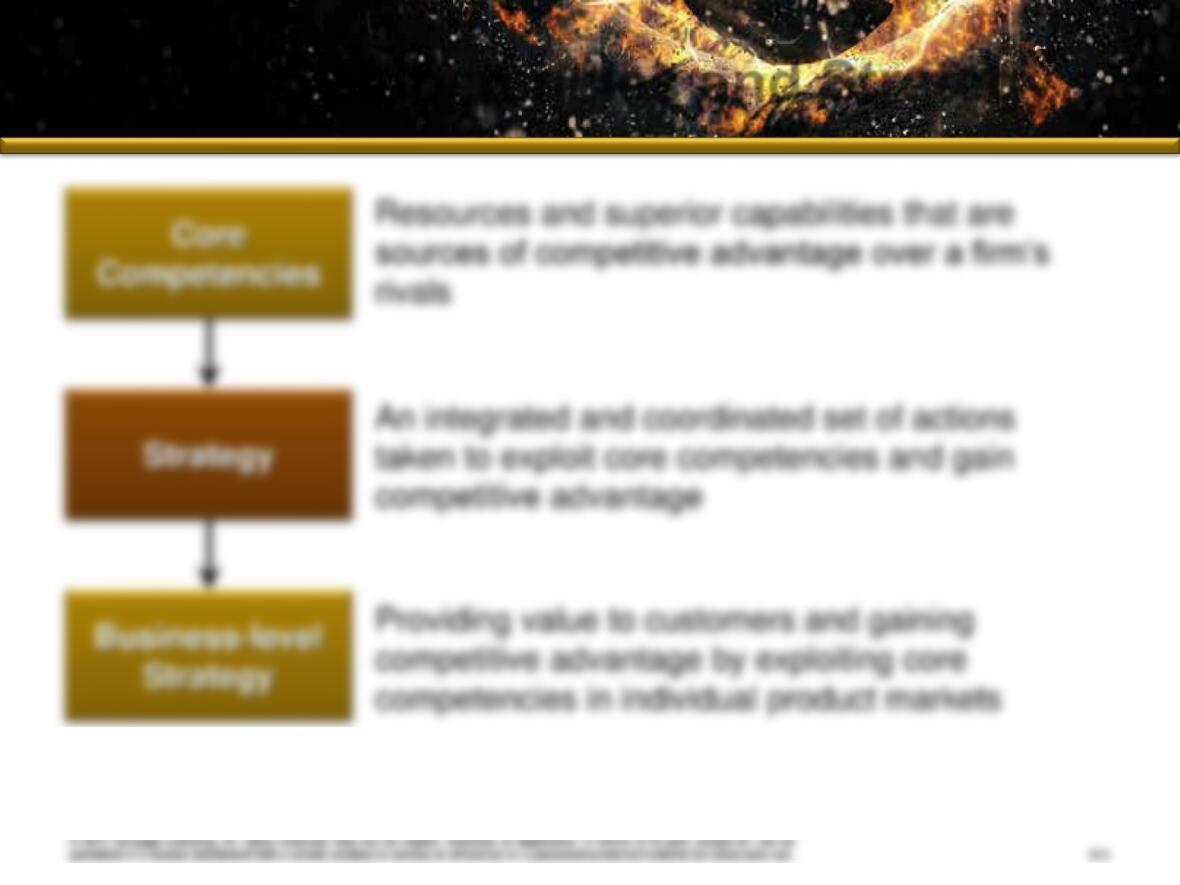
Core Competencies and Strategy
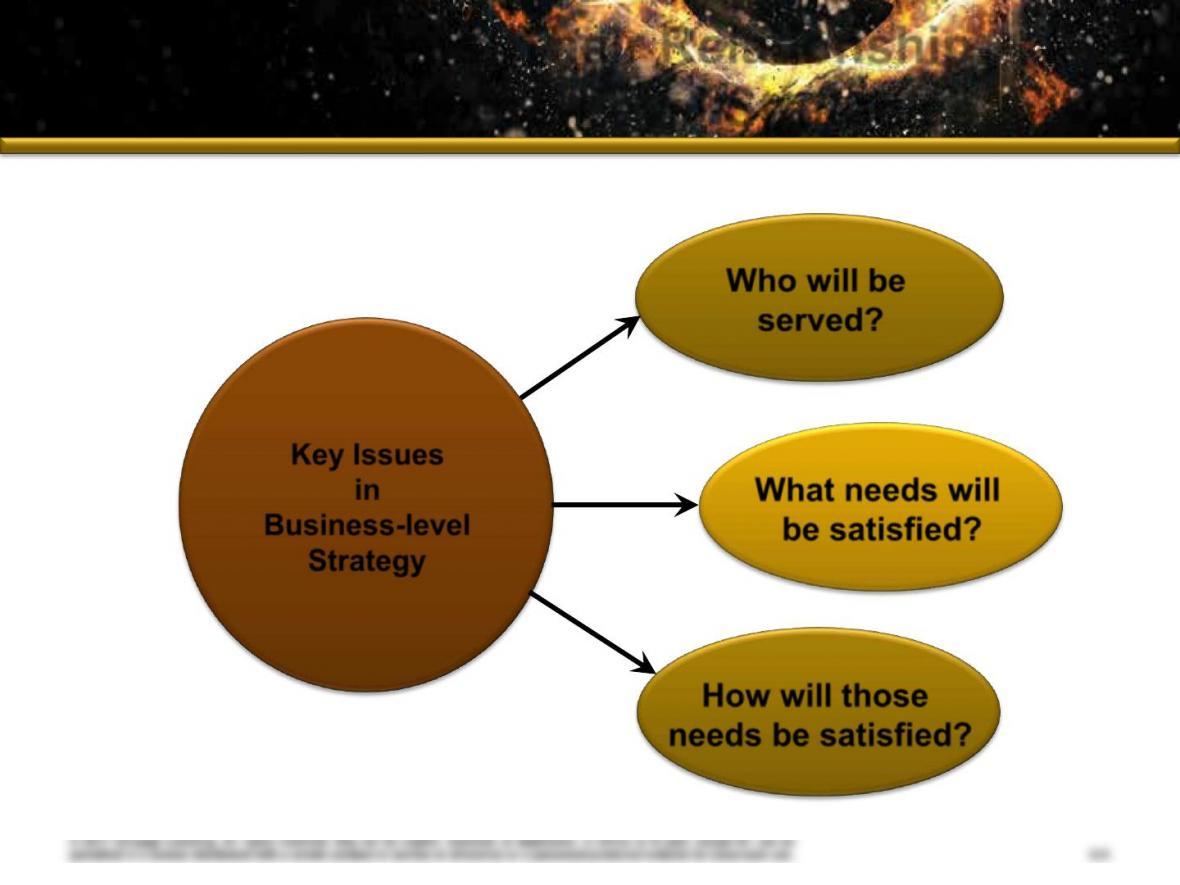
Customers: Their Relationship
with Business-Level Strategies
Key Issues
in
Business-level
Strategy
Who will be
served?
What needs will
be satisfied?
How will those
needs be satisfied?
Effectively Managing Relationships
with Customers
•Firms must manage all aspects of their
relationship with customers.
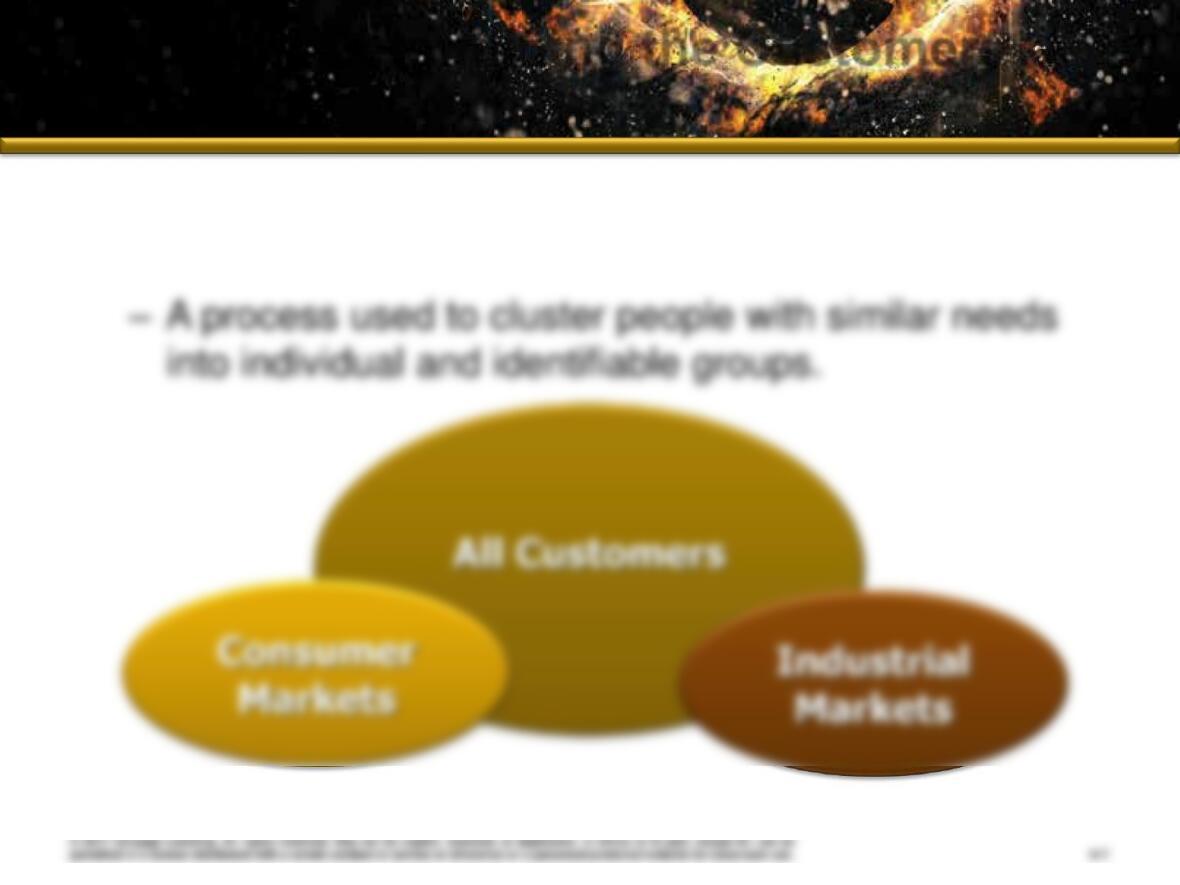
Who: Determining the Customers
to Serve
•Market segmentation
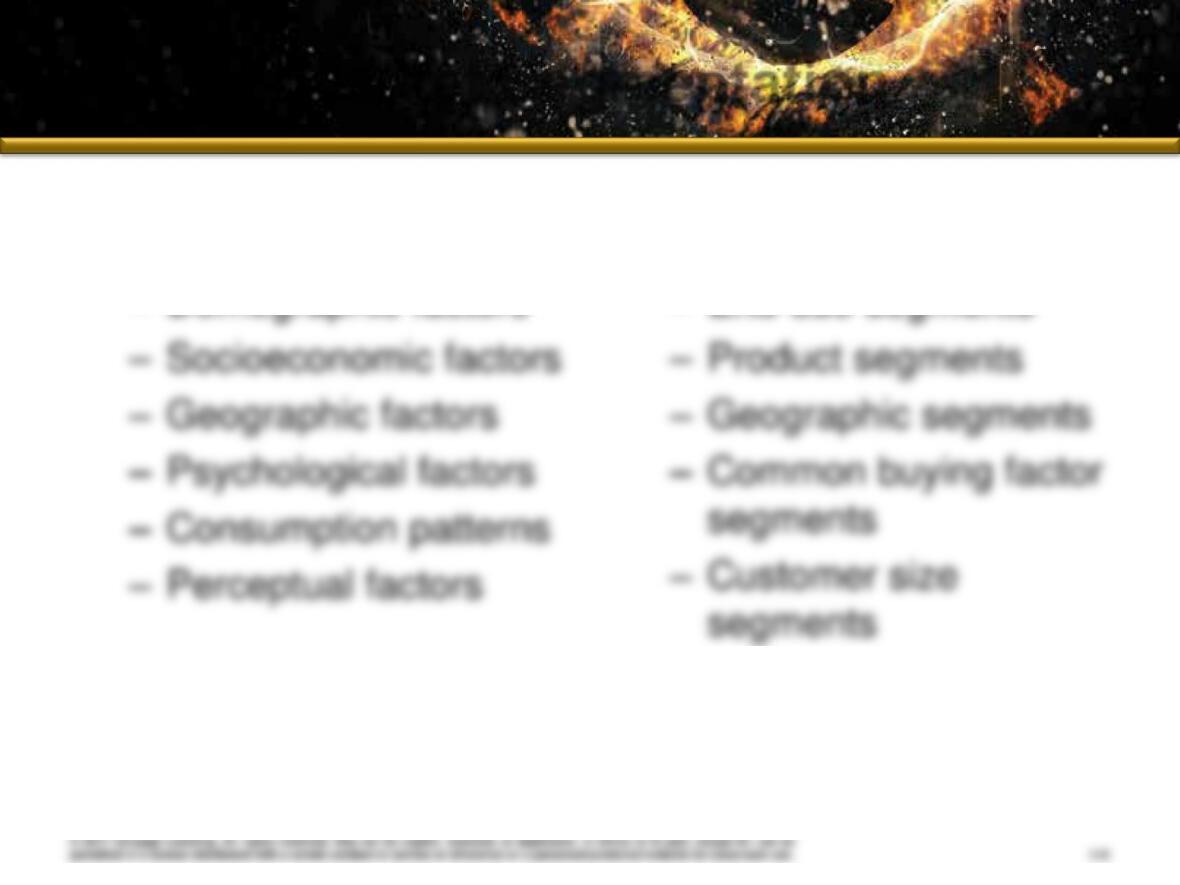
Market Segmentation
•Consumer Markets
–Demographic factors
•Industrial Markets
–End-use segments
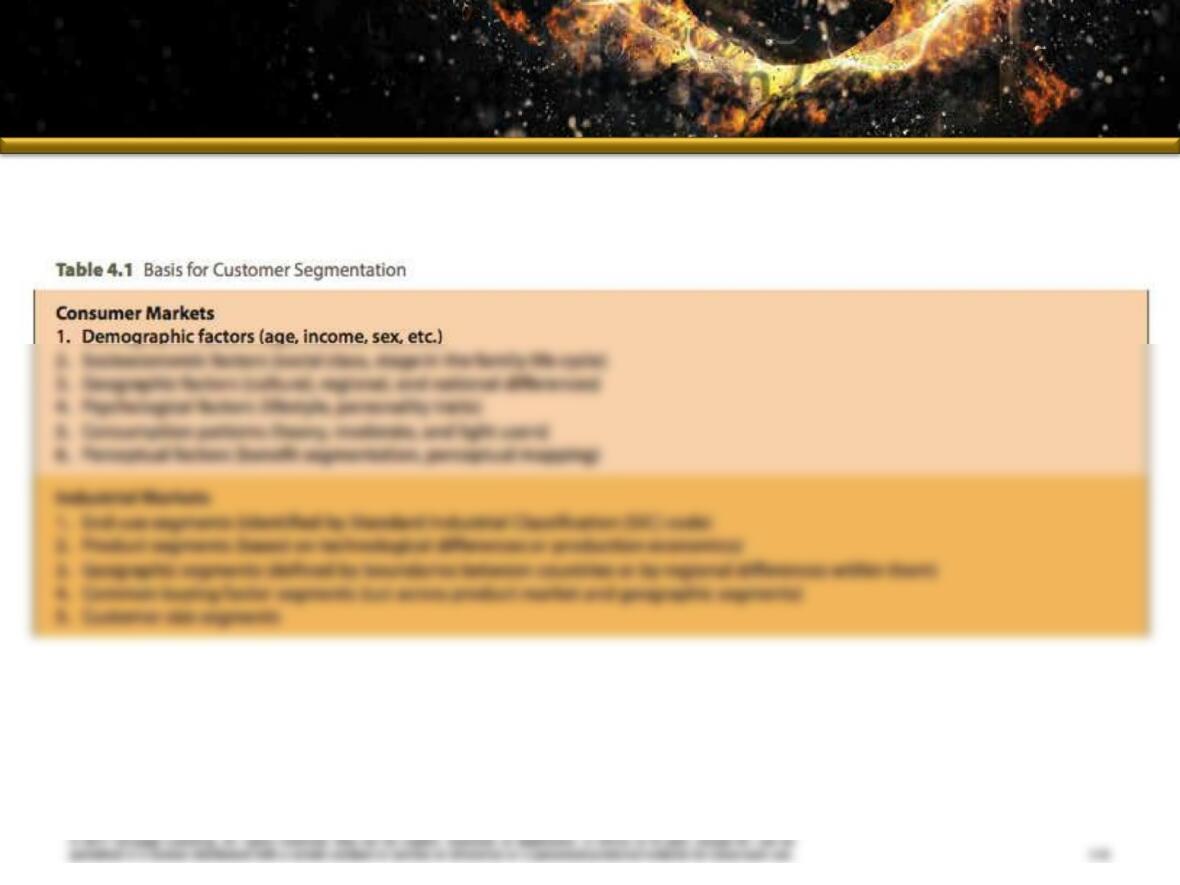
Market Segmentation (cont’d)
©2017 Cengage Learning. All rights reserved. May not be copied, scanned, or duplicated, in whole or in part, except for use as
What: Determining Which
Customer Needs to Satisfy
• Customer needs are related to a product’s
benefits and features.
How: Determining Core Competencies
Necessary to Satisfy Customer Needs
•Firms must decide:
The Purpose of a
Business-Level Strategy
Types of Potential
Competitive Advantage
Competitive Scope
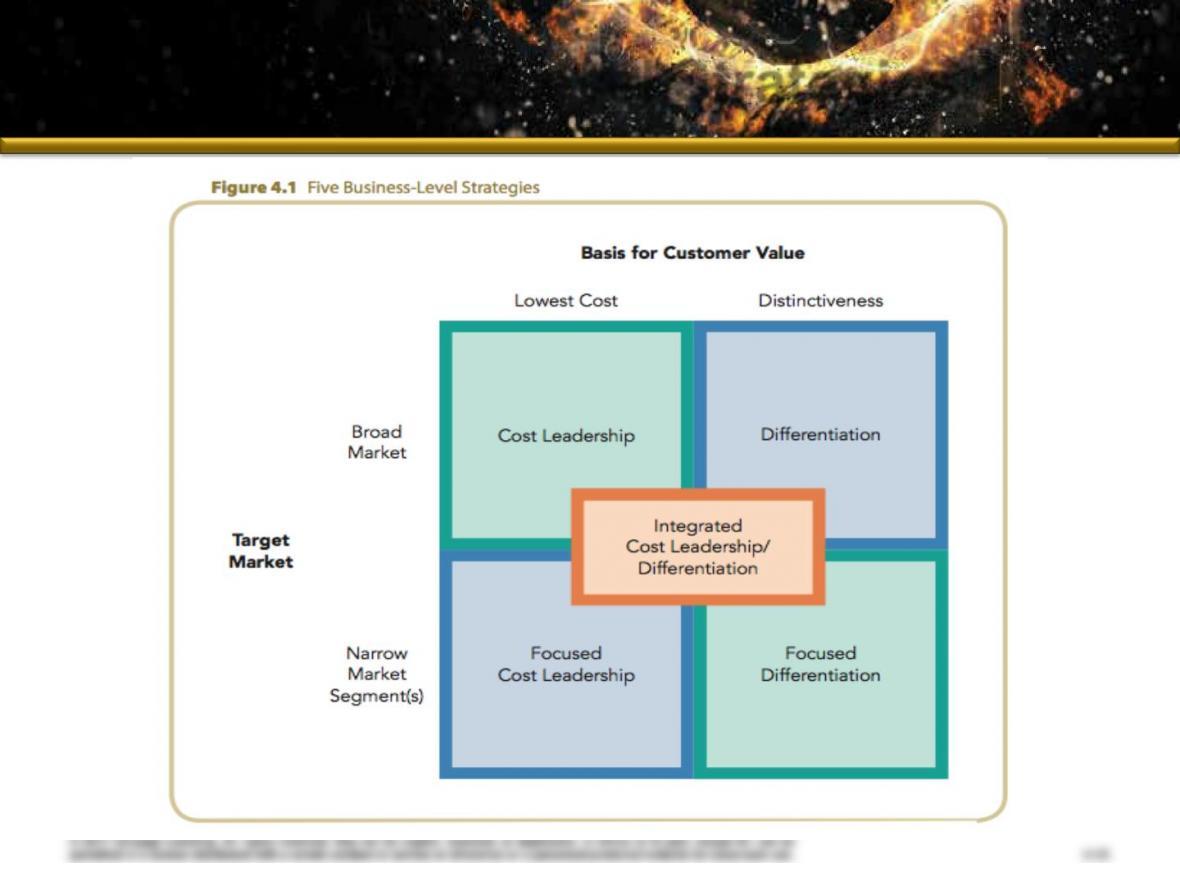
Business Level Strategies
©2017 Cengage Learning. All rights reserved. May not be copied, scanned, or duplicated, in whole or in part, except for use as
Cost Leadership Strategy
•An integrated set of actions taken to produce
Cost Leadership Strategy
•Cost saving actions required by this strategy
–Building efficient scale facilities
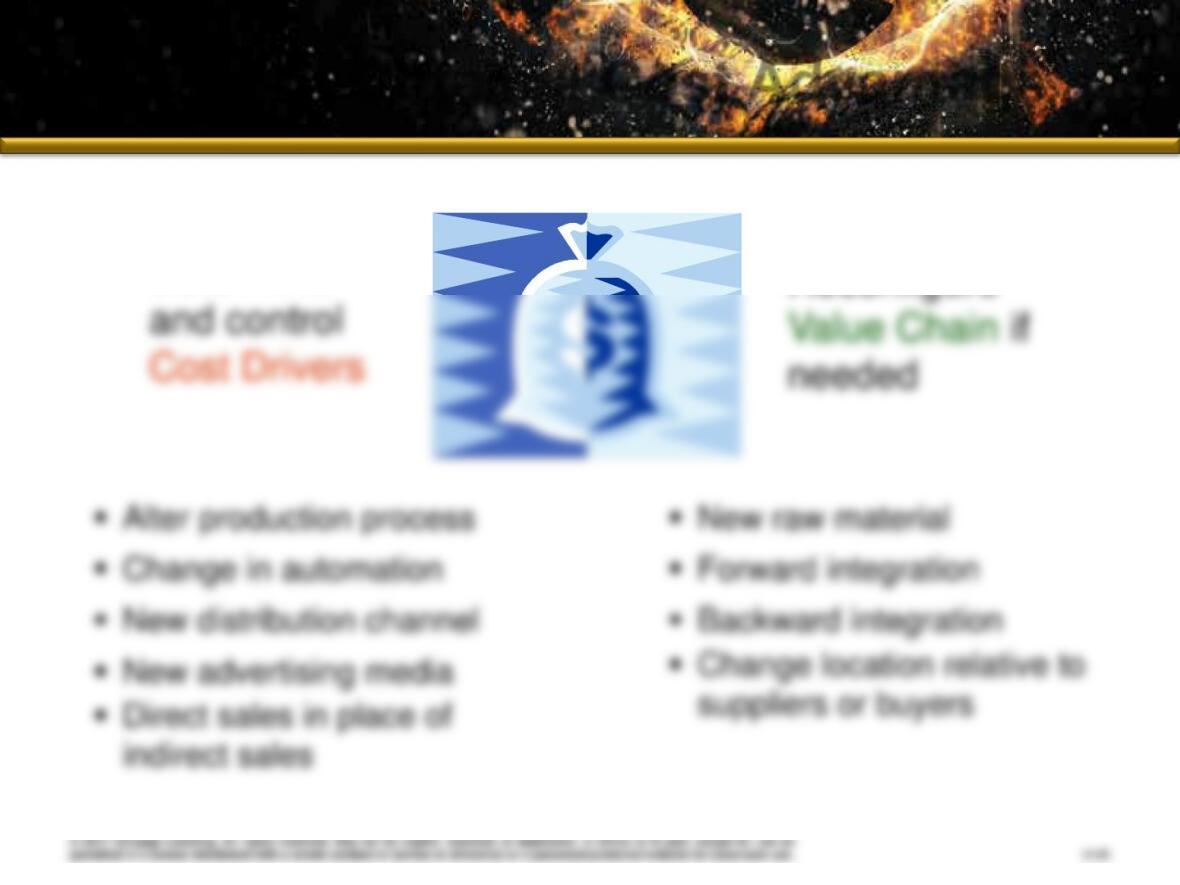
How to Obtain a Cost Advantage
Determine
Reconfigure
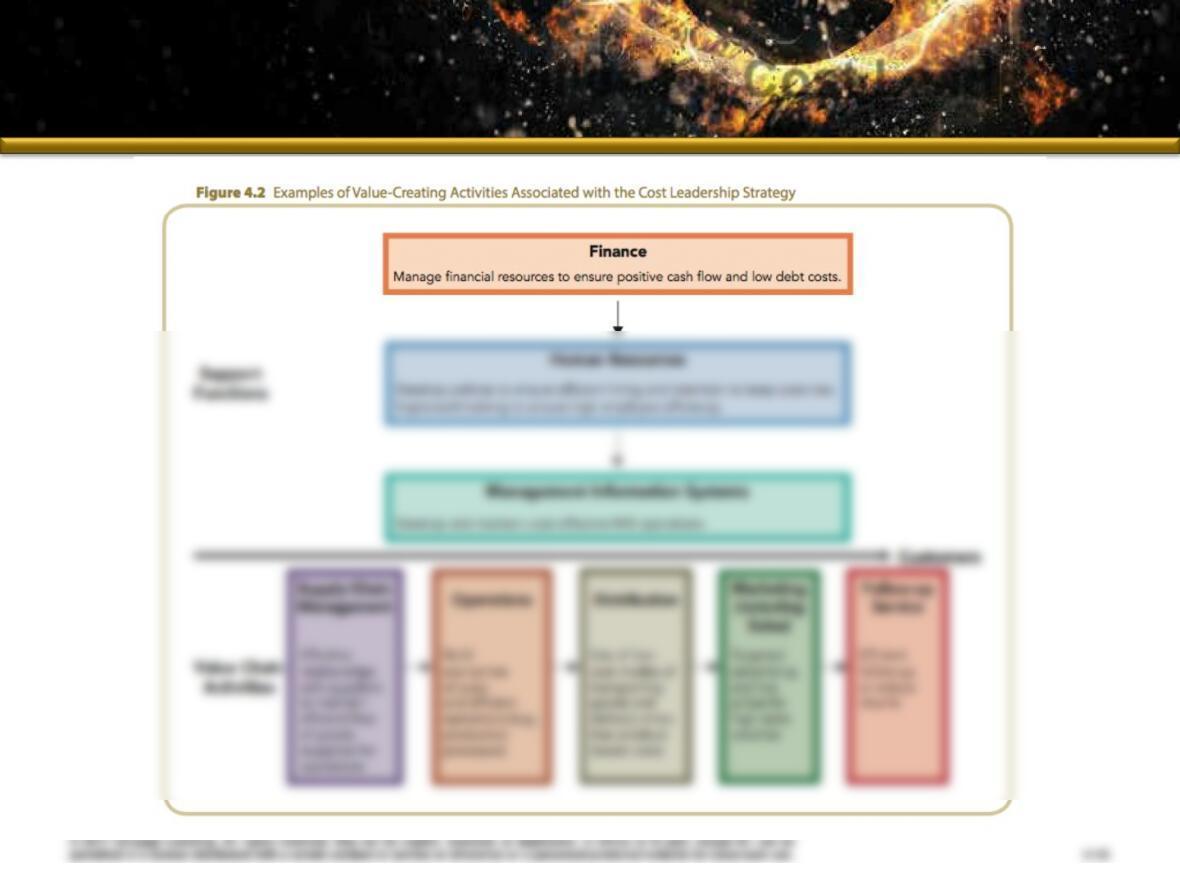
Value-Creating Activities for Cost Leadership
©2017 Cengage Learning. All rights reserved. May not be copied, scanned, or duplicated, in whole or in part, except for use as
Value-Creating Activities for Cost Leadership
•Cost-effective MIS
• Monitor suppliers’
performances