Chapter 3
The Internal Organization: Resources, Capabilities, Core
Competencies, and Competitive Advantages

Learning Objectives
Studying this chapter should provide you with the strategic management
knowledge needed to:
1. Explain why firms need to study and understand their internal organization.
2. Define value and discuss its importance.
3. Describe the differences between tangible and intangible resources.
4. Define capabilities and discuss their development.
5. Describe four criteria used to determine whether resources and capabilities are core
competencies.
6. Explain how firms analyze their value chain for the purpose of determining where they
are able to create value when using their resources, capabilities, and core
competencies.
7. Define outsourcing and discuss reasons for its use.
8. Discuss the importance of identifying internal strengths and weaknesses.
9. Discuss the importance of avoiding core rigidities.
©2017 Cengage Learning. All rights reserved. May not be copied, scanned, or duplicated, in whole or in part, except for use as
Competitive Advantage
Competitive Advantage (cont’d)
Analyzing the External Environment
©2017 Cengage Learning. All rights reserved. May not be copied, scanned, or duplicated, in whole or in part, except for use as
permitted in a license distributed with a certain product or service or otherwise on a password-protected website for classroom use. 3–5
By studying the external environment, firms identify what
they might choose to do.
Opportunities
and threats
Analyzing the Internal Organization
©2017 Cengage Learning. All rights reserved. May not be copied, scanned, or duplicated, in whole or in part, except for use as
permitted in a license distributed with a certain product or service or otherwise on a password-protected website for classroom use. 3–6
By studying the internal environment, firms identify what
they can do.
Unique resources,
capabilities, and
competencies
(required for sustainable
competitive advantage)
The Context of Internal Analysis
•Global Economy
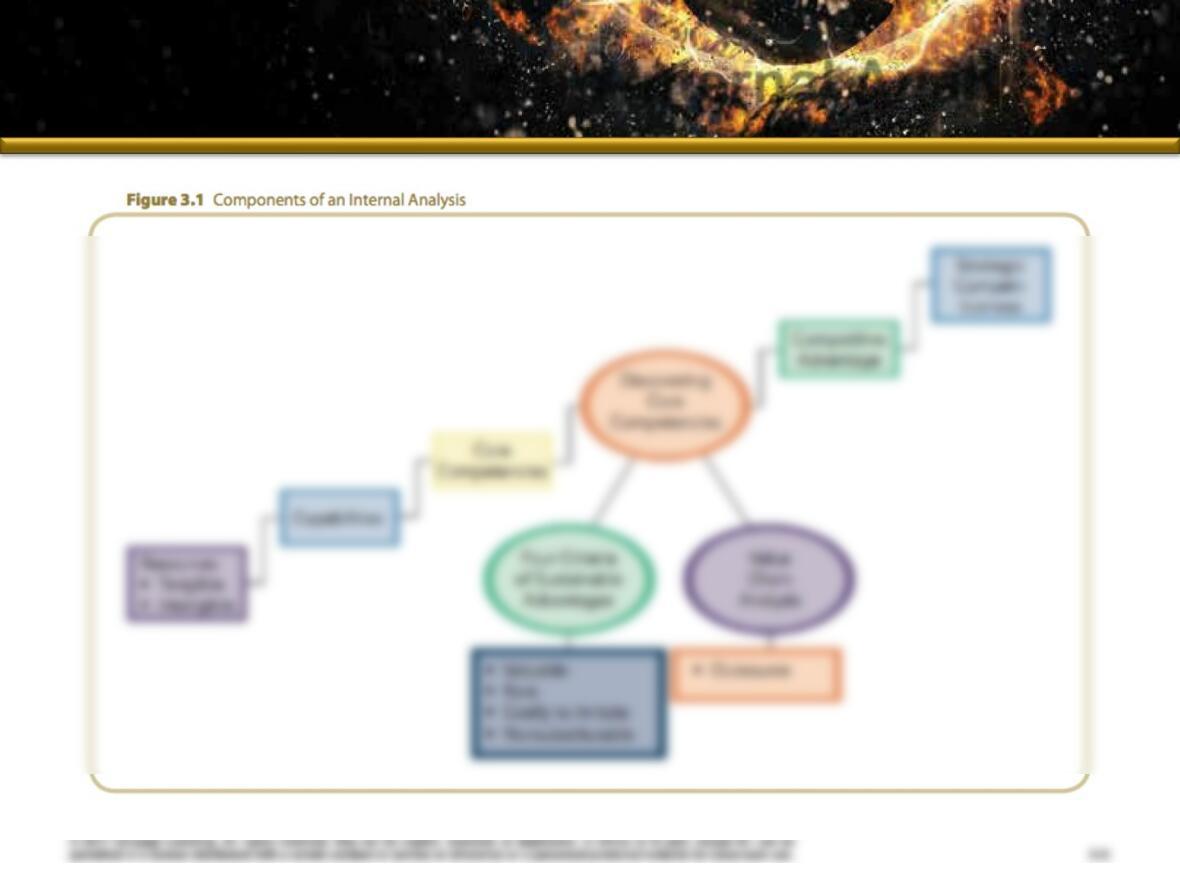
Components of an Internal Analysis
©2017 Cengage Learning. All rights reserved. May not be copied, scanned, or duplicated, in whole or in part, except for use as
Creating Value
Creating Competitive Advantage
The Challenge of Analyzing
the Internal Organization
The Challenge of Analyzing
the Internal Organization (cont’d)
©2017 Cengage Learning. All rights reserved. May not be copied, scanned, or duplicated, in whole or in part, except for use as
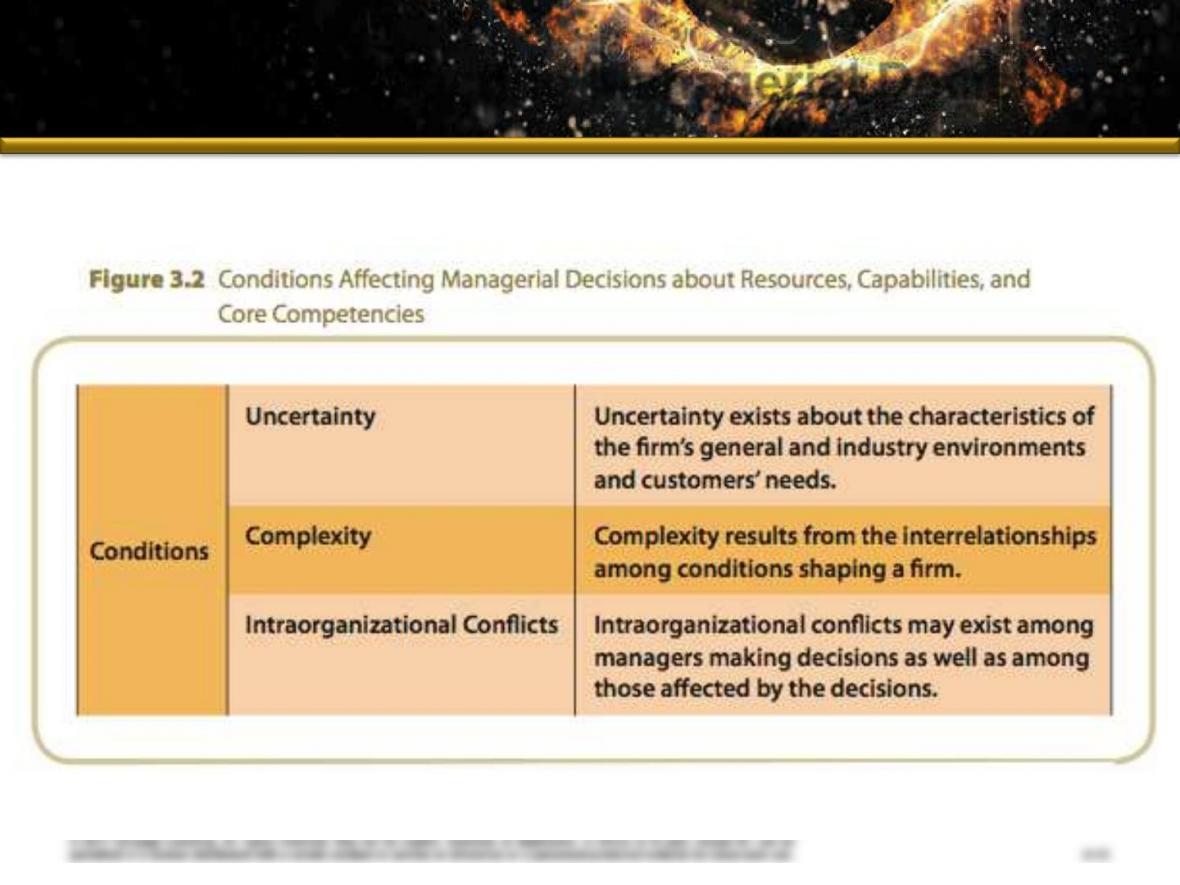
Conditions Affecting Managerial Decisions
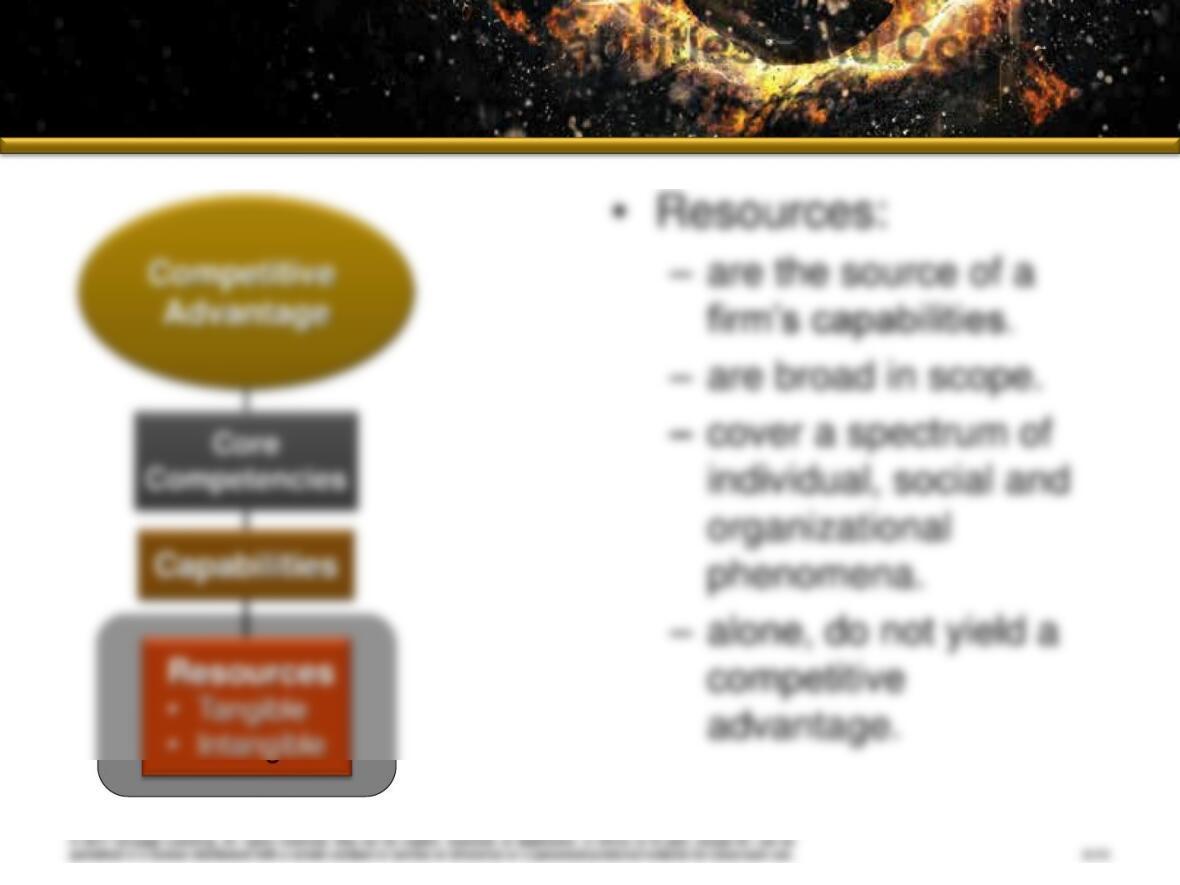
Resources, Capabilities, and Core
Competencies
organizational
phenomena.
–alone, do not yield a
competitive
advantage.
3–14
©2017 Cengage Learning. All rights reserved. May not be copied, scanned, or duplicated, in whole or in part, except for use as
permitted in a license distributed with a certain product or service or otherwise on a password-protected website for classroom use.
Resources
•Tangible
•Intangible
Capabilities
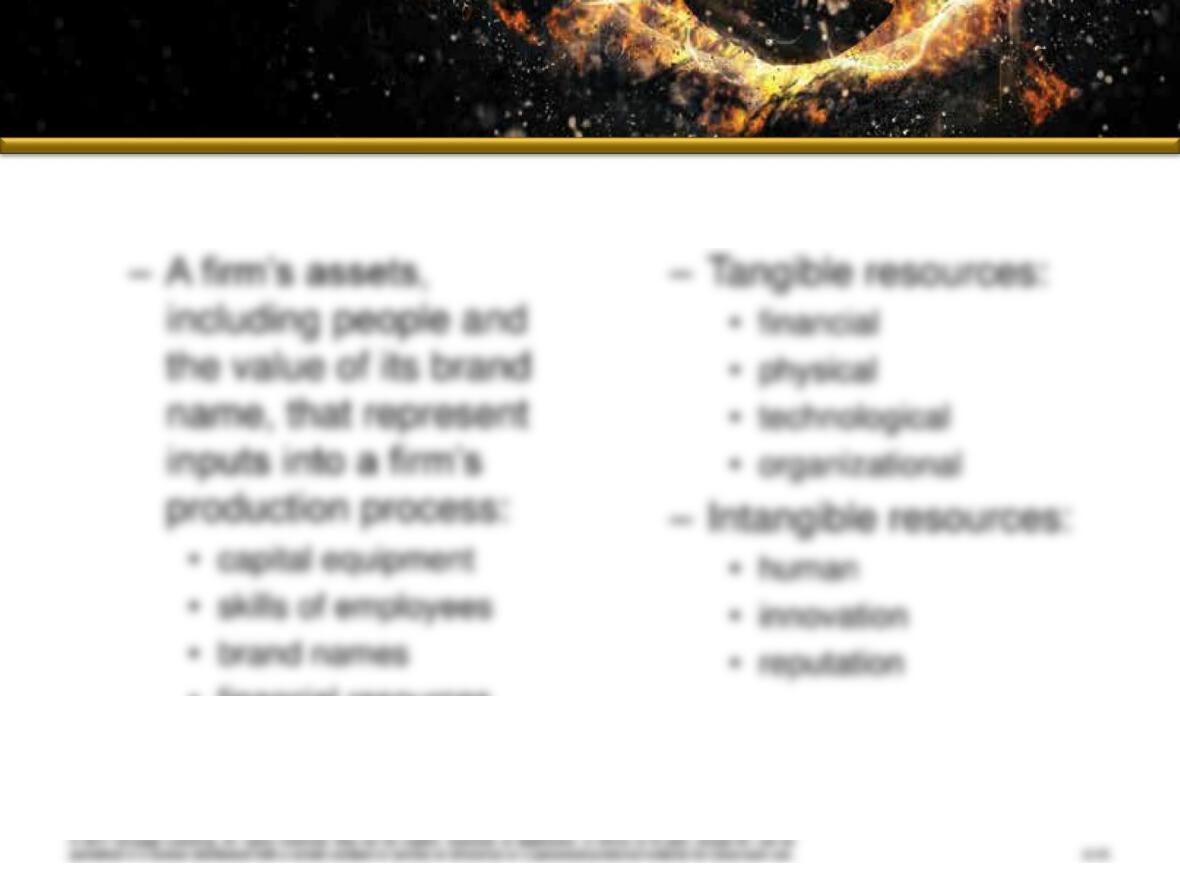
Resources
•Resources
•Types of Resources
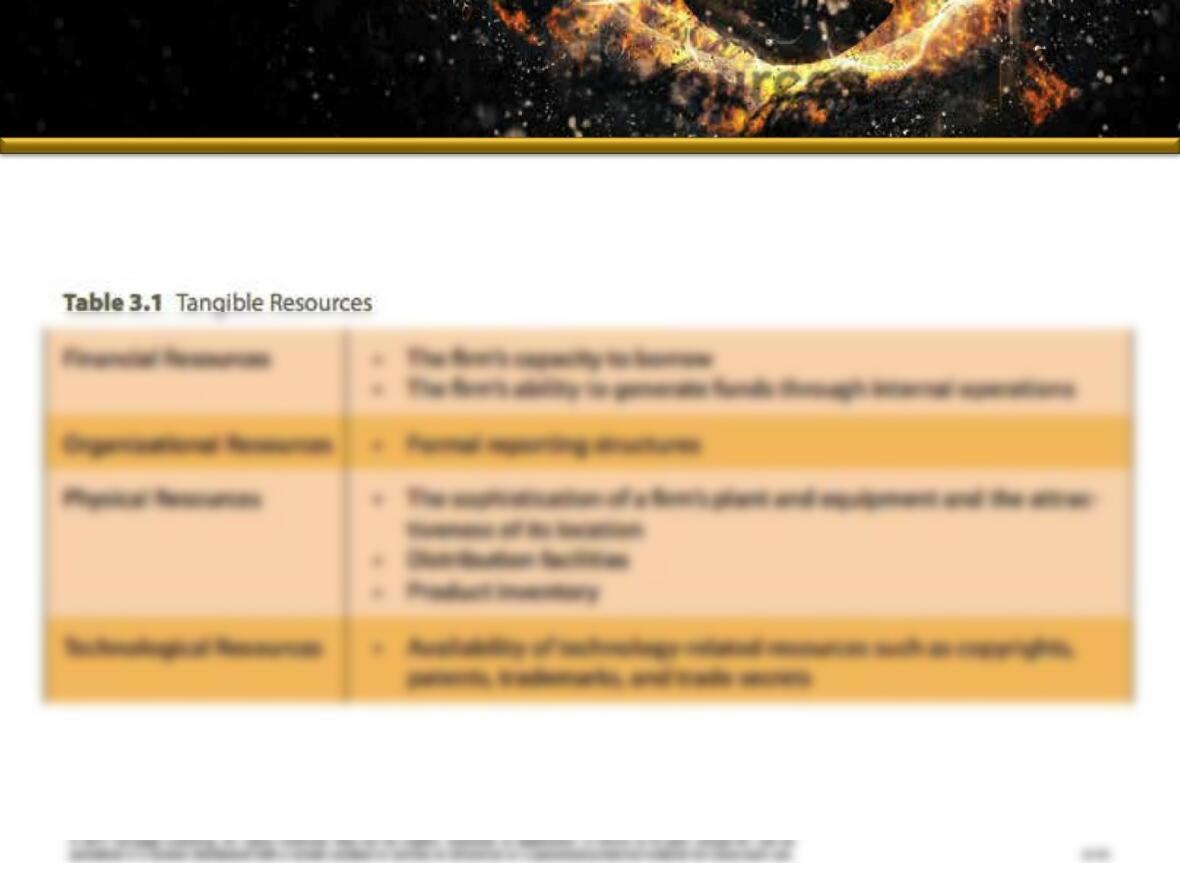
Tangible Resources
©2017 Cengage Learning. All rights reserved. May not be copied, scanned, or duplicated, in whole or in part, except for use as
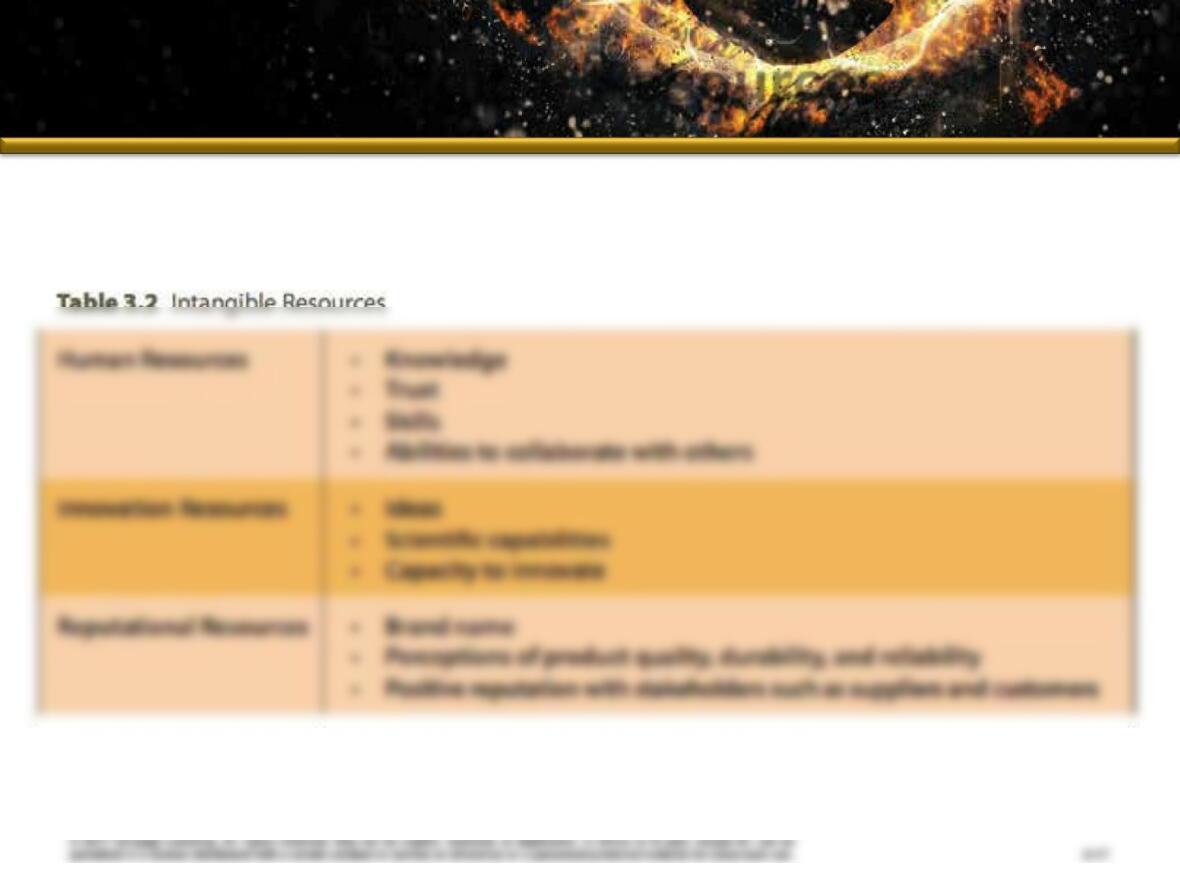
Intangible Resources
©2017 Cengage Learning. All rights reserved. May not be copied, scanned, or duplicated, in whole or in part, except for use as
Resources, Capabilities and Core
Competencies
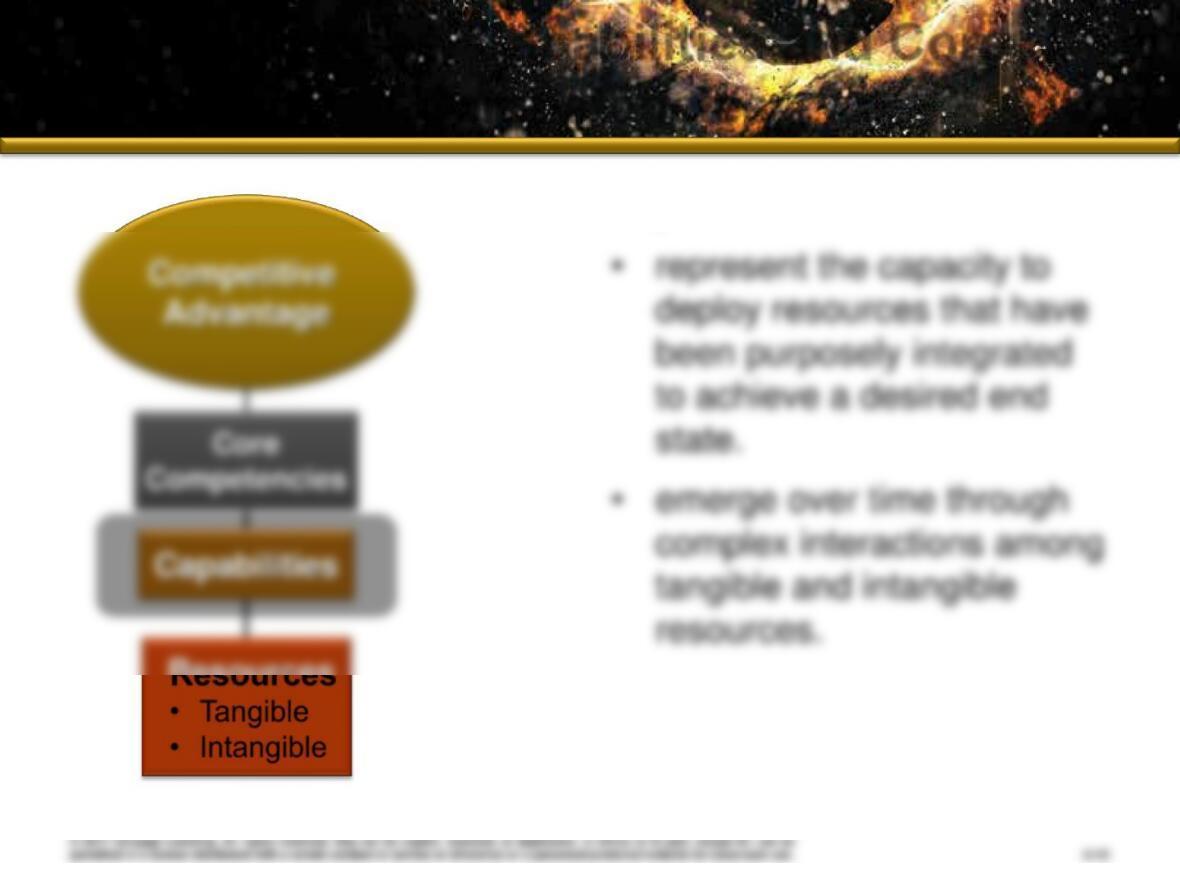
Capabilities:
been purposely integrated
to achieve a desired end
state.
•emerge over time through
complex interactions among
tangible and intangible
resources.
3–18
©2017 Cengage Learning. All rights reserved. May not be copied, scanned, or duplicated, in whole or in part, except for use as
permitted in a license distributed with a certain product or service or otherwise on a password-protected website for classroom use.
Resources
•Tangible
•Intangible
Capabilities
Core
Competencies
Resources, Capabilities and Core
Competencies
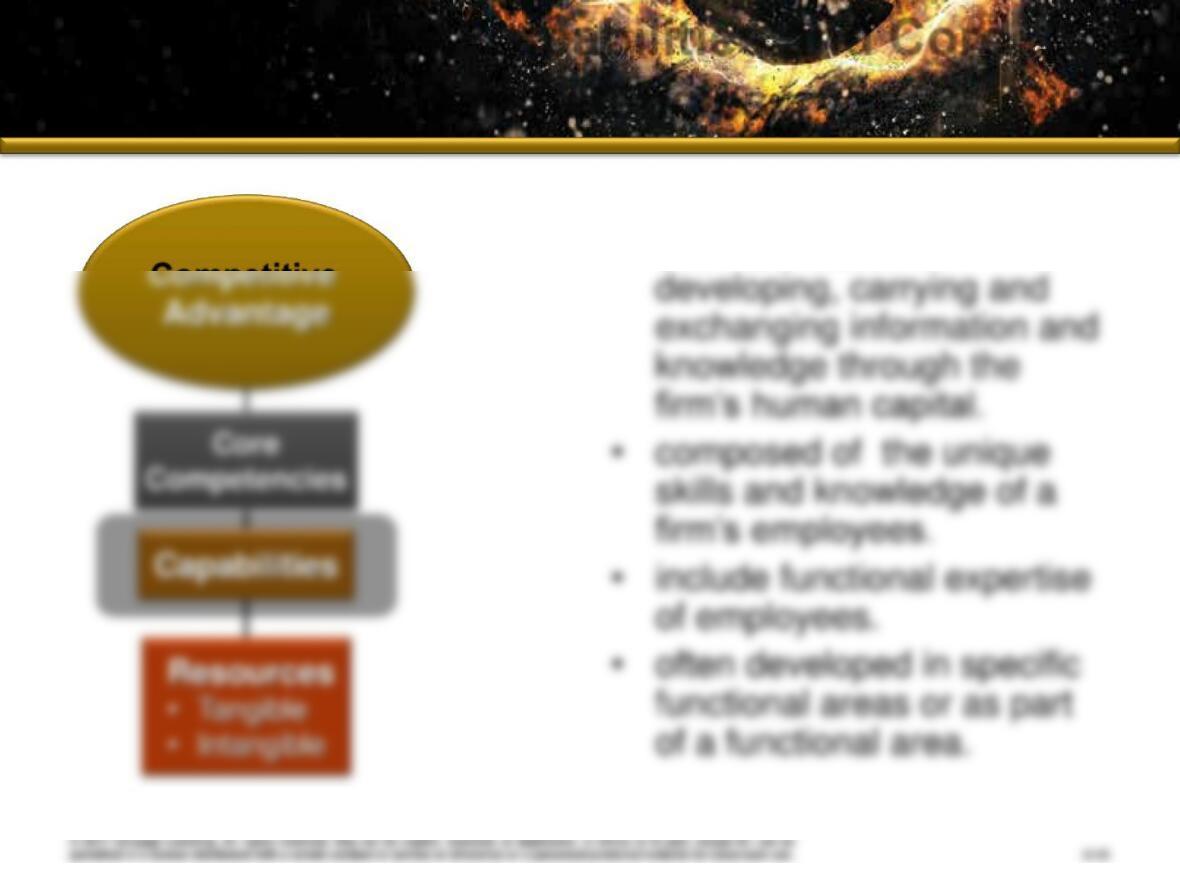
Capabilities (cont’d):
•often are based on
skills and knowledge of a
firm’s employees.
•include functional expertise
of employees.
•often developed in specific
functional areas or as part
of a functional area.
3–19
©2017 Cengage Learning. All rights reserved. May not be copied, scanned, or duplicated, in whole or in part, except for use as
permitted in a license distributed with a certain product or service or otherwise on a password-protected website for classroom use.
Competitive
Resources
•Tangible
•Intangible
Capabilities
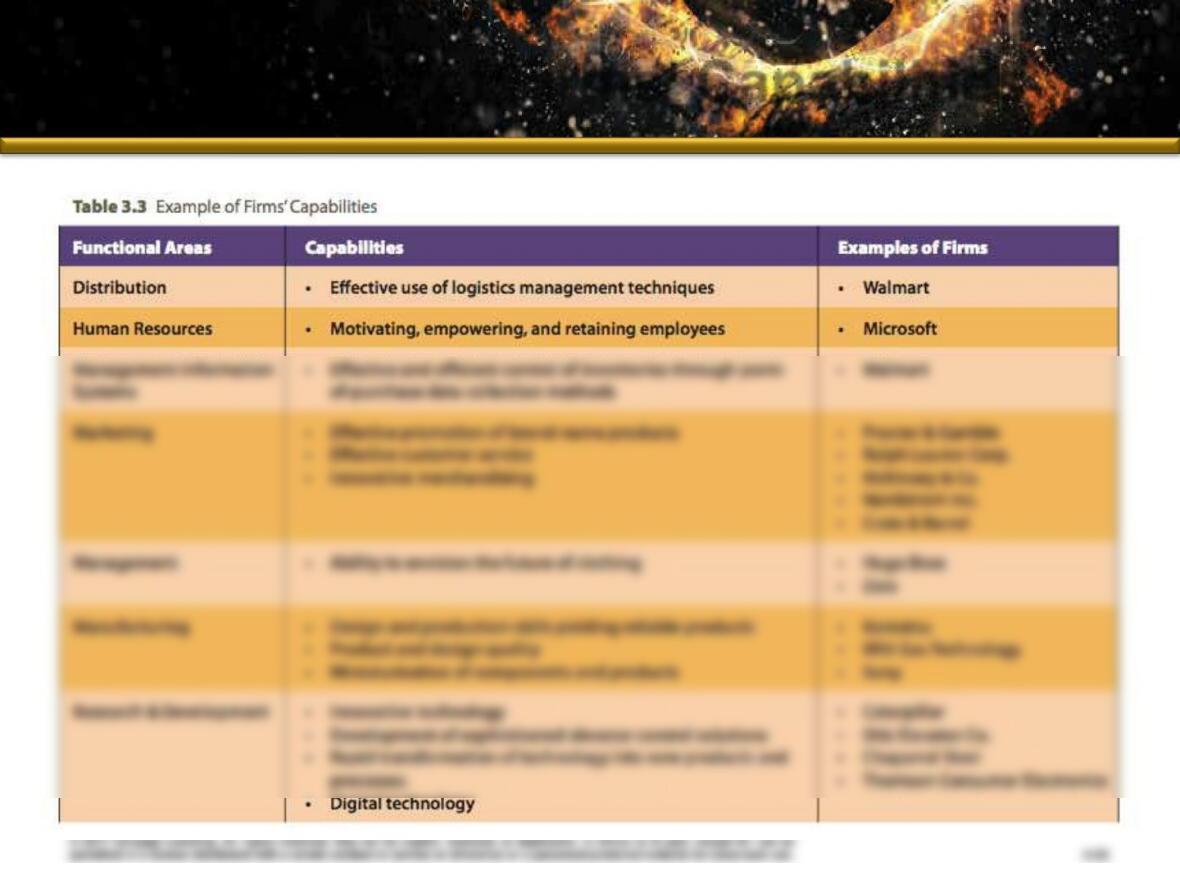
Example of Firms’ Capabilities