
Barriers to Entry
•Economies of Scale
Barriers to Entry (cont’d)
•Product Differentiation
•Switching Costs

Barriers to Entry (cont’d)
•Cost Disadvantages
•Expected Retaliation
Bargaining Power of Suppliers
•Supplier power increases when:
–suppliers are large and few in number.
Bargaining Power of Buyers
•Buyer power increases when:
–buyers are large and few in number.
Threat of Substitute Products
•The threat of substitute products increases
when:

Intensity of Rivalry Among Competitors
•Industry rivalry increases when:
–there are numerous or equally balanced competitors.
Interpreting Industry Analyses
©2017 Cengage Learning. All rights reserved. May not be copied, scanned, or duplicated, in whole or in part, except for use as
Low entry barriers
Unattractive
industry
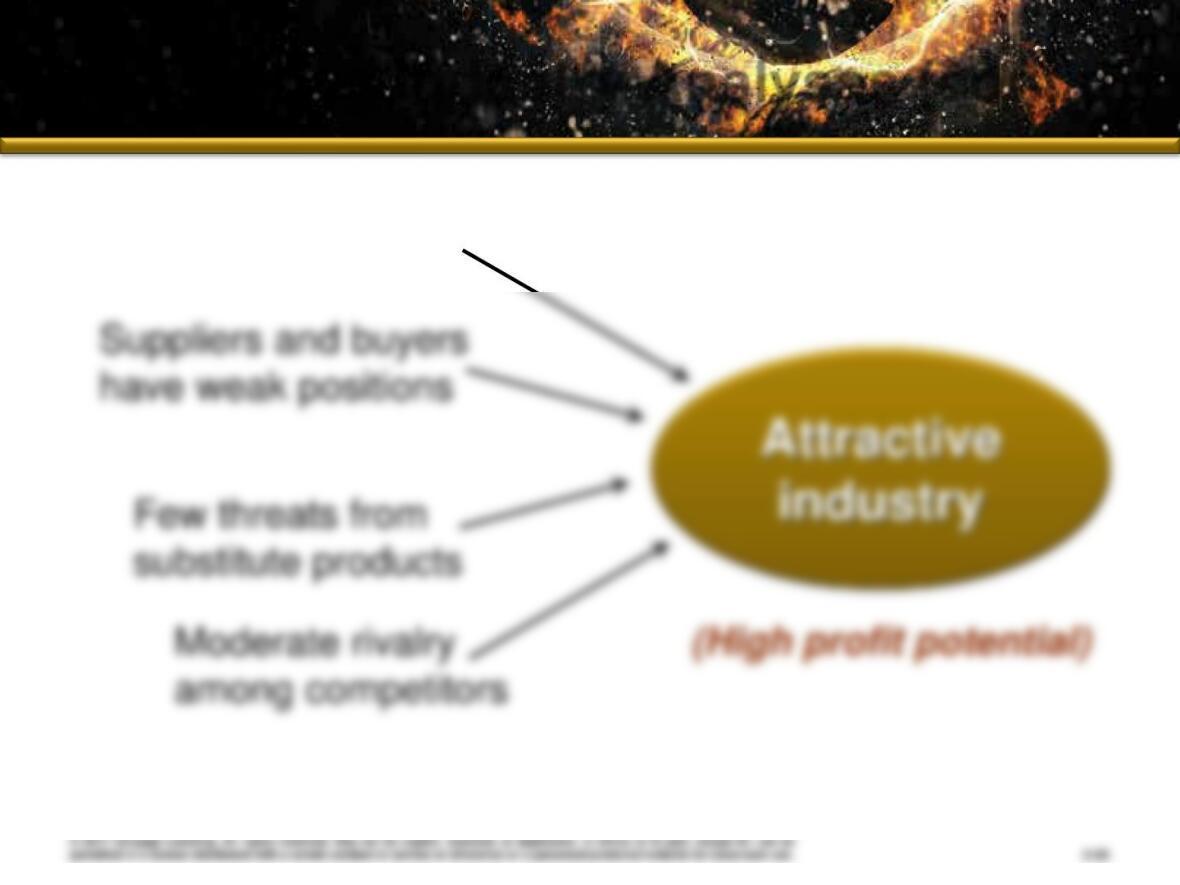
Suppliers and buyers
have strong positions
Strong threats from
substitute products
Intense rivalry
among competitors
(Low profit potential)
Interpreting Industry Analyses (cont’d)
2–29
©2017 Cengage Learning. All rights reserved. May not be copied, scanned, or duplicated, in whole or in part, except for use as
permitted in a license distributed with a certain product or service or otherwise on a password-protected website for classroom use.
High entry barriers
among competitors

Strategic Groups
•Strategic Group Defined
Strategic Groups
•Strategic Dimensions
•Implications

Competitor Analysis
•Competitor Intelligence
Competitor Analysis (cont’d)
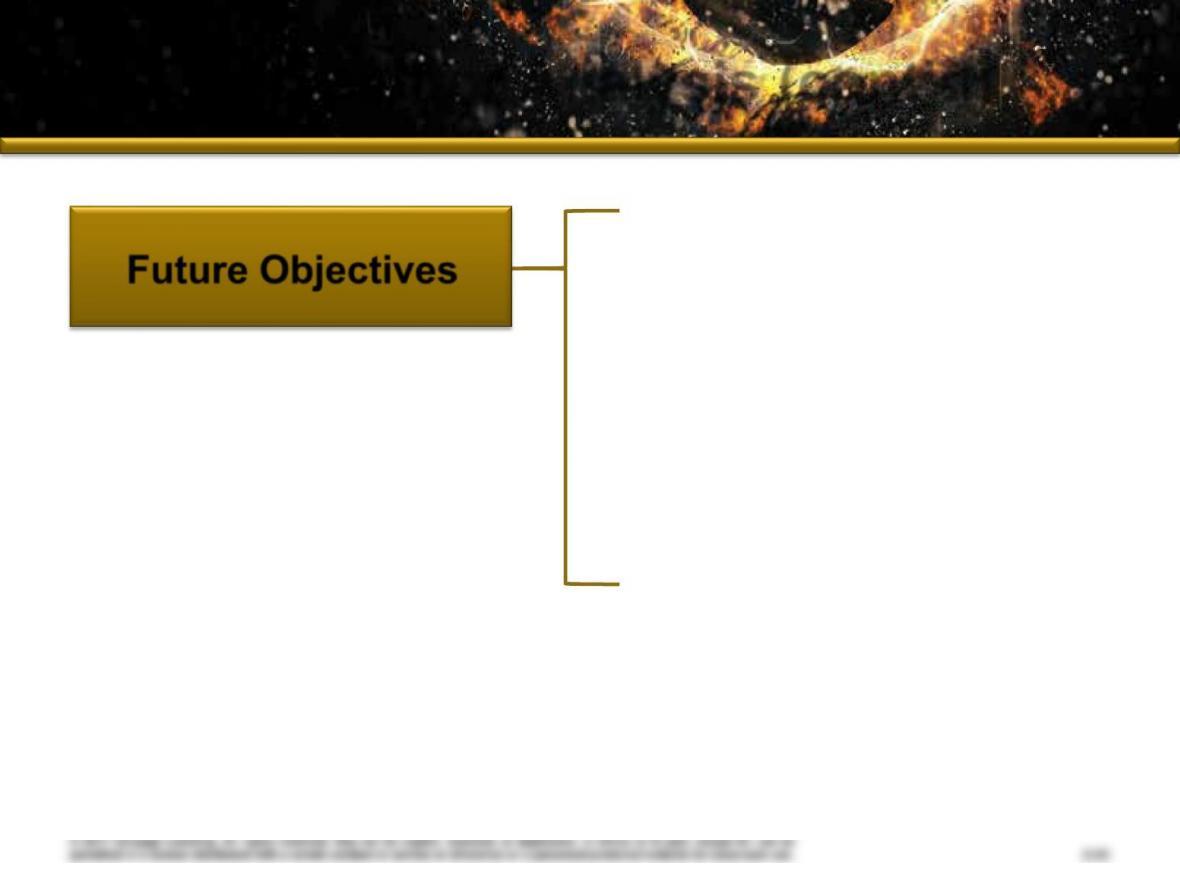
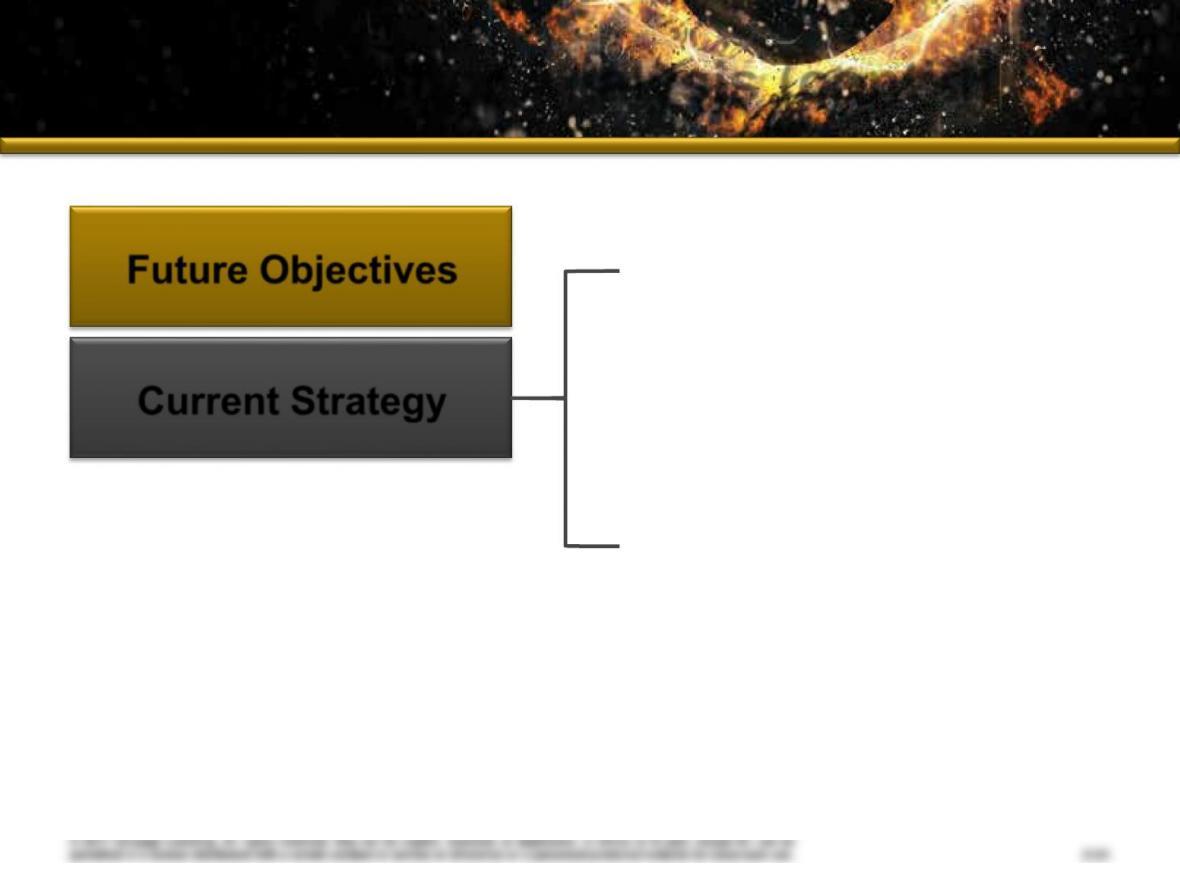
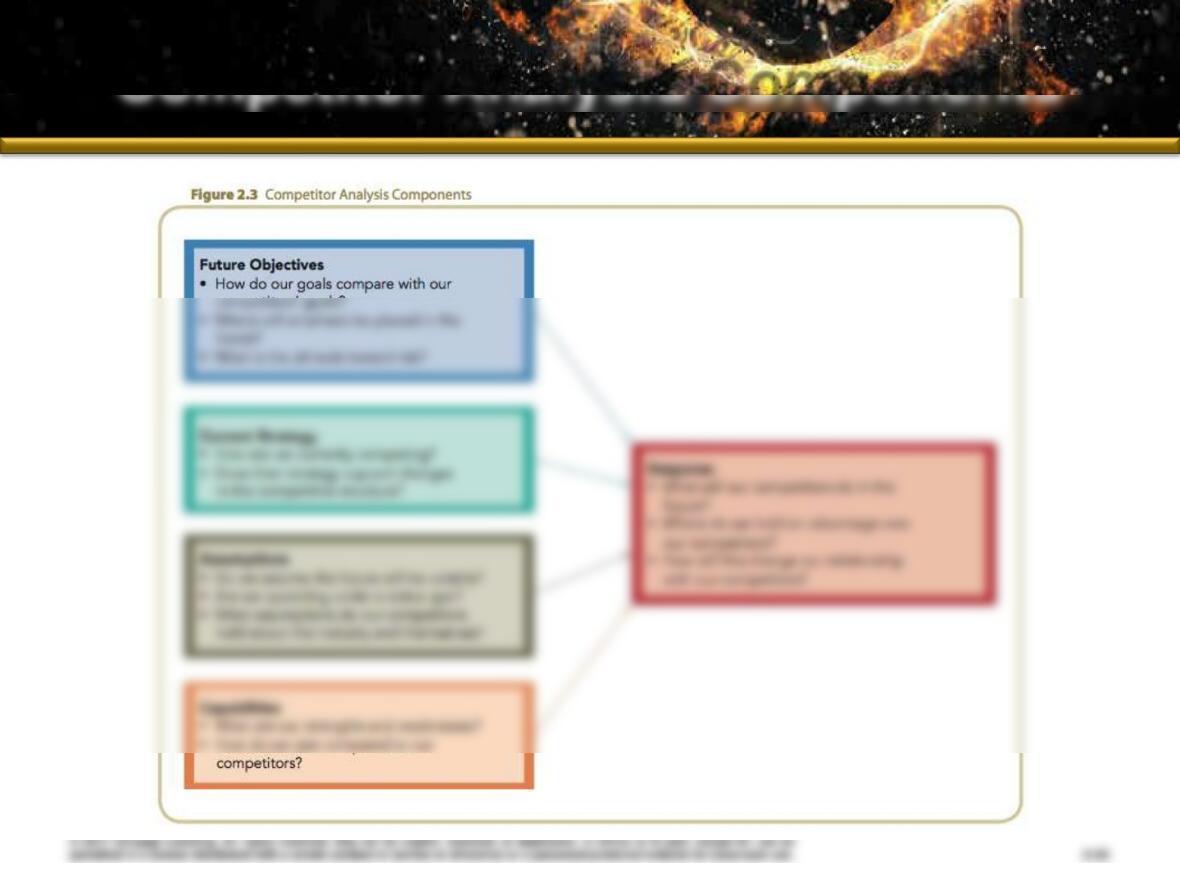
•How do our goals
compare with our
competitors’ goals?
•Where will the emphasis
be placed in the future?
•What is the attitude
toward risk?
Future Objectives
Competitor Analysis (cont’d)
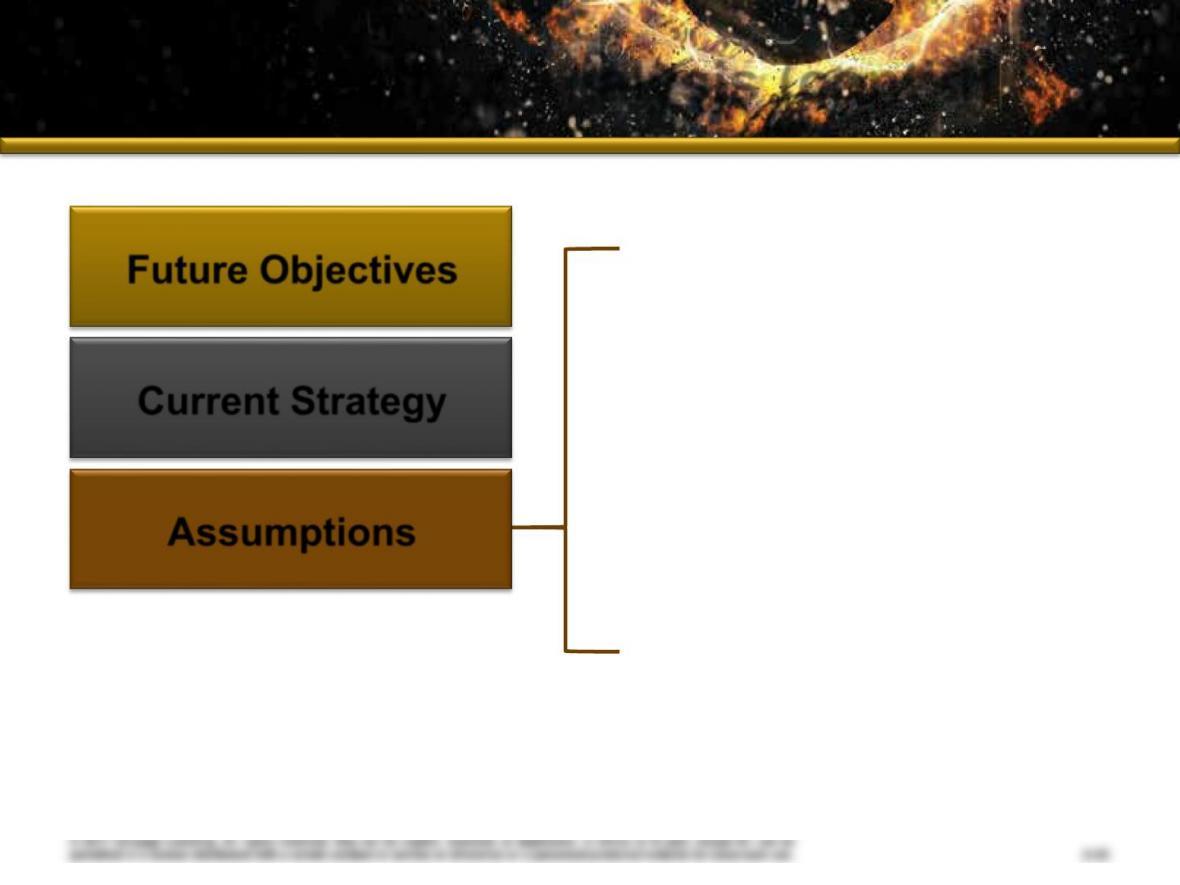
•How are we currently
competing?
•Does this strategy
support changes in the
competitive structure?
Future Objectives
Current Strategy
Competitor Analysis (cont’d)
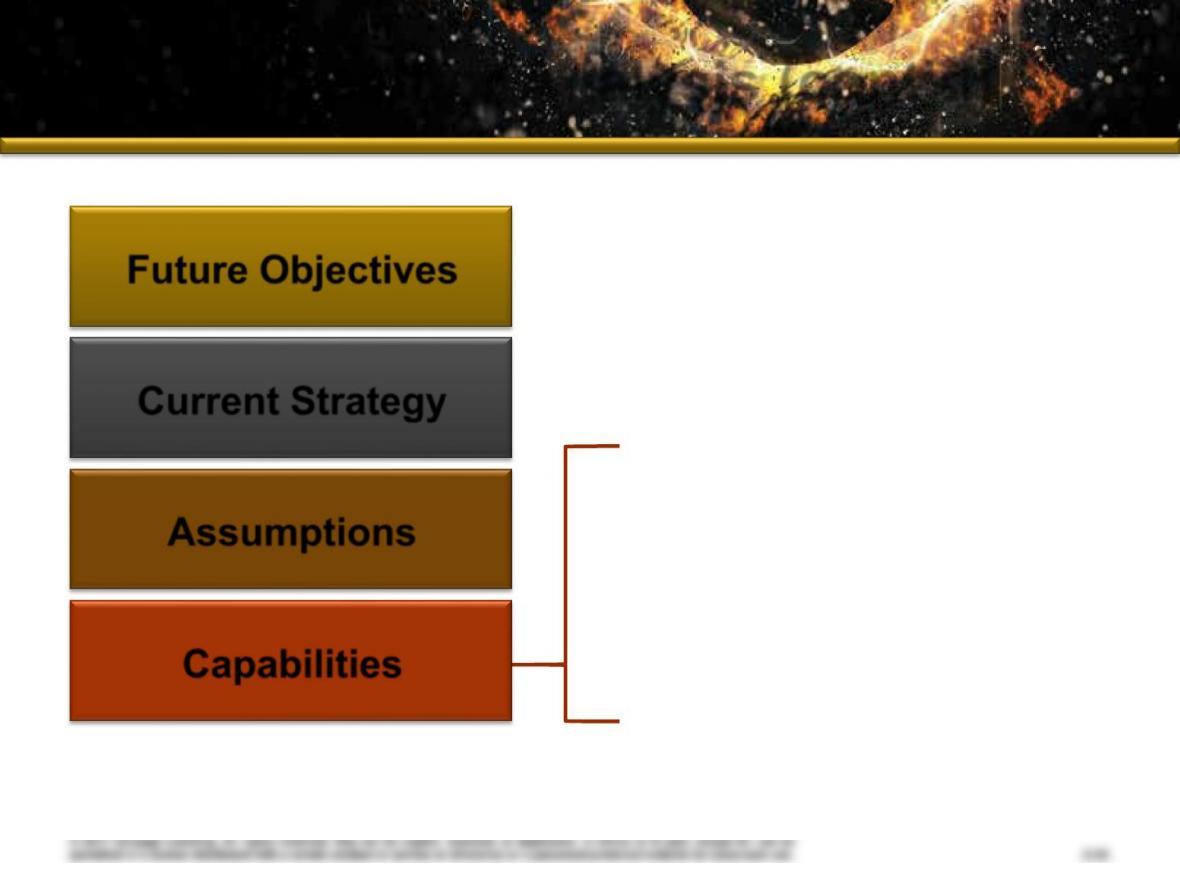
•Do we assume the
future will be volatile?
•Are we operating under
a status quo?
•What assumptions do
our competitors hold
about the industry and
themselves?
Future Objectives
Current Strategy
Assumptions
Competitor Analysis (cont’d)
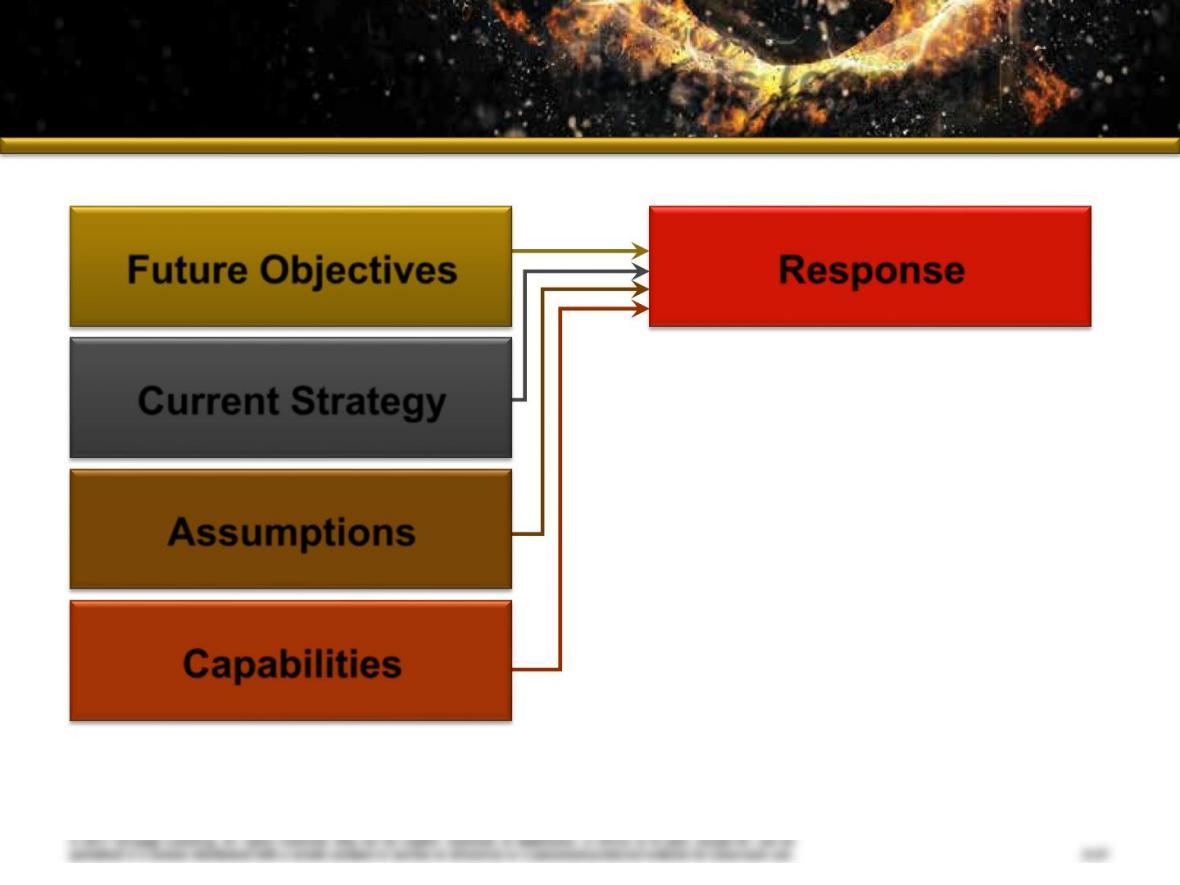
•What are our strengths
and weaknesses?
•How do we rate
compared to our
competitors?
Future Objectives
Current Strategy
Assumptions
Capabilities
Competitor Analysis (cont’d)
•What will our competitors
do in the future?
•Where do we hold an
advantage over our
competitors?
•How will this change our
relationship with our
competitors?
Future Objectives
Current Strategy
Assumptions
Capabilities
Response
Complementors
•Complementors
Ethical Considerations
•Practices considered both legal and ethical: