Chapter 12
Strategic Leadership

Learning Objectives
Studying this chapter should provide you with the
strategic management knowledge needed to:
1. Define strategic leadership and describe top-level managers’ importance.
2. Explain what top management teams are and how they affect firm
performance.
3. Describe the managerial succession process using internal and external
managerial labor markets.
4. Discuss the value of strategic leadership in determining the firm’s strategic
direction.
5. Describe the importance of strategic leaders in managing the firm’s
resources.
6. Explain what must be done for a firm to sustain an effective culture.
7. Describe what strategic leaders can do to establish and emphasize ethical
practices.
8. Discuss the importance and use of organizational controls.
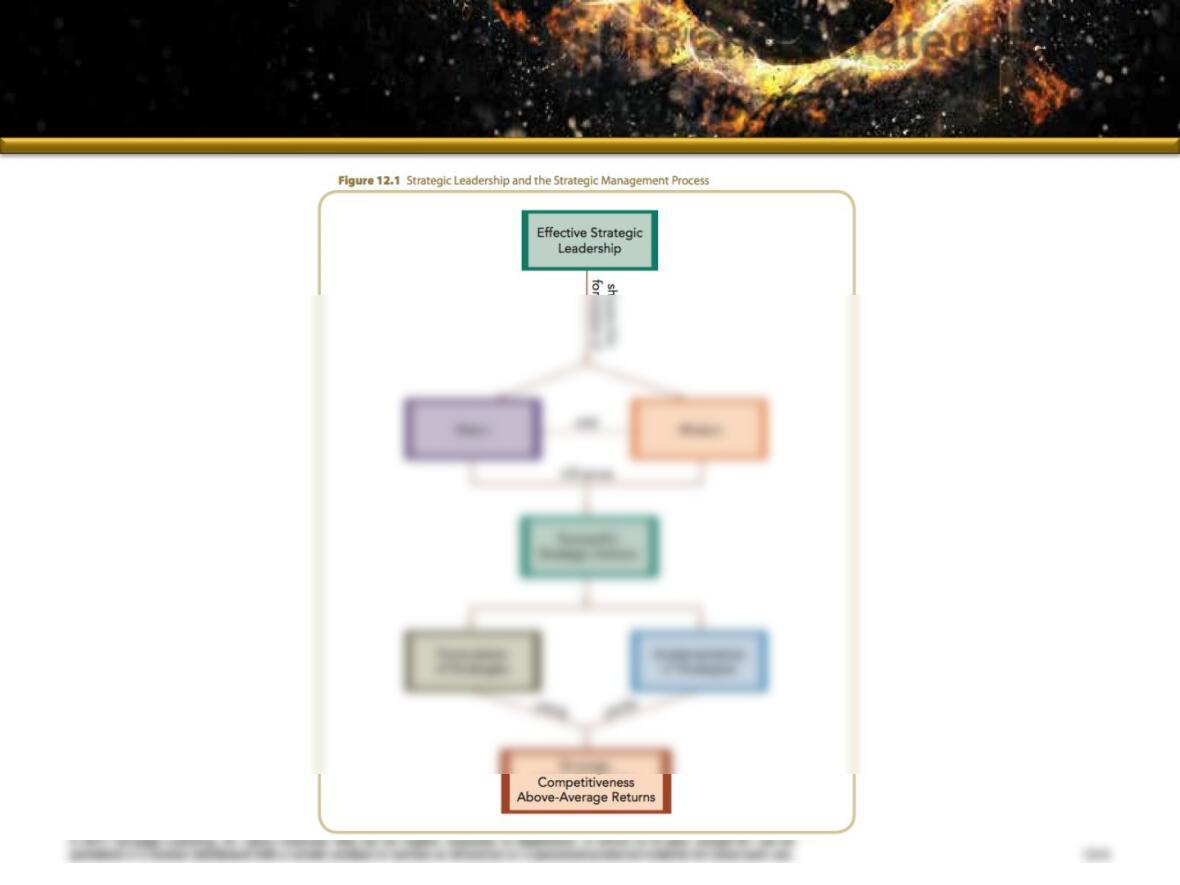
Strategic Leadership and Strategic
Management Process
©2017 Cengage Learning. All rights reserved. May not be copied, scanned, or duplicated, in whole or in part, except for use as

Strategic Leadership and Style
•Strategic leadership requires the ability to:

Strategic Leadership (cont’d)
•Effective strategic leaders:
–manage the firm’s operations effectively.
The Role of Top-Level Managers

Factors Affecting Managerial Discretion
•Industry structure
External
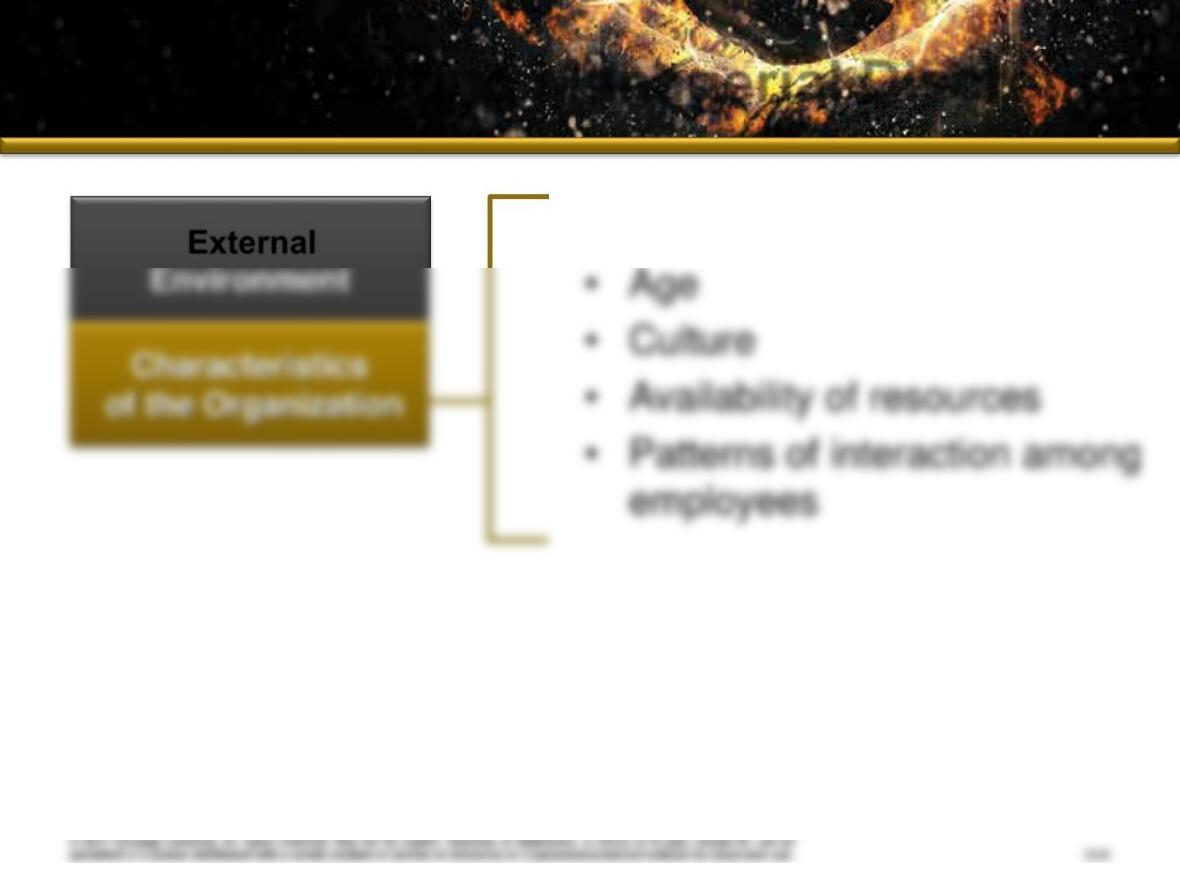
Factors Affecting Managerial Discretion
•Size
External
Factors Affecting Managerial Discretion
External
Factors Affecting Managerial Discretion
External
Environment
Discretion
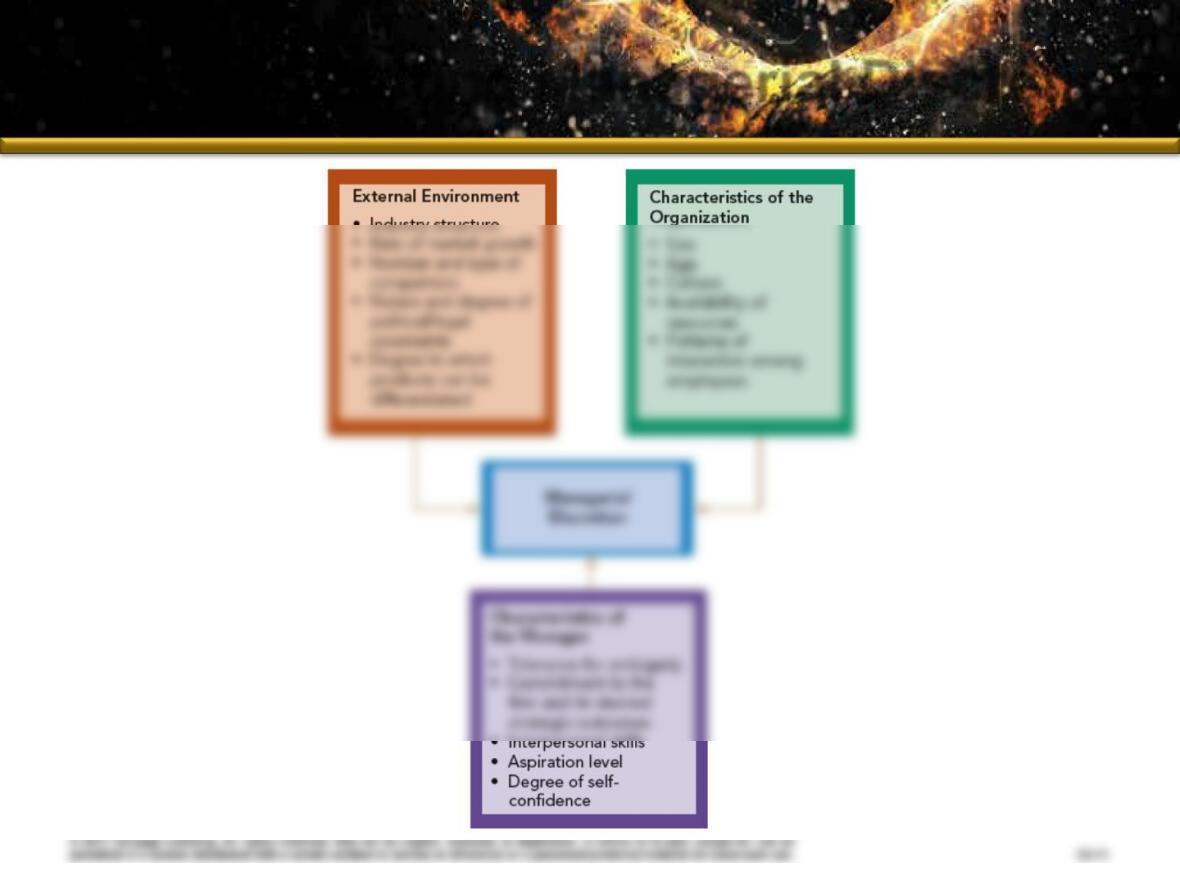
Factors Affecting Managerial Discretion
Top Management Teams
Top Management Teams, Firm Performance,
and Strategic Change

CEO and Top Management Team Power

CEO and Top Management Power