
Chapter 10
Corporate Governance

Studying this chapter should provide you with the strategic
management knowledge needed to:
1. Define corporate governance and explain why it is used to monitor and
control top-level managers’ decisions.
2. Explain why ownership is largely separated from managerial control in
organizations.
3. Define an agency relationship and managerial opportunism and describe
their strategic implications.
4. Explain the use of three internal governance mechanisms to monitor and
control managers’ decisions.
5. Discuss the types of compensation top-level managers receive and their
effects on managerial decisions.
6. Describe how the external corporate governance mechanism—the market
for corporate control—restrains top-level managers’ decisions.
7. Discuss the nature and use of corporate governance in international
settings, especially in Germany, Japan, and China.
8. Describe how corporate governance fosters ethical decisions by a firm’s
top-level managers.
Learning Objectives

•Corporate governance is:
Corporate Governance

Separation of Ownership
and Managerial Control
Separation of Ownership
and Managerial Control (cont’d)

Separation of Ownership
and Managerial Control
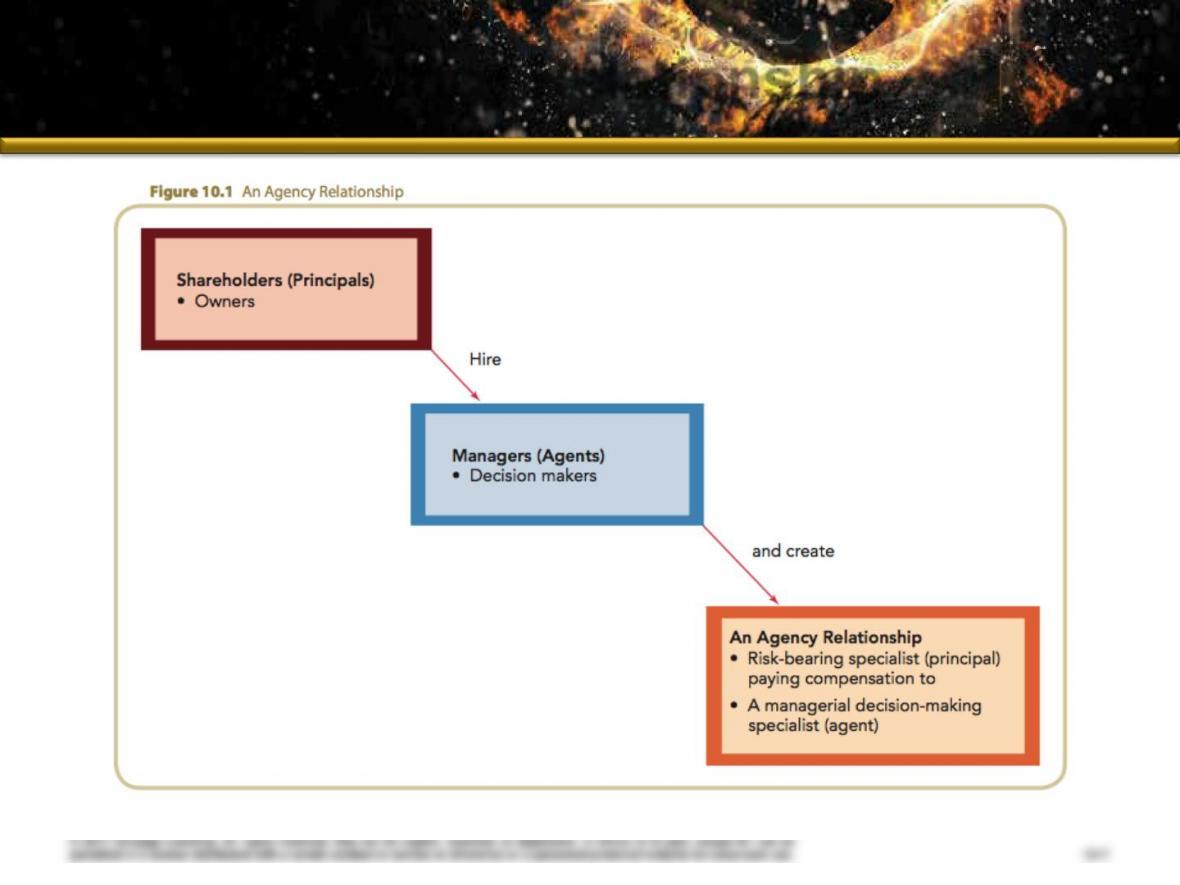
Agency Relationship

Agency Relationship Problems

•The seeking of self-interest with guile
(cunning or deceit)
Managerial Opportunism

Response to Managerial Opportunism

Product Diversification as an Example
of an Agency Problem
•The Problem of Product Diversification
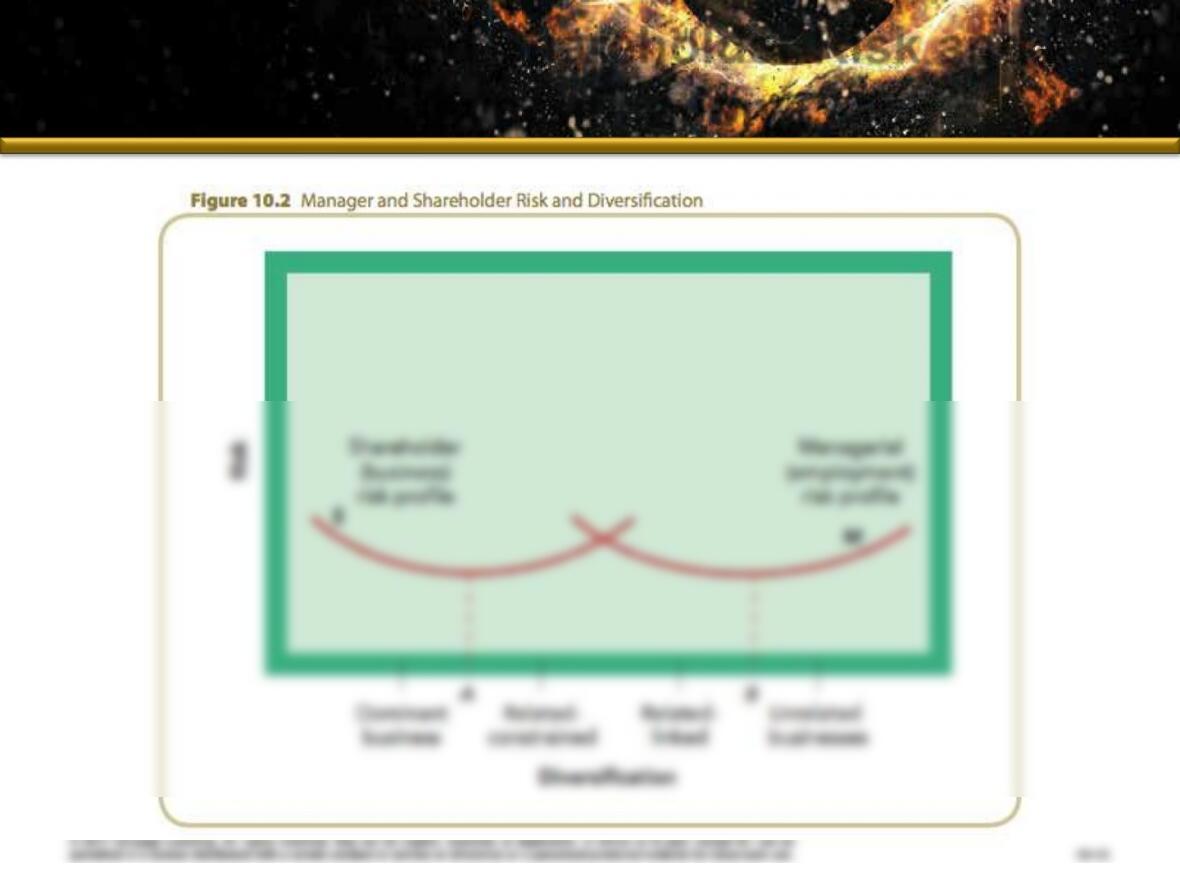
Manager and Shareholder Risk and
Diversification
©2017 Cengage Learning. All rights reserved. May not be copied, scanned, or duplicated, in whole or in part, except for use as

Agency Costs and Governance Mechanisms
•Agency Costs
–The sum of incentive costs, monitoring costs,

Agency Costs and Governance Mechanisms
(cont’d)
Ownership Concentration
•Large block shareholders have
a strong incentive to monitor
Ownership

Ownership Concentration (cont’d)
•The increasing influence of
institutional owners (stock mutual
Ownership
Ownership Concentration (cont’d)
•Shareholder activism
Ownership
Board of Directors
•Board of directors
–Group of elected individuals that
acts in the owners’ interests to
Ownership
Concentration