
Chapter 10: Understanding A Firm’s Financial Statements
CHAPTER 10: UNDERSTANDING A FIRM’S FINANCIAL
STATEMENTS
CHAPTER OUTLINE
Spotlight: J&S Construction Company
(http://www.jsconstruction.com)
The Lemonade Kids
Financial statement (accounting statements) – reports of a firm’s financial
performance and resources, including an income statement, a balance sheet, and a
cash flow statement
a) Setting Up the Business – determining firm’s assets and sources of financing
b) Opening Day – developing alternate methods of payment rather than cash
c) Collecting Accounts Receivable
d) Strategic Planning for the Following Saturday
e) The Second Saturday of Business
1) The Income Statement
LO1: Describe the purpose and content of an income statement.
a) Definitions
i) Income statement (profit and loss statement) – a financial report showing the
profits or losses from a firm’s operations over a given period of time
ii) Cost of goods sold – cost of producing or acquiring goods or service to be sold by
a firm
iii) Gross profit – sales less the cost of goods sold
iv) Operating expenses – costs related to marketing and selling a firm’s product or
service, general and administrative expenses, and depreciation
v) Operating profits – earnings after operating expenses but before interest and taxes
are paid
vi) Interest expense – the cost of borrowed money
vii) Profits before taxes (taxable profits) – earnings after operating expenses and
interest expenses but before taxes
viii) Net profits – earnings that may be distributed to the owners or reinvested in
the company
ix) Depreciation expense – cost of a firm’s building and equipment, allocated over
their useful life
x) Dividend- a withdrawal of capital from the business.
xi) Profit margins – Profits as a percentage of sales
xii) The Income Statement answers the question, “How profitable is the business?”
(1) Reports sales (revenue), cost of producing or acquiring the goods or services
sold by the company, operating expenses, interest expense, tax payments
xiii) Allows business owner to consider how decision affect the company’s profits
2) The Balance Sheet

Chapter 10: Understanding A Firm’s Financial Statements
LO2: Explain the purpose and content of a balance sheet.
i) Formula – Total assets = Debt + Ownership equity
a) Assets
i) Current assets
(1) Current assets – assets that can be converted into cash relatively quickly
(2) Accounts receivable – amount of credit extended to customers that is
currently outstanding
(3) Inventory – firm’s raw materials and products held in anticipation of eventual
sale
(4) Working capital cycle – the process of converting inventory to cash
ii) Fixed assets (property, plant and equipment [PPE]) – Physical assets that will be
used in the business for more than one year, such as equipment, buildings, and
land.
(1) Depreciable assets – assets whose value declines, or depreciates, over time
(2) Gross fixed assets – Depreciable cost at their original cost before any
depreciating expense has been taken.
(3) Accumulated depreciation – total (cumulative) depreciation expense taken
over the assets’ life
(4) Net fixed assets – gross fixed assets less accumulated depreciation
iii) Other assets – A firm’s raw materials and products held in anticipation of
eventual sale.
iv) These are all things owned by the business
b) Debt and Equity
i) Debt –financing provided by creditors
ii) Current debt (short-term liabilities) – borrowed money that must be repaid within
12 months
(1) Accounts payable (also called trade credit)– Outstanding credit payable to
suppliers.
(2) Accrued expenses – Operating expenses that have been incurred but not paid.
(3) Short-term notes – Agreements to repay cash amounts borrowed from banks
or other lending sources within 12 months or less
(4) Long-term debt – loans from banks or other sources with repayment terms of
more than 12 months.
iii) Long-term notes – Agreements to repay cash amounts borrowed from banks or
other lending sources for periods longer than 12 months
iv) Owner’s Equity
(1) Common stock- issued to the investors representing ownership in the
company.
(2) Owner’s equity – owners’ investments in a company plus cumulative net
profits retained in the firm
(3) Retained earnings – profits less dividends paid over the life of a business
3) Viewing the Income Statement and Balance Sheet Together
LO3: Explain how viewing the income statement and balance sheets together gives
a more complete picture of a firm’s financial position?
i) Balance sheet is a view of a firm’s financial condition at a particular point in
time.

Chapter 10: Understanding A Firm’s Financial Statements
ii) Income statement shows results over a given period (a quarter or a year for
example).
4) The Cash Flow Statement
LO4: Use the income statement and balance sheets to compute a company’s cash
flows.
a) Profits versus Cash Flows
i) Cash flow statement – a financial report showing a firm’s sources of cash as well
as its uses of cash
ii) Accrual-basis accounting – an accounting method of recording profits when
earned and expenses when incurred, whether or not the profit has or the expense
paid
iii) Cash-basis accounting – an accounting method of recording profits when cash is
received and recording expenses when they are paid
iv) Profits based on an accrual accounting system will differ from the firm’s cash
flows
(1) Sales reported in an income statement include both case sales and credit
sales; total sales do not correspond to the actual case collected
(2) Some inventory purchases are financed by credit, so inventory purchases do
not exactly equal cash spent for inventory
(3) Depreciation expense shown in the income statement is a noncash expense
b) Measuring a Firm’s Cash Flows
i) Cash inflows and outflows explained by three activities
(1) Generating cash flows from day-to-day business operations
(2) Buying or selling fixed assets
(3) Financing the business
ii) Activity 1: Cash Flows from Day-To-Day Business Operations
(1) Converts the company’s income statement from an accrual basis to a cash
basis
(2) Two steps required
(a) Add back depreciation to net profits, since depreciation is not a cash
expense
(b) Subtracting any uncollected sales and payments for inventory
iii) Activity 2: Investing in Fixed Assets – equipment or buildings
iv) Activity 3: Financing the Business
(1) The cash flows associated with financing a business are as follows:
(a) Cash inflow when company borrows more money
(b) Cash outflow when a firm repays debit
(c) Cash inflow when the owners invest in the business to increase their
equity
(d) Cash outflow when the owners withdraw money from the business.
v) Tips for Computing Cash Flows
(1) Work on the three parts of the cash flow statement individually, and then put
it all together.
(2) Use only depreciation expense and net profits from the income statement.

Chapter 10: Understanding A Firm’s Financial Statements
(3) Understand how the changes in a firm’s balance sheets have implications for
its cash flows.
(a) A decrease in an asset is a source of cash
(b) An increase in an asset is a use of cash
(c) An increase in liabilities or equity is a source of cash
(d) A decrease in liabilities or equity is a use of cash
(4) Use every change in the company’s balance sheets, with two exceptions:
(a) Ignore accumulated depreciation and net fixed assets
(b) Ignore the change in retained earnings since it equals net profits and
dividends paid
vi)
5) Evaluating a Firm’s Financial Performance
LO5: Analyze the financial statements using ratios to see more clearly how
decisions affect a firm’s financial performance.
i) An entrepreneurs decisions play out in primarily four areas:
(1) Firm’s ability to pay its debt as it comes due
(2) Company’s profitability from assets
(3) Amount of debt the business is using
(4) Rate of return earned by the owners on their equity investment
a) Liquidity (Ability to Pay Its Debt)
i) Liquidity – the degree to which a firm has working capital available to meet
maturing debt obligations
ii) Current ratio – a measure of a company’s relative liquidity, determined by
dividing current assets by current liabilities
b) Profitability on Its Assets
i) Return on assets – a measure of a firm’s profitability relative to the amount of its
assets, determined by dividing operating profits by total assets
ii) Operating profit margin – a measure of how well a firm is controlling its costs of
goods sold and operating expenses relative to sales, determined by dividing
operating profits by sales
(1) Total asset turnover – a measure of how efficiently a firm is using its assets
to generate sales, calculated by dividing sales by total assets
c) Use of Debt Financing
i) Debt ratio is a measure of what percentage of a firm’s assets is financed by debt,
determined by dividing total debt by total assets
d) Return on Owners’ Equity
i) Return on equity – a measure of the rate of return owners receive on their equity
investment, calculated by dividing net profits by ownership equity
ii) Financial leverage – the impact (positive or negative) of financing with debt
rather than with equity.
iii) A firm with a high (low) return on assets will have a high (low) return on equity
iv) As a firm’s debt ratio increases, return on equity will increase if the return on
assets is greater than the interest rate paid on any debt, but return on equity will
decrease if the return on assets is less than the interest rate
Chapter 10: Understanding A Firm’s Financial Statements
ADDITIONAL DISCUSSION QUESTIONS
1. Explain the purposes of the income statement and balance sheets?
The income statement reports the results of periodic operations, detailing sales
2. What determines a company’s profitability?
A company’s profit is a primary source of financing for future growth. The more
profitable a company is, the more funds it will have for growth. Thus, we need to
3. Distinguish among (a) gross profits, (b) operating profits, and (c) net profits.
a. Gross profit is sales (revenue) less the cost of producing or acquiring the
4. The balance sheet reports information on a firm’s (1) assets, (2) debt, and (3)
equity. What is included in each of these reported categories?
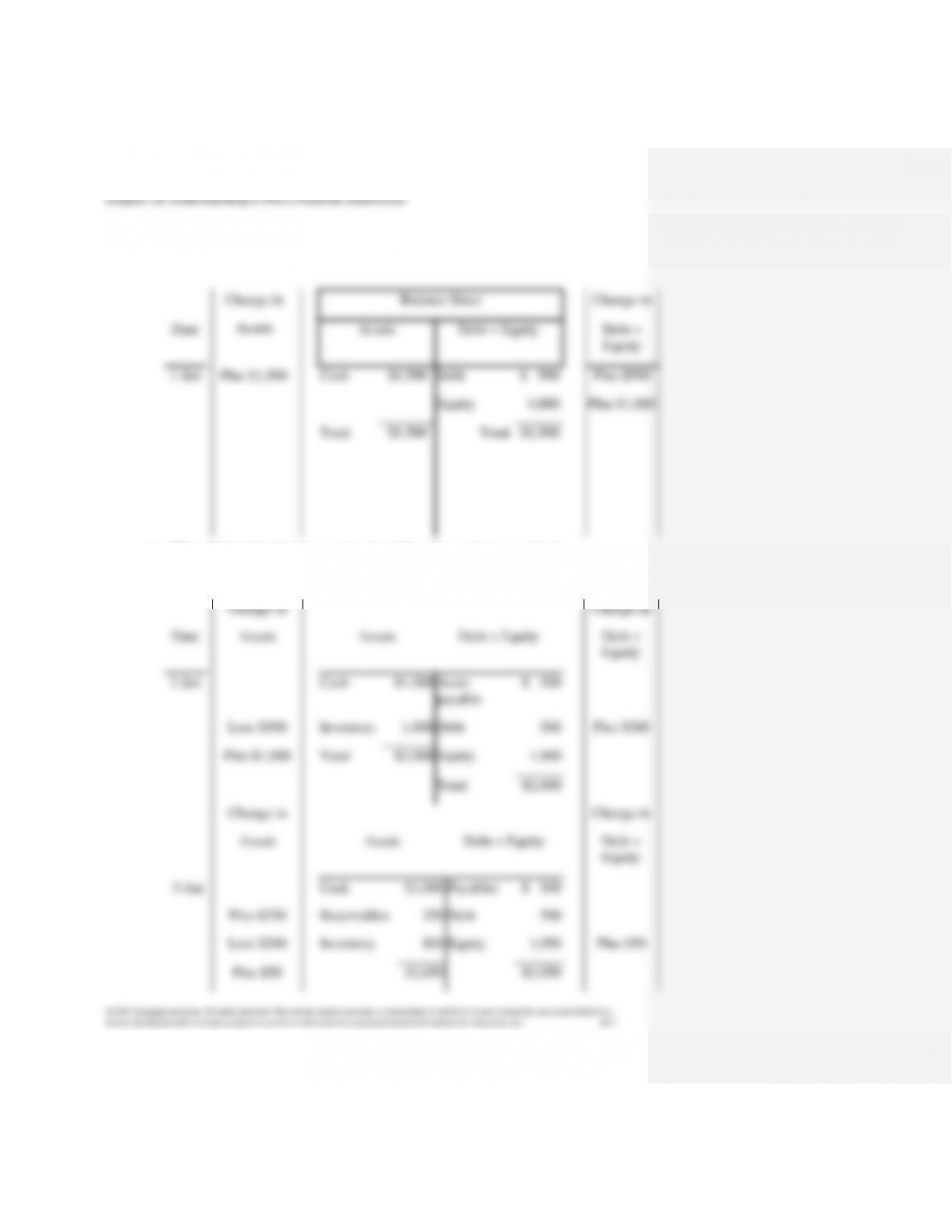
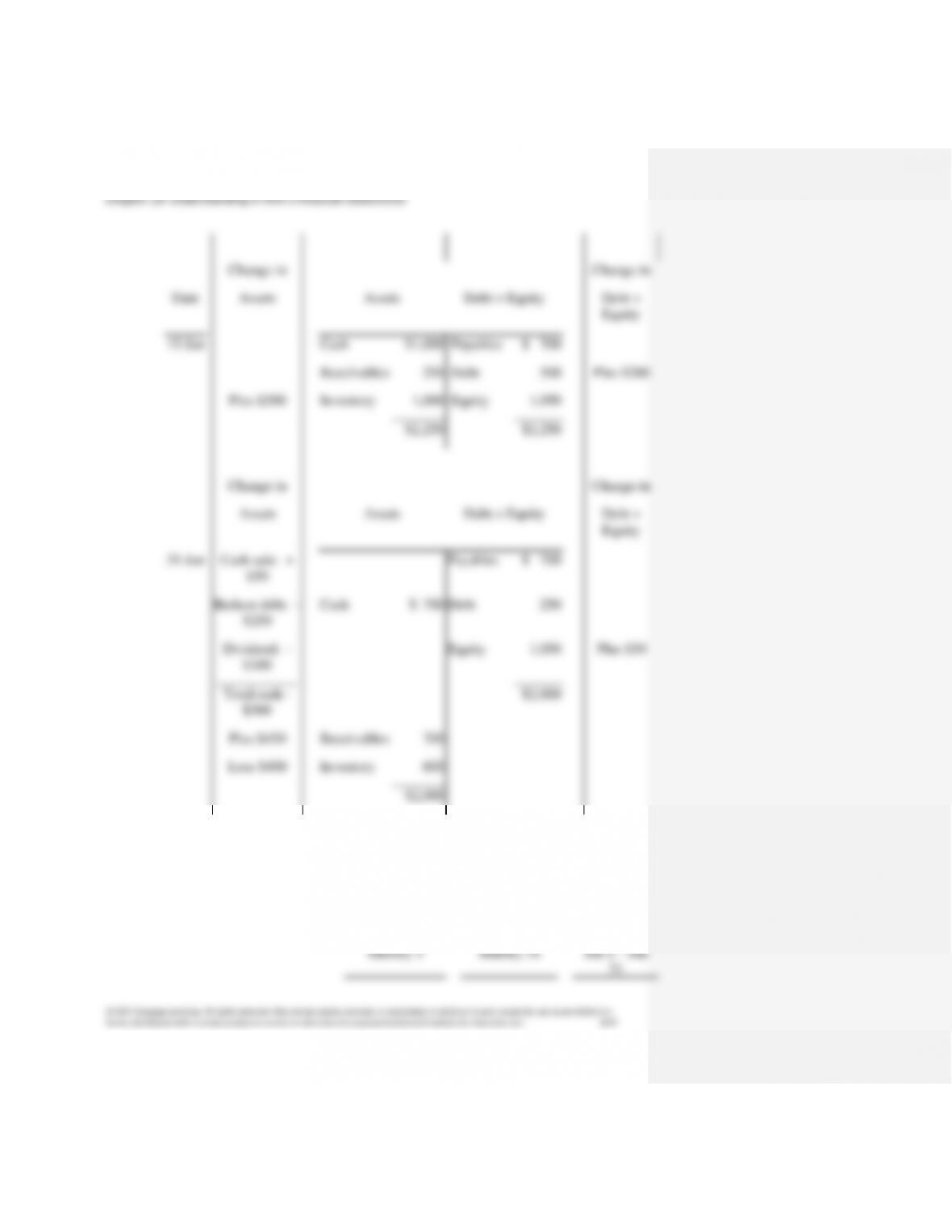
1. What did Donahoo’s balance sheet look like at the outset of the firm’s life?
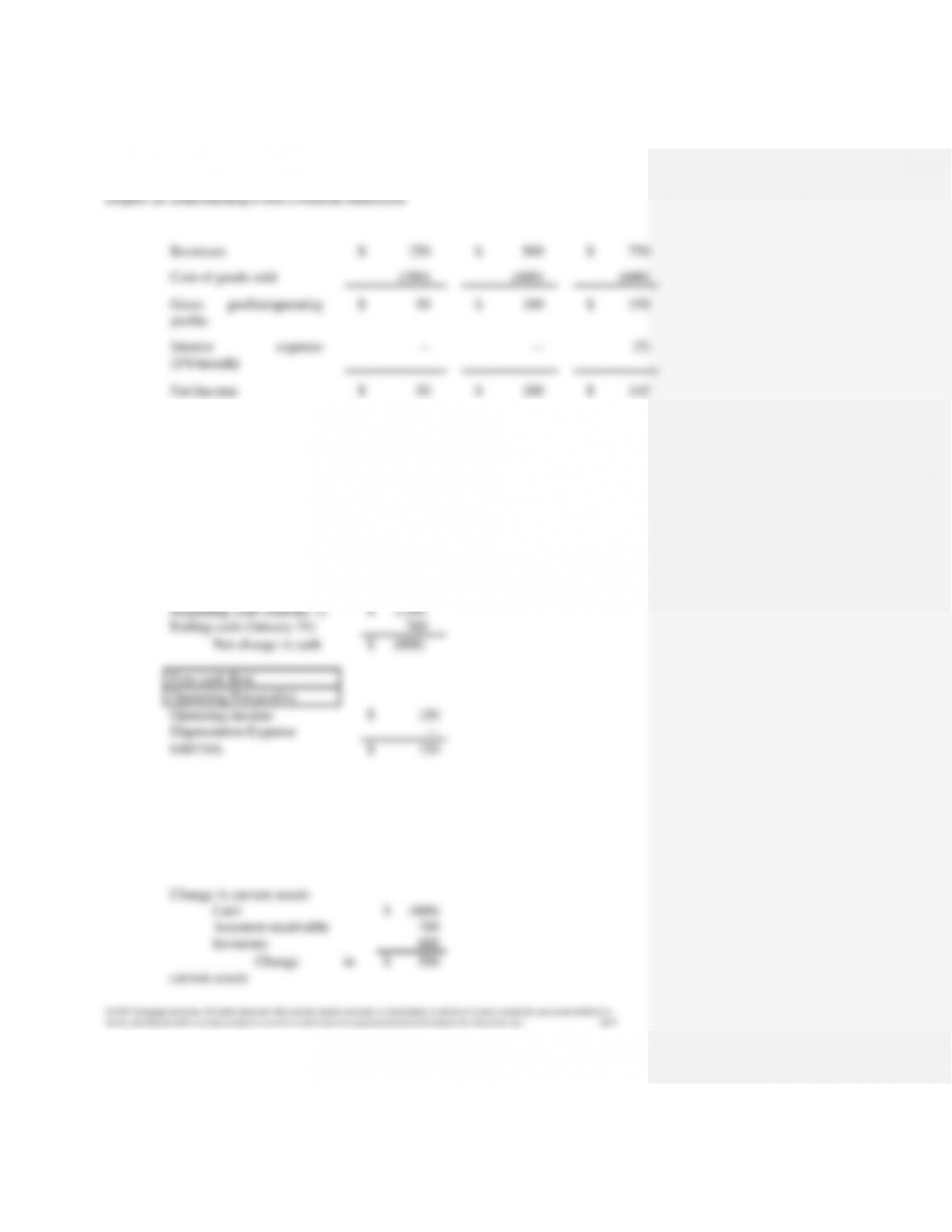
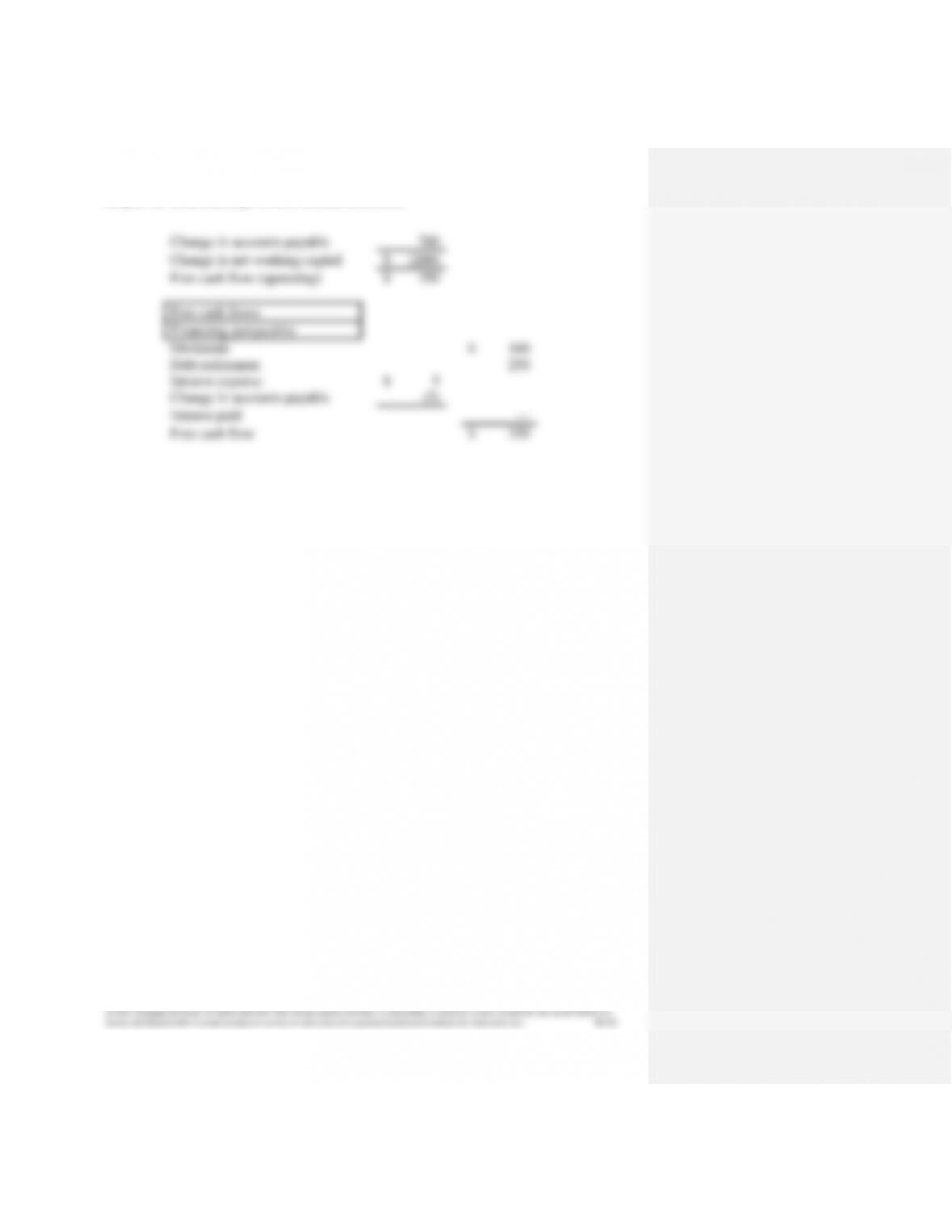
Chapter 10: Understanding A Firm’s Financial Statements
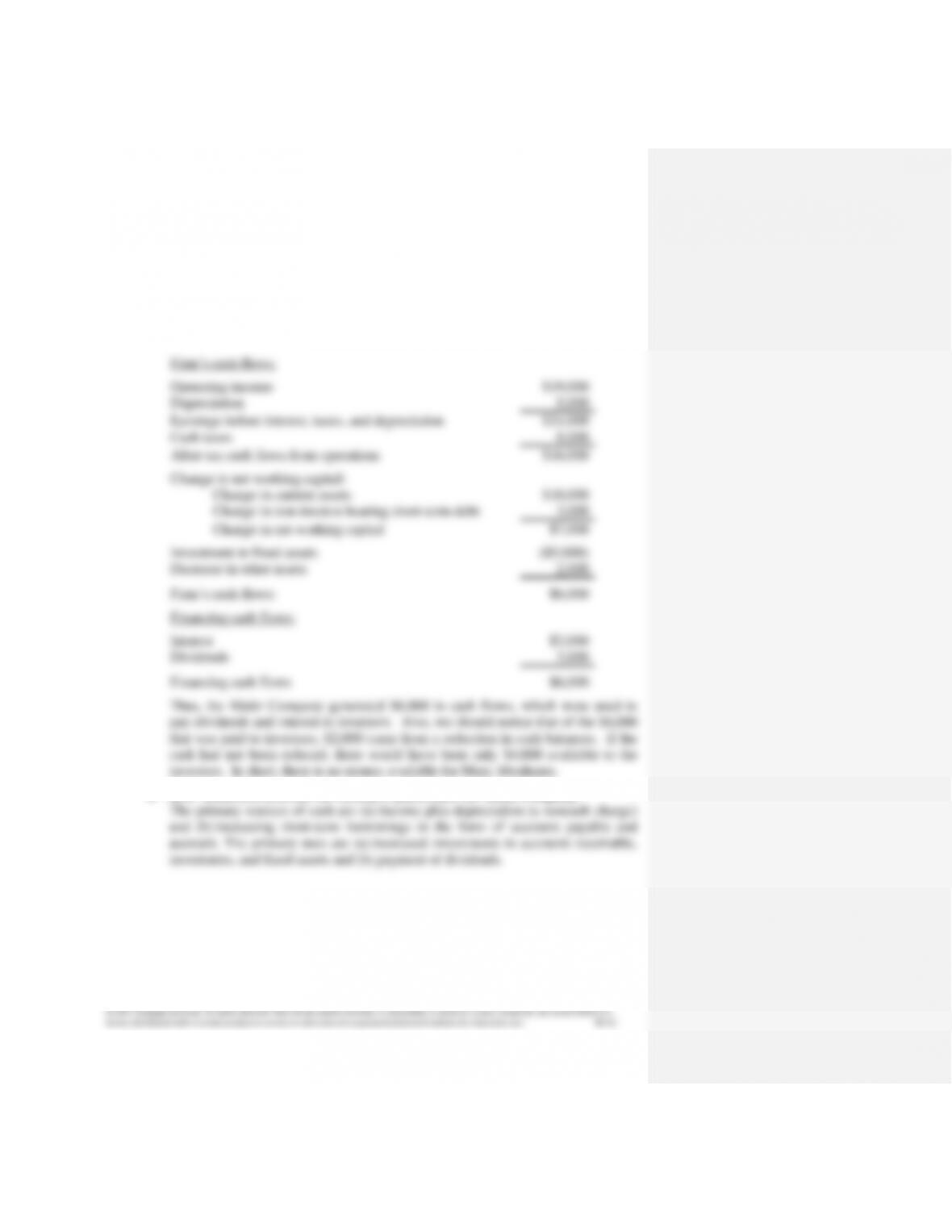
Chapter 10: Understanding A Firm’s Financial Statements
Situation 2
1. Given the information provided by the financial statements, what would you tell
Abrahams? (As part of your answer, calculate the firm’s cash flows.)
Explain to Mary Abrahams that her equation for determining cash flows (profits +
depreciation), although correct once in a while, can be very misleading. The cash
flows can be better determined as follows:
2. How would you describe the cash flow pattern for the Maltz Company?
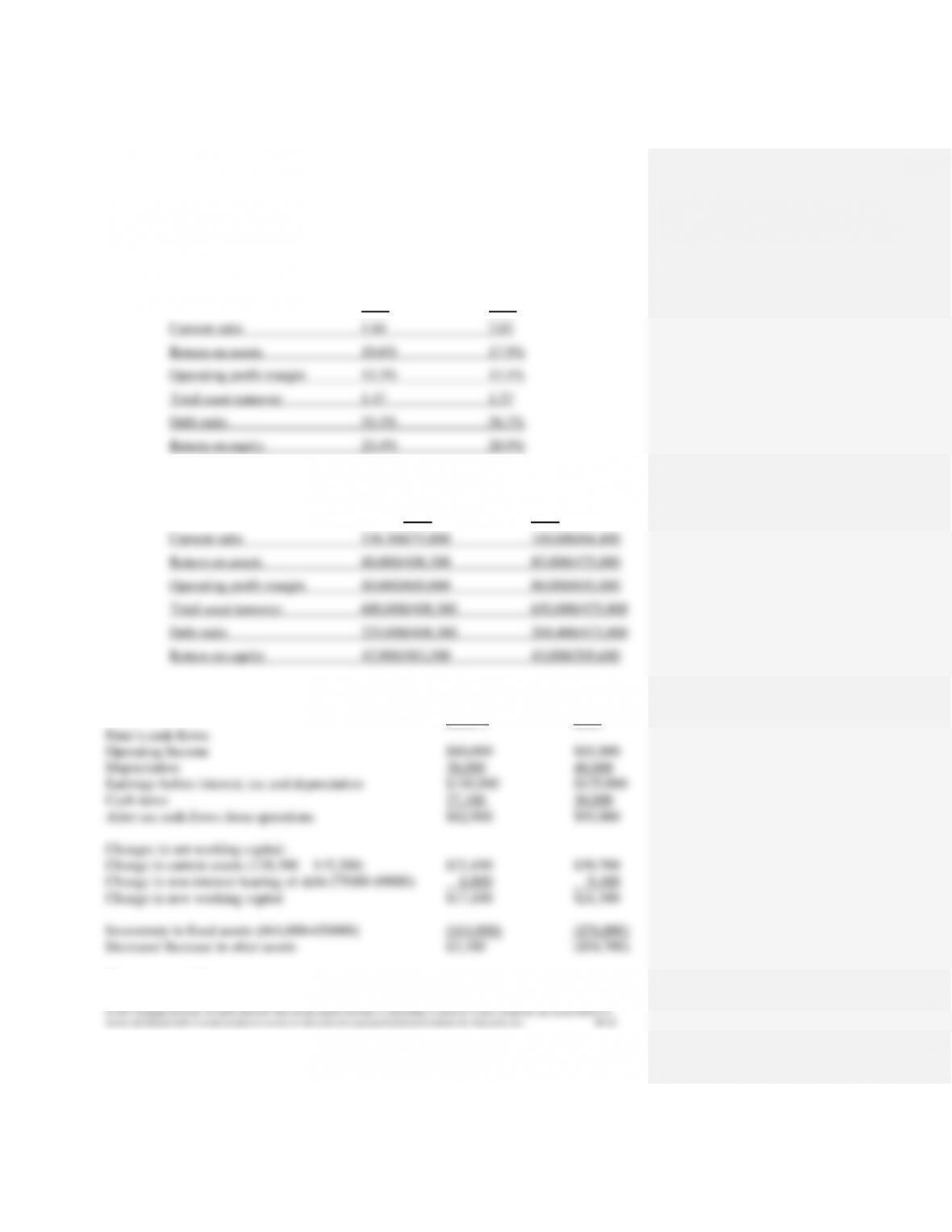
Chapter 10: Understanding A Firm’s Financial Statements
Situation 3
1. Compute the financial ratios discussed in the chapter for Wholesome Foods for
2014 and 2015.
2014 2015
Calculations:
2014 2015
2. Prepare a cash flow statement for the firm for 2014 and 2015.
2014 2015
Financing cash flows:
Chapter 10: Understanding A Firm’s Financial Statements
3.Interpret your findings, both for the firm’s financial ratios compared to those of the peer
group and for the cash flow statement.
Answers will vary depending on the chosen firm’s financial ratios.
SUGGESTED SOLUTION TO CASE 10: HARPER & REIMAN, LLC
Note to instructor: The financial data provided below is also available in an excel
1. Harper and Reiman are interested in examining four specific issues: liquidity,
profitability, the risk occurring from debt financing, and the rate of return the business is
providing to them as owners. They also want to have a good sense of the sources and uses of
cash flows in the business. Given the firm’s recent financial results, as shown above, evaluate
the company’s financial situation as it relates to the owners’ concerns. What advice would
you give to Harper and Reiman?
Student advice will vary, but should include the following observations: Based on