28. a. Yes. Since the teenagers are selected randomly, p is the same from trial to trial and the trials are
independent. The two outcomes per trial are use Pandora Media Inc.’s online radio service or do not
use Pandora Media Inc.’s online radio service.
Binomial n = 10 and p = .35
10
10!
( ) (.35) (1 .35)
!(10 )!
xx
fx xx
−
=−
−
0 10 0
10!
4!(10 4)!
−
d. Probability (x > 2) = 1 – f (0) – f (1)
From part (b), f(0) = .0135
1 10 1
10!
29. a. Binomial n = 10 and p = .40
10
10!
( ) (.40) (1 .40)
!(10 )!
xx
fx xx
−
=−
−
0 10 0
10!
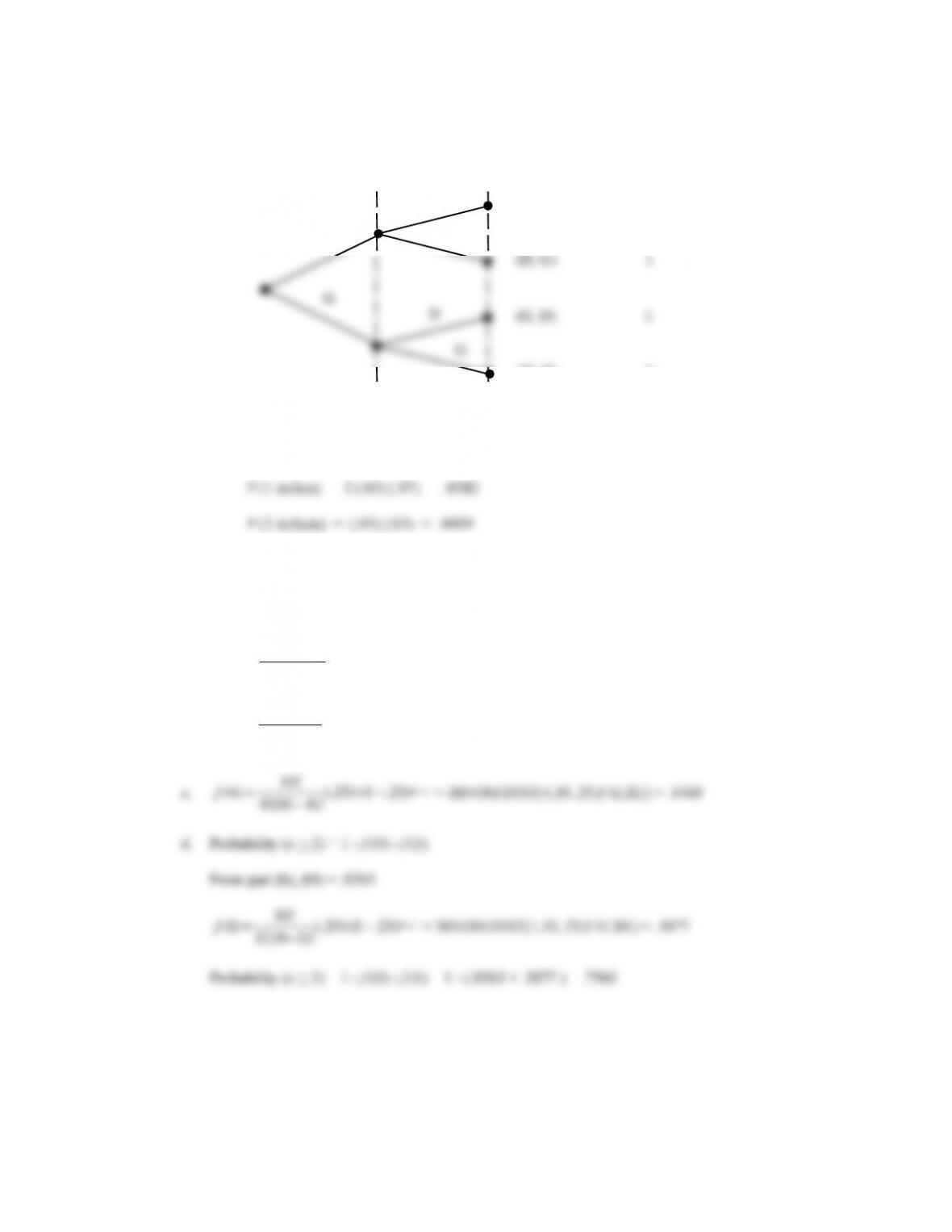
G = not defective
.
D
G
D
G
D
G
(D, D)
(D, G)
(G, D)
(G, G)
2
1
1
0
Number
Defective
Experimental
Outcome
2nd part
1st part
c. 2 outcomes result in exactly one defect.
d. P(no defects) = (.97) (.97) = .9409
31. a. Yes. Since the employees are selected randomly, p is the same from trial to trial and the trials are
independent. The two outcomes per trial are loyal and not loyal.
Binomial n = 10 and p = .25
10
10!
( ) (.25) (1 .25)
!(10 )!
xx
fx xx
−
=−
−
b.
0 10 0
10!
(0) (.25) (1 .25)
0!(10 0)!
f−
=−
−
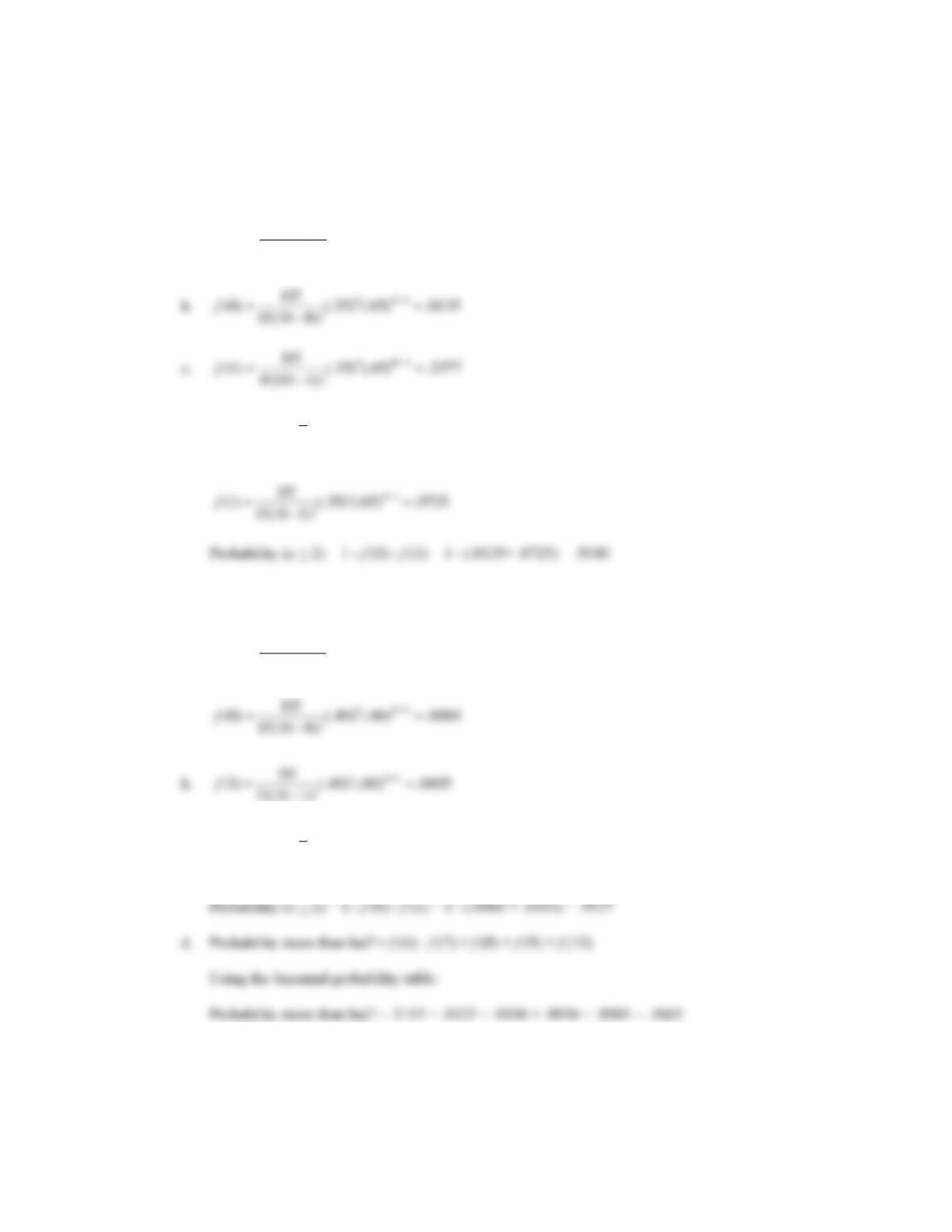
= BINOM.DIST(0,10,.25,FALSE) = .0563
10!
32. a. .90
b. P(at least 1) = f (1) + f (2)
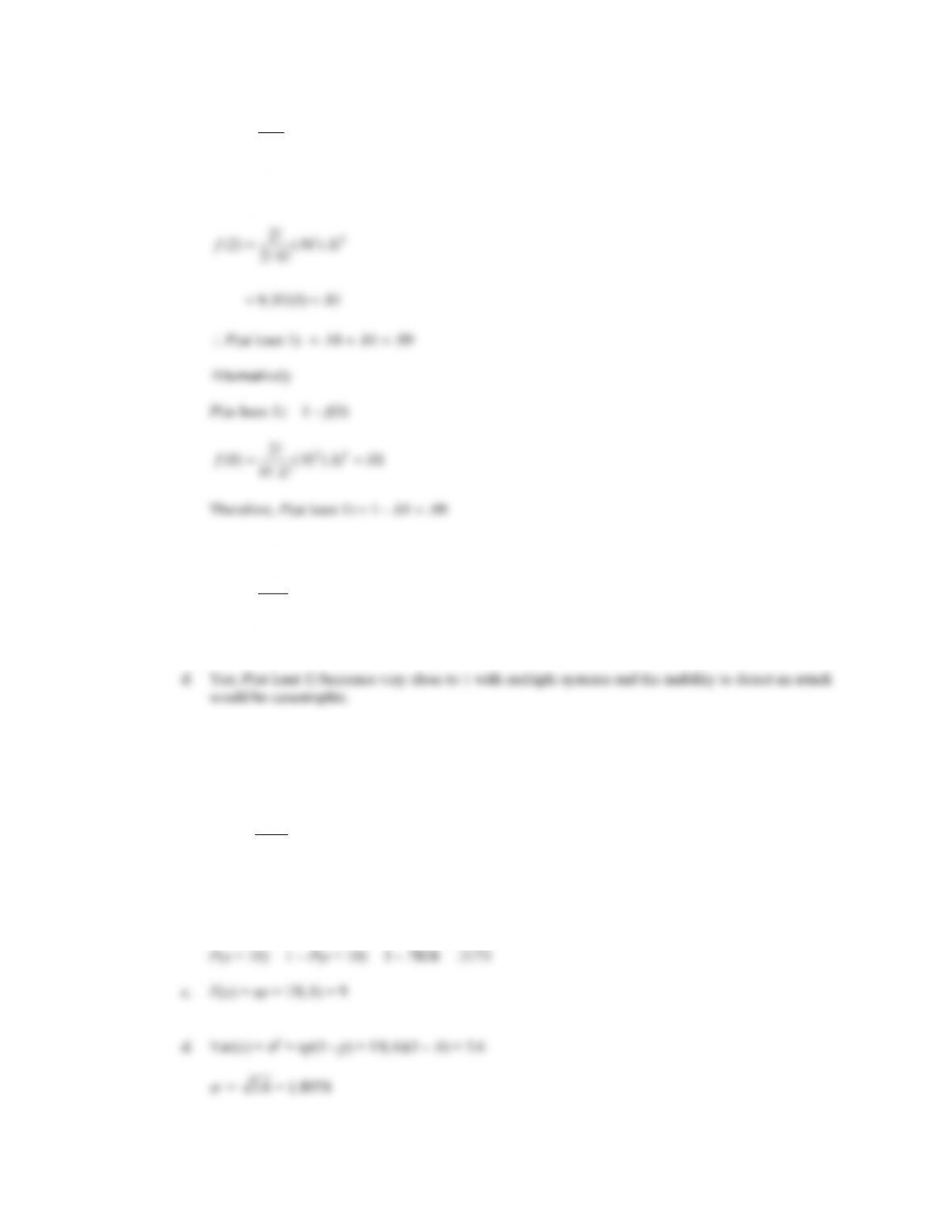
11
10
2!
(1) (.9) (.1)
1! 1!
2(.9)(.1) .18
2!
(2) (.9) (.1)
2! 0!
1(.81)(1) .81
f
f
=
==
=
==
c. P(at least 1) = 1 – f (0)
03
3!
(0) (.9) (.1) .001
0! 3!
f==
Therefore, P(at least 1) = 1 – .001 = .999
33. a. Using the 20 golfers in the Hazeltine PGA Championship, the probability that a PGA professional
golfer uses a Titleist brand golf ball is p = 14/20 = .6
For the sample of 15 PGA Tour players, use a binomial distribution with n = 15 and p = .6.
f(10) =
10 15 10
15! (.6) (1 .6)
10!5!
−
−
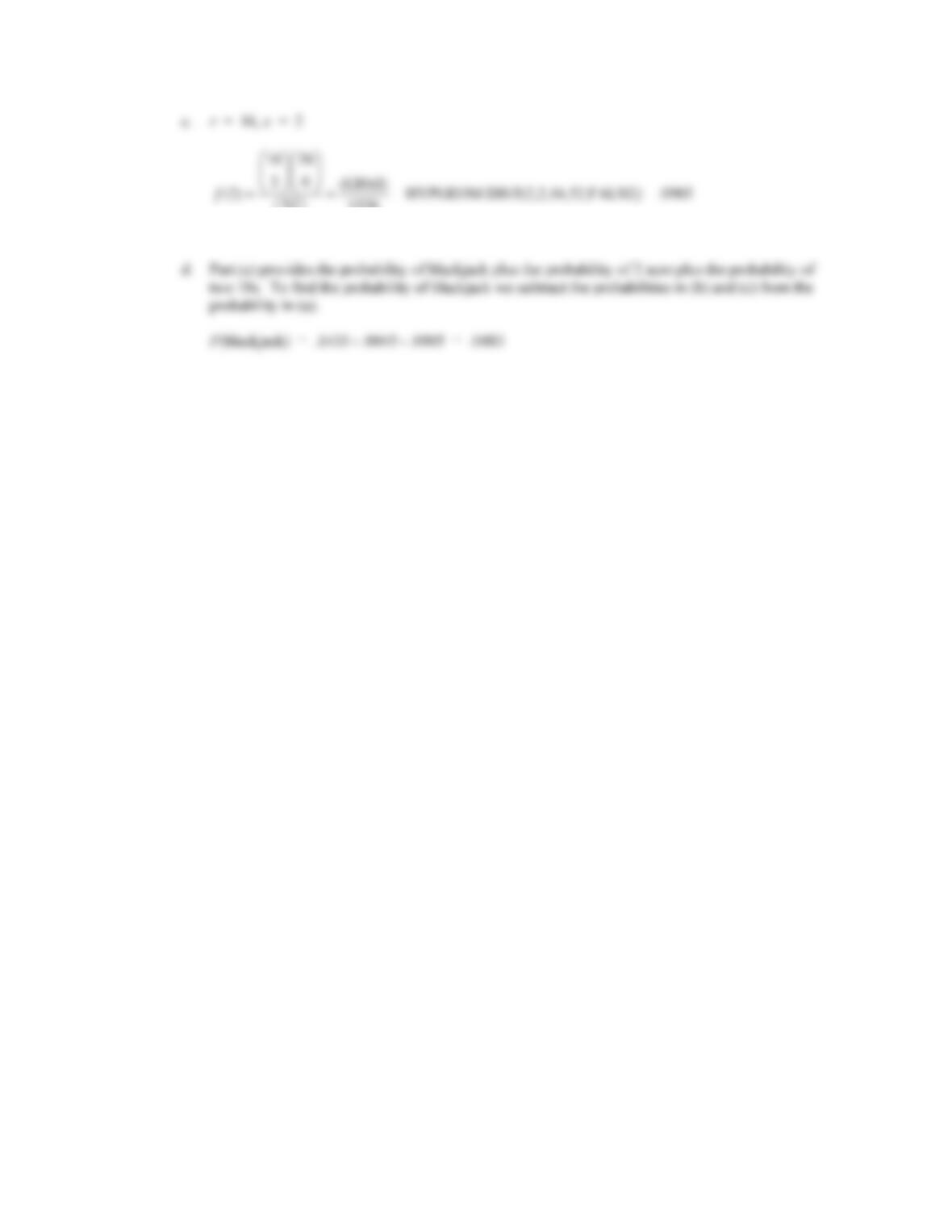
= BINOM.DIST(10,15,.6,FALSE) = .1859
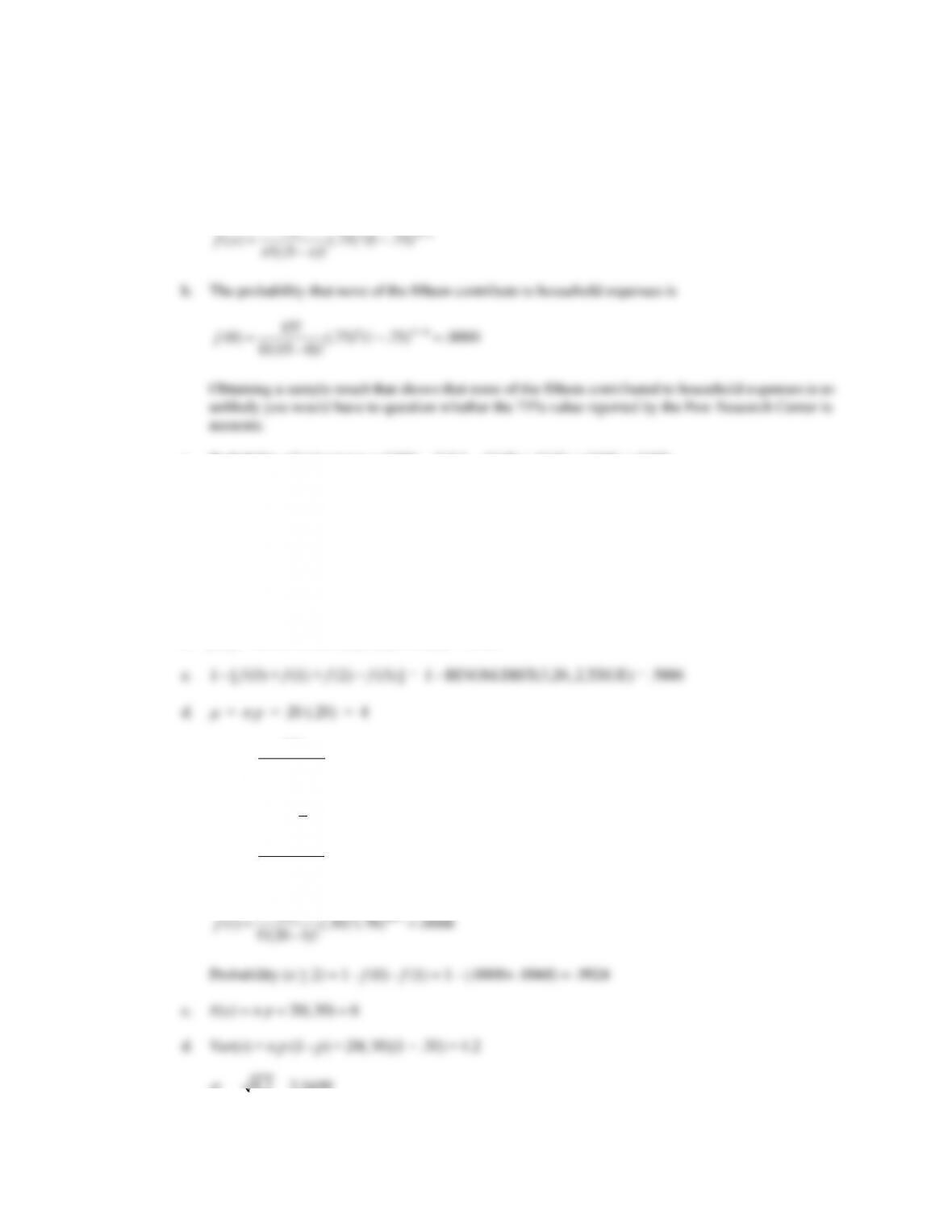
b. P(x > 10) = 1 – P(x ≤ 10)
P(x ≤ 10) = BINOM.DIST(10,15,.6,FALSE) = .7827
34. a. Yes. Since the 18– to 34-year olds living with their parents are selected randomly, p is the same
from trial to trial and the trials are independent. The two outcomes per trial are contribute to
household expenses or do not contribute to household expenses.
Binomial n = 15 and p = .75
15
15!
xx
−
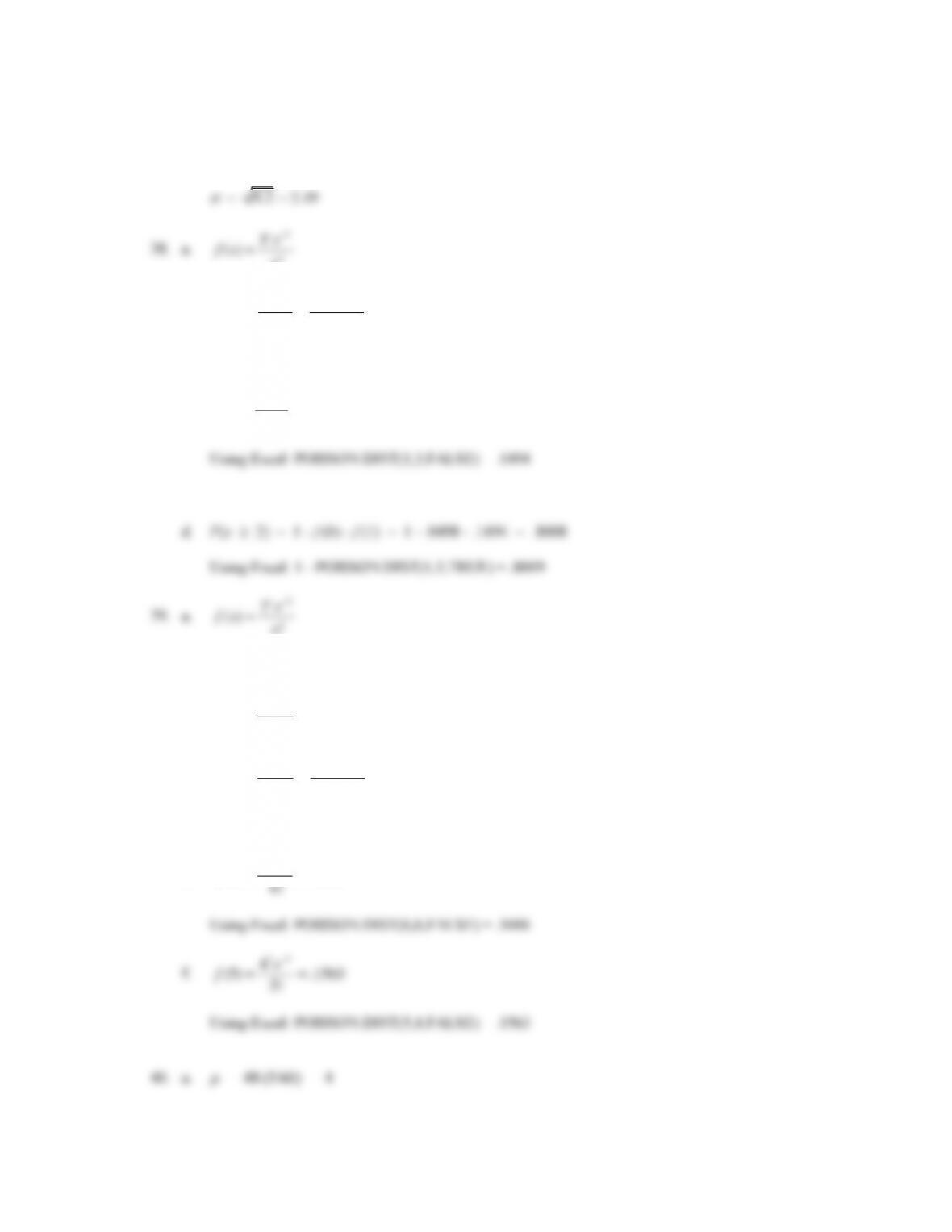
37. E(x) = n p = 35(.23) = 8.05 (8 automobiles)
Var(x) = n p (1 – p) = 35(.23)(1-.23) = 6.2
b.
23
3 9(.0498)
(2) .2241
2! 2
e
f−
= = =
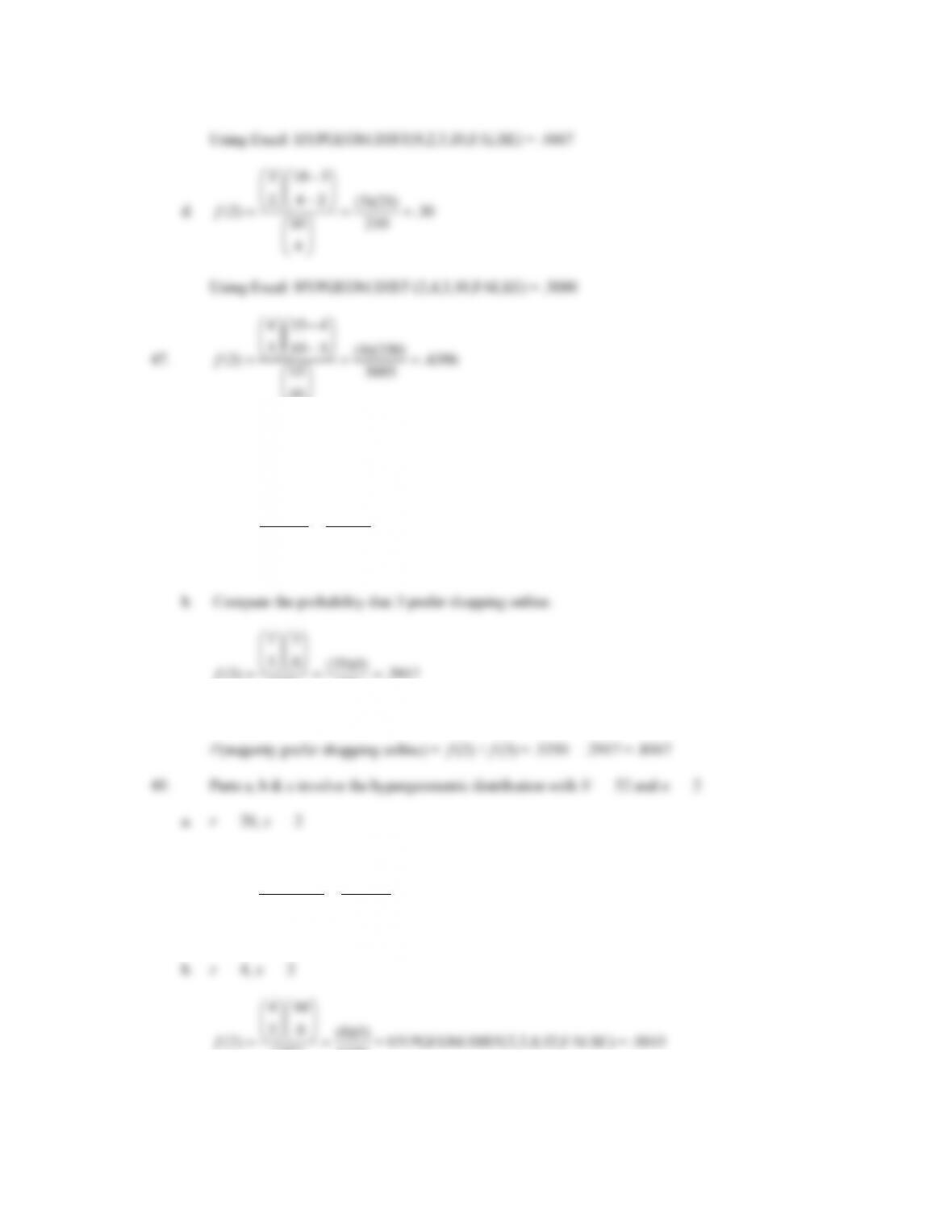
Using Excel: POISSON.DIST(2,3,FALSE) = .2240
c.
13
3
(1) 3(.0498) .1494
1!
e
f−
= = =
b.
= 6 for 3 time periods
c.
6
6
() !
xe
fx x
−
=
d.
22
2 4(.1353)
(2) .2706
2! 2
e
f−
= = =
Using Excel: POISSON.DIST(2,2,FALSE) = .2707
e.
66
6
(6) .1606
6!
e
f−
==
b.
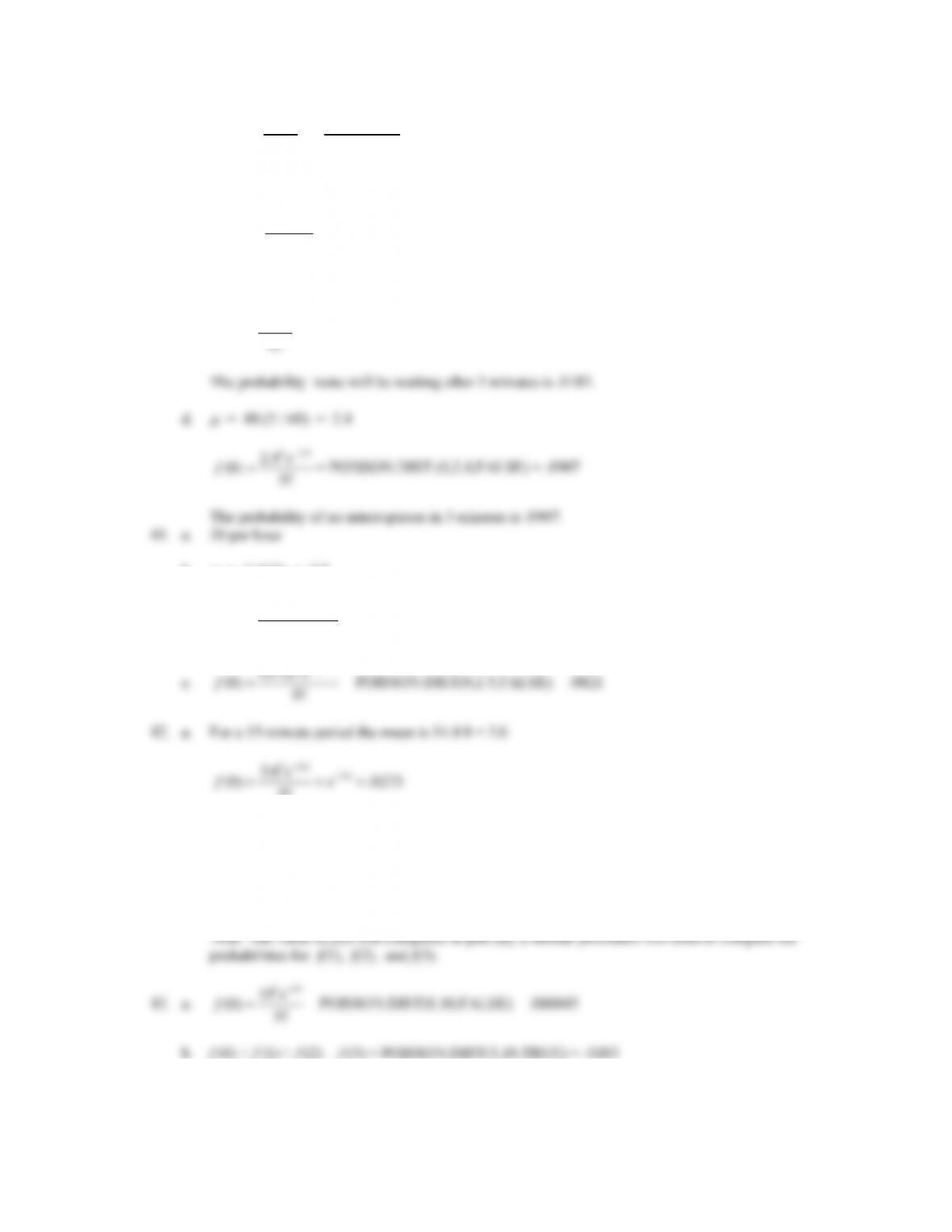
= 48 (15 / 60) = 12
10 12
12
(10) 10!
e
f−
=
= POISSON.DIST(10,12,FALSE) = .1048
c.
= 48 (5 / 60) = 4 I expect 4 callers to be waiting after 5 minutes.
04
4
(0) 0!
e
f−
=
= POISSON.DIST(0,4,FALSE) = .0183
b.
= 1 (5/2) = 5/2
3 (5 / 2)
(5/ 2)
(3) 3!
e
f−
=
= POISSON.DIST(3,2.5,FALSE) = .2138
=
0 (5/ 2)
(5/ 2)
e
f (3) = 43 e-4
3 ! = (64) (.0183)
6 = .1952
0 2.5
2.5
(0) 0!
e
f−
=
= POISSON.DIST(0,2.5,FALSE) = .0821