CHAPTER 5
STRATEGIC WORKFORCE PLANNING
A. OVERVIEW
This chapter provides an overview of the human resource planning process from the
strategic perspective. The major objectives of HR planning include environmental
analysis and staffing issues, as well as strategic coherence to organizational objectives
for all HR activities and systems. Aggregate planning anticipates future employee needs
and skills need to maintain high performance. Succession planning involves identifying
critical organizational management positions and developing a plan to provide a
successor when the job is vacant. Both types of planning practices facilitate efficiency
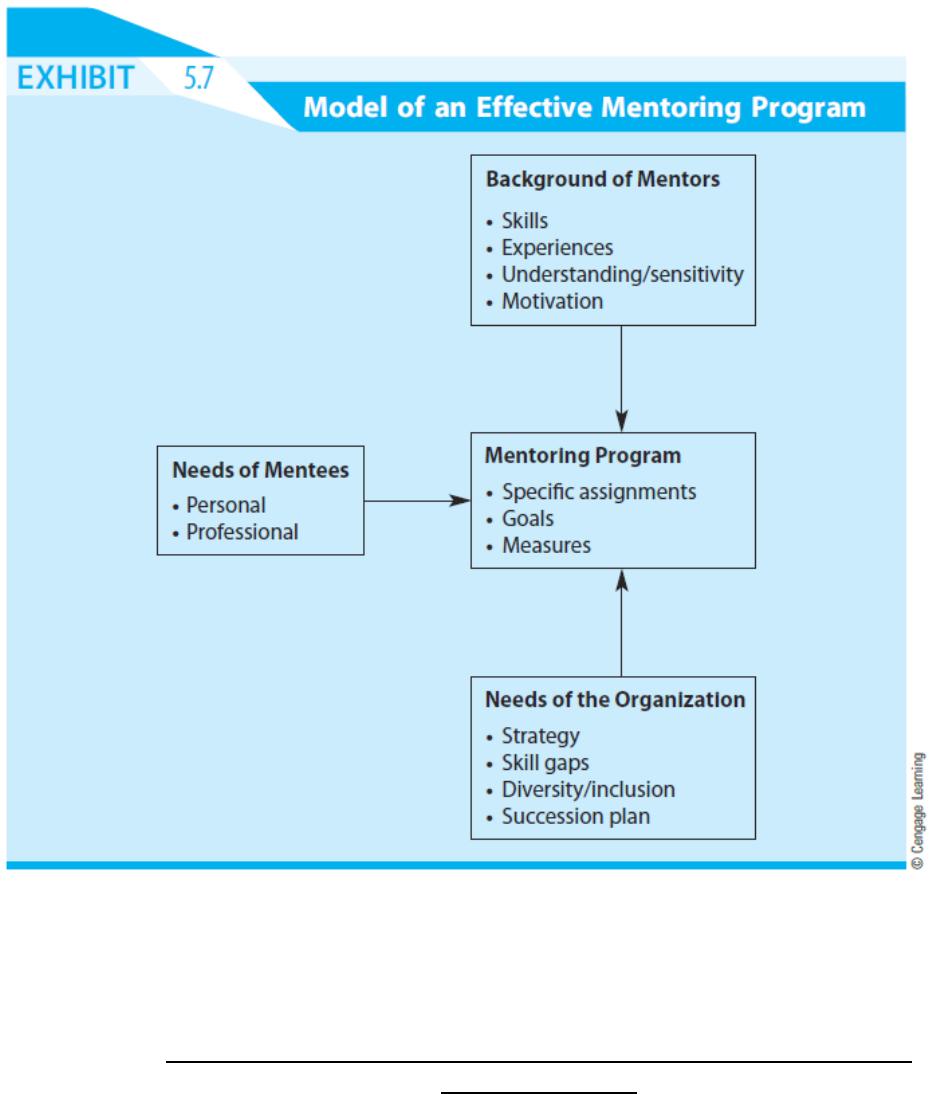
in HR policies, practices and procedures. Mentoring is discussed as a key element of
human resource planning and a model presented for an effective mentoring program.
B. LECTURE OUTLINE
I. OPENING CASE – PROCTOR & GAMBLE
Proctor & Gamble traditionally hires at the entry level and promotes from
within. Its
“Build from Within” program tracks the performance of every manager in the
organization and maps out areas for development. Each of the organization’s 50
highest ranking positions typically has three internal candidates ready for
promotion at any time. This program has resulted in tremendous loyalty among
P&G employees. The organization prides itself on being able to fill any open
position within the organization “in an hour” and requires that all executives
teach in the organization’s training programs.
II. INTRODUCTION
HR strategy involves taking organizational strategic goals and objectives and
translating them into a consistent, integrated, complementary set of programs
and policies for managing employees. HR management strategy begins with
human resource planning, which involves making assumptions about the future,
and must be flexible. Staffing, training, performance, management,
compensation, labor relations, and employee separation are derived from human
resource planning. To facilitate flexibility, key decision makers must clarify and
write down all assumptions about the external and internal environments, which
assist with subsequent intervention and corrective action. The U.S. Bureau of
Labor Statistics estimates, during the current decade, the civilian labor force
with increase by only 1 percent, and the retirement of baby boomers will slow
the growth to only two tenths of a percent until the year 2025. Thus, human
resource planning will be a critical component of organizational success. See
Human Resource Planning at Drexel Heritage Furnishings and Human Capital
Management at United States Postal Service examples.
III. OBJECTIVES OF HUMAN RESOURCE PLANNING
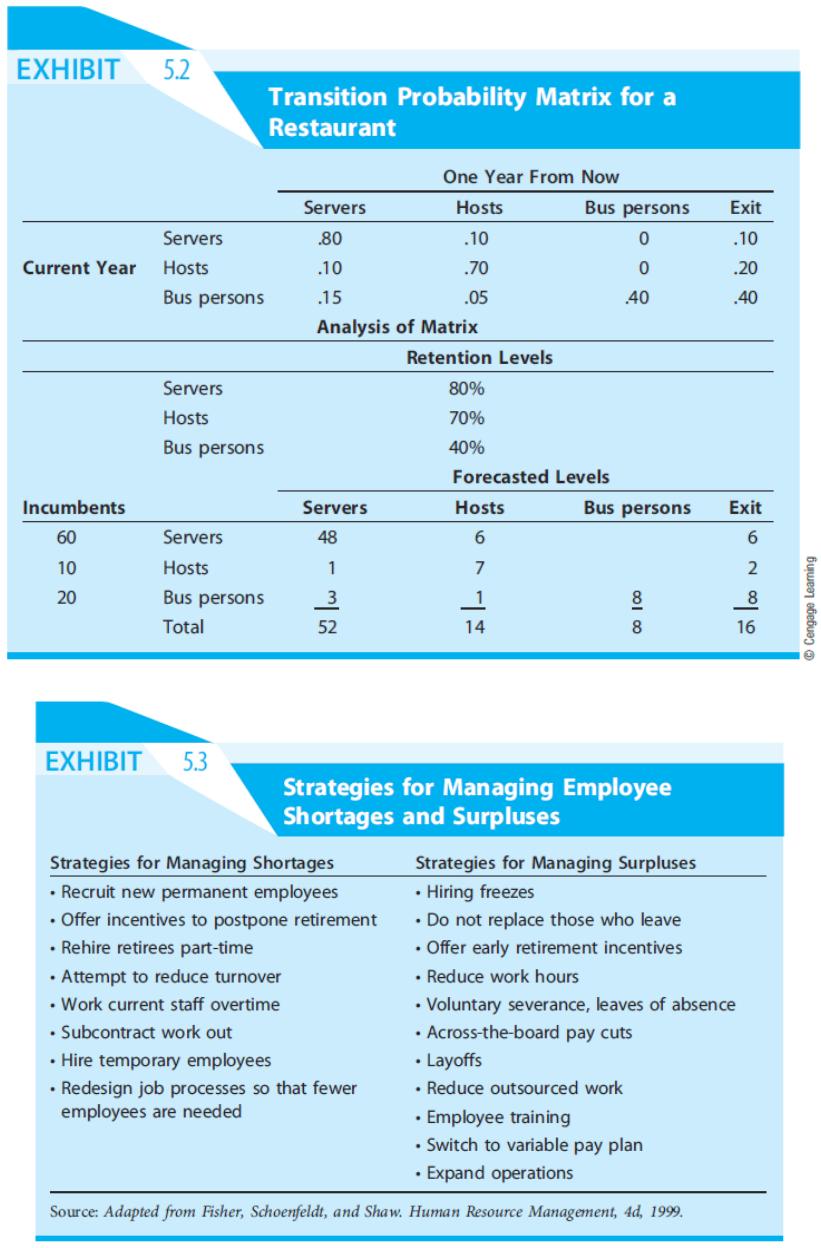
A. Five major objectives of HR planning (Exhibit 5.1)

1. Prevent overstaffing and understaffing
2. Ensure the organization has the right employees with the right skills
in the right places at the right times
3. Ensure the organization is responsive to changes in its environment
4. Provide direction and coherence to all HR activities and systems
5. Unite the perspectives of line and staff managers
B. Having too many employees causes a loss of efficiency in
operations. Having too few employees results in lost sales revenue and
future customers who turn to competitors.
C. Organizations need to anticipate the kinds of employees needed in
terms of skills, work habits, and personal characteristics so that the best
employees are hired, fully trained, and prepared to deliver peak
performance.
D. HR planning forces an organization to speculate and assess the
state of its environment. Anticipating and planning for environmental
changes permits staying one step ahead of competitors.
E. HR planning sets the direction for all other HR functions. It also
ensures that the organization takes a systematic view by understanding
the interrelatedness of HR programs and systems; and how changes in
one area may impact another area.
F. HR planning requires input and cooperation of all managers
within the organization. Communication between HR staff and line
managers is essential for the success of any HR planning initiatives.
G. Cost and Xerox Europe examples illustrate promoting from within
as a viable workforce planning strategy.
IV. TYPES OF PLANNING
A. Aggregate Planning anticipates needs for groups of employees in specific
jobs and the general skills employees required to ensure sustained high
performance. Forecasting demand for employees is often based on
demand for the product or service. This approach is responsive to
marketplace needs, but can also easily lead managers to overestimate
their own unit needs.
1. Top down forecasting involves senior managers allocating a budgeted
amount for employee payroll expenditures and then dividing the pool at
subsequent levels down the hierarchy. There is no guarantee that this will
be responsive to the needs of the marketplace.
2. Adequate supplies of employees must be available to meet demand.
Organizations need to estimate the actual number of employees required
and determine the necessary skills. A skills inventory is useful to assess
abilities, skills and experiences.
3. Markov analysis utilizes a transition probability matrix that is based on
historic mobility trends to determine supply versus demand of human
resources. Also helpful is identification of problem jobs or departments,
especially relative to turnover. Thus, labor shortages and surpluses can
be identified.
4. EXHIBIT 5.3: STRATEGIES FOR MANAGING EMPLOYEE
SHORTAGES AND SURPLUSES.

5. Example of the University of Maryland, Baltimore illustrates how the
organization developed and utilized furlough and salary reduction plans
to avoid layoffs in the light of state budget cuts. The effective
management of these programs surprisingly resulted in no increase in the
turnover rate of affected employees.
B. Succession Planning involves identifying key management
positions that the organization can not afford to have vacant. Purposes
include facilitation of transitions when jobs become vacant and
identification of development and career planning needs of high-potential
employees.
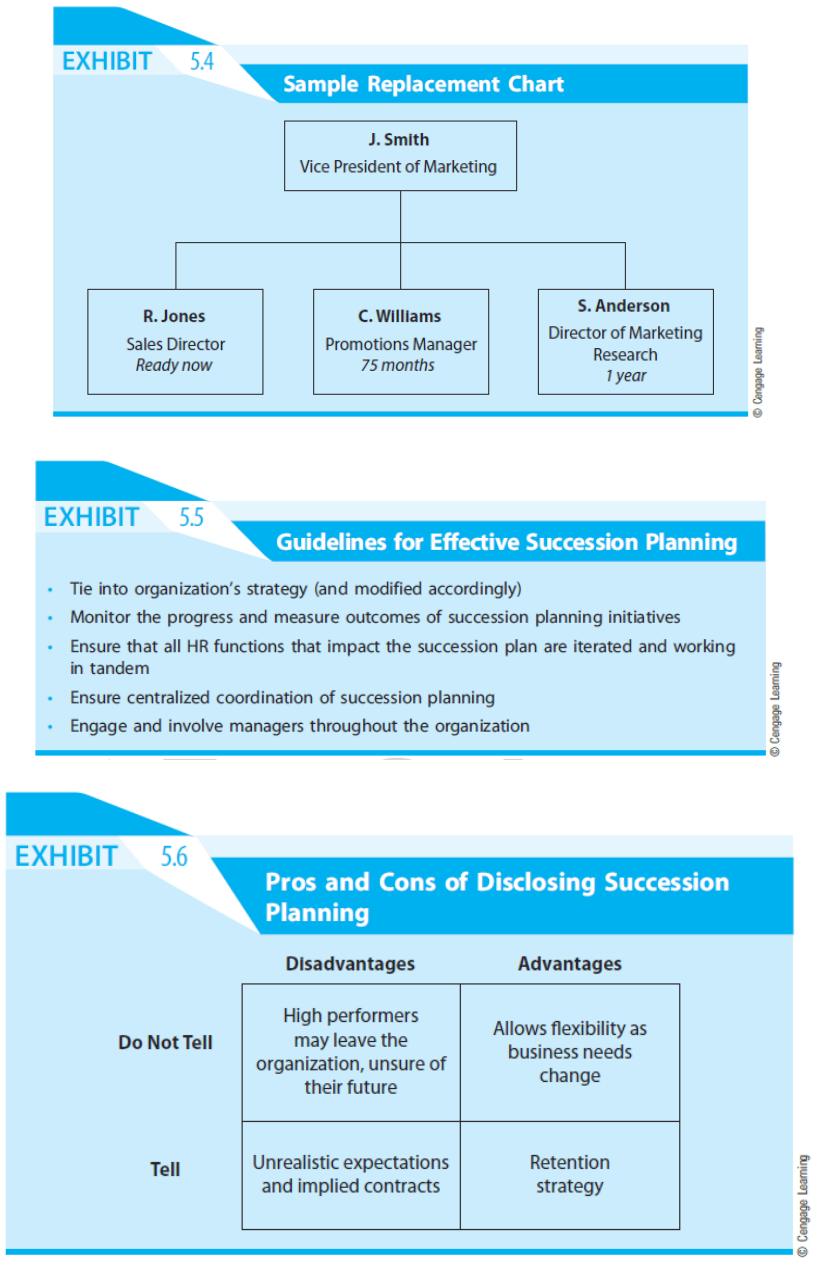
1. Utilizes a replacement chart (EXHIBIT 5.4: SAMPLE
REPLACEMENT CHART), which identifies key positions, possible
successors and suitability of their background to assume the
responsibilities, and amount of time necessary to prepare the successor.
2. Replacement charts may contain specific skills, competencies,
and experiences. This provides feedback to employees regarding critical
training and development needs of individual managers, as well as the
organization as a whole.
3. EXHIBIT 5.5: GUIDELINES FOR EFFECTIVE SUCCESSION
PLANNING
• Tie into organization’s strategy (and modified accordingly)
• Monitor the progress and measure outcomes of succession planning
initiatives
• Ensure that all HR functions that impact the succession plan are iterated
and working in tandem
• Ensure centralized coordination of succession planning
• Engage and involve managers throughout the organization
4. EXHIBIT 5.6: PROS AND CONS OF DISCLOSING
SUCCESSION PLANS.
5. Twenty percent of CEOs of the 200 largest corporations in
America were replaced in one recent year, and average CEO tenure
currently is less than three years. See Succession Planning at Eli Lily,
Dole Foods and General Electric examples.
V. MENTORING
A. Mentoring involves an experience executive or manager assuming
responsibility for the development of a lower-level employee. Ideally
they mesh the individual development needs of the employee with the
workforce development needs of the organization.
B. Selection of mentors should be done carefully and consider both technical
and interpersonal skills.
C. Mentoring programs may be both formal or informal. Regardless of how
they are delivered they should be monitored closely with an awareness of
diversity.
VI. CONCLUSION
A. Effective human resource planning is a key component for developing HR
strategy. HR planning involves translating corporate-wide strategic
initiatives into a workable plan to identify the people needed to achieve
objectives.
B. HR planning is needed to ensure growth is properly managed. Focused
HR planning allows HR functions to contribute to organizational
effectiveness.
C. HR planning facilitates several key processes, including
1. Leadership continuity through succession planning.
2. Strategic planning by examining the future availability of employees
and their skill sets.
3. An understanding of shifts and trends in the labor market through an
examination of job requirements and employee capability, which helps
the organization remain ahead of competitors.
4. Employee development by determining the skills needed to achieve
strategic objectives, as well as to ensure future career success.
5. Budget planning and resource allocation by determining employee
needs in response to the organizational strategic plan.
6. Efficiency by estimating future employee surpluses and shortages.
7. Organizational adaptation to its environment.
READINGS
Reading 5.1 – Designing Succession Planning: Lessons from the
Industry Leaders
The authors argue that too little attention has been paid to the inclusion of
gender and racial diversity in succession planning. Typically organization have
utilized one of three approaches to managing diversity;
an assimilation view that downplays differences;

an access view that focuses on building diversity in order to gain access
to ethnic consumer groups;
an integrated view that emphasizes uniform performance standards,
personal development, openness, acceptance of constructive conflict,
empowerment, egalitarianism, and a nonbureaucratic structure that
encourages challenges to the status quo
An integrated approach combined with a culture of inclusiveness are needed to
ensure diverse succession planning. Commitment from and direct involvement
by the CEO and senior leadership team are mandatory for diverse succession
planning. Employees should be encouraged to look upward in the organizational
hierarchy to indentify people who are like themselves. Specific programs which
target women and minorities are needed to bring about change in the status quo
as they may not see people like themselves in positions higher than the one they
hold.
Cross-race mentoring requires that mentors have skills related to understanding
diversity. Cross-gender relationships need to be carefully managed to prevent
any perceptions of impropriety. Organization’s such as Denny’s have made
thresholds of representation of minorities and women in management a key
component of executives’ annual bonuses.
Reading 5.2 – The Annual HR Strategic Planning Process: Design
and Facilitation Lessons from Corning Incorporated Human
Resources
This article explores the creation and evolution of the annual strategic HR
planning process at Corning. This system is designed to prioritize HR
investment and ensure that HR services are aligned with strategic business
needs. It results in a one-page Annual Operating Plan with supporting objectives
which are used to track progress toward goals.
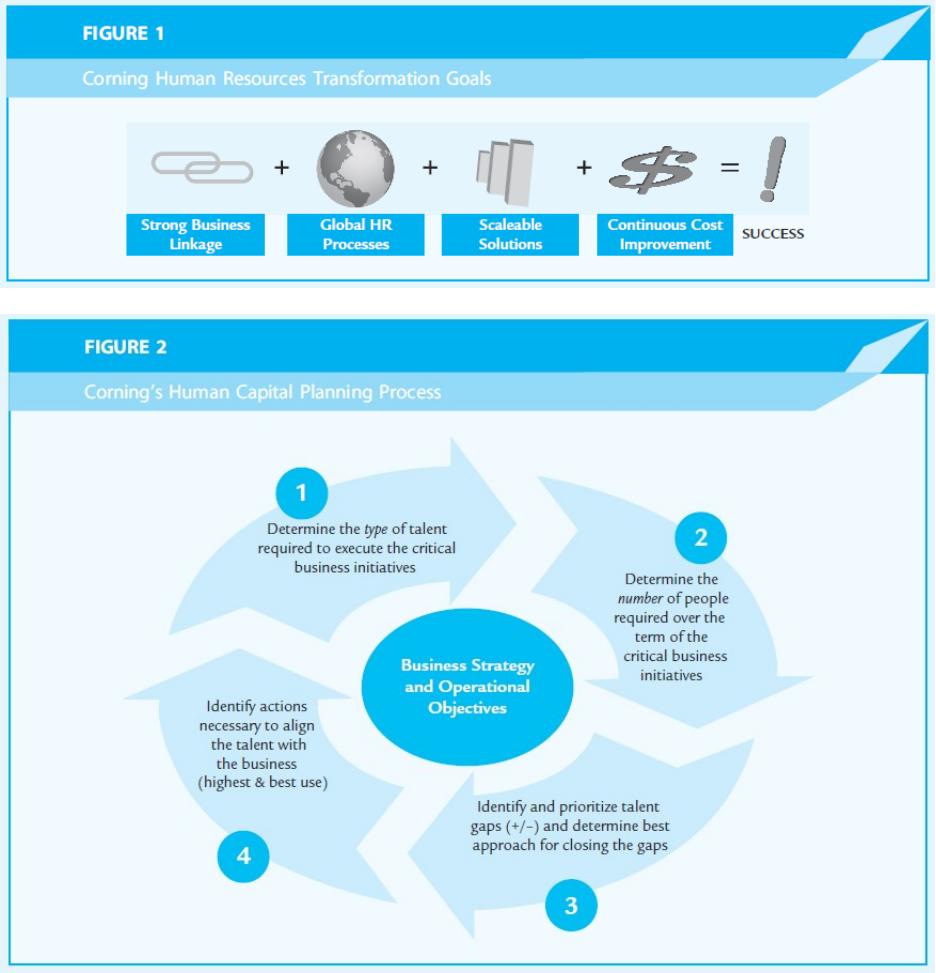
As part of the planning process, four transformation goals were developed which
guide the organization’s growth. (see Figure 1)
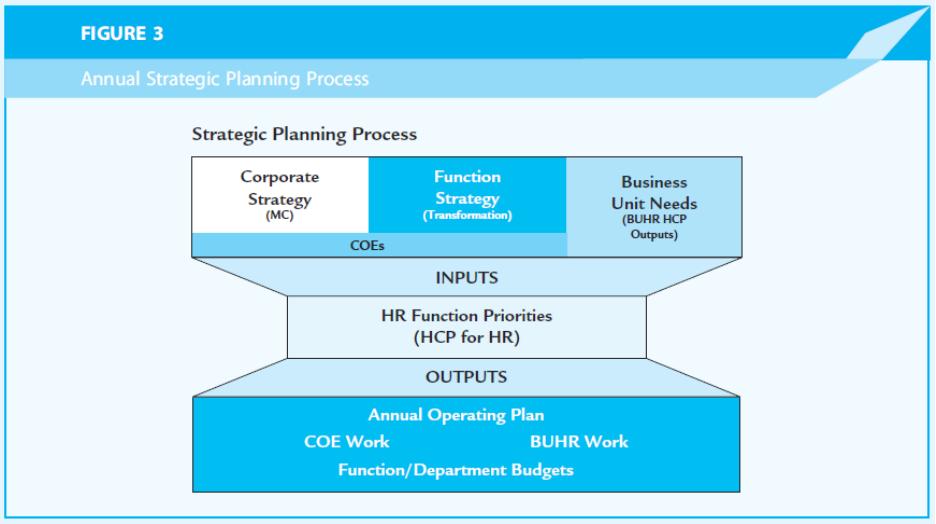
These goals resulted in a four-step process which gave business unit generalists
comment tools land language for translating strategies into action steps for talent
development and allow consistency and comparison for prioritization across
business lines (see Figure 2)
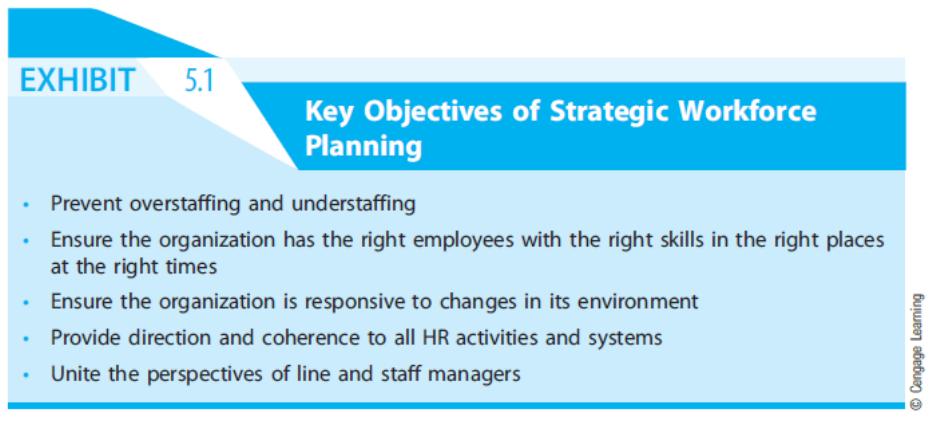
Corning’s annual strategic planning process for HR brings together several key
components including: (a) corporate strategy and the implications of that
strategy for HR, (b) HR function strategy including the strategic direction for
each of the COEs, and (c) the outputs of the Human Capital Planning process for
each of the business units, which is essentially the HR implications of each of
their business strategies. (see figure 3)