1CHAPTER 10
PERFORMANCE MANAGEMENT AND FEEDBACK
A. OVERVIEW
This chapter briefly reviews various aspects of performance management and feedback.
A model is provided that is useful in linking performance management systems with
organizational strategic objectives and goals. It is important to consider carefully who
will do evaluations; specifically what they will evaluate; how the evaluation will de
administered; and appropriate measures of evaluation. Critical guidelines to effective
performance systems suggest specific, immediate feedback based on clear, measurable
goals delivered by a credible, trustworthy person are desirable.
B. LECTURE OUTLINE
I. OPENING CASE – MICROSOFT
Microsoft recently designed its performance management system to allow better
integration with its compensation program. As the company grew and its strategy
evolved the plan of compensating employees heavily via stock options did not reward
sustained performance or retention. To remedy this Microsoft shifted to restricted stock
units and revamped its performance management system to both simply this latter process
and directly integrate it with the new compensation plan.
II. INTRODUCTION
Effective performance management systems require cooperation between
employees and supervisors to set performance expectations; review results; assess
organizational and individual needs, and plan for the future. Today’s streamlined
organizations have fewer employees with broader job assignments and increased
responsibility and accountability. More than ever, organizations need broader
measures of employee performance to ensure that performance deficiencies are
quickly addressed with employee development programs; behaviors are being
channeled toward specific objectives; and appropriate and specific feedback is
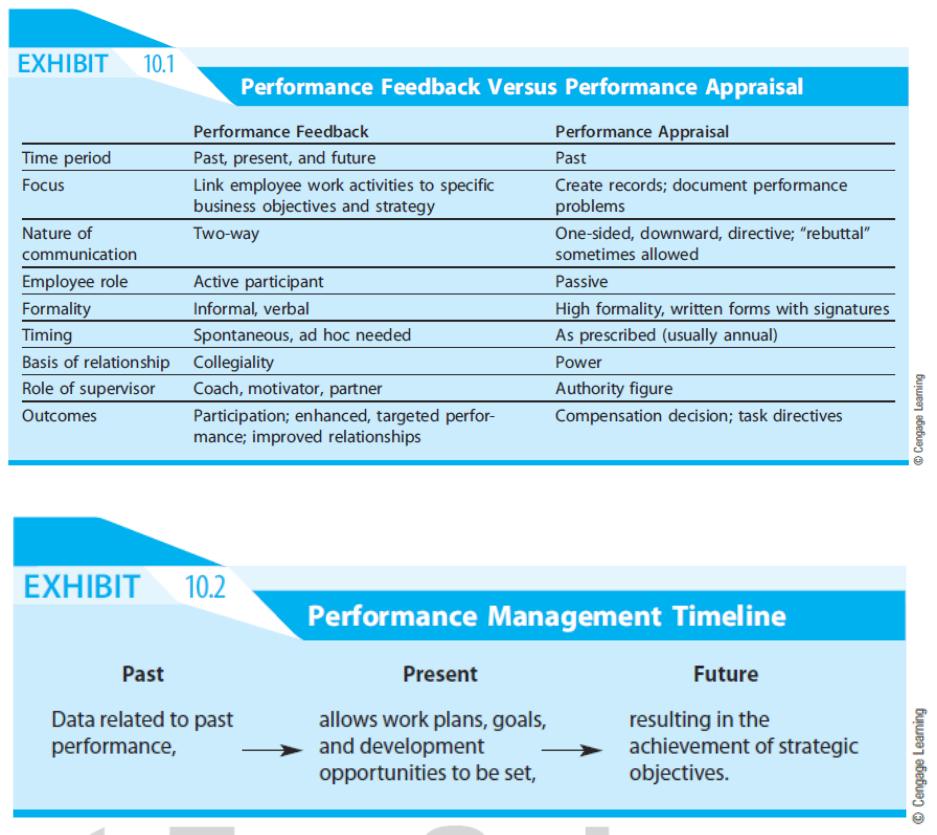
provided to the employee to assist in career development. Exhibit 10.1 illustrates
the critical differences between performance appraisal and performance feedback.
III. USE OF THE SYSTEM
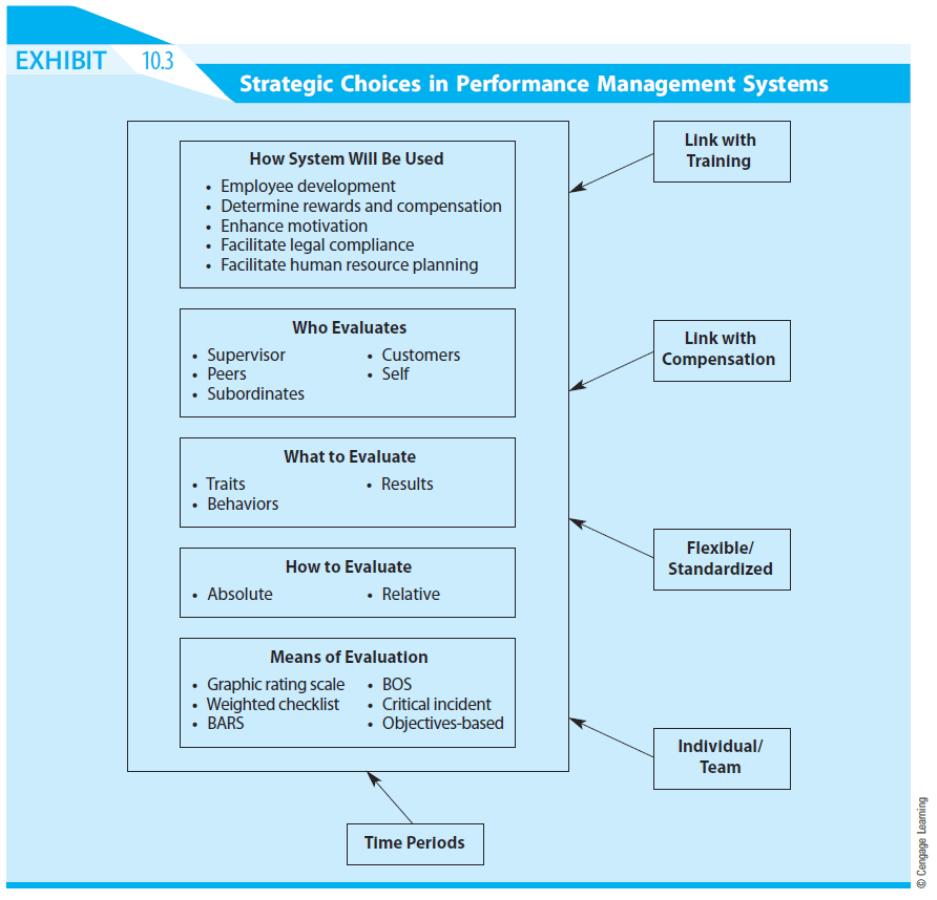
EXHIBIT 10.3: STRATEGIC CHOICES IN PERFORMANCE
MANAGEMENT SYSTEMS outlines a useful strategic decisions model.
Performance management systems should:
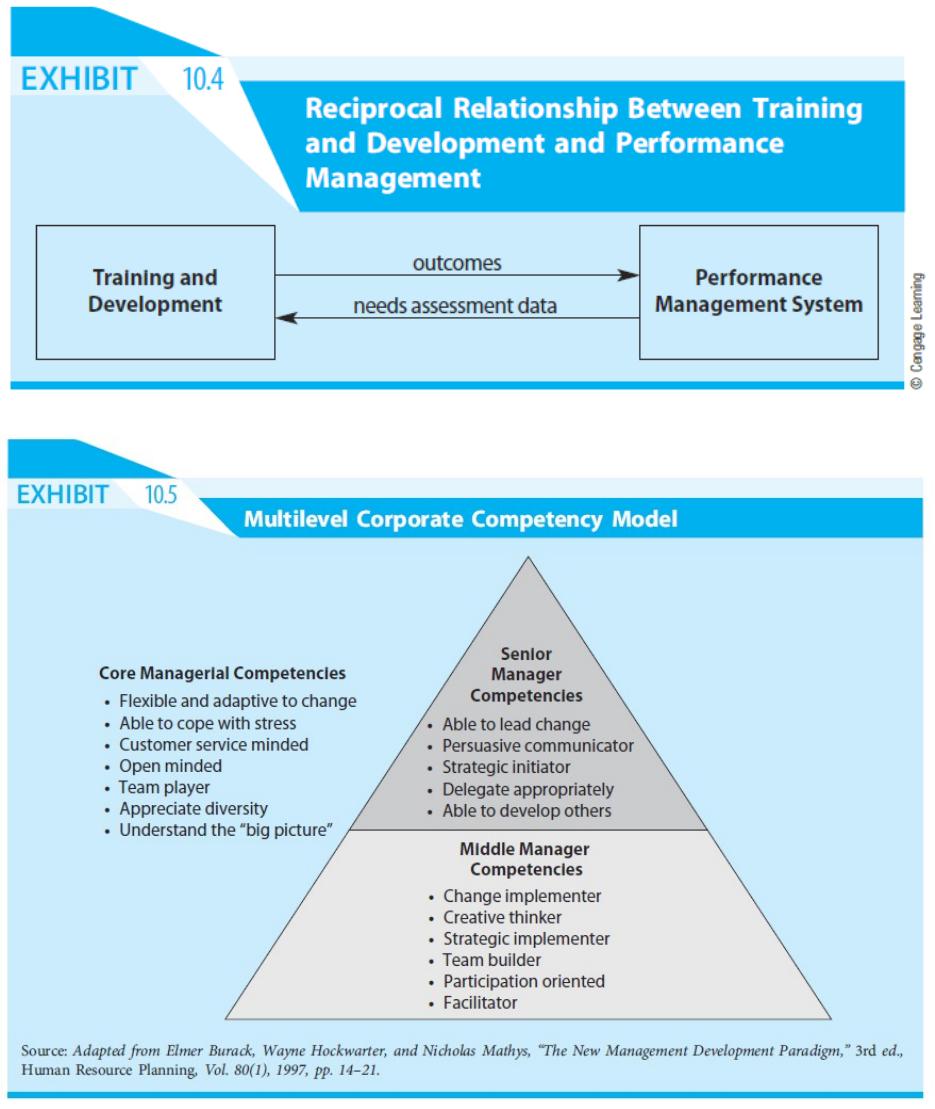
A. Facilitate employee development through a reciprocal relationship with
training and development.
B. Determine appropriate rewards and compensation.
C. Enhance employee motivation by reinforcing desired behavior.
D. Facilitate legal compliance .
E. Facilitate HR planning process.
V. WHO EVALUATES

A. Traditionally, performance evaluation was performed by the employees
immediate supervisor. A variety of perceptual errors by supervisors can occur,
including:
Halo effect – rater allows one positive or negative trait, outcome or consideration
to influence other measures.
Stereotyping or personal bias – rater makes performance judgments based on
characteristics of employee, not performance.
Contrast error – employee assessment is based on those being given to other
employees.
Recency error – evaluation is biased toward events and behaviors immediately
preceding the evaluation.
Central tendency error – evaluator avoids the higher and lower ends of
performance assessment ratings.
Leniency or strictness error – employees are generally all rated well above or well
below average.
B. Many managers have no true knowledge of the technical or other skills that a
worker may have or the ability to observe the employee and the means by
which the employee accomplishes work. Other individuals, such as peers,
customers, subordinates, or others could provide insights into an employee’s
performance. The employee her/himself could also provide self-assessment date.
Multi-rater or 360 degree feedback uses some combination of assessments by
various individuals. Example – Peer Assessment at Coffee &
Power and Performance Management at Otis Elevator.
C. Supervisors might also intentionally inflate or deflate employee ratings. In
addition supervisors and subordinates may agree on levels of performance
but disagree on the reasons for such.
VI. WHAT TO EVALUATE
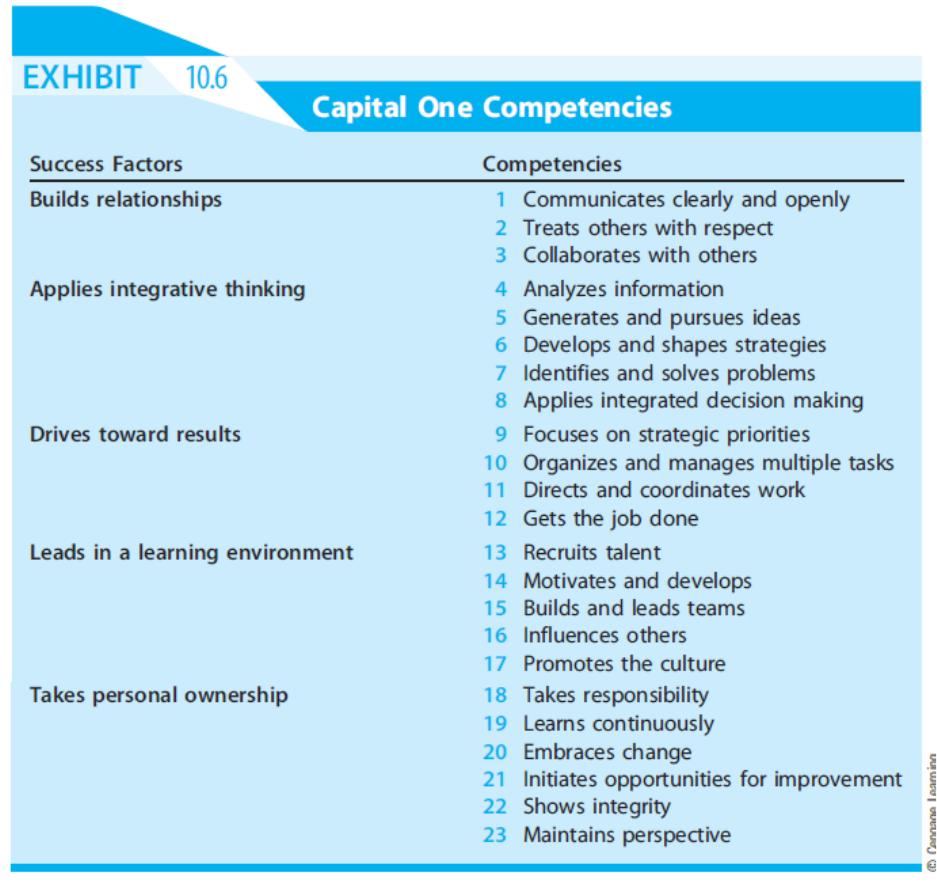
Example – Competency-Based Performance and Development at Capital
One. Employee evaluations can be made based on their traits (not recommended),
their behaviors or the results or outcomes they achieve.
A. Behavior-based measures focus on what the employee does by examining
specific behaviors, although observed necessary behaviors do not
guarantee success or results.
B. Results-based measures focus on specific accomplishments or direct
outcomes. However, not all jobs have measurable results; sometimes
external events influence results; and results focus on the end and not the
means, which may be very important.
C. Outcomes-based measures focus on specific accomplishments or direct
outcomes of the employee’s work. While often most meaningful to
organizations, these measures have some limitations as to their usefulness.
VII. HOW TO EVALUATE
Absolute or relative measures can be used to evaluate employees.
A. Absolute measures evaluate employees strictly according to performance

requirements or job standards.
B. Relative measures evaluate employees in comparison to co-workers.
VIII. MEASURES OF EVALUATION
Various measures of evaluation are available, including:
Graphic rating scales – provide the evaluator with performance measures for traits,
behaviors or results listed below the scale.
Weighted checklist – evaluator checks criteria that apply to the employee.
Behaviorally-anchored rating scales (BARS) – addresses the problem of
inconsistent employee performance by measuring frequencies along a
scale.
Behavioral observation scale (BOS) – notes frequencies of behaviors; useful when
employee behaviors under BARS are inconsistent over time
Critical incident measures – specific examples of behaviors / outcomes recorded
over the feedback/evaluation period
Objectives-based performance measures (MBO) – employee and supervisor
jointly agree on work objectives that are consistent with organizational
strategy; satisfy job requirements; and provide challenging work
assignments consistent with employee career goals.
Three common oversights include setting objectives that are too vague;
unrealistically difficult; or without clarifying measurement specifics.
IX. OTHER CONSIDERATIONS AND CONCLUSIONS
Organizations must ensure the link between the performance management system,
T&D, and compensation.
Performance evaluations systems may need to be updated to reflect contemporary
reality.
Organizations must determine the extent that performance management systems
should be flexible as opposed to standardized.
There is no one-size-fits all performance evaluation system.
Exhibit 10.11 presents reasons why managers resist or ignore performance
management. Exhibit 10.12 presents strategies for improving the performance
management system.
Five critical guidelines for providing feedback include:
Provide specific rather than general feedback.
Credible, trustworthy sources should provide feedback.
Immediate feedback is best.
Performance measures should be based on clear, measurable goals.
Employee-manager dialogue is essential in evaluation and future planning.